- Product Description Description
- Table of Contents TOC
- List of Table & Figure LOT
- Get Free Sample PDF Sample PDF
Market Size, 2025
$905.29 MnMarket Estimate, 2026
$977.80 MnMarket Forecast, 2034
$1,811.19 MnCAGR, 2026–2034
8.01%UK Detergents Market Size, Growth, Trends & Forecast (2026–2034)
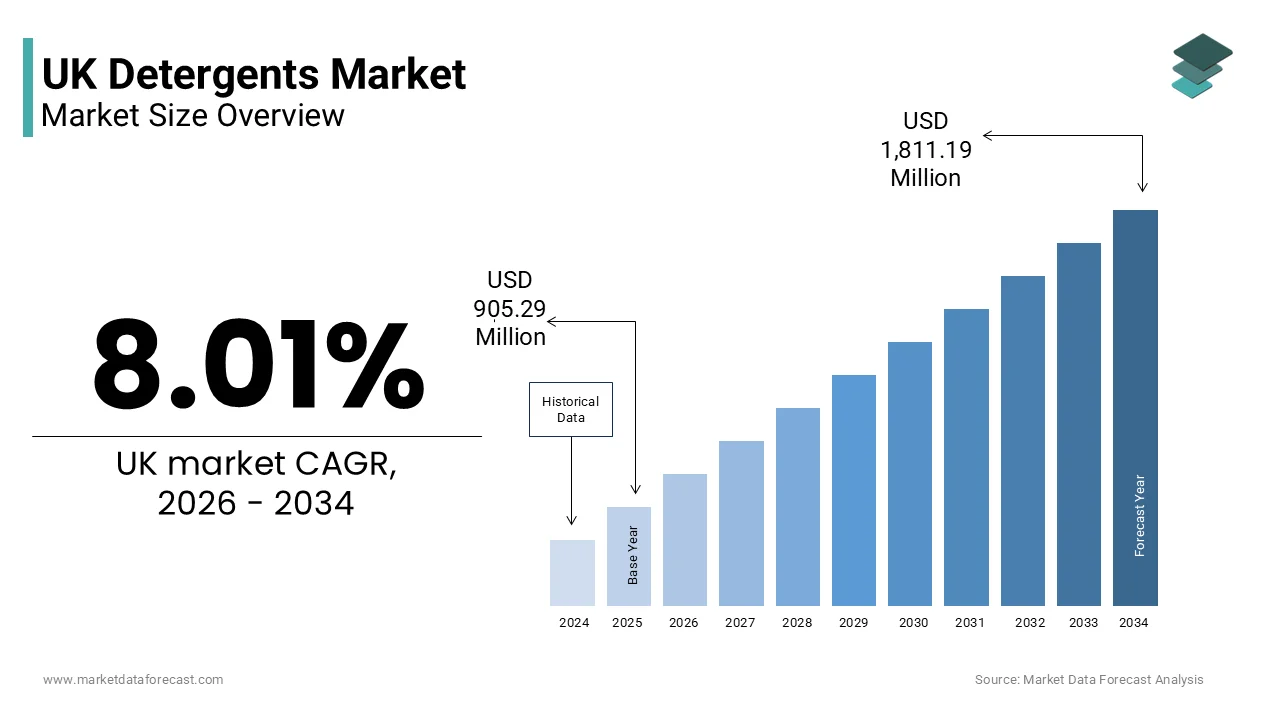
The UK detergents market size was valued at USD 905.29 million in 2025, is anticipated to reach USD 977.80 million in 2026, and is projected to scale up to USD 1,811.19 million by 2034, registering a compound annual growth rate (CAGR) of 8.01% during the forecast period from 2026 to 2034. Driven by high domestic penetration across approximately 28 million British households, post-pandemic hygiene standards, and a decisive shift toward eco-friendly, concentrated cleaning formulations, the market continues to experience robust growth.
Key Executive Metrics (At-a-Glance)
- 2025 Base Valuation: USD 905.29 Million
- 2026 Current Valuation: USD 977.80 Million
- 2034 Forecast Valuation: USD 1,811.19 Million
- Compound Annual Growth Rate (CAGR): 8.01% (2026–2034)
- Dominant Type Segment: Liquid Detergents (holding 45.3% market share due to solubility, fabric gentleness, and cold-water performance)
- Fastest-Growing Type Segment: Detergent Powders (projected to register steady resurgence driven by cost-effectiveness and zero-waste packaging formats)
- Dominant End User Segment: Household Cleaning & Laundry (leading market share due to consistent weekly domestic wash cycles across millions of homes)
- Fastest-Growing End User Segment: Commercial & Industrial (fastest-growing at a 4.2% CAGR propelled by the recovery of hospitality, healthcare, and food service sectors)
Core Market Drivers
- Heightened Hygiene Awareness: Sustained post-pandemic focus on thorough sanitization, higher temperature washing, and specialized antibacterial protection.
- Eco-Friendly & Concentrated Formulations: Surging demand for plant-based ingredients, plastic-free packaging, laundry sheets, and compact pods that reduce carbon footprints.
- Urbanization and Convenience: Urban lifestyle changes and hybrid work arrangements increasing everyday laundry frequency and space-saving product preferences.
Primary Market Restraints & Challenges
- Supply Chain & Cost Volatility: Fluctuations in raw material prices (surfactants, enzymes) and geopolitical energy pressures impacting production overheads.
- Intense Private Label Competition: Supermarket own-brand alternatives undercutting national brand prices by 20% to 30%, intensifying retail pressure.
- Regulatory & Greenwashing Scrutiny: Complex post-Brexit compliance frameworks (Office for Product Safety and Standards) alongside heightened consumer skepticism toward greenwashing claims.
UK Detergents Market Segmentation Breakdown
| Segment Category | Leading Sub-Segment (2025 Base) | Fastest-Growing Sub-Segment (2026–2034) |
|---|---|---|
| By Type | Liquid Detergents (holding 45.3% share for cold-water solubility and pre-treat ease) | Powder Detergents (resging via cost-efficiency and plastic-free cardboard packaging) |
| By End User | Household Segment (dominant revenue base from regular domestic laundry cycles) | Commercial & Industrial (fastest-growing at 4.2% CAGR driven by hospitality and healthcare) |
| By Chemical Class | Non-ionic & Anionic Detergents (primary cleaning agents utilized in standard formulations) | Zwitterionic / Amphoteric Detergents (expanding via specialized gentle care products) |
| By Region / Market Scope | United Kingdom National Grid (high density urban and suburban retail distribution) | Online & Zero-Waste Refill Stations (fastest retail channel expansion) |
Major Industry Players Profiled
Key enterprises shaping the competitive United Kingdom detergents market include Unilever, Procter & Gamble (P&G), Reckitt Benckiser Group plc, Henkel AG & Co. KGaA, McBride plc, Astonish Cleaning Products, Ecover UK Ltd, The Clorox Company, SC Johnson & Son, Inc., and Church & Dwight Co., Inc.
 Download Free Sample Report
UK Detergents Market Size
The UK detergents market size was valued at USD 905.29 million in 2025, and is projected to reach USD 1,811.19 million by 2034 from USD 977.80 million in 2026, growing at a CAGR of 8.01%.
The detergent is cleaning agents, including laundry powders liquids capsules and dishwashing products that are essential for household hygiene and fabric care. The high penetration rates and consistent consumption patterns driven by the fundamental need for cleanliness in domestic environments. Consumer behavior is increasingly influenced by environmental consciousness and health considerations leading to a shift toward concentrated formulas and eco-friendly ingredients. According to the Office for National Statistics, there are approximately 28 million households in the United Kingdom each generating regular demand for cleaning products throughout the year. The average British household completes around 5 loads of laundry per week establishing a stable baseline for product usage. Many consumers purchase laundry detergents at least once a month indicating entrenched buying habits. Public health awareness campaigns have reinforced the importance of effective sanitation particularly in post pandemic contexts, where hygiene standards remain elevated.
MARKET DRIVERS
Heightened Hygiene Awareness And Health Consciousness
The sustained elevation in hygiene awareness following recent global health crises, as consumers prioritize thorough cleaning and sanitization is accelerating the growth of the United Kingdom detergent market. Households have adopted more rigorous laundry routines including washing clothes at higher temperatures and using specialized antibacterial additives to eliminate pathogens. This behavioral shift has led to greater usage of heavy duty detergents and disinfectant boosters that promise superior germ removal capabilities. Parents are particularly vigilant about cleaning children’s clothes and bedding driving demand for hypoallergenic and sensitive skin formulations that combine efficacy with gentleness. The rise in home working has also blurred the lines between casual and professional attire necessitating frequent washing of everyday garments to maintain presentability. Media coverage and public health messaging continue to emphasize the role of clean fabrics in preventing illness reinforcing these habits. Manufacturers respond by clinical validation and antimicrobial properties in their marketing campaigns to align with consumer concerns.
Growing Preference For Concentrated And Eco Friendly Formulas
The increasing consumer preference for concentrated and eco-friendly detergent formulas drives innovation and sales growth, as shoppers seek to reduce environmental impact without compromising performance. The growing preference for concentrated and eco-friendly formulas is additionally enhancing the growth of the United Kingdom detergent market. Concentrated products offer reduced packaging waste and lower transportation emissions appealing to environmentally conscious individuals who wish to minimize their carbon footprint. Consumers state they are more likely to buy cleaning products with recyclable or reduced plastic packaging reflecting strong demand for sustainable options. Plant based ingredients, such as enzymes derived from natural sources are gaining popularity due to their biodegradability and lower toxicity compared to traditional synthetic chemicals. Brands that obtain certifications from recognized bodies like the Soil Association or Ecocert gain credibility and trust among discerning buyers. The convenience of compact formats, such as laundry sheets and ultra concentrated pods also appeals to urban dwellers with limited storage space. Retailers support this trend by dedicating shelf space to green brands and promoting refill stations that allow customers to reuse containers. Social media influence amplifies awareness of environmental issues encouraging peer to peer recommendations for sustainable alternatives. This shift toward responsible consumption creates opportunities for manufacturers who can authentically communicate their commitment to sustainability through transparent sourcing and innovative delivery systems.
MARKET RESTRAINTS
Volatility In Raw Material Costs And Supply Chain Disruptions
The volatility in raw material costs and ongoing supply chain disruptions that affect production stability and pricing is hindering the growth of the United Kingdom detergent market. Key ingredients, such as surfactants, enzymes, and fragrances depend on global sourcing networks susceptible to geopolitical tensions energy price fluctuations and logistical hurdles. The input costs for personal and home care manufacturing increased in recent years due to rising energy prices and transportation delays. These increased expenses are often passed on to consumers potentially dampening demand in a price sensitive environment, where budget constraints are prevalent. Shortages of specific packaging materials, particularly recycled plastics required for sustainable bottles force manufacturers to delay product launches or revert to less desirable alternatives. Labor shortages in manufacturing facilities exacerbate these challenges reducing output capacity and extending delivery schedules. Companies must maintain larger inventory buffers increasing working capital requirements and warehousing expenses.
Intense Price Competition From Private Label Alternatives
The private label products offered by major retail chains, which undermine branded manufacturer profitability and market positioning is additionally impeding the growth of the united Kingdom detergent market. Supermarkets have significantly improved the quality of their own brand detergents, while maintaining substantially lower price points attracting cost sensitive consumers. These retailer brands benefit from eliminated marketing expenses streamlined supply chains and direct shelf placement advantages allowing them to undercut national brands by 20 to 30% on average. Branded manufacturers struggle to justify premium pricing when private label alternatives offer comparable cleaning efficacy and pleasant fragrances. The consolidation of retail power means that shelf space allocation increasingly favors high turnover private label items squeezing visibility for smaller branded players. Promotional activities by supermarkets further amplify this challenge as featured deals on store brands draw foot traffic away from branded aisles. Consumer loyalty diminishes in this environment as shoppers readily switch between options based on immediate price differentials rather than brand affinity.
MARKET OPPORTUNITIES
Expansion Of Refill Stations And Zero Waste Initiatives
The expansion of refill stations and zero waste initiatives to engage environmentally conscious consumers and reduce plastic pollution is creating new opportunities for the growth of the United Kingdom detergent market. Retailers and independent stores are increasingly installing bulk dispensers for laundry liquids and dishwashing tablets allowing customers to bring their own reusable containers. Many UK shoppers express interest in refillable packaging options indicating a significant addressable market for circular economy models. This approach eliminates single use plastic bottles reducing waste and lowering packaging costs for manufacturers. Brands that partner with retailers to establish dedicated refill zones enhance brand visibility and foster community engagement. Subscription services offering concentrated refill pouches delivered to homes provide convenience while maintaining sustainability credentials. Local authorities support these initiatives through waste reduction targets and incentives for businesses adopting circular practices. Consumers appreciate the transparency and control offered by refill systems which allow them to purchase exact quantities needed reducing household clutter. Educational campaigns highlighting the environmental benefits of refilling encourage broader adoption across diverse demographics. Early adopters gain competitive advantage by building loyal customer bases committed to sustainable lifestyles. As regulatory pressure on plastic waste intensifies, companies investing in refill infrastructure position themselves as leaders in responsible retailing capturing value from the growing demand for waste free solutions.
Innovation In Water Soluble And Plastic Free Formats
Innovation in water soluble and plastic free detergent formats by addressing convenience and environmental concerns simultaneously is another factor to boost the growth of the United Kingdom detergent market. Laundry sheets strips and dissolvable pods eliminate the need for bulky plastic bottles and reduce water weight in transportation lowering carbon emissions. These compact formats are ideal for small living spaces and travel appealing to urban populations and younger demographics who prioritize minimalism. Manufacturers leverage advanced film technologies to ensure complete dissolution in various water temperatures preventing residue buildup. Marketing campaigns emphasize ease of use and storage efficiency differentiating these products from conventional options. Partnerships with online retailers facilitate direct to consumer distribution bypassing traditional shelf space limitations. The novelty factor attracts early adopters who share experiences on social media driving organic growth. Regulatory support for reducing single use plastics further accelerates adoption as retailers seek compliant packaging solutions. Companies that invest in research and development for effective plastic free formulations capture emerging market segments and future proof their portfolios against stricter environmental regulations.
MARKET CHALLENGES
Regulatory Pressure On Chemical Ingredients And Safety Standards
The ongoing challenges from stringent regulatory frameworks governing chemical ingredients labeling requirements and safety standards is one of the major challenges for the growth of the United Kingdom detergent market. Post Brexit adjustments have introduced additional complexity as manufacturers must navigate both retained EU regulations and new UK specific guidelines established by the Office for Product Safety and Standards. Compliance with these evolving mandates necessitates substantial investment in testing documentation and reformulation efforts when certain substances face restrictions. Adapted for home care manufacturers must maintain detailed safety assessments and ingredient disclosures, which increase administrative burden. The prohibition of specific phosphates and microplastics limits formulation flexibility forcing companies to invest in research and development for alternative cleaning agents that meet efficacy criteria. Small and medium sized enterprises encounter particular difficulties in absorbing these compliance expenses as they lack the resources of multinational corporations. The requirement for clear allergen labeling and accurate claim substantiation further complicates product launches extending time to market. Additionally, the UK Classification Labelling and Packaging Regulation mandates strict hazard communication creating procedural delays. These regulatory hurdles collectively elevate production costs which may be passed on to consumers potentially affecting price sensitivity. The need for continuous monitoring of legislative changes requires dedicated legal and scientific teams straining operational budgets and slowing innovation cycles in a highly regulated environment.
Consumer Awareness Toward Greenwashing Claims
Consumer awareness toward greenwashing claims, as shoppers become more adept at identifying misleading environmental marketing is also to slow down the growth of the United Kingdom detergent market. Many consumers doubt the authenticity of eco-friendly labels due to past instances of exaggerated or unsubstantiated sustainability assertions. Green claims made by businesses could be misleading leading to increased scrutiny and distrust among buyers. This awareness makes it difficult for genuine sustainable brands to differentiate themselves from competitors who use vague terminology, such as natural or eco-friendly without certification. Retailers face pressure to verify supplier claims rigorously adding to procurement complexity. Negative publicity surrounding greenwashing scandals damages brand reputation and reduces customer loyalty requiring costly recovery efforts. Educating consumers about legitimate certifications and transparent sourcing practices requires sustained marketing investment which may not yield immediate returns. The lack of standardized definitions for terms like biodegradable creates confusion hindering informed decision making. Manufacturers must invest in third party verification and clear communication to build trust yet this does not guarantee immunity from public criticism.
REPORT COVERAGE
| REPORT METRIC | DETAILS |
| Market Size Available | 2025 to 2034 |
| Base Year | 2025 |
| Forecast Period | 2026 to 2034 |
| CAGR | 8.01% |
| Segments Covered | By Type, End User, and Region. |
| Various Analyses Covered | Global, Regional and Country-Level Analysis, Segment-Level Analysis, Drivers, Restraints, Opportunities, Challenges; PESTLE Analysis; Porter’s Five Forces Analysis, Competitive Landscape, Analyst Overview of Investment Opportunities |
| Market Leaders Profiled | Unilever, Procter & Gamble Company, Henkel AG & Co. KGaA, Reckitt Benckiser Group plc, McBride plc, Astonish Cleaning Products, Ecover UK Ltd, The Clorox Company, SC Johnson & Son, Inc., and Church & Dwight Co., Inc. |
SEGMENTAL ANALYSIS
By Type Insights
The liquid detergents segment was accounted in holding 45.3% of the United Kingdom detergent market share in 2025 owing to their versatility superior solubility in cold water and ease of use for pre-treating stains. The shift toward lower washing temperatures to save energy has favored liquid formulations which dissolve more effectively than powders in cooler cycles. Many households primarily purchase liquid laundry detergents reflecting a strong preference for convenience and performance. The ability to dose liquids accurately using caps or integrated dispensing systems reduces waste and ensures optimal cleaning results for various fabric types. Consumers appreciate the gentle nature of liquid formulas on delicate fabrics and colored garments, which are prone to damage from abrasive powder particles. The rise of compact and ultra concentrated liquid variants appeals to urban dwellers with limited storage space while offering environmental benefits through reduced packaging weight. Marketing campaigns by major brands emphasize stain removal efficacy and fragrance longevity reinforcing consumer loyalty. Retailers support this dominance by allocating prominent shelf space to liquid formats and offering bundle deals that encourage bulk purchasing.
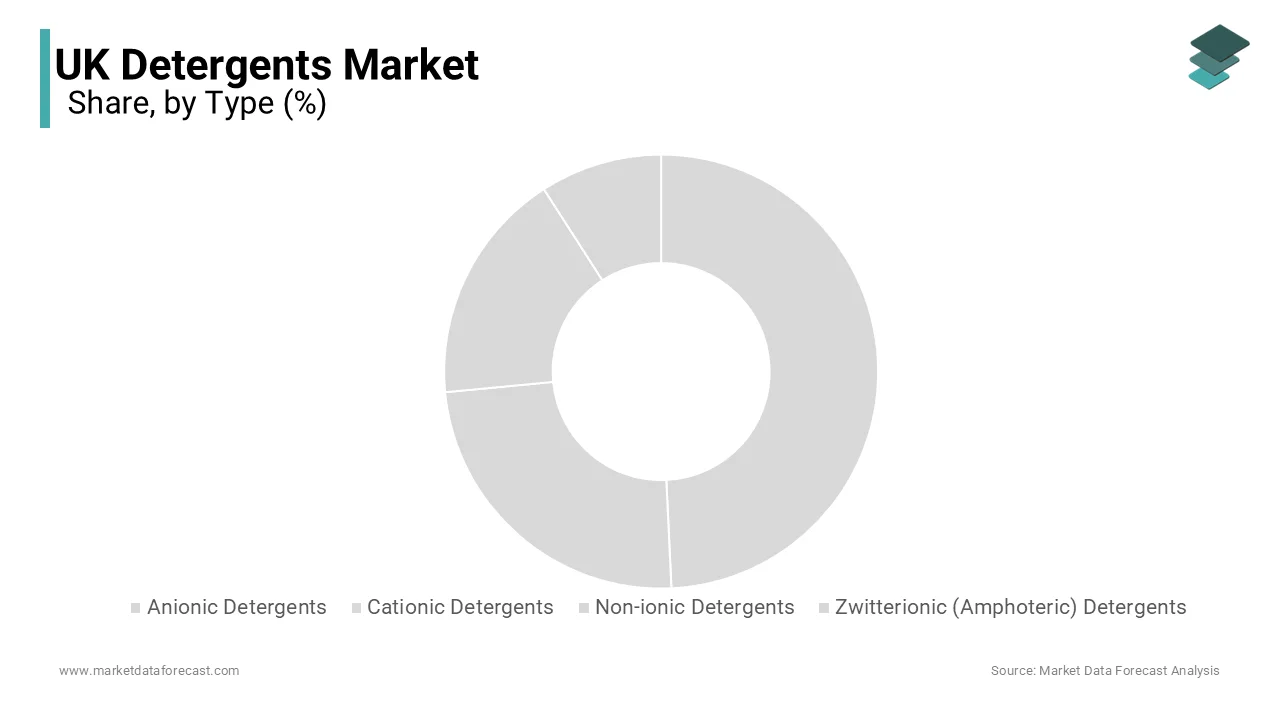
The powder segment is projected to register a fastest CAGR of 3.5% from 2026 to 2034 with the cost effectiveness and environmental consciousness among budget aware consumers. While overall volume has declined relative to liquids powder is experiencing a resurgence due to its superior performance in removing mud and ground in dirt making it ideal for families with outdoor active lifestyles. Consumers cite price as the primary factor for choosing powder detergents, which typically offer a lower cost per wash compared to liquid or capsule alternatives. The absence of water in powder formulations reduces transportation weight and carbon emissions appealing to environmentally conscious shoppers who prioritize sustainability. Recent innovations in enzyme technology have improved the solubility of powders in cold water addressing previous concerns about residue. Eco friendly brands are launching plastic free cardboard packaged powders which align with zero waste goals and attract younger demographics.
By End User Insights
The household segment held a dominant share of the United Kingdom detergent market in 2025 with the consistent and high frequency of laundry and dishwashing activities in domestic settings. With millions of homes across the country generating daily cleaning needs this sector provides a stable and predictable revenue base for manufacturers. The cultural emphasis on hygiene and presentability ensures that laundry remains a non-negotiable routine with the average family completing multiple loads per week. Homeowners invest in a variety of specialized products including color care delicates and antibacterial formulas to meet diverse fabric care requirements. The rise of home working has increased the wear and tear on casual clothing necessitating more frequent washing cycles. Consumer loyalty to established brands is strong in this segment as trust in performance and scent profiles is built over years of usage. Retail promotions and loyalty programs further incentivize regular purchases ensuring steady turnover.
The commercial and industrial segment is esteemed to register a fastest CAGR of 4.2% from 2026 to 2034 with the recovery of the hospitality healthcare and food service sectors. Businesses in these industries require heavy duty cleaning agents that meet strict hygiene standards and regulatory compliance for public safety. The sector has seen a robust rebound in occupancy and dining rates leading to increased demand for professional grade laundry and dishwashing solutions. Hotels and hospitals prioritize industrial detergents that offer superior sanitization and stain removal capabilities to maintain reputation and prevent cross contamination. The outsourcing of laundry services to specialized facilities has centralized purchasing allowing for bulk contracts and long term supply agreements. Regulatory pressures regarding infection control have heightened the need for certified disinfectant detergents in healthcare settings driving adoption of advanced formulations. Food processing plants require rigorous cleaning protocols to ensure product safety further boosting industrial detergent consumption. Manufacturers respond by developing concentrated and automated dosing systems that improve efficiency and reduce labor costs for commercial clients.
COMPETITIVE LANDSCAPE
The competition within the United Kingdom detergent market is characterized by intense rivalry among multinational corporations and agile private label brands vying for consumer attention in a mature landscape. Major players leverage their brand heritage and extensive distribution networks to maintain dominance, while continuously innovating to prevent commoditization. The presence of strong supermarket own brands adds significant pressure forcing branded manufacturers to justify premium pricing through superior efficacy and unique features. Competitive dynamics are further complicated by the convergence of performance and sustainability where eco credentials become as important as cleaning power. Companies compete not only on product quality but also on packaging innovation and corporate responsibility which have become key differentiators for discerning shoppers. Price wars occasionally erupt during promotional periods eroding margins but serving as necessary tactics to retain shelf space. This highly contested environment ensures that only those who can balance innovation cost efficiency and brand trust successfully sustain long term growth.
KEY MARKET PLAYERS
A few major players in the UK detergent market include
- Unilever
- Procter & Gamble (P&G)
- Reckitt
- Henkel
- McBride plc
- Astonish
- Ecover
- Bio-D
- Miele
- SC Johnson
- The Clorox Company
- Persil
- Fairy
- Method
- Surcare
Major Strategies Used By Key Market Participants
Key players in the United Kingdom detergent market employ several strategic approaches to maintain competitiveness and drive growth. Product innovation remains central as companies develop concentrated formulas and eco-friendly ingredients to differentiate their offerings. Sustainability initiatives are increasingly critical with firms adopting recyclable packaging and refill systems to align with consumer values. Strategic partnerships with retailers facilitate prominent shelf placement and promotional activities that boost visibility. Digital transformation enables direct consumer engagement through educational content and personalized recommendations. Pricing strategies vary from premium positioning for specialized solutions to competitive pricing for mass market segments. Marketing efforts focus on demonstrating efficacy and environmental benefits to build trust. These combined strategies allow manufacturers to navigate regulatory complexities and respond effectively to evolving consumer preferences in the dynamic UK environment.
Leading Players in the United Kingdom Market
- Unilever maintains a dominant presence in the United Kingdom detergent market through its iconic Persil brand which is synonymous with quality cleaning and fabric care. The company focuses on innovation by developing concentrated formulas that perform effectively at lower temperatures to support energy saving goals. Recent initiatives, include launching plastic free laundry sheets and expanding refill stations in major supermarkets to reduce packaging waste. Unilever leverages its extensive distribution network to ensure product availability across all retail channels from hypermarkets to convenience stores. Their strategic emphasis on sustainability resonates with environmentally conscious British consumers who prioritize eco-friendly household products. This commitment to responsible innovation ensures they remain a preferred choice for households seeking reliable and sustainable cleaning solutions.
- Reckitt Benckiser contributes significantly to the United Kingdom market with its Vanish and Finish brands which cater to specialized stain removal and dishwashing needs. The company emphasizes scientific research to create powerful enzymatic formulas that tackle tough stains while protecting fabric integrity. Recent actions involve introducing oxygen-based bleach alternatives that are safer for colors and the environment. Reckitt partners with retailers to promote bundle offers and loyalty programs that encourage repeat purchases. Their focus on premiumization through advanced product formats such as gels and pods appeals to consumers seeking convenience and superior performance. The company also invests in sustainable packaging initiatives, including recycled materials and reduced plastic usage.
- Procter And Gamble strengthens its position in the United Kingdom detergent market through its Ariel and Fairy brands which are trusted for their cleaning efficacy and value. The company utilizes advanced capsule technology to deliver precise dosing and consistent results for busy households. Recent developments, include expanding their range of sensitive skin formulations to address growing health concerns among consumers. Procter And Gamble collaborates with washing machine manufacturers to optimize detergent performance for modern appliances. Their strategic focus on supply chain resilience ensures stable product availability despite global disruptions. The company also promotes recycling programs for flexible packaging to enhance its sustainability credentials.
Recent Major Actions to Strengthen Market Position
In July 2023, Unilever PLC launched a new plastic free laundry sheet format for Persil in major UK retailers. This launch is anticipated to attract eco conscious shoppers and strengthen the Uk detergent market.
MARKET SEGMENTATION
This research report on the UK detergents market is segmented and sub-segmented into the following categories.
By Type
- Anionic Detergents
- Cationic Detergents
- Non-ionic Detergents
- Zwitterionic (Amphoteric) Detergents
By End User
- Laundry Cleaning Products
- Household Cleaning Products
- Dishwashing Products
- Fuel Additives
- Biological Reagents
- Other