- Product Description Description
- Table of Contents TOC
- List of Table & Figure LOT
- Get Free Sample PDF Sample PDF
Market Size, 2025
$25.28 BnMarket Estimate, 2026
$27.19 BnMarket Forecast, 2034
$46.21 BnCAGR, 2026–2034
7.52%UK Energy Drinks Market Report Summary
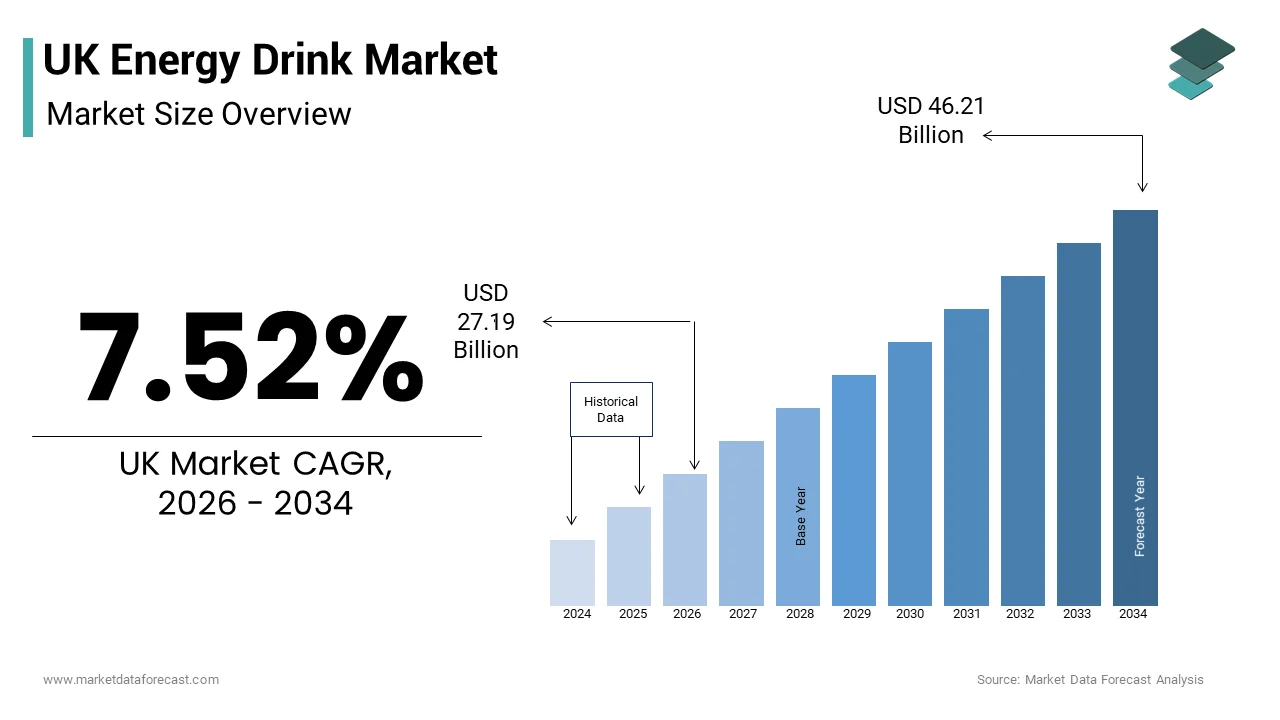
The UK energy drinks market was valued at USD 25.28 billion in 2025, is estimated to reach USD 27.19 billion in 2026, and is projected to reach USD 46.21 billion by 2034, expanding at a CAGR of 7.52% during the forecast period from 2026 to 2034. The UK energy drinks market is witnessing robust growth as consumers increasingly seek functional beverages that enhance energy, mental alertness, and physical performance. Rising demand from young adults, fitness enthusiasts, students, and working professionals, combined with evolving lifestyles and on-the-go consumption habits, is fueling market expansion. Manufacturers are continuously introducing innovative formulations featuring natural caffeine, vitamins, plant-based ingredients, and reduced-sugar options to meet changing consumer preferences. The expansion of organized retail, rapid growth of e-commerce, and strategic marketing partnerships with sports, gaming, and entertainment brands are further strengthening market demand across the United Kingdom.
Key Market Trends
- Health-conscious consumers are driving demand for low-sugar, sugar-free, and naturally formulated energy drinks with functional ingredients.
- Brands are expanding product portfolios with botanical extracts, electrolytes, adaptogens, and vitamin-enriched formulations to appeal to wellness-focused consumers.
- Digital marketing campaigns, esports sponsorships, and collaborations with athletes and influencers are strengthening brand visibility among younger demographics.
- Sustainable packaging initiatives, including recyclable aluminum cans and environmentally responsible production practices, are gaining importance across the industry.
- Premium and functional energy beverages targeting specific lifestyle needs, including fitness, productivity, and cognitive performance, are becoming increasingly popular.
Segmental Insights
Based on product, the energy drinks segment accounted for 46.2% of the UK energy drinks market share in 2025. The segment continues to dominate due to strong consumer demand for beverages that provide immediate energy support, improved concentration, and enhanced physical performance across diverse consumption occasions.
Based on packaging, the cans and tins segment held the leading share of the UK energy drinks market in 2025. Their popularity is driven by portability, product freshness, convenient storage, rapid chilling capability, and widespread availability across retail and convenience outlets.
Based on flavor, the citrus flavors segment captured 35.4% of the UK energy drinks market share in 2025. Citrus-based products remain highly preferred because of their refreshing taste profile, broad consumer appeal, and compatibility with both traditional and sugar-free formulations.
Based on distribution channel, the supermarkets and hypermarkets segment accounted for the largest share of the UK energy drinks market in 2025. Extensive product assortments, competitive pricing, promotional offers, and strong nationwide retail networks continue to make these stores the preferred purchasing destination for consumers.
Regional Insights
England dominated the UK energy drinks market by accounting for 85.3% of the market share in 2025, supported by its large consumer base, extensive retail infrastructure, high urbanization, and strong demand for convenience beverages. The region benefits from widespread product availability across supermarkets, convenience stores, gyms, and online retail platforms. Scotland ranked second with an 8.3% market share, driven by growing health awareness, increasing demand for functional beverages, and expanding distribution networks. Rising product innovation and continued investment in premium and healthier energy drink offerings are expected to support market growth across both regions throughout the forecast period.
Competitive Landscape
The UK energy drinks market is highly competitive, with global beverage manufacturers and regional brands competing through product innovation, brand differentiation, and strategic marketing initiatives. Leading companies are investing in healthier formulations, functional ingredients, sustainable packaging, and premium product launches to address evolving consumer preferences. Partnerships with sports organizations, esports events, music festivals, and digital influencers continue to strengthen brand recognition and customer engagement. Companies are also expanding omnichannel distribution, enhancing e-commerce capabilities, and introducing limited-edition flavors to capture emerging consumer trends. As demand for functional beverages continues to rise, market participants are focusing on innovation, nutritional value, and sustainability to strengthen their competitive advantage and expand their presence in the UK market.
Prominent players in the UK energy drinks market include Red Bull GmbH (Austria), Monster Beverage Corporation (U.S.), PepsiCo, Inc. (U.S.), The Coca-Cola Company (U.S.), Rockstar Energy Drink (U.S.), Lucozade Ribena Suntory Ltd. (U.K.), Amway Corp. – XS Energy (U.S.), Osotspa PCL (Thailand), AJE Group – Volt Energy (Peru), and Carabao Group PCL (Thailand).
UK Energy Drinks Market Size
The UK energy drinks market size was valued at USD 25.28 billion in 2025 and is anticipated to reach USD 27.19 billion in 2026 to reach USD 46.21 billion by 2034, growing at a CAGR of 7.52% during the forecast period from 2026 to 2034.
Current Introduction and Definition
The energy drinks are non-alcoholic beverages, where products formulated to enhance mental alertness and physical performance through ingredients, such as caffeine, taurine, and B vitamins. The cultural integration of these beverages is evident in their widespread availability, across convenience stores supermarkets and hospitality venues throughout England Scotland Wales and Northern Ireland. Consumption patterns reflect a society increasingly oriented toward high productivity and extended working hours where quick functional solutions are prioritized over traditional rest methods. The volume of energy drink sales has shown resilience despite broader economic pressures indicating deep rooted consumer dependency. The demographic profile skews heavily toward younger consumers with individuals aged 16 to 24 years representing a significant portion of regular users. Regulatory scrutiny regarding labeling and marketing practices continues to shape product development strategies, while health consciousness drives innovation in sugar free and natural ingredient variants.
MARKET DRIVERS
Rising Prevalence of Demanding Work Schedules and Academic Pressures Fuels Sustained Demand for Functional Beverages
The intensifying pace of modern professional and educational environments for energy drink consumption is additionally fuelling the growth of the United Kingdom energy drinks market. Workers in sectors, such as technology finance and healthcare frequently endure extended shifts that necessitate sustained cognitive focus and physical endurance beyond normal circadian rhythms. The average weekly working hours for full time employees in the UK remain among the highest in Europe with many individuals reporting regular overtime commitments. This structural demand for prolonged alertness creates a reliable consumer base that views energy drinks as essential tools for maintaining productivity rather than optional indulgences. Students facing rigorous examination periods and competitive academic landscapes similarly turn to these beverages to manage sleep deprivation and enhance concentration during late night study sessions. The normalization of hustle culture within British society further reinforces this behavior where resting is often perceived as unproductive. Employers increasingly recognize this trend with some workplaces providing vending machines stocked with energizing options to support staff during critical project deadlines. This institutional acceptance legitimizes consumption and embeds these products deeper into daily routines ensuring consistent demand regardless of broader economic fluctuations or seasonal variations in discretionary spending power.
Expanding Fitness Culture and Active Lifestyle Adoption Drives Consumption Among Health Conscious Demographics
The proliferation of fitness centers gyms and organized sports activities that utilizes energy drinks as pre workout supplements is another factor boosting the growth of the United Kingdom energy drinks market. Participation in physical exercise has grown significantly with millions of Britons engaging in regular training routines that require enhanced stamina and recovery support. As per statistics from Sport, England approximately 63% of adults in England participate in at least one sporting activity per week reflecting a national commitment to physical well being. This active population seeks beverages that provide immediate energy bursts without the heavy caloric load associated with traditional soft drinks leading to increased preference for zero sugar and low calorie energy drink variants. The rise of marathon running cycling clubs and high intensity interval training communities has further normalized the use of functional beverages as part of athletic preparation protocols. Brands have responded by formulating products with added electrolytes and amino acids to appeal specifically to this discerning audience who prioritize both performance enhancement and health metrics. Social media influencers within the fitness sphere frequently endorse these products amplifying their visibility and credibility among younger consumers who aspire to similar lifestyles.
MARKET RESTRAINTS
Stringent Regulatory Frameworks and Sugar Taxation Policies Constrain Product Formulation and Pricing Strategies
The implementation of robust public health regulations, particularly concerning sugar content and marketing restrictions is one of the major factors hindering the growth of the United Kingdom energy drinks market. The Soft Drinks Industry Levy introduced by the government imposes financial penalties on producers whose beverages exceed specific sugar thresholds forcing companies to reformulate recipes or absorb higher production costs. Additionally, the Committee of Advertising Practice enforces strict guidelines prohibiting the marketing of high caffeine drinks to children under 16 years, which limits promotional channels and reduces brand visibility among younger demographics who historically constitute a large user base. These regulatory measures increase compliance costs and restrict creative freedom in advertising campaigns making it difficult for new entrants to gain market traction. Retailers also face pressure to limit shelf space for high sugar variants further complicating distribution strategies. The cumulative effect of these policies is a compressed profit margin environment where manufacturers must balance health compliance with consumer satisfaction often resulting in higher retail prices that may deter price sensitive buyers during periods of economic uncertainty.
Growing Health Consciousness and Awareness of Adverse Effects Deter Regular Consumption Patterns
Increasing public awareness regarding the potential health risks associated with excessive energy drink consumption is also inhibiting the growth of the United Kingdom energy drinks market. Medical professionals and health organizations in the United Kingdom have raised concerns about links between high caffeine intake and cardiovascular issues anxiety disorders and sleep disturbances, particularly among adolescents and young adults. The excessive consumption of energy drinks can lead to heart palpitations and increased blood pressure prompting warnings against daily intake exceeding recommended caffeine limits. This medical guidance has permeated public discourse leading many consumers to voluntarily reduce their consumption frequency or switch to healthier alternatives such as green tea or natural fruit juices. The rise of wellness movements emphasizing clean eating and minimal processing has further stigmatized artificial ingredients commonly found in conventional energy drinks including synthetic colors and preservatives. Schools and universities have begun implementing bans on energy drink sales on campus reinforcing the perception of these products as unhealthy choices. This shifting consumer sentiment forces manufacturers to invest heavily in research and development for cleaner label products, while simultaneously combating negative perceptions through transparent communication strategies that often fail to fully restore consumer confidence.
MARKET OPPORTUNITIES
Innovation in Natural and Organic Ingredient Formulations Opens New Revenue Streams
The growing consumer preference for clean label products to differentiate their offerings through natural and organic ingredient sourcing is ascribed to set up new opportunities for the growth of the United Kingdom energy drinks market. Modern British consumers increasingly scrutinize product labels seeking transparency about origins and processing methods, which creates demand for beverages free from artificial additives synthetic colors and high fructose corn syrup. Manufacturers can capitalize on this trend by developing energy drinks infused with natural caffeine sources, such as guarana green tea extract or yerba mate, which provide sustained energy release without the jittery effects associated with synthetic caffeine. Incorporating adaptogenic herbs like ashwagandha or ginseng, further enhances appeal by offering stress reduction benefits alongside energy boosting properties. These premium positioning strategies allow brands to command higher price points and attract health-conscious demographics, who previously avoided conventional energy drinks due to ingredient concerns. Retail partnerships with specialty health stores and upscale supermarkets provide additional distribution channels that reinforce the premium image.
Expansion Into Emerging Functional Beverage Categories Diversifies Product Portfolios
The emergence of energy drinks with other functional beverage categories such as hydration nootropics and immunity support offers substantial growth opportunities for innovative manufacturers. The expansion into emerging functional beverage categories is also to promote the growth of the United Kingdom energy drinks market. Consumers in the United Kingdom are increasingly seeking multifunctional products that address multiple health needs simultaneously rather than single benefit solutions. This trend enables brands to develop hybrid beverages that combine energy boosting ingredients with electrolytes for hydration antioxidants for immune support or cognitive enhancers for mental clarity. The global functional beverage sector is expanding rapidly with UK consumers showing particular interest in products that support overall well-being beyond mere stimulation. Launching lines focused on specific occasions, such as post workout recovery, morning focus, or afternoon slump mitigation, allows companies to target distinct usage scenarios and increase consumption frequency. Collaborations with nutritionists and sports scientists lend credibility to these formulations ensuring they deliver tangible benefits that resonate with educated consumers. Digital marketing campaigns can effectively communicate these nuanced value propositions through targeted content that educates users on the science behind ingredient synergies.
MARKET CHALLENGES
Intense Competition From Established Global Brands and Private Label Offerings Squeezes Margins
The fierce competition dominated by multinational corporations with extensive resources for marketing and distribution alongside aggressive private label expansions by major retailers.The intense competition from established global brands and private label offerings is quite challenge for the growth of the United kingdom energy drinks market. Simultaneously, supermarket chains have developed their own private label energy drinks that offer comparable formulations at significantly lower prices attracting cost conscious consumers during periods of inflationary pressure. This dual pressure forces independent manufacturers to continuously innovate while keeping prices competitive, which erodes profit margins and limits investment capacity for research and development. Shelf space allocation becomes a critical battleground where established brands leverage long term relationships with retailers to secure prime positioning leaving limited visibility for newer entrants. The saturation of the market means that gaining consumer attention requires substantial marketing expenditure, which may not yield proportional returns given the fragmented nature of consumer preferences.
Supply Chain Volatility and Raw Material Cost Fluctuations Impact Production Stability
The energy drink manufacturers are facing disruptions due to supply chain disruptions and fluctuating costs of key ingredients, such as caffeine, taurine, and natural extracts, which is also to limit the growth of the United Kingdom energy drinks market. Geopolitical tensions trade policy changes and climate related agricultural issues contribute to unpredictable availability and pricing of The raw materials essential for production. cost of sourcing high quality natural ingredients has risen significantly due to increased demand and limited supply from key producing regions affecting profit margins for brands committed to clean label formulations. Logistics complications including port congestion and transportation delays further exacerbate these issues leading to inventory shortages and inconsistent product availability on retail shelves. These operational uncertainties make long term planning difficult and force companies to maintain higher safety stock levels which tie up capital and increase storage costs. Currency fluctuations between the British pound and major trading currencies add another layer of financial risk particularly for companies that import ingredients from international suppliers. Smaller manufacturers lack the bargaining power to negotiate favorable contracts or absorb sudden cost increases making them vulnerable to market shocks. To mitigate these risks companies must diversify supplier bases and invest in local sourcing initiatives but these strategies require time and substantial upfront investment.
REPORT COVERAGE
| REPORT METRIC | DETAILS |
| Market Size Available | 2025 to 2034 |
| Base Year | 2025 |
| Forecast Period | 2026 to 2034 |
| CAGR | 7.52% |
| Segments Covered | By Product, Packing, Flavor, Distribution Channel,Country |
| Various Analyses Covered | Global, Regional, and Country Level Analysis, Segment-Level Analysis; DROC, PESTLE Analysis; Porter’s Five Forces Analysis; Competitive Landscape; Analyst Overview of Investment Opportunities. |
| Regions Covered | London, South East, North West, East of England, South West, Scotland, West Midlands, Yorkshire and The Humber, East Midlands, Others |
| Market Leaders Profiled | Red Bull GmbH (Austria), Monster Beverage Corporation (U.S.), PepsiCo, Inc. (U.S.), The Coca-Cola Company (U.S.), Rockstar Energy Drink (U.S.), Lucozade Ribena Suntory Ltd. (U.K.), Amway Corp. – XS Energy (U.S.), Osotspa PCL (Thailand), AJE Group – Volt Energy (Peru), Carabao Group PCL (Thailand) |
SEGMENTAL ANALYSIS
By Product Insights
The energy drinks segment was the largest by accounting for 46.2% of the United Kingdom energy drinks market share in 2025 due to their entrenched position in daily consumer routines and higher volume consumption compared to concentrated alternatives. The standard 250 milliliter to 500 milliliter can format aligns perfectly with immediate hydration needs during work breaks study sessions or social gatherings making it the default choice for the majority of users. This segment benefits from extensive distribution networks ensuring availability in virtually every retail outlet from large supermarkets to small convenience stores. The familiarity of this format reduces purchase hesitation and encourages repeat buying behavior among loyal customers who integrate these beverages into their weekly shopping lists. Manufacturers invest heavily in maintaining this dominance through consistent branding and flavor innovation within the traditional can format which reinforces consumer trust and recognition. The lower price point per unit compared to premium specialized shots makes energy drinks accessible to a broader demographic including students and young professionals with limited disposable income.
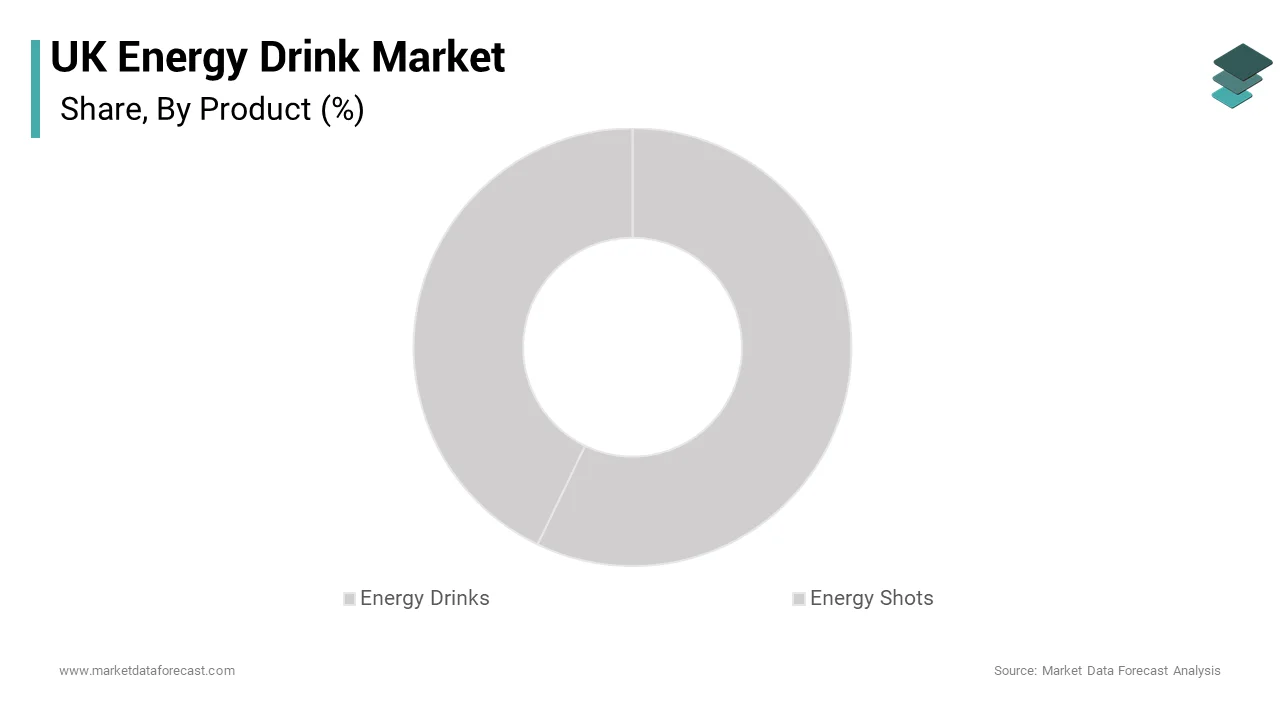
The energy shots segment is anticipated to grow at a fastest CAGR of 34.6% during the forecast period with the increasing demand for ultra convenient and portable solutions among busy urban professionals. These small volume highly concentrated beverages, typically ranging from 50 milliliters to 100 milliliters offer a quick caffeine boost without the bulk of traditional cans making them ideal for on the go consumption. The rising number of commuters and mobile workers, who prioritize efficiency and minimalism in their daily routines. The compact size allows these products to fit easily into pockets bags or car cup holders addressing the needs of individuals who require immediate alertness during travel or between meetings. Manufacturers have responded by introducing sleek packaging designs and potent formulations that deliver rapid effects appealing to time constrained consumers. The perception of energy shots as premium professional tools rather than casual beverages enhances their appeal among higher income demographics who value discretion and effectiveness.
By Packaging Insights
The cans and tins segment held a dominant share of the United Kingdom energy drinks market in 2025 due to their superior ability to preserve product quality and extend shelf life effectively. Aluminum cans provide an impermeable barrier against light oxygen and moisture, which are factors in maintaining the stability of sensitive ingredients, such as caffeine and vitamins. According to packaging industry, data aluminum cans protect beverage contents from degradation for up to 12 months ensuring that consumers receive products with consistent taste and potency regardless of storage conditions. This reliability is crucial for manufacturers who distribute products across vast geographical areas requiring long transit times and varied storage environments. The robustness of cans also minimizes the risk of damage during transportation and handling reducing waste and associated costs for retailers and producers. Furthermore, aluminum is infinitely recyclable which aligns with growing environmental consciousness among British consumers and regulatory pressures for sustainable packaging solutions. This environmental benefit enhances brand image and encourages preference for canned products over less sustainable alternatives.
The PET bottles segment is rising consumer demand for resealable options that support on the go consumption. Unlike single serve cans PET bottles allow users to consume beverages in multiple sittings which appeals to health conscious individuals who prefer to moderate their intake of caffeine and sugar. According to market trends the resealable feature is particularly valued by commuters and students who need to manage hydration throughout the day without committing to finishing an entire container at once. This flexibility aligns with lifestyle changes emphasizing mindfulness and controlled consumption patterns. Manufacturers have responded by introducing PET bottles in various sizes ranging from 330 milliliters to 1 liter catering to diverse usage scenarios from quick boosts to extended hydration. The transparency of PET material also allows consumers to visually inspect the product enhancing trust and appeal.
By Flavor Insights
The citrus flavors segment was the largest by holding 35.4% of the United Kingdom energy drinks market share in 2025 due to their universal appeal and refreshing taste profile that masks the inherent bitterness of caffeine and other functional ingredients. Flavors, such as lemon lime and orange, provide a crisp and clean sensation that resonates with a broad demographic, including those who may be sensitive to sweeter or more exotic tastes. This widespread acceptance is rooted in the familiar association of citrus with vitality and cleanliness, which aligns well with the energizing promise of these beverages. The acidity of citrus fruits also enhances the perception of freshness making these drinks particularly appealing during warm weather or after physical exertion. Manufacturers leverage this popularity by offering a wide variety of citrus blends from classic lemonade to zesty grapefruit ensuring that there is a variant suitable for every palate. The consistency of demand for citrus flavors allows producers to maintain stable production schedules and optimize ingredient sourcing reducing costs and ensuring reliable availability.
The berries segment is esteemed to grow at a fastest CAGR of 12.2% during the forecast period owing to the increasing popularity of antioxidant rich profiles that attract health conscious users. Flavors such as blueberry raspberry and mixed berry are associated with numerous health benefits including improved cognitive function and reduced inflammation which complement the functional promises of energy drinks. The antioxidant content in berries is widely recognized for supporting overall well-being making these flavors appealing to consumers, who seek holistic health benefits from their beverages. This perception drives demand among millennials and Gen Z consumers, who prioritize wellness in their purchasing decisions. Manufacturers capitalize on this trend by highlighting the natural origin of berry flavors and their contribution to a balanced diet. The vibrant colors and complex taste profiles of berries also offer a premium sensory experience that differentiates these products from standard offerings.
By Distribution Channel Insights
The supermarkets and hypermarkets segment was the largest by accounting for United Kingdom energy drinks market due to their extensive reach and one stop shopping convenience that drives high volume sales. These retail giants operate thousands of stores across the country ensuring that energy drinks are accessible to the vast majority of the population. The ability to buy energy drinks alongside groceries and other household items simplifies the shopping experience and encourages bulk purchases. Supermarkets also leverage their buying power to negotiate favorable terms with manufacturers enabling competitive pricing and frequent promotional offers that attract price sensitive consumers. The presence of dedicated beverage aisles and end cap displays enhances product visibility and stimulates impulse buys. Additionally, the trusted reputation of major supermarket brands assures consumers of product quality and safety further reinforcing purchasing confidence.
The online retail segment is expected to grow at a fastest CAGR of 9.1% during the forecast period owing to the digital convenience and the proliferation of home delivery services. The shift toward e commerce has been accelerated by changing consumer behaviors and the widespread adoption of smartphones and internet connectivity. Online sales of food and beverages in the UK have grown significantly with energy drinks benefiting from this trend due to their non-perishable nature and ease of shipping. Consumers appreciate the ability to browse a wide variety of brands and flavors from the comfort of their homes and have products delivered directly to their doorsteps. This convenience is particularly appealing to busy professionals and parents who value time saving solutions. Subscription models offered by online retailers further enhance customer retention by ensuring regular supply of favorite products at discounted prices. The ability to compare prices and read reviews online empowers consumers to make informed purchasing decisions fostering trust and loyalty toward digital platforms.
COUNTRY LEVEL ANALYSIS
England Energy Drinks Market Analysis
England was the top performer in the United Kingdom energy drinks market by accounting for 85.3% of share in 2025 due to its large population and dense urban centers. The high penetration rates and intense competition among global and local brands is also bolstering the growth of the market. London, Manchester, and Birmingham, serve as key hubs where demand is driven by a young demographic and vibrant nightlife scenes. According to demographic data from the Office for National Statistics, England is home to over 56 million people with a significant proportion aged between 15 and 34 years who are the primary consumers of energy drinks. The high concentration of universities and corporate offices in major cities fuels consistent demand for functional beverages among students and professionals. Retail infrastructure in England is highly developed with extensive coverage of supermarkets convenience stores and online delivery services ensuring widespread availability. The presence of major manufacturing facilities and distribution centers within England also supports efficient supply chain operations and timely product launches.
Scotland Energy Drinks Market Analysis
Scotland energy drinks market held second position by holding 8.3% of the share in 2025 with a distinct regional character influenced by local preferences and lifestyle factors. Glasgow and Edinburgh are the primary consumption centers, where urban dynamics mirror those of larger English cities but with a tighter community feel. The rugged terrain and active lifestyle prevalent in many parts of Scotland encourage the use of energy drinks for endurance and recovery. Local retailers and independent stores play a crucial role in distribution often stocking regional favorites alongside national brands. The Scottish government's focus on public health initiatives has led to stricter guidelines on marketing to minors influencing how brands engage with younger consumers.
COMPETITIVE LANDSCAPE
The competition in the United Kingdom energy drinks market is intense and characterized by the presence of global giants alongside agile local brands and private label offerings. Established players leverage strong brand equity extensive distribution networks and substantial marketing budgets to maintain dominance. They continuously innovate with new flavors and functional benefits to retain consumer interest and counter emerging trends. Private label products from major retailers pose a significant threat by offering comparable quality at lower prices attracting cost conscious buyers. New entrants face high barriers to entry due to stringent regulations and established consumer loyalties but find opportunities in niche segments, such as organic or natural energy drinks. The market sees frequent promotional activities and price wars particularly during peak seasons and holidays. Digital marketing and influencer partnerships have become crucial tools for brand visibility and engagement.
KEY MARKET PLAYERS
A wanted dominating marker players that are in the UK energy drink market are
- Red Bull GmbH (Austria)
- Monster Beverage Corporation (U.S.)
- PepsiCo, Inc. (U.S.)
- The Coca-Cola Company (U.S.)
- Rockstar Energy Drink (U.S.)
- Lucozade Ribena Suntory Ltd. (U.K.)
- Amway Corp. – XS Energy (U.S.)
- Osotspa PCL (Thailand)
- AJE Group – Volt Energy (Peru)
- Carabao Group PCL (Thailand)
Top Players In The Market
- Red Bull GmbH maintains a dominant presence in the United Kingdom through its iconic branding and extensive sponsorship of extreme sports and cultural events. The company consistently invests in high visibility marketing campaigns that associate its product with energy adventure and performance. Recent actions, include launching limited edition flavors and expanding its distribution network into independent convenience stores to enhance accessibility. Red Bull also focuses on sustainability initiatives by introducing recyclable packaging options to align with consumer environmental values. The brand actively engages with younger demographics through digital platforms and esports partnerships ensuring relevance in evolving social landscapes. Its commitment to quality and consistent taste profile reinforces consumer loyalty while strategic collaborations with music festivals strengthen emotional connections. Red Bull continues to innovate with sugar free variants catering to health-conscious trends without compromising its core identity as a premium energy provider.
- Monster Beverage Corporation strengthens its position in the United Kingdom by leveraging a diverse portfolio of brands, including Monster Energy and Reign Total Body Fuel. The company focuses on innovation by introducing new flavors and functional benefits such as added vitamins and electrolytes. Recent efforts involve expanding retail partnerships with major supermarket chains to secure prime shelf space and increase visibility. Monster actively sponsors gaming tournaments and music events to connect with its target audience of young adults and gamers. The brand emphasizes bold marketing strategies using distinctive can designs and aggressive promotional campaigns to stand out in a crowded market. It also invests in digital engagement through social media challenges and influencer collaborations to drive brand awareness.
- Coca Cola Europacific Partners plays a significant role in the United Kingdom energy drinks market through its distribution of brands like Relentless and Burn. The company leverages its extensive logistics network and strong retailer relationships to ensure widespread product availability across the country. Recent actions include reformulating products to reduce sugar content in response to regulatory pressures and changing consumer preferences. Coca Cola Europacific Partners invests in sustainable packaging solutions, such as increased use of recycled materials to meet environmental goals. The company also focuses on localized marketing campaigns that resonate with British consumers and highlight community engagement. Strategic investments in cold chain infrastructure ensure product quality and freshness enhancing consumer satisfaction.
Top Strategies Used By Key Market Participants
Key players in the United Kingdom energy drinks market employ several strategic approaches to maintain and enhance their competitive positions. Product innovation remains central with companies frequently launching new flavors sugar free variants and functional formulations to meet evolving consumer demands. Brand differentiation through aggressive marketing and sponsorship of sports music and esports events helps build strong emotional connections with target demographics. Expansion of distribution networks ensures widespread availability in supermarkets convenience stores and online platforms maximizing reach and accessibility. Sustainability initiatives, such as recyclable packaging and reduced carbon footprints address growing environmental concerns and improve brand image. Strategic partnerships with retailers and influencers amplify visibility and drive sales through targeted promotions. Companies also focus on digital engagement using social media and data analytics to personalize marketing efforts and enhance customer loyalty.
MARKET SEGMENTATION
This research report on the UK energy drink market is segmented and sub-segmented into the following categories.
By Product Type
- Energy Drinks
- Energy Shots
By Packaging Type
- Cans & Tins
- PET Bottles
- Others
By Flavor
- Citrus
- Tropical fruits
- Berries
- Herbs
- Others
By Distribution Channel
- Supermarkets/Hypermarkets
- Specialty Stores
- Online Retail
- Others