- Product Description Description
- Table of Contents TOC
- List of Table & Figure LOT
- Get Free Sample PDF Sample PDF
Market Size, 2025
$105.85 BnMarket Estimate, 2026
$115.40 BnMarket Forecast, 2034
$215.94 BnCAGR, 2026–2034
9.01%UK Food Delivery Market Report Summary
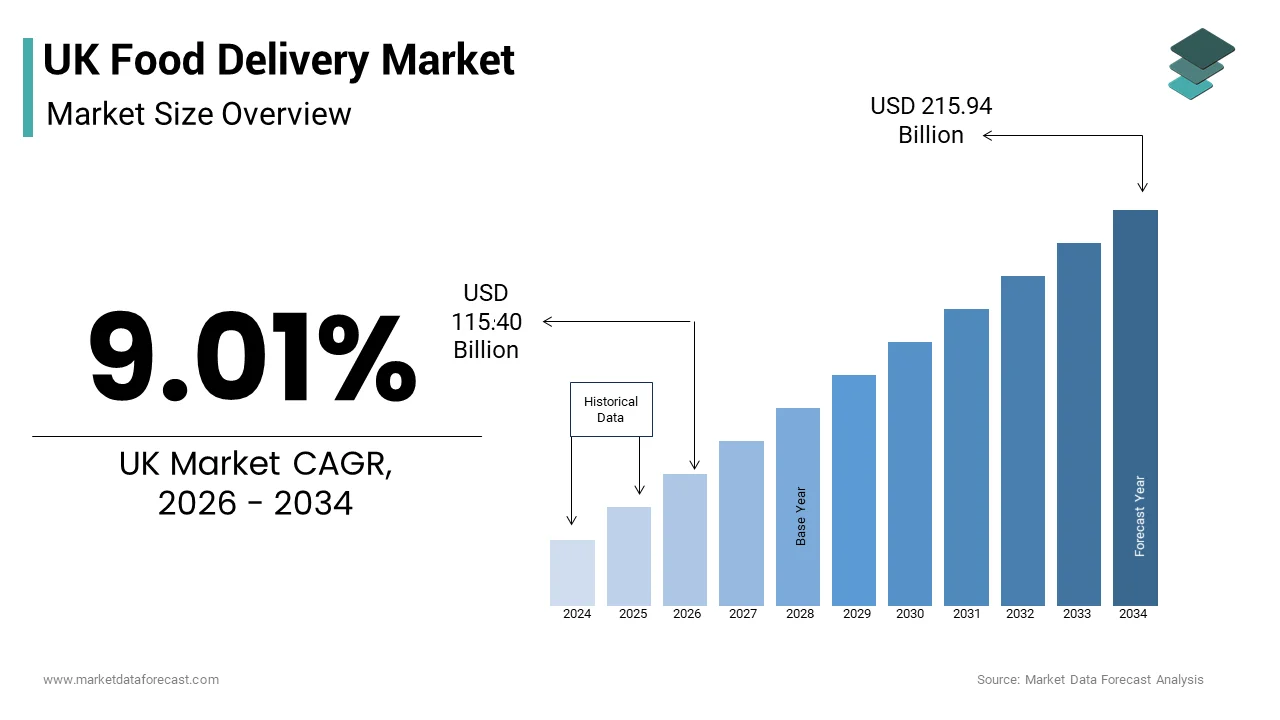
The UK food delivery market was valued at USD 105.85 billion in 2025 and is anticipated to reach USD 115.40 billion in 2026 and further expand to USD 215.94 billion by 2034, growing at a CAGR of 9.01% during the forecast period from 2026 to 2034. The growth of the UK food delivery market is driven by increasing consumer demand for convenience, rising smartphone and internet penetration, and the growing adoption of digital ordering platforms. Changing lifestyles, busy work schedules, and the expansion of quick-service restaurants and cloud kitchens are further fueling market growth. Additionally, advancements in mobile applications, real-time order tracking, and contactless delivery services are enhancing customer experiences and supporting market expansion across the United Kingdom.
Key Market Trends
- Growing preference for app-based food ordering services driven by convenience, speed, and seamless user experiences.
- Increasing adoption of cloud kitchens and virtual restaurant models to optimize operational efficiency and expand delivery coverage.
- Rising use of artificial intelligence, data analytics, and personalized recommendations to improve customer engagement and retention.
- Expansion of contactless delivery and digital payment solutions enhancing convenience and transaction security.
- Growing demand for healthy meal options, sustainable packaging, and environmentally responsible food delivery practices.
Segmental Insights
- Based on type, the platform-to-consumer segment dominated the UK food delivery market in 2025. The segment’s leadership is attributed to the widespread popularity of third-party delivery platforms that connect consumers with a broad range of restaurants, offering convenience, variety, and efficient delivery services.
- Based on channel, the mobile segment held the largest share of the UK food delivery market in 2025. The dominance of this segment is driven by increasing smartphone usage, user-friendly mobile applications, real-time order tracking capabilities, and the growing preference for mobile-based transactions.
- Based on payment mode, the online payment segment accounted for the highest share of the UK food delivery market in 2025. The segment's growth is supported by the increasing adoption of digital wallets, contactless payments, online banking services, and secure payment gateways that simplify the ordering process.
Competitive Landscape
The UK food delivery market is highly competitive, with leading companies focusing on technology innovation, delivery efficiency, customer experience enhancement, and strategic partnerships with restaurants and food service providers. Market participants are investing in artificial intelligence, route optimization technologies, loyalty programs, and cloud kitchen networks to strengthen their market positions. Expansion into new delivery categories, including groceries and convenience products, along with investments in sustainable delivery solutions, continues to shape the competitive landscape.
Prominent players in the UK food delivery market include Uber Eats, Grubhub, DoorDash, Domino’s Pizza, Just Eat Takeaway, Zomato, Food Panda, Swiggy, Deliveroo, and Postmates.
UK Food Delivery Market Size
The UK food delivery market size was valued at USD 105.85 billion in 2025 and is anticipated to reach USD 115.40 billion in 2026 to reach USD 215.94 billion by 2034, growing at a CAGR of 9.01% during the forecast period from 2026 to 2034.
MARKET OVERVIEW
Food delivery represents a dynamic and rapidly evolving sector where digital platforms facilitate the transaction and logistics of prepared meals from restaurants and cloud kitchens to consumers. This ecosystem has transformed from a convenience service into a fundamental component of urban infrastructure driven by smartphone penetration and changing lifestyle patterns. The market encompasses various models including aggregator platforms that connect users with existing restaurants and dedicated delivery services that manage their own logistics networks. According to the Office for National Statistics, 98% of households in the UK had access to the internet, providing the essential digital foundation for online ordering behaviors. The shift toward remote and hybrid work arrangements has altered consumption patterns with lunchtime deliveries becoming as significant as evening meals. As per the Office for National Statistics, the average household spends roughly 11% of its total consumption expenditure on restaurants and hotels, reflecting deep cultural integration of off-premise dining. Urban density in cities like London, Manchester, and Birmingham supports high-frequency delivery operations due to shorter travel distances and concentrated demand. The regulatory environment increasingly focuses on worker rights and environmental sustainability influencing operational strategies. Consumers now prioritize speed, transparency, and variety driving intense competition among providers. The integration of real-time tracking and personalized recommendations has elevated user expectations making technological sophistication a key differentiator. This market continues to adapt to economic pressures and health trends ensuring its relevance in the modern British consumer landscape.
MARKET DRIVERS
Pervasive Smartphone Penetration and Digital Payment Adoption
The pervasive penetration of smartphones and the widespread adoption of seamless digital payment methods is a major factor propelling the UK food delivery market forward. Mobile devices have become the central interface for ordering allowing consumers to browse menus, track deliveries, and provide feedback with unprecedented ease. According to Ofcom, 90% of adults in the UK owned a smartphone, creating a near-universal addressable audience for delivery applications. This high level of connectivity ensures that potential customers are always within reach of promotional offers and service updates. The frictionless nature of mobile wallets and contactless payments has removed traditional barriers to impulse purchasing. As per UK Finance, contactless card transactions accounted for 87% of all day-to-day debit card purchases, indicating a strong consumer preference for quick and secure payment experiences. This behavioral shift reduces checkout abandonment rates and encourages higher order frequencies. Application interfaces have become increasingly sophisticated using geolocation services to present relevant restaurant options based on proximity and past preferences. The integration of biometric authentication further enhances security and speed making the ordering process almost instantaneous. For younger demographics, particularly those aged 18 to 34 who represent a significant portion of the user base, mobile-first experiences are not just preferred but expected. This technological readiness allows platforms to scale rapidly without the need for extensive customer education on how to use digital services.
Changing Lifestyle Patterns and Time Poverty Among Consumers
Changing lifestyle patterns characterized by increased work hours and perceived time poverty further boost the expansion of the UK food delivery market. Modern consumers increasingly value convenience and efficiency over the effort required for meal preparation leading to a structural shift in dining habits. According to the Office for National Statistics, the average full-time worker in the UK works approximately 36.6 hours per week, excluding commuting time, which limits the window available for cooking and cleaning. As per the Office for National Statistics, working families where all parents work make up 76% of families with children, further compressing domestic time resources. This demographic reality creates a consistent need for reliable meal solutions that do not compromise on quality or variety. According to the Office for National Statistics, the rise of single-person households accounts for 30% of all households, which also contributes to this trend as cooking for one is often perceived as inefficient and costly. Food delivery platforms offer access to diverse culinary options that would be difficult to replicate at home satisfying the desire for experimentation without the associated labor. The normalization of working from home has blurred the lines between office and domestic life making midday deliveries a common practice for maintaining productivity. Consumers view the premium paid for delivery as an investment in time savings and mental well-being rather than merely a service fee. This deep-seated behavioural change ensures sustained demand regardless of minor economic fluctuations.
MARKET RESTRAINTS
Rising Operational Costs and Inflationary Pressures
Rising operational costs and persistent inflationary pressures are impeding the UK food delivery market growth. The cost structure of these businesses is heavily influenced by fuel prices, labor wages, and packaging materials, all of which have experienced substantial increases in recent years. According to the Office for National Statistics, the annual consumer price inflation rate for food and non-alcoholic beverages fell to 4.0%, forcing restaurants to raise menu prices, which in turn reduces order volumes on delivery platforms. Delivery drivers face higher expenses for vehicle maintenance and energy, whether they use cars, scooters, or bicycles, impacting their net earnings and retention rates. As per Confederation of British Industry surveys, 45% of hospitality businesses cited rising energy and supply costs as their biggest challenge leading some to withdraw from delivery platforms or increase commission fees passed on to consumers. Packaging costs have also surged due to new environmental regulations requiring sustainable materials, which are often more expensive than traditional plastics. These cumulative cost increases squeeze margins for both platforms and restaurant partners making it difficult to maintain competitive pricing while ensuring service quality. Consumers are becoming more price-sensitive and may reduce frequency of orders or switch to cheaper alternatives such as supermarket ready meals. The inability to fully pass on cost increases to end-users without losing market share creates a delicate balancing act that restricts aggressive expansion and investment in new features.
Regulatory Scrutiny on Gig Economy Labor Practices
Intensifying regulatory scrutiny regarding gig economy labor practices is another major restraint affecting the UK market growth. Legal challenges and legislative changes aim to reclassify independent contractors as workers or employees granting those rights to minimum wage, holiday pay, and pension contributions. According to the Supreme Court ruling in the Uber BV v Aslam case, platform workers are entitled to worker status rather than self-employed status during active periods. This legal shift forces companies to restructure their employment models leading to significant increases in labor costs. As per Trades Union Congress estimates, reclassifying delivery riders could increase operational costs by up to 30% for major platforms. The government has introduced the Employment Rights Bill which seeks to strengthen protections for vulnerable workers further complicating compliance requirements. Platforms must invest in sophisticated scheduling systems and management structures to accommodate these new obligations reducing the algorithmic efficiency that previously drove low costs. Uncertainty around future legislation creates a cautious investment environment where companies hesitate to expand fleets or enter new markets until regulatory frameworks are clarified. Additionally, negative public perception regarding worker treatment can damage brand reputation leading to consumer boycotts or preference for ethically certified competitors. These regulatory headwinds require substantial legal and administrative resources diverting focus from innovation and customer acquisition.
MARKET OPPORTUNITIES
Expansion of Quick Commerce and Dark Kitchen Networks
The expansion of quick commerce and dark kitchen networks presents substantial opportunities for the UK food delivery market. Quick commerce focuses on ultra-fast delivery times, often under 30 minutes, for groceries and prepared meals appealing to consumers with immediate needs. Dark kitchens or cloud kitchens operate without dine-in facilities reducing overhead costs and allowing for greater menu flexibility and location optimization. According to MCA Analysis, the number of dark kitchen sites in the UK grew by 25% in 2023, reaching over 1,000 locations primarily in urban centers like London and Manchester. This model enables brands to test new concepts with minimal risk and scale successful offerings rapidly across multiple sites. Partnerships between delivery platforms and dark kitchen operators create exclusive content that drives user engagement and loyalty. As per Deliveroo reports, sales from virtual brands operating out of dark kitchens increased by 40% year-on-year, demonstrating strong consumer acceptance. These facilities can be strategically placed in areas with high demand but limited restaurant density improving coverage and reducing delivery times. The ability to analyze data on local taste preferences allows operators to tailor menus specifically for neighborhood demographics enhancing satisfaction. Furthermore, dark kitchens can operate multiple brands from a single location maximizing asset utilization and revenue per square foot. This operational efficiency translates to better margins and competitive pricing opportunities. As urban real estate costs remain high, the asset-light nature of dark kitchens offers a scalable solution for meeting growing demand without the constraints of traditional brick and mortar establishments.
Integration of Artificial Intelligence for Personalization and Efficiency
The integration of artificial intelligence and machine learning technologies offers significant opportunities to the UK food delivery market. Advanced algorithms can analyze vast amounts of historical data to predict consumer preferences, optimize delivery routes, and manage inventory levels with high precision. According to IBM research, businesses implementing AI-driven supply chain and customer service solutions report a 20% improvement in forecast accuracy and a 15% reduction in operational costs. For food delivery platforms, AI powers recommendation engines that suggest meals based on past orders, dietary restrictions, and even weather conditions increasing average order value. Dynamic pricing models adjust delivery fees in real-time based on demand and rider availability ensuring balanced marketplace liquidity. As per Accenture analysis, personalized marketing campaigns driven by AI can increase conversion rates by up to 10% by delivering relevant offers at the right moment. Chatbots powered by natural language processing handle customer inquiries and resolve issues instantly improving satisfaction scores while reducing support staff workload. Route optimization algorithms minimize fuel consumption and delivery times by accounting for traffic patterns, road closures, and building access points. Predictive analytics help restaurants prepare for peak hours reducing wait times and food waste. These technological enhancements create a smoother, more intuitive user experience that fosters loyalty. By leveraging data as a strategic asset, platforms can differentiate themselves in a crowded market offering superior service quality and operational resilience.
MARKET CHALLENGES
Environmental Sustainability and Packaging Waste Management
Environmental sustainability and the management of packaging waste is a major challenges to the UK food delivery market as consumers and regulators demand greener practices. The sheer volume of single-use plastics and cardboard generated by daily deliveries contributes significantly to landfill waste and carbon emissions. According to Wrap charity data, the UK generates over 2 million tonnes of packaging waste annually from the food and drink sector with a substantial portion attributed to takeaway services. As per NielsenIQ surveys, 68% of consumers state they prefer brands that demonstrate genuine sustainability commitments. However, transitioning to biodegradable or compostable materials often involves higher costs and logistical complexities regarding disposal infrastructure. Many local councils lack the facilities to process industrial compostable packaging leading to contamination of recycling streams. Delivery vehicles, particularly those using fossil fuels, contribute to urban air pollution prompting calls for electrification of last-mile logistics. As per Department for Transport statistics, transport accounts for 27% of total UK greenhouse gas emissions with last-mile delivery being a growing contributor. Platforms face pressure to offset carbon emissions through tree planting or renewable energy investments which adds to operational expenses. Balancing the convenience of delivery with environmental responsibility requires innovative solutions such as reusable container schemes and optimized routing to reduce mileage. Failure to address these concerns effectively risks regulatory penalties and loss of environmentally conscious customers.
Intense Competition and Customer Retention Difficulties
Intensifying competition and the difficulty of retaining customers in a low-loyalty environment present enduring challenges for players in the UK food delivery market. The barrier to entry for digital platforms is relatively low leading to a saturated market where numerous apps compete for the same user base. Consumers frequently switch between platforms based on promotional offers, delivery fees, and restaurant availability making retention expensive and unpredictable. According to Statista consumer surveys, 55% of UK users have more than one food delivery app installed and regularly compare prices before placing an order. This price sensitivity forces companies into continuous discounting cycles which erode profit margins and devalue the service. As per Deloitte analysis, customer acquisition costs in the digital food sector have risen by 30% in recent years while lifetime value remains stagnant due to churn, and restaurant partners also multi-home across platforms, reducing exclusivity and making it harder for any single provider to offer unique content. Building brand loyalty requires more than just functional utility, it demands emotional connection and consistent service quality which is difficult to maintain at scale. Negative experiences such as late deliveries or incorrect orders can lead to immediate abandonment as switching costs are negligible. Platforms must constantly innovate with loyalty programs, subscription models, and exclusive partnerships to keep users engaged. However, these initiatives require substantial investment and coordination with restaurant partners. The relentless pressure to grow while maintaining profitability in such a fragmented landscape tests the strategic resilience of even the largest market participants.
REPORT COVERAGE
| REPORT METRIC | DETAILS |
| Market Size Available | 2025 to 2034 |
| Base Year | 2025 |
| Forecast Period | 2026 to 2034 |
| CAGR | 9.01% |
| Segments Covered | By Type, Channel, Payment Mode, Country |
| Various Analyses Covered | Global, Regional, and Country Level Analysis, Segment-Level Analysis; DROC, PESTLE Analysis; Porter’s Five Forces Analysis; Competitive Landscape; Analyst Overview of Investment Opportunities. |
| Regions Covered | London, South East, North West, East of England, South West, Scotland, West Midlands, Yorkshire and The Humber, East Midlands, Others |
| Market Leaders Profiled | Uber Eats (U.S.), Grubhub (U.S.), DoorDash (U.S.), Domino’s Pizza (U.S.), Just Eat Takeaway (Europe), Zomato (India), Food Panda (Singapore), Swiggy (India), Deliveroo (Europe), Postmates (U.S.) |
SEGMENTAL ANALYSIS
By Type Insights
The platform-to-consumers segment dominated the market by capturing the highest share of the UK market in 2025 as it offers users access to a vast array of restaurant choices through a single digital interface thereby eliminating the need to navigate multiple individual restaurant websites or phone lines. This aggregation model creates significant network effects where more users attract more restaurants, which in turn attracts more users creating a self-reinforcing cycle of growth and engagement. According to Statista data, over 70% of online food delivery orders in the UK are placed through third-party aggregator platforms such as Just Eat, Deliveroo, and Uber Eats reflecting consumer preference for variety and comparison shopping. These platforms invest heavily in marketing and user experience design ensuring high visibility and ease of use which independent restaurants often cannot afford individually. As per Kantar Worldpanel surveys, 65% of consumers cite the ability to browse multiple cuisines and compare prices as the primary reason for using aggregator apps rather than ordering directly from specific brands. The integration of loyalty programs, subscription services like Deliveroo Plus, and personalized recommendations further enhances stickiness and frequency of use. Platforms also provide logistical support including rider networks and tracking technology which reduces the operational burden on restaurants allowing them to focus on food preparation. This comprehensive service ecosystem addresses key consumer pain points related to discovery, convenience, and reliability cementing the dominance of the platform model in the daily dining habits of British households.
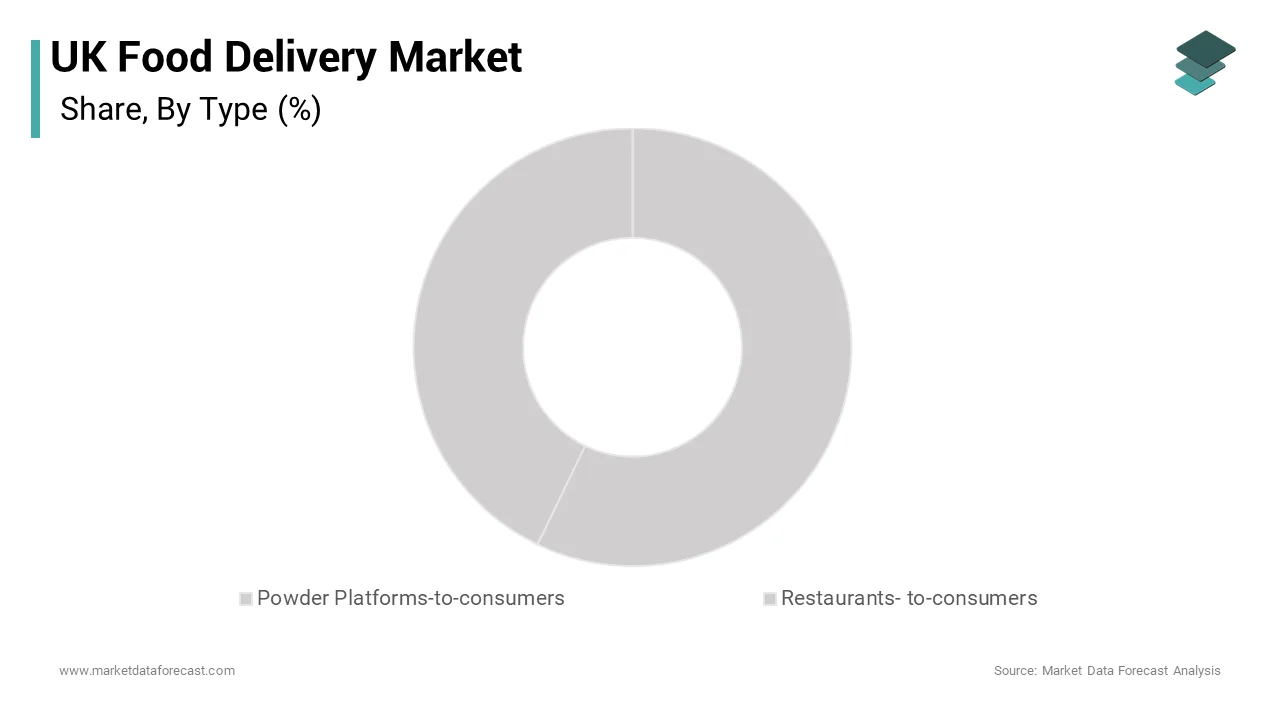
On the other end, the restaurants-to-consumers segment is estimated to showcase a CAGR of 15.4% during the forecast period as established brands seek to regain control over customer relationships and improve profitability by bypassing third-party commissions. According to Hospitality Technology News, high commission fees charged by aggregators, which can range from 25% to 35% of order value, have prompted 40% of independent restaurants in the UK to launch or upgrade their direct ordering systems in 2024 to capture higher margins and retain customer data. Direct channels allow restaurants to offer lower prices to consumers since they do not need to cover platform fees creating a compelling value proposition for price-sensitive customers. As per Square for Restaurants data, orders placed through direct channels yield 15% higher average order values due to effective upselling and cross-selling opportunities that are often restricted on third-party platforms. Loyalty programs integrated into direct apps enable restaurants to reward repeat customers with points and personalized offers fostering deeper emotional connections and long-term retention. The ability to own customer data allows for targeted marketing campaigns that are more effective and cost-efficient than broad platform advertising. As consumers become more brand-loyal and aware of the economic dynamics of delivery, the shift toward direct ordering accelerates driven by mutual benefits for both operators and diners.
By Channel Insights
The mobile segment held the major share of the UK food delivery market in 2025 as smartphones provide the most convenient and immediate way for consumers to browse menus, place orders, and track deliveries in real-time. The tactile nature of apps combined with features like saved addresses, payment details, and favorite orders significantly reduces friction in the purchasing process. According to Ofcom, 90% of adults in the UK owned a smartphone, making mobile apps the most accessible channel for the majority of the population. Apps leverage push notifications to alert users about promotions, order status updates, and nearby restaurant deals, which drives higher engagement and impulse buying compared to passive web browsing. As per App Annie data, food delivery apps rank among the most frequently used lifestyle applications with average session times exceeding 10 minutes indicating deep user immersion. The ability to use geolocation services ensures that users are presented with relevant options based on their current location enhancing relevance and satisfaction. Mobile apps also support advanced features such as augmented reality menus and voice ordering which are not easily replicable on websites. The seamless integration with mobile wallets and biometric authentication further speeds up checkout processes reducing abandonment rates. For younger demographics who are digital natives, mobile-first experiences are expected standards rather than optional enhancements. This entrenched behavior ensures that mobile applications remain the primary interface for food delivery transactions driving the majority of transaction volume and revenue.
On the other end, the website segment represents the fastest growing channel in the UK food delivery market and is predicted to register a CAGR of 12.2% during the forecast period as it captures specific use cases such as corporate catering, group orders, and desktop-based browsing. According to Google Analytics, while mobile dominates individual consumer transactions, websites are preferred for complex orders requiring detailed customization, multiple delivery addresses, and bulk purchasing, which are cumbersome on smaller screens, and industry benchmarks for the food and beverage sectors show that desktop sessions have higher average order values, often 25% higher than mobile due to the ease of reviewing large menus and managing cart contents. As per LinkedIn Workplace Learning Report, corporate offices frequently use web portals to organize team lunches and client meetings where expense reporting and invoice generation are required features that are more robust on desktop platforms, and remote or hybrid workers often order food via desktop browsers during work hours integrating meal planning into their professional workflow. Websites also serve as important discovery tools for users researching new restaurants before downloading an app providing a lower commitment entry point. Search engine optimization drives significant traffic to restaurant websites where users can place orders directly without navigating app stores. The improvement in responsive web design has enhanced the mobile web experience narrowing the gap with native apps. For older demographics less comfortable with app installations, websites offer a familiar and trustworthy interface. This diverse utility drives steady growth in web-based orders particularly in B2B and high-value segments.
By Payment Mode Insights
The online payment segment accounted for the highest share of the UK market in 2025 as they offer superior security, speed, and convenience aligning with the digital nature of the service. Consumers prefer storing card details or using digital wallets to avoid the hassle of handling cash and waiting for change upon delivery. According to UK Finance, contactless and online card payments accounted for 78% of all retail transactions in 2024 reflecting a broad societal shift away from physical currency. Food delivery platforms incentivize online payments by offering faster checkout processes and sometimes exclusive discounts or waived delivery fees for pre-paid orders. The integration of secure payment gateways and tokenization technologies ensures that sensitive financial data is protected building trust among users. As per a Visa consumer study, 85% of UK shoppers feel safer paying online for delivery services due to fraud protection guarantees and dispute resolution mechanisms. Online payments also streamline operations for drivers who no longer need to carry cash or manage change reducing the risk of theft and administrative errors. For platforms, pre-payment ensures revenue recognition at the point of order reducing cancellation rates and improving cash flow predictability. The rise of buy now pay later options integrated into checkout flows further boosts online payment adoption by offering flexibility for larger orders. This seamless, frictionless experience is central to the value proposition of modern food delivery services ensuring that online payments remain the dominant mode of transaction.
However, the cash-on-delivery segment represents the fastest growing niche segment in specific demographics of the UK food delivery market and is predicted to register a CAGR of 9.1% during the forecast period among unbanked or underbanked populations and those preferring tangible transaction verification. While overall cash usage is declining, there remains a segment of consumers who distrust digital payments or lack access to banking services. According to Financial Inclusion Commission data, approximately 1.2 million adults in the UK are unbanked, relying primarily on cash for daily transactions. For these individuals, cash on delivery is the only viable option for accessing food delivery services ensuring inclusivity in the digital economy. Additionally, some older consumers prefer cash due to familiarity and the ability to physically verify the transaction before parting with money. As per Age UK surveys, 30% of people over 75 prefer paying with cash for services delivered to their home citing security concerns about online fraud. Some ethnic minority communities also maintain strong cultural preferences for cash transactions in informal economies. Delivery platforms are adapting by partnering with cash handling services or allowing drivers to accept cash safely through digital tracking of cash floats. This segment grows as platforms recognize the untapped potential in these underserved markets and implement measures to mitigate the risks associated with cash handling. While small in overall volume, the growth rate is significant relative to its base as inclusion initiatives expand access.
UK COUNTRY ANALYSIS
The UK is poised to strengthen its position as a mature digital economy and a vital center for food commerce in the European region over the next few years. The market status is defined by the presence of global giants alongside robust local players creating a dynamic environment of innovation and price competition. According to the Office for National Statistics, the hospitality and food service sector contributes significantly to the service economy with off-premise dining accounting for a growing share of total food expenditure. London serves as the primary hub for food tech innovation hosting numerous startups and headquarters of major delivery platforms. The regulatory landscape is evolving with recent debates around worker rights and environmental sustainability shaping operational strategies. As per Department for Environment, Food and Rural Affairs data, the UK generates substantial packaging waste from takeaway services prompting industry-led initiatives for reusable containers. Consumer behavior is highly digital with a majority of orders placed via mobile apps during peak evening and weekend hours. The post-pandemic era has solidified delivery as a habitual service rather than an occasional luxury. High population density in cities like Manchester, Birmingham, and Leeds supports efficient last-mile logistics reducing delivery times and costs. The UK market serves as a testing ground for new technologies such as drone delivery and autonomous robots due to supportive regulatory frameworks. Strong broadband infrastructure and high disposable income levels further sustain demand. The market is expected to continue growing driven by convenience trends although pace may moderate as saturation increases in major urban centers.
COMPETITIVE LANDSCAPE
The competition within the UK food delivery market is intense and characterized by the rivalry between established global platforms and agile local operators striving for dominance in a saturated environment. Major players compete aggressively on price service quality and restaurant exclusivity to attract and retain customers in a market where switching costs are low. Subscription services have become a key battleground with companies offering tiered membership benefits to lock in loyal users and increase order frequency. The entry of new competitors specializing in niche segments such as healthy eating or ultra fast grocery delivery further fragments the market and pressures incumbents to innovate continuously. Restaurant partners often multi home across multiple platforms reducing exclusivity and forcing delivery companies to compete on commission rates and support services. Technological advancement in logistics and user interface design serves as a primary differentiator as firms seek to minimize delivery times and maximize convenience. Regulatory changes regarding worker status and environmental sustainability add complexity requiring companies to adapt their operational models while maintaining profitability. Marketing spend remains high as brands vie for visibility through digital channels and promotional offers. This dynamic landscape demands constant strategic evolution to maintain relevance and achieve sustainable growth amidst fierce rivalry and evolving consumer expectations.
KEY MARKET PLAYERS
A few of the market players that are dominating the UK food delivery market are
- Uber Eats (U.S.)
- Grubhub (U.S.)
- DoorDash (U.S.)
- Domino’s Pizza (U.S.)
- Just Eat Takeaway (Europe)
- Zomato (India)
- Food Panda (Singapore)
- Swiggy (India)
- Deliveroo (Europe)
- Postmates (U.S.)
Top Players In The Market
- Just Eat Takeaway.com maintains a robust presence in the UK food delivery sector by leveraging its extensive network of restaurant partners and strong brand recognition among local consumers. The company focuses on connecting users with a diverse range of dining options from independent eateries to major chains through its user friendly digital platforms. Recent strategic initiatives include enhancing its logistics capabilities by integrating more closely with third party delivery providers to ensure faster and more reliable service across urban and suburban areas. Just Eat has also invested in marketing campaigns that highlight support for local businesses fostering community engagement and loyalty. By optimizing its technology stack for better order accuracy and customer support the company aims to improve user satisfaction. These efforts reinforce its position as a key facilitator of online food ordering while adapting to evolving consumer preferences for convenience and variety in the competitive British market.
- Deliveroo Holdings plc plays a pivotal role in the UK market by offering premium food delivery services supported by its own fleet of riders and advanced logistical algorithms. The company distinguishes itself through rapid delivery times and partnerships with high quality restaurants including many that do not typically offer takeaway services. Recent actions involve expanding its Deliveroo Plus subscription program to provide customers with unlimited free deliveries and exclusive discounts thereby increasing user retention and order frequency. Deliveroo has also grown its cloud kitchen network known as Roo Boxes which allows popular restaurants to reach new neighborhoods without opening physical branches. The platform continues to innovate with features like live order tracking and personalized recommendations to enhance the user experience. By focusing on speed quality and technological efficiency Deliveroo strengthens its appeal to discerning consumers seeking superior service standards in the fast paced food delivery landscape.
- Uber Eats contributes significantly to the UK food delivery market by leveraging its global technology infrastructure and existing user base from its ride hailing services. The platform offers a seamless experience that integrates food delivery with other on demand services allowing users to manage multiple needs within a single application. Recent strategies include expanding partnerships with grocery stores and retail outlets to diversify beyond restaurant meals into quick commerce and essential goods delivery. Uber Eats has introduced dynamic pricing models and promotional offers tailored to local demand patterns to attract price sensitive customers during peak hours. The company also invests heavily in driver incentives and safety features to maintain a reliable supply of couriers. By utilizing data analytics to optimize routes and reduce delivery times Uber Eats enhances operational efficiency. This multi service approach helps the company capture a broader segment of the on demand economy while strengthening its competitive stance against specialized food delivery rivals in the UK.
Top Strategies Used By Key Market Participants
Key players in the UK food delivery market predominantly employ diversification and subscription models to enhance customer loyalty and increase transaction frequency. Companies expand their service offerings beyond restaurant meals to include grocery delivery convenience items and alcohol catering to broader consumer needs and increasing average order values. Implementing membership programs with monthly fees provides users with benefits such as free delivery and exclusive discounts which encourages repeat usage and reduces churn. Strategic partnerships with cloud kitchens allow platforms to offer exclusive virtual brands that are only available through their apps creating unique content that differentiates them from competitors. Investing in advanced logistics technology including artificial intelligence for route optimization and demand prediction improves delivery speed and operational efficiency. Marketing efforts focus on localized campaigns and collaborations with popular restaurant chains to drive user acquisition. Enhancing user experience through intuitive app interfaces and real time tracking features ensures high satisfaction levels. These combined strategies enable participants to build resilient business models that can withstand competitive pressures and changing consumer behaviors in the dynamic digital food landscape.
MARKET SEGMENTATION
This research report on the UK food delivery market is segmented and sub-segmented into the following categories.
By Type
- Powder Platforms-to-consumers
- Restaurants- to-consumers
By Channel Type
- Mobile Application
- Websites
By Payment Mode
- Online Payment
- Cash-on-Delivery
By Business Model
- Grocery Delivery
- Meal Delivery