- Product Description Description
- Table of Contents TOC
- List of Table & Figure LOT
- Get Free Sample PDF Sample PDF
Market Size, 2025
$2.13 BnMarket Estimate, 2026
$2.33 BnMarket Forecast, 2034
$3.16 BnCAGR, 2026–2034
4.46%United Kingdom Gin Market Report Summary
The United Kingdom gin market was valued at USD 2.13 billion in 2025 and is anticipated to reach USD 2.23 billion in 2026 from USD 3.16 billion by 2034, growing at a CAGR of 4.46% during the forecast period from 2026 to 2034. The growth of the United Kingdom gin market is driven by increasing consumer preference for premium and craft spirits, rising demand for unique botanical flavors, and growing popularity of cocktail culture and home mixology. Expanding adoption of premium alcoholic beverages, increasing consumer spending on artisanal products, and growing interest in locally sourced ingredients are further accelerating market growth. Moreover, advancements in low and no-alcohol gin variants, expansion of sustainable packaging initiatives, and increasing focus on ethical sourcing practices are supporting the expansion of the United Kingdom gin market.
Key Market Trends
-
Rising consumer preference for premium and craft gin products featuring distinctive botanical profiles.
-
Increasing popularity of cocktail culture and home mixology across various consumer demographics.
-
Growing demand for low and no-alcohol gin alternatives among health-conscious consumers.
-
Strong focus on sustainability through eco-friendly packaging and responsible ingredient sourcing.
-
Expansion of experiential marketing initiatives including distillery tours, tasting events, and gin festivals.
Segmental Insights
- Based on gin type, the London Dry Gin segment dominated the United Kingdom gin market and held the largest share in 2025. The segment’s dominance is attributed to strong heritage value, strict production standards, widespread use in classic cocktails, high consumer trust, and strong brand recognition across domestic and international markets.
- The other gins segment (including flavored and craft variants) is projected to witness the fastest CAGR during the forecast period owing to increasing consumer demand for innovative flavors, rising popularity of craft distilleries, growing premiumization trends, and expanding interest in artisanal beverage experiences.
- Based on distribution channel, the supermarkets and hypermarkets segment accounted for the leading share of the United Kingdom gin market in 2025. The dominance of this segment is driven by extensive product availability, strong promotional activities, convenience, competitive pricing strategies, and growing online grocery integration.
- The specialty stores segment is anticipated to register the fastest CAGR during the forecast period due to increasing demand for premium and craft gin products, personalized customer experiences, exclusive product offerings, and growing consumer interest in educational tasting events and expert recommendations.
Regional Insights
England dominated the United Kingdom gin market in 2025 due to its large consumer base, strong hospitality industry, extensive network of distilleries, and growing popularity of premium gin products. Scotland continues to strengthen its market position through increasing production of craft gin varieties, strong tourism-driven demand, and the use of distinctive local botanicals. Wales is witnessing steady growth supported by expanding artisanal distillery operations, rising demand for locally sourced spirits, and increasing tourism-related sales. Northern Ireland is also experiencing notable growth due to emerging craft distilleries, strong community support for local brands, and increasing consumer interest in premium spirits. Together, these regions continue to support the growth and diversification of the United Kingdom gin market.
Competitive Landscape
The United Kingdom gin market is highly competitive and characterized by the presence of multinational beverage companies, heritage gin producers, and independent craft distilleries competing through product innovation, premium positioning, sustainability initiatives, and consumer engagement strategies. Leading companies are focusing on expanding flavored gin portfolios, enhancing sustainable production practices, investing in experiential marketing activities, and strengthening direct-to-consumer sales channels. Strategic partnerships with hospitality venues, retailers, and tourism organizations are further strengthening market positioning across the gin ecosystem. Prominent players in the United Kingdom gin market include Diageo plc, Bacardi Limited, Pernod Ricard SA, Rémy Cointreau, Campari Group, Brown-Forman Corporation, Suntory Holdings Limited, William Grant & Sons Ltd, Halewood Artisanal Spirits, Inver House Distillers Ltd., The East London Liquor Company, Sipsmith Independent Spirits Ltd., Chase Distillery Ltd., Warner's Distillery, Edinburgh Gin Distillery, Silent Pool Distillers, The Cotswolds Distillery, Isle of Harris Distillers Ltd., Adnams plc, and Martin Miller's Gin.
 Download Free Sample Report
UK Gin Market Size
The UK gin market size was valued at USD 2.13 billion in 2025 and is anticipated to reach USD 2.23 billion in 2026 from USD 3.16 billion by 2034, growing at a CAGR of 4.46% during the forecast period from 2026 to 2034.

Gin is a distilled alcoholic drink that derives its predominant flavour from juniper berries and other botanical ingredients like herbs, spices, and fruits. This market includes a diverse array of producers ranging from historic heritage brands to innovative craft distilleries that utilize local botanicals and unique production methods to create distinct flavor profiles. The cultural significance of gin in Britain is profound with the spirit deeply embedded in social traditions and hospitality venues across England Scotland Wales and Northern Ireland. According to data from the Office for National Statistics, overall alcohol consumption volumes have fallen, particularly among younger adults. Industry analysts interpret this trend, alongside rising expenditure, as a move toward 'premiumization,' where consumers buy fewer drinks but spend more per item. The demographic profile of gin drinkers has broadened significantly attracting younger adults and female consumers who appreciate the versatility and aesthetic appeal of the spirit. Regulatory frameworks governing distillation labeling and taxation heavily influence operational strategies while sustainability initiatives are becoming central to brand identity. The proliferation of gin bars and dedicated tasting events has further cemented its status as a lifestyle product rather than merely an alcoholic beverage. This evolving landscape demands continuous innovation in flavor development packaging and consumer engagement ensuring that gin remains a dynamic and competitive force within the UK beverages sector.
MARKET DRIVERS
Premiumization Trend and Consumer Preference for Craft Quality Drive Demand
The relentless trend toward premiumization is the main reason behind the growth in the UK gin market. This is because consumers increasingly prioritize quality, authenticity, and provenance over price. Modern drinkers are more educated about production processes and seek out small batch artisanal gins that offer complex flavor profiles derived from unique botanical combinations. According to data from the Wine and Spirit Trade Association sales of premium and super premium spirits have outpaced standard categories reflecting this shift in consumer behavior. This demand is driven by a desire for experiential consumption where the story behind the brand and the craftsmanship involved add value to the purchase. Craft distilleries have flourished by leveraging local ingredients such as heather lavender or coastal herbs which resonate with consumers seeking regional identity and sustainability. The willingness to pay higher prices for perceived superior quality allows producers to invest in better packaging and marketing enhancing the overall brand appeal. Social media platforms amplify this trend by showcasing visually appealing bottles and cocktail creations which inspire trial and loyalty among enthusiasts. This focus on premium attributes ensures that gin maintains its relevance in a competitive alcohol market where consumers are trading up from mass market options to distinctive high end products that reflect their personal tastes and values.
Expansion of Cocktail Culture and Home Mixology Enhances Consumption Occasions
The flourishing cocktail culture and the rise of home mixology further drive the expansion of the UK gin market. This expands the contexts in which the spirit is consumed. Gin serves as a versatile base for numerous classic and contemporary cocktails making it a staple in both professional bars and domestic settings. According to research, the popularity of gin-based serves like the Negroni and Martini remains robust, with a sustained trend of consumers experimenting with premium tonics and garnishes at home. The pandemic accelerated this trend as individuals invested in home bar setups and sought to replicate bar quality experiences in their own spaces. This shift has increased the volume of gin purchased for home consumption rather than just on trade venues. Brands have responded by offering bundled kits including botanicals glasses and recipe cards which encourage engagement and repeat purchases. The social aspect of sharing cocktails with friends and family further reinforces gin as a centerpiece of entertainment. Digital tutorials and online masterclasses have democratized mixology skills empowering consumers to create sophisticated drinks. This cultural integration of gin into social and domestic rituals ensures sustained demand and drives innovation in product formats that cater to the evolving needs of modern mixologists.
MARKET RESTRAINTS
Stringent Alcohol Duty Taxes and Regulatory Pressures Increase Costs
The implementation of stringent alcohol duty taxes and regulatory pressures is a significant restraint to the UK gin market. This increases production costs and retail prices. The UK government periodically reviews and adjusts alcohol duties to address public health concerns and generate revenue which directly impacts the affordability of spirits. According to HM Revenue and Customs alcohol duty rates are among the highest in Europe placing a financial burden on both producers and consumers. These taxes are often passed on to retailers resulting in higher shelf prices that may deter price sensitive buyers particularly during periods of economic uncertainty. Small craft distillers are disproportionately affected as they lack the economies of scale to absorb these costs compared to larger multinational corporations. Additionally regulatory requirements regarding labeling health warnings and environmental compliance add administrative complexity and expense. The recent introduction of minimum unit pricing discussions further threatens the viability of lower priced gin products. These fiscal and regulatory constraints limit the ability of brands to compete on price and restrict market expansion among budget conscious demographics. The cumulative effect is a compressed margin environment that challenges profitability and may stifle innovation as resources are diverted to compliance rather than product development.
Growing Health Consciousness and Moderation Trends Limit Consumption Volume
Increasing public awareness regarding health risks associated with alcohol consumption is a major impediment to the growth of the UK gin market. Consumers are becoming more mindful of the negative effects of excessive alcohol intake including liver disease weight gain and mental health issues leading to a cultural shift toward moderation. According to data from Office for Health Improvement and Disparities (OHID) and Drinkaware, a growing segment of the population is actively reducing alcohol consumption, a trend culturally referred to as the 'sober curious' movement. This trend is particularly pronounced among younger demographics who prioritize wellness and fitness over traditional drinking habits. The perception of gin as a high calorie beverage when mixed with sugary tonics further discourages regular consumption among health conscious individuals. Social norms are evolving to accept non alcoholic alternatives reducing the social pressure to drink alcohol in group settings. This shift in consumer behavior leads to decreased frequency of purchase and smaller bottle sizes as individuals monitor their intake more closely. Brands face the challenge of maintaining relevance in a market where total alcohol volume is stagnating or declining. The need to balance enjoyment with health considerations forces producers to reconsider their messaging and product offerings to align with changing societal values.
MARKET OPPORTUNITIES
Development of Low and No Alcohol Gin Variants Captures Emerging Segments
The development of low and no alcohol gin variants paves the way for manufacturers to capture the growing segment of health conscious and sober curious consumers, which is expected to boost the growth of the UK gin market. Advances in distillation technology now allow producers to create alcohol free spirits that retain the complex botanical flavors of traditional gin without the intoxicating effects. These products appeal to individuals who wish to participate in social drinking rituals without consuming alcohol such as designated drivers pregnant women or those practicing dry January. Major brands and craft distilleries are launching dedicated no alcohol lines which are marketed as premium lifestyle products rather than compromise alternatives. Retailers are allocating more shelf space to these variants recognizing their potential to drive footfall and basket size. The ability to offer inclusive options enhances brand reputation and attracts a broader customer base. Marketing campaigns emphasizing mindfulness and well being resonate with modern consumers who value balance. Gin producers can diversify their portfolios by embracing this trend. In doing so, they secure long-term growth within a market that increasingly values moderation.
Sustainable Packaging and Ethical Sourcing Initiatives Enhance Brand Appeal
The adoption of sustainable packaging and ethical sourcing initiatives offers substantial opportunities for brands to differentiate themselves and appeal to environmentally conscious consumers, which is likely to accelerate the expansion of the UK gin market. Modern buyers are increasingly scrutinizing the environmental impact of their purchases preferring brands that demonstrate genuine commitment to sustainability. As per reports from the Soil Association there is rising demand for organic botanicals and fair trade ingredients which support local farmers and reduce chemical usage. Gin producers can capitalize on this by sourcing locally grown juniper and other botanicals thereby reducing carbon footprints associated with transportation. Innovations in packaging such as lightweight glass bottles recyclable labels and plastic free closures further enhance eco credentials. Some distilleries are implementing zero waste practices by repurposing spent botanicals into compost or other products. These initiatives not only reduce environmental impact but also create compelling brand stories that resonate with values driven consumers. Certifications from recognized environmental organizations provide third party validation that builds trust and loyalty. Retailers and hospitality venues are increasingly prioritizing sustainable suppliers in their procurement decisions. Gin brands that lead in sustainability can command premium prices. Consequently, they foster deep emotional connections with customers who prioritize planetary health alongside product quality.
MARKET CHALLENGES
Market Saturation and Intense Competition Dilute Brand Distinctiveness
Severe saturation and intense competition dilute brand distinctiveness and make it difficult for new entrants to gain traction, which challenges the growth of the UK gin market. The number of gin brands has exploded in recent years with hundreds of craft distilleries and private labels vying for consumer attention. According to ONS, there are now over 800 distilleries operating in the UK, creating a highly crowded marketplace where differentiation is crucial. This oversupply leads to shelf space constraints in retail outlets forcing brands to compete aggressively for visibility. Consumers often suffer from choice paralysis making it harder for lesser known brands to establish loyalty. Large multinational corporations dominate marketing budgets and distribution channels squeezing out smaller players who struggle to achieve economies of scale. Price wars and frequent promotions erode profit margins across the sector making sustainability challenging for independent producers. The lack of unique selling propositions among many generic gin brands further exacerbates the issue. To survive companies must invest heavily in branding storytelling and niche targeting which requires significant resources. The constant influx of new products shortens product life cycles and increases the pressure to innovate continuously. This hyper competitive environment threatens the viability of smaller distilleries and forces consolidation within the industry.
Supply Chain Volatility and Climate Change Impact Botanical Availability
Gin producers in the country face ongoing issues related to supply chain volatility and the impact of climate change on the availability and quality of key botanicals, which holds back the expansion of the UK gin market. Juniper berries coriander citrus peels and other essential ingredients are susceptible to weather fluctuations pests and diseases which can disrupt harvests and affect consistency. As per agricultural reports changing climate patterns have led to unpredictable yields in key growing regions affecting global supply chains. Geopolitical tensions and trade barriers further complicate the import of specific botanicals increasing costs and lead times. For craft distilleries that rely on specific local ingredients these disruptions can halt production entirely if alternative sources are not available. The variability in raw material quality affects the final taste profile of the gin risking brand consistency and consumer trust. Producers must invest in diversified sourcing strategies and long term contracts with suppliers to mitigate these risks which adds financial pressure. Storage and inventory management become critical to buffer against shortages tying up capital. The uncertainty surrounding future climate impacts requires proactive adaptation strategies such as investing in resilient agricultural practices or developing synthetic alternatives. These operational complexities pose a significant threat to the stability and growth of the gin market.
REPORT COVERAGE
| REPORT METRIC | DETAILS |
| Market Size Available | 2025 to 2034 |
| Base Year | 2025 |
| Forecast Period | 2026 to 2034 |
| CAGR | 4.46% |
| Segments Covered | By Gin Type, Distribution Channel and Region. |
| Various Analyses Covered | Global, Regional & Country Level Analysis, Segment-Level Analysis, DROC, PESTLE Analysis, Porter’s Five Forces Analysis, Competitive Landscape, Analyst Overview of Investment Opportunities |
| Market Leaders Profiled | Diageo plc, Bacardi Limited, Pernod Ricard SA, Rémy Cointreau, Campari Group, Brown-Forman Corporation, Suntory Holdings Limited, William Grant & Sons Ltd, Halewood Artisanal Spirits, Inver House Distillers Ltd., The East London Liquor Company, Sipsmith Independent Spirits Ltd., Chase Distillery Ltd., Warner's Distillery, Edinburgh Gin Distillery, Silent Pool Distillers, The Cotswolds Distillery, Isle of Harris Distillers Ltd., Adnams plc, and Martin Miller's Gin. |
SEGMENTAL ANALYSIS
By Gin Type Insights
The London dry gin segment dominated the UK gin market accounted for a 46.5% share in 2025. This dominance of the segment was mainly driven by its strict regulatory definition and universal recognition as the standard for quality and purity. Also, this segment is protected by European Union and UK legislation which mandates that all flavors must be derived from natural botanicals added during distillation with no artificial ingredients or sweeteners permitted after the process. The term London Dry has become synonymous with premium gin globally allowing UK producers to leverage this heritage for export and domestic prestige. Major brands such as Beefeater and Tanqueray dominate shelf space because their products serve as the benchmark for classic cocktails like the Martini and Gin and Tonic. The clarity and crispness of London Dry Gin make it versatile for various mixers appealing to both traditionalists and modern consumers. Its dominance is further reinforced by the fact that it accounts for the vast majority of gin sales volume in retail and hospitality sectors. The inability of competitors to use the term unless they meet these rigorous standards creates a high barrier to entry for imitation products ensuring that established London Dry brands maintain their leadership through perceived superior quality and regulatory compliance.
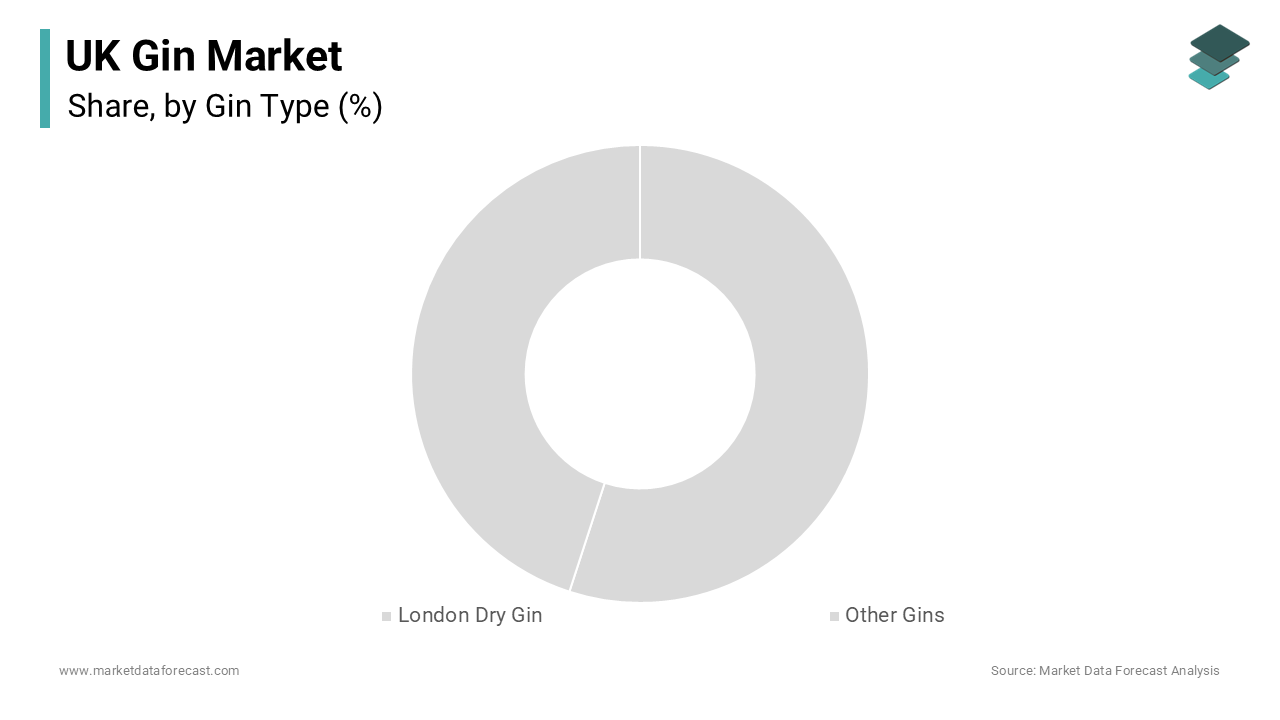
The continued domination of London Dry Gin is driven by its exceptional versatility in mixology and deep rooted consumer familiarity across generations. This style of gin serves as the foundational spirit for the most popular gin based cocktails in the United Kingdom including the classic Gin and Tonic which remains the nation's favorite alcoholic drink. The neutral yet aromatic profile of London Dry Gin allows it to pair seamlessly with a wide array of tonics fruits and herbs making it accessible to novice drinkers while satisfying connoisseurs. Bartenders and hospitality venues prefer London Dry Gin because its consistent flavor profile ensures reliable cocktail quality regardless of the batch. This reliability encourages bars and restaurants to stock prominent London Dry brands as their house gin further cementing its market presence. Consumer education campaigns by major brands have reinforced the connection between London Dry Gin and sophisticated social drinking making it a staple at parties and gatherings. The ease of understanding what London Dry Gin offers reduces purchase hesitation and drives repeat buying behavior ensuring its status as the leading segment in the UK market.
The others segment is likely to experience the fastest CAGR of 5.2% between 2026 and 2034 due to intense innovation in flavor profiles that attract younger and experimental consumers. Modern drinkers particularly those aged 18 to 34 years are seeking unique and Instagram worthy experiences that go beyond traditional juniper heavy tastes. This trend is fueled by the rise of craft distilleries that small batch production allows for rapid experimentation and limited edition releases that create urgency and excitement. Social media platforms play a crucial role in amplifying these novel flavors as visually appealing bottles and vibrant liquid colors encourage user generated content and viral marketing. Consumers are willing to pay premium prices for these distinctive products viewing them as lifestyle accessories rather than just spirits. The ability of flavored gins to be enjoyed neat or with simple mixers lowers the barrier to entry for non traditional gin drinkers. This continuous stream of new and exciting options keeps the segment dynamic and ensures sustained high growth rates as brands compete to capture the attention of trend conscious buyers.
The rapid expansion of the others segment is also attributed to the premiumization of flavored and craft gins which enhances their value perception and appeal as gift items. Unlike standard London Dry Gin which is often viewed as a household staple flavored and artisanal gins are marketed as luxury treats suitable for special occasions and gifting. The perception of these products as bespoke and handcrafted resonates with consumers who value authenticity and storytelling in their purchases. Distilleries often highlight the provenance of their local botanicals and the craftsmanship involved in production creating an emotional connection with buyers. This narrative adds intangible value that supports premium pricing strategies. During holiday seasons and celebrations sales of these premium flavored gins surge as consumers seek distinctive gifts for friends and family. The giftability factor drives significant volume spikes and introduces new customers to the brand who may then become regular purchasers. This strategic positioning of flavored and craft gins as premium experiential products ensures that the Others segment continues to grow at the fastest rate in the UK gin market.
By Distribution Channel Insights
The supermarkets and hypermarkets segment led the UK gin market and captured a 41.5% share in 2025. This leading position of the segment was attributed to its extensive reach convenience and ability to drive mass market volume sales. Major retailers such as Tesco Sainsburys Asda and Morrisons operate thousands of stores nationwide ensuring that gin is accessible to the vast majority of the population. The one stop shopping experience allows consumers to buy gin alongside groceries and party supplies simplifying the purchasing process and encouraging bulk buys. Supermarkets leverage their buying power to negotiate competitive prices and offer frequent promotions such as multi buy deals which attract price sensitive consumers. The dedicated alcohol aisles and prominent end cap displays enhance product visibility and stimulate impulse purchases. Additionally the trusted reputation of major supermarket brands assures consumers of product authenticity and quality. The integration of online grocery services further extends the reach of supermarkets allowing customers to order gin for home delivery. This combination of accessibility affordability and convenience solidifies the position of supermarkets and hypermarkets as the dominant distribution channel for gin in the UK.
The top position of supermarkets and hypermarkets is further propelled by the proliferation of private label gin offerings and aggressive competitive pricing strategies. Retailers have developed their own exclusive gin brands which offer comparable quality to national brands at significantly lower prices. These own label products allow supermarkets to capture higher margins while providing budget friendly options for shoppers. The control over shelf space enables retailers to prioritize their private labels alongside premium national brands creating a diverse assortment that caters to different income segments. Data analytics tools help supermarkets track sales trends and adjust inventory levels in real time ensuring optimal stock availability and minimizing out of stock situations. Promotional activities such as seasonal discounts and loyalty card rewards further incentivize purchases within these channels. The ability to bundle gin with mixers or glassware adds value and encourages larger basket sizes. This strategic use of pricing and product assortment ensures that supermarkets remain the preferred destination for gin purchases maintaining their leadership in the distribution landscape.
The specialty stores segment is on the rise and is expected to be the fastest growing segment in the market by witnessing a CAGR of 4.8% during the forecast period owing to rising demand for premium and craft products. Consumers seeking unique artisanal and small batch gins often bypass supermarkets in favor of specialty retailers who offer curated selections and expert advice. These stores provide access to limited edition releases and niche brands that are not available in mainstream outlets appealing to connoisseurs and enthusiasts. The personalized service and knowledge provided by staff enhance the customer experience fostering loyalty and repeat visits. Specialty stores often host tasting events and masterclasses which engage customers and educate them about different gin styles and botanicals. This experiential retail approach creates a community around the brand and drives word of mouth promotion. The willingness of consumers to pay for expertise and exclusivity supports higher margins for specialty retailers. As the gin market continues to fragment into niche segments specialty stores are well positioned to capture this value driven demand ensuring their rapid growth.
The accelerated growth of specialty stores is also fueled by their ability to offer experiential retail and community engagement that fosters deep brand loyalty. Unlike transactional supermarket environments specialty stores create immersive atmospheres where customers can explore the story behind each gin. Specialty gin shops often collaborate with local distilleries to launch exclusive bottlings or host meet the maker events which generate excitement and exclusivity. These initiatives build a sense of community among gin lovers who appreciate the craftsmanship and heritage of the products. Social media integration allows these stores to share behind the scenes content and engage with followers further strengthening relationships. The focus on sustainability and ethical sourcing also resonates with values driven shoppers who prefer to support independent businesses. By offering a holistic experience that combines education entertainment and exclusive products specialty stores differentiate themselves from large retailers. This strategic focus on community and experience ensures that specialty stores continue to grow at the fastest rate capturing the hearts and wallets of discerning gin consumers.
COUNTRY ANALYSIS
England Gin Market Analysis
England was the top performer in the UK gin market and accounted for an 85.6% share in 2025. The demand for gin is driven by its large population dense urban centers and strong cultural affinity for the spirit. London serves as the global hub for gin innovation hosting hundreds of distilleries and bars that drive trends and demand. According to data from the Office for National Statistics England is home to over 56 million people with a significant proportion residing in cities where nightlife and hospitality sectors thrive. The presence of major gin festivals such as the London Gin Festival attracts thousands of visitors annually boosting sales and brand visibility. The diverse demographic makeup of English cities supports a wide variety of gin styles from traditional London Dry to exotic flavored variants. Regulatory enforcement regarding alcohol licensing is strict but well established ensuring a structured market environment. The high concentration of wealth in Southeast England drives premiumization with consumers willing to spend on luxury and craft gins. Rural areas in counties like Cornwall and Kent have also emerged as centers for craft distilling leveraging local botanicals to create regional identities. The robust tourism industry further supports gin sales with visitors seeking authentic British experiences. This combination of scale diversity and cultural significance ensures England remains the central engine of the UK gin market.
Scotland Gin Market Analysis
Scotland occupies a significant share of the UK gin market, with a distinct identity rooted in its heritage of whisky production and natural landscapes. The Scottish gin sector has exploded in recent years with over 100 distilleries now operating across the country leveraging local ingredients such as heather pine and coastal botanicals. As per statistics from VisitScotland gin tourism has become a major draw with visitors touring distilleries in regions like the Highlands and Islands. This experiential aspect drives direct sales and brand loyalty among both locals and tourists. The reputation of Scottish quality and craftsmanship enhances the perceived value of Scottish gins allowing them to command premium prices. Edinburgh and Glasgow serve as key urban markets where bars and retailers showcase a wide range of local brands. The Scottish government supports the spirits industry through initiatives promoting sustainable tourism and local sourcing. The harsh climate and rugged terrain influence the flavor profiles of Scottish gins making them distinct from their English counterparts. This unique selling proposition appeals to consumers seeking authenticity and terroir driven products. The strong export potential of Scottish gin further bolstered by the global fame of Scotch whisky ensures sustained growth and prominence in the regional market.
Wales Gin Market Analysis
Wales grew steadily in the UK gin market due to emerging craft distilleries and a focus on local heritage. Cardiff and Swansea are the primary urban centers where demand is concentrated among young professionals and tourists. According to data from the Welsh Government the number of registered distilleries in Wales has increased significantly reflecting a burgeoning interest in artisanal spirits. Welsh gin producers often emphasize sustainability and organic farming practices aligning with the national brand of natural beauty and purity. Ingredients such as wild lavender sea buckthorn and Welsh honey are used to create unique flavor profiles that distinguish Welsh gin from other UK varieties. The tourism sector plays a vital role with distillery tours and tastings becoming popular attractions in rural areas. Local pride supports the consumption of Welsh made products encouraging residents to choose domestic brands. The compact size of the country facilitates efficient distribution and collaboration among producers. Regulatory support for small businesses helps nurture the growing industry. While smaller in scale compared to England and Scotland the Welsh gin market is characterized by high quality and innovation driving steady growth and increasing recognition within the broader UK landscape.
Northern Ireland Gin Market Analysis
Northern Ireland is anticipated to expand in the United Kingdom gin market over the forecast period owing to a tight knit community of producers and a strong tradition of hospitality. Belfast and Derry serve as the main hubs where gin bars and independent retailers drive consumption. As per statistics from the Northern Ireland Statistics and Research Agency the local spirits industry has seen renewed investment with several new distilleries opening in recent years. Northern Irish gin often features local botanicals such as bog myrtle and seaweed reflecting the unique geography of the region. The close proximity to Scotland and Ireland influences flavor profiles and production techniques creating a distinct hybrid style. Community events and food festivals provide platforms for local brands to showcase their products and engage with consumers. The supportive local business environment encourages collaboration rather than cutthroat competition. Tourism from both the Republic of Ireland and Great Britain contributes to sales particularly in coastal areas. The emphasis on storytelling and heritage resonates with consumers who value authenticity. While the market is small it is vibrant and growing with producers gaining recognition for their quality and creativity. This focused approach ensures that Northern Ireland maintains a respected presence in the UK gin market.
COMPETITIVE LANDSCAPE
The competition in the United Kingdom gin market is intense and characterized by the coexistence of multinational corporations and a vibrant array of independent craft distilleries. Established giants leverage their scale extensive distribution networks and massive marketing budgets to dominate shelf space and maintain brand recognition. They continuously innovate with new flavors and premium extensions to retain consumer interest and counter niche competitors. Independent distilleries compete by offering unique artisanal products localized storytelling and personalized customer experiences that resonate with discerning buyers. The market sees frequent product launches and limited edition releases creating a dynamic environment where novelty drives sales. Price competition exists but is often secondary to quality and brand perception in the premium segment. Regulatory compliance and sustainability credentials have become key differentiators influencing procurement decisions by retailers and consumers. The rise of direct to consumer sales channels allows smaller brands to bypass traditional barriers and reach audiences directly. This fragmented yet robust landscape drives continuous improvement in product quality innovation and customer engagement ensuring a thriving and evolving market.
KEY MARKET PLAYERS
Some of the promising companies that are playing a dominating role in the United Kingdom gin market include
- Diageo plc
- Bacardi Limited
- Pernod Ricard SA
- Rémy Cointreau
- Campari Group
- Brown-Forman Corporation
- Suntory Holdings Limited
- William Grant & Sons Ltd
- Halewood Artisanal Spirits
- Inver House Distillers Ltd.
- The East London Liquor Company
- Sipsmith Independent Spirits Ltd.
- Chase Distillery Ltd.
- Warner's Distillery
- Edinburgh Gin Distillery
- Silent Pool Distillers
- The Cotswolds Distillery
- Isle of Harris Distillers Ltd.
- Adnams plc
- Martin Miller's Gin
Top Players in the UK Gin Market
Diageo plc
Diageo plc maintains a formidable presence in the United Kingdom gin market through its portfolio of iconic brands such as Tanqueray and Gordon s. The company leverages its global distribution network and extensive marketing resources to ensure widespread availability and brand visibility across retail and hospitality sectors. Recent actions include significant investments in sustainable distillation practices and the launch of innovative flavor variants to cater to evolving consumer preferences. Diageo actively engages consumers through digital campaigns and experiential events that highlight the heritage and craftsmanship of its gins. The organization continues to strengthen its market position by optimizing supply chain efficiency and expanding its premium offerings. Its commitment to responsible drinking initiatives further enhances corporate reputation and aligns with societal expectations ensuring long term sustainability and brand loyalty among diverse consumer groups.
Pernod Ricard UK Limited
Pernod Ricard UK Limited plays a pivotal role in the market with its flagship brand Beefeater London Dry Gin which is deeply rooted in British heritage. The company focuses on maintaining the authenticity and quality of its products while innovating with new expressions such as Beefeater Pink and 24. Recent strategies involve enhancing visitor experiences at its Kennington distillery in London which serves as a major tourist attraction and educational hub. Pernod Ricard invests heavily in bartender training programs and partnerships with high end venues to reinforce the premium status of its gins. The company also emphasizes sustainability by reducing water usage and carbon emissions in production processes. Pernod Ricard balances tradition with modern innovation. This approach ensures its brands remain relevant and desirable to both traditionalists and contemporary drinkers seeking unique sensory experiences.
Sipsmith Distillery Limited
Sipsmith Distillery Limited has established itself as a leading craft gin producer in the United Kingdom by championing small batch production and traditional copper pot distillation methods. The company was instrumental in sparking the modern gin renaissance by advocating for regulatory changes that allowed smaller distilleries to thrive. Recent actions include expanding its product range with seasonal limited editions and collaborating with local botanical suppliers to emphasize provenance. Sipsmith focuses on direct to consumer sales through its website and exclusive partnerships with independent retailers. The brand engages strongly with its community through masterclasses and distillery tours which foster deep customer loyalty. By maintaining strict quality controls and emphasizing artisanal craftsmanship Sipsmith differentiates itself from mass market competitors. Its commitment to transparency and education helps cultivate an informed consumer base that values authenticity and premium quality in their spirit choices.
Top Strategies Used by Key Market Participants
Key players in the United Kingdom gin market employ several strategic approaches to maintain competitiveness and drive growth. Product innovation through the introduction of flavored variants and limited edition releases attracts diverse consumer segments and encourages trial. Brand storytelling emphasizes heritage craftsmanship and local sourcing to build emotional connections and justify premium pricing. Sustainability initiatives such as eco friendly packaging and carbon neutral production address environmental concerns and enhance brand image. Experiential marketing via distillery tours tastings and bartender collaborations engages consumers directly and fosters loyalty. Digital transformation including e commerce platforms and social media engagement expands reach and facilitates direct sales. Strategic partnerships with hospitality venues ensure prominent placement and recommendation by influencers. These combined strategies enable market leaders to adapt to changing consumer preferences and regulatory requirements while sustaining profitability and market relevance in a dynamic landscape.
MARKET SEGMENTATION
This research report on the United Kingdom gin market has been segmented based on the following categories.
By Gin Type
- London Dry Gin
- Other Gins (Including Flavored and Craft Variants)
By Distribution Channel
- Supermarkets and Hypermarkets
- Specialty Stores
By Country
- U.K