- Product Description Description
- Table of Contents TOC
- List of Table & Figure LOT
- Get Free Sample PDF Sample PDF
Market Size, 2025
$4.13 BnMarket Estimate, 2026
$4.64 BnMarket Forecast, 2034
$11.78 BnCAGR, 2026–2034
12.35%United Kingdom Hard Seltzer Market Report Summary
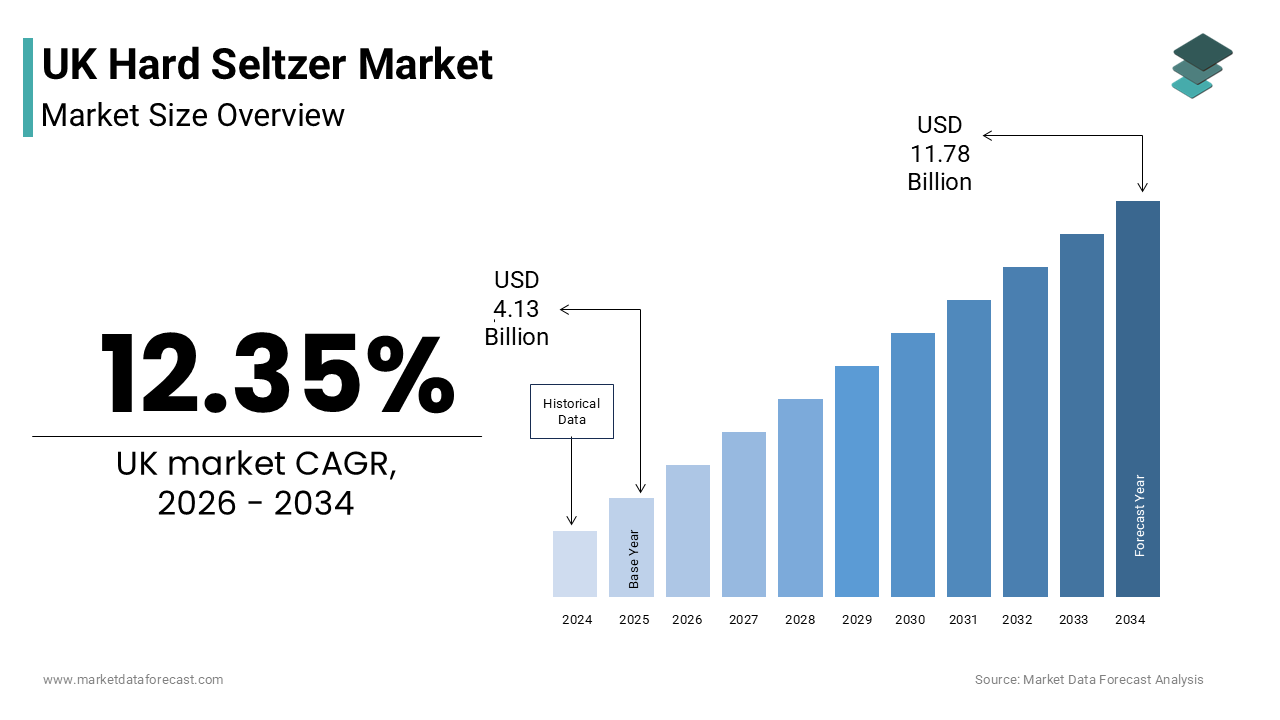
The United Kingdom hard seltzer market was valued at USD 4.13 billion in 2025 and is anticipated to reach USD 4.64 billion in 2026 from USD 11.78 billion by 2034, growing at a CAGR of 12.35% during the forecast period from 2026 to 2034. The growth of the United Kingdom hard seltzer market is driven by rising health consciousness among consumers, increasing demand for low-calorie alcoholic beverages, and growing preference for low-sugar and gluten-free drink alternatives. Expanding adoption of moderation-focused drinking habits, increasing popularity of wellness-oriented lifestyles, and growing demand for convenient ready-to-drink alcoholic beverages are further accelerating market growth. Moreover, advancements in premium flavor innovations, expansion of direct-to-consumer sales channels, and increasing focus on sustainable packaging solutions are supporting the expansion of the United Kingdom hard seltzer market.
Key Market Trends
-
Rising consumer preference for low-calorie, low-sugar, and gluten-free alcoholic beverages.
-
Increasing adoption of moderation-focused and sober-curious drinking lifestyles.
-
Growing demand for premium and craft hard seltzer flavors featuring natural ingredients and botanical infusions.
-
Strong focus on sustainable packaging solutions, particularly recyclable aluminum cans.
-
Expansion of direct-to-consumer e-commerce channels and subscription-based beverage services.
Segmental Insights
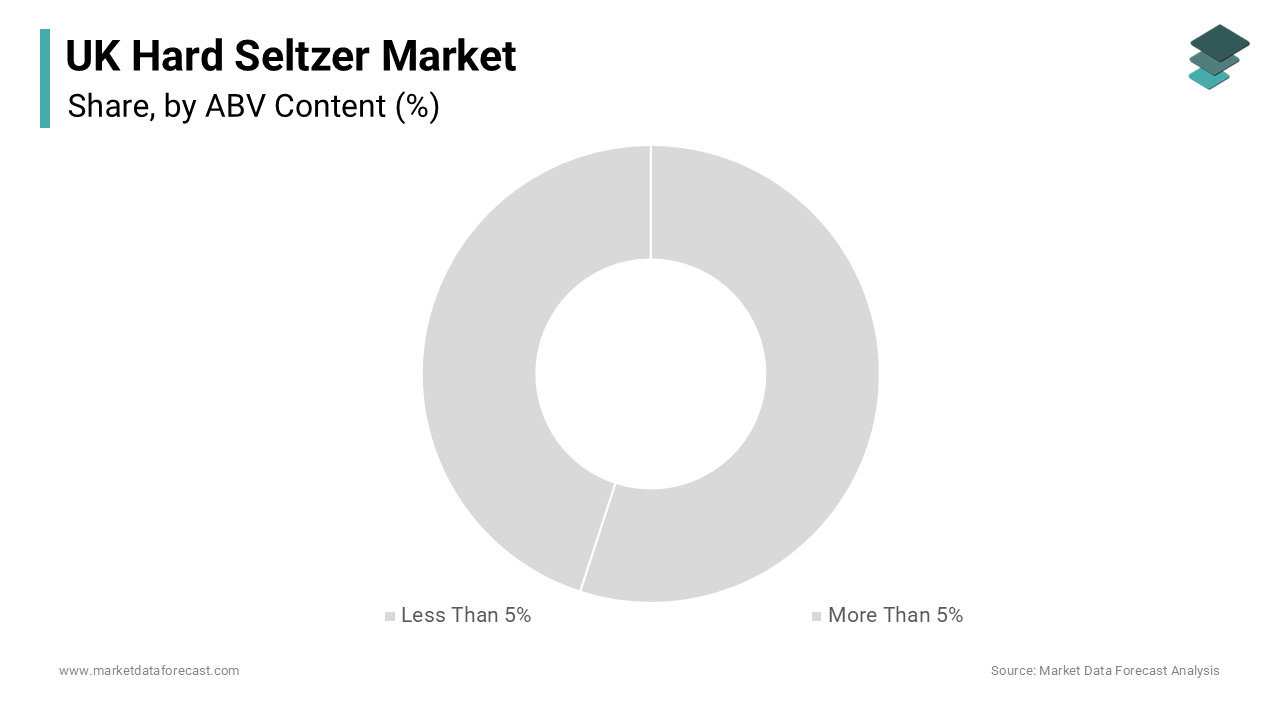
- Based on ABV content, the less than 5% ABV segment dominated the United Kingdom hard seltzer market and held the largest share in 2025. The segment’s dominance is attributed to increasing consumer preference for moderate alcohol consumption, rising demand for sessionable beverages, growing health awareness, and widespread adoption among younger demographics seeking balanced social drinking experiences.
- The more than 5% ABV segment is projected to witness the fastest CAGR during the forecast period owing to increasing demand for premium alcoholic beverages, growing preference for stronger ready-to-drink options, rising consumer interest in value-oriented purchases, and expanding availability of innovative flavor profiles.
- Based on packaging, the metal cans segment accounted for the leading share of the United Kingdom hard seltzer market in 2025. The dominance of this segment is driven by superior product preservation, lightweight portability, strong sustainability credentials, high recycling rates, and widespread retail compatibility.
- The glass bottles segment is anticipated to register the fastest CAGR during the forecast period due to increasing premiumization trends, growing demand within hospitality venues, enhanced product presentation, and rising consumer preference for upscale drinking experiences.
- Based on distribution channel, the off-trade segment held the major share of the United Kingdom hard seltzer market in 2025 owing to widespread availability across supermarkets and retail outlets, increasing home consumption habits, strong promotional activities, and growing online alcohol sales.
- The on-trade segment is expected to witness rapid growth during the forecast period because of increasing availability in bars, pubs, and restaurants, growing consumer demand for social drinking experiences, expanding cocktail applications, and rising acceptance of hard seltzers within hospitality environments.
Regional Insights
England dominated the United Kingdom hard seltzer market in 2025 due to its large consumer base, strong urban wellness culture, extensive retail infrastructure, and growing adoption of low-calorie alcoholic beverages. Scotland continues to strengthen its market position through increasing demand for premium and craft hard seltzer varieties, growing preference for locally inspired flavors, and expanding consumer interest in artisanal beverage products. Wales is witnessing steady growth supported by rising health-conscious consumption patterns, increasing tourism activity, and growing availability of hard seltzer products through retail and hospitality channels. Together, these regions continue to drive the growth of the hard seltzer market across the United Kingdom.
Competitive Landscape
The United Kingdom hard seltzer market is highly competitive and characterized by the presence of multinational beverage manufacturers, craft beverage producers, and emerging direct-to-consumer brands competing through product innovation, flavor differentiation, sustainability initiatives, and brand positioning. Leading companies are focusing on expanding premium product portfolios, introducing unique flavor combinations, strengthening digital marketing strategies, and enhancing sustainable packaging capabilities. Strategic collaborations with retailers, hospitality providers, fitness brands, and lifestyle influencers are further strengthening market positioning across the hard seltzer ecosystem. Prominent players in the United Kingdom hard seltzer market include White Claw, Truly Hard Seltzer, Molson Coors Beverage Company, Diageo plc, Budweiser Brewing Group UK & Ireland, Kopparberg, Nude Brands Ltd., Bodega Bay Hard Seltzer, High Water, High Noon, Boston Beer Company, and Mark Anthony Brands International.
UK Hard Seltzer Market Size
The UK hard seltzer market size was valued at USD 4.13 billion in 2025 and is anticipated to reach USD 4.64 billion in 2026 from USD 11.78 billion by 2034, growing at a CAGR of 12.35% during the forecast period from 2026 to 2034.
Hard seltzer represents an emerging and dynamic segment within the broader alcoholic beverages industry, characterized by carbonated water infused with alcohol and natural fruit flavors. This category distinguishes itself through its low calorie content, minimal sugar levels, and gluten free formulation, appealing to health conscious consumers seeking lighter alternatives to beer, wine, and spirits. The product typically contains between 4% and 5% alcohol by volume, and is marketed as a refreshing and sessionable drink suitable for various social occasions. As per data from the Office for National Statistics, there has been a noticeable shift in British drinking habits, with a growing preference for moderation and quality over quantity. The demographic profile of hard seltzer consumers skews towards younger adults, particularly millennials and Generation Z, who prioritize wellness, transparency, and ethical consumption. Regulatory frameworks governing alcohol labeling and advertising influence how brands communicate nutritional benefits and ingredients. Consumer education regarding the difference between hard seltzers and traditional malt beverages or flavored vodkas remains crucial for market expansion. The integration of sustainable packaging and clean label initiatives further defines the sector, aligning with broader environmental and social values prevalent in contemporary British society.
MARKET DRIVERS
Rising Health Consciousness and Demand for Low Calorie Alternatives Fuel Adoption
The escalating focus on health and wellness among British consumers is majorly driving the expansion of the UK hard seltzer market. Individuals are increasingly scrutinizing their dietary intake, seeking beverages that align with active lifestyles and weight management goals without sacrificing social enjoyment. According to data from Public Health England, approximately 64% of adults in England are classified as overweight or obese, prompting a widespread cultural shift toward healthier consumption choices. Hard seltzers typically contain fewer than 100 calories per can and negligible amounts of sugar, making them an attractive option for those monitoring their caloric intake. This nutritional profile contrasts sharply with traditional beers and ciders, which often carry higher carbohydrate loads. The perception of hard seltzers as a guilt free indulgence resonates strongly with fitness enthusiasts and young professionals, who frequent gyms and prioritize physical well-being. Social media influencers and health advocates frequently promote these beverages as part of balanced lifestyles, amplifying their appeal. The transparency of ingredient lists, which usually feature simple components like carbonated water, alcohol, and natural flavors, builds trust with discerning buyers. This alignment with modern health paradigms ensures that hard seltzers capture a significant share of the discretionary spending of health aware demographics, driving sustained demand and market penetration.
Shift Toward Moderation and Sober Curious Movements Encourage Trial
The evolving social attitude toward alcohol consumption in the UK, characterized by the rise of moderation and the sober curious movement, which is further boosting the hard seltzer market in the UK. Consumers are moving away from binge drinking cultures toward more mindful and controlled consumption patterns, where the quality of the experience outweighs the quantity of alcohol consumed. As per findings from the Institute of Alcohol Studies, a growing segment of the population, particularly among younger adults, is actively reducing their alcohol intake or taking extended breaks from drinking. Hard seltzers facilitate this behavioral shift by offering a lower alcohol content option that allows individuals to participate in social rituals without excessive intoxication. The sessionable nature of these beverages enables consumers to enjoy multiple drinks over an extended period while maintaining clarity and control. This trend is reinforced by workplace policies and social norms that increasingly value productivity and mental health. Brands leverage this sentiment by marketing hard seltzers as sophisticated and responsible choices, rather than mere substitutes for stronger drinks. The availability of these products in diverse retail channels ensures easy access for consumers experimenting with reduced alcohol consumption. This cultural transformation creates a fertile environment for hard seltzers to establish themselves as staples in the moderate drinking repertoire.
MARKET RESTRAINTS
Consumer Confusion Regarding Product Category and Identity Limits Growth
The prevailing consumer confusion regarding the definition and composition of hard seltzers, compared to other alcoholic beverages is a significant restraint to the UK hard seltzer market growth. Many British consumers struggle to distinguish hard seltzers from flavored malt beverages, ready to drink cocktails, or spiked sparkling waters, leading to hesitation in purchasing. According to surveys conducted by the Wine and Spirit Trade Association, consumers frequently express lack of clarity about whether the base alcohol source is derived from fermented sugar, malt, or spirits. This lack of clarity undermines the unique value proposition of hard seltzers as distinctively light and clean options. Misconceptions about taste profiles also deter potential buyers, who anticipate overly sweet or artificial flavors based on experiences with other ready to drink categories. The absence of standardized labeling regulations specific to hard seltzers exacerbates this issue, allowing for inconsistent product presentations across brands. Retailers often categorize these products inconsistently, placing them alongside beers, ciders, or mixers, which further muddles consumer understanding. Educational gaps mean that marketing efforts must first overcome informational barriers before driving conversion. This friction slows down adoption rates, particularly among older demographics that are less familiar with the category. Until clear industry standards and consumer education campaigns clarify the identity of hard seltzers, market expansion will face persistent headwinds.
Strong Competition from Established Low Alcohol Beer and Cider Segments
The intense competition from the well-established and deeply entrenched low alcohol beer and cider sectors in the UK is further hindering the UK hard seltzer market expansion. British consumers have a long standing affinity for beer and cider, with a wide array of low and no alcohol variants already available from trusted domestic and international brands. As per data from the British Beer and Pub Association, the low and no alcohol beer market has experienced robust growth, offering consumers familiar flavors with reduced alcohol content. These established categories benefit from strong brand loyalty, extensive distribution networks, and significant marketing budgets that dwarf those of emerging hard seltzer brands. Consumers often perceive low alcohol beers and ciders as more authentic and satisfying alternatives, due to their complex flavor profiles and cultural resonance. The familiarity of these traditional beverages reduces the incentive for consumers to switch to the relatively novel hard seltzer category. Additionally, major brewing companies have launched their own hard seltzer products, leveraging their existing brand equity to capture market share quickly. This competitive saturation makes it difficult for independent hard seltzer brands to gain visibility and traction. The dominance of beer and cider in social settings, such as pubs and festivals, further limits opportunities for hard seltzers to become mainstream choices.
MARKET OPPORTUNITIES
Expansion into Premium and Craft Flavor Profiles Attracts Discerning Buyers
The opportunity to expand into premium and craft flavor profiles presents a significant growth avenue for hard seltzer manufacturers in the UK. As the market matures, consumers are seeking more sophisticated and unique taste experiences beyond standard fruit flavors like lemon, lime, or berry. According to industry observations, there is rising demand for exotic botanicals, herbal infusions, and seasonal ingredients that reflect artisanal craftsmanship. Brands can differentiate themselves by collaborating with local farmers and using indigenous British fruits, such as elderflower, rhubarb, or damson plums. This localization strategy appeals to consumers who value provenance and sustainability, while supporting regional economies. Premium positioning allows for higher price points and improved profit margins, offsetting the costs of high quality ingredients. Limited edition releases and small batch productions create urgency and exclusivity, driving trial among adventurous drinkers. The craft narrative resonates with Millennials and Gen Z, who prioritize authenticity and storytelling in their purchasing decisions. By elevating the sensory experience, hard seltzers can transition from commodity items to desirable lifestyle products. This strategy also opens doors to placement in upscale bars and restaurants where cocktail culture thrives. Embracing complexity and quality in flavor development enables brands to capture the attention of discerning buyers, who are willing to pay for superior taste and innovation.
Integration with Digital Direct to Consumer Sales Channels Enhances Reach
The integration of digital direct to consumer sales channels offers substantial opportunities for the UK hard seltzer market. E commerce platforms and subscription models allow companies to reach niche audiences across the country, regardless of geographic location or retail shelf space constraints. As per data from the Office for National Statistics, online grocery and alcohol sales have stabilized at higher levels post pandemic, indicating a permanent shift in consumer buying behavior. Direct to consumer strategies enable brands to gather valuable first party data on customer preferences, purchasing habits, and feedback, which informs product development and targeted marketing. Subscription services provide predictable revenue streams and foster brand loyalty, by ensuring regular delivery of favorite products. Social media integration facilitates seamless shopping experiences, where users can purchase directly from influencer posts or brand pages. This digital approach reduces reliance on powerful retailers and allows for greater control over branding and pricing. Personalized recommendations and exclusive online offers enhance customer engagement and retention. By leveraging digital tools, hard seltzer brands can scale efficiently and respond rapidly to trending flavors or consumer demands. This agility is crucial in a fast moving market, where speed to market and customer intimacy drive competitive advantage.
MARKET CHALLENGES
Regulatory Uncertainty and Taxation Policies Create Operational Risks
Hard seltzer manufacturers in the UK operate within a complex regulatory environment, where uncertainty regarding classification and taxation are challenging the UK hard seltzer market growth. The legal definition of hard seltzers can vary depending on the base alcohol source, which affects duty rates and compliance requirements. According to HM Revenue and Customs, alcohol duty is calculated based on strength and volume, but distinctions between fermented sugar based beverages and malt based drinks can lead to varying tax liabilities. Recent government reviews of alcohol duty structures aim to simplify the system, but transitional periods create ambiguity for producers planning long term strategies. Changes in tax rates can abruptly impact pricing competitiveness and profit margins, forcing companies to adjust their financial models frequently. Additionally, strict advertising regulations restrict how brands can promote low calorie or health related benefits, potentially limiting marketing creativity. Compliance with labeling laws regarding allergens and nutritional information requires rigorous quality control and administrative oversight. Smaller brands may lack the resources to navigate these regulatory complexities effectively, putting them at a disadvantage compared to larger corporations with dedicated legal teams. The risk of non-compliance resulting in fines or product recalls adds another layer of operational stress. Navigating this evolving legislative landscape requires constant vigilance and adaptability, which diverts resources from innovation and growth.
Supply Chain Volatility and Ingredient Sourcing Issues Impact Consistency
The supply chain volatility and the consistent sourcing of high quality ingredients essential for product integrity are further challenging the UK hard seltzer market growth. Fluctuations in the availability and cost of key inputs, such as pure cane sugar, fruit concentrates, and carbon dioxide, can disrupt production schedules and affect profitability. According to industry reports, global supply chain disruptions caused by geopolitical tensions and climate change have led to unpredictable lead times and price spikes for raw materials. For brands emphasizing natural and organic ingredients, finding reliable suppliers who meet strict quality standards is particularly difficult. Seasonal variations in fruit harvests can compromise flavor consistency, requiring frequent recipe adjustments that may alienate loyal customers. Logistics bottlenecks, including port delays and transportation shortages, further exacerbate these issues, leading to inventory shortages on retail shelves. Packaging materials, such as aluminum cans, have also experienced price volatility and scarcity, impacting production capacity. These operational uncertainties make it challenging for brands to maintain stable pricing and ensure product availability. Building resilient supply chains requires diversifying suppliers and investing in long term contracts, which ties up capital. The inability to guarantee consistent quality and availability undermines brand trust and hinders market expansion efforts in a competitive landscape.
REPORT COVERAGE
| REPORT METRIC | DETAILS |
| Market Size Available | 2025 to 2034 |
| Base Year | 2025 |
| Forecast Period | 2026 to 2034 |
| CAGR | 12.70% |
| Segments Covered | By ABV Content, Packaging Distribution Channel Model and Region. |
| Various Analyses Covered | Global, Regional & Country Level Analysis, Segment-Level Analysis, DROC, PESTLE Analysis, Porter’s Five Forces Analysis, Competitive Landscape, Analyst Overview of Investment Opportunities |
| Market Leaders Profiled | White Claw, Truly Hard Seltzer, Molson Coors Beverage Company, Diageo plc, Budweiser Brewing Group UK & Ireland, Kopparberg, Nude Brands Ltd., Bodega Bay Hard Seltzer, High Water, High Noon, Boston Beer Company, and Mark Anthony Brands International.. |
SEGMENTAL ANALYSIS
By Packaging Insights
The metal cans segment dominated the market by capturing the largest share of the UK market in 2025 due to their exceptional ability to preserve carbonation and protect the beverage from light and oxygen, which are detrimental to flavor stability. The lightweight and durable nature of aluminum cans makes them ideal for portable consumption, aligning with the active lifestyles of the target demographic who often consume these beverages at outdoor events, beaches, or parks. According to data from Alupro, the recycling rate for aluminum packaging in the UK reached 68% with more than four in five beverage cans being recycled, which appeals to environmentally conscious consumers who prioritize sustainability. This high recyclability enhances the brand image of hard seltzer manufacturers, who often position their products as eco-friendly alternatives to plastic bottled drinks. The compact shape of cans allows for efficient storage and transportation, reducing logistics costs for retailers and distributors. Furthermore, the rapid cooling properties of aluminum enhance the sensory experience, providing a refreshing chill that is central to the appeal of hard seltzers. Major brands have standardized on 330 millilitres and 440 millilitres can formats, which fit perfectly into existing retail shelving and vending machines, ensuring maximum visibility and accessibility. The tactile experience of opening a can also contributes to the ritual of consumption, making it a preferred choice for social gatherings and casual drinking occasions.
On the other side, the glass bottles segment is the fastest growing packaging segment in the UK hard seltzer market and is estimated to register a promising CAGR during the forecast period owing to the trend toward premiumization and the aesthetic appeal of glass in hospitality settings. As hard seltzers gain acceptance in upscale bars and restaurants, there is a growing demand for packaging that conveys sophistication and quality. According to market observations, glass bottles are perceived as more premium than cans, allowing brands to command higher price points and attract discerning consumers who associate glass with craft and artisanal products. The transparency of glass allows the clarity and colour of the beverage to be visible, which enhances visual appeal and reinforces the perception of purity and natural ingredients. This visual cue is particularly important for hard seltzers, which market themselves on clean labels and simple formulations. The weight and feel of a glass bottle also contribute to a more substantial drinking experience, which appeals to consumers seeking a moment of indulgence rather than just hydration. Bartenders prefer serving hard seltzers from glass bottles, as it aligns with the presentation standards of cocktail culture. This shift toward on trade premiumization is driving the adoption of glass packaging among niche and craft brands that seek to differentiate themselves from mass market competitors.
By ABV Content Insights
The less than 5% segment dominated the UK market in 2025 because they align perfectly with the prevailing cultural trends toward moderation and sessionable drinking. Consumers are increasingly seeking beverages that allow them to socialize for extended periods without experiencing significant intoxication or hangovers. According to data from the Institute of Alcohol Studies, the number of adults identifying as moderate drinkers has increased significantly, with many preferring lower strength options to maintain control and well-being. Hard seltzers in this ABV range typically contain around 4% to 4.5% alcohol, which is comparable to standard beers but with fewer calories and carbohydrates. This balance makes them ideal for daytime consumption, outdoor activities, and work related social events where heavy drinking is inappropriate. The lower alcohol content also reduces the regulatory burden and tax implications for producers, making it easier to keep prices competitive. Retailers stock these products prominently, because they appeal to broad demographic, including women and younger adults who are cautious about alcohol intake. The perception of these beverages as light and refreshing reinforces their position as go to options for casual occasions. This widespread acceptance and versatility ensure that sub 5% ABV hard seltzers remain the largest and most stable segment in the market.
On the other end, the more than 5% segment is the fastest growing segment in the UK market due to the growing consumer demand for enhanced potency and better value for money. As the market matures, some consumers are seeking stronger alternatives that provide a more pronounced effect without having to consume multiple cans. For instance, there is a rising interest in premium hard seltzers that offer 6% to 8% ABV, positioning them as substitutes for wine or cocktails rather than beer. These higher strength variants appeal to experienced drinkers who want the convenience and low calorie profile of a seltzer, but with the kick of a stronger drink. The perception of getting more alcohol for the same price enhances the value proposition and this is making these products attractive during periods of economic pressure. Brands are responding by launching bold and complex flavors that complement the higher alcohol content, such as spiced fruits or herbal infusions. This premiumization strategy allows companies to differentiate their offerings and capture a niche audience willing to pay for quality and strength. The growth of this segment reflects a diversification of the hard seltzer category beyond its original light and breezy image.
By Distribution Channel Insights
The off-trade segment held the leading position in the UK hard seltzer market by holding the major share of the UK market in 2025 due to the convenience it offers and the strong habit of home consumption. Consumers prefer purchasing hard seltzers in bulk from grocery stores for home parties, pre drinks, or casual evening relaxation. According to data from Kantar Worldpanel, the majority of alcohol sales in the UK occur through off-trade channels, reflecting the cultural norm of drinking at home. The widespread availability of hard seltzers in major supermarket chains ensures that they are easily accessible to a broad audience during regular shopping trips. Promotional activities, such as multi buy discounts and seasonal displays in supermarkets, drive volume sales and encourage trial among new customers. The ability to compare prices and read labels in a relaxed environment also influences purchasing decisions. Online grocery platforms have further strengthened the off-trade sector by offering home delivery services, which appeal to busy consumers who value time savings. The integration of hard seltzers into mainstream grocery assortments alongside beers and ciders normalizes their presence and reinforces their status as everyday beverages. This accessibility and convenience make the off-trade channel the primary driver of market volume and revenue.
On the other side, the on-trade channel segment is predicted to register a promising CAGR in the UK market during the forecast period owing to the increasing popularity of these beverages in social and hospitality settings. As consumers return to venues post pandemic, there is a growing demand for light and refreshing drink options that suit daytime and early evening socializing. According to data from the British Beer and Pub Association, pubs and bars are expanding their beverage portfolios to include hard seltzers to cater to changing customer preferences. The visual appeal of hard seltzers served in glasses with garnishes makes them attractive menu items that complement food offerings. Bartenders are incorporating hard seltzers into cocktails, creating innovative drinks that appeal to adventurous drinkers. The presence of hard seltzers on draft systems in some venues further enhances their appeal, by offering a fresh and cold serving option. This integration into the on-trade experience elevates the perception of hard seltzers from casual home drinks to sophisticated social beverages. The growth of this channel is supported by marketing collaborations between brands and hospitality venues, which drive awareness and trial among patrons.
REGIONAL ANALYSIS
England held the leading share of the UK market in 2025 is expected to maintain its dominant consumption share over the next few years, fueled by its dense metropolitan spaces and expanding on-premise distribution networks. London serves as the epicenter of trends, where new brands launch and gain traction before spreading to other regions. According to data from the Office for National Statistics, England is home to over 56 million people, with a significant proportion residing in cities where health conscious lifestyles and social drinking cultures intersect. The high concentration of gyms, yoga studios, and wellness centers in English cities drives demand for low calorie alcoholic options. The diverse demographic makeup of England supports a wide variety of flavor preferences, encouraging brands to innovate continuously. Major retail chains headquartered in England ensure widespread distribution and prominent shelf placement. The strong tourism industry in cities like London, Manchester, and Brighton introduces international visitors to local hard seltzer brands, boosting sales. Regulatory enforcement and public health campaigns in England influence consumer behavior, promoting moderation which aligns with the hard seltzer value proposition. The robust infrastructure for logistics and marketing ensures that England remains the primary engine of growth and innovation for the hard seltzer market in the UK.
Scotland is anticipated to witness steady value growth over the next few years, as consumer demand shifts increasingly toward craft varieties and regional ingredient blends. The Scottish market is characterized by a preference for high quality and locally sourced ingredients, which aligns well with the premium positioning of many hard seltzer brands. As per statistics from VisitScotland, the tourism sector plays a crucial role, with visitors seeking authentic and unique drinking experiences in Edinburgh and Glasgow. The presence of numerous craft distilleries and breweries in Scotland fosters a culture of experimentation and appreciation for artisanal products. Local hard seltzer producers often use Scottish botanicals, such as heather or berries, to create unique flavor profiles that resonate with regional pride. The cooler climate in Scotland drives demand for indoor socializing, where hard seltzers serve as light alternatives to heavier spirits. Retailers in Scotland are increasingly stocking premium and craft hard seltzers to meet the demands of discerning local consumers. The supportive business environment for small enterprises encourages innovation and entry of new brands. This focus on quality and locality ensures that Scotland maintains a vibrant and growing hard seltzer market, despite its smaller size.
Wales is projected to see progressive retail expansion over the next few years, supported by rising health advocacy programs and student-led urban demand. Cardiff and Swansea are the primary urban centers where demand is concentrated among young professionals and students. According to data from the Welsh Government, there is a growing emphasis on well being and active lifestyles, which supports the adoption of low calorie alcoholic drinks. The scenic beauty of Wales attracts tourists who contribute to seasonal spikes in hard seltzer sales, particularly in coastal areas and national parks. Local producers are beginning to enter the market, leveraging Welsh ingredients such as lavender or sea salt to create distinctive products. The compact size of Wales facilitates efficient distribution and community focused marketing strategies. Independent retailers and pubs in Wales are increasingly open to stocking niche and craft hard seltzers that offer something different from mainstream brands. The strong sense of community and support for local businesses helps new brands gain traction. While the market is smaller than in England, it shows steady growth driven by health trends and tourism.
COMPETITIVE LANDSCAPE
The competition in the UK hard seltzer market is intense and characterized by the entry of multinational beverage giants alongside agile craft producers and private label offerings. Established players leverage their scale extensive distribution networks and strong brand equity to secure prime shelf space and dominate consumer mindshare. They continuously invest in marketing and innovation to differentiate their products in a crowded marketplace. Craft brands compete by offering unique artisanal flavors and localized storytelling that resonate with discerning buyers seeking authenticity. The market sees frequent product launches and limited edition releases creating a dynamic environment where novelty drives sales. Price competition is fierce particularly in the mass market segment prompting providers to add value through bundle deals and loyalty programs. Regulatory compliance regarding labeling and health claims influences marketing strategies significantly. The rise of direct to consumer sales channels allows smaller brands to bypass traditional barriers and reach audiences directly. This fragmented yet robust landscape drives continuous improvement in product quality sustainability and customer engagement ensuring a vibrant and evolving market.
KEY MARKET PLAYERS
Some of the promising companies that are playing a dominating role in the UK hard seltzer market include
- White Claw
- Truly Hard Seltzer
- Molson Coors Beverage Company
- Diageo plc
- Budweiser Brewing Group UK & Ireland
- Kopparberg
- Nude Brands Ltd.
- Bodega Bay Hard Seltzer
- High Water
- High Noon
- Boston Beer Company
- Mark Anthony Brands International
Top Players in the UK Hard Seltzer Market
Diageo plc
Diageo plc has established a significant footprint in the UK hard seltzer market through its strategic launch and expansion of the Pure Leaf Hard Seltzer brand. The global spirits giant leverages its extensive distribution network and marketing expertise to ensure widespread availability across major retail chains and hospitality venues. Recent actions include investing in sustainable packaging initiatives and launching new fruit forward flavors to cater to evolving consumer preferences for natural ingredients. Diageo focuses on positioning its hard seltzers as premium yet accessible options for health conscious drinkers. The company actively engages with younger demographics through digital campaigns and partnerships with lifestyle influencers. By integrating hard seltzers into its broader portfolio Diageo strengthens its relevance in the low alcohol segment while maintaining high standards of quality and brand integrity.
AB InBev UK Limited
AB InBev UK Limited contributes to the market by introducing global hard seltzer brands such as Bud Light Seltzer and Corona Hard Seltzer to British consumers. The brewing giant utilizes its massive production capabilities and established relationships with pubs and supermarkets to drive volume and visibility. Recent efforts involve adapting flavor profiles to suit local tastes including introducing berry and citrus variants that resonate with UK palates. AB InBev emphasizes the low calorie and gluten free attributes of its products to appeal to fitness oriented individuals. The company also invests in experiential marketing at music festivals and sports events to build brand affinity. By leveraging its scale AB InBeV ensures competitive pricing and consistent supply which helps stabilize the category and encourage repeat purchases among mainstream drinkers seeking lighter alternatives.
Molson Coors Beverage Company
Molson Coors Beverage Company plays a pivotal role in the UK hard seltzer sector with its Vizzy Hard Seltzer brand which features added antioxidants from acerola cherry. The company differentiates its offering by highlighting health benefits alongside low calorie content appealing to wellness focused consumers. Recent actions include expanding distribution into independent convenience stores and online platforms to reach niche audiences. Molson Coors focuses on vibrant branding and social media engagement to connect with millennials and Generation Z. The organization collaborates with fitness apps and wellness influencers to reinforce the active lifestyle association of its products. By emphasizing unique functional benefits and refreshing taste profiles Molson Coors captures a distinct segment of the market. Its commitment to innovation and targeted marketing ensures sustained growth and brand recognition in a competitive landscape.
Top Strategies Used by Key Market Participants
Key players in the UK hard seltzer market employ several strategic approaches to maintain competitiveness and drive growth. Product innovation through the introduction of unique flavors and functional ingredients such as vitamins or adaptogens attracts diverse consumer segments. Brand positioning emphasizes health benefits including low calories and gluten free formulations to appeal to wellness oriented buyers. Sustainability initiatives such as recyclable packaging and carbon neutral production enhance brand image and align with environmental values. Strategic partnerships with fitness brands and lifestyle influencers amplify reach and credibility among target demographics. Expansion into direct to consumer channels allows companies to gather data and build loyal communities. Competitive pricing and promotional bundles in retail outlets encourage trial and volume sales. These combined strategies enable market leaders to adapt to changing consumer preferences and regulatory requirements while sustaining profitability and market relevance.
MARKET SEGMENTATION
This research report on the UK hard seltzer market has been segmented based on the following categories.
By ABV Content
- Less Than 5%
- More Than 5%
By Packaging
- Glass Bottles
- Metal Cans
- Plastic Bottles
By Distribution Channel
- Off-trade
- On-trade
By Country
- U.K