- Product Description Description
- Table of Contents TOC
- List of Table & Figure LOT
- Get Free Sample PDF Sample PDF
Market Size, 2025
$1.02 BnMarket Estimate, 2026
$1.09 BnMarket Forecast, 2034
$1.89 BnCAGR, 2026–2034
7.10%UK Hearing Aid Market Report Summary
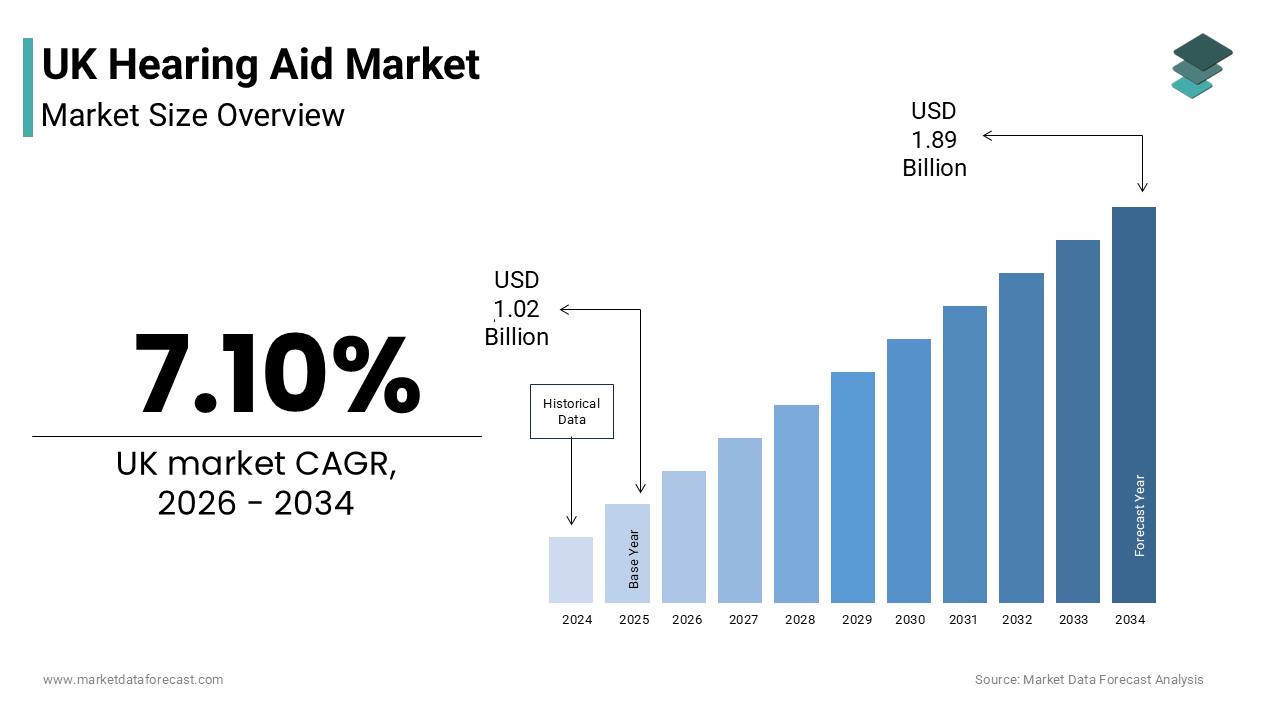
The UK hearing aid market was valued at USD 1.02 billion in 2025 and is anticipated to reach USD 1.09 billion in 2026 from USD 1.89 billion by 2034, growing at a CAGR of 7.10% during the forecast period from 2026 to 2034. The growth of the UK hearing aid market is driven by the rapidly aging population, increasing prevalence of hearing loss and tinnitus, and growing awareness regarding the adverse effects of untreated hearing impairment. Expanding adoption of digital hearing technologies, increasing accessibility through public healthcare programs, and rising consumer preference for discreet and technologically advanced devices are further accelerating market growth. Moreover, advancements in artificial intelligence-enabled sound processing, Bluetooth connectivity, teleaudiology services, and rechargeable hearing aid technologies are supporting the expansion of the UK hearing aid market.
Key Market Trends
-
Rising adoption of AI-powered hearing aids with advanced sound processing capabilities.
-
Increasing demand for rechargeable and Bluetooth-enabled hearing devices.
-
Growing popularity of teleaudiology and remote hearing care services.
-
Rising consumer preference for discreet and nearly invisible hearing aid designs.
-
Increasing integration of hearing aids with smartphones, televisions, and digital health ecosystems.
Segmental Insights
- Based on technology type, the digital hearing aids segment dominated the UK hearing aid market and held the largest share in 2025. The dominance of the segment is attributed to superior sound quality, enhanced speech recognition capabilities, advanced noise reduction features, and seamless integration with modern digital devices. The growing adoption of programmable hearing aids and increasing availability of customized hearing solutions further contribute to segment growth.
- The analog hearing aids segment is expected to witness steady growth during the forecast period owing to their affordability, ease of operation, and continued demand among price-sensitive consumers and elderly users who prefer simpler hearing assistance solutions.
- Based on distribution channel, the clinical settings and specialist retail stores segment accounted for the leading share of the UK hearing aid market in 2025. The growth of the segment is driven by the need for professional hearing assessments, personalized device fitting, expert audiological consultations, and ongoing aftercare support. Strong consumer trust in audiologists and hearing care specialists continues to support the dominance of this segment.
- The e-commerce and direct-to-consumer platforms segment is projected to witness the fastest CAGR during the forecast period due to increasing adoption of over-the-counter hearing aids, rising consumer preference for convenient purchasing channels, growing digital literacy, and expanding availability of self-fitting hearing devices. The emergence of subscription services, virtual hearing tests, and home trial programs is further driving growth in this segment.
- The hospitals and audiology centers segment continues to maintain a significant share of the market owing to increasing referrals for hearing assessments, growing diagnosis of hearing-related disorders, and expanding availability of advanced hearing rehabilitation services.
- The pharmacies and drug stores segment is expected to witness notable growth due to increasing availability of hearing care products, rising consumer awareness regarding hearing health, and growing partnerships between hearing aid manufacturers and retail pharmacy chains.
Regional Insights
The United Kingdom held a prominent position in the European hearing aid market in 2025 owing to its well-established healthcare infrastructure, strong public healthcare support through the National Health Service, and increasing prevalence of hearing impairment among the aging population. The country benefits from widespread access to hearing care services, growing awareness regarding hearing health, and continuous technological advancements in hearing aid solutions. Rising adoption of digital hearing aids, increasing utilization of teleaudiology services, and growing investments in hearing healthcare innovation continue to strengthen the market. Furthermore, strong regulatory oversight by the Medicines and Healthcare products Regulatory Agency ensures high product quality and safety standards, supporting consumer confidence and market expansion.
Competitive Landscape
The UK hearing aid market is highly competitive and characterized by the presence of global hearing technology manufacturers, audiology service providers, and specialized hearing care retailers competing through technological innovation, product performance, customer service quality, and digital healthcare integration. Leading companies are focusing on developing AI-powered hearing aids, expanding teleaudiology capabilities, enhancing wireless connectivity features, and introducing rechargeable hearing solutions. Strategic partnerships with healthcare providers, investments in research and development, expansion of direct-to-consumer sales channels, and increasing focus on personalized hearing care solutions are further strengthening market positioning across the UK hearing aid industry. The key players operating in the UK hearing aid market include Sonova Holding AG, Demant A/S, WS Audiology A/S, GN Store Nord A/S (GN Hearing), Starkey Hearing Technologies, Amplifon S.p.A., Audika UK, Hidden Hearing, Specsavers Hearing, and Boots Hearingcare.
UK Hearing Aid Market Size
The UK hearing aid market size was valued at USD 1.02 billion in 2025 and is anticipated to reach USD 1.09 billion in 2026 from USD 1.89 billion by 2034, growing at a CAGR of 7.10% during the forecast period from 2026 to 2034.
According to the Office for National Statistics, the UK population is aging rapidly, with over 10 million people aged 65 and above, which is creating a substantial demographic base prone to age-related hearing deterioration. As per data from the Royal National Institute for Deaf People (RNID), more than 18 million people in the UK are deaf, have hearing loss, or experience tinnitus, meaning that hearing loss affects roughly 1 in 3 adults. Despite this high prevalence, only a fraction utilizes hearing aids due to various social and financial barriers. The cultural shift toward destigmatizing hearing assistance has been gradual but steady, driven by technological advancements that make devices smaller and more discreet. Regulatory frameworks governed by the Medicines and Healthcare products Regulatory Agency (MHRA) ensure strict safety and performance standards for all medical devices sold within the nation. The integration of digital health technologies, such as Bluetooth connectivity and artificial intelligence-driven sound processing, is transforming user experiences. Consumer awareness regarding the link between untreated hearing loss and cognitive decline is rising, prompting earlier intervention. The market operates at the intersection of clinical necessity, technological innovation, and evolving social attitudes, reflecting a growing emphasis on quality of life and inclusive communication for the hearing-impaired population.
MARKET DRIVERS
Aging Population and Rising Prevalence of Age Related Hearing Loss
The demographic shift toward an older population in the UK is propelling the UK hearing aid market growth, as age-related hearing loss becomes increasingly prevalent. The natural degradation of hair cells in the inner ear affects a significant majority of older individuals, necessitating auditory assistance to maintain social engagement and quality of life. According to the Office for National Statistics, the number of people aged 80 and over is the fastest-growing segment of the population, set to more than double to over 6 million in the coming decades. As per the data from the RNID, more than half of the UK population over 55 experiences some degree of hearing loss, creating a vast addressable market for hearing care professionals. The National Health Service faces increasing pressure to provide timely assessments and fittings as waiting lists grow due to this demographic surge. Older adults are increasingly aware of the consequences of untreated hearing loss, including social isolation and accelerated cognitive decline, which motivates them to seek solutions. The prevalence of comorbidities such as diabetes and cardiovascular disease, which are linked to hearing damage, further exacerbates the need for intervention. As life expectancy increases, the duration of time individuals spend with hearing loss extends, driving sustained demand for replacements, upgrades, and maintenance services. This demographic inevitability ensures a consistent and growing customer base for both public and private hearing aid providers across the nation.
Technological Advancements in Digital and Smart Hearing Solutions
Rapid technological innovation in digital signal processing and connectivity features are further boosting the expansion of the UK hearing aid market growth. Modern hearing aids are no longer simple amplifiers but sophisticated computers capable of distinguishing speech from noise, adapting to different acoustic environments, and connecting seamlessly to smartphones and televisions. According to the British Society of Hearing Aid Audiologists, the adoption of rechargeable lithium-ion batteries has increased by 40% in recent years, as users prefer the convenience of wireless charging over frequent battery replacements. Artificial intelligence (AI) algorithms now enable devices to learn user preferences and automatically adjust settings for optimal clarity in real time. Data from Mintel reveals that 55% of consumers are more likely to purchase hearing aids that offer direct streaming capabilities for phone calls and media consumption. The miniaturization of components allows for nearly invisible designs, which reduces the stigma associated with wearing hearing aids. Teleaudiology services have emerged, allowing remote adjustments and consultations, which is particularly beneficial for individuals with mobility issues. The integration of health tracking features, such as fall detection and activity monitoring, adds value beyond auditory assistance. These technological enhancements transform hearing aids into desirable lifestyle accessories rather than medical necessities, driving higher uptake among younger seniors and tech-savvy consumers who prioritize functionality and aesthetics.
MARKET RESTRAINTS
Stigma Associated With Hearing Loss and Device Visibility
Deep-seated social stigma and negative perceptions surrounding hearing loss is significantly hampering the growth of the UK hearing aid market, causing many individuals to delay or avoid seeking treatment. Many people view hearing aids as symbols of old age, disability, or cognitive decline, leading to feelings of embarrassment and reluctance to wear them in public. According to data tracked by the RNID, deep-rooted stigma and concerns about appearance still prevent approximately 40% of adults with hearing loss from using hearing aids. The visibility of traditional behind-the-ear devices reinforces these negative associations, despite the widespread availability of smaller, in-the-canal options. Cultural narratives often portray hearing impairment as a weakness rather than a manageable health condition, discouraging open discussion and early intervention. Data from Age UK indicates that the average time between noticing hearing loss and seeking help is over 10 years, during which individuals suffer unnecessary social isolation and communication difficulties. This delay reduces the overall market volume, as potential customers remain in the undiagnosed or untreated category for extended periods. Marketing efforts have struggled to fully overcome these psychological barriers, although celebrity endorsements and modern design campaigns are making progress. The lack of widespread normalization of hearing aids in media and popular culture perpetuates the misconception that they are only for the severely impaired or elderly. Until societal attitudes shift significantly, stigma will continue to suppress market penetration and limit the adoption of available technologies.
High Costs and Limited Coverage in The Private Sector
The substantial financial burden associated with purchasing high-quality hearing aids in the private sector restricts market growth for individuals who do not qualify for, or wish to avoid, National Health Service provisions. While the NHS provides hearing aids free of charge, the selection is limited and waiting times can be extensive, prompting some to seek private options, which are often prohibitively expensive. According to the British Hearing Aid Council, the average cost of a pair of premium digital hearing aids in the UK ranges from £1,000 to £3,500, depending on the technology level and features. This high price point excludes a large segment of the population, particularly those on fixed incomes or without comprehensive private health insurance. Data from the Association of British Insurers shows that most standard health insurance policies do not cover hearing aids, classifying them as elective or durable medical equipment rather than essential treatments. The lack of transparent pricing and the complexity of choosing appropriate devices further deter consumers who fear making costly mistakes. Although some employers offer hearing care benefits, these are not widespread, leaving many working-age adults without financial support. The economic disparity in access means that only affluent individuals can afford the latest technology with advanced noise cancellation and connectivity features. This financial barrier creates a two-tier system where quality of care is determined by ability to pay, limiting the overall market potential and excluding those who would benefit most from improved hearing health.
MARKET OPPORTUNITIES
Expansion of Over-The-Counter and Direct-To-Consumer Models
The emergence of over-the-counter (OTC) hearing aids and direct-to-consumer (DTC) sales channels presents a significant opportunity for market expansion by lowering barriers to entry and increasing accessibility for mild-to-moderate hearing loss. Recent regulatory changes and technological advancements have enabled the development of self-fitting devices that users can purchase online or in retail stores without a prescription or mandatory audiologist visit. According to the Competition and Markets Authority, reducing professional intermediaries can lower costs by up to 50%, making hearing assistance affordable for a broader demographic. Companies are launching sleek, user-friendly devices accompanied by mobile applications that guide users through self-assessment and customization processes. Data from YouGov indicates that 30% of adults with mild hearing loss would consider buying hearing aids online if the process was simple and risk-free. Retail partnerships with pharmacies and optical chains allow consumers to try devices in familiar environments, reducing anxiety and increasing trial rates. Subscription models offering regular updates and remote support provide recurring revenue streams while ensuring long-term user satisfaction. This democratization of hearing care appeals to younger consumers who prefer digital-first experiences and immediate gratification. By bypassing traditional clinical pathways, manufacturers can reach the millions of underserved individuals who have previously avoided hearing clinics due to inconvenience or cost. This shift towards retail and digital distribution opens a vast new customer segment and drives volume growth in the entry-level market.
Integration with Telehealth and Remote Audiology Services
The integration of telehealth platforms and remote audiology services offers a promising opportunity for the UK hearing aid market to enhance patient care efficiency and expand geographic reach. Remote programming and adjustment capabilities allow audiologists to fine-tune hearing aids via smartphone apps, eliminating the need for frequent in-person visits. According to the British Society of Hearing Aid Audiologists, the adoption of teleaudiology increased by 60% during recent public health shifts and has remained a preferred option for many patients due to its convenience. This model is particularly beneficial for individuals in rural areas or those with mobility challenges who struggle to access specialized clinics. Data from NHS England highlights that remote care pathways can reduce appointment times by 30%, allowing clinicians to serve more patients effectively. Manufacturers are developing sophisticated software ecosystems that monitor device usage, battery levels, and environmental settings, providing valuable data for personalized care. Virtual support groups and online educational resources empower users to manage their hearing health proactively. The ability to offer continuous care rather than episodic interventions improves outcomes and customer loyalty. Healthcare providers are increasingly partnering with technology firms to create seamless hybrid care models that combine initial in-person assessments with ongoing remote management. This operational efficiency reduces overhead costs and enhances scalability, enabling providers to capture a larger share of the market while delivering superior patient experiences.
MARKET CHALLENGES
Shortage of Qualified Audiologists and Hearing Care Professionals
The UK hearing aid market faces a critical challenge in the form of a severe shortage of qualified audiologists and hearing care professionals, which limits capacity and extends waiting times for both public and private services. The demand for hearing assessments and fittings far exceeds the supply of trained practitioners, creating bottlenecks that hinder market growth and patient satisfaction. According to the British Academy of Audiology, there is a significant workforce gap with hundreds of vacancies remaining unfilled across the country due to retirement and insufficient training pipeline output. Data from Health Education England indicates that the number of audiology graduates has not kept pace with the rising prevalence of hearing loss, resulting in a ratio of one audiologist for every 10,000 individuals with hearing impairment. This scarcity forces many patients to wait months for appointments, leading to delayed treatment and worsening conditions. Private clinics compete fiercely for limited talent, driving up labor costs and squeezing profit margins. The complexity of modern hearing aid technology requires continuous professional development, which adds to the burden on existing staff. Recruitment difficulties are exacerbated by the perception of audiology as a niche specialty with limited career progression compared to other healthcare fields. Without a substantial increase in training capacity and retention initiatives, the workforce shortage will continue to constrain the market’s ability to meet growing demand. This structural limitation poses a long-term risk to service quality and accessibility across the nation.
Complex Regulatory Compliance and Reimbursement Policies
Navigating the complex regulatory landscape and varying reimbursement policies presents a significant challenge for hearing aid manufacturers and providers in the UK, affecting market dynamics and profitability. The Medicines and Healthcare products Regulatory Agency enforces strict standards for medical device safety and performance, requiring rigorous testing and documentation, which increases time-to-market and compliance costs. According to the Department of Health and Social Care, changes in procurement frameworks for NHS hearing aid contracts create uncertainty for suppliers, who must constantly adapt to new tender requirements and pricing pressures. Data from the British Hearing Industry Association highlights that inconsistent funding criteria across different local health boards lead to fragmented access and administrative burdens for providers. Private insurers often have restrictive coverage limits and exclusions for certain types of hearing aids, complicating the claims process for consumers. The lack of a unified national strategy for hearing care reimbursement creates inefficiencies and disparities in service delivery. Manufacturers must invest heavily in regulatory affairs teams to ensure compliance with evolving standards, such as the UK Medical Devices Regulations post-Brexit. These regulatory hurdles slow down innovation and increase operational costs, which are ultimately passed on to consumers or absorbed by providers. The complexity of navigating these systems discourages new entrants and limits competition, potentially stifling market growth and limiting consumer choice in an already constrained environment.
REPORT COVERAGE
| REPORT METRIC | DETAILS |
| Market Size Available | 2025 to 2034 |
| Base Year | 2025 |
| Forecast Period | 2026 to 2034 |
| CAGR | 7.10% |
| Segments Covered | By Technology Type, Distribution Channel and Region. |
| Various Analyses Covered | Global, Regional & Country Level Analysis, Segment-Level Analysis, DROC, PESTLE Analysis, Porter’s Five Forces Analysis, Competitive Landscape, Analyst Overview of Investment Opportunities |
| Market Leaders Profiled | Sonova Holding AG, Demant A/S, WS Audiology A/S, GN Store Nord A/S (GN Hearing), Starkey Hearing Technologies, Amplifon S.p.A., Audika UK, Hidden Hearing, Specsavers Hearing, and Boots Hearingcare. |
SEGMENTAL ANALYSIS
By Technology Type Insights
The digital hearing aids segment commanded the absolute leading position in the UK market in 2025 due to their superior sound processing capabilities, adaptability to complex acoustic environments, and seamless integration with modern consumer electronics. Unlike analog devices, which simply amplify all sounds, digital aids utilize microprocessors to convert sound waves into digital signals, allowing for precise manipulation of frequency and volume. According to the British Society of Hearing Aid Audiologists, over 95% of new hearing aid fittings in the UK are now digital, reflecting the complete industry shift away from older analog technology. The ability to program multiple listening programs for specific scenarios, such as noisy restaurants or quiet conversations, provides users with a level of customization that analog devices cannot match. Data from the National Health Service indicates that digital aids significantly improve speech recognition scores in background noise, which is a primary complaint among users. Furthermore, digital technology enables features like feedback cancellation, directional microphones, and wireless connectivity to smartphones and televisions. These advanced functionalities address the lifestyle needs of modern consumers who demand high performance and convenience. The miniaturization of digital components has also allowed for smaller, more discreet designs, reducing the stigma associated with wearing hearing aids. As manufacturing costs for digital chips have decreased, these devices have become more accessible, ensuring their continued dominance across both public and private sectors in the UK.

By Distribution Channel Insights
The clinical settings and specialist retail stores segment held the major share of the UK market in 2025 and is predicted to remain the leading distribution channel for hearing aids in the UK during the forecast period due to the critical need for professional audiometric testing, custom fitting, and ongoing aftercare support. Hearing loss is a complex medical condition that requires accurate diagnosis and personalized device programming, which cannot be adequately achieved through self-service models alone. According to the Royal National Institute for Deaf People, approximately 80% of hearing aid users in the UK obtain their devices through NHS audiology departments or private clinics where qualified professionals guide the selection process. The trust established between patients and audiologists plays a pivotal role in purchasing decisions, particularly for older adults who value face-to-face interaction and expert advice. Data from the British Hearing Aid Council highlights that professional fitting reduces the rate of device rejection and returns significantly compared to non-clinical channels. Specialist stores offer comprehensive services, including ear mold impressions, real-ear measurement, and regular maintenance, which are essential for long-term satisfaction. The NHS framework ensures free access to these services for eligible individuals, reinforcing the dominance of clinical channels. Private clinics complement this by offering premium devices and shorter waiting times, catering to those willing to pay for enhanced choice and speed. The complexity of modern digital devices further necessitates professional assistance for setup and troubleshooting, ensuring that clinical and specialist retail channels retain their central role in the market.
However, the e-commerce and direct-to-consumer platforms segment is estimated to showcase a CAGR of 13.4% during the forecast period in the UK market owing to the rise of over-the-counter hearing aids and changing consumer shopping behaviors. The availability of self-fitting devices that do not require a prescription has opened up the market to individuals with mild-to-moderate hearing loss who prefer the convenience and privacy of online purchasing. According to the Office for National Statistics, online retail sales in the UK continue to grow, with health and personal care categories seeing significant increases as consumers become more comfortable buying medical devices digitally. Companies are investing heavily in user-friendly websites, virtual hearing tests, and mobile apps that guide customers through the selection and fitting process remotely. Data from YouGov indicates that 35% of adults would consider buying hearing aids online if they offered a risk-free trial period and easy return policies. The lower price point of direct-to-consumer models compared to traditional clinic-fitted devices appeals to budget-conscious shoppers. Subscription services that include replacement batteries, repairs, and remote support add value and encourage loyalty. Social media marketing and influencer endorsements have helped destigmatize hearing loss and raise awareness of affordable online options. As technology improves the accuracy of self-assessment tools, e-commerce channels are expected to capture an increasing share of the entry-level market, particularly among younger demographics.
COUNTRY ANALYSIS
The UK held a prominent and mature position in the European hearing aid market in 2025 owing to a robust dual system of public provision through the National Health Service and a vibrant private sector offering premium technologies. The nation serves as a key market for global manufacturers due to its high prevalence of hearing loss and strong regulatory standards that ensure quality and safety. According to the Office for National Statistics, the UK has an increasingly aging population with over 10 million people aged 65 and above, creating a substantial and growing demand for auditory assistance. The NHS provides free hearing aids to eligible patients, which accounts for a significant volume of units distributed annually, ensuring broad access regardless of income. Data from Action on Hearing Loss estimates that while 12 million people traditionally have defined clinical hearing loss thresholds, a vast majority remains an untapped market opportunity as only about 2 million actively use hearing aids regularly. The private sector complements public services by offering advanced features, faster access, and greater choice, driving innovation and competition. Regulatory oversight by the Medicines and Healthcare products Regulatory Agency ensures that all devices meet strict performance criteria. The UK is also a hub for audiology research and development, with leading universities and companies pioneering new technologies such as AI-driven sound processing. This combination of public support, private innovation, and demographic necessity positions the UK as a strategic and influential market within the global hearing healthcare landscape.
COMPETITIVE LANDSCAPE
The UK hearing aid market features intense competition characterized by the presence of global giants and specialized local providers vying for dominance in both public and private sectors. Established corporations leverage extensive research capabilities strong brand recognition and comprehensive distribution networks to maintain leadership while agile newcomers disrupt the market with direct to consumer models and lower price points. Competitive dynamics are shaped by the urgent need to address the treatment gap prompting innovations in self fitting technology and telehealth services. The National Health Service procurement processes create a unique competitive environment where cost efficiency and clinical efficacy are paramount. Private providers differentiate through premium features faster service and personalized care experiences. Brand loyalty is increasingly influenced by digital integration and ease of use rather than just acoustic performance. Regulatory compliance and professional endorsements remain critical barriers to entry. Success depends on balancing technological advancement with affordability and accessibility while building trust among audiologists and patients alike in a rapidly evolving healthcare landscape.
KEY MARKET PLAYERS
Some of the promising companies that are playing a dominating role in the UK hearing aid market include
- Sonova Holding AG
- Demant A/S
- WS Audiology A/S
- GN Store Nord A/S
- Starkey Hearing Technologies
- Amplifon S.p.A.
Top Players In The UK Hearing Aid Market
Sonova Holding
Sonova Holding maintains a strong presence in the UK through its renowned brands Phonak and Unitron which are widely recognized for advanced digital hearing solutions. The company actively invests in research and development to create devices with superior speech clarity and seamless connectivity to smartphones. Recent actions include expanding teleaudiology services allowing remote adjustments and support for UK patients enhancing accessibility and convenience. Sonova collaborates with National Health Service trusts to provide training and innovative technology that improves patient outcomes. The brand focuses on sustainability by introducing rechargeable options and eco friendly packaging. By prioritizing user centric design and professional partnerships Sonova strengthens its reputation as a leader in auditory care. Their commitment to innovation ensures they remain at the forefront of the evolving UK hearing aid landscape.
WS Audiology
WS Audiology contributes significantly to the UK market with its portfolio including Signia and Widex known for high quality sound processing and natural hearing experiences. The company leverages its dual brand strategy to cater to diverse consumer preferences and clinical needs across the nation. Recent efforts involve launching AI powered hearing aids that adapt automatically to different environments improving user satisfaction. WS Audiology supports audiologists with comprehensive education programs and digital tools for efficient patient management. The company emphasizes direct to consumer channels by offering online hearing tests and home trial services. By integrating cutting edge technology with personalized care WS Audiology enhances its market position. Their focus on holistic hearing health and professional support ensures sustained growth and trust among UK consumers and healthcare providers.
Demant A/S
Demant A/S plays a pivotal role in the UK hearing aid sector through its flagship brand Oticon which champions brain hearing technology. The company focuses on preserving cognitive load by providing balanced soundscapes that reduce listening effort for users. Recent actions include introducing open source platforms that allow third party developers to create apps enhancing device functionality. Demant partners with UK universities to conduct research on the link between hearing loss and dementia raising public awareness. The company also expands its retail network ensuring wider access to professional fitting services. By advocating for early intervention and leveraging scientific insights Demant strengthens its brand equity. Their dedication to improving overall wellbeing through better hearing solidifies their status as a key innovator in the UK market.
Top Strategies Used By Key Market Participants
Key players in the UK hearing aid market employ several strategic approaches to maintain competitiveness and drive growth. Product innovation remains central as companies develop AI driven features and seamless connectivity to enhance user experience. Teleaudiology expansion allows remote care and adjustments improving accessibility for patients in rural areas. Strategic partnerships with NHS trusts and private clinics ensure professional endorsement and widespread distribution. Direct to consumer models are adopted to reach mild hearing loss segments with affordable over the counter options. Sustainability initiatives focus on rechargeable batteries and recyclable materials to meet environmental standards. Digital marketing campaigns aim to destigmatize hearing loss and educate consumers about early intervention benefits. These combined strategies allow market participants to navigate regulatory challenges and capitalize on the growing demand for advanced auditory solutions.
MARKET SEGMENTATION
This research report on the UK hearing aid market has been segmented based on the following categories.
By Technology Type
- Digital Hearing Aids
- Analog Hearing Aids
By Distribution Channel
- Clinical Settings and Specialist Retail Stores
- E-commerce and Direct-to-Consumer Platforms
- Hospitals and Audiology Centers
- Pharmacies and Drug Stores
- Others
By Country
- U.K