UK Hospitality Market Size, Share, Trends & Growth Forecast Report Segmented By Type (Chain Hotels, Independent Hotels), Accommodation Class, Booking Channel and Country – Industry Analysis From 2026 to 2034
Market Size, 2025
$67.12 BnMarket Estimate, 2026
$70.09 BnMarket Forecast, 2034
$99.14 BnCAGR, 2026–2034
4.43%United Kingdom Hospitality Market Report Summary
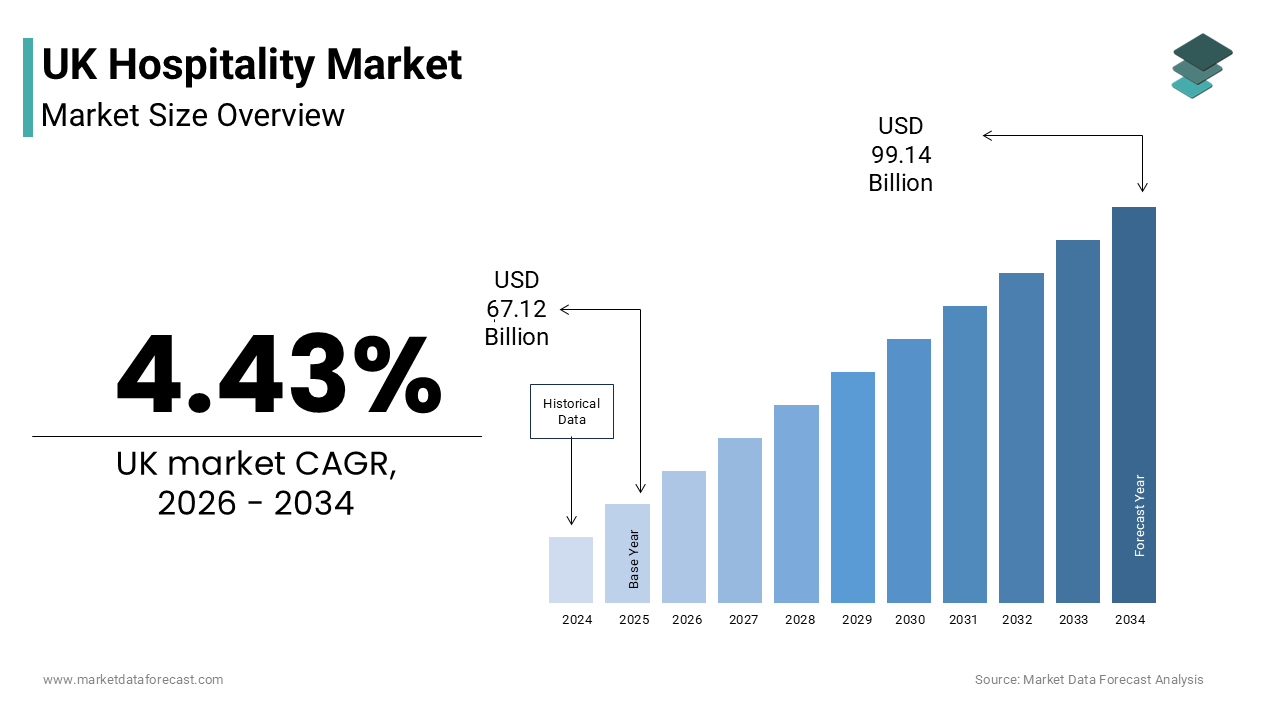
The United Kingdom hospitality market was valued at USD 67.12 billion in 2025 and is anticipated to reach USD 70.09 billion in 2026 from USD 99.14 billion by 2034, growing at a CAGR of 4.43% during the forecast period from 2026 to 2034. The growth of the United Kingdom hospitality market is driven by the resurgence of domestic and international tourism, increasing demand for accommodation and dining services, and growing business travel activities. Expanding tourism infrastructure, rising demand for experiential travel, and increasing investments in hospitality technology are further accelerating market growth. Moreover, advancements in digital booking platforms, expansion of sustainable hospitality practices, and increasing focus on personalized guest experiences are supporting the expansion of the United Kingdom hospitality market.
Key Market Trends
-
Rising domestic and international tourism driving demand for hotels, restaurants, and leisure services.
-
Increasing adoption of digital technologies including mobile bookings, contactless payments, and personalized customer engagement tools.
-
Growing consumer preference for sustainable and environmentally responsible hospitality services.
-
Strong focus on experiential travel and authentic local experiences.
-
Expansion of smart hospitality solutions powered by artificial intelligence and data analytics.
Segmental Insights
- Based on type, the chain hotels segment dominated the United Kingdom hospitality market and held the largest share in 2025. The segment’s dominance is attributed to strong brand recognition, standardized service quality, extensive loyalty programs, operational efficiency, and widespread presence across major cities and tourist destinations.
- The independent hotels segment is projected to witness the fastest CAGR during the forecast period owing to increasing consumer demand for authentic local experiences, personalized services, unique property designs, and culturally immersive travel experiences.
- Based on accommodation class, the mid and upper-midscale hotels segment accounted for the leading share of the United Kingdom hospitality market in 2025. The dominance of this segment is driven by affordability, accessibility, broad consumer appeal, convenient locations, and strong value-for-money propositions for both business and leisure travelers.
- The luxury hotels segment is anticipated to register the fastest CAGR during the forecast period due to increasing travel among high-net-worth individuals, growing demand for exclusive experiences, rising preference for personalized luxury services, and expanding premium tourism activities.
- Based on booking channel, the Online Travel Agencies (OTAs) segment held the major share of the United Kingdom hospitality market in 2025 owing to convenience, extensive accommodation options, transparent price comparison features, user reviews, and widespread consumer adoption of digital travel platforms.
- The direct digital booking segment is expected to witness rapid growth during the forecast period because of increasing investments in hotel websites and mobile applications, growing customer preference for exclusive booking benefits, enhanced personalization capabilities, and reduced dependency on third-party booking platforms.
Regional Insights
England dominated the United Kingdom hospitality market in 2025 and accounted for approximately 85% of total national hospitality revenue due to its concentration of major cities, strong tourism infrastructure, and high international visitor arrivals. Scotland continues to maintain a strong position driven by heritage tourism, cultural attractions, and outdoor recreation activities. Wales is witnessing steady growth supported by increasing visitor numbers, expanding tourism infrastructure, and growing demand for nature-based and cultural tourism experiences. Together, these regions contribute to the United Kingdom’s position as one of Europe’s leading hospitality destinations.
Competitive Landscape
The United Kingdom hospitality market is highly competitive and characterized by the presence of international hotel chains, independent hospitality operators, restaurant groups, and digital accommodation platforms competing through service quality, brand recognition, customer experience, and technological innovation. Leading companies are focusing on expanding digital capabilities, enhancing sustainability initiatives, strengthening loyalty programs, and improving operational efficiency. Strategic investments in personalized guest experiences, smart hospitality technologies, and premium service offerings are further strengthening market positioning across the hospitality ecosystem. Prominent players in the United Kingdom hospitality market include Whitbread plc, InterContinental Hotels Group (IHG), Compass Group plc, Mitchells & Butlers plc, JD Wetherspoon plc, Greene King, Marston's plc, Fuller's, Hilton Worldwide Holdings Inc., Accor SA, Marriott International, Inc., Travelodge Hotels Limited, easyHotel plc, The Restaurant Group plc, and Young & Co.'s Brewery PLC.
UK Hospitality Market Size
The UK hospitality market size was valued at USD 67.12 billion in 2025 and is anticipated to reach USD 70.09 billion in 2026 from USD 99.14 billion by 2034, growing at a CAGR of 4.43% during the forecast period from 2026 to 2034.
Hospitality encompasses a broad spectrum of service-oriented industries, including accommodation, food and beverage services, event management, and tourism-related activities. This sector serves as a vital component of the national economy, facilitating leisure, business travel, and social interaction through hotels, restaurants, pubs, bars, and conference venues. The cultural diversity of the UK contributes to a rich tapestry of culinary and lodging experiences, ranging from historic heritage hotels to modern boutique establishments and international cuisine outlets. As per data from the Office for National Statistics, the service sector accounts for a significant proportion of total employment in the country, with hospitality playing a crucial role in regional economic development. The market is characterized by its sensitivity to seasonal fluctuations, consumer confidence levels, and macroeconomic conditions. Regulatory frameworks governing health and safety, licensing, and labor standards significantly influence operational practices. The post-pandemic recovery phase has seen a shift in consumer behavior, with increased demand for experiential travel and sustainable dining options. Digital transformation has become integral to operations, with online booking systems, contactless payments, and personalized customer engagement tools reshaping the guest experience. This dynamic environment requires businesses to adapt continuously to changing preferences, while maintaining high standards of service quality and operational efficiency to remain competitive in a saturated landscape.
MARKET DRIVERS
Resurgence of Domestic and International Tourism Fuels Demand for Services
The robust recovery of both domestic and international tourism is a key factor fuelling the growth in the UK hospitality market. Travelers are increasingly eager to explore cultural landmarks, natural landscapes, and urban centers after periods of restricted mobility. According to data from VisitBritain, final estimates indicate that there were 42.6m inbound visits to the UK in 2024, with those visitors spending a total of £32.5bn and staying for a total of 293m nights in the UK. Domestic tourism also remains strong, as residents opt for staycations due to cost considerations and environmental awareness. The diversity of attractions, ranging from historic castles in Scotland to coastal resorts in Cornwall, ensures a wide appeal across different demographic segments. Major events, such as music festivals, sporting competitions, and cultural exhibitions, further boost occupancy rates and restaurant bookings. The government support for tourism infrastructure and promotional campaigns enhances the visibility of the UK as a premier destination. This influx of visitors drives revenue for hotels, restaurants, and entertainment venues, creating a ripple effect that benefits local suppliers and service providers. The sustained interest in travel ensures a consistent demand for hospitality services, supporting job creation and economic stability within the sector.
Growth in Business Travel and Corporate Events Supports Sector Stability
The expansion of business travel and corporate events is further boosting the expansion of the UK hospitality market, particularly in major urban centers like London, Manchester, and Edinburgh. Companies are returning to face-to-face interactions for meetings, conferences, and networking events, recognizing the value of personal connection in building relationships. According to statistics from the British Hospitality Association, the corporate sector contributes significantly to hotel occupancy and conference facility utilization throughout the year. The presence of multinational corporations and financial institutions in the UK generates a steady stream of business travelers, who require high-quality accommodation and dining services. Professional conferences, trade shows, and industry summits attract thousands of delegates, who spend on lodging, meals, and local transportation. Hotels and venues have adapted by offering specialized business packages, including high-speed internet, meeting rooms, and catering services tailored to professional needs. The integration of technology, such as virtual and hybrid meeting capabilities, allows venues to cater to diverse event formats. This segment is less susceptible to seasonal variations compared to leisure travel, providing consistent revenue streams. The continued importance of business connectivity ensures that the hospitality sector remains a critical infrastructure component for the corporate economy.
MARKET RESTRAINTS
Labor Shortages and Staff Retention Issues Constrain Operational Capacity
The UK hospitality market faces significant constraints due to persistent labor shortages and challenges in staff retention, which impact service delivery and operational efficiency. The sector has struggled to recruit sufficient numbers of skilled workers, including chefs, waitstaff, and housekeeping personnel, following changes in immigration policies and shifts in workforce preferences. According to data from the Office for National Statistics released by the UKHospitality industry body, there were 98,000 vacancies in food service and accommodation, falling below 100,000 for the first time since the pandemic. The reliance on European Union workers has diminished post-Brexit, creating gaps that domestic recruitment has not fully filled. High turnover rates exacerbate the problem, as employees seek better working conditions and wages in other industries. Training new staff requires time and resources, which strains management and affects consistency in service quality. The pressure on existing staff leads to burnout and further resignations, creating a vicious cycle of instability. Businesses are forced to increase wages and improve benefits to attract talent, which raises operational costs. These human resource challenges limit the ability of hospitality providers to meet peak demand and maintain high standards, ultimately affecting customer satisfaction and revenue potential.
Rising Operational Costs and Inflationary Pressures Squeeze Profit Margins
Escalating operational costs and inflationary pressures is another major restraint to the UK hospitality market by eroding profit margins and increasing financial uncertainty. Energy prices, food costs, and supply chain expenses have risen sharply, impacting the bottom line of hotels, restaurants, and bars. According to the Office for National Statistics, inflation rates have reached multi-year highs, affecting the cost of essential inputs such as gas, electricity, and raw ingredients. Hospitality businesses operate on thin margins, making them particularly vulnerable to these cost increases. Many establishments are unable to pass on the full extent of these costs to consumers due to price sensitivity and competitive pressures. The need to invest in energy-efficient technologies and sustainable practices adds to the capital expenditure burden. Supply chain disruptions further complicate procurement, leading to inconsistent availability of key items and potential waste. Smaller, independent operators are disproportionately affected, as they lack the bargaining power of larger chains to negotiate better terms. These financial pressures force businesses to cut costs in areas such as maintenance and marketing, which can degrade the customer experience. The cumulative effect of rising expenses limits investment in growth and innovation, threatening the long-term viability of many hospitality enterprises.
MARKET OPPORTUNITIES
Adoption of Technology and Digital Solutions Enhances Customer Experience
The integration of advanced technology and digital solutions offers significant opportunities for the UK hospitality market to improve efficiency and enhance guest satisfaction. Automation, artificial intelligence, and data analytics enable businesses to streamline operations, personalize services, and optimize resource allocation. According to industry analysis, the adoption of mobile check-in, contactless payments, and smart room technologies is becoming a standard expectation among modern travelers. These innovations reduce waiting times and friction points, improving the overall user experience. Hotels and restaurants can leverage customer data to offer tailored recommendations, loyalty rewards, and targeted marketing campaigns that drive repeat business. Online booking platforms and review sites provide valuable insights into consumer preferences, allowing businesses to adjust their offerings accordingly. The use of chatbots and virtual assistants enhances customer support by providing instant responses to inquiries. Technology also facilitates better inventory management and staff scheduling, reducing waste and labor costs. By embracing digital transformation, hospitality providers can differentiate themselves in a competitive market and appeal to tech-savvy consumers. This shift towards smart hospitality creates new revenue streams and operational efficiencies that support sustainable growth.
Expansion of Sustainable and Eco-Friendly Practices Attracts Conscious Consumers
The growing emphasis on sustainability and eco-friendly practices presents a major opportunity for the UK hospitality market to attract environmentally conscious consumers. Travelers and diners are increasingly prioritizing businesses that demonstrate a commitment to environmental stewardship and social responsibility. According to surveys by the Sustainable Restaurant Association, a significant majority of consumers prefer to patronize establishments that use locally sourced ingredients, reduce waste, and minimize carbon footprints. Hotels can implement green initiatives, such as energy-efficient lighting, water conservation systems, and plastic-free amenities, to appeal to this segment. Certification schemes and eco-labels provide verification of sustainable practices, enhancing brand credibility. Restaurants can focus on farm-to-table concepts, supporting local farmers and reducing transportation emissions. Waste reduction strategies, such as composting and recycling programs, further align with consumer values. Marketing these efforts effectively can build loyalty among guests who prioritize ethical consumption. Sustainability also offers cost savings through reduced energy and material usage. By leading in environmental responsibility, hospitality businesses can capture a growing market segment and contribute positively to societal goals, ensuring long-term relevance and competitiveness.
MARKET CHALLENGES
Regulatory Compliance and Licensing Complexities Increase Administrative Burden
Hospitality businesses in the UK face ongoing challenges related to regulatory compliance and licensing complexities, which increase administrative burdens and operational costs. Strict regulations govern health and safety, food hygiene, alcohol licensing, and employment standards, requiring constant vigilance and adherence. According to guidance from local councils and government bodies, obtaining and maintaining licenses involves rigorous inspections and documentation processes. Changes in legislation, such as new calorie labeling requirements or alcohol duty adjustments, necessitate rapid adaptation and staff training. Non-compliance can result in hefty fines, closure orders, and reputational damage, posing significant risks to business continuity. The complexity of navigating multiple regulatory frameworks across different regions adds to the difficulty for multi-site operators. Small businesses often lack the legal expertise and resources to manage these requirements efficiently, leading to potential oversights. The time and effort spent on compliance divert attention from core business activities, such as customer service and innovation. Additionally, evolving standards regarding sustainability and waste management introduce new layers of regulation. Keeping pace with these dynamic legal requirements requires continuous monitoring and investment in compliance systems. This regulatory landscape creates a challenging environment where operational agility is constrained by bureaucratic necessities.
Changing Consumer Preferences and Demand for Personalization Require Constant Adaptation
The rapid evolution of consumer preferences and the increasing demand for personalized experiences is a significant challenge to the UK hospitality market. Modern travelers and diners seek unique, authentic, and tailored interactions rather than standardized services. According to market research, customers expect businesses to anticipate their needs and offer customized recommendations based on past behavior and preferences. Meeting these expectations requires sophisticated data collection and analysis capabilities, which many traditional hospitality providers lack. The rise of social media influences trends quickly, forcing businesses to adapt their menus, decor, and marketing strategies frequently to stay relevant. Failure to innovate can lead to a loss of market share to more agile competitors who better understand contemporary tastes. The demand for transparency regarding ingredient sourcing, ethical practices, and health information adds another layer of complexity. Consumers are more informed and critical, expecting high standards of quality and accountability. Keeping up with these shifting dynamics requires continuous investment in staff training, technology, and creative development. The pressure to deliver exceptional, personalized experiences while maintaining operational efficiency strains resources. Businesses that fail to adapt risk becoming obsolete in a market where customer loyalty is increasingly driven by individualized value and emotional connection.
REPORT COVERAGE
| REPORT METRIC | DETAILS |
| Market Size Available | 2025 to 2034 |
| Base Year | 2025 |
| Forecast Period | 2026 to 2034 |
| CAGR | 4.43% |
| Segments Covered | By Type, Accommodation Class, Booking Channel and Region. |
| Various Analyses Covered | Global, Regional & Country Level Analysis, Segment-Level Analysis, DROC, PESTLE Analysis, Porter’s Five Forces Analysis, Competitive Landscape, Analyst Overview of Investment Opportunities |
| Market Leaders Profiled | Whitbread plc, InterContinental Hotels Group (IHG), Compass Group plc, Mitchells & Butlers plc, JD Wetherspoon plc, Greene King, Marston's plc, Fuller's, Hilton Worldwide Holdings Inc., Accor SA, Marriott International, Inc., Travelodge Hotels Limited, easyHotel plc, The Restaurant Group plc, and Young & Co.'s Brewery PLC. |
SEGMENTAL ANALYSIS
By Type Insights
The chain hotels segment dominated the UK hospitality market in 2025 primarily due to their ability to deliver consistent service quality and leverage global brand recognition, which instills confidence in travelers. Guests often prefer established chains because they know exactly what to expect regarding room standards, cleanliness, and amenities, regardless of the location. According to data from STR Global, chain hotels account for a significant majority of branded room inventory in major UK cities, such as London, Manchester, and Birmingham. This consistency is crucial for business travelers, who require reliable work environments and seamless loyalty program benefits across different destinations. Major operators like Marriott International, Hilton, and InterContinental Hotels Group have invested heavily in standardizing operational protocols, ensuring that guest experiences are uniform and predictable. The economies of scale enjoyed by these chains allow them to negotiate better rates with suppliers and invest in advanced technology platforms for booking and customer relationship management. This operational efficiency translates into competitive pricing and enhanced service delivery, which attracts a broad demographic of leisure and corporate guests. The trust associated with international brands reduces the perceived risk of travel, particularly for international visitors unfamiliar with local, independent options, thereby securing a dominant market position through repeat patronage and brand loyalty.
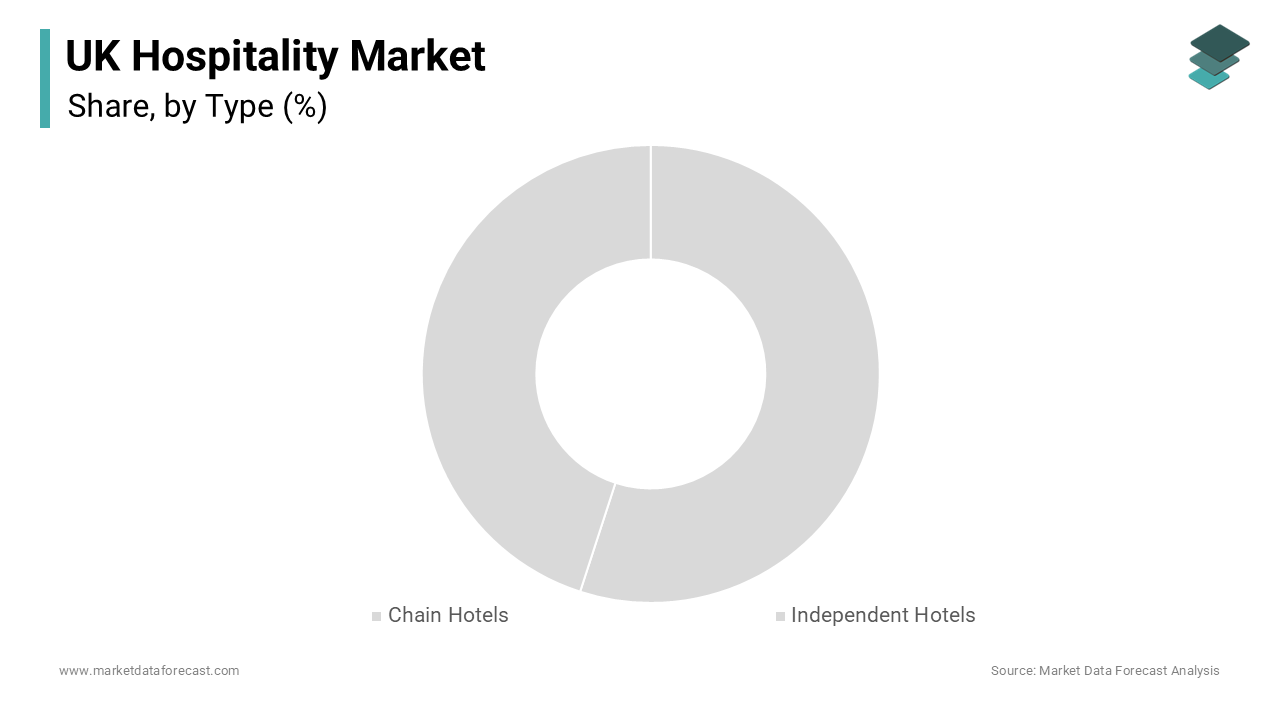
However, the independent hotels segment is estimated to showcase a promising CAGR in the UK market during the forecast period owing to a shifting consumer preference for authentic local experiences and unique character over standardized accommodations. Modern travelers, particularly millennials and Generation Z, are increasingly seeking immersive stays that reflect the culture and heritage of the destination, rather than generic international styles. According to surveys by VisitBritain, a growing number of tourists prioritize staying in boutique or independent properties that offer personalized service and distinctive design elements. These hotels often occupy historic buildings or unique locations, providing a sense of place that chain hotels cannot replicate. Owners of independent establishments can make quick decisions to adapt to local trends and guest feedback, allowing for greater flexibility and innovation in service offerings. The rise of social media has amplified the appeal of visually striking and instagrammable independent venues, driving organic marketing and word-of-mouth referrals. Guests value the personal touch and attention to detail provided by independent operators, who often go above and beyond to create memorable experiences. This demand for authenticity and individuality fuels the rapid growth of the independent sector, as travelers seek meaningful connections with their surroundings.
By Accommodation Class Insights
The mid and upper midscale hotels segment led the market by accounting for the leading share of the UK market in 2025 because they offer an optimal balance of affordability and comfort that appeals to a wide range of travelers. This segment caters to both business and leisure guests, who seek reliable amenities such as comfortable beds, Wi-Fi, and breakfast options without the premium price tag of luxury properties. According to data from Horwath HTL, mid and upper midscale hotels constitute the largest share of hotel rooms in the UK, reflecting their widespread availability and popularity. Brands like Premier Inn, Holiday Inn Express, and Travelodge have successfully captured this market by delivering consistent value and convenience in key locations. The economic sensitivity of many consumers makes this segment attractive during periods of inflation, as travelers look to optimize their spending without compromising on basic comfort. These hotels are strategically located near transport hubs, business districts, and tourist attractions, ensuring high accessibility. The standardized nature of these properties allows for efficient operations and cost management, which translates into competitive pricing. This value proposition resonates strongly with families, corporate travelers, and budget-conscious tourists, ensuring sustained demand and market leadership for the mid and upper midscale category.
On the other side, the luxury hotels segment is estimated to register a prominent CAGR in the UK market during the forecast period owing to a surge in travel among high-net-worth individuals and a shift towards experiential luxury. Affluent travelers are increasingly willing to spend on exclusive accommodations that offer personalized services, unique experiences, and exceptional privacy. According to data from Knight Frank's The Wealth Report, the UK has a substantial ultra-high-net-worth population, contributing to increased demand for top-tier hospitality services. Luxury hotels in London, Edinburgh, and rural retreats are seeing higher occupancy and average daily rates, as guests seek bespoke itineraries and curated experiences. This segment benefits from the trend of "trading up," where consumers prioritize quality and exclusivity over quantity. Properties are investing in high-end amenities, such as private butlers, spa treatments, and gourmet dining, to meet elevated expectations. The desire for memorable and Instagrammable moments drives affluent guests to choose luxury stays that offer distinct architectural beauty and cultural immersion. This focus on exclusivity and superior service creates a compelling value proposition that commands premium pricing and fosters intense brand loyalty among a wealthy clientele.
By Booking Channel Insights
The Online Travel Agencies (OTAs) segment led the market by accounting for the highest shareof the UK market in2025 due to the convenience and comprehensive price comparison features they offer to consumers. Platforms such as Booking.com, Expedia, and Airbnb allow users to browse thousands of options, read reviews, and compare prices instantly from a single interface. According to data from Phocuswright, OTAs account for a substantial majority of online hotel bookings in the UK, reflecting their dominance in the digital landscape. The ease of use and mobile accessibility of these platforms make them the first point of contact for many travelers planning their trips. The aggregation of diverse accommodation types, from budget hostels to luxury resorts, ensures that OTAs cater to all segments of the market. Consumer trust is built through verified guest reviews and secure payment systems, which reduce the perceived risk of booking. The aggressive marketing strategies and loyalty programs offered by major OTAs further incentivize users to book through their platforms rather than directly with hotels. This centralization of supply and demand creates a powerful network effect that sustains the leading position of OTAs in the booking ecosystem.
However, the direct digital booking channels segment is projected to showcase a healthy CAGR in the UK market during the forecast period, as hotels intensify efforts to reduce commission costs and build direct relationships with guests. Hospitality providers are increasingly investing in user-friendly websites, mobile apps, and loyalty programs to encourage guests to book directly rather than through third-party intermediaries. According to data from Hotel Tech Report, the share of direct bookings has risen significantly, as hotels offer exclusive perks such as best-rate guarantees, free breakfast, and room upgrades to incentivize direct engagement. By bypassing OTAs, hotels can retain a larger portion of revenue and gain valuable first-party data on customer preferences and behavior. This data enables more effective, personalized marketing and improved customer service, fostering long-term loyalty. The pandemic accelerated this trend, as travelers became more comfortable with digital transactions and sought greater flexibility and transparency in their bookings. Hotels are leveraging social media and email marketing to drive traffic to their direct channels, creating a seamless booking experience. This strategic shift towards direct digital engagement is driving rapid growth in this segment, as hotels seek greater control over their distribution and customer relationships.
COUNTRY ANALYSIS
England Hospitality Market Analysis
England held the major share of the UK hospitality market in 2025 and is highly likely to strengthen its predominant position in the UK hospitality market over the next few years, maintaining approximately 85% of total national revenue due to its large population, major urban centers, and status as a global tourism hub. London serves as the epicenter of the industry, hosting millions of international visitors annually who contribute significantly to hotel occupancy and restaurant sales. According to data from the Office for National Statistics, England is home to the highest concentration of hotels, restaurants, and bars in the UK, driven by robust business activity and cultural attractions. Cities like Manchester, Liverpool, and Birmingham also contribute substantially, with vibrant nightlife and conference facilities that attract domestic and international guests. The diverse landscape, ranging from coastal resorts in Cornwall to historic cities like York, ensures year-round demand across different regions. Infrastructure development, including high-speed rail and airport expansions, facilitates easy access for travelers, boosting hospitality consumption. The presence of multinational hotel chains and renowned culinary establishments enhances the appeal of England as a premier destination. Regulatory frameworks and tourism initiatives supported by local governments further stimulate growth. This combination of scale, diversity, and global connectivity ensures England remains the central engine of the UK hospitality market.
Scotland Hospitality Market Analysis
Scotland is projected to maintain a remarkably resilient share and foster distinct growth in the hospitality market over the coming years, continuing to contribute approximately 8% of total national revenue with a strong focus on heritage tourism and natural landscapes. Edinburgh and Glasgow are the primary drivers of demand, with Edinburgh hosting major festivals such as the Fringe, which generate substantial spikes in accommodation and dining revenue. According to statistics from VisitScotland, the country attracts millions of visitors annually, who are drawn to its castles, whisky distilleries, and scenic Highlands. The hospitality sector in Scotland is characterized by a high proportion of independent boutique hotels and traditional pubs that offer authentic local experiences. The growing interest in outdoor activities, such as hiking and wildlife watching, supports rural hospitality businesses in remote areas. Government initiatives promoting sustainable tourism and local sourcing benefit the sector by enhancing its appeal to eco-conscious travelers. The strong cultural identity and reputation for hospitality foster high levels of guest satisfaction and repeat visits. Despite seasonal fluctuations, the unique charm and global recognition of Scottish attractions ensure a steady flow of tourists, supporting the resilience and growth of the hospitality industry in this region.
Wales Hospitality Market Analysis
Wales is anticipated to experience notable progress and elevate its overall contribution to the hospitality market over the next few years, expanding its modest share of approximately 4% of total national revenue with a market status defined by its natural beauty and cultural heritage. Cardiff serves as the main urban hub, with a thriving food and beverage scene and modern conference facilities that attract business and leisure travelers. According to data from Visit Wales, the country sees increasing visitor numbers driven by outdoor tourism along its coastal paths and national parks. The hospitality sector in Wales is notable for its emphasis on local produce and Welsh language culture, which differentiates it from other regions. Independent guesthouses and self-catering accommodations are popular choices for families and groups exploring the countryside. Investment in infrastructure, such as improved rail links and visitor centers, enhances accessibility and the guest experience. The government supports the sector through grants and marketing campaigns that highlight Wales as a sustainable and welcoming destination. The close-knit community feel and friendly service contribute to positive word of mouth and visitor loyalty. While smaller in scale, the Welsh hospitality market is dynamic and increasingly recognized for its unique offerings and quality experiences.
COMPETITIVE LANDSCAPE
The competition in the UK hospitality market is intense and characterized by the presence of global hotel chains independent boutique operators and emerging digital platforms. Established multinational corporations leverage their scale brand recognition and extensive loyalty programs to secure large corporate contracts and international tourist flows. They continuously invest in property renovations and technology upgrades to maintain high standards and attract discerning guests. Independent hotels compete by offering unique authentic experiences and personalized service that resonate with travelers seeking local culture and character. The rise of short term rental platforms has added another layer of competition particularly in the leisure segment prompting traditional hotels to emphasize professional service and amenities. Price sensitivity among consumers drives frequent promotional activities and dynamic pricing strategies. Regulatory compliance regarding health safety and sustainability also influences competitive dynamics as businesses strive to meet evolving standards. This fragmented yet robust landscape fosters innovation in service delivery and customer engagement ensuring a dynamic and evolving market environment.
KEY MARKET PLAYERS
Some of the promising companies that are playing a dominating role in the UK Hospitality Market include
- Whitbread plc
- InterContinental Hotels Group (IHG)
- Compass Group plc
- Mitchells & Butlers plc
- JD Wetherspoon plc
- Greene King
- Marston's plc
- Fuller's
- Hilton Worldwide Holdings Inc.
- Accor SA
- Marriott International, Inc.
- Travelodge Hotels Limited
- easyHotel plc
- The Restaurant Group plc
- Young & Co.'s Brewery PLC
Top Players in the UK Hospitality Market
InterContinental Hotels Group plc
InterContinental Hotels Group plc maintains a formidable presence in the UK hospitality market through its diverse portfolio of brands including Holiday Inn Crowne Plaza and Premier Inn. The company leverages its extensive network to cater to both business and leisure travelers across major cities and regional hubs. Recent actions include significant investments in digital transformation initiatives such as mobile check in and personalized guest experiences to enhance customer satisfaction. IHG has also focused on sustainability by implementing energy efficient technologies and reducing single use plastics across its properties. The group continues to expand its footprint through strategic partnerships and franchise agreements ensuring consistent service quality. By prioritizing innovation and operational excellence IHG strengthens its brand loyalty and remains a preferred choice for discerning travelers seeking reliable and comfortable accommodations throughout the UK.
Whitbread plc
Whitbread plc is a leading player in the UK hospitality sector primarily known for operating the Premier Inn hotel chain and various restaurant brands. The company focuses on providing affordable and high quality accommodation alongside popular dining options that appeal to a broad demographic. Recent strategies involve accelerating the development of new Premier Inn locations in key urban areas and transport hubs to meet growing demand. Whitbread has invested heavily in technology to streamline booking processes and improve operational efficiency within its hotels. The organization emphasizes sustainability through waste reduction programs and sustainable sourcing practices for its food and beverage outlets. By maintaining a strong focus on value and consistency Whitbread ensures its properties remain competitive. Its integrated approach to hospitality and dining creates a seamless experience for guests reinforcing its position as a dominant force in the budget and midscale segments.
Marriott International Inc
Marriott International Inc holds a significant position in the UK hospitality market with a wide array of luxury and premium brands such as The Ritz Carlton Sheraton and Courtyard. The company caters to high end travelers and corporate clients seeking exceptional service and exclusive amenities. Recent actions include the renovation of historic properties in London and Edinburgh to blend heritage charm with modern luxury. Marriott has expanded its loyalty program benefits to offer more personalized rewards and experiences for frequent guests. The group actively promotes sustainable tourism practices and community engagement initiatives to enhance its corporate social responsibility profile. By leveraging its global distribution network and strong brand equity, Marriott attracts international visitors and business travelers. Its commitment to innovation and guest centric services ensures it remains a top choice for those seeking premium hospitality experiences in the UK.
Top Strategies Used by Key Market Participants
Key players in the UK hospitality market employ several strategic approaches to maintain competitiveness and drive growth. Digital transformation is central with companies investing in mobile apps contactless services and data analytics to enhance guest experiences and operational efficiency. Sustainability initiatives such as energy conservation waste reduction and ethical sourcing are prioritized to align with consumer values and regulatory requirements. Brand diversification allows operators to cater to different market segments from budget to luxury ensuring broader appeal. Strategic partnerships with online travel agencies and local tourism boards expand reach and visibility. Loyalty programs are enhanced to retain customers through personalized offers and exclusive benefits. Workforce development focuses on training and retention to address labor shortages and ensure high service standards. These combined strategies enable market leaders to adapt to changing consumer preferences and economic conditions while sustaining profitability and market relevance.
MARKET SEGMENTATION
This research report on the UK hospitality market has been segmented based on the following categories.
By Type
- Chain Hotels
- Independent Hotels
By Accommodation Class
- Luxury
- Mid & Upper-Midscale Hotels
- Budget & Economy
- Service Apartments
By Booking Channel
- Direct Digital
- OTAs
- Corporate/MICE
- Wholesale & Traditional Agents
By Country
- U.K
Access the study in MULTIPLE FORMATS
Purchase options starting from
$ 1200
Didn’t find what you’re looking for?
TALK TO OUR ANALYST TEAM
Need something within your budget?
NO WORRIES! WE GOT YOU COVERED!
Call us on: +1 888 702 9696 (U.S Toll Free)
Write to us: sales@marketdataforecast.com