- Product Description Description
- Table of Contents TOC
- List of Table & Figure LOT
- Get Free Sample PDF Sample PDF
Market Size, 2025
$40.53 BnMarket Estimate, 2026
$43.16 BnMarket Forecast, 2034
$71.37 BnCAGR, 2026–2034
6.49%UK IT Outsourcing Market Report Summary
The UK IT outsourcing market was valued at USD 40.53 billion in 2025, is estimated to reach USD 43.16 billion in 2026, and is projected to reach USD 71.37 billion by 2034, growing at a CAGR of 6.49% during the forecast period. Market growth is driven by increasing demand for digital transformation services, rising cloud adoption, growing cybersecurity requirements, and the need for cost optimization across enterprises. Organizations are increasingly outsourcing IT functions to access specialized expertise, improve operational efficiency, and accelerate technology modernization initiatives.
Key Market Trends
- Growing adoption of cloud computing and managed services is driving market growth.
- Increasing demand for cybersecurity and digital transformation solutions is boosting market expansion.
- Rising use of artificial intelligence, automation, and analytics services is supporting industry development.
- Expansion of hybrid and multi cloud environments is enhancing market opportunities.
- Growing focus on operational efficiency, scalability, and business continuity is influencing market advancement.
Segmental Insights
- Based on type, the infrastructure outsourcing segment accounted for the largest share of the UK IT outsourcing market in 2025. This dominance is attributed to the increasing need for efficient management of IT infrastructure, data centers, networks, and cloud environments.
- Based on service, the Infrastructure as a Service (IaaS) segment held the leading share of the UK IT outsourcing market in 2025, driven by growing cloud adoption, flexible resource allocation, and reduced capital expenditure requirements.
- Based on end user, the large enterprises segment accounted for the major share of the UK IT outsourcing market in 2025 due to complex IT ecosystems, extensive digital transformation initiatives, and the need to integrate legacy systems with modern technologies.
Regional Insights
- England accounted for the largest share of the UK IT outsourcing market in 2025 and is expected to maintain its dominant position during the forecast period. The region benefits from a strong technology ecosystem, high enterprise digitalization rates, and significant investments in cloud computing and advanced IT services.
Competitive Landscape
The UK IT outsourcing market is highly competitive, with service providers focusing on cloud solutions, cybersecurity services, digital transformation, automation, and artificial intelligence capabilities to strengthen their market position. Companies continue to invest in innovation, strategic partnerships, and industry specific technology solutions to meet evolving enterprise requirements.
Major players operating in the UK IT outsourcing market include Accenture plc, Capgemini SE, Tata Consultancy Services (TCS), Infosys Limited, Wipro Limited, HCL Technologies, Cognizant Technology Solutions, DXC Technology, Fujitsu Limited, IBM Corporation, Atos SE, NTT DATA Group Corporation, Tech Mahindra Limited, CGI Inc., and Sopra Steria Group.
UK IT Outsourcing Market Size
The UK IT outsourcing market size was valued at USD 40.53 billion in 2025, and is projected to reach USD 71.37 billion by 2034 from USD 43.16 billion in 2026, growing at a CAGR of 6.49%.
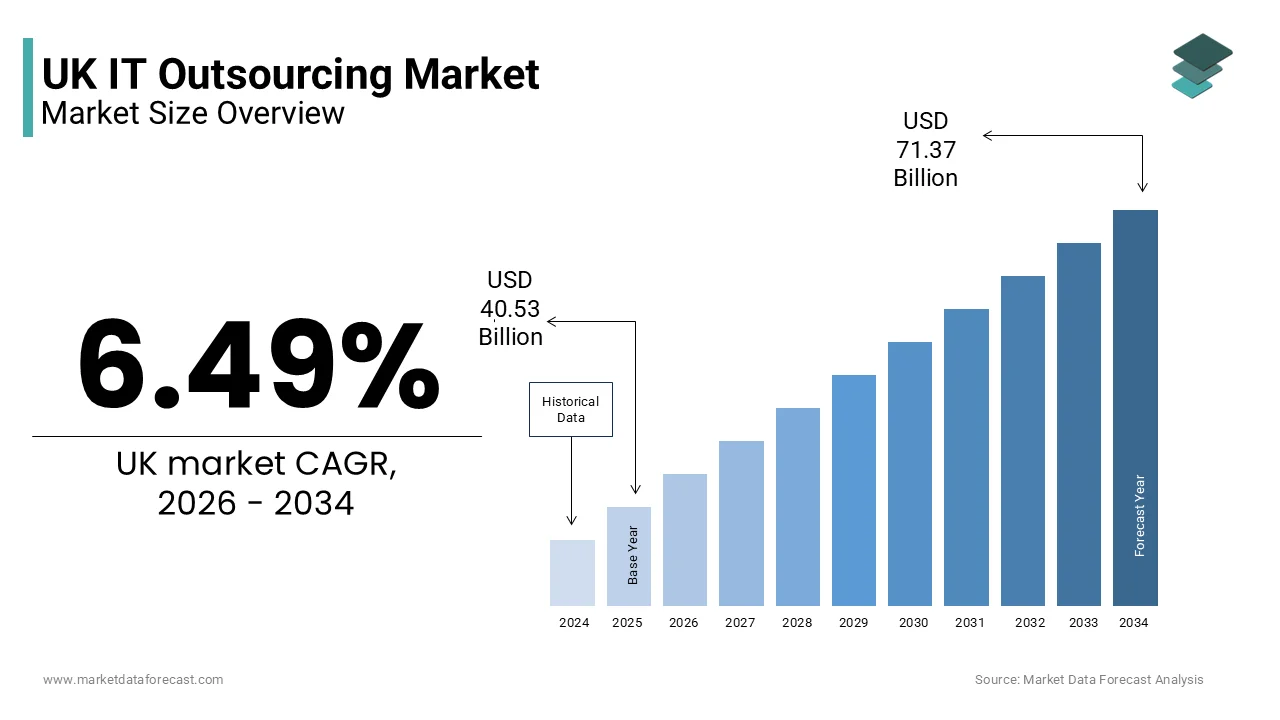
IT outsourcing represents a strategic ecosystem where organizations delegate specific information technology functions to external service providers to enhance operational efficiency and access specialized expertise. This sector encompasses a broad spectrum of services including application development, infrastructure management, cybersecurity, cloud migration, and technical support. The market has evolved from a cost reduction mechanism into a critical enabler of digital transformation, allowing businesses to focus on core competencies while leveraging external innovation. As per data from the Office for National Statistics, the digital sector accounts for 6.8% of total UK gross value added, with technology related services accounting for a substantial portion of business investment. The regulatory landscape is heavily influenced by data protection laws such as the UK General Data Protection Regulation which mandates strict compliance regarding data handling and privacy. The prevalence of hybrid working models has further accelerated the demand for robust remote IT infrastructure and support services. Organizations increasingly view outsourcing partners as strategic allies rather than mere vendors, seeking long term collaborations that drive agility and scalability. The integration of artificial intelligence and automation into outsourced services is reshaping delivery models, enabling faster response times and predictive maintenance. This dynamic environment requires providers to continuously upskill their workforce and adopt cutting edge technologies to meet the evolving needs of UK enterprises across various industries.
MARKET DRIVERS
Accelerated Digital Transformation Initiatives across Industries Fuel Demand
The urgent need for digital transformation across various sectors in the UK is majorly fuelling the growth of the UK IT outsourcing market. Organizations are rapidly adopting cloud computing, big data analytics, and Internet of Things technologies to remain competitive in an increasingly digital economy. According to data from the Department for Science, Innovation and Technology, UK businesses have significantly increased their investment in digital technologies, with many lacking the internal expertise to implement these complex systems effectively. This skills gap drives companies to partner with specialized outsourcing firms that possess the necessary technical knowledge and experience. Financial services, healthcare, and retail sectors are particularly active in this transition, seeking to modernize legacy systems and enhance customer experiences through digital channels. Outsourcing providers offer scalable solutions that allow businesses to deploy new technologies quickly without the burden of heavy capital expenditure on infrastructure and training. The ability to access global talent pools through outsourcing enables UK firms to innovate faster and respond to market changes with greater agility. This strategic reliance on external partners for digital initiatives ensures sustained demand for IT outsourcing services as organizations continue to prioritize technological advancement and operational modernization.
Severe Domestic Skills Shortage Compels Reliance on External Talent
The acute shortage of skilled IT professionals within the UK labor market is further contributing to the expansion of the UK IT outsourcing market, as companies struggle to fill critical technical roles internally. Despite high unemployment rates in other sectors, the technology industry faces a persistent deficit of qualified developers, data scientists, and cybersecurity experts. According to reports from Tech Nation, thousands of tech job vacancies remain unfilled across the UK, reflecting a mismatch between educational outputs and industry requirements. This talent scarcity forces organizations to look beyond their internal resources to maintain project timelines and service levels. Outsourcing provides immediate access to a vast pool of specialized talent that can be scaled up or down based on project needs. It eliminates the lengthy recruitment processes and high costs associated with hiring permanent staff, including salaries, benefits, and training expenses. By leveraging external providers, companies can ensure continuity in their IT operations and avoid disruptions caused by staff turnover. The flexibility offered by outsourcing allows businesses to tap into niche expertise that may not be available locally, such as advanced artificial intelligence or blockchain development. This reliance on external talent pools becomes essential for sustaining innovation and maintaining competitive advantage in a tight labor market.
MARKET RESTRAINTS
Data Security Concerns and Regulatory Compliance Complexities Hinder Adoption
The growing concerns regarding data security and the complexities of regulatory compliance are majorly impeding the expansion of the UK IT outsourcing market. Organizations are increasingly wary of entrusting sensitive customer and proprietary data to third party providers due to the rising frequency and sophistication of cyber-attacks. According to the National Cyber Security Centre, cyber-crime remains a top threat to UK businesses, with supply chain vulnerabilities being a common entry point for attackers. The stringent requirements of the UK General Data Protection Regulation impose heavy penalties for data breaches and non-compliance, making companies cautious about sharing data externally. Ensuring that outsourcing partners adhere to these strict standards requires rigorous auditing and continuous monitoring, which adds to the administrative burden and cost. Many organizations fear loss of control over data governance and potential reputational damage in the event of a security incident. This risk aversion leads some companies to keep critical IT functions in house despite the potential benefits of outsourcing. The complexity of navigating cross border data transfer regulations further complicates engagements with international providers. These security and compliance challenges create significant barriers to entry and slow down the decision making process for potential outsourcing contracts.
High Initial Transition Costs and Integration Challenges Deter Small Enterprises
The substantial initial costs associated with transitioning IT functions to external providers and the challenges of integrating these services with existing systems deter many small and medium sized enterprises from entering the outsourcing market. Setting up an outsourcing arrangement involves significant upfront investments in legal consultations, contract negotiations, and knowledge transfer processes. According to industry analysis, the hidden costs of outsourcing can often exceed initial estimates. For smaller businesses with limited budgets, these financial hurdles make outsourcing less attractive compared to maintaining small internal teams. The technical complexity of integrating outsourced services with legacy infrastructure can lead to operational disruptions and productivity losses during the transition phase. Lack of standardized processes and incompatible software systems further exacerbate these integration issues, requiring additional customization and testing. Many SMEs lack the internal project management expertise to oversee complex outsourcing transitions effectively, leading to failed implementations. The fear of vendor lock in and dependency on a single provider also discourages commitment to long term outsourcing agreements. These financial and operational barriers limit the market penetration of IT outsourcing among smaller enterprises, which constitute a large portion of the UK business landscape.
MARKET OPPORTUNITIES
Expansion of Managed Security Services amid Rising Cyber Threats
The escalating frequency and severity of cyber threats is a significant opportunity for IT outsourcing providers to expand their managed security services offerings in the UK. As businesses become more digitized, they face increasing risks from ransomware, phishing, and data breaches, which require specialized expertise to mitigate. According to data from the Federation of Small Businesses, 72% of small businesses have encountered cybercriminals, yet few have dedicated in house security teams. This gap creates a strong demand for outsourced security operations centers, threat monitoring, and incident response services. Providers can offer comprehensive security packages that include 24/7 monitoring, vulnerability assessments, and compliance management, which are often too costly for individual firms to maintain internally. The growing regulatory pressure to demonstrate robust cybersecurity measures further drives organizations to seek professional external support. By positioning themselves as trusted security partners, outsourcing firms can build long term relationships and recurring revenue streams. The integration of artificial intelligence into security tools allows providers to offer proactive threat detection and automated responses, enhancing value for clients. This focus on security aligns with national priorities and offers a lucrative growth avenue for IT outsourcing companies willing to invest in advanced defensive capabilities.
Adoption of Cloud Native Technologies and Hybrid Infrastructure Models
The widespread adoption of cloud native technologies and hybrid infrastructure models offers substantial opportunities for IT outsourcing providers to assist organizations in migrating and managing complex digital environments. Many UK businesses are moving away from traditional on premise servers to cloud based solutions to improve scalability and reduce hardware costs. According to the Cloud Industry Forum, 86% of UK organizations are using cloud services, yet many struggle with optimization, cost management, and security configuration. Outsourcing providers can offer specialized services in cloud migration, architecture design, and ongoing management, helping clients navigate the complexities of multi cloud environments. The shift towards hybrid models, which combine private and public clouds, requires sophisticated integration and monitoring capabilities that external experts can provide. Providers can help businesses optimize their cloud spending through FinOps practices, ensuring they only pay for the resources they use. Additionally, the rise of serverless computing and containerization creates demand for specialized development and maintenance services. By becoming experts in cloud technologies, outsourcing firms can position themselves as essential partners in their clients digital journeys. This transition represents a long term structural shift in IT infrastructure, providing sustained opportunities for service expansion and value addition.
MARKET CHALLENGES
Managing Vendor Relationships and Service Level Agreement Compliance
Managing complex vendor relationships and ensuring strict adherence to Service Level Agreements is a significant challenge for the UK IT outsourcing market. Misalignment between client expectations and provider deliverables often leads to disputes and dissatisfaction if not managed proactively. According to industry surveys, a notable proportion of outsourcing partnerships fail to meet their original objectives due to poor communication and unclear performance metrics. Defining precise and measurable Service Level Agreements is difficult, particularly for intangible services like software development or strategic consulting. Monitoring compliance requires robust governance frameworks and regular performance reviews, which consume internal resources and management time. Cultural differences and time zone disparities with offshore providers can further complicate communication and delay issue resolution. The lack of transparency in provider operations makes it challenging for clients to assess true performance and identify areas for improvement. When service levels are not met, enforcing penalties or terminating contracts can be legally complex and disruptive to business operations. Building trust and maintaining collaborative relationships requires continuous effort and investment from both parties. Failure to effectively manage these dynamics can result in suboptimal outcomes and negate the intended benefits of outsourcing.
Rapid Technological Obsolescence and Need for Continuous Upskilling
The rapid pace of technological change and the consequent obsolescence of skills pose a notable challenge to IT outsourcing providers in the UK, who must constantly update their capabilities to remain relevant. Technologies such as artificial intelligence, machine learning, and blockchain evolve quickly, rendering existing expertise outdated within short periods. According to data from the British Computer Society, the half-life of learned IT skills is shrinking, requiring continuous education and training for technical staff. Outsourcing firms must invest heavily in upskilling their workforce to meet emerging client demands, which increases operational costs and reduces profit margins. Failure to keep pace with technological advancements can lead to loss of competitive advantage and client attrition as businesses seek partners with cutting edge expertise. The competition for top talent intensifies as providers vie for specialists in new technologies, driving up salary expectations. Additionally, clients often expect immediate proficiency in new tools without allowing time for learning curves, creating pressure on delivery teams. Balancing the need for innovation with the stability of established services is a delicate act. Providers must establish robust learning and development programs to ensure their teams remain agile and competent in a fast changing technological landscape.
REPORT COVERAGE
| REPORT METRIC | DETAILS |
| Market Size Available | 2025 to 2034 |
| Base Year | 2025 |
| Forecast Period | 2026 to 2034 |
| CAGR | 6.49% |
| Segments Covered | By Type, Service, End User, and Region. |
| Various Analyses Covered | Global, Regional and Country-Level Analysis, Segment-Level Analysis, Drivers, Restraints, Opportunities, Challenges; PESTLE Analysis; Porter’s Five Forces Analysis, Competitive Landscape, Analyst Overview of Investment Opportunities |
| Market Leaders Profiled | Accenture plc, Capgemini SE, Tata Consultancy Services (TCS), Infosys Limited, Wipro Limited, HCL Technologies, Cognizant Technology Solutions, DXC Technology, Fujitsu Limited, IBM Corporation, Atos SE, NTT DATA Group Corporation, Tech Mahindra Limited, CGI Inc., and Sopra Steria Group |
SEGMENTAL ANALYSIS
By Type Insights
The infrastructure outsourcing segment dominated the market by capturing the highest share of the UK market in 2025 because it addresses the fundamental requirement for stable, secure, and scalable computing environments. Organizations rely on external providers to manage servers, storage, networks, and data centers, which are essential for daily business operations. According to data from the Office for National Statistics, the digital sector accounts for 6.8% of total UK gross value added, necessitating reliable infrastructure to support continuous commercial activity. The complexity of modern IT environments, involving hybrid cloud setups and edge computing, requires specialized expertise that many internal teams lack. Outsourcing infrastructure management ensures high availability and minimizes downtime, which is critical for sectors such as finance and healthcare where service interruptions can have severe consequences. Providers offer 24/7 monitoring and proactive maintenance, which enhances operational resilience. The capital intensive nature of maintaining physical hardware makes outsourcing an attractive option for converting fixed costs into variable expenses. This financial flexibility, combined with technical reliability, ensures that infrastructure outsourcing remains the largest segment by revenue and volume in the UK market.
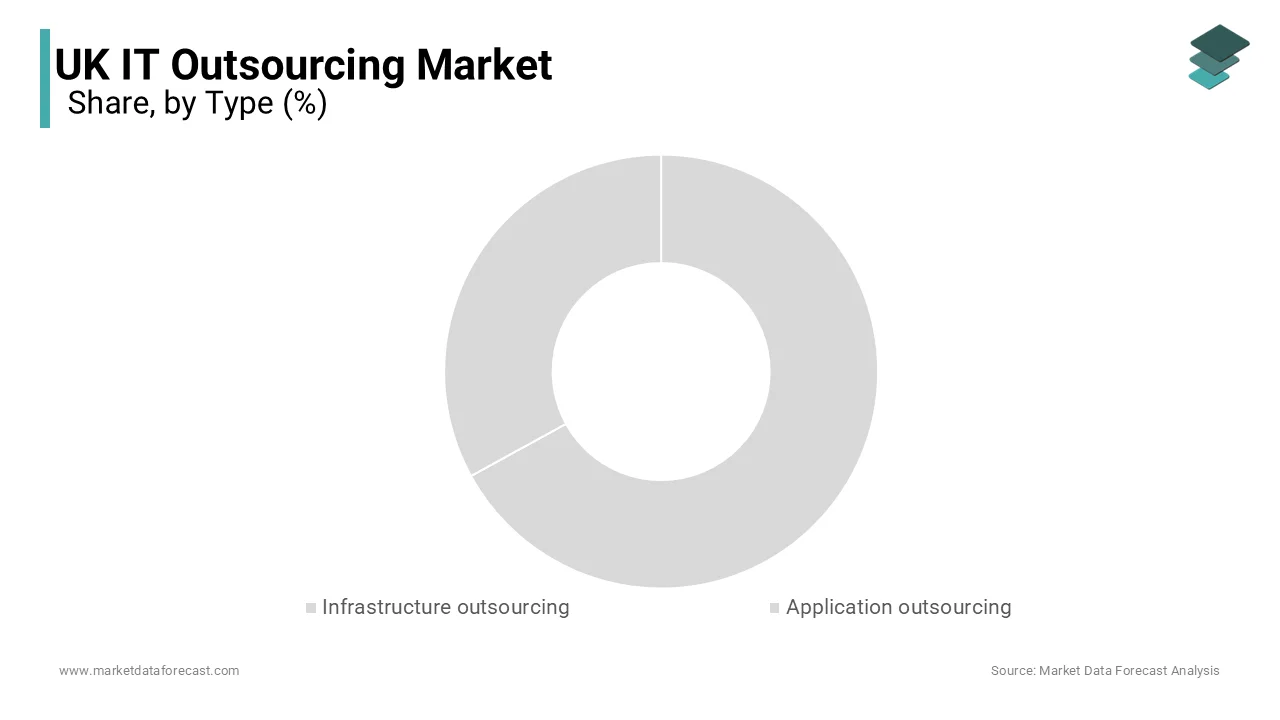
However, the application outsourcing segment is the fastest growing segment in the UK IT outsourcing market and is estimated to showcase a promising CAGR in the UK market during the forecast period owing to the urgent need for digital transformation and custom software solutions. Businesses are increasingly developing proprietary applications to enhance customer engagement, streamline internal processes, and gain competitive advantages. According to data from Tech Nation, the UK tech sector continues to expand with a high demand for agile development methodologies that external partners can provide more efficiently than internal teams. Application outsourcing allows companies to accelerate time to market for new products by leveraging the specialized skills of external developers in areas such as mobile app development, user experience design, and backend integration. The shortage of domestic software engineering talent makes outsourcing a strategic necessity for maintaining development velocity. Providers offer scalable teams that can be adjusted based on project phases, ensuring optimal resource utilization. The ability to access global best practices and innovative technologies through outsourcing partners enhances the quality and functionality of delivered applications. This focus on innovation and speed drives the rapid expansion of application outsourcing as organizations prioritize digital capabilities.
By Service Insights
The Infrastructure-as-a-Service (IaaS) segment led the market by accounting for the highest share of the UK market in 2025 due to its unparalleled scalability and flexibility in providing computing resources. IaaS allows organizations to rent virtualized hardware, including servers, storage, and networking over the internet, eliminating the need for physical infrastructure investment. According to data from the Cloud Industry Forum, 86% of UK organizations are using cloud services, with IaaS being the foundational layer for most digital operations. This model enables companies to scale resources up or down instantly based on demand fluctuations, which is crucial for handling seasonal peaks or unexpected traffic spikes. The pay as you go pricing structure ensures that businesses only pay for what they use, optimizing cost efficiency. IaaS providers manage the underlying hardware maintenance, security, and updates, allowing clients to focus on their core applications and data. The reliability and global reach of major IaaS providers ensure high availability and disaster recovery capabilities that are difficult to achieve in house. This combination of operational ease, cost effectiveness, and technical robustness secures the leading position of IaaS in the UK market.
On the other side, the Platform-as-a-Service (PaaS) segment is predicted to grow at a promising CAGR in the UK market during the forecast period owing to the need for accelerated application development and deployment cycles. PaaS provides a complete environment, including operating systems, middleware, and development tools that allow developers to build and deploy applications without managing underlying infrastructure. According to industry analysis, the adoption of PaaS is increasing rapidly among UK startups and enterprises seeking to innovate quickly. By abstracting away infrastructure management, PaaS enables development teams to focus solely on coding and functionality, reducing time to market significantly. The integrated tools for collaboration, version control, and automated testing enhance productivity and code quality. This efficiency is crucial in competitive markets where speed of innovation determines success. The ability to easily integrate with other cloud services and APIs further expands the capabilities of PaaS platforms. As more organizations adopt microservices architectures, PaaS becomes essential for managing complex distributed applications. This strategic value drives the rapid growth of PaaS as businesses seek to optimize their development workflows.
By End User Insights
The large enterprises segment held the major share of the UK market in 2025 due to their complex IT requirements and the need to integrate legacy systems with modern technologies. These organizations operate extensive IT landscapes that require specialized management and continuous modernization to remain efficient. According to data from the Confederation of British Industry, large corporations are the primary investors in digital transformation initiatives, driving significant demand for outsourcing services. Managing diverse applications, networks, and data centers in house is resource intensive and often inefficient for such large scales. Outsourcing allows these enterprises to access specialized expertise and advanced technologies without the burden of maintaining large internal IT departments. The need for global reach and 24/7 support further necessitates partnerships with established outsourcing providers who can deliver consistent service across multiple locations. Large enterprises also benefit from the risk mitigation offered by outsourcing partners who assume responsibility for compliance and security. This strategic reliance on external providers for critical IT functions ensures that large enterprises remain the dominant end user segment in the market.
On the other side, the small and medium-sized enterprises (SMEs) segment is estimated to record the fastest CAGR in the UK market during the forecast period owing to the increasing digital adoption and the need for access to enterprise grade tools. SMEs are recognizing the importance of digital presence and efficient IT systems for competitiveness but often lack the resources to build internal capabilities. According to data from the Federation of Small Businesses, a growing number of SMEs are investing in cloud services and managed IT support to streamline operations. Outsourcing provides SMEs with affordable access to advanced technologies such as cybersecurity, data backup, and customer relationship management systems that were previously exclusive to large corporations. This leveling of the playing field allows SMEs to compete more effectively in the digital economy. The flexibility of outsourcing models enables SMEs to scale their IT support as they grow without significant upfront investment. This accessibility and affordability drive the rapid adoption of IT outsourcing services among smaller businesses.
COUNTRY LEVEL ANALYSIS
England dominated the market in the UK in 2025 and is expected to maintain its commanding lead in the IT outsourcing landscape over the next few years due to concentrated investments in metropolitan digital infrastructure and expanding regional tech hubs. London serves as a global center for fintech and professional services, driving immense demand for sophisticated IT outsourcing solutions. According to data from the Office for National Statistics, England is home to the vast majority of the UK tech workforce and digital infrastructure. The presence of leading universities and research institutions fosters a culture of innovation and skilled talent availability. Major outsourcing providers establish their primary delivery centers in cities like London, Manchester, and Leeds to serve both domestic and international clients. The robust digital infrastructure, including high speed broadband and data centers, supports complex IT operations. Regulatory bodies and industry standards are often centered in England, influencing national practices. The high density of large enterprises and government agencies creates a steady stream of large scale outsourcing contracts. This economic and technological centrality ensures England remains the primary engine of the UK IT outsourcing market.
COMPETITIVE LANDSCAPE
The competition in the UK IT outsourcing market is intense and characterized by the presence of global multinational corporations alongside specialized regional providers and niche boutiques. Established giants leverage their scale extensive service portfolios and global delivery networks to secure large enterprise contracts. They continuously invest in research and development to stay ahead in emerging technologies such as quantum computing and generative AI. Regional players compete by offering personalized service deep local market knowledge and flexibility that larger firms may lack. The market sees frequent mergers and acquisitions as companies seek to expand their capabilities and geographic reach. Price competition remains fierce particularly for standardized services prompting providers to differentiate through value added innovations. Regulatory compliance and data security credentials have become key differentiators influencing procurement decisions. The rise of platform based outsourcing models adds pressure on traditional service providers to innovate. This dynamic environment drives continuous improvement in service quality efficiency and customer experience ensuring a robust and evolving market.
KEY MARKET PLAYERS
Some of the companies that are playing a dominating role in the UK IT outsourcing market are
- Accenture plc
- Capgemini SE
- Tata Consultancy Services (TCS)
- Infosys Limited
- Wipro Limited
- HCL Technologies
- Cognizant Technology Solutions
- DXC Technology
- Fujitsu Limited
- IBM Corporation
- Atos SE
- NTT DATA Group Corporation
- Tech Mahindra Limited
- CGI Inc.
- Sopra Steria Group
Top Players in the Market
- Tata Consultancy Services Limited maintains a significant presence in the UK IT outsourcing market by delivering comprehensive digital transformation and consulting services to major enterprises. The company leverages its global delivery model to provide scalable solutions in cloud computing cybersecurity and artificial intelligence. Recent actions include expanding its innovation hubs in London and Manchester to foster closer collaboration with local clients and startups. TCS has invested heavily in upskilling its workforce in emerging technologies to meet the evolving demands of UK businesses. The organization actively partners with academic institutions to support digital skills development and promote inclusivity in the tech sector. By focusing on sustainable technology practices and client centric innovation TCS strengthens its reputation as a trusted strategic partner for organizations seeking to modernize their IT infrastructure and drive business growth.
- Accenture plc plays a pivotal role in the UK IT outsourcing landscape by offering end to end services that integrate technology strategy with operational execution. The firm serves a diverse client base across financial services healthcare and public sectors helping them navigate complex digital transitions. Recent strategies involve accelerating the adoption of cloud native architectures and data analytics platforms to enhance client agility. Accenture has established dedicated centers of excellence in the UK focused on responsible AI and cyber defense capabilities. The company continues to expand its ecosystem of partnerships with leading technology vendors to deliver integrated solutions. By prioritizing sustainability and ethical technology use Accenture reinforces its commitment to long term value creation. Its focus on talent development and continuous innovation ensures it remains at the forefront of the IT outsourcing industry.
- Capgemini UK plc contributes significantly to the market through its strong expertise in engineering digital transformation and managed services. The company supports UK organizations in optimizing their IT operations and adopting intelligent automation technologies. Recent actions include the expansion of its smart factory and IoT capabilities to serve the manufacturing and industrial sectors more effectively. Capgemini has invested in enhancing its cybersecurity offerings to address the growing threat landscape faced by British businesses. The organization emphasizes collaborative innovation by working closely with clients to co create tailored solutions. Capgemini also focuses on diversity and inclusion initiatives to build a resilient and representative workforce. By combining technical depth with industry knowledge Capgemini delivers measurable business outcomes. Its commitment to sustainability and digital responsibility further solidifies its position as a key player in the UK IT outsourcing market.
Top Strategies Used by Key Market Participants
Key players in the UK IT outsourcing market employ several strategic approaches to maintain competitiveness and drive growth. Digital transformation services are central with companies investing in cloud migration artificial intelligence and data analytics capabilities. Strategic partnerships with technology vendors enable the delivery of integrated and innovative solutions. Talent acquisition and upskilling initiatives ensure access to specialized skills in cybersecurity and software development. Sustainability commitments are integrated into service offerings to align with client environmental goals. Expansion of nearshore and offshore delivery centers optimizes cost efficiency while maintaining quality. Customer centric innovation through co creation labs fosters deeper client relationships. Automation of routine IT tasks improves operational efficiency and reduces costs. These combined strategies enable market leaders to adapt to changing technological landscapes and regulatory requirements while sustaining profitability and market relevance.
MARKET SEGMENTATION
This research report on the UK IT outsourcing market is segmented and sub-segmented into the following categories.
By Type
- Infrastructure outsourcing
- Application outsourcing
By Service
- Software as a service
- Infrastructure as a service
- Platform as a service
By End User
- Large enterprises
- SMEs