- Product Description Description
- Table of Contents TOC
- List of Table & Figure LOT
- Get Free Sample PDF Sample PDF
Market Size, 2025
$3.12 BnMarket Estimate, 2026
$3.31 BnMarket Forecast, 2034
$5.25 BnCAGR, 2026–2034
5.95%UK LED Lighting Market Report Summary
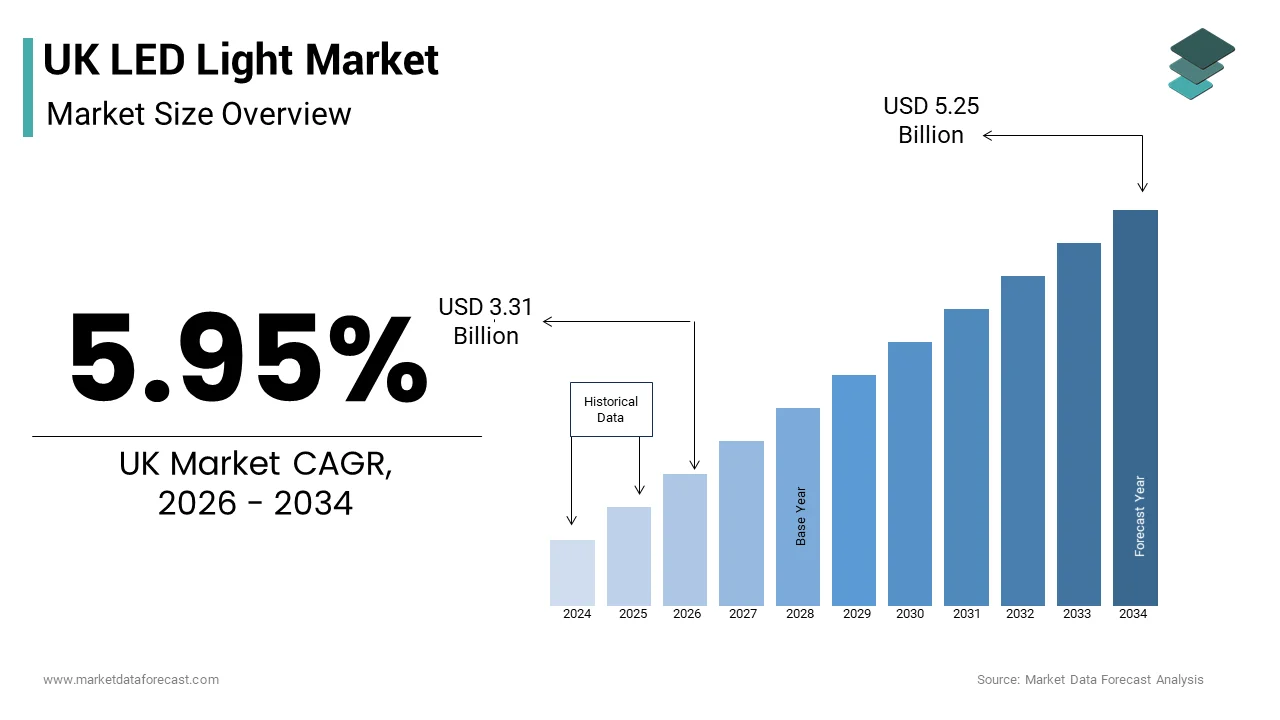
The UK LED lighting market was valued at USD 3.12 billion in 2025 and is anticipated to reach USD 3.31 billion in 2026 and further expand to USD 5.25 billion by 2034, growing at a CAGR of 5.95% during the forecast period from 2026 to 2034. The growth of the UK LED lighting market is driven by increasing demand for energy-efficient lighting solutions, rising adoption of smart lighting technologies, and stringent government regulations promoting energy conservation. The ongoing replacement of conventional lighting systems with LEDs across residential, commercial, and industrial sectors, coupled with advancements in connected lighting solutions, is further supporting market expansion. Additionally, growing investments in sustainable infrastructure and smart building projects are creating new growth opportunities for LED lighting manufacturers.
Key Market Trends
- Increasing adoption of energy-efficient LED lighting systems to reduce electricity consumption and operational costs.
- Growing integration of smart lighting technologies, including IoT-enabled controls, sensors, and automated lighting management systems.
- Rising demand for sustainable and environmentally friendly lighting solutions across residential and commercial applications.
- Expansion of smart city initiatives and infrastructure modernization projects driving LED lighting deployment.
- Continuous product innovations focused on improved brightness, longer lifespan, enhanced aesthetics, and intelligent lighting capabilities.
Segmental Insights
- Based on product, the luminaires and fixtures segment held the largest share of the UK LED lighting market, accounting for 62.1% of the market in 2025. The segment’s dominance is attributed to widespread adoption across commercial buildings, residential properties, public infrastructure, and industrial facilities due to their energy efficiency, durability, and superior lighting performance.
- Based on distribution channel, the wholesale and retail channels segment accounted for 54.1% of the UK LED lighting market share in 2025. The segment's leadership is driven by extensive product availability, established distribution networks, and increasing consumer preference for purchasing lighting products through both physical and online retail channels.
- Based on end user, the indoor lighting segment dominated the market and captured a 62.8% share in 2025. The growth of this segment is supported by increasing demand for efficient indoor illumination in residential, office, retail, hospitality, healthcare, and educational facilities.
Regional Insights
The United Kingdom continues to experience steady growth in LED lighting adoption, supported by national energy-efficiency initiatives, sustainability goals, and increasing awareness of the long-term cost benefits of LED technology. Rising investments in commercial construction, smart buildings, and public infrastructure upgrades are further strengthening market demand. The growing emphasis on carbon emission reduction and environmentally sustainable lighting solutions is expected to support continued market expansion across the country.
Competitive Landscape
The UK LED lighting market is highly competitive, with leading manufacturers focusing on product innovation, smart lighting integration, sustainability initiatives, and expansion of distribution networks. Companies are investing in advanced LED technologies, intelligent lighting controls, and customized lighting solutions to address evolving consumer and commercial requirements. Strategic partnerships, technological advancements, and investments in energy-efficient products remain key strategies adopted by market participants to strengthen their market presence.
Prominent players in the UK LED lighting market include Signify UK Ltd., Osram Lighting Ltd., LEDVANCE Ltd., Dialight plc, Aurora Lighting Group, Integral LED (Integral Memory plc), Collingwood Lighting Ltd., Tamlite Lighting Ltd., Feilo Sylvania UK Ltd., Thorn Lighting Ltd., Zumtobel Group UK Ltd., Ansell Lighting Ltd., JCC Lighting Products Ltd., Hacel Lighting Ltd., Endon Lighting Ltd., Plessey Semiconductors Ltd., Harvard Technology Ltd., Telensa Ltd., Tridonic UK Ltd., Helvar Ltd., Illuma Lighting Ltd., EGLO (UK) Ltd., Crescent Lighting Ltd., Luxonic Lighting Ltd., and LUX365 Ltd.
UK LED Lighting Market Size
The UK led lighting market size was valued at USD 3.12 billion in 2025 and is anticipated to reach USD 3.31 billion in 2026 to reach USD 5.25 billion by 2034, growing at a CAGR of 5.95% during the forecast period from 2026 to 2034.
MARKET OVERVIEW AND DEFINITION
LED lighting is a mature and rapidly evolving sector. It continues to replace older incandescent and fluorescent bulbs with energy-efficient alternatives. This transition is driven by stringent environmental regulations, rising energy costs, and the increasing integration of smart connectivity features in illumination systems. According to data popularized by the United Nations Environment Programme (UNEP) and the Global Lighting Challenge, lighting accounts for approximately 15% of global electricity consumption. The UK government has implemented bans on the sale of certain halogen and fluorescent lamps, accelerating the shift toward LED alternatives across residential, commercial, and industrial segments. As per the Office for National Statistics, the construction industry, which is a primary consumer of lighting fixtures, contributed £127 billion to the economy in 2023, providing a robust foundation for demand. The adoption of Internet of Things enabled lighting systems allows for advanced control mechanisms such as motion sensing and daylight harvesting, further enhancing energy savings. Industry bodies emphasize the importance of circular economy principles, encouraging the design of recyclable luminaires to minimize electronic waste. The market is also influenced by the growing awareness of human centric lighting, which adjusts color temperature to support circadian rhythms and wellbeing. This holistic approach transforms lighting from a basic utility into a strategic component of sustainable building design and operational efficiency.
MARKET DRIVERS
Stringent Government Regulations Phasing Out Inefficient Technologies
Regulatory mandates prohibiting the sale of inefficient lighting technologies are a key driver for the United Kingdom LED lighting market. This compels consumers and businesses to adopt LED solutions. The European Union’s ecodesign directives, which remain influential in UK standards post Brexit, have progressively banned high energy consuming lamps such as halogen bulbs and linear fluorescent tubes. According to historical impact assessments from the former Department for Business, Energy and Industrial Strategy (BEIS), energy-efficiency regulations are estimated to save households approximately £75 annually on utility bills while substantially lowering carbon emissions. The phased removal of these legacy products from retail shelves creates a vacuum that LED technologies naturally fill due to their superior efficiency and longevity. As per the Energy Saving Trust, replacing a single halogen bulb with an LED equivalent can reduce energy usage by up to 80 percent, offering immediate financial relief to consumers facing high utility costs. Commercial entities are also driven by compliance requirements, as building regulations increasingly mandate minimum energy performance standards for new constructions and major renovations. The clarity of these regulatory timelines provides manufacturers and retailers with the confidence to invest in LED inventory and phase out obsolete stock. This legislative push ensures that LED adoption is not merely a choice but a necessity for maintaining legal compliance and operational viability in the modern built environment.
Rising Energy Costs Driving Operational Efficiency Demands
Escalating electricity prices are a significant factor propelling the expansion of the United Kingdom LED lighting market. This shift allows organizations and households to mitigate soaring operational expenses. The volatility of global energy markets has led to substantial increases in unit rates, making energy efficiency a top priority for budget management. While Ofgem’s domestic energy price cap reached historic highs in recent years, the parallel surge in the unregulated commercial energy market prompted businesses to rigorously scrutinize their energy consumption, including lighting systems. LED technology offers a compelling return on investment by consuming significantly less power than traditional alternatives while providing comparable or superior illumination levels. As per data from the Carbon Trust, commercial buildings can achieve energy savings of up to 50 percent by upgrading to LED systems with smart controls, resulting in rapid payback periods often under three years. Industrial facilities with extensive lighting requirements benefit even more, as the cumulative savings from reduced wattage translate into substantial annual cost reductions. The financial imperative is further reinforced by corporate sustainability goals, where reducing energy intensity is a key performance indicator. Consumers are similarly motivated, with many households undertaking DIY upgrades to lower their monthly bills. This economic pressure accelerates the replacement cycle, driving demand for high efficiency LED products that deliver tangible financial benefits alongside environmental advantages.
MARKET RESTRAINTS
Market Saturation and Replacement Cycle Length
The high penetration rate of LED technology is a major restraint to the United Kingdom LED lighting market. The initial wave of mass adoption has already occurred in many sectors. With millions of households and businesses having already transitioned from incandescent and fluorescent sources, the pool of easy replacements has diminished significantly. According to the Lighting Industry Association, the saturation level in the residential sector is estimated to be over 70 percent, limiting the potential for exponential growth in unit sales. The long lifespan of LED products, often exceeding 25,000 hours, means that replacement cycles are infrequent, leading to slower recurring demand compared to shorter lived technologies. As per sources, the market is shifting from volume driven growth to value driven innovation, which requires higher investment in research and development to differentiate products. This maturity phase intensifies competition among manufacturers, squeezing profit margins and forcing consolidation within the industry. New entrants face significant barriers as established brands dominate shelf space and customer loyalty. The lack of urgent regulatory pressure for further upgrades beyond current LED standards also reduces the immediacy of purchase decisions for many consumers. Consequently, growth rates are moderating, requiring companies to find new avenues such as smart integration or specialized applications to sustain revenue streams in a saturated landscape.
High Initial Investment Costs for Smart Lighting Systems
The transition to advanced smart lighting systems involves substantial upfront capital expenditure, which restrains widespread adoption among price sensitive consumers and small businesses, and thereby hampers the growth of the United Kingdom LED lighting market. On the other hand, basic LED bulbs are affordable. Smart LED solutions require additional infrastructure such as gateways, sensors, and compatible control software, which significantly increases the total cost of ownership compared to standard static LEDs. According to national consumer technology surveys, nearly 40% of homeowners identify high upfront equipment costs as the core constraint preventing them from installing connected smart home technologies like automated lighting. For commercial entities, the complexity of integrating smart lighting with existing building management systems often necessitates professional installation and commissioning services, adding to the expense. As per data from the Federation of Small Businesses, many smaller enterprises operate with tight cash flows and prioritize immediate operational needs over long term efficiency investments that have longer payback periods. The perceived complexity of setup and maintenance also deters non technical users who fear compatibility issues or system failures. Although long term savings are evident, the immediate financial outlay remains a psychological and practical hurdle. Financing options for lighting upgrades are not always readily available or well marketed, leaving many potential buyers unable to bridge the gap between current capabilities and desired smart functionality. This cost barrier slows the transition from basic LED adoption to the next generation of connected lighting solutions.
MARKET OPPORTUNITIES
Integration with Internet of Things and Smart City Initiatives
The convergence of LED lighting with Internet of Things technologies offers a substantial opportunity for the United Kingdom LED lighting market. This enables advanced data collection and automated control capabilities. Smart LED systems can serve as nodes in a broader network, collecting information on occupancy, temperature, and air quality to optimize building performance. According to tech ecosystem data compiled by Tech Nation (now powered by Founders Forum), the UK IoT sector is experiencing robust growth, with smart building applications representing a significant portion of this expansion. Local authorities are increasingly investing in smart street lighting projects that adjust brightness based on pedestrian traffic and time of day, reducing energy waste and light pollution. As per the Department for Science Innovation and Technology, several UK cities have launched pilot programs using connected lighting infrastructure to support wider smart city initiatives such as traffic management and public safety monitoring. The ability to remotely monitor and maintain lighting assets reduces operational costs for facility managers and municipalities. Furthermore, the integration of visible light communication technology allows LEDs to transmit data, opening new possibilities for indoor navigation and retail analytics. Manufacturers that offer open platform solutions compatible with various smart home ecosystems can capture a larger share of the tech savvy consumer market. This technological evolution transforms lighting from a passive utility into an active component of intelligent infrastructure, driving demand for premium connected products.
Expansion in Horticultural and Healthcare Applications
Specialized LED applications in the horticulture and healthcare sectors offer significant growth opportunities for the United Kingdom LED lighting market. This is because various industries are now recognizing the benefits of tailored light spectra for biological processes. In agriculture, LED grow lights enable year round crop production in controlled environments, reducing reliance on seasonal variations and imported produce. According to the Department for Environment Food and Rural Affairs, the UK vertical farming sector is expanding rapidly, with numerous facilities adopting energy efficient LED systems to maximize yield per square meter. These lights can be tuned to specific wavelengths that promote photosynthesis and plant growth, offering superior results compared to traditional high pressure sodium lamps. In healthcare, human centric lighting systems use LEDs to mimic natural daylight patterns, supporting patient recovery and staff alertness in hospitals and care homes. As per NHS England guidelines, improving the built environment including lighting quality is a key factor in enhancing patient experience and clinical outcomes. The aging population drives demand for better illuminated care facilities that reduce fall risks and support circadian health. Manufacturers developing specialized fixtures for these niche markets can command higher margins and build strong brand loyalty. The proven efficacy of LED technology in improving biological outcomes creates a compelling value proposition that extends beyond simple energy savings, opening new revenue streams in high value sectors.
MARKET CHALLENGES
Supply Chain Volatility and Component Shortages
Global supply chain disruptions and shortages of critical electronic components are significant challenges to the United Lighting LED lighting market. This affects production schedules and pricing stability. LED fixtures rely on semiconductors, drivers, and rare earth materials that are subject to geopolitical tensions and logistical bottlenecks. According to the Chartered Institute of Procurement and Supply, lead times for electronic components have remained elevated, causing delays in manufacturing and delivery for lighting manufacturers. The dependence on Asian suppliers for key inputs makes the UK market vulnerable to external shocks such as trade disputes or regional conflicts. As per the Office for National Statistics, import prices for electrical equipment have fluctuated considerably, forcing companies to absorb costs or pass them on to consumers, which can dampen demand. The scarcity of microchips used in smart LED drivers has particularly impacted the availability of connected lighting products, slowing the adoption of advanced features. Manufacturers struggle to maintain consistent inventory levels, leading to missed sales opportunities and strained relationships with distributors. Diversifying supply sources is a complex and lengthy process that requires significant investment and qualification efforts. Until global supply chains stabilize and become more resilient, the industry will face ongoing uncertainty that hinders strategic planning and growth momentum.
Complexity of Recycling and Electronic Waste Management
The management of end-of-life LED products is also a complex barrier to the United Kingdom LED lighting market. This is due to their classification as waste electrical and electronic equipment, which requires specialized recycling processes. Unlike traditional bulbs, LEDs contain electronic circuits, metals, and sometimes hazardous materials that must be separated and processed correctly to prevent environmental contamination. According to the Waste and Resources Action Programme (WRAP) and industry e-waste initiatives, recycling rates for small electrical items remain low, as many consumers lack clarity on how to properly dispose of retired LED fixtures. The lack of standardized take back schemes and convenient collection points hinders effective recovery of valuable materials such as copper and aluminum. As per the Environment Agency, improper disposal of LED waste can lead to leaching of harmful substances into landfills, undermining the environmental benefits of energy efficiency. Manufacturers face increasing pressure to design for disassembly and recyclability, which often conflicts with the need for durable and compact designs. The cost of compliant recycling can be prohibitive for smaller producers, creating an uneven playing field. Consumer awareness regarding the proper disposal of LED products is limited, leading to high levels of contamination in general waste streams. Addressing this challenge requires coordinated efforts between industry, government, and waste management providers to establish efficient circular systems that maximize resource recovery
REPORT COVERAGE
| REPORT METRIC | DETAILS |
| Market Size Available | 2025 to 2034 |
| Base Year | 2025 |
| Forecast Period | 2026 to 2034 |
| CAGR | 5.95% |
| Segments Covered | By Product, Distribution Channel, End-User, Country |
| Various Analyses Covered | Global, Regional, and Country Level Analysis, Segment-Level Analysis; DROC, PESTLE Analysis; Porter’s Five Forces Analysis; Competitive Landscape; Analyst Overview of Investment Opportunities. |
| Regions Covered | London, South East, North West, East of England, South West, Scotland, West Midlands, Yorkshire and The Humber, East Midlands, Others |
| Market Leaders Profiled | Signify UK Ltd., Osram Lighting Ltd., LEDVANCE Ltd., Dialight plc, Aurora Lighting Group, Integral LED (Integral Memory plc), Collingwood Lighting Ltd., Tamlite Lighting Ltd., Feilo Sylvania UK Ltd., Thorn Lighting Ltd., Zumtobel Group UK Ltd., Ansell Lighting Ltd., JCC Lighting Products Ltd., Hacel Lighting Ltd., Endon Lighting Ltd., Plessey Semiconductors Ltd., Harvard Technology Ltd., Telensa Ltd., Tridonic UK Ltd., Helvar Ltd., Illuma Lighting Ltd., EGLO (UK) Ltd., Crescent Lighting Ltd., Luxonic Lighting Ltd., LUX365 Ltd |
SEGMENTAL ANALYSIS
By Product Insights
The luminaires and fixtures segment occupied a 62.1% share to be the largest in the United Kingdom LED lighting market in 2025. This prominence of the segment was supported by extensive construction activities and large scale infrastructure upgrades that require complete lighting systems rather than individual bulbs. The dominance of this segment is also driven by the commercial and industrial sectors which prioritize integrated solutions that offer superior thermal management, optical control, and aesthetic design. According to the Office for National Statistics (ONS), construction industry output reached approximately £127 billion in 2023, creating a robust market that private industry analysts forecast will drive demand for high-performance luminaires in the non-residential sector. The shift towards smart building technologies further favors fixtures, as they can easily incorporate sensors, drivers, and connectivity modules necessary for automated control systems. As per the British Property Federation, commercial landlords are increasingly investing in modern lighting infrastructure to enhance asset value and meet stringent energy efficiency standards required by green building certifications. Industrial facilities also contribute significantly to this segment, utilizing robust LED high bay and low bay fixtures to improve workplace safety and productivity. The longer replacement cycle of fixtures compared to lamps ensures stable revenue streams for manufacturers who offer comprehensive warranty and maintenance packages. Government initiatives promoting energy efficient public infrastructure, including schools and hospitals, further drive demand for high quality luminaires that provide consistent illumination and reduced maintenance costs over their operational lifespan.
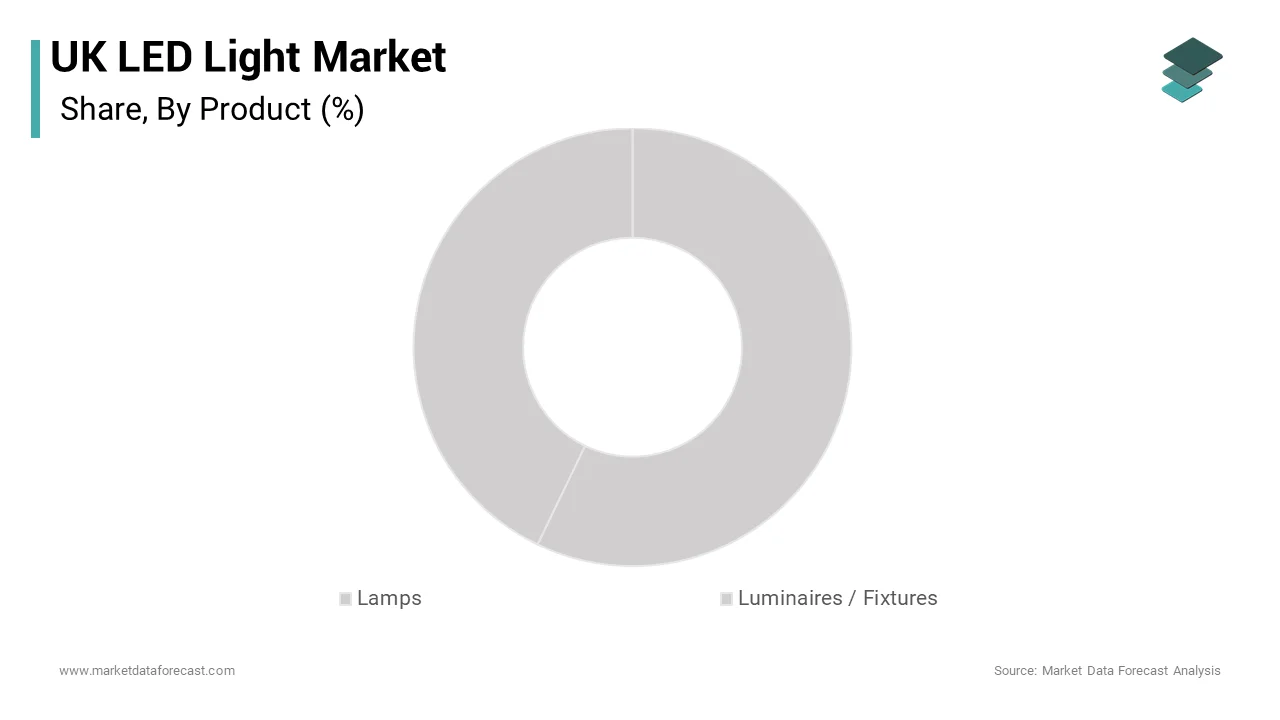
On the other hand, the LED lamps segment is on the rise and is expected to witness a CAGR of 4.5% during the forecast period. The main reason behind this growth is propelled by the residential retrofit market and small business upgrades. This segment grows as consumers replace existing incandescent and compact fluorescent lamps with LED equivalents to reduce immediate energy costs without undertaking major electrical renovations. The availability of diverse form factors including filament LEDs that mimic traditional bulb aesthetics has accelerated acceptance among homeowners who value both efficiency and design. As per data from major retailers, sales of decorative and general purpose LED lamps remain robust, particularly during seasonal periods when lighting usage increases. The simplicity of installation allows for do it yourself upgrades, bypassing the need for professional electricians and lowering the barrier to entry. Furthermore, the gradual phase out of halogen lamps by regulatory bodies ensures a continuous replacement demand. The market for standalone bulbs is mature. However, innovations in color tuning and smart connectivity continue to stimulate interest among tech-savvy consumers seeking affordable entry points into home automation.
By Distribution Channel Insights
The wholesale and retail channels segment led the United Kingdom LED lighting market and captured a 54.1% share in 2025. This leading position of the segment was attributed to the established network of electrical wholesalers who provide essential credit facilities, technical advice, and immediate product availability to trade professionals. These channels served as the primary conduit for products reaching contractors, electricians, and end users. According to the Electrical Distributors' Association (EDA), the wholesale sector facilitates the majority of lighting purchases for construction projects, leveraging its capacity to handle bulk orders and complex supply chain logistics. Retail outlets including DIY superstores and specialized lighting showrooms cater to the consumer segment, offering tangible experiences where customers can assess light quality and design before purchase. According to research, a significant proportion of residential lighting upgrades continue to be sourced through physical retail channels, where consumers value staff guidance on technical LED specifications. The trust built through long standing relationships between wholesalers and electrical contractors ensures repeat business and brand loyalty. Additionally, the ability to view physical samples reduces the risk of returns and dissatisfaction, which is crucial for high value fixture purchases. The integration of omnichannel strategies by major distributors allows them to combine the convenience of online browsing with the reliability of local pickup, reinforcing their central role in the supply chain.
However, the e-commerce segment is expected to exhibit a noteworthy CAGR of 9.2% between 2026 and 2034. This rapid expansion is fuelled by the increasing comfort of consumers and businesses with online procurement, facilitated by improved digital platforms and reliable delivery services. According to the Office for National Statistics, online retail sales accounted for 27 percent of total retail spending in 2023, reflecting a broader shift in purchasing behavior across all categories. For LED lighting, e-commerce offers unparalleled access to a wide variety of products, detailed technical specifications, and customer reviews that aid decision making. Business to business platforms are also gaining traction, allowing facility managers to reorder supplies efficiently and track expenses digitally. As per data from major online marketplaces, the sales of smart LED products have surged online, as these items often come with digital setup guides and app based controls that align well with digital shopping experiences. Competitive pricing and frequent promotions on online platforms attract price sensitive buyers, while direct to consumer models allow manufacturers to capture higher margins. The convenience of home delivery for bulky fixtures and the ease of comparing multiple brands instantly contribute to the sustained growth of this channel.
By End User Insights
The indoor lighting segment dominated the UK LED lighting market and accounted for a 62.8% share in 2025. Factors such as the vast number of residential, commercial, and institutional buildings requiring efficient illumination propel the dominance of this segment. This segment spearheads the market due to the sheer volume of indoor spaces where lighting is used for extended periods, making energy efficiency a critical operational concern. Data from the Department for Energy Security and Net Zero (DESNZ) shows that lighting accounts for roughly 15 percent of total electricity consumption in commercial buildings, a baseline footprint that industry analysts note is driving widespread private retrofits to LED technology. The office sector, in particular, has seen significant adoption of LED panels and troffers to comply with workplace regulations regarding light levels and employee wellbeing. As per the British Council for Offices, modern workspace designs prioritize human centric lighting systems that adjust color temperature throughout the day to support circadian rhythms, driving demand for advanced indoor LED solutions. Retail environments also utilize indoor LED lighting extensively for display and ambiance, leveraging the directional nature of LEDs to highlight products effectively. The hospitality sector invests in decorative indoor fixtures to enhance guest experience, while educational institutions upgrade classrooms to improve visibility and learning outcomes. The continuous operation of indoor lights in many sectors ensures a high return on investment for LED upgrades, sustaining strong demand across diverse indoor applications.
On the contrary, the outdoor lighting segment is predicted to witness the highest CAGR of 7.8% over the forecast period owing to urbanization, safety concerns, and smart city initiatives. Municipalities and private developers are increasingly investing in LED street lighting, architectural facade illumination, and landscape lighting to enhance security and aesthetic appeal. According to the Local Government Association, many UK councils have undertaken large scale street lighting replacement programs to reduce energy bills and carbon emissions, with some achieving savings of up to 50 percent. The integration of smart controls in outdoor fixtures allows for dimming during low traffic hours and remote monitoring, further enhancing efficiency. As per the Department for Transport, improved road lighting is linked to reduced accident rates, prompting investments in high quality LED road studs and column mounted units. Commercial properties also utilize outdoor LED lighting for parking lots and perimeter security, leveraging motion sensors to activate lights only when needed. The growth of outdoor leisure spaces and parks has increased demand for durable and weather resistant LED fixtures that can withstand harsh environmental conditions. Innovations in solar powered LED street lights are also gaining traction in remote areas, reducing grid dependency. This segment’s growth is supported by government grants for sustainable urban development and public safety improvements.
COUNTRY ANALYSIS
The United Kingdom followed closely behind in the Europe LED lighting market and occupied a 14.1% share in 2025. It is a mature and highly regulated market for LED lighting within Europe, characterized by strong adoption rates and a focus on sustainability and smart integration. Its advanced infrastructure and proactive policies drove this substantial share. The market is shifting from basic energy savings to intelligent lighting networks that drive broader digital economy goals. Studies such as the Huawei/Navigant Research Index have previously ranked the UK as a leader in smart city deployments, a sector now supported by the Department for Science, Innovation and Technology (DSIT) through initiatives like the Smart Infrastructure Pilots. The phasing out of inefficient lighting technologies through strict regulatory measures has accelerated the penetration of LED products across all sectors. Research indicates that construction and renovation activities continue to drive demand for high-quality lighting fixtures, supported by Office for National Statistics (ONS) data showing sustained growth in the private housing repair and maintenance sectors. The presence of major global lighting manufacturers and a robust network of local distributors ensures competitive pricing and wide product availability. Consumer awareness regarding energy conservation and environmental impact is high, fostering a receptive market for innovative LED solutions. The government’s commitment to net zero emissions by 2050 provides a clear long term signal for investment in sustainable lighting technologies. This combination of regulatory support, technological advancement, and environmental consciousness positions the UK as a key driver of innovation and adoption in the regional LED lighting landscape.
COMPETITIVE LANDSCAPE
The competition in the United Kingdom LED lighting market is intense and characterized by a mix of global giants and specialized niche providers vying for dominance in both residential and commercial sectors. Established multinational corporations leverage their brand recognition and extensive distribution networks to maintain strong market positions while investing in smart technology integration. Smaller specialized firms compete on customization and superior customer service particularly for complex industrial or architectural projects. Price pressure remains significant in the commodity segment driving manufacturers to optimize supply chains and production efficiencies. Innovation in connectivity and human centric lighting serves as a key differentiator as basic energy efficiency becomes standard. Regulatory compliance with safety and environmental standards creates barriers to entry but also ensures quality consistency. Collaborative partnerships between lighting manufacturers and technology companies are increasingly common to deliver holistic smart building solutions. This dynamic environment encourages continuous improvement in product performance and service delivery benefiting end users through greater choice and advanced functionality.
KEY MARKET PLAYERS
A few of the market players that are dominating the UK led lighting market are
- Signify UK Ltd.
- Osram Lighting Ltd.
- LEDVANCE Ltd.
- Dialight plc
- Aurora Lighting Group
- Integral LED (Integral Memory plc)
- Collingwood Lighting Ltd.
- Tamlite Lighting Ltd.
- Feilo Sylvania UK Ltd.
- Thorn Lighting Ltd.
- Zumtobel Group UK Ltd.
- Ansell Lighting Ltd.
- JCC Lighting Products Ltd.
- Hacel Lighting Ltd.
- Endon Lighting Ltd.
- Plessey Semiconductors Ltd.
- Harvard Technology Ltd.
- Telensa Ltd.
- Tridonic UK Ltd.
- Helvar Ltd.
- Illuma Lighting Ltd.
- EGLO (UK) Ltd.
- Crescent Lighting Ltd.
- Luxonic Lighting Ltd.
- LUX365 Ltd
Top Players In The Market
- Signify maintains a dominant presence in the United Kingdom LED lighting market through its extensive portfolio of professional and consumer lighting solutions under the Philips brand. The company actively drives the adoption of connected lighting systems that integrate with smart building management platforms to enhance energy efficiency. Recent actions include the expansion of its Interact IoT platform offerings tailored for UK commercial clients seeking data driven insights. Signify collaborates closely with local authorities on smart city initiatives, upgrading street lighting infrastructure with intelligent controls. The firm invests heavily in research and development to improve luminaire efficacy and circular design principles. Signify secures customer loyalty and sustained revenue streams by offering comprehensive service packages and long-term maintenance contracts. This approach also supports national sustainability goals by promoting innovative lighting technologies.
- Zumtobel Group contributes significantly to the UK LED lighting market by focusing on high quality professional lighting solutions for commercial and industrial applications. The company emphasizes human centric lighting designs that support wellbeing and productivity in workplaces and healthcare facilities. Recent initiatives involve launching new product lines that comply with stringent UK building regulations and energy performance standards. Zumtobel has strengthened its distribution network by partnering with leading electrical wholesalers to ensure widespread availability of its premium fixtures. The group actively participates in industry forums to shape best practices for sustainable lighting design. Its commitment to digitalization is evident in the integration of advanced sensors and control systems into its luminaires. Zumtobel differentiates itself in the competitive landscape and reinforces its reputation for technical excellence and innovation. It achieves this by offering tailored consulting services and customized solutions.
- Dialight plays a specialized role in the UK LED lighting market by providing robust high bay and hazardous area lighting solutions for industrial environments. The company focuses on delivering long lasting and energy efficient products that reduce maintenance costs for factories and warehouses. Recent actions include the introduction of upgraded LED fixtures with enhanced durability and improved thermal management capabilities. Dialight has expanded its recycling program to promote circular economy principles and minimize electronic waste impact. The firm works closely with industrial clients to conduct lighting audits and demonstrate substantial return on investment through energy savings. By leveraging its expertise in harsh environment applications, Dialight addresses specific needs of the manufacturing and logistics sectors. Its focus on reliability and performance ensures strong customer retention and positions the company as a trusted partner for critical industrial lighting infrastructure upgrades across the United Kingdom.
Top Strategies Used By Key Market Participants
Key players in the United Kingdom LED lighting market primarily employ strategies focused on product innovation and digital integration to differentiate their offerings in a mature sector. Companies invest heavily in developing smart lighting systems that connect to Internet of Things platforms for enhanced control and data analytics. Expanding service portfolios to include design consulting and maintenance contracts helps build long term customer relationships and recurring revenue streams. Manufacturers prioritize sustainability by designing recyclable products and obtaining environmental certifications to meet regulatory requirements. Strategic partnerships with electrical wholesalers and system integrators ensure broad market reach and technical support for complex installations. Investing in brand education and training programs for electricians promotes proper installation and specification of advanced LED technologies. These multifaceted approaches enable firms to capture value beyond hardware sales and maintain competitiveness in an evolving market landscape.
MARKET SEGMENTATION
This research report on the UK LED lighting market is segmented and sub-segmented into the following categories.
By Product Type
- Lamps
- Luminaires / Fixtures
By Distribution Channel
- Direct Sales
- Wholesale Retail
- E-commerce
By Installation Type
- New Installation
- Retrofit Installation
By Application
- Commercial Offices
- Retail Stores
- Hospitality
- Industrial
- Highway and Roadway
- Architectural
- Public Places
- Hospitals
- Horticulture Gardens
- Residential
- Automotive
- Others (Chemicals, Oil and Gas, Agriculture)
By End User
- Indoor
- Outdoor
- Automotive