- Product Description Description
- Table of Contents TOC
- List of Table & Figure LOT
- Get Free Sample PDF Sample PDF
Market Size, 2025
$88.66 BnMarket Estimate, 2026
$104.66 BnMarket Forecast, 2034
$394.35 BnCAGR, 2026–2034
18.04%United Kingdom Leisure Market Report Summary
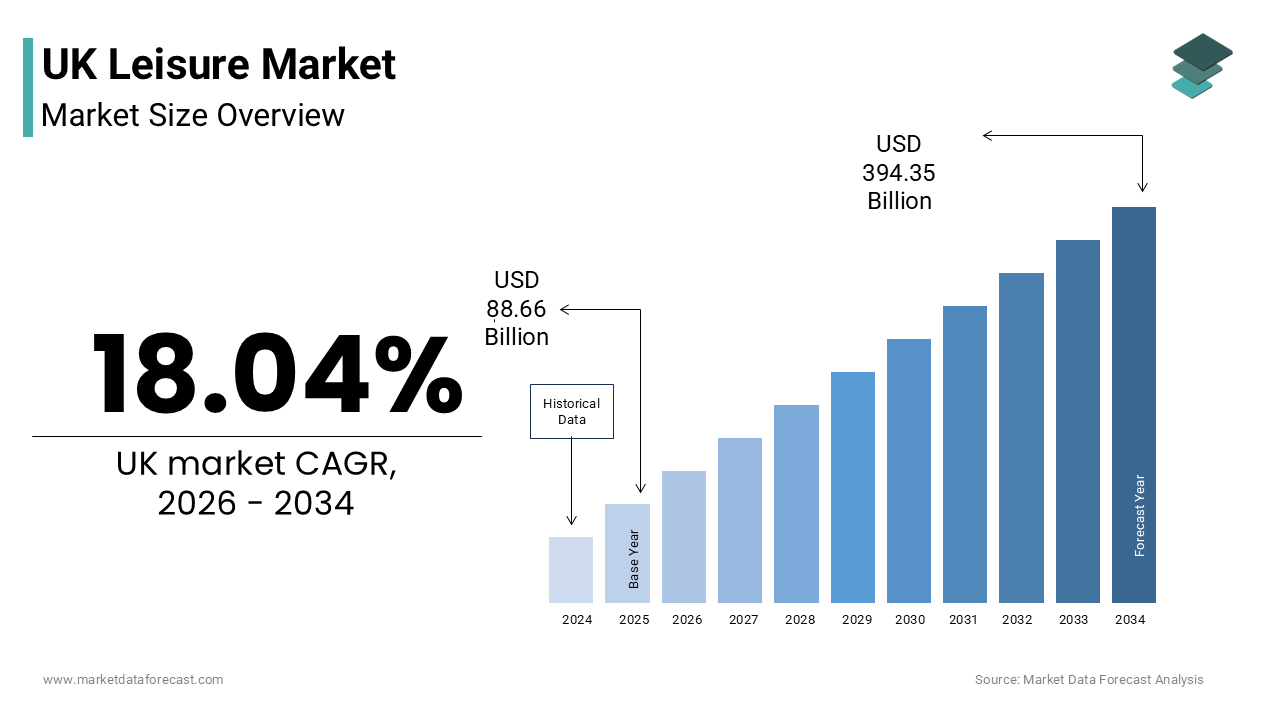
The United Kingdom leisure market was valued at USD 88.66 billion in 2025 and is anticipated to reach USD 104.66 billion in 2026 from USD 394.35 billion by 2034, growing at a CAGR of 18.04% during the forecast period from 2026 to 2034. The growth of the United Kingdom leisure market is driven by rising disposable income, increasing preference for experience-based consumption, and growing participation in health and wellness activities. Expanding demand for domestic tourism, increasing interest in outdoor recreation, and growing consumer spending on entertainment and cultural experiences are further accelerating market growth. Moreover, advancements in digital booking technologies, expansion of immersive leisure experiences, and increasing focus on sustainable tourism practices are supporting the expansion of the United Kingdom leisure market.
Key Market Trends
- Rising consumer preference for experience-based spending over material purchases.
- Increasing participation in wellness, fitness, and outdoor recreational activities.
- Growing adoption of digital booking platforms and personalized leisure recommendations.
- Strong focus on sustainable tourism and environmentally responsible travel experiences.
- Expansion of immersive entertainment technologies including virtual reality and augmented reality experiences.
Segmental Insights
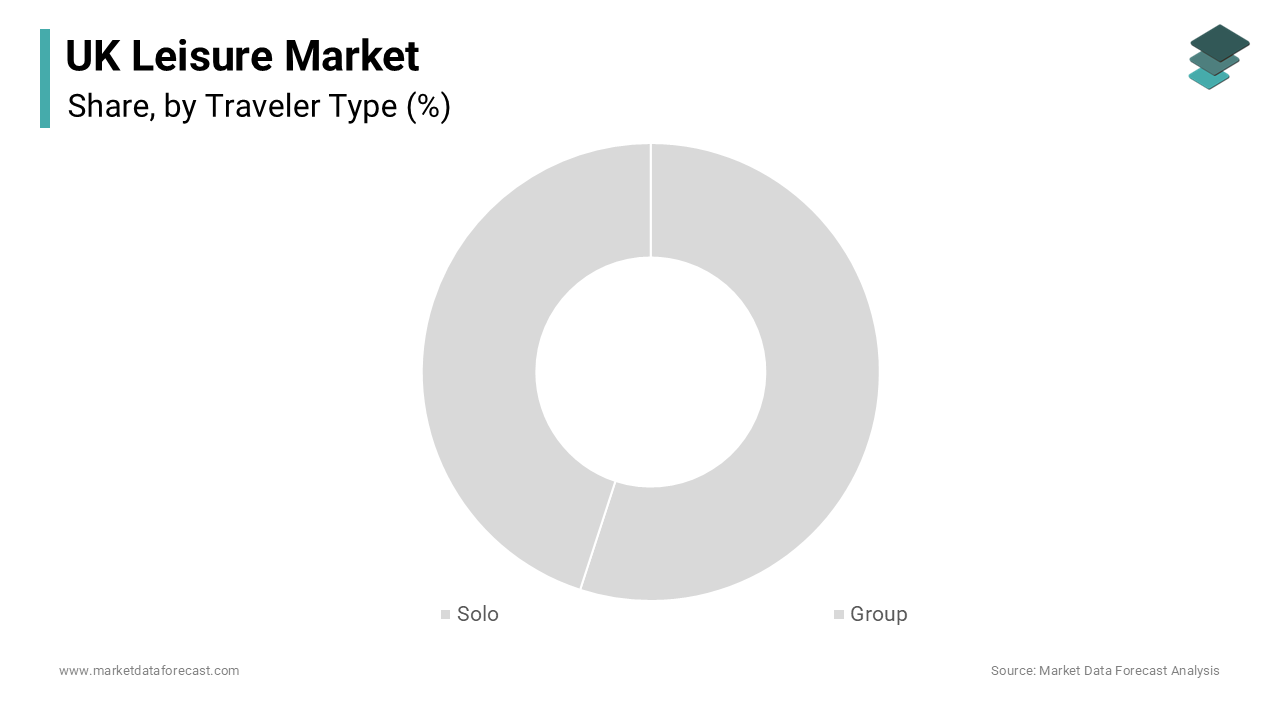
- Based on traveler type, the group traveler segment dominated the United Kingdom leisure market and held the largest share in 2025. The segment’s dominance is attributed to strong demand for family vacations, group tours, shared recreational experiences, cost-sharing benefits, and increasing popularity of multi-generational travel.
- The solo traveler segment is projected to witness the fastest CAGR during the forecast period owing to increasing preference for independent travel, growing interest in wellness retreats, rising digital connectivity, and changing social attitudes toward solo leisure activities.
- Based on age group, the millennial segment accounted for the leading share of the United Kingdom leisure market in 2025. The dominance of this segment is driven by strong spending power, preference for experiential activities, high digital engagement, and increasing demand for authentic travel and entertainment experiences.
- The Generation Z segment is anticipated to register the fastest CAGR during the forecast period due to growing disposable income, strong influence of social media trends, increasing adoption of digital leisure platforms, and rising demand for immersive and interactive entertainment experiences.
- Based on expenditure type, the food and beverages segment held the major share of the United Kingdom leisure market in 2025 owing to strong dining culture, frequent restaurant and café visits, increasing culinary tourism activities, and growing consumer demand for unique food experiences.
- The events and entertainment segment is expected to witness rapid growth during the forecast period because of increasing attendance at live events, growing demand for concerts and festivals, rising participation in cultural activities, and expanding investments in immersive entertainment offerings.
- Based on sales channel, the online channels segment dominated the United Kingdom leisure market in 2025 due to widespread internet penetration, convenience of digital booking platforms, increasing mobile application usage, and growing consumer preference for online purchasing and reservations.
- The conventional channels segment is projected to witness steady growth during the forecast period owing to demand for personalized travel consultation, specialized itinerary planning, luxury travel arrangements, and corporate leisure management services.
Regional Insights
The United Kingdom represents one of the largest and most mature leisure markets in Europe, supported by strong consumer spending, advanced tourism infrastructure, and a diverse portfolio of leisure attractions. The market benefits from a rich cultural heritage, world-renowned entertainment venues, extensive domestic tourism activities, and increasing adoption of digital leisure services. Continuous innovation in visitor experiences, government support for tourism development, and growing interest in sustainable leisure activities continue to strengthen the market across the United Kingdom.
Competitive Landscape
The United Kingdom leisure market is highly competitive and characterized by the presence of global leisure operators, hospitality providers, fitness chains, visitor attractions, and entertainment companies competing through service innovation, customer engagement, and experience differentiation. Leading companies are focusing on expanding immersive attractions, strengthening digital capabilities, investing in sustainability initiatives, and enhancing personalized customer experiences. Strategic partnerships, loyalty programs, and investments in experiential offerings are further strengthening market positioning across the leisure ecosystem. Prominent players in the United Kingdom leisure market include Merlin Entertainments, Center Parcs UK & Ireland, David Lloyd Leisure, PureGym Limited, The Gym Group PLC, Hollywood Bowl Group PLC, Parkdean Resorts, Bourne Leisure Limited, National Trust, English Heritage, Mitchells & Butlers PLC, Punch Pubs & Co, Greene King PLC, Whitbread PLC, Compass Group PLC, PGL Travel Ltd., Haven Holidays, Butlin's, Go Ape, and JD Gyms.
UK Leisure Market Size
The UK leisure market size was valued at USD 88.66 billion in 2025 and is anticipated to reach USD 104.66 billion in 2026 from USD 394.35 billion by 2034, growing at a CAGR of 18.04% during the forecast period from 2026 to 2034.
Leisure encompasses a diverse array of sectors dedicated to recreation entertainment and personal well-being including tourism hospitality sports fitness cinema and visitor attractions. This dynamic industry serves as a vital component of the national economy providing essential outlets for stress relief social interaction and cultural engagement. The market is characterized by its responsiveness to consumer trends technological advancements and seasonal variations. According to the Office for National Statistics, the average household in the UK spent approximately 13.5% of their total expenditure on recreation and culture, reflecting the high priority placed on leisure activities. As per Department for Culture Media and Sport data, the sector employed over 3 million people demonstrating its significant role in job creation and regional development. The post pandemic era has witnessed a pronounced shift in consumer behavior with increased demand for experiential travel outdoor activities and health focused pursuits. Digital integration has transformed service delivery with mobile booking platforms virtual experiences and personalized recommendations becoming standard expectations. The market faces evolving challenges related to sustainability labor availability and economic volatility yet continues to adapt through innovation and strategic diversification. Government initiatives promoting domestic tourism and cultural heritage preservation further support market growth. This resilient sector remains integral to the quality of life for British citizens while attracting millions of international visitors annually.
MARKET DRIVERS
Rising Disposable Income and Experience Based Consumption Trends
Rising disposable income and a marked shift toward experience based consumption are majorly driving the expansion of the UK leisure market forward as consumers prioritize memorable experiences over material goods. Following periods of economic uncertainty households with improved financial stability are increasingly allocating budgets toward travel dining out and entertainment activities that offer emotional value and social connection. According to the Office for National Statistics, real household disposable income grew by 2.1% in 2024, enabling greater spending power for non-essential services. As per Mintel consumer research, 68% of UK adults stated they prefer spending money on experiences such as concerts festivals and short breaks rather than purchasing physical items highlighting a fundamental change in lifestyle preferences. This trend is particularly evident among Millennials and Generation Z who view leisure activities as essential for mental wellbeing and social identity. The growth of the experience economy has spurred innovation in the leisure sector with providers offering immersive theatre interactive museums and adventure tourism packages. Social media platforms amplify this driver by showcasing unique leisure opportunities creating aspirational demand and encouraging peer to peer recommendation. Businesses that curate distinctive and shareable experiences capture higher customer loyalty and willingness to pay. This cultural shift ensures sustained demand for diverse leisure offerings ranging from luxury wellness retreats to local community events driving overall market expansion.
Increased Focus on Health Wellness and Active Lifestyles
The increased focus on health wellness and active lifestyles are further boosting the UK leisure market expansion. Public health campaigns and growing awareness of the benefits of physical activity have motivated millions of Britons to adopt healthier routines involving gym memberships running clubs cycling and yoga. According to Sport England surveys, approximately 18.5 million adults in England were classified as active, meaning they participated in 150 minutes or more of moderate intensity physical activity a week, reflecting widespread engagement in active leisure. As per ukactive industry data, membership in health and fitness clubs reached record levels in 2024 with over 10 million members indicating strong demand for structured exercise facilities. The rise of holistic wellness has expanded the leisure market beyond traditional gyms to include spa treatments mindfulness retreats and nutritional coaching. Outdoor activities such as hiking camping and water sports have also surged in popularity driven by the desire to connect with nature and escape urban environments. According to the Natural England People and Nature Survey, 56% of adults in England reported taking a visit to a green or natural space in the previous month, underscoring this trend. Leisure providers are responding by integrating wellness components into their offerings such as healthy dining options and recovery zones. This health conscious mindset drives consistent participation and investment in leisure activities that promote physical and mental vitality.
MARKET RESTRAINTS
High Operational Costs and Inflationary Pressures
High operational costs and persistent inflationary are impeding the expansion of the UK leisure market. Businesses in this sector face escalating expenses for energy rent raw materials and labor which squeeze margins and limit investment capacity. According to the Office for National Statistics, approximately 16% of hospitality businesses cited energy prices as their main concern in 2024, placing substantial financial strain on operators. As per UK Hospitality surveys, 70% of luxury businesses reported that rising input costs were their biggest challenge, forcing many to increase prices which can deter price sensitive consumers. The cost of living crisis has reduced discretionary spending for many households leading to decreased frequency of visits to cinemas restaurants and attractions. Staff wages have also risen due to minimum wage increases and competition for talent adding to the burden. Smaller independent operators struggle to absorb these costs unlike larger chains that benefit from economies of scale. Some venues have reduced opening hours or scaled back services to manage expenses potentially impacting customer satisfaction. The uncertainty of future energy prices makes long term planning difficult discouraging expansion projects. These financial constraints threaten the viability of some businesses and limit the diversity of leisure options available to consumers particularly in rural areas.
Labor Shortages and Skills Gaps in Hospitality Sector
Acute labor shortages and skills gaps in the hospitality and leisure are also hampering the expansion of the UK leisure market. The UK market relies heavily on frontline staff for customer service food preparation and facility maintenance yet recruitment and retention remain critical issues. According to UK Hospitality data, the sector faced a vacancy rate of 11% in 2024 with over 100000 unfilled positions indicating a severe workforce deficit. As per Office for National Statistics labor market analysis, many workers left the industry during the pandemic and have not returned citing low pay unsocial hours and lack of career progression. This shortage leads to longer wait times reduced service standards and increased workload for existing staff contributing to burnout and further turnover. Training new employees requires time and resources that strained businesses often lack. The reliance on seasonal workers creates instability during peak periods when demand is highest. Language barriers and varying skill levels among international recruits can also impact service consistency. Without adequate staffing leisure venues cannot operate at full capacity or deliver the high quality experiences customers expect. This human resource challenge limits growth potential and damages brand reputation making it difficult for businesses to compete effectively in a demanding market environment.
MARKET OPPORTUNITIES
Integration of Technology and Immersive Digital Experiences
The integration of technology and immersive digital experiences presents substantial opportunities for the UK leisure market growth. Advances in virtual reality augmented reality and artificial intelligence enable providers to create interactive and personalized experiences that attract tech savvy consumers. According to industry analysis, the adoption of immersive technologies in entertainment and tourism could generate an additional 5 billion pounds in revenue by 2030 as users seek novel forms of engagement. As per Visit Britain data, attractions using augmented reality apps report 20% higher visitor satisfaction scores due to enhanced storytelling and interactive elements. Cinemas and theatres are exploring hybrid models that combine live performances with digital effects appealing to younger audiences accustomed to screen based entertainment. Fitness centers are incorporating gamified workout apps and smart equipment that track progress and offer virtual classes expanding reach beyond physical locations. Theme parks are investing in ride simulations that blend physical motion with visual immersion creating unforgettable memories. Mobile applications facilitate seamless booking cashless payments and personalized recommendations improving convenience and customer loyalty. The metaverse offers potential for virtual leisure communities where users can socialize and participate in events remotely. By embracing these technological advancements leisure providers can differentiate themselves attract new demographics and create additional revenue streams through digital content and subscriptions.
Growth of Sustainable and Eco Friendly Tourism
The growth of sustainable and eco-friendly tourism offers significant opportunities for the leisure market growth in the UK. Consumers are increasingly aware of their carbon footprint and prefer businesses that demonstrate genuine commitment to sustainability through ethical practices and green initiatives. According to Booking.com sustainable travel report, 76% of UK travelers want to travel more sustainably over the coming year indicating strong market demand for eco conscious options. As per Green Tourism Business Scheme data, certified sustainable accommodations and attractions see higher booking rates and positive reviews from environmentally aware guests. Leisure operators can capitalize on this trend by adopting renewable energy sources reducing waste sourcing local produce and protecting natural habitats. Eco tours wildlife conservation experiences and glamping sites are gaining popularity as alternatives to mass tourism. Government grants and incentives support businesses transitioning to greener operations enhancing feasibility. Marketing sustainability efforts transparently builds trust and brand loyalty among consumers who prioritize ethical consumption. Partnerships with environmental organizations can enhance credibility and provide educational content for visitors. This shift toward responsible leisure not only benefits the planet but also creates unique selling propositions that differentiate businesses in a crowded market driving long term viability and customer preference.
MARKET CHALLENGES
Economic Volatility and Consumer Spending Uncertainty
Economic volatility and consumer spending uncertainty are primarily challenging the expansion of the UK leisure market. Inflation interest rate changes and job market instability cause households to prioritize essential expenses over leisure activities leading to unpredictable demand patterns. According to Bank of England reports, consumer confidence indices remained volatile throughout 2024 affecting willingness to commit to non-essential spending such as holidays and entertainment. As per Kantar Worldpanel data, household spending on leisure services declined by 3% during periods of high inflation as consumers sought cheaper alternatives or delayed purchases. This unpredictability makes revenue forecasting difficult for leisure businesses complicating inventory management and staffing decisions. Price sensitive consumers may switch to free or low cost activities reducing revenue for paid attractions and venues. The lag effect of economic downturns means recovery can be slow even after conditions improve. Businesses must balance maintaining quality with offering competitive pricing to retain customers without eroding margins. Promotional discounts and flexible booking policies become necessary but can impact profitability. The psychological impact of economic stress also reduces the propensity for spontaneous leisure spending. Navigating this uncertainty requires agile business models and diversified revenue streams to withstand fluctuations in consumer behavior and maintain financial stability.
Regulatory Compliance and Environmental Standards
Stringent regulatory compliance and evolving environmental standards are further challenging the UK leisure market growth. Governments are implementing stricter rules regarding health and safety data privacy accessibility and environmental impact to protect consumers and the planet. According to Health and Safety Executive statistics, leisure facilities face rigorous inspections and must adhere to complex regulations governing equipment safety crowd management and hygiene protocols. As per Department for Environment Food and Rural Affairs guidelines, new waste disposal and energy efficiency mandates require significant infrastructure upgrades for hotels restaurants and attractions. Non-compliance can result in hefty fines legal action and reputational damage deterring customers. The General Data Protection Regulation imposes strict requirements on how businesses collect and store customer information necessitating robust cybersecurity measures. Accessibility regulations ensure inclusive access for disabled persons requiring physical modifications and staff training. Keeping pace with changing laws demands dedicated legal and compliance resources which smaller businesses may lack. The administrative burden diverts attention from core operations and innovation. Additionally varying local council regulations create inconsistency across regions complicating expansion strategies. Operators must proactively monitor regulatory developments and invest in compliance systems to avoid disruptions. Balancing regulatory obligations with operational efficiency remains a complex challenge that impacts cost structures and strategic planning.
REPORT COVERAGE
| REPORT METRIC | DETAILS |
| Market Size Available | 2025 to 2034 |
| Base Year | 2025 |
| Forecast Period | 2026 to 2034 |
| CAGR | 18.04% |
| Segments Covered | By Traveler Type, Age Group, Expenditure Type, and Sales Channel and Region. |
| Various Analyses Covered | Global, Regional & Country Level Analysis, Segment-Level Analysis, DROC, PESTLE Analysis, Porter’s Five Forces Analysis, Competitive Landscape, Analyst Overview of Investment Opportunities |
| Market Leaders Profiled | Merlin Entertainments, Center Parcs UK & Ireland, David Lloyd Leisure, PureGym Limited, The Gym Group PLC, Hollywood Bowl Group PLC, Parkdean Resorts, Bourne Leisure Limited, National Trust, English Heritage, Mitchells & Butlers PLC, Punch Pubs & Co, Greene King PLC, Whitbread PLC, Compass Group PLC, PGL Travel Ltd., Haven Holidays, Butlin's, Go Ape, and JD Gyms. |
SEGMENTAL ANALYSIS
By Traveler Type Insights
The group traveler segment dominated the market by capturing the highest share of the UK leisure market in 2025 as social interaction and shared experiences remain central to British cultural habits regarding dining entertainment and travel. Groups consisting of families, friends or colleagues tend to spend more per visit due to the collective nature of their activities which often include multiple meals attractions and accommodation nights. According to Visit Britain statistics, group bookings account for approximately 60% of all domestic holiday trips reflecting the strong preference for communal leisure activities. As per Mintel consumer research, 72% of UK adults prefer traveling with family or friends rather than alone citing companionship and shared memories as primary motivators. The economic advantage of sharing costs such as accommodation and transportation makes group travel more affordable per person encouraging higher participation rates. Restaurants and attractions often offer group discounts or set menus that incentivize larger parties to dine together boosting revenue for hospitality providers. The rise of multi-generational travel where grandparents, parents and children vacation together has further solidified this segment's dominance. Social media also plays a role as groups seek photogenic and memorable experiences to share online driving demand for unique venues and activities. This inherent social dynamic ensures that group travelers remain the most significant contributor to leisure spending across the nation.
On the other end, the solo traveler segment is estimated to showcase a CAGR of 9.2% during the forecast period in the UK market as individuals increasingly prioritize independence flexibility and self-discovery in their leisure choices. This accelerated growth is driven by changing social norms that destigmatized traveling alone and the desire for personalized experiences without the need for compromise. According to ABTA The Travel Association, the number of solo bookers increased by 15% in 2024 with many citing the freedom to choose their own pace and activities as key benefits. As per YouGov surveys, 40% of millennials and Generation Z express interest in solo travel opportunities indicating a shifting demographic preference toward individual exploration. The rise of digital connectivity allows solo travelers to stay safe and connected while exploring new places reducing anxiety associated with traveling alone. Hospitality providers are responding by offering single occupancy rooms without supplemental fees and organizing social events for solo guests to facilitate networking. The popularity of wellness retreats and educational holidays also appeals to solo travelers seeking personal growth and relaxation. This trend is supported by targeted marketing campaigns that celebrate independence and empowerment. As societal attitudes continue to evolve the solo travel segment is expected to maintain its rapid growth trajectory attracting a diverse range of consumers seeking authentic and autonomous leisure experiences.
By Age Group Insights
The millennial segment led the market with the major share of the UK leisure market in 2025 as this demographic combines high digital literacy with a strong preference for experiential spending over material possessions. Born between 1981 and 1996 Millennials are currently in their prime earning and spending years making them the most active consumers of leisure services. According to Office for National Statistics data, Millennials constitute approximately 22% of the UK population and account for the highest proportion of discretionary spending on travel and entertainment. As per Deloitte consumer surveys, 70% of Millennials prioritize spending on experiences such as festivals dining out and adventure travel citing mental wellbeing and social connection as key drivers. Their comfort with technology enables seamless booking and engagement with digital leisure platforms driving online sales for hotels attractions and events. Millennials are also influential trendsetters whose preferences shape broader market offerings including sustainable tourism and authentic local experiences. They are more likely to use social media for inspiration and reviews influencing the choices of other age groups. The demand for Instagram worthy destinations and unique culinary experiences drives innovation in the leisure sector. This combination of purchasing power digital engagement and experience orientation ensures that millennials remain the dominant force in shaping the UK leisure landscape.
On the other end, the Generation Z segment is predicted to register a CAGR of 10.4% during the forecast period in the UK market as this digitally native cohort enters the workforce and gains disposable income. Born between 1997 and 2012 Gen Z consumers are heavily influenced by social media trends peer recommendations and digital content when making leisure decisions. According to Ofcom communications market report, 99% of Gen Z individuals in the UK use social media platforms daily making them highly responsive to viral leisure trends and influencer marketing. As per WGSN consumer insights, Gen Z prioritizes authenticity and inclusivity seeking leisure experiences that reflect their diverse identities and values. They are early adopters of new technologies such as virtual reality gaming augmented reality tours and app based entertainment driving innovation in the sector. Gen Z also favors flexible and spontaneous booking options preferring last minute deals and modular experiences over rigid packages. Their preference for interactive and participatory activities such as escape rooms immersive theater and e sports events is reshaping the leisure offering landscape. Brands that engage with Gen Z through authentic digital storytelling and community building are seeing rapid growth in this segment. As their economic power increases Gen Z will continue to drive significant changes in leisure consumption patterns.
By Expenditure Type Insights
The food and beverages segment dominated the market by accounting for the highest share of the UK market in 2025 as dining out and drinking remain fundamental aspects of British social life and daily routine. This category encompasses restaurant meals cafe visits pub gatherings and takeaway services which are frequented regularly by consumers of all ages. According to the Office for National Statistics, household expenditure on catering services, which includes restaurants, cafes, and pubs, accounted for approximately 10.3% of total household spending, reflecting its consistent demand. As per UK Hospitality data, the sector serves over 1.5 billion meals annually demonstrating the massive scale of consumption. The cultural significance of pubs and cafes as community hubs ensures steady footfall regardless of economic conditions. The rise of foodie culture and culinary tourism has elevated dining from a necessity to a leisure activity in itself with consumers seeking novel cuisines and high quality ingredients. Social media platforms amplify this trend by showcasing visually appealing dishes and trendy venues driving consumer interest. The flexibility of this segment allows for both budget friendly options and luxury experiences catering to diverse income levels. Its integration with other leisure activities such as cinema visits or shopping trips further boosts expenditure. This entrenched habit ensures that food and beverages remain the largest component of leisure spending in the UK.
On the other end, the events and entertainment segment is estimated to register a CAGR of 11.4% during the forecast period as consumers eagerly return to live experiences following periods of restriction. This accelerated growth is driven by a pent up demand for social interaction cultural engagement and shared memories through concerts festivals theater and sporting events. According to LIVE UK industry reports, attendance at live music events reached record levels in 2024 with over 30 million tickets sold reflecting strong consumer appetite. As per Arts Council England data, funding and participation in cultural events have increased significantly with audiences seeking immersive and interactive performances. The resurgence of major festivals such as Glastonbury and Edinburgh Fringe attracts millions of visitors generating substantial economic impact. Sports events including football matches and rugby tournaments also drive significant leisure spending on tickets merchandise and hospitality. The diversity of events ranging from comedy clubs to art exhibitions ensures broad appeal across different demographics. Consumers view these events as essential for mental well being and social connection prioritizing them in their budgets. This emotional value drives willingness to pay premium prices for exclusive access and VIP experiences fueling rapid market growth.
By Sales Channel Insights
The online segment held the major share of the UK leisure market in 2025 as digital platforms offer unparalleled convenience comparison capabilities and instant booking confirmation. Consumers increasingly prefer to research and purchase leisure services online due to the ease of accessing information reading reviews and securing reservations from any device. According to Office for National Statistics, 96% of households in the UK have internet access providing a vast foundation for online leisure transactions. As per industry data, over 70% of travel and entertainment bookings are now made online reflecting the shift away from traditional methods. Mobile applications have further accelerated this trend by enabling last minute bookings and location based offers. Online channels provide transparency in pricing and availability allowing consumers to find the best deals quickly. The integration of secure payment gateways and customer support chatbots enhances trust and user experience. Loyalty programs and personalized recommendations offered by online platforms encourage repeat business and higher engagement. The ability to bundle services such as flights hotels and tickets creates added value for consumers. This digital dominance ensures that online channels remain the primary route for leisure purchases in the modern UK market.
However, the conventional channels segment represents a niche but growing area in specific contexts within the UK leisure market and is estimated to record a CAGR of 5.2% during the forecast period. While overall decline is observed in simple transactions there is growth in face to face consultations for intricate itineraries luxury travel and corporate events where personalized advice is crucial. According to ABTA The Travel Association, 15% of consumers still prefer booking through travel agents for complex multi destination trips citing expertise and peace of mind as key reasons. As per Institute of Travel Management data, corporate clients often rely on conventional channels for managing large group bookings and compliance with travel policies. High net worth individuals value the bespoke service and exclusive access provided by luxury travel consultants who can arrange unique experiences not available online. The human element offers reassurance and problem solving capabilities that automated systems cannot match especially during disruptions. Specialized agencies focusing on niche interests such as wildlife safaris or cultural tours also thrive through conventional channels. This trust based relationship ensures steady growth in high value segments where personalized service is paramount.
REGIONAL ANALYSIS
The UK captured a promising share of the European market in 2025 and is projected to witness steady expansion and sustain high levels of consumer engagement over the next few years, standing as the largest and most mature leisure market in Europe characterized by high consumer spending diverse offerings and a strong cultural emphasis on work life balance. The market status is defined by a robust infrastructure of historic attractions vibrant cities and natural landscapes that attract both domestic and international visitors. According to Department for Culture Media and Sport data, the leisure and tourism sector contributed over 100 billion pounds to the UK economy in 2024 highlighting its significant economic impact. London serves as a global hub for culture and entertainment hosting world class museums theaters and sporting events that draw millions of visitors annually. As per Office for National Statistics, UK residents took approximately 100 million domestic overnight trips in 2024 demonstrating strong internal demand. The regulatory environment supports consumer protection and safety ensuring high standards across leisure providers. Government initiatives such as the Great Campaign promote domestic tourism encouraging citizens to explore local regions. The widespread adoption of digital booking platforms has streamlined access to leisure services enhancing convenience. Despite challenges related to labor shortages and economic volatility the market remains resilient due to the deep seated cultural value placed on leisure time. The UK continues to lead in innovation with immersive experiences and sustainable tourism practices setting trends for the wider European region.
COMPETITIVE LANDSCAPE
The competition within the UK leisure market is intense and characterized by a diverse mix of global operators regional specialists and independent providers vying for consumer attention and spending. Large multinational corporations leverage their brand recognition extensive resources and economies of scale to dominate major attractions and hospitality sectors while offering standardized high quality experiences. Meanwhile agile local businesses compete effectively by providing niche authentic and personalized services that appeal to specific community interests and cultural heritage. The market sees frequent innovation in experiential offerings with venues integrating technology such as virtual reality and interactive displays to enhance engagement. Price competition remains significant particularly in the hospitality and cinema sectors where promotional deals and membership schemes are used to attract price sensitive customers. Differentiation increasingly depends on service quality unique themes and sustainability credentials rather than just price. Customer retention strategies focus on loyalty programs exceptional service and memorable experiences that foster emotional connections. The rise of digital platforms has lowered barriers to entry allowing new players to reach audiences directly. This dynamic environment requires continuous adaptation to technological trends and shifting consumer behaviors to maintain relevance and profitability in a saturated marketplace.
KEY MARKET PLAYERS
Some of the promising companies that are playing a dominating role in the UK leisure market include
- Merlin Entertainments
- Center Parcs UK & Ireland
- David Lloyd Leisure
- PureGym Limited
- The Gym Group PLC
- Hollywood Bowl Group PLC
- Parkdean Resorts
- Bourne Leisure Limited
- National Trust
- English Heritage
- Mitchells & Butlers PLC
- Punch Pubs & Co
- Greene King PLC
- Whitbread PLC
- Compass Group PLC
- PGL Travel Ltd.
- Haven Holidays
- Butlin's
- Go Ape
- JD Gyms
Top Players in the UK Market
Merlin Entertainments plc
Merlin Entertainments plc maintains a dominant presence in the UK leisure sector by operating a diverse portfolio of leading attractions including LEGOLAND Windsor Madame Tussauds and the London Eye. The company focuses on delivering immersive family friendly experiences that combine entertainment with education to attract both domestic and international visitors. Recent strategic initiatives include significant investments in new rides and interactive exhibits to refresh existing sites and enhance visitor engagement. Merlin has also expanded its digital capabilities by introducing virtual queue systems and personalized app features to improve guest convenience. By prioritizing sustainability and local community partnerships the group strengthens its brand reputation. These efforts aim to drive repeat visitation and extend dwell time ensuring Merlin remains a preferred destination for memorable leisure activities across the nation.
Whitbread plc
Whitbread plc plays a pivotal role in the UK leisure market primarily through its Premier Inn hotel brand and Costa Coffee outlets which serve millions of customers annually. The company provides essential accommodation and hospitality services that support both leisure travelers and business tourists across the country. Recent actions involve accelerating the rollout of new Premier Inn locations in key urban and roadside areas to meet growing demand for quality budget accommodation. Whitbread has also invested heavily in digital transformation enhancing its mobile booking platform and loyalty program to streamline customer experiences. The integration of sustainable practices such as energy efficient buildings and waste reduction initiatives aligns with consumer values. By focusing on operational excellence and consistent service standards Whitbread reinforces its position as a trusted provider of comfortable and accessible leisure hospitality solutions.
Cineworld Group plc
Cineworld Group plc contributes significantly to the UK leisure market by operating extensive cinema networks under the Cineworld and Picturehouse brands offering diverse film screenings and premium viewing experiences. The company serves as a major hub for social entertainment providing audiences with access to the latest blockbusters independent films and live event broadcasts. Recent developments include the upgrade of auditoriums with advanced projection and sound technologies such as ScreenX and 4DX to create immersive cinematic environments. Cineworld has also focused on enhancing its food and beverage offerings with gourmet options and licensed bars to increase ancillary revenue. The introduction of flexible membership schemes encourages frequent attendance and builds customer loyalty. By adapting to changing consumer preferences and investing in premium formats Cineworld strengthens its appeal as a premier destination for communal entertainment and cultural engagement in the UK.
Top Strategies Used by Key Market Participants
Key players in the UK leisure market predominantly employ experience diversification and digital integration to maintain competitive advantage and enhance customer engagement. Companies invest heavily in creating unique immersive attractions and themed events that differentiate their offerings from competitors and encourage repeat visits. Developing robust mobile applications allows firms to offer seamless booking cashless payments and personalized recommendations thereby improving convenience and user satisfaction. Strategic partnerships with local tourism boards and transport providers help expand reach and create bundled packages that appeal to broader demographics. Emphasizing sustainability through eco friendly practices and community involvement builds brand loyalty among environmentally conscious consumers. Implementing dynamic pricing models optimizes revenue management by adjusting costs based on demand patterns and seasonal trends. Enhancing health and safety protocols ensures consumer confidence and compliance with regulatory standards. These combined strategies enable participants to adapt to evolving consumer preferences and drive growth in a dynamic and competitive leisure landscape.
MARKET SEGMENTATION
This research report on the UK leisure market has been segmented based on the following categories.
By Traveler Type
- Solo
- Group
By Age Group
- Baby Boomers
- Generation X
- Millennials
- Generation Z
By Expenditure Type
- Lodging
- Transportation
- Food and Beverages
- Events and Entertainment
- Others
By Sales Channel
- Conventional Channels
- Online Channels
By Country
- U.K