UK Luxury Travel Market Size, Share, Trends & Growth Forecast Report Segmented By Purpose (Leisure, Business), Passengers, Target Clientele, Type and Country – Industry Analysis From 2026 to 2034
Market Size, 2025
$2.81 BnMarket Estimate, 2026
$3.06 BnMarket Forecast, 2034
$6.06 BnCAGR, 2026–2034
8.91%United Kingdom Luxury Travel Market Report Summary
The United Kingdom luxury travel market was valued at USD 2.81 billion in 2025 and is anticipated to reach USD 3.06 billion in 2026 from USD 6.06 billion by 2034, growing at a CAGR of 8.91% during the forecast period from 2026 to 2034. The growth of the United Kingdom luxury travel market is driven by rising wealth concentration, increasing numbers of high-net-worth individuals, and growing demand for exclusive and personalized travel experiences. Expanding interest in wellness tourism, increasing spending on premium hospitality services, and growing preference for bespoke travel itineraries are further accelerating market growth. Moreover, advancements in digital concierge services, expansion of ultra-exclusive tourism offerings, and increasing demand for sustainable luxury travel experiences are supporting the expansion of the United Kingdom luxury travel market.
Key Market Trends
- Rising demand for personalized and transformative travel experiences among affluent travelers.
- Increasing adoption of wellness tourism, luxury retreats, and preventive healthcare travel services.
- Growing popularity of ultra-exclusive tourism experiences including private access events and bespoke itineraries.
- Strong focus on sustainability and eco-conscious luxury travel offerings.
- Expansion of digital concierge platforms and artificial intelligence-enabled travel personalization.
Segmental Insights
- Based on purpose, the leisure segment dominated the United Kingdom luxury travel market and held the largest share in 2025. The segment’s dominance is attributed to increasing demand for experiential travel, growing preference for family vacations, rising interest in wellness retreats, and strong consumer spending on exclusive leisure activities.
- The business segment is projected to witness the fastest CAGR during the forecast period owing to the growing bleisure travel trend, increasing corporate spending on premium travel services, rising demand for luxury accommodations, and expanding business networking opportunities in exclusive environments.
- Based on passengers, the domestic segment accounted for the leading share of the United Kingdom luxury travel market in 2025. The dominance of this segment is driven by strong domestic tourism activity, increasing preference for premium staycations, widespread availability of luxury accommodations, and growing interest in heritage and countryside experiences.
- Based on target clientele, the non-high-net-worth individuals segment held the major share of the United Kingdom luxury travel market in 2025 owing to increasing aspirations for premium travel experiences, rising accessibility of luxury travel offerings, growing adoption of loyalty programs, and strong demand for special occasion tourism.
- Based on type, the culinary segment dominated the United Kingdom luxury travel market in 2025 due to the presence of Michelin-starred restaurants, strong culinary tourism demand, increasing interest in gourmet dining experiences, and growing popularity of food-focused travel itineraries.
Regional Insights
The United Kingdom represents one of the most prestigious luxury travel destinations in Europe, supported by its rich cultural heritage, world-class hospitality infrastructure, luxury retail ecosystem, and globally recognized tourism attractions. The market benefits from strong international visitor arrivals, high spending by affluent travelers, premium accommodation offerings, and extensive luxury service networks. Continued investments in sustainable tourism, heritage preservation, and personalized travel experiences are strengthening the market's position as a leading luxury travel destination globally.
Competitive Landscape
The United Kingdom luxury travel market is highly competitive and characterized by the presence of luxury tour operators, premium hospitality providers, bespoke travel agencies, and concierge service specialists competing through exclusivity, personalization, service excellence, and destination expertise. Leading companies are focusing on expanding customized travel offerings, strengthening luxury partnerships, investing in digital travel technologies, and enhancing sustainability initiatives. Strategic collaborations with luxury brands, hospitality providers, and transportation companies are further strengthening market positioning across the luxury travel ecosystem. Prominent players in the United Kingdom luxury travel market include Scott Dunn, Cox & Kings, Exodus Travels, Backroads, Butterfield & Robinson, Jet2 Holidays, Lindblad Expeditions, Thomas Cook Group, Zicasso, Micato Safaris, Abercrombie & Kent, Great Rail Journeys, Kuoni, Trailfinders, Audley Travel, Black Tomato, Luxury Gold, Inspiring Travel Company, Original Travel, and Carrier.
UK Luxury Travel Market Size
The UK Luxury Travel Market size was valued at USD 2.81 billion in 2025 and is anticipated to reach USD 3.06 billion in 2026 from USD 6.06 billion by 2034, growing at a CAGR of 8.91% during the forecast period from 2026 to 2034.
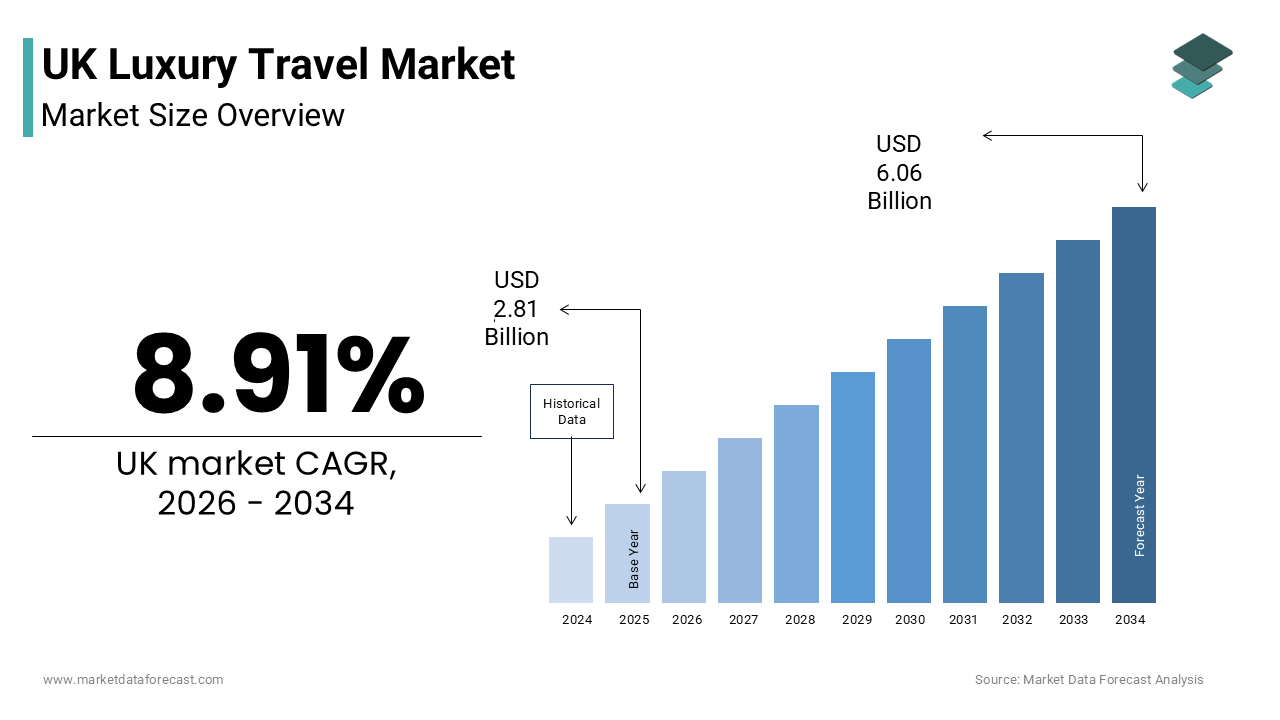
Luxury travel represents the apex of the tourism and hospitality sector characterized by high net worth individuals seeking exclusive personalized and transformative experiences. This segment encompasses ultra-premium accommodations private aviation bespoke itineraries and curated cultural immersions that prioritize privacy service excellence and unique access over standard tourist offerings. The market is driven by a clientele that values time efficiency emotional enrichment and social distinction. According to the Office for National Statistics, the number of overseas residents visiting the UK for holiday purposes reached 15.3 million in 2024, with a significant proportion opting for five star and boutique establishments. As per Wealth X data, the UK is home to approximately 650000 high net worth individuals who constitute the core domestic demand base for these premium services. The post pandemic era has accelerated a shift toward meaningful travel where consumers seek deeper connections with destinations rather than mere sightseeing. London serves as a global hub for luxury retail and gastronomy acting as a primary entry point for international affluent travelers. The market is increasingly influenced by sustainability concerns with discerning travelers demanding eco conscious practices without compromising on comfort. Digital concierge services and artificial intelligence are reshaping how luxury experiences are booked and delivered. This dynamic sector requires constant innovation to meet the evolving expectations of a sophisticated global audience that views travel as an essential component of their lifestyle and identity.
MARKET DRIVERS
Rising Wealth Concentration and High-Net Worth Population Growth
Rising wealth concentration and the expansion of the high net worth population is majorly propelling the UK luxury travel market forward by increasing the pool of individuals with the financial capacity to afford premium experiences. Economic resilience in key sectors such as finance technology and professional services has led to significant asset accumulation among the upper echelons of society. According to Knight Frank Wealth Report, the number of ultra-high net worth individuals in the UK grew by 3.1% in 2024, reflecting robust wealth creation despite global economic uncertainties. As per Credit Suisse Global Wealth Data, the top 10% of UK households hold over 50 % of total household wealth providing substantial disposable income for discretionary spending on luxury tourism. This demographic prioritizes quality exclusivity and personalized service viewing travel as a reward for success and a means of status affirmation. The inheritance of wealth among younger generations has also expanded the buyer base with Millennials and Generation Z exhibiting strong preferences for experiential luxury over material goods. Financial markets performance and property value appreciation further enhance consumer confidence enabling larger budgets for international holidays and domestic staycations. The presence of family offices and wealth management firms often facilitates access to exclusive travel clubs and private jet services. This sustained growth in affluence ensures a steady and expanding demand for high end travel products and services across the nation.
Demand for Personalized and Transformative Experiences
The demand for personalized and transformative experiences is further boosting the UK luxury travel market expansion. Modern luxury consumers are moving away from standardized five star packages toward curated journeys that align with their personal interests values and desire for self-improvement. According to American Express Global Travel Trends survey, 83% of luxury travelers stated that personalized experiences are more important than ever indicating a shift in consumption patterns. As per Virtuoso luxury travel advisor network data, bookings for custom itineraries involving private guides exclusive access to heritage sites and wellness retreats increased by 25 % in 2024. Travelers seek immersive activities such as private cooking classes with renowned chefs behind the scenes tours of historic estates and conservation focused safaris. The desire for transformation drives interest in wellness tourism including yoga retreats medical spas and mental health breaks in serene locations. Luxury travel agencies leverage detailed client profiles to craft hyper personalized trips that anticipate needs before they are expressed. Social media influence also plays a role as travelers seek Instagram worthy moments that demonstrate unique access and taste. This quest for meaning and individuality ensures that generic luxury products lose appeal while tailored authentic experiences command premium prices and loyalty.
MARKET RESTRAINTS
Economic Volatility and Inflationary Pressures on Operational Costs
Economic volatility and inflationary pressures on operational costs are hindering the expansion of the UK luxury travel market. Providers face escalating expenses for energy staff wages food supplies and maintenance which squeeze margins and necessitate price increases that may deter price sensitive luxury consumers. According to the Office for National Statistics, approximately 16% of hospitality businesses cited energy prices as their main concern in 2024, placing substantial financial strain on hotels and tour operators. As per UK Hospitality surveys, 70 % of luxury businesses reported that rising input costs were their biggest challenge forcing them to reassess pricing strategies and value propositions. Inflation reduces the real purchasing power of even wealthy consumers leading to more cautious spending behavior and longer decision making cycles. Currency fluctuations particularly the strength of the pound against major currencies like the dollar and euro impact the affordability of the UK for international visitors. A stronger pound makes the UK more expensive for overseas tourists potentially reducing inbound luxury travel volumes. Domestic travelers may also opt for shorter trips or staycations instead of long haul international journeys to manage budgets. These economic headwinds create uncertainty for investment in new luxury infrastructure and limit the ability of providers to expand services. The need to balance cost recovery with customer retention remains a delicate operational challenge.
Stringent Environmental Regulations and Sustainability Compliance
Stringent environmental regulations and sustainability compliance requirements also impede UK luxury travel market growth. Government mandates aimed at achieving net zero emissions require hotels airlines and tour operators to invest heavily in green technologies renewable energy and waste reduction systems. According to the Department for Environment Food and Rural Affairs, new building regulations mandate strict energy efficiency standards for hospitality venues requiring costly retrofits for older historic properties. As per International Air Transport Association data, carbon offsetting schemes and sustainable aviation fuel mandates increase flight costs which are passed on to luxury travelers potentially reducing demand for long haul private jet travel. Luxury consumers are increasingly scrutinizing the environmental credentials of providers leading to reputational risks for those failing to meet high sustainability standards. Obtaining certifications such as Green Key or B Corp requires rigorous auditing and continuous improvement diverting resources from core service delivery. The transition to electric vehicle fleets for transfers and tours involves significant upfront investment and infrastructure development. Supply chain complexities arise when sourcing local organic materials to reduce carbon footprints limiting menu variety and increasing procurement costs. These regulatory and ethical obligations constrain operational freedom and increase the cost base challenging the traditional model of unconstrained luxury consumption.
MARKET OPPORTUNITIES
Integration of Wellness and Medical Tourism
The integration of wellness and medical tourism presents substantial opportunities for the UK luxury travel market. This trend combines leisure travel with preventive healthcare aesthetic treatments and therapeutic retreats creating high value hybrid experiences. According to Global Wellness Institute data, the wellness tourism market is growing twice as fast as general tourism with the UK positioned as a leader in medical expertise and spa traditions. As per Visit Britain statistics, there is increasing demand for specialized health retreats offering detox programs mental health counselling and advanced diagnostic screenings in luxurious settings. Luxury hotels are partnering with renowned clinics and practitioners to offer on-site treatments such as IV therapy genetic testing and personalized nutrition plans. The aging wealthy population seeks proactive health management making preventative medical travel a lucrative niche. Destinations like Bath and Harrogate leverage their natural thermal springs and historic spa heritage to attract international visitors seeking rejuvenation. Corporate executives also utilize wellness retreats for stress management and executive coaching blending business with health. By positioning the UK as a destination for both healing and indulgence providers can capture a broader share of the luxury spend. This convergence of health and hospitality offers recurring revenue streams and deeper customer engagement.
Expansion of Ultra Exclusive and Private Access Tourism
The expansion of ultra-exclusive and private access tourism further offer significant opportunities for the UK luxury travel market. This segment includes private island rentals after hours museum visits and bespoke encounters with royalty or celebrities that are unavailable to the general public. According to Robb Report luxury lifestyle magazine, demand for completely private experiences has surged with clients willing to pay premiums for exclusivity and discretion. As per Quintessentially luxury concierge service data, requests for private jet charters and yacht hires in UK waters increased by 15 % in 2024 reflecting desire for controlled environments. Historic estates and castles are opening their doors for private events weddings and stays offering immersive historical narratives without crowds. Luxury travel agencies curate these rare opportunities leveraging personal networks to secure access to closed institutions or private collections. The rise of super yacht tourism along the Scottish coast and English Channel provides mobile luxury accommodations with unparalleled privacy. Security concerns among high profile individuals drive demand for discreet logistics and vetted staff. By offering experiences that money alone cannot easily buy but connections can providers create immense value and loyalty. This niche commands the highest margins and reinforces the UK’s reputation as a destination for the global elite.
MARKET CHALLENGES
Labor Shortages in High End Hospitality Sector
Labor shortages in the high end hospitality sector are a notable challenge to the UK luxury travel market expansion. Luxury establishments demand exceptional attention to detail multilingual capabilities and anticipatory service which are difficult to find in a tight labor market. According to UK Hospitality data, the sector faced a vacancy rate of 12 % in 2024 with particular shortages in senior concierge chefs and housekeeping managers. As per Office for National Statistics labor market analysis, many experienced workers left the industry during the pandemic and have not returned citing low pay relative to responsibility and unsocial hours. The reliance on international talent has been complicated by post Brexit immigration rules making it harder to recruit skilled staff from Europe. Training new employees to meet luxury standards takes time and resources impacting service consistency during peak seasons. High turnover rates lead to increased recruitment costs and operational disruption. Guests expect seamless flawless experiences and any lapse in service quality due to understaffing can result in negative reviews and loss of clientele. The inability to provide adequate rest periods for staff also raises ethical concerns and affects morale. Addressing this human capital crisis requires innovative retention strategies competitive compensation and improved working conditions which strain financial resources.
Cybersecurity Threats and Data Privacy Concerns
Cybersecurity threats and data privacy concerns are further challenging the luxury travel market expansion in the UK. Affluent travelers are prime targets for identity theft fraud and phishing attacks making robust data protection essential yet difficult to maintain. According to National Cyber Security Centre statistics, cyber-attacks on the hospitality sector increased by 20 % in 2024 with luxury hotels being specifically targeted for guest data. As per Information Commissioner Office guidelines, strict General Data Protection Regulation compliance requires secure storage and processing of personal data with heavy fines for breaches. Luxury clients expect absolute discretion and any leak of their travel details or preferences can cause severe reputational damage to both the provider and the client. Implementing advanced encryption multi factor authentication and continuous monitoring systems requires significant investment in IT infrastructure and expertise. Third party vendors such as booking platforms and payment processors introduce additional vulnerabilities that must be managed. The complexity of securing mobile apps and digital concierge services expands the attack surface. A single breach can erode trust built over years leading to loss of high value customers. Balancing seamless digital convenience with rigorous security protocols is a complex technical and operational challenge that requires constant vigilance and adaptation to evolving threats.
REPORT COVERAGE
| REPORT METRIC | DETAILS |
| Market Size Available | 2025 to 2034 |
| Base Year | 2025 |
| Forecast Period | 2026 to 2034 |
| CAGR | 8.91% |
| Segments Covered | By Purpose, Passengers, Target Clientele, Type and Region. |
| Various Analyses Covered | Global, Regional & Country Level Analysis, Segment-Level Analysis, DROC, PESTLE Analysis, Porter’s Five Forces Analysis, Competitive Landscape, Analyst Overview of Investment Opportunities |
| Market Leaders Profiled | Scott Dunn, Cox & Kings, Exodus Travels, Backroads, Butterfield & Robinson, Jet2 Holidays, Lindblad Expeditions, Thomas Cook Group, Zicasso, Micato Safaris, Abercrombie & Kent, Great Rail Journeys, Kuoni, Trailfinders, Audley Travel, Black Tomato, Luxury Gold, Inspiring Travel Company, Original Travel, and Carrier. |
SEGMENTAL ANALYSIS
By Purpose Insights
The leisure segment dominated the market by capturing the highest share of the UK market in 2025 as affluent individuals increasingly prioritize experiential travel and personal enrichment over material accumulation. This dominance is further attributed to the growing trend of using travel as a means of relaxation status affirmation and family bonding. According to Visit Britain statistics, leisure travelers accounted for approximately 75 % of all inbound visits to the UK in 2024 with high net worth individuals spending significantly more per trip than business travelers. As per American Express Global Luxury Travel Report, 80 % of luxury travelers plan their vacations around unique experiences such as private tours culinary workshops and wellness retreats rather than standard sightseeing. The rise of multi-generational travel where families book large villas or private islands further boosts leisure demand. Consumers are willing to pay premium prices for exclusivity privacy and personalized service that enhances their downtime. Social media influence also drives leisure travel as individuals seek photogenic and shareable moments that reflect their lifestyle. The flexibility of leisure travel allows for longer stays and higher ancillary spending on dining shopping and activities. This emotional connection to travel ensures that leisure remains the primary driver of revenue and growth in the luxury sector.
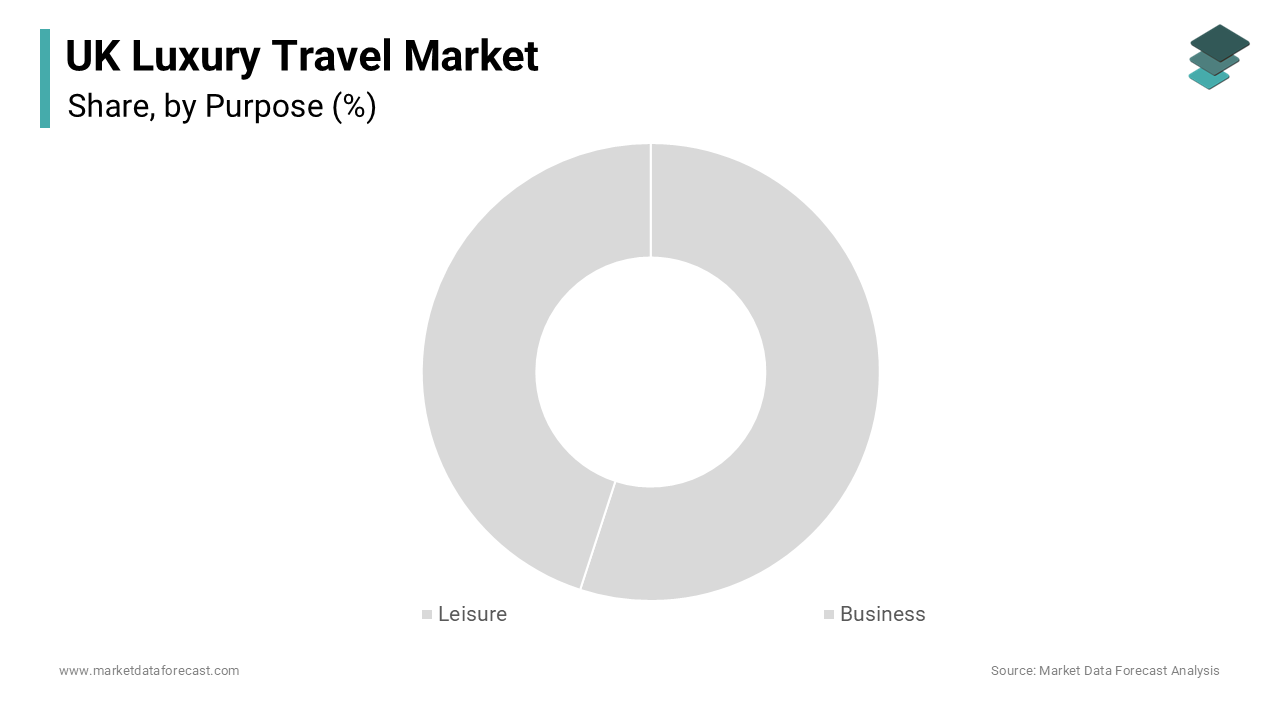
On the other side, the IT consulting and implementation segment is estimated to showcase a CAGR of 10.4% during the forecast period as the lines between work and leisure continue to blur through the bleisure phenomenon. Executives and entrepreneurs are increasingly extending business trips to include leisure activities leveraging corporate budgets for high end accommodation and dining before transitioning to personal time. According to Global Business Travel Association data, 45 % of business travelers now add leisure days to their trips with luxury hotels reporting higher occupancy rates during weekdays due to this trend. As per Hilton Honors insights, business travelers in the luxury segment spend 30 % more on ancillary services such as spa treatments and fine dining compared to traditional corporate guests. Companies are recognizing the value of employee well being and are offering premium travel perks to attract and retain top talent. High level negotiations and client entertainment often take place in exclusive settings requiring sophisticated venues and concierge services. The need for seamless connectivity and private meeting spaces within luxury hotels drives demand for specialized business facilities. This integration of professional obligations with personal indulgence creates a lucrative niche that combines the reliability of corporate travel with the extravagance of leisure.
By Passengers Insights
The domestic passenger segment dominated the market in 2025 and is projected to deliver strong performance over the next few years, holding the dominant position in the luxury travel market as residents with high disposable income frequently engage in premium travel within their own borders. This dominance is supported by a strong sense of national pride extensive heritage assets and a well-developed infrastructure of luxury accommodations. According to Office for National Statistics data, UK residents made over 100 million domestic overnight trips in 2024 with a significant portion involving four and five star establishments. As per Visit England surveys, the average spend per domestic luxury trip reached 800 pounds reflecting willingness to invest in high quality local experiences. The convenience of avoiding international travel complexities such as visas and long flight times makes domestic travel appealing for short breaks and weekends. Affluent consumers appreciate the familiarity and ease of navigating local regions while enjoying world class service. The diversity of landscapes from rolling hills to rugged coastlines offers varied experiences within a short distance. Marketing campaigns promoting hidden treasures and exclusive local events further stimulate demand. The stability of domestic travel unaffected by global geopolitical issues or health crises affecting borders ensures consistent revenue streams for local providers. This robust internal market forms the backbone of the UK luxury travel industry.
However, the international passenger segment is anticipated to display rapid development over the next few years and register a CAGR of 13.3% during the forecast period as global connectivity improves and favorable exchange rates attract wealthy visitors. The UK remains a top destination for ultra-high net worth individuals from emerging markets such as China the Middle East and North America who seek its unique blend of history and modernity. According to Civil Aviation Authority data, international passenger numbers at UK airports recovered to pre pandemic levels in 2024 with first and business class seats seeing the quickest rebound. As per Visit Britain statistics, spending by overseas visitors in the luxury sector increased by 25% year on year driven by high value shoppers and tourists. The weakening of the pound against the dollar and other major currencies makes UK luxury goods and services more affordable for international buyers. Direct flight routes from key global hubs facilitate easy access for affluent travelers. Visa facilitation programs for high net worth individuals streamline entry processes enhancing appeal. International marketing campaigns highlighting exclusive experiences such as royal tours and private shopping events effectively target this demographic. This influx of global wealth drives rapid growth in high end hospitality and retail sectors.
By Target Clientele Insights
The non-high net worth individuals segment held the leading position in the UK luxury travel market in terms of volume in 2025 as aspirational travelers seek accessible luxury experiences through premium economy options and occasional splurges. This dominance is driven by the democratization of luxury where middle income households allocate significant portions of their budget for special occasion travel. According to Mintel consumer research, 55 % of UK adults consider themselves aspirational luxury travelers preferring to save for one high quality trip rather than multiple budget holidays. As per Booking.com data, bookings for four star hotels and upgraded cabin classes have increased by 20 % among this demographic reflecting desire for enhanced comfort. Social media platforms inspire users to emulate luxury lifestyles leading to demand for Instagram worthy destinations and experiences. Travel credit cards and loyalty programs enable these consumers to access premium benefits such as lounge access and room upgrades without paying full price. The rise of affordable luxury brands in hospitality and aviation caters specifically to this segment. While individual spend is lower than HNW individuals the sheer size of this group generates substantial aggregate revenue. Providers tailor packages that offer perceived luxury value such as included breakfasts or spa credits to attract this broad base.
By Type Insights
The culinary segment led the market by capturing the leading share of the UK market in 2025 due to the high concentration of Michelin starred restaurants innovative chefs and unique food experiences. According to Michelin Guide data, the UK has over 160 starred restaurants with London remaining a global culinary capital. As per Visit Britain surveys, 40 % of luxury travelers cite food and drink as a primary motivator for their visit to the UK. High net worth individuals seek exclusive dining experiences such as private chef tables tasting menus and behind the scenes kitchen tours. The rise of farm to table movements and artisanal producers offers authentic and high quality ingredients that appeal to discerning palates. Food festivals and wine tasting events in regions like Kent and Scotland draw wealthy visitors seeking immersive gastronomic adventures. Luxury hotels integrate renowned restaurants into their offerings enhancing their appeal. The social aspect of dining allows for networking and celebration making it a central component of luxury itineraries. This strong culinary identity ensures that food remains a key driver of luxury travel spending and visitor satisfaction.
However, the cultural activities segment is estimated to record a CAGR of 11.4% during the forecast period in the UK market as travelers seek deeper intellectual and emotional connections with history and arts. This accelerated growth is driven by the desire for exclusive access to heritage sites private collections and cultural events that are not available to the general public. According to Arts Council England data, attendance at premium cultural events and private viewings has increased by 20 % among high income groups. As per Sotheby’s Institute of Art reports, luxury travelers are increasingly incorporating art tours museum private tours and auction house visits into their itineraries. The UK’s rich history offers endless opportunities for bespoke cultural experiences such as private castle stays and guided tours by historians. Interest in royal heritage and aristocratic lifestyles drives demand for exclusive access to palaces and estates. Cultural festivals such as Glyndebourne Opera and Chelsea Flower Show attract wealthy attendees seeking sophisticated social environments. This segment appeals to educated affluent travelers who value knowledge and refinement. By offering curated cultural immersion providers meet the growing demand for meaningful and intellectually stimulating travel experiences.
COUNTRY ANALYSIS
The UK dominated the market in 2025 and is expected to further fortify its status as a premium European destination over the next few years, standing as the premier luxury travel destination in Europe characterized by its unparalleled heritage global cultural influence and sophisticated hospitality infrastructure. The market status is defined by a mature ecosystem of high end hotels Michelin starred restaurants and exclusive attractions that cater to the global elite. According to Visit Britain data, the UK welcomed over 4 million high spending overseas visitors in 2024 who contributed significantly to the economy through luxury retail and hospitality. London serves as the primary gateway and hub for luxury travel offering world class shopping dining and cultural institutions that anchor the national brand. As per Office for National Statistics, the average daily spend by luxury travelers in the UK is three times higher than that of standard tourists reflecting the high value nature of the market. The country’s stability strong rule of law and English language advantage make it a safe and accessible choice for international affluent travelers. Regulatory frameworks ensure high service standards and consumer protection enhancing trust. The integration of historic landmarks with modern luxury amenities creates a unique selling proposition. Government support for tourism and heritage preservation sustains the appeal of destinations outside London. Despite challenges related to costs and labor the UK remains a top choice for luxury seekers due to its depth of experience and global prestige.
COMPETITIVE LANDSCAPE
The competition within the UK luxury travel market is intense and characterized by a mix of established heritage brands innovative boutique operators and global luxury conglomerates vying for the attention of high net worth individuals. Incumbent players leverage their historical reputation extensive networks and brand prestige to secure loyal clientele who value consistency and trust. Meanwhile agile niche specialists compete by offering highly customized unique experiences and deeper local insights that larger organizations may struggle to replicate. The market sees continuous innovation in service delivery with providers integrating technology to enhance personalization while maintaining human touch points. Price competition is less significant than value differentiation where exclusivity privacy and access serve as key differentiators. Partnerships with luxury retail automotive and lifestyle brands create holistic ecosystems that extend beyond traditional travel services. Customer retention relies on building long term relationships through exceptional service and memorable moments. The entry of new digital native luxury platforms challenges traditional models by offering seamless booking and curated content. This dynamic environment requires constant adaptation to evolving consumer tastes and global trends to maintain relevance and profitability.
KEY MARKET PLAYERS
Some of the promising companies that are playing a dominating role in the UK luxury travel market include
- Scott Dunn
- Cox & Kings
- Exodus Travels
- Backroads
- Butterfield & Robinson
- Jet2 Holidays
- Lindblad Expeditions
- Thomas Cook Group
- Zicasso
- Micato Safaris
- Abercrombie & Kent
- Great Rail Journeys
- Kuoni
- Trailfinders
- Audley Travel
- Black Tomato
- Luxury Gold
- Inspiring Travel Company
- Original Travel
- Carrier
Top Players in the UK Market
Virgin Atlantic Airways Limited
Virgin Atlantic Airways Limited contributes significantly to the UK luxury travel market by providing premium transatlantic and global flight services with a strong emphasis on customer experience and innovation. The airline operates Upper Class suites that offer lie flat beds private dining and exclusive lounge access catering to high net worth individuals and business travelers. Recent strategic actions include the introduction of sustainable aviation fuel initiatives and enhanced digital concierge services to streamline the journey for affluent passengers. Virgin has also partnered with luxury hotel chains to offer seamless ground transfer experiences. By focusing on distinctive brand personality and superior service standards the airline strengthens its position as a preferred carrier for discerning travelers seeking comfort style and ethical responsibility in their long haul journeys.
The Savoy Hotel London
The Savoy Hotel London stands as an iconic pillar of the UK luxury hospitality sector offering world class accommodation dining and event services in the heart of the capital. This historic property combines Edwardian and Art Deco elegance with modern amenities to attract elite international tourists and dignitaries. Recent efforts to strengthen its market position include extensive renovations of guest suites and the launch of bespoke experiential packages such as private river cruises and curated cultural tours. The hotel has also enhanced its sustainability practices by reducing single use plastics and sourcing local organic ingredients. By maintaining its legendary service reputation while adapting to contemporary luxury expectations The Savoy continues to define excellence in British hospitality and attract high spending guests.
Abercrombie and Kent UK
Abercrombie and Kent UK is a leading luxury travel specialist providing bespoke itineraries private guided tours and exclusive access experiences for affluent clients worldwide. The company leverages deep local expertise and global networks to create highly personalized travel plans that cater to unique interests and preferences. Recent actions include the expansion of its private jet tour offerings and the development of immersive wellness retreats in scenic UK locations. Abercrombie and Kent has also invested in advanced client relationship management systems to deliver hyper personalized service and anticipate traveler needs. By focusing on exclusivity authenticity and exceptional attention to detail the firm reinforces its reputation as a premier provider of transformative luxury travel experiences for the ultra wealthy.
Top Strategies Used by Key Market Participants
Key players in the UK luxury travel market predominantly employ personalization and exclusive partnerships to maintain competitive advantage and enhance customer loyalty. Companies invest heavily in data analytics to understand individual preferences and craft bespoke itineraries that offer unique access to private events and hidden gems. Developing strong relationships with luxury brands hotels and transport providers ensures seamless high quality experiences for clients. Emphasizing sustainability and ethical tourism appeals to conscientious affluent travelers who value responsible consumption. Implementing advanced digital tools such as mobile concierge apps improves convenience and real time support during trips. Training staff to deliver anticipatory and discreet service distinguishes premium providers from mass market competitors. These combined strategies enable participants to create memorable emotional connections and justify premium pricing in a sophisticated and demanding marketplace.
MARKET SEGMENTATION
This research report on the UK luxury travel market has been segmented based on the following categories.
By Purpose
- Leisure
- Business
By Passengers
- Domestic
- International
By Target Clientele
- High Net Worth (HNW) Individuals
- Non-High Net Worth Individuals
By Type
- Airfares & Lodging
- Culinary
- Cultural Activities
- Others
By Country
- U.K
Access the study in MULTIPLE FORMATS
Purchase options starting from
$ 1200
Didn’t find what you’re looking for?
TALK TO OUR ANALYST TEAM
Need something within your budget?
NO WORRIES! WE GOT YOU COVERED!
Call us on: +1 888 702 9696 (U.S Toll Free)
Write to us: sales@marketdataforecast.com