- Product Description Description
- Table of Contents TOC
- List of Table & Figure LOT
- Get Free Sample PDF Sample PDF
Market Size, 2025
$312.62 BnMarket Estimate, 2026
$329.5 BnMarket Forecast, 2034
$501.86 BnCAGR, 2026–2034
5.40%United Kingdom Online Shopping Market Report Summary
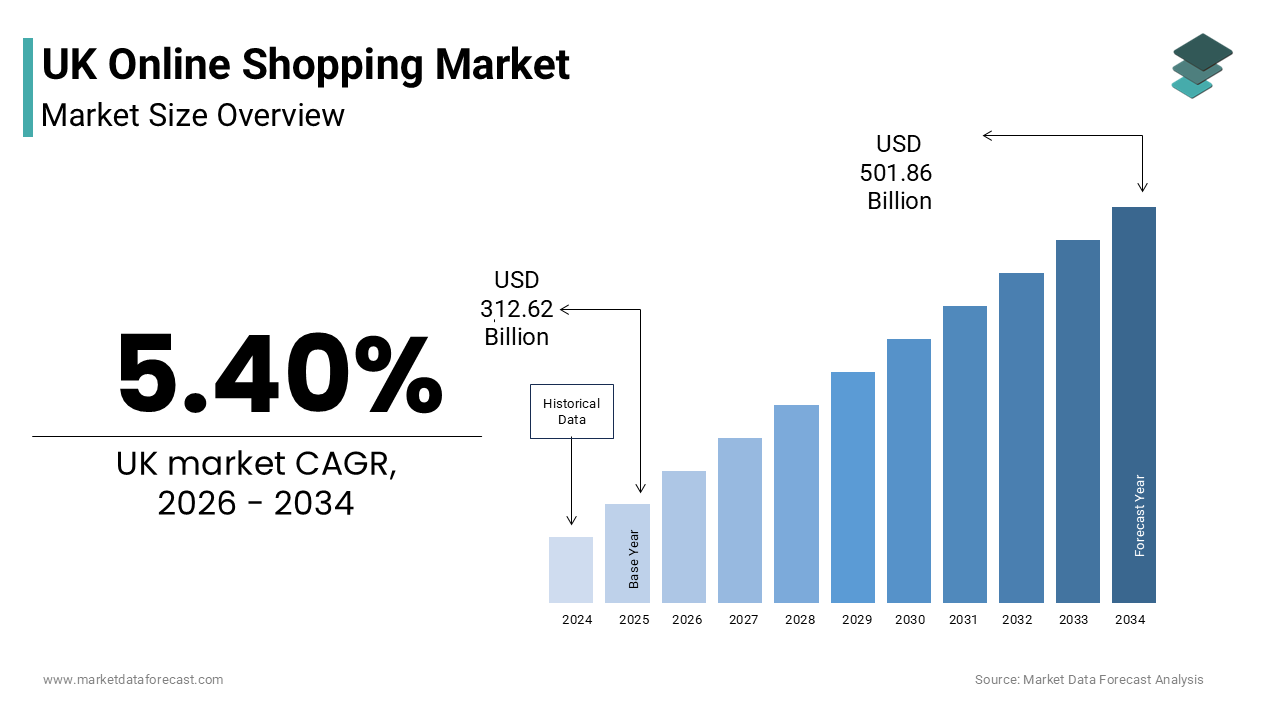
The United Kingdom online shopping market was valued at USD 312.62 billion in 2025 and is anticipated to reach USD 329.5 billion in 2026 from USD 501.86 billion by 2034, growing at a CAGR of 5.40% during the forecast period from 2026 to 2034. The growth of the United Kingdom online shopping market is driven by increasing internet penetration, rising smartphone usage, and growing consumer preference for convenient digital purchasing channels. Expanding adoption of mobile commerce platforms, increasing investments in logistics and delivery infrastructure, and growing demand for personalized shopping experiences are further accelerating market growth. Moreover, advancements in artificial intelligence-powered recommendation systems, expansion of digital payment solutions, and increasing focus on sustainable e-commerce practices are supporting the expansion of the United Kingdom online shopping market.
Key Market Trends
-
Rising adoption of mobile commerce driven by widespread smartphone ownership and high-speed internet connectivity.
-
Increasing use of artificial intelligence and machine learning for personalized shopping experiences and customer engagement.
-
Growing popularity of digital wallets and contactless payment solutions for secure online transactions.
-
Strong focus on sustainable packaging, ethical sourcing, and environmentally responsible delivery services.
-
Expansion of omnichannel retail strategies that integrate online and offline shopping experiences.
Segmental Insights
- Based on product category, the fashion segment dominated the United Kingdom online shopping market and held the largest share in 2025. The segment’s dominance is attributed to frequent purchasing behavior, strong influence of social media trends, extensive product variety, and increasing adoption of virtual try-on technologies.
- The groceries segment is projected to witness the fastest CAGR during the forecast period owing to growing consumer demand for convenience, increasing adoption of online grocery delivery services, expanding quick commerce offerings, and improvements in cold-chain logistics infrastructure.
- Based on device type, the smartphones segment accounted for the leading share of the United Kingdom online shopping market in 2025. The dominance of this segment is driven by high smartphone penetration, ease of access to shopping applications, growing mobile payment adoption, and increasing consumer preference for shopping on the go.
- The tablets segment is anticipated to register the fastest CAGR during the forecast period due to enhanced user experience through larger screens, increasing household usage, growing preference for visual product exploration, and improved retail application functionality.
- Based on payment method, the credit and debit cards segment held the major share of the United Kingdom online shopping market in 2025 owing to widespread consumer familiarity, strong security protections, broad merchant acceptance, and seamless integration with online retail platforms.
- The digital wallets segment is expected to witness rapid growth during the forecast period because of increasing adoption of contactless payments, enhanced transaction security, faster checkout experiences, and growing integration with mobile commerce ecosystems.
- Based on end-user, the individual segment dominated the United Kingdom online shopping market in 2025 due to high consumer participation in e-commerce activities, increasing demand for convenience, growing product diversity, and strong adoption of personalized shopping experiences.
- The business segment is projected to witness the fastest CAGR during the forecast period owing to increasing digitalization of procurement processes, growing adoption of business-to-business e-commerce platforms, rising demand for operational efficiency, and expanding use of automated purchasing systems.
Regional Insights
The United Kingdom accounted for a significant share of the European online shopping market in 2025 and held approximately 24.6% of the regional market. The country benefits from high internet penetration, advanced logistics infrastructure, widespread smartphone adoption, and strong consumer trust in digital commerce platforms. The presence of leading e-commerce retailers, innovative fintech companies, and sophisticated delivery networks continues to strengthen the market's position as one of the most mature and dynamic online shopping ecosystems in Europe.
Competitive Landscape
The United Kingdom online shopping market is highly competitive and characterized by the presence of global e-commerce leaders, omnichannel retailers, supermarket chains, and digital-first brands competing through technological innovation, delivery efficiency, pricing strategies, and customer experience enhancements. Leading companies are focusing on expanding artificial intelligence-driven personalization capabilities, strengthening logistics networks, investing in sustainable operations, and enhancing omnichannel shopping experiences. Strategic partnerships, loyalty programs, and digital payment innovations are further strengthening market positioning across the online retail ecosystem. Prominent players in the United Kingdom online shopping market include Amazon UK, eBay UK, ASOS plc, Ocado Group plc, Next plc, Tesco plc, Sainsbury’s Supermarkets Ltd, Marks & Spencer Group plc, John Lewis Partnership plc, Boohoo Group plc, AO World plc, Currys plc, Very Group, Zalando SE, and Frasers Group plc.
UK Online Shopping Market Size
The UK online shopping market size was valued at USD 312.62 billion in 2025 and is anticipated to reach USD 329.5 billion in 2026 from USD 501.86 billion by 2034, growing at a CAGR of 5.40% during the forecast period from 2026 to 2034.
Online shopping is a form of electronic commerce (e-commerce) that allows consumers to directly buy goods or services from a seller over the internet. The United Kingdom boasts the most developed e-commerce landscape in Europe. This market has evolved from a supplementary channel into the primary mode of retail consumption for a significant portion of the population driven by technological infrastructure and changing consumer behaviors. The market is characterized by high penetration rates advanced logistics networks and a strong culture of digital trust. According to Office for National Statistics and Ofcom metrics, approximately 95% to 96% of UK households maintain internet access, establishing a robust national infrastructure for digital commerce. As per Ofcom communications market data smartphone ownership among adults reached 92 percent enabling ubiquitous access to retail platforms anytime and anywhere. The regulatory environment overseen by bodies such as the Competition and Markets Authority ensures fair trading practices and consumer protection fostering a secure shopping environment. The post pandemic era has cemented online shopping as a habitual behavior with consumers expecting seamless omnichannel experiences rapid delivery and personalized service. The market faces evolving dynamics related to sustainability data privacy and economic volatility requiring retailers to adapt continuously. This dynamic landscape supports a diverse array of players from global giants to niche independent sellers contributing to a vibrant and competitive digital economy.
MARKET DRIVERS
Ubiquitous Smartphone Penetration and Mobile Commerce Adoption
Ubiquitous smartphone penetration and the widespread adoption of mobile commerce are contributing to the growth of the United Kingdom online shopping market. These advancements ensure that retail platforms are accessible to the vast majority of the population. The convenience of browsing comparing prices and purchasing products from any location has transformed shopping from a destination based activity to an instantaneous digital experience. According to Ofcom mobile user indicators, adult smartphone ownership in the United Kingdom reached 93%, creating an expansive consumer infrastructure for mobile retail applications. Mobile apps offer features such as biometric login push notifications for sales and one click checkout which reduce friction and encourage impulse purchases. The integration of digital wallets like Apple Pay and Google Pay simplifies the transaction process enhancing security and speed. High speed 5G networks further improve the user experience by enabling fast loading times and high resolution product images. This technological accessibility ensures that retailers can reach consumers during key moments such as commuting or leisure time. The ease of access combined with sophisticated user interfaces makes mobile platforms the dominant channel for customer acquisition and revenue generation in the UK online shopping sector.
Advanced Logistics Infrastructure and Consumer Expectations for Speed
Advanced logistics infrastructure and heightened consumer expectations for rapid delivery are fuelling the expansion of the United Kingdom online shopping market. Shoppers increasingly prioritize speed and reliability with same day and next day delivery becoming standard expectations rather than premium services. Overall, UK parcel volumes hit a record 4.2 billion items. Within this, Royal Mail group logs show their individual parcel handling reached 3.9 billion items, reflecting post-pandemic recovery supported by an 80% parcel automation rate. According to the a study, 64% of UK shoppers consider specific day choice critical, while approximately 60% explicitly state a good delivery experience determines if they will buy from that retailer again. The presence of major logistics hubs and extensive courier networks enables retailers to fulfill orders efficiently even during peak periods. Innovations such as click and collect services and locker pickups provide flexibility for consumers who may not be home to receive packages. The ability to track orders in real time enhances transparency and reduces anxiety about delivery status. Retailers invest heavily in warehouse automation and inventory management systems to meet these demands ensuring stock availability and quick dispatch. This operational excellence builds trust and loyalty encouraging repeat purchases. The seamless integration of logistics with digital platforms creates a superior customer experience that drives sustained growth in the online shopping market.
MARKET RESTRAINTS
Economic Volatility and Reduced Disposable Income
Economic volatility and reduced disposable income are restricting the growth and spending power within the United Kingdom online shopping market. Inflationary pressures rising interest rates and cost of living increases have forced households to prioritize essential expenses over discretionary retail purchases. According to the Office for National Statistics real household disposable income declined in recent years leading to more cautious spending behavior and increased price sensitivity. The erosion of purchasing power limits the ability of retailers to maintain premium pricing strategies forcing them to offer frequent discounts and promotions which erode profit margins. Smaller online businesses struggle to compete with larger players who can absorb costs and offer aggressive pricing. Consumers are increasingly turning to second hand markets and rental services to extend the lifecycle of products reducing demand for new items. The uncertainty of future economic conditions makes long term planning difficult for retailers discouraging investment in expansion and innovation. These financial constraints create a challenging environment where growth is limited by the wallet share available to consumers after meeting basic needs.
Cybersecurity Threats and Data Privacy Concerns
Cybersecurity threats and escalating data privacy are hampering consumer trust and willingness to engage in online transactions within the country, which hinders the expansion of the United Kingdom online shopping market. High profile data breaches and phishing attacks have made shoppers wary of sharing personal and financial information with digital retailers. : According to data associated with the National Cyber Security Centre, cyber threats remain complex with 75% of businesses ranking cybersecurity as a primary priority amid escalating instances of automated fraud and identity theft. As per Information Commissioner Office reports fines for data protection violations have risen prompting stricter compliance requirements under the General Data Protection Regulation. Consumers are increasingly selective about which platforms they trust with their data preferring established brands with robust security measures. The complexity of managing passwords and verifying identities can create friction in the checkout process leading to cart abandonment. Retailers must invest heavily in encryption multi factor authentication and continuous monitoring to protect customer data which increases operational costs. Negative publicity surrounding security failures can damage brand reputation irreparably leading to loss of customers. The balance between seamless user experience and rigorous security protocols is difficult to maintain. These concerns deter some potential users from adopting online shopping particularly among older demographics who may be less technologically confident.
MARKET OPPORTUNITIES
Integration of Artificial Intelligence and Personalized Shopping Experiences
The integration of artificial intelligence and personalized shopping experiences offers substantial opportunities for differentiation and revenue growth within the United Kingdom online shopping market. AI technologies enable retailers to analyze vast amounts of user data to deliver tailored product recommendations dynamic pricing and customized marketing messages that enhance customer satisfaction and loyalty. According to research, personalized recommendations can increase sales by up to 15 percent by presenting relevant items at the right time. As per Salesforce research shoppers are more likely to return to sites that offer personalized experiences indicating strong potential for retention. Machine learning algorithms predict future buying behavior allowing retailers to optimize inventory and reduce waste. Chatbots powered by natural language processing provide instant customer support resolving queries efficiently and improving user experience. Virtual try on tools using augmented reality allow customers to visualize products such as clothing and furniture in their own environment reducing return rates. The ability to create unique and engaging shopping journeys distinguishes retailers in a crowded market. Operators that leverage AI effectively can create a more immersive and relevant experience that drives long term profitability and sustainable growth.
Expansion of Sustainable and Ethical E Commerce Practices
The expansion of sustainable and ethical e-commerce practices provides a clear path for retailers to align with environmental values and attract conscientious consumers in the country, which is expected to boost the expansion of the United Kingdom online shopping market. Shoppers are increasingly aware of their carbon footprint and prefer brands that demonstrate genuine commitment to sustainability through eco friendly packaging carbon neutral delivery and ethical sourcing. As per Deloitte sustainability survey retailers that transparently communicate their environmental efforts see higher brand loyalty and positive word of mouth. Opportunities exist in developing circular economy models such as take back schemes resale platforms and repair services that extend product lifecycles. Partnerships with green logistics providers for electric vehicle deliveries appeal to environmentally aware customers. Certifications such as B Corp status enhance credibility and differentiate brands from competitors. Marketing sustainability efforts authentically builds trust and attracts a growing segment of values driven shoppers. This shift toward responsible commerce not only benefits the planet but also creates unique selling propositions that drive competitive advantage and long term viability in the online shopping market.
MARKET CHALLENGES
High Return Rates and Reverse Logistics Costs
High return rates and the associated costs of reverse logistics are a serious hurdle for profitability and operational efficiency for online retailers in the country, which impedes the growth of the United Kingdom online shopping market. Unlike physical stores where customers can try items before purchase online shopping involves uncertainty regarding fit quality and appearance leading to frequent returns. According to Royal Mail group data return rates for fashion items in the UK can exceed 30 percent placing a significant burden on logistics networks. As per Barclaycard analysis the cost of processing returns including shipping inspection and restocking can erase profit margins especially for smaller retailers. Free return policies while attractive to customers exacerbate this issue by encouraging bracketing where shoppers buy multiple sizes to keep one. Managing the flow of returned goods requires specialized infrastructure and labor which increases operational complexity. Environmental concerns regarding waste from returned items that cannot be resold add pressure to find sustainable disposal methods. Retailers struggle to balance customer convenience with cost control often facing dilemmas about charging for returns. High return volumes also disrupt inventory management leading to stock inaccuracies and lost sales opportunities. Addressing this challenge requires innovative solutions such as better size guides virtual fitting tools and clearer product descriptions to reduce the likelihood of returns.
Intense Competition and Customer Acquisition Costs
Intense competition and soaring customer acquisition costs are challenging online retailers, which obstructs the expansion of the United Kingdom online shopping market. This slowdown is primarily driven by increasing market saturation. The low barrier to entry for e commerce platforms has led to a crowded marketplace where numerous brands compete for the same pool of active shoppers. As per Deloitte, loyalty is low in the online shopping sector with consumers frequently switching between platforms based on price and promotions. This price sensitivity forces companies into continuous discounting cycles which erode profit margins and devalue the brand. Affiliate marketers and comparison sites demand higher commissions reducing net revenue for retailers. Regulatory restrictions on data tracking such as Apple App Tracking Transparency limit the effectiveness of targeted advertising making it harder to reach specific audiences. The need to constantly innovate with new features and content to retain attention adds to development costs. Smaller operators struggle to compete with large incumbents who have deeper pockets for marketing spend. Achieving sustainable growth requires balancing acquisition spend with lifetime value which becomes increasingly difficult in a mature and competitive market.
REPORT COVERAGE
| REPORT METRIC | DETAILS |
| Market Size Available | 2025 to 2034 |
| Base Year | 2025 |
| Forecast Period | 2026 to 2034 |
| CAGR | 5.40% |
| Segments Covered | By Product Category, Device Type, Payment Method, End-User and Region. |
| Various Analyses Covered | Global, Regional & Country Level Analysis, Segment-Level Analysis, DROC, PESTLE Analysis, Porter’s Five Forces Analysis, Competitive Landscape, Analyst Overview of Investment Opportunities |
| Market Leaders Profiled | Amazon UK, eBay UK, ASOS plc, Ocado Group plc, Next plc, Tesco plc, Sainsbury’s Supermarkets Ltd, Marks & Spencer Group plc, John Lewis Partnership plc, Boohoo Group plc, AO World plc, Currys plc, Very Group, Zalando SE, Frasers Group plc |
SEGMENTAL ANALYSIS
By Product Category Insights
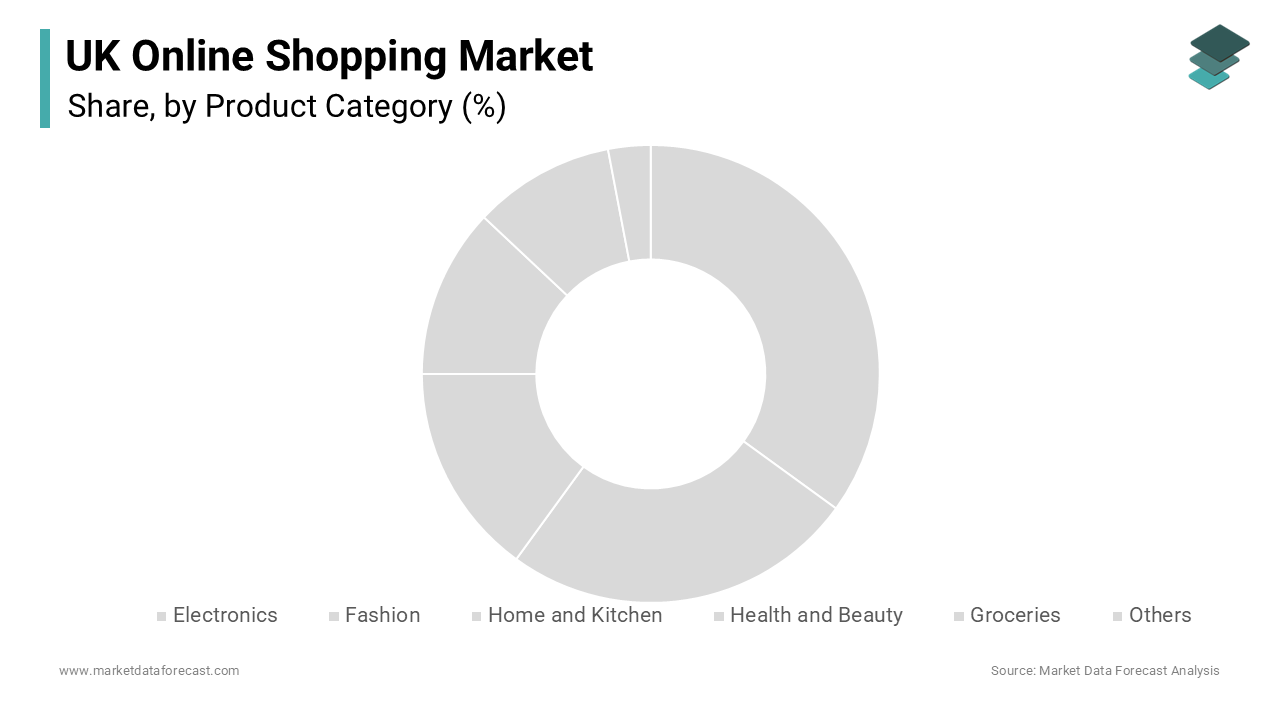
In 2025, the fashion segment dominated the United Kingdom online shopping market and accounted for a 29.2% share. This dominance of the segment is driven by high-frequency purchases of clothing, footwear, and accessories, which are fueled by seasonal trends and social media. Consumers frequently update their wardrobes making fashion a recurring revenue stream for e commerce platforms. The Office for National Statistics indicate that the online share of the UK's textile, clothing, and footwear market has structurally stabilized between 26% and 29%. The visual nature of fashion products lends itself well to digital presentation through high resolution images videos and virtual try on tools. Social media platforms like Instagram and TikTok serve as powerful discovery engines where influencers showcase styles driving immediate purchase intent. The availability of extensive size ranges and diverse styles online surpasses physical store limitations attracting a broader customer base. Easy return policies mitigate the risk of buying without trying encouraging experimentation. This combination of trend responsiveness visual engagement and convenience ensures that fashion remains the dominant category in the UK online shopping landscape.
The top position of this segment is further strengthened by the integration of augmented reality and personalized recommendation engines that enhance the shopping experience and reduce uncertainty. Advanced technologies allow users to visualize how garments fit and look on their bodies reducing the likelihood of returns and increasing confidence in purchase decisions. According to Deloitte digital fashion trends retailers using AR try on features report a 25 percent reduction in return rates and a 15 percent increase in conversion. As per Salesforce research personalized product recommendations based on browsing history and style preferences drive 30 percent of total revenue for major fashion e tailers. Algorithms analyze user behavior to suggest complementary items creating curated looks that simplify decision making. Mobile apps leverage camera technology for virtual fitting rooms providing an interactive and engaging experience. Social sharing features enable users to seek feedback from friends before buying adding a communal element to the process. These technological enhancements transform online fashion shopping from a transactional activity into an immersive and personalized journey. By addressing key pain points such as fit and style matching these innovations sustain the dominance of the fashion category.
The groceries segment is predicted to witness the highest CAGR of 12.5% from 2026 to 2034 due to consumers prioritizing convenience and time-saving solutions in their daily routines. Moreover, the habit of ordering fresh produce household essentials and pantry staples online has become entrenched following the pandemic driven by the reliability of delivery services. Subscription models offered by major supermarkets provide unlimited free deliveries for a monthly fee encouraging frequent usage and loyalty. The ability to schedule recurring orders for staple items reduces mental load and ensures household supplies are always available. Quick commerce services offering delivery within hours cater to immediate needs further accelerating adoption. This shift toward digital grocery shopping is supported by improved app interfaces and real time stock visibility making it a seamless alternative to physical store visits.
The rapid expansion of this segment is also fueled by the expansion of private label offerings and rigorous quality assurance measures that build trust in online fresh produce. Supermarkets have invested heavily in packaging technologies and temperature controlled logistics to ensure that fruits vegetables and chilled goods arrive in pristine condition. According to Tesco corporate reports customer satisfaction scores for online fresh food quality have reached parity with in store selections due to improved handling standards. Retailers offer detailed product descriptions sourcing information and nutritional data helping consumers make informed choices. The growth of premium private label ranges provides affordable yet high quality alternatives to branded goods appealing to cost conscious shoppers. Integration with meal planning apps suggests recipes based on available ingredients reducing food waste and enhancing utility. Loyalty programs linked to online accounts offer personalized discounts on frequently bought items driving repeat purchases. These factors combine to make online grocery shopping not just a convenience but a preferred method for many households ensuring sustained high growth.
By Device Type Insights
The smartphones segment led the United Kingdom online shopping market and captured a 54.1% share in 2025. This leading position of the segment is attributed to the fact that mobile devices have become the primary interface for digital commerce due to their portability and constant connectivity. Consumers prefer browsing and purchasing on smartphones during commutes breaks and leisure time making it the most accessible channel. Retailers have optimized their websites and developed dedicated apps with intuitive navigation fast loading times and secure checkout processes to enhance the mobile experience. Features such as biometric authentication and digital wallet integration streamline payments reducing friction. Push notifications alert users to flash sales and order updates driving engagement. The ability to scan barcodes in physical stores for price comparisons bridges the gap between offline and online shopping. This ubiquity and ease of use ensure that smartphones remain the central hub for online shopping activities driving the majority of transactions.
The dominance of the smartphones segment is further solidified by the integration of social commerce and instant messaging features that facilitate seamless discovery and purchase within social media apps. Platforms like Instagram TikTok and Facebook allow users to buy products directly from posts and stories without leaving the app creating a frictionless shopping journey. Chatbots integrated into messaging apps provide instant customer support and personalized recommendations enhancing the user experience. The ability to share products with friends for feedback encourages social validation and increases conversion rates. Mobile specific features such as location based offers and augmented reality filters add interactivity and fun to the shopping process. These social and interactive elements make smartphones not just a tool for transactions but a platform for discovery and community driving their continued leadership in the market.
The tablets segment is estimated to register the fastest CAGR of 8.5% during the forecast period. This rapid growth is driven by consumer demand for larger screens during browsing and decision making. Tablets offer a balance between the portability of smartphones and the visual clarity of desktops making them ideal for viewing detailed product images videos and reviews. The ergonomic design allows for comfortable extended browsing sessions often from the couch or bed. Parental controls and family sharing features make tablets a popular device for household shopping management. Improved battery life supports longer usage without frequent charging. The growing library of optimized retail apps enhances functionality and performance. This focus on comfort and visual quality drives steady growth in the tablet shopping segment particularly for categories requiring detailed inspection.
The swift growth of this segment is also fueled by its adoption in home management and family shopping contexts where shared devices facilitate collaborative decision making. Tablets are often used in kitchen and living areas making them convenient for checking recipes ordering groceries and managing household supplies. The larger screen facilitates side by side comparison of products prices and reviews aiding informed choices. Family members can create shared wish lists and cart items for joint purchases enhancing coordination. Educational and entertainment apps often cross promote relevant products creating organic discovery opportunities. The versatility of tablets as both entertainment and utility devices maximizes their usage time and shopping potential. This multi functional role ensures that tablets continue to gain traction in the online shopping market particularly among households seeking efficient and collaborative shopping solutions.
By Payment Method Insights
The credit and debit cards segment held the majority share of 32.7% of the United Kingdom online shopping market in 2025. This segment remains the most widely accepted and trusted payment method for digital transactions. Consumers are familiar with card payments and appreciate the security protections and fraud liability limits offered by major card networks. Most e commerce platforms prioritize card integration ensuring seamless checkout experiences. The ability to defer payment through credit cards appeals to shoppers managing cash flow. Reward points and cashback incentives associated with certain cards encourage their use for larger purchases. Wide acceptance across international retailers makes cards essential for cross border shopping. The infrastructure for card processing is robust and reliable minimizing transaction failures. This combination of familiarity security and benefits ensures that credit and debit cards remain the primary payment method for UK online shoppers.
The integration of tokenization and one-click checkout technologies reinforces the leadership of this segment. Together, these tools enhance both convenience and security. Tokenization replaces sensitive card details with unique identifiers preventing data breaches and simplifying storage for future purchases. Saved card details allow for rapid repeat purchases encouraging loyalty and higher frequency. Biometric authentication such as fingerprint or face ID adds an extra layer of security without compromising speed. The seamless integration of card payments with loyalty programs and subscription services enhances utility. Regulatory compliance with Strong Customer Authentication requirements is easily met through card issuer apps. These technological advancements maintain the relevance and dominance of card payments in an evolving digital payments landscape.
The digital wallets segment is anticipated to witness the fastest CAGR of 14.2% between 2026 and 2034 owing to consumers increasingly preferring fast and secure mobile payment solutions. Services like Apple Pay Google Pay and PayPal allow users to complete transactions with a single tap or click eliminating the need to enter card details manually. The integration of biometric security ensures safe transactions without remembering passwords. Digital wallets often store multiple payment methods and shipping addresses streamlining the process further. Loyalty cards and coupons can be integrated directly into the wallet offering automatic application at checkout. The rise of buy now pay later options within digital wallets provides additional flexibility. This convenience and speed drive rapid adoption among tech savvy consumers.
The rapid expansion of the digital wallets segment is further fueled by their cross border compatibility and automatic currency conversion features which facilitate international shopping. Digital wallets handle exchange rates and foreign transaction fees transparently making it easier for UK consumers to purchase from global retailers. The ability to hold multiple currencies within a single wallet provides flexibility and cost savings. International merchants prefer digital wallets due to higher authorization rates and reduced fraud risk. Standardized protocols ensure compatibility across different regions and platforms. This global accessibility expands the shopping horizon for UK consumers and drives growth in the digital wallets segment. The seamless experience of buying from anywhere in the world without payment friction ensures sustained high growth.
By End-User Insights
The individual end user segment was the largest in the United Kingdom online shopping market and occupied a substantial share in 2025. Moreover, the main reason for this prominence is that personal consumption makes up the vast majority of all e-commerce volume. Millions of consumers shop online for clothing electronics groceries and household items making this segment the core of the retail economy. The diversity of products available online caters to varied personal tastes and needs driving frequent engagement. Social media influence and peer recommendations fuel discovery and purchase decisions among individuals. Personalized marketing and loyalty programs target individual preferences enhancing retention. The convenience of home delivery and easy returns appeals to busy lifestyles. Seasonal sales events such as Black Friday drive spikes in individual spending. This mass market participation ensures that the individual segment remains the dominant force in the UK online shopping landscape.
The leadership of the individual segment is further reinforced by advanced personalization strategies that align shopping experiences with individual lifestyles and values. Retailers use data analytics to curate product selections offers and content based on past behavior and demographic profiles. Individual shoppers value sustainability ethical sourcing and brand authenticity influencing their choices. Niche markets catering to specific hobbies interests and dietary needs thrive by addressing individual passions. User generated content such as reviews and photos builds trust and community among individual buyers. Flexible payment options like installments make high value items accessible. This focus on individual identity and preference ensures deep engagement and loyalty sustaining the segment's dominance.
The business end user segment is likely to experience the fastest CAGR of 11.8% over the forecast period. This quick surge of the segment is driven by organizations increasingly digitizing their procurement processes. Companies purchase office supplies IT equipment furniture and industrial goods online to streamline operations and reduce costs. Online platforms offer detailed specifications comparison tools and account management features tailored to business needs. Integration with enterprise resource planning systems automates invoicing and inventory tracking. The ability to access a wider supplier base online enhances competition and pricing power. Remote work trends have increased demand for home office equipment purchased through corporate accounts. This shift toward digital procurement drives sustained high growth in the business segment.
Specialized B2B platforms catering to specific industries with bulk purchasing options are fueling this segment's rapid growth. These platforms provide negotiated pricing credit terms and dedicated support teams that address complex business requirements. Bulk ordering capabilities reduce per unit costs and shipping frequencies optimizing logistics. Contract pricing and volume discounts incentivize larger orders and long term partnerships. Automated replenishment systems ensure critical supplies are always in stock preventing operational disruptions. The transparency of online pricing and availability simplifies budgeting and planning. These specialized features and efficiencies make online shopping an indispensable tool for modern businesses driving rapid growth in this segment.
COUNTRY ANALYSIS
The United Kingdom was the top performer in the European online shopping market and occupied a 24.6% share in 2025. This position of the country’s market was propelled by high internet penetration sophisticated logistics infrastructure and a culture of digital trust. The market status reveals a seamless omnichannel retail environment where consumers effortlessly switch between online and offline channels. According to Office for National Statistics and digital market data, the UK has one of the highest e-commerce penetration rates globally, with approximately 87% of UK consumers making purchases online, supported by a high adult internet penetration rate exceeding 90%. London serves as a global hub for retail innovation hosting numerous fintech and e commerce startups that drive technological advancement. As per Department for Business and Trade reports the digital economy contributes significantly to national GDP with online retail being a major component. The regulatory framework ensures strong consumer protection and data privacy fostering a secure shopping environment. High broadband speeds and widespread smartphone usage facilitate access to digital platforms. The market is highly competitive with a mix of global giants and agile local players driving innovation in delivery and customer experience. Sustainability initiatives are increasingly central to retail strategies reflecting consumer values. The UK leads in setting trends for mobile commerce and social shopping influencing broader European markets. This robust ecosystem supports continuous growth and adaptation to emerging technologies maintaining its leadership position.
COMPETITIVE LANDSCAPE
The competition within the United Kingdom online shopping market is intense and characterized by the rivalry between established brick and mortar retailers with strong digital presences and pure play e commerce giants. Incumbent supermarkets and department stores leverage their extensive physical networks to offer convenient click and collect services and immediate stock availability which online only players struggle to match. Meanwhile global tech driven platforms compete on price selection and delivery speed utilizing advanced algorithms and massive scale to optimize operations. The market sees continuous innovation in customer experience with augmented reality try ons and virtual assistants becoming common differentiators. Price transparency facilitated by comparison websites forces retailers to maintain competitive pricing and frequent promotions. Delivery speed has become a key battleground with same day and next day options becoming standard expectations rather than premium services. Customer retention relies heavily on loyalty schemes and personalized engagement strategies. New entrants focusing on niche markets or sustainable practices challenge established players by appealing to specific consumer values. This dynamic environment requires constant adaptation to technological trends and shifting consumer behaviors to maintain relevance and profitability in a saturated marketplace.
KEY MARKET PLAYERS
Some of the promising companies that are playing a dominating role in the United Kingdom online shopping market include
- Amazon UK
- eBay UK
- ASOS plc
- Ocado Group plc
- Next plc
- Tesco plc
- Sainsbury’s Supermarkets Ltd
- Marks & Spencer Group plc
- John Lewis Partnership plc
- Boohoo Group plc
- AO World plc
- Currys plc
- Very Group
- Zalando SE
- Frasers Group plc
Top Players in the United Kingdom Market
Amazon UK Services Ltd
Amazon UK Services Ltd maintains a dominant presence in the United Kingdom online shopping sector by offering an extensive product range and unparalleled logistics capabilities through its Prime membership program. The company focuses on delivering exceptional customer service with rapid delivery options that set industry standards for convenience and reliability. Recent strategic initiatives include significant investments in local fulfillment centers and renewable energy projects to support sustainable operations across the nation. Amazon has also expanded its same day delivery services to more postcodes enhancing accessibility for urban and suburban customers. The company strengthens its position as a preferred destination for diverse consumer needs by leveraging advanced artificial intelligence for personalized recommendations and inventory management. This approach allows them to continuously innovate and improve the overall shopping experience for millions of users.
Tesco plc
Tesco plc plays a pivotal role in the United Kingdom online shopping market by integrating its vast physical retail network with a robust digital platform that serves millions of households weekly. The retailer offers comprehensive grocery and general merchandise shopping experiences supported by efficient home delivery and click and collect services. Recent actions involve enhancing its Clubcard loyalty program with personalized digital offers and partnerships to drive customer retention and increase basket size. Tesco has also invested heavily in automated distribution centers to improve order accuracy and speed during peak demand periods. By focusing on value affordability and seamless omnichannel integration Tesco reinforces its reputation as a trusted household name. These efforts ensure it remains competitive against pure play e commerce rivals by leveraging its established supply chain and strong brand loyalty among British consumers.
Sainsbury’s Supermarkets Ltd
Sainsbury’s Supermarkets Ltd contributes significantly to the United Kingdom online shopping landscape by providing high quality food and non food products through its intuitive digital platforms and flexible delivery options. The company emphasizes sustainability and ethical sourcing which resonates strongly with conscious consumers seeking responsible retail choices. Recent developments include the expansion of its SmartShop technology allowing customers to scan and pay for items via mobile devices for a frictionless shopping journey. Sainsbury’s has also strengthened its partnership with Argos to offer a wider range of general merchandise online creating a one stop shop for diverse needs. By prioritizing customer convenience and product quality Sainsbury’s enhances user engagement and satisfaction. These strategic moves help the retailer maintain its competitive edge by blending traditional retail strengths with modern digital innovations to meet evolving shopper expectations effectively.
Top Strategies Used by Key Market Participants
Key players in the United Kingdom online shopping market predominantly employ omnichannel integration and personalization technologies to maintain competitive advantage and enhance customer loyalty. Companies invest heavily in data analytics to understand consumer behavior and tailor product recommendations marketing messages and pricing strategies accordingly. Developing robust mobile applications allows firms to offer seamless browsing and purchasing experiences thereby meeting the expectations of digitally savvy shoppers. Strategic partnerships with third party logistics providers ensure fast and reliable delivery which is critical for customer satisfaction. Implementing sustainable practices such as eco friendly packaging and carbon neutral shipping appeals to environmentally conscious consumers. Enhancing cybersecurity measures protects sensitive customer data and builds trust in an era of increasing digital threats. Loyalty programs that offer exclusive benefits and rewards encourage repeat purchases and long term engagement. These combined strategies enable participants to adapt to changing consumer preferences and drive growth in a dynamic retail landscape.
MARKET SEGMENTATION
This research report on the United Kingdom online shopping market has been segmented based on the following categories.
By Product Category
- Electronics
- Fashion
- Home and Kitchen
- Health and Beauty
- Groceries
- Others
By Device Type
- Smartphones
- Tablets
- Desktops
- Laptops
By Payment Method
- Credit/Debit Cards
- Digital Wallets
- Bank Transfers
- Cash on Delivery
- Others
By End-User
- Individual
- Business
By Country
- U.K