UK Rail Market Size, Share, Trends & Growth Forecast Report - Segmented By Type, End-Use - Industry Analysis and Forecast, 2026 to 2034
Market Size, 2025
$108.15 BnMarket Estimate, 2026
$115.36 BnMarket Forecast, 2034
$185.31 BnCAGR, 2026–2034
6.65%UK Rail Market Report Summary
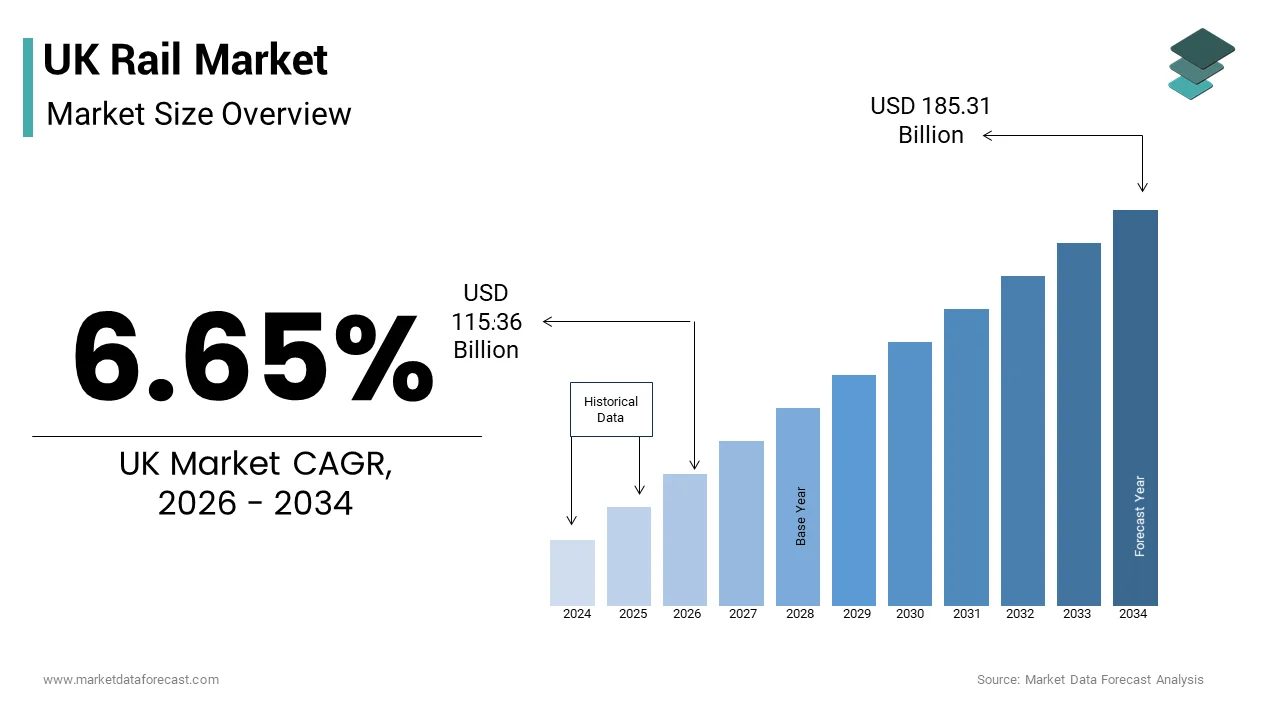
The UK rail market was valued at USD 108.15 billion in 2025, is estimated to reach USD 115.36 billion in 2026, and is projected to reach USD 185.31 billion by 2034, expanding at a CAGR of 6.65% during the forecast period from 2026 to 2034. The UK rail market is gaining momentum as the country continues to invest in modernizing transportation infrastructure, improving network efficiency, and supporting sustainable mobility solutions. Increasing passenger demand, government-backed rail improvement programs, and ongoing electrification projects are driving market growth. Rising freight transportation requirements, digital railway technologies, and investments in smart signaling systems are enhancing operational performance across the rail network. In addition, the transition toward low-carbon transportation, expansion of urban transit connectivity, and integration of predictive maintenance technologies are creating new opportunities for rail operators, infrastructure developers, and equipment manufacturers throughout the United Kingdom.
Key Market Trends
- Digital signaling and intelligent traffic management systems are improving rail safety, network capacity, and operational reliability.
- Electrification projects and low-emission rail technologies are supporting the UK's long-term sustainability and decarbonization goals.
- Predictive maintenance powered by artificial intelligence and real-time asset monitoring is helping operators reduce downtime and maintenance costs.
- Increasing public investment in rail infrastructure is strengthening passenger connectivity while improving freight transportation efficiency.
- Demand for integrated multimodal transport solutions is encouraging closer coordination between rail, road, and urban transit networks.
Segmental Insights
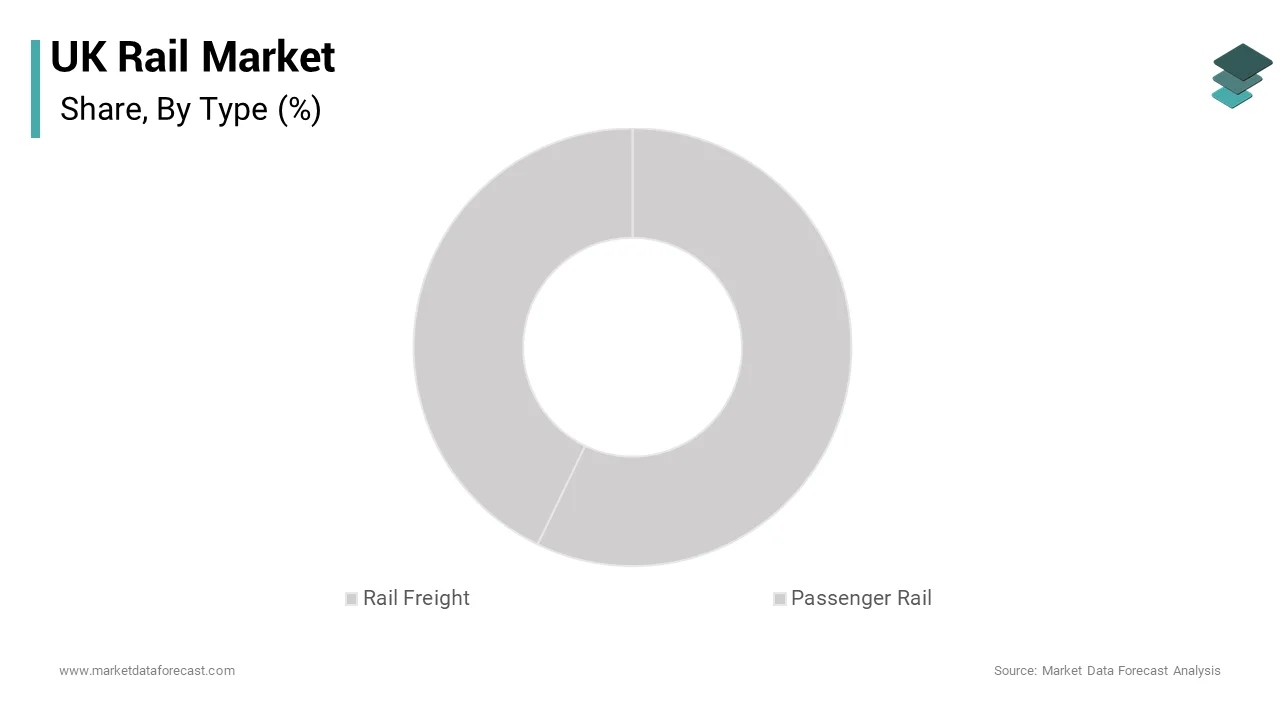
Based on type, the passenger rail segment accounted for 45.6% of the UK rail market share in 2025. The segment remains the market leader due to high commuter volumes, expanding intercity travel, continued investment in passenger rail infrastructure, and government initiatives aimed at promoting sustainable public transportation.
Based on end use, the construction segment held 54.3% of the UK rail freight market share in 2025. Its leadership is supported by strong demand for transporting construction materials, aggregates, steel, and bulk commodities required for major infrastructure, commercial development, and residential construction projects across the country.
Regional Insights
The United Kingdom remains one of Europe's most advanced rail transportation markets, supported by an extensive railway network, continuous infrastructure investment, and strong government commitment to sustainable mobility. Ongoing upgrades to rail corridors, modernization of stations, deployment of digital railway technologies, and expansion of freight capabilities continue to strengthen market growth. Increasing emphasis on reducing road congestion, lowering transport-related carbon emissions, and improving nationwide connectivity is accelerating investment across both passenger and freight rail services. As infrastructure modernization programs progress, the UK rail market is expected to maintain steady growth and play a central role in the country's future transportation ecosystem.
Competitive Landscape
The UK rail market is characterized by the presence of international railway operators, freight service providers, infrastructure managers, and engineering companies competing through network modernization, technological innovation, and service quality improvements. Leading organizations are investing in digital signaling systems, rolling stock modernization, electrification projects, predictive maintenance technologies, and sustainable rail operations to improve network performance and passenger experience. Strategic partnerships with governments, infrastructure developers, and technology providers are accelerating the deployment of smart rail solutions while enhancing freight efficiency and operational resilience. As demand for reliable, environmentally sustainable, and digitally connected rail services continues to grow, market participants are focusing on innovation, capacity expansion, and long-term infrastructure investments to strengthen their competitive position.
UK Rail Market Size
The UK rail market size was valued at USD 108.15 billion in 2025 and is anticipated to reach USD 115.36 billion in 2026 to reach USD 185.31 billion by 2034, growing at a CAGR of 6.65% during the forecast period from 2026 to 2034.
The rail is the national transport infrastructure facilitating the movement of millions of passengers and freight tons, across the island nation daily. The dense network connecting major urban centers with rural communities playing a vital role in reducing road congestion and carbon emissions. The industry operates within a complex regulatory framework overseen by the Office of Rail and Road, which ensures safety standards and fair access to infrastructure. Recent years have seen significant investment in electrification projects and digital signaling systems aimed at improving reliability and capacity. The government has emphasized the strategic importance of rail in achieving net zero targets given that trains produce significantly lower emissions per passenger kilometer compared to cars or planes.
MARKET DRIVERS
Government Commitment to Decarbonization and Net Zero Targets
The unwavering government commitment to decarbonization and net zero targets by positioning rail travel, which is propelling the growth of the United Kingdom rail market. The UK has legally binding obligations to reduce greenhouse gas emissions by 78% by 2035 compared to 1990 levels which necessitates a modal shift toward sustainable transport options. The rail electrification and expansion are central pillars in achieving these environmental goals, since electric trains produce up to 70% less carbon than diesel equivalents. The Department for Transport has allocated billions of pounds toward upgrading existing lines and introducing battery and hydrogen powered trains to replace diesel fleets on non-electrified routes. The increasing rail usage is essential to meet carbon budgets, as it offers a scalable solution for long distance travel and freight logistics. The introduction of cleaner rolling stock not only reduces operational emissions but also improves air quality in urban areas enhancing public health outcomes. Furthermore, the alignment of rail development with broader sustainability agendas attracts funding from green bonds and environmental grants. This regulatory and financial support accelerates the modernization of the network making rail an increasingly attractive option for environmentally conscious consumers and businesses seeking to reduce their carbon footprints thereby driving sustained demand for rail services.
Urbanization and Congestion in Major Metropolitan Areas
The rapid urbanization and severe traffic congestion in major metropolitan areas, compelling commuters and policymakers to prioritize high capacity public transport solutions. The urbanization and congestion in major metropolitan areas is fuelling the growth of the United Kingdom rail market. Cities, such as London Manchester and Birmingham face increasing pressure on road networks leading to longer commute times and reduced productivity for workers. Rail systems offer a reliable and efficient alternative capable of moving large volumes of people quickly and predictably bypassing gridlocked streets. The expansion of suburban rail networks and the introduction of higher frequency services directly address this demand by providing viable alternatives to car ownership. Local authorities are increasingly integrating rail hubs with bus and cycling infrastructure to create seamless multimodal transport ecosystems that encourage public transport use. The economic imperative to maintain urban mobility drives continued investment in station upgrades and new line constructions such as the Elizabeth Line which has significantly increased capacity in the southeast. As urban populations continue to grow, the strain on road infrastructure will intensify further reinforcing the role of rail as the backbone of urban mobility.
MARKET RESTRAINTS
Aging Infrastructure and High Maintenance Costs
Aging infrastructure and the associated high maintenance costs is majorly inhibiting the growth of the United Kingdom rail market. Much of the UK rail network was established during the Victorian era with many bridges tunnels and tracks requiring frequent repairs and eventual replacement to ensure safety and reliability. The complexity of upgrading live railways without disrupting services leads to prolonged engineering works causing delays and customer dissatisfaction. Older signaling systems are prone to failures and lack the efficiency of modern digital equivalents restricting the number of trains that can run safely on certain lines. Financial constraints mean that necessary upgrades are often deferred leading to a backlog of maintenance tasks that exacerbate reliability issues. The high cost of labor and materials further inflates project budgets making it difficult to deliver improvements within planned timelines. This infrastructural burden creates a cycle, where limited capacity leads to overcrowding which in turn accelerates wear and tear on assets.
Industrial Action and Labor Disputes
The industrial action and recurring labor disputes by disrupting services eroding passenger confidence and damaging the industry’s reputation is another factor declining the growth of the United Kingdom rail market. Strikes involving train drivers conductors and station staff have become more frequent in recent years due to disagreements over pay working conditions and job security amidst inflationary pressures. The RMT union thousands of days have been lost to strike action resulting in widespread cancellations and reduced timetables, across the network. These disruptions force commuters to seek alternative transport methods, such as cars or buses, which may become habitual even after services resume. The Department for Transport estimates that industrial relations issues cost the economy hundreds of millions of pounds in lost productivity and reduced retail spending in city centers. The uncertainty surrounding service availability discourages occasional travelers and tourists from using rail further impacting revenue for train operating companies. Negotiations between unions operators and the government are often protracted and contentious leading to prolonged periods of instability. The negative media coverage associated with strikes reinforces perceptions of rail as an unreliable mode of transport making it difficult to attract new users. Additionally, the financial strain on operators due to reduced ticket sales during strikes limits their ability to invest in service improvements or staff retention.
MARKET OPPORTUNITIES
Integration of Digital Technologies and Smart Ticketing
The integration of digital technologies and smart ticketing by enhancing customer experience operational efficiency and data driven decision making. This factor is majorly creating new opportunities for the expansion of the United Kingdom rail market. The adoption of contactless payment systems mobile apps and barcode tickets simplifies the journey process reducing queue times at stations and eliminating the need for physical paper tickets. The rollout of Pay As You Go contactless payments beyond London to other major cities has increased convenience for millions of passengers encouraging spontaneous travel. Digital platforms allow operators to collect real time data on passenger flows enabling dynamic pricing strategies and optimized train scheduling to match demand patterns. The implementation of Artificial Intelligence in predictive maintenance helps identify potential faults in rolling stock and infrastructure before they cause failures improving reliability. The digital signaling projects, such as the European Rail Traffic Management System promise to increase line capacity by allowing trains to run closer together safely. Smart stations equipped with Internet of Things sensors can monitor crowd levels and adjust lighting or heating to improve energy efficiency and comfort. These technological advancements not only reduce operational costs but also create new revenue streams through personalized services and targeted advertising. The shift toward a fully digital ecosystem aligns with consumer expectations for seamless connectivity and transparency.
Expansion of High Speed Rail Networks
The expansion of high-speed rail networks by significantly reducing travel times and connecting regional economies more effectively, which is also to escalate the growth of the United Kingdom rail market. Projects, such as High Speed 2 although scaled back aim to link London with the Midlands and the North providing faster and more reliable connections than existing conventional lines. This improved connectivity stimulates economic growth in peripheral regions by attracting business investment and facilitating labor mobility. The construction of new high-speed lines also creates thousands of jobs in engineering manufacturing and construction sectors providing a short term economic boost. The UK government recognizes this potential and continues to support phased developments that enhance intercity connectivity. New rolling stock designed for higher speeds offers greater comfort and amenities appealing to business travelers and tourists alike. The environmental benefits of shifting long distance travel from air to rail further justify the investment in high speed infrastructure. As these projects progress they will unlock new travel ideas and increase overall rail usage.
MARKET CHALLENGES
Funding Uncertainty and Financial Sustainability
The funding uncertainty and questions regarding long term financial sustainability by complicating strategic planning and investment decisions is to act as a big barrier for the growth of the United Kingdom rail market. The current franchise model has faced for its complexity and risk allocation leading to several operator defaults and government takeovers during the pandemic. The reliance on taxpayer subsidies to cover operating deficits raises concerns about the value for money delivered by the rail sector. The transition to the new Great British Railways body aims to simplify the structure but the details of funding mechanisms and revenue sharing remain subjects of intense debate. Economic volatility and inflation increase the cost of borrowing for infrastructure projects by making it harder to secure private investment. Operators face pressure to keep fares affordable for passengers while covering rising energy and staffing costs creating a delicate balancing act. The lack of a clear long term funding settlement discourages innovation and efficiency improvements, as companies focus on short term survival. The dependence on government grants makes the sector vulnerable to political shifts and budget cuts during fiscal tightening. Without a stable and predictable financial framework it is difficult to commit to multi year improvement programs or fleet renewals. This uncertainty hampers the ability of the rail industry to plan for future growth and maintain asset quality.
Cybersecurity Threats and Digital Vulnerabilities
The cybersecurity threats and digital vulnerabilities, as the industry becomes increasingly reliant on connected systems and data networks, which is to impede the growth of the United Kingdom rail market. The modernization of signaling ticketing and operational control systems introduces new entry points for cyberattacks which could disrupt services compromise passenger data or even pose safety risks. The national infrastructure, including rail is a prime target for state sponsored hackers and criminal groups seeking ransom. A successful attack on signaling systems could halt trains, across the network causing widespread chaos and economic loss. The integration of legacy systems with new digital technologies creates compatibility issues that may expose security gaps if not properly managed. Train operating companies must invest heavily in cybersecurity measures including firewalls encryption and staff training to protect against evolving threats. However, the rapid pace of technological change often outstrips the ability of organizations to update their defenses adequately. According to security analysts the supply chain poses additional risks as third party vendors may have weaker security protocols that attackers can exploit. The potential reputational damage from a data breach or service disruption can erode public trust in rail travel. Ensuring robust cybersecurity requires continuous monitoring and collaboration between government agencies and private operators. This challenge demands significant resource allocation and expertise which may strain already tight budgets. Failure to address these vulnerabilities could have catastrophic consequences for the reliability and safety of the UK rail network in an increasingly digital world.
REPORT COVERAGE
| REPORT METRIC | DETAILS |
| Market Size Available | 2025 to 2034 |
| Base Year | 2025 |
| Forecast Period | 2026 to 2034 |
| CAGR | 6.65% |
| Segments Covered | By Type, End-User By Country |
| Various Analyses Covered | Global, Regional, and Country Level Analysis, Segment-Level Analysis; DROC, PESTLE Analysis; Porter’s Five Forces Analysis; Competitive Landscape; Analyst Overview of Investment Opportunities. |
| Regions Covered | London, South East, North West, East of England, South West, Scotland, West Midlands, Yorkshire and The Humber, East Midlands, Others |
| Market Leaders Profiled | Central Japan Railway Company, SNCF Group, Avanti West Coast, DB Cargo UK, Network Rail, Union Pacific Corporation, OAO RZD (Russian Railways), BNSF Railway, Indian Railways, Deutsche Bahn, JSC Russian Railways, CSX Corporation, Canadian Pacific Railway. |
SEGMENTAL ANALYSIS
By Type Insights
The passenger rail segment was the largest by occupying 45.6% of the United Kingdom rail market share in 2025 with the sheer volume of daily commuters and the critical role it plays in connecting major urban centers. The density of the population in regions such as London the Southeast and the Midlands creates an inherent demand for high capacity public transport to alleviate road congestion. As per data from the Office of Rail and Road passenger rail accounts for the vast majority of train movements on the network with over 1.4 billion journeys recorded annually in recent pre pandemic benchmarks. The integration of rail with other public transport modes such as buses and underground systems in metropolitan areas will enhance its position as the backbone of urban mobility. Government policies promoting public transport usage to reduce carbon emissions also support this segment. The rail travel produces significantly lower emissions per passenger kilometer compared to private car use, which aligns with national sustainability goals. The extensive network of stations ensures accessibility for a large portion of the population making it the default choice for intercity and regional travel. The consistent revenue stream from season tickets and off peak leisure travel provides financial stability to operators.
The rail freight segment is swiftly emerging is likely to grow at a fastest CAGR of 3.8% during the forecast period with the urgent need for supply chain resilience and government led modal shift initiatives. Businesses are increasingly seeking alternatives to road haulage to mitigate risks associated with driver shortages fuel price volatility and border delays. The rail freight offers a reliable and secure method for moving bulk goods and containers over long distances without the congestion issues faced by trucks. The government’s Decarbonising Transport plan explicitly targets an increase in rail freight mode share to reduce the carbon footprint of logistics operations. The investments in gauge clearance and terminal upgrades are facilitating the movement of larger containers and intermodal traffic. The growth of e-commerce has also increased the demand for efficient last mile distribution hubs connected by rail. Companies are recognizing the cost effectiveness of rail for non-time sensitive bulk shipments such as construction materials and automotive parts. This strategic shift is supported by improved reliability and digital tracking capabilities that provide visibility throughout the supply chain.
By End Use Insights
The construction segment was accounted in holding 54.3% of the United Kingdom rail freight market share in 2025 owing to the extensive ongoing infrastructure development and housing projects across the country. The transportation of bulk materials, such as aggregates cement steel and timber is heavily reliant on rail due to the large volumes involved and the environmental benefits over road transport. Large scale projects, such as HS2 new hospital builds and renewable energy installations require consistent and heavy deliveries that rail networks are well equipped to handle. The government’s commitment to building 300000 new homes per year necessitates a robust supply chain for construction materials, which rail efficiently provides. The dedicated freight lines connect quarries and processing plants directly to construction hubs reducing road congestion in urban areas. The ability of rail to transport heavy loads over long distances without the fatigue and regulatory restrictions faced by truck drivers makes it the preferred choice for bulk logistics. The stability of demand from the construction sector ensures a steady revenue base for freight operators. Additionally, the use of rail for transporting waste and spoil from excavation sites contributes to circular economy goals.
The others segment is expected to grow at a fastest CAGR of 4.5% from 2026 to 2034 with the complex supply chains of the automotive industry which require the timely and secure movement of vehicles and components. The UK automotive sector relies on rail for distributing finished vehicles from production plants to ports and dealerships. The shift toward electric vehicle production has increased the volume of battery and component transport, which benefits from the safety and stability of rail. Manufacturing industries are also adopting rail for just in time delivery of raw materials to reduce inventory costs and improve efficiency. The reliability of rail schedules allows manufacturers to optimize their production lines with greater precision. The growth of advanced manufacturing clusters in the Midlands and North has spurred demand for dedicated freight services. The ability of rail to handle hazardous materials safely makes it indispensable for certain chemical and pharmaceutical logistics. This diversification into high value manufacturing logistics drives the rapid growth of the others segment.
COMPETITVE LANDSCAPE
The competition in the UK rail market is characterized by a unique structure where infrastructure ownership is separated from service operation creating a regulated yet competitive environment. Network Rail holds a monopoly on track infrastructure, while multiple train operating companies compete for franchises or management contracts to run passenger services. This separation aims to drive efficiency and innovation but also creates coordination challenges between infrastructure managers and operators. Freight services are more open with several private companies competing for commercial contracts based on price reliability and service quality. The entry of new operators is limited by high capital requirements and regulatory barriers, yet the threat of replacement keeps incumbents accountable. Competition is increasingly focused on service quality punctuality and customer satisfaction rather than just price due to regulated fare structures. The government plays a significant role as the ultimate arbiter influencing competition through policy decisions and funding allocations. The shift toward Great British Railways aims to reduce fragmentation and improve integration which may alter competitive dynamics by fostering greater collaboration.
KEY MARKET PLAYERS
A few of the market dominant market players that are dominating the UK rail market are
- Central Japan Railway Company
- SNCF Group
- Avanti West Coast
- DB Cargo UK
- Network Rail
- Union Pacific Corporation
- OAO RZD (Russian Railways)
- BNSF Railway
- Indian Railways
- Deutsche Bahn
- JSC Russian Railways
- CSX Corporation
- Canadian Pacific Railway
Top Players In The Market
- Network Rail operates as the owner and infrastructure manager of most of the railway network in Great Britain playing a pivotal role in maintaining tracks signals and stations. The organization is responsible for ensuring the safety and reliability of the rail system which supports both passenger and freight services across the country. Recently Network Rail has accelerated its digital signaling programs to increase capacity and reduce delays on key routes. The company has also invested heavily in climate resilience projects to protect infrastructure from extreme weather events such as flooding and heatwaves. Their strategic focus on improving punctuality and reducing maintenance disruptions enhances the overall customer experience and supports the long term sustainability of national transport infrastructure.
- Avanti West Coast serves as a major train operating company managing intercity services along the West Coast Main Line connecting London with Birmingham Manchester and Glasgow. The operator focuses on delivering high speed and comfortable travel experiences for business and leisure passengers. Recently Avanti West Coast has introduced new Azuma trains equipped with advanced technology and improved seating to enhance passenger comfort and reliability. The company has also implemented dynamic pricing models and flexible ticketing options to attract a broader range of travelers. Their commitment to upgrading onboard facilities and ensuring timely services strengthens their competitive position in the intercity rail segment, while supporting regional economic connectivity through efficient long distance transport links.
- DB Cargo UK stands as a leading provider of rail freight services facilitating the movement of goods such as construction materials automotive parts and intermodal containers across the nation. The company plays a crucial role in decarbonizing supply chains by offering a sustainable alternative to road haulage for heavy bulk transport. Recently, DB Cargo UK has expanded its fleet of electric and battery electric locomotives to reduce emissions and comply with environmental regulations. The operator has also developed new logistics solutions tailored to the needs of the construction and retail sectors. These actions strengthen their market position by providing reliable and eco friendly freight services that support the growing demand for green logistics solutions in the UK industrial sector.
Top Strategies Used By Key Market Participants
Key players in the UK rail market primarily focus on digital transformation to enhance operational efficiency and customer experience through smart ticketing and predictive maintenance technologies. Companies invest heavily in fleet modernization by introducing energy efficient trains, such as hydrogen and battery electric units to meet net zero targets. Strategic partnerships with government bodies ensure alignment with national infrastructure plans and secure funding for major upgrade projects. Improving labor relations through better pay and working conditions helps mitigate the risk of industrial action and ensures service continuity. Diversification into integrated transport solutions including bus and bike links creates seamless multimodal journeys for passengers. Freight operators prioritize intermodal connectivity to capture more supply chain business from road transport. Sustainability reporting and transparent communication build trust with stakeholders and regulators. These combined strategies enable participants to navigate regulatory changes improve reliability and maintain competitiveness in a complex and evolving transport landscape.
RECENT MARKET NEWS
- In May 2024, Avanti West Coast, a train operator, introduced new flexible ticketing options for commuters. This introduction is anticipated to improve customer convenience and strengthen the Uk rail market.
- In January 2025, DB Cargo UK, a freight provider, deployed battery electric locomotives for short haul operations. This deployment is anticipated to reduce emissions and strengthen the Uk rail market.
MARKET SEGMENTATION
This research report on the UK rail market is segmented and sub-segmented into the following categories.
By Type
- Rail Freight
- Passenger Rail
By End Use
- Mining
- Construction
- Agriculture
- Others
Frequently Asked Questions
Why is the UK rail market considered a critical part of the country's transportation infrastructure?
The UK rail market plays a vital role in supporting passenger mobility, freight transportation, economic growth, and sustainable travel objectives.
What components make up the UK rail market?
The market includes rail infrastructure, passenger transportation services, freight operations, rolling stock, signaling systems, and maintenance activities.
Which area of the UK rail market holds the largest share?
Passenger rail transportation holds the largest share due to the high volume of daily commuters and intercity travelers.
What factors are increasing demand for rail services in the United Kingdom?
Urbanization, population growth, traffic congestion, and environmental concerns are increasing demand for rail services.
Who are the key participants operating within the UK rail ecosystem?
Train operators, freight companies, infrastructure managers, government authorities, rolling stock suppliers, and technology providers are key participants.
How does rail transport contribute to the UK's sustainability goals?
Rail transport helps reduce carbon emissions, lowers road congestion, and supports the transition toward greener transportation systems.
What strategic developments are influencing the UK rail market?
Network modernization projects, rail electrification programs, digital railway initiatives, and high-speed rail developments are influencing the market.
What are the major challenges facing the UK rail industry today?
Infrastructure maintenance costs, capacity constraints, service disruptions, and funding requirements remain major industry challenges.
How is digital transformation reshaping railway operations in the UK?
Technologies such as predictive maintenance, intelligent signaling, real-time passenger information systems, and automation are improving operational efficiency.
What growth prospects are expected for the UK rail market in the coming years?
The market is expected to benefit from ongoing infrastructure investments, increased rail usage, and government efforts to enhance sustainable transportation networks.
Access the study in MULTIPLE FORMATS
Purchase options starting from
$ 1200
Didn’t find what you’re looking for?
TALK TO OUR ANALYST TEAM
Need something within your budget?
NO WORRIES! WE GOT YOU COVERED!
Call us on: +1 888 702 9696 (U.S Toll Free)
Write to us: sales@marketdataforecast.com