- Product Description Description
- Table of Contents TOC
- List of Table & Figure LOT
- Get Free Sample PDF Sample PDF
Market Size, 2025
$4.75 BnMarket Estimate, 2026
$5.01 BnMarket Forecast, 2034
$7.66 BnCAGR, 2026–2034
5.45%UK Skincare Market Size
The UK skincare market size will reach USD 4.75 billion in 2025 and is anticipated to reach USD 5.01 billion in 2026 to reach USD 7.66 billion by 2034, growing at a CAGR of 5.45% during the forecast period from 2026 to 2034.
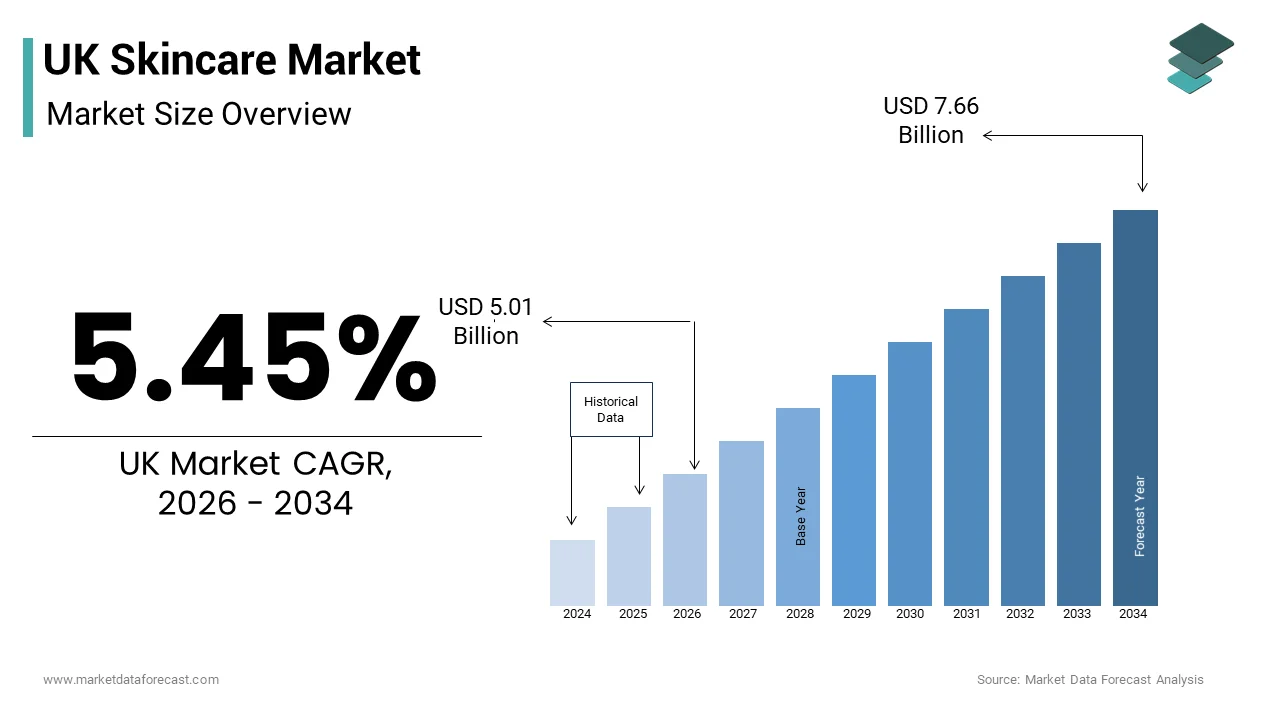
Skincare is a sophisticated and evolving sector within the broader personal care industry characterized by a shift towards science backed formulations preventive health measures and ethical consumption. This market covers a wide array of products including cleansers moisturizers serums sun protection and specialized treatments designed to address diverse dermatological needs and aesthetic goals. The cultural landscape has transformed significantly with skincare becoming a form of self care and wellness rather than merely a cosmetic routine. According to research, a vast majority of UK adults maintain consistent daily personal care routines, highlighting stable demand for standard consumer hygiene products. As per the British Skin Foundation, approximately 60% of the UK population suffers from a skin disease or condition at any given time, which drives significant consumer demand for targeted therapeutic and corrective solutions. The aging demographic further influences market dynamics with individuals aged 50 and above seeking anti aging interventions to maintain skin elasticity and hydration. Regulatory frameworks enforced by the Office for Product Safety and Standards ensure rigorous safety testing and ingredient transparency protecting consumer health. The rise of digital platforms has democratized access to dermatological advice enabling consumers to make informed decisions based on professional recommendations. Sustainability concerns are increasingly shaping purchasing behaviors with buyers prioritizing brands that utilize recyclable packaging and ethically sourced ingredients. This market reflects a convergence of medical science lifestyle trends and environmental consciousness creating a complex yet robust ecosystem for innovation and growth.
MARKET DRIVERS
Rising Prevalence of Skin Conditions and Dermatological Awareness
The increasing incidence of skin disorders and heightened awareness of dermatological health are propelling the United Kingdom skincare market forward. This necessitates regular use of specialized and therapeutic products. According to the British Association of Dermatologists, up to 1 in 5 children in the UK are affected by eczema, while acne affects nearly 80% of individuals between 11 and 30 years old, maintaining a massive consumer base seeking corrective skincare. Environmental factors such as urban pollution and changing weather patterns exacerbate skin sensitivity and barrier damage prompting individuals to invest in protective and reparative formulations. Public health campaigns emphasizing early detection and management of skin cancer have increased the adoption of daily sun protection products across all age groups. Data from Cancer Research UK indicates that melanoma incidence rates have risen by 32% over the last decade, heavily underscoring the critical need for daily UV protection. Consumers are increasingly educated about ingredients such as niacinamide hyaluronic acid and retinoids leading to demand for clinically proven solutions rather than generic moisturizers. Dermatologist endorsements and prescription strength over the counter products bridge the gap between medical treatment and daily care. This medicalization of skincare ensures steady demand for high efficacy items that address specific concerns such as rosacea hyperpigmentation and dryness. The psychological impact of clear and healthy skin on self esteem further motivates consistent purchasing behavior making skincare an essential component of overall well being.
Influence of Digital Media and Beauty Education Trends
The pervasive influence of social media platforms and online beauty education further drives the growth of the United Kingdom skincare market. This democratizes knowledge and shapes consumer preferences. According to digital tracking reports from Ofcom and data portals, over 80% of the UK population active online used social media platforms in 2024, establishing a massive digital landscape for skincare influencers and dermatologists to drive consumer buying trends. This digital exposure has normalized multi step skincare regimens encouraging consumers to layer serums essences and masks for enhanced results. The trend known as skin streaming or minimalism has also gained traction with experts advocating for simplified routines using high quality multifunctional products. Video tutorials and live demonstrations provide visual proof of efficacy building trust and accelerating purchase decisions among younger demographics. Platforms like TikTok and Instagram have launched viral trends such as glass skin and slugging which drive sudden spikes in demand for specific product types like occlusives and exfoliants. Retailers respond by curating collections based on these trends ensuring relevance and appeal. The ability to compare prices read user feedback and access expert advice online empowers consumers to make informed choices. This educational shift transforms skincare from a passive habit into an active interest fostering brand loyalty and experimentation. The immediacy of digital content allows brands to engage directly with consumers creating communities around shared skin goals and values.
MARKET RESTRAINTS
Economic Pressure and Cost of Living Constraints
Persistent economic instability and the ongoing cost of living crisis are hampering the growth of the United Kingdom skincare market. This forces consumers to prioritize essential spending and trade down from premium to value brands. According to data from the Office for National Statistics, ongoing consumer price pressures on daily goods have squeezed household budgets, directly limiting disposable income meant for non-essential beauty and skincare upgrades. Many households have switched to private label or discount retailer offerings which provide basic functionality at lower price points eroding margins for established premium brands. The financial strain has led to delayed purchases of high ticket items such as advanced anti aging serums or professional grade devices. Inflationary pressures on raw materials and energy costs further squeeze manufacturer profitability limiting their ability to invest in innovation or marketing. Consumers are becoming more price sensitive conducting extensive comparisons and waiting for promotions before making purchases. This behavior disrupts steady revenue streams and increases volatility in sales volumes. Additionally the reduction in discretionary spending affects the adoption of new technologies such as smart skin analysis tools which are perceived as luxuries. The economic environment forces brands to compete aggressively on price rather than value or innovation potentially stifling long term industry growth. Small independent brands struggle to survive as customers consolidate spending with trusted mass market retailers offering bundled deals.
Regulatory Complexity and Compliance Burdens
Stringent regulatory frameworks governing cosmetic safety labeling and ingredient restrictions impose substantial compliance burdens on manufacturers and retailers in the United Kingdom skincare market. According to compliance rules managed by the Office for Product Safety and Standards, post-Brexit frameworks require brands to submit separate regulatory notifications via the UK SCPN portal for goods sold in Great Britain, entirely distinct from Northern Ireland and the EU's CPNP systems. This dual compliance requirement increases administrative costs and time to market for international brands seeking to enter or maintain presence in the UK. The ban on certain microplastics and restricted substances mandates reformulation of existing products requiring investment in alternative ingredients and stability testing. Labeling requirements mandate precise disclosure of allergens and nanomaterials complicating packaging design and increasing production complexity. Non compliance can result in product recalls legal penalties and reputational damage deterring smaller players from innovation. The rapid evolution of scientific understanding regarding ingredient safety means regulations are frequently updated requiring continuous monitoring and adaptation. Manufacturers must navigate a complex landscape of evolving standards ensuring that marketing claims do not overstate benefits while still appealing to consumers. These regulatory hurdles slow down innovation cycles and increase operational burdens particularly for small and medium sized enterprises lacking dedicated legal teams. The uncertainty surrounding future trade agreements adds another layer of risk affecting long term strategic planning.
MARKET OPPORTUNITIES
Expansion of Personalized and AI Driven Skincare Solutions
The integration of artificial intelligence and personalized diagnostics provides a significant opportunity for brands to differentiate themselves and capture emerging segments in the United Kingdom skincare market. According to digital connectivity data from Ofcom, roughly 95% of UK households have reliable internet access, providing the widespread digital infrastructure necessary for consumers to adopt smart skincare tools and online diagnostic consultations. AI powered apps and online quizzes analyze skin type concerns and environmental factors to recommend tailored product regimens enhancing efficacy and customer satisfaction. Brands that offer customized serums and moisturizers blended on demand appeal to consumers seeking unique solutions for their specific biological needs. This personalization reduces waste and improves outcomes fostering deeper brand loyalty. Partnerships with tech companies enable real time skin monitoring through smartphone cameras allowing users to track progress and adjust routines dynamically. Data analytics from these interactions provide valuable insights for product development and targeted marketing. The rise of tele dermatology services allows consumers to consult professionals remotely receiving prescription strength recommendations integrated with retail offerings. This convergence of technology and healthcare transforms skincare into a precise science attracting tech savvy demographics. Innovation in biotech ingredients such as lab grown peptides and probiotics further supports personalized approaches. Companies leveraging these technologies can command premium prices and create sticky ecosystems that retain customers through continuous engagement and visible results.
Growth of Clean Beauty and Sustainable Formulations
The increasing consumer preference for clean beauty and sustainable practices paves the way for brands to align with ethical values and environmental consciousness, which is likely to fuel the expansion of the United Kingdom skincare market. According to market tracking by the Soil Association, UK sales of certified organic and natural beauty and wellbeing products grew by 11% in 2024, with skincare remaining a primary driver as consumers demand ingredient transparency. Consumers are actively avoiding controversial ingredients such as parabens sulfates and synthetic fragrances seeking transparent and natural alternatives. Brands that obtain certifications such as COSMOS Organic or Cruelty Free International gain credibility and attract loyal customers willing to pay a premium for verified ethics. The demand for waterless formulations and solid bars reduces packaging waste and shipping emissions appealing to eco conscious shoppers. Innovation in biodegradable packaging materials such as mushroom mycelium and recycled ocean plastics enhances brand image and meets regulatory expectations. Marketing campaigns highlighting supply chain transparency and fair trade sourcing resonate strongly with younger generations who prioritize corporate responsibility. Retailers are dedicating more shelf space to clean beauty ranges responding to customer demand for safer options. Collaborations with environmental organizations enhance brand authenticity and support conservation efforts. This segment offers higher profit margins and fosters emotional connections with consumers who view their purchasing decisions as reflections of their values providing a robust avenue for differentiation.
MARKET CHALLENGES
Supply Chain Volatility and Ingredient Sourcing Issues
Global supply chain disruptions and volatility in the sourcing of natural and synthetic ingredients remain a serious hurdle for the United Kingdom skincare market. These factors are affecting production consistency and cost stability. According to data from the Office for National Statistics, producer input price indices for raw manufacturing materials fluctuated throughout 2024, driven by supply chain pressures that directly impacted the procurement cost of botanical extracts and active cosmetic ingredients. Dependence on imported raw materials from regions prone to political instability or extreme weather exposes manufacturers to unpredictable availability and pricing. Delays in shipping containers and port congestion have led to stockouts of popular products causing customer dissatisfaction and lost sales. Small and medium sized enterprises lack the bargaining power to secure favorable contracts with suppliers exacerbating cost pressures. The unpredictability of supply makes inventory management difficult leading to either excess holding costs or inability to meet demand. Manufacturers struggle to pass on sudden cost increases to price sensitive consumers resulting in compressed profit margins. Diversifying supplier bases is costly and time consuming requiring rigorous quality validation and compliance checks. Additionally the transition to sustainable sourcing faces constraints as demand for organic ingredients outstrips supply. These operational uncertainties hinder long term planning and investment in new product development forcing companies to prioritize short term resilience over strategic growth initiatives.
Market Saturation and Brand Differentiation Difficulties
Intense competition and high saturation levels are limiting the expansion of the United Kingdom skincare market. As a result, it is difficult for new entrants to gain traction and for existing players to maintain distinct identities. Research shows that the UK beauty and personal care sector exhibits high brand concentration where dominant multinational corporations leverage massive marketing budgets to capture major retail shelf space, presenting a barrier to entry for smaller independent labels. The low barrier to entry for basic skincare items leads to a proliferation of niche brands creating clutter and confusing consumers. Differentiation becomes challenging as most products claim similar benefits such as hydration brightening and anti aging. Marketing costs continue to rise as brands compete for visibility in digital and traditional channels squeezing profitability. Innovation cycles are short lived with competitors quickly replicating successful formulations or packaging trends. Consumer switching costs are low allowing shoppers to experiment with new brands easily based on social media trends or promotions. This dynamic forces continuous investment in research and development and marketing to stay relevant. The saturation limits volume growth potential pushing companies to focus on niche positioning or premiumization strategies. However economic pressures may limit the success of premium positioning creating a strategic dilemma. Established brands face erosion of loyalty as consumers seek value and novelty leading to fragmented market shares and increased pressure on margins.
REPORT COVERAGE
| REPORT METRIC | DETAILS |
| Market Size Available | 2025 to 2034 |
| Base Year | 2025 |
| Forecast Period | 2026 to 2034 |
| CAGR | 5.45% |
| Segments Covered | By Product, Category and Nature, Distribution Channel, Country |
| Various Analyses Covered | Global, Regional, and Country Level Analysis, Segment-Level Analysis; DROC, PESTLE Analysis; Porter’s Five Forces Analysis; Competitive Landscape; Analyst Overview of Investment Opportunities. |
| Regions Covered | London, South East, North West, East of England, South West, Scotland, West Midlands, Yorkshire and The Humber, East Midlands, Others |
| Market Leaders Profiled | The Procter & Gamble Company, Beiersdorf AG, Boots UK Limited, L'Oréal SA, The Body Shop International plc, The Estée Lauder Companies Inc., Group L'Occitane, Kenvue Inc., Groupe Clarins, Natura & Co. Holding S.A, Unilever PLC, AbbVie Inc. (Allergan Aesthetics), NAOS, Edgewell Personal Care Brands LLC, Walgreens Boots Alliance, Inc., THG plc, Shiseido Company, Limited, Caudalie, Galderma SA, Amorepacific Corporation, Supergoop, Byoma. |
SEGMENTAL ANALYSIS
By Product Insights
The facial care segment was the largest in the United Kingdom skincare market and occupied a 65.5% share in 2025. Factors such as the high visibility of facial skin and its direct correlation with perceived social confidence and professional presentation have contributed to the supremacy of this segment. British consumers strongly prioritize face-specific routines over body care. The preeminence of this category is further substantiated by the physiological complexity of facial skin, which necessitates bespoke interventions for conditions such as acne, senescence, hyperpigmentation, and hypersensitivity. Surveys indicate that a vast majority of UK adults experience regular facial skin concerns, prompting consistent, non-discretionary investment in targeted treatments like serums and moisturizers. The influence of video conferencing and social media has heightened self scrutiny leading to increased demand for products that deliver immediate visible results such as brightening agents and pore minimizers. Consumers are willing to pay a premium for facial products due to the smaller surface area requiring less product per application compared to body lotions making high efficacy formulations economically viable. The proliferation of multi step routines involving cleansers toners essences and masks further expands the product basket size. Marketing campaigns heavily focus on facial transformation leveraging before and after imagery that resonates emotionally with buyers. This segment benefits from continuous innovation in active ingredients such as retinoids and peptides ensuring sustained consumer interest and repeat purchases.
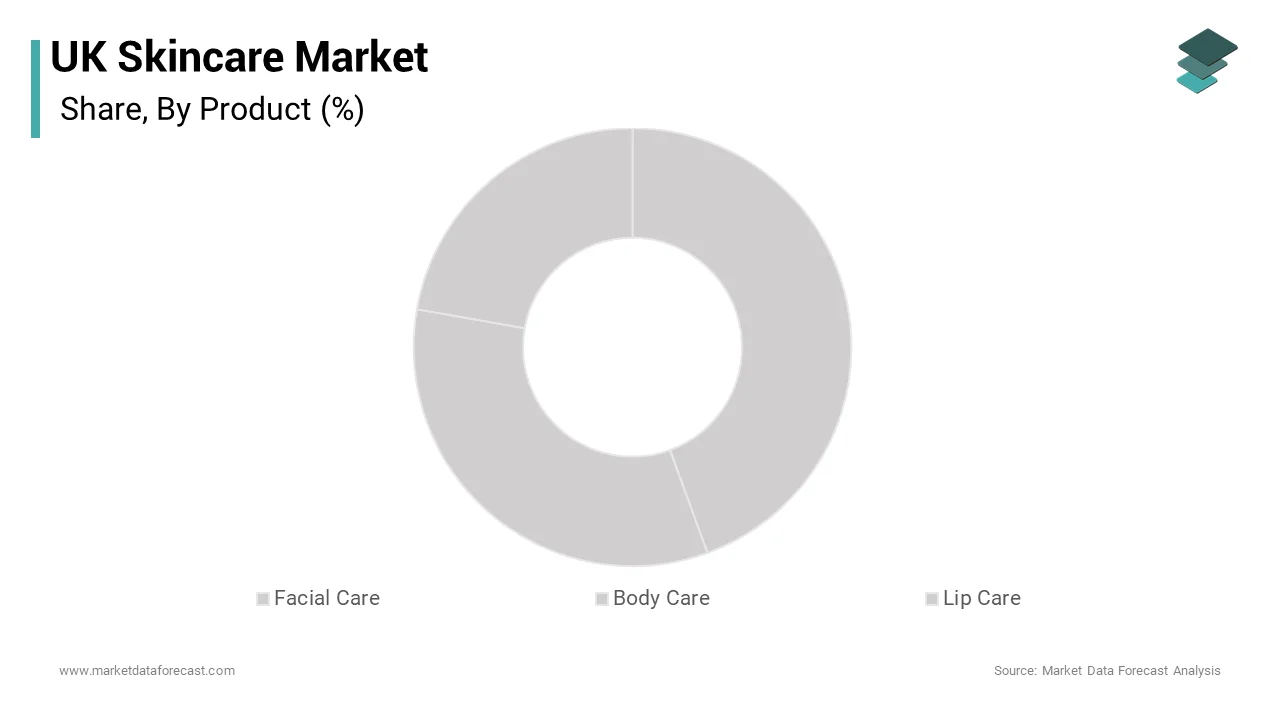
But the body care segment is likely to experience the fastest CAGR of 7.8% between 2026 and 2034. This quick surge of the segment is propelled by the holistic wellness movement which encourages consumers to extend their skincare rituals beyond the face to include full body hydration and treatment. The rise of body positivity and inclusivity in advertising has normalized discussions around body skin issues such as keratosis pilaris stretch marks and dryness driving demand for therapeutic solutions. Seasonal factors also play a role with harsh winters causing widespread dry skin issues that require intensive moisturizing regimes. The introduction of luxury body oils and scrubs has elevated body care from a basic hygiene task to a pampering ritual appealing to consumers seeking relaxation and stress relief. Social media influencers showcasing body care routines have demystified these products and encouraged experimentation with new textures and scents. Retailers are expanding shelf space for body specific lines recognizing the untapped potential in this category. The trend towards matching facial and body skincare ingredients such as using niacinamide or hyaluronic acid on the body further drives cross category adoption and sustained growth.
By Category and Nature Insights
In 2025, the mass market conventional skincare segment held the majority share of the United Kingdom market because of its accessibility affordability and wide distribution network. According to the Office for National Statistics household expenditure on personal care items remains steady with budget conscious consumers prioritizing value for money amidst economic pressures. Major supermarket chains and drugstores stock extensive ranges of trusted heritage brands that offer reliable performance at competitive price points ensuring broad consumer reach. The familiarity of established brands reduces perceived risk for buyers who prefer proven formulations over untested niche products. Economies of scale allow mass market manufacturers to invest in large scale marketing campaigns maintaining high brand awareness and loyalty. The availability of multi buy promotions and loyalty card discounts further incentivizes bulk purchasing among families and regular users. While premium segments grow the sheer volume of transactions in the mass market ensures its dominance in terms of revenue and unit sales. Regulatory compliance for conventional ingredients is well established providing consumers with confidence in product safety. The segment benefits from consistent demand for basic essentials such as daily moisturizers and cleansers which are replenished frequently. This stability makes the mass market the backbone of the industry supporting infrastructure and supply chain efficiencies that benefit the entire sector.
However, the natural and organic skincare segment is on the rise and is expected to be the fastest growing segment in the market by witnessing a CAGR of 9.2% over the forecast period due to increasing health consciousness and environmental awareness. According to the Soil Association’s market updates, the certified organic and natural beauty sector rebounded strongly from recent economic slowdowns, outperforming non-organic equivalents as manufacturers double down on sustainable formulations. Consumers are actively seeking transparency in ingredient lists avoiding synthetic chemicals such as parabens sulfates and artificial fragrances due to concerns about long term health impacts. The rise of clean beauty trends on social media has educated buyers about the benefits of plant based extracts and essential oils fostering trust in natural formulations. Brands that obtain credible certifications such as COSMOS or Vegan Society trademark gain significant competitive advantage and customer loyalty. Retailers are responding by dedicating specific aisles to natural products making them easier to find for interested shoppers. The alignment of natural skincare with broader sustainability goals such as biodegradable packaging and ethical sourcing appeals to younger demographics who prioritize corporate responsibility. Innovation in preservation technologies has improved the shelf life and efficacy of natural products addressing previous limitations. As consumers become more discerning the demand for authentic and verified natural options continues to surge offering robust opportunities for specialized brands.
By Distribution Channel Insights
The supermarkets and hypermarkets segment remained dominant in the United Kingdom skincare market and accounted for a 45.2% share in 2025. This dominance of the segment was driven by the convenience of one stop shopping which allows consumers to purchase skincare items alongside weekly grocery essentials. Retail data shows that brick-and-mortar grocery footfall remained reliable, with supermarket personal care aisles continuing to capture high volume through strategic product placements and convenience-driven store layouts. The extensive shelf space available enables retailers to offer a wide variety of mass market brands catering to diverse budget segments and family needs. Promotional activities such as multi buy offers and seasonal discounts effectively drive volume sales and encourage stockpiling behavior. The trust associated with established grocery retailers ensures consumer confidence in product authenticity and freshness. Additionally the integration of pharmacy counters within larger supermarkets provides access to basic dermatological advice while maintaining the convenience of self service shopping. Household penetration is nearly universal as most consumers prefer the efficiency of buying daily essentials during regular food shopping trips. The ability to physically inspect products and compare prices side by side further reinforces the preference for offline grocery channels. This channel benefits from established supply chain efficiencies ensuring consistent stock availability and competitive pricing strategies.
On the other hand, the online retail stores segment is expected to exhibit a noteworthy CAGR of 10.5% from 2026 to 2034 owing to the increasing comfort of consumers with e commerce platforms and the desire for wider product selection and home delivery convenience. According to sources, online health and beauty sales expanded by double digits in 2024, cementation e-commerce as a dominant distribution powerhouse as digital infrastructure and fast delivery fulfillment options improved. E commerce allows niche and international brands to reach UK consumers directly bypassing traditional retail constraints and offering exclusive products not available in physical stores. Subscription services for recurring items such as moisturizers and cleansers provide convenience and cost savings appealing to busy professionals. Detailed product descriptions customer reviews and virtual consultation tools help overcome the lack of physical inspection building confidence in online purchases. Social media marketing and influencer endorsements drive traffic to online retailers where bundled deals and limited editions are often available. The ability to compare prices and read detailed ingredient lists appeals to informed shoppers who prioritize specific health benefits. Improved packaging solutions ensure safe delivery of fragile glass bottles reducing return rates. As digital literacy increases across all age groups the online channel will continue to gain share offering a personalized and efficient shopping experience.
COUNTRY ANALYSIS
The United Kingdom maintained a significant position in the European skincare market and captured a 20.1% share in 2025. This growth of the country’s market was fuelled by high per capita consumption and sophisticated consumer preferences. The market reveals a strong emphasis on preventive healthcare and aesthetic enhancement driven by an affluent and health conscious population. This also shows its significant economic weight and consumer spending power. The presence of a robust National Health Service provides a foundation for dermatological education and basic care while private expenditure drives demand for premium and cosmetic products. High levels of urbanization and disposable income support the adoption of advanced skincare technologies such as serums and devices. The multicultural demographic contributes to diverse preferences influencing product formulation and marketing strategies. Regulatory oversight by the Office for Product Safety and Standards ensures high safety and efficacy standards fostering consumer trust. The United Kingdom serves as a trendsetter for sustainability initiatives with many brands launching plastic free and natural alternatives to meet environmental goals. Strong retail infrastructure including widespread supermarket networks and advanced e commerce platforms ensures broad product accessibility. The market is resilient to economic fluctuations due to the essential nature of personal care products although premium segments may experience volatility. Continuous innovation in digital health and personalized care positions the United Kingdom as a leader in adopting next generation skincare solutions.
COMPETITIVE LANDSCAPE
The competition within the United Kingdom skincare market is intense characterized by established multinational corporations dominating shelf space alongside agile niche brands focusing on clean and specialized solutions. Large players leverage economies of scale and extensive distribution networks to maintain visibility in supermarkets and pharmacies while investing heavily in research and development for innovative formulations. Private label brands from major retailers offer cost effective alternatives that challenge branded products on price attracting budget conscious consumers during economic uncertainty. Differentiation increasingly relies on clinical efficacy claims environmental credentials and digital engagement rather than traditional advertising alone. The rise of e commerce has lowered barriers to entry allowing direct to consumer brands to reach targeted audiences with specialized offerings. Innovation cycles are rapid with competitors quickly replicating successful features such as retinol blends or hyaluronic acid serums. Brand loyalty remains fragile as consumers are willing to switch for better value or aligned ethical standards. Regulatory compliance adds complexity ensuring only credible products survive. This dynamic landscape requires continuous adaptation to technological advancements and shifting consumer preferences to sustain growth and profitability in a saturated market.
KEY MARKET PLAYERS
A few of the market players that are dominating the UK skincare market are
- The Procter & Gamble Company
- Beiersdorf AG
- Boots UK Limited
- L'Oréal SA
- The Body Shop International plc
- The Estée Lauder Companies Inc.
- Group L'Occitane
- Kenvue Inc.
- Groupe Clarins
- Natura & Co. Holding S.A
- Unilever PLC
- AbbVie Inc. (Allergan Aesthetics)
- NAOS
- Edgewell Personal Care Brands LLC
- Walgreens Boots Alliance, Inc.
- THG plc
- Shiseido Company, Limited
- Caudalie
- Galderma SA
- Amorepacific Corporation
- Supergoop
- Byoma
Top Players In The Market
- Boots maintains a dominant presence in the United Kingdom skincare market through its extensive retail network and trusted No7 brand which offers science backed formulations. The company leverages its pharmacy heritage to provide expert advice and personalized skincare consultations enhancing customer trust and loyalty. Recent initiatives include expanding its digital platform with AI driven skin analysis tools that recommend tailored products based on individual needs. Boots has invested heavily in sustainable packaging for its own label ranges aligning with consumer environmental values. Partnerships with dermatologists ensure product efficacy and safety reinforcing its reputation for quality. The firm continuously updates its loyalty program to offer exclusive rewards driving repeat purchases. These strategic efforts strengthen its position as a leading destination for accessible and effective skincare solutions across diverse demographic segments in the UK.
- Unilever contributes significantly to the United Kingdom skincare sector through its portfolio of global brands such as Dove Simple and Vaseline which cater to varied consumer needs. The company emphasizes inclusive beauty and self care messaging resonating with modern social values and diverse audiences. Recent actions involve launching refillable packaging options and waterless formulations to reduce environmental impact and appeal to eco conscious shoppers. Unilever has enhanced its digital engagement through interactive campaigns that educate consumers about ingredient benefits and proper usage techniques. Investment in research and development focuses on innovative ingredients like probiotics and plant based actives to drive product differentiation. Collaborations with health organizations promote skin health awareness building brand credibility. Unilever strengthens its competitive edge in a dynamic retail environment by balancing mass market accessibility with sustainability goals. This strategic approach fosters long-term customer relationships.
- The Body Shop operates as a pioneer in ethical skincare within the United Kingdom championing natural ingredients and fair trade practices. The brand is renowned for its commitment to community trade sourcing essential oils and butters from marginalized producers globally. Recent strategies include intensifying its activism against animal testing and promoting vegan certified product lines to attract conscientious consumers. The company has revitalized its store experience with interactive stations allowing customers to test products and learn about sustainability efforts. Digital transformation initiatives have improved online shopping convenience while maintaining its distinctive brand voice. Marketing campaigns highlight real stories from supplier communities enhancing emotional connection with buyers. The Body Shop stays true to its activist roots and innovates in clean beauty. Consequently, it reinforces its unique market position and appeals to ethically minded shoppers seeking transparency and integrity.
Top Strategies Used By Key Market Participants
Key players in the United Kingdom skincare market employ product innovation strategies by developing formulations with clinically proven active ingredients to address specific skin concerns effectively. Sustainability integration is central with companies adopting recyclable packaging and reducing water usage to align with environmental regulations and consumer expectations. Digital engagement drives brand loyalty through personalized recommendations and virtual consultations that enhance user experience and trust. Strategic partnerships with dermatologists and influencers build clinical credibility and amplify reach among targeted demographics. Expansion into clean and natural segments captures emerging markets driven by health consciousness and ethical sourcing preferences. Private label competition is countered through strong brand storytelling and transparent supply chain practices that justify premium pricing. These combined approaches ensure competitiveness in a mature market characterized by informed consumers and evolving wellness trends.
MARKET SEGMENTATION
This research report on the UK skincare market is segmented and sub-segmented into the following categories.
By Product Type
- Facial Care
- Cleansers/Toners
- Moisturizers
- Serums and Essence
- Face Masks and Packs
- Other Facial Care Products
- Body Care
- Body Wash and Scrubs
- Body Lotions and Creams
- Lip Care
By Category
- Mass
- Premium/Luxury
By Nature
- Conventional
- Natural/Organic
By Distribution Channel
- Supermarkets/Hypermarkets
- Health and Beauty Stores
- Online Retail Stores
- Other Distribution Channels