UK Smart Home Market Size, Share, Trends & Growth Forecast Report By Product (Comfort and Lighting, Control and Connectivity, Energy Management, Home Entertainment, Security, and Smart Appliances), and Country – Industry Analysis and Forecast, 2026 to 2034
Market Size, 2025
$11.02 BnMarket Estimate, 2026
$12.16 BnMarket Forecast, 2034
$26.57 BnCAGR, 2026–2034
10.27%UK Smart Home Market Report Summary
The UK smart home market was valued at USD 11.02 billion in 2025, is estimated to reach USD 12.16 billion in 2026, and is projected to reach USD 26.57 billion by 2034, growing at a CAGR of 10.27% during the forecast period. Market growth is driven by increasing adoption of connected devices, rising consumer demand for home automation, growing awareness of energy efficiency, and advancements in Internet of Things (IoT) technologies. The expanding integration of artificial intelligence, voice assistants, and smart security systems is further accelerating smart home adoption across the United Kingdom.
Key Market Trends
- Growing adoption of connected home devices is driving market growth.
- Increasing demand for smart security and surveillance solutions is boosting market expansion.
- Rising consumer interest in energy efficient home automation systems is supporting industry development.
- Expansion of voice controlled ecosystems and artificial intelligence powered devices is enhancing market opportunities.
- Advancements in IoT connectivity and interoperability standards are influencing market advancement.
Segmental Insights
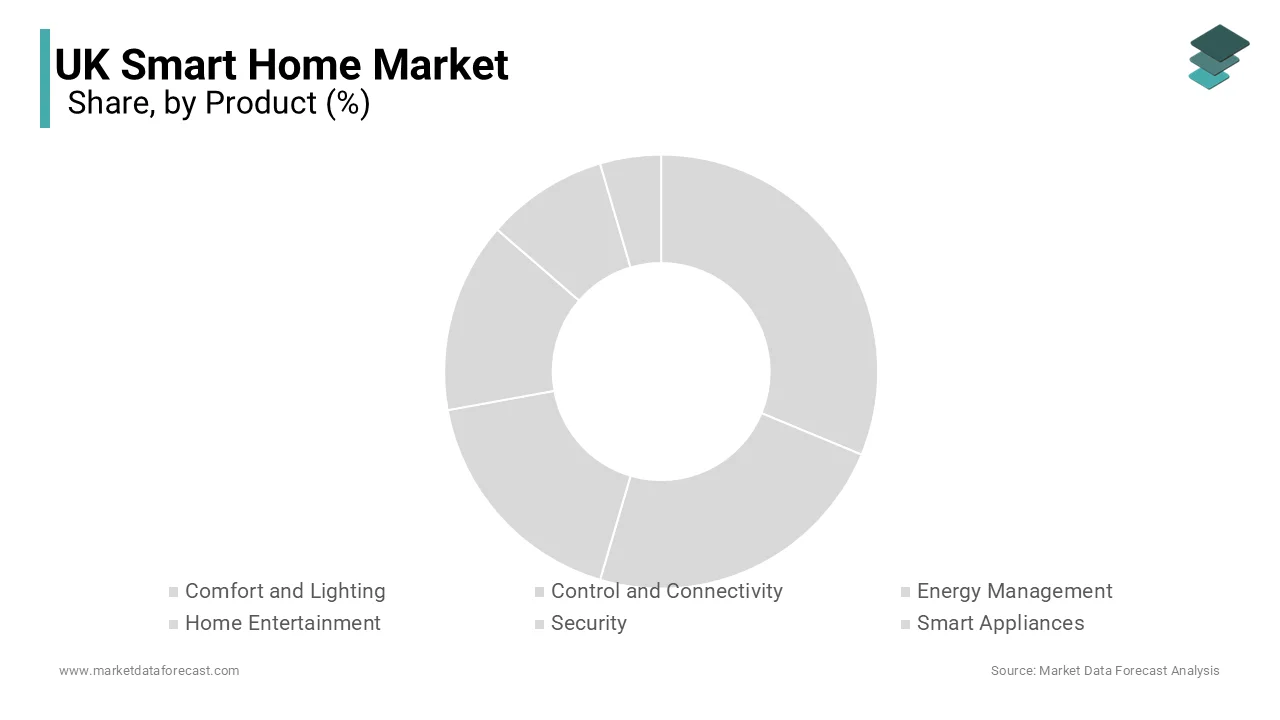
- Based on product, the security segment accounted for 54.3% of the UK smart home market share in 2025. This dominance is attributed to increasing consumer concerns regarding home safety, property protection, remote monitoring capabilities, and the growing adoption of smart cameras, alarms, and access control systems.
Regional Insights
- The United Kingdom continues to be one of the leading smart home markets in Europe, supported by high internet penetration, widespread smartphone adoption, advanced digital infrastructure, and growing consumer acceptance of connected living technologies.
Competitive Landscape
The UK smart home market is highly competitive, with technology providers focusing on innovation, ecosystem integration, cybersecurity, and user experience enhancement to strengthen their market position. Companies continue to invest in artificial intelligence, smart energy management systems, and next generation connected home solutions.
Key companies operating in the UK smart home market include Legrand, Amazon, Robert Bosch Smart Home GmbH, Johnson Controls, ADT Inc., Schneider Electric SE, Lutron Electronics Co., Control4 Corporation, Philips Lighting (Signify Holding), Samsung Electronics Co., Ltd., Google Inc., and ABB Ltd..
UK Smart Home Market Size
The UK smart home market size was valued at USD 11.02 billion in 2025, and is projected to reach USD 26.57 billion by 2034 from USD 12.16 billion in 2026, growing at a CAGR of 10.27%.
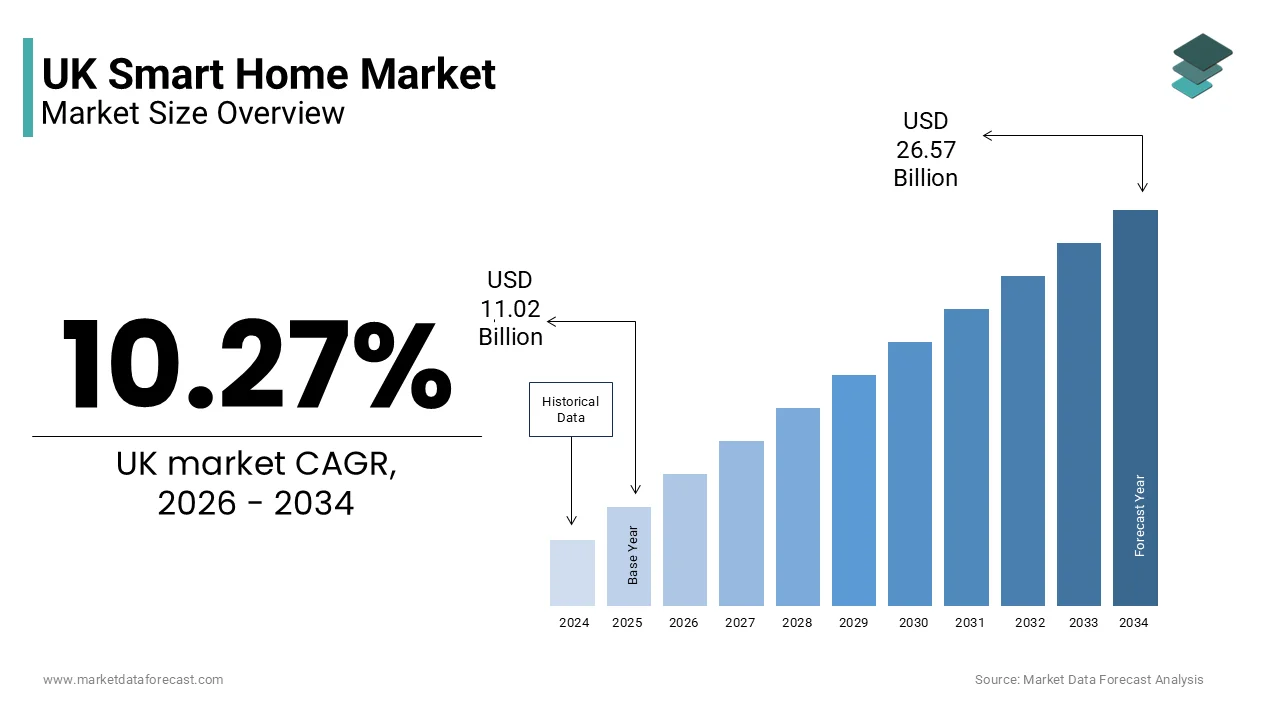
The smart home is an ecosystem of interconnected devices and systems designed to automate residential functions, including lighting heating security and entertainment. The adoption trajectory is heavily influenced by the widespread availability of high speed broadband infrastructure, which serves as the backbone for seamless device connectivity. According to data from Ofcom, approximately 97% of UK premises have access to superfast broadband facilitating the reliable operation of cloud dependent smart devices. The cultural shift toward sustainable living has further accelerated demand as consumers seek technologies that reduce carbon footprints and lower utility bills. The regulatory environment supports innovation through initiatives like the Smart Systems and Heat Programme which encourages the integration of intelligent controls in housing developments. Consumer confidence is bolstered by the presence of major technology retailers and telecommunications providers who bundle smart solutions with existing services. The market is characterized by rapid technological evolution where artificial intelligence enhances predictive capabilities allowing homes to adapt to user behaviors autonomously.
MARKET DRIVERS
Rising Energy Costs and Sustainability Concerns
The escalating energy prices and heightened environmental consciousness for the adoption of advanced technologies is fuelling the growth of the United Kingdom smart home market. Households are increasingly seeking ways to monitor and reduce their electricity and gas consumption to mitigate financial burdens and contribute to national net zero targets. The price cap for typical dual fuel households has fluctuated significantly in recent years prompting consumers to invest in smart thermostats and energy monitoring plugs. This tangible return on investment makes smart devices an attractive proposition for cost conscious homeowners. The government’s commitment to decarbonizing the housing stock further incentivizes the installation of intelligent systems that integrate with renewable energy sources, such as solar panels. Consumers are also motivated by the desire to minimize their carbon footprint aligning personal actions with broader societal goals. Smart meters mandated by rollout programs provide real time data that empowers users to make informed decisions about their usage. The integration of these devices with mobile applications allows for remote management ensuring that energy is not wasted when homes are unoccupied.
Enhanced Home Security and Remote Monitoring Needs
The growing emphasis on home security and the ability to monitor properties remotely is additionally enhancing the growth of the United Kingdom smart home market. Urbanization and increased mobility have created a demand for systems that provide peace of mind to homeowners who travel frequently or live alone. The burglary rates remain a concern for many residents leading to higher investment in digital security solutions. These devices allow users to view live feeds receive motion alerts and communicate with visitors from anywhere via smartphones. The integration of artificial intelligence enables these systems to distinguish between genuine threats and false alarms such as passing animals reducing notification fatigue. Insurance companies often offer discounts for homes equipped with monitored security systems further encouraging adoption. The ease of installation for wireless devices has lowered barriers to entry making advanced security accessible to renters and owners alike. The psychological comfort derived from constant connectivity and visibility ensures that security remains a top priority for smart home investments.
MARKET RESTRAINTS
Data Privacy and Cybersecurity Vulnerabilities
The concerns regarding data privacy and cybersecurity vulnerabilities is hindering the growth of the United Kingdom smart home market. Consumers are increasingly aware that connected devices collect vast amounts of personal data, including daily routines voice recordings and video footage which could be exploited if breached. Devices are frequent targets for hackers due to often weak default security settings. There has been a notable increase in complaints related to unauthorized data collection by smart home manufacturers. High profile incidents involving compromised baby monitors and security cameras have eroded consumer trust in the safety of these products. The lack of standardized security protocols across different brands creates confusion and risk for users, who may not possess technical expertise to secure their networks. Fear of surveillance and data misuse leads some potential buyers to avoid smart devices entirely despite their convenience benefits. Regulatory frameworks, such as the General Data Protection Regulation impose strict requirements but enforcement challenges persist. The complexity of managing permissions and updates for multiple devices adds to the perceived burden.
Interoperability and Fragmentation Issues
The lack of interoperability and fragmentation present substantial obstacles to the seamless integration of smart home ecosystems is also limiting the growth of the United Kingdom smart home market. Consumers often face difficulties when attempting to connect devices from different manufacturers due to incompatible communication protocols and proprietary software platforms. The absence of universal standards forces users to rely on multiple applications to control various aspects of their homes. This fragmentation increases the complexity of setup and maintenance discouraging less tech savvy individuals from expanding their systems. The dominance of major tech giants creates walled gardens that limit consumer choice and flexibility. Although initiatives like Matter aim to establish a unified connectivity standard widespread adoption remains in its early stages. The need for additional hubs or bridges to facilitate compatibility adds to the overall cost and clutter of smart home setups. Retailers and installers struggle to provide cohesive solutions when components are siloed.
MARKET OPPORTUNITIES
Integration with Renewable Energy Systems
The integration of smart home technologies with renewable energy systems is certainly to fuel the growth of the United Kingdom smart home market in coming years. As more households install solar panels, heat pumps, and battery storage solutions, there is a critical need for intelligent management systems to optimize energy generation and consumption. The number of residential solar installations has increased significantly driven by government incentives and falling technology costs. The smart controllers can maximize self-consumption of generated electricity by adjusting appliance usage during peak production times. This synergy reduces reliance on the grid and lowers energy bills further enhancing the economic case for smart homes. Manufacturers can develop specialized algorithms that predict weather patterns and adjust storage charging accordingly. The rise of electric vehicles also creates opportunities for smart charging solutions that integrate with home energy management systems. This emergence of sustainability and technology aligns with national climate goals and consumer values.
Aging Population and Assistive Living Solutions
The aging population is tailored to assistive living and elderly care, which is ascribed to bolster the growth of the United Kingdom smart home market. As life expectancy increases, there is a growing demand for technologies that enable older adults to live independently and safely in their own homes for longer. According to data from the Office for National Statistics, the number of people aged 65 and over is projected to reach 16 million by 2040. These systems provide peace of mind to family members and reduce the burden on social care services. Voice activated assistants help individuals with mobility or vision impairments control their environment effortlessly. Telehealth integration allows for remote monitoring by healthcare professionals enabling early intervention for health issues. The government’s focus on reducing hospital admissions through preventive care supports the adoption of these technologies. Providers can partner with care agencies to offer bundled solutions that combine hardware with support services.
MARKET CHALLENGES
Complexity of Installation and User Experience
The complexity of installation and poor user experience to the broader acceptance of advanced technologies is likely to pose as a major challenge for the growth of the United Kingdom smart home market. Many consumers find the initial setup of devices confusing requiring technical knowledge that the average homeowner may not possess. A significant portion of smart home devices are abandoned within the first six months due to usability issues. The need to configure Wi-Fi networks update firmware and manage multiple accounts creates friction that detracts from the promised convenience. Professional installation services are often expensive and not widely available for consumer grade products. Inconsistent performance due to network congestion or signal interference further frustrates users, who expect seamless operation. The lack of intuitive interfaces makes it difficult for non-technical users to customize automations or troubleshoot problems. This steep learning curve limits the market to early adopters and tech enthusiasts excluding the mass market. Manufacturers must prioritize simplicity and reliability to overcome this barrier.
Rapid Technological Obsolescence
The rapid pace of technological obsolescence, as devices quickly become outdated or unsupported, which is additionally to impede the growth of the United Kingdom smart home market. Consumers are hesitant to invest in expensive smart appliances fearing they will lose functionality or security updates within a few years. Concerns about longevity affect purchasing decisions with buyers preferring established brands over cheaper alternatives. The fast evolution of communication standards means that older devices may not be compatible with new hubs or protocols. This planned obsolescence contributes to electronic waste and undermines the sustainability claims of smart home technologies. Users feel locked into specific ecosystems to ensure continued support limiting their freedom to switch providers. The uncertainty surrounding long term viability reduces the perceived value proposition of smart home investments. Manufacturers face pressure to balance innovation with backward compatibility and long-term support commitments.
REPORT COVERAGE
| REPORT METRIC | DETAILS |
| Market Size Available | 2025 to 2034 |
| Base Year | 2025 |
| Forecast Period | 2026 to 2034 |
| CAGR | 10.27% |
| Segments Covered | By Product and Region. |
| Various Analyses Covered | Global, Regional and Country-Level Analysis, Segment-Level Analysis, Drivers, Restraints, Opportunities, Challenges; PESTLE Analysis; Porter’s Five Forces Analysis, Competitive Landscape, Analyst Overview of Investment Opportunities |
| Market Leaders Profiled | Legrand, Amazon, Robert Bosch Smart Home GmbH, Johnson Controls, ADT Inc., Schneider Electric SE, Lutron Electronics Co., Control4 Corporation, Philips Lighting (Signify Holding), Samsung Electronics Co., Ltd., Google Inc., and ABB Ltd. |
SEGMENTAL ANALYSIS
By Product Insights
The security segment was the largest by accounting for 54.3% of the United Kingdom smart home market share in 2025 with the paramount importance homeowners place on safety and property protection. The rising concerns over burglary and the desire for peace of mind among residents, particularly in urban areas is also bolstering the growth of the segment. According to data from the Office for National Statistics, there were approximately 200000 domestic burglaries recorded in England and Wales in recent years maintaining a persistent level of concern among households. The integration of artificial intelligence allows these devices to distinguish between humans animals and vehicles reducing false alarms and enhancing reliability. Insurance providers often offer premium discounts for homes equipped with monitored smart security systems further incentivizing adoption. The ease of installation for wireless devices has made advanced security accessible to renters and owners alike without requiring extensive renovations. The ability to check on pets children or elderly relatives remotely adds a layer of caregiving utility to security products. This dual function of protection and monitoring ensures that security remains the entry point for most consumers entering the smart home ecosystem.
The energy management segment is deemed to witness a fastest CAGR of 18.5% during the forecast period with the volatile energy prices and stringent government targets for carbon reduction. Smart thermostats energy monitors and automated lighting controls enable households to optimize consumption and reduce waste effectively. The rollout of smart meters by energy suppliers provides the foundational data infrastructure for these advanced management systems. Consumers are increasingly aware of their carbon footprint and seek technologies that align with sustainable lifestyles. The integration of renewable energy sources such as solar panels requires sophisticated management to balance generation and storage. Smart plugs and appliance controllers allow users to schedule high energy tasks during off peak hours when electricity is cheaper. This financial and environmental dual benefit drives rapid adoption.
COMPETITIVE LANDSCAPE
The United Kingdom smart home market features intense competition characterized by global technology giants specialized security firms and traditional appliance manufacturers vying for dominance. Major players leverage their existing ecosystems and brand recognition to maintain strong positions while niche operators differentiate through specialized solutions and superior interoperability. Firms compete on ease of installation reliability of connectivity and the sophistication of artificial intelligence features rather than price alone. Regulatory compliance with data protection laws adds complexity requiring robust cybersecurity measures and transparent privacy policies. Partnerships with internet service providers and energy companies create new distribution channels and bundled service opportunities. Customer retention is due to high switching costs associated with established ecosystems driving firms to enhance engagement through regular software updates and new feature releases. The emergence of entertainment security and energy management creates overlapping battlegrounds where versatility becomes a key differentiator. Success depends on building trust and delivering tangible value through simplified automation and measurable efficiency gains.
KEY MARKET PLAYERS
Some of the companies that are playing a dominating role in the UK smart home market are
- Legrand
- Amazon
- Robert Bosch Smart Home GmbH
- Johnson Controls
- ADT Inc.
- Schneider Electric SE
- Lutron Electronics Co.
- Control4 Corporation
- Philips Lighting (Signify Holding)
- Samsung Electronics Co., Ltd.
- Google Inc.
- ABB Ltd.
Top Players in the Market
- Amazon operates as a dominant force in the United Kingdom smart home market through its extensive range of Echo devices and the Alexa voice assistant platform. The company has integrated smart home capabilities into its broader ecosystem allowing users to control lighting heating and security with simple voice commands. Amazon, recently strengthened its market position by introducing Matter support across its device lineup ensuring seamless interoperability with products from other manufacturers. The firm continues to invest in artificial intelligence to enhance predictive automation and personalized user experiences. Their focus on privacy features and local processing addresses growing consumer concerns about data security. This strategic integration of hardware software and services solidifies their leadership in the connected home landscape.
- Google plays a pivotal role in the United Kingdom smart home market leveraging its Nest brand and Google Assistant technology to deliver integrated home automation solutions. The company offers a comprehensive suite of products including smart thermostats cameras doorbells and displays that prioritize energy efficiency and security. Google recently enhanced its platform by deepening integration with Android devices and third-party applications creating a unified user experience. The firm has strengthened its position by advancing machine learning algorithms that enable proactive home management such as adjusting temperatures based on weather forecasts. Google emphasizes sustainability by designing products with recycled materials and promoting energy saving features. Their commitment to open standards like Matter facilitates broader compatibility. This focus on intelligent intuitive and eco-friendly solutions reinforces their reputation as a key innovator in the smart home sector.
- Samsung contributes significantly to the United Kingdom smart home market through its SmartThings platform which connects a wide array of appliances and devices from various brands. The company offers smart refrigerators washing machines televisions and lighting systems that can be managed centrally via a single application. Samsung, recently strengthened its position by expanding partnerships with major utility providers and housing developers to embed smart technology into new builds. The firm has invested heavily in artificial intelligence to enable devices to learn user habits and optimize performance automatically. Samsung prioritizes security by implementing robust encryption and regular software updates for its connected ecosystem. Their focus on interoperability allows users to mix and match devices from different manufacturers seamlessly. This holistic approach to connected living enhances convenience and efficiency for UK consumers driving adoption and brand loyalty.
Major Strategies Used by Key Market Participants
Key players in the United Kingdom smart home market employ ecosystem integration as a primary strategy to create seamless and interconnected user experiences. Companies develop proprietary platforms that allow diverse devices to communicate effectively ensuring convenience and ease of use for consumers. Strategic partnerships with telecommunications providers and housing developers facilitate bundled offerings and pre-installed systems, which accelerate market growth. Investment in artificial intelligence and machine learning enables predictive automation and personalized recommendations enhancing the value proposition of smart homes. Adoption of universal standards such as Matter ensures interoperability with third party products reducing fragmentation and building consumer trust. Focus on data privacy and security through encryption and local processing addresses growing concerns about surveillance and unauthorized access. Marketing efforts emphasize energy efficiency and sustainability aligning with environmental goals and regulatory incentives.
MARKET SEGMENTATION
This research report on the UK smart home market is segmented and sub-segmented into the following categories.
By Product
- Comfort and Lighting
- Control and Connectivity
- Energy Management
- Home Entertainment
- Security
- Smart Appliances
Frequently Asked Questions
1. What is the UK smart home market?
The UK smart home market consists of connected devices and systems that automate, monitor, and control various household functions, including security, lighting, entertainment, and energy management.
2. What factors are driving the growth of the UK smart home market?
The market is growing due to increasing internet penetration, rising adoption of connected devices, growing consumer awareness of energy efficiency, and advancements in artificial intelligence and IoT technologies.
3. Which product segment holds the largest share of the UK smart home market?
Smart security solutions, including surveillance cameras, smart locks, and alarm systems, represent a significant share of the market due to rising concerns about home safety.
4. How does the Internet of Things (IoT) support smart home adoption?
IoT enables devices to communicate with each other, allowing homeowners to remotely monitor and control home systems through smartphones and voice assistants.
5. What are the key products available in the UK smart home market?
Major product categories include comfort and lighting systems, control and connectivity solutions, energy management devices, home entertainment systems, security solutions, and smart appliances.
6. How are smart speakers influencing the UK smart home market?
Smart speakers serve as central control hubs for connected devices, making home automation more convenient and accessible for consumers.
7. What role does artificial intelligence play in smart homes?
Artificial intelligence helps smart devices learn user preferences, automate routine tasks, optimize energy consumption, and improve security monitoring.
8. Which end users are driving demand in the UK smart home market?
Homeowners are the primary users, driven by the desire for convenience, security, energy savings, and enhanced living experiences.
9. What challenges does the UK smart home market face?
Key challenges include data privacy concerns, cybersecurity risks, high installation costs, and compatibility issues among different devices and platforms.
10. What is the future outlook for the UK smart home market?
The market is expected to experience strong growth due to increasing adoption of connected devices, advancements in AI and IoT technologies, and rising consumer demand for automated and energy efficient homes.
Related Reports
Access the study in MULTIPLE FORMATS
Purchase options starting from
$ 1200
Didn’t find what you’re looking for?
TALK TO OUR ANALYST TEAM
Need something within your budget?
NO WORRIES! WE GOT YOU COVERED!
Call us on: +1 888 702 9696 (U.S Toll Free)
Write to us: sales@marketdataforecast.com