UK Sneaker Market Size, Share, Trends, and Growth Analysis Report, Segmented by Product Type, Category, Price Point, and Distribution Channel and Country – Industry Forecast From 2026 to 2034
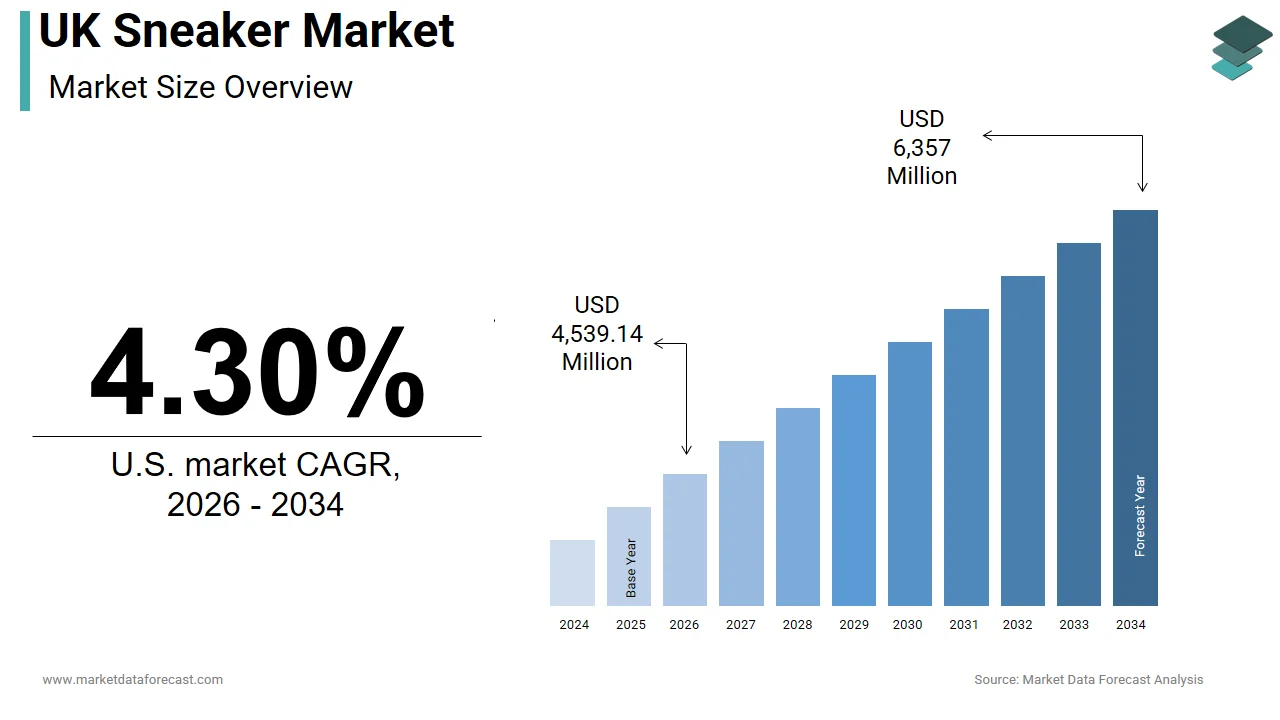
Market Size, 2025
$4,352 MnMarket Estimate, 2026
$4,539.14 MnMarket Forecast, 2034
$6,357 MnCAGR, 2026–2034
4.30%UK Sneaker Market Report Summary
The UK sneaker market was valued at USD 4,352 million in 2025, is estimated to reach USD 4,539.14 million in 2026, and is projected to reach USD 6,357 million by 2034, growing at a CAGR of 4.30% from 2026 to 2034. Market growth is driven by increasing consumer preference for casual and athleisure footwear, rising health and fitness awareness, and the growing influence of fashion trends and sneaker culture. Sneakers have evolved beyond athletic use to become a mainstream lifestyle product, supported by collaborations between brands, celebrities, and fashion designers. The expansion of e-commerce platforms, product innovation, and growing demand for sustainable footwear are further contributing to market growth in the United Kingdom.
Key Market Trends
- Rising popularity of athleisure and casual fashion trends.
- Increasing demand for comfortable and versatile everyday footwear.
- Growing influence of sneaker culture, limited-edition launches, and brand collaborations.
- Expansion of online retail channels and direct-to-consumer sales models.
- Increasing focus on sustainable materials and eco-friendly sneaker production.
Segmental Insights
- Based on product type, the low-top sneakers segment dominated the UK sneaker market in 2025 by accounting for 61.6% market share, driven by their versatility, comfort, and widespread adoption across casual and lifestyle applications.
- Based on category, the branded sneakers segment held the largest share of the market in 2025, supported by strong brand loyalty, continuous product innovation, and growing consumer preference for premium and performance-oriented footwear.
- Based on price point, the economic sneakers segment led the market by capturing 38.5% share in 2025, driven by affordability, broad accessibility, and strong appeal among value-conscious consumers.
Regional Insights
- The United Kingdom maintained a significant position in the European sneaker market by accounting for 15.8% share in 2025. Market growth is supported by strong consumer spending on fashion and sportswear, rising participation in fitness activities, and growing demand for casual footwear across all age groups. The increasing popularity of athleisure apparel and digital retail platforms continues to strengthen the market outlook.
Competitive Landscape
The UK sneaker market is characterized by intense competition among global sportswear brands, lifestyle footwear companies, and fashion retailers focusing on product innovation, sustainability, and brand differentiation. Market participants are emphasizing advanced footwear technologies, limited-edition collections, and strategic collaborations with athletes, designers, and celebrities to strengthen market positioning. Expansion of digital commerce channels and investments in sustainable manufacturing practices are shaping competitive dynamics across the market.
Prominent companies operating in the UK sneaker market include Adidas AG, ASICS Corporation, Benetton Group S.r.l., Columbia Sportswear Company, ECCO Sko A/S, Hanesbrands Inc., Kering SA, New Balance, Nike Inc., Puma SE, JD Sports Fashion Plc, Reebok International Limited (Authentic Brands Group LLC), Skechers U.S.A. Inc., Under Armour Inc., and VF Corporation.
UK Sneaker Market Size
The UK sneaker market was valued at USD 4,352 million in 2025, is estimated to reach USD 4,539.14 million in 2026, and is projected to reach USD 6,357 million by 2034, growing at a CAGR of 4.30% from 2026 to 2034.
Sneakers are a dynamic and evolving segment within the broader footwear industry characterized by a fusion of athletic performance and lifestyle fashion. This market encompasses a wide array of footwear designed for sports activities as well as casual wear, reflecting a cultural shift where sneakers have become a staple in everyday wardrobes. In 2025, the expenditure on footwear in the UK was valued at over 11.7 billion British pounds, according to sources. This figure underscores the significant economic footprint of the sector despite recent macroeconomic pressures. The sneaker segment specifically has shown resilience and growth driven by changing consumer preferences towards comfort and versatility. As per a study, the UK footwear sector is outperforming the rest of the fashion industry, with sales projected to grow in 2026. This growth is indicative of the enduring appeal of sneakers across various demographics. The market is influenced by trends such as the rise of athleisure and the increasing importance of sustainability in purchasing decisions. Consumers are becoming more discerning, seeking products that align with their values regarding environmental impact and ethical production. The integration of digital technologies in retail has also transformed how consumers engage with brands, enhancing the shopping experience through personalized recommendations and seamless online platforms. The UK sneaker market is thus not merely a reflection of footwear consumption but a barometer of broader social and economic trends influencing consumer behavior in the contemporary landscape.
MARKET DRIVERS
Rising Health Consciousness and Participation in Athletic Activities
The escalating emphasis on health and wellness among UK consumers drives the growth of the UK sneaker market. There is a noticeable surge in participation in various physical activities, including running, cycling, and gym workouts, which directly correlates with increased demand for specialized athletic footwear. According to sources, greater participation in running clubs and record-high marathon applications have been key drivers of demand, with running enthusiasts seeking out the best-performing shoes. This trend is further amplified by public health initiatives promoting active lifestyles and the growing awareness of the benefits of regular exercise. The UK government’s focus on improving national health outcomes has led to increased investment in sports facilities and community programs, encouraging more individuals to engage in physical activities. As a result, there is a heightened need for footwear that offers superior support, cushioning, and durability. Brands are responding by innovating with advanced materials and technologies that enhance performance and reduce the risk of injury. The rise of fitness tracking apps and wearable devices has also contributed to this trend by enabling individuals to monitor their activity levels and set personal goals, fostering a culture of continuous improvement and dedication to fitness. This sustained interest in health and wellness ensures a steady demand for high-quality athletic sneakers, positioning them as essential items for anyone committed to an active lifestyle. The market benefits from this ongoing commitment as consumers are willing to invest in premium products that deliver tangible benefits to their health and performance.
Influence of Streetwear Culture and Fashion Trends
The pervasive influence of streetwear culture and evolving fashion trends significantly contributes to the expansion of the UK sneaker market. Sneakers have transcended their original athletic purpose to become iconic fashion statements embraced by diverse demographics, including millennials and Generation Z. This cultural shift is fueled by the collaboration between sportswear brands and high fashion designers creating limited edition releases that generate immense hype and demand. The growth trajectory highlights the enduring appeal of sneakers as fashion items. Social media platforms play a crucial role in amplifying these trends with influencers and celebrities showcasing the latest styles and collaborations. The desire for self-expression and individuality drives consumers to seek unique and exclusive sneakers that reflect their personal style. This demand is further bolstered by the rise of sneaker conventions and online communities where enthusiasts share knowledge and trade rare items. The blending of athletic and casual wear known as athleisure has also contributed to the mainstream acceptance of sneakers in various settings, from workplaces to social events. As fashion continues to prioritize comfort and versatility, sneakers remain at the forefront of contemporary style, ensuring their continued relevance and demand in the UK market. Brands that successfully navigate this intersection of sport and fashion are well-positioned to capture the attention and loyalty of style-conscious consumers.
MARKET RESTRAINTS
Economic Pressures and Inflationary Constraints
Economic pressures and persistent inflation are major hurdles for the UK sneaker market. This affects both consumer spending and operational costs for retailers. The cost of living crisis has led to a reduction in disposable income, forcing many households to prioritize essential expenditures over discretionary purchases such as footwear. In addition, the shift in consumer behavior has resulted in decreased demand for premium and luxury sneakers as individuals opt for more affordable alternatives or delay purchases altogether. Inflation has also impacted the supply chain, increasing the cost of raw materials, transportation, and labor. These rising costs are often passed on to consumers in the form of higher retail prices, further dampening demand. The British Retail Consortium data indicates that UK shop price inflation reached 1.2 percent year on year, marking a modest increase after several months of stability, as per Retail Insight Network. This ongoing inflationary pressure creates a challenging environment for retailers who must balance maintaining profit margins with offering competitive prices. Additionally, economic uncertainty leads to cautious consumer sentiment, reducing the likelihood of impulse buys and encouraging more deliberate purchasing decisions. Retailers face the dual challenge of managing increased operational costs while navigating a market where consumers are increasingly price sensitive. This economic backdrop necessitates strategic adjustments in pricing, promotions, and product offerings to sustain sales volumes and maintain market share in a constrained financial landscape.
Supply Chain Disruptions and Operational Complexities
Supply chain disruptions and operational complexities further hamper the growth of the UK sneaker market. This impacts availability and lead times. The global nature of the footwear industry means that manufacturers rely on complex networks of suppliers and logistics providers, which are vulnerable to various disruptions. Recent years have seen significant challenges, including port congestion, labor shortages, and geopolitical tensions that have hindered the smooth flow of goods. These disruptions lead to delays in production and delivery, resulting in stockouts and missed sales opportunities for retailers. The reliance on overseas manufacturing, particularly in Asia, exacerbates these issues as distances and regulatory hurdles add layers of complexity to the supply chain. Additionally, the increasing demand for sustainability requires brands to source materials responsibly and adhere to stricter environmental regulations, which can further complicate supply chain management. The need for transparency and traceability in the supply chain adds additional operational burdens as brands must verify the origins and conditions under which their products are made. These challenges require significant investment in technology and process improvements to enhance resilience and efficiency. Retailers must navigate these complexities by diversifying suppliers, optimizing inventory management, and exploring nearshoring options to mitigate risks. However, these adaptations come with their own costs and logistical challenges, making supply chain management a critical restraint in the current market environment.
MARKET OPPORTUNITIES
Expansion of Sustainable and Eco-Friendly Footwear Options
The growing demand for sustainable and eco-friendly footwear offers a major opportunity for the UK sneaker market. Consumers are increasingly aware of the environmental impact of their purchases and are seeking products that align with their values regarding sustainability and ethical production. The growth trajectory indicates a strong market potential for brands that prioritize sustainability. Opportunities exist in the development of innovative materials such as recycled plastics, organic cotton, and bio-based alternatives that reduce the carbon footprint of footwear production. Brands can differentiate themselves by adopting transparent supply chains and obtaining certifications that verify their environmental claims. Additionally, there is a growing interest in circular economy models where products are designed for durability, repairability, and recyclability. This approach not only appeals to environmentally conscious consumers but also helps brands manage resources more efficiently. Collaborations with environmental organizations and initiatives to reduce waste in production processes further enhance brand reputation and customer loyalty. The shift towards sustainability also opens up new marketing avenues, allowing brands to connect with consumers on a deeper level by sharing their commitment to positive environmental impact. By embracing sustainability, brands can tap into a growing segment of the market that is willing to pay a premium for products that contribute to a healthier planet. This opportunity is further amplified by regulatory pressures and consumer advocacy, driving the industry towards more responsible practices.
Growth of Digital Retail and E-Commerce Platforms
The proliferation of digital retail and e-commerce platforms unlocks potential for the UK sneaker market. The shift towards online shopping has accelerated in recent years, driven by convenience, accessibility, and the ability to compare products and prices easily. Retailers invest heavily in technology to enhance the online shopping experience through features such as virtual try-ons, personalized recommendations, and seamless checkout processes. This digital transformation allows brands to reach a wider audience beyond physical store locations, tapping into markets that were previously inaccessible. Social media platforms and influencer marketing play a crucial role in driving traffic to e-commerce sites, creating engaging content that resonates with target audiences. The use of data analytics enables retailers to understand consumer preferences and behavior, allowing for more targeted marketing campaigns and improved product offerings. Additionally, the rise of mobile commerce provides opportunities for brands to engage with consumers on the go, offering flexible shopping options that fit into busy lifestyles. The integration of augmented reality and artificial intelligence further enhances the online experience by providing interactive and personalized services. These technological advancements not only improve customer satisfaction but also drive sales and loyalty. By leveraging digital platforms, brands can create an omnichannel presence that seamlessly integrates online and offline experiences, offering consumers a cohesive and convenient shopping journey. This opportunity is particularly relevant in the post-pandemic era, where digital engagement has become a cornerstone of retail strategy.
MARKET CHALLENGES
Counterfeit Products and Intellectual Property Issues
The prevalence of counterfeit products and intellectual property issues remains a serious obstacle to the UK sneaker market. The high demand for popular sneaker brands and limited edition releases has created a lucrative market for counterfeiters who produce and sell fake versions of authentic products. These counterfeit items not only undermine brand integrity but also pose safety risks to consumers due to inferior materials and construction. The presence of counterfeit products dilutes brand value and erodes consumer trust, as individuals may inadvertently purchase fake items believing them to be genuine. This challenge is exacerbated by the ease of online marketplaces, where counterfeiters can operate with relative anonymity, making it difficult for brands to monitor and enforce intellectual property rights. Legal actions against counterfeiters are often costly and time-consuming, with limited effectiveness in stopping the proliferation of fake goods. Additionally, the sophistication of counterfeit production has increased, making it harder for consumers and even experts to distinguish between authentic and fake products. This issue not only results in financial losses for brands but also damages their reputation and customer relationships. Brands must invest in advanced authentication technologies and collaborate with law enforcement and online platforms to combat counterfeiting. However, the global nature of the problem requires coordinated efforts and robust legal frameworks to effectively address this persistent challenge.
Intense Competition and Market Saturation
Intense competition and market saturation are also formidable challenges to the UK sneaker market. The sector is characterized by the presence of numerous established brands alongside emerging players, all vying for consumer attention and market share. This high level of competition leads to price wars and aggressive marketing strategies that can erode profit margins and make it difficult for brands to differentiate themselves. The saturation of the market means that consumers are spoiled for choice, making it harder for any single brand to stand out. This environment requires continuous innovation in product design, marketing, and customer experience to maintain relevance and attract loyal customers. Brands must also navigate the challenge of balancing exclusivity with accessibility as limited edition releases drive hype but can alienate consumers who are unable to purchase desired items. The rise of direct-to-consumer models has further intensified competition as brands bypass traditional retail channels to connect directly with customers. This shift requires significant investment in digital infrastructure and marketing capabilities. Additionally, the rapid pace of fashion trends means that brands must constantly adapt to changing consumer preferences, risking obsolescence if they fail to keep up. The challenge of maintaining brand identity and value in a crowded marketplace requires strategic foresight and agile execution. Brands must focus on building strong emotional connections with consumers through storytelling and community engagement to foster loyalty amidst intense competition.
REPORT COVERAGE
| REPORT METRIC | DETAILS |
| Market Size Available | 2025 to 2034 |
| Base Year | 2025 |
| Forecast Period | 2026 to 2034 |
| Segments Covered | By Product Type, Category, Price Point, and Distribution Channel, and Country. |
| Various Analyses Covered | Global, Regional, and Country-Level Analysis, Segment-Level Analysis, Drivers, Restraints, Opportunities, Challenges; PESTLE Analysis; Porter’s Five Forces Analysis, Competitive Landscape, Analyst Overview of Investment Opportunities |
| Countries Covered | UK |
| Market Leaders Profiled | Lincoln Electric Holdings Inc., ESAB Corporation, Illinois Tool Works Inc., Kobe Steel Ltd. (Kobelco Welding of America), voestalpine Böhler Welding USA, and Others. |
SEGMENTAL ANALYSIS
By Product Type Insights
The low-top sneakers segment dominated the UK sneaker market and accounted for a 61.6% share in 2025. Its unparalleled versatility and widespread acceptance across various social and professional settings drive the dominance of this segment. Low-top designs offer a balance of comfort and style that appeals to a broad demographic, ranging from athletes to fashion-conscious consumers. One of the major drivers of this dominance is the cultural integration of sneakers into everyday wear, where practicality meets aesthetics. According to Statista, the UK footwear market shows a consistent preference for 'Athleisure' and casual sneakers, which are key growth drivers. However, the broader 'Non-Luxury' and 'Apparel' related footwear segments often represent the largest volume rather than a specific 'low top' classification. Consumers favor low-top sneakers for their lightweight nature and breathability, which makes them suitable for year-round use in the UK’s temperate climate. The rise of remote work and casual dress codes has further accelerated the adoption of low-top sneakers as individuals seek comfortable yet presentable footwear for video calls and informal office environments. Major brands have capitalized on this trend by releasing extensive collections of low-top models that cater to diverse tastes, from minimalist designs to bold statement pieces. The accessibility of low-top sneakers across all price points ensures that they remain a staple in consumer wardrobes. Additionally, the influence of celebrity endorsements and social media trends often features low top styles, reinforcing their status as a fashion essential. This segment’s position is sustained by continuous innovation in materials and design that enhance comfort without compromising on style, ensuring that low-top sneakers remain the go-to choice for the majority of UK consumers.
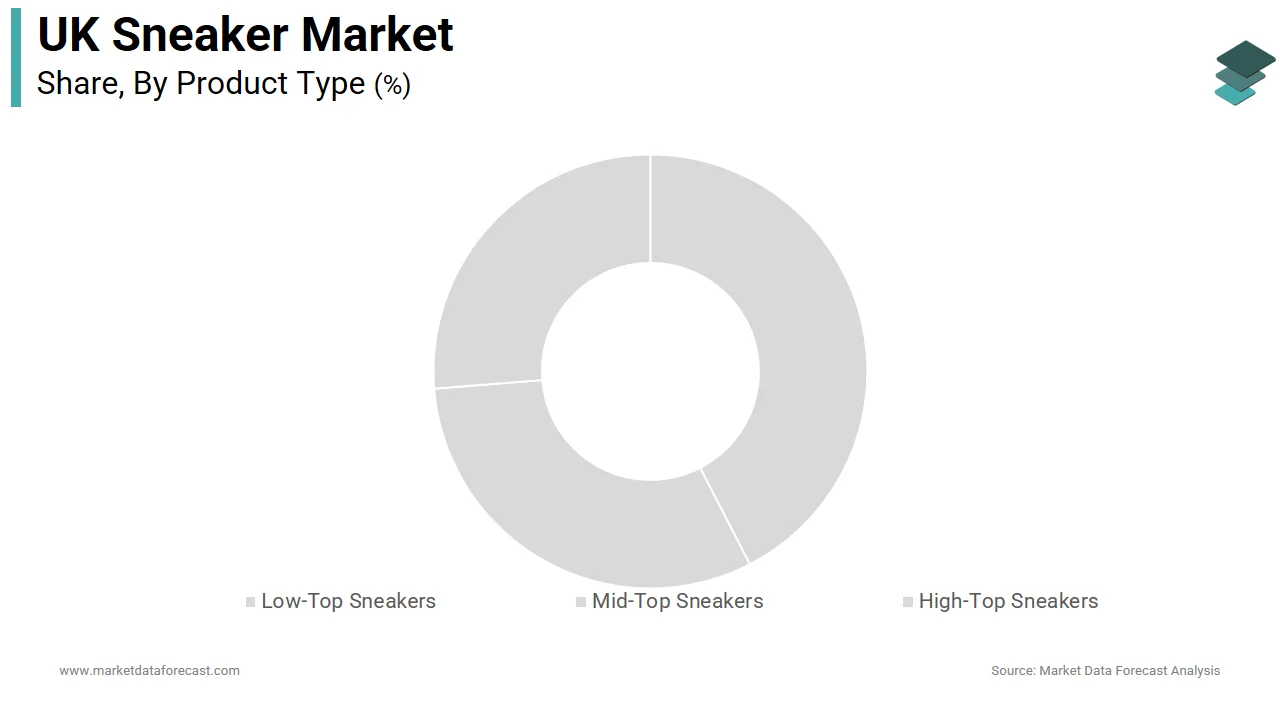
However, the high top sneakers segment is expected to exhibit a noteworthy CAGR of 5.8% from 2026 to 2034 due to a resurgence in retro fashion trends and the increasing popularity of streetwear culture among younger demographics. Revived interest in retro basketball kicks, along with hip-hop and skate scenes pushing high-tops into the mainstream, is driving this growth. Generation Z consumers in particular are driving this trend as they seek unique and expressive footwear that distinguishes them from previous generations. According to research, young consumers are increasingly willing to invest in statement pieces that reflect their individual identity, and high tops offer a canvas for bold colors and distinctive branding. The collaboration between luxury fashion houses and sportswear brands has also elevated the status of high-top sneakers, making them desirable items for fashion-forward individuals. Social media platforms play a crucial role in amplifying this trend, with influencers showcasing styled looks that feature high tops as central elements. The perceived added value of ankle support and durability also appeals to consumers who prioritize functionality alongside fashion. Brands continue to innovate with new materials and limited-edition releases. Consequently, demand for high-top sneakers is expected to sustain its rapid growth, capturing a larger market share in the coming years.
By Category Insights
The branded sneakers segment led the UK sneaker market and captured a substantial share in 2025. Factors such as strong brand loyalty, perceived quality, and the social status associated with established names have contributed to the leading position of this segment. Consumers in the UK place significant value on brand reputation as it serves as a guarantee of performance, durability, and style. The dominance of this segment is reinforced by extensive marketing campaigns and sponsorships of major sporting events and celebrities, which create emotional connections with consumers. Brand equity plays a crucial role in purchasing decisions as individuals associate specific brands with lifestyle aspirations and personal identity. The availability of branded sneakers through multiple channels, including flagship stores, online platforms, and department stores, ensures widespread accessibility. Furthermore, the release of limited edition collaborations and exclusive drops generates hype and urgency, driving sales and maintaining brand relevance. The trust in branded products also extends to after-sales service and warranty provisions, which add value to the purchase. As counterfeit concerns persist, consumers prefer authorized retailers to ensure authenticity, further solidifying the dominance of branded sneakers in the market. This segment continues to lead due to its ability to adapt to changing trends while maintaining core brand values that resonate with loyal customers.
The private label sneakers segment is predicted to witness the highest CAGR of 4.5% during the forecast period, owing to retailers expanding their own brand offerings to offer affordable options to established brands. Increasing consumer cost-consciousness and the elevated quality of private labels, now matching branded competitors in design and resilience, are propelling this expansion. Major retailers such as Marks and Spencer, Next, and ASOS have invested heavily in developing stylish and comfortable private-label sneakers that appeal to budget-conscious shoppers. Private label sneakers offer higher profit margins for retailers, allowing them to invest in better materials and marketing, which enhances their appeal. The convenience of purchasing private-label sneakers alongside other grocery or clothing items also contributes to their popularity. Additionally, the rise of fast fashion has normalized the consumption of trendy but affordable footwear, encouraging consumers to experiment with different styles without significant financial commitment. Retailers are leveraging data analytics to identify trending designs and quickly bring them to market, ensuring that private label offerings remain relevant and attractive. This agility, combined with competitive pricing, positions private label sneakers as a rapidly expanding segment in the UK market.
By Price Point Insights
In 2025, the economic sneakers segment held the majority share of 38.5% of the UK sneaker market because of its accessibility and appeal to a wide range of consumers seeking value for money. This segment also dominates because it caters to the basic needs of everyday wear without the premium price tag associated with luxury or high-end branded options. The dominance of this segment is driven by the widespread availability of affordable options through supermarkets, discount stores, and online marketplaces. Consumers are increasingly prioritizing practicality and cost-effectiveness, especially in times of economic uncertainty where disposable income is limited. Economic sneakers often benefit from economies of scale in production, allowing retailers to offer competitive prices while maintaining acceptable quality standards. The rise of fast fashion retailers has also contributed to the popularity of economic sneakers by providing trendy designs at low prices. This segment’s leadership is further supported by the perception that sneakers are disposable items that need frequent replacement due to wear and tear. As a result, consumers are less inclined to invest in expensive pairs for daily use, opting instead for affordable alternatives that can be replaced easily. The economic segment remains robust due to its ability to meet the fundamental needs of the majority of the population.
The luxury sneakers segment is estimated to register the fastest CAGR of 7.2% between 2026 and 2034. Factors such as the increasing willingness of consumers to invest in high-quality, prestigious footwear as a symbol of status and style are propelling the growth of this segment. The growth is further fueled by the rising number of high-net-worth individuals in the UK and the growing aspiration among middle-class consumers to own luxury items. Luxury sneakers offer superior materials, intricate designs, and limited availability, which appeal to consumers seeking uniqueness and prestige. The influence of social media and celebrity culture has also played a significant role in popularizing luxury sneakers as must-have items for fashion enthusiasts. Collaborations between luxury fashion houses and sneaker brands have created hype and demand, driving sales and expanding the customer base. Additionally, the perception of luxury sneakers as investment pieces that retain value over time encourages purchases. Retailers are enhancing the luxury shopping experience through personalized services and exclusive events, further attracting affluent customers. The growth of this segment is also supported by the increasing focus on sustainability, with luxury brands offering eco-friendly options that appeal to conscious consumers. Consumers are increasingly seeking out distinction and quality. This trend ensures that luxury sneakers are poised for sustained rapid growth in the UK market.
COUNTRY ANALYSIS
UK Sneaker Market Analysis
The United Kingdom maintains a significant position in the European market and accounted for a 15.8% share in 2025. This position was driven by sophisticated consumer preferences and a strong emphasis on brand identity and sustainability. The market status in the UK is defined by a high level of digital adoption, with e-commerce playing a pivotal role in driving sales and shaping consumer behavior. According to the Office for National Statistics (ONS), the 'Textile, clothing and footwear' sector maintains a high online market share (~28%), but sales volumes have fluctuated, with recent reports from early 2026 indicating that footwear sales specifically have struggled despite broader improvements in online retail values. The driving factors for the market include the strong cultural influence of sports and fashion, where sneakers are viewed as both functional gear and style statements. The prevalence of major international brands alongside a vibrant local retail sector creates a dynamic environment that fosters innovation and competition. Consumer awareness regarding environmental issues is also a key driver, with many UK shoppers preferring brands that demonstrate commitment to ethical sourcing and sustainable practices. According to sources, while sustainability is a consideration for some, it has yet to become a mainstream priority for UK consumers. Only 21% consistently choose sustainable brands, and nearly half (48%) explicitly state they do not prioritize environmental concerns when making fashion purchases, with price and quality being the primary influencers. The urbanization rate in the UK further supports market growth as city dwellers tend to favor versatile and comfortable footwear suitable for various activities. The presence of major fashion weeks and cultural events in cities like London also boosts demand for trendy and exclusive sneaker releases. The UK market remains resilient despite economic challenges due to its diverse consumer base and adaptive retail strategies that cater to evolving preferences.
COMPETITIVE LANDSCAPE
The competition in the United Kingdom sneaker market is intense and characterized by the presence of established global giants alongside agile local retailers and emerging niche brands. Major international corporations leverage their extensive resources to dominate through aggressive marketing innovations and widespread distribution networks. These entities continuously invest in research and development to introduce superior technologies and designs that capture consumer interest. Local retailers compete by offering curated selections, exclusive releases, and personalized customer services that larger chains may overlook. The rise of e-commerce has lowered entry barriers, allowing new players to enter the market and challenge incumbents with unique value propositions. Price competition remains fierce, particularly in the economic segment where private label brands offer affordable alternatives to premium labels. Brand loyalty plays a crucial role as consumers often align themselves with specific identities associated with particular labels. Sustainability has become a key differentiator, with brands competing to demonstrate ethical practices and environmental responsibility. The market dynamics are further influenced by rapid changes in fashion trends, requiring companies to be agile and responsive. Collaborations and partnerships are common tactics used to expand reach and enhance brand appeal. Overall, the competitive landscape demands continuous innovation, strategic agility, and deep consumer understanding to sustain growth and profitability in this vibrant sector.
KEY MARKET PLAYERS
The major players in the UK sneaker market include
- Adidas AG
- ASICS Corporation
- Benetton Group S.r.l.
- Columbia Sportswear Company
- ECCO Sko A/S
- Hanesbrands Inc.
- Kering SA
- New Balance
- Nike Inc.
- Puma SE
- JD Sports Fashion Plc
- Reebok International Limited (Authentic Brands Group LLC)
- Skechers U.S.A. Inc.
- Under Armour Inc.
- VF Corporation
TOP PLAYERS IN THE MARKET
- Nike Inc maintains a dominant presence in the United Kingdom through its relentless focus on innovation and high-profile athlete endorsements. The company consistently introduces cutting-edge footwear technologies that enhance performance and comfort for consumers. Recent initiatives include the expansion of its direct-to-consumer digital platforms, which offer personalized shopping experiences and exclusive product releases. Nike has also strengthened its commitment to sustainability by launching collections made from recycled materials, appealing to environmentally conscious British shoppers. The brand collaborates with local influencers and sports teams to maintain cultural relevance and deepen community engagement. By investing in flagship retail locations in major cities like London and Manchester Nike creates immersive brand experiences that drive loyalty. These strategic moves ensure that Nike remains at the forefront of both athletic performance and lifestyle fashion sectors within the UK market.
- Adidas AG solidifies its position in the UK market by leveraging its strong heritage in sports and its successful fusion with streetwear culture. The company actively engages consumers through collaborations with high fashion designers and celebrities, creating highly sought-after limited edition sneakers. Adidas has recently focused on enhancing its digital ecosystem by improving its mobile app and online store functionality to provide seamless customer journeys. The brand emphasizes sustainability through its Primegreen and Primeblue material initiatives, which resonate with UK consumers prioritizing ethical consumption. Adidas also supports local grassroots sports programs, fostering community ties and brand affinity. By balancing performance innovation with trendy lifestyle designs, Adidas captures a diverse demographic range. Its strategic marketing campaigns often highlight inclusivity and creativity, further strengthening its emotional connection with British audiences and maintaining its competitive edge.
- JD Sports Fashion Plc operates as a leading retailer in the UK sneaker market, known for its extensive portfolio of global and emerging brands. The company strengthens its market position by continuously expanding its physical store network and enhancing its e-commerce capabilities to reach wider audiences. JD Sports frequently secures exclusive launch rights for popular sneaker models, driving foot traffic and online visits. Recent actions include the integration of advanced inventory management systems to ensure product availability and improve customer satisfaction. The retailer also invests in staff training to provide expert advice and personalized service, enhancing the overall shopping experience. JD Sports actively participates in local community events and sponsorships, reinforcing its image as a key player in UK sports culture. By offering a curated selection of trending footwear and apparel, JD Sports remains a preferred destination for sneaker enthusiasts across the country.
TOP STRATEGIES USED BY KEY MARKET PARTICIPANTS
Key players in the UK sneaker market primarily employ digital transformation strategies to enhance customer engagement and streamline operations. Companies invest heavily in e-commerce platforms and mobile applications to offer personalized shopping experiences and exclusive content. Collaboration with influencers and celebrities is another prevalent strategy used to generate hype and reach younger demographics effectively. Brands frequently launch limited edition products to create scarcity and drive immediate sales volume. Sustainability initiatives are increasingly central to corporate strategies as firms adopt eco-friendly materials and transparent supply chains to appeal to conscious consumers. Retailers also focus on omnichannel integration, ensuring seamless transitions between online and offline shopping environments. Strategic partnerships with sports organizations and local communities help build brand loyalty and cultural relevance. Additionally, companies utilize data analytics to understand consumer preferences and optimize inventory management. These combined approaches enable market participants to maintain competitive advantages and adapt to evolving consumer demands in the dynamic UK landscape.
MARKET SEGMENTATION
This research report on the UK sneaker market has been segmented and sub-segmented based on the following categories.
By Product Type
- Low-Top Sneakers
- Mid-Top Sneakers
- High-Top Sneakers
By Category
- Branded
- Private Label
By Price Point
- Luxury
- Economic
By Distribution Channel
- Specialty Stores
- Supermarkets and Hypermarkets
- Brand Outlets
- Online Stores
- Others
Frequently Asked Questions
What is the UK sneaker market?
The UK sneaker market includes athletic footwear, lifestyle sneakers, running shoes, trainers, and casual sneakers designed for everyday wear, sports, and fashion purposes across the United Kingdom.
Why is the UK sneaker market growing?
The UK sneaker market is growing due to athleisure trends, fashion consciousness, streetwear culture, rising fitness awareness, and consumer preference for versatile sneakers that combine style and comfort.
Who buys sneakers from the UK sneaker market?
Men, women, youth, fitness enthusiasts, fashion-conscious consumers, streetwear fans, and athletes purchase from the UK sneaker market for casual wear, sports, and lifestyle purposes.
What types of sneakers are in the UK sneaker market?
The UK sneaker market includes athletic sneakers, lifestyle sneakers, running shoes, basketball sneakers, training shoes, casual trainers, limited editions, and sustainable eco-friendly sneaker options.
How does streetwear culture impact the UK sneaker market?
Streetwear culture drives the UK sneaker market through demand for limited editions, collaborations, hype brands, designer sneakers, and sneakers as fashion statements rather than just functional footwear.
What challenges face the UK sneaker market?
Challenges in the UK sneaker market include counterfeit products, supply chain disruptions, Brexit impacts, price sensitivity, sustainability pressures, and competition from online retailers and fast fashion brands.
Which demographic consumes the most from the UK sneaker market?
Millennials and Gen Z represent the largest demographics in the UK sneaker market, followed by fitness enthusiasts and fashion-conscious consumers seeking trendy, versatile sneaker options.
How does sustainability affect the UK sneaker market?
Sustainability shapes the UK sneaker market through demand for eco-friendly materials, recycled components, sustainable production, carbon-neutral brands, and transparent supply chains.
What role does e-commerce play in the UK sneaker market?
E-commerce is central to the UK sneaker market, offering wider selection, exclusive releases, convenient shopping, competitive pricing, and access to limited editions through online sneaker retailers.
Is the UK sneaker market competitive?
Yes, the UK sneaker market is highly competitive with global brands, boutique retailers, online platforms, private label sneakers, collaborations, and constant innovation in design and materials.
Access the study in MULTIPLE FORMATS
Purchase options starting from
$ 1200
Didn’t find what you’re looking for?
TALK TO OUR ANALYST TEAM
Need something within your budget?
NO WORRIES! WE GOT YOU COVERED!
Call us on: +1 888 702 9696 (U.S Toll Free)
Write to us: sales@marketdataforecast.com