- Product Description Description
- Table of Contents TOC
- List of Table & Figure LOT
- Get Free Sample PDF Sample PDF
Market Size, 2025
$30.59 BnMarket Estimate, 2026
$33.21 BnMarket Forecast, 2034
$60.26 BnCAGR, 2026–2034
8.53%UK Tablet Market Size, Growth, Trends & Forecast (2026–2034)
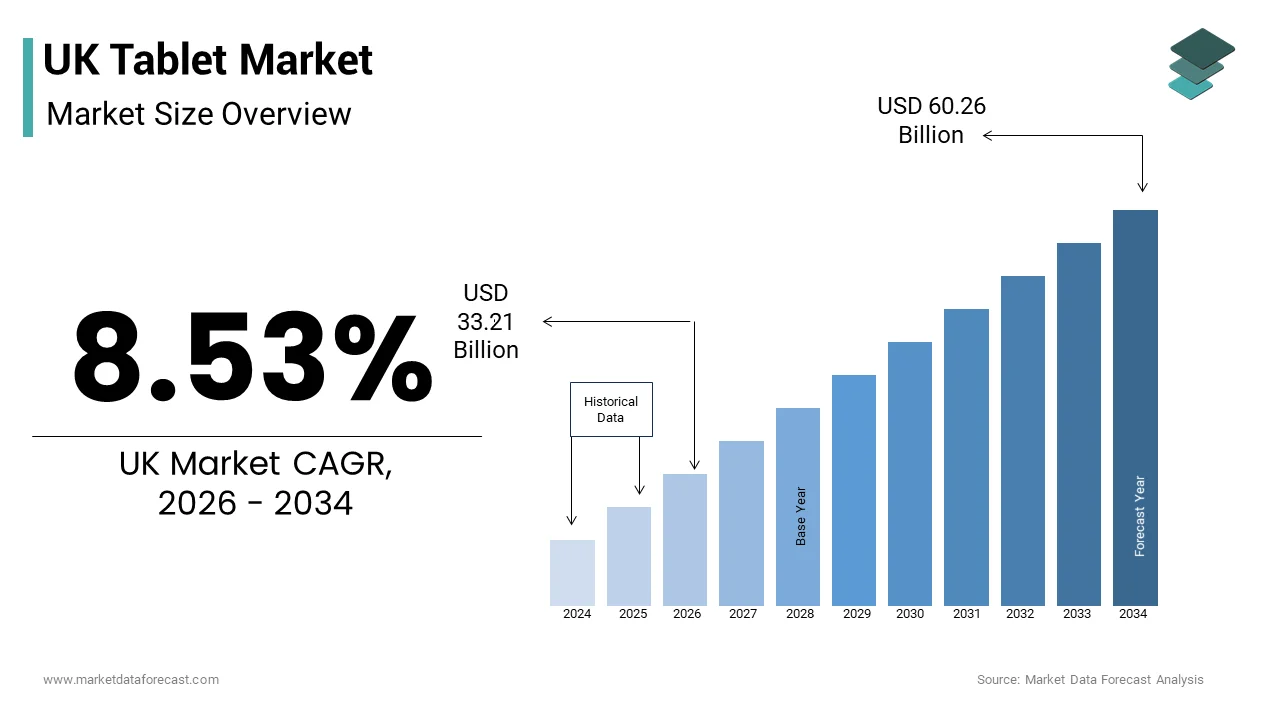
The UK tablet market size was valued at USD 30.59 billion in 2025, reached USD 33.21 billion in 2026, and is projected to scale up to USD 60.26 billion by 2034, registering a compound annual growth rate (CAGR) of 8.53% during the forecast period from 2026 to 2034. Driven by the proliferation of hybrid work models, educational digitalization, advancements in display and processing hardware, and the integration of artificial intelligence software, the market continues to expand steadily across the United Kingdom.
Key Executive Metrics (At-a-Glance)
- 2025 Base Valuation: USD 30.59 Billion
- 2026 Current Valuation: USD 33.21 Billion
- 2034 Forecast Valuation: USD 60.26 Billion
- Compound Annual Growth Rate (CAGR): 8.53% (2026–2034)
- Dominant Product Segment: Slate Tablets (Mass-market and media consumption)
- Fastest-Growing Product Segment: Detachable Tablets (8.2% CAGR)
- Dominant Operating System: iOS (Over 50% market share backed by Apple's ecosystem)
- Fastest-Growing Operating System: Android (6.2% CAGR)
- Dominant Screen Size Segment: 8 inches and above (9.7 to 11-inch models)
- Fastest-Growing Screen Size Segment: Above 12 inches (8.1% CAGR as laptop replacements)
Core Market Drivers
- Hybrid Work & Education: Around 44% of UK workers working from home part- or full-time, alongside one-to-one device policies in schools.
- Technological Convergence: High-resolution OLED screens and multi-core processors transforming tablets into viable tools for creative and professional workflows.
Primary Market Restraints & Challenges
- Market Saturation: High household ownership rates leading to extended replacement cycles (averaging over 4 years per device).
- Intense Cross-Category Competition: Pressure from large-screen smartphones (foldables/phablets) and ultra-portable lightweight laptops.
UK Tablet Market Segmentation Highlights
| Segment Category | Leading / Dominant Sub-Segment | Fastest-Growing Sub-Segment |
|---|---|---|
| By Product | Slate Tablets | Detachable Tablets (8.2% CAGR) |
| By Operating System | iOS | Android (6.2% CAGR) |
| By Screen Size | 8 inches and Above (9.7"–11") | Above 12 Inches (8.1% CAGR) |
| By End-User & Channel | Consumer / Offline & Online Retail | Commercial (Enterprise & Healthcare) |
Major Industry Players Profiled
Key technology giants and market leaders driving the UK sector include Apple Inc., Samsung Electronics Co. Ltd., Amazon.com Inc., Microsoft Corporation, Lenovo Group Limited, Acer Inc., ASUSTek Computer Inc., Dell Technologies Inc., Hewlett-Packard Company, Huawei Technologies Co. Ltd., Nokia Corporation, Panasonic Holdings Corporation, and Xiaomi Corporation.
UK Tablet Market Size
The UK tablet market size was valued at USD 30.59 billion in 2025 and is anticipated to reach USD 33.21 billion in 2026 to reach USD 60.26 billion by 2034, growing at a CAGR of 8.53% during the forecast period from 2026 to 2034.
MARKET OVERVIEW
According to the Office for National Statistics, approximately 96% of households in the UK had access to the internet in 2023, providing the essential infrastructure for cloud-based tablet usage and digital content consumption. As per data from Ofcom, the average adult in the UK spends more than 3.5 hours daily on online activities, with a significant portion occurring on mobile devices, including tablets, which offer larger screens for media viewing and document editing. The cultural shift toward remote and hybrid work has reinforced the utility of tablets as versatile tools for video conferencing and light administrative tasks. Regulatory frameworks governed by the Department for Science, Innovation and Technology promote digital inclusion, ensuring that connectivity remains accessible across urban and rural demographics. Consumer behavior is increasingly driven by the desire for device consolidation, where a single tablet replaces multiple gadgets for specific use cases. The market operates within a competitive landscape dominated by global technology giants who continuously innovate in display technology, processing power, and ecosystem integration to retain user loyalty in a replacement-driven cycle.
MARKET DRIVERS
Proliferation of Hybrid Work and Educational Digitalization
The entrenchment of hybrid work models and the comprehensive digitalization of the education sector are majorly driving the expansion of the UK tablet market, as these devices offer the portability and functionality required for modern flexible lifestyles. Tablets have become indispensable tools for professionals who need to review documents, attend virtual meetings, and manage emails while away from their primary workstations. According to the Office for National Statistics, approximately 44% of workers in the UK continue to work from home some or all of the time, creating sustained demand for secondary computing devices that are lighter and more battery-efficient than traditional laptops. In the education sector, the Department for Education has invested heavily in digital infrastructure, with many schools adopting one-to-one device policies to enhance interactive learning and accessibility. Data from the British Educational Suppliers Association indicates that tablet shipments to educational institutions have remained robust, as teachers utilize them for lesson planning, student assessment, and multimedia presentations. The versatility of tablets allows them to function as both consumption and creation devices, supporting note-taking with styluses and running specialized educational applications. This dual utility in professional and academic environments ensures that tablets remain relevant despite the dominance of smartphones for communication and laptops for heavy computing tasks.
Advancements in Display Technology and Processing Power
Rapid technological advancements in display quality and processing capabilities are further contributing to the tablet market growth in the UK by transforming these devices into viable alternatives for creative professionals and media enthusiasts. Modern tablets now feature high-resolution OLED screens, powerful multi-core processors, and ample storage, making them suitable for graphic design, video editing, and high-fidelity gaming. According to Tech Nation, the UK is a global hub for creative industries, which contribute over 100 billion pounds annually to the economy, driving demand for portable tools that support professional workflows. Data from Apple and Samsung product launches reveals that consumer interest is heavily skewed toward premium models that offer laptop-class performance in a thin form factor. The integration of advanced graphics processing units enables smooth rendering of complex visual content, attracting artists, designers, and architects who require mobility without compromising on power. Furthermore, the improvement in battery life allows for extended usage periods, which is critical for users who travel frequently or work in environments without immediate access to power sources. These technical enhancements justify higher price points and encourage upgrade cycles among existing users who seek better performance and visual experiences. The convergence of hardware capability and software optimization continues to expand the addressable market beyond casual users to demanding professional segments.
MARKET RESTRAINTS
Market Saturation and Extended Replacement Cycles
The high level of market saturation in the UK, combined with the durability of modern devices has led to extended replacement cycles, which is impeding the expansion of the UK tablet market. Most households already own at least one tablet, and the incremental improvements in recent generations do not always compel consumers to upgrade immediately. According to Kantar Worldpanel, the average lifespan of a tablet in the UK has increased to over 4 years, as build quality and software support has improved significantly. Data from the Office for National Statistics shows that consumer spending on durable goods has become more cautious amidst economic uncertainty, leading individuals to prioritize essential purchases over discretionary tech upgrades. The lack of compelling new features in mid-range models means that older devices remain functional for basic tasks such as web browsing and video streaming, reducing the urgency to buy new hardware. Manufacturers struggle to stimulate demand in a replacement-driven market where innovation is often iterative rather than transformative. This stagnation forces companies to compete aggressively on price and trade-in values, which can erode profit margins. The maturity of the market means that growth must come from niche segments or premium replacements rather than broad-based adoption, limiting the overall expansion potential of the industry.
Competition from Large Screen Smartphones and Lightweight Laptops
Tablets face intense competition from large-screen smartphones and increasingly lightweight laptops that encroach on their traditional use cases and limit their unique value proposition, which is further hindering the UK market expansion. The rise of foldable phones and devices with screens exceeding 6.7 inches provides a sufficient display area for media consumption and basic productivity, reducing the need for a separate tablet. According to Counterpoint Research, sales of large-screen smartphones in the UK have grown steadily, as consumers prefer carrying a single device that handles both communication and entertainment. Additionally, the availability of ultra-portable laptops weighing under 1 kilogram offers full desktop operating systems and keyboard integration, which appeals to students and professionals who require more robust multitasking capabilities. Data from Gartner indicates that the overlap in functionality between these device categories leads to cannibalization, where consumers choose either a phone or a laptop but skip the tablet entirely. The convenience of having a physical keyboard and file management system on laptops makes them more suitable for serious work, while smartphones are always connected and pocketable. This squeeze from both ends of the spectrum forces tablet manufacturers to clearly differentiate their products through specific features, such as stylus support or cellular connectivity, to justify their existence in the consumer tech ecosystem.
MARKET OPPORTUNITIES
Integration of Artificial Intelligence and Productivity Software
The integration of artificial intelligence capabilities and advanced productivity software presents a substantial opportunity for the UK tablet market to reposition these devices as essential tools for intelligent workflow management. AI-driven features such as voice recognition, predictive text, automated summarization, and image enhancement can significantly boost user efficiency and create new use cases for tablets in professional settings. According to Tech Nation, the UK technology sector is rapidly adopting AI solutions, with many software developers optimizing their applications for tablet interfaces to leverage touch and pen inputs. Data from Microsoft and Adobe shows that subscription-based productivity suites are increasingly designed with tablet-first interfaces, encouraging users to adopt these devices for creative and administrative tasks. The ability of AI to personalize user experiences and automate routine tasks adds value beyond hardware specifications, making tablets smarter and more intuitive. Enterprise clients are exploring tablets equipped with AI assistants for field service operations, healthcare diagnostics, and retail customer engagement where mobility and instant data access are critical. By focusing on software ecosystems and intelligent features, manufacturers can drive demand among business users who seek to optimize operations. This shift from hardware-centric to software-driven value propositions opens new revenue streams through services and subscriptions, enhancing the long-term viability of the tablet market.
Expansion in Healthcare and Industrial Enterprise Applications
The expanding use of tablets in healthcare and industrial sectors offers significant growth opportunities for the UK tablet market as organizations seek mobile solutions for data collection, patient management, and operational efficiency. In healthcare, tablets enable doctors and nurses to access electronic health records, view diagnostic images, and update patient notes at the point of care, improving accuracy and saving time. According to the National Health Service, digital transformation initiatives prioritize the deployment of mobile devices to support frontline staff and reduce administrative burdens. Data from the Health Foundation indicates that hospitals using tablet-based systems report faster discharge times and improved patient satisfaction due to better communication and information availability. In industrial settings, tablets are used for inventory management, quality control, and maintenance checks, allowing workers to access real-time data and instructions on the factory floor. The ruggedization of tablets for harsh environments ensures durability and reliability in manufacturing, logistics, and construction sectors. Enterprise mobility management solutions allow IT departments to secure and monitor these devices effectively, addressing security concerns. As these sectors continue to digitize their operations, the demand for specialized enterprise-grade tablets with long battery life and robust connectivity will grow, providing a stable and high-value market segment for manufacturers.
MARKET CHALLENGES
Supply Chain Volatility and Component Shortages
The UK tablet market faces ongoing challenges related to global supply chain volatility and shortages of critical components such as semiconductors, display panels, and battery materials. These disruptions affect production schedules and inventory levels, leading to inconsistent availability and potential price increases for consumers. According to the Semiconductor Industry Association, lead times for certain chips used in tablet controllers and power management have remained extended, causing bottlenecks for manufacturers. Data from the Office for National Statistics highlights that import costs for electronic components have risen due to logistical constraints and geopolitical tensions, impacting the profitability of device makers. The reliance on Asian manufacturing hubs makes the supply chain vulnerable to local disruptions such as natural disasters or political restrictions, which can halt production abruptly. Manufacturers struggle to forecast demand accurately amidst these uncertainties, leading to either excess inventory or stockouts that damage brand reputation. Diversifying supply sources is a complex and costly process that takes time, leaving companies exposed in the interim. The rising cost of raw materials, including lithium for batteries and rare earth elements for displays, further squeezes margins. These supply-side constraints complicate strategic planning and threaten the ability of manufacturers to meet consumer demand consistently, requiring agile risk management strategies to maintain market presence.
Cybersecurity Risks and Data Privacy Concerns
The increasing connectivity of tablets and their use in handling sensitive personal and corporate data pose significant cybersecurity challenges that can deter adoption and damage brand trust. Tablets are frequent targets for malware, phishing attacks, and data breaches due to their widespread use and sometimes lax security configurations by users. According to the National Cyber Security Centre, mobile devices, including tablets, are increasingly exploited by cybercriminals to gain access to corporate networks and steal confidential information. Data from the Information Commissioner's Office shows a rise in reported data incidents involving lost or stolen mobile devices, highlighting the risks associated with portable technology. Enterprises are hesitant to deploy tablets widely without robust mobile device management solutions, which add complexity and cost to IT infrastructure. Consumers are becoming more aware of privacy issues and may hesitate to store sensitive data on devices perceived as less secure than traditional computers. Manufacturers must invest heavily in security features such as biometric authentication, encrypted storage, and regular software updates to mitigate these risks. Failure to address security concerns can lead to regulatory penalties and reputational damage, particularly in sectors like healthcare and finance where data protection is paramount. Balancing ease of use with rigorous security remains a critical challenge for the industry.
REPORT COVERAGE
| REPORT METRIC | DETAILS |
| Market Size Available | 2025 to 2034 |
| Base Year | 2025 |
| Forecast Period | 2026 to 2034 |
| CAGR | 8.53% |
| Segments Covered | By Product, Operating System, Screen Size, End-user, Distribution Channel, Country |
| Various Analyses Covered | Global, Regional, and Country Level Analysis, Segment-Level Analysis; DROC, PESTLE Analysis; Porter’s Five Forces Analysis; Competitive Landscape; Analyst Overview of Investment Opportunities. |
| Regions Covered | London, South East, North West, East of England, South West, Scotland, West Midlands, Yorkshire and The Humber, East Midlands, Others |
| Market Leaders Profiled | Acer Inc., Apple Inc., ASUSTek Computer Inc., Dell Technologies Inc., Amazon Com Inc, Hewlett-Packard Company, Huawei Technologies Co. Ltd. (Huawei Investment & Holding Co., Ltd.), Lenovo Group Limited, Microsoft Corporation, Nokia Corporation, Panasonic Holdings Corporation, Samsung Electronics Co. Ltd., Xiaomi Corporation. |
SEGMENTAL ANALYSIS
By Product Insights
The slate tablets segment accounted for the major share of the UK market in 2025. The dominance of the slate tablets segment in the UK market is attributed to their streamlined design, ease of use, and strong appeal to consumers seeking devices primarily for media consumption and casual browsing. These devices feature a fixed form factor without an attached keyboard, which makes them lighter, more portable, and often more affordable than detachable hybrids. According to data from Kantar Worldpanel, slate tablets account for the majority of unit sales in the UK, as they cater to the mass market demand for entertainment-focused devices used for streaming video, reading, and social media. The simplicity of the slate design appeals to both younger users and older demographics who prefer intuitive touch interfaces without the complexity of laptop-like attachments. Major manufacturers such as Apple with its iPad range and Samsung with its Galaxy Tab series dominate this segment by offering high-quality displays and robust ecosystems that encourage brand loyalty. The lower entry price point of basic slate models makes them accessible gifts and impulse purchases during holiday seasons. Furthermore, the durability of single-piece construction reduces mechanical failure rates associated with hinges and connectors found in detachables. This combination of affordability, portability, and reliability ensures that slate tablets remain the default choice for the average consumer in the UK.
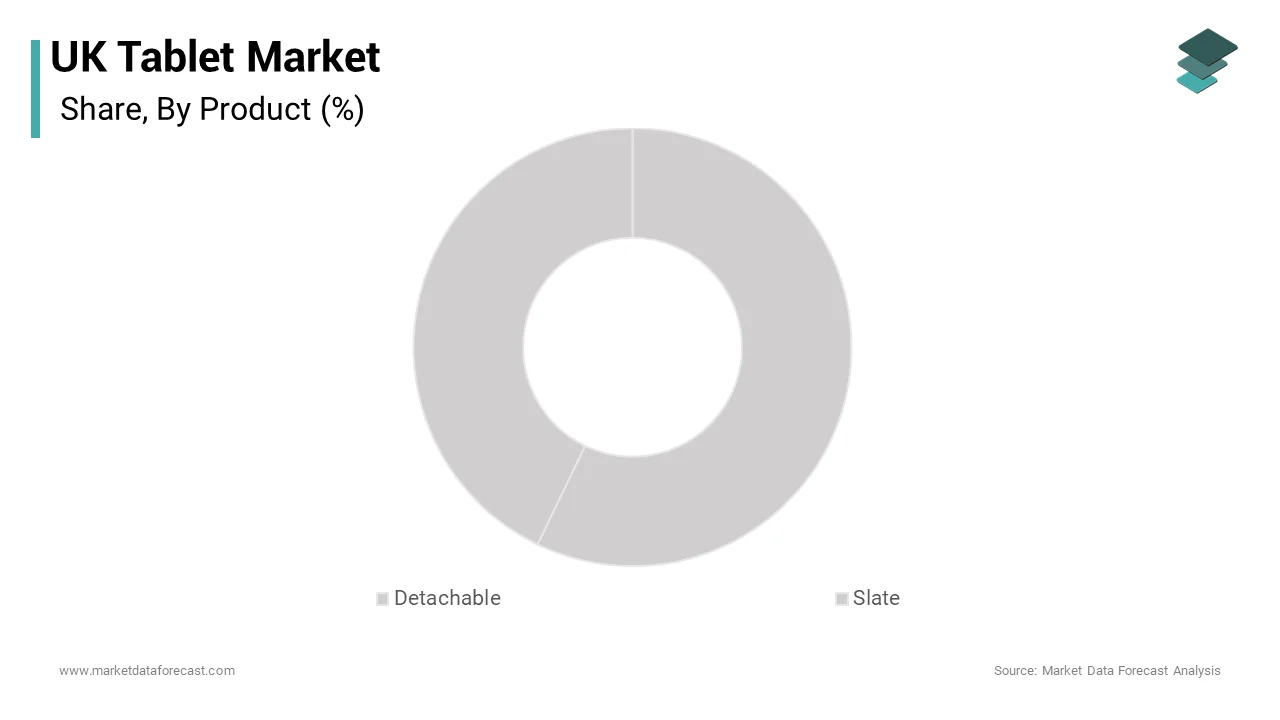
On the other side, the detachable tablets segment is predicted to register a CAGR of 8.2% during the forecast period in the UK market owing to the increasing demand for versatile devices that can function as both tablets and laptops. These hybrid devices appeal to students, professionals, and creative workers who require the productivity of a physical keyboard alongside the portability and touch capabilities of a tablet. According to the Office for National Statistics, the rise of hybrid work models has led many individuals to seek secondary computing devices that are lightweight enough for commuting yet powerful enough for document editing and video conferencing. Data from IDC indicates that sales of detachable tablets with premium accessories such as styluses and keyboard covers have surged as users look to consolidate their tech inventory into a single versatile device. Microsoft Surface and Apple iPad Pro models drive this growth by offering desktop-class performance and software compatibility that rivals traditional laptops. The ability to switch seamlessly between modes enhances workflow efficiency, making detachables attractive for business travelers and remote workers. As software applications become more optimized for touch and pen input, the utility of detachable tablets continues to expand, driving rapid adoption in the professional and educational sectors.
By Operating System Insights
The iOS segment captured the highest share of the UK market in 2025. The growth of the iOS segment in the UK market is driven by the immense popularity of the Apple iPad ecosystem, which commands strong brand loyalty and high customer retention rates. The seamless integration between iPhones, Macs, and iPads creates a sticky user experience that encourages consumers to stay within the Apple ecosystem for all their digital needs. According to Statista, iOS accounts for over 50% of the tablet operating system share in the UK, reflecting the dominant market position of Apple devices among British consumers. The App Store offers a vast library of high-quality applications optimized specifically for the larger tablet screen, providing superior user experiences for creativity, education, and productivity compared to other platforms. Data from Apple financial reports shows that services revenue, including subscriptions for iCloud, Apple Music, and Apple TV+, continues to grow, indicating deep engagement among iPad users. The perception of iOS devices as premium, reliable, and secure products appeals to affluent demographics and educational institutions that standardize on iPads for classroom use. Regular software updates and long-term support further enhance the value proposition, ensuring that older devices remain functional and secure. This ecosystem strength and brand prestige cements iOS as the leading operating system in the UK tablet landscape.
However, the android segment is estimated to record a CAGR of 6.2% during the forecast period in the UK market owing to the availability of diverse hardware options across various price points and the continuous improvement of tablet-optimized applications. Manufacturers such as Samsung, Lenovo, and Amazon offer a wide range of Android tablets that cater to budget-conscious consumers as well as power users seeking specific features like expandable storage or headphone jacks. According to Google developer reports, the number of apps optimized for large screens and foldable devices has increased significantly, improving the usability and appeal of Android tablets for productivity and entertainment. Data from Counterpoint Research highlights that mid-range Android tablets are gaining traction in the UK education and family segments due to their affordability and parental control features. The openness of the Android platform allows for greater customization and integration with third-party services and smart home devices, which appeals to tech-savvy users. Improvements in multitasking capabilities and desktop-like interfaces in recent Android versions have narrowed the productivity gap with iOS and Windows. This combination of hardware diversity, software maturity, and competitive pricing drives the steady growth of the Android segment in the UK.
By Screen Size Insights
The 8 inches and above segment had the leading share of the UK market in 2025, as they offer the optimal balance between portability and visual real estate for most use cases. This category includes the popular 10-inch and 11-inch models, which are ideal for watching movies, reading ebooks, browsing the web, and light productivity tasks without being too bulky to carry. According to data from Gartner, the majority of tablet shipments in the UK fall within the 9.7 to 11-inch range, as consumers prefer screens that are large enough to be immersive but small enough to hold comfortably for extended periods. The prevalence of streaming services such as Netflix and Disney+ drives demand for larger screens that provide a better viewing experience than smartphones. Educational institutions also favor this size range for digital textbooks and interactive learning apps, as it allows for clear visibility of content while remaining manageable for students. Manufacturers focus their innovation efforts on this segment by introducing higher resolution displays and thinner bezels to maximize screen area. The versatility of this size makes it suitable for a wide demographic, from children to seniors, ensuring broad market appeal and sustained sales volume.
On the other end, the above 12 inches segment is the fastest growing segment and is estimated to grow at a CAGR of 8.1% during the forecast period owing to their adoption as laptop replacements by creative professionals and business users. These large screens provide ample space for multitasking, detailed graphic design work, video editing, and spreadsheet management, making them viable alternatives to traditional notebooks. According to Apple and Samsung product launch data, sales of Pro and Ultra models with 12.9-inch and 14.6-inch displays have seen double-digit growth in the UK, as users seek more powerful and portable workstations. The integration of high refresh rate displays and advanced stylus support enhances the precision and responsiveness required for professional applications. Data from the Creative Industries Federation indicates that the number of freelancers and remote workers in the UK using large tablets for client presentations and content creation is rising steadily. The ability to connect external monitors and peripherals further extends their functionality, bridging the gap between mobile and desktop computing. As software becomes more capable of leveraging large screen real estate for split-view and windowed applications, this segment continues to attract users who prioritize productivity and visual fidelity.
COUNTRY LEVEL ANALYSIS
The UK held the largest share of the European market in 2025 and is anticipated to sustain its mature and highly developed position in the European tablet market over the next few years, maintaining high penetration rates, strong brand loyalty, and a sophisticated consumer base that values premium features and ecosystem integration. The nation serves as a key market for global technology companies due to its high disposable income levels and widespread adoption of digital services. According to the Office for National Statistics, internet penetration in the UK exceeds 95%, providing a robust foundation for cloud-based tablet usage and digital content consumption. Data from Ofcom reveals that UK consumers are among the highest spenders per capita on consumer electronics in Europe, reflecting a willingness to invest in high-quality devices. The presence of major retail chains and mature e-commerce platforms ensures wide availability and competitive pricing for a diverse range of tablet models, positioning the UK as a primary testing ground for European product rolls out. Educational initiatives and government funding for digital learning have further entrenched tablets in schools and households, creating a steady demand pipeline. The UK market is also heavily influenced by strong data privacy regulations and consumer protection laws, which actively shape how manufacturers design, support, and market their products. This combination of economic stability, technological readiness, and regulatory clarity positions the UK as a strategic hub for launching new tablet technologies and trends in the European region.
COMPETITIVE LANDSCAPE
The UK tablet market features intense competition characterized by the dominance of established global giants and the presence of niche players vying for consumer attention in a mature sector. Apple leads with its premium iOS ecosystem while Samsung offers versatile Android alternatives creating a duopoly in the mid to high end segments. Amazon competes aggressively in the budget category by leveraging its content ecosystem to subsidize hardware costs. Competitive dynamics are shaped by the need to differentiate through hardware innovations such as better cameras faster processors and improved battery life. Software optimization and app availability remain critical factors influencing consumer choice particularly for productivity and creative tasks. Price wars and promotional offers during key shopping periods drive volume but compress margins for manufacturers. Brand loyalty is strong yet vulnerable to ecosystem lock in effects making it difficult for new entrants to gain traction. Retailers play a significant role in shaping competition through shelf placement and bundle deals. Success depends on balancing innovation cost efficiency and ecosystem strength to retain users in a replacement driven market.
KEY MARKET PLAYERS
A Few of the market players that are in the UK tablet market are
- Acer Inc.
- Apple Inc.
- ASUSTek Computer Inc.
- Dell Technologies Inc.
- Amazon Com Inc
- Hewlett-Packard Company
- Huawei Technologies Co. Ltd. (Huawei Investment & Holding Co., Ltd.)
- Lenovo Group Limited
- Microsoft Corporation
- Nokia Corporation
- Panasonic Holdings Corporation
- Samsung Electronics Co. Ltd.
- Xiaomi Corporation
Top Players In The Market
- Apple Inc maintains a dominant presence in the UK through its iPad lineup which sets the standard for performance design and ecosystem integration. The company actively invests in developing powerful chips and innovative accessories such as the Apple Pencil to cater to creative professionals and students. Recent actions include launching new iPad models with advanced display technologies and enhanced connectivity features to strengthen appeal among UK consumers. Apple expands its services portfolio including iCloud and Apple TV+ to increase user engagement and retention. The brand leverages strong retail partnerships and its own stores to provide exceptional customer support and hands on experiences. By focusing on premium quality and seamless integration with other devices Apple reinforces its leadership position. Their commitment to privacy and sustainability further enhances brand loyalty in the competitive UK market.
- Samsung Electronics contributes significantly to the UK tablet market with its Galaxy Tab series offering diverse options ranging from budget friendly to high end professional models. The company emphasizes versatility by integrating S Pen support and DeX mode which transforms tablets into laptop like workstations. Recent efforts involve launching foldable and large screen tablets that appeal to productivity focused users and media enthusiasts. Samsung collaborates with UK retailers to offer bundle deals and trade in programs that make upgrades more accessible. The brand invests in software updates and security patches to ensure long term device reliability and user trust. By providing a wide range of choices and robust Android integration Samsung captures various consumer segments. Their focus on innovation and value ensures sustained growth and relevance in the dynamic UK tablet landscape.
- Amazon Com Inc plays a pivotal role in the UK market through its Fire tablet range which provides affordable access to digital content and services for mass market consumers. The company focuses on delivering value by integrating its tablets deeply with Prime Video Kindle and Alexa ecosystems. Recent actions include introducing updated Fire HD models with improved performance and parental controls to attract families and young users. Amazon leverages its extensive logistics network to ensure rapid delivery and competitive pricing across the UK. The brand promotes its tablets as gateways to its subscription services driving recurring revenue and customer loyalty. By targeting price sensitive segments and emphasizing ease of use Amazon maintains a strong foothold in the entry level market. Their strategy of hardware subsidization through content sales strengthens their overall market position and ecosystem stickiness.
Top Strategies Used By Key Market Participants
Key players in the UK tablet market employ several strategic approaches to maintain competitiveness and drive growth. Product differentiation is central as companies develop unique features such as stylus support detachable keyboards and high refresh rate displays to appeal to specific user needs. Ecosystem integration remains a priority with firms enhancing connectivity between tablets smartphones and laptops to create seamless user experiences. Pricing strategies vary from premium positioning for high end models to aggressive discounting for entry level devices to capture broader market segments. Marketing campaigns leverage influencer partnerships and digital channels to highlight productivity and entertainment capabilities. After sales support improvements including extended warranties and repair services build consumer trust. Sustainability initiatives focus on using recycled materials and reducing packaging waste to align with environmental values. These combined strategies allow market participants to navigate saturation and stimulate demand in the mature UK landscape.
MARKET SEGMENTATION
This research report on the UK tablet market is segmented and sub-segmented into the following categories.
By Product
- Detachable
- Slate
By Operating System
- Android
- iOS
- Windows
By Screen Size
- 8’’
- 8’’ and Above
By End-User
- Consumer
- Commercial
By Distribution Channel
- Online
- Offline