UK Toy Market Size, Share, Trends & Growth Forecast Report - Segmented By Product, Age Group, Material, Distribution Channel, and By Country - Industry Analysis and Forecast, 2026 to 2034
Market Size, 2025
$38.52 BnMarket Estimate, 2026
$40.50 BnMarket Forecast, 2034
$58.76 BnCAGR, 2026–2034
5.12%UK Toy Market Report Summary
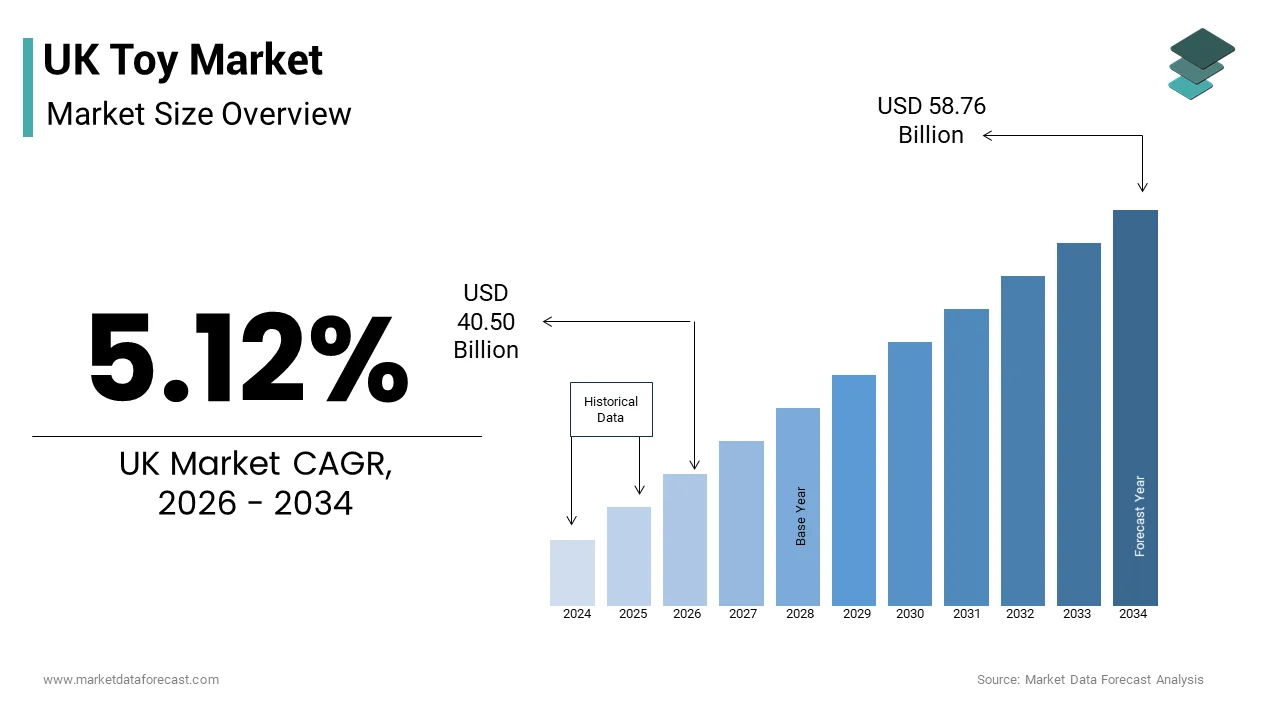
The UK toy market was valued at USD 38.52 billion in 2025 and is anticipated to reach USD 40.50 billion in 2026 and further expand to USD 58.76 billion by 2034, growing at a CAGR of 5.12% during the forecast period from 2026 to 2034. The growth of the UK toy market is driven by increasing consumer spending on children's entertainment and educational products, rising demand for interactive and STEM-based toys, and continuous innovation by toy manufacturers. The growing influence of digital media, licensed merchandise, and character-based toys, along with the expansion of omnichannel retail strategies, is further supporting market growth. Additionally, increasing focus on child development, creativity, and learning through play is creating new opportunities across the market.
Key Market Trends
- Rising demand for educational, STEM, and skill-development toys that support cognitive learning and creativity among children.
- Growing popularity of licensed toys and merchandise inspired by movies, television shows, gaming franchises, and digital content.
- Increasing integration of technology into toys, including interactive, connected, and augmented reality-based play experiences.
- Expanding adoption of sustainable and eco-friendly toy materials as consumers become more environmentally conscious.
- Strong growth in omnichannel retailing, with brands leveraging both physical stores and e-commerce platforms to enhance customer engagement.
Segmental Insights
- Based on product, the game toys segment dominated the UK toy market and accounted for 25.7% of the market share in 2025. The segment’s leadership is attributed to the growing popularity of board games, strategy games, puzzles, and interactive gaming products that encourage family entertainment and social engagement.
- Based on age group, the age 5 to 12 segment held the largest share of the UK toy market, capturing 44.1% in 2025. The segment's dominance is driven by strong demand for educational toys, action figures, construction sets, gaming products, and creative play solutions designed for school-age children.
- Based on material, the plastic segment accounted for the majority share of the UK toy market in 2025. Its leading position is supported by its versatility, durability, lightweight properties, and cost-effectiveness, making it the preferred material for a wide range of toy categories.
- Based on distribution channel, the offline retail channels segment remained the largest and occupied a 53.1% share of the UK toy market in 2025. The dominance of this segment is attributed to consumers' preference for in-store product evaluation, immediate purchases, promotional events, and the strong presence of specialty toy stores and large retail chains.
Regional Insights
The United Kingdom was the second-largest contributor to the European toy market and accounted for a 16.7% share in 2025. Market growth is supported by strong consumer spending, a well-established retail ecosystem, increasing demand for innovative toys, and the popularity of branded and licensed products. The country's robust toy manufacturing and distribution network, combined with evolving consumer preferences for educational and technology-driven toys, continues to support long-term market expansion.
Competitive Landscape
The UK toy market is highly competitive, with leading manufacturers focusing on product innovation, brand licensing partnerships, digital engagement strategies, and sustainable product development. Companies are investing in interactive toy technologies, expanding product portfolios, and strengthening omnichannel distribution networks to enhance customer reach and market presence. Strategic collaborations with entertainment franchises and continuous investment in research and development remain key factors driving competitiveness within the industry.
Prominent players in the UK toy market include Bandai Namco Holdings Inc., Basic Fun, Inc., Hasbro, Inc., JAKKS Pacific, Inc., Jazwares, LLC, Mattel, Inc., MGA Entertainment, Inc., Moose Toys, Playmobil, Ravensburger AG, Schleich GmbH, Spin Master Corp., The LEGO Group, Tomy Company, Ltd., and VTech Holdings Ltd.
UK Toy Market Size
The UK toy market size was valued at USD 38.52 billion in 2025 and is anticipated to reach USD 40.50 billion in 2026 to reach USD 58.76 billion by 2034, growing at a CAGR of 5.12% during the forecast period from 2026 to 2034.
MARKET OVERVIEW AND DEFINITION
A toy is an object primarily used for entertainment, play, and amusement. It is a dynamic sector deeply embedded in the cultural and economic fabric of British childhood. Toys serve as essential tools for cognitive development, social interaction, and creative expression among children across the nation. The market encompasses a diverse array of products ranging from traditional board games and plush toys to advanced electronic gadgets and educational kits. Consumer behavior in this segment is heavily influenced by seasonal trends, particularly the winter holiday period, which accounts for a substantial portion of annual sales. The demographic landscape shows that households with children under 14 years constitute the primary consumer base, with spending patterns reflecting both parental income levels and evolving educational priorities. According to the Office for National Statistics (ONS), there are over 12 million children aged 0 to 15 years in the United Kingdom, establishing a massive, robust consumer base that ensures strong foundational demand for toy products. The retail environment has transformed significantly, with online channels gaining prominence alongside established brick and mortar stores. Parents increasingly seek products that offer developmental benefits while ensuring safety and durability. The market also reflects broader societal shifts toward sustainability and ethical manufacturing practices. Retailers and manufacturers must navigate complex supply chains while responding to rapid changes in consumer preferences driven by digital media influences and peer recommendations. This intricate ecosystem requires continuous adaptation to maintain relevance and competitiveness in a mature yet evolving marketplace.
MARKET DRIVERS
Rising Emphasis on Educational and Stem Based Play Drives Demand
The growing parental focus on educational value has become a major driver for the United Kingdom toy market. Modern parents increasingly view toys as instruments for early learning and skill development rather than mere entertainment items. This shift has propelled demand for science, technology, engineering, and mathematics focused products that engage children in interactive learning experiences. According to the British Toy and Hobby Association, educational toys now represent a significant and expanding segment within the overall market, with parents willing to pay premium prices for products that offer demonstrable developmental benefits. The integration of coding robots, construction sets, and scientific experiment kits into mainstream toy offerings reflects this trend. Schools and educational institutions further reinforce this demand by incorporating play based learning methodologies into their curricula. Data from the Department for Education indicates that early years foundation stage frameworks emphasize learning through play, encouraging parents to seek toys that align with these pedagogical approaches. Additionally, the rise of homeschooling and supplementary education activities following recent global disruptions has amplified interest in home based educational resources. Manufacturers respond by designing products that combine fun with measurable learning outcomes, such as improved problem solving abilities or enhanced spatial awareness. This driver is sustained by increasing awareness among parents regarding the importance of early childhood development and the role of structured play in building foundational cognitive skills. The trend extends beyond traditional academic subjects to include emotional intelligence and social skills, broadening the scope of educational toy categories available to consumers.
Digital Media Influence and Character Licensing Boost Consumer Engagement
The pervasive influence of digital media and popular character licensing is a powerful factor for toy purchases in the country, which in turn contributes to the expansion of the United Kingdom toy market. Children are increasingly exposed to animated series, films, and online content that feature compelling characters and narratives, creating strong emotional connections that translate directly into toy demand. While benchmark reports from Ofcom historically recorded children aged 5 to 15 consuming an average of 15 hours of media per week, modern screen consumption has multiplied, severely reducing traditional toy engagement windows. This extensive exposure drives desire for merchandise associated with favorite characters, making licensed products highly sought after by young consumers. Major entertainment franchises regularly release new content, generating cyclical spikes in demand for related toys and collectibles. Retailers strategically align inventory with media release schedules to capitalize on these peaks. The phenomenon extends to user generated content on platforms like YouTube, where unboxing videos and toy reviews influence purchasing decisions among children and their parents. A study suggests that licensed toys account for a substantial proportion of total sales, with top franchises commanding significant shelf space and marketing budgets. The synergy between content creators and toy manufacturers has intensified, with collaborative product launches becoming common practice. This driver is reinforced by the social aspect of toy ownership, as children seek to participate in shared cultural experiences with peers. The immediacy of digital communication accelerates trend cycles, requiring manufacturers to maintain agile production and distribution capabilities to meet rapidly shifting consumer interests.
MARKET RESTRAINTS
Economic Pressure And Cost Of Living Constraints Limit Discretionary Spending
Persistent economic pressure and the ongoing cost of living crisis are significant barriers for the United Kingdom toy market. Household budgets face considerable strain as inflation affects essential expenses such as energy, food, and housing, leaving less disposable income for non essential purchases like toys. According to the Office for National Statistics, the consumer price index remained elevated in recent periods, with many families reporting reduced spending on discretionary items. Parents prioritize essential goods over leisure products, leading to delayed purchases or selection of lower priced alternatives. This financial constraint impacts both volume and value growth within the toy sector, as consumers become more price sensitive and selective. Retailers observe increased demand for budget friendly options and promotional deals, while premium segments experience slower growth. The uncertainty surrounding economic conditions further discourages large upfront expenditures on high end toy sets. Families may opt for fewer but more versatile items or turn to second hand markets to extend product lifecycles. Charitable organizations report increased requests for toy donations during holiday seasons, indicating genuine hardship among certain demographics. This restraint is compounded by wage growth that has not consistently kept pace with inflation, reducing real household purchasing power. Manufacturers face pressure to maintain quality while controlling costs, often resulting in thinner profit margins. The cumulative effect is a more cautious consumer base that carefully evaluates each purchase decision, challenging brands to demonstrate clear value propositions to justify expenditure in a constrained economic environment.
Stringent Safety Regulations And Compliance Costs Increase Operational Burden
Stringent safety standards hinder the expansion of the United Kingdom toy market. These rules impose substantial compliance costs and operational complexities on manufacturers and importers. The UK Product Safety and Metrology regime mandates strict adherence to standards covering mechanical properties, flammability, chemical composition, and electrical safety. According to the Office for Product Safety and Standards, all toys placed on the market must carry appropriate conformity markings and be accompanied by technical documentation demonstrating compliance. These requirements necessitate extensive testing procedures, quality control measures, and administrative oversight, increasing production costs and time to market. Small and medium sized enterprises face particular challenges in absorbing these expenses, potentially limiting market entry and innovation. Recent updates to chemical restrictions, such as limits on certain phthalates and heavy metals, require continuous monitoring of supply chains and material sourcing. Non compliance can result in product recalls, financial penalties, and reputational damage, creating significant risk for businesses. The regulatory landscape also evolves in response to emerging safety concerns, such as those related to smart toys and data privacy, adding layers of complexity. Manufacturers must invest in specialized expertise and laboratory facilities to ensure ongoing adherence to standards. This restraint affects pricing strategies, as compliance costs are often passed on to consumers, potentially reducing affordability. Furthermore, the need for regular audits and certification renewals diverts resources from product development and marketing activities. The stringent framework, while essential for protecting children, creates barriers that can slow innovation and limit the diversity of products available in the market.
MARKET OPPORTUNITIES
Expansion Into Sustainable and Eco Friendly Toy Segments Presents Growth Potential
The increasing consumer demand for sustainable and environmentally responsible products offers substantial opportunities for growth within the United Kingdom toy market. Parents and retailers are progressively prioritizing toys made from renewable materials, such as wood, bamboo, and recycled plastics, over conventional petroleum based alternatives. According to a survey, a significant proportion of British consumers express willingness to pay more for products with verified environmental credentials. This shift aligns with broader societal concerns about plastic pollution and climate change, creating a favorable environment for brands that emphasize sustainability in their messaging and operations. Manufacturers can differentiate themselves by obtaining certifications from recognized environmental organizations and transparently communicating their supply chain practices. The circular economy model presents additional avenues for innovation, including take back schemes, repair services, and modular designs that extend product lifespans. Retailers are increasingly dedicating shelf space to eco friendly ranges, responding to consumer preferences and corporate sustainability targets. Educational toys that teach children about environmental stewardship also resonate with values driven parents. The opportunity extends to packaging innovations, with brands adopting minimal, recyclable, or biodegradable materials to reduce waste. Collaborations with environmental charities can enhance brand credibility and engage consumers in meaningful initiatives. As regulatory pressures around single use plastics intensify, early adopters of sustainable practices gain competitive advantages. This trend is supported by growing awareness among younger generations who will influence future purchasing decisions. Companies that authentically integrate sustainability into their core strategies can capture loyal customer segments and command premium pricing while contributing positively to environmental goals.
Integration Of Augmented Reality And Interactive Technologies Enhances Product Appeal
The integration of augmented reality and interactive technologies into toy designs paves the way for innovation and expansion in the United Kingdom toy market. These technologies bridge physical play with digital experiences, offering immersive and engaging interactions that appeal to tech savvy children and parents. According to data from the UK Interactive Entertainment association, the convergence of physical and digital play is gaining traction, with consumers showing strong interest in products that leverage smartphone or tablet connectivity. Augmented reality features allow children to visualize characters in their real environment, solve puzzles through interactive interfaces, or participate in multiplayer games that combine tangible elements with virtual components. This approach extends the play value of traditional toys and creates new revenue streams through companion apps and downloadable content. Manufacturers can partner with technology firms to develop sophisticated platforms that enhance storytelling and educational outcomes. The opportunity lies in creating seamless user experiences that are intuitive for children while providing parents with controls over screen time and content appropriateness. Retailers can utilize augmented reality for in store demonstrations, allowing customers to preview product functionalities before purchase. The technology also enables personalized play experiences, adapting difficulty levels or narratives based on individual user progress. As hardware capabilities improve and costs decrease, accessibility increases, broadening the potential consumer base. Brands that successfully integrate these technologies can differentiate themselves in a crowded market and foster deeper engagement with users. This opportunity aligns with the digital native characteristics of contemporary children, ensuring relevance and long term appeal in an increasingly connected world.
MARKET CHALLENGES
Supply Chain Disruptions and Raw Material Volatility Create Operational Uncertainty
Persistent supply chain disruptions and volatility in raw material costs are serious challenges to the United Kingdom toy market. The global nature of toy manufacturing means that dependencies on international suppliers for components, plastics, and electronics expose businesses to geopolitical tensions, trade policy changes, and logistical bottlenecks. According to the Confederation of British Industry, many manufacturers continue to face delays in receiving inputs, leading to inventory shortages and missed sales opportunities, particularly during peak seasonal periods. Fluctuations in oil prices directly impact the cost of plastic resins, a primary material for many toys, creating unpredictability in production expenses. Shipping container availability and freight rates remain volatile, affecting lead times and overall landed costs. These challenges force companies to maintain higher safety stock levels, tying up capital and increasing warehousing expenses. Smaller players lack the bargaining power to secure favorable terms with suppliers or absorb sudden cost increases, threatening their viability. The situation is exacerbated by labor shortages in key manufacturing regions, further constraining output capacity. Businesses must constantly reassess supplier relationships and consider nearshoring or diversification strategies, which require significant investment and time. Quality control becomes more difficult when switching suppliers or accelerating production schedules to meet deadlines. The cumulative effect is reduced agility and increased financial risk, making long term planning challenging. Companies must balance cost efficiency with supply chain resilience, often requiring trade offs that impact profitability. This challenge demands sophisticated risk management approaches and continuous monitoring of global trade dynamics to mitigate adverse impacts on market performance.
Intense Competition From Counterfeit Products Undermines Brand Integrity
The proliferation of counterfeit toys is a serious challenge to legitimate manufacturers and retailers in the United Kingdom toy market. This undermines brand integrity and consumer trust. Fake products often mimic popular branded items but fail to meet safety standards, posing risks to children and damaging the reputation of authentic brands. According to Trading Standards agencies, thousands of counterfeit toys are seized annually at borders and within domestic markets, highlighting the scale of the problem. These illicit goods are frequently sold through online marketplaces and social media platforms at significantly lower prices, attracting price sensitive consumers who may not recognize the dangers. Counterfeiters exploit the popularity of licensed characters and trending products, capitalizing on high demand without investing in research, development, or compliance. This unfair competition erodes profit margins for legitimate businesses and discourages innovation. Consumers who purchase counterfeit items may experience product failures or safety incidents, leading to negative perceptions of the original brand if they cannot distinguish between authentic and fake products. Enforcement efforts are complicated by the anonymous nature of online sellers and the cross border nature of many counterfeit operations. Legal actions are costly and time consuming, with limited deterrent effect on organized criminal networks. Brands must invest in anti counterfeiting technologies, such as holograms or blockchain verification, and educate consumers on identifying genuine products. This challenge requires coordinated efforts between industry stakeholders, law enforcement, and platform operators to protect intellectual property rights and ensure market fairness while safeguarding child safety.
REPORT COVERAGE
| REPORT METRIC | DETAILS |
| Market Size Available | 2025 to 2034 |
| Base Year | 2025 |
| Forecast Period | 2026 to 2034 |
| CAGR | 5.12% |
| Segments Covered | By Product, Age Group, Material, Distribution Channel, Country |
| Various Analyses Covered | Global, Regional, and Country Level Analysis, Segment-Level Analysis; DROC, PESTLE Analysis; Porter’s Five Forces Analysis; Competitive Landscape; Analyst Overview of Investment Opportunities. |
| Regions Covered | London, South East, North West, East of England, South West, Scotland, West Midlands, Yorkshire and The Humber, East Midlands, Others |
| Market Leaders Profiled | Bandai Namco Holdings Inc., Basic Fun, Inc., Hasbro, Inc., JAKKS Pacific, Inc., Jazwares, LLC, Mattel, Inc., MGA Entertainment, Inc., Moose Toys, Playmobil , Ravensburger AG, Schleich GmbH, Spin Master Corp., The LEGO Group, Tomy Company, Ltd., VTech Holdings Ltd. |
SEGMENTAL ANALYSIS
By Product Insights
Game Toys
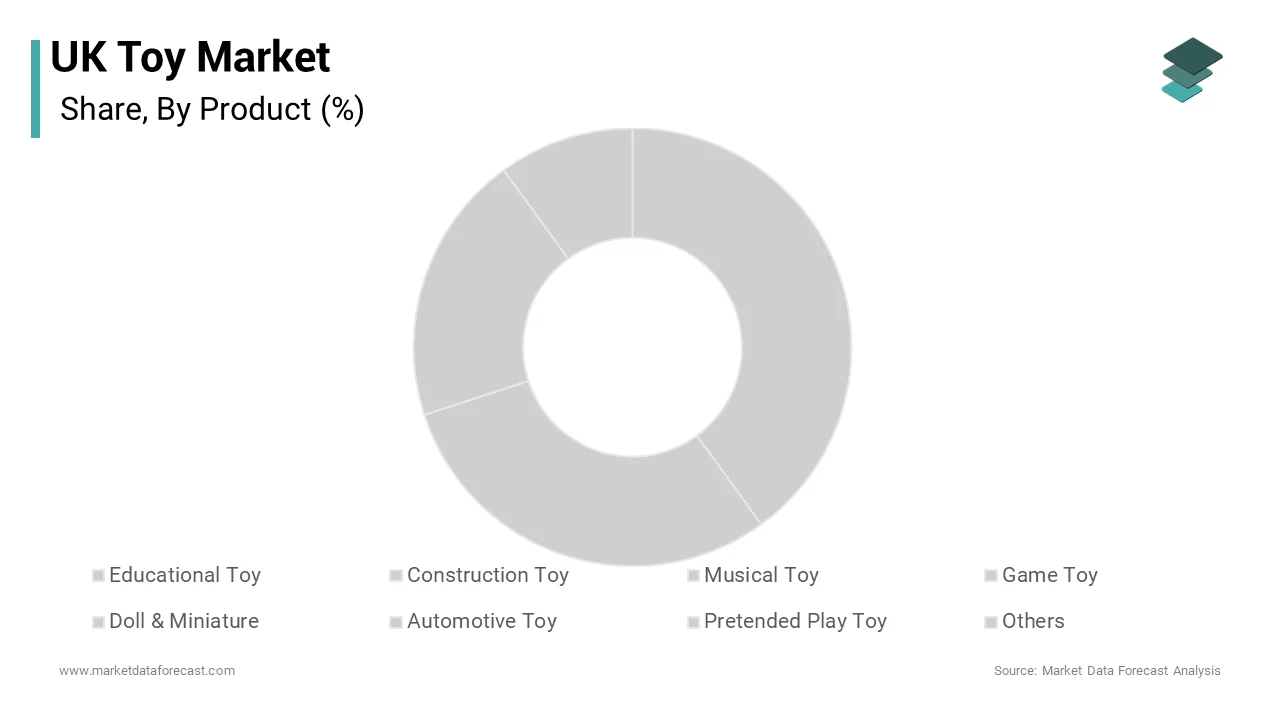
The game toys segment maintained dominance in the United Kingdom toy market and accounted for a 25.7% share in 2025. This dominance of the segment was driven by its unique ability to facilitate social interaction and family bonding. In an era where digital isolation is a growing concern, board games and card games offer tangible opportunities for face to face engagement among family members and peer groups. According to the British Toy & Hobby Association (BTHA), the 'Games and Puzzles' category remains a top-performing market sector, recently recording double-digit growth driven by its broad appeal across family and adult demographics. The resurgence of tabletop gaming has been particularly notable, with complex strategy games gaining popularity among adults and teenagers, thereby expanding the traditional consumer base beyond young children. Surveys consistently show that board games hold deep market penetration in the UK, with the majority of households owning staple titles, reflecting their status as a core form of family entertainment. The versatility of this segment allows for continuous innovation, with manufacturers releasing themed editions tied to popular media franchises or educational concepts. Retailers benefit from the high repeat purchase rate associated with game collections, as enthusiasts often seek new experiences. The segment also benefits from strong gift giving traditions, particularly during winter holidays and birthdays, where games are perceived as safe and universally appreciated choices. Furthermore, the rise of game cafes and community events has normalized tabletop gaming as a mainstream leisure activity, reinforcing demand. This cultural shift ensures that game toys remain resilient against economic fluctuations, as they offer high perceived value through extended playability and shared experiences that justify their cost in the eyes of consumers.
The enduring dominance of game toys is further reinforced by their recognized educational value and contribution to cognitive development. Parents increasingly view structured play through games as a vital component of child development, fostering skills such as strategic thinking, problem solving, and numerical literacy. According to research published by the University of Cambridge, regular engagement with rule based games improves executive function and social competence in children. This academic validation encourages parents to prioritize game purchases over purely recreational items. Educational institutions also support this trend by incorporating game based learning into curricula, creating familiarity and demand among students. Manufacturers respond by designing games that explicitly target specific learning outcomes, such as vocabulary building or logical reasoning, while maintaining engaging gameplay mechanics. The segment benefits from endorsements by educators and child psychologists, who highlight the benefits of unplugged activities for attention span and interpersonal skills. As screen time concerns grow, games offer a credible alternative that satisfies parental desires for productive leisure. The diversity of game types, from simple counting games for toddlers to complex economic simulations for older children, ensures relevance throughout developmental stages. This broad applicability sustains high sales volumes and encourages brand loyalty, as families often stick with trusted publishers known for quality and educational integrity. The segment’s ability to adapt to educational trends while preserving fun ensures its continued leadership in the competitive UK toy landscape.
Construction Toys
The construction toys segment is anticipated to witness the fastest CAGR of 6.8% over the forecast period. This accelerated growth of the segment is mainly fueled by the increasing integration of science, technology, engineering, and mathematics principles into early childhood education. Parents and educators recognize construction sets as effective tools for developing spatial awareness, fine motor skills, and engineering intuition. According to the Department for Education, there is a national emphasis on improving STEM proficiency, which drives demand for toys that align with these educational goals. Modern construction sets have evolved beyond simple stacking blocks to include mechanical elements, gears, and even programmable components, appealing to tech savvy generations. The versatility of these products allows for open ended play, encouraging creativity and prolonged engagement. A study shows that construction toys have seen a significant increase in sales among girls, breaking traditional gender stereotypes and expanding the total addressable market. Major brands invest heavily in marketing campaigns that highlight the educational benefits and creative potential of their products, resonating with aspirational parents. The segment also benefits from strong licensing partnerships with popular science fiction and engineering themed media, which inspire children to replicate structures and machines. As schools adopt more hands on learning approaches, the line between classroom resources and home toys blurs, further boosting demand. This synergy between educational policy and consumer preference creates a robust growth trajectory for construction toys, positioning them as essential items for modern childhood development.
The rapid expansion of the construction toy segment is also driven by continuous innovation in modular and smart building systems. Manufacturers are introducing advanced materials and connectivity features that enhance the play experience and extend product lifecycles. According to sources, the introduction of app connected construction kits has attracted a new demographic of older children and teenagers who seek interactive challenges. These smart systems allow users to build functional models that can be controlled via smartphones, blending physical construction with digital feedback. This hybrid approach increases the perceived value and justifies higher price points, contributing to value growth in the segment. The modularity of modern construction sets ensures compatibility across different series, encouraging collectors to expand their sets over time. This ecosystem approach fosters brand loyalty and recurring revenue streams for manufacturers. Additionally, the rise of online communities where users share building instructions and designs creates a vibrant culture around construction toys, driving organic marketing and peer influence. Retailers support this growth by dedicating prominent shelf space and hosting building workshops that engage customers directly. The segment’s ability to evolve with technological advancements while maintaining core tactile benefits ensures its appeal remains strong. Parents are looking for toys that prepare children for a digital future without sacrificing physical play. Smart construction systems offer an ideal solution, which sustains the segment’s status as the fastest-growing category in the UK market.
By Age Group Insights
Age 5–12
The age 5 to 12 segment led the United Kingdom toy market and captured a 44.1% share in 2025. This leading position of the segment was attributed to the extended period of play complexity and strong peer influence characteristic of this developmental stage. Children in this age group possess the cognitive abilities to engage with sophisticated toys, including strategy games, detailed construction sets, and role play scenarios, which command higher price points and longer engagement times. According to the Office for National Statistics, this demographic represents a substantial portion of the child population, providing a large base for consistent demand. Peer influence becomes a critical driver during these years, as children seek toys that align with social trends and allow participation in group activities. This social dynamic creates viral demand for specific brands and products, amplifying sales volume. Schools and extracurricular clubs also contribute to this dominance by recommending or using certain toys for educational and recreational purposes, validating their utility. Parents are willing to invest in higher quality items for this age group, perceiving them as durable and valuable for long term development. The segment benefits from extensive licensing opportunities, as children actively follow media franchises and seek related merchandise. Retailers capitalize on this by offering wide assortments that cater to diverse interests within the age range, from active outdoor play equipment to intricate indoor hobbies. The longevity of interest in toys during these years ensures steady revenue streams, making this segment the cornerstone of the UK toy market. The combination of disposable income allocation by parents and the autonomous desire of children creates a powerful demand engine that sustains market leadership.
The dominance of the age 5 to 12 segment is further supported by the higher allocation of household discretionary income toward leisure activities for children in this bracket. Unlike infants and toddlers whose needs are primarily functional, children aged 5 to 12 actively express preferences and influence purchasing decisions, leading to higher spend per unit. According to sources, parents in the United Kingdom spend significantly more on toys for school aged children compared to younger demographics, reflecting the greater variety and complexity of available products. This age group participates in numerous social events, such as birthday parties and holidays, where gift giving is customary, driving periodic spikes in demand. The variety of toys available for this segment, ranging from electronics to sports equipment, allows for multiple purchases throughout the year. Parents view these expenditures as investments in socialization and skill development, reducing resistance to higher prices. The segment also benefits from the trend of experiential play, where toys are part of larger narratives or collections, encouraging repeat purchases. Retailers support this through loyalty programs and targeted marketing that appeal to both children and parents. The economic resilience of this segment is evident in its ability to maintain sales volumes even during periods of financial constraint, as parents prioritize items that keep children engaged and active. This consistent spending behavior ensures that the age 5 to 12 segment remains the largest contributor to market revenue, underpinning the overall health of the UK toy industry.
Below 1 Year
The below 1 year age segment is likely to experience the fastest CAGR of 5.2% during the forecast period due to heightened awareness among parents regarding the importance of early sensory and motor development. Modern parenting practices emphasize stimulation from birth, leading to increased demand for specialized toys such as rattles, soft books, and activity gyms. According to the National Health Service, early intervention and stimulation are crucial for neural development, prompting parents to seek products that support these milestones. The rise in first time parents who are highly informed and research oriented contributes to this trend, as they carefully select products based on expert recommendations and safety standards. Manufacturers respond by innovating in materials and design, offering organic fabrics and non toxic finishes that appeal to health conscious consumers. The segment benefits from strong gift giving traditions, with baby showers and christenings serving as key occasions for toy purchases. Retailers have expanded their infant ranges, recognizing the potential for high margin sales in this niche. The growth is also supported by the increasing number of dual income households who seek high quality, safe, and engaging toys to occupy infants during work hours. As scientific understanding of infant development evolves, the definition of appropriate toys expands, creating new categories and driving continuous innovation. This dynamic environment ensures that the below 1 year segment outpaces others in growth rate, reflecting a fundamental shift in how society values early childhood experiences.
The rapid growth of the below 1 year segment is further propelled by premiumization and stringent safety standards that elevate market value. Parents are willing to pay a premium for toys that guarantee absolute safety and offer superior developmental benefits. According to the British Standards Institution, compliance with safety regulations for infant toys is rigorous, and brands that exceed these standards gain significant consumer trust. This trust translates into brand loyalty and willingness to pay higher prices for certified products. The trend toward organic and natural materials, such as untreated wood and cotton, appeals to environmentally conscious parents who prioritize health and sustainability. These premium products often come with educational guides or apps that help parents understand developmental milestones, adding value beyond the physical item. The segment also benefits from the influence of social media, where influencers showcase high end baby products, creating aspirational demand. Retailers support this by curating premium infant collections that emphasize quality and exclusivity. The focus on safety and quality reduces price sensitivity, allowing manufacturers to maintain healthy margins despite lower volume compared to older age groups. As the market matures, differentiation through innovation in safety features and material science becomes key, driving continuous growth. This premium approach ensures that the below 1 year segment not only grows in volume but also in value, making it the fastest expanding category in the UK toy market.
By Material Insights
Plastic
In 2025, the plastic segment held the majority share of the United Kingdom toy market because of its unparalleled versatility, durability, and cost efficiency. The material allows for intricate molding, vibrant coloring, and mass production at scale, making it ideal for a wide range of toy types from action figures to construction sets. According to the British Plastics Federation, plastic accounts for the majority of toy production volume, supported by its ability to meet strict safety standards while keeping costs low. This affordability ensures accessibility for a broad consumer base, particularly important in a cost sensitive economic environment. Plastic toys are lightweight, shatter resistant, and easy to clean, attributes highly valued by parents for practicality and hygiene. The material’s adaptability enables manufacturers to produce complex mechanical parts and electronic housings that other materials cannot accommodate efficiently. Established supply chains and manufacturing expertise further cement plastic’s dominance, ensuring consistent availability and quick response to market trends. While environmental concerns exist, advancements in recycling technologies and the use of recycled plastics are helping to mitigate negative perceptions. Major brands continue to rely on plastic for core product lines due to its proven performance and consumer acceptance. The segment’s leadership is also supported by the sheer variety of plastic types available, each offering specific properties suited to different toy applications. This material flexibility ensures that plastic remains the backbone of the UK toy industry, providing the foundation for most major product categories and sustaining its position as the largest material segment.
The dominance of the plastic segment is reinforced by the established manufacturing infrastructure and supply chain stability associated with the material. Decades of investment in plastic molding technologies have created a robust ecosystem of suppliers, manufacturers, and distributors that operate with high efficiency. According research, the lead times for plastic toy production are shorter compared to alternative materials, allowing companies to respond quickly to seasonal demand spikes and trending products. This agility is crucial in the fast paced toy market, where missing a holiday window can significantly impact annual revenue. The global nature of plastic supply chains ensures consistent raw material availability, reducing the risk of production delays. Manufacturers benefit from economies of scale, which lower unit costs and improve profitability. The familiarity of retailers and consumers with plastic products reduces barriers to entry for new designs, as no additional education or marketing is required to explain the material’s benefits. Quality control processes for plastic are well standardized, ensuring consistent product safety and performance. This reliability builds trust among buyers, who expect durability and consistency from plastic toys. While alternative materials are gaining traction, they lack the same level of industrial maturity and cost effectiveness. The entrenched position of plastic in the manufacturing landscape makes it difficult for competitors to displace, ensuring its continued leadership in the UK toy market. The stability of this infrastructure provides a competitive advantage that sustains plastic’s dominance despite emerging sustainability trends.
Biodegradable/Organic Materials
The biodegradable and organic materials segment is on the rise and is expected to be the fastest growing segment in the market by witnessing a CAGR of 7.5% over the forecast period. This quick surge is fueled by rising environmental consciousness among consumers and increasing regulatory pressure to reduce plastic waste. Parents are actively seeking sustainable alternatives that align with their values, driving demand for toys made from bamboo, corn starch, and other plant based polymers. According to a survey, a majority of UK parents prefer eco friendly products for their children, even if they come at a higher price point. This shift in consumer preference is supported by government initiatives promoting circular economy practices and restricting single use plastics. Manufacturers are responding by investing in research and development to create durable and safe biodegradable options that match the performance of conventional materials. Certifications from environmental organizations provide credibility and help consumers identify genuine sustainable products. Retailers are expanding their green ranges, recognizing the commercial potential of this niche. The segment benefits from positive media coverage and influencer endorsements that highlight the benefits of sustainable parenting. As awareness grows, the stigma around higher prices diminishes, as consumers view these purchases as investments in the planet’s future. The innovation in material science is expanding the range of possible products, from soft plush toys to hard construction blocks. This dynamic interplay between consumer demand, regulatory support, and technological innovation ensures that the biodegradable and organic materials segment continues to outpace others in growth rate.
The swift expansion of the biodegradable and organic materials segment is further driven by significant innovations in material science that enhance product viability and appeal. Recent advancements have improved the durability, color retention, and safety of bio based materials, addressing previous limitations that hindered widespread adoption. According to sources, new formulations of polylactic acid and other bio plastics offer comparable strength and flexibility to traditional plastics, making them suitable for a wider range of toy applications. These improvements allow manufacturers to create complex shapes and moving parts without compromising on quality or safety. The aesthetic appeal of natural materials, such as the grain of wood or the texture of organic cotton, adds a premium feel that attracts discerning consumers. Brands are leveraging these unique characteristics to differentiate their products in a crowded market. Collaborations between toy makers and material scientists are accelerating the development of new composites that combine sustainability with performance. Educational campaigns by manufacturers help consumers understand the benefits and proper care of biodegradable toys, increasing confidence in their purchase. The segment also benefits from partnerships with environmental charities, which enhance brand reputation and engage consumers in broader sustainability goals. As production scales up, costs are expected to decrease, making these toys more accessible to a wider audience. This continuous improvement in material quality and cost efficiency ensures that the biodegradable and organic materials segment maintains its status as the fastest growing category in the UK toy market.
By Distribution Channel Insights
Offline
The offline retail channels segment was the largest in the United Kingdom toy market and occupied a 53.1% share in 2025. This prominence of the segment was supported by the inherent need for tactile experience and immediate gratification that physical stores provide. Toys are sensory products, and parents often prefer to inspect quality, size, and functionality before purchasing, especially for younger children. According to retail data, while brick-and-mortar stores remain a critical discovery channel, especially during Christmas, sales are now evenly split, with online channels claiming nearly half of the UK toy market share. Large specialty retailers and department stores offer immersive environments where children can interact with displays, influencing purchase decisions through direct engagement. The immediacy of offline shopping allows consumers to acquire gifts last minute, a common scenario in the toy sector. Physical stores also provide expert advice from staff, which adds value for parents seeking specific developmental toys. Promotional events, in store demonstrations, and exclusive launches create buzz and drive foot traffic. The social aspect of shopping, where families make outings of selecting toys, reinforces the relevance of offline channels. Retailers have invested in enhancing store experiences with play areas and interactive zones, making shopping enjoyable rather than just transactional. This experiential approach differentiates offline from online, maintaining its leadership despite digital growth. The trust associated with established retail brands also plays a role, as consumers feel secure in their purchases and returns processes. These factors collectively ensure that offline channels remain the primary destination for toy purchases in the UK.
The top position of offline channels is further supported by strategic location advantages and high seasonal visibility that drive consistent sales. Toy stores are often located in high footfall areas such as shopping malls and high streets, ensuring maximum exposure to potential customers. During holiday seasons, elaborate window displays and in store decorations create a festive atmosphere that stimulates impulse buying. According to retail data, visual merchandising in physical stores significantly influences purchasing behavior, with prominently displayed items seeing higher sales volumes. The ability to bundle products and create themed displays allows retailers to increase average transaction values. Offline channels also benefit from cross promotional opportunities with other retail categories, such as clothing or electronics, attracting diverse customer segments. Local community engagement through store events and partnerships with schools builds loyalty and repeat business. The presence of physical stores serves as a marketing tool in itself, reinforcing brand presence and awareness. Retailers leverage their physical network to offer click and collect services, bridging the gap between online and offline and enhancing convenience. This omnichannel approach strengthens the position of offline channels by integrating digital convenience with physical presence. The tangible nature of toys makes them ideal for physical retail, where the sensory experience cannot be replicated online. These strategic advantages ensure that offline channels maintain their leadership in the UK toy market, providing a stable foundation for industry growth.
Online
The online distribution channel segment is expected to exhibit a noteworthy CAGR of 8.2% between 2026 and 2034. This swift expansion of the segment is driven by the unparalleled convenience and expanded selection that digital platforms offer to consumers. Parents appreciate the ability to shop from home, compare prices, and read reviews, which simplifies the decision making process. According to the Office for National Statistics, e commerce penetration in the retail sector has risen steadily, with toys being a key category benefiting from this trend. Online retailers offer vast inventories that exceed physical store capacity, allowing consumers to find niche or specialized items easily. The availability of detailed product information, videos, and user generated content helps buyers make informed choices. Home delivery services eliminate the hassle of transporting bulky items, adding to the appeal. Subscription models and automated replenishment options for recurring needs further enhance convenience. The rise of mobile shopping apps has made purchasing toys accessible anytime and anywhere, fitting into busy lifestyles. Digital marketing techniques, such as targeted ads and personalized recommendations, drive traffic and conversion rates. The ability to access global brands and exclusive online deals attracts price sensitive and variety seeking consumers. As logistics networks improve, delivery times shorten, reducing the advantage of immediate offline availability. These factors combine to make online channels the preferred choice for a growing number of UK toy buyers, sustaining its rapid growth trajectory.
The rapid expansion of the online segment is further fueled by data driven personalization and competitive pricing strategies that enhance customer engagement and value. E commerce platforms utilize advanced algorithms to analyze browsing and purchase history, offering tailored recommendations that increase relevance and conversion rates. According to studies, personalized shopping experiences lead to higher customer satisfaction and loyalty, driving repeat purchases. Online retailers can dynamically adjust prices based on demand and competition, offering deals that attract budget conscious consumers. Flash sales, coupon codes, and loyalty rewards create a sense of urgency and value that stimulates buying behavior. The lower overhead costs of online operations allow retailers to pass savings to customers, making prices more competitive than physical stores. Detailed customer reviews and ratings build trust and reduce perceived risk, encouraging first time buyers. Social media integration allows for seamless sharing and discovery of products, leveraging peer influence for organic growth. Virtual try on tools and augmented reality features are beginning to enhance the online experience, addressing some limitations of digital shopping. The ability to track inventory in real time ensures product availability and reduces disappointment. These technological and strategic advantages enable online channels to capture market share rapidly, establishing them as the fastest growing distribution segment in the UK toy market.
COUNTRY ANALYSIS
United Kingdom Toy Market Analysis
The United Kingdom was positioned second in the European market and accounted for a 16.7% share in 2025. This growth of the country’s market was supported by high consumer spending power and stringent regulatory standards. As a standalone entity post Brexit, the UK has developed independent safety and trade frameworks that influence market dynamics. According to the British Toy and Hobby Association, the UK toy market is one of the largest in Europe, with annual retail sales exceeding 3.5 billion pounds. The market status is robust, with a strong tradition of gift giving and a high valuation of childhood development products. Consumers in the UK are well informed and discerning, demanding high quality, safe, and innovative products. The retail landscape is diverse, featuring a mix of large multinational chains, independent specialty stores, and thriving e commerce platforms. The country’s advanced logistics infrastructure supports efficient distribution, ensuring product availability across urban and rural areas. Cultural factors, such as the importance of education and family time, drive demand for educational and interactive toys. The UK also serves as a testing ground for new products due to its English speaking population and alignment with global media trends. Regulatory bodies like the Office for Product Safety and Standards enforce strict compliance, ensuring consumer protection and maintaining market integrity. The presence of major international toy manufacturers and licensors underscores the country’s strategic importance. Despite economic challenges, the market demonstrates resilience, with consumers prioritizing value and quality. The UK’s position is further strengthened by its influential media and entertainment sectors, which drive demand for licensed products. This combination of economic strength, regulatory rigor, and cultural relevance ensures that the United Kingdom remains a key pillar of the global toy industry.
The United Kingdom toy market is driven by several key factors, including high disposable income, strong educational focus, and digital integration. According to the Office for National Statistics, household expenditure on recreation and culture remains significant, with toys forming a substantial part of this budget. The emphasis on early years education drives demand for STEM and developmental toys, as parents seek to give children a competitive advantage. The widespread adoption of digital technologies influences product preferences, with interactive and connected toys gaining popularity. Licensing agreements with popular British and international media franchises boost sales, as children seek to emulate favorite characters. The retail sector’s adaptation to omnichannel strategies enhances accessibility, allowing consumers to shop seamlessly across platforms. Sustainability is becoming a critical driver, with consumers increasingly preferring eco friendly options, prompting manufacturers to innovate in materials and packaging. The government’s support for creative industries and education further stimulates market growth. Seasonal peaks, particularly Christmas, remain crucial for annual revenue, with retailers planning extensively for these periods. The presence of a skilled workforce in design and marketing supports product innovation and brand building. Trade relationships, although adjusted post Brexit, continue to facilitate the import of diverse products from global suppliers. Consumer confidence, while fluctuating, generally supports steady demand for non essential goods like toys. These dynamics create a vibrant and competitive market environment that encourages continuous improvement and adaptation. The UK’s role as a trendsetter in Europe means that successful products here often influence broader regional markets, reinforcing its strategic significance.
COMPETITIVE LANDSCAPE
The competition in the United Kingdom toy market is intense and characterized by a mix of global giants and specialized niche players. Major multinational corporations dominate through extensive product portfolios, strong brand recognition, and substantial marketing budgets. These entities leverage economies of scale to offer competitive pricing and wide distribution networks. However, independent and smaller brands compete effectively by focusing on unique value propositions such as sustainability, artisanal quality, and educational specialization. The rise of e commerce has lowered entry barriers, allowing new entrants to reach consumers directly without relying on traditional retail channels. This democratization of access increases product diversity but also intensifies price competition. Intellectual property rights play a crucial role, with licensed products often commanding premium positions due to their connection with popular media. Retailers exert significant influence by curating assortments and promoting private label alternatives that offer higher margins. Consumer preferences for safety, quality, and ethical production further shape competitive dynamics, forcing companies to continuously innovate and adapt. The market rewards agility and responsiveness to trends, making it essential for players to maintain strong supply chains and customer engagement strategies to survive and thrive in this dynamic environment.
KEY MARKET PLAYERS
A few of the market players that are dominating the UK toy market are
- Bandai Namco Holdings Inc.
- Basic Fun, Inc.
- Hasbro, Inc.
- JAKKS Pacific, Inc.
- Jazwares, LLC
- Mattel, Inc.
- MGA Entertainment, Inc.
- Moose Toys
- Playmobil
- Ravensburger AG
- Schleich GmbH
- Spin Master Corp.
- The LEGO Group
- Tomy Company, Ltd.
- VTech Holdings Ltd.
Top Players In The Market
- The Lego Group maintains a dominant presence in the United Kingdom through its iconic brick based construction systems that appeal to diverse age groups. The company actively engages consumers via immersive retail experiences and digital integration strategies that blend physical play with virtual environments. Recent initiatives include expanding its sustainable material research to reduce environmental impact while maintaining product quality. Lego strengthens its market position by launching exclusive sets tied to popular media franchises and collaborating with local educational institutions to promote stem learning. The brand invests heavily in community building through fan conventions and online platforms that encourage user generated content. These efforts reinforce brand loyalty and drive consistent demand across various demographic segments in the UK.
- Mattel Inc holds a significant footprint in the UK market with its portfolio of beloved brands including Barbie, Hot Wheels, and Fisher Price. The company focuses on inclusivity and diversity in its product lines to reflect modern societal values and broaden consumer appeal. Recent actions involve enhancing digital engagement through augmented reality apps and interactive storytelling platforms that extend play value beyond physical toys. Mattel strengthens its position by partnering with major entertainment studios for licensed content and optimizing supply chain efficiency to ensure product availability. The company also prioritizes sustainability by introducing eco friendly packaging and materials. These strategic moves help Mattel maintain relevance and connect with contemporary parents and children in the United Kingdom.
- Hasbro Inc contributes substantially to the UK toy landscape through its diverse range of gaming, action figure, and preschool products. The company leverages strong intellectual property assets such as Transformers, My Little Pony, and Nerf to drive consumer interest and sales. Recent strategies include expanding its digital gaming offerings and integrating connected features into traditional toys to enhance interactivity. Hasbro strengthens its market position by collaborating with streaming services for content creation and engaging directly with fans through social media campaigns. The company also focuses on operational excellence by improving distribution networks and adopting data driven marketing techniques. These initiatives enable Hasbro to adapt to changing consumer preferences and sustain growth in the competitive UK toy sector.
Top Strategies Used By Key Market Participants
Key players in the United Kingdom toy market employ several strategic approaches to maintain competitiveness and drive growth. Product innovation remains central, with companies investing in research and development to create unique and engaging toys that incorporate technology and educational value. Licensing agreements with popular media franchises are widely used to capitalize on existing fan bases and generate immediate consumer interest. Sustainability initiatives are increasingly prominent, as brands adopt eco friendly materials and packaging to meet growing environmental concerns among consumers. Digital integration is another critical strategy, with firms developing companion apps and online communities to enhance the play experience and foster brand loyalty. Omnichannel retail approaches ensure seamless shopping experiences across physical and digital platforms, maximizing reach and convenience. Strategic partnerships with educational institutions and influencers help validate product benefits and expand market penetration. These combined strategies enable key participants to navigate market challenges and capitalize on emerging opportunities effectively.
MARKET SEGMENTATION
This research report on the UK toy lighting market is segmented and sub-segmented into the following categories.
By Product Type
- Educational Toy
- Construction Toy
- Musical Toy
- Game Toy
- Doll & Miniature
- Automotive Toy
- Pretended Play Toy
- Others
By Price Range
- Low
- Medium
- High
By Age Group
- Below 1 Yrs.
- Age 1- 3
- Age 3- 5
- Age 5- 12
- Age 12+
By Material
- Plastic
- Wooden
- Metal
- Fabric
- Biodegradable/Organic Materials
By End-Use
- Individual
- Commercial
By Distribution Channel
- Online
- E-Commerce Website
- Company Owned Website
- Offline
- Hypermarket/Supermarket
- Departmental Stores
- Specialized Stores
- Other Retail Stores
Access the study in MULTIPLE FORMATS
Purchase options starting from
$ 1200
Didn’t find what you’re looking for?
TALK TO OUR ANALYST TEAM
Need something within your budget?
NO WORRIES! WE GOT YOU COVERED!
Call us on: +1 888 702 9696 (U.S Toll Free)
Write to us: sales@marketdataforecast.com