- Product Description Description
- Table of Contents TOC
- List of Table & Figure LOT
- Get Free Sample PDF Sample PDF
Market Size, 2025
$2.56 BnMarket Estimate, 2026
$2.91 BnMarket Forecast, 2034
$8.05 BnCAGR, 2026–2034
13.58%UK Travel Insurance Market Report Summary
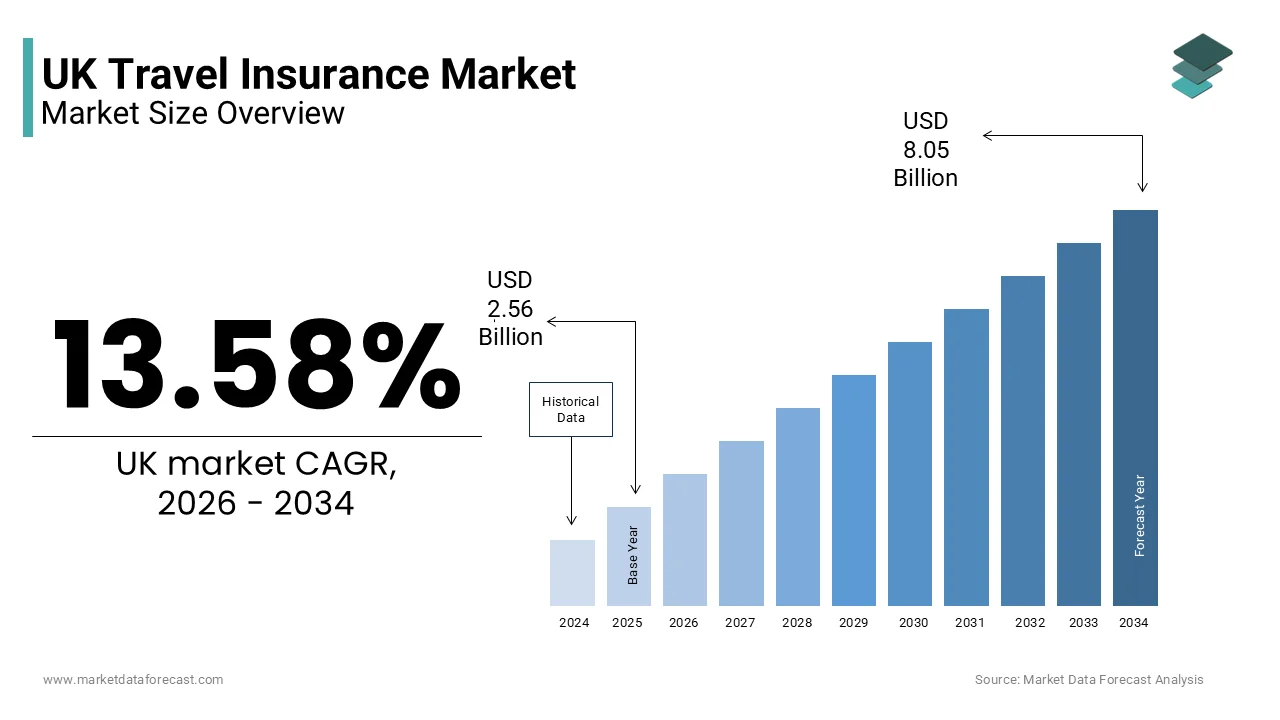
The UK travel insurance market was valued at USD 2.56 billion in 2025, is estimated to reach USD 2.91 billion in 2026, and is projected to reach USD 8.05 billion by 2034, growing at a CAGR of 13.58% during the forecast period. Market growth is driven by increasing international travel, rising awareness regarding travel related risks, growing demand for comprehensive coverage plans, and the rapid adoption of digital insurance platforms. The market is further supported by evolving consumer preferences for flexible travel protection, increased focus on medical coverage, and the expansion of online insurance distribution channels.
Key Market Trends
- Growing demand for comprehensive travel protection plans is driving market growth.
- Increasing adoption of digital insurance purchasing platforms is boosting market expansion.
- Rising awareness of medical emergencies and travel disruptions is supporting industry development.
- Expansion of personalized and flexible travel insurance products is enhancing market opportunities.
- Growing integration of digital claims processing and customer support technologies is influencing market advancement.
Segmental Insights
- Based on insurance type, the annual multi trip policies segment accounted for the largest share of the UK travel insurance market in 2025. This dominance is attributed to the growing number of frequent travelers seeking cost effective and convenient coverage for multiple trips throughout the year.
- Based on coverage type, the medical coverage segment held 65.2% of the UK travel insurance market share in 2025, driven by increasing concerns regarding overseas healthcare costs, medical emergencies, and travel related health risks.
- Based on distribution channel, the online aggregators and direct insurer websites segment accounted for 43.4% of the UK travel insurance market share in 2025. Consumers increasingly prefer digital platforms due to ease of comparison, transparency, convenience, and competitive pricing.
- Based on end user, the individual travelers segment held a substantial share of the UK travel insurance market in 2025, supported by strong outbound travel activity and increasing awareness of travel protection benefits.
Regional Insights
- The United Kingdom accounted for 21.7% of the European travel insurance market share in 2025 and maintained a leading position within the region. High travel frequency, strong insurance penetration, and advanced digital distribution networks continue to support market growth.
Competitive Landscape
The UK travel insurance market is highly competitive, with insurers focusing on product innovation, digital customer experiences, flexible policy options, and efficient claims management to strengthen their market position. Companies continue to invest in online distribution channels, personalized coverage solutions, and technology driven customer service platforms.
Key companies operating in the UK travel insurance market include Allianz Partners, Aviva plc, Direct Line Insurance Group plc, Admiral Group plc, AXA UK, Zurich Insurance Group, Staysure Group, Saga plc, AllClear Travel Insurance, InsureandGo, Europ Assistance UK, Post Office Travel Insurance, LV=, Coverwise, World Nomads, and Nationwide Building Society.
UK Travel Insurance Market Size
The UK travel insurance market size was valued at USD 2.56 billion in 2025, and is projected to reach USD 8.05 billion by 2034 from USD 2.91 billion in 2026, growing at a CAGR of 13.58%.
Travel insurance functions as a critical financial safety net for residents engaging in domestic and international leisure or business trips providing coverage against unforeseen events such as medical emergencies trip cancellations and lost luggage. This market operates within a robust regulatory framework overseen by the Financial Conduct Authority ensuring consumer protection and fair claims handling practices. The propensity of British citizens to travel remains high. The Office for National Statistics reports that UK residents made an estimated 94.6 million visits abroad in 2024, reflecting a robust recovery in outbound tourism momentum. Data from the Office for National Statistics indicates that the vast majority of UK adults are active internet users, facilitating the seamless comparison and purchase of travel policies through online aggregators and direct insurer platforms. The aging demographic profile influences product design with 19 percent of the population aged 65 or older according to the Office for National Statistics creating specific demand for comprehensive medical cover and pre existing condition waivers. Climate change impacts are increasingly relevant as extreme weather events disrupt travel plans necessitating flexible cancellation options. The integration of telemedicine services into policy offerings allows travelers to access remote medical consultations reducing the need for costly physical interventions abroad. Consumer awareness regarding the limitations of reciprocal healthcare agreements post Brexit has heightened the perceived necessity of private coverage. Travel patterns are shifting towards experiential and adventure tourism. To adapt, insurers are offering specialized riders for activities such as skiing, hiking, and water sports, ensuring adequate protection for diverse risk profiles across the nation.
MARKET DRIVERS
Rising Healthcare Costs Abroad and Limited Reciprocal Agreements
Escalating healthcare costs in popular tourist destinations are the main reasons behind the growth of the United Kingdom travel insurance market. As a result, travelers are actively seeking comprehensive policies to protect themselves against potentially catastrophic medical bills abroad. The removal of automatic entitlement to free healthcare in many European countries following Brexit has significantly altered the risk landscape for British tourists. While the Global Health Insurance Card provides some coverage it is limited to state provided care and does not cover private treatment repatriation or additional expenses such as family accommodation. Medical evacuation from remote locations or countries with underdeveloped healthcare infrastructure can cost upwards of 50000 pounds according to sources making insurance an essential safeguard. The United States remains a top destination for UK travelers where hospital stays can exceed 100000 pounds for serious conditions such as heart attacks or accidents prompting nearly all visitors to secure comprehensive coverage. Awareness campaigns by the Foreign Commonwealth and Development Office emphasize the financial risks of traveling uninsured reinforcing the message that reliance on public health systems abroad is insufficient. The complexity of navigating foreign healthcare systems without language support or financial backing further drives demand for policies that include 24 hour assistance hotlines and case management services. Older travelers with pre existing conditions face even higher potential costs necessitating specialized policies that cover chronic disease flare ups or emergency treatments. Medical inflation is outpacing general inflation globally. Hence, the gap between out-of-pocket expenses and affordable insurance premiums is widening, making coverage an economically rational choice for risk-averse consumers planning international journeys.
Increased Frequency Of Travel Disruptions and Cancellations
The increasing frequency of travel disruptions due to operational failures natural disasters and geopolitical instability fuels the expansion of the United Kingdom travel insurance market. Recent years have witnessed widespread airline strikes airport staffing shortages and technical glitches leading to thousands of cancelled flights and stranded passengers. Data from the Civil Aviation Authority indicates that flight cancellations and significant delays affected tens of millions of UK passengers in 2024, creating substantial financial losses from non-refundable bookings and additional accommodation costs. Travel insurance policies that cover trip interruption and delay provide reimbursement for these unexpected expenses offering peace of mind to travelers investing heavily in holidays. Extreme weather events linked to climate change such as hurricanes wildfires and floods frequently disrupt itineraries in popular destinations like the Caribbean and Southern Europe prompting travelers to seek cancellation for any reason coverage. Geopolitical tensions in regions such as Eastern Europe and the Middle East create uncertainty leading to sudden border closures or advisory warnings that necessitate last minute changes to travel plans. Insurers have responded by expanding coverage definitions to include pandemic related disruptions and government mandated quarantines addressing lessons learned from recent global health crises. The rise of complex multi center itineraries increases the vulnerability to cascading disruptions where one delayed connection impacts subsequent bookings. Consumers recognize that standard credit card protections or airline liabilities are often insufficient to cover total trip costs driving them towards standalone comprehensive policies that offer broader protection against the volatile nature of modern global travel.
MARKET RESTRAINTS
Prevalence of Pre Existing Medical Conditions Among Travelers
The prevalence of pre-existing medical conditions among travelers in the country hinders the growth of the United Kingdom travel insurance market. This complicates underwriting processes and increases premium costs for a large segment of the population. Department of Health and NHS data indicates that approximately 15 million people in England live with long-term conditions, which insurers typically classify as high-risk. Many standard policies exclude coverage for claims arising from these conditions unless declared and accepted often resulting in substantial loading fees or outright refusal of cover. This creates a barrier to entry for older demographics and those with complex health histories who may find affordable coverage difficult to obtain. The administrative burden of screening medical declarations requires insurers to invest in sophisticated underwriting systems and manual review teams increasing operational costs that are passed on to consumers. Some travelers choose to travel uninsured despite the risks believing that their condition is stable and unlikely to require intervention abroad a dangerous assumption given the unpredictability of health emergencies. The lack of standardized definitions for what constitutes a stable pre existing condition leads to confusion and disputes during the claims process eroding consumer trust. Specialist brokers exist but their services are less visible to the mass market leaving many consumers unaware of viable options. This exclusionary practice limits market penetration among a growing demographic segment forcing insurers to balance risk management with inclusivity while navigating stringent regulatory requirements regarding fair treatment of vulnerable customers.
High Incidence of Fraudulent Claims and Administrative Burdens
The high incidence of fraudulent claims also impedes the expansion of the United Kingdom travel insurance market. This drives up operational costs and leads to stricter policy terms for all customers. The Association of British Insurers estimates that insurance fraud costs the industry hundreds of millions of pounds annually with travel insurance being a notable target for opportunistic and organized crime rings. Common fraud types include exaggerated baggage loss claims fabricated medical receipts and staged trip cancellations requiring extensive investigation resources to verify authenticity. To combat this insurers implement rigorous verification procedures including requesting original receipts police reports and medical records which lengthen the claims processing time and frustrate legitimate policyholders. The need for advanced fraud detection software and specialized investigative teams increases overheads contributing to higher premiums across the board. False claims distort risk models leading insurers to tighten coverage limits and introduce more exclusions to mitigate potential losses. The reputational damage from publicized fraud cases can also deter honest consumers who perceive the claims process as adversarial and distrustful. Regulatory pressure to treat customers fairly conflicts with the need for robust fraud prevention creating a delicate operational balance. Smaller insurers may lack the resources to effectively combat sophisticated fraud networks leading to market consolidation as only larger players can absorb the associated costs. This environment stifles innovation in product design as companies prioritize risk containment over customer experience enhancement limiting the overall attractiveness and accessibility of travel insurance products for the average consumer.
MARKET OPPORTUNITIES
Integration Of Real Time Risk Monitoring Technologies
Real-time risk monitoring technologies offer a major opportunity for the United Kingdom travel insurance market. Integrating these systems allows insurers to enhance value propositions and improve customer engagement through proactive service delivery. Insurers are increasingly leveraging mobile applications equipped with GPS tracking and push notification capabilities to alert travelers about emerging threats such as severe weather political unrest or health outbreaks in their vicinity. This dynamic approach transforms insurance from a reactive financial product into an active travel companion that helps users avoid danger before it occurs. Data from telecom providers and global security firms can be aggregated to provide hyper local insights enabling personalized advice on safe routes or areas to avoid. Such features increase policy retention rates by demonstrating tangible utility beyond the point of sale fostering a sense of partnership between insurer and insured. Telematics data can also be used to offer usage based pricing models where safe travel behaviors or low risk destinations result in lower premiums appealing to cost conscious consumers. Partnerships with travel tech platforms allow for seamless embedding of insurance at the booking stage with real time adjustments based on itinerary changes. The ability to initiate emergency assistance directly through an app with location sharing accelerates response times for medical or security incidents improving outcomes and reducing claim costs. Smartphone penetration remains near universal in the UK, meaning the infrastructure for these advanced tools is already in place. This allows insurers to differentiate themselves in a crowded market by offering superior digital experiences that prioritize traveler safety and convenience.
Expansion Into Niche Adventure and Experiential Travel Segments
The expansion into niche adventure and experiential travel segments opens new doors for the expansion of the United Kingdom travel insurance market. This growth is driven by consumers who increasingly seek unique and high-risk activities during their holidays. Traditional policies often exclude activities such as bungee jumping scuba diving mountaineering and motorbike riding leaving a gap in coverage for the growing number of thrill seeking travelers. Insurers can capitalize on this trend by developing specialized add ons or standalone policies that cover these high risk activities with appropriate medical evacuation and equipment loss protection. Collaborations with tour operators and activity providers enable bundled offerings that ensure compliance with safety standards while simplifying the purchase process for consumers. The rise of digital nomadism also creates demand for long stay policies that cover remote work liabilities and extended medical needs in multiple countries. Customizable policies allow users to select only the coverage they need avoiding payment for irrelevant benefits which appeals to budget conscious adventurers. Marketing efforts focused on social media influencers and adventure communities can effectively reach this engaged audience building brand loyalty through shared values of exploration and resilience. Insurers can unlock new revenue streams by addressing the specific risks associated with unconventional travel styles. Thus, they can reduce competition from generic providers who fail to cater to these evolving consumer preferences.
MARKET CHALLENGES
Complexity Of Regulatory Compliance Across Jurisdictions
Navigating complex regulatory compliance across different jurisdictions holds back the growth of the UK travel insurance market. Insurers must constantly adapt to varying legal frameworks in every country where they operate or provide coverage. Post Brexit regulatory divergence means that UK insurers no longer benefit from automatic passporting rights into the European Union requiring them to establish local entities or partner with EU based firms to maintain market access. This fragmentation increases legal and administrative costs as companies must manage multiple licensing regimes reporting standards and consumer protection laws. The General Data Protection Regulation imposes strict rules on handling personal data of EU citizens requiring robust cybersecurity measures and transparent consent mechanisms that complicate cross border operations. Changes in local insurance taxes and levies in popular destinations further impact pricing strategies and profitability margins requiring constant monitoring and adjustment. Inconsistencies in contract law interpretation can lead to disputes over coverage validity in foreign courts creating uncertainty for both insurers and policyholders. The need for localized policy wording to meet specific national requirements hinders the ability to offer standardized global products increasing development time and costs. Regulatory bodies in different countries may have conflicting requirements regarding solvency capital and reserve levels forcing insurers to hold excess capital that could otherwise be deployed for growth. Keeping pace with evolving international regulations demands dedicated compliance teams and sophisticated legal expertise straining resources particularly for smaller market participants who lack the scale to absorb these complexities efficiently.
Impact Of Climate Change on Risk Assessment Models
Climate change significantly impacts risk assessment models which further slow down the expansion of the UK travel insurance market. Consequently, traditional actuarial data has become less reliable for predicting future loss ratios. Increasing frequency and severity of extreme weather events such as hurricanes floods and heatwaves disrupt historical patterns making it difficult to price policies accurately based on past experience. Insurers face rising claims volumes from trip cancellations and interruptions caused by weather related disruptions in popular holiday destinations requiring frequent recalibration of risk models. The unpredictability of climate impacts leads to wider confidence intervals in pricing potentially resulting in either underpricing that erodes profitability or overpricing that reduces competitiveness. Some regions may become uninsurable if risks escalate beyond acceptable thresholds forcing insurers to withdraw coverage entirely which limits consumer choice and creates protection gaps. The transition to more sophisticated climate modeling tools requires significant investment in data analytics and meteorological expertise which may be prohibitive for smaller insurers. Regulatory scrutiny on climate risk disclosure adds another layer of complexity requiring transparent reporting on how environmental factors influence underwriting decisions. Reinsurers are also adjusting their terms and prices in response to climate risks passing increased costs down to primary insurers who must then decide whether to absorb these costs or pass them to consumers. Balancing affordability with sustainability in a changing climate environment requires innovative product design and dynamic pricing strategies that can adapt rapidly to emerging threats while maintaining financial stability for the insurer.
REPORT COVERAGE
| REPORT METRIC | DETAILS |
| Market Size Available | 2025 to 2034 |
| Base Year | 2025 |
| Forecast Period | 2026 to 2034 |
| CAGR | 13.58% |
| Segments Covered | By Insurance Type, Coverage Type, Distribution Channel, Destination Region, End User, and Region. |
| Various Analyses Covered | Global, Regional and Country-Level Analysis, Segment-Level Analysis, Drivers, Restraints, Opportunities, Challenges; PESTLE Analysis; Porter’s Five Forces Analysis, Competitive Landscape, Analyst Overview of Investment Opportunities |
| Market Leaders Profiled | Allianz Partners, Aviva plc, Direct Line Insurance Group plc, Admiral Group plc, AXA UK, Zurich Insurance Group, Staysure Group, Saga plc, AllClear Travel Insurance, InsureandGo, Europ Assistance UK, Post Office Travel Insurance, LV= (Liverpool Victoria), Coverwise, World Nomads, and Nationwide Building Society |
SEGMENTAL ANALYSIS
By Insurance Type Insights
The annual multi trip policies segment dominated the United Kingdom travel insurance market and accounted for a significant share in 2025. This dominance of the segment was driven by their cost effectiveness and convenience for frequent travelers who undertake multiple holidays or business trips within a twelve month period. Also, this segment appeals strongly to families and business professionals as it eliminates the administrative burden of arranging insurance before every departure while often providing broader coverage limits for medical emergencies and cancellation costs. Insurers promote these policies through bundled banking packages and loyalty programs enhancing their accessibility and perceived value. The average cost of an annual policy is typically lower than the combined price of three or four single trip policies making it an economically rational choice for households with regular travel habits. Coverage usually includes standard destinations within Europe and worldwide options allowing flexibility for spontaneous travel plans without additional paperwork. The rise of staycations and short break tourism further supports this segment as travelers take several domestic or nearby international trips annually. Regulatory standards ensure that annual policies meet minimum coverage requirements giving consumers confidence in their protection. The demand for comprehensive yearly cover continues to outpace single-trip purchases as post-pandemic travel frequency normalizes. This trend firmly establishes the segment as the cornerstone of the UK travel insurance landscape.
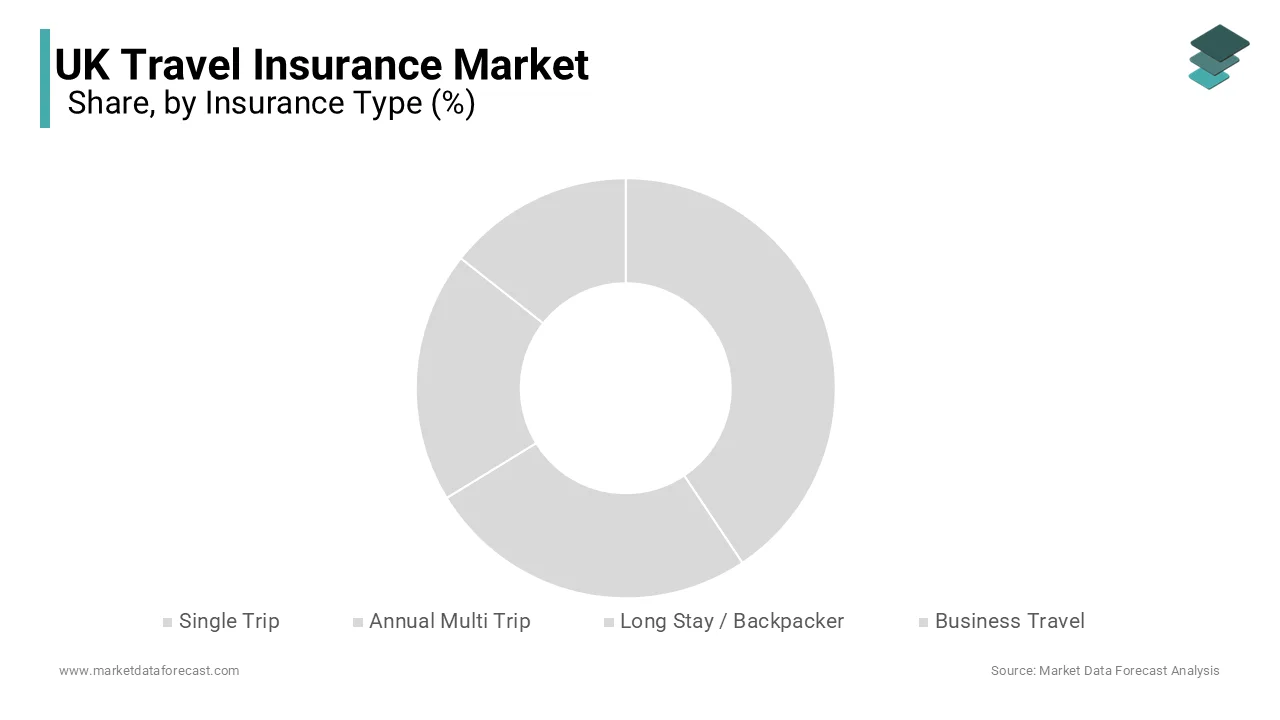
The single trip policies segment is estimated to register the fastest CAGR of 12.1% between 2026 and 2034. This quick surge of the segment is fueled by the increasing popularity of long haul and once in a lifetime holidays where travelers seek tailored coverage for specific high value trips rather than general annual protection. The trend towards experiential travel such as expeditions cruises and adventure tours requires specialized single trip policies that include activity specific riders and higher medical evacuation limits not always available in standard annual plans. Younger demographics and occasional travelers prefer the flexibility of paying only for the duration of their trip avoiding the upfront cost of annual cover. Online comparison platforms facilitate easy purchase of single trip policies allowing users to customize coverage levels based on destination risk and trip cost. The rise of last minute booking behavior supports this segment as travelers can secure insurance instantly up until the moment of departure. Post Brexit travel complexities have increased awareness of the need for specific medical and cancellation cover for European trips prompting many previously uninsured individuals to purchase single trip policies for their first overseas holidays in years. Insurers are responding with dynamic pricing models and add on options for gadgets and sports equipment making single trip products more attractive and relevant to modern travel patterns.
By Coverage Type Insights
The medical coverage segment led the United Kingdom travel insurance market and captured a 65.2% share in 2025. This leading position of the segment was attributed to the critical need for financial protection against high healthcare costs abroad particularly in countries without reciprocal health agreements. The Foreign Commonwealth and Development Office consistently advises travelers to obtain comprehensive medical insurance as state provided care under the Global Health Insurance Card is limited and does not cover repatriation or private treatment. Medical claims account for the highest value payouts in the industry with. The aging population contributes significantly to this dominance as older travelers require robust cover for pre existing conditions and potential health emergencies while abroad. Awareness campaigns highlighting the risks of traveling without adequate medical insurance have reinforced consumer behavior prioritizing health protection over other benefits. Insurers compete on the breadth of medical networks and speed of assistance services ensuring policyholders receive timely care anywhere in the world. The inclusion of telemedicine services in modern policies adds value by providing immediate remote consultations reducing the need for physical hospital visits for minor ailments. Regulatory requirements mandate clear disclosure of medical exclusions ensuring transparency and trust. Global healthcare costs continue to rise due to inflation and technological advancements. Consequently, substantial medical coverage remains paramount for UK travelers seeking peace of mind during their international journeys.
The trip cancellation and curtailment segment is anticipated to witness the fastest CAGR of 15.3% over the forecast period. This rapid growth is propelled by the increasing volatility of global travel conditions including airline strikes extreme weather events and geopolitical instability which frequently disrupt planned itineraries. Consumers are investing heavily in non refundable bookings for flights accommodations and tours making financial protection against unforeseen cancellations essential. Modern policies now offer cancellation for any reason options providing greater flexibility for travelers who may need to change plans due to personal reasons not covered by standard terms. The rise of complex multi center holidays increases the potential financial loss from interruption prompting travelers to seek higher coverage limits. Insurers are integrating real time risk monitoring tools that allow proactive claims management and alternative arrangement support enhancing the value proposition. Social media amplification of travel horror stories has heightened consumer awareness of the importance of cancellation cover driving uptake among younger and inexperienced travelers. For larger travel budgets, the cost of insurance is negligible compared to the risk of losing your holiday funds. Therefore, insurance is an indispensable part of comprehensive travel planning.
By Distribution Channel Insights
The online aggregators and direct insurer websites segment held the majority share of 43.4% of the United Kingdom travel insurance market in 2025 because of its convenience transparency and ability to facilitate quick price comparisons. Comparison sites allow consumers to evaluate multiple policies side by side based on price coverage limits and customer reviews empowering informed decision making without the need for intermediary advice. Direct websites offer streamlined user experiences with instant policy issuance and digital documentation appealing to tech savvy travelers who value efficiency. The competitive nature of online markets drives insurers to offer exclusive discounts and enhanced features to attract direct customers reducing acquisition costs associated with traditional broker commissions. Mobile optimization ensures that policies can be purchased anytime and anywhere accommodating last minute travel needs. Regulatory guidelines require clear presentation of key facts documents online ensuring that consumers understand what they are buying. The integration of artificial intelligence chatbots provides immediate customer support answering common queries and guiding users through the selection process. As digital literacy improves across all age groups, the preference for self-service online channels continues to strengthen. This shift has established the online segment as the primary engine for travel insurance sales in the UK.
The embedded insurance via travel booking platforms segment is likely to experience the fastest CAGR of 18.5% from 2026 to 2034 due to the seamless integration of insurance offers at the point of sale for flights hotels and holiday packages reducing friction in the purchasing journey. Travelers are increasingly likely to add insurance when presented with a relevant offer during the checkout process leveraging impulse buying behavior and contextual relevance. Major online travel agencies and airlines partner with insurers to provide white label policies that match the specific parameters of the booked trip ensuring appropriate coverage without requiring separate research. Data analytics enable personalized recommendations based on destination risk profile and traveler demographics increasing conversion rates. The convenience of managing insurance alongside travel itineraries in a single app enhances customer experience and retention. Regulatory frameworks support transparent disclosure of embedded products ensuring consumers are aware they are purchasing insurance. As mobile booking continues to rise embedded insurance benefits from the same trend offering instant protection with minimal effort. This channel captures customers who might otherwise overlook standalone insurance purchases expanding market reach to casual and infrequent travelers who prioritize simplicity and speed in their transaction processes.
By End User Insights
The individual travelers segment was the largest in the United Kingdom travel insurance market and occupied a substantial share in 2025. This supremacy of the segment was supported by the high volume of solo leisure trips and business travel undertaken by UK residents. The Office for National Statistics indicates that a significant proportion of outbound visits are made by individuals seeking personal holidays or attending professional conferences requiring tailored coverage for single occupants. Solo travelers often prioritize comprehensive medical and personal liability cover as they lack the immediate support network of family members while abroad. The rise of solo female travel and digital nomadism has expanded this demographic with individuals seeking flexible policies that cover extended stays and remote work liabilities. Insurers cater to this segment with customizable plans that allow selection of specific activities and destinations ensuring relevant protection without paying for unnecessary family benefits. Marketing campaigns focus on independence and safety appealing to the values of modern individual travelers. The ease of purchasing single person policies online further supports this segments dominance as it aligns with the autonomous nature of solo travel. Business travelers contribute significantly to this segment utilizing corporate negotiated rates or personal policies for work related trips ensuring continuity of coverage regardless of employment status. Lifestyle trends increasingly favor independent exploration over group tours. Consequently, the individual traveler segment remains the cornerstone of the UK travel insurance market.
The family groups segment is on the rise and is expected to be the fastest growing segment in the market by witnessing a CAGR of 14.6% during the forecast period owing to the post pandemic surge in family reunions and multi generational holidays as households prioritize shared experiences and quality time together. Parents are increasingly vigilant about securing comprehensive cover for children including medical emergencies lost passports and activity specific risks such as skiing or swimming lessons. Family policies offer cost advantages by covering all members under a single premium often with free cover for children under a certain age making them an attractive value proposition. The complexity of coordinating travel logistics for multiple family members increases the risk of disruption prompting higher uptake of cancellation and delay cover. Insurers are developing family friendly features such as simplified claims processes and dedicated support lines to address the specific needs of parents traveling with young children or elderly relatives. The trend towards longer summer holidays and school break travels drives demand for annual multi trip family policies that provide continuous protection throughout the year. Social influence and peer recommendations play a strong role in this segment as parents share advice on reliable insurers within community networks. Family travel is becoming more ambitious and expensive. Consequently, the need for robust financial protection continues to drive rapid growth in this segment.
COUNTRY LEVEL ANALYSIS
The United Kingdom was the prominent player in the European travel insurance market and accounted for a 21.7% share in 2025. A strong culture of international travel and high consumer awareness regarding the necessity of private coverage following changes to reciprocal healthcare agreements drives this dominance of the country. The market position shows resilience and adaptation with insurers rapidly innovating to address post Brexit regulatory complexities and evolving consumer expectations for digital service delivery. The Office for National Statistics confirmed that UK residents made 94.6 million visits abroad in 2024, exceeding the pre-pandemic peak of 93.1 million (2019) and reflecting a strong recovery in outbound tourism. High internet penetration and digital literacy facilitate widespread adoption of online comparison tools and direct purchase channels driving competition and transparency in pricing. Regulatory oversight by the Financial Conduct Authority ensures high standards of consumer protection and fair claims handling fostering trust in the insurance sector. The presence of major global insurers and innovative fintech startups creates a dynamic ecosystem that drives product development and service excellence. Government travel advisories and public health campaigns reinforce the importance of insurance educating consumers on risks associated with medical emergencies and trip disruptions. The UKs legal framework provides clarity on contract enforcement and dispute resolution attracting international players and investment. As climate change and geopolitical instability increase travel risks the UK market continues to lead in developing comprehensive and flexible insurance solutions that protect travelers in an increasingly uncertain global landscape.
COMPETITIVE LANDSCAPE
The competitive landscape in the United Kingdom travel insurance market features intense rivalry among established insurers specialist providers and emerging fintech companies. Traditional insurers leverage their brand recognition and financial stability to attract risk averse customers while fintechs disrupt the market with agile digital platforms and lower prices. Differentiation occurs through service quality coverage breadth and technological innovation such as instant claims settlement. Price competition is fierce due to the prevalence of online comparison tools which empower consumers to switch providers easily. Customer retention depends on proactive communication and value added services like travel assistance apps. Regulatory requirements create barriers to entry but also ensure fair practices across the sector. Consolidation trends are evident as larger firms acquire niche players to expand their product portfolios. The shift towards personalized and sustainable insurance products creates new competitive dimensions. Companies must continuously innovate to meet changing consumer expectations and navigate economic uncertainties affecting travel demand. This dynamic environment drives continuous improvement and adaptation among all market participants seeking to capture share in the evolving travel insurance sector.
KEY MARKET PLAYERS
Some of the companies that are playing a dominating role in the UK travel insurance market are
- Allianz Partners
- Aviva plc
- Direct Line Insurance Group plc
- Admiral Group plc
- AXA UK
- Zurich Insurance Group
- Staysure Group
- Saga plc
- AllClear Travel Insurance
- InsureandGo
- Europ Assistance UK
- Post Office Travel Insurance
- LV= (Liverpool Victoria)
- Coverwise
- World Nomads
- Nationwide Building Society
Top Players in the Market
- Allianz Partners maintains a strong presence in the United Kingdom travel insurance market by offering comprehensive coverage solutions for leisure and business travelers. The company leverages its global assistance network to provide rapid emergency support and medical repatriation services ensuring high quality care for policyholders abroad. Recent strategic initiatives include the integration of advanced digital claims processing systems that reduce settlement times and enhance customer satisfaction. Allianz has expanded its product portfolio to include specialized coverage for adventure sports and pre existing medical conditions addressing diverse consumer needs. Partnerships with major airlines and travel agencies facilitate embedded insurance offerings increasing accessibility for customers. The company invests heavily in cybersecurity measures to protect sensitive customer data maintaining trust and regulatory compliance. These actions reinforce its reputation for reliability and innovation in the competitive UK travel insurance landscape.
- AXA Assistance plays a pivotal role in the United Kingdom travel insurance sector by delivering robust medical and logistical support services to travelers worldwide. The company focuses on preventive care through telemedicine integrations allowing policyholders to access remote medical consultations before seeking physical treatment. Recent efforts involve enhancing its mobile application with real time travel alerts and location based safety features improving user engagement and risk management. AXA has strengthened its underwriting capabilities using artificial intelligence to offer more personalized pricing and faster policy issuance. Collaborations with healthcare providers ensure seamless cashless treatment options for members reducing financial stress during emergencies. The organization also prioritizes sustainability by promoting eco friendly travel practices among its clients. These developments solidify its position as a leading provider of innovative and customer centric travel protection solutions.
- Aviva Insurance contributes significantly to the United Kingdom travel insurance market through its extensive distribution network and trusted brand reputation. The company offers flexible single trip and annual multi trip policies tailored to various traveler profiles including families and seniors. Recent actions include the launch of dynamic pricing models that adjust premiums based on destination risk and travel behavior encouraging safer travel habits. Aviva has invested in upgrading its digital platforms to provide intuitive user experiences and instant policy documentation. Strategic partnerships with comparison websites increase visibility and attract price conscious consumers. The insurer also emphasizes transparent communication regarding coverage exclusions building long term customer loyalty. Aviva continues to strengthen its market position. It achieves this by focusing on operational efficiency and service quality to deliver value to policyholders across the region.
Top Strategies Used by Key Market Participants
Key players in the United Kingdom travel insurance market employ digital transformation strategies to streamline policy administration and enhance customer experience through mobile applications. They invest in artificial intelligence and data analytics to improve risk assessment accuracy and offer personalized pricing models. Partnerships with travel booking platforms enable embedded insurance sales capturing customers at the point of purchase. Companies focus on expanding coverage options for niche segments such as adventure tourism and pre existing medical conditions to differentiate their offerings. Enhancing claims processing speed through automation reduces operational costs and improves customer satisfaction. Regulatory compliance remains a priority with robust data protection measures ensuring adherence to legal standards. Marketing efforts leverage social media and influencer collaborations to reach younger demographics. These multifaceted approaches allow participants to maintain competitiveness and drive growth in a dynamic and evolving market environment.
MARKET SEGMENTATION
This research report on the UK travel insurance market is segmented and sub-segmented into the following categories.
By Insurance Type
- Single Trip
- Annual Multi Trip
- Long Stay / Backpacker
- Business Travel
By Coverage Type
- Baggage and Personal Effects
- Medical Only
- Trip Cancellation / Curtailment
- Others
By Distribution Channel
- Online Aggregators
- Direct Insurer Websites / Apps
- Insurance Brokers / IFAs
- Travel Agents / Tour Operators
- Banks and Credit Card Providers
By Destination Region
- European Coverage
- Worldwide Coverage
- Domestic Travel
By End User
- Individuals
- Families / Groups
- Corporate / SME Clients