- Product Description Description
- Table of Contents TOC
- List of Table & Figure LOT
- Get Free Sample PDF Sample PDF
Market Size, 2025
$113.13 BnMarket Estimate, 2026
$120.45 BnMarket Forecast, 2034
$198.90 BnCAGR, 2026–2034
6.47%UK Truck Market Report Summary
The UK truck market was valued at USD 113.13 billion in 2025, is estimated to reach USD 120.45 billion in 2026, and is projected to reach USD 198.90 billion by 2034, growing at a CAGR of 6.47% during the forecast period. Market growth is driven by increasing freight transportation demand, expansion of e commerce activities, rising infrastructure investments, and growing adoption of advanced commercial vehicle technologies. Fleet modernization initiatives, improvements in fuel efficiency, and the gradual transition toward low emission transportation solutions are further supporting market expansion across the United Kingdom.
Key Market Trends
- Growing demand for freight and logistics services is driving market growth.
- Increasing investments in fleet modernization and vehicle efficiency are boosting market expansion.
- Rising adoption of connected vehicle technologies and telematics is supporting industry development.
- Expansion of e commerce and last mile delivery networks is enhancing market opportunities.
- Growing focus on sustainable transportation and alternative fuel vehicles is influencing market advancement.
Segmental Insights
- Based on class, the Class 8 trucks segment accounted for 34.2% of the UK truck market share in 2025. This dominance is attributed to their extensive use in long haul transportation, heavy freight movement, and large scale logistics operations.
- Based on propulsion or fuel type, the internal combustion engine segment held the dominant share of the UK truck market in 2025, supported by widespread infrastructure availability, established operational networks, and lower upfront costs compared to alternative propulsion technologies.
- Based on transmission, the automated manual transmission segment accounted for 55.4% of the UK truck market share in 2025 due to improved fuel efficiency, reduced driver fatigue, and enhanced operational performance.
- Based on application, the logistics and transportation segment held 43.2% of the UK truck market share in 2025, driven by increasing freight volumes, supply chain expansion, and growing demand for commercial transportation services.
Regional Insights
- The United Kingdom continues to be a significant commercial vehicle market in Europe, supported by strong logistics infrastructure, increasing freight demand, and ongoing investments in transportation efficiency and sustainability initiatives.
Competitive Landscape
The UK truck market is highly competitive, with manufacturers focusing on fuel efficiency, fleet connectivity, vehicle safety, and alternative propulsion technologies to strengthen their market position. Companies continue to invest in electric trucks, hydrogen powered vehicles, advanced driver assistance systems, and smart fleet management solutions.
Key companies operating in the UK truck market include Daimler Truck AG, Volvo Trucks, Scania AB, MAN Truck & Bus, DAF Trucks, Iveco Group, Renault Trucks, Ford Trucks, Isuzu Motors Ltd., Mercedes Benz Trucks, Dennis Eagle, Tevva Motors, Volta Trucks, Leyland Trucks, and Wrightbus.
UK Truck Market Size
The UK truck market size was valued at USD 113.13 billion in 2025, and is projected to reach USD 198.90 billion by 2034 from USD 120.45 billion in 2026, growing at a CAGR of 6.47%.
The trucks are for national logistics and supply chain infrastructure facilitating the movement of goods, across domestic and international routes. As per data from the Department for Transport there are approximately 500000 heavy goods vehicles licensed in the United Kingdom amplifying the scale of freight capacity available to support economic activity. The industry operates within a stringent regulatory framework enforced by the Driver and Vehicle Standards Agency, which mandates regular safety inspections and compliance with emissions standards. Infrastructure constraints, such as bridge heights and urban access restrictions that further influence vehicle design and route planning.
MARKET DRIVERS
Expansion of E Commerce and Last Mile Delivery Demands
The rapid expansion of e-commerce and the consequent surge in last mile delivery demands is increasing the volume of parcels and goods requiring transportation. The expansion of e commerce and last mile delivery demands is fuelling the growth of the United Kingdom truck market. Consumer shifts toward online shopping have necessitated robust logistics networks capable of handling high frequency smaller consignments rather than traditional bulk shipments. This trend has led to an increased demand for medium duty trucks and rigid vehicles that can navigate urban environments efficiently, while delivering goods to distribution hubs and directly to consumers. Logistics companies are investing heavily in fleet modernization to meet tighter delivery windows and improve service reliability. The growth of same day and next day delivery services further intensifies the need for a larger and more flexible trucking workforce. The number of delivery vans and light trucks has risen significantly but heavy goods vehicles remain crucial for moving stock from ports and warehouses to regional distribution centers. The integration of advanced tracking systems and route optimization software allows operators to manage this complex web of deliveries effectively.
Infrastructure Investment and Construction Activity
The sustained infrastructure investment and robust construction activity by generating consistent demand for heavy duty vehicles and specialized transport services is also escalating the growth of the United Kingdom truck market. Government initiatives aimed at upgrading roads railways and energy networks require the movement of vast quantities of raw materials, such as aggregates steel and cement, which are predominantly transported by road. The construction sector contributes significantly to the national economy with major projects like HS2 and renewable energy installations driving freight volumes. These projects necessitate the use of tipper trucks concrete mixers and low loaders that are designed to handle heavy and bulky loads under challenging site conditions. The commitment to building new housing developments and commercial properties further supports this demand ensuring a steady stream of work for haulage companies. The public sector construction output has shown resilience despite economic fluctuations providing stability for truck operators. The geographic dispersion of construction sites across the country requires a widespread network of transport providers capable of reaching remote locations. Additionally, the maintenance of existing infrastructure such as bridges and tunnels creates ongoing opportunities for specialized hauling services.
MARKET RESTRAINTS
Chronic Driver Shortages and Workforce Aging
The chronic driver shortages and an aging workforce is limiting operational capacity and increasing labor costs, which is also ascribed in hindering the growth of the United Kingdom truck market. The industry has long struggled to attract younger entrants due to perceptions of difficult working conditions long hours away from home and the rigorous licensing requirements. This shortage has been exacerbated by the departure of European drivers following Brexit and the pandemic, which disrupted training and testing services. The average age of heavy goods vehicle drivers is over 55 years indicating that a large portion of the workforce is approaching retirement without sufficient replacements entering the pipeline. The recruitment and retention have become top priorities for fleet managers, who are forced to offer higher wages and better benefits to attract talent. These increased labor costs are often passed on to customers leading to higher freight rates, which can dampen demand for non-essential goods. The lack of drivers also results in underutilized assets as trucks sit idle due to the absence of qualified operators. This inefficiency reduces profitability and hinders the growth potential of logistics firms.
Regulatory Compliance and Environmental Pressures
The stringent regulatory compliance and mounting environmental pressure is additionally hindering the growth of the United Kingdom truck market. The government’s commitment to achieving net zero emissions by 2050 has led to the introduction of stricter emission standards and low emission zones in major cities. The trucks that do not meet specific Euro emission standards face daily charges or bans in urban areas, such as London Birmingham and Bristol. Compliance with these regulations requires significant capital investment in newer cleaner vehicles or retrofitting existing fleets with emission reduction technologies. The transition to electric or hydrogen powered trucks is hindered by high upfront costs and limited charging infrastructure making it difficult for small and medium sized enterprises to adapt. The cost of adhering to evolving safety and environmental regulations adds substantial financial burden to operators who already operate on thin margins. Regular mandatory testing and inspections that further increase downtime and administrative overheads. The complexity of navigating different local authority rules creates uncertainty and complicates route planning for national carriers. Failure to comply can result in hefty fines and reputational damage. These regulatory hurdles slow down fleet renewal cycles and restrict operational flexibility thereby constraining the overall growth and efficiency of the trucking sector in the United Kingdom.
MARKET OPPORTUNITIES
Adoption of Electric and Alternative Fuel Vehicles
The adoption of electric and alternative fuel vehicles is enabling operators to reduce operating costs and meet sustainability targets, which is solely attributed to expand the growth of the United Kingdom truck market. Advances in battery technology and hydrogen fuel cells are making zero emission trucks more viable for short and medium haul operations. The number of registered electric heavy goods vehicles is growing albeit from a low base reflecting early adoption by forward thinking fleets. Government grants and incentives for purchasing low emission vehicles help offset the higher initial purchase price making them more attractive to budget conscious operators. The development of dedicated charging infrastructure along major motorways and at distribution centers is improving the practicality of electric trucking. The total cost of ownership for electric trucks is expected to reach parity with diesel equivalents within the next decade due to lower fuel and maintenance expenses. Early adopters can gain a competitive advantage by marketing their green credentials to environmentally conscious clients who prioritize sustainable supply chains. Partnerships with energy providers and technology firms are accelerating the deployment of smart charging solutions that optimize energy usage and reduce peak demand charges.
Digitalization and Autonomous Driving Technologies
The digitalization and the emergence of autonomous driving technologies by enhancing safety efficiency and productivity is additionally to enhance the growth of the United Kingdom truck market in coming years. The integration of telematics Internet of Things sensors and artificial intelligence allows fleet managers to monitor vehicle performance driver behavior and cargo conditions in real time. Autonomous platooning where trucks travel closely together in a convoy using connected technology improves aerodynamics and fuel efficiency while reducing congestion on highways. Although fully driverless trucks are not yet widespread pilot programs are demonstrating the potential for automation to address driver shortages and improve safety by reducing human error. The automated systems can optimize routing and load management leading to significant cost savings. The data generated by digital platforms enables better decision making and transparency for customers, who demand visibility into their supply chains. Investment in cybersecurity and data analytics capabilities positions companies to leverage these technologies effectively.
MARKET CHALLENGES
Supply Chain Disruptions and Geopolitical Instability
The supply chain disruptions and geopolitical instability by creating uncertainty and volatility in freight demand and operational costs is to pose as a major challenge for the growth of the United Kingdom truck market. The aftermath of Brexit and global conflicts have disrupted traditional trade routes and introduced new border checks and customs procedures that delay cross border movements. The congestion at ports and border crossings has led to unpredictable transit times forcing operators to hold more inventory and adjust schedules frequently. These disruptions increase fuel consumption and wear and tear on vehicles due to idling and detours. The reliance on imported components for vehicle manufacturing and maintenance, also exposes the industry to global supply chain disruptions. The lead times for spare parts have extended causing longer repair durations and reduced fleet availability. Fluctuating exchange rates and inflationary pressures further complicate financial planning for haulage companies. The uncertainty surrounding future trade agreements and regulatory changes makes long term investment decisions risky. Operators must remain agile and diversify their customer base to mitigate the impact of sudden shocks.
Rising Operational Costs and Fuel Price Volatility
The rising operational costs and fuel price volatility by eroding profit margins and complicating pricing strategies is also a challenge for the growth of the United Kingdom truck market. Diesel prices, which constitute a major portion of operating expenses are subject to global fluctuations influenced by geopolitical events and production decisions. The fuel costs have experienced sharp increases in recent years placing immense pressure on hauliers who struggle to pass these costs on to customers immediately. The fixed nature of many freight contracts means that operators often absorb unexpected cost increases leading to reduced profitability. Many small businesses operate on marginal profits by making them vulnerable to even minor cost spikes. The transition to alternative fuels while promising involves high upfront investments that are difficult to justify in a high-cost environment. Cash flow management becomes critical as companies navigate periods of elevated expenses. The inability to predict future cost trends hinders strategic planning and investment in fleet renewal.
REPORT COVERAGE
| REPORT METRIC | DETAILS |
| Market Size Available | 2025 to 2034 |
| Base Year | 2025 |
| Forecast Period | 2026 to 2034 |
| CAGR | 6.47% |
| Segments Covered | By Class, Propulsion/Fuel, Transmission, Autonomy Level, Application, and Region. |
| Various Analyses Covered | Global, Regional and Country-Level Analysis, Segment-Level Analysis, Drivers, Restraints, Opportunities, Challenges; PESTLE Analysis; Porter’s Five Forces Analysis, Competitive Landscape, Analyst Overview of Investment Opportunities |
| Market Leaders Profiled | Daimler Truck AG, Volvo Trucks, Scania AB, MAN Truck & Bus, DAF Trucks, Iveco Group, Renault Trucks, Ford Trucks, Isuzu Motors Ltd., Mercedes Benz Trucks, Dennis Eagle, Tevva Motors, Volta Trucks, Leyland Trucks, and Wrightbus |
SEGMENTAL ANALYSIS
By Class Insights
The Class 8 trucks segment was accounted in holding 34.2% of the truck market share in 2025. These vehicles are the backbone of the supply chain responsible for moving bulk goods raw materials and finished products across vast distances efficiently. The efficiency of moving large volumes in single trips reduces the number of journeys required lowering overall congestion and operational costs for logistics companies. The extensive motorway network in the United Kingdom is designed to accommodate these large vehicles facilitating seamless connectivity between major ports industrial hubs and distribution centers. The reliability and capacity of Class 8 trucks make them indispensable for just in time manufacturing and retail replenishment strategies. The ability to carry standardized shipping containers further enhances their utility in global trade operations. This economic advantage ensures their continued preference among fleet operators who prioritize efficiency and volume.
The class 6 and 7 trucks segment is lucratively growing at a fastest CAGR of 4.2% from 2026 to 2034. These vehicles offer a balance between payload capacity and maneuverability making them ideal for navigating congested city streets and serving local businesses. The expansion of e-commerce has increased the demand for smaller more agile trucks that can perform last mile deliveries efficiently without the restrictions faced by larger lorries. Urban low emission zones and access restrictions often limit the operation of heavy Class 8 trucks prompting retailers and courier services to adopt medium duty alternatives for final stage logistics. The versatility of Class 6 and 7 trucks allows them to be configured for various applications including refrigerated transport box vans and flatbeds catering to diverse industry requirements. The shift toward decentralized warehousing located closer to urban centers has boosted the utilization of medium duty fleets for short haul trips. These vehicles consume less fuel and produce lower emissions compared to heavy trucks aligning with corporate sustainability goals. The lower licensing barriers for drivers also alleviate some of the workforce shortages affecting the heavier classes.
By Propulsion/Fuel Insights
The internal combustion engine segment held a dominant share of the United Kingdom truck market in 2025 due to the established refueling infrastructure and operational convenience they offer. The extensive network of service stations across the country ensures that diesel powered trucks can operate continuously over long distances without significant downtime for refueling. The energy density of diesel fuel provides the necessary power and range for heavy loads and long haul journeys, which current alternative technologies struggle to match consistently. Fleet operators rely on the predictability and reliability of diesel engines, which have been refined over decades to deliver robust performance in varied weather and road conditions. The familiarity of mechanics with diesel technology ensures easy maintenance and repair availability nationwide reducing operational risks. Although, environmental concerns are rising the immediate practicality of diesel keeps it as the default choice for most logistics’ companies. The lack of comprehensive charging or hydrogen refueling networks for heavy vehicles further entrenches the dominance of internal combustion engines.
The battery electric vehicles segment is lucratively to grow at a fastest CAGR of 15.8% during the forecast period with the aggressive government incentives and net zero mandates. The UK government has set ambitious targets to phase out new diesel and petrol trucks by 2040, creating a urgent timeline for fleet electrification. The substantial grants are available for purchasing electric heavy goods vehicles and installing charging infrastructure reducing the financial barrier for early adopters. Clean Air Zones in major cities impose daily charges on non-compliant vehicles are making electric trucks a cost effective solution for urban logistics operators. The commitment of large retailers and logistics providers to carbon neutrality goals is accelerating the transition to electric fleets. Several major supermarket chains and courier companies have announced plans to electrify their delivery fleets within the next decade. This corporate demand is stimulating investment in electric truck manufacturing and technology development. The regulatory pressure combined with financial support creates a favorable environment for rapid adoption. As battery technology improves and costs decline the economic case for electric trucks strengthens.
By Transmission Insights
The automated manual transmission systems segment was the largest by accounting for 55.4% of the United Kingdom truck market share in 2025 due to their ability to optimize fuel efficiency and enhance driver comfort through precise gear shifting. These transmissions combine the mechanical efficiency of manual gearboxes with electronic control units that select the optimal gear for current driving conditions. This fuel saving is important for operators facing high diesel prices and strict emission targets. The reduction in driver workload allows operators to focus more on road safety and navigation reducing fatigue during long journeys. The ease of use associated with automated transmissions makes recruitment easier as it lowers the skill threshold required for smooth operation. Modern automated systems learn driving styles and adapt to terrain ensuring consistent performance across different routes.
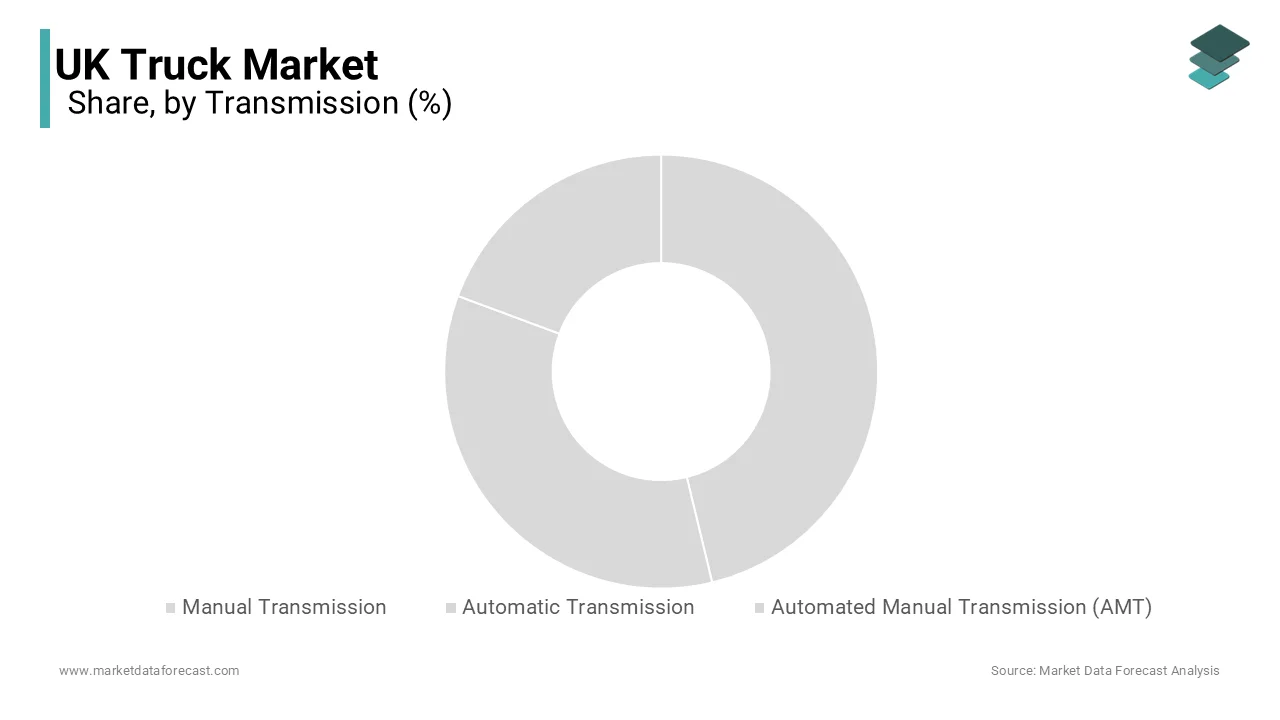
The automatic transmissions segment is likely to witness a fastest CAGR of 6.5% during the forecast period with the demands of urban delivery and frequent stop start operations. In congested city, environments the constant gear changes required in manual or automated manual systems can lead to driver fatigue and increased wear. Automatic transmissions provide seamless power delivery without interruption making them ideal for multi drop delivery routes. The use of automatic trucks has increased significantly in last mile delivery fleets, where ease of operation is paramount. The smooth acceleration and deceleration improve passenger comfort in crew cab vehicles and reduce stress on the drivetrain. The simplicity of operation allows for quicker driver onboarding which is beneficial in a tight labor market. Additionally automatic systems can integrate better with hybrid and electric powertrains which are gaining traction in urban areas. The reduction in clutch wear and maintenance requirements lowers total cost of ownership for high mileage urban fleets.
By Application Insights
The logistics and transportation segment was accounted in holding 43.2% of the United Kingdom truck market share in 2025 due to their role as the backbone of the national supply chain and retail distribution network. This sector encompasses the movement of goods from manufacturers to warehouses and finally to retailers ensuring product availability across the country. The logistics industry contributes significantly to the UK GDP relying heavily on road freight for its flexibility and reach. The majority of consumer goods food items and industrial materials are transported by trucks making this segment the largest consumer of commercial vehicles. The growth of just in time inventory management practices has increased the frequency of deliveries requiring a robust and responsive trucking fleet. The extensive network of distribution centers across the UK necessitates a large number of trucks for line haul and regional distribution. The reliability of truck transport ensures that supply chains remain resilient against disruptions. The sheer volume of goods moved daily by logistics companies sustains high demand for new and replacement trucks.
The retail and e-commerce segment is expected to grow at a fastest CAGR of in the UK truck market with a projected compound annual growth rate of 5.8% driven by the surge in online shopping and home delivery services. Consumers are increasingly purchasing goods online ranging from groceries to electronics requiring efficient delivery networks to reach their doorsteps. The online retail sales have grown substantially creating a high demand for delivery vehicles and supporting trucks. The need for rapid fulfillment has led to the expansion of local distribution centers, which rely on trucks for replenishment. The frequency of deliveries has increased with same day and next day options becoming standard expectations for shoppers. The fragmentation of deliveries into smaller parcels requires a flexible and responsive trucking infrastructure. Retailers are investing in dedicated fleets to control their supply chains and ensure brand consistency. The growth of online grocery shopping has particularly boosted the need for refrigerated trucks and temperature-controlled logistics. This shift in consumer behavior is structural and expected to continue driving demand for retail focused transport solutions. The expansion of e commerce platforms into rural areas further extends the reach of trucking services.
COMPETITIVE LANDSCAPE
The competition in the UK truck market is intense and characterized by the presence of established global manufacturers who compete on technology reliability and total cost of ownership. Major brands such as Volvo Mercedes Benz and DAF dominate the landscape by offering comprehensive product portfolios that range from light commercial vehicles to heavy duty articulated lorries. Competition is driven by the need to meet strict emission standards and the growing demand for electric and alternative fuel vehicles. Manufacturers differentiate themselves through advanced digital services predictive maintenance tools and superior after sales support networks. Price sensitivity remains a factor but fleet operators increasingly prioritize fuel efficiency and uptime over initial purchase price. The entry of new electric vehicle specialists adds pressure on traditional incumbents to accelerate their innovation cycles. Regulatory frameworks such as low emission zones influence purchasing decisions forcing companies to adapt quickly. Strong dealer networks and financing solutions play a crucial role in securing contracts with large logistics firms. The market is also shaped by the availability of skilled drivers and the need for vehicles that enhance driver comfort and safety.
KEY MARKET PLAYERS
Some of the companies that are playing a dominating role in the UK truck market are
- Daimler Truck AG
- Volvo Trucks
- Scania AB
- MAN Truck & Bus
- DAF Trucks
- Iveco Group
- Renault Trucks
- Ford Trucks
- Isuzu Motors Ltd.
- Mercedes Benz Trucks
- Dennis Eagle
- Tevva Motors
- Volta Trucks
- Leyland Trucks
- Wrightbus (commercial vehicle segment)
Top Players in the Market
- Volvo Trucks UK maintains a prominent position in the commercial vehicle sector by delivering high quality heavy duty trucks known for safety and durability. The company actively supports the transition to sustainable transport through its extensive range of electric trucks designed for regional and urban distribution. Volvo has expanded its charging infrastructure partnerships to facilitate easier adoption of battery electric vehicles among fleet operators. The brand focuses on digital services that enhance uptime and fuel efficiency through connected vehicle technologies. Their commitment to zero emissions aligns with national environmental goals ensuring they remain a preferred choice for logistics companies seeking to modernize their fleets while maintaining operational reliability and performance standards in the competitive British market.
- Mercedes Benz Trucks UK serves as a key provider of premium commercial vehicles offering advanced engineering and innovative solutions for diverse transport needs. The company is heavily involved in developing autonomous driving technologies and connectivity features that improve safety and productivity for drivers. Mercedes Benz has introduced new generations of diesel engines that meet strict emission standards while optimizing fuel consumption for long haul operations. They are also expanding their electric truck portfolio with models tailored for heavy duty applications. The brand emphasizes total cost of ownership benefits through predictive maintenance systems and efficient service networks.
- DAF Trucks UK is a major participant in the market recognized for producing efficient and driver friendly trucks that cater to various logistical requirements. The company has recently invested significantly in expanding its production capabilities and dealer network to better serve customers across the United Kingdom. DAF focuses on sustainability by launching new electric models and improving the aerodynamics of their conventional trucks to reduce carbon footprints. They offer customized financial services and flexible leasing options that help businesses manage cash flow effectively. The brand prioritizes driver comfort with spacious cabs and intuitive controls which aids in recruitment and retention for fleet operators.
Top Strategies Used by Key Market Participants
Key players in the UK truck market primarily focus on electrification and alternative fuel technologies to comply with stringent environmental regulations and meet sustainability targets. Companies invest heavily in research and development to create battery electric and hydrogen fuel cell trucks that offer viable zero emission solutions for urban and regional transport. Strategic partnerships with energy providers and charging infrastructure developers are essential to support the widespread adoption of these new technologies. Manufacturers also emphasize digitalization by integrating telematics and artificial intelligence into vehicles to optimize fleet management and predictive maintenance. Enhancing driver experience through improved cabin ergonomics and safety features helps address workforce shortages. Expanding after sales services and offering flexible financing options strengthen customer relationships. These strategies enable participants to adapt to regulatory changes reduce operational costs for clients and maintain competitiveness in a rapidly evolving commercial vehicle landscape focused on efficiency and environmental responsibility.
MARKET SEGMENTATION
This research report on the UK truck market is segmented and sub-segmented into the following categories.
By Class
- Class 3
- Class 4
- Class 5
- Class 6
- Class 7
- Class 8
By Propulsion/Fuel
- Internal Combustion Engine (ICE)
- Battery Electric Vehicle (BEV)
- Hybrid Electric Vehicle (HEV)
- Fuel Cell Electric Vehicle (FCEV)
By Transmission
- Manual Transmission
- Automatic Transmission
- Automated Manual Transmission (AMT)
By Autonomy Level
- Level 0
- Level 1
- Level 2
- Level 3
- Level 4
- Level 5
By Application
- Logistics & Transportation
- Construction & Infrastructure
- Retail & E-commerce
- Agriculture & Forestry
- Mining
- Others