UK Vending Machine Market Size, Share, Trends & Growth Forecast Report - Segmented By Product, Location, Payment Mode, and By Country - Industry Analysis and Forecast, 2026 to 2034
Market Size, 2025
$24.01 BnMarket Estimate, 2026
$24.75 BnMarket Forecast, 2034
$31.26 BnCAGR, 2026–2034
3.05%UK Vending Machine Market Report Summary
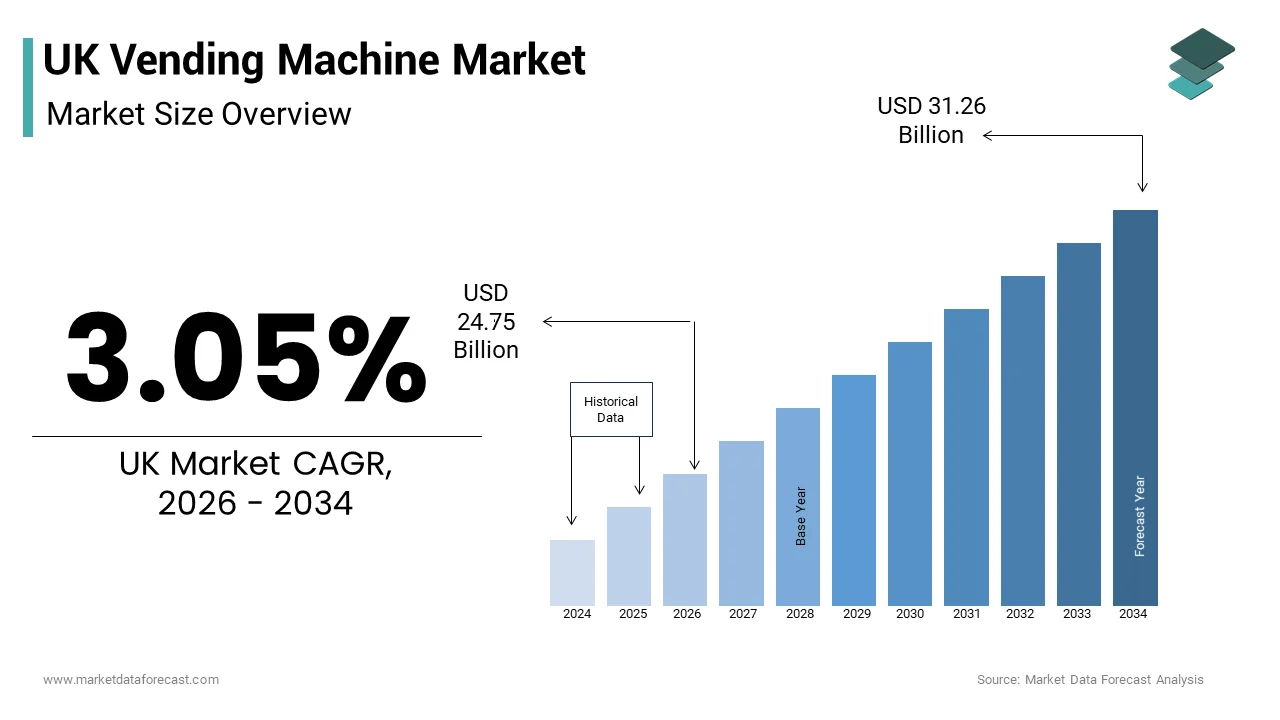
The UK vending machine market was valued at USD 24.01 billion in 2025 and is anticipated to reach USD 24.75 billion in 2026 and further expand to USD 31.26 billion by 2034, growing at a CAGR of 3.05% during the forecast period from 2026 to 2034. The growth of the UK vending machine market is driven by increasing demand for convenient self-service retail solutions, rising adoption of cashless payment technologies, and expanding deployment of vending machines across workplaces, transportation hubs, educational institutions, and public spaces. Technological advancements in smart vending systems, remote monitoring capabilities, and personalized consumer experiences are further supporting market expansion. Additionally, growing demand for on-the-go food and beverage consumption and the integration of digital payment platforms are creating new growth opportunities across the market.
Key Market Trends
- Rising adoption of smart vending machines equipped with touchless payments, real-time inventory tracking, and remote management systems.
- Increasing consumer preference for convenient and contactless purchasing experiences across public and commercial locations.
- Growing deployment of vending machines offering healthier snacks, beverages, and fresh food options to meet changing consumer preferences.
- Expansion of cashless payment technologies, including mobile wallets, QR code payments, and contactless card transactions.
- Increasing use of data analytics and connected vending solutions to optimize inventory management, product selection, and operational efficiency.
Segmental Insights
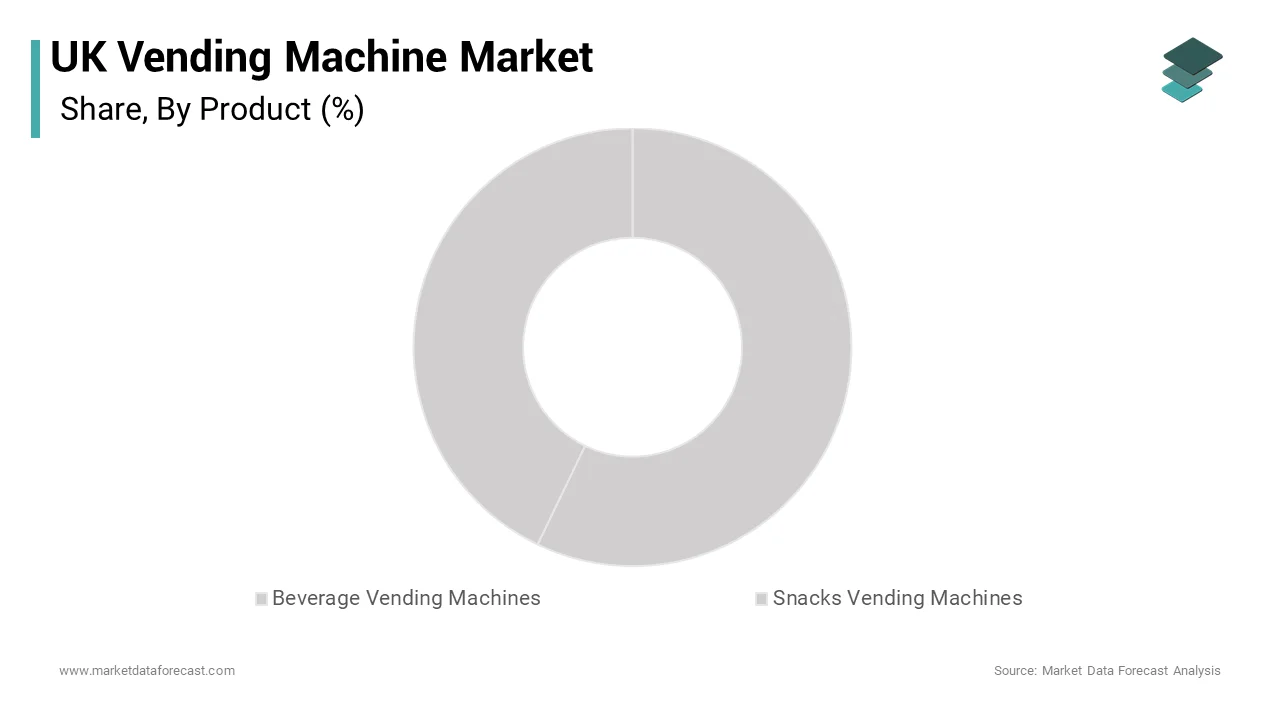
- Based on product, the beverage vending machines segment dominated the UK vending machine market and accounted for 41.5% of the market share in 2025. The segment’s leadership is attributed to strong consumer demand for hot and cold beverages, widespread installation in offices and public spaces, and the convenience of automated beverage dispensing solutions.
- Based on location, the offices segment held the largest share of the UK vending machine market, capturing 22.1% in 2025. The segment's dominance is driven by increasing workplace demand for convenient food and beverage access, employee welfare initiatives, and the growing adoption of self-service refreshment solutions in corporate environments.
Regional Insights
The United Kingdom held the leading position in the European vending machine market and accounted for 18.5% of the regional market share in 2025. Market growth is supported by a mature retail infrastructure, widespread acceptance of automated retail technologies, and increasing demand for convenience-based consumer services. The country's strong adoption of digital payment systems, coupled with the growing presence of smart vending solutions across commercial and public locations, continues to strengthen its position as a key market within Europe.
Competitive Landscape
The UK vending machine market is characterized by the presence of established manufacturers, service providers, and automated retail operators competing through technological innovation, product diversification, and service expansion. Companies are focusing on smart vending technologies, energy-efficient machines, cashless payment integration, and enhanced consumer engagement features to strengthen their market positions. Strategic partnerships, machine upgrades, and investments in connected retail solutions remain key strategies driving competitiveness across the industry.
Prominent players in the UK vending machine market include Azkoyen Group, Westomatic Vending Services Limited, Royal Vendors, Inc., Automatic Retailing Company (ARC), Compass Group UK & Ireland, Glory Ltd., Sanden Holding Corp., Seaga Manufacturing Inc., Orasesta S.p.A, Sellmat s.r.l., Fuji Electric Co., Ltd., Selecta Group, Express Vending, and DGA Vending GmbH.
UK Vending Machine Market Size
The UK vending machine market size was valued at USD 24.01 billion in 2025 and is anticipated to reach USD 24.75 billion in 2026 to reach USD 31.26 billion by 2034, growing at a CAGR of 3.05% during the forecast period from 2026 to 2034.
A vending machine is an automated self-service system that dispenses items, like snacks, beverages, or tickets, once payment is inserted and a selection is made. The UK remains a top European market. This market has evolved significantly from traditional snack dispensers to sophisticated smart machines equipped with cashless payment systems remote monitoring capabilities and interactive digital interfaces. The market serves diverse environments including corporate offices educational institutions healthcare facilities and transport hubs providing convenient access to products around the clock. As per data from the Automatic Vending Association, there are approximately 500,000 vending machines operating across the United Kingdom, serving millions of consumers daily. The shift toward contactless transactions has been pivotal with over 90 percent of modern machines now accepting card and mobile payments according to industry assessments. Consumer behavior trends indicate a growing preference for healthier options and fresh food which has prompted operators to diversify their product portfolios beyond confectionery and sugary drinks. The integration of Internet of Things technology allows operators to optimize inventory management and reduce waste through real time data analytics. Furthermore the rise of micro markets and unmanned retail concepts is blurring the lines between traditional vending and convenience stores. Regulatory frameworks regarding food safety and energy efficiency also shape operational standards ensuring high quality service delivery. This market continues to adapt to urbanization and changing work patterns offering scalable solutions for immediate consumer needs while leveraging technological advancements to enhance user experience and operational efficiency.
MARKET DRIVERS
Proliferation of Cashless Payment Technologies
The widespread adoption of cashless payment technologies is a primary driver for the UK vending machine market. This removes friction from the purchasing process and aligns with modern consumer preferences. The decline in physical cash usage has necessitated the integration of contactless card readers and mobile wallet compatibility into vending infrastructure. As per data from UK Finance contactless payments account for more than half of all debit and credit card transactions in the United Kingdom reflecting a fundamental shift in payment habits. Vending operators who fail to offer seamless digital payment options risk losing significant revenue as consumers increasingly carry less cash. The introduction of Near Field Communication technology enables faster transaction times which is crucial in high traffic areas such as train stations and office lobbies where speed is valued. According to surveys machines equipped with cashless systems report up to 40 percent higher sales volumes compared to cash only units due to increased impulse purchases and convenience. The ability to process payments securely without the need for physical coin handling also reduces maintenance costs and theft risks for operators. Furthermore the integration of loyalty programs and digital receipts through mobile apps enhances customer engagement and retention. This technological evolution not only improves the user experience but also provides operators with valuable data on purchasing patterns enabling better stock management and personalized marketing strategies that drive sustained growth in the sector.
Demand for Convenience and 24/7 Accessibility
The escalating demand for convenience and round-the-clock accessibility also propels the UK vending machine market. This addresses the needs of busy consumers and accommodates evolving work patterns. Modern lifestyles characterized by longer working hours and irregular schedules have increased the reliance on immediate gratification and easy access to essentials. As per statistics from the Office for National Statistics, the number of people utilizing flexible working arrangements has risen significantly, creating a need for self-service options that operate outside traditional retail opening times. Vending machines provide a reliable solution for obtaining snacks beverages and even personal care items at any time of day or night without the wait times associated with staffed stores. This is particularly relevant in sectors such as healthcare and manufacturing where shifts run continuously and on site retail options may be limited. According to workplace studies employees value the proximity and speed of vending services which help maintain productivity and morale during breaks. The expansion of vending networks into residential complexes and university campuses further underscores this trend as students and residents seek late night options. The ability of vending machines to occupy small footprints allows them to be placed in high density areas where space is at a premium. This ubiquity ensures that consumers can satisfy immediate needs effortlessly reinforcing the role of vending as an integral part of the daily routine and driving consistent demand for automated retail solutions.
MARKET RESTRAINTS
Health Consciousness and Regulatory Pressure on Sugary Products
Growing health consciousness and stringent regulatory pressure on sugary and high fat products are significant restraints on the UK vending machine market. This limits the range of traditionally popular items. Public health campaigns and government initiatives aimed at combating obesity have led to increased scrutiny of vending machine contents particularly in schools hospitals and public sector buildings. As per NHS England CQUIN mandates, hospital trusts have implemented strict policies restricting the sale of confectionery and sugary soft drinks in vending machines to promote healthier staff and patient dietary choices. The Soft Drinks Industry Levy has primarily driven manufacturers to reformulate products to reduce sugar content. For remaining high-sugar beverages, operators typically pass the levy cost to consumers, neutralizing the direct impact on profit margins. According to studies, while fresh alternatives like fruit require stricter stock management due to shorter shelf lives, they can command premium pricing that maintains competitive profit margins of 30-50%, provided sales volumes are consistent. Consumers are becoming more label aware and discerning leading to decreased demand for traditional vending staples like chocolate bars and crisps. Operators must constantly reformulate their product offerings to comply with these expectations which requires investment in new supply chains and refrigeration technologies for perishable goods. This transition poses operational challenges as managing fresh inventory is more complex than handling packaged dry goods. The negative perception of vending machines as sources of unhealthy junk food further hampers growth unless operators can successfully rebrand their services as providers of nutritious and balanced options.
High Operational and Maintenance Costs
High operational and maintenance costs are formidable barriers for the UK vending machine market. This squeezes profit margins and complicates business scalability. The logistics of restocking servicing and repairing a dispersed network of machines require significant resource allocation and efficient route planning. As per data from the British Automatic Merchandising Association fuel prices and labor costs constitute a major portion of operational expenses which have risen sharply in recent years due to inflationary pressures. Each machine requires regular visits for cleaning technical checks and inventory replenishment which can be costly if not optimized through advanced telemetry systems. The complexity of modern smart machines with digital screens and cashless payment modules also increases the risk of technical failures requiring specialized repair skills and expensive spare parts. According to sources, downtime due to mechanical issues or stock outs directly impacts revenue and customer satisfaction making reliability a critical concern. Energy costs for refrigerated units are another significant burden especially with rising electricity prices affecting profitability. Small independent operators often struggle to achieve the economies of scale necessary to absorb these costs effectively. Additionally the need for insurance and compliance with food safety regulations adds to the financial burden. These cumulative expenses make it challenging for new entrants to establish a foothold and for existing players to expand their networks without substantial capital investment and rigorous cost management strategies.
MARKET OPPORTUNITIES
Integration of Smart Technology and Data Analytics
The integration of smart technology and data analytics offers a substantial opportunity for the UK vending machine market. This enables operators to optimize operations and enhance customer experiences through real time insights. Internet of Things enabled machines can transmit data on inventory levels sales patterns and machine health to central management systems allowing for predictive maintenance and efficient restocking routes. As per research, the use of artificial intelligence algorithms helps predict demand fluctuations based on factors such as weather location and time of day ensuring that popular items are always available. This data driven approach reduces waste and maximizes sales potential by aligning stock with consumer preferences. Smart machines also support dynamic pricing strategies where prices can be adjusted automatically based on demand or expiration dates to minimize loss. According to technology providers the implementation of remote monitoring systems can reduce operational costs by up to 30 percent by minimizing unnecessary site visits. Furthermore the connectivity allows for interactive advertising and personalized promotions displayed on digital screens which can generate additional revenue streams. The ability to track consumer behavior anonymously helps operators tailor product assortments to specific locations improving satisfaction and loyalty. As 5G networks expand the speed and reliability of data transmission will further enhance these capabilities. This technological evolution transforms vending from a passive distribution channel into an intelligent retail platform that offers valuable business intelligence and improved service efficiency.
Expansion into Fresh Food and Healthy Options
The expansion into fresh food and healthy options paves the way for the growth of the UK vending machine market. This growth taps into the growing demand for nutritious and convenient meal solutions. Advances in refrigeration and packaging technologies now allow vending machines to dispense salads sandwiches fresh juices and warm meals with extended shelf life and maintained quality. As per research the global trend toward health and wellness is driving consumers to seek alternatives to traditional processed snacks particularly in workplace and educational settings. Operators who introduce fresh food lines can differentiate themselves from competitors and command higher price points due to the perceived value of healthy meals. Partnerships with local suppliers and cloud kitchens can ensure a steady supply of fresh ingredients while supporting sustainability goals. According to consumer surveys there is a strong willingness among office workers to purchase lunch items from vending machines if they are fresh and reasonably priced. This segment also aligns with corporate wellness programs that encourage healthy eating habits among employees. The introduction of microwave enabled vending units further expands the range of hot meal options available. By positioning vending machines as sources of balanced nutrition rather than just snacks operators can access new revenue streams and increase transaction frequency. This shift requires investment in cold chain logistics and strict hygiene protocols but offers significant growth potential in a market increasingly focused on health conscious consumption.
MARKET CHALLENGES
Vandalism and Security Concerns
Vandalism and security concerns are a major challenge to the UK vending machine market. This causes financial losses and operational disruptions for operators. Machines located in public spaces or unsupervised areas are vulnerable to theft break ins and deliberate damage which can result in costly repairs and lost inventory. As per reports from crime prevention agencies incidents of vandalism against street furniture including vending machines remain a persistent issue in certain urban areas. The cost of replacing glass doors repairing internal components and restocking stolen goods erodes profit margins and discourages placement in high risk locations. Operators must invest in robust security measures such as reinforced casings surveillance cameras and alarm systems which increase initial capital expenditure. According to sources, the fear of vandalism limits the expansion of vending networks into outdoor or remote locations where demand might otherwise exist. Insurance premiums for covering theft and damage also add to the operational burden. Additionally the psychological impact of repeated vandalism can lead operators to withdraw from certain sites reducing overall market presence. The need for constant monitoring and rapid response to incidents strains resources particularly for smaller companies. While technological solutions like remote locking and tamper alerts help mitigate risks they cannot entirely eliminate the threat. This security challenge requires a balanced approach involving community engagement strategic site selection and investment in durable hardware to protect assets and ensure business continuity.
Supply Chain Volatility and Product Availability
Supply chain volatility and product availability further impede the expansion of the UK vending machine market. This disrupts inventory consistency and affects customer satisfaction. Global disruptions raw material shortages and logistical bottlenecks can lead to inconsistent supply of popular snacks and beverages forcing operators to frequently adjust their product mix. As per data from the Confederation of British Industry supply chain delays have become more frequent impacting the ability of manufacturers to deliver goods on time. This unpredictability makes it difficult for vending operators to maintain optimal stock levels leading to empty slots and lost sales opportunities. The reliance on specific branded products means that substitutions may not always be accepted by loyal customers who prefer familiar items. According to operator surveys the inability to secure consistent supplies of key items such as coffee pods or specific soft drinks can significantly impact revenue. The complexity of managing multiple suppliers for diverse product categories exacerbates the issue requiring sophisticated procurement strategies. Rising transportation costs further complicate the logistics of restocking dispersed machine networks. Operators must maintain higher safety stocks which ties up capital and increases storage requirements. The lack of visibility into upstream supply chain issues makes proactive planning challenging. This volatility forces operators to be agile and flexible but often at the cost of efficiency and profitability. Ensuring reliable product availability remains a critical operational hurdle that requires strong supplier relationships and diversified sourcing strategies to mitigate risks.
REPORT COVERAGE
| REPORT METRIC | DETAILS |
| Market Size Available | 2025 to 2034 |
| Base Year | 2025 |
| Forecast Period | 2026 to 2034 |
| CAGR | 3.05% |
| Segments Covered | By Product, Location, Payment Mode, Country |
| Various Analyses Covered | Global, Regional, and Country Level Analysis, Segment-Level Analysis; DROC, PESTLE Analysis; Porter’s Five Forces Analysis; Competitive Landscape; Analyst Overview of Investment Opportunities. |
| Regions Covered | London, South East, North West, East of England, South West, Scotland, West Midlands, Yorkshire and The Humber, East Midlands, Others |
| Market Leaders Profiled | Azkoyen Group, Westomatic Vending Services Limited, Royal Vendors, Inc., Automatic Retailing Company (ARC), Compass Group UK & Ireland, Glory Ltd., Sanden Holding Corp., Seaga Manufacturing Inc., Orasesta S.p.A, Sellmat s.r.l., Fuji Electric Co., Ltd., Selecta Group, Express Vending, DGA Vending GmbH |
SEGMENTAL ANALYSIS
By Product Insights
Beverage Vending Machines
The beverage vending machines segment dominated the UK vending machine market and accounted for a 41.5% share in 2025. This dominance of the segment in the country’s market was driven by the universal and frequent need for hydration across all demographic groups and settings. Unlike snacks which are often consumed as occasional treats beverages such as water coffee tea and soft drinks are daily essentials for millions of workers students and commuters. As per data from the British Soft Drinks Association, the average person in the United Kingdom consumes approximately 229 litres of soft drinks annually, highlighting the massive volume potential for automated dispensing channels. The integration of advanced brewing technologies in modern machines allows for the preparation of fresh hot beverages like espresso and cappuccino which command higher price points and attract a broader customer base including professionals seeking quality coffee on the go. The versatility of beverage machines to offer both cold and hot options ensures year round demand regardless of seasonal weather changes. According to research, workplace environments heavily rely on these machines to supplement canteen facilities providing employees with immediate access to caffeine and refreshments that boost productivity. The high turnover rate of beverages also ensures consistent revenue streams for operators as inventory is replenished frequently. Furthermore the rise of health consciousness has increased the demand for bottled water and sugar free options which are easily accommodated in standard beverage vending units. This consistent and high volume demand cements the dominance of the beverage segment in the overall market structure.
The domination of beverage vending machines is further reinforced by significant technological advancements in dispensing systems that enhance product quality and user experience. Modern machines now feature sophisticated temperature control mechanisms that keep cold drinks chilled and hot beverages at optimal serving temperatures ensuring customer satisfaction. As per reports from equipment manufacturers the adoption of touch screen interfaces and cashless payment systems has streamlined the purchasing process reducing transaction times and increasing throughput in high traffic areas. The ability to customize drinks allowing users to select strength sweetness and milk preferences adds a level of personalization that rivals traditional cafes. According to the Automatic Vending Association (AVA), machines equipped with modern telemetry systems allow operators to monitor ingredient levels and machine performance in real time, minimizing downtime and ensuring consistent service quality. The introduction of energy efficient compressors and LED lighting has also reduced operational costs making beverage machines more profitable for operators. These technical improvements have transformed beverage vending from a simple dispensing service into a premium retail experience. The reliability and consistency of automated brewing systems build trust among consumers who expect a certain standard of quality. This technological edge ensures that beverage vending machines remain the preferred choice for location owners looking to provide high value amenities to their visitors and occupants.
Snacks Vending Machines
The snacks vending machines segment is predicted to witness the highest CAGR of 5.2% from 2026 to 2034 due to the diversification into healthy and fresh food options. Operators are increasingly replacing traditional confectionery and crisps with nutritious alternatives such as protein bars fresh fruit salads sandwiches and yogurt to meet evolving consumer preferences. As per Food Standards Agency consumer tracking, there is widespread demand for transparent labeling, while their specific vending guidance targets public sector and educational environments to promote healthier choices. This shift allows vending machines to compete directly with convenience stores and cafes for meal and snack occasions. The development of smart refrigeration units has enabled the safe storage and dispensing of perishable items extending the shelf life and appeal of fresh products. According to sources, workplaces that offer healthy vending options report higher employee satisfaction and engagement as staff appreciate the convenience of accessing balanced meals without leaving the premises. The ability to cater to specific dietary requirements such as gluten free vegan or low sugar diets further expands the customer base. This transformation from junk food dispensers to wellness hubs is attracting new locations and driving higher transaction values. The growth is supported by partnerships with local food producers who supply fresh ingredients ensuring quality and supporting sustainability goals. This strategic pivot positions snack vending as a dynamic and rapidly expanding sector within the automated retail landscape.
Innovation in packaging and portion control accelerates the growth of the snacks vending segment by addressing concerns related to waste and overconsumption. Manufacturers are developing single serve packages that are specifically designed for vending machines ensuring they fit securely in coils and dispense reliably without jamming. As per research the use of resealable and eco friendly materials appeals to environmentally conscious consumers who are increasingly aware of plastic waste. Portion controlled snacks help individuals manage their calorie intake which aligns with public health initiatives promoting mindful eating. According to retail trends smaller pack sizes are gaining popularity as they offer affordability and convenience for quick energy boosts during the day. The introduction of interactive displays that provide nutritional information helps consumers make informed choices enhancing the perceived value of the product. Vending operators are leveraging this trend by curating assortments that include a mix of indulgent and healthy options catering to diverse tastes. The reliability of modern dispensing mechanisms reduces product damage and loss improving profitability. Additionally the aesthetic appeal of modern packaging attracts attention and stimulates impulse purchases. This focus on consumer centric design and health awareness drives the rapid expansion of the snacks segment as it adapts to contemporary lifestyle needs and regulatory expectations regarding food safety and sustainability.
By Location Insights
Offices
The offices segment led the UK vending machine market and captured a 22.1% share in 2025. This leading position was attributed to the strong emphasis on workplace wellness initiatives and the need for employee convenience. Employers recognize that providing easy access to refreshments and snacks improves morale productivity and retention by reducing the time staff spend leaving the building for breaks. According to workplace health and ergonomic studies, the average UK office worker spends approximately 9 hours a day seated at their desk, making easily accessible on-site amenities highly valued for mid-day breaks. Vending machines offer a cost effective solution for companies to provide these benefits without the overheads of running a full cafeteria. The integration of healthy options aligns with corporate social responsibility goals and supports employee health programs. According to human resources surveys workplaces with well stocked vending facilities report higher levels of employee satisfaction and engagement. The presence of coffee and snack machines fosters informal social interactions which can enhance team cohesion and creativity. Companies often subsidize or fully cover the cost of certain items as part of their benefits package further driving usage. The stability of office environments ensures consistent footfall and predictable revenue for operators. Additionally the professional setting encourages the adoption of cashless and contactless payment methods which are standard in modern offices. This symbiotic relationship between employers seeking to enhance workplace culture and operators providing convenient services sustains the dominance of the office segment in the vending market.
The high density of workers and the captive nature of the office audience further drive the position of this segment by ensuring a steady and reliable customer base. Office buildings typically house hundreds or even thousands of employees who require regular refreshments throughout the workday creating a concentrated demand pool. As per commercial property reports, while prime office leasing across major UK cities remains resilient, physical occupancy varies throughout the week due to hybrid schedules, meaning operators must strategically align vending stock with mid-week peak footfall days. The limited availability of external food options during short breaks makes vending machines the most convenient choice for quick purchases. According to sources the frequency of visits to vending machines in offices is higher than in other locations due to the repetitive nature of the work routine. Employees often develop habits of purchasing specific items at regular intervals such as morning coffee or afternoon snacks leading to predictable sales patterns. This consistency allows operators to optimize stock levels and reduce waste. The controlled environment of office buildings also minimizes risks of vandalism and theft compared to public spaces. Furthermore the ability to negotiate long term contracts with facility management companies provides operational stability for vending providers. This combination of high volume captive demand and secure operating conditions makes offices the most lucrative and dominant location segment for vending machines in the United Kingdom.
Manufacturing
The manufacturing facilities segment is estimated to register the fastest CAGR of 4.8% during the forecast period owing to unique shift work patterns and the remote location of many industrial sites. Manufacturing operations often run 24/7 with multiple shifts including nights and weekends when nearby retail outlets may be closed. As per data from the Make UK organization the manufacturing sector employs a large workforce that requires access to food and beverages at all hours to maintain energy and focus during demanding physical tasks. Vending machines provide a critical service in these environments where canteens may not be open continuously or where workers prefer quick self service options. The remote nature of many factories and warehouses limits alternative dining choices making on site vending essential. According to a study, the demand for hearty snacks and energy drinks is particularly high in this sector supporting robust sales volumes. Operators are tailoring their product offerings to meet the specific needs of manual workers including larger portion sizes and high protein options. The resilience of the manufacturing sector to economic fluctuations ensures stable demand for vending services. Additionally the introduction of smart machines allows for efficient restocking schedules that align with shift changes. This alignment with the operational rhythms of the manufacturing industry drives the rapid growth of this segment as it addresses a fundamental need for accessible nutrition in industrial settings.
The focus on worker safety and retention in the manufacturing sector fuels the growth of this segment by positioning these machines as part of broader employee welfare strategies. Employers in the manufacturing industry are increasingly investing in workplace amenities to attract and retain skilled labor in a competitive job market. As per reports from recruitment agencies access to convenient and affordable food options is a valued perk for industrial workers who may have limited break times. Vending machines reduce the need for employees to leave the secure perimeter of the factory floor enhancing safety and security protocols. According to health and safety guidelines maintaining hydration and energy levels is crucial for preventing accidents and fatigue in physically demanding roles. Companies are partnering with vending operators to provide subsidized or free healthy options as part of their duty of care. The reliability of vending services ensures that workers have consistent access to refreshments regardless of shift patterns. This support contributes to a positive work environment and demonstrates employer commitment to staff well being. The integration of vending solutions into industrial sites is becoming a standard practice in modern facility management. As manufacturing firms continue to prioritize employee welfare and operational efficiency the demand for vending machines in this sector grows rapidly outpacing other location segments.
COUNTRY LEVEL ANALYSIS
United Kingdom Vending Machine Market Analysis
The United Kingdom held the leading position in the European vending machine market and occupied a 18.5% share in 2025. High penetration of cashless payments and a strong focus on product quality have contributed to the expansion of this market in the country. As one of the largest economies in Europe the UK serves as a testbed for innovative vending concepts including smart kiosks and fresh food dispensers. The market status is defined by a high density of machines in urban centers corporate offices and transport hubs reflecting the fast paced lifestyle of the population. Also, the Automatic Vending Association (AVA) indicates the UK has a robust vending sector with approximately one machine for every 160 people, though countries like Italy have a significantly higher density per capita. One of the primary driving factors is the widespread adoption of contactless payment technology which has removed barriers to purchase and increased transaction values. UK Finance reports that cash usage has largely declined, comprising just 9% of payments in 2024, although the British Retail Consortium noted a temporary resurgence in 2022–2023 as consumers used cash for budgeting. A further key driver is the growing health consciousness among consumers which has prompted operators to diversify into healthy and fresh food options. Regulatory support for food safety and hygiene standards ensures high quality offerings that build consumer trust. The strong presence of international vending operators alongside local specialists fosters competition and innovation. The UK’s robust infrastructure and high internet connectivity support the deployment of IoT enabled machines that offer real time monitoring and data analytics. These factors combine to create a dynamic market that balances convenience with quality driving sustained growth and modernization in the vending sector.
COMPETITIVE LANDSCAPE
The competition in the UK vending machine market is characterized by a mix of large multinational corporations and agile independent operators who vie for prime locations and service contracts. Major players leverage economies of scale and advanced technology to offer comprehensive solutions while smaller firms compete on personalized service and flexibility. The market is increasingly driven by technological differentiation with companies investing in smart machines that support contactless payments and data analytics. Location scarcity in high footfall areas such as transport hubs and corporate offices intensifies rivalry among providers. Price competition exists but is often secondary to service quality reliability and product variety. The shift toward healthy and fresh food options has created new battlegrounds where operators must demonstrate supply chain efficiency and culinary innovation. Regulatory compliance regarding food safety and energy efficiency acts as a baseline requirement raising operational standards for all participants. Customer retention relies heavily on consistent uptime and responsive maintenance services. The entry of micro market concepts blurs the line between traditional vending and convenience retail adding complexity to the competitive landscape. Success depends on balancing technological innovation with operational excellence to meet the evolving expectations of modern consumers and facility managers.
KEY MARKET PLAYERS
A dominating market players that are in the UK vending machine market are
- Azkoyen Group
- Westomatic Vending Services Limited
- Royal Vendors, Inc.
- Automatic Retailing Company (ARC)
- Compass Group UK & Ireland
- Glory Ltd.
- Sanden Holding Corp.
- Seaga Manufacturing Inc.
- Orasesta S.p.A
- Sellmat s.r.l.
- Fuji Electric Co., Ltd.
- Selecta Group
- Express Vending
- DGA Vending GmbH
Top Players In The Market
- Selecta UK Ltd operates as a leading provider of food and beverage vending services across the United Kingdom serving workplaces transport hubs and public spaces. The company focuses on delivering high quality fresh food and hot drinks through modern automated retail solutions. Recently Selecta has accelerated its digital transformation by integrating advanced cashless payment systems and telemetry technology into its fleet. This move enhances customer convenience and allows for real time inventory management. The brand has also expanded its healthy product range to align with consumer wellness trends. By prioritizing sustainability and reducing plastic waste in packaging Selecta strengthens its corporate responsibility profile. These strategic initiatives improve operational efficiency and customer satisfaction ensuring the company remains a preferred partner for facility managers seeking reliable and innovative vending solutions.
- Compass Group UK & Ireland leverages its extensive hospitality expertise to offer sophisticated vending and micro market solutions tailored to corporate and institutional clients. The company integrates vending services with broader catering contracts providing seamless food experiences for employees and visitors. Recently Compass has invested in smart vending technologies that support contactless transactions and personalized user experiences. The group has introduced fresh food kiosks that operate 24/7 addressing the demand for convenient healthy meals outside standard canteen hours. Their focus on data analytics helps optimize product assortments based on local preferences. By combining global scale with local insights Compass enhances service quality and reliability. This approach strengthens their market position by offering comprehensive automated retail solutions that complement existing food service operations and meet evolving workplace expectations.
- Automatic Retailing Company is a prominent independent operator specializing in a diverse range of vending machines including snacks beverages and specialty items. ARC serves various sectors such as education healthcare and manufacturing with customized service packages. The company has recently upgraded its fleet with energy efficient models and interactive touch screens to improve user engagement. ARC focuses on building strong relationships with clients through responsive maintenance and flexible product offerings. They have expanded their presence in remote industrial sites where traditional retail options are limited. By adopting telematics for proactive stock management ARC reduces downtime and ensures consistent availability. Their commitment to customer service and operational excellence allows them to compete effectively against larger chains. This dedication to reliability and innovation solidifies their reputation as a trusted provider in the UK vending landscape.
Top Strategies Used By Key Market Participants
Key players in the UK vending machine market primarily focus on digitalization to enhance user experience through cashless payments and interactive touch screens. Companies invest heavily in telemetry and Internet of Things technologies to enable real time monitoring of inventory and machine health which optimizes restocking routes and reduces downtime. Diversification of product portfolios to include healthy fresh and locally sourced items addresses growing consumer demand for nutritious options. Strategic partnerships with facility management firms secure long term contracts in high traffic locations such as offices and hospitals. Sustainability initiatives including energy efficient machines and eco friendly packaging help meet environmental regulations and appeal to conscious consumers. Continuous innovation in machine design improves accessibility and aesthetic appeal. These strategies enable operators to increase transaction values improve operational efficiency and maintain competitiveness in a rapidly evolving automated retail sector.
MARKET SEGMENTATION
This research report on the UK vending machine market is segmented and sub-segmented into the following categories.
By Product
- Beverage Vending Machines
- Snacks Vending Machines
By Location
- Manufacturing
- Offices
By Payment Mode
- Cashless payment
- QR-code payments
- NFC cards
- Mobile Wallet
Frequently Asked Questions
What is stimulating demand in the UK vending machine market?
Growing demand for convenient retail solutions, increasing cashless payments, and rising consumer preference for on-the-go purchases are stimulating demand.
How is the UK vending machine market segmented by machine type?
The market is segmented into beverage vending machines, snack vending machines, food vending machines, and specialized vending machines.
Which vending machine category captures the largest share of the UK market?
Beverage vending machines capture the largest share due to strong demand in offices, transportation hubs, educational institutions, and public spaces.
Why are vending machines becoming an important part of modern retail in the UK?
They provide 24/7 product availability, reduce staffing requirements, and offer convenient purchasing experiences.
Who are the main customers and users in the UK vending machine market?
Office employees, students, commuters, travelers, healthcare facility visitors, and retail consumers are the main users.
How are changing consumer lifestyles influencing vending machine adoption?
Busy schedules and demand for quick, contactless purchases are encouraging wider use of vending solutions.
What major trends are transforming the UK vending machine industry?
Smart vending machines, cashless payment systems, healthy snack offerings, and AI-powered inventory management are transforming the industry.
What barriers could affect growth in the UK vending machine market?
High installation costs, maintenance requirements, changing consumer preferences, and location-based competition could affect growth.
How are operators enhancing the performance of vending machine networks?
Operators are adopting remote monitoring systems, data analytics, touchscreen interfaces, and personalized purchasing features.
What future opportunities are expected to drive the UK vending machine market?
Expansion of smart retail technologies, growing demand for unattended retail solutions, and increasing deployment in public and commercial spaces are expected to drive future market growth.
Access the study in MULTIPLE FORMATS
Purchase options starting from
$ 1200
Didn’t find what you’re looking for?
TALK TO OUR ANALYST TEAM
Need something within your budget?
NO WORRIES! WE GOT YOU COVERED!
Call us on: +1 888 702 9696 (U.S Toll Free)
Write to us: sales@marketdataforecast.com