- Product Description Description
- Table of Contents TOC
- List of Table & Figure LOT
- Get Free Sample PDF Sample PDF
Market Size, 2025
$1.49 BnMarket Estimate, 2026
$1.61 BnMarket Forecast, 2034
$3.08 BnCAGR, 2026–2034
8.37%UK Vodka Market Report Summary
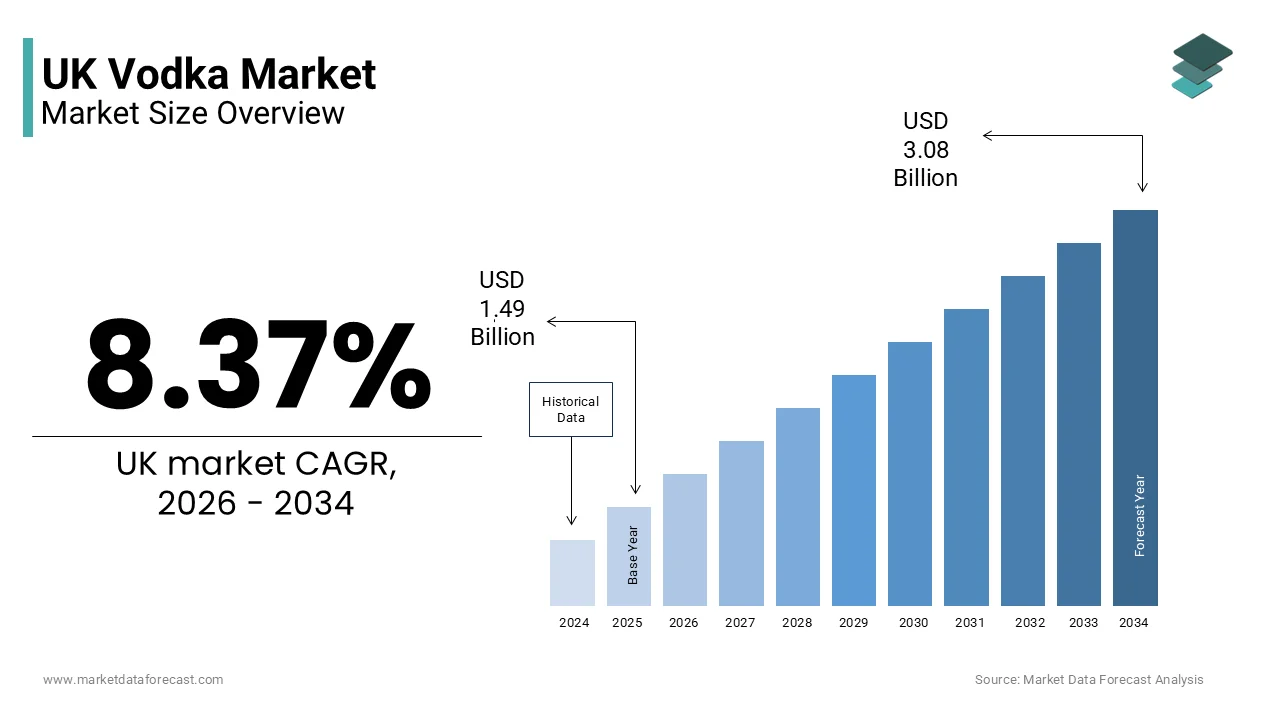
The UK vodka market was valued at USD 1.49 billion in 2025 and is estimated to reach USD 1.61 billion in 2026. The market is projected to reach USD 3.08 billion by 2034, growing at a CAGR of 8.37% during the forecast period from 2026 to 2034. The growth of the UK vodka market is driven by increasing consumer demand for premium and craft spirits, rising popularity of vodka-based cocktails, and evolving social drinking trends among younger consumers. The growing influence of cocktail culture, expanding hospitality and nightlife sectors, and continuous product innovation by manufacturers are further supporting market growth. Additionally, the introduction of premium, organic, and artisanal vodka variants is attracting a broader consumer base across the United Kingdom.
Key Market Trends
-
Rising demand for premium and super-premium vodka brands driven by changing consumer preferences and higher disposable incomes.
-
Growing popularity of vodka-based cocktails in bars, restaurants, and social gatherings.
-
Increasing consumer interest in craft, small-batch, and artisanal vodka products.
-
Expansion of flavored and infused vodka varieties targeting younger and experimental consumers.
-
Strong focus on sustainable production practices, eco-friendly packaging, and locally sourced ingredients.
Segmental Insights
- Based on type, the non-flavored vodka segment was the largest and held 33.4% of the UK vodka market share in 2025. The segment's dominance is attributed to its versatility, clean taste profile, and widespread use as a base spirit in a variety of cocktails and mixed drinks. Its strong presence across both on-trade and off-trade channels continues to support segment growth.
Regional Insights
The UK vodka market is witnessing strong growth across major regions, supported by increasing consumption of premium spirits, evolving drinking preferences, and a vibrant hospitality industry.
-
England was the largest contributor, accounting for 86.4% of the UK vodka market share in 2025, driven by its large population base, extensive network of bars and restaurants, strong retail distribution channels, and high consumer spending on alcoholic beverages.
-
London remains a key market for premium and craft vodka brands due to its thriving nightlife, cocktail culture, and affluent consumer base.
-
Scotland and Wales are experiencing growing demand for premium vodka products, supported by expanding hospitality sectors and increasing consumer interest in high-quality spirits.
-
Northern Ireland is emerging as a promising market owing to rising urbanization, growing social drinking occasions, and increased availability of international vodka brands.
Competitive Landscape
The UK vodka market is highly competitive, characterized by the presence of global spirits manufacturers, premium vodka brands, and emerging craft distilleries. Companies are focusing on premiumization, product innovation, flavor diversification, and sustainability initiatives to strengthen their market positions. Strategic marketing campaigns, celebrity endorsements, limited-edition product launches, and expansion of distribution networks are further shaping competition within the market. Prominent players in the UK vodka market include Diageo plc, Pernod Ricard SA, Bacardi Limited, William Grant & Sons Ltd., Brown-Forman Corporation, Stock Spirits Group plc, Belvedere Vodka, Russian Standard Vodka, Stoli Group, Distell Group Holdings Limited, Halewood Artisanal Spirits plc, The Absolut Company, and Beam Suntory.
UK Vodka Market Size
The UK vodka market size was valued at USD 1.49 billion in 2025, and is projected to reach USD 3.08 billion by 2034 from USD 1.61 billion in 2026, growing at a CAGR of 8.37%.
The vodka is an alcoholic beverage with its premiumization trends and evolving consumer preferences. Vodka remains one of the most consumed spirits in the UK, with consumers increasingly seeking high quality products that offer distinct flavor profiles and artisanal production methods. The cultural significance of vodka in British social settings continues to drive consumption, particularly among younger people, who view it as a versatile spirit suitable for various occasions. The alcohol consumption patterns in the UK have shown resilience despite economic pressures, with spirits maintaining steady demand. The UK has a long history of vodka consumption, dating back several decades, and this tradition has evolved to include both international brands and local distilleries. The regulatory environment governing alcohol sales and advertising, also plays a crucial role in shaping market. Consumer awareness regarding responsible drinking has increased, influencing purchasing decisions and brand loyalty.
MARKET DRIVERS
Rising Premiumization Trend Driving Consumer Preference For High Quality Vodka
The premiumization trend stands, as consumers increasingly prioritize quality over quantity in their purchasing decisions, which is also fuelling the growth of the United Kingdom vodka market. This shift reflects broader societal changes, where individuals seek authentic experiences and are willing to pay more for superior products. The premium and super premium vodka segments have witnessed consistent growth, outpacing standard category performance. Consumers are becoming more educated about production methods, ingredient sourcing, and distillation techniques, leading them to favor brands that emphasize craftsmanship and transparency. The rise of craft distilleries across the UK has contributed significantly to this trend by offering unique small batch productions that appeal to discerning drinkers. Marketing strategies focusing on heritage, sustainability, and innovative flavor infusions have resonated well with target audiences. Social media influence has amplified this trend, with influencers showcasing premium vodka brands in lifestyle contexts. Retailers have responded by expanding their premium vodka selections, dedicating more shelf space to artisanal and imported labels.
Expanding On Trade And Hospitality Sector Boosting Vodka Consumption
The expansion of the on trade and hospitality sector by creating numerous opportunities for increased consumption outside home environments is also lavishing the growth of the United Kingdom vodka market. Bars, restaurants, clubs, and hotels play a pivotal role in introducing consumers to new vodka brands and encouraging trial through cocktail menus and promotional activities. The sector has shown remarkable recovery post pandemic with footfall returning to near pre crisis levels in major urban areas. This resurgence has directly benefited vodka suppliers, as establishments feature vodka prominently in their beverage offerings. Cocktail culture has gained substantial momentum, with mixologists experimenting with premium vodkas to create innovative drinks that attract diverse customer bases. The proliferation of themed bars and experiential venues has further enhanced vodka visibility by making it a staple in social drinking scenarios. Hospitality operators are increasingly partnering with vodka brands for exclusive launches and tasting events, fostering deeper consumer engagement. The growth of late-night economy initiatives in cities like London and Manchester has extended trading hours, providing additional occasions for vodka consumption. Staff training programs focused on spirits knowledge have improved service quality, enabling better recommendations and upselling.
MARKET RESTRAINTS
Stringent Alcohol Regulations And Taxation Policies Restraining Market Growth
The stringent alcohol regulations and taxation policies with the financial and operational challenges for industry participants is inhibiting the growth of the United Kingdom vodka market. The government has implemented various measures aimed at reducing harmful drinking, including minimum unit pricing discussions and increased excise duties. The alcohol duty rates have risen consistently with vodka subject to specific tax brackets based on alcohol by volume content. These fiscal pressures translate into higher retail prices, potentially dampening consumer demand, particularly among price sensitive segments. The introduction of plain packaging considerations and restrictions on promotional discounts has limited flexibility for vodka brands. The public health campaigns emphasizing alcohol related harms have influenced consumer perceptions, leading some individuals to reduce consumption or switch to lower strength alternatives. Regulatory compliance costs have increased for producers and distributors by affecting profit margins and investment capabilities. Advertising restrictions on television and digital platforms have reduced brand visibility, making it harder to reach younger demographics effectively. The complexity of navigating varying regional regulations within the UK adds administrative burdens. Small and medium sized enterprises face disproportionate impacts due to limited resources for compliance management.
Health Consciousness And Shifting Consumer Preferences Toward Lower Alcohol Alternatives
The growing health consciousness and shifting consumer preferences toward lower alcohol or no alcohol alternatives is declining the growth of the United Kingdom vodka market. Modern consumers are increasingly prioritizing wellness and mindful drinking by leading to reduced overall alcohol consumption volumes. This behavioral change has spurred demand for low alcohol and alcohol free beverages, diverting spending away from traditional spirits like vodka. Major retailers have expanded their no and low alcohol sections, reflecting this trend. Brands are responding by launching vodka inspired non alcoholic alternatives, which cannibalize conventional vodka sales. Social norms around drinking are evolving, with younger generations embracing sobriety or moderation as lifestyle choices. Fitness culture and mental health awareness have reinforced the perception that alcohol consumption conflicts with healthy living. Workplace wellness programs often discourage excessive drinking, influencing social behaviors. The rise of dry January and other temporary abstinence campaigns has normalized periods of non-consumption. Vodka manufacturers face the challenge of adapting to these changing attitudes while maintaining relevance. Traditional marketing messages centered on indulgence and celebration resonate less with health focused consumers.
MARKET OPPORTUNITIES
Innovation In Flavored And Craft Vodka Segments Creating New Growth Avenues
The innovation in flavored and craft vodka segments by enabling brands to differentiate themselves and capture niche consumer interests is setting up new opportunities for the growth of the United Kingdom vodka market. The demand for unique taste experiences has driven producers to experiment with natural botanicals, fruits, and unconventional ingredients. Craft distilleries are leveraging local sourcing and traditional methods to create distinctive products that appeal to authenticity seeking consumers. Collaborations with local farms and ingredient suppliers enhance brand stories and community connections. Limited edition releases and seasonal variants generate excitement and encourage repeat purchases. Packaging innovation also plays a role, with attractive bottle designs serving as conversation starters and gift options. The rise of home mixing and cocktail preparation during pandemic periods has increased consumer familiarity with different vodka styles, creating lasting interest. Digital platforms enable direct to consumer sales by allowing smaller brands to reach wider audiences without extensive distribution networks. Subscription models and tasting boxes provide convenient ways for consumers to explore diverse offerings. This opportunity is amplified by social media engagement, where visually appealing products gain viral traction. Brands that successfully combine flavor innovation with compelling narratives can command premium pricing and build loyal followings.
Expansion Into Emerging Export Markets Leveraging UK Brand Reputation
The expansion into emerging export to diversify revenue streams and reduce dependence on domestic sales is additionally fuelling the growth of the United Kingdom vodka market. The global reputation of British craftsmanship and quality standards provides a competitive advantage in international markets. The spirits exports have shown resilience with growing demand in Asia Pacific and Middle Eastern regions. Countries like China, India, and the United Arab Emirates present significant growth potential due to rising middle class populations and increasing disposable incomes. Local partnerships and joint ventures facilitate market entry and navigation of regulatory complexities. Brand storytelling emphasizing British heritage and production excellence resonates with international consumers seeking premium imported products. Participation in international trade fairs and exhibitions enhances visibility and establishes distributor relationships. E-commerce platforms enable direct access to global consumers, bypassing traditional retail barriers. Cultural adaptation of marketing messages ensures relevance in diverse markets while maintaining brand consistency. The weakening of certain currencies against the pound can make UK products more affordable in target markets. Government support through trade missions and export financing reduces entry risks.
MARKET CHALLENGES
Intense Competition From Established International Brands Challenging Market Share
The intense competition from established international brands, particularly domestic producers and smaller entities is to pose as a major challenge for the growth of the United Kingdom vodka market. Global giants with extensive resources dominate shelf space and marketing budgets, making it difficult for local brands to gain visibility. These multinational corporations benefit from economies of scale by enabling aggressive pricing strategies and widespread distribution networks. Independent UK distilleries struggle to compete on price while maintaining quality standards and profitability. Retailer negotiations favor large suppliers, who can offer volume discounts and promotional support. Data from Kantar shows that private label vodkas offered by major supermarket chains capture significant market share, pressuring branded products. International brands invest heavily in celebrity endorsements and high-profile advertising campaigns by creating strong brand associations that are hard to replicate. Shelf placement in prime locations often goes to established players, limiting exposure for newcomers. The cost of entry into major retail chains is prohibitive for small producers. Consumer loyalty to familiar international brands reduces willingness to trial unknown local options. Marketing spend disparities mean smaller brands cannot achieve comparable reach or frequency.
Supply Chain Disruptions And Raw Material Cost Volatility Impacting Production
The supply chain disruptions and raw material cost volatility by affecting production efficiency and profit margins is additionally to slow down the growth of the United Kingdom vodka market. The industry relies on consistent availability of agricultural inputs, such as grains and potatoes, which are subject to weather conditions and geopolitical factors. The crop yields have fluctuated due to climate change impacts by leading to price instability. Energy costs, crucial for distillation processes, have risen sharply, increasing operational expenses. Transportation and logistics challenges, including driver shortages and fuel price increases, add further pressure. Packaging materials, such as glass bottles and labels have experienced supply constraints and cost escalations. Smaller producers lack bargaining power with suppliers by making them more vulnerable to price hikes. Inventory management becomes challenging amid unpredictable supply conditions by risking stockouts or excess holding costs. Currency fluctuations impact the cost of imported equipment and ingredients. These factors compress margins and force difficult pricing decisions that may affect competitiveness. Long term contracts provide some stability but limit flexibility to respond to changes.
REPORT COVERAGE
| REPORT METRIC | DETAILS |
| Market Size Available | 2025 to 2034 |
| Base Year | 2025 |
| Forecast Period | 2026 to 2034 |
| CAGR | 8.37% |
| Segments Covered | By Type, Distribution Channel and Region. |
| Various Analyses Covered | Global, Regional and Country-Level Analysis, Segment-Level Analysis, Drivers, Restraints, Opportunities, Challenges; PESTLE Analysis; Porter’s Five Forces Analysis, Competitive Landscape, Analyst Overview of Investment Opportunities |
| Market Leaders Profiled | Diageo plc, Pernod Ricard SA, Bacardi Limited, William Grant & Sons Ltd., Brown-Forman Corporation, Stock Spirits Group plc, Belvedere Vodka, Russian Standard Vodka, Stoli Group, Distell Group Holdings Limited, Halewood Artisanal Spirits plc, The Absolut Company, and Beam Suntory |
SEGMENTAL ANALYSIS
By Type Insights
The non-flavored vodka segment was the largest by accounting for 33.4% of the United Kingdom vodka market share in 2025 with its versatility and foundational role in mixed drinks. This category appeals to a broad consumer base that values purity and traditional production methods. The dominance of non-flavored vodka is primarily attributed to its widespread acceptance in both domestic and commercial settings, where it serves as the base for countless cocktails and beverages. Consumers appreciate the clean taste profile that allows other ingredients to shine by making it a staple in bars and households alike. The strong brand loyalty toward established international labels that have built reputations over decades. Retailers prioritize shelf space for these core products due to their consistent turnover rates. The simplicity of production allows for efficient scaling and cost management, enabling competitive pricing strategies.
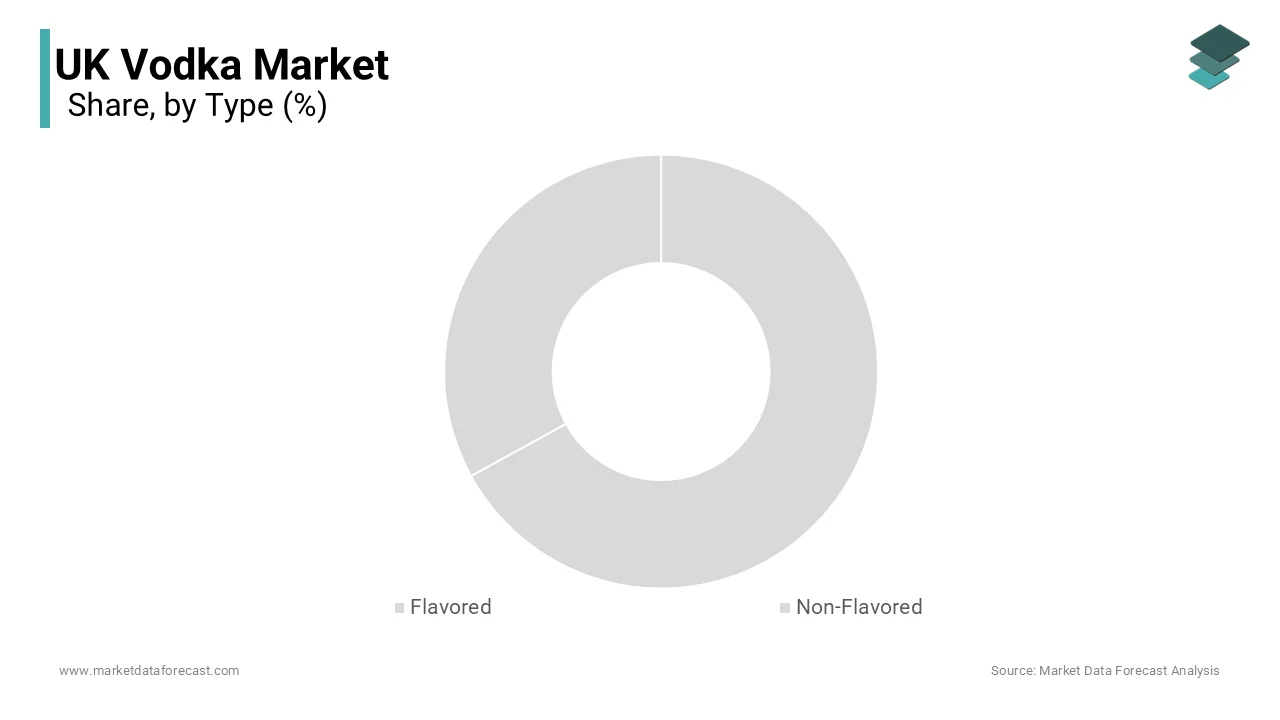
The flavored vodka segment is likely to witness a fastest CAGR of 6.5% during the forecast period owing to the evolving consumer preferences for novel taste experiences and personalized drinking occasions. The increasing demand for ready to drink solutions that require minimal preparation, appealing to younger demographics, who value convenience and variety. Producers are responding with diverse offerings ranging from citrus and berry infusions to exotic botanical blends. Social media platforms amplify visibility, with visually appealing packaging and vibrant colors attracting attention online. The segment benefits from seasonal promotions and limited edition releases that create urgency and excitement. Collaborations with popular food brands and influencers further enhance appeal. Health-conscious variations using natural sweeteners and low calorie formulations address wellness concerns while maintaining indulgence. This dual focus on taste and health drives repeat purchases.
The off-trade channel was the largest by holding 43.2% of the United Kingdom vodka market share in 2025 owing to the consumer preference for home consumption and cost efficiency. Supermarkets, off licenses, and online retailers provide convenient access to a wide range of vodka products at competitive prices. The channel benefits from extensive promotional activities, such as multi-buy offers and loyalty discounts that attract price sensitive shoppers. Major supermarket chains leverage their bargaining power to secure favorable terms from suppliers by passing savings to consumers. Data from HM Revenue and Customs indicates that off trade spirits purchases remain resilient despite economic pressures, demonstrating essential status in household budgets. The rise of e commerce has further strengthened this segment, with online platforms offering home delivery and broader selection than physical stores. Consumer trust in established retail brands ensures consistent footfall and repeat business. The ability to purchase in bulk reduces per unit costs, appealing to regular drinkers. Seasonal spikes during holidays and celebrations drive significant volume increases. Retailers invest in dedicated spirits sections with knowledgeable staff to enhance shopping experience.
The on trade channel segment is swiftly emerging at a fastest CAGR of 5.8% from 2026 to 2034 owing to the resurgence of social dining and nightlife activities, where consumers seek experiential drinking opportunities. Bars, restaurants, and clubs play a crucial role in reintroducing vodka through innovative cocktail menus and premium serving styles. The channel benefits from skilled mixologists who create signature drinks that escalate unique vodka characteristics by encouraging trial and upselling. The premium vodka cocktails command higher margins, incentivizing establishments to promote these offerings. Themed events and tasting nights generate buzz and attract diverse customer groups. Tourism recovery contributes significantly with international visitors exploring local bar scenes and contributing to revenue. Partnerships between brands and venues facilitate exclusive launches and branded content that enhance visibility. Staff training programs improve service quality and product knowledge by leading to better recommendations. The social aspect of on trade consumption cannot be replicated at home by creating emotional connections with brands.
COUNTRY LEVEL ANALYSIS
England was the largest contributor of the United Kingdom vodka market by holding 86.4% of the share in 2025 due to its large population and dense urban centers. The region benefits from a sophisticated hospitality infrastructure concentrated in cities like London, Manchester, and Birmingham, where vodka culture thrives. The presence of numerous craft distilleries in regions such as Kent and Norfolk adds local authenticity and supports premiumization trends. Retail density in urban areas ensures high product availability and competitive pricing. The region also leads in digital engagement, with online vodka sales growing faster than the national average. Cultural diversity introduces global influences, expanding flavor preferences and consumption occasions. Economic activity levels support discretionary spending on premium products.
Scotland vodka market growth is likely to have significant growth opportunities in coming years with its strong heritage in spirit production and growing local vodka industry. Although, smaller in population compared to England, Scotland contributes significantly to premium vodka manufacturing and export activities. Edinburgh and Glasgow serve as key consumption hubs, with robust on trade sectors supporting vodka sales through cocktail bars and restaurants. The region benefits from a reputation for quality craftsmanship by allowing Scottish vodka brands to command premium pricing domestically and internationally. Consumer preferences lean toward sustainable and ethically sourced products, aligning with broader environmental values prevalent in Scottish society. Retail channels emphasize local provenance, with independent shops featuring regional brands prominently. The Scottish government supports industry growth through grants and promotional initiatives aimed at boosting exports. Cultural events and festivals provide platforms for brand exposure and consumer engagement.
Wales vodka market growth is likely to grow with the agricultural resources and cultural identity to develop a burgeoning local vodka sector. The food and drink sector has seen substantial investment, with several new distilleries launching vodka lines using locally sourced ingredients, such as Welsh, barley, and spring water. Cardiff and Swansea act as primary consumption centers, where urban consumers demonstrate openness to premium and craft offerings. The region benefits from supportive policies encouraging rural economic development through distillery establishment. Consumer awareness of local brands has grown through community focused marketing and participation in regional festivals. Retailers in Wales increasingly stock domestic products alongside international labels, providing choice and supporting local economies.
Northern Ireland vodka market growth is driven by the increasing sophistication in consumer preferences. The local spirits industry has attracted investment in recent years, with new distilleries exploring vodka production alongside traditional whiskey. Consumer behavior reflects a blend of traditional pub culture and modern trends, with younger demographics driving demand for premium and flavored variants. Local brands emphasize community connections and heritage, resonating with patriotic sentiments. Retail infrastructure continues to improve, with major supermarkets expanding spirits selections. Government initiatives support small businesses through funding and export assistance. Cultural events and local competitions provide visibility for emerging brands. While market size remains modest, growth rates outpace some larger regions due to low base effects.
COMPETITIVE LANDSCAPE
The United Kingdom vodka market exhibits intense competition characterized by the presence of established multinational corporations and emerging local distilleries. Global giants leverage their extensive resources to dominate shelf space and advertising channels while smaller players differentiate through artisanal quality and unique storytelling. The market is fragmented with numerous brands vying for consumer attention through innovative flavors and premium positioning. Price competition remains fierce particularly in the standard segment where private label offerings from major retailers exert pressure on branded products. Premium and super premium categories see less price sensitivity but higher expectations for quality and exclusivity. Marketing spend varies significantly with larger companies investing millions in celebrity endorsements and high-profile campaigns whereas smaller brands rely on grassroots marketing and community engagement. Distribution channels play a critical role as access to major supermarkets and popular bars determines visibility and sales volume. Consumer loyalty is increasingly fluid with drinkers willing to switch brands based on novelty sustainability credentials or ethical considerations.
KEY MARKET PLAYERS
Some of the companies that are playing a dominating role in the UK vodka market are
- Diageo plc
- Pernod Ricard SA
- Bacardi Limited
- William Grant & Sons Ltd.
- Brown-Forman Corporation
- Stock Spirits Group plc
- Belvedere Vodka
- Russian Standard Vodka
- Stoli Group
- Distell Group Holdings Limited
- Halewood Artisanal Spirits plc
- The Absolut Company
- Beam Suntory
Top Players in the Industry
- Diageo plc stands as a dominant player in the United Kingdom vodka market with its extensive portfolio, including Smirnoff and Ciroc brands. The company leverages its vast distribution network to ensure widespread availability, across international countries. Recent initiatives focus on sustainability commitments and digital marketing campaigns that engage younger consumers effectively. Diageo invests heavily in innovation by launching limited edition flavors and premium variants that cater to evolving tastes. Strategic partnerships with hospitality groups enhance brand visibility in key urban centers. The corporation emphasizes responsible drinking programs to align with regulatory expectations and social values. Continuous investment in production facilities ensures consistent quality and supply chain resilience.
- Pernod Ricard maintains a strong global presence through its premium vodka brands, such as Absolut and Stolichnaya. The company focuses on creative marketing campaigns that highlight artistic collaborations and cultural relevance. Recent actions include expanding sustainable packaging initiatives and reducing carbon footprints across production sites. Pernod Ricard actively engages in experiential marketing by sponsoring music festivals and art events worldwide. The firm prioritizes local sourcing of ingredients to support communities and enhance brand authenticity. Digital transformation efforts have improved e commerce capabilities and personalized consumer interactions. Strategic acquisitions of niche craft distilleries allow the company to diversify its offerings and capture emerging trends.
- Beam Suntory operates globally with notable vodka brands like Ketel One and Russian Standard contributing significantly to its portfolio. The company emphasizes craftsmanship and heritage in its branding strategies to appeal to discerning consumers. Recent investments focus on enhancing production efficiency and expanding capacity in key markets. Beam Suntory collaborates with mixologists and bartenders to create signature cocktails that showcase vodka versatility. The firm actively promotes diversity and inclusion initiatives within its corporate structure and marketing messages. Sustainable practices are integrated into operations including water conservation and waste reduction programs. Beam Suntory leverages data analytics to understand consumer behavior and optimize product placements. Strategic alliances with retail partners ensure prominent shelf positioning and promotional support.
Major Strategies Used by Key Market Participants
Key players in the United Kingdom vodka market employ several strategic approaches to maintain competitive advantage and drive growth. Product innovation remains central as companies introduce unique flavors and premium variants to attract diverse consumer segments. Brands invest heavily in marketing campaigns that emphasize heritage craftsmanship and sustainability to build emotional connections with customers. Partnerships with hospitality venues enable exclusive launches and cocktail menu features that increase visibility and trial rates. Digital engagement through social media platforms allows direct interaction with consumers and real time feedback collection. Companies focus on expanding distribution networks including e commerce channels to enhance accessibility and convenience for shoppers. Sustainability initiatives such as eco friendly packaging and carbon neutral production processes align with growing environmental consciousness among buyers. Strategic pricing strategies balance affordability with premium positioning to cater to different income levels. Collaborations with influencers and celebrities amplify brand reach and credibility among younger demographics.
MARKET SEGMENTATION
This research report on the UK vodka market is segmented and sub-segmented into the following categories.
By Type
- Flavored
- Non-Flavored
By Distribution Channel
- Off-Trade
- On-Trade