- Product Description Description
- Table of Contents TOC
- List of Table & Figure LOT
- Get Free Sample PDF Sample PDF
Market Size, 2025
$0.95 BnMarket Estimate, 2026
$1.00 BnMarket Forecast, 2034
$1.54 BnCAGR, 2026–2034
5.5%Executive Summary: U.S. Bone Cement Market
- Market Scope: Comprehensive analysis of the United States bone cement sector, detailing orthopedic medical devices, polymethyl methacrylate (PMMA) implant fixation, and vertebral augmentation biomaterials.
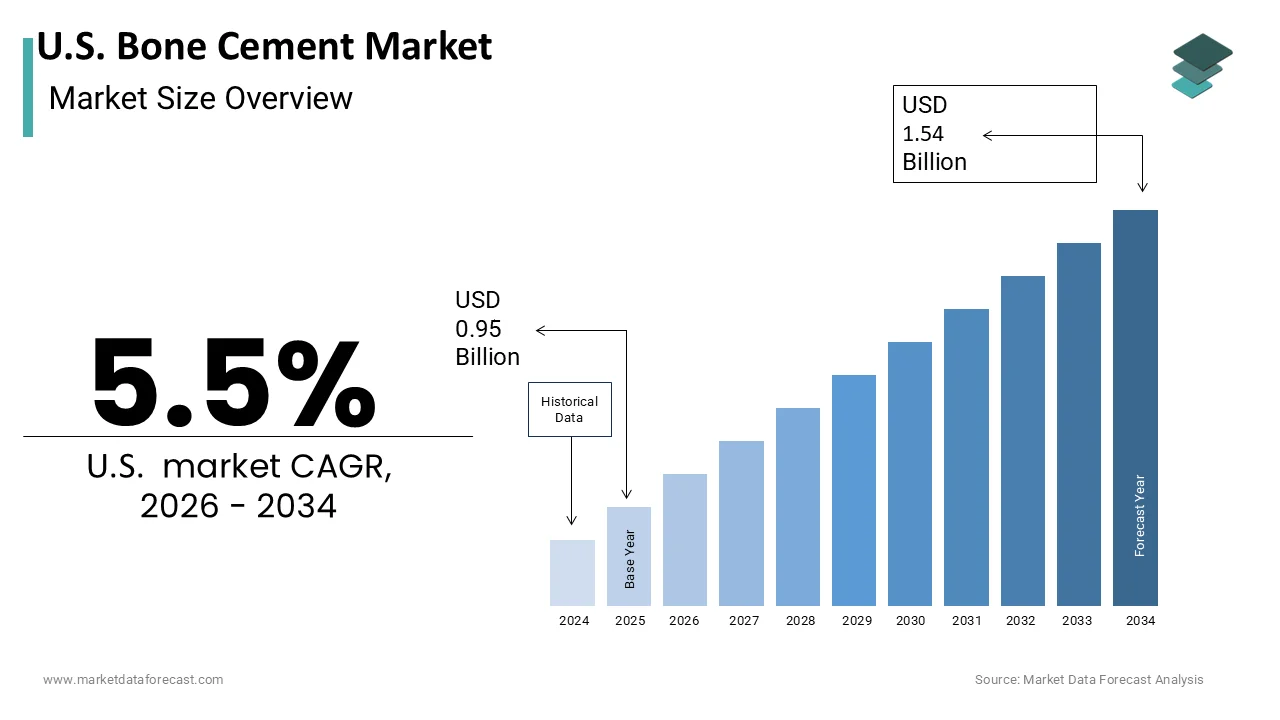
- Market Valuation: Valued at USD 0.95 billion in 2025, reaching USD 1.00 billion in 2026, and projected to expand to USD 1.54 billion by 2034, growing at a steady CAGR of 5.5% from 2026 to 2034.
- Primary Growth Drivers: Rising prevalence of degenerative joint diseases and an increasing volume of vertebral augmentation procedures among the aging population.
Key Market Segment Metrics
| Category | Leading Segment (Base Position) | Fastest-Growing / High-Growth Segment |
|---|---|---|
| By Product Type | Polymethyl Methacrylate Cement (held 44.3% market share in 2025, serving as the gold standard for joint replacement and implant fixation) | Calcium Phosphate Cement (projected at a rapid 9.2% CAGR, driven by bioactive properties that promote natural bone regeneration and integration) |
| By Viscosity & Application | High Viscosity Cement (dominated joint replacement procedures for its superior handling, cohesion, and resistance to leakage) | Low Viscosity Cement for Vertebroplasty (projected at an 8.5% CAGR, fueled by minimally invasive spine surgeries for osteoporotic fractures) |
| By End User | Hospitals (held 32.1% market share in 2025, driven by high volumes of complex inpatient orthopedic and trauma surgeries) | Orthopaedic Clinics & ASCs (projected at a 7.8% CAGR, propelled by the shift toward outpatient joint replacements and specialized ambulatory centers) |
| By Country / Region | California & Texas (primary healthcare hubs with dense aging populations and extensive orthopedic surgical infrastructures) | Florida & New York (high-growth regions with significant senior demographic concentrations and specialized outpatient surgical centers) |
Major Market Players & Industry Landscape
Market Structure: Highly competitive landscape comprising major medical device corporations and specialized manufacturers competing through product innovation, antibiotic elution, and strategic clinical partnerships.
Key Companies: Stryker Corporation, Zimmer Biomet Holdings, Inc., Johnson & Johnson Services, Inc. (DePuy Synthes), Smith & Nephew plc, Heraeus Holding GmbH, Medtronic plc, Exactech, Inc., Arthrex, Inc., Teknimed, G21 S.r.l., DJO Global, Inc., and Tecres S.p.A.
 Download Free Sample Report
U.S. Bone Cement Market Size
The U.S. Bone Cement Market is projected to grow from USD 0.95 billion in 2025 to USD 1.00 billion in 2026 and reach USD 1.54 billion by 2034, registering a CAGR of 5.5% during the forecast period from 2026 to 2034.
The bone cement is an orthopedic medical device focused on polymethyl methacrylate-based materials used primarily for implant fixation and vertebral augmentation. These biomaterials serve as grout to anchor prosthetic components in joint replacement surgeries, such as total knee and hip arthroplasties, while also providing structural stability in minimally invasive spinal procedures. The clinical reliance on bone cement is deeply rooted in the demographic shifts affecting the nation, particularly the aging population, which experiences higher rates of degenerative joint diseases and osteoporotic fractures. Furthermore, the American Academy of Orthopaedic Surgeons states that more than 1.5 million knee and hip replacement surgeries are performed annually,y creating a substantial baseline demand for reliable fixation agents. These epidemiological realities establish a robust foundation for the continued utilization of bone cements in both elective reconstructive surgeries and urgent trauma care settings, ensuring sustained clinical relevance and procedural volume across healthcare institutions nationwide.
MARKET DRIVERS
Rising Prevalence Of Degenerative Joint Diseases
The escalating prevalence of degenerative joint diseases is a major factor fuelling the growth of the United States bone cement market. Osteoarthritis and rheumatoid arthritis cause progressive deterioration of cartilage and bone, leading to pain and loss of mobility that often necessitates joint replacement surgery, where bone cement is essential for securing implants. The musculoskeletal conditions are among the leading causes of disability worldwide,dwide with the United States reflecting a significant portion of this burden due to its large and aging population. The American College of Rheumatology notes that the incidence of osteoarthritis increases significantly with age, affecting nearly 33% of adults over the age of 65. This demographic shift creates a growing pool of patients eligible for arthroplasty procedures, which rely heavily on polymethyl methacrylate cement for immediate fixation and long-term stability of prosthetic joints. Additionally, the rising rates of obesity exacerbate stress on weight-bearing joints, accelerating the onset of degenerative changes.
Increasing Volume Of Vertebral Augmentation Procedures
The increasing volume of vertebral augmentation procedures, by addressing the high incidence of osteoporotic vertebral compression fractures in the elderly population,n is also propelling the growth of the United States bone cement market. Vertebroplasty and kyphoplasty are minimally invasive techniques that involve injecting bone cement into fractured vertebrae to stabilize the bone and relieve pain, offering a viable alternative to open surgery for frail patients. As per the National Osteoporosis Foundation, approximately 700000 vertebral compression fractures occur annually in the United States, many of which are treated with these cement-based interventions. The adoption of minimally invasive spine surgery has grown steadily, driven by benefits such as reduced hospital stays and faster recovery times. This trend is particularly relevant for older adults who may not be candidates for more extensive surgical repairs due to comorbidities. The ability of bone cement to provide immediate structural support and pain relief makes it indispensable in these procedures. Consequently, the rising incidence of osteoporosis combined with the preference for less invasive treatment options creates a robust demand for specialized high viscosity bone cements designed for spinal applications.
MARKET RESTRAINTS
Risk Of Postoperative Complications And Toxicity
The risk of postoperative complications and toxicity is raising safety concerns among clinicians and patients, which is slowly declining the growth of the United States bone cement market. The polymerization process of polymethyl methacrylate cement is exothermic, generating heat that can cause thermal necrosis of surrounding bone tissue, potentially compromising implant fixation and leading to aseptic loosening over time. The thermal injury during cement curing is a well-documented phenomenon that can result in local tissue damage and delayed healing. Furthermore, the release of monomer vapors during mixing and application poses respiratory risks to operating room staff and can cause systemic hypotension or cardiac arrhythmias in patients, also known as bone cement implantation syndrome. These adverse events necessitate rigorous monitoring and specialized ventilation systems in operating rooms, adding to procedural complexity and cost. The potential for allergic reactions to cement components also limits its use in sensitive populations.
Emergence Of Cementless Implant Technologies
The emergence of cementless implant technologies is offering an alternative fixation method that avoids the drawbacks associated with polymethyl methacrylate. The emergence of cementless implant technologies is additionally hindering the growth of the United States bone cement market. Cementless implants feature porous surfaces or coatings that promote biological ingrowth of bone tissue, providing long-term stability without the need for grout. The use of cementless total hip replacements has increased, particularly in younger and more active patients, who benefit from the potential for easier revision surgery in the future. The cementless fixation is preferred in a growing proportion of primary arthroplasties due to improved long-term survivorship and reduced risk of aseptic loosening. This shift in surgical preference is driven by advancements in material science, such as titanium and tantalum coatings that enhance osseointegration. The comparable or superior outcomes for cementless implants in certain patient demographics reduce the reliance on cemented fixation. The perception that cementless options offer better durability and lower complication rates encourages surgeons to adopt these technologies, thereby reducing the volume of procedures requiring bone cement.
MARKET OPPORTUNITIES
Development of Antibiotic-Loaded Bone Cements
The development of antibiotic-loaded bone cements is promoting the critical issue of periprosthetic joint infections, which is setting up new opportunities for the growth of the United States bone cement market. These specialized cements incorporate antimicrobial agents, such as gentamicin or vancomycin, which are released locally to prevent bacterial colonization and reduce the risk of infection following joint replacement surgery. As per the Centers for Disease Control and Prevention, surgical site infections occur in approximately 1 to 2% of joint replacement cases but can have devastating consequences, including implant failure and prolonged hospitalization. The use of antibiotic-loaded cement has been shown to significantly lower infection rates, particularly in high-risk patients, such as those with diabetes or immunosuppression. The clinical studies demonstrate that prophylactic use of antibiotic cement reduces the incidence of deep periprosthetic infections by up to 50% compared to plain cement. This evidence supports the growing adoption of antibiotic-loaded formulations in both primary and revision surgeries. Manufacturers have the opportunity to innovate by developing cements with optimized elution profiles that maintain therapeutic antibiotic levels over extended periods. The increasing focus on value-based care and infection prevention bundles further drives demand for these advanced products.
Innovation In Radiopaque And Low Viscosity Formulations
Innovation in radiopaque and low viscosity bone cement formulations by enhancing surgical precision and ease of use in complex procedures is expected to have a positive impact on the growth of the United States bone cement market. Radiopaque additives, such as barium sulfate or zirconium dioxide, allow surgeons to visualize cement distribution under fluoroscopy,y ensuring complete filling of defects and preventing leakage into surrounding tissues. Low viscosity cements are designed to penetrate trabecular bone more effectively, thereby providing superior interlock and mechanical stability. The low viscosity cements achieve better penetration depth and higher pull-out strength compared to standard formulations. These technical advantages appeal to surgeons seeking to optimize implant fixation and reduce the risk of loosening. Manufacturers can differentiate their products by developing cements with tailored working times and handling characteristics that suit specific surgical workflows. The integration of smart technologies such as temperature-sensitive indicators further enhances safety by alerting surgeons to the curing status.
MARKET CHALLENGES
Regulatory Hurdles For New Biomaterial Approvals
The regulatory hurdles for new biomaterial approvals by imposing stringent requirements that delay product commercialization and increase development costs are one of the major challenges for the growth of the United States bone cement market. The Food and Drug Administration classifies bone cements as Class II or Class III medical devices requiring rigorous premarket notification or approval processes to demonstrate safety and efficacy. The guidelines require manufacturers to provide extensive clinical data and biocompatibility testing, which can take several years to complete. This prolonged timeline restricts the ability of companies to introduce innovative formulations, such as bioactive or resorbable cement,s to the market promptly. The cost of regulatory compliance can exceed millions of dollars for novel devices, creating a barrier for smaller enterprises with limited resources. Furthermore, changes in regulatory standards or additional post-market surveillance requirements can further impede product launches and increase operational burdens. The complexity of navigating international regulatory landscapes also complicates global expansion strategies for US-based manufacturers. Consequently, the heavy regulatory framework, while ensuring patient safety,y inadvertently slows the pace of innovation and limits the diversity of products available to clinicians.
Environmental Concerns Regarding Methyl Methacrylate Disposal
The environmental concerns regarding the disposal of methyl methacrylate and other chemical components are inhibiting the growth of the United States bone cement market. The unused portions of bone cement and contaminated materials are classified as hazardous waste requiring specialized handling and disposal methods to prevent environmental contamination. The improper disposal of medical plastics and chemicals can lead to soil and water pollution, posing risks to ecosystems and public health. Hospitals and surgical centers face increasing pressure to adopt sustainable practices and reduce their carbon footprint,t which includes managing biomedical waste more responsibly. The organization's healthcare facilities are striving to minimize hazardous waste generation through recycling and reduction initiatives, but bone cement waste remains difficult to manage due to its chemical composition. The cost of compliant disposal adds to the overall expense of surgical procedures,s impacting hospital budgets. Furthermore, the lack of biodegradable alternatives limits the ability of healthcare providers to mitigate environmental impact. Manufacturers face the challenge of developing eco-friendly formulations or recycling programs that align with sustainability goals without compromising product performance.
REPORT COVERAGE
| REPORT METRIC | DETAILS |
| Market Size Available | 2025 to 2034 |
| Base Year | 2025 |
| Forecast Period | 2026 to 2034 |
| Segments Covered | By Product Type, Viscosity and Application, End User, and Region. |
| Various Analyses Covered | Global, Regional and Country-Level Analysis, Segment-Level Analysis, Drivers, Restraints, Opportunities, Challenges; PESTLE Analysis; Porter’s Five Forces Analysis, Competitive Landscape, Analyst Overview of Investment Opportunities |
| Countries Covered | California, Texas, Florida, New York, and the rest of the United States |
| Market Leaders Profiled | Stryker Corporation, Zimmer Biomet Holdings, Inc., Johnson & Johnson Services, Inc. (DePuy Synthes), Smith & Nephew plc, Heraeus Holding GmbH, Medtronic plc, Exactech, Inc., Arthrex, Inc., Teknimed, G21 S.r.l., DJO Global, Inc., Tecres S.p.A. |
SEGMENTAL ANALYSIS
By Product Type Insights
The polymethyl methacrylate cement segment was the largest by holding 44.3% of the United States bone cement market share in 2025 due to its established clinical efficacy and widespread use in joint replacement surgeries. This material has been the gold standard for implant fixation for decades, providing reliable mechanical stability and immediate load-bearing capacity. As per the American Academy of Orthopaedic Surgeons, over 1.5 million knee and hip replacement surgeries are performed annually in the United States, with a significant majority utilizing polymethyl methacrylate cement for component fixation. The long-term survival rates of cemented implants are well documented, with studies indicating that cemented total knee arthroplasties have a survivorship rate of over 90% at 15 years. The familiarity of surgeons with the handling characteristics and curing properties of polymethyl methacrylate further fuels the growth of the segment. Hospitals and ambulatory surgical centers maintain robust supply chains for this material, ensuring consistent availability. The cost-effectiveness of polymethyl methacrylate compared to newer bioactive alternatives also makes it the preferred choice for high-volume procedures. Consequently, the combination of proven performance, extensive clinical data, and economic efficiency sustains the market leadership of polymethyl methacrylate cement in the United States.
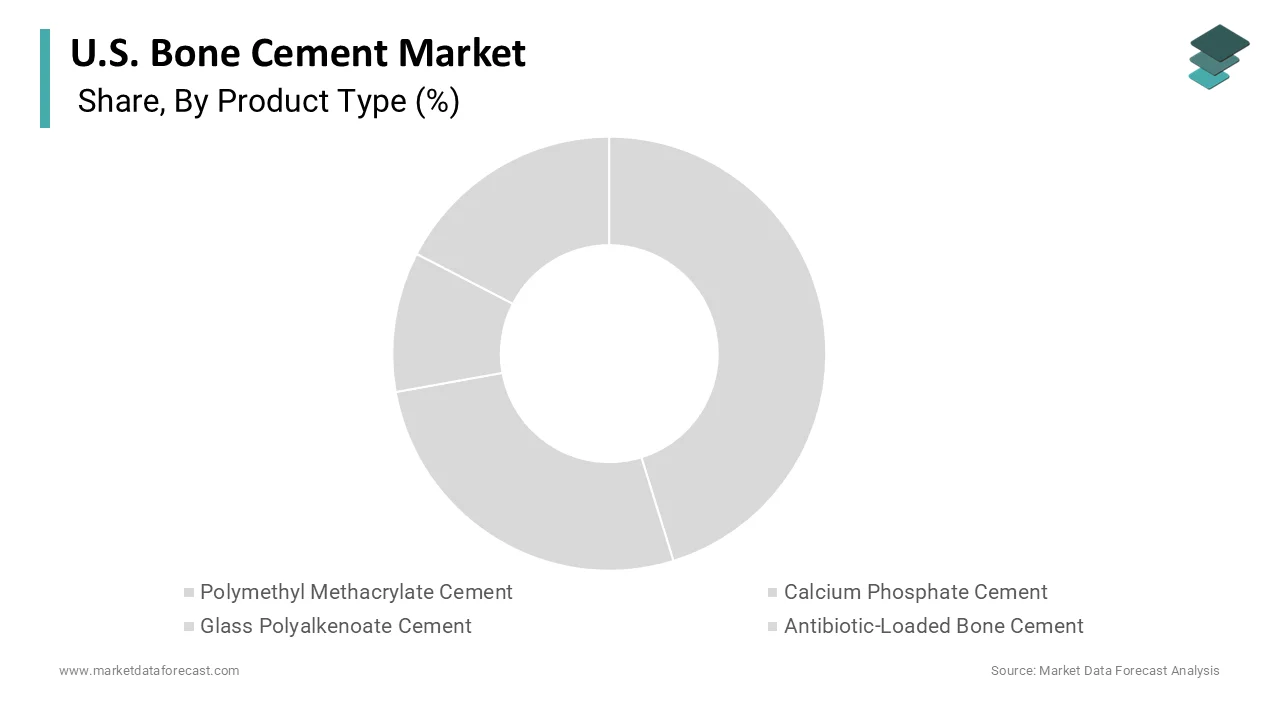
The calcium phosphate cement segment is expected to witness the fastest CAGR of 9.2% during the forecast period, owing to the increasing demand for bioactive materials that promote natural bone regeneration and integration rather than merely providing mechanical fixation. The research funding for regenerative medicine technologies has increased substantially,y fostering innovation in bioactive ceramic materials that mimic the mineral composition of natural bone. This biological compatibility is particularly advantageous in spinal fusion and trauma repair,ir where bone healing is long-term stability. The calcium phosphate cements exhibit excellent biocompatibility and do not generate heat during setting, thereby reducing the risk of thermal necrosis to surrounding tissues. The ability of these cements to deliver therapeutic agents, such as antibiotics or growth factors,s further enhances their clinical utility. Manufacturers are developing injectable formulations that can be delivered through minimally invasive techniques, es appealing to surgeons seeking to reduce operative trauma. The growing preference for biologics and tissue engineering solutions in orthopedic care propels the adoption of calcium phosphate cements.
By Viscosity And Application Insights
The high viscosity cement segment held a dominant share of the United States bone cement market due to its superior handling characteristics and resistance to leakage during joint replacement procedures. High viscosity cements remain cohesive and do not flow excessively, thereby allowing surgeons to control placement and ensure adequate filling of the bone implant interface without extravasation into soft tissues. The total knee and hip arthroplasties account for the majority of bone cement usage in the United St,ates with high viscosity formulations preferred for their ease of application and reduced mess in the operating room. The mechanical strength of high viscosity cement is sufficient to withstand the loads imposed on weight-bearing joints, ensuring long-term stability of the prosthesis. The standardization of arthroplasty protocols in many hospitals favors the use of high-viscosity cement due to its predictable performance and reduced risk of complications such as cement embolism.
The low viscosity cement used in vertebroplasty is swiftly emerging at a fastest CAGR of 8.5% from 2026 to 2034, with the increasing adoption of minimally invasive spinal procedures for the treatment of osteoporotic vertebral compression fractures. Low viscosity cements are designed to flow easily into the trabecular spaces of the fractured vertebra, ensuring thorough filling and stabilization of the bone structure. The ability of low viscosity cement to penetrate deep into the bone matrix provides superior mechanical interlock and pain relief compared to higher viscosity alternatives. The clinical trials have shown that low viscosity cements achieve better distribution within the vertebral body,y leading to improved restoration of height and alignment. The rising prevalence of osteoporosis in the aging population drives the demand for effective minimally invasive treatments that offer rapid recovery and reduced hospital stays. Surgeons prefer low viscosity formulations for their ability to fill complex fracture patterns and voids efficiently.
By End User Insights
The hospitals segment was the dominant one, holding 32.1% of the United States bone cement market share in 2025 due to its capacity to perform a high volume of complex orthopedic and spinal surgeries. These facilities possess the necessary infrastructure, specialized surgical teams, and advanced imaging equipment required for procedures such as total joint replacements and vertebral augmentations. As per the American Hospital Association, there are over 6000 hospitals in the United States with a significant proportion offering comprehensive orthopedic services that utilize substantial quantities of bone cement. The consolidation of healthcare systems has led to centralized purchasing agreements that favor large suppliers,s reinforcing the dominance of hospital networks in the market. The hospitals perform the majority of inpatient orthopedic procedures, which are often more complex and require larger volumes of cement compared to outpatient settings. The presence of trauma centers within hospitals also drives demand for bone cement in emergency fracture repairs and reconstructive surgeries. Hospitals benefit from economies of scale that allow them to negotiate favorable pricing for medical supplies, ensuring consistent availability of bone cement products. The concentration of surgical volume in these institutions creates a stable and substantial demand base for manufacturers.
The orthopaedic clinics segment is likely to grow at the fastest CAGR of 7.8% during the forecast period, with the shifting trend toward outpatient surgery and the establishment of specialized ambulatory surgical centers focused on orthopaedic care. These clinics offer convenient and cost-effective alternatives to hospitals for elective procedures, such as primary knee and hip replacements. The number of certified ambulatory surgical centers has grown significantly,y with many specializing in orthopedic and spine procedures. The migration of routine arthroplasties to outpatient settings is supported by advancements in minimally invasive techniques and improved pain management protocols that facilitate faster recovery. The outpatient joint replacements are increasingly reimbursed,e s encouraging healthcare providers to shift services to ambulatory settings. Orthopaedic clinics benefit from streamlined workflows and reduced overhead costs, allowing them to offer competitive pricing for patients. The focus on patient experience and personalized care also attracts individuals seeking alternatives to large hospital environments.
COMPETITIVE LANDSCAPE
The competition in the United States bone cement market is characterized by intense rivalry among established medical device giants and specialized manufacturers. Major corporations leverage their extensive distribution networks and broad product portfolios to dominate hospital and ambulatory surgical center segments. These industry leaders continuously invest in research and development to innovate cement formulations that offer improved handling and mechanical properties. Smaller niche players compete by focusing on specific applications such as spinal augmentation or antibiotic-loaded cements, where specialized expertise provides a competitive edge. Regulatory hurdles and reimbursement challenges create barriers that favor companies with robust financial resources and regulatory affairs capabilities. Price competition remains moderate as clinical efficacy and surgeon preference often drive purchasing decisions more than cost alone. However, value-based care initiatives are prompting manufacturers to demonstrate the long-term economic benefits of their products. The dynamic landscape requires constant adaptation to technological advancements and shifting healthcare policies to sustain growth and profitability in this highly specialized sector.
KEY MARKET PLAYERS
Some of the companies that are playing a dominating role in the U.S. Bone Cement Market include
- Stryker Corporation
- Zimmer Biomet Holdings, Inc.
- Johnson & Johnson Services, Inc. (DePuy Synthes)
- Smith & Nephew plc
- Heraeus Holding GmbH
- Medtronic plc
- Exactech, Inc.
- Arthrex, Inc.
- Teknimed
- G21 S.r.l.
- DJO Global, Inc.
- Tecres S.p.A.
TOP LEADING PLAYERS IN THE MARKET
- Zimmer Biomet Holdings Inc is a leading participant in the United States bone cement market, offering a comprehensive portfolio of polymethyl methacrylate cements for joint replacement and spinal procedures. The company contributes significantly to clinical practice by providing high-viscosity and low-viscosity formulations that cater to diverse surgical needs. Recent actions to strengthen its market position include the expansion of its Palacos and Simplex P product lines with enhanced handling characteristics and radiopacity features. Zimmer Biomet actively collaborates with orthopedic surgeons to refine cementing techniques and improve patient outcomes through educational initiatives. The company also invests in research to develop antibiotic-loaded cements that reduce infection risks in arthroplasty. These strategic efforts reinforce its reputation as a trusted supplier of reliable bone fixation solutions and support sustained growth in the competitive US medical device landscape.
- Stryker Corporation plays a pivotal role in the United States bone cement market through its innovative orthopedic and spinal solutions, including specialized cement delivery systems. The company focuses on developing advanced polymethyl methacrylate formulations that offer superior penetration and mechanical stability for implant fixation. Recent initiatives to bolster its market presence include the launch of next-generation cement kits designed for minimally invasive spine surgeries such as vertebroplasty and kyphoplasty. Stryker emphasizes safety and efficacy by incorporating radiopaque markers and optimized curing times into its products. The company also strengthens its position through strategic acquisitions of biotech firms specializing in regenerative materials and bone void fillers.
- Heraeus Medical GmbH is a key contributor to the United States bone cement market, known for its high-quality polymethyl methacrylate cements and antibiotic-loaded formulations. The company offers a wide range of products, including Copal and Palacos, which are widely used in primary and revision joint replacements. Recent actions to enhance its market position include the introduction of new viscous cements that improve handling and reduce the risk of embolism during surgery. Heraeus Medical actively engages in clinical studies to validate the efficacy of its antibiotic-eluting cements in preventing periprosthetic infections. The company also expands its distribution network to ensure broader access to its products across hospitals and ambulatory surgical centers.
TOP STRATEGIES USED BY KEY MARKET PARTICIPANTS
Key players in the United States bone cement market primarily employ product innovation and strategic partnerships to maintain a competitive advantage. Companies focus heavily on developing advanced polymethyl methacrylate formulations with enhanced viscosity and radiopacity to meet specific surgical requirements. Investment in research and development allows firms to introduce antibiotic-loaded cements that address the critical issue of periprosthetic infections. Mergers and acquisitions are frequently utilized to expand product portfolios and access proprietary technologies in regenerative medicine. Partnerships with healthcare providers and academic institutions facilitate clinical validation and accelerate the adoption of new cementing techniques. Additionally, manufacturers prioritize regulatory compliance and quality assurance to build trust among surgeons and payers. Marketing efforts emphasize educational initiatives that highlight the clinical benefits and safety profiles of their products. These strategies collectively enable companies to differentiate their offerings, capture market share, and respond effectively to the growing demand for reliable bone fixation solutions in the United States.
MARKET SEGMENTATION
This research report on the U.S. bone cement market is segmented and sub-segmented into the following categories.
By Product Type
- Polymethyl Methacrylate Cement
- Calcium Phosphate Cement
- Glass Polyalkenoate Cement
- Antibiotic-Loaded Bone Cement
- Others
By Viscosity and Application
- High Viscosity Cement
- Medium Viscosity Cement
- Low Viscosity Cement
- Vertebroplasty
- Kyphoplasty
By End User
- Hospitals
- Orthopaedic Clinics
- Ambulatory Surgical Centers
- Specialty Clinics
- Others
By Country
- California
- Texas
- Florida
- New York
- Rest of the United States