- Product Description Description
- Table of Contents TOC
- List of Table & Figure LOT
- Get Free Sample PDF Sample PDF
Market Size, 2025
$22.32 BnMarket Estimate, 2026
$23.42 BnMarket Forecast, 2034
$34.13 BnCAGR, 2026–2034
4.82%U.S. Activewear Market Report Summary
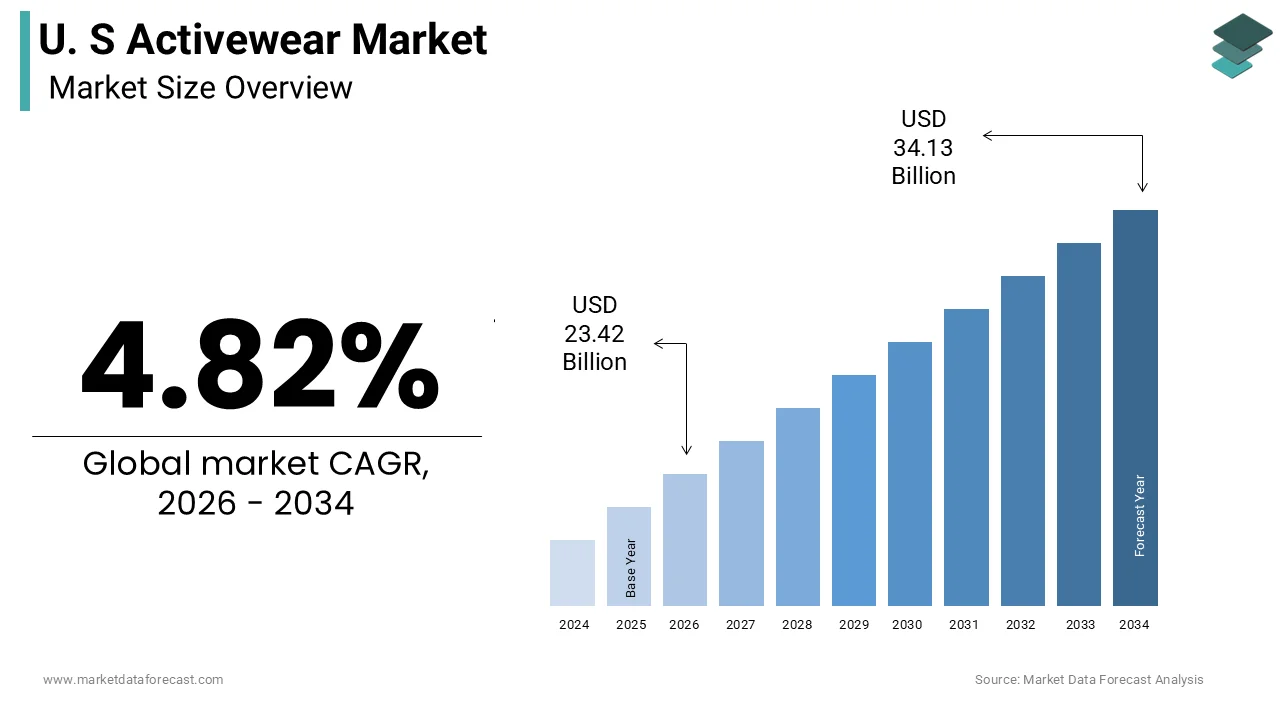
The United States activewear market was valued at USD 22.32 billion in 2025 and is projected to reach USD 34.13 billion by 2034, growing from USD 23.42 billion in 2026 at a CAGR of 4.82% during the forecast period. Market growth is driven by increasing health awareness, rising participation in fitness and outdoor activities, and growing consumer preference for comfortable athleisure apparel. Expanding e-commerce platforms, social media influence, and innovations in performance fabrics are further supporting the growth of the U.S. activewear market.
Key Market Trends
- Rising popularity of athleisure and wellness-focused lifestyles
- Increasing demand for sustainable and eco-friendly activewear
- Growth in online shopping and direct-to-consumer brands
- Expansion of smart fabrics and moisture-wicking apparel technologies
- Increasing influence of fitness influencers and celebrity endorsements
Segmental Insights
- Based on product outlook, the apparel segment dominated the U.S. activewear market in 2025 by accounting for 56.4% of the market share, driven by strong demand for leggings, sports bras, hoodies, and performance wear
- Based on end user, the female segment held the leading share in 2025 by capturing 53.2% of the market share, supported by rising participation in fitness activities and increasing fashion-conscious consumer behavior
- Based on price range outlook, the mass segment accounted for the dominant share in 2025 due to affordability and broad consumer accessibility across retail channels
- Based on distribution channel outlook, the online e-commerce segment led the market in 2025 by accounting for 34.5% of the market share, driven by convenience, home delivery services, and extensive product availability through digital platforms
Competitive Landscape
- The U.S. activewear market is highly competitive, with companies focusing on product innovation, sustainable materials, and digital retail expansion. Market players are investing in performance-enhancing fabrics, personalized shopping experiences, and influencer marketing strategies to strengthen their market presence.
- Prominent players in the U.S. activewear market include Nike, Adidas, Lululemon Athletica, Under Armour, PUMA, New Balance, ASICS, Columbia Sportswear, Skechers, and VF Corporation.
U. S Activewear Market Size
The U.S activewear market size was calculated to be USD 22.32 billion in 2025 and is anticipated to be worth USD 34.13 billion by 2034, from USD 23.42 billion in 2026, growing at a CAGR of 4.82% during the forecast period.
The activewear is apparel and footwear designed specifically for physical exercise ,sports, and athletic activities. The definition now extends beyond traditional gym wear to include yoga pants, running shoe,s compression ge,ar and moisture-wicking fabrics that cater to various fitness disciplines. According to the Centers for Disease Control and Prevention, approximately 50% of adults in the United States meet the recommended guidelines for aerobic physical activity, indicating a substantial base of active consumers. Furthermore, the integration of technology into fabrics such as smart textiles that monitor biometric data is reshaping product offerings. The rise of remote work has also accelerated the adoption of comfortable clothing suitable forhome-basedd exercises.
MARKET DRIVERS
Rising Health Consciousness and Fitness Participation Rates
The increasing emphasis on health and wellness, as more individuals prioritize physical fitness and preventive healthcare, is fuelling the growth of the United States activewear market. Consumers are increasingly aware of the benefits of regular exercise in managing weight, reducing stress, and preventing chronic diseases. According to the Physical Activity Council, over 75% of Americans participated in some form of fitness activity in the last yea,r ranging from walking thigh-intensityty interval training. This broad engagement creates a sustained demand for appropriate attire that supports performance and comfort. The popularity of specific fitness trends such as yoga, pilate,s anCrossFitit has spurred the development of specialized clothing lines tailored to these activities. Data from the Yoga Alliance indicates that the number of yoga practitioners in the United States has grown to over 36 million, requiring flexible and breathable fabrics. Additionally, corporate wellness programs encourage employees to maintain active lifestyle,s often providing incentives for gym memberships and fitness tracking. This institutional support reinforces the habit of regular exercise among the workforce. The psychological benefit of looking god, while working out also motivates consumers to invest in premium activewear brands.
Influence of Athleisure Trend and Casual Workplace Norms
The pervasive influence of the athleisure trend and the shift towards casual workplace norms by blurring the lines between performance wear and everyday fashion is also propelling the growth of the United States activewear market. Consumers increasingly prefer clothing that offers both functionality and style by allowing them to wear activewear in non-athletic settings, such as offices, schools, and social gatherings. The sales of athleisure apparel have consistently outpaced general apparel growth, as comfort becomes a priority for modern consumers. The normalization of remote and hybrid work models has further accelerated this shift as employees seek comfortable alternatives to traditional business attire. Fashion retailers have responded by expanding their activewear collections to include versatile pieces that pair well with casual jackets and shoes. The acceptance of sneakers and leggings in professional environments has reduced the stigma associated with wearing gym clothes outside the studio. Major luxury brands have launched dedicated athleisure line,s recognizing the commercial potential of this crossover appeal. The versatility of these garments appeals to busy lifestyles where convenience is valued. Furthermore, the aesthetic evolution of activewear with trendy designs and colors makes it fashionable for daily wear.
MARKET RESTRAINTS
High Price Points of Premium Activewear Brands
The high price points associated with premium activewear brands are hindering the growth of the United States activewear market by limiting accessibility for budget-conscious consumers. Leading brands often position their products as luxury items with prices for leggings ,jackets, and shoes exceeding 100 dollars, which may be prohibitive for average households. The average annual expenditure on apparel per consumer unit is approximately 1800 dollars, leaving limited room for high-cost specialty items. Economic inflation and rising cost of living further exacerbate this issue, prompting shoppers to seek cheaper alternatives. Many consumers perceive diminishing returns on investment when paying premium prices for marginal improvements in fabric technology or brand prestige. The availability of discounted options through online outlets and second-hand markets also diverts demand from full price retail. Small and medium-income families often prioritize essential goods over expensive athletic wear. This price sensitivity restricts the market expansion of high-end brands, particularly in rural areas and smaller cities. Manufacturers face pressure to justify their pricing through innovation and sustainability claim,s which may not resonate with all demographics.
Counterfeit Products and Intellectual Property Violations
The prevalence of counterfeit products and intellectual property violations, undermining brand integrity and consumer tru,st is also declining the growth of the United States activewear market. Illicit manufacturers produce low-quality replicas of popular activewear items by selling them at a fraction of the original price through unauthorized online platforms and street markets. The apparel and footwear industry loses billions of dollars annually due to counterfeiting activities. These fake products often fail to meet safety and performance standards, leading to customer dissatisfaction and potential health risks. Consumers who inadvertently purchase counterfeit items may associate poor quality with the genuine bran,d damaging its reputation. The ease of accessing these products through social media marketplaces complicates enforcement efforts. As per the United States Patent and Trademark Office, small businesses and emerging brands are disproportionately affected as they lack resources for legal protection. The presence of counterfeit goods also distorts market competition by offering unfair price advantages to illegal operators. Brand owners must invest heavily inanti-counterfeitingg technologies and legal actions, whichincreases operational costs. This ongoing battle diverts resources from innovation and marketing.
MARKET OPPORTUNITIES
Integration of Smart Technology and Wearable Devices
The integration of smart technology and wearable devices into activewear by enhancing functionality and user engagement is creating new opportunities for the growth of the United States activewear market. Manufacturers are developing fabrics embedded with sensors that track biometric data, such as heart rate, muscle activity, and body temperature. These innovations allow users to monitor performance in real time without needing separate devices. Collaborations between apparel brands and tech companies enable the creation of seamless ecosystems where clothing syncs with mobile apps. As per Apple Inc, the integration of health metrics into daily wear enhances user stickiness and brand loyalty. Smart activewear can also provide feedback on posture and form reducing the risk of injury during exercise. The adoption of 5G technology facilitates faster data transmission improving the accuracy of these devices. Healthcare providers are also exploring smart textiles for remote patient monitoring expanding the market beyond fitness enthusiasts. The ability to offer personalized coaching and health alerts adds value to the product.
Expansion of Sustainable and Eco-Friendly Product Lines
The expansion of sustainable and eco-friendly product lines, as environmental consciousness influences purchasing decisions, is alsoexpected to enhance the growth of the United States activewear market. Consumers are increasingly demanding transparency in supply chains and preferring brands that use recycled materials and ethical manufacturing practices. Activewear brands are responding by introducing collections made from recycled polyester, organic cotto,n and biodegradable fabrics. Companies like Patagonia and Adidas have launched initiatives to recycle old garments into new produc,ts appealing to eco-conscious buyers. The use of waterless dyeing techniques and renewable energy in production further enhances brand image. Government incentives for green manufacturing also support this transition. Consumers are willing to pay a premium for sustainable products ,viewing them as investments in planetary health.
MARKET CHALLENGES
Supply Chain Disruptions and Raw Material Volatility
The supply chain disruptions and raw material volatility are affecting production timelines and cost stability, which poses a major challenge for the growth of the United States activewear market. The industry relies heavily on global sourcing of synthetic fibers, such as polyester and nylon, which are subject to fluctuating oil prices and geopolitical tensions. This unpredictability forces brands to hold higher inventory levels, increasing storage costs and financial risk. Dependence on Asian manufacturing hubs exposes companies to trade policy changes and labor issues. The tariffs on imported textiles add to the overall cost burden for domestic retailers. Natural disasters and pandemics further disrupt production capabilities, causing delays in product launches. Small andmedium-sizedd brands struggle to negotiate favorable terms with suppliers, lacking the leverage of larger corporations. The push for sustainability requires sourcing specialized material,s which are often scarce and expensive. Companies must diversify their supplier base to mitigate ris,ks but this requires significant investment and time.
Intense Market Saturation and Brand Differentiation Difficulties
The intense saturation and difficulties in brand differentiation, as numerous players compete for consumer attention, are also impeding the growth of the United States activewear market. The low barriers to entry in the apparel industry have led to an influx of new brands ,including direct-to-consumer startups and private labels from major retailers. Consumers face overwhelming choices, making it difficult for individual brands to stand out based on product features alone. Established brands struggle to maintain loyalty as shoppers frequently switch based on price and trends. As per Amazon.co,m the proliferation osimilar-lookingng products on e-commerce platforms leads to price wars eroding profit margins. Innovation in fabric technology is often quickly replicated by competitors, reducing the window for exclusive advantage. Marketing messages around fitness and lifestyle have become generi,c failing to resonate uniquely with target audiences. The need for constant content creation and influencer partnerships adds to operational burdens.
REPORT COVERAGE
| REPORT METRIC | DETAILS |
| Market Size Available | 2025 to 2034 |
| Base Year | 2025 |
| Forecast Period | 2026 to 2034 |
| CAGR | 4.82% |
| Segments Covered | By Product, End User, Price Range, Distribution Channel, And Region |
| Various Analyses Covered | Global, Regional & Country Level Analysis; Segment-Level Analysis; DROC, PESTLE Analysis; Porter’s Five Forces Analysis; Competitive Landscape; Analyst Overview of Investment Opportunities |
| Regions Covered | New York, Massachusetts, Pennsylvania, Illinois, Ohio, Michigan, Texas, Florida, Georgia, California, Washington, Colorado. |
| Market Leaders Profiled | Nike Inc., Adidas AG, Under Armour Inc., Lululemon Athletica, PUMA SE, Columbia Sportswear Company, VF Corporation, PVH Corp., ASICS Corporation, Skechers U.S.A., Inc., Hanesbrands Inc., Champion, Fabletics, Athleta, Vuori |
SEGMENTAL ANALYSIS
By Product Outlook Insights
The apparel segment was the largest by holding 56.4% of the United States activewear market share in 2025 due to the fundamental necessity of clothing for all physical activities and the widespread adoption of athleisure as daily wear. The versatility of athleisure wear, which allows consumers to use the same garments for workou,ts office environme,nts and social out,ings is also bolstering the growth of the United States activewear market. This dual utility increases the frequency of purchase and wardrobe integration. The fast fashion influence on activewear means that styles change rapidly, prompting consumers to update their collections regularly. Data from the Bureau of Labor Statistics indicates that the average American household spends approximately 400 dollars annually on appare,l with a significant portion allocated to casual and athletic wear. The lower price point of individual apparel items compared to footwear also encourages impulse buys and bulk purchases. As per McKinsey and Compa,ny the turnover rate for activewear tops and leggings is twice that of athletic shoes due to exposure to sweat and washing cycles.
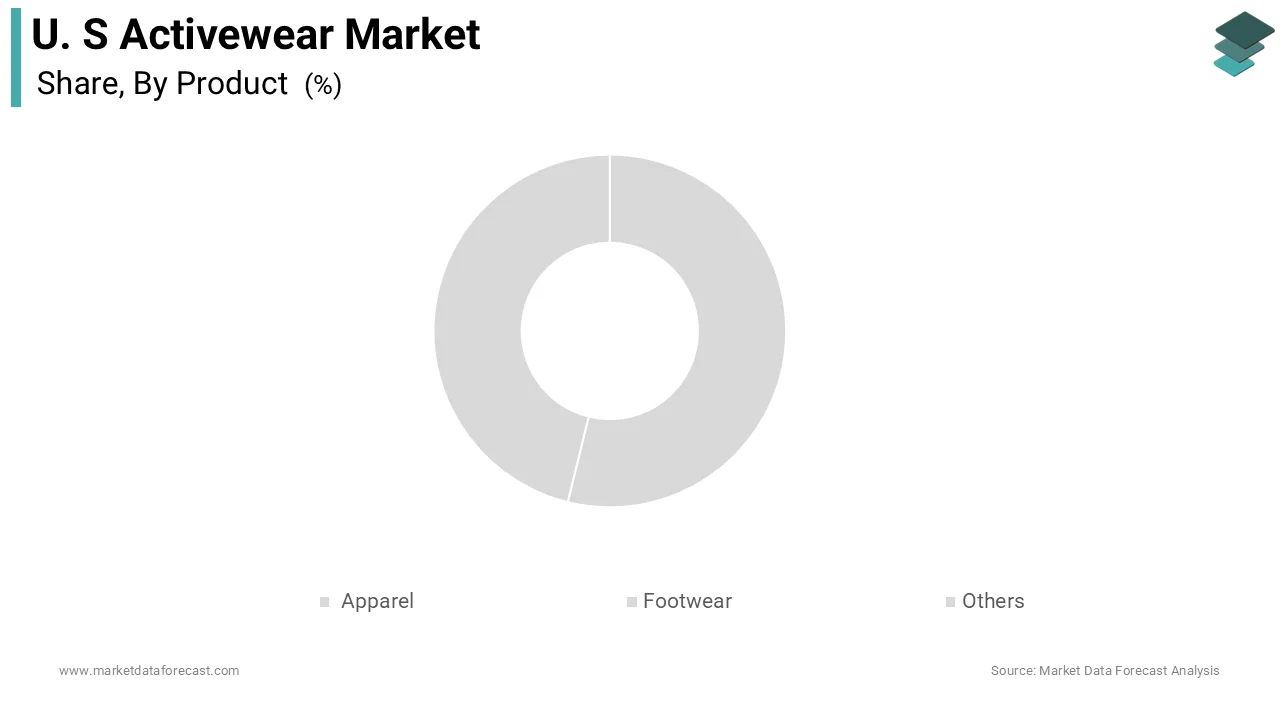
The footwear segment is expected to register the fastest CAGR of 10.2% from 2026 to 2034, with the continuous technological innovation that enhances performance comfort and injury preventio,n appealing to both professional athletes and casual enthusiasts. Brands invest heavily in research and development to create proprietary cushioning systems, energy return foam,s and supportive structures. Consumers are willing to pay premium prices for shoes that offer tangible benefits, such as reduced joint stress and improved speed. This frequent replacement cycle, driven by functional necessity rather than just fashio,n ensures steady demand. The launch of new technology platforms often results in double-digit sales growth for specific shoe lines. The rise of walking as a primary exercise post-pandemic has also expanded the market for comfortable athletic sneakers. Collaborations with celebrity athletes and designers further elevate the status of athletic footwear as a fashion statement.
By End-User Insights
The female segment was the largest by holding 53.2% of the United States activewear market share in 2025 ,owing to the high participation rates in diverse fitness activities such as yoga, pilate,s and bar,re which require specific apparel types. Women are also more likely to view activewear as a fashion statem,ent leading to larger wardrobes and frequent updates. The influence of social media influencers and fitness celebrities disproportionately affects female purchasing decisions. Retailers respond by offering a wider variety in cuts, color,s and patterns for women. The expansion of plus-size and maternity activewear lines further captures underserved demographics. Women also tend to shop for activewear for family members, increasing their influence on household spending. The emotional connection to body image andself-caree motivates regular investment in quality gear.
The male segment is likely to grow at an anticipated CAGR of 9.5% from 2026 to 2034, owing to the increasing health awareness and the shifting definition of masculinity that embraces self-care and physical fitness. Men are increasingly participating in strength trainin,g runni,ng and team sports requiring specialized gear. The casualization of workplace attire allows men to wear athletic pants and polos to w,ork expanding the usage occasions for activewear. The rise of male fitness influencers on platforms like YouTube and TikTok promotes specific brands and st,yles driving adoption. As per GQ Mag,azine the term dad style has evolved to inhigh-qualityuality sneakers and joggers, making them socially acceptable for older demographics. Brands are launching dedicatedmen'sn lines with focused marketing on performance and durability. The growth of esports and gaming culture has also led to the creation of comfortable seating and friendly activewear.
By Price Range Outlook Insights
The mass segment held a dominant share of the United States activewear market in 2025, owing to the affordability of products and their wide availability in stores, such as Walmar,t Targ,et and Amazon, which serve millions of Americans. Price-sensitive consumers, including students and families, rely on these options for everyday athletic needs. The improvement inthe quality of private label brands has reduced the perceived gap between mass and premium products. The economic uncertainty and inflationary pressures prompt shoppers to trade down to mass market options to save money. Bulk buying options and frequent sales events further enhance the appeal of this segment.
The premium and luxury segment is likely to grow at an anticipated CAGR of 11.2% during the forecast period, owing to the desire for brand prestige and access to superior technology and sustainable materials that justify higher price points. Affluent consumers view activewear as a status symbol and are willing to invest in brands like Lululemon, Alo Yoga, and Vuori. The emphasis on ethical manufacturing and eco-friendly fabrics appeals to values-driven buyers who associate premium prices with responsibility. The limited edition collaborations and exclusive drops create scarcity and hype, driving demand. The superior fit and longevity of premium items are perceived as betterlong-termm investments. Social media amplifies the visibility of these brands among aspirational buyers. The expansion of direct-to-consumer channels allows premium brands to maintain high margins and control brand narrative.
By Distribution Channel Outlook Insights
The online e-commerce segment accounted in holding 34.5% of the United States activewear market, owing to the convenience of home delivery and the rich digital experience that allows consumers to explore vast catalogs without geographical constraints. Mobile apps and websites offer personalized recommendations and easy returns, which reduce purchase friction. Data from Adobe Analytics shows that online activewear sales spike during major shopping events like Black Friday and Cyber Monday. The integration of social commerc,e where users can buy directly from Instagram or TikTok pos,ts enhances discovery. As per Shopify, brands with strong online presences report higher customer retention rates due to loyalty programs and data-driven marketing. The ability to read user reviews and see photos from other customers builds trust in fit and quality. Direct-to-consumer brands bypass traditional retail markups, offering competitive pricing.
The specialty stores segment is likely to grow atthea fastest CAGR of 8.9% from 2026 to 2034, owing to the need for expert advice and personalized fitting services, which are for high-performance gear, such as running shoes and compression wear. Customers visit these stores to try on products and receive professional guidance on selection. Brands like Lululemon and Athleta create community hubs with in-store yoga classes and run clubs, enhancing customer loyalty. As per the study, experiential retail drives higher engagement and repeat visits. The ability to test products in real time reduces return rates and increases satisfaction. Specialty stores also carry niche brands that are not available in mass market outlets. The tactile experience of feeling fabric quality and testing flexibility is invaluable for premium purchases. These unique value propositions drive the sustained growth of the specialty store channel.
COMPETITION OVERVIEW
The competition in the United States activewear market is intense and characterized by a mix of established global giants and agile niche brands vying for consumer attention. Major players leverage strong brand equit,y extensive distribution networ,ks and significant marketing budgets to maintain dominance. Innovation in fabric technology and design serves as a key differentiator as companies strive to offer superior performance and comfort. The rise direct-to-consumermer models has lowered barriers to entry, allowing specialized brands to capture specific demographics such as yoga enthusiasts or runners. Price competition is fierce in the mass market segmen,t while premium brands compete on exclusivity and brand lifestyle. Sustainability and ethical manufacturing practices are increasingly important factors influencing purchasing decisions. Digital engagement through social media and fitness apps creates new battlegrounds for customer loyalty. Mergers and acquisitions are common as larger firms seek to expand their product portfolios and technological capabilities. Retailers must continuously adapt to trends like athleisure and remote work influences.
KEY MARKET PLAYERS
A few major players of the U.S activewear market include
- Nike Inc
- Adidas AG
- Under Armour Inc
- Lululemon Athletica
- PUMA SE
- Columbia Sportswear Company
- VF Corporation
- PVH Corp
- ASICS Corporation
- Skechers U.S.A., Inc
- Hanesbrands Inc
- Champion
- Fabletics
- Athleta
- Vuori
Leading Players in the US Activewear Market
- Nike Inc maintains a commanding presence in the United States activewear market through its iconic branding and continuous innovation in performance footwear and apparel. The company leverages its direct-to-consumer strategy to enhance customer engagement and data collection. Recent actions include expanding its digital ecosystem with enhanced mobile apps and personalized shopping experiences. Nike has also invested heavily in sustainable materials, such as Flyknit and recycled polyester, to appeal to environmentally conscious consumers. The brand collaborates with high-profile athletes and cultural icons to maintain relevance and drive demand. These strategies strengthen its market position by fostering brand loyalty and commanding premium pricing while adapting to shifting consumer preferences for digital integration and sustainability in athletic wear.
- Lululemon Athletica Inc has significantly influenced the United States activewear market by pioneering the athleisure category and emphasizing high-quality technical fabrics. The company focuses on community building through in-store events and fitness classes to create strong emotional connections with customers. Recent efforts involve expanding its product range to include menswear and footwear, diversifying revenue streams beyond women's leggings. Lululemon has acquired fitness technology companies to integrate digital wellness into its offerings. The brand prioritizes vertical retail operation,s allowing for better control over inventory and customer experience. Its commitment to innovation in fabric technolo,gy such as moisture-wicking and four-way stretch materials, ensures product superiority. These actions reinforce its status as a leader in the premium activewear segment.
- Under Armour Inc contributes to the United States activewear market by focusing on high-performance apparel and footwear designed for serious athletes. The company emphasizes innovation in thermal regulation and compression technologies to enhance athletic performance. Recent actions include restructuring its supply chain to improve efficiency and reduce costs. Under Armour has launched new marketing campaigns featuring prominent sports figures to rejuvenate its brand image and appeal to younger demographics. The company is also expanding its digital presence through connected fitness platforms that track user data. Strategic partnerships with professional leagues and teams enhance brand visibility. These initiatives help the company compete effectively by delivering specialized products that meet the rigorous demands of athletes while improving operational profitability and market relevance.
Top Strategies Used by Key Market Participants
Key players in the United States activewear market primarily employ direct-to-consumer expansion and digital integration strategies to strengthen their positions. Companies invest heavily in e-commerce platforms and mobile applications to capture customer data and personalize shopping experiences. This approach reduces reliance on third-party retailers and improves profit margins. Brands also focus on sustainability initiatives by using recycled materials and transparent supply chains to appeal to eco-conscious consumers. Product innovation through advanced fabric technologies and smart wearables differentiates offerings in a crowded market. Collaborations with influencers and athletes drive brand visibility and cultural relevance. Community engagement through fitness events and local clubs fosters loyalty and emotional connection. Diversification into new categories such as footwear and wellness services expands revenue streams. These multifaceted strategies enable companies to adapt to changing consumer behaviors and maintain competitive advantage in the dynamic activewear landscape.
MARKET SEGMENTATION
This research report on the US activewear market has been segmented and sub-segmented based on product, end user, price range, distribution channel & region.
By Product
- Apparel
- Footwear
- Others
By End-user
- Male
- Female
By Price Range
- Mass
- Premium/Luxury
By Distribution Channel
- Specialty Stores/Branded Stores
- Supermarkets & Hypermarkets
- Department Stores
- Online/E-commerce
- Others
By Region
- New York
- Texas
- Florida
- Georgia
- California
- Rest of U.S.