- Product Description Description
- Table of Contents TOC
- List of Table & Figure LOT
- Get Free Sample PDF Sample PDF
Market Size, 2025
$75.85 BnMarket Estimate, 2026
$81.14 BnMarket Forecast, 2034
$139.21 BnCAGR, 2026–2034
6.98%U.S Agricultural Equipment Market Report Summary
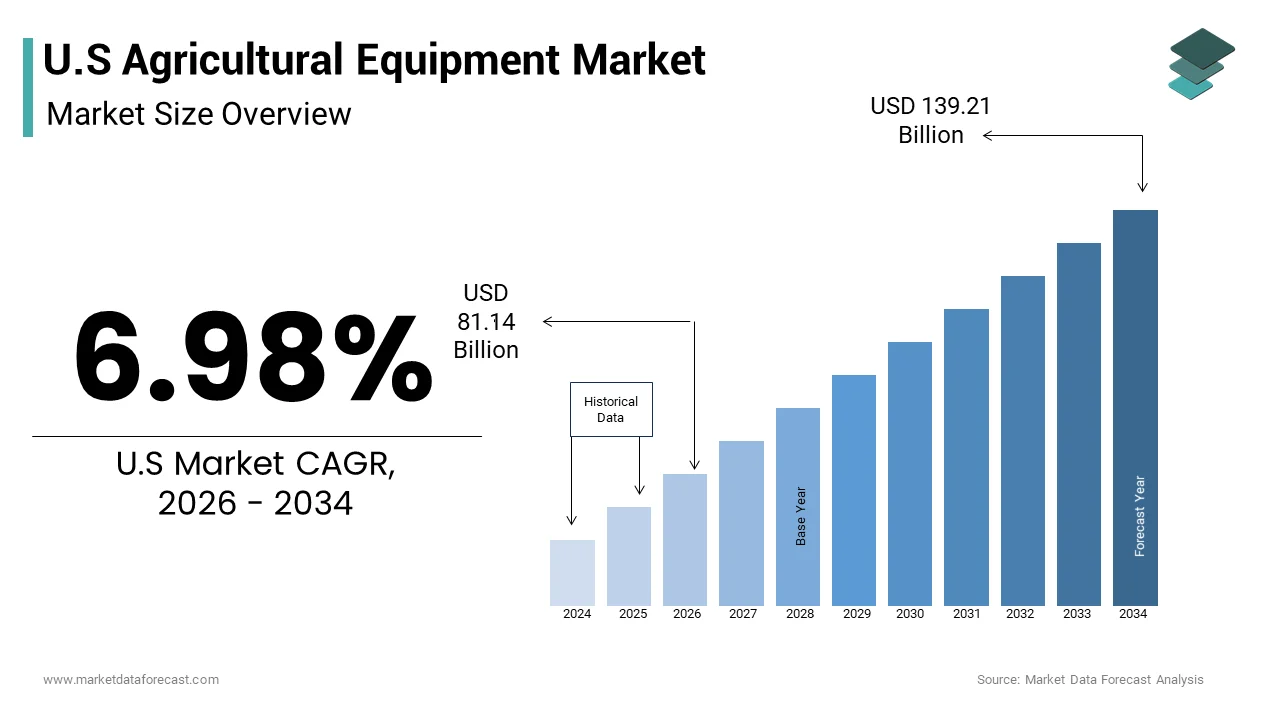
The United States agricultural equipment market was valued at USD 75.85 billion in 2025, is estimated to reach USD 81.14 billion in 2026, and is projected to reach USD 139.21 billion by 2034, growing at a CAGR of 6.98% during the forecast period from 2026 to 2034. The growth of the United States agricultural equipment market is driven by the rising mechanization of farming practices, increasing adoption of precision agriculture technologies, and growing labor shortages across the agricultural sector, which are collectively encouraging farmers to invest in modern machinery. Additionally, the market benefits from government incentives promoting smart farming and the rising integration of GPS, IoT, and automation in agricultural operations.
Key Market Trends
- Increasing adoption of autonomous and precision farming machinery to enhance productivity and reduce operational costs.
- Growing demand for energy-efficient and sustainable equipment, driven by environmental regulations and green farming initiatives.
- Expansion of aftermarket services and financing options that make equipment acquisition more accessible to small and medium farmers.
- Rising popularity of compact tractors and multipurpose harvesters among diversified farms.
- Technological innovations such as AI-driven monitoring systems, telematics, and drone-assisted operations transforming farm management.
Segmental Insights
- Based on equipment, the agriculture tractor segment dominated the U.S. agricultural equipment market, holding 43.2% of the market share in 2025. The segment’s growth is supported by rising mechanization in farming operations, particularly among small and mid-sized farms, and continuous advancements in engine efficiency and automation features.
- Based on application, the threshing and harvesting segment held a dominant share of the U.S. agricultural equipment market in 2025. This dominance is attributed to the strong demand for high-performance combines and harvesters that enhance crop yield efficiency, particularly in large-scale grain and corn production areas across the Midwest.
Competitive Landscape
The United States agricultural equipment market is highly competitive, characterized by innovation-driven manufacturers focusing on automation, precision farming, and energy efficiency. Leading companies are expanding their smart farming solutions portfolios, forming technology partnerships, and enhancing dealer networks to improve customer access and support services. Major players in the U.S. agricultural equipment market include AGCO Corporation (U.S.), John Deere, Alamo Group Inc. (U.S.), China National Machinery Industry Corporation (China), CNH Industrial N.V. (U.K.), CLAAS KGaA GmbH (Germany), Deere & Company (U.S.), Kubota Corporation (Japan), Mahindra & Mahindra (India), SDF S.p.A. (Italy), and Valmont Industries Inc. (U.S.).
U.S Agricultural Equipment Market Size
The United States agriculture equipment market size was valued at USD 75.85 billion in 2025 and is anticipated to reach USD 81.14 billion in 2026 to reach USD 139.21 billion by 2034, growing at a CAGR of 6.98% during the forecast period from 2026 to 2034.
MARKET OVERVIEW
Agricultural equipment refers to the mechanical devices, vehicles, and tools used in farming. It ranges from simple hand tools to large tractors and implements. This market is fundamental to the nation's food security and economic stability supporting one of the most productive agricultural systems globally. The definition of this market includes tractors combine harvesters sprayers planters and specialized implements that integrate advanced technologies such as precision agriculture and automation. As per the United States Department of Agriculture there are approximately 2 million farms in the United States covering about 893 million acres of land which necessitates robust mechanization to maintain output levels. The average farm size in the United States has expanded to 469 acres, according to the latest USDA National Agricultural Statistics Service data, continuing a long-term economic shift toward larger consolidated operations that require high-capacity, precision machinery. Furthermore the USDA Economic Research Service (ERS) indicates that while the broader food and agriculture sectors support millions of domestic jobs, seasonal field labor shortages persist, heavily driving commercial demand for automated farm machinery and robotic solutions. The integration of Internet of Things devices and data analytics into machinery allows farmers to optimize resource usage and reduce environmental impact. According to the Environmental Protection Agency agriculture contributes to nearly 10 percent of total US greenhouse gas emissions prompting a shift toward cleaner and more efficient equipment. The modernization of this fleet is critical for sustaining yield growth amidst climate variability and changing consumer demands for sustainable produce. This dynamic landscape underscores the strategic importance of advanced agricultural machinery in ensuring the long term viability and competitiveness of American agriculture.
MARKET DRIVERS
Adoption of Precision Agriculture and Smart Farming Technologies
The widespread adoption of precision agriculture and smart farming technologies is driving the growth of the United States agricultural equipment market. Farmers are increasingly integrating GPS guided systems variable rate technology and automated steering into their machinery to maximize crop yields while minimizing input costs. According to the American Farm Bureau Federation the use of precision agriculture technologies has grown significantly with over 70 percent of row crop farmers now utilizing some form of data driven decision making tools. These technologies enable precise application of fertilizers pesticides and water reducing waste and environmental impact. As per the United States Department of Agriculture farms using precision agriculture techniques have reported yield increases of up to 5 percent and cost savings of up to 15 percent on inputs. The demand for equipment equipped with sensors and connectivity features is rising as farmers seek to monitor soil health and crop conditions in real time. This shift is further supported by the availability of high speed internet in rural areas through federal broadband initiatives which facilitates the seamless transmission of large data sets. Manufacturers are responding by developing smarter machines that can analyze field data and adjust operations automatically enhancing overall efficiency. The ability to track performance metrics and optimize planting patterns provides a competitive advantage encouraging continued investment in advanced machinery. This technological evolution transforms traditional farming into a data centric enterprise driving sustained demand for sophisticated agricultural equipment across the country.
Government Subsidies and Financial Incentives for Modernization
Government subsidies and financial incentives play a crucial role in driving the adoption of new agricultural equipment in the country, which further boosts the expansion of the United States agricultural equipment market. Federal and state programs provide grants loans and tax credits to help farmers upgrade their machinery and adopt sustainable practices. According to the USDA Natural Resources Conservation Service (NRCS), billions of dollars in financial and technical assistance are funneled annually through programs like the Environmental Quality Incentives Program (EQIP). This structural funding helps eligible farmers offset the costs of deploying precision, energy-efficient, and conservation-oriented equipment. These financial aids lower the barrier to entry for expensive technologies making them accessible to small and medium sized farms. As per the Internal Revenue Service Section 179 of the tax code allows farmers to deduct the full purchase price of qualifying equipment including tractors and combines in the year it is placed in service providing significant immediate tax benefits. This incentive encourages timely replacement of aging fleets with newer more efficient models. Additionally the Bipartisan Infrastructure Law includes provisions for rural development that indirectly support agricultural modernization by improving local infrastructure and access to markets. The availability of low interest loans through the Farm Credit System further facilitates capital investment in machinery. These supportive policies create a favorable economic environment for equipment purchases stimulating market growth. These initiatives reduce the financial burden associated with modernization. As a result, they ensure that American farmers remain competitive and capable of meeting global food demand through enhanced operational efficiency and productivity.
MARKET RESTRAINTS
High Initial Capital Investment and Financing Constraints
The high initial capital investment required for modern agricultural equipment is a significant restraint to the United States agricultural equipment market. Advanced machinery such as autonomous tractors and high capacity combine harvesters often cost hundreds of thousands of dollars placing them out of reach for many smaller farming operations. According to the Federal Reserve Bank of Kansas City the average cost of a new large tractor has increased by over 30 percent in the last decade reflecting the addition of complex technologies and compliance features. This price escalation strains the financial resources of farmers who already operate on thin margins. As per the United States Department of Agriculture net farm income is projected to decline in recent years due to rising production costs and fluctuating commodity prices limiting the ability of farmers to invest in new equipment. Financing constraints further exacerbate this issue as interest rates rise increasing the cost of borrowing for equipment purchases. Many farmers rely on credit to fund acquisitions but tighter lending standards and higher debt service requirements discourage new investments. The long payback period for expensive machinery also deters buyers who are uncertain about future profitability. Consequently many operators choose to extend the life of existing equipment through repairs rather than purchasing new units slowing down the replacement cycle. This financial hesitation restricts market expansion and delays the adoption of innovative technologies that could enhance productivity and sustainability across the agricultural sector.
Aging Farmer Demographic and Succession Challenges
The aging demographic of American farmers and the associated succession issues is a substantial barrier to the United States agricultural equipment market. According to the Census of Agriculture the average age of a US farm producer is 58.1 years indicating that a significant portion of the farming population is nearing retirement. This demographic trend creates uncertainty regarding future investment in long term assets such as heavy machinery. As per the National Young Farmers Coalition many older farmers are reluctant to invest in new equipment due to concerns about recouping costs before retirement or transferring the business to the next generation. The lack of clear succession plans in many family farms leads to deferred maintenance and postponed upgrades resulting in a stagnant demand for new machinery. Additionally younger generations entering agriculture often face barriers such as high land prices and limited access to capital which restricts their ability to purchase modern equipment. The skills gap also poses a challenge as older farmers may be less familiar with digital technologies integrated into new machines requiring additional training and support. This generational transition period creates a lull in equipment procurement as families evaluate the future viability of their operations. The market faces headwinds in sustaining consistent growth rates for advanced agricultural machinery across the United States. This challenge is primarily driven by the lack of a steady influx of young, technologically adept farmers.
MARKET OPPORTUNITIES
Expansion of Autonomous and Robotic Machinery Solutions
The expansion of autonomous and robotic machinery solutions offers a significant opportunity for growth in the United States agricultural equipment market. Labor shortages in the agricultural sector have intensified the need for automated solutions that can perform tasks such as planting weeding and harvesting without human intervention. According to agricultural labor assessments from the USDA, persistent field hand deficits continue to stress the agricultural economy. In response, the American Farm Bureau Federation (AFBF) emphasizes that these multi-year labor constraints are accelerating the demand for autonomous tech and robotic field solutions. Companies are developing autonomous tractors and robotic harvesters that operate continuously increasing productivity and reducing dependency on seasonal workers. As per the Association for Uncrewed Vehicle Systems International the agricultural robotics market is expected to grow substantially as technology becomes more affordable and reliable. These machines utilize artificial intelligence and computer vision to identify crops and apply treatments precisely minimizing waste and environmental impact. The ability of robots to work in challenging conditions such as extreme weather or uneven terrain further enhances their appeal. Additionally autonomous equipment can collect detailed field data providing insights that help farmers optimize operations. The integration of these technologies aligns with the trend toward smart farming offering a pathway to sustainable and efficient production. Manufacturers can capture a growing market segment by investing in autonomous solutions. This investment is driven by the urgent need to address labor constraints and improve operational efficiency in American agriculture.
Growth in Sustainable and Conservation Tillage Equipment
The growing emphasis on sustainable farming practices and conservation tillage is a key area for growth of the United States agricultural equipment market. Consumers and regulators are increasingly demanding environmentally friendly production methods that preserve soil health and reduce carbon emissions. According to the Natural Resources Conservation Service conservation tillage practices such as no till and reduced till have been adopted on over 100 million acres of cropland in the US. This shift drives demand for specialized equipment such as no till drills and precision planters that can operate effectively without disturbing the soil structure. As per the Soil Health Institute farms using conservation tillage report improved water retention and reduced erosion leading to long term productivity gains. Manufacturers are innovating to create machines that minimize soil compaction and optimize seed placement enhancing crop establishment. The adoption of cover cropping also requires specific machinery for planting and termination creating niche market segments. Government programs promoting carbon sequestration further incentivize the use of equipment that supports sustainable practices. By aligning product development with environmental goals companies can tap into a expanding customer base committed to regenerative agriculture. This trend not only addresses ecological concerns but also offers economic benefits through reduced fuel and labor costs. The convergence of regulatory support and consumer preference for sustainable produce ensures robust demand for conservation oriented agricultural equipment in the coming years.
MARKET CHALLENGES
Supply Chain Disruptions and Component Shortages
Supply chain disruptions and component shortages are a critical challenge to the United States agricultural equipment market. The manufacturing of complex machinery relies on a global network of suppliers for parts such as semiconductors steel and hydraulic components. According to the Association of Equipment Manufacturers (AEM), the agricultural equipment market is managing a deep cyclical downturn in high-horsepower machinery sales. Rather than struggling with component shortages, manufacturers are actively tightening production schedules to strategically shrink dealer inventory backlogs. The shortage of microchips in particular has impacted the production of modern tractors and combines that depend on electronic control systems. istorical data from the Federal Reserve Bank of Chicago records that extreme equipment lead times previously disrupted farm forecasting. However, current agricultural credit conditions indicate that machinery availability has fully normalized, with dealers holding ample inventory as farmers pull back on new equipment investments due to tight crop margins. These delays force operators to keep older less efficient machines in service longer increasing maintenance costs and the risk of breakdowns. Additionally fluctuating raw material prices contribute to cost volatility making it difficult for manufacturers to predict pricing and manage inventory. The reliance on international suppliers exposes the industry to geopolitical tensions and trade restrictions that can further disrupt flows. Manufacturers are attempting to mitigate these risks by diversifying supply sources and increasing domestic production but these adjustments take time. Until the supply chain stabilizes the market will continue to face constraints that hinder growth and customer satisfaction. Addressing these logistical vulnerabilities is essential for ensuring the reliability and accessibility of agricultural equipment in the United States.
Integration Complexity and Technical Skill Gaps
The complexity of integrating advanced technologies into agricultural equipment and the associated technical skill gaps is a serious impediment to the United States agricultural equipment market. Modern machines are equipped with sophisticated software sensors and connectivity features that require specialized knowledge to operate and maintain. According to collegiate agriscience and workforce development data, a prominent technical skill gap exists within the agricultural labor pool. As high-horsepower machinery integrates advanced data analytics, autonomous software, and GPS telemetry, the industry faces an acute shortage of specialized technicians capable of operating and repairing these digital frameworks. Many farmers and equipment dealers lack the training necessary to troubleshoot digital issues leading to prolonged downtime and reduced efficiency. As per the Extension Service at various land grant universities the rapid pace of technological innovation outpaces the ability of educational programs to prepare workers for these roles. This skills gap creates a barrier to adoption as users may feel overwhelmed by the complexity of new systems. Additionally the proprietary nature of some software and diagnostic tools restricts independent repairs forcing farmers to rely on authorized dealers who may have limited availability. The right to repair movement highlights this tension as farmers seek greater control over their equipment maintenance. Without adequate training and support the full potential of advanced machinery cannot be realized. Manufacturers must invest in comprehensive training programs and user friendly interfaces to bridge this gap. Failure to address these technical challenges could slow the adoption of innovative equipment and hinder the overall modernization of the agricultural sector in the United States.
REPORT COVERAGE
| REPORT METRIC | DETAILS |
| Market Size Available | 2025 to 2034 |
| Base Year | 2025 |
| Forecast Period | 2026 to 2034 |
| CAGR | 6.98% |
| Segments Covered | By Equipment, Application, and Country |
| Various Analyses Covered | Global, Regional, and Country Level Analysis, Segment-Level Analysis; DROC, PESTLE Analysis; Porter’s Five Forces Analysis; Competitive Landscape; Analyst Overview of Investment Opportunities. |
| Regions Covered | US, Canada, and the Rest of North America |
| Market Leaders Profiled | AGCO Corporation (U.S.), Alamo Group Inc. (U.S.), China National Machinery Industry Corporation (China), CNH Industrial N.V. (U.K.), CLAAS KGaA GmbH (Japan), Deere & Company (U.S.), Kubota Corporation (Japan), Mahindra & Mahindra (India), SDF S.p.A. (Italy), Valmont Industries Inc. (U.S.) |
SEGMENT ANALYSIS
By Equipment Insights
The agriculture tractors segment held the majority share of 40.1% of the United States agricultural equipment market in 2025. This supremacy of the segment was driven by the fundamental role tractors play as the primary power source for a wide variety of farming operations. A major factor driving this segment is the versatility and indispensability of tractors in modern farming systems. According to the United States Department of Agriculture tractors are used for nearly every stage of crop production including plowing planting spraying and hauling. The average farm size in the United States has expanded to 469 acres, according to the latest USDA National Agricultural Statistics Service data, continuing a long-term economic shift toward larger consolidated operations that require high-capacity, high-horsepower machinery. High horsepower tractors are essential for handling heavy implements and ensuring timely completion of field operations which directly impacts yield potential. A further key factor is the continuous technological integration into tractor designs which enhances their appeal and utility. As per the Association of Equipment Manufacturers modern tractors are equipped with precision guidance systems automated steering and telematics that improve operational efficiency and reduce input costs. These features allow farmers to optimize field patterns minimize overlap and monitor performance in real time. The replacement cycle for tractors is also relatively consistent due to wear and tear from intensive use ensuring steady demand. Manufacturers focus heavily on this segment offering a wide range of models from compact utility tractors for small holdings to high horsepower units for large commercial farms. This broad product availability combined with the critical nature of tractor operations solidifies their position as the cornerstone of the agricultural equipment market.
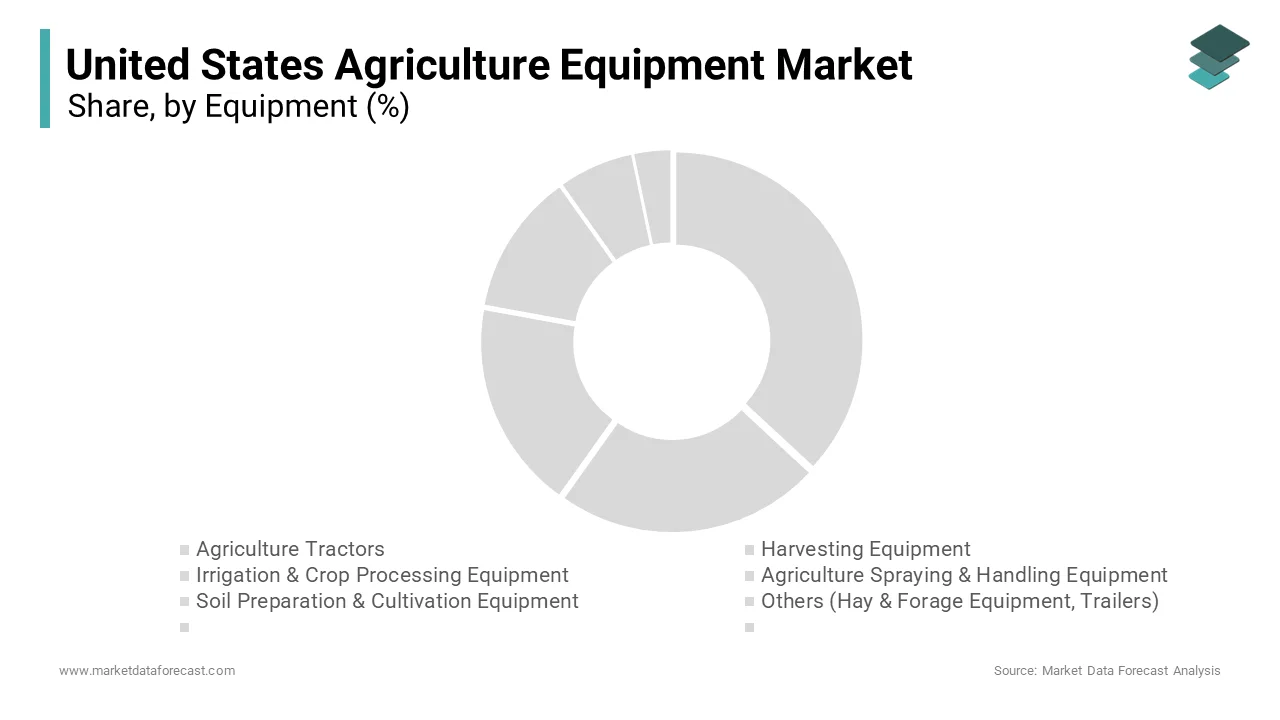
But the irrigation and crop processing equipment segment is estimated to register the fastest CAGR of 7.2% from 2026 to 2034. This rapid expansion of the segment is fueled by increasing water scarcity concerns and the need for post harvest value addition. The primary driver for this growth is the urgent need for water conservation technologies in key agricultural regions. According to the National Drought Mitigation Center severe drought conditions have affected significant portions of US farmland in recent years prompting farmers to adopt efficient irrigation systems such as drip and micro sprinklers. As per the U.S. Geological Survey, agricultural irrigation represents a primary resource demand, accounting for 47% of total nationwide freshwater withdrawals. This substantial volume makes the integration of highly efficient, low-evaporation drip and micro-irrigation technologies a critical priority for the sector. Advanced irrigation equipment allows for precise water application reducing waste and improving crop health. The second driving factor is the rising demand for processed agricultural products which requires specialized handling and processing machinery. As per the Economic Research Service the value added by food processing industries has grown steadily encouraging farmers to invest in on farm processing equipment to capture higher margins. Technologies such as grain dryers cleaners and sorters help maintain product quality and extend shelf life. Additionally government programs promoting water stewardship provide financial incentives for upgrading irrigation infrastructure. The combination of environmental pressures and economic opportunities drives investment in this segment. Controlled irrigation and efficient processing are becoming critical as climate variability increases. These practices are essential for sustaining profitability and resource availability in American agriculture.
By Application Insights
The threshing and harvesting segment led the United States agricultural equipment market and captured a 35.7% share in 2025. This prominence of the segment was attributed to the critical importance of efficient harvest operations in maximizing crop yield and minimizing losses. The main reason behind this position is the scale of commodity crop production in the United States which requires high capacity harvesting machinery. According to the United States Department of Agriculture corn and soybeans are the most widely planted crops covering over 180 million acres combined. Harvesting these crops within a narrow weather window necessitates reliable and fast combine harvesters and headers. As per the National Agricultural Statistics Service the average yield for corn has reached record levels exceeding 170 bushels per acre requiring robust equipment to handle the volume. Modern combines are equipped with advanced sensors and automation to optimize threshing settings and reduce grain damage. A different factor is the labor shortage in the agricultural sector which accelerates the adoption of mechanized harvesting solutions. As per the Bureau of Labor Statistics the number of farmworkers has declined while the complexity of harvest tasks has increased. Automated harvesting equipment reduces dependency on manual labor and ensures consistent quality. Additionally the integration of yield monitoring systems allows farmers to collect valuable data during harvest which informs future planting decisions. The high capital intensity of harvesting equipment also means that replacements and upgrades are significant market events. The critical nature of harvest timing and the need for efficiency ensure that this application segment remains the largest contributor to equipment demand.
On the other hand, the plant protection application segment is anticipated to witness the fastest CAGR of 6.8% during the forecast period due to the increasing need for precise and efficient application of pesticides herbicides and fertilizers. The primary driver for this expansion is the adoption of precision spraying technologies that minimize chemical usage and environmental impact. According to the Environmental Protection Agency regulations on pesticide application are becoming stricter requiring farmers to use equipment that reduces drift and runoff. As per the CropLife America industry group the use of variable rate technology and section control in sprayers has increased significantly allowing for targeted application based on field variability. This approach not only complies with regulatory standards but also reduces input costs for farmers. The quick growth is also pushed by the rise of resistant weed and pest species which necessitates more frequent and precise treatments. As per the Weed Science Society of America the spread of glyphosate resistant weeds has compelled farmers to adopt integrated pest management strategies supported by advanced spraying equipment. Drone technology is also emerging as a viable option for plant protection offering access to difficult terrain and reducing soil compaction. The ability to apply treatments accurately and timely is crucial for protecting crop yields. As sustainability becomes a central focus in agriculture the demand for smart plant protection equipment continues to rise. This segment benefits from ongoing innovation in nozzle design pump systems and digital controls that enhance application efficiency and effectiveness.
By Automation Insights
The semi-automatic equipment segment dominated the United States agricultural equipment market and accounted for a 55.8% share in 2025. This dominance was driven by the balance between cost effectiveness and enhanced operational efficiency that semi-automatic systems offer. a key reason for sustaining this leadership is the widespread adoption of assisted steering and basic automation features in mainstream machinery. According to the Association of Equipment Manufacturers most new tractors and combines sold in the United States come equipped with GPS guided auto steer systems as standard or optional features. These systems reduce operator fatigue and improve accuracy without the high cost associated with fully autonomous machines. As per the American Farm Bureau Federation over 70 percent of large scale farmers use some form of precision agriculture technology primarily semi-automatic guidance systems. This level of automation provides immediate benefits in terms of fuel savings and reduced input overlap making it an attractive investment for a broad range of farmers. Also keeping this segment in the lead is the ease of integration and maintenance of semi-automatic systems compared to fully automatic alternatives. Farmers are familiar with these technologies and can easily troubleshoot minor issues without specialized training. The infrastructure required for semi-automatic operations is minimal relying on existing satellite networks rather than complex local sensor arrays. Additionally the resale value of semi-automatic equipment remains strong due to high demand in the used market. This combination of affordability reliability and proven performance ensures that semi-automatic equipment remains the preferred choice for the majority of American farmers who seek to modernize their operations without committing to the highest tier of technological investment.
However, the automatic equipment segment is likely to experience the fastest CAGR of 12.5% between 2026 and 2034 owing to advancements in artificial intelligence robotics and the urgent need to address labor shortages. A key reason for this expansion is the development of fully autonomous tractors and harvesters that can operate without human intervention. According to the Association for Uncrewed Vehicle Systems International several manufacturers have launched commercial autonomous solutions that perform tasks such as tillage and planting around the clock. As per the National Young Farmers Coalition the persistent lack of available farm labor is pushing operators toward automation to ensure timely completion of critical field operations. Autonomous equipment offers the potential to increase productivity by working longer hours and optimizing paths more efficiently than human operators. The fast growth is boosted even more by the improvement in sensor technology and machine learning algorithms that enable safe and effective autonomous operation. As per the IEEE Institute of Electrical and Electronics Engineers advances in computer vision allow machines to detect obstacles and adjust operations in real time. These technologies are becoming more affordable and accessible expanding their appeal beyond large corporate farms to mid sized operations. Additionally the ability of automatic systems to collect and analyze vast amounts of data supports precision agriculture initiatives. As confidence in these technologies grows and regulatory frameworks evolve the adoption of automatic equipment is expected to accelerate significantly transforming the landscape of American farming.
COUNTRY ANALYSIS
In 2025, the United States dominated the North American agricultural equipment market and accounted for a 82.6% share. Its vast arable land and advanced mechanized farming practices drive the dominance of the country’s market. The market position shows a strong transition toward precision agriculture and autonomous technologies fuelled by the need for operational efficiency and labor optimization. This growth is also sustained by a mature manufacturing base and high adoption rates of next generation farming solutions across the Midwest and Great Plains regions. According to data from the USDA Economic Research Service, the net economic output of U.S. farms contributed $222.3 billion to the nation's GDP in 2023. While high-performance machinery remains a foundational component of modern production infrastructure, overall farm sector cash receipts for crops and livestock combined reached approximately $507 billion. According to full-year data published by the Association of Equipment Manufacturers, U.S. agricultural tractor sales declined by 10.7% overall in 2023 due to mounting economic pressures, rising interest rates, and softening commodity prices. Self-propelled combine harvesters bucked the trend, finishing the year up 5.5%, reflecting targeted operator investments in advanced harvesting systems, variable-rate tech, and GPS automation. The adoption of these advanced systems is further accelerated by the increasing cost of labor and the shrinking availability of skilled farm workers which necessitates automation. Additionally government programs such as those under the Farm Bill provide financial incentives for adopting sustainable farming practices which often require specialized equipment for soil conservation and precise nutrient management. The presence of major global manufacturers like John Deere and CNH Industrial within the country fosters intense innovation and competitive pricing. Rising export demand for US grown commodities also encourages farmers to expand capacity through equipment upgrades. The integration of Internet of Things sensors allows for real time monitoring of machine health reducing downtime during critical harvest windows. These factors collectively reinforce the United States as the primary driver of technological advancement and revenue generation in the continental agricultural machinery sector.
COMPETITIVE LANDSCAPE
The competition in the United States agricultural equipment market is intense characterized by a few dominant global manufacturers and several specialized regional players. Major companies compete on the basis of technological innovation product reliability and comprehensive after sales support. The integration of digital solutions and precision agriculture technologies has become a key differentiator as farmers seek data driven insights to optimize operations. Price competitiveness remains crucial but is often secondary to the total cost of ownership and long term value provided by advanced machinery. Manufacturers are increasingly focusing on sustainability by developing electric and alternative fuel powered equipment to meet environmental regulations and consumer expectations. Strategic alliances and acquisitions are common tactics used to acquire proprietary technologies and expand market reach. The presence of established dealer networks provides a significant competitive advantage by ensuring timely service and parts availability. New entrants focusing on niche segments such as robotics and drones challenge traditional players by offering innovative solutions to specific farming problems. Customer loyalty is strong but is being tested by the rapid pace of technological change and the need for continuous upgrades. This dynamic environment drives constant innovation and improvement benefiting farmers through enhanced productivity and efficiency.
KEY MARKET PLAYERS
A few of the market players in the United States agriculture equipment market include
- AGCO Corporation (U.S.)
- John Deere
- Alamo Group Inc. (U.S.)
- China National Machinery Industry Corporation (China)
- CNH Industrial N.V. (U.K.)
- CLAAS KGaA GmbH (Japan)
- Deere & Company (U.S.)
- Kubota Corporation (Japan)
- Mahindra & Mahindra (India)
- SDF S.p.A. (Italy)
- Valmont Industries Inc. (U.S.)
Top Players In The Market
- Deere and Company stands as a premier innovator in the United States agricultural equipment sector renowned for its extensive lineup of tractors combines and specialized implements. The company actively integrates artificial intelligence and autonomous technologies into its machinery to enhance farming efficiency and productivity. Recent initiatives include the launch of fully autonomous tractors that operate without human intervention thereby addressing labor shortages. Deere also expanded its precision agriculture portfolio by acquiring technology firms specializing in data analytics and machine learning. These strategic moves enable farmers to make informed decisions based on real time field data. The company continues to invest in sustainable solutions such as electric powertrains and reduced emission engines. By focusing on digital connectivity and smart farming ecosystems Deere strengthens its leadership position. Their commitment to customer support through enhanced dealer networks ensures reliable service availability. This holistic approach allows Deere to meet evolving agricultural needs while driving technological advancement across the industry.
- CNH Industrial N.V. significantly contributes to the United States agricultural equipment market through its Case IH and New Holland brands which offer diverse machinery solutions. The company focuses on developing sustainable and efficient equipment including methane powered tractors and autonomous concepts. Recent actions involve substantial investments in alternative fuel technologies to reduce the carbon footprint of farming operations. CNH Industrial has also enhanced its digital farming platform providing farmers with advanced tools for crop monitoring and management. The introduction of automated steering systems and telematics improves operational precision and reduces input waste. Partnerships with tech startups facilitate the integration of innovative software solutions into existing hardware. The company prioritizes sustainability by launching equipment designed for conservation tillage and soil health preservation. By diversifying its product range and embracing green technologies CNH Industrial addresses the changing demands of modern agriculture. Their strategic focus on innovation and environmental responsibility reinforces their competitive stance in the dynamic US market landscape.
- AGCO Corporation plays a vital role in the United States agricultural equipment market with its prominent brands including Massey Ferguson Fendt and Challenger. The company is dedicated to smart farming solutions that optimize resource use and increase crop yields. Recent strategies include the expansion of its Fuse connected services platform which integrates machine data for better decision making. AGCO has invested heavily in research and development to create high efficiency sprayers and harvesters equipped with advanced sensors. The acquisition of precision agriculture technology companies enhances their capability to offer comprehensive digital solutions. AGCO also focuses on sustainability by introducing equipment that supports regenerative agricultural practices. Their commitment to reducing environmental impact is evident in the development of low emission engines and efficient application systems. By leveraging global expertise and local insights AGCO delivers tailored solutions for American farmers. The company’s emphasis on innovation and customer centric design ensures it remains a key player in meeting the complex challenges of modern farming.
Top Strategies Used By Key Market Participants
Key players in the United States agricultural equipment market prioritize strategic acquisitions to integrate advanced digital technologies and expand their precision agriculture capabilities. Manufacturers invest heavily in research and development to create autonomous and electric machinery that addresses labor shortages and sustainability goals. Partnerships with technology firms enable the incorporation of artificial intelligence and data analytics into farming operations enhancing efficiency. Companies focus on expanding their service networks to provide comprehensive support and maintenance for complex modern equipment. Product differentiation through specialized features such as variable rate technology and automated steering drives competitive advantage. Sustainability initiatives including the development of low emission engines and conservation tillage tools align with regulatory requirements and consumer preferences. Manufacturers also emphasize direct to customer sales channels and digital platforms to improve accessibility and user experience. Training programs for dealers and farmers ensure effective adoption of new technologies. These multifaceted strategies enable companies to adapt to market dynamics and maintain strong positions in the evolving agricultural landscape.
MARKET SEGMENTATION
This research report on the United States agriculture market is segmented and sub-segmented into the following categories.
By Equipment Type
- Agriculture Tractors
- Harvesting Equipment
- Irrigation & Crop Processing Equipment
- Agriculture Spraying & Handling Equipment
- Soil Preparation & Cultivation Equipment
- Others (Hay & Forage Equipment, Trailers)
By Application Type
- Land Development
- Threshing and Harvesting
- Plant Protection
- After Agro Processing
By Country
- USA
- Canada
- Mexico