- Product Description Description
- Table of Contents TOC
- List of Table & Figure LOT
- Get Free Sample PDF Sample PDF
Market Size, 2025
$0.90 BnMarket Estimate, 2026
$0.96 BnMarket Forecast, 2034
$1.54 BnCAGR, 2026–2034
6.77%U.S. Indoor Air Quality Market Report Summary
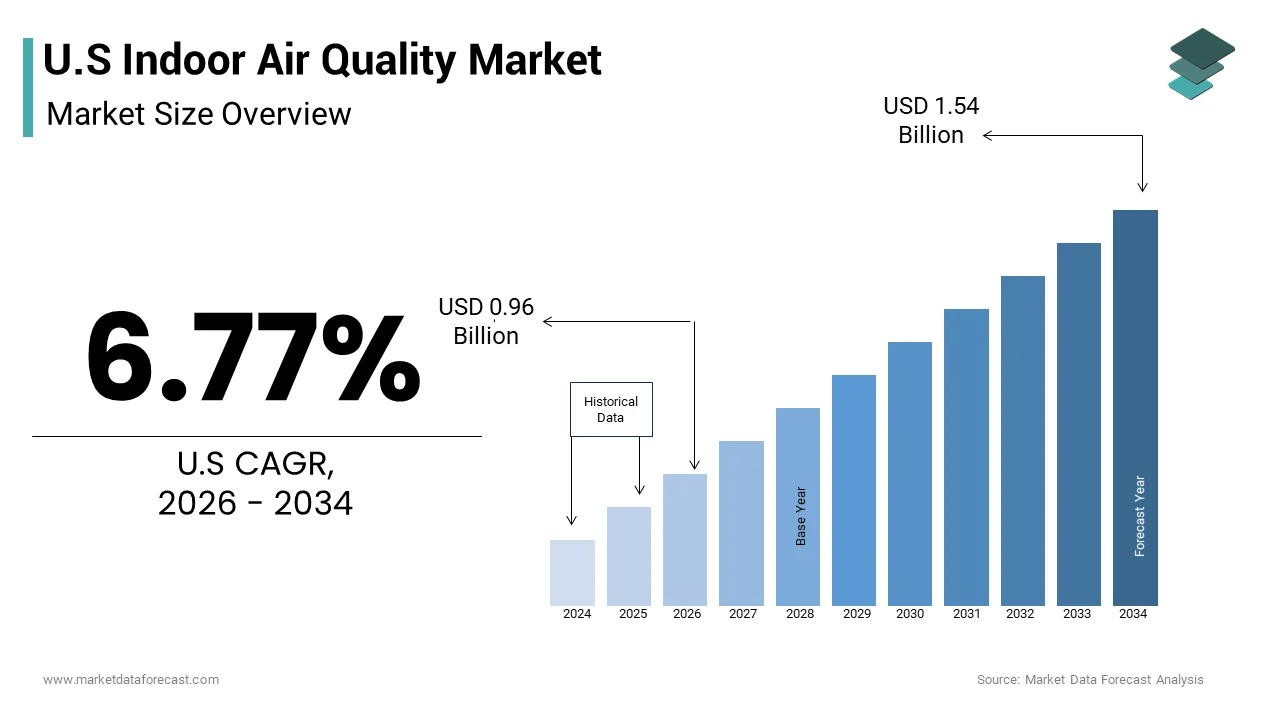
The U.S. indoor air quality market was valued at USD 0.90 billion in 2025 and is anticipated to reach USD 0.96 billion in 2026 and USD 1.54 billion by 2034, growing at a CAGR of 6.77% during the forecast period from 2026 to 2034. The growth of the market is driven by increasing awareness regarding the health impacts of indoor air pollution, rising adoption of air quality monitoring systems, and growing regulatory emphasis on maintaining healthy indoor environments. Additionally, advancements in smart sensing technologies, increasing investments in building automation systems, and the rising demand for energy-efficient HVAC solutions are further contributing to market expansion.
KEY MARKET TRENDS
- Increasing deployment of real-time indoor air quality monitoring systems across commercial, residential, healthcare, and educational facilities.
- Growing integration of IoT-enabled sensors and smart building technologies for continuous air quality assessment and management.
- Rising focus on workplace wellness and occupant health, driving investments in advanced ventilation and filtration solutions.
- Expansion of green building initiatives and sustainability programs promoting improved indoor environmental quality.
- Growing adoption of data-driven air quality management platforms to ensure regulatory compliance and optimize building performance.
SEGMENTAL INSIGHTS
Based on pollutant, the physical pollutants segment accounted for the largest share of the U.S. indoor air quality market in 2025. The segment’s dominance is attributed to increasing concerns regarding particulate matter, dust, airborne contaminants, and their impact on human health, particularly in densely occupied indoor spaces.
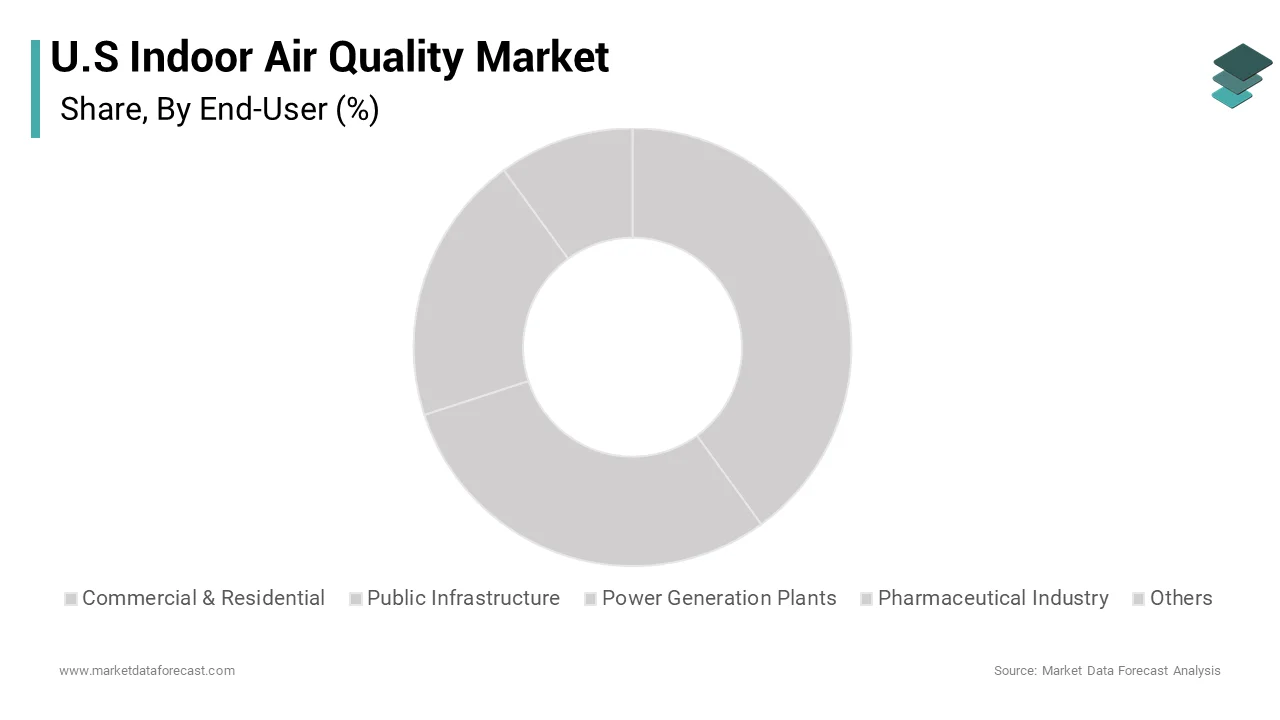
Based on end user, the commercial and residential segment held the leading share of the market in 2025. The growth of this segment is driven by rising consumer awareness, increasing demand for healthier indoor environments, and the widespread adoption of air quality monitoring and purification solutions in homes, offices, and commercial buildings.
REGIONAL INSIGHTS
The U.S. indoor air quality market is witnessing substantial growth and continues to maintain its dominant position within the North American region. Market expansion is supported by stringent environmental regulations, increasing investments in smart infrastructure, growing urbanization, and heightened awareness of indoor air pollution risks. The widespread adoption of advanced air quality management technologies across residential, commercial, and institutional sectors is further strengthening market growth throughout the country.
COMPETITIVE LANDSCAPE
The U.S. indoor air quality market is characterized by the presence of leading technology providers and environmental monitoring companies focusing on innovation, product development, and strategic collaborations to enhance their market position. Companies are investing in advanced sensing technologies, cloud-based monitoring platforms, and integrated building management solutions to address evolving customer requirements. Key players operating in the market include Thermo Fisher Scientific, Emerson Electric, Honeywell International Inc., Daikin Industries Ltd., 3M Company, Carrier Global Corporation, Horiba Ltd., Siemens AG, RXI Instruments, Testo, Innovaer Technologies, Chemtrols, Aeroqual, and TSI Incorporated.
U.S Indoor Air Quality Market Size
The U.S Indoor air quality market size was valued at USD 0.90 billion in 2025 and is anticipated to reach USD 0.96 billion in 2026 to reach USD 1.54 billion by 2034, growing at a CAGR of 6.77% during the forecast period from 2026 to 2034.
MARKET OVERVIEW
As per the Environmental Protection Agency, Americans spend approximately 90% of their time indoors, where pollutant concentrations can be two to five times higher than typical outdoor levels. This stark disparity underscores the critical importance of maintaining healthy indoor environments for residential, commercial, and institutional settings. The market is driven by increasing awareness of the health implications associated with poor air quality, including respiratory diseases, allergies, and cognitive impairment. According to the Centers for Disease Control and Prevention, asthma affects more than 25 million people in the U.S., with indoor triggers playing a significant role in exacerbating symptoms. The integration of Internet of Things enabled devices has transformed traditional HVAC systems into intelligent networks capable of real time monitoring and automated adjustments. Regulatory frameworks, such as those established by the American Society of Heating, Refrigerating and Air-Conditioning Engineers, provide guidelines for ventilation rates and filtration standards. The growing prevalence of remote work has further intensified the focus on home office air quality. According to the Environmental Protection Agency, more than 40% of indoor workers experience frequent work-related symptoms consistent with sick building syndrome, leading to decreased productivity and increased healthcare costs. Consequently, the demand for advanced air quality solutions continues to rise as stakeholders prioritize health, safety, and operational efficiency in built environments.
MARKET DRIVERS
Escalating Prevalence of Respiratory Ailments Drives Consumer Adoption
The rising incidence of respiratory ailments is majorly fuelling the expansion of the U.S. indoor air quality market as conditions such as asthma, chronic obstructive pulmonary disease, and allergic rhinitis are increasingly linked to exposure to indoor pollutants, including dust mites, pet dander, and mold spores. According to the Asthma and Allergy Foundation of America, more than 50 million Americans experience various types of allergies each year, with many triggers originating from indoor environments. This health burden compels consumers to invest in high efficiency particulate air filters and ultraviolet light purification systems to reduce allergen loads. The Centers for Disease Control and Prevention reports that asthma accounts for millions of missed school days and work hours annually, highlighting the economic impact of poor air quality. As medical professionals emphasize the role of environmental controls in managing these conditions, patients are becoming more proactive in securing cleaner indoor air. The aging population is particularly vulnerable to respiratory issues, which further drives demand in the senior living and healthcare sectors. As per the American Lung Association, long term exposure to fine particulate matter is associated with increased mortality rates from lung cancer and heart disease. This scientific evidence reinforces the necessity of robust filtration systems in residential buildings. Hospitals and clinics are also upgrading their air handling units to prevent the spread of airborne pathogens. The correlation between air quality and health outcomes creates a sustained demand for certified and effective purification technologies. Consumers are increasingly seeking products with verified performance metrics to ensure tangible health benefits. This health driven motivation ensures that indoor air quality remains a priority for households and institutions alike.
Stringent Regulatory Standards and Green Building Certifications Mandate Compliance
Stringent regulatory standards and green building certifications are further driving the growth of the U.S. indoor air quality market. Organizations, such as the U.S. Green Building Council, promote Leadership in Energy and Environmental Design standards, which include specific credits for indoor environmental quality. As per the U.S. Green Building Council, LEED certified buildings must demonstrate improved ventilation effectiveness and control of chemical contaminants to achieve certification. This requirement drives developers and facility managers to install advanced monitoring and filtration systems to meet these rigorous criteria. The Occupational Safety and Health Administration also sets permissible exposure limits for various airborne substances in workplace environments. According to the Occupational Safety and Health Administration, failure to maintain acceptable air quality can result in significant fines and legal liabilities for employers. This regulatory pressure incentivizes commercial property owners to invest in compliant HVAC infrastructure. Furthermore, local building codes in states like California and New York have adopted stricter ventilation requirements to enhance public health. As per the International Code Council, recent updates to building codes emphasize the need for energy recovery ventilators that maintain air quality while minimizing energy loss. The alignment of regulatory compliance with sustainability goals creates a dual incentive for adopting high performance air quality solutions. Companies are increasingly recognizing that superior indoor air quality contributes to employee wellness and productivity. According to a study published by the Harvard T.H. Chan School of Public Health, optimized ventilation can yield benefits equivalent to a significant increase in cognitive function scores among office workers. This evidence supports the business case for investing in compliant and efficient air quality systems.
MARKET RESTRAINTS
High Initial Installation and Maintenance Costs Restrict Market Penetration
The substantial initial installation and ongoing maintenance costs associated with advanced indoor air quality systems are primarily hampering the growth of the U.S. indoor air quality market. High efficiency particulate air filters, ultraviolet germicidal irradiation units, and energy recovery ventilators require considerable upfront capital investment, which can be prohibitive for small businesses and low income households. According to the Department of Energy, the cost of upgrading HVAC systems to include advanced filtration can range from several hundred to thousands of dollars, depending on the size and complexity of the building. This financial barrier limits the adoption of premium air quality solutions in price sensitive segments. Furthermore, the recurring expense of replacing filters and servicing equipment adds to the total cost of ownership. As per industry estimates, high efficiency filters need to be replaced every three to six months to maintain optimal performance, creating a continuous financial obligation. Many consumers perceive these costs as optional rather than essential, leading to deferred purchases or reliance on less effective alternatives. The lack of immediate visible benefits from air purification makes it difficult for users to justify the expenditure. As per consumer surveys, budget constraints are frequently cited as the primary reason for not investing in air quality improvements. Small and medium-sized enterprises often prioritize other operational expenses over environmental upgrades due to tight profit margins. This economic reality slows the widespread adoption of sophisticated air quality technologies. Without financial incentives or subsidies, many potential customers remain on the sidelines. The high cost of ownership thus remains a persistent hurdle that manufacturers and service providers must address through innovative financing models or cost effective product designs.
Lack of Consumer Awareness and Misinformation Hinders Informed Decision Making
A pervasive lack of consumer awareness and widespread misinformation regarding indoor air quality significantly impedes market growth. Many individuals underestimate the severity of indoor pollution and its impact on health, leading to low prioritization of air quality management. According to the Environmental Protection Agency, despite spending the majority of their time indoors, most Americans are unaware that indoor air can be more polluted than outdoor air. This knowledge gap results in insufficient demand for professional assessment and mitigation services. Additionally, the market is saturated with products making unsubstantiated claims about their effectiveness, causing confusion among buyers. As per consumer protection agencies, misleading marketing practices often lead to the purchase of ineffective devices that fail to remove harmful pollutants. The complexity of air quality metrics, such as particulate matter sizes and volatile organic compound levels, further complicates consumer understanding. Many users struggle to interpret data from air quality monitors or understand the specific needs of their environment. As per industry analysis, the absence of standardized labeling for air purifiers makes it difficult for consumers to compare products accurately. This uncertainty discourages investment in high quality solutions. Educational initiatives are limited and often fail to reach broad audiences. Consequently, many households rely on anecdotal evidence rather than scientific guidance when making purchasing decisions. This lack of informed demand restricts the market potential for advanced technologies. Bridging this information gap requires coordinated efforts from public health agencies and industry stakeholders to promote accurate and accessible knowledge about indoor air quality.
MARKET OPPORTUNITIES
Integration of Smart Home Ecosystems Creates New Revenue Streams
The integration of indoor air quality devices into smart home ecosystems presents a significant opportunity for market expansion. Consumers are increasingly adopting connected devices that allow for remote monitoring and control of their home environment via smartphones and voice assistants. According to the Consumer Technology Association, sales of smart home devices continue to grow as users seek convenience and enhanced control over their living spaces. Air purifiers and sensors equipped with Wi-Fi connectivity can seamlessly integrate with platforms such as Amazon Alexa, Google Home, and Apple HomeKit. This interoperability enables users to automate air quality management based on real time data and predefined preferences. As per market trends, the demand for holistic smart home solutions is driving manufacturers to develop compatible air quality products. The ability to track air quality trends over time provides valuable insights for users concerned about health and allergens. Furthermore, smart systems can optimize energy usage by adjusting ventilation rates based on occupancy and pollutant levels. As per the Department of Energy, smart thermostats and ventilation controls can reduce energy consumption by up to 10%, which appeals to environmentally conscious consumers. The data generated by these devices also offers opportunities for service providers to offer predictive maintenance and personalized recommendations. Manufacturers can leverage this data to improve product design and customer engagement. The convergence of air quality management with home automation creates a differentiated value proposition. This technological synergy enhances user experience and drives adoption among tech savvy demographics. The expanding smart home market thus serves as a powerful catalyst for the growth of connected air quality solutions.
Expansion of Commercial Wellness Programs Drives Enterprise Demand
The expansion of corporate wellness programs and the focus on employee health is another substantial opportunity for the U.S. indoor air quality market in the commercial sector. Organizations are increasingly recognizing that indoor environmental quality directly impacts employee productivity, satisfaction, and retention. According to the World Green Building Council, healthier buildings can optimize worker performance through improved cognitive function and reduced sick days. This economic benefit motivates employers to invest in advanced air filtration and monitoring systems. The post-pandemic era has further accelerated this trend as companies seek to reassure employees about workplace safety. As per the International WELL Building Institute, the WELL Building Standard includes specific requirements for air quality management to promote occupant health. Companies pursuing WELL certification must implement rigorous air quality protocols, which drives demand for professional services and high performance equipment. The competitive labor market also encourages firms to offer superior working conditions as a benefit. As per human resources surveys, workplace environment is a key factor in employee decision making. Improved air quality is perceived as a tangible commitment to worker well-being. Commercial real estate owners are also upgrading their buildings to attract tenants who prioritize health and sustainability. This shift in tenant expectations creates a ripple effect throughout the commercial property sector. Service providers can capitalize on this trend by offering comprehensive air quality audits and management plans. The alignment of air quality improvements with corporate social responsibility goals further enhances the business case. This enterprise driven demand represents a lucrative and growing segment for the indoor air quality market.
MARKET CHALLENGES
Complexity of Pollutant Sources Complicates Effective Mitigation Strategies
The diverse and complex nature of indoor pollutant sources presents a significant challenge for effective mitigation and standardization in the indoor air quality market. Indoor environments contain a mixture of biological, chemical, and particulate contaminants that originate from various sources, including building materials, furniture, cleaning products, and outdoor infiltration. According to the Environmental Protection Agency, volatile organic compounds are emitted from thousands of products, such as paints, lacquers, and preservatives, making them difficult to eliminate completely. Each pollutant requires specific filtration or removal technologies, which complicates the design of comprehensive air quality systems. For instance, high efficiency particulate air filters are effective for particles but do not remove gases, while activated carbon filters target gases but may not capture fine particles. As per industry experts, achieving balanced protection against all contaminant types often requires multi-stage systems that are bulky and expensive. The dynamic nature of indoor air quality means that pollutant levels fluctuate based on activities, weather, and occupancy. This variability makes it challenging to maintain consistent air quality without sophisticated monitoring and control systems. Furthermore, the interaction between different pollutants can create secondary contaminants that are harder to detect and remove. As per research from academic institutions, the formation of ozone from certain air purifiers can react with indoor chemicals to produce harmful byproducts. This complexity requires specialized knowledge to diagnose and address effectively. Generalized solutions often fail to address specific site issues, leading to suboptimal results. The lack of a one-size-fits-all approach necessitates customized assessments, which can be resource intensive. This technical challenge hinders the widespread adoption of effective air quality management practices.
Inconsistent Regulatory Enforcement and Standardization Gaps
Inconsistent regulatory enforcement and gaps in standardization pose a notable challenge to the uniform development of the indoor air quality market in the U.S. Unlike outdoor air quality, which is strictly regulated under the Clean Air Act, indoor air quality lacks a comprehensive federal regulatory framework. According to the Environmental Protection Agency, there are no federal laws specifically mandating indoor air quality standards for private homes or many commercial buildings. This regulatory vacuum leads to a patchwork of state and local codes that vary significantly in stringency and scope. As per the National Conference of State Legislatures, only a few states have enacted specific indoor air quality laws for public buildings, leaving many jurisdictions without clear guidelines. This inconsistency creates confusion for manufacturers, builders, and property owners who operate across multiple regions. The absence of mandatory testing and certification for many air quality products allows inferior devices to flood the market. As per consumer advocacy groups, the lack of standardized performance metrics makes it difficult to verify manufacturer claims. This uncertainty undermines consumer trust and slows market maturity. Furthermore, the lack of enforcement mechanisms means that even existing guidelines are often ignored. Building inspectors may not have the training or resources to assess indoor air quality effectively. As per industry observations, this regulatory ambiguity discourages investment in high quality solutions since compliance is not always required. The resulting market fragmentation impedes the establishment of industry best practices. Stakeholders call for clearer and more consistent standards to drive innovation and ensure public health protection. Until such frameworks are established, the market will continue to face challenges related to quality assurance and equitable access.
REPORT COVERAGE
| REPORT METRIC | DETAILS |
| Market Size Available | 2025 to 2034 |
| Base Year | 2025 |
| Forecast Period | 2026 to 2034 |
| CAGR | 6.77% |
| Segments Covered | By Pollutant, End-User and By Country |
| Various Analyses Covered | Global, Regional, and Country Level Analysis, Segment-Level Analysis; DROC, PESTLE Analysis; Porter’s Five Forces Analysis; Competitive Landscape; Analyst Overview of Investment Opportunities. |
| Regions Covered | California, Washington, Oregon, New York & Rest of the United States |
| Market Leaders Profiled | Thermo Fisher Scientific (U.S.), Emerson Electric (U.S.), Honeywell International Inc, Daikin Industries Ltd, 3M Company (U.S.), Carrier Global Corporation, Horiba, Ltd. (Japan), Siemens AG (Germany), RXI Instruments (U.S.), Testo (Germany), Innovaer Technologies (U.S.), Chemtrols (India), Aeroqual (New Zealand), TSI Incorporated (U.S.) |
SEGMENTAL ANALYSIS
By Pollutant Insights
The physical pollutants segment dominated the market by holding the largest share of the U.S. market in 2025. The dominance of physical pollutants segment in the U.S. market can be credited to their pervasive presence and significant health risks. These pollutants include dust, pollen, smoke, and fine particles, such as PM2.5 and PM10, which penetrate deep into the respiratory system. According to the Environmental Protection Agency, outdoor air pollution frequently infiltrates indoor spaces, causing indoor particulate levels to mirror or exceed outdoor concentrations in urban areas. The American Lung Association states that more than 40% of Americans live in areas with unhealthy levels of particle pollution, driving demand for high efficiency filtration systems. Residential and commercial buildings in densely populated cities are especially vulnerable to traffic-related emissions and industrial discharge. As per the Centers for Disease Control and Prevention, exposure to fine particulate matter is linked to premature death in people with heart or lung disease. This severe health implication compels property owners and individuals to invest in advanced air purification technologies capable of capturing microscopic particles. The construction boom in major metropolitan areas further exacerbates the issue by generating substantial amounts of airborne dust and debris. As per industry data, the adoption of HEPA filters has surged in response to these environmental conditions. Consumers are increasingly aware of the invisible threats posed by physical pollutants, leading to proactive purchasing behaviors. The dominance of this segment is reinforced by the tangible nature of particulate matter, which can be visually observed as dust accumulation. This visibility drives immediate consumer action compared to invisible chemical or biological contaminants. Consequently, physical pollutant control remains the primary focus for most indoor air quality solutions in the U.S.
On the other side, the biological pollutants segment is estimated to register the fastest CAGR in the U.S. market during the forecast period owing to the rising incidence of mold and allergen-related health issues. This category includes mold spores, bacteria, viruses, pet dander, and dust mites, which thrive in humid and poorly ventilated environments. According to the Centers for Disease Control and Prevention, mold exposure can cause nasal stuffiness, throat irritation, coughing, wheezing, and eye irritation in sensitive individuals. The prevalence of mold in U.S. homes is significant, with the National Center for Healthy Housing estimating that about 50% of homes in humid regions experience conditions that allow mold to develop. Climate change effects, such as increased humidity and extreme weather events, have exacerbated mold growth in residential and commercial buildings. As per the Asthma and Allergy Foundation of America, dust mites and pet dander are among the most common triggers for asthma attacks, affecting millions of Americans. This health burden drives consumers to seek specialized air purification solutions, such as ultraviolet germicidal irradiation and antimicrobial filters. The post-pandemic awareness of airborne pathogens has further accelerated demand for biological contaminant control. As per industry trends, sales of air purifiers with UV-C technology have increased substantially as consumers prioritize disinfection. Healthcare facilities are also upgrading their systems to prevent hospital-acquired infections caused by biological agents. The growing recognition of the link between indoor biology and chronic health conditions fuels market expansion. Consumers are increasingly willing to invest in premium technologies that offer proven protection against biological threats. This health driven urgency ensures sustained growth for the biological pollutants segment.
By End User Insights
The commercial and residential segment dominated the market by capturing the leading share of the U.S. market in 2025 due to the high volume of real estate development and retrofitting activities. According to the U.S. Census Bureau, thousands of new housing units are completed annually, each requiring installation of HVAC and air quality systems. The existing building stock is also undergoing significant retrofits to improve energy efficiency and indoor environmental quality. As per the Department of Energy, building upgrades often include the replacement of outdated ventilation systems with modern units equipped with advanced filtration. The rise of remote work has led to increased investment in home office air quality as individuals spend more time indoors. As per the National Association of Realtors, home buyers are increasingly prioritizing health and wellness features, including air purification systems. Commercial property owners are also upgrading their buildings to attract tenants who demand healthy work environments. The Leadership in Energy and Environmental Design certification program encourages the adoption of high performance air quality systems in commercial projects. As per the U.S. Green Building Council, LEED certified buildings often feature enhanced ventilation and low-emitting materials. This trend drives demand for comprehensive air quality solutions across the commercial and residential spectrum. The sheer scale of this sector ensures that it remains the largest consumer of indoor air quality products and services. The continuous cycle of construction, renovation, and maintenance provides a stable and recurring revenue stream for market participants. This structural demand underpins the leading position of the commercial and residential segment.
On the other side, the pharmaceutical segment is projected to witness a prominent CAGR in the U.S. market during the forecast period owing to the stringent regulatory requirements for sterile manufacturing environments. Pharmaceutical facilities must maintain extremely low levels of particulate and microbial contamination to ensure product safety and efficacy. According to the Food and Drug Administration, current good manufacturing practice regulations mandate strict control over environmental conditions in drug production areas. These regulations require the use of high efficiency particulate air filters and laminar flow systems to create classified cleanrooms. As per the International Organization for Standardization, ISO standards define the cleanliness levels required for different types of pharmaceutical operations. Compliance with these standards necessitates continuous monitoring and maintenance of air quality systems. The increasing complexity of biologic drugs and vaccines further elevates the need for precise environmental control. As per industry analysis, the expansion of biologics manufacturing has led to increased investment in advanced air handling units. Pharmaceutical companies are also adopting real time monitoring systems to detect deviations in air quality immediately. This proactive approach minimizes the risk of batch contamination and product recalls. The global supply chain pressures have prompted U.S. manufacturers to enhance their quality assurance protocols. As per the Pharmaceutical Research and Manufacturers of America, investment in facility infrastructure is a top priority for ensuring supply chain resilience. The critical nature of air quality in pharmaceutical production makes it a non-negotiable expense. This regulatory and operational imperative drives rapid adoption of state-of-the-art air quality technologies. The pharmaceutical sector thus represents a high value and fast growing segment in the market.
COUNTRY ANALYSIS
The U.S. indoor air quality market is projected to grow substantially over the next few years, reinforcing its dominant position in North America and retaining the largest share of regional revenue. The market status is characterized by high technological adoption, strong regulatory frameworks, and increasing consumer awareness. According to the Environmental Protection Agency, the U.S. has established comprehensive guidelines for indoor air quality, although federal mandates are limited compared to outdoor air regulations. The driving factors for the market include the high prevalence of respiratory diseases, such as asthma, which affects more than 25 million Americans, as stated by the Centers for Disease Control and Prevention. This health burden creates a strong demand for effective air purification solutions in residential and commercial settings. The aging infrastructure of buildings in the U.S. also necessitates upgrades to ventilation and filtration systems. As per the American Society of Civil Engineers, many existing buildings suffer from inadequate ventilation, leading to poor indoor air quality. The rise of green building initiatives, such as LEED and WELL certifications, further drives market growth. As per the U.S. Green Building Council, the number of certified projects continues to increase, reflecting a commitment to healthy indoor environments. The technological leadership of the U.S. in smart home and Internet of Things devices enables the integration of advanced air quality monitoring systems. Consumers are increasingly adopting connected devices that provide real time data and automated control. As per the Consumer Technology Association, the smart home market is expanding rapidly, with air quality devices playing a key role. The combination of health concerns, regulatory pressures, and technological innovation ensures that the U.S. remains the largest and most dynamic market for indoor air quality solutions in the region.
COMPETITIVE LANDSCAPE
The competition in the US indoor air quality market is characterized by a mix of established multinational corporations and agile niche players vying for market share through innovation and specialization. Large conglomerates leverage their extensive distribution networks and brand recognition to offer comprehensive HVAC and air purification solutions. These companies invest heavily in research and development to integrate smart technologies and improve energy efficiency. Niche players often compete by focusing on specific segments such as portable air purifiers or specialized filtration media. They differentiate themselves through unique features such as quiet operation aesthetic design or targeted pollutant removal. Price competition is intense in the consumer segment prompting manufacturers to offer a wide range of products at various price points. The commercial sector sees competition based on system performance reliability and service support. Regulatory compliance and certification play a crucial role in distinguishing high quality products from inferior alternatives. The market is witnessing increased consolidation as larger firms acquire smaller innovators to expand their technological capabilities. Digital platforms and direct to consumer models are disrupting traditional sales channels creating new competitive dynamics. Customer service and warranty offerings are becoming key differentiators as consumers seek long term value. The rapid pace of technological change requires companies to continuously innovate to stay relevant. Collaboration with technology firms for Internet of Things integration is becoming common. Overall the competitive landscape is dynamic with companies striving to balance cost performance and innovation to meet diverse customer needs.
KEY MARKET PLAYERS
A few of the market players that are dominating the U.S indoor air quality market are
- Thermo Fisher Scientific (U.S.)
- Emerson Electric (U.S.)
- Honeywell International Inc
- Daikin Industries Ltd
- 3M Company (U.S.)
- Carrier Global Corporation
- Horiba, Ltd. (Japan)
- Siemens AG (Germany)
- RXI Instruments (U.S.)
- Testo (Germany)
- Innovaer Technologies (U.S.)
- Chemtrols (India)
- Aeroqual (New Zealand)
- TSI Incorporated (U.S.)
Top Players In The Market
- Honeywell International Inc is a prominent technology and manufacturing company with a significant presence in the US indoor air quality market. The company offers a diverse portfolio of air purification solutions including HEPA filters smart thermostats and integrated HVAC controls. Honeywell focuses on leveraging its expertise in automation and connectivity to develop intelligent air quality management systems. Recent initiatives include the launch of advanced smart air purifiers that connect to mobile applications for real time monitoring and control. The company emphasizes energy efficiency and sustainability in its product designs aligning with green building standards. Honeywell also invests in research and development to enhance filtration technologies and reduce operational costs for consumers. By integrating air quality sensors into broader building management systems Honeywell provides comprehensive solutions for commercial and residential clients. The organization continues to expand its digital capabilities through partnerships with software providers. This strategic focus allows Honeywell to deliver data driven insights that help users optimize indoor environments. The company’s strong brand reputation and extensive distribution network reinforce its leadership position. Honeywell remains committed to innovation by introducing products that address emerging health concerns such as viral pathogens and volatile organic compounds. Its holistic approach to indoor environmental quality ensures sustained relevance in the evolving market landscape.
- Daikin Industries Ltd operates as a global leader in heating ventilation and air conditioning solutions with a robust footprint in the US indoor air quality sector. The company provides advanced air handling units purification systems and climate control technologies tailored for various applications. Daikin leverages its technological prowess to introduce innovative products such as streamer discharge technology which decomposes harmful substances in the air. Recent actions include the expansion of its manufacturing facilities in the U.S. to meet growing demand for high efficiency HVAC systems. The company prioritizes sustainability by developing refrigerants with lower global warming potential and energy efficient operations. Daikin also focuses on smart integration allowing users to manage air quality parameters remotely via digital platforms. By collaborating with industry partners Daikin enhances its service offerings and technical support capabilities. The company actively participates in standard setting organizations to promote best practices in indoor air quality management. Daikin’s commitment to research and development drives continuous improvement in filtration and disinfection technologies. This dedication enables the company to address complex challenges such as allergen removal and odor control. Daikin maintains a competitive edge by offering customized solutions for healthcare commercial and residential sectors. Its emphasis on reliability and performance strengthens its position as a trusted provider in the US market.
- Carrier Global Corporation is a leading provider of heating ventilation and air conditioning solutions with a strong involvement in the US indoor air quality market. The company offers a wide range of products including air purifiers ventilation systems and smart controls designed to improve indoor environmental quality. Carrier focuses on integrating advanced technologies such as ultraviolet light and bipolar ionization into its HVAC systems. Recent initiatives include the acquisition of companies specializing in air quality monitoring and filtration to enhance its product portfolio. The company emphasizes digital transformation by launching connected platforms that provide real time data on air quality metrics. Carrier also promotes sustainability through the development of energy efficient systems that reduce carbon footprints. By partnering with healthcare institutions Carrier demonstrates the effectiveness of its solutions in preventing airborne disease transmission. The company invests heavily in training programs for technicians to ensure proper installation and maintenance of air quality systems. Carrier’s global expertise allows it to introduce best practices and innovations to the US market. The organization continues to innovate by developing solutions that address specific customer needs such as humidity control and particulate removal. Carrier’s strong brand heritage and commitment to quality reinforce its leadership in the industry. Its comprehensive approach to indoor air quality ensures that it remains a key player in the market.
Top Strategies Used By Key Market Participants
Key players in the US indoor air quality market primarily employ product innovation and technological integration to differentiate their offerings. Companies frequently invest in research and development to create smart connected devices that offer real time monitoring and automated control. Strategic acquisitions are another major tactic used to expand product portfolios and gain access to new technologies or distribution channels. Partnerships with smart home platform providers enable seamless integration of air quality devices into broader ecosystems enhancing user convenience. Manufacturers also focus on sustainability by developing energy efficient products and using eco friendly materials to appeal to environmentally conscious consumers. Educational campaigns and certifications help build consumer trust and awareness about the importance of indoor air quality. Companies often collaborate with healthcare professionals and industry associations to validate the efficacy of their products. Customization of solutions for specific sectors such as healthcare and pharmaceuticals allows firms to capture high value segments. Digital marketing and direct to consumer sales channels are increasingly utilized to reach end users effectively. These strategies collectively help companies strengthen their market position by delivering superior value and meeting evolving customer expectations. Continuous improvement in filtration efficiency and noise reduction also serves as a competitive advantage. Firms prioritize after sales service and maintenance contracts to ensure long term customer relationships and recurring revenue streams.
MARKET SEGMENTATION
This research report on the U.S indoor air quality market is segmented and sub-segmented into the following categories.
By Pollutant
- Chemical
- Physical
- Biological
By End-User
- Commercial & Residential
- Public Infrastructure
- Power Generation Plants
- Pharmaceutical Industry
- Others
By Country
- California
- Washington
- Oregon
- New York
- Rest of the United States