- Product Description Description
- Table of Contents TOC
- List of Table & Figure LOT
- Get Free Sample PDF Sample PDF
Market Size, 2025
$20.45 BnMarket Estimate, 2026
$24.53 BnMarket Forecast, 2034
$105.05 BnCAGR, 2026–2034
11.94%U.S. Beauty Devices Market Report Summary
The U.S. beauty devices market was valued at USD 20.45 billion in 2025 and is anticipated to reach USD 24.53 billion in 2026 from USD 105.05 billion by 2034, growing at a CAGR of 11.94% during the forecast period from 2026 to 2034. The growth of the U.S. beauty devices market is driven by the rising prevalence of skin conditions, increasing consumer awareness of non-invasive aesthetic treatments, and growing adoption of at-home beauty technologies. Expanding demand for personalized skincare solutions, increasing influence of social media and digital beauty trends, and rising investments in smart beauty technologies are further accelerating market growth. Moreover, advancements in artificial intelligence-enabled beauty devices, expansion of men's grooming products, and increasing preference for home-based wellness solutions are supporting the expansion of the U.S. beauty devices market.
Key Market Trends
- Rising adoption of AI-powered beauty devices offering personalized skincare analysis and treatment recommendations.
- Increasing demand for at-home beauty treatments as consumers seek convenience, privacy, and cost-effective alternatives to professional services.
- Growing popularity of non-invasive anti-aging technologies such as microcurrent, radiofrequency, and LED light therapy devices.
- Strong influence of social media platforms and beauty influencers driving consumer awareness and product adoption.
- Expansion of men's grooming and wellness categories creates new growth opportunities for beauty device manufacturers.
Segmental Insights
- Based on type, the hair removal devices segment dominated the U.S. beauty devices market and held the largest share in 2025. The segment’s dominance is attributed to increasing consumer preference for long-lasting hair reduction solutions, growing adoption of IPL and laser technologies, and rising demand for convenient at-home grooming devices.
- The rejuvenation devices segment is projected to witness the fastest CAGR during the forecast period owing to the growing aging population, increasing awareness regarding anti-aging treatments, rising demand for non-invasive skincare solutions, and expanding adoption of microcurrent and LED therapy technologies.
- Based on application, the home use segment accounted for the leading share of the U.S. beauty devices market in 2025. The dominance of this segment is driven by increasing consumer preference for self-care routines, convenience of at-home treatments, reduced dependency on salon visits, and the availability of advanced consumer-friendly beauty technologies.
- The salon and spa segment is anticipated to register notable growth during the forecast period due to increasing demand for professional-grade aesthetic treatments, growing consumer spending on wellness services, and rising adoption of advanced beauty technologies by service providers.
Regional Insights
The United States maintained a dominant position in the global beauty devices market in 2025, supported by strong consumer spending on personal care products, rapid adoption of beauty technologies, and a highly developed retail and e-commerce ecosystem. California remains a major contributor to the U.S. beauty devices market due to its large beauty-conscious population, strong technology ecosystem, and influence on global beauty trends. New York, Washington, and Oregon are also witnessing notable growth driven by increasing consumer awareness of advanced skincare solutions, rising wellness spending, and growing demand for personalized beauty technologies.
Competitive Landscape
The U.S. beauty devices market is highly competitive and characterized by the presence of global beauty conglomerates, specialized beauty technology companies, and emerging smart skincare brands competing through innovation, personalization, and technological advancement. Leading companies are focusing on developing AI-enabled beauty devices, strengthening direct-to-consumer channels, investing in smart connectivity features, and expanding personalized skincare ecosystems. Strategic collaborations with dermatologists, influencers, technology providers, and beauty retailers are further strengthening market positioning across the beauty technology sector.
Prominent players in the U.S. beauty devices market include L'Oréal S.A., Procter & Gamble Co., Nu Skin Enterprises, Inc., TRIA Beauty, Inc., FOREO AB, Koninklijke Philips N.V., Panasonic Corporation, YA-MAN Ltd., Home Skinovations Ltd., Candela Corporation, Cutera, Inc., and Merz Pharma GmbH & Co. KGaA.
U.S. Beauty Devices Market Size
The U.S. beauty devices market size was valued at USD 20.45 billion in 2025 and is anticipated to reach USD 24.53 billion in 2026 from USD 105.05 billion by 2034, growing at a CAGR of 11.94% during the forecast period from 2026 to 2034.
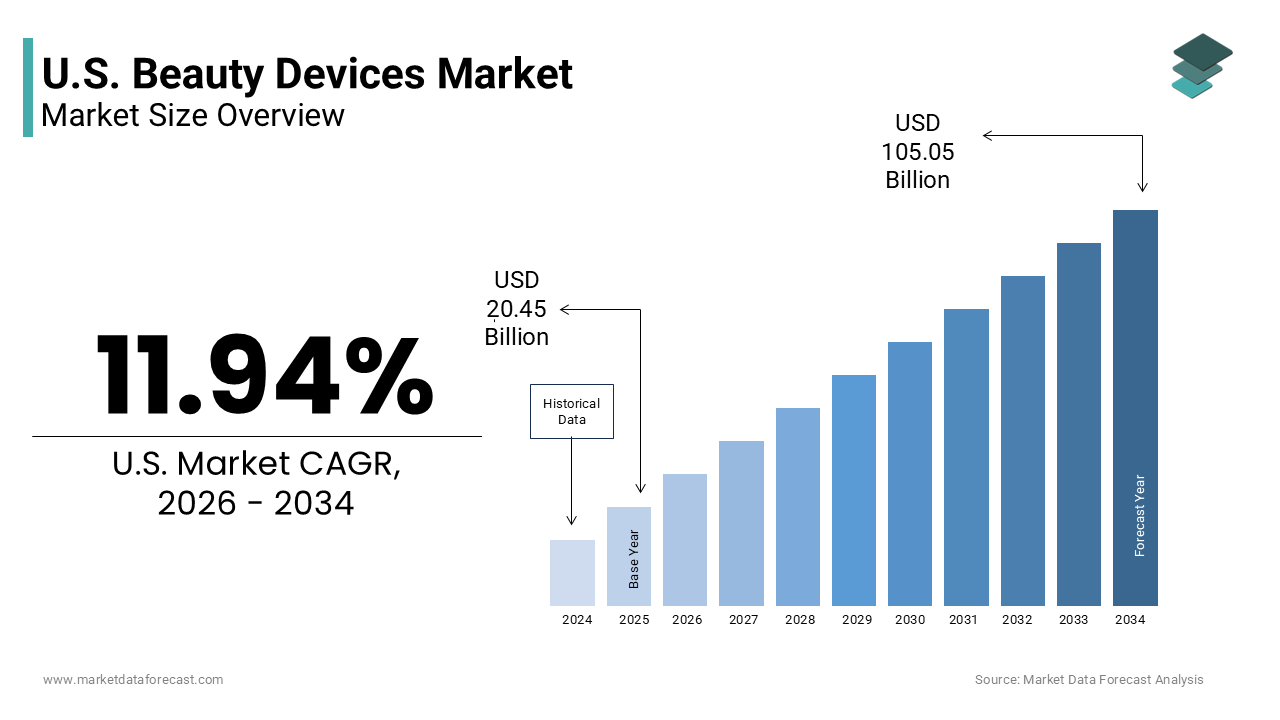
The U.S. beauty devices market encompasses a diverse array of electronic and technological instruments designed for personal skincare, hair removal, and aesthetic enhancement within home or professional settings. According to the American Society of Plastic Surgeons, over 28 million minimally invasive procedures are performed annually, indicating a high baseline interest in aesthetic improvements that often translates to device adoption for maintenance. Furthermore, the aging demographic in the U.S. supports this trend as individuals seek non-invasive methods to maintain youthful appearances. As per the U.S. Census Bureau, individuals aged 65 and older are projected to nearly double by 2060, creating a sustained demand for anti-aging technologies. The integration of smart technology and connectivity into these devices allows users to track progress and customize treatments, enhancing user engagement. Social media platforms play a crucial role in educating consumers about device efficacy and proper usage, fostering a community of informed buyers. Regulatory oversight by the Food and Drug Administration ensures safety standards, which builds consumer trust in over-the-counter products. This convergence of technological advancement, demographic shifts, and cultural emphasis on self-care positions the beauty devices market as a dynamic and growing segment within the broader personal care industry.
MARKET DRIVERS
Rising Prevalence of Skin Conditions and Awareness of Non Invasive Solutions
The increasing prevalence of skin conditions such as acne, hyperpigmentation, and signs of aging drives significant demand for beauty devices in the U.S. Consumers are becoming more educated about dermatological health and seek effective non-invasive solutions that can be managed at home. According to the American Academy of Dermatology, acne affects approximately 50 million Americans annually, making it the most common skin condition in the country. This widespread issue creates a substantial market for devices offering blue light therapy and cleansing technologies that help manage breakouts and improve skin texture. Additionally, the visibility of skin imperfections on social media platforms heightens self-awareness and motivates individuals to invest in corrective tools. The desire for immediate and visible results, without the downtime associated with surgical procedures, further accelerates adoption. As per the Centers for Disease Control and Prevention, skin cancer is the most common form of cancer in the United States, leading to increased vigilance and regular skin monitoring. While beauty devices are not medical treatments for cancer, the heightened focus on skin health encourages the use of devices that promote overall skin integrity and early detection of changes. Manufacturers respond by developing clinically tested devices that offer professional grade results safely. The accessibility of these tools through online and retail channels ensures that consumers can easily integrate them into their daily routines. This combination of medical necessity, aesthetic desire, and technological accessibility sustains robust growth in the beauty devices sector.
Influence of Social Media and Digital Beauty Trends
The pervasive influence of social media and digital beauty trends is further fuelling the expansion of the U.S. beauty devices market. Platforms such as Instagram, TikTok, and YouTube feature countless tutorials, reviews, and before and after transformations that showcase the efficacy of various beauty devices. According to Pew Research Center, approximately 72% of online adults use social networking sites, creating a vast network for information dissemination and peer influence. Influencers and dermatologists leverage these platforms to educate audiences about specific technologies such as microcurrent facials or LED light therapy, demystifying complex processes and building trust. The visual nature of these platforms allows users to see tangible results, which reduces perceived risk and encourages purchase decisions. Viral trends often lead to sudden spikes in demand for specific devices, as consumers strive to replicate popular looks or routines. As per Nielsen, data indicates that digital advertising and influencer endorsements significantly impact purchasing behavior in the beauty sector, with consumers relying heavily on peer recommendations. Brands actively collaborate with content creators to launch new products, ensuring immediate visibility and credibility. The interactive nature of social media also facilitates direct feedback, allowing companies to refine products based on real time consumer insights. This digital ecosystem creates a continuous cycle of awareness, interest, and conversion, driving sustained growth in the
MARKET RESTRAINTS
High Cost of Advanced Devices and Economic Constraints
The high cost of advanced beauty devices is a significant restraint to the U.S. market growth. Premium devices incorporating technologies such as radio frequency, laser hair removal, or sophisticated micro current systems often retail for several hundred dollars, placing them out of reach for many households. According to the Bureau of Labor Statistics, the Consumer Price Index for personal care products has experienced fluctuations, with inflationary pressures affecting discretionary spending power. During periods of economic uncertainty, consumers prioritize essential goods over luxury or semi luxury items, such as high end beauty tools. As per the Federal Reserve, data indicates that household debt levels remain elevated, which constrains disposable income available for non-essential purchases. This financial pressure forces many potential buyers to opt for cheaper alternatives, or forego purchases entirely, despite interest in the benefits. The perceived value proposition must be strong enough to justify the initial investment, especially when compared to the lower recurring costs of topical skincare products. Additionally, the rapid pace of technological innovation can lead to perceived obsolescence, where consumers hesitate to buy current models, fearing newer versions will soon emerge. This hesitation slows down replacement cycles and dampens overall market volume. Manufacturers face the challenge of balancing advanced features with affordability to broaden their customer base. Until pricing becomes more accessible, or financing options become widespread, the high entry cost will continue to restrict market penetration among middle and lower income demographics.
Safety Concerns and Risk of Improper Usage
Safety concerns and the risk of improper usage are further hampering the beauty devices market growth in the U.S. Many devices emit energy such as lasers, intense pulsed light, or radio frequency, which can cause burns, scarring, or pigmentation issues if used incorrectly. According to the Food and Drug Administration, numerous reports of adverse events related to home use laser and light based devices highlight the potential risks associated with consumer misuse. Lack of adequate training, or failure to follow instructions, can lead to serious skin damage, particularly for individuals with darker skin tones who are more susceptible to hyperpigmentation. As per the American Society for Dermatologic Surgery, complications from at home treatments are increasingly common, as users attempt to achieve professional results without understanding contraindications or proper techniques. This fear of injury discourages some consumers from adopting these technologies, despite their potential benefits. Negative experiences shared online can further erode trust and deter potential buyers. Manufacturers must invest heavily in clear labeling, instructional videos, and customer support to mitigate these risks. However, the inherent complexity of some devices makes complete safety difficult to guarantee in a home setting. Regulatory scrutiny may also increase, leading to stricter approval processes that delay product launches. These safety challenges create a barrier to widespread adoption, requiring ongoing education and caution from both manufacturers and consumers.
MARKET OPPORTUNITIES
Integration of Artificial Intelligence and Personalized Skincare
The integration of artificial intelligence and personalized skincare technologies is a significant opportunity for growth in the U.S. beauty devices market. AI enabled devices can analyze skin conditions in real time, using cameras and sensors to recommend customized treatment plans and adjust settings automatically. These smart devices connect to mobile applications that track progress over time, providing users with detailed feedback and adjustments to their routines. This level of personalization enhances efficacy and user satisfaction, leading to higher retention rates and brand loyalty. As per McKinsey and Company, consumers are increasingly willing to pay premiums for personalized products and services that deliver tailored results. The ability to monitor skin health metrics, such as hydration levels, wrinkle depth, and pigmentation, allows for proactive management of aging and other concerns. Manufacturers can leverage this data to develop new products and improve existing formulations, creating a holistic ecosystem around the device. Partnerships with dermatologists and skincare brands can further validate these technologies and expand market reach. The convergence of hardware, software, and data analytics transforms beauty devices from simple tools into comprehensive health management systems. This innovation opens new revenue streams through subscription services and app based features. By prioritizing personalization and intelligence, companies can differentiate themselves in a crowded market, and appeal to tech savvy consumers seeking precise and effective solutions.
Expansion of Men’s Grooming and Wellness Segments
The expansion of men’s grooming and wellness segments offers a lucrative opportunity for the U.S. beauty devices market, as societal norms evolve and male participation in self-care increases. Men are increasingly investing in skincare and aesthetic treatments to maintain professional appearances and boost confidence. According to the American Board of Cosmetic Surgery, the number of cosmetic procedures performed on men has risen steadily, with many opting for non-invasive treatments that devices can facilitate at home. Devices targeting beard care, hair removal, and anti-aging are gaining popularity among male consumers, who prefer discreet and efficient solutions. As per Mintel, research indicates that a growing percentage of men are adopting daily skincare routines, creating demand for specialized tools that address thicker skin and facial hair. Marketing campaigns that normalize male grooming and highlight the benefits of technology driven care can further drive adoption. Retailers are expanding their men’s sections to include beauty devices, reflecting this shifting demographic. The stigma surrounding male vanity is diminishing, allowing for open discussion and promotion of these products. Manufacturers can develop rugged, ergonomic designs and straightforward interfaces that appeal to male preferences for functionality and ease of use. Collaborations with male influencers and athletes can enhance credibility and reach. This underserved segment represents a significant growth avenue as men become more engaged in their personal care regimes. By tailoring products and messaging to male needs, companies can capture a new and loyal customer base.
MARKET CHALLENGES
Regulatory Hurdles and Compliance Complexities
Regulatory hurdles and compliance complexities pose significant challenges to the U.S. beauty devices market, as manufacturers navigate strict guidelines set by the Food and Drug Administration. Devices that claim to alter structure or function of the body, such as laser hair removers or skin tightening tools, often require premarket notification or approval, which can be time consuming and costly. According to the Food and Drug Administration, the classification of beauty devices varies widely, with some considered general wellness products while others are regulated as medical devices requiring rigorous clinical data. This ambiguity creates uncertainty for manufacturers, who must determine the appropriate regulatory pathway for each product. Failure to comply can result in warning letters, product seizures, or bans, damaging brand reputation and financial stability. As per the Federal Trade Commission, companies must also ensure that marketing claims are substantiated by scientific evidence to avoid accusations of false advertising. The evolving nature of technology means that regulations may lag behind innovation, causing delays in bringing new products to market. Small and mid-sized companies often lack the resources to navigate these complex processes effectively, putting them at a disadvantage compared to larger corporations. International harmonization of standards is limited, requiring separate approvals for different markets, which increases operational burdens. These regulatory challenges slow down innovation and increase costs, ultimately affecting consumer prices and availability. Manufacturers must invest in legal and regulatory expertise to ensure compliance while maintaining competitiveness.
Counterfeit Products and Brand Integrity Issues
The prevalence of counterfeit products and brand integrity issues presents a major challenge to the U.S. beauty devices market, which is undermining consumer trust and safety. Popular devices are frequently replicated by unauthorized manufacturers, who sell inferior imitations through online marketplaces at lower prices. According to the International Trademark Association, counterfeit goods result in billions of dollars in losses annually across various industries, including beauty and personal care. These fake devices often lack safety features and quality controls, posing serious risks of injury to users. As per the U.S. Patent and Trademark Office, enforcement against counterfeiters is difficult due to the anonymity of online sellers and cross border trade complexities. Consumers may unknowingly purchase counterfeit items, leading to negative experiences that they attribute to the original brand. This erosion of trust makes it challenging for legitimate companies to maintain loyalty and justify premium pricing. Authentic brands must invest in anti-counterfeit technologies, such as holographic seals and verification codes, which add to production costs. Monitoring and taking down illegal listings require dedicated legal and technical resources, straining smaller businesses. The ubiquity of third party sellers on major platforms complicates oversight, allowing counterfeiters to operate with relative impunity. Protecting brand integrity becomes an ongoing battle that diverts focus from product development and marketing. Ensuring product authenticity is crucial for maintaining safety standards and consumer confidence in a market where trust is paramount.
REPORT COVERAGE
| REPORT METRIC | DETAILS |
| Market Size Available | 2025 to 2034 |
| Base Year | 2025 |
| Forecast Period | 2026 to 2034 |
| CAGR | 11.94% |
| Segments Covered | By Type, Application and Region |
| Various Analyses Covered | Global, Regional and Country-Level Analysis, Segment-Level Analysis, Drivers, Restraints, Opportunities, Challenges; PESTLE Analysis; Porter’s Five Forces Analysis, Competitive Landscape, Analyst Overview of Investment Opportunities |
| Countries Covered | California, Washington, Oregon, New York, United States |
| Market Leaders Profiled | L'Oréal S.A., Procter & Gamble Co., Nu Skin Enterprises, Inc., TRIA Beauty, Inc., FOREO AB, Koninklijke Philips N.V., Panasonic Corporation, YA-MAN Ltd., Home Skinovations Ltd., Candela Corporation, Cutera, Inc., and Merz Pharma GmbH & Co. KGaA. |
SEGMENTAL ANALYSIS
By Type Insights
The hair removal devices segment held the dominant position in the U.S. beauty devices market by accounting for the highest share of the U.S. market in 2025. The dominance of hair removal devices segment in the U.S. market is driven by the widespread desire for long lasting smooth skin and the convenience of at home treatments compared to professional salon visits. Laser and intense pulsed light IPL devices have gained significant traction, as they offer a permanent reduction solution that appeals to consumers seeking efficiency and cost savings over time. According to the American Society for Plastic Surgeons, laser hair removal remains one of the most popular minimally invasive cosmetic procedures, with millions of treatments performed annually, indicating a strong underlying demand for hair free aesthetics. The transition of this technology from clinical settings to handheld home devices has democratized access, allowing users to maintain results without recurring appointment costs. As per Statista, the personal care appliance sector sees consistent growth in hair removal categories, as consumers prioritize hygiene and grooming standards influenced by social media trends and celebrity endorsements. The effectiveness of modern devices in treating various skin tones and hair types has expanded the potential user base significantly. Manufacturers have improved safety features and energy levels to ensure efficacy while minimizing discomfort, which encourages repeat usage and brand loyalty. The high initial investment is offset by the long term savings compared to professional waxing or laser sessions, making it an economically attractive option for many households. Furthermore, the rise of body positivity movements has not diminished the demand for hair removal, but rather shifted it towards personal choice and convenience, reinforcing the segment's leadership. The continuous innovation in cooling technologies and faster flash rates enhances user experience, driving sustained dominance in the market.
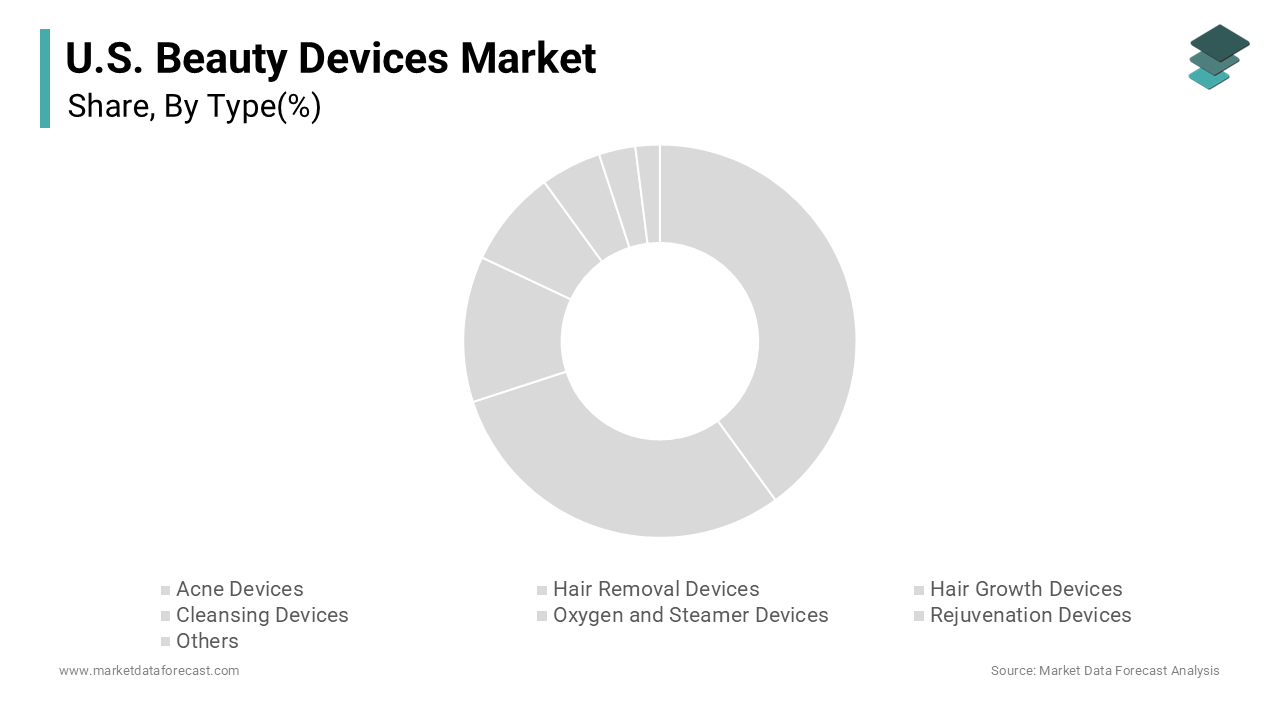
However, the rejuvenation devices segment is growing exponentially and is estimated to register a promising CAGR during the forecast period due to the aging population and the increasing preference for non-invasive anti-aging solutions. Technologies such as microcurrent, radio frequency, and LED light therapy are becoming mainstream, as they promise visible improvements in skin texture, firmness, and wrinkle reduction without surgery. According to the U.S. Census Bureau, the number of individuals aged 65 and older is expected to reach 95 million by 2060, creating a substantial demographic base seeking anti-aging interventions. This demographic shift drives demand for devices that can be used regularly at home, to maintain youthful appearances. As per the American Academy of Dermatology, the use of topical and device based anti-aging treatments has surged, as consumers become more educated about preventive skincare and collagen stimulation. The influence of social media platforms, where influencers share their skincare routines and results, accelerates adoption among younger demographics who are starting preventive care earlier. Rejuvenation devices offer a cost effective alternative to expensive clinical procedures such as facelifts or injectables, appealing to budget conscious consumers. The integration of smart features and app connectivity allows users to track progress and customize treatments, enhancing engagement and satisfaction. Manufacturers are launching compact and user friendly designs that fit seamlessly into daily routines, further boosting sales. The perceived safety and ease of use of these devices, compared to invasive procedures, make them an attractive option for first time users. This combination of demographic pressure, technological advancement, and cultural emphasis on youthfulness fuels the rapid expansion of the rejuvenation segment.
By Application Insights
The home use segment led the market by capturing the largest share of the U.S. market in 2025. The growth of the home use segment in the U.S. market is attributed to the growing consumer preference for convenience, privacy, and cost effectiveness in personal care routines. The shift towards at home treatments has been accelerated by the pandemic, which normalized self-care practices and reduced visits to professional establishments. According to the National Retail Federation, e commerce sales for personal care appliances have grown significantly, as consumers seek the flexibility to perform treatments on their own schedules. Home devices eliminate the need for appointments, travel time, and associated costs, making them an attractive option for busy individuals. As per the Bureau of Labor Statistics, Americans spend less leisure time on personal care activities outside the home, leading to a preference for efficient at home solutions that integrate seamlessly into daily life. The availability of advanced technologies such as IPL, lasers, and microcurrent devices in consumer friendly formats has bridged the gap between professional and home efficacy. Consumers appreciate the ability to maintain results consistently, without relying on external providers. The privacy of home use also appeals to individuals who may feel uncomfortable discussing certain aesthetic concerns in public settings. Retailers and manufacturers have responded by offering comprehensive kits with instructional materials and customer support, to ensure safe and effective use. The rising trend of DIY beauty, fueled by online tutorials and peer recommendations, further reinforces the dominance of the home segment. This shift represents a fundamental change in how consumers approach beauty maintenance, prioritizing autonomy and accessibility.
COUNTRY ANALYSIS
The U.S. held the major share of the global market in 2025 and is anticipated to experience robust performance and maintain its status as the world's most prominent hub for aesthetic technology innovation over the next few years. According to the American Pet Products Association, while primarily for pets, the broader spending habits on premium items reflect a willingness to invest heavily in wellness and appearance, with billions allocated annually to routine maintenance. The presence of major technology and beauty companies in the U.S. fosters a competitive environment that drives continuous product development and marketing innovation. High broadband penetration and smartphone usage facilitate the adoption of smart beauty devices that connect to apps for personalized experiences. As per the Centers for Disease Control and Prevention, the focus on health and wellness extends to aesthetic care, with consumers increasingly viewing skincare as a component of overall health. The regulatory framework provided by the Food and Drug Administration ensures safety standards, which builds consumer trust in over the counter devices. The diverse demographic landscape, including a large aging population and tech savvy younger generations, creates varied demand segments for different types of devices. Retail channels, ranging from specialty stores to online platforms, ensure widespread availability. The influence of Hollywood and social media celebrities sets global trends that originate in the US, driving domestic demand for the latest beauty technologies. This combination of economic strength, cultural influence, and technological leadership ensures that the U.S. remains the dominant force in the global beauty devices market.
COMPETITIVE LANDSCAPE
The competition in the U.S. beauty devices market is intense and characterized by a mix of established beauty conglomerates specialized tech firms and emerging startups. Major players compete on the basis of technological innovation brand reputation and clinical efficacy while striving to offer user friendly and safe solutions. The market sees continuous launches of smart devices featuring artificial intelligence and app connectivity that provide personalized treatment plans. Price competition is evident in the entry level segment where basic cleansing and massage tools are widely available. Conversely premium segments compete on advanced technologies such as laser radio frequency and microcurrent systems that promise professional grade results. Retailers and online platforms play significant roles in shaping consumer preferences through curated selections and educational content. Direct to consumer brands leverage social media marketing to build communities and drive engagement. Intellectual property protection is crucial as companies invest heavily in research and development to create proprietary technologies. Regulatory compliance with Food and Drug Administration guidelines serves as a barrier to entry for smaller players. Collaborations with medical professionals enhance credibility and drive adoption among health conscious consumers. This dynamic environment fosters constant improvement in product quality and safety ensuring that consumers benefit from increasingly effective and accessible beauty technologies.
KEY MARKET PLAYERS
Some of the promising companies that are playing a dominating role in the U.S. Beauty Devices Market include
- L'Oréal S.A.
- Procter & Gamble Co.
- Nu Skin Enterprises, Inc.
- TRIA Beauty, Inc.
- FOREO AB
- Koninklijke Philips N.V.
- Panasonic Corporation
- YA-MAN Ltd.
- Home Skinovations Ltd.
- Candela Corporation
- Cutera, Inc.
- Merz Pharma GmbH & Co. KGaA
Top Players in the U.S. Beauty Devices Market
L Oreal SA
L Oreal SA strengthens its position in the U.S. beauty devices market through strategic investments and partnerships with technology focused startups. The company actively integrates digital tools into its broader beauty ecosystem to enhance personalized skincare experiences. Recent actions include expanding its portfolio by investing in companies that develop smart skin diagnostic devices and augmented reality applications. L Oreal leverages its extensive research and development capabilities to ensure that these technological additions align with scientific skincare principles. By combining its established brand reputation with innovative hardware the company offers consumers comprehensive solutions that bridge the gap between traditional cosmetics and high tech devices. This approach allows L Oreal to capture tech savvy consumers who seek data driven beauty routines. The company also focuses on sustainability in device design appealing to environmentally conscious buyers. These initiatives reinforce L Oreal s leadership in the evolving landscape of connected beauty and personal care technologies in the U.S..
Procter and Gamble Company
Procter and Gamble Company contributes significantly to the U.S. beauty devices market through its Opte Precision Skincare System which represents a major innovation in personalized beauty technology. This handheld device uses advanced optics and artificial intelligence to scan the skin and apply corrective serum precisely where needed. The company focuses on merging hardware with proprietary skincare formulations to deliver targeted results for age spots and pigmentation. Recent actions involve refining the AI algorithms to improve accuracy and expanding distribution channels to reach a wider audience. Procter and Gamble leverages its strong retail relationships to introduce this premium device to consumers seeking high efficacy solutions. The integration of digital connectivity allows users to track skin progress over time enhancing engagement. By pioneering this category the company sets a new standard for precision beauty tools. This strategic move differentiates Procter and Gamble from competitors by offering a unique combination of hardware and consumables. The focus on visible results and technological sophistication appeals to consumers willing to invest in advanced skincare innovations.
NuFace Inc
NuFace Inc is a prominent player in the U.S. beauty devices market specializing in microcurrent facial toning devices. The company has built a strong brand identity around non invasive lifting and firming solutions that mimic professional facial treatments. NuFace focuses on educating consumers about the benefits of microcurrent technology through detailed tutorials and influencer partnerships. Recent actions include launching new iterations of its flagship devices with improved battery life and enhanced ergonomic designs. The company also expands its product line to include targeted attachments for eyes and lips addressing specific aging concerns. NuFace leverages social media platforms to showcase before and after results building trust and credibility among users. By maintaining a direct to consumer presence alongside retail partnerships the company ensures broad accessibility. The emphasis on user friendly interfaces and safe at home usage encourages consistent adoption. NuFace continues to innovate by integrating smart features that guide users through treatment protocols. This dedication to specialized microcurrent technology solidifies its reputation as a leader in the anti aging device segment.
Top Strategies Used by Key Market Participants
Key players in the U.S. beauty devices market primarily employ product innovation strategies by integrating artificial intelligence and smart connectivity to enhance user experience and efficacy. Companies focus on developing hybrid models that combine hardware with proprietary skincare consumables to create recurring revenue streams. Strategic partnerships with dermatologists and influencers help build clinical credibility and drive consumer trust. Brands emphasize educational marketing to demonstrate proper usage and safety reducing the risk of adverse events. Direct to consumer channels are expanded to gather first party data and personalize customer interactions. Sustainability initiatives such as recyclable packaging and energy efficient designs appeal to environmentally conscious buyers. Mergers and acquisitions allow larger corporations to acquire niche technologies and broaden their portfolios. Regulatory compliance is prioritized to ensure safety standards and maintain market access. These multifaceted strategies enable participants to differentiate their offerings and maintain competitiveness in a rapidly evolving technological landscape.
MARKET SEGMENTATION
This research report on the U.S. Beauty Devices Market has been segmented based on the following categories.
By Type
- Acne Devices
- Hair Removal Devices
- Hair Growth Devices
- Cleansing Devices
- Oxygen and Steamer Devices
- Rejuvenation Devices
- Others
By Application
- Salon & Spa
- Home
- Others
By Country
- California
- Washington
- Oregon
- New York
- Rest of the United States