- Product Description Description
- Table of Contents TOC
- List of Table & Figure LOT
- Get Free Sample PDF Sample PDF
Market Size, 2025
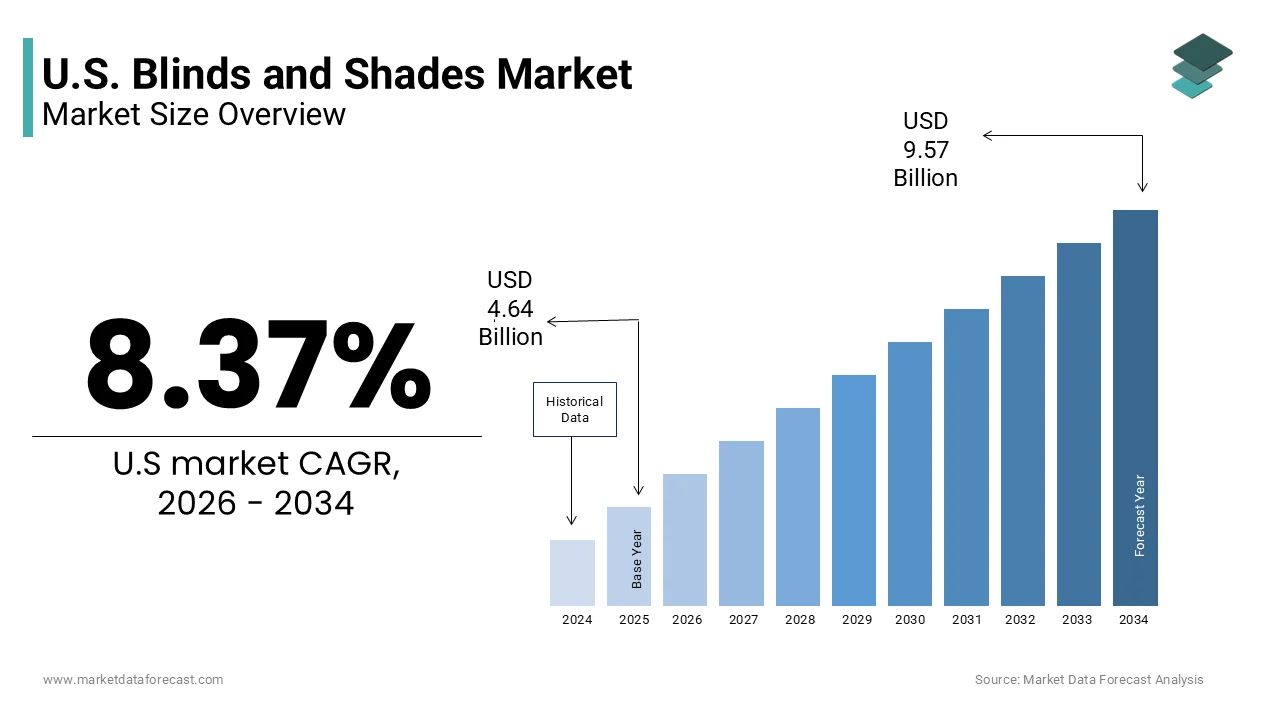
$4.64 BnMarket Estimate, 2026
$5.03 BnMarket Forecast, 2034
$9.57 BnCAGR, 2026–2034
8.37%U.S. Blinds and Shades Market Report Summary
The U.S. blinds and shades market was valued at USD 4.64 billion in 2025, is estimated to reach USD 5.03 billion in 2026, and is projected to reach USD 9.57 billion by 2034, growing at a CAGR of 8.37% during the forecast period. Market growth is driven by increasing residential renovation activities, rising demand for energy efficient window coverings, and growing consumer interest in smart home solutions. Blinds and shades are becoming essential components of modern interior design due to their functionality, privacy benefits, and aesthetic appeal. Technological advancements in motorized and automated window treatment systems are further supporting market expansion across the United States.
Key Market Trends
- Growing residential remodeling and home improvement activities are driving market growth.
- Increasing demand for energy efficient and light control solutions is boosting market expansion.
- Rising adoption of smart home technologies is supporting the demand for motorized blinds and shades.
- Expansion of customized and premium window treatment products is enhancing market opportunities.
- Innovation in automated control systems and sustainable materials is influencing market development.
Segmental Insights
- Based on type, the blinds segment accounted for a significant share of the U.S. blinds and shades market in 2025. This dominance is attributed to their affordability, versatility, ease of installation, and wide range of design options.
- Based on application, the residential segment held the dominant share of the U.S. blinds and shades market in 2025, driven by growing housing renovation projects, new residential construction, and increasing consumer spending on home décor products.
Regional Insights
- The United States continues to be a key market for blinds and shades due to strong residential construction activity, rising smart home adoption, and increasing consumer preference for stylish and energy efficient window covering solutions.
Competitive Landscape
The U.S. blinds and shades market is highly competitive, with companies focusing on product innovation, customization, smart automation technologies, and premium interior design solutions to strengthen their market position. Manufacturers continue to invest in advanced materials, motorized systems, and customer focused product offerings. Key companies operating in the U.S. blinds and shades market include Advanced Blinds & Shutters, Kresta Shutters, Next Day Blinds, Elite Window Fashions, Hillarys, Hunter Douglas, and Springs Window Fashions.
U.S. Blinds and Shades Market Size
The U.S. blinds and shades market size was valued at USD 4.64 billion in 2025, and is projected to reach USD 9.57 billion by 2034 from USD 5.03 billion in 2026, growing at a CAGR of 8.37%.
The blinds and shades are window treatment solutions designed to control light ensure privacy and enhance interior aesthetics within residential and commercial spaces. The definition extends beyond simple coverings to include integrated smart home technologies that allow for automated control via voice commands or mobile applications. The shift toward remote work has also increased the importance of home office environments where glare reduction and privacy are paramount. According to the Bureau of Labor Statistics Americans spend over 90% of their time indoors making indoor environmental quality a priority for homeowners.
MARKET DRIVERS
Rising Demand For Energy Efficient Home Solutions
The increasing focus on energy efficiency and sustainability of the blinds and shades sector is propelling the growth of the United States blinds and shades market. Consumers are actively seeking ways to reduce their carbon footprint and lower utility bills through improved home insulation and light management. This significant potential for energy savings drives the adoption of cellular shades and thermal blinds which trap air and create an insulating barrier. Data from the Environmental Protection Agency shows that residential buildings account for 20% of total energy consumption in the United States prompting homeowners to invest in efficiency upgrades. The availability of tax credits and rebates for energy efficient home improvements further incentivizes purchases. As per the Inflation Reduction Act, homeowners can claim credits for qualified energy efficiency improvements including window coverings that meet specific standards. This financial support makes premium products more accessible and attractive to budget conscious consumers. Additionally, the growing awareness of climate change encourages the selection of eco-friendly materials, such as bamboo recycled polyester and organic cotton. Manufacturers are responding by offering products with high R values and sustainable certifications.
Integration Of Smart Home Technology And Automation
The rapid adoption of smart home technology and automation is boosting the growth of the United States blinds and shades market. Modern consumers increasingly prefer connected devices that offer convenience security and enhanced control over their living environments. Motorized blinds and shades can be programmed to open and close at specific times optimizing natural light and improving energy efficiency without manual intervention. The ability to control shades via voice assistants such as Amazon Alexa Google Assistant and Apple HomeKit adds a layer of accessibility and ease of use. This integration appeals to tech savvy demographics and older adults who benefit from automated assistance. Furthermore, smart shades enhance home security by simulating occupancy when residents are away deterring potential intruders. The seamless connection with other smart devices such as lighting and HVAC systems creates a holistic home experience.
MARKET RESTRAINTS
High Cost Of Customization And Installation Services
The substantial cost associated with custom made blinds and professional installation for many consumers is limiting the growth of the United States blinds and shades market. Unlike standard off, the shelf products custom window treatments require precise measurements specialized materials and skilled labor, which drive up prices. The high initial investment places premium products out of reach for middle income households and renters, who may not own their homes. The lack of transparent pricing and the potential for hidden fees during installation further discourage buyers. Consumers often hesitate to commit to such high costs without guaranteed satisfaction or easy return options. Additionally, the long lead times for custom orders can delay projects and frustrate customers who expect immediate results. The cancellation rates for custom orders are higher than for standard products due to these logistical challenges. The financial burden of customization limits market penetration to affluent demographics thereby restricting the total addressable market. This restraint disproportionately affects younger consumers, who may prioritize other financial goals such as housing or education.
Complexity Of Measurement And DIY Installation Errors
The complexity of accurate measurement and the risk of DIY installation errors is additionally declining the growth of the United States blinds and shades market. Many consumers attempt to measure and install window treatments themselves to save money but often make mistakes that result in ill-fitting products. This leads to high return rates and customer dissatisfaction which increase operational costs for retailers. The process of measuring inside versus outside mounts requires precision and understanding of window structures, which many amateurs lack. Incorrect installations can also damage window frames or walls leading to additional repair costs. This complexity creates a barrier to entry for online shoppers, who cannot physically verify fit before purchase. Retailers must invest in detailed guides video tutorials and customer support to mitigate these risks but these measures add to overhead costs. The fear of making costly mistakes discourages some consumers from purchasing online forcing them to rely on more expensive professional services.
MARKET OPPORTUNITIES
Expansion Of Eco Friendly And Sustainable Materials
The growing consumer preference for eco-friendly and sustainable materials is ascribed to enhance the growth of the United States blinds and shades market in coming years. Buyers are increasingly seeking products made from renewable biodegradable or recycled resources that minimize environmental impact. This sentiment drives demand for blinds made from bamboo wood sourced from certified forests and fabrics derived from recycled plastics. Manufacturers can differentiate themselves by obtaining green certifications, such as GREENGUARD, which verifies low chemical emissions and improves indoor air quality. The use of non-toxic finishes and adhesives further appeals to health conscious families with children and pets. Brands that transparently communicate their sustainability efforts build trust and loyalty with environmentally aware buyers. The opportunity to lead in sustainability not only mitigates environmental impact but also attracts a niche but growing segment of premium customers.
Growth In Commercial And Office Renovation Projects
The resurgence of commercial and office renovation, as businesses upgrade their workspaces to attract employees and improve efficiency is another factor likely to promote the growth of the United States blinds and shades market. The shift toward hybrid work models has prompted companies to redesign offices with flexible layouts and enhanced comfort features. The commercial buildings are increasingly pursuing LEED certification, which encourages the use of energy efficient window treatments. Data from the Bureau of Labor Statistics shows that spending on non-residential construction has remained robust indicating steady demand for commercial interior solutions. Blinds and shades play a crucial role in managing glare on computer screens and regulating temperature in large open plan offices. Motorized and automated systems are particularly appealing to facility managers who seek to optimize energy usage and reduce maintenance costs. Manufacturers can partner with architects and interior designers to specify their products in new builds and renovations. The emphasis on employee well-being and productivity drives investment in high quality durable materials that withstand heavy use.
MARKET CHALLENGES
Supply Chain Disruptions And Raw Material Volatility
The substantial risks from global supply chain instability, which affects the availability and cost of key raw materials, such as aluminum wood and fabrics is a key challenge for the growth of the United States blinds and shades market. Most components are sourced from international suppliers primarily in Asia and Europe by making the sector vulnerable to geopolitical tensions and logistical bottlenecks. The fluctuations force manufacturers to absorb higher costs or pass them on to consumers potentially reducing demand. The reliance on specific geographic regions for production also poses a risk as labor costs and regulations change. For instance, tariffs on imported aluminum and steel have increased production costs for domestic manufacturers. Data from the World Bank indicates that shipping costs remain elevated compared to pre pandemic levels impacting profit margins. These uncertainties make inventory management difficult leading to either stockouts that frustrate customers or excess inventory that ties up capital. Small brands are particularly vulnerable as they lack the bargaining power to secure priority shipping or bulk pricing. This restraint undermines market stability and complicates strategic planning for both established players and new entrants.
Intense Competition From Low Cost Imports
The intense competition from low cost imports, which pressure domestic manufacturers and retailers to lower prices is also to degrade the growth of the United States blinds and shades market. Countries with lower labor costs, such as China and Vietnam produce vast quantities of affordable window treatments that flood the market. This influx of cheap products makes it difficult for domestic brands to compete on price alone forcing them to differentiate through quality and service. The price sensitivity is high for basic window treatments leading to brand switching. Domestic manufacturers must invest heavily in marketing and innovation to justify premium pricing which strains resources. The threat of counterfeit products also undermines brand integrity and consumer trust. Combating this issue requires significant investment in legal enforcement and authentication technologies. However, these measures add to operational costs and may not fully prevent fraud. The persistent presence of low cost alternatives distorts market dynamics and threatens the viability of smaller domestic players.
REPORT COVERAGE
| REPORT METRIC | DETAILS |
| Market Size Available | 2025 to 2034 |
| Base Year | 2025 |
| Forecast Period | 2026 to 2034 |
| CAGR | 8.37% |
| Segments Covered | By Type, Application, and Region. |
| Various Analyses Covered | Global, Regional and Country-Level Analysis, Segment-Level Analysis, Drivers, Restraints, Opportunities, Challenges; PESTLE Analysis; Porter’s Five Forces Analysis, Competitive Landscape, Analyst Overview of Investment Opportunities |
| Countries Covered | California, Washington, Oregon, New York, United States |
| Market Leaders Profiled | Advanced Blinds & Shutters, Kresta Shutters, Next Day Blinds, Elite Window Fashions, Hillarys, Hunter Douglas, and Springs Window Fashions |
SEGMENTAL ANALYSIS
By Type Insights
The blinds segment was accounted in holding a significant share of the United States blinds and shades market in 2025 owing to their superior ability to provide precise light control and privacy management through adjustable slats. Unlike fixed shades blinds allow users to tilt slats to filter light while maintaining visibility or close them completely for total privacy. This functionality appeals to homeowners and business owners who require flexible lighting conditions throughout the day. The variety of materials available, including moisture resistant faux wood and lightweight aluminum, allows blinds to be installed in diverse environments, such as kitchens, bathrooms, and high traffic areas. As per the research, 70% of consumers prefer blinds for their durability and ease of cleaning compared to fabric alternatives. The ability to customize slat width and color further enhances their appeal across different interior design styles.
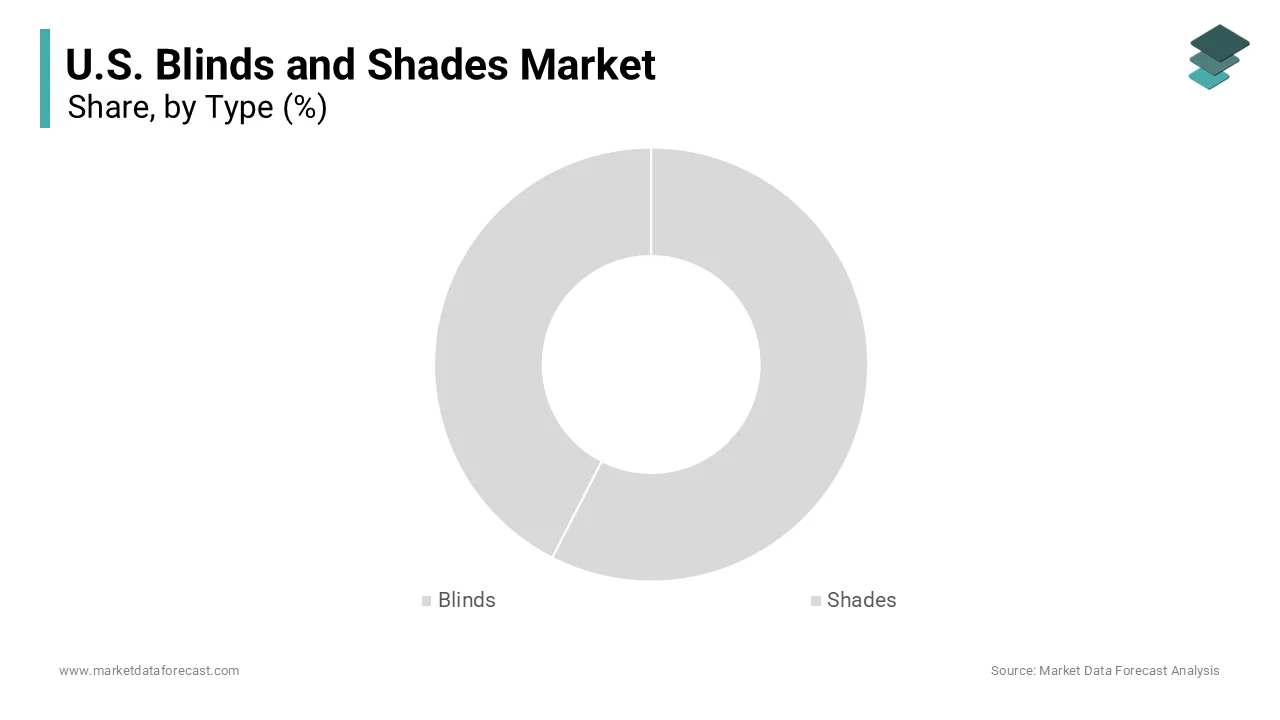
The shades segment is likely to grow at an anticipated CAGR of 6.8% during the forecast period with their strong aesthetic appeal and alignment with contemporary interior design trends that prioritize softness and minimalism. Modern homeowners increasingly view window treatments as integral design elements rather than purely functional items. Shades offer a seamless look when raised creating an unobstructed view, which appeals to those seeking to maximize natural light and architectural features. The availability of diverse fabrics patterns and textures allows for greater customization and personalization compared to standard blinds. The premium fabric shades are perceived as luxury items that enhance property value and visual appeal. The rise of open concept living spaces has also driven demand for shades that provide uniform coverage across large windows without the visual clutter of slats. Manufacturers are responding by introducing innovative materials such as sheer fabrics and blackout liners that combine style with functionality.
By Application Insights
The residential segment was the dominant in the United States blinds and shades market with a significant share in 2025 owing to the high volume of housing units and the consistent level of renovation and remodeling activities across the country. With millions of existing homes requiring updates and new constructions adding to the stock the demand for window treatments remains robust. According to the United States Census Bureau, there are over 140 million housing units in the United States with a significant portion undergoing annual improvements. Data from the Joint Center for Housing Studies of Harvard University indicates that homeowner spending on renovations reached record levels in recent years with window replacements and interior upgrades being key components. Each renovation project typically involves the installation of new blinds or shades to match updated decor or improve energy efficiency. The turnover of rental properties also contributes significantly as landlords replace window treatments between tenants to maintain property appeal. The emotional investment homeowners have in their living spaces drives them to choose higher quality and customized products.
The commercial segment is expected to grow at an anticipated CAGR of 5.5% during the forecast period owing to the wave of office renovations driven by the adoption of hybrid work models. Companies are redesigning workspaces to attract employees back to offices focusing on comfort flexibility and technology integration. The spending on nonresidential construction has remained robust indicating steady demand for commercial interior solutions. Blinds and shades play a crucial role in managing glare on computer screens and regulating temperature in large open plan offices. Motorized and automated systems are particularly appealing to facility managers who seek to optimize energy usage and reduce maintenance costs. Manufacturers can partner with architects and interior designers to specify their products in new builds and renovations. The emphasis on employee well-being and productivity drives investment in high quality durable materials that withstand heavy use.
COMPETITIVE LANDSCAPE
The competition in the United States blinds and shades market is intense and characterized by a mix of established global brands and specialized regional manufacturers. Large companies leverage their extensive resources to dominate through broad distribution networks and heavy marketing spending. They continuously innovate to maintain relevance and protect their market positions against newer entrants. Independent brands often differentiate themselves by focusing on niche segments such as custom luxury shades or eco-friendly materials. These smaller entities utilize digital channels to build direct relationships with consumers and foster community loyalty. The barrier to entry has lowered due to the rise of e-commerce platforms, allowing new players to launch with minimal overhead. This dynamic environment forces all participants to prioritize speed and agility in product development. Price competition is prevalent in the mass market segment while premium brands compete on brand heritage and technological superiority. Retailers play a crucial role by curating assortments that balance popular staples with emerging trends. Consumer loyalty is increasingly fluid as shoppers experiment with new products influenced by social media trends. Companies must therefore maintain constant engagement through educational content and transparent communication. The ability to adapt quickly to regulatory changes and shifting consumer values determines long term survival.
KEY MARKET PLAYERS
Some of the companies that are playing a dominating role in the U.S. blinds and shades market are
- Advanced Blinds & Shutters
- Kresta Shutters
- Next Day Blinds
- Elite Window Fashions
- Hillarys
- Hunter Douglas
- Springs Window Fashions
Top Key Players in the Market
- Hunter Douglas Inc stands as a premier innovator in the United States blinds and shades sector renowned for its extensive portfolio of window treatment solutions. The company is celebrated for introducing groundbreaking technologies such as PowerView Motorization which allows users to control shades via mobile applications. Recent strategic initiatives include the expansion of its sustainable product lines featuring eco-friendly materials and energy efficient designs. Hunter Douglas actively engages with interior designers and architects to specify its products in high end residential and commercial projects. The corporation invests heavily in research and development to enhance fabric durability and light control capabilities. Its robust dealer network ensures personalized service and professional installation for customers.
- Levolor Brands LLC maintains a strong presence in the United States blinds and shades market by offering a wide range of affordable and stylish window coverings. The company is well known for its Ready Made Express program, which provides quick shipping for standard sizes. Recent actions to strengthen its position, include the launch of new cordless and motorized options that comply with strict safety regulations. Levolor has enhanced its digital platform allowing customers to order free samples and visualize products in their homes using augmented reality tools. The corporation focuses on sustainability by incorporating recycled materials into its manufacturing processes. Strategic partnerships with major home improvement retailers ensure widespread availability and visibility. Levolor also emphasizes ease of installation with DIY friendly features that appeal to budget conscious homeowners.
- Graber Holdings Inc holds a significant position in the United States blinds and shades market through its dedication to quality craftsmanship and customer service. The company offers a diverse array of custom window treatments including cellular shades wood blinds and roller shades. Recent strategies to strengthen its market position include the introduction of advanced motorization systems compatible with major smart home platforms. Graber has expanded its network of independent dealers to provide localized expertise and personalized design consultations. The corporation prioritizes sustainability by obtaining certifications for its eco-friendly materials and production methods. Graber actively participates in industry trade shows to showcase new innovations and connect with professionals. The company also offers comprehensive warranty programs that build trust and confidence among buyers.
Top Strategies Used by Key Market Participants
Key players in the United States blinds and shades market employ several strategic initiatives to maintain competitiveness and drive growth. Product innovation remains a primary strategy with companies investing heavily in research and development to create motorized and smart window treatments. Brands frequently introduce items featuring enhanced energy efficiency and sustainable materials to meet evolving consumer preferences. Digital transformation is another critical approach as firms enhance their online presence through e commerce platforms and virtual visualization tools. Companies utilize data analytics to offer personalized recommendations and improve customer experiences. Strategic partnerships with interior designers and builders help build credibility and reach targeted audiences effectively.
MARKET SEGMENTATION
This research report on the U.S. blinds and shades market is segmented and sub-segmented into the following categories.
By Type
- Blinds
- Shades
By Application
- Residential
- Commercial
By Country
- California
- Washington
- Oregon
- New York
- Rest of the United States