U.S. Boat Market Size, Share, Trends & Growth Forecast Report - Segmented By Type, Size, End-User, Hull Leadership of GRP Hulls, Application and By Country (California, Washington, Oregon, New York & Rest of the United States) – Industry Analysis and Forecast, 2026 to 2034
U.S. Boat Market Report Summary
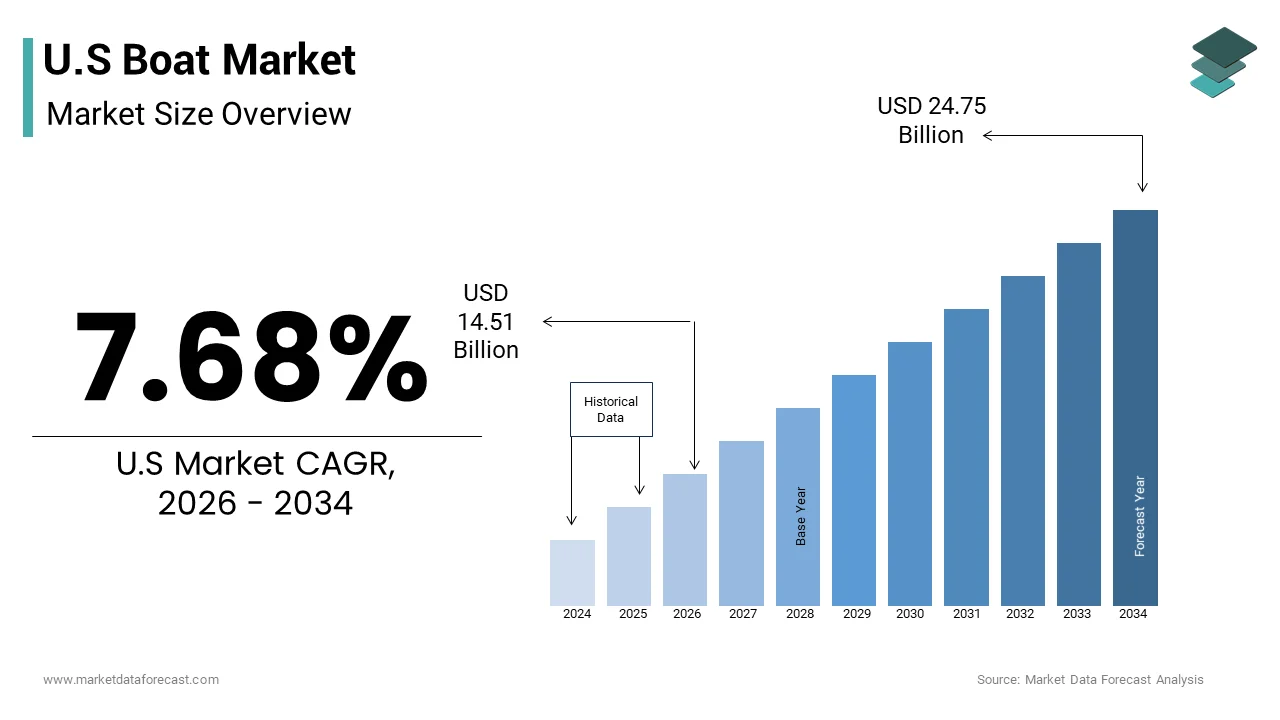
The United States boat market was valued at USD 13.47 billion in 2025 and is anticipated to reach USD 14.51 billion in 2026 and USD 24.75 billion by 2034, growing at a CAGR of 7.68% during the forecast period from 2026 to 2034. The growth of the U.S. boat market is driven by increasing participation in recreational boating activities, rising consumer spending on marine leisure experiences, and growing interest in water-based tourism and fishing activities. The expanding popularity of personal watercraft, technological advancements in marine propulsion systems, and rising demand for luxury and performance boats are further supporting market growth. In addition, increasing investments in marina infrastructure, eco-friendly boat technologies, and connected marine systems are enhancing the boating experience and operational efficiency across the industry.
Key Market Trends
- Rising demand for recreational and leisure boating activities driven by increasing outdoor tourism and water sports participation.
- Growing adoption of technologically advanced outboard engines offering improved fuel efficiency, performance, and lower maintenance requirements.
- Increasing popularity of compact and affordable boats below 20 feet among first-time boat owners and recreational users.
- Expansion of sustainable marine technologies, including electric propulsion systems and eco-friendly hull materials, to reduce environmental impact.
- Strong focus on smart navigation systems, connected marine electronics, and enhanced onboard safety features to improve user experience.
Segmental Insights
- Based on type, the outboard engines segment dominated the U.S. boat market and held the highest share in 2025. The segment’s dominance is attributed to their superior fuel efficiency, ease of maintenance, lightweight design, and growing preference among recreational and fishing boat users.
- Based on size, the below 20 feet boats segment led the U.S. boat market in 2025 by holding the largest market share. The affordability, ease of handling, lower storage requirements, and suitability for recreational boating and fishing activities are major factors driving the growth of this segment.
- Based on end-user, the recreational users segment occupied the major share of the U.S. boat market in 2025. The increasing popularity of boating as a leisure activity, rising disposable incomes, and growing interest in family-oriented outdoor recreation continue to support segment growth.
- Based on hull type, the glass reinforced plastic (GRP) hulls segment held the leading share of the U.S. boat market in 2025. The widespread adoption of GRP hulls is driven by their lightweight properties, corrosion resistance, durability, and cost-effectiveness in boat manufacturing.
- Based on application, the fishing segment commanded the highest share of the U.S. boat market in 2025. The strong popularity of recreational and sport fishing activities across coastal and inland regions continues to drive demand for fishing boats and related marine equipment.
Regional Insights
The U.S. boat market is witnessing strong growth across coastal and lake-rich regions, supported by increasing recreational boating participation, tourism activities, and marine infrastructure development. States such as Florida, California, and Texas remain major contributors to market growth due to their extensive coastlines, strong boating culture, and large number of marinas and recreational waterways. The growing popularity of water sports, fishing tournaments, and luxury marine tourism is further supporting nationwide market expansion.
Competitive Landscape
The U.S. boat market is highly competitive, with leading manufacturers focusing on product innovation, fuel-efficient propulsion technologies, and premium recreational boating experiences to strengthen their market presence. Companies are increasingly investing in electric boats, lightweight hull materials, and advanced marine electronics to improve performance, sustainability, and customer satisfaction. Strategic partnerships, dealer network expansion, and customization offerings are also enhancing competitiveness across the marine industry.
Prominent players in the U.S. boat market include Malibu Boats Inc., Brunswick Corporation, Polaris Inc., MasterCraft Boat Holdings, Groupe Beneteau, Yamaha Motor Corporation, Marine Products Corporation, Sun Tracker Boats, Carolina Skiff, LLC, Berkshire Pontoons, and Premier Marine Inc.
U.S. Boat Market Size
The U.S boat market size was valued at USD 13.47 billion in 2025 and is anticipated to reach USD 14.51 billion in 2026 to reach USD 24.75 billion by 2034, growing at a CAGR of 7.68% during the forecast period from 2026 to 2034.
U.S. Boat Market Comprehensive Analysis
According to the National Oceanic and Atmospheric Administration, the U.S. possesses over 95,000 miles of shoreline, providing extensive access to coastal and inland waterways that support boating activities. The cultural significance of boating is evident in the high number of registered vessels, which serve as primary assets for family recreation and sport fishing. As per the U.S. Coast Guard, there are approximately 11 million registered recreational vessels in the country, indicating a robust base of active participants. The market definition extends beyond hardware to include marina services, maintenance, and insurance, which form a critical part of the ownership experience. Consumer behavior is influenced by demographic shifts, with younger generations showing increased interest in accessible and affordable boating options. Regulatory frameworks regarding safety, emissions, and invasive species management shape operational standards for manufacturers and owners alike. The interplay between economic conditions, discretionary income, and environmental consciousness defines the current trajectory of the industry. Technological advancements in electric propulsion and digital navigation are gradually transforming traditional boating practices.
MARKET DRIVERS
Rising Disposable Income and Participation in Water Based Recreation
Rising disposable income and increased participation in water based recreation is driving the growth of the U.S. boat market. As household finances improve, consumers are more willing to invest in high value leisure assets such as boats, which offer unique experiences and social opportunities. According to the Bureau of Economic Analysis, personal consumption expenditures on recreational goods and vehicles have shown consistent growth, which is reflecting a strong demand for outdoor activities. The post pandemic era has accelerated this trend as individuals seek open air environments for relaxation and exercise. As per the Recreational Boating and Fishing Foundation, the number of first time boaters has increased significantly, with millions of new participants entering the sport annually. This influx of novice users drives demand for entry level and mid-range vessels that are easy to operate and maintain. The popularity of activities such as fishing, waterskiing, and cruising encourages families to purchase boats that cater to diverse interests. Marketing campaigns by industry associations have successfully highlighted the health and wellness benefits of boating, further stimulating interest. The expansion of boat rental services also allows potential buyers to test the waters before committing to a purchase. This combination of financial capacity and cultural engagement ensures sustained demand for recreational watercraft across various segments.
Expansion of Marine Infrastructure and Accessible Waterways
The expansion of marine infrastructure and improved access to waterways significantly drive the U.S. boat market by enhancing the convenience and appeal of boating. Investments in marinas, boat ramps, and docking facilities reduce barriers to entry for new owners and improve the overall user experience. According to the Federal Highway Administration, federal funding for recreational trails and water access points has increased, supporting the development of connected marine networks. State and local governments are partnering with private entities to modernize aging infrastructure, which attracts more visitors to coastal and lake regions. As per the National Park Service, millions of visitors engage in boating activities within national parks and monuments each year, highlighting the importance of well maintained facilities. The availability of clean and safe launching sites encourages frequent usage and reduces logistical challenges for boat owners. Additionally, the growth of inland waterway tourism promotes the use of smaller vessels, such as kayaks and pontoon boats, which require minimal infrastructure. Improved signage and navigation aids enhance safety and confidence for inexperienced boaters. The strategic development of marine hubs creates economic clusters that support related businesses, such as repair shops and retail stores. This infrastructural reinforcement ensures that the physical environment supports the growing number of registered vessels and active participants.
MARKET RESTRAINTS
High Ownership Costs and Maintenance Expenses
High ownership costs and substantial maintenance expenses are majorly hampering the expansion of the U.S. boat market. The initial purchase price of a boat is only a fraction of the total cost of ownership, which includes storage, fuel, insurance, and regular repairs. According to the U.S. Department of Labor, the consumer price index for recreational vehicles and boats has risen sharply, outpacing general inflation rates. Fuel costs for marine engines are particularly volatile and often higher than automotive gasoline due to specialized formulations and taxes. As per the National Marine Manufacturers Association, annual maintenance costs can range from 10% to 20% of the original purchase price, creating a long term financial burden. Storage fees at marinas or dry stack facilities add to the recurring expenses, making boat ownership prohibitive for many potential buyers. Insurance premiums have also increased due to higher replacement costs and risk assessments associated with weather events. The complexity of marine systems requires specialized technicians whose labor rates are significantly higher than those for automobiles. These financial barriers discourage casual enthusiasts from upgrading or entering the market. The perception of boats as luxury items rather than practical recreational tools further restricts mass adoption. Until costs become more manageable, the market will remain constrained to higher income demographics.
Environmental Regulations and Emission Standards
Stringent environmental regulations and emission standards are further inhibiting the growth of the U.S. boat market. The Environmental Protection Agency has implemented rigorous limits on hydrocarbon and nitrogen oxide emissions from marine engines, requiring manufacturers to adopt advanced and expensive technologies. According to the Federal Register, compliance with Tier 3 and Tier 4 emission standards necessitates significant research and development investments, which are passed on to consumers. These regulations also restrict the use of certain materials and coatings in boat construction, leading to higher production costs. As per the Clean Water Act, restrictions on discharge and waste management impose additional operational burdens on boat owners and marina operators. The transition to cleaner fuels and electric propulsion systems is slow due to technological limitations and infrastructure gaps. Non-compliant older vessels face restrictions on usage in sensitive ecological zones, reducing their utility and resale value. The complexity of navigating varying state and federal regulations creates uncertainty for manufacturers and dealers. Small builders struggle to meet compliance requirements, leading to market consolidation and reduced diversity in product choices. Public pressure to protect aquatic ecosystems further accelerates regulatory changes, which can disrupt established business models. These environmental constraints act as a persistent brake on market growth and innovation.
MARKET OPPORTUNITIES
Adoption of Electric and Hybrid Propulsion Systems
The adoption of electric and hybrid propulsion systems is a promising opportunity for the U.S. boat market to align with sustainability trends and reduce operational noise. Electric motors offer instant torque, silent operation, and zero emissions, which appeal to environmentally conscious consumers and regulators. According to the Department of Energy, advancements in battery technology have improved energy density and charging speeds, making electric boats more viable for recreational use. Manufacturers are introducing electric outboards and inboard systems that compete with traditional gasoline engines in terms of performance and reliability. As per the National Marine Manufacturers Association, the segment for electric marine propulsion is growing rapidly, as buyers seek lower maintenance and fuel costs. Government incentives for green technologies further encourage the adoption of electric boats in protected waterways and lakes. The integration of solar panels and hybrid systems extends range and enhances energy efficiency for longer trips. Marinas are increasingly installing charging stations to support the growing fleet of electric vessels. This shift opens new markets among urban dwellers and eco tourists who prioritize sustainable leisure activities. Companies that lead in electric innovation can differentiate their brands and capture premium pricing. The transition to electrification also reduces dependency on fossil fuels, enhancing long term operational stability for owners.
Growth in Boat Sharing and Rental Services
The growth in boat sharing and rental services offers a potential opportunity for the U.S. boat market by lowering barriers to entry for non-owners. Peer-to-peer platforms and commercial rental companies allow individuals to experience boating without the financial commitment of ownership. According to the American Boating Association, the rental market has expanded significantly, with millions of Americans renting boats annually for day trips and vacations. This model appeals to millennials and Gen Z consumers who prefer access over ownership and value flexibility. As per the Tourism Industry Association, water based tourism generates billions in economic activity, supporting local businesses and communities. Boat sharing apps connect owners with renters, maximizing asset utilization and generating passive income for investors. The variety of available vessels ranges from small pontoons to luxury yachts, catering to diverse budgets and preferences. This accessibility fosters a broader culture of boating and may convert renters into future buyers. Regulatory frameworks are evolving to support safe and insured sharing operations, enhancing consumer confidence. The rise of subscription based models provides predictable revenue streams for operators. By democratizing access to watercraft, the industry can expand its customer base and increase overall participation rates.
MARKET CHALLENGES
Supply Chain Disruptions and Raw Material Scarcity
Supply chain disruptions and raw material scarcity are significant challenges to the expansion of the U.S. boat market. The U.S. market relies on global supplies of resin, aluminum, electronics, and engines, which have faced significant bottlenecks in recent years. According to the Bureau of Labor Statistics, producer prices for intermediate goods used in boat manufacturing have fluctuated wildly, affecting profit margins. Shortages of semiconductor chips have impacted the production of advanced navigation and entertainment systems, leading to incomplete vessel deliveries. As per the National Marine Manufacturers Association, lead times for new boats have extended to several months, causing frustration among dealers and customers. The reliance on single source suppliers for critical components exacerbates vulnerability to geopolitical tensions and trade disputes. Logistics challenges such as port congestion and container shortages further complicate the import of parts and export of finished goods. Manufacturers struggle to forecast demand accurately amidst uncertain supply conditions, leading to inventory imbalances. The cost of expedited shipping and alternative sourcing strategies erodes profitability. These disruptions hinder the ability of companies to meet seasonal demand peaks, which are critical for annual revenue. Until supply chains stabilize, the industry will face ongoing operational inefficiencies and cost pressures.
Impact of Climate Change on Water Levels and Weather Patterns
The impact of climate change on water levels and weather patterns is further challenging the growth of the U.S. boat market by affecting usability and safety. Extreme weather events such as hurricanes and floods damage infrastructure and vessels, while droughts reduce water levels in key boating regions. According to the National Oceanic and Atmospheric Administration, the frequency of severe storms has increased, threatening coastal marinas and inland lakes. Low water levels in major rivers and reservoirs restrict navigation and limit access to popular boating destinations. As per the U.S. Geological Survey, changing precipitation patterns alter the hydrology of water bodies, impacting the viability of seasonal boating. Insurance companies are raising premiums or withdrawing coverage in high risk areas, increasing the cost of ownership. The unpredictability of weather conditions discourages spontaneous boating trips and affects tourism revenue. Damage to docks and launch ramps requires costly repairs and maintenance for local authorities. The long term viability of certain boating locations is uncertain, forcing stakeholders to adapt to changing environmental realities. Manufacturers must design vessels that withstand harsher conditions, which increases complexity and cost. The industry faces the dual challenge of mitigating its environmental footprint while adapting to the consequences of climate change.
REPORT COVERAGE
| REPORT METRIC | DETAILS |
| Market Size Available | 2025 to 2034 |
| Base Year | 2025 |
| Forecast Period | 2026 to 2034 |
| CAGR | 6.48% |
| Segments Covered | By Type, Size, End-User, Hull Leadership of GRP Hulls, Application, and By Country |
| Various Analyses Covered | Global, Regional, and Country Level Analysis, Segment-Level Analysis; DROC, PESTLE Analysis; Porter’s Five Forces Analysis; Competitive Landscape; Analyst Overview of Investment Opportunities. |
| Regions Covered | California, Washington, Oregon, New York & Rest of the United States |
| Market Leaders Profiled | Malibu Inc. (U.S.), Brunswick Corporation (U.S.), Polaris Inc. (U.S.), MasterCraft Boat Holdings, Groupe Beneteau (France), Yamaha Motor Corporation (Japan), Marine Product Corporation (U.S.), Sun Tracker Boats (U.S.), Carolina Skiff, LLC (U.S.), Berkshire Pontoons (U.S.), Premier Marine Inc. (U.S.) |
SEGMENTAL ANALYSIS
By Type Insights
The outboard engines segment dominated the market by holding the highest share of the U.S. boat market in 2025 due to their versatility, ease of maintenance, and cost effectiveness for a wide range of vessel sizes. The dominance of this segment is driven by the popularity of small to mid-sized recreational boats, such as center consoles, bowriders, and pontoon boats, which predominantly utilize outboard propulsion. According to the National Marine Manufacturers Association, outboard engines account for the majority of new powerboat sales in the U.S., reflecting consumer preference for modular and accessible technology. These engines are easier to service and replace compared to inboard systems, which reduces long term ownership costs for recreational users. As per the U.S. Coast Guard, the high number of registered small craft under 26 feet largely relies on outboard motors for their simplicity and shallow water capabilities. The advancement in four stroke outboard technology has improved fuel efficiency and reduced noise, making them more attractive to environmentally conscious buyers. Manufacturers have also increased horsepower ratings allowing outboards to power larger vessels that previously required inboard engines. The widespread availability of replacement parts and certified technicians further supports the dominance of this segment. The ability to tilt the engine out of the water when not in use prevents fouling and corrosion, which is a significant advantage in coastal and freshwater environments. This practical benefit ensures that outboard engines remain the preferred choice for the majority of American boaters.
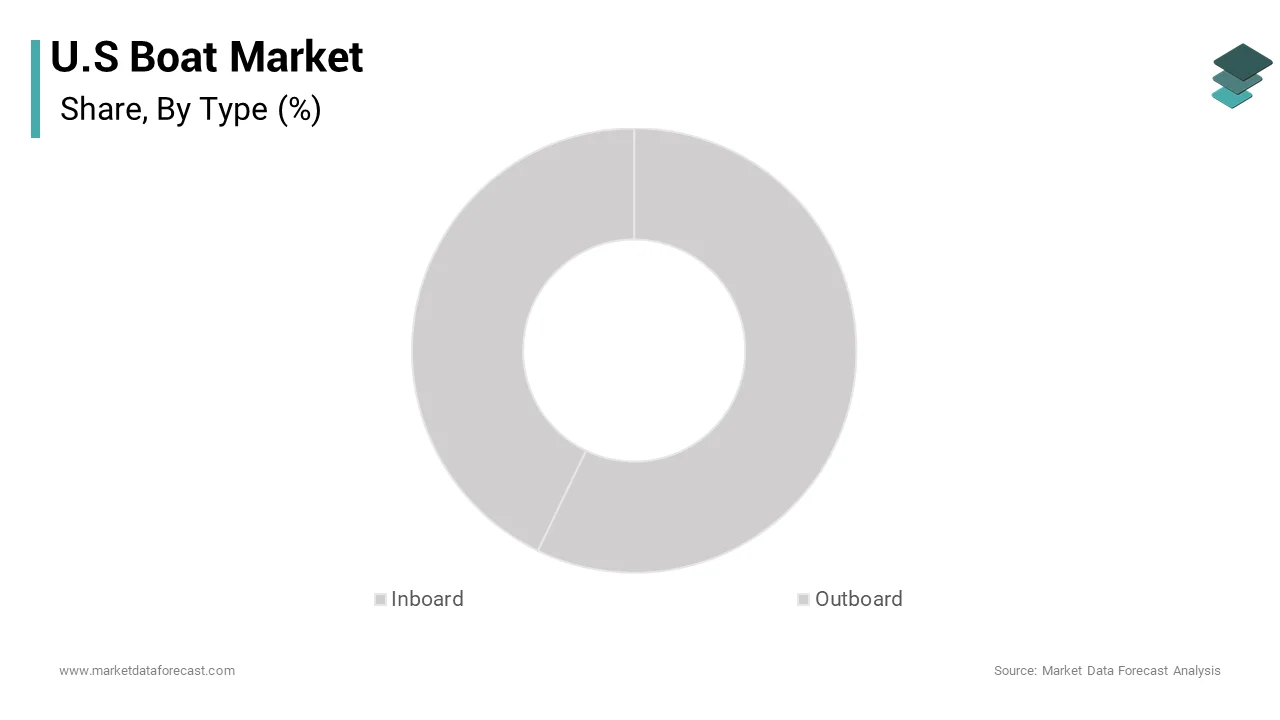
However, the inboard engine segment is experiencing steady growth and is predicted to record a CAGR of 5.1% during the forecast period owing to the increasing affluence of consumers who seek premium boating experiences with enhanced comfort and stability. According to the Marine Retailers Association of the Americas, sales of high end cruisers and sport fishing boats equipped with inboard diesel or gasoline engines have risen as buyers prioritize interior space and smooth rides. Inboard engines provide better weight distribution and lower centers of gravity, which improve handling and seaworthiness in rough conditions. As per the Yacht Brokers Association of America, the pre-owned market for large inboard vessels remains robust, indicating sustained interest in this category. The integration of advanced joystick docking systems and dynamic positioning technologies has made inboard boats easier to operate, attracting newer demographics to larger vessels. Manufacturers are focusing on hybrid inboard systems that combine traditional combustion engines with electric motors to meet emission standards while maintaining performance. The appeal of inboard boats for extended cruising and live-aboard lifestyles contributes to their growing popularity. The segment benefits from technological innovations that enhance fuel efficiency and reduce vibration. These factors collectively drive the expansion of the inboard segment among discerning buyers seeking superior maritime capabilities.
By Size Insights
The below 20 feet boats segment led the market in 2025 by holding the largest share of the U.S. market. The growth of this segment in the U.S. market can be credited to the high volume of entry level buyers and casual recreational users who prefer manageable and cost effective vessels. According to the National Marine Manufacturers Association, boats under 20 feet represent the largest share of new unit shipments in the U.S., catering to first time owners and families. These vessels are ideal for fishing, waterskiing, and day cruising on lakes and rivers, which constitute the majority of American boating activity. As per the Recreational Boating and Fishing Foundation, the accessibility of small boats encourages frequent usage and participation in water sports among younger demographics. The lower initial purchase price and reduced maintenance costs make these boats attractive to middle income households. Trailering capabilities allow owners to transport boats to different bodies of water, expanding their utility without the need for permanent marina slips. The compact size facilitates storage in residential garages or driveways, eliminating ongoing mooring fees. Manufacturers continuously innovate in this segment by introducing lightweight materials and efficient hull designs that enhance performance. The strong resale market for small boats also provides confidence to buyers regarding asset value retention. This combination of economic and practical advantages ensures that sub 20 foot boats remain the cornerstone of the US boat market.
On the other side, the 20 to 50 feet boat segment is experiencing the fastest growth and is expected to register a CAGR of 6.2% during the forecast period owing to the rising demand for family friendly cruisers and multi-purpose vessels. This growth is fueled by consumers seeking larger spaces for overnight stays and social gatherings on the water. According to the Marine Industry CSI Study, satisfaction rates for mid-sized boats are high as they offer a balance between maneuverability and amenities. The trend towards staycations and domestic tourism has increased interest in boats capable of short trips and coastal exploration. As per the U.S. Census Bureau, household incomes in the upper middle class have grown, enabling more families to afford vessels in this size range. Pontoon boats and deck boats in this category are particularly popular due to their stability and spacious layouts, which appeal to groups and children. Manufacturers are incorporating smart technology and luxury features such as integrated sound systems and comfortable seating into these models. The availability of financing options and competitive insurance rates further supports adoption. The versatility of 20 to 50 foot boats allows them to serve multiple functions, including fishing, diving, and entertaining. This adaptability makes them a prudent investment for buyers looking to maximize their recreational opportunities. The segment benefits from continuous design improvements that enhance fuel efficiency and onboard comfort.
By End-user Insights
The recreational users segment occupied the major share of the U.S. boat market in 2025 due to the cultural significance of boating as a leisure activity and the vast availability of water resources. The dominance of this segment is supported by millions of households that own boats for personal enjoyment, fishing, and sports. According to the Recreational Boating and Fishing Foundation, over 100 million Americans participate in fishing and boating activities annually, creating a massive base of potential and current owners. The desire for outdoor recreation and family bonding experiences drives consistent demand for new and used recreational vessels. As per the National Park Service, visitation to water based recreational areas has increased, highlighting the public interest in marine leisure. The diversity of recreational boats, ranging from kayaks to yachts, ensures that there is a product for every budget and skill level. Marketing efforts by industry associations effectively promote the benefits of boating for mental and physical health. The presence of numerous boat clubs and communities fosters a sense of belonging and encourages continued participation. Regulatory support for safe boating practices enhances consumer confidence and enjoyment. The recreational segment benefits from seasonal trends and holidays, which stimulate purchasing cycles. The strong emotional connection Americans have with waterways ensures that recreational boating remains a dominant force in the market.
On the other end, the commercial user segment is experiencing rapid growth and is estimated to register a CAGR of 4.4% during the forecast period owing to the expansion of marine tourism, specialized industrial applications, the increasing demand for charter services, water taxis, and workboats in coastal and urban areas. According to the U.S. Department of Transportation, the maritime industry plays a crucial role in local economies supporting jobs in tourism, transportation, and logistics. The rise of eco-tourism and adventure travel has led to higher investments in commercial vessels for sightseeing and guided tours. As per the Bureau of Labor Statistics, employment in the scenic and sightseeing transportation sector has grown, indicating increased operational activity. Commercial operators are upgrading their fleets to meet safety standards and enhance customer comfort, which drives new boat sales. The use of autonomous and electric commercial boats for surveys and inspections is emerging as a niche but growing area. Government contracts for patrol and rescue vessels also contribute to this segment. The reliability and durability of commercial boats ensure long term utility and return on investment. The segment benefits from technological advancements that improve operational efficiency and reduce downtime. These factors collectively propel the commercial segment as a vital component of the broader boat market.
By Hull Leadership of GRP Hulls Insights
The glass reinforced plastic (GRP) hulls segment held the leading share of the U.S. boat market in 2025. The dominance of this segment is driven by the widespread use of fiberglass in manufacturing recreational boats of all sizes. According to the American Composites Manufacturers Association, GRP is the preferred material for boat builders because it allows for complex shapes and smooth finishes that enhance aesthetic appeal. Fiberglass hulls are resistant to corrosion and rot, which reduces maintenance requirements compared to wood or steel. As per the National Marine Manufacturers Association, the majority of production boats sold in the U.S. feature GRP hulls, reflecting industry standardization. The material offers excellent strength to weight ratios, providing stability and performance on the water. Advances in resin technology have improved the environmental profile of GRP, making it more sustainable. The ease of repair and availability of skilled technicians for fiberglass work further support its dominance. GRP hulls can be molded with integrated structures such as seats and storage compartments, which streamline production. The longevity of fiberglass boats ensures high resale values, which attracts buyers. This combination of practical and economic benefits ensures that GRP remains the primary choice for hull construction.
On the other end, the aluminum hull segment is anticipated to record a promising CAGR of 7.4% over the forecast period due to the superior strength and impact resistance of aluminum, which is ideal for rough waters and shallow environments. According to the Aluminum Association, the use of marine grade aluminum in boat building has increased due to its recyclability and low maintenance needs. Aluminum boats are significantly lighter than GRP equivalents, allowing for better fuel efficiency and easier trailering. As per the U.S. Fish and Wildlife Service, the popularity of freshwater fishing has boosted sales of aluminum jon boats and skiffs. The material does not absorb water or suffer from osmosis, which extends the lifespan of the vessel. Manufacturers are utilizing advanced welding techniques to create stronger and more aesthetically pleasing aluminum hulls. The appeal of aluminum to commercial operators and serious anglers who require rugged performance drives this segment. The ability to customize aluminum boats with various accessories enhances their utility. The segment benefits from the growing trend towards sustainable materials as aluminum is fully recyclable. These attributes ensure that aluminum hulls gain market share rapidly.
By Application Insights
The fishing segment led the market by commanding for the highest share of the U.S. boat market in 2025 due to the millions of licensed anglers who require specialized vessels for freshwater and saltwater fishing. According to the Recreational Boating and Fishing Foundation, fishing remains the most popular outdoor activity in the U.S., with participants spending billions annually on equipment and boats. Bass boats, pontoon boats, and center consoles are specifically designed to enhance the fishing experience with features such as live wells and casting decks. As per the U.S. Fish and Wildlife Service, the economic impact of recreational fishing supports hundreds of thousands of jobs and generates significant tax revenue. The cultural tradition of fishing in families and communities sustains demand for new and upgraded boats. Manufacturers focus on innovation in fishing specific technologies such as fish finders and trolling motors. The availability of diverse fishing environments from lakes to oceans ensures broad market reach. Tournament fishing and competitive angling further stimulate interest in high performance vessels. The segment benefits from strong advocacy groups that promote conservation and access. This deep rooted engagement ensures that fishing remains the primary application for boat ownership.
However, the water sports application segment is expected to exhibit a CAGR of 8.5% during the forecast period in the U.S. boat market owing to the popularity of wakeboarding, water-skiing, and tubing among younger demographics. According to the Water Sports Industry Association, participation in towed water sports has increased, as families seek interactive and energetic leisure options. Specialized wake boats and ski boats are designed to create optimal waves and speeds for these activities. As per the National Ski and Water Ski Association, the number of certified instructors and clubs has grown, fostering a supportive community for enthusiasts. The influence of social media showcases the excitement of water sports attracting new participants. Manufacturers are investing in hull designs that enhance wave shape and rider experience. The versatility of modern boats allows them to switch between fishing and water sports modes, appealing to multipurpose users. The segment benefits from the development of safer and more user friendly equipment. The emphasis on fitness and outdoor activity aligns with broader health trends. These factors collectively drive the rapid expansion of the water sports segment.
COUNTRY LEVEL ANALYSIS
Over the next few years, the United States is expected to remain the largest national market for recreational boats globally. The market status is characterized by a mature yet vibrant industry driven by a strong boating culture and extensive water resources. According to the National Marine Manufacturers Association, the U.S. leads in both production and consumption of recreational vessels, supporting a vast ecosystem of manufacturers, dealers, and service providers. The presence of major brands and innovative startups fosters a competitive environment that drives technological advancement. As per the U.S. Coast Guard, the high number of registered vessels reflects deep consumer engagement and loyalty. The regulatory framework emphasizes safety and environmental protection, shaping industry standards. The economic contribution of the boating industry is significant, providing employment and tax revenue. Consumer preferences are shifting towards sustainability and digital connectivity, influencing product development. The U.S. market serves as a trendsetter for global boating innovations. The resilience of the sector during economic fluctuations demonstrates its entrenched position in American leisure. The combination of geographic advantage and economic power ensures that the U.S. remains the central hub for the global boat market.
COMPETITIVE LANDSCAPE
The competition in the U.S. boat market is characterized by intense rivalry among established manufacturers and specialized niche players who compete on innovation brand heritage and customer experience. The market structure is moderately consolidated with key players holding influence over specific segments such as performance wake boats or luxury cruisers. Competitive intensity is driven by the need to differentiate through advanced hull technologies fuel efficiency and integrated digital systems. Regulatory compliance regarding emissions and safety standards serves as a barrier to entry for smaller competitors without substantial capital. Established players leverage their extensive dealer networks and financing options to facilitate purchases and maintain market presence. Customer loyalty is maintained through strong brand communities and high resale values. Price competition is evident in the entry level segment while premium sectors focus on customization and exclusivity. The focus on sustainability and electric propulsion is becoming a key differentiator as environmental concerns rise. Overall the competitive landscape requires continuous adaptation to technological advancements and shifting consumer preferences for accessible and eco friendly marine recreation.
KEY MARKET PLAYERS
A few of the market players that are dominating the U.S boat market are
- Malibu Inc. (U.S.)
- Brunswick Corporation (U.S.)
- Polaris Inc. (U.S.)
- MasterCraft Boat Holdings
- Groupe Beneteau (France)
- Yamaha Motor Corporation (Japan)
- Marine Product Corporation (U.S.)
- Sun Tracker Boats (U.S.)
- Carolina Skiff, LLC (U.S.)
- Berkshire Pontoons (U.S.)
- Premier Marine Inc. (U.S.)
Top Three Players In The Market
- Brunswick Corporation is a dominant force in the U.S. boat market with a diverse portfolio of iconic brands such as Sea Ray Boston Whaler and Mercury Marine. The company integrates vessel manufacturing with propulsion systems and digital connectivity solutions to create a comprehensive marine ecosystem. Brunswick recently strengthened its position by expanding its Freedom Boat Club network which provides accessible boating experiences through membership models. The company invests heavily in autonomous docking technology and electric propulsion systems to address environmental concerns and enhance user convenience. Its robust distribution network and after sales support services ensure high customer retention and brand loyalty. These strategic initiatives reinforce Brunswicks reputation for innovation and quality while adapting to changing consumer preferences for sustainable and connected marine leisure activities.
- MasterCraft Boat Holdings is a leading manufacturer of premium recreational boats specializing in wakeboarding skiing and pontoon vessels under brands like MasterCraft Crest and Manitou. The company focuses on delivering high performance and luxury features that appeal to affluent consumers seeking superior water sports experiences. MasterCraft recently expanded its production capacity and introduced new hybrid propulsion options to meet evolving regulatory standards. The company strengthens its market position by leveraging advanced hull designs and integrated software platforms that enhance ride quality and control. Its direct engagement with professional athletes and influencers helps maintain brand prestige and visibility. These efforts enable MasterCraft to capture value in the premium segment while driving growth through product differentiation and technological leadership in the competitive US boat market.
- Malibu Boats Inc is a prominent player in the US market known for its innovative wake boats and ski boats under brands such as Malibu Axis and Cobalt. The company prioritizes engineering excellence and customer centric design to deliver vessels with exceptional performance and comfort. Malibu Boats recently acquired Cobalt Boats to diversify its product offerings and expand into the high end luxury segment. The company invests in research and development to create proprietary technologies like Surf Gate which optimize wave shaping for water sports enthusiasts. Its focus on sustainability includes exploring alternative materials and efficient engine configurations. These actions strengthen Malibus competitive edge by broadening its appeal across different recreational niches and ensuring long term relevance in the dynamic U.S. boat industry.
Top Strategies Used By Key Market Participants
Key players in the U.S. boat market primarily employ strategies such as product diversification technological innovation and vertical integration to strengthen their market position. Companies frequently expand their brand portfolios through acquisitions to cater to diverse consumer segments ranging from entry level to luxury buyers. This approach allows them to capture broader market demand and mitigate risks associated with specific niche fluctuations. Investment in electric and hybrid propulsion technologies is crucial for complying with environmental regulations and appealing to eco conscious consumers. By integrating digital connectivity features firms enhance user experience through smart navigation and remote monitoring capabilities. Strategic partnerships with marinas and rental services help increase accessibility and attract new participants to boating. Additionally firms focus on enhancing after sales support and maintenance networks to build long term customer loyalty. These combined strategies enable market participants to maintain competitiveness and drive growth in a mature yet evolving industry landscape.
MARKET SEGMENTATION
This research report on the U.S boat market is segmented and sub-segmented into the following categories.
By Type
- Inboard
- Outboard
By Size
- Below 20 ft
- 20 – 50 ft
- More than 50 ft
By End-user
- Commercial
- Recreational
By Propulsion
- Electric
- Conventional
- Others (Sailboat, Solar, and Others)
By HullWood
- GRP
- Aluminum
- Steel
- Others (ABS, PE, and Others)
By Application
- Fishing
- Water Sports
- Sailing
- Tourism
- Surveys
- Others (Rescue, Patrol Boats, and Others)
By Country
- California
- Washington
- Oregon
- New York
- Rest of the United States
Frequently Asked Questions
What is the U.S. boat market?
The U.S. boat market includes recreational and commercial boats used for leisure, fishing, transport, and marine activities.
What is driving the growth of the U.S. boat market?
The market is growing due to rising interest in recreational boating and increasing disposable income.
What types of boats are popular in the U.S.?
Popular types include motorboats, sailboats, fishing boats, yachts, and personal watercraft.
Which segment dominates the U.S. boat market?
Recreational boats dominate the market due to strong demand for leisure and water-based activities.
Who are the key users in the U.S. boat market?
Individual consumers, tourism operators, fishing businesses, and marine transport services are major users.
How is technology impacting the U.S. boat market?
Advanced navigation systems, smart controls, and fuel-efficient engines are enhancing boating performance.
What role does tourism play in the U.S. boat market?
Tourism drives demand for rental boats, cruises, and water sports activities.
Which regions in the U.S. have strong boat demand?
Coastal regions and lake-rich states show high demand due to favorable water access.
What challenges does the U.S. boat market face?
High ownership costs, maintenance expenses, and environmental regulations can limit market growth.
What is the future outlook for the U.S. boat market?
The market is expected to grow steadily with rising interest in outdoor recreation and marine tourism.
Access the study in MULTIPLE FORMATS
Purchase options starting from
$ 2000
Didn’t find what you’re looking for?
TALK TO OUR ANALYST TEAM
Need something within your budget?
NO WORRIES! WE GOT YOU COVERED!
Call us on: +1 888 702 9696 (U.S Toll Free)
Write to us: sales@marketdataforecast.com