- Product Description Description
- Table of Contents TOC
- List of Table & Figure LOT
- Get Free Sample PDF Sample PDF
Market Size, 2025
$71.50 BnMarket Estimate, 2026
$74.83 BnMarket Forecast, 2034
$107.73 BnCAGR, 2026–2034
4.66%U.S. Bottled Water Market Report Summary
The U.S. bottled water market was valued at USD 71.50 billion in 2025, is estimated to reach USD 74.83 billion in 2026, and is projected to reach USD 107.73 billion by 2034, growing at a CAGR of 4.66% during the forecast period from 2026 to 2034. The growth of the U.S. bottled water market is driven by the rising consumer preference for healthier beverage alternatives, increasing awareness regarding hydration and wellness, and the growing demand for convenient on-the-go drink options. The shift away from sugary beverages toward zero-calorie hydration solutions, along with expanding product innovation in functional and flavored water categories, is further supporting market growth. Moreover, increasing investments in sustainable packaging solutions and premium bottled water offerings are enhancing consumer engagement across the United States.
Key Market Trends
- Rising demand for zero-calorie and sugar-free beverages among health-conscious consumers
- Increasing popularity of functional and enhanced waters infused with vitamins, electrolytes, and natural ingredients
- Growing adoption of sustainable and eco-friendly packaging solutions, including recycled PET and aluminum cans
- Expansion of premium bottled water brands emphasizing purity, mineral content, and source authenticity
- Strong focus on digital marketing, sustainability initiatives, and health-oriented branding strategies
Segmental Insights
- Based on type, the still bottled water segment held the largest share of the U.S. bottled water market in 2025. The segment’s dominance is attributed to the strong consumer preference for simple, calorie-free hydration solutions and the widespread adoption of purified and spring water products across households and commercial establishments.
- Based on packaging format, the PET bottles segment accounted for a significant share of the U.S. bottled water market in 2025. The dominance of this segment is driven by the lightweight nature, durability, portability, and cost-effectiveness of PET packaging, making it highly suitable for mass distribution and on-the-go consumption.
- The functional and flavored bottled water segment is expected to witness the fastest growth during the forecast period owing to the increasing consumer interest in beverages that offer additional wellness benefits such as hydration support, immunity enhancement, and energy boosting properties.
Regional Insights
The U.S. bottled water market is witnessing strong growth across California, Washington, Oregon, New York, and the rest of the United States, supported by the high per capita consumption of bottled water, growing urbanization, and increasing consumer awareness regarding healthy hydration practices. California remains one of the most prominent regional markets due to its large health-conscious population and strong demand for premium and sustainable bottled water products.
Competitive Landscape
The U.S. bottled water market is highly competitive and characterized by the presence of leading multinational beverage companies, regional water brands, and premium bottled water manufacturers competing through product innovation, sustainability initiatives, pricing strategies, and extensive distribution networks. Companies are increasingly focusing on recyclable packaging materials, premium water sourcing, functional hydration products, and omnichannel retail expansion to strengthen their market presence and customer loyalty. Prominent players in the U.S. bottled water market include PepsiCo, The Coca-Cola Company, Nestlé Waters, Primo Brands, Danone, Niagara Bottling, FIJI Water Company, Keurig Dr Pepper, Essentia Water, Crystal Geyser Water Company, Mountain Valley Spring Water, VOSS Water, Waiakea Water, Evian, and Saratoga Spring Water.
U.S. Bottled Water Market Size
The U.S. bottled water market size was valued at USD 71.50 billion in 2025 and is anticipated to reach USD 74.83 billion in 2026 from USD 107.73 billion by 2034, growing at a CAGR of 4.66% during the forecast period from 2026 to 2034.
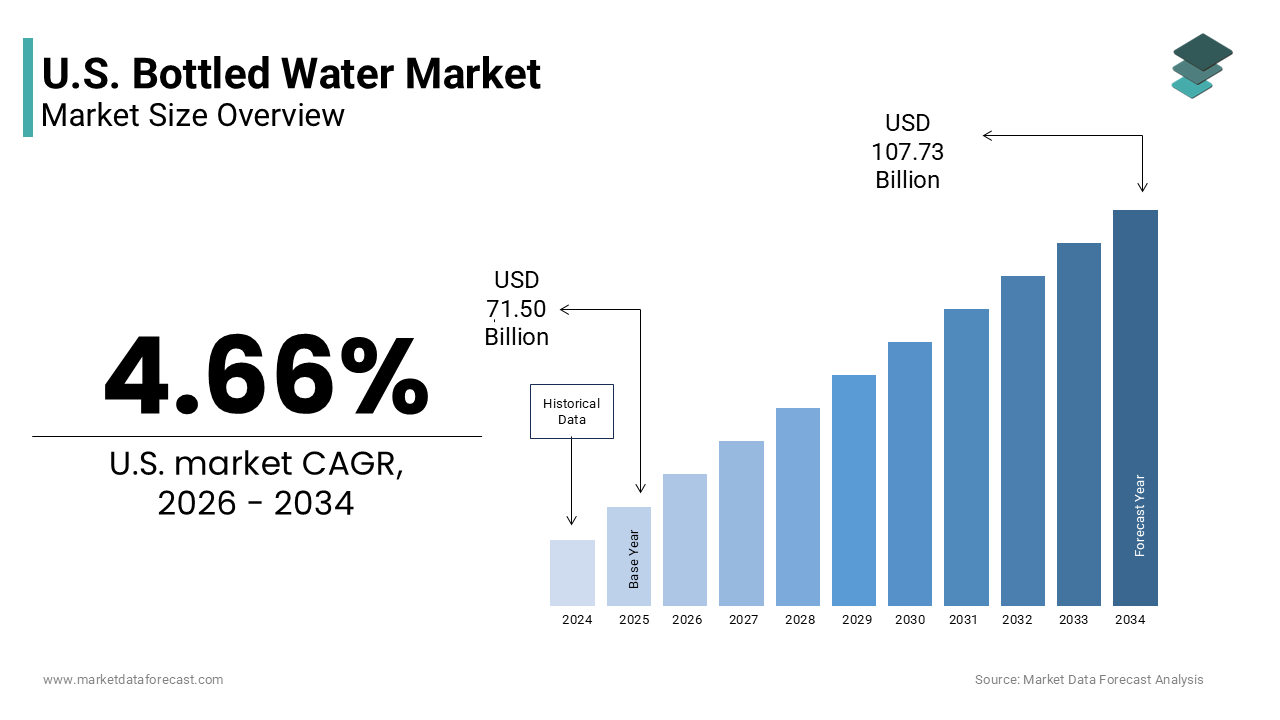
According to the Beverage Marketing Corporation, bottled water has maintained its position as the largest beverage category by volume in the U.S. surpassing carbonated soft drinks. This dominance reflects a broader societal shift away from sugary beverages toward zero calorie alternatives. Consumer awareness regarding health and wellness continues to influence purchasing decisions with many individuals viewing bottled water as an essential component of a balanced lifestyle. The industry operates within a complex regulatory framework overseen by the Food and Drug Administration which sets strict standards for quality and labeling. Environmental considerations have also become central to market dynamics with increasing scrutiny on packaging materials and recycling practices. The proliferation of single serve containers and multi pack formats ensures accessibility across retail channels ranging from convenience stores to large supermarkets. Innovation in flavor infusions and functional additives further diversifies the product landscape appealing to varied consumer palates. The market's resilience is underpinned by the fundamental human need for hydration combined with the convenience of portable packaging.
MARKET DRIVERS
Growing Health Consciousness and Sugar Avoidance
The rising consumer focus on health and wellness particularly the desire to reduce sugar intake is one of the major factors driving the bottled water market growth in the U.S. Americans are increasingly aware of the adverse health effects associated with high sugar consumption such as obesity type 2 diabetes and dental issues. According to the Centers for Disease Control and Prevention, approximately 42% of adults in the U.S. are obese, which is prompting a significant dietary shift toward low calorie and zero calorie beverages. Bottled water serves as the ideal alternative to sodas juices and sports drinks that often contain high levels of added sugars. This behavioral change is not limited to adults but extends to children and adolescents whose parents are actively seeking healthier hydration options for their families. The perception of water as a pure and natural substance enhances its appeal among health conscious consumers who prioritize clean labels and minimal processing. Fitness enthusiasts and athletes also contribute to this demand by consuming bottled water for hydration before during and after physical activities. The availability of fortified waters with added vitamins electrolytes and minerals further attracts consumers looking for functional benefits beyond basic hydration. Retailers respond to this trend by expanding their bottled water sections and promoting premium brands that emphasize purity and source integrity. The consistent messaging from health professionals and public health campaigns reinforces the importance of adequate water intake. This sustained focus on health ensures that bottled water remains a preferred choice for daily consumption.
Convenience and Portability in on-the-go Lifestyles
The fast paced nature of modern life in the U.S. drives significant demand for bottled water due to its unparalleled convenience and portability. Consumers leading busy lifestyles value the ability to access hydration quickly and easily without the need for preparation or cleanup. According to the International Bottled Water Association, bottled water consumption in the U.S. reached approximately 16.4 billion gallons in 2024, reflecting its integration into daily routines. The compact and lightweight design of single serve bottles makes them ideal for carrying in bags cars and briefcases facilitating hydration during commutes work hours and travel. The widespread availability of bottled water in vending machines convenience stores gas stations and airports ensures that consumers can purchase it whenever thirst strikes. This accessibility is crucial for individuals who spend considerable time away from home or offices where tap water may not be readily available or trusted. The rise of on the go consumption patterns has led to innovations in packaging such as re-sealable caps and ergonomic designs that enhance user experience. Employers and educational institutions also contribute to this demand by providing bottled water in cafeterias and break rooms as a healthy option. The convenience factor is particularly strong among younger demographics who prioritize ease and speed in their purchasing decisions. This driver ensures that bottled water remains a staple item in impulse purchases and routine grocery lists. The ability to satisfy immediate hydration needs anywhere at any time cements its role in contemporary consumer behavior.
MARKET RESTRAINTS
Environmental Concerns Regarding Plastic Waste
Environmental sustainability issues related to plastic packaging is hampering the bottled water market expansion in the U.S. Consumers and advocacy groups are increasingly vocal about the negative impact of single use plastic bottles on ecosystems and wildlife. According to the Environmental Protection Agency, the nationwide recycling rate for PET bottles is approximately 29.1%, meaning the majority of bottled water containers end up in landfills or as litter. This low recycling rate contributes to growing piles of plastic pollution which take hundreds of years to decompose. The visual presence of plastic waste in oceans parks and urban areas has sparked public outrage and calls for stricter regulations on single use plastics. Many municipalities have implemented bans or fees on plastic bags and bottles to encourage reusable alternatives. Consumer guilt associated with contributing to environmental degradation leads some individuals to switch to tap water or invest in reusable filtration systems. The carbon footprint associated with the production transportation and disposal of bottled water further exacerbates environmental concerns. Critics argue that the energy required manufacturing plastic bottles and transport heavy water volumes is unsustainable compared to local tap water sources. This sentiment is amplified by social media campaigns and documentaries highlighting the scale of plastic pollution. Companies face pressure to adopt more sustainable packaging solutions which often come with higher costs. The tension between consumer convenience and environmental responsibility creates a significant barrier to market growth. Regulatory pressures and shifting consumer values necessitate substantial changes in industry practices.
Perception of Tap Water Quality and Safety Improvements
The improving perception of tap water quality and safety in many regions is also hindering the bottled market expansion in the U.S. Public utilities across the U.S. have invested heavily in infrastructure upgrades and treatment technologies to ensure safe and clean drinking water. According to the American Water Works Association, the vast majority of Americans have access to high quality tap water that meets or exceeds federal safety standards. This confidence in municipal water supplies reduces the perceived necessity of purchasing bottled water for safety reasons. The installation of home filtration systems such as reverse osmosis units and pitcher filters allows consumers to improve the taste and quality of tap water at a fraction of the cost of bottled water. These systems provide a convenient and environmentally friendly alternative that eliminates the need for single use plastic bottles. Educational campaigns by local governments and non profit organizations inform residents about the rigorous testing and monitoring processes involved in tap water production. The transparency of water quality reports available online empowers consumers to make informed decisions about their drinking water sources. In areas where tap water is known to be safe and tasty the economic advantage of using household supplies is compelling. The rising cost of bottled water compared to virtually free tap water further discourages regular purchases. This shift in perception challenges the traditional value proposition of bottled water as a safer or cleaner option. Consumers are increasingly viewing bottled water as a luxury or occasional convenience rather than a daily necessity.
MARKET OPPORTUNITIES
Innovation in Sustainable Packaging Solutions
The development and adoption of sustainable packaging solutions is a promising opportunity for growth in the U.S. bottled water market. Companies are investing in research and development to create eco friendly alternatives to traditional petroleum based plastics. According to reports in the plastics industry, advancements in material science are enabling the production of bottles made from 100% recycled polyethylene terephthalate or rPET. These initiatives help reduce the reliance on virgin plastic and lower the overall environmental footprint of bottled water products. Some brands are exploring biodegradable and compostable materials derived from plant based sources such as corn starch or sugarcane. These innovations appeal to environmentally conscious consumers who seek to minimize their ecological impact without sacrificing convenience. Aluminum cans and glass bottles are also gaining traction as recyclable and reusable packaging options that offer a premium image. Collaborations between beverage companies and waste management firms aim to improve collection and recycling rates through extended producer responsibility programs. Clear labeling and consumer education campaigns encourage proper disposal and recycling of packaging materials. The transition to circular economy models where materials are kept in use for as long as possible creates new value propositions for brands. Investors and retailers are increasingly favoring companies that demonstrate commitment to sustainability. This opportunity allows brands to differentiate themselves in a crowded market by aligning with consumer values. The successful implementation of sustainable packaging can enhance brand loyalty and attract new customer segments.
Expansion into Functional and Enhanced Water Categories
The expansion into functional and enhanced water categories offers a lucrative opportunity for manufacturers to diversify their product portfolios and attract health focused consumers. Functional waters are infused with additional ingredients such as vitamins minerals electrolytes antioxidants and adaptogens to provide specific health benefits. According to recent market analysis, sales of enhanced waters have shown consistent growth as consumers seek beverages that support immunity digestion and mental clarity. This trend aligns with the broader wellness movement where individuals look for products that contribute to overall well being beyond basic hydration. Brands are launching products tailored to specific needs such as sleep aid energy boost and stress relief appealing to niche market segments. The use of natural flavors and sweeteners like stevia or monk fruit caters to consumers avoiding artificial additives and sugar. Sparkling and flavored waters provide a sensory experience that mimics sodas without the negative health implications. The customization of functional waters allows companies to target diverse demographics including athletes seniors and busy professionals. Retailers are dedicating more shelf space to these premium products recognizing their higher profit margins and consumer appeal. Marketing strategies emphasize the scientific backing and health benefits of functional ingredients to build trust and credibility. Partnerships with health influencers and fitness experts help promote these products to targeted audiences. The versatility of functional water formulations enables continuous innovation and product line extensions. This opportunity drives revenue growth and strengthens brand positioning in the competitive beverage landscape.
MARKET CHALLENGES
Regulatory Pressures and Compliance Costs
Navigating the complex and evolving regulatory landscape is one of the significant challenges to the bottled water market growth in the U.S. Federal state and local authorities impose stringent standards on water sourcing processing labeling and packaging to ensure consumer safety and environmental protection. According to the Food and Drug Administration, bottled water manufacturers must comply with comprehensive quality standards and regular inspections to ensure product safety. Changes in regulations regarding plastic usage recycling mandates and chemical contaminants require companies to adapt their operations frequently. Compliance with these regulations often involves substantial investments in testing equipment staff training and process modifications. The introduction of new laws such as extended producer responsibility schemes places financial burdens on companies to manage the end of life disposal of their packaging. Labeling requirements for ingredients nutritional information and environmental claims must be accurate and transparent to avoid legal penalties and consumer backlash. Variations in regulations across different states create operational complexities for national brands seeking uniform compliance. The cost of maintaining compliance can erode profit margins particularly for smaller producers with limited resources. Legal challenges related to source verification and marketing claims can damage brand reputation and lead to costly litigation. Companies must stay abreast of legislative developments and engage in proactive dialogue with regulators. The uncertainty surrounding future regulations makes long term planning difficult. This challenge requires robust legal and compliance frameworks to mitigate risks and ensure business continuity.
Supply Chain Vulnerabilities and Resource Scarcity
Supply chain vulnerabilities and resource scarcity are further challenging the expansion of the U.S. bottled water market. The production of bottled water relies heavily on access to clean water sources which are increasingly threatened by climate change droughts and pollution. According to the U.S. Geological Survey, many regions in the U.S. face significant water stress due to over extraction and changing precipitation patterns. This scarcity can lead to restrictions on water withdrawal permits affecting production capacity and increasing costs. The dependence on plastic resin for packaging exposes manufacturers to fluctuations in oil prices and supply disruptions. Geopolitical tensions and trade policies can impact the availability and cost of raw materials needed for bottle production. Transportation logistics are also vulnerable to fuel price volatility labor shortages and infrastructure bottlenecks. Extreme weather events such as hurricanes and floods can disrupt distribution networks and delay product delivery to retailers. The just in time inventory models used by many companies leave little room for error when supply chains are interrupted. Building resilience requires diversifying sourcing strategies investing in local production facilities and developing contingency plans. The cost of mitigating these risks can be substantial and may need to be passed on to consumers. Competition for water resources with agricultural and industrial sectors further intensifies the challenge. Ensuring a reliable and sustainable supply of both water and packaging materials is essential for meeting consumer demand. This challenge underscores the need for strategic risk management and operational flexibility.
REPORT COVERAGE
| REPORT METRIC | DETAILS |
| Market Size Available | 2025 to 2034 |
| Base Year | 2025 |
| Forecast Period | 2026 to 2034 |
| CAGR | 4.66% |
| Segments Covered | By Type, Packaging Format, Distribution Channel and Country |
| Various Analyses Covered | Regional & Country Level Analysis, Segment-Level Analysis, DROC, PESTLE Analysis, Porter’s Five Forces Analysis, Competitive Landscape, Analyst Overview on Investment Opportunities |
| Countries Covered | California, Washington, Oregon, New York, and the rest of the United States. |
| Market Leaders Profiled | PepsiCo, The Coca-Cola Company, Nestlé Waters, Primo Brands, Danone, Niagara Bottling, FIJI Water Company, Keurig Dr Pepper, Essentia Water, Crystal Geyser Water Company, Mountain Valley Spring Water, VOSS Water, Waiakea Water, Evian, and Saratoga Spring Water. |
SEGMENTAL ANALYSIS
By Type Insights
The still water segment dominated the market by holding the major share of the U.S. bottled water market in 2025. The dominance of still water segment in the U.S. market is driven its status as the primary source of hydration for the majority of consumers. This category includes purified spring and mineral waters that are consumed for their simplicity and health benefits without additional flavors or carbonation. Still water maintains its leading position because it aligns with the fundamental human need for pure and unadulterated hydration. Consumers increasingly view plain water as the healthiest beverage option free from calories sugars and artificial additives. According to the Beverage Marketing Corporation, still water accounts for over 80% of total bottled water sales in the U.S. reflecting its entrenched role in daily diets. The simplicity of still water appeals to a broad demographic ranging from children to seniors who prioritize clean labels and natural ingredients. Health professionals consistently recommend plain water as the best way to maintain proper fluid balance and support bodily functions. The absence of strong flavors makes still water versatile for consumption throughout the day including during meals and exercise. Retailers dedicate significant shelf space to still water varieties ensuring high visibility and accessibility for shoppers. The perception of purity and safety associated with branded still water drives repeat purchases among loyal customers. Many consumers prefer the taste of specific spring or artesian sources which creates brand loyalty based on sensory experience. The widespread availability of still water in various pack sizes from single serve bottles to large multi gallon containers supports diverse usage scenarios. This universal appeal ensures that still water remains the cornerstone of the bottled water industry. The consistent demand for basic hydration provides a stable revenue base for manufacturers despite fluctuations in other beverage categories.
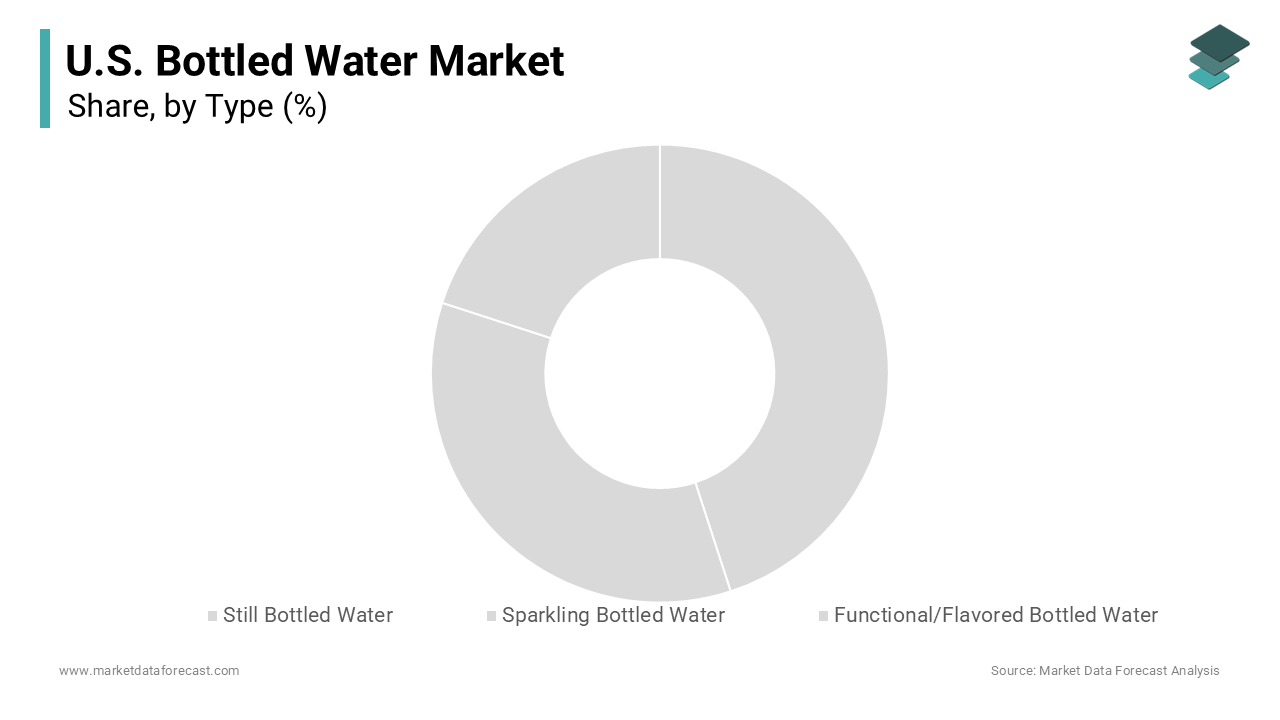
However, the functional and flavored water segment is gaining traction and is predicted to showcase the fastest CAGR during the forecast period in the U.S. market owing to the consumers seeking beverages that offer additional health benefits beyond basic hydration. Individuals are increasingly interested in products that support immunity digestion energy levels and mental well-being. According to reports from the global new products database, launches of functional waters with added ingredients such as probiotics adaptogens and antioxidants have increased significantly in recent years. Consumers are willing to pay a premium for waters that align with their wellness goals and lifestyle preferences. The integration of natural flavors like fruit essences and herbal extracts provides a sensory appeal that attracts those looking to reduce sugar intake while enjoying tasty drinks. Fitness enthusiasts and active individuals prefer functional waters with electrolytes for rehydration after workouts. The transparency of ingredient lists and clean label claims builds trust among health conscious buyers. Brands are investing in scientific research to validate the benefits of their functional additives which enhances credibility. The variety of functional options allows consumers to customize their hydration based on specific needs such as sleep aid or focus enhancement. This personalization trend drives repeat purchases and brand loyalty. Retailers are expanding their selections of functional waters to cater to this growing demand. The convergence of hydration and nutrition creates a dynamic category with substantial growth potential. The continuous innovation in functional ingredients ensures that the segment remains vibrant and appealing to new consumer segments.
By Packaging Format Insights
The polyethylene terephthalate or PET bottles segment captured the leading share of the U.S. market in 2025. The growth of the PET segment in the U.S. market is attributed to their lightweight durability and recyclability. This material is the standard for single serve and multi pack water products. PET bottles dominate the market because their lightweight nature significantly reduces transportation costs and carbon emissions compared to glass or heavier plastics. The low weight of PET allows for more units to be shipped per truckload improving logistics efficiency. According to reports on lightweight packaging, PET bottles can be up to 95% lighter than glass bottles of similar volume which translates to substantial fuel savings during distribution. This efficiency is crucial for a high volume low margin product like bottled water where transportation costs can impact profitability. The durability of PET reduces breakage rates during handling and shipping minimizing waste and product loss. Retailers benefit from easier stocking and shelving due to the manageable weight of PET packages. Consumers appreciate the portability of PET bottles for on the go consumption as they are easy to carry in bags and cup holders. The shatter resistant property of PET makes it safer for use in schools gyms and outdoor activities. These practical advantages ensure that PET remains the preferred choice for manufacturers and retailers alike. The established infrastructure for PET production and recycling supports its continued dominance. The ability to produce PET bottles at high speeds using blow molding technology meets the massive demand for bottled water. This operational efficiency reinforces the leading position of PET in the packaging landscape. The balance of cost performance and convenience makes PET indispensable for the industry.
On the other hand, the aluminum cans segment is estimated to showcase a prominent CAGR in the U.S. market over the forecast period. Aluminum cans are experiencing rapid growth because they offer superior recyclability compared to plastic bottles appealing to environmentally conscious consumers. Aluminum can be recycled infinitely without loss of quality making it a highly sustainable packaging option. According to reports on recycled metals, aluminum cans have a high recovery rate and are recycled more frequently than plastic bottles in the U.S. This high recovery rate reduces the need for virgin material extraction and lowers the overall environmental footprint. Consumers perceive aluminum as a more eco-friendly choice which influences their purchasing decisions. The use of recycled aluminum in can production requires less energy than producing new metal further enhancing its sustainability credentials. Brands are leveraging this environmental advantage to market their products as green alternatives. The compact shape of cans allows for efficient storage and transportation reducing logistics costs. The absence of plastic aligns with municipal bans and restrictions on single use plastics in various regions. This regulatory tailwind accelerates the adoption of aluminum cans for bottled water. The visual appeal of printed aluminum surfaces allows for vibrant branding that stands out on shelves. The tactile experience of holding a cold can enhances consumer satisfaction. These factors combine to drive the rapid expansion of aluminum cans in the water category. The shift towards sustainable packaging ensures that this trend will continue to gain momentum.
By Distribution Channel Insights
The off-trade segment held the major share of the U.S. bottled water market in 2025. This channel accounts for the majority of sales due to its accessibility and volume capabilities. The off trade segment dominates because major retail chains and supermarkets offer a wide variety of bottled water products at competitive prices. Consumers prefer purchasing water in bulk from these outlets for household consumption due to cost savings and convenience. According to retail market data, off trade channels account for over 70% of total bottled water sales in the U.S. reflecting their central role in distribution. The ability to buy multi packs and large containers reduces the frequency of shopping trips and lowers the per unit cost. Supermarkets dedicate significant aisle space to bottled water ensuring high visibility and easy access for shoppers. Promotional discounts and loyalty programs further incentivize bulk purchases in the off trade sector. The presence of private label brands alongside national brands provides consumers with diverse price options. The convenience of one stop shopping for groceries and beverages strengthens the preference for off trade purchases. Online grocery platforms have expanded the reach of off trade channels allowing consumers to order heavy water cases for home delivery. This digital expansion enhances the accessibility of off trade options for busy households. The established logistics and inventory management systems of large retailers ensure consistent product availability. These factors collectively sustain the leading position of the off trade segment. The economic advantages of bulk buying remain a primary driver for consumer behavior in this channel.
However, the on-trade segment is expected to exhibit a promising CAGR in the U.S. bottled water market during the forecast period owing to the robust recovery of the hospitality and dining sector following recent disruptions. Consumers are returning to restaurants cafes and hotels where bottled water is a standard offering. According to recent hospitality industry reports, sales in the food service industry have rebounded strongly leading to increased demand for bottled beverages. Restaurants are promoting premium bottled waters as part of their menu offerings to enhance the dining experience and increase average check sizes. The trend towards health conscious dining encourages patrons to choose bottled water over sugary drinks or alcohol. Hotels and resorts are stocking high end water brands in minibars and room service menus to cater to luxury travelers. The emphasis on hygiene and safety has also boosted the preference for sealed bottled water in public dining settings. Event venues and conferences are increasing their orders for bottled water to serve attendees. The expansion of quick service restaurants and coffee shops further drives on trade volumes. Partnerships between water brands and hospitality groups create exclusive offerings that attract customers. The personalized service and ambiance of on trade establishments enhance the perceived value of bottled water. This resurgence in dining out and travel supports the rapid growth of the on trade channel. The integration of water into culinary experiences elevates its status beyond a basic commodity.
COUNTRY ANALYSIS
The U.S. is expected to continue its role as the dominant leader in the North American bottled water market for the next few years, characterized by high per capita consumption and intense competition. The country serves as a global leader in innovation and sustainability initiatives within the industry. The U.S. maintains its dominant position in the regional market through high per capita consumption and a deeply entrenched culture of bottled water usage. Americans consume more bottled water per person than any other beverage category reflecting a strong preference for healthy hydration. According to the Beverage Marketing Corporation, the average American consumes over 40 gallons of bottled water annually, demonstrating the scale of demand. This high consumption is driven by widespread health consciousness and the convenience of portable packaging. The market is mature with established brands and robust distribution networks ensuring widespread availability. Consumers in the U.S. are sophisticated and demanding seeking premium and functional options that align with their lifestyles. The presence of numerous local and national springs provides a diverse range of source options. The regulatory framework ensures high quality standards which builds consumer trust. The maturity of the market encourages continuous innovation in packaging and product formulations. Companies invest heavily in marketing and sustainability initiatives to differentiate themselves. The strong economic base supports premium pricing for specialized water products. This combination of high volume and value ensures that the U.S. remains the centerpiece of the North American bottled water landscape. The market's stability and growth potential attract significant investment and strategic focus from global players.
COMPETITIVE LANDSCAPE
The competitive landscape of the U.S. bottled water market is characterized by intense rivalry among established multinational corporations and emerging regional brands. Major players compete on product quality branding sustainability and price to capture consumer attention in a saturated environment. The shift towards health and wellness has intensified competition as companies launch functional and flavored variants to differentiate their offerings. Private label brands from large retail chains pose a significant threat by offering lower priced alternatives that appeal to budget conscious shoppers. Innovation in packaging such as aluminum cans and biodegradable materials provides a competitive edge for brands targeting environmentally aware consumers. The ability to secure reliable water sources and maintain strict quality standards is crucial for sustaining market presence. Distribution networks play a vital role as companies strive for maximum visibility in supermarkets convenience stores and online platforms. Marketing strategies emphasize purity source origin and environmental responsibility to build consumer trust and loyalty. Consolidation activities through mergers and acquisitions allow larger firms to expand their portfolios and eliminate competitors. The market dynamics require continuous adaptation to changing consumer tastes and regulatory requirements. Price wars and promotional activities are common tactics used to drive volume and market penetration. This highly competitive environment forces companies to innovate constantly and optimize operations to maintain profitability and relevance.
KEY MARKET PLAYERS
Some of the promising companies that are playing a dominating role in the U.S. bottled water market include
- PepsiCo
- The Coca-Cola Company
- Nestlé Waters
- Primo Brands
- Danone
- Niagara Bottling
- FIJI Water Company
- Keurig Dr Pepper
- Essentia Water
- Crystal Geyser Water Company
- Mountain Valley Spring Water
- VOSS Water
- Waiakea Water
- Evian
- Saratoga Spring Water
Top Players in the US Bottled Water Market
Nestlé Waters North America Inc
Nestlé Waters North America Inc is a pivotal entity in the U.S. bottled water sector managing a diverse portfolio of premium and value brands. The company operates iconic labels such as Poland Spring Pure Life and Perrier which cater to varied consumer preferences for still and sparkling waters. Recent strategic actions include significant investments in sustainable packaging technologies to reduce plastic waste and enhance recyclability. Nestlé has committed to increasing the use of recycled polyethylene terephthalate in its bottles to meet environmental goals. The company also focuses on source protection initiatives to ensure long term water availability and quality. By leveraging its extensive distribution network Nestlé maintains strong visibility in retail and convenience channels. Innovation in functional waters with added vitamins and minerals helps the brand stay relevant among health conscious consumers. These efforts strengthen its position as a leader in hydration solutions. The company actively engages in community programs to promote water conservation and access. This holistic approach ensures sustained brand loyalty and market relevance in a competitive landscape.
The Coca Cola Company
The Coca Cola Company holds a substantial presence in the U.S. bottled water market through its widely recognized Dasani brand and other regional labels. The corporation leverages its massive global distribution infrastructure to ensure product availability across all retail segments. Recent initiatives focus on expanding its portfolio of flavored and enhanced waters to capture health oriented demographics. Coca Cola has introduced new varieties with natural essences and zero calories to align with wellness trends. The company is also investing heavily in circular economy practices by designing fully recyclable bottles and increasing recycled content usage. Strategic partnerships with retailers help optimize shelf space and promotional visibility for its water products. Coca Cola utilizes advanced data analytics to understand consumer preferences and tailor marketing campaigns effectively. The integration of water into its broader beverage strategy allows for cross promotional opportunities. These actions reinforce its competitive stance and drive volume growth. The emphasis on sustainability and innovation appeals to modern consumers who prioritize environmental responsibility. This comprehensive strategy ensures continued dominance in the hydration category.
Keurig Dr Pepper Inc
Keurig Dr Pepper Inc is a major competitor in the U.S. bottled water market with a strong lineup including Snapple Core and Bai brands. The company focuses on delivering innovative hydration solutions that blend taste with functional benefits. Recent actions involve expanding its presence in the premium sparkling water segment to compete with emerging niche brands. Keurig Dr Pepper has launched new flavors and packaging formats to attract younger consumers seeking variety. The organization emphasizes sustainable sourcing and reduced environmental impact through improved recycling programs. Its robust supply chain enables efficient distribution to both on trade and off trade channels. The company invests in digital marketing to engage directly with consumers and build brand communities. Strategic acquisitions of smaller healthy beverage brands have diversified its portfolio and enhanced its market reach. Keurig Dr Pepper prioritizes operational efficiency to maintain competitive pricing while ensuring product quality. These strategies help the company retain existing customers and attract new ones. The focus on innovation and sustainability strengthens its position in the evolving beverage landscape. This dynamic approach ensures resilience against market fluctuations and changing consumer demands.
Top Strategies Used by Key Market Participants
Key players in the U.S. bottled water market employ diverse strategies to maintain competitiveness and drive growth. Sustainability initiatives are central as companies invest in recycled materials and lightweight packaging to reduce environmental impact. Product innovation focuses on functional enhancements such as added vitamins electrolytes and natural flavors to appeal to health conscious consumers. Brand differentiation is achieved through premium sourcing claims and unique taste profiles that distinguish products in a crowded market. Strategic partnerships with retailers ensure optimal shelf placement and visibility in high traffic areas. Digital marketing campaigns leverage social media platforms to engage younger demographics and build brand loyalty. Expansion into e commerce channels allows direct to consumer sales and broader market reach. Companies also prioritize supply chain efficiency to manage costs and ensure consistent product availability. Corporate social responsibility programs related to water conservation enhance brand reputation and community trust. These combined approaches help operators navigate regulatory pressures and shifting consumer preferences while ensuring long term profitability in a mature industry landscape.
MARKET SEGMENTATION
This research report on the U.S. bottled water market has been segmented based on the following categories
By Type
- Still Bottled Water
- Sparkling Bottled Water
- Functional/Flavored Bottled Water
By Packaging Format
- PET Bottles
- Glass Bottles
- Cans
By Category
- Mass
- Premium
By Distribution Channel
- On-Trade
- Off-Trade
By Country
- California
- Washington
- Oregon
- New York
- Rest of the United States