- Product Description Description
- Table of Contents TOC
- List of Table & Figure LOT
- Get Free Sample PDF Sample PDF
Market Size, 2025
$5.75 BnMarket Estimate, 2026
$5.99 BnMarket Forecast, 2034
$8.30 BnCAGR, 2026–2034
4.16%U.S. Bourbon Market Report Summary
The U.S. bourbon market was valued at USD 5.75 billion in 2025, is estimated to reach USD 5.99 billion in 2026, and is projected to reach USD 8.30 billion by 2034, growing at a CAGR of 4.16% during the forecast period from 2026 to 2034. The growth of the U.S. bourbon market is driven by rising consumer preference for premium spirits, increasing popularity of craft distilleries, and the growing influence of cocktail culture and mixology trends. Expanding demand for small batch, single barrel, and barrel-finished bourbons among millennials and high-income consumers is further accelerating market growth. Moreover, the growing international recognition of American whiskey, rising distillery tourism, and increasing investments in sustainable production practices are supporting the expansion of the U.S. bourbon market.
Key Market Trends
- Rising demand for premium and craft bourbon products driven by consumer preference for authenticity, heritage, and unique flavor profiles.
- Growing popularity of bourbon-based cocktails in bars, restaurants, and premium hospitality establishments.
- Increasing consumer interest in barrel-finished and limited-edition bourbon varieties with innovative aging techniques.
- Strong focus on sustainability initiatives including renewable energy usage, water conservation, and eco-friendly packaging.
- Expansion of bourbon tourism through distillery tours, tasting experiences, and bourbon trail programs across the United States.
Segmental Insights
Based on type, the rye bourbon segment dominated the U.S. bourbon market and held a significant share in 2025. The segment’s dominance is attributed to its bold and spicy flavor profile, growing popularity in premium cocktails, and increasing consumer preference for distinctive and complex whiskey experiences.
Based on distribution channel, the off-trade segment accounted for the largest share of the U.S. bourbon market in 2025. The dominance of this segment is driven by the convenience of retail purchasing, increasing availability of bourbon products across supermarkets and liquor stores, and the rapid growth of e-commerce and home consumption trends.
The on-trade segment is projected to witness the fastest CAGR during the forecast period owing to the revival of social dining and nightlife culture, growing popularity of bourbon tasting events, and increasing demand for premium bourbon cocktails in bars and restaurants.
Regional Insights
The United States dominated the North American bourbon market and accounted for a major share in 2025, supported by its legally protected bourbon production standards, strong whiskey heritage, and extensive network of distilleries. Kentucky remains the leading contributor to the U.S. bourbon market due to its globally recognized bourbon manufacturing ecosystem, rich availability of raw materials, and flourishing bourbon tourism industry. Tennessee, California, New York, and Oregon are also witnessing notable growth driven by increasing craft distillery operations, rising premium spirit consumption, and expanding retail distribution networks.
Competitive Landscape
The U.S. bourbon market is highly competitive and characterized by the presence of established heritage distilleries along with emerging craft producers competing through premiumization, innovative barrel-finishing techniques, and experiential marketing strategies. Leading companies are focusing on expanding premium product portfolios, strengthening direct-to-consumer channels, investing in sustainability programs, and enhancing distillery tourism experiences. Marketing campaigns centered on craftsmanship, authenticity, heritage storytelling, and exclusivity are further strengthening brand positioning across diverse consumer demographics. Prominent players in the U.S. bourbon market include Brown-Forman Corporation, Beam Suntory, Sazerac Company, Diageo plc, Heaven Hill Distilleries, Wild Turkey Distilling Company, Buffalo Trace Distillery, Michter’s Distillery, Woodford Reserve, and Four Roses Distillery.
 Download Free Sample Report
U.S. Bourbon Market Size
The U.S. bourbon market size was valued at USD 5.75 billion in 2025 and is anticipated to reach USD 5.99 billion in 2026 from USD 8.30 billion by 2034, growing at a CAGR of 4.16% during the forecast period from 2026 to 2034.
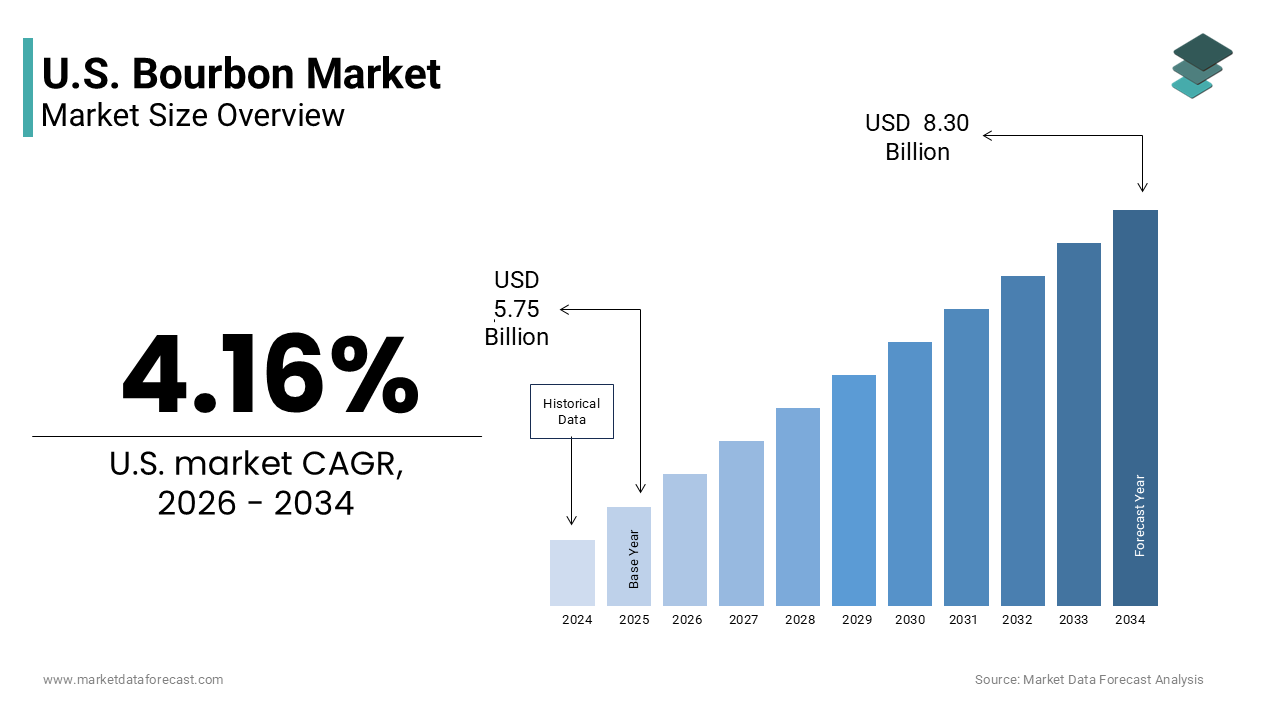
Bourbon is a type of American whiskey, typically distilled from at least 51% corn and aged in new, charred oak containers. This category is legally protected under federal regulations which mandate specific production standards including distillation at no more than 160 proof and entry into the barrel at no more than 125 proof. Bourbon serves as a cultural icon reflecting heritage craftsmanship and regional identity particularly within Kentucky and Tennessee. According to the Distilled Spirits Council of the United States, domestic suppliers shipped 30.3 million nine-liter cases of American whiskey. The sector benefits from a strong narrative of authenticity and tradition which resonates with consumers seeking premium and experiential alcoholic beverages. Demographic shifts indicate that millennials and Generation Z are increasingly engaging with spirits through cocktail culture and educational tastings. Data from the Alcohol and Tobacco Tax and Trade Bureau (TTB) shows that there are more than 1,900 operating distilleries in the United States, with a significant concentration dedicated to bourbon production. This proliferation of distilleries supports local tourism and economic development while expanding product availability. The aging process requires substantial time and capital investment creating high barriers to entry for new competitors. Consumer preferences are shifting toward higher proof small batch and single barrel expressions which command premium pricing. The interplay between regulatory compliance historical significance and evolving taste profiles defines the current landscape of the bourbon industry in the United States.
MARKET DRIVERS
Rising Consumer Preference for Premiumization and Craft Authenticity
The escalating demand for premium and craft bourbon varieties is driving the growth of the United States bourbon market. This growth is fueled by consumers increasingly prioritizing quality over quantity in their alcohol consumption. This trend known as premiumization reflects a broader shift in lifestyle choices where individuals seek authentic experiences and superior product characteristics. According to the Distilled Spirits Council of the United States, a broad softening of consumer spending led to volume declines across all price tiers of American whiskey, although the contraction was least severe in the super premium segment. Consumers are willing to pay higher prices for small batch single barrel and limited edition releases that offer unique flavor profiles and storytelling elements. The rise of craft distilleries has further fueled this interest by providing localized and artisanal options that differentiate themselves from mass produced brands. This proliferation allows consumers to explore diverse taste experiences and connect with local producers. The emphasis on transparency in sourcing and production methods appeals to informed buyers who value integrity and craftsmanship. Social media platforms and influencer marketing amplify awareness of niche brands enabling them to reach wider audiences. This sustained interest in quality and authenticity drives revenue growth and encourages innovation within the sector.
Growth of Cocktail Culture and Mixology Trends
The resurgence of cocktail culture and the professionalization of mixology have significantly boosted the demand for bourbon in the country, and thereby contribute to the expansion of the United States bourbon market. This expansion is fuelled by positioning bourbon as a versatile base spirit for sophisticated drinks. Bartenders and enthusiasts increasingly recognize bourbon for its complex flavor profile which includes notes of vanilla caramel and oak that complement a wide range of mixers and ingredients. According to the United States Bartenders Guild the inclusion of American whiskey in classic and contemporary cocktails has risen steadily as bars focus on curated menus and high quality ingredients. Establishments such as speakeasies and craft cocktail lounges emphasize the use of premium bourbons to create signature drinks that attract discerning customers. The educational aspect of mixology also plays a role as consumers attend tasting events and workshops to learn about bourbon varieties and pairing techniques. This engagement fosters a deeper appreciation for the spirit and encourages experimentation with different brands and expressions. Television shows and digital content featuring mixologists further popularize bourbon centric recipes making them accessible to home bartenders. The integration of bourbon into culinary and social experiences ensures its continued relevance and growth in the competitive alcohol market.
MARKET RESTRAINTS
Regulatory Constraints and Taxation Policies
Stringent regulatory frameworks and varying taxation policies across states are restraints to the United States bourbon market. This increases operational costs and limits distribution flexibility. The three tier system of alcohol distribution which separates producers distributors and retailers creates complex logistical challenges and reduces profit margins for manufacturers. According to the Alcohol and Tobacco Tax and Trade Bureau, federal excise tax provisions under the permanently enacted Craft Beverage Modernization Act have significantly reduced the tax burden for small and medium-sized distilleries, dropping the rate from $13.50 to $2.70 per proof gallon on their first 100,000 proof gallons. Additionally state level taxes vary widely with some jurisdictions imposing high levies that discourage consumer purchases and restrict market access. Data from the Distilled Spirits Council of the United States indicates that regulatory compliance costs account for a significant portion of operational expenses for distillers affecting their ability to compete on price. Restrictions on direct to consumer shipping further limit the reach of craft brands that rely on online sales to expand their customer base. The inconsistency in labeling requirements and advertising regulations across different states adds another layer of complexity requiring legal expertise and administrative resources. As per the National Conference of State Legislatures proposed increases in alcohol taxes in several states threaten to dampen sales volume and revenue growth. These regulatory hurdles hinder innovation and market entry for new players who lack the resources to navigate the fragmented legal landscape. The cumulative effect of these constraints limits the potential for rapid expansion and profitability within the bourbon sector.
Health Consciousness and Changing Drinking Habits
American consumers are increasingly aware of health and wellness, leading to moderated alcohol intake and a preference for non-alcoholic alternatives. Consequently, this trend is hindering the expansion of the United States bourbon market. Public health campaigns and medical research highlighting the risks associated with excessive alcohol consumption have influenced societal attitudes toward drinking. According to the Centers for Disease Control and Prevention, excessive alcohol use leads to approximately 178,000 deaths in the United States each year, shortening the lives of those who died by an average of 23 years. This shift is particularly evident among younger demographics such as millennials and Generation Z who prioritize physical fitness and mental well being. Data from Gallup shows that the percentage of American adults who actively consume alcohol has dropped to a multi-decade low of 54%, with a record 53% majority now stating that even moderate alcohol consumption is bad for health. The rise of the sober curious movement has led to increased demand for non alcoholic spirits and mocktails which compete directly with traditional bourbon products. Bars and restaurants are responding by expanding their zero proof offerings which diverts spending away from alcoholic beverages. As per the International Wine and Spirit Research group sales of low and no alcohol beverages are growing at a faster rate than traditional spirits. This cultural shift challenges bourbon brands to adapt their marketing strategies and product portfolios to remain relevant. The pressure to demonstrate responsible drinking practices and promote moderation further constrains market growth and requires careful navigation of public perception.
MARKET OPPORTUNITIES
Expansion into International Export Markets
The increasing global demand for American bourbon presents a lucrative opportunity for producers within the United States bourbon market. This trend allows them to expand their footprint beyond domestic borders and diversify revenue streams. International consumers particularly in Europe Asia and Latin America are developing a taste for premium American whiskey driven by exposure to American culture and travel. Trade agreements and diplomatic efforts have helped reduce tariffs and barriers facilitating easier access to these regions. Data from the United States Department of Agriculture shows that agricultural exports including distilled spirits contribute substantially to the national trade balance. Brands are leveraging digital marketing and international spirits competitions to build brand recognition and credibility abroad. The uniqueness of bourbon as a distinctly American product appeals to foreign consumers seeking authentic and high quality experiences. As per the International Spirits Challenge American bourbons frequently win awards enhancing their prestige and desirability in global markets. Emerging economies with rising middle classes offer additional potential for growth as disposable incomes increase. Companies are investing in localized marketing campaigns and partnerships with international distributors to tailor their offerings to regional preferences. This global expansion not only increases sales volume but also mitigates risks associated with domestic market saturation. Bourbon producers can sustain long-term growth by capitalizing on international interest. Furthermore, this strategy helps strengthen their brand equity worldwide.
Development of Sustainable and Eco Friendly Production Practices
The adoption of sustainable and eco friendly production practices provides a significant prospect for the United States bourbon market. This sets the stage to appeal to environmentally conscious consumers and enhance brand reputation. Distilleries are increasingly implementing green initiatives such as water conservation energy efficiency and waste reduction to minimize their environmental impact. According to major spirits producers and international industry partnerships, a growing number of distilleries are committing to carbon-neutral operations and renewable energy sources to align with global sustainability goals.Consumers are more likely to support brands that demonstrate corporate social responsibility and ethical stewardship of natural resources. Bourbon producers are exploring innovative methods such as using solar power for distillation and repurposing spent grain for animal feed or biofuel. These practices not only reduce operational costs but also create positive community relations and regulatory goodwill. As per the Environmental Protection Agency incentives for green manufacturing encourage industries to adopt cleaner technologies. Marketing these sustainability efforts allows brands to differentiate themselves in a crowded market and attract a loyal customer base. The transparency in supply chain practices and ingredient sourcing further builds trust and credibility. Bourbon companies can future-proof their operations and contribute to a healthier planet by leading the way in environmental responsibility. This proactive strategy also drives business success.
MARKET CHALLENGES
Supply Chain Disruptions and Raw Material Volatility
Fluctuating costs and availability of raw materials such as corn oak and glass are a formidable challenge to the United States bourbon market. This affects production consistency and profitability. The agricultural sector is vulnerable to weather conditions climate change and geopolitical tensions which can disrupt supply chains and drive up prices. According to the United States Department of Agriculture droughts and extreme weather events have impacted corn yields leading to higher input costs for distillers. The scarcity of white oak barrels used for aging bourbon has also become a critical issue as demand outpaces supply due to the long growth cycle of oak trees. Data from the Forest Service indicates that the availability of suitable timber for cooperage is limited requiring careful management and long term planning. Additionally disruptions in the glass manufacturing industry have led to shortages of bottles and packaging materials delaying product launches and shipments. As per the Bureau of Labor Statistics producer prices for packaging materials have risen significantly adding pressure to operating margins. These supply chain vulnerabilities force companies to seek alternative suppliers or invest in vertical integration which requires substantial capital. The inability to secure consistent raw materials can lead to production delays and inventory shortages affecting customer satisfaction. Managing these risks requires robust contingency plans and strategic partnerships with suppliers. The ongoing volatility in resource availability remains a persistent challenge that threatens the stability and growth of the bourbon industry.
Counterfeit Products and Brand Integrity Issues
The prevalence of counterfeit bourbon products and issues related to brand integrity are a serious impediment to the United States bourbon market. This undermines consumer trust and revenue. High demand for rare and limited edition bottles has created a black market where fake products are sold at inflated prices deceiving unsuspecting buyers. According to the Organisation for Economic Co-operation and Development, intellectual property theft and counterfeiting in the alcohol industry result in billions of dollars in economic losses annually, with illicit alcohol representing more than a quarter of global spirit volumes. These illicit activities damage the reputation of legitimate brands and pose health risks to consumers who may ingest unsafe substances. Data from the Distilled Spirits Council of the United States highlights the increasing sophistication of counterfeiters who replicate packaging and labeling with high accuracy. Protecting brand identity requires significant investment in security features such as holograms serial numbers and blockchain tracking systems. As per the International Trademark Association enforcement of intellectual property rights is complex and costly involving legal battles across multiple jurisdictions. The presence of fake products dilutes the exclusivity and value of authentic bourbons affecting collector interest and secondary market dynamics. Companies must continuously monitor online marketplaces and retail channels to identify and remove counterfeit listings. The effort to combat fraud diverts resources from innovation and marketing impacting overall business performance. Maintaining brand integrity is essential for sustaining consumer loyalty and ensuring the long term viability of the bourbon sector in a competitive landscape.
REPORT COVERAGE
| REPORT METRIC | DETAILS |
| Market Size Available | 2025 to 2034 |
| Base Year | 2025 |
| Forecast Period | 2026 to 2034 |
| CAGR | 4.16% |
| Segments Covered | By Type, Distribution Channel and Region. |
| Various Analyses Covered | Global, Regional & Country Level Analysis, Segment-Level Analysis; DROC, PESTLE Analysis, Porter's Five Forces Analysis, Competitive Landscape, Analyst Overview of Investment Opportunities |
| Countries Covered | California, Washington, Oregon, New York, and the rest of the United States. |
| Market Leader Profiled | Brown-Forman Corporation, Beam Suntory, Sazerac Company, Diageo plc, Heaven Hill Distilleries, Wild Turkey Distilling Company, Buffalo Trace Distillery, Michter's Distillery, Woodford Reserve, and Four Roses Distillery. |
SEGMENTAL ANALYSIS
By Type Insights
The rye bourbon segment held the majority share of 55.9% of the United States bourbon market in 2025. This supremacy of the segment was credited to its distinct spicy flavor profile and historical resurgence among connoisseurs. While traditional corn dominant bourbons remain popular rye variants offer a bolder taste experience that appeals to consumers seeking complexity and differentiation in their spirits. According to the Distilled Spirits Council of the United States sales of American rye whiskey have increased substantially over the past decade reflecting a shift in consumer preference toward more robust and aromatic profiles. This segment benefits from the craft cocktail movement where bartenders favor rye for its ability to stand up to strong mixers and bitters in classic drinks such as the Manhattan and Old Fashioned. The versatility of rye bourbon allows it to cater to both neat sippers and mixology enthusiasts broadening its customer base. The narrative of heritage and authenticity surrounding rye production particularly in regions like Pennsylvania and Maryland adds to its appeal. As per the American Craft Spirits Association, whiskey remains the leading segment within the independent distilling market, commanding a 26.77% share of the craft spirits universe and driving product innovation. This combination of historical reverence culinary utility and flavor distinction ensures that rye bourbon remains a dominant force in the market capturing the attention of discerning drinkers who value tradition and taste. The dominance of the rye bourbon segment is heavily influenced by its historical resurgence and integral role in the modern craft cocktail renaissance. Rye whiskey was the preferred spirit in America before Prohibition and its revival taps into a sense of nostalgia and cultural heritage that resonates with contemporary consumers. According to the Smithsonian Institution the return of rye production has been championed by historians and mixologists who seek to recreate authentic pre Prohibition recipes. This educational aspect drives interest as consumers learn about the origins of their drinks and the unique characteristics of rye grain. The spicy and dry notes of rye provide a perfect counterbalance to sweet vermouths and syrups making it a staple in high end bars. Data from the United States Bartenders Guild shows that rye based cocktails are among the most requested items on menus across major cities indicating strong demand in the on trade sector. The emphasis on artisanal production methods by craft distillers further enhances the perceived value of rye bourbon. As per the James Beard Foundation many award winning bartenders cite rye as essential for creating balanced and sophisticated beverages. This professional endorsement validates the quality of rye and encourages home enthusiasts to experiment with the spirit. The integration of rye into culinary pairings and food festivals also expands its visibility. By connecting the product to a rich historical narrative and contemporary gastronomic trends the rye segment maintains its leading position through deep cultural and sensory engagement. The leadership of the rye bourbon segment is sustained by the increasing consumer preference for bold and complex flavor profiles that distinguish it from sweeter corn based bourbons. Modern drinkers are becoming more educated about spirit characteristics and are actively seeking varieties that offer a diverse sensory experience. This complexity allows rye to be enjoyed neat or on the rocks attracting purists who appreciate the nuances of the grain. The trend toward higher proof and cask strength releases further amplifies these flavors providing an intense drinking experience that commands premium pricing. The ability of rye to age well in charred oak barrels adds layers of vanilla and caramel that complement its inherent spiciness. Marketing campaigns that highlight the unique mash bills and distillation techniques of rye producers educate consumers on what sets this type apart. This focus on sensory richness and educational marketing ensures that rye bourbon continues to dominate the preferences of sophisticated drinkers who prioritize flavor intensity and character.
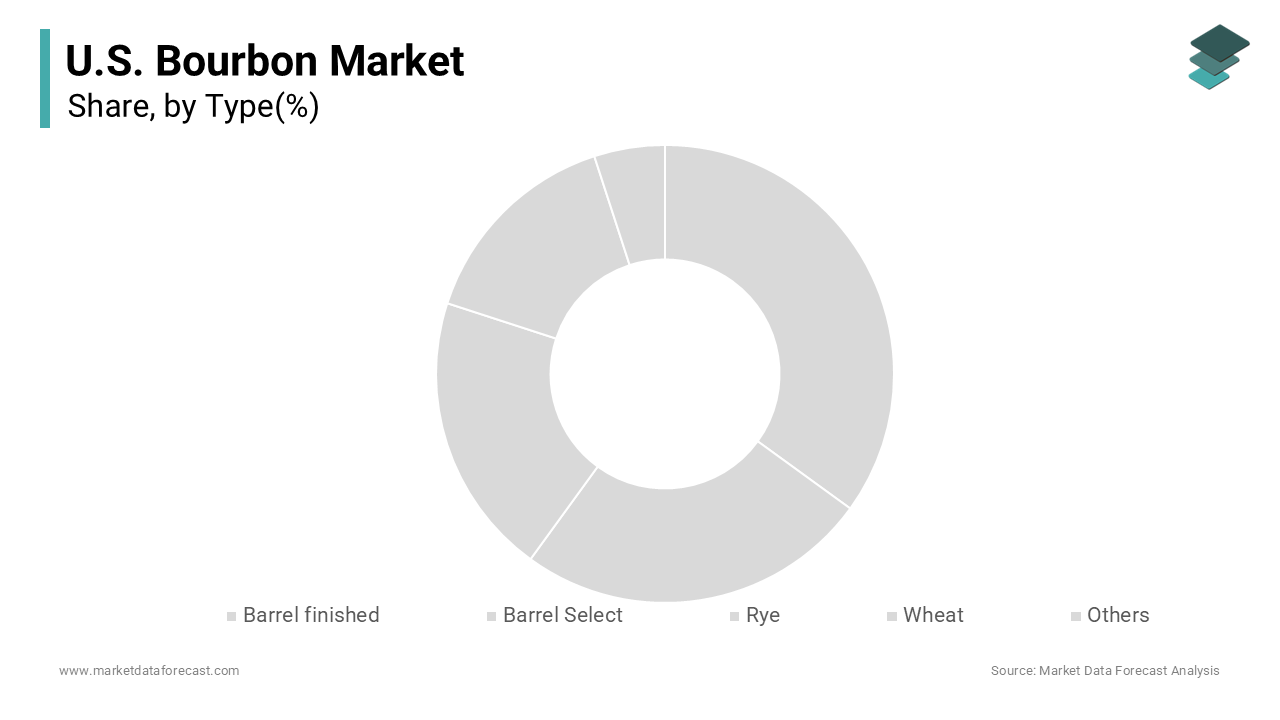
The barrel finished and select segment is predicted to witness the highest CAGR of 9.2% over the forecast period. This rapid expansion is propelled by the demand for limited edition and exclusive products that offer unique finishing touches such as aging in wine sherry or port casks. Consumers are increasingly drawn to these specialized expressions because they provide novel taste experiences that differ from standard bourbon offerings. The scarcity and exclusivity of these releases create a sense of urgency and collectibility among enthusiasts. The craftsmanship involved in selecting specific barrels and monitoring the finishing process adds to the perceived value and prestige of the product. This segment benefits from the storytelling potential of each batch allowing brands to engage consumers with detailed narratives about the production journey. The willingness of consumers to pay a premium for uniqueness and quality ensures that barrel finished and select bourbons remain the fastest growing category in the industry. Furthermore, the rapid growth of the barrel finished and select segment is primarily fueled by the allure of exclusivity and the rising culture of bourbon collectibility. Limited release bottles are often produced in small batches making them highly sought after by enthusiasts who view them as trophies or investment assets. According to the Whisky Auctioneer platform prices for rare and finished bourbons have increased significantly in recent years reflecting the strong secondary market demand. This financial incentive encourages consumers to purchase new releases with the expectation that their value will appreciate over time. The scarcity of these products creates a fear of missing out which drives immediate purchases upon release. Data from Sotheby’s auctions shows that American whiskey lots featuring barrel finished expressions frequently exceed estimates demonstrating the high willingness to pay for exclusivity. Brands leverage this dynamic by releasing numbered bottles and providing certificates of authenticity which enhance the collectible nature of the product. Social media communities dedicated to bourbon hunting and trading further amplify the desire for these rare finds. The emotional satisfaction of owning a unique piece of craftsmanship combined with potential financial gain creates a powerful driver for growth. This culture of collectibility ensures that barrel finished and select bourbons continue to expand at an accelerated pace. The accelerated growth of the barrel finished and select segment is further supported by continuous innovation in cask finishing techniques that introduce diverse and exciting flavor profiles to the market. Distillers are experimenting with various types of wood including former wine sherry port and rum casks to impart distinct characteristics to the bourbon. The resulting flavors range from fruity and nutty to rich and chocolatey appealing to a wide array of taste preferences. Data from the International Spirits Challenge shows that American whiskeys with innovative finishes frequently win awards gaining international recognition and credibility. This acclaim drives consumer curiosity and trial as drinkers seek to experience award winning profiles. The transparency in labeling regarding the type of cask used and the duration of finishing educates consumers and builds trust in the quality of the product. As per the Journal of Agricultural and Food Chemistry scientific studies on the interaction between spirit and wood compounds validate the sensory improvements achieved through finishing. This scientific backing supports marketing claims and enhances the perceived sophistication of the product. By constantly pushing the boundaries of flavor exploration distillers keep the segment fresh and engaging. This commitment to innovation ensures that barrel finished and select bourbons remain at the forefront of consumer interest and market growth.
By Distribution Channel Insights
The off-trade channel segment was the largest by occupying a substantial share of the United States bourbon market in 2025. This prominence of the segment was supported by the convenience of purchasing bottles for home consumption and the ability to buy in bulk at competitive prices. Retailers such as liquor stores supermarkets and specialty shops offer a wide selection of brands and expressions allowing consumers to compare options and make informed decisions. According to the National Alcohol Beverage Control Association off premise sales represent approximately 70 percent of total distilled spirits volume in the United States reflecting the preference for home drinking. The rise of e commerce and delivery services has further strengthened the off-trade channel by providing easy access to products without the need to visit physical stores. The ability to store and enjoy bourbon at leisure appeals to consumers who value relaxation and privacy. In addition, the extensive network of retail outlets ensures that bourbon is accessible to a broad demographic across urban and rural areas. This combination of convenience variety and affordability ensures that the off-trade channel remains the primary source of bourbon sales in the United States. The leadership of the off-trade channel is significantly driven by the convenience it offers and the enduring trend of home consumption among American consumers. The ability to purchase bourbon at any time and store it for later use aligns with busy lifestyles and the desire for flexible drinking occasions. This preference was further reinforced by recent global events that limited social gatherings and increased time spent at home. Data from the Distilled Spirits Council of the United States indicates that off premise sales surged during periods of restricted on premise operations and have remained elevated as habits persisted. The availability of online ordering and curbside pickup options has enhanced the convenience factor allowing consumers to stock up on their favorite brands with minimal effort. As per the Digital Commerce 360 report online alcohol sales have grown steadily providing a seamless shopping experience that complements physical retail. The cost effectiveness of buying bottles for home use compared to paying for individual drinks at bars also appeals to budget conscious consumers. This economic advantage combined with the comfort of home environments sustains the dominance of the off-trade channel. The ability to host private tastings and gatherings at home further drives bulk purchases. These factors collectively ensure that off-trade remains the preferred distribution method for bourbon enthusiasts. The dominance of the off-trade channel is further reinforced by the wide availability of products and the aggressive retail promotions that attract price sensitive consumers. Liquor stores and supermarkets carry an extensive range of bourbon brands from entry level to ultra premium ensuring that there is an option for every budget and preference. According to the Food Marketing Institute alcoholic beverages are key drivers of foot traffic in grocery stores leading to prominent shelf placement and featured displays. Retailers frequently offer discounts bundle deals and loyalty rewards which incentivize purchases and encourage brand switching. The visibility of new and limited edition products in retail environments also stimulates impulse buys and experimentation. As per the Convenience Store News strategic merchandising and eye level placement increase the likelihood of purchase for premium bourbons. The ability of retailers to quickly adapt to trending brands allows them to capitalize on consumer interest and maximize sales. The competitive nature of the off-trade sector drives continuous innovation in marketing and display strategies. This dynamic retail environment ensures that bourbon remains highly visible and accessible to consumers. The combination of variety and value makes the off-trade channel the most effective distribution pathway for reaching the mass market.
The on-trade channel segment is estimated to register the fastest CAGR of 7.5% from 2026 to 2034 due to the reopening of bars restaurants and lounges following pandemic related closures and the renewed desire for social interaction. Consumers are returning to establishments to enjoy expertly crafted cocktails and premium pours in a vibrant atmosphere. The experience economy plays a crucial role as patrons value the ambiance service and expertise provided by professional bartenders. The trend toward premiumization is evident in the on-trade sector where customers are willing to pay more for high quality spirits and unique presentations. As per the United States Bartenders Guild the emphasis on craft and creativity in mixology attracts enthusiasts who seek novel drinking experiences. The introduction of bourbon flights and tasting menus further enhances the educational and sensory aspects of on premise consumption. This focus on experience and quality ensures that the on-trade channel grows rapidly as consumers prioritize social engagement and culinary exploration. The rapid growth of the on-trade channel is primarily fueled by the revival of social dining and nightlife experiences as consumers seek to reconnect with friends and community. After periods of isolation there is a strong pent up demand for shared moments in bars and restaurants where bourbon serves as a social lubricant and conversation starter. The atmosphere of a well curated bar enhances the enjoyment of bourbon making it a preferred choice for celebrations and casual gatherings. Data from the National Institute on Alcohol Abuse and Alcoholism suggests that social contexts significantly influence alcohol consumption patterns with on premise settings encouraging higher engagement. The role of bartenders as hosts and educators adds value to the experience as they guide customers through selections and pairings. As per the Hospitality Net the integration of live music and entertainment in venues further drives foot traffic and dwell time. The emotional connection formed in these social spaces fosters brand loyalty and repeat visits. The desire for authentic human interaction and shared joy sustains the momentum of the on-trade channel. This social imperative ensures that bourbon remains a central element of the nightlife landscape driving consistent growth. The accelerated growth of the on-trade channel is further supported by the rise of premium mixology and expert led tastings that elevate the perception of bourbon. Bars and lounges are investing in skilled bartenders who create innovative cocktails that showcase the complexity of different bourbon expressions. According to the Tales of the Cocktail conference the art of mixology has evolved to include scientific techniques and rare ingredients that appeal to sophisticated palates. These high end offerings justify premium pricing and attract consumers looking for exceptional experiences. Data from the Specialty Food Association shows that experiential dining and drinking concepts are growing in popularity as people seek memorable outings. Tastings and masterclasses hosted by distillers and experts provide educational value that deepens consumer appreciation and knowledge. As per the Whisky Magazine such events often sell out quickly demonstrating the strong interest in learning about bourbon. The exclusivity of these experiences creates a sense of occasion that encourages spending. The collaboration between brands and venues to create signature drinks also drives brand visibility and trial. This focus on craftsmanship and education transforms bourbon consumption from a simple act into a refined activity. The commitment to quality and expertise ensures that the on-trade channel continues to expand as a hub for culinary and cultural engagement.
COUNTRY ANALYSIS
The United States led the North American bourbon market and captured a 88.5% share in 2025. This leading position of the U.S. market was attributed to the legal definition of bourbon which requires it to be made in the United States creating a natural monopoly for domestic producers. The country boasts a rich heritage of whiskey making particularly in Kentucky which is recognized globally as the heart of bourbon country. According to the Kentucky Distillers Association the state is home to over 95 percent of the world's bourbon supply highlighting the concentration of production capabilities. The domestic market benefits from a strong cultural identity associated with bourbon which is viewed as a symbol of American craftsmanship and tradition. The presence of numerous distilleries ranging from large industrial facilities to small craft operations ensures a diverse product landscape that caters to various consumer segments. As per the United States Department of Agriculture the availability of high quality corn and oak supports the raw material needs of the industry. The regulatory framework protects the integrity of the bourbon label ensuring that only compliant products can bear the name. This legal protection combined with cultural pride drives consistent demand. The tourism industry centered around distillery visits further reinforces the market position by educating consumers and fostering brand loyalty. The United States remains the undisputed leader in the bourbon sector due to these structural and cultural advantages. Moreover, the leading position of the United States in the bourbon market is significantly reinforced by its cultural heritage and strict legal protection standards that define the category. Bourbon is legally recognized as a distinctive product of the United States by Congress which prevents foreign competitors from using the term for their spirits. According to the Federal Standards of Identity for Distilled Spirits bourbon must meet specific criteria including being made from a grain mixture that is at least 51 percent corn and aged in new charred oak containers. These regulations ensure quality and authenticity which build consumer trust and brand value. Data from the Alcohol and Tobacco Tax and Trade Bureau shows that compliance with these standards is rigorously enforced maintaining the integrity of the market. The narrative of bourbon as an American icon is deeply embedded in national history and folklore appealing to patriotic sentiments. As per the Library of Congress archival records document the long history of whiskey production in the United States linking it to early agricultural practices. This historical context adds depth to the brand story making it more compelling to consumers. The protection of geographical indications and trade secrets further safeguards the industry from imitation. The cultural celebration of bourbon through festivals museums and trails enhances its visibility and appeal. This combination of legal security and cultural significance ensures that the United States maintains its dominance. The inability of other countries to replicate the legal and cultural status of bourbon secures the market leadership of the United States. Furthermore, the dominance of the United States in the bourbon market is underpinned by its robust domestic production infrastructure and the thriving tourism industry associated with distilleries. The country has invested heavily in modernizing distillation facilities while preserving traditional methods ensuring efficient and high quality output. According to the Kentucky Tourism Cabinet the bourbon trail attracts millions of visitors annually generating significant economic impact and brand exposure. These tours provide immersive experiences that educate consumers about the production process and foster emotional connections with brands. Data from the Distilled Spirits Council of the United States indicates that distillery tourism has become a major driver of direct to consumer sales and brand loyalty. The clustering of distilleries in regions like Kentucky and Tennessee creates economies of scale and shared resources such as cooperages and logistics networks. As per the Bureau of Economic Analysis the spirits manufacturing sector contributes billions to the national GDP supporting jobs and local communities. The infrastructure supports both large scale production for mass markets and small batch operations for niche segments. The availability of skilled labor and technical expertise further enhances operational efficiency. The synergy between production and tourism creates a virtuous cycle where visitors become advocates and repeat customers. This integrated approach ensures that the United States remains the central hub for bourbon innovation and consumption. The strength of this ecosystem sustains the market leadership and drives continuous growth.
COMPETITIVE LANDSCAPE
The competition in the United States bourbon market is intense and characterized by a mix of established legacy brands and emerging craft distilleries vying for consumer attention. Major corporations leverage their scale and distribution power to dominate shelf space while smaller producers differentiate through unique flavors and local appeal. The market sees frequent product launches as companies strive to meet the growing demand for premium and limited edition expressions. Price competition is moderate with many brands opting for premium positioning based on age statement and rarity. Innovation in packaging and storytelling serves as a key differentiator in this crowded landscape. Consumer loyalty is increasingly driven by brand heritage and perceived authenticity rather than just price. Retailers play a crucial role by deciding allocation of scarce resources which influences brand visibility and sales. The rise of direct to consumer sales channels adds pressure on traditional distribution models. Companies must continuously adapt to regulatory changes and shifting consumer trends to remain relevant. This dynamic environment requires constant innovation and strategic agility to sustain growth and profitability in the face of rigorous competition and evolving tastes.
KEY MARKET PLAYERS
A few of the major companies in the U.S. Bourbon Market include
- Brown-Forman Corporation
- Beam Suntory
- Sazerac Company
- Diageo plc
- Heaven Hill Distilleries
- Wild Turkey Distilling Company
- Buffalo Trace Distillery
- Michter's Distillery
- Woodford Reserve
- Four Roses Distillery
Top Players in the US Bourbon Market
Brown Forman Corporation
Brown Forman Corporation stands as a pivotal entity in the United States bourbon landscape primarily through its ownership of the iconic Jack Daniels brand. The company leverages extensive global distribution networks to ensure widespread availability and brand recognition across diverse retail channels. Recent strategic initiatives focus on premiumization with the expansion of single barrel and small batch offerings that cater to discerning consumers seeking quality and exclusivity. Brown Forman invests heavily in sustainability efforts including water conservation and renewable energy usage at its distilleries to align with modern environmental values. The corporation also enhances visitor experiences at its distillery tours to foster brand loyalty and educate consumers about heritage craftsmanship. By maintaining strict quality control and innovating packaging designs Brown Forman reinforces its market leadership. Its ability to adapt to changing consumer preferences while preserving traditional production methods ensures sustained relevance. These efforts collectively strengthen its position as a dominant force in the competitive American whiskey sector without relying solely on volume sales.
Beam Suntory Inc
Beam Suntory Inc plays a crucial role in the United States bourbon market through its portfolio of renowned brands such as Jim Beam Knob Creek and Booker s. The company focuses on diversifying its product range to include high proof and limited edition releases that appeal to enthusiast communities. Recent actions involve significant investments in distillery expansions and visitor centers to boost tourism and direct to consumer sales. Beam Suntory emphasizes digital marketing campaigns that highlight the craftsmanship and history behind each label fostering deeper emotional connections with buyers. The company actively participates in industry events and collaborations with mixologists to promote bourbon based cocktails in on trade establishments. By prioritizing innovation in flavor profiles and aging techniques Beam Suntory captures the interest of both novice and experienced drinkers. Its commitment to community engagement and responsible drinking initiatives enhances brand reputation. These strategic moves solidify its standing as a key influencer in shaping trends and driving growth within the dynamic bourbon industry.
Sazerac Company
Sazerac Company maintains a strong presence in the United States bourbon market with a diverse array of labels including Buffalo Trace Eagle Rare and Weller. The company is renowned for its dedication to traditional production methods and long aging processes which result in highly sought after products. Recent strategies include increasing production capacity at existing facilities to meet rising demand for allocated bottles and special releases. Sazerac focuses on building hype through limited availability and exclusive allocations which drives collector interest and secondary market value. The company also invests in educational programs and brand ambassadors who engage directly with retailers and consumers to share knowledge about bourbon nuances. By maintaining consistent quality and honoring historical recipes Sazerac builds trust and loyalty among aficionados. Its approach to balancing scarcity with accessibility ensures sustained demand. These efforts reinforce its reputation as a guardian of bourbon heritage while adapting to modern market dynamics and consumer expectations for authenticity and excellence.
Top Strategies Used by Key Market Participants
Key players in the United States bourbon market employ diverse strategies to maintain competitiveness and drive growth. Product premiumization remains central with companies launching high end small batch and single barrel expressions to capture higher margins. Brands focus on storytelling and heritage marketing to connect emotionally with consumers who value authenticity and tradition. Strategic investments in distillery tourism enhance brand loyalty by offering immersive educational experiences. Digital engagement through social media and e commerce platforms expands reach and facilitates direct to consumer sales. Partnerships with bars and restaurants promote bourbon in cocktails increasing visibility in the on trade sector. Sustainability initiatives such as eco friendly packaging and water conservation address environmental concerns and appeal to conscious buyers. Limited edition releases create scarcity and urgency driving collector interest and secondary market activity. Continuous innovation in flavor profiles and finishing techniques keeps product lines fresh and exciting. These combined approaches enable companies to differentiate their offerings and sustain long term success.
MARKET SEGMENTATION
This research report on the U.S. Bourbon Market has been segmented based on the following categories.
By Type
- Barrel finished
- Barrel Select
- Rye
- Wheat
- Others
By Distribution Channel
- On-Trade
- Off-Trade
By Country
- California
- Washington
- Oregon
- New York
- Rest of the United States