U.S. Breakfast Foods Market Size, Share, Trends & Growth Forecast Report Segmented By Product Type (Breakfast Cereal, Bakery Products, Breakfast Biscuits, Meal Replacement Bar, Dairy and Dairy Alternatives, Food Spreads and Sauces), Category, Distribution Channels and Country – Industry Analysis From 2026 to 2034
U.S. Breakfast Foods Market Report Summary
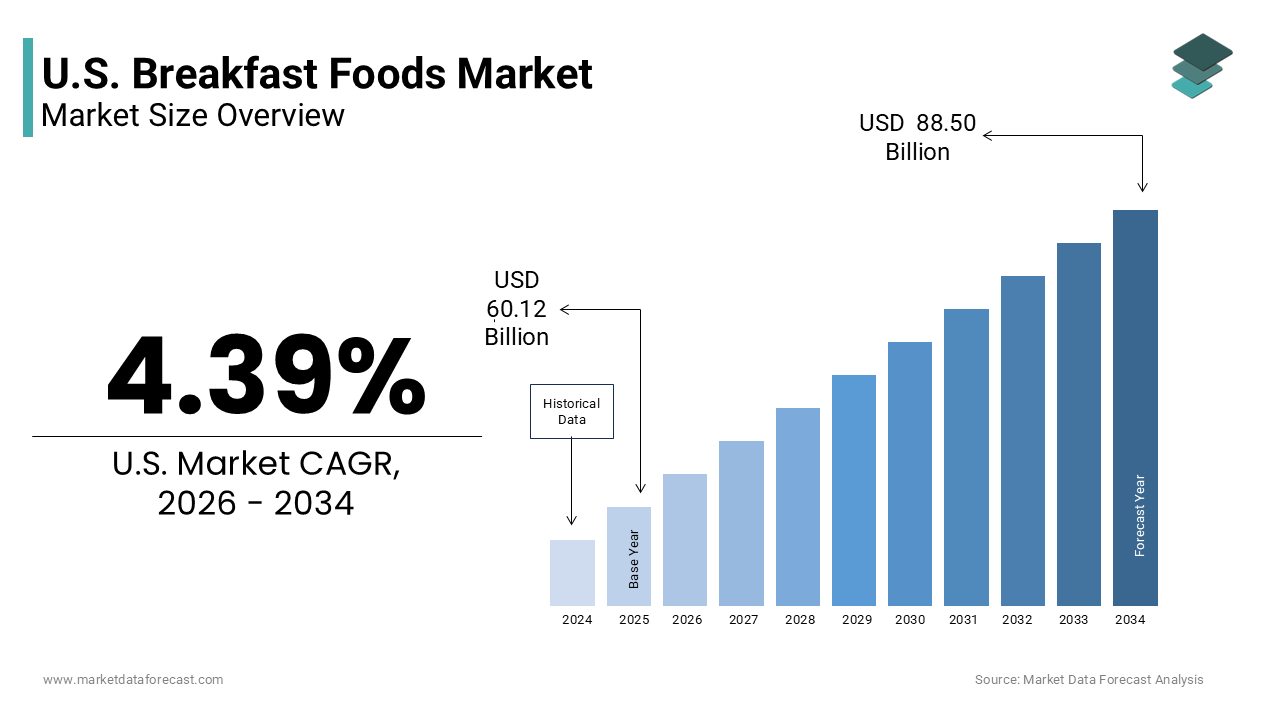
The U.S. breakfast foods market was valued at USD 60.12 billion in 2025 and is anticipated to reach USD 62.76 billion in 2026 from USD 88.50 billion by 2034, growing at a CAGR of 4.39% during the forecast period from 2026 to 2034. The growth of the U.S. breakfast foods market is driven by rising health consciousness among consumers, increasing demand for convenient on-the-go meal solutions, and expanding preference for nutrient-dense breakfast products. Growing adoption of plant-based and high-protein breakfast options, increasing innovation in organic and clean-label food products, and rising influence of wellness-focused lifestyles are further accelerating market growth. Moreover, advancements in personalized nutrition platforms, expansion of e-commerce and direct-to-consumer breakfast subscriptions, and increasing demand for functional ingredients are supporting the expansion of the U.S. breakfast foods market.
Key Market Trends
- Rising demand for high-protein, low-sugar, and fiber-rich breakfast products aligned with wellness-focused lifestyles.
- Increasing adoption of plant-based breakfast foods including dairy alternatives, vegan protein bars, and grain-free cereals.
- Growing popularity of convenient ready-to-eat and portable breakfast solutions for busy consumers.
- Strong focus on clean-label, organic, and non-genetically modified breakfast products among health-conscious households.
- Expansion of digital subscription-based breakfast delivery models and direct-to-consumer personalized nutrition services.
Segmental Insights
- Based on product type, the breakfast cereal segment dominated the U.S. breakfast foods market and held the largest share in 2025. The segment’s dominance is attributed to its strong household penetration, convenience, long shelf life, extensive flavor variety, and continued consumer preference for quick morning meal solutions.
- The dairy and dairy alternatives segment is projected to witness the fastest CAGR during the forecast period owing to increasing demand for plant-based milk products, rising lactose intolerance awareness, and growing consumer preference for sustainable and functional nutritional products.
- Based on category, the conventional products segment accounted for the leading share of the U.S. breakfast foods market in 2025. The dominance of this segment is driven by affordability, strong brand familiarity, widespread retail availability, and consistent consumer demand for staple breakfast products across households.
- The organic and free-from segment is anticipated to register notable growth during the forecast period due to increasing health awareness, growing demand for clean-label foods, rising gluten-free and allergen-free product adoption, and expanding availability of certified organic breakfast products.
- Based on distribution channel, the supermarkets and hypermarkets segment held the major share of the U.S. breakfast foods market in 2025 owing to extensive product assortments, convenient one-stop shopping experiences, strong promotional activities, and broad accessibility across urban and suburban areas.
- The online retail and direct-to-consumer segment is expected to witness rapid growth during the forecast period because of increasing e-commerce adoption, expansion of subscription-based breakfast delivery services, rising consumer preference for home delivery convenience, and growing digital engagement among younger demographics.
Regional Insights
The United States maintained a strong position in the global breakfast foods market in 2025, supported by evolving dietary habits, high packaged food consumption, and strong retail distribution infrastructure. California remains a major contributor to the U.S. breakfast foods market due to its large health-conscious population, strong demand for organic and plant-based foods, and expanding wellness-focused food innovation ecosystem. New York, Washington, and Oregon are also witnessing notable growth driven by increasing adoption of functional foods, rising demand for sustainable breakfast products, and expanding e-commerce grocery penetration.
Competitive Landscape
The U.S. breakfast foods market is highly competitive and characterized by the presence of multinational packaged food companies, health-focused niche brands, and private-label manufacturers competing through innovation, nutritional differentiation, and convenience-oriented product development. Leading companies are focusing on expanding high-protein and plant-based product portfolios, strengthening digital commerce capabilities, investing in sustainable packaging solutions, and enhancing personalized nutrition offerings. Strategic acquisitions of emerging health-food brands, partnerships with online retail platforms, and expansion into organic and functional food categories are further strengthening market positioning across the breakfast foods industry. Prominent players in the U.S. breakfast foods market include Kellanova, General Mills, Post Holdings, PepsiCo, The Kraft Heinz Company, Conagra Brands, Campbell Soup Company, Danone, Bob's Red Mill, Chobani, TreeHouse Foods, Nature's Path Foods, Hormel Foods, B&G Foods, and The Hain Celestial Group.
U.S. Breakfast Foods Market Size
The U.S. breakfast foods market size was valued at USD 60.12 billion in 2025 and is anticipated to reach USD 62.76 billion in 2026 from USD 88.50 billion by 2034, growing at a CAGR of 4.39% during the forecast period from 2026 to 2034.
The breakfast foods are products consumed during the morning meal, ranging from traditional ready to eat cereals and hot oatmeal to baked goods, dairy items, and savory alternatives. The definition of breakfast has expanded beyond a specific time frame to include on the go snacks and functional beverages that provide sustained energy throughout the morning. As per the United States Department of Agriculture, approximately 90% of American households purchase cereal or grain based breakfast products annually by indicating the entrenched nature of these staples in domestic diets. However, the composition of these purchases is changing, with a marked increase in demand for whole grains and plant based ingredients. The Centers for Disease Control and Prevention states that 42.4% of US adults are obese, driving a heightened awareness of dietary choices and their impact on long term health. This health consciousness influences product formulation, prompting manufacturers to reduce added sugars and enhance protein content. This evolution reflects a broader cultural shift where breakfast is viewed not just as a meal but as a foundational component of daily wellness and productivity by shaping the strategic direction of food producers and retailers alike.
MARKET DRIVERS
Rising Health Consciousness and Demand for Nutrient Dense Options
The increasing focus on personal health and wellness by compelling consumers to seek products that offer substantial nutritional benefits is fuelling the growth of the United States breakfast foods market. Modern shoppers are meticulously examining ingredient labels, prioritizing items high in fiber, protein, and essential vitamins, while avoiding artificial additives and excessive sugars. As per the International Food Information Council, 73% of Americans reported in 2024 that they are trying to limit or avoid sugars in their diet, a trend that directly impacts breakfast choices such as cereals and pastries. This shift has spurred innovation in product development, with manufacturers introducing fortified oats, protein enriched pancakes, and grain free granolas. The demand for functional ingredients such as probiotics, adaptogens, and omega 3 fatty acids is also rising, as consumers view breakfast as an opportunity to support immune health and mental clarity. Retailers are responding by expanding their offerings of organic and non-genetically modified organism certified products, which are perceived as healthier and safer. The influence of social media and health influencers further amplifies this trend, educating consumers about the benefits of whole foods and balanced morning meals. Consequently, brands that transparently communicate their nutritional value and sourcing practices gain a competitive advantage.
Convenience and On the Go Consumption Patterns
The fast-paced nature of modern life has elevated convenience by leading to a surge in demand for portable and easy to prepare options, which is another factor escalating the growth of the United States breakfast foods market. Many Americans face time constraints in the morning due to longer commutes and demanding work schedules by reducing the likelihood of sitting down for a traditional cooked meal. This reality has fueled the popularity of ready to eat bars, single serve yogurt cups, pre-packaged smoothies, and instant oatmeal packets. Manufacturers are innovating packaging solutions that ensure freshness and ease of consumption, such as resealable pouches and spill proof containers. The integration of breakfast items into vending machines and convenience stores further enhances accessibility for consumers on the move. Additionally, the rise of delivery apps allows individuals to order breakfast from restaurants and have it delivered to their workplaces or homes, blending convenience with variety. Companies that successfully balance nutritional quality with convenience are well positioned to capture this growing segment.
MARKET RESTRAINTS
Price Sensitivity and Inflationary Pressures on Ingredients
The economic volatility and rising inflation by influencing both consumer purchasing power and manufacturer cost structures is inhibiting the growth of the United states breakfast food market. The cost of key raw materials, such as wheat, dairy, eggs, and sugar has fluctuated considerably by forcing producers to either absorb these costs or pass them on to consumers through higher retail prices. This price sensitivity leads some consumers to trade down from premium brands to private label alternatives or reduce their overall spending on branded breakfast items. High inflation also impacts discretionary income by limiting the ability of families to experiment with new or specialized products, such as gluten free or organic options. For manufacturers, maintaining profit margins while keeping prices competitive is a challenging balancing act that may result in reduced investment in innovation or marketing. Smaller companies with less economies of scale are particularly vulnerable to these pressures, potentially leading to market consolidation. Consumers may also skip breakfast more frequently to save money, which is negatively impacting overall volume sales. The uncertainty surrounding future economic conditions makes long term planning difficult for industry participants.
Regulatory Scrutiny on Labeling and Health Claims
The stringent regulatory oversight regarding food labeling and health claims by requiring companies to navigate complex compliance is also limiting the growth of the United States breakfast food market. The Food and Drug Administration has implemented stricter guidelines on what constitutes terms such as natural, healthy, and whole grain by limiting the marketing flexibility of manufacturers. This scrutiny forces companies to invest heavily in legal review and reformulation to ensure their products meet all regulatory standards. Any misstep can result in costly lawsuits, recalls, and damage to brand reputation. The requirement for clear and accurate nutrition facts panels also means that products high in sugar or sodium are increasingly scrutinized by health advocates and regulators alike. Some municipalities have introduced taxes on sugary beverages and foods, which can extend to certain breakfast items, such as sweetened cereals and pastries. These regulatory hurdles increase operational costs and slow down the speed to market for new products. Companies must be vigilant in monitoring changing regulations at both federal and state levels, which can vary significantly. The fear of non-compliance may discourage innovation in certain areas, as firms opt for safer, established formulations rather than risking novel claims.
MARKET OPPORTUNITIES
Expansion of Plant Based and Alternative Protein Breakfasts
The growing interest in plant-based diets, as consumers increasingly seek alternatives to traditional animal derived products is certainly a major factor to create new opportunities for the expansion of the United States breakfast food market. This shift is driven by concerns over environmental sustainability, animal welfare, and personal health, leading to a surge in demand for plant-based milks, yogurts, and protein sources. Manufacturers have the opportunity to innovate with ingredients such as almond, oat, soy, and pea protein to create nutritious and tasty breakfast options. Products such as vegan egg scrambles, dairy free yogurts with live cultures, and plant-based breakfast sausages are gaining traction among flexitarians and vegans alike. The versatility of plant-based ingredients allows for creative formulations that mimic the texture and flavor of conventional products, while offering lower saturated fat content. Retailers are expanding their shelf space for these items, recognizing their appeal to a broad demographic beyond strict vegetarians. Collaborations between food tech startups and established brands can accelerate product development and market penetration. Additionally, the alignment of plant-based breakfasts with sustainability goals resonates with environmentally conscious consumers, enhancing brand loyalty. By investing in research and development to improve taste and texture, companies can capture a significant share of this expanding segment.
Personalization Through Digital Platforms and Direct to Consumer Models
The advent of digital technology and direct to consumer channels for personalized models is to impact positively on the growth of the United States breakfast foods market. Consumers are increasingly seeking products tailored to their specific dietary needs, preferences, and health goals, such as keto, paleo, or low glycemic index diets. Brands can leverage data analytics to offer subscription services that deliver customized breakfast boxes or meal kits directly to customers doors. These services can adjust contents based on user feedback, seasonal availability, and nutritional targets. Digital platforms also enable interactive engagement, where consumers can track their intake and receive recommendations for complementary products. The direct to consumer model bypasses traditional retail intermediaries, allowing for higher margins and deeper customer relationships. Companies can use this channel to test new products rapidly and gather real time insights into consumer behavior. Partnerships with fitness apps and health trackers can further enhance personalization by integrating dietary advice with activity data. This approach not only increases customer retention but also builds a community around the brand.
MARKET CHALLENGES
Supply Chain Disruptions and Ingredient Sourcing Volatility
The supply chain instability by affecting the consistent availability and cost of key ingredients is a key challenge for the growth of the United States breakfast foods market. Climate change, geopolitical tensions, and labor shortages have disrupted the production and transportation of commodities such as coffee, cocoa, wheat, and dairy. These disruptions force manufacturers to seek alternative suppliers, which may vary in quality and reliability. The complexity of global supply chains means that a disruption in one region can have cascading effects on production schedules and inventory levels. Companies face difficulties in maintaining consistent product quality when switching sources, potentially alienating loyal customers. The need for buffer stocks increases warehousing costs and ties up capital, straining financial resources. Additionally, the push for sustainable sourcing adds another layer of complexity, as companies must verify the ethical and environmental standards of their suppliers. Failure to secure reliable supplies can lead to stockouts, lost sales, and damaged brand reputation. The unpredictability of the supply chain requires robust risk management strategies and flexible procurement processes. However, these measures often come with higher operational costs.
Changing Consumer Preferences and Decline of Traditional Cereals
The shifting consumer preferences to traditional foods is additionally to impede the growth of the United States breakfast foods market. Younger generations are moving away from sugary, processed cereals in favor of higher protein, lower carbohydrate, and whole food options. This shift challenges established brands that have relied on cereal sales for decades, forcing them to reinvent their product portfolios. The perception of cereal as a children’s food or a less healthy option limits its appeal to health conscious adults. Manufacturers must invest in reformulating existing products to reduce sugar and increase fiber, which can alter taste profiles and risk losing existing customers. traditional categories. Capturing the attention of discerning consumers requires continuous innovation and effective marketing, which can be resource intensive. The challenge is compounded by the sheer volume of new entrants and niche brands that cater to specific dietary trends, increasing competition for shelf space and consumer mindshare. Established players must balance the need to modernize with the preservation of brand heritage, a delicate act that requires strategic foresight.
REPORT COVERAGE
| REPORT METRIC | DETAILS |
| Market Size Available | 2025 to 2034 |
| Base Year | 2025 |
| Forecast Period | 2026 to 2034 |
| CAGR | 4.39% |
| Segments Covered | By Product Type, Category, Distribution Channels and Region. |
| Various Analyses Covered | Global, Regional and Country-Level Analysis, Segment-Level Analysis, Drivers, Restraints, Opportunities, Challenges; PESTLE Analysis; Porter’s Five Forces Analysis, Competitive Landscape, Analyst Overview of Investment Opportunities |
| Countries Covered | California, Washington, Oregon, New York, United States |
| Market Leaders Profiled | Kellanova, General Mills, Post Holdings, PepsiCo, The Kraft Heinz Company, Conagra Brands, Campbell Soup Company, Danone, Bob's Red Mill, Chobani, TreeHouse Foods, Nature's Path Foods, Hormel Foods, B&G Foods, and The Hain Celestial Group. |
SEGMENTAL ANALYSIS
By Product Type Insights
The breakfast segment was the largest by holding 46.5% of the United States breakfast foods market share in 2025 due to its deep integration into American household routines and high consumer penetration rates. As per the United States Department of Agriculture Economic Research Service, approximately 90% of US households purchase ready to eat cereal at least once a year, demonstrating its ubiquitous presence in pantries nationwide. The convenience of cold cereal requires minimal preparation time by appealing to busy parents and children who need quick meal solutions before school or work. Major manufacturers have established extensive distribution networks that ensure wide availability in every retail channel, from large supermarkets to small convenience stores. The variety of flavors and formats, including flakes, loops, and clusters, caters to diverse taste preferences, ensuring broad appeal. Additionally, the long shelf life of dry cereal reduces food waste concerns for consumers, adding to its practicality. The segment is further supported by strong brand recognition among legacy players who continue to invest in advertising to maintain visibility. The ability to pair cereal with milk or yogurt also allows for nutritional customization, enhancing its perceived value.
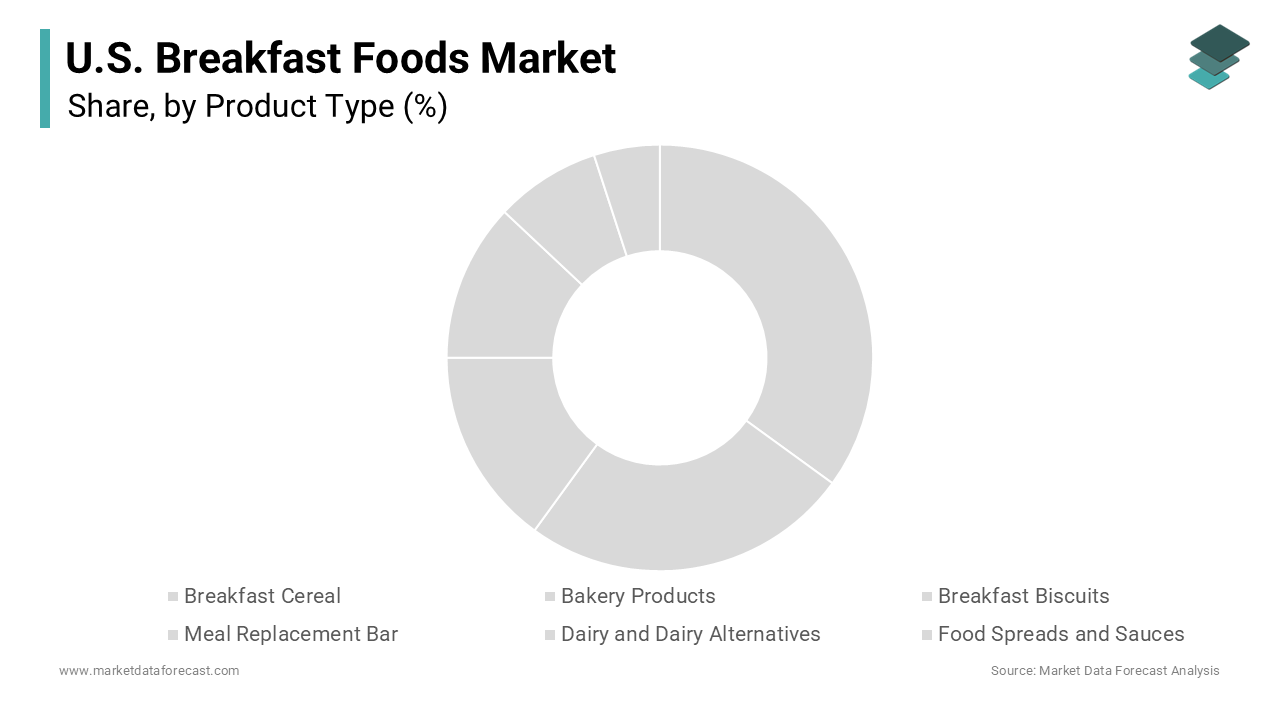
The dairy and dairy alternatives segment is expected to witness a fastest CAGR of 8.5% during the forecast period owing to the rapid adoption of plant-based milk options. Consumers are increasingly shifting away from cow’s milk due to lactose intolerance, ethical concerns, and environmental considerations. Oat milk has emerged as a particular favorite due to its creamy texture and neutral flavor, making it an ideal companion for cereal and coffee. Almond and soy milks also maintain strong followings, offering varied nutritional profiles to suit different dietary needs. This shift is not limited to vegans but includes flexitarians, who are reducing animal product consumption for health reasons. Manufacturers are innovating with new bases, such as pea, cashew, and macadamia nut to diversify offerings and attract niche audiences. The improvement in taste and mouthfeel of plant based alternatives has removed previous barriers to adoption, making them viable substitutes for traditional dairy. Retailers are expanding shelf space for these products, reflecting their growing importance in the breakfast aisle. The versatility of these alternatives allows them to be used in cooking and baking as well, increasing their utility beyond just pouring over cereal.
By Category Insights
The conventional products segment held a prominent share of the United States breakfast foods market in 2025 due to their affordability and widespread accessibility, which appeal to the broadest spectrum of consumers. These items are typically priced lower than organic or specialty alternatives, making them the preferred choice for budget conscious households and large families. The average expenditure on food at home for US consumers remains sensitive to price fluctuations, with conventional brands offering consistent value without premium markups. Major retailers prioritize conventional products because they drive high volume sales and occupy prime shelf space in supermarkets. The established supply chains for conventional ingredients such as wheat, corn, and dairy ensure stable production costs and reliable availability. This efficiency allows manufacturers to keep prices competitive even during periods of economic uncertainty. Conventional breakfast foods are also heavily advertised, maintaining strong brand recognition and customer loyalty among generations of consumers. The familiarity of these products reduces the perceived risk of trial, encouraging repeat purchases. While health trends are influencing the market, the majority of consumers still prioritize cost and convenience over specialized dietary attributes. The extensive distribution network for conventional items ensures they are available in virtually every grocery store, convenience store, and club warehouse.
The organic and free from segment is lucratively to register a fastest CAGR of 9.2% from 2026 to 2034 with the intensifying health consciousness and demand for clean label products. Consumers are increasingly avoiding artificial preservatives, colors, and flavors, seeking transparency in ingredient sourcing. As per the Organic Trade Association, sales of organic food products in the United States grew by 6.5% in 2024, with breakfast items representing a significant portion of this growth. Parents are particularly motivated to choose organic options for their children to minimize exposure to pesticides and synthetic additives. The free from segment, which includes gluten free, non-genetically modified organism, and allergen free products that addresses specific dietary needs and sensitivities that are becoming more widely diagnosed. Retailers are responding by expanding their organic sections and offering private label organic lines that provide affordable entry points for shoppers. The perception that organic foods are more nutritious and environmentally friendly further fuels this trend. Certification labels, such as USDA Organic serve as trusted signals of quality, simplifying the decision making process for busy shoppers. Social media and health influencers play a crucial role in educating consumers about the benefits of clean eating, driving demand for transparent and wholesome breakfast options.
By Distribution Channel Insights
The supermarkets and hypermarkets segment was accounted in holding 55.2% of the United States breakfast foods market share in 2025 due to the convenience of one stop shopping and the extensive variety of products offered. Consumers prefer these large format stores because they can purchase breakfast items alongside other weekly groceries, saving time and effort. As per the Food Marketing Institute, approximately 85% of US households shop at supermarkets at least once a week, making them the primary touchpoint for food purchases. These retailers dedicate significant shelf space to breakfast categories, offering a wide range of brands, flavors, and price points to cater to diverse preferences. The ability to compare products side by side allows shoppers to make informed decisions based on price, nutrition, and ingredients. Supermarkets also frequently offer promotions, discounts, and loyalty rewards that incentivize bulk purchases of breakfast staples such as cereal and milk. The presence of in store bakeries and deli counters adds fresh breakfast options to the mix, enhancing the overall appeal. The organized layout of these stores facilitates efficient navigation, enabling quick retrieval of routine items. For families, the capacity to buy in larger quantities reduces the frequency of shopping trips, aligning with busy lifestyles.
The online retail and direct to consumer channels segment is esteemed to witness a fastest CAGR of 11.5% from 2026 to 2034 with the expansion of e commerce infrastructure and the popularity of subscription models. The convenience of home delivery appeals to busy consumers, who wish to avoid physical store visits. Subscription services allow customers to automate the replenishment of staple breakfast items such as coffee, granola, and oatmeal by ensuring they never run out. This model provides predictability for both consumers and manufacturers by enhancing supply chain efficiency. The ability to read reviews and compare products online empowers consumers to make informed choices. Major retailers have invested heavily in last mile delivery capabilities, reducing shipping times and costs. The integration of voice activated ordering through smart home devices further simplifies the purchasing process.
COMPETITIVE LANDSCAPE
The competition in the United States breakfast foods market is intense and characterized by a mix of legacy giants and agile niche brands vying for consumer attention. Established companies leverage strong brand recognition and extensive distribution networks to maintain dominance while newer entrants disrupt the market with innovative and health focused offerings. Price competition remains significant particularly in the conventional segment where private label products offer cost effective alternatives. However, differentiation through nutritional benefits convenience and sustainability drives premiumization and brand loyalty. Manufacturers continuously invest in research and development to create products that meet emerging dietary trends such as keto vegan and gluten free diets. Marketing strategies focus on digital engagement and personalized experiences to connect with younger demographics. The rise of e-commerce has lowered barriers to entry allowing small brands to reach national audiences without traditional retail presence.
KEY MARKET PLAYERS
Some of the promising companies that are playing a dominating role in the U.S. Breakfast Foods Market include
- Kellanova
- General Mills
- Post Holdings
- PepsiCo
- The Kraft Heinz Company
- Conagra Brands
- Campbell Soup Company
- Danone
- Bob's Red Mill
- Chobani
- TreeHouse Foods
- Nature's Path Foods
- Hormel Foods
- B&G Foods
- The Hain Celestial Group
Top Players in the US Breakfast Foods Market
General Mills Inc
General Mills Inc maintains a robust presence in the United States breakfast foods market through its diverse portfolio of iconic cereal and grain based brands. The company focuses on innovation in nutrition and sustainability to meet evolving consumer demands. Recent actions include the expansion of its organic offerings and the reformulation of popular cereals to reduce sugar content while maintaining taste. General Mills has invested heavily in digital marketing campaigns to engage younger demographics and promote convenient breakfast solutions. The company also emphasizes sustainable sourcing practices for key ingredients such as oats and wheat.
Kellogg Company
Kellogg Company plays a pivotal role in the United States breakfast foods market with its extensive range of ready to eat cereals and snack bars. The company is dedicated to enhancing nutritional profiles and expanding plant based options to cater to health conscious consumers. Recent initiatives involve the launch of high protein cereals and the acquisition of niche brands specializing in natural and organic products. Kellogg has also strengthened its e commerce capabilities to improve direct to consumer engagement and delivery efficiency. The company actively promotes sustainability through responsible packaging and ingredient sourcing.
Post Holdings Inc
Post Holdings Inc contributes significantly to the United States breakfast foods market through its well known cereal brands and private label manufacturing capabilities. The company prioritizes product quality and affordability to appeal to a broad consumer base. Recent efforts include the introduction of gluten free and non genetically modified organism certified cereals to address specific dietary needs. Post Holdings has also expanded its production capacity to ensure consistent supply and meet rising demand. The company engages in strategic partnerships with retailers to enhance shelf visibility and promotional effectiveness.
Top Strategies Used by Key Market Participants
Key players in the United States breakfast foods market primarily employ product innovation and health focused reformulation to maintain competitive advantage. Companies frequently reduce sugar and sodium levels while increasing fiber and protein content to align with nutritional guidelines. This strategy appeals to health conscious consumers seeking functional benefits. Expansion into plant based and organic segments is another prevalent approach as firms capitalize on growing demand for sustainable and clean label products. Strategic acquisitions of niche brands allow established companies to diversify their portfolios and access new customer bases quickly. Digital transformation and e commerce enhancement are critical as manufacturers invest in online platforms and direct to consumer channels to improve accessibility and engagement. Personalized marketing and data analytics help tailor promotions to specific demographic groups increasing conversion rates. Sustainability initiatives such as eco friendly packaging and responsible sourcing further differentiate brands and build consumer trust.
MARKET SEGMENTATION
This research report on the U.S. Breakfast Foods Market has been segmented based on the following categories.
By Product Type
- Breakfast Cereal
- Ready-to-Eat Cereals
- Hot Cereals
- Bakery Products
- Bread and Toast
- Pastries, Cakes, Muffins
- Croissant
- Others
- Breakfast Biscuits
- Breakfast Bars and Granola
- Cereal Bar/Granola Bar
- Protein Bar
- Waffle/Pancake
- Meal Replacement Bar
- Dairy and Dairy Alternatives
- Food Spreads and Sauces
By Category
- Conventional
- Organic/Free-From
By Distribution Channels
- Supermarkets/Hypermarket
- Convenience Stores
- Online Retail Stores
- Other Distribution Channels
By Country
- California
- Washington
- Oregon
- New York
- Rest of the United States
Frequently Asked Questions
What is the current size of the U.S. Breakfast Foods Market?
The U.S. Breakfast Foods Market is experiencing steady growth, driven by increasing demand for convenient, nutritious, and ready to eat breakfast products.
What factors are driving the growth of the U.S. Breakfast Foods Market?
Key growth drivers include busy lifestyles, rising health awareness, growing demand for on the go meals, and innovations in breakfast food products.
Which product segments are included in the U.S. Breakfast Foods Market?
The market includes breakfast cereals, bakery products, breakfast biscuits, meal replacement bars, dairy and dairy alternatives, and food spreads and sauces.
Who are the major players in the U.S. Breakfast Foods Market?
Major market participants include Kellogg Company, General Mills, The J.M. Smucker Company, Post Holdings, and PepsiCo.
Which distribution channels are important in the U.S. Breakfast Foods Market?
Supermarkets, hypermarkets, convenience stores, specialty stores, and online retail channels are the primary distribution channels for breakfast foods in the United States.
What trends are shaping the U.S. Breakfast Foods Market?
Growing demand for high protein products, plant based alternatives, clean label ingredients, and functional breakfast foods are key trends influencing the market.
Which consumer group is driving demand in the market?
Working professionals, health conscious consumers, millennials, and families seeking convenient breakfast solutions are major demand contributors.
What challenges does the U.S. Breakfast Foods Market face?
Challenges include fluctuating raw material prices, changing consumer preferences, and increasing competition from alternative meal options.
How is e commerce impacting the U.S. Breakfast Foods Market?
E commerce platforms are expanding product accessibility, enabling direct to consumer sales, and supporting market growth through wider product availability.
What is the future outlook for the U.S. Breakfast Foods Market?
The market is expected to continue growing due to product innovation, premium offerings, healthier formulations, and increasing consumer preference for convenient breakfast solutions.
Access the study in MULTIPLE FORMATS
Purchase options starting from
$ 1200
Didn’t find what you’re looking for?
TALK TO OUR ANALYST TEAM
Need something within your budget?
NO WORRIES! WE GOT YOU COVERED!
Call us on: +1 888 702 9696 (U.S Toll Free)
Write to us: sales@marketdataforecast.com