- Product Description Description
- Table of Contents TOC
- List of Table & Figure LOT
- Get Free Sample PDF Sample PDF
Market Size, 2025
$523.07 BnMarket Estimate, 2026
$560.52 BnMarket Forecast, 2034
$974.66 BnCAGR, 2026–2034
7.16%U.S. Bubble Tea Market Report Summary
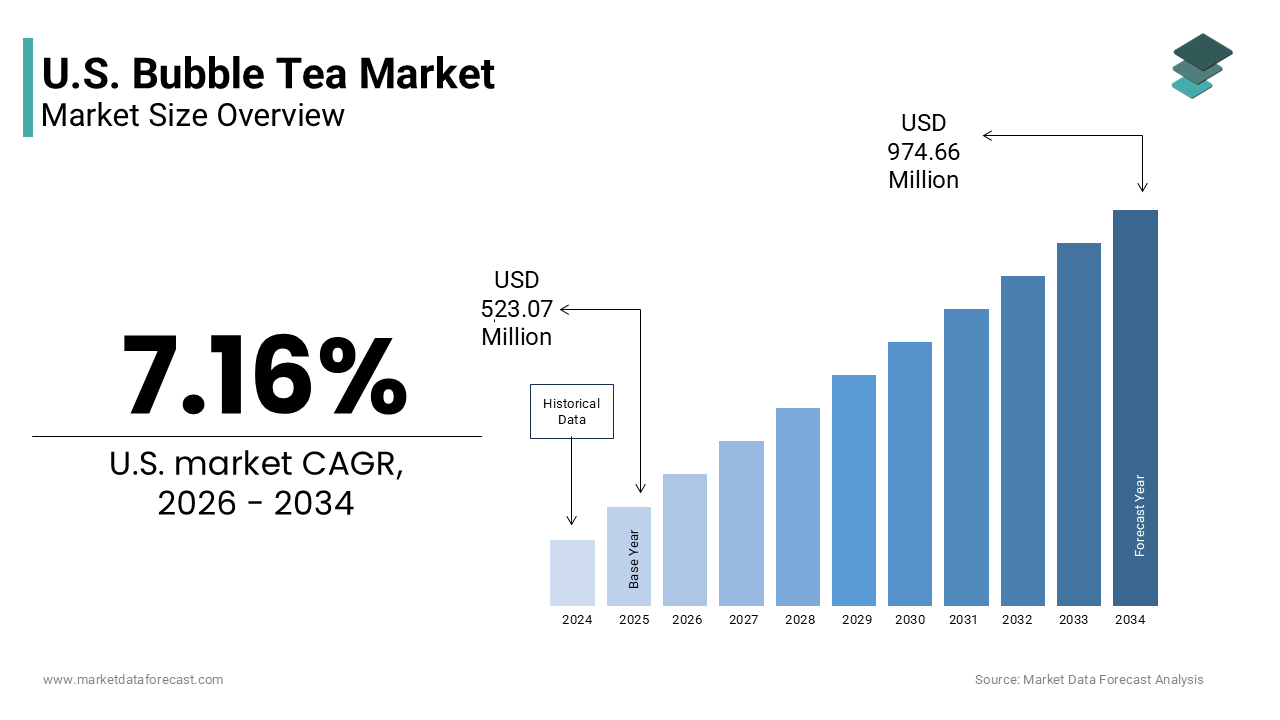
The U.S. bubble tea market was valued at USD 523.07 million in 2025, is estimated to reach USD 560.52 million in 2026, and is projected to reach USD 974.66 million by 2034, growing at a CAGR of 7.16% during the forecast period from 2026 to 2034. The growth of the U.S. bubble tea market is driven by the rising popularity of customizable beverages, increasing consumer preference for experiential food and drink options, and the strong influence of social media trends among younger demographics. The growing adoption of bubble tea across urban and suburban regions, along with expanding product innovation in flavors and ingredients, is further accelerating market growth. Additionally, the increasing demand for health-conscious and functional beverage alternatives is supporting the expansion of the bubble tea industry across the United States.
Key Market Trends
- Rising demand for customizable beverages with personalized sweetness levels, toppings, and milk alternatives
- Increasing popularity of fruit-based and health-focused bubble tea variants among wellness-conscious consumers
- Growing influence of social media platforms and influencer marketing in driving consumer engagement and product visibility
- Expansion of bubble tea chains into suburban and secondary cities across the United States
- Strong focus on innovative product development, including low-sugar, plant-based, and functional beverage offerings
Segmental Insights
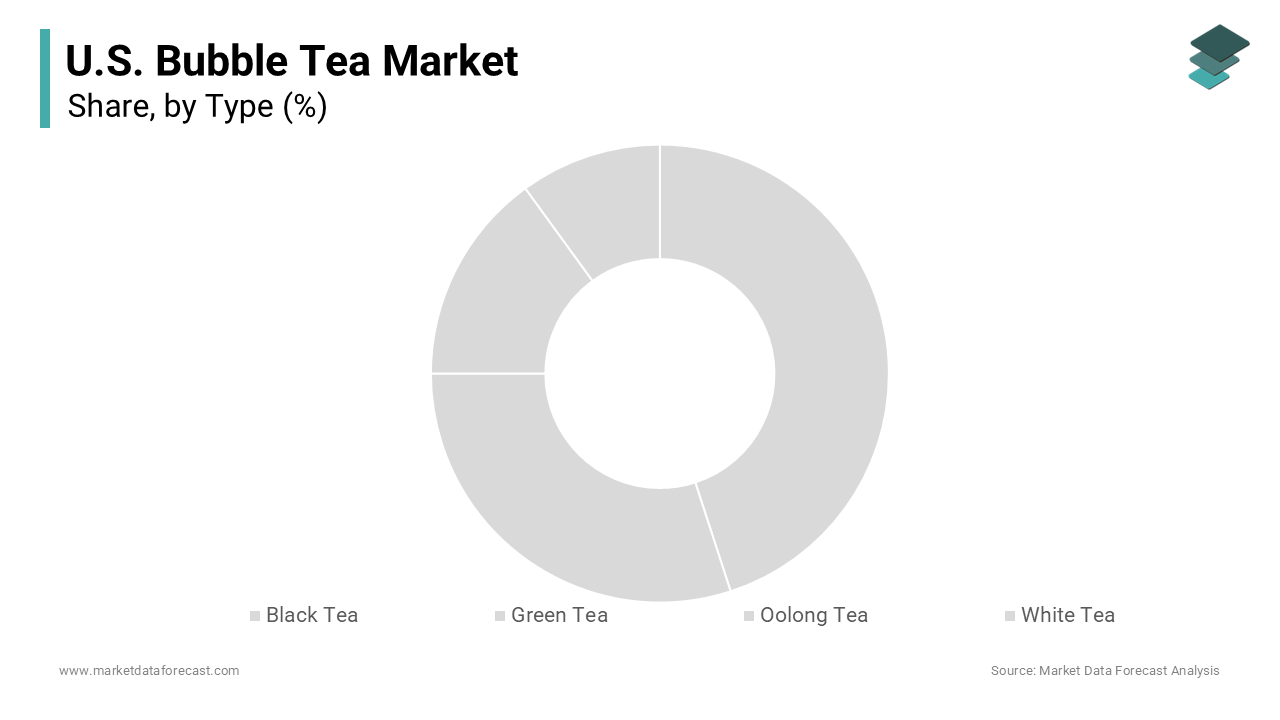
- Based on type, the black tea segment held a significant share of the U.S. bubble tea market in 2025. The segment’s dominance is attributed to the strong consumer preference for classic milk tea flavors, widespread familiarity with black tea, and its compatibility with various toppings and flavor combinations.
- Based on flavor, the original flavor segment accounted for a prominent share of the U.S. bubble tea market in 2025. The dominance of this segment stems from the growing consumer demand for authentic and traditional bubble tea experiences, particularly among first-time and loyal consumers.
- The fruit flavor segment is projected to witness strong growth during the forecast period owing to the increasing demand for refreshing, low-calorie, and visually appealing beverages made with natural fruit ingredients.
Regional Insights
The U.S. bubble tea market is witnessing strong growth across regions such as California, Washington, Oregon, New York, and the rest of the United States, supported by the high concentration of young consumers, strong multicultural influence, and rapid expansion of specialty beverage chains. Major metropolitan areas continue to serve as innovation hubs for new bubble tea concepts, flavors, and retail experiences, further strengthening the market’s growth trajectory.
Competitive Landscape
The U.S. bubble tea market is highly competitive and characterized by the presence of international bubble tea chains, regional specialty brands, and independent beverage outlets competing through product innovation, premium ingredient offerings, and immersive retail experiences. Companies are increasingly focusing on digital ordering platforms, loyalty programs, sustainable packaging, and social media marketing strategies to strengthen brand visibility and customer retention. Prominent players in the U.S. bubble tea market include Gong Cha, CoCo Fresh Tea & Juice, Kung Fu Tea, Sharetea, Chatime, Tiger Sugar, Happy Lemon, Boba Guys, Xing Fu Tang, The Alley, KOI Thé, and Lollicup USA.
U.S. Bubble Tea Market Size
The U.S. bubble tea market size was valued at USD 523.07 million in 2025 and is anticipated to reach USD 560.52 million in 2026 from USD 974.66 million by 2034, growing at a CAGR of 7.16% during the forecast period from 2026 to 2034
Bubble tea represents a dynamic segment within the broader non-alcoholic beverage industry characterized by the consumption of tea based drinks infused with chewy tapioca pearls or other textural additives. This culinary phenomenon has transcended its East Asian origins to become a mainstream lifestyle choice among American consumers particularly within urban demographics. The cultural integration of this beverage is evident in its widespread availability across diverse retail channels ranging from specialized boutiques to mainstream quick service restaurants. As per data from the National Restaurant Association the inclusion of ethnic and global flavors continues to be a top trend influencing menu development across the country. The social dimension of bubble tea consumption is significant as it serves as a communal activity often shared among peers and documented extensively on digital platforms. The aesthetic appeal of the drink combined with its customizable nature allows for high levels of consumer engagement and brand loyalty. The market is defined not merely by sales volume but by its ability to attract a young demographic that values experiential consumption and novelty. This foundational shift in drinking habits underscores the transition of bubble tea from an niche ethnic product to a staple in the American beverage landscape.
MARKET DRIVERS
Rising Preference for Customizable and Experiential Beverage Options
The rising demand for personalized consumption experiences is one of the major factors propelling the growth of the U.S. bubble tea market. Modern consumers especially those belonging to Generation Z and Millennial cohorts seek beverages that allow for extensive modification regarding sweetness levels ice content and topping selections. This desire for customization transforms a simple transaction into an interactive experience thereby enhancing customer satisfaction and retention. The ability to tailor each drink to individual dietary preferences such as opting for plant based milk alternatives or reducing sugar intake aligns with the broader health consciousness prevalent in the US market. Furthermore the visual appeal of layered drinks and colourful toppings encourages social sharing which serves as organic marketing. As per recent consumer surveys, 71% of consumers expect companies to deliver personalized interactions. The experiential aspect extends beyond the product itself to the store ambiance which often features instagrammable decor. This strategic alignment with consumer desires for uniqueness and self-expression drives frequent visits and fosters a loyal customer base that views bubble tea not just as a drink but as a lifestyle accessory.
Influence of Social Media and Digital Marketing Trends
The proliferation of social media platforms significantly accelerates the adoption and popularity of bubble tea across the U.S., which is further boosting the U.S. market growth. Visual centric applications such as Instagram TikTok and Pinterest serve as powerful conduits for trending food and beverage items where the aesthetic presentation of bubble tea plays a crucial role in attracting new customers. The vibrant colors unique textures and creative packaging of bubble tea make it highly shareable content which generates substantial organic reach and brand awareness. According to recent data from 2024, social media users in the U.S. spend an average of 2 hours and 14 minutes per day on social platforms. This high level of engagement ensures that viral trends related to bubble tea flavors or limited edition offerings spread rapidly among target demographics. Influencer marketing further amplifies this effect as key opinion leaders showcase their experiences with various brands thereby validating the product and encouraging trial among their followers. As per the Influencer Marketing Hub, the global influencer marketing industry reached approximately 24 billion dollars in 2024. The digital narrative surrounding bubble tea often emphasizes novelty and exclusivity which creates a sense of urgency and fear of missing out among consumers. This digital driven demand cycle enables brands to launch new products with immediate visibility and feedback allowing for agile responses to changing consumer preferences and sustaining momentum in a competitive marketplace.
MARKET RESTRAINTS
Health Concerns Regarding High Sugar and Caloric Content
The rising consumer awareness regarding the high sugar and caloric content associated with traditional preparations is significantly impeding the U.S. market growth. Health conscious individuals are increasingly scrutinizing nutritional labels and seeking beverages that align with wellness goals such as weight management and reduced sugar intake. Standard bubble tea recipes often contain substantial amounts of added sugars from syrups and sweetened condensed milk as well as high carbohydrate content from tapioca pearls. According to the Centers for Disease Control and Prevention, approximately 42% of adults in the U.S. are obese, which underscores the significant public health concerns related to diet and sugar consumption. The Dietary Guidelines for Americans recommend limiting added sugars to less than 10% of total daily calories yet a single serving of bubble tea can exceed this limit. This nutritional profile poses a challenge for brands aiming to attract health oriented consumers who may perceive the beverage as an indulgent treat rather than a daily staple. Furthermore the rise of low carb and keto diets has created a segment of consumers who actively avoid high starch ingredients like tapioca. According to the International Food Information Council, 57% of American consumers followed a specific diet or eating pattern in 2025. To mitigate this restraint companies must invest in reformulating recipes to offer healthier alternatives such as sugar free sweeteners and lower calorie bases without compromising taste which can increase operational complexity and costs.
Supply Chain Volatility for Key Ingredients
The stability of the bubble tea market is frequently compromised by supply chain vulnerabilities affecting the sourcing of critical ingredients such as tea leaves tapioca starch and dairy products, which is further hampering the U.S. market expansion. Many of these raw materials are imported from specific geographic regions making them susceptible to geopolitical tensions trade policies and environmental disruptions. For instance tapioca starch is primarily sourced from Southeast Asia where weather conditions such as droughts or floods can significantly impact crop yields and pricing. According to the U.S. Department of Agriculture, agricultural exports and imports are increasingly subject to global supply chain pressures and climate related fluctuations. Additionally logistical challenges such as port congestion and shipping delays can lead to inventory shortages and increased lead times for retailers. The reliance on single source suppliers for specialized items like black tapioca pearls further exacerbates this risk as any disruption in production can halt operations for multiple outlets. As per the Bureau of Labor Statistics, import price indexes for food and beverages can fluctuate by several percentage points annually based on global market conditions. This unpredictability forces businesses to maintain higher safety stocks or seek alternative suppliers which may vary in quality and reliability. The resulting cost pressures are often passed on to consumers potentially dampening demand in a price sensitive market. Ensuring a resilient and diversified supply chain is therefore a critical operational challenge for market participants aiming to maintain consistent product availability and profitability.
MARKET OPPORTUNITIES
Expansion into Untapped Geographic and Demographic Segments
The expanding presence beyond saturated urban centers into suburban areas and smaller cities where competition is less intense is one of the significant opportunities in the U.S. bubble tea market. While major metropolitan hubs have seen a proliferation of bubble tea shops many secondary markets remain underserved despite having growing populations of young consumers who are open to trying new beverage trends. According to the U.S. Census Bureau, the population in suburban areas grew by approximately 10.5% over the last decade, offering a large potential customer base with higher disposable incomes and family oriented spending habits. Brands that strategically locate outlets in these emerging markets can establish early brand loyalty and capture market share before competitors enter. Additionally there is an opportunity to target older demographic groups who may not have been exposed to bubble tea in their youth but are increasingly interested in diverse culinary experiences. Marketing campaigns that emphasize the quality of tea ingredients and the sophistication of flavor profiles can appeal to these mature consumers. As per industry surveys, roughly 85% of consumers seek out foods and beverages that are good for their long term health, suggesting a broadening appeal for high quality tea. Furthermore partnerships with existing food service establishments such as bakeries or dessert shops can provide a low risk entry point into new locations. By leveraging these underpenetrated segments companies can drive volume growth and diversify their revenue streams reducing dependence on highly competitive urban markets.
Innovation in Health Conscious and Functional Product Lines
The development of health focused and functional bubble tea variants are another promising opportunity for the U.S. bubble tea market. By incorporating ingredients such as fresh fruits herbal teas probiotics and plant based milks brands can create products that align with current health trends while maintaining the enjoyable texture and experience of traditional bubble tea. In the U.S. there is a rising demand for beverages that offer additional benefits such as improved digestion enhanced immunity or increased energy levels. Introducing options with reduced sugar content using natural sweeteners like stevia or monk fruit can attract health conscious consumers who previously avoided bubble tea due to its high calorie count. Additionally the use of alternative pearls made from konjac or agar which are lower in calories and carbohydrates can cater to individuals following specific dietary regimes. By positioning bubble tea as a versatile platform for health and wellness brands can redefine the category and appeal to a broader audience. This innovation not only mitigates health related restraints but also creates new value propositions that differentiate products in a crowded marketplace.
MARKET CHALLENGES
Intensifying Competition and Market Saturation in Urban Areas
The intense competition and resulting market saturation in major urban centers is challenging the growth of the U.S. bubble tea market. The low barriers to entry have led to a proliferation of independent shops and franchise outlets resulting in a crowded landscape where differentiation becomes increasingly difficult. According to IBISWorld, the number of coffee and snack shops in the U.S. reached over 72,000 establishments recently, leading to heightened rivalry for prime real estate and customer attention. In cities like Los Angeles New York and San Francisco the density of bubble tea stores is so high that businesses struggle to maintain foot traffic and achieve sustainable profit margins. This saturation forces companies to engage in aggressive pricing strategies and promotional discounts which can erode brand value and reduce overall profitability. Furthermore the constant need to innovate and introduce new flavors to stay relevant places a strain on research and development resources. As per recent restaurant industry data, average net profit margins often sit between 3% and 5%, making it challenging for new entrants to survive without a distinct competitive advantage. The presence of established international chains alongside local artisans creates a fragmented market where consumer loyalty is fleeting. Companies must continuously invest in marketing and customer experience to retain their position which increases operational costs. This competitive pressure necessitates strategic planning and efficient execution to avoid being overshadowed by larger players or newer trends.
Regulatory Scrutiny and Labeling Compliance Requirements
Navigating the complex regulatory environment regarding food safety labeling and ingredient transparency is another significant challenge for bubble tea operators in the U.S. Federal and state agencies enforce strict guidelines on nutritional labeling allergen disclosure and health claims which require meticulous compliance to avoid legal penalties and reputational damage. According to the Food and Drug Administration, updated labeling requirements mandate that added sugars be clearly disclosed on nutrition facts panels, requiring businesses to precisely calculate the sugar content in each beverage variation. This requirement is particularly challenging for bubble tea shops that offer extensive customization options as each combination of syrup milk and toppings results in a different nutritional profile. Additionally some municipalities have implemented taxes on sugary drinks which can increase the final price for consumers and potentially reduce demand. As per the Rudd Center for Food Policy and Health, seven major U.S. cities have implemented taxes on sweetened beverages to date. Compliance with these varying local regulations requires robust administrative systems and regular audits which can be burdensome for small and medium sized enterprises. Furthermore the scrutiny on artificial ingredients and colorants used in some bubble tea components necessitates careful sourcing and documentation. Failure to adhere to these standards can result in fines product recalls and loss of consumer trust. Therefore maintaining rigorous quality control and regulatory compliance is essential for long term viability in the market.
REPORT COVERAGE
| REPORT METRIC | DETAILS |
| Market Size Available | 2025 to 2034 |
| Base Year | 2025 |
| Forecast Period | 2026 to 2034 |
| CAGR | 7.16% |
| Segments Covered | By Type, Flavor, and Country |
| Various Analyses Covered | Regional & Country Level Analysis, Segment-Level Analysis, DROC, PESTLE Analysis, Porter’s Five Forces Analysis, Competitive Landscape, Analyst Overview on Investment Opportunities |
| Countries Covered | California, Washington, Oregon, New York, and the rest of the United States. |
| Market Leaders Profiled | Gong Cha, CoCo Fresh Tea & Juice, Kung Fu Tea, Sharetea, Chatime, Tiger Sugar, Happy Lemon, Boba Guys, Xing Fu Tang, The Alley, KOI Thé, and Lollicup USA. |
SEGMENTAL ANALYSIS
By Type Insights
The black tea segment maintained its position as the leading segment in the U.S. bubble tea market in 2025. The dominance of black tea segment in the U.S. market is primarily due to its role as the foundational base for the classic milk tea variant which remains the most ordered item across establishments. The robust and malty flavor profile of black tea provides an ideal counterbalance to the sweetness of condensed milk and the chewiness of tapioca pearls creating a harmonious taste experience that has defined the category since its introduction to American consumers. According to the Tea Association of the USA, black tea accounts for approximately 84% of all tea consumed in the U.S., indicating a deeply entrenched preference for this variety among the general population. This widespread familiarity lowers the barrier to entry for new consumers who may be hesitant to try more exotic or subtle tea bases such as oolong or white tea. The versatility of black tea allows it to pair effectively with a wide range of additives including fruit jellies pudding and cheese foam thereby supporting extensive menu customization. As per Grand View Research, the black tea segment held a revenue share of 46.79% in the North American bubble tea market in 2025. The consistency in supply and lower cost of black tea leaves compared to specialized varieties also enable operators to maintain healthy profit margins while offering competitive pricing. This economic efficiency combined with consumer habituation ensures that black tea remains the dominant force in the market driving volume sales and sustaining brand loyalty among traditionalists.
However, the green tea segment is a promising segment and is estimated to record a prominent CAGR during the forecast period in the U.S. market owing to the increasing consumer awareness of its health benefits particularly its high antioxidant content and potential metabolic advantages. As American consumers become more health conscious they are actively seeking beverage options that align with wellness goals without sacrificing flavor or enjoyment. Green tea is rich in catechins such as epigallocatechin gallate which have been linked to improved heart health and weight management making it an attractive alternative to heavier black tea bases. According to the National Institutes of Health, research indicates that green tea consumption is associated with a lower risk of certain metabolic conditions. This scientific backing enhances the perceived value of green tea based bubble teas allowing brands to position them as guilt free indulgences. According to the Hartman Group, over 50% of US consumers consider health and wellness as a top factor when making beverage purchases. The matcha variant of green tea has gained particular popularity due to its vibrant color and intense flavor profile which appeals to younger consumers seeking instagrammable and novel experiences. The integration of green tea into fitness and lifestyle narratives through social media marketing further accelerates its adoption. As a result green tea is experiencing a compound annual growth rate that outpaces other tea types reflecting a strategic shift in consumer preferences towards healthier and more functional beverage choices.
By Flavor Insights
The original flavor segment had the leading share of the U.S. bubble tea market in 2025. The growth of the original flavor segment in the U.S. market is attributed to its enduring appeal and association with cultural authenticity. This flavor profile represents the traditional essence of bubble tea as it was originally conceived in Taiwan providing a nostalgic and authentic experience for consumers who value heritage and tradition. The simplicity of original flavor allows the quality of the tea and the texture of the pearls to shine without being masked by additional fruit or chocolate notes. According to recent consumer surveys, original milk tea remains the most recognized flavor among 60% of American bubble tea drinkers. This familiarity makes it a safe and reliable choice for first time customers who may be intimidated by more complex or unfamiliar flavor combinations. The consistency of original flavor across different brands establishes a benchmark for quality and taste enabling consumers to compare and evaluate various establishments based on a standard reference point. According to the National Restaurant Association, classic items remain a cornerstone of menu development as they provide predictable satisfaction for customers. The widespread availability of original flavor ensures that it remains a staple item on nearly every bubble tea menu driving high volume sales and contributing significantly to overall market revenue. Its status as the default option cements its leadership in the flavor segment.
On the other side, the fruit flavored bubble tea segment is the fastest growing segment in the US market owing to the perception of these beverages as healthier and more refreshing alternatives to traditional milk based drinks. Consumers are increasingly associating fruit flavors with natural ingredients vitamins and lower calorie content which aligns with broader wellness trends. The use of real fruit purees juices and fresh chunks enhances the nutritional profile of the drink making it appealing to health conscious individuals who avoid heavy creams and sugars. As per recent market insights, fruit flavor dominated the market in 2024 due to high consumer preference for lighter fruity beverages. The refreshing nature of fruit teas particularly those served cold with ice makes them ideal for consumption during warmer months and in active lifestyles. According to retail data, fruit flavored non-alcoholic beverages are growing at a faster rate than dairy based alternatives. The vibrant colors and natural sweetness of fruit flavors also appeal to younger demographics who seek visually appealing and Instagram worthy products. Social media platforms are filled with images of colorful fruit teas which drives curiosity and trial among new customers. The combination of health benefits refreshment and visual appeal positions fruit flavor as the dynamic growth engine of the bubble tea market.
COUNTRY ANALYSIS
The U.S. is expected to continue its role as the dominant leader in the North American bubble tea market for the next few years, characterized by high brand density, widespread consumer acceptance, and continuous innovation. The country has evolved from an early adopter to a mature market accounting for the largest share of revenue and consumption volume globally. The market status is defined by intense competition among established international chains and emerging local brands all vying for market share in urban and suburban locations. The presence of major metropolitan hubs such as Los Angeles New York and San Francisco serves as incubators for new concepts and flavors which then diffuse to smaller cities across the country. According to the U.S. Census Bureau, the Asian American population, which acts as a key catalyst for this market, has grown by nearly 20% over the last decade. The robust infrastructure for food service distribution and digital marketing further supports the scalability of bubble tea businesses. The U.S. market is also characterized by high consumer spending power which allows for premium pricing and experimentation with high end ingredients. This economic environment fosters a dynamic landscape where innovation thrives and consumer preferences evolve rapidly. The country's influence extends beyond its borders as trends originating in the US often impact global bubble tea strategies. The maturity of the market necessitates continuous adaptation and differentiation to sustain growth in a saturated environment.
COMPETITIVE LANDSCAPE
The competition in the U.S. bubble tea market is characterized by intense rivalry among numerous international chains independent boutiques and emerging local brands. This fragmented landscape requires participants to constantly innovate and differentiate their offerings to capture consumer attention and loyalty. Major competitors focus on expanding their physical presence through strategic location selection in high foot traffic areas such as shopping malls and university districts. Brand differentiation is achieved through unique flavor profiles premium ingredient sourcing and distinctive store aesthetics that appeal to younger demographics. Price competition remains moderate as consumers prioritize quality and experience over cost allowing premium brands to thrive. Digital marketing and social media engagement play pivotal roles in building brand awareness and driving trial among target audiences. Companies also compete on operational efficiency by implementing advanced technology for order management and customer service. The entry of new players continues to raise the bar for quality and innovation forcing established brands to adapt quickly. Collaborative efforts with influencers and local communities further intensify the competitive dynamics as brands strive to create lasting emotional connections with consumers in this vibrant and evolving sector.
KEY MARKET PLAYERS
A few of the major companies in the U.S. Bubble Tea Market include
- Gong Cha
- CoCo Fresh Tea & Juice
- Kung Fu Tea
- Sharetea
- Chatime
- Tiger Sugar
- Happy Lemon
- Boba Guys
- Xing Fu Tang
- The Alley
- KOI Thé
- Lollicup USA
Top Players in the U.S. Bubble Tea Market
Gong Cha
Gong Cha has established a significant presence in the European bubble tea landscape by leveraging its global reputation for high quality tea and consistent product standards. The brand focuses on premium ingredients and traditional brewing methods to differentiate itself from competitors in major cities across the United Kingdom France and Germany. Recent strategic actions include expanding its franchise network through partnerships with local operators who possess deep market knowledge. Gong Cha has also introduced localized menu items that cater to European taste preferences while maintaining its core identity. The company invests heavily in staff training to ensure service excellence and product consistency across all outlets. By emphasizing sustainability in packaging and sourcing Gong Cha appeals to environmentally conscious consumers in Europe. These efforts have strengthened its brand equity and customer loyalty in a competitive market environment.
Koi Thé
Koi Thé contributes to the Europe market by offering a diverse range of innovative flavors and visually appealing beverages that attract younger demographics. The brand has expanded its footprint in key European capitals by opening flagship stores in high traffic retail locations and shopping centers. Koi Thé focuses on creating an immersive in store experience with modern interior designs that encourage social media sharing. The company recently launched new product lines featuring fresh fruit teas and low sugar options to align with health trends. Strategic collaborations with local influencers have enhanced brand visibility and engagement among target audiences. Koi Thé also prioritizes supply chain efficiency to maintain product quality and availability. These initiatives have solidified its position as a leading player in the European bubble tea sector.
Chatime
Chatime plays a vital role in the Europe market by providing affordable and accessible bubble tea options through an extensive network of franchised outlets. The brand has focused on rapid expansion in Eastern and Western Europe by partnering with experienced franchisees who understand local regulatory environments. Chatime emphasizes operational efficiency and standardized processes to ensure consistent quality across its locations. Recent actions include updating store formats to reflect contemporary design trends and introducing digital ordering systems to improve customer convenience. The company actively engages in community events and promotional campaigns to build brand awareness and attract new customers. Chatime also explores sustainable practices such as biodegradable straws and cups to address environmental concerns. These strategies have enhanced its market presence and competitiveness in the diverse European landscape.
Top Strategies Used by Key Market Participants in the US Bubble Tea Market
Key players in the U.S. bubble tea market primarily employ expansion through franchising to rapidly increase their geographic footprint and brand visibility. This strategy allows companies to leverage local expertise and reduce capital expenditure while accelerating growth in untapped suburban and urban areas. Product innovation serves as another critical strategy where brands continuously introduce new flavors textures and health conscious options to meet evolving consumer preferences. Incorporating functional ingredients and plant based alternatives helps attract health oriented demographics. Digital integration is widely adopted with firms investing in mobile applications loyalty programs and online ordering platforms to enhance customer engagement and streamline operations. Strategic partnerships with food delivery services expand reach beyond physical stores. Additionally brands focus on experiential retail by designing instagrammable store interiors that encourage social media sharing and organic marketing. These combined approaches enable companies to differentiate themselves and maintain competitive advantage in a saturated marketplace.
MARKET SEGMENTATION
This research report on the U.S. Bubble Tea Market has been segmented based on the following categories.
By Type
- Black Tea
- Green Tea
- Oolong Tea
- White Tea
By Flavor
- Fruit Flavor
- Original Flavor
- Chocolate Flavor
- Coffee Flavor
- Others
By Country
- California
- Washington
- Oregon
- New York
- Rest of the United States