U.S Diesel Market Size, Share, Trends & Growth Forecast Report - Segmented By End-Use, and By Country (California, Washington, Oregon, New York & Rest of the United States) – Industry Analysis and Forecast, 2026 to 2034
Market Size, 2025
$90.89 BnMarket Estimate, 2026
$94.24 BnMarket Forecast, 2034
$123.37 BnCAGR, 2026–2034
3.68%U.S. Diesel Market Report Summary
The U.S. diesel market was valued at USD 90.89 billion in 2025, is estimated to reach USD 94.24 billion in 2026, and is projected to reach USD 123.37 billion by 2034, growing at a CAGR of 3.68% during the forecast period from 2026 to 2034. The U.S. diesel market continues to play a vital role in the country's energy landscape, supported by strong demand from freight transportation, industrial operations, construction activities, and agricultural machinery. Diesel remains a preferred fuel for heavy-duty commercial vehicles due to its high energy efficiency, durability, and long-distance performance. Ongoing investments in refining capacity, fuel distribution infrastructure, and cleaner diesel technologies are contributing to market development. In addition, rising freight movement, expanding logistics networks, and the increasing adoption of renewable diesel blends to reduce carbon emissions are creating new growth opportunities across the United States.
Key Market Trends
- Growing adoption of renewable diesel and low-carbon fuel alternatives is supporting the transition toward more sustainable transportation.
- Increasing freight transportation and expanding e-commerce logistics continue to strengthen diesel consumption across commercial vehicle fleets.
- Refiners are investing in cleaner fuel technologies and production upgrades to comply with evolving environmental regulations.
- Rising infrastructure development and construction activities are driving diesel demand for heavy equipment and off-highway machinery.
- Fleet operators are integrating fuel management technologies and efficiency solutions to optimize diesel consumption and reduce operating costs.
Segmental Insights
Based on end use, the trucks segment held the largest share of the U.S. diesel market in 2025. The segment's dominance is driven by the extensive use of diesel-powered heavy-duty trucks for long-haul freight transportation, logistics operations, and commercial goods movement, where fuel efficiency and engine durability remain critical performance factors.
Regional Insights
The United States led the North American diesel market and accounted for 85.5% of the regional market share in 2025. The country's leadership is supported by a well-developed refining industry, extensive fuel distribution infrastructure, and high diesel consumption across transportation, industrial, agricultural, and construction sectors. Growing investments in renewable diesel production, modernization of refinery operations, and expansion of commercial freight networks continue to reinforce market growth. Furthermore, increasing demand for energy-efficient heavy-duty transportation and cleaner fuel solutions is expected to strengthen the United States' position in the North American diesel market throughout the forecast period.
Competitive Landscape
The U.S. diesel market is characterized by the presence of leading integrated energy companies, petroleum refiners, and fuel suppliers competing through production efficiency, refining capacity expansion, and cleaner fuel innovation. Major market participants are investing in renewable diesel production, refinery modernization, advanced fuel technologies, and strategic partnerships to address evolving regulatory requirements and changing energy demand. Companies are also expanding distribution networks, strengthening supply chain resilience, and improving operational efficiency to maintain market competitiveness. Investments in low-carbon fuels, digital refinery technologies, and sustainable energy initiatives are becoming increasingly important as the industry transitions toward cleaner transportation solutions. As demand from commercial transportation, industrial applications, and infrastructure development remains strong, companies continue to focus on innovation, operational excellence, and environmental compliance to sustain long-term growth.
Prominent players in the U.S. diesel market include Chevron, BP, Marathon Petroleum Corporation, ConocoPhillips, Valero Energy Corporation, Husky Energy, Saudi Aramco, ExxonMobil, Neste, Shell, LUKOIL, Eni, McDermott International Inc., Viru Keemia Grupp AS, JSC Mozyr Oil Refinery, Reliance, Pertamina, Mangalore Refinery and Petrochemicals Limited, and other regional and international market participants.
U.S Diesel Market Size
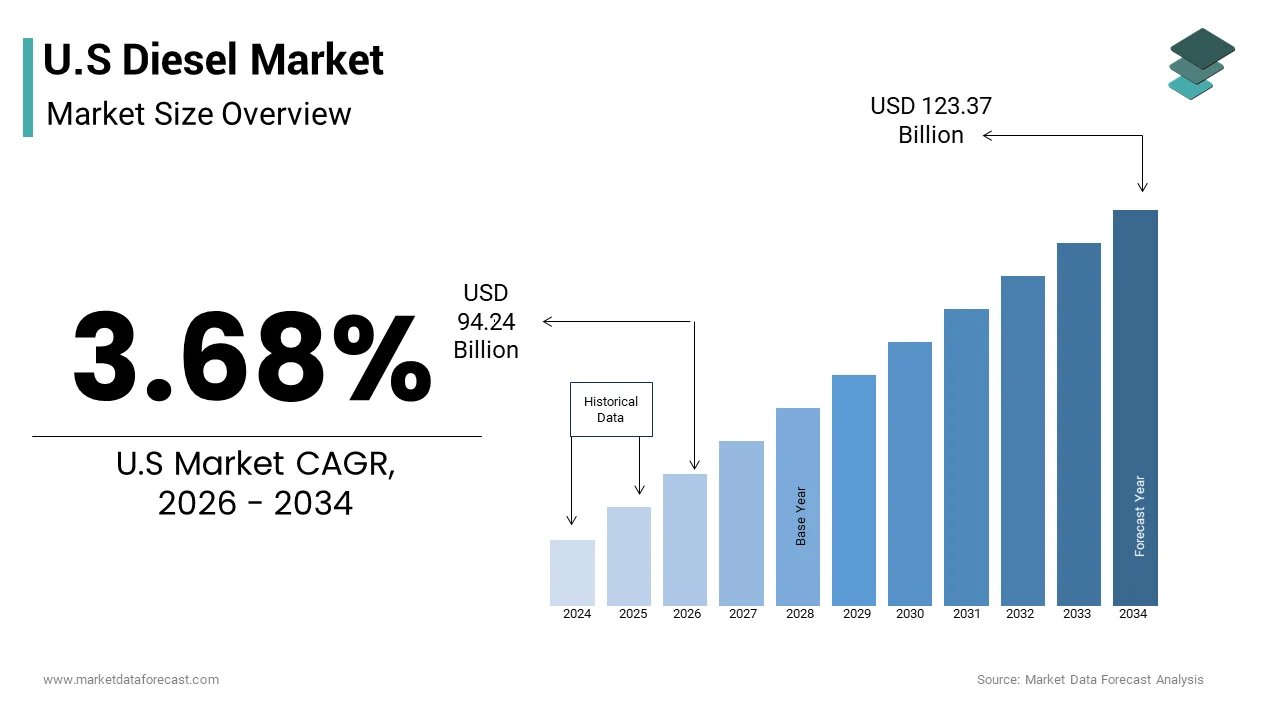
The U.S diesel market size was valued at USD 90.89 billion in 2025 and is anticipated to reach USD 94.24 billion in 2026 to reach USD 123.37 billion by 2034, growing at a CAGR of 3.68% during the forecast period from 2026 to 2034.
Current Market Overview and Definition
Diesel is a type of liquid fuel derived from crude oil or biomass, specifically designed for use in compression-ignition engines, commonly used in trucks, trains, buses, and ships. Moreover, diesel fuel is distinguished by its high energy density and efficiency, making it indispensable for long haul logistics and heavy load operations where alternative fuels currently lack comparable performance metrics. As per the United States Energy Information Administration, distillate fuel oil consumption accounted for approximately 20 percent of total petroleum consumption in the United States in recent years, reflecting its entrenched position in the national energy mix. The market dynamics are heavily influenced by seasonal variations, with demand peaking during harvest seasons and holiday shipping periods. According to the American Trucking Associations, trucks moved 72 percent of all freight tonnage in the country, underscoring the direct correlation between economic activity and diesel consumption. The infrastructure supporting this market includes an extensive network of refineries, pipelines, and distribution terminals that ensure consistent supply across vast geographical regions. Regulatory frameworks such as the Renewable Fuel Standard mandate the blending of biomass based diesel, introducing a layer of complexity to the traditional petroleum based supply chain. The transition towards ultra low sulfur diesel has significantly reduced particulate emissions, aligning the fuel with stricter environmental standards while maintaining operational efficacy. This market definition encompasses both conventional petroleum derived diesel and renewable alternatives, reflecting a evolving landscape where sustainability initiatives intersect with established logistical necessities.
MARKET DRIVERS
Robust Freight Transportation Volume Sustains Core Demand
The relentless volume of freight transportation across the country serves as the primary driver for diesel consumption and the overall growth of the United States diesel market. This is anchored by the dominance of trucking in the supply chain ecosystem. Heavy duty trucks rely almost exclusively on diesel fuel due to its superior torque and fuel efficiency compared to gasoline engines, making it the optimal choice for long distance hauling. As per the Bureau of Transportation Statistics, the value of goods shipped by trucks reached trillions of dollars annually, indicating a massive scale of logistical operations that require continuous fuel input. The growth of e commerce has further intensified this demand, as consumers expect rapid delivery times that necessitate a high frequency of truck movements across interstate highways. According to data from the American Trucking Associations (ATA), the trucking industry employs roughly 3.5 million drivers and operates over 4 million Class 8 trucks, establishing a massive baseline demand for diesel fuel that closely mirrors broader industrial and macroeconomic cycles. The expansion of intermodal transport, which combines trucking with rail and sea freight, also contributes to diesel usage at ports and distribution centers where drayage trucks operate extensively. Additionally, the just in time inventory models adopted by manufacturers and retailers require reliable and frequent deliveries, preventing any significant reduction in fleet operations. The sheer magnitude of goods movement ensures that diesel remains the lifeblood of the American economy, with demand closely tracking industrial production indices and consumer spending patterns. This structural reliance on road freight creates a resilient demand floor for diesel fuel that is difficult to displace in the short term.
Expansion of Industrial and Agricultural Activities Drives Sectoral Consumption
The expansion of industrial manufacturing and agricultural activities constitutes a major accelerator for the United States diesel market. These sectors rely heavily on off-highway diesel engines for machinery and equipment operation. Agriculture, in particular, is a major consumer of diesel fuel, utilizing it for tractors, combines, and irrigation pumps during planting and harvesting seasons. As per the United States Department of Agriculture, the agricultural sector contributes hundreds of billions of dollars to the national economy, requiring substantial energy inputs to maintain productivity levels. The mechanization of farming practices has increased the dependency on high horsepower diesel engines that can handle demanding tasks efficiently. In the industrial sector, construction mining and extraction activities utilize diesel powered excavators bulldozers and generators to support infrastructure development and resource extraction. According to the National Mining Association, the mining industry alone consumes millions of gallons of diesel fuel annually to operate heavy equipment in remote locations where electrical grid access is limited. The resurgence of domestic manufacturing and infrastructure projects further amplifies this demand, as construction fleets expand to meet project deadlines. Diesel fuel provides the necessary power and reliability for these heavy duty applications, where downtime can result in significant financial losses. The seasonal nature of agricultural work creates periodic spikes in demand, while industrial consumption remains relatively stable throughout the year. This dual sectoral dependence ensures a diversified demand base for diesel fuel beyond just transportation, which reinforces its critical role in the productive capacity of the nation.
MARKET RESTRAINTS
Stringent Environmental Regulations Impose Compliance Costs
The implementation of stringent environmental regulations is a major restraint on the United States diesel market. This forces refiners and distributors to adhere to costly compliance measures that impact profitability and supply dynamics. The Environmental Protection Agency has established rigorous emissions standards for both diesel fuel quality and engine performance, requiring the production of ultra low sulfur diesel and the adoption of advanced after treatment technologies. As per the Environmental Protection Agency, Tier 4 emissions standards have significantly reduced non-road diesel emissions, though industry operators note this transition has increased equipment complexity and cost. Refineries must invest heavily in hydrotreating units to remove sulfur from diesel fuel, which increases production costs and reduces overall yield. According to the American Petroleum Institute, regulatory compliance costs are passed down to consumers, making diesel fuel more expensive relative to other energy sources. Furthermore, the push for electrification in commercial vehicle fleets poses a long term threat to diesel demand, as government incentives encourage the adoption of zero emission alternatives. State level initiatives, such as California’s Advanced Clean Fleets regulation, mandate the gradual phase out of diesel powered trucks in favor of electric or hydrogen fuel cell vehicles. These regulatory pressures create uncertainty for long term investment in diesel infrastructure, as stakeholders anticipate a potential decline in future demand. The cumulative effect of these regulations is a constrained market environment where growth is limited by policy mandates aimed at reducing the carbon footprint of the transportation and industrial sectors.
Volatility in Crude Oil Prices Disrupts Market Stability
The inherent volatility in crude oil prices hampers the expansion of the US diesel market. This creates unpredictability in pricing and supply chains that affects both producers and consumers. Diesel fuel prices are directly linked to global crude oil markets, which are susceptible to geopolitical tensions, production cuts by major exporting nations, and fluctuations in global demand. As per the United States Energy Information Administration, diesel prices can fluctuate widely within short periods, impacting the operational budgets of transportation companies and industrial users. This price instability makes it difficult for businesses to forecast expenses and plan long term logistics strategies, leading to hedging behaviors that can distort market dynamics. High diesel prices often lead to reduced freight volumes as shippers seek to cut costs, thereby lowering overall consumption. According to the Federal Reserve Bank of St Louis, energy price shocks have historically correlated with slowdowns in industrial production and consumer spending, indirectly affecting diesel demand. Additionally, refinery maintenance schedules and unexpected outages can exacerbate supply shortages, leading to regional price spikes that disrupt local markets. The lack of price elasticity in the short term means that consumers must absorb higher costs until they can adjust their operations or switch to alternative fuels. This economic uncertainty discourages investment in new diesel dependent infrastructure and encourages the exploration of more stable energy alternatives. The constant threat of price swings remains a persistent challenge that undermines the reliability of diesel as a cost effective energy solution.
MARKET OPPORTUNITIES
Integration of Renewable Diesel Offers Growth Potential
The integration of renewable diesel into the existing fuel infrastructure offers a significant opportunity for the US diesel market. This allows for a seamless transition towards lower carbon intensity fuels without requiring major changes to vehicles or distribution networks. Renewable diesel, produced from feedstocks such as vegetable oils animal fats and used cooking oil, is chemically identical to petroleum diesel and can be used in existing engines without modification. As per the California Air Resources Board, the demand for renewable diesel has surged due to its eligibility for high value credits under the Low Carbon Fuel Standard, incentivizing producers to expand capacity. Several major refineries are converting existing petroleum processing units to produce renewable diesel, leveraging existing infrastructure to reduce capital expenditure. According to the United States Department of Energy, the production capacity for renewable diesel in the United States is expected to multiply in the coming years, driven by federal tax credits and state level mandates. This shift allows traditional diesel suppliers to diversify their product portfolios and meet growing sustainability requirements from corporate customers. The ability to blend renewable diesel with conventional diesel at any ratio provides flexibility in managing supply and meeting regulatory targets. Furthermore, the use of waste based feedstocks supports circular economy principles, enhancing the environmental profile of the fuel. This opportunity enables the diesel market to evolve rather than decline, positioning it as a key component of the future low carbon transportation landscape.
Export Markets Provide Avenue for Surplus Supply
The expansion of export markets opens a vital pathway for the United States diesel market. This allows domestic refiners to offset stagnant or declining local demand by supplying international buyers. The United States has become a net exporter of distillate fuels, driven by increased refining capacity and competitive pricing relative to global benchmarks. As tracked by the United States Energy Information Administration (EIA), domestic distillate fuel oil exports have reached historic highs in recent years, with the overwhelming majority of these significant volumes shipped to high-demand markets across Latin America and Europe. This export orientation helps balance domestic supply and demand, stabilizing prices and ensuring refinery utilization rates remain high. The geopolitical instability in other regions has created supply gaps that US exporters are well positioned to fill, particularly in Europe following shifts in energy sourcing strategies. According to the International Energy Agency, global demand for middle distillates remains robust, providing a steady outlet for US production. The strategic location of Gulf Coast refineries facilitates efficient shipping to global markets, enhancing the competitiveness of US diesel abroad. Additionally, trade agreements and favorable tariff conditions support the flow of fuels to key partner nations. By tapping into international demand, the US diesel market can maintain production levels and economic viability despite domestic pressures from electrification and efficiency improvements. This global connectivity ensures that the US remains a pivotal player in the international energy trade, mitigating risks associated with local market saturation.
MARKET CHALLENGES
Infrastructure Limitations for Alternative Fuels Hinder Transition
The inadequate infrastructure for alternative fuels such as electricity and hydrogen is a challenge to the rapid displacement of diesel, and thereby limits the growth of the United States diesel market. Yet, it also highlights the vulnerability of the current diesel-dependent system. While the lack of charging stations and hydrogen refueling networks slows the adoption of zero emission vehicles, it also means that any disruption in diesel supply can have severe consequences due to the lack of immediate substitutes. As per the Department of Transportation, the vast majority of heavy duty freight corridors lack sufficient alternative fueling infrastructure, locking carriers into diesel usage for the foreseeable future. This dependency creates a risk where supply chain bottlenecks or refinery outages can cause widespread logistical disruptions. According to the American Trucking Associations, the industry faces challenges in transitioning to alternative fuels due to the high cost of new vehicles and the long lifespan of existing diesel fleets. The inertia of the current system makes it difficult to implement rapid changes, leaving the market exposed to regulatory shocks and price volatility. Furthermore, the grid capacity required to support widespread electrification of heavy duty trucks is currently insufficient, requiring significant investment in transmission and distribution networks. This infrastructure gap creates a transitional period where diesel remains essential but faces increasing pressure to reduce emissions. Navigating this complex landscape requires careful planning and coordination between public and private sectors to ensure energy security during the transition.
Supply Chain Disruptions Impact Feedstock Availability
Supply chain disruptions affecting the availability of crude oil and renewable feedstocks are a significant barrier to the stability of the United States diesel market. Geopolitical conflicts natural disasters and logistical issues can interrupt the flow of raw materials to refineries, leading to production shortfalls and price spikes. As per the Global Supply Chain Pressure Index, logistical disruptions indicate heightened global supply chain friction, which the U.S. Energy Information Administration correlates with increased costs and delays in regional fuel distribution. For renewable diesel, the competition for feedstocks such as soybean oil and tallow has intensified, driving up prices and creating supply constraints. According to the United States Department of Agriculture, weather related events can significantly impact crop yields, affecting the availability of bio based feedstocks. This volatility in input costs complicates production planning and pricing strategies for refiners. Additionally, labor shortages in the refining and transportation sectors can further exacerbate supply issues, limiting the ability to respond to sudden changes in demand. The interconnected nature of the global energy market means that local disruptions can have cascading effects, impacting prices and availability across the country. Ensuring a resilient supply chain requires diversification of sources and investment in storage capacity, but these measures involve significant costs. The ongoing uncertainty in global supply chains remains a persistent challenge that threatens the reliability and affordability of diesel fuel in the United States.
REPORT COVERAGE
| REPORT METRIC | DETAILS |
| Market Size Available | 2025 to 2034 |
| Base Year | 2025 |
| Forecast Period | 2026 to 2034 |
| CAGR | 3.68% |
| Segments Covered | By End-Use and By Country |
| Various Analyses Covered | Global, Regional, and Country Level Analysis, Segment-Level Analysis; DROC, PESTLE Analysis; Porter’s Five Forces Analysis; Competitive Landscape; Analyst Overview of Investment Opportunities. |
| Regions Covered | California, Washington, Oregon, New York & Rest of the United States |
| Market Leaders Profiled | Chevron, BP, Marathon Petroleum Corporation, ConocoPhillips, Valero Energy Corporation, Husky Energy, Saudi Aramco, ExxonMobil, Neste, Shell, LUKOIL, Eni, McDermott International Inc., Viru Keemia Grupp AS, JSC Mozyer Oil Refinery, Reliance, Pertamina, Mangalore Refinery and Petrochemicals Limited, Others |
SEGMENTAL ANALYSIS
By End Use Insights
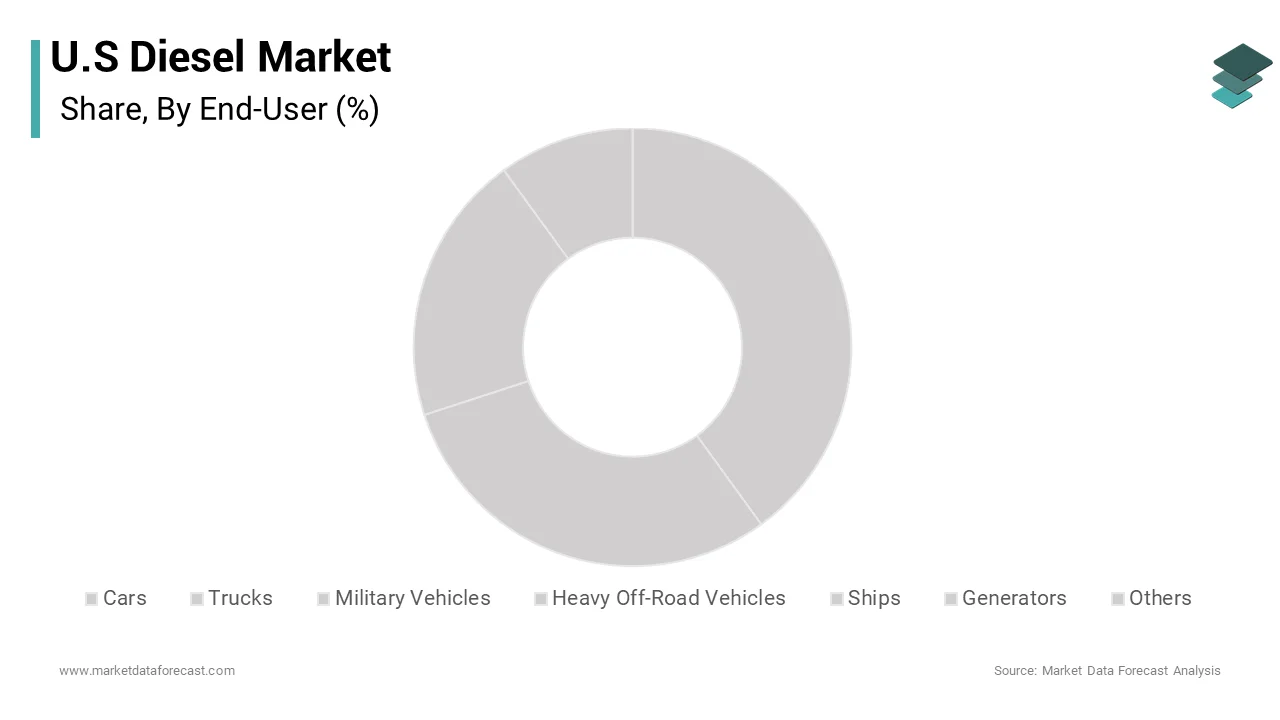
The trucks segment held the majority share of the United States diesel market in 2026. This supremacy of the segment was credited to the absolute reliance of the freight transportation industry on diesel powered heavy duty vehicles for moving goods across the nation. This segment includes Class 3 through Class 8 trucks, which are responsible for the vast majority of long haul and regional delivery operations. As per the American Trucking Associations, trucks moved 72 percent of all freight tonnage in the United States, translating to billions of tons of goods that require consistent and reliable fuel sources. The dominance of this segment is further reinforced by the sheer size of the commercial fleet, which numbers in the millions of units. According to the Bureau of Transportation Statistics, there are over 11 million heavy duty trucks in operation, each consuming significant volumes of diesel fuel annually. The growth of e commerce has intensified this demand, as consumers expect faster delivery times that necessitate more frequent trips and larger fleets. The Just In Time inventory models adopted by manufacturers and retailers also rely on the predictability and speed of truck transport, which diesel engines provide through their high torque and efficiency. Unlike passenger cars, which are increasingly shifting towards electric powertrains, heavy duty trucks face significant technical and infrastructural barriers to electrification, ensuring that diesel remains the primary fuel source for the foreseeable future. The extensive network of truck stops and refueling infrastructure across interstate highways further supports this dominance, making diesel the most practical and economical choice for logistics operators.
The generators segment is likely to experience the fastest CAGR of 4.8% over the forecast period due to the increasing need for reliable backup power solutions amidst rising grid instability and the explosive expansion of data centers that require uninterrupted electricity supply. As per the North American Electric Reliability Corporation, the frequency and severity of power outages have increased due to extreme weather events and aging infrastructure, prompting businesses and households to invest in standby diesel generators. The digital transformation of the economy has led to a surge in data center construction, with these facilities requiring massive amounts of continuous power to operate servers and cooling systems. According to the International Energy Agency, data centers currently account for approximately 1 percent of global electricity demand, a figure expected to rise significantly, driving the installation of large scale diesel generator sets for emergency backup. Furthermore, the healthcare and telecommunications sectors mandate redundant power systems to ensure operational continuity during emergencies, further boosting demand. Diesel generators are preferred for their reliability, quick start up capabilities, and ability to run for extended periods without refueling. The integration of renewable energy sources into the grid also creates a need for flexible backup power to balance intermittency, positioning diesel generators as a critical component of modern energy resilience strategies.
COUNTRY LEVEL ANALYSIS
United States Market Position and Dynamics
The United States led the North American diesel market and captured a 85.5% share in 2025. Its massive industrial base and extensive transportation networks drive the growth of the U.S. market. The country’s market status is characterized by a mature yet resilient demand structure, where diesel remains indispensable for freight logistics agriculture and industrial operations despite growing environmental concerns. As per the United States Energy Information Administration, the United States consumes roughly 4 million barrels of distillate fuel oil per day, reflecting the deep integration of diesel into the national economy. The driving factors behind this sustained consumption include the geographic vastness of the country, which necessitates long distance freight transport via heavy duty trucks, and the robust agricultural sector that relies on diesel powered machinery. According to the Department of Transportation, the Interstate Highway System facilitates the movement of goods across state lines, creating a constant demand for diesel fuel at truck stops and distribution centers. Additionally, the United States is a major producer of diesel fuel, with numerous refineries along the Gulf Coast processing crude oil into distillates for both domestic use and export. The regulatory environment, including the Renewable Fuel Standard, influences the market by mandating the blending of biomass based diesel, thereby diversifying the fuel mix. The strategic petroleum reserve and extensive pipeline infrastructure ensure supply security, while ongoing investments in renewable diesel production signal a gradual transition towards lower carbon alternatives. This combination of structural demand, production capacity, and evolving regulatory frameworks positions the United States as the central pillar of the North American diesel market.
COMPETITIVE LANDSCAPE
The competition in the United States diesel market is characterized by intense rivalry among major integrated oil companies and independent refiners who vie for dominance in production and distribution. Market participants compete based on refining efficiency, supply chain reliability, and increasingly, their ability to produce low carbon alternatives. The landscape is shifting as traditional fossil fuel producers face pressure from regulatory mandates and consumer demand for sustainable energy solutions. Leading firms differentiate themselves by investing in renewable diesel infrastructure, allowing them to offer cleaner fuel options without requiring changes to existing vehicle engines. Price volatility in crude oil markets adds complexity to competitive dynamics, forcing companies to optimize hedging strategies and operational costs. The entry of specialized biofuel producers further intensifies competition in the renewable segment. Geographic proximity to feedstock sources and key demand centers plays a crucial role in determining competitive advantage. Companies with integrated logistics networks and diverse product portfolios are better positioned to withstand market fluctuations. Overall, the market demands continuous innovation and strategic agility to balance traditional profitability with emerging sustainability requirements.
KEY MARKET PLAYERS
A few of the market players that are dominating the U.S diesel market are
- Chevron
- BP
- Marathon Petroleum Corporation
- ConocoPhillips
- Valero Energy Corporation
- Husky Energy
- Saudi Aramco
- ExxonMobil
- Neste
- Shell
- LUKOIL
- Eni
- McDermott International Inc.
- Viru Keemia Grupp AS
- JSC Mozyer Oil Refinery
- Reliance
- Pertamina
- Mangalore Refinery and Petrochemicals Limited
- Others
Top Players In The Market
- ExxonMobil Corporation is a leading integrated energy company that plays a pivotal role in the United States diesel market through its extensive refining and distribution network. The company operates multiple large scale refineries across the country that produce high quality diesel fuel for transportation and industrial use. ExxonMobil has recently invested in upgrading its facilities to produce renewable diesel and lower carbon intensity fuels. These initiatives align with evolving environmental regulations and customer sustainability goals. The company leverages its global supply chain expertise to ensure consistent fuel availability and competitive pricing. ExxonMobil also engages in research and development to improve fuel efficiency and reduce emissions. The company maintains robust infrastructure and adapts to market trends. By doing so, it strengthens its position as a reliable supplier in the dynamic energy landscape.
- Marathon Petroleum Corporation is a major downstream energy company that significantly contributes to the US diesel market through its vast refining capacity and retail presence. The company owns and operates several refineries that process crude oil into diesel and other distillate fuels. Marathon Petroleum has recently focused on optimizing its operations to enhance profitability and reliability. The company is also expanding its renewable diesel production capabilities by converting existing assets and building new facilities. This strategic shift allows Marathon to meet growing demand for sustainable fuel options. Additionally, the company maintains a strong retail network through its Speedway brand, ensuring direct access to end consumers. These efforts reinforce its leadership in the domestic fuel supply chain.
- Valero Energy Corporation is the largest independent petroleum refiner in the United States and a key participant in the diesel market. The company operates numerous refineries with significant distillate production capacity, supplying diesel fuel to commercial and consumer markets. Valero has been actively investing in renewable diesel projects to diversify its product portfolio and address climate concerns. The company has converted several traditional refineries to produce renewable diesel from sustainable feedstocks. This transition positions Valero as a leader in the low carbon fuel sector. Valero also focuses on operational excellence and cost management to maintain competitiveness. The company balances traditional refining with renewable energy initiatives. This approach ensures long-term growth and stability in the evolving energy market.
Top Strategies Used By Key Market Participants
Key players in the United States diesel market primarily focus on diversifying their fuel portfolios by investing heavily in renewable diesel production facilities. Companies are converting existing petroleum refineries to process sustainable feedstocks such as vegetable oils and animal fats. Strategic partnerships with agricultural suppliers ensure consistent access to raw materials for biofuel production. Refiners are also optimizing operational efficiency through advanced technologies to reduce costs and improve yield. Expanding retail networks and securing long term supply contracts with logistics firms help stabilize demand. Participants actively engage in regulatory advocacy to shape favorable policies for both conventional and renewable fuels. Investment in carbon capture and storage technologies further enhances sustainability credentials. These strategies enable companies to adapt to environmental mandates while maintaining profitability in a transitioning energy landscape.
MARKET SEGMENTATION
This research report on the U.S diesel market is segmented and sub-segmented into the following categories.
By End-User
- Cars
- Trucks
- Military Vehicles
- Heavy Off-Road Vehicles
- Ships
- Generators
- Others
By Country
- California
- Washington
- Oregon
- New York
- Rest of the United States
Frequently Asked Questions
What is the U.S. diesel market?
The U.S. diesel market includes the production, distribution, and consumption of diesel fuel for transportation, industrial, and commercial applications.
Why is the U.S. diesel market growing rapidly?
The market is growing due to increasing freight transportation and rising demand from industrial and construction sectors.
What types of diesel fuel are commonly used in the U.S.?
Common types include ultra-low sulfur diesel, biodiesel blends, and renewable diesel fuel.
Which segment dominates the U.S. diesel market?
Transportation diesel dominates the market due to strong demand from trucks, buses, and logistics operations.
Who are the primary users of diesel fuel in the U.S.?
Logistics companies, construction firms, agricultural operators, and industrial facilities are the main users.
How is renewable diesel influencing the U.S. diesel market?
Renewable diesel is gaining popularity due to increasing focus on lower emissions and sustainable fuel alternatives.
Why is diesel important for the U.S. transportation industry?
Diesel provides high fuel efficiency and reliable performance for heavy-duty transportation operations.
What challenges does the U.S. diesel market face?
Environmental regulations, fuel price volatility, and the shift toward electrification can affect market growth.
How is technology transforming the U.S. diesel market?
Advanced refining processes and cleaner fuel technologies are improving diesel efficiency and emissions performance.
What is the future outlook for the U.S. diesel market?
The market is expected to evolve steadily with increasing adoption of cleaner diesel technologies and alternative fuels.
Related Reports
Access the study in MULTIPLE FORMATS
Purchase options starting from
$ 2000
Didn’t find what you’re looking for?
TALK TO OUR ANALYST TEAM
Need something within your budget?
NO WORRIES! WE GOT YOU COVERED!
Call us on: +1 888 702 9696 (U.S Toll Free)
Write to us: sales@marketdataforecast.com