- Product Description Description
- Table of Contents TOC
- List of Table & Figure LOT
- Get Free Sample PDF Sample PDF
Market Size, 2025
$34.61 BnMarket Estimate, 2026
$37.82 BnMarket Forecast, 2034
$76.81 BnCAGR, 2026–2034
9.26%U.S. Ethanol Market Report Summary
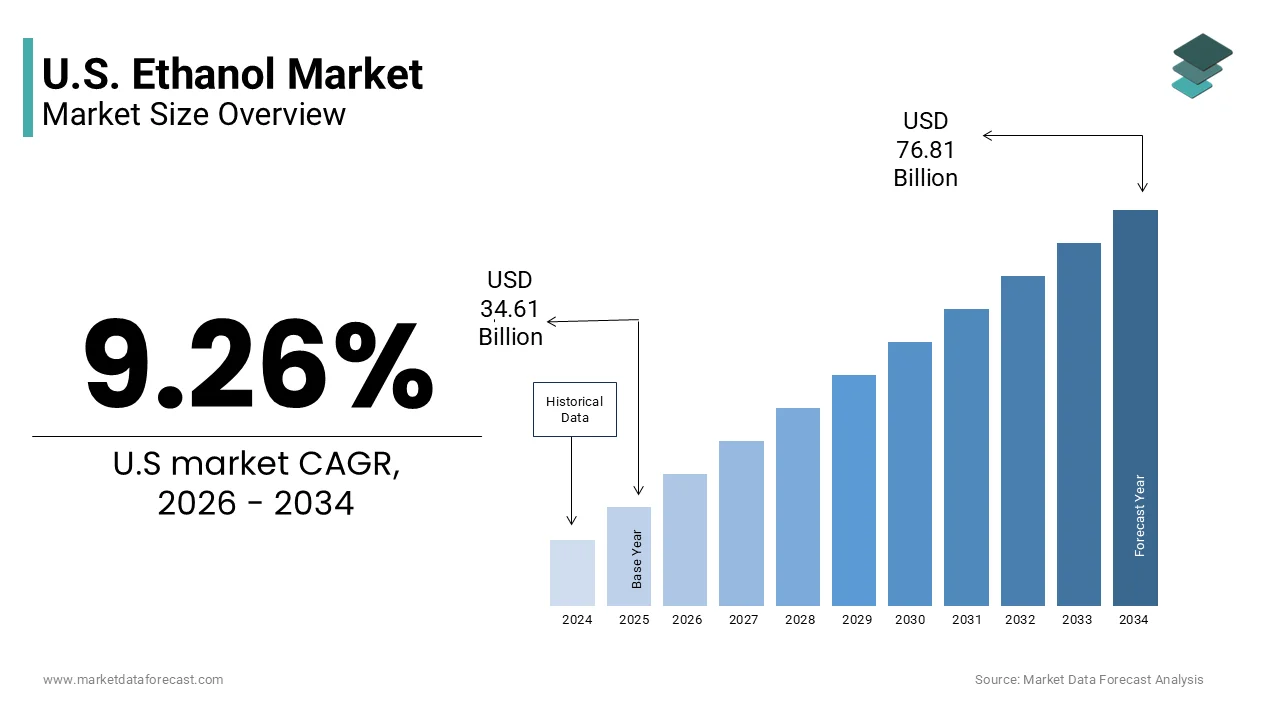
The U.S. ethanol market was valued at USD 34.61 billion in 2025, is estimated to reach USD 37.82 billion in 2026, and is projected to reach USD 76.81 billion by 2034, growing at a CAGR of 9.26% during the forecast period. Market growth is driven by increasing renewable fuel adoption, supportive government regulations, and growing demand for sustainable transportation fuels. Ethanol continues to play a crucial role in reducing greenhouse gas emissions, enhancing fuel efficiency, and improving energy diversification across transportation and industrial sectors. Expanding renewable fuel blending mandates and technological advancements in ethanol production are further supporting market growth across the United States.
Key Market Trends
- Growing demand for renewable transportation fuels is driving market growth.
- Increasing focus on reducing carbon emissions is boosting ethanol adoption.
- Rising government support for biofuel production and blending programs is supporting industry expansion.
- Expansion of renewable energy infrastructure is enhancing ethanol production capabilities.
- Innovation in feedstock technologies and fuel efficiency improvements is influencing market development.
Segmental Insights
- Based on type, the bioethanol segment accounted for 45.1% of the U.S. ethanol market share in 2025. This dominance is attributed to increasing renewable fuel requirements and rising demand for sustainable fuel alternatives.
- Based on raw material, the first generation feedstocks segment held a significant share of the U.S. ethanol market in 2025, supported by strong agricultural feedstock availability and established production infrastructure.
- Based on application, the transportation fuel segment accounted for 46.2% of the U.S. ethanol market share in 2025, driven by extensive ethanol blending programs and growing transportation sector fuel demand.
Regional Insights
- The United States remains one of the largest ethanol producing markets globally due to abundant agricultural resources, renewable fuel mandates, and established ethanol manufacturing capabilities. Continued investments in renewable fuel technologies continue to strengthen market development.
Competitive Landscape
The U.S. ethanol market is highly competitive, with companies focusing on production efficiency improvements, feedstock optimization, and renewable fuel innovation to strengthen their market position. Manufacturers are investing in advanced ethanol production technologies and sustainability initiatives. Prominent players in the U.S. ethanol market include Blue Flint Ethanol LLC, Corn LP, Green Plains Inc., Flint Hills Resources, Pacific Ethanol Inc., The Andersons Inc., White Energy, POET LLC, CHS Inc., Aemetis Inc., Archer Daniels Midland, Valero Energy Corp., Alto Ingredients Inc., Red Trail Energy, LLC, Siouxland Ethanol LLC, Little Sioux Corn Processors, Southwest Iowa Renewable Energy, Homeland Energy Solutions, and Bushmills Ethanol Inc..
U.S. Ethanol Market Size
The U.S. ethanol market size was valued at USD 34.61 billion in 2025, is estimated to reach USD 37.82 billion in 2026, and is projected to reach USD 76.81 billion by 2034, growing at a CAGR of 9.26%.
The ethanol is the national renewable energy strategy defined by the large scale production of fuel grade ethyl alcohol, primarily derived from corn starch. This biofuel serves as an oxygenate and octane booster in gasoline blending by reducing reliance on fossil fuels and lowering greenhouse gas emissions from the transportation sector. The industry is deeply integrated with the agricultural economy creating a symbiotic relationship between grain producers and energy manufacturers. As per the US Department of Agriculture, approximately 35% of the total US corn crop is utilized for ethanol production highlighting the massive scale of feedstock consumption. The geographic concentration of production facilities is heavily centered in the Midwest where access to raw materials and transportation infrastructure is optimal. According to the US Energy Information Administration, the United States produces over 15 billion gallons of ethanol annually making it the largest producer globally. The regulatory framework governing this sector is anchored by the Renewable Fuel Standard, which mandates specific volumes of renewable fuels to be blended into the transportation supply. Energy security concerns and rural economic development goals further underpin the strategic importance of domestic ethanol production. The industry also generates significant co products such as distillers grains, which serve as valuable livestock feed enhancing the overall economic viability of biorefineries. Technological advancements in fermentation efficiency and co product utilization continue to drive operational improvements.
MARKET DRIVERS
Federal Renewable Fuel Standard Mandates Ensure Baseline Demand
The renewable fuel standard program established by the Environmental Protection Agency by legally requiring fuel refiners and importers to blend specific volumes of renewable fuels into the gasoline supply. The federal renewable fuel standard mandates are propelling the growth of the United States ethanol market. As per the Environmental Protection Agency, the annual renewable volume obligation for conventional biofuels, which includes corn based ethanol has been set at levels exceeding 15 billion gallons for recent compliance years ensuring consistent uptake. These mandates are designed to reduce greenhouse gas emissions and decrease dependence on imported petroleum thereby enhancing national energy security. Obligated parties must acquire Renewable Identification Numbers which are credits generated when renewable fuels are produced and blended creating a financial incentive for compliance. The stability of these regulatory targets allows producers to plan long term investments in production capacity and feedstock sourcing. State level programs such as Low Carbon Fuel Standards in California further amplify demand by providing additional credits for low carbon intensity fuels although corn ethanol faces scrutiny there. The legal enforceability of these standards ensures that ethanol maintains a baseline presence in the fuel mix even during periods of low economic activity.
High Octane Blending Requirements Drive Gasoline Integration
The technical requirement for high octane ratings in modern gasoline engines drives the widespread integration of ethanol into the national fuel supply, which is also escalating the growth of the United States ethanol market. Ethanol possesses a high-octane rating of approximately 113 making it an effective and cost efficient blending component for enhancing fuel performance and preventing engine knock. The transition to higher compression ratio engines in light duty vehicles increases the demand for high octane blending stocks, which ethanol provides more economically than traditional refinery components. The phase out of methyl tertiary butyl ether due to environmental concerns has left ethanol as the primary oxygenate used to meet clean air standards and improve combustion efficiency. Most gasoline sold in the United States contains up to 10% ethanol known as E10 which is compatible with the vast majority of existing vehicles. The availability of ethanol helps refiners meet stringent sulfur and benzene limits in gasoline while maintaining performance characteristics. Automakers continue to design engines that optimize the benefits of ethanol blending further cementing its role in the fuel matrix. The cost advantage of ethanol compared to other octane enhancers makes it an attractive option for blenders seeking to minimize production costs. This technical necessity ensures that ethanol remains an indispensable component of the gasoline pool.
MARKET RESTRAINTS
Blend Wall Constraints Limit Volume Expansion
The blend wall refers to the maximum volume of ethanol that can be consumed in the gasoline pool given the prevalence of E10 compatible vehicles, which is hampering the growth of the United States ethanol market. Since, the majority of the vehicle fleet is warranted only for blends up to 10% ethanol expanding consumption beyond this threshold requires widespread adoption of higher blends such as E15 or E85. The limited availability of flex fuel vehicles, which can operate on E85 restricts the addressable market for high level ethanol blends. Retailers are often reluctant to install dedicated pumps for E15 or E85 due to high installation costs and liability concerns regarding older vehicles. Regulatory hurdles and labeling requirements further complicate the rollout of mid level blends like E15 at service stations. The physical limitation of gasoline demand means that ethanol volumes cannot grow indefinitely without displacing other components or increasing total fuel consumption. This structural barrier caps the domestic market size and forces producers to look toward export markets for growth.
Feedstock Price Volatility Impacts Production Margins
The volatility of corn prices, as feedstock costs account for a significant portion of total production expenses is additionally impeding the growth of the United States ethanol market. Fluctuations in agricultural commodity markets driven by weather conditions global trade policies and competing demands from the food and livestock sectors create uncertainty for producers. The corn prices have experienced substantial variations in recent years by impacting the profit margins of ethanol manufacturers who struggle to pass these costs onto consumers. When corn prices rise disproportionately to gasoline and ethanol prices, the crush margin the difference between the value of ethanol and co products and the cost of corn compresses significantly. This economic pressure can lead to reduced production volumes or temporary plant closures affecting supply reliability. The reliance on a single primary feedstock makes the industry vulnerable to supply shocks such as droughts or pest outbreaks in the Corn Belt. Diversifying feedstock sources is challenging due to the established infrastructure optimized for corn processing and the lower energy density of alternative biomass. High input costs can erode the competitive advantage of ethanol against petroleum based fuels especially when oil prices are low. The inability to hedge effectively against commodity price risks limits the financial stability of smaller producers.
MARKET OPPORTUNITIES
Sustainable Aviation Fuel Development Opens New Markets
The emerging demand for sustainable aviation fuel by providing a pathway to convert ethanol into drop in jet fuel is creating new opportunities for the growth of the United States ethanol market. Alcohol to jet technology enables the conversion of ethanol into synthetic paraffinic kerosene, which meets strict aviation fuel specifications and offers significant carbon reduction benefits. As per the International Air Transport Association, the aviation industry has committed to achieving net zero carbon emissions by 2050 driving investment in alternative fuel pathways including those based on ethanol. Several commercial scale projects are underway to demonstrate the feasibility and economic viability of this conversion process. The use of ethanol as a feedstock for sustainable aviation fuel leverages existing agricultural and production infrastructure reducing the need for entirely new supply chains. Government incentives such as the Inflation Reduction Act provide tax credits for sustainable fuel production enhancing the economic case for ethanol to jet facilities. Airlines are actively seeking diverse sources of sustainable fuel to meet regulatory mandates and corporate sustainability goals. The high value nature of aviation fuel offers potentially higher margins compared to traditional gasoline blending. Partnerships between ethanol producers and aerospace companies are facilitating pilot projects and off take agreements.
Export Market Expansion Increases Global Reach
The expansion of international export producers to offset domestic saturation and capitalize on global demand for renewable fuels is also to escalate the growth of the United States ethanol market. Countries in Asia, Latin America, and Europe are increasingly adopting ethanol blending mandates to reduce emissions and enhance energy security creating new outlets for US supplies. US ethanol exports have reached record levels in recent years driven by strong demand from key trading partners, such as Canada, Brazil, and India. The competitive advantage of US ethanol stems from its large scale production efficiency and consistent quality standards. Trade agreements and diplomatic efforts facilitate market access by reducing tariffs and non tariff barriers. The growing awareness of climate change globally is prompting more nations to implement renewable fuel policies mirroring the US model. Infrastructure investments in port facilities and logistics networks enhance the ability to ship large volumes efficiently. The diversification of export destinations reduces dependence on any single market mitigating geopolitical and economic risks. Producers are engaging in educational initiatives to promote the benefits of US ethanol and build long term relationships with foreign buyers.
MARKET CHALLENGES
Infrastructure Compatibility Issues Hinder Higher Blends
Limitations in existing fuel distribution infrastructure to the widespread adoption of higher ethanol blends, particularly E15 and E85 is specific challenge for the growth of the United States ethanol market. While most modern vehicles can accommodate E15, many older cars and small engines are not approved for its use creating confusion and liability concerns for retailers. The deployment of mid-level ethanol blends requires significant upgrades to storage tanks dispensers and signage at retail stations, which entails considerable capital investment. The lack of dedicated pumps for higher blends limits consumer access and awareness restricting penetration. Regulatory inconsistencies regarding warranty coverage and insurance for higher blends, further discourage retailers from offering them due to perceived legal risks. The fragmented nature of the fuel distribution network means that many rural and remote areas lack access to anything beyond E10 increasing logistical costs for transportation. Consumer hesitation stemming from misinformation about engine damage also slows adoption rates despite evidence of safety in approved vehicles. The capital investment required to retrofit existing infrastructure is significant and often lacks sufficient return on investment given current demand levels.
Policy Uncertainty Creates Investment Risks
The uncertainty surrounding future regulatory policies and tax incentives, as investors and producers require stable frameworks to justify capital expenditures is additionally to inhibit the growth of the United States ethanol market. The periodic expiration and renewal of federal tax credits, such as the Volumetric Ethanol Excise Tax Credit create periods of instability, where production decisions are delayed or halted. The lapses in policy support have historically led to fluctuations in production volumes and plant closures as companies wait for legislative clarity. The complexity of overlapping federal and state regulations adds administrative burdens and compliance costs that vary by jurisdiction. Changes in administration or political priorities can lead to shifts in renewable energy support affecting long term planning and strategic direction. The lack of predictable policy timelines discourages private sector investment in new facilities and technology development. Stakeholders often face challenges in forecasting revenue streams due to the intermittent nature of incentive programs. This unpredictability affects supply contracts and pricing mechanisms creating friction between producers and buyers. The need for continuous lobbying and advocacy to maintain support diverts resources from operational improvements and innovation.
REPORT COVERAGE
| REPORT METRIC | DETAILS |
| Market Size Available | 2025 to 2034 |
| Base Year | 2025 |
| Forecast Period | 2026 to 2034 |
| CAGR | 9.26% |
| Segments Covered | By Type, Raw Material, Application, and Region. |
| Various Analyses Covered | Global, Regional and Country-Level Analysis, Segment-Level Analysis, Drivers, Restraints, Opportunities, Challenges; PESTLE Analysis; Porter’s Five Forces Analysis, Competitive Landscape, Analyst Overview of Investment Opportunities |
| Countries Covered | California, Washington, Oregon, New York, United States |
| Market Leaders Profiled | Blue Flint Ethanol LLC, Corn LP, Green Plains Inc., Flint Hills Resources, Pacific Ethanol Inc., The Andersons Inc., White Energy, POET LLC, CHS Inc., Aemetis Inc., Archer Daniels Midland, Valero Energy Corp., Alto Ingredients Inc., Red Trail Energy LLC, Siouxland Ethanol LLC, Little Sioux Corn Processors, Southwest Iowa Renewable Energy, Homeland Energy Solutions, and Bushmills Ethanol Inc |
SEGMENTAL ANALYSIS
By Type Insights
The bioethanol segment was the dominant by capturing 45.1% of the United States ethanol market share in 2025 due to federal mandates under the Renewable Fuel Standard, which require the blending of renewable fuels into the national gasoline supply. This regulatory framework creates a guaranteed demand for bioethanol produced from domestic agricultural crops ensuring its dominance over synthetic alternatives. The geographic concentration of corn cultivation in the Midwest provides a cost effective and reliable supply chain for biorefineries reducing transportation costs and enhancing operational efficiency. The integration of bioethanol production with the agricultural economy also generates political support and subsidies that further entrench its market position. Synthetic ethanol which is derived from petrochemical sources lacks these regulatory incentives and faces higher production costs due to volatile crude oil prices. The environmental benefits of bioethanol including reduced greenhouse gas emissions compared to fossil fuels align with national sustainability goals driving continued investment in biomass based production. The established infrastructure for distributing bioethanol through existing fuel networks ensures widespread accessibility for consumers.
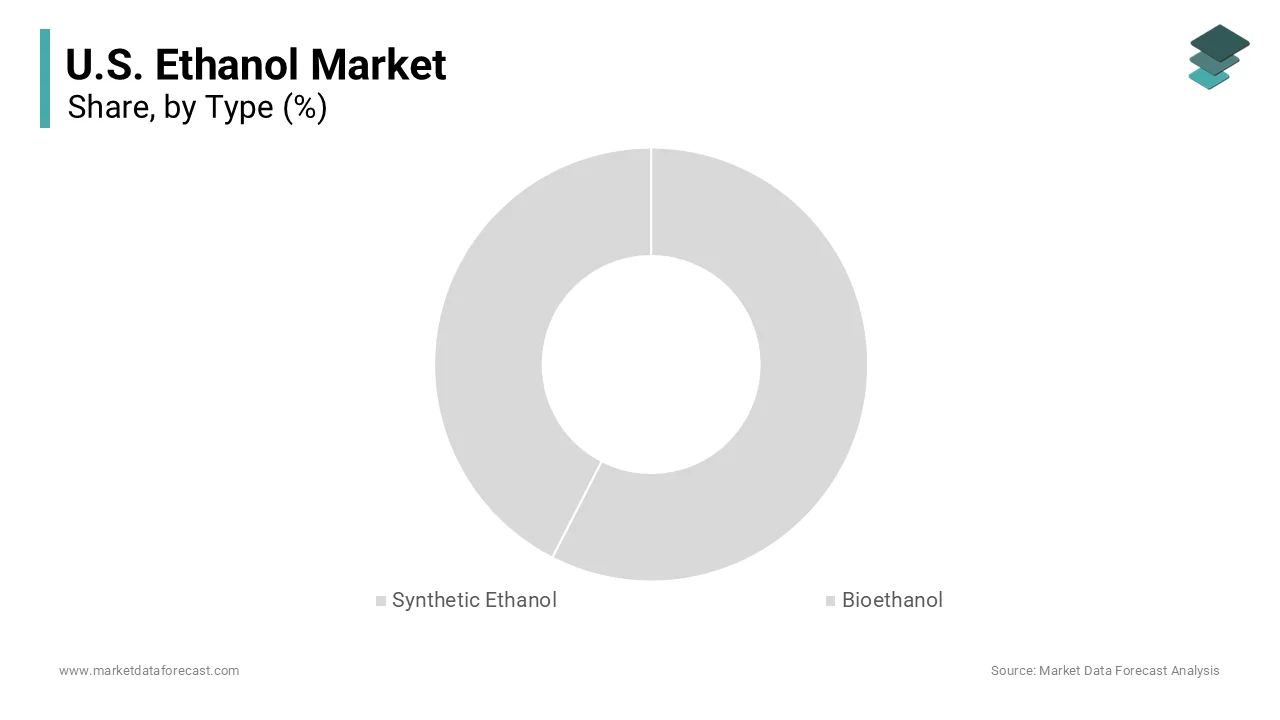
The synthetic ethanol segment is expected to witness a fastest CAGR of 4.5% from 2026 to 2034 owing to the increasing demand for high purity solvents in the pharmaceutical, personal care, and chemical industries. Unlike bioethanol, which may contain trace impurities from fermentation synthetic ethanol offers superior consistency and purity levels required for sensitive applications. Synthetic ethanol is preferred in these sectors because it is free from biological contaminants and meets stringent regulatory standards for safety and efficacy. The expansion of the healthcare sector and the development of new drug formulations further amplify the demand for synthetic ethanol as a key ingredient in manufacturing processes. Advances in catalytic technologies have improved the efficiency and yield of synthetic ethanol production reducing costs and enhancing competitiveness. The ability to produce synthetic ethanol independently of agricultural cycles ensures a stable supply chain weather or crop failures. This reliability is crucial for industries that require uninterrupted production schedules.
By Raw Material Insights
The first generation feedstocks segment held a significant share of the US ethanol market in 2025 due to the abundant availability of this crop and the well-established infrastructure for its processing into ethanol. The United States is the world's largest producer of corn providing a secure and cost-effective raw material base for biorefineries. As per the US Department of Agriculture, corn production exceeded 15 billion bushels in recent harvest seasons ensuring a consistent supply for ethanol manufacturing. The geographic concentration of corn farming in the Midwest aligns with the location of most ethanol plants minimizing transportation costs and logistical complexities. Decades of investment in fermentation technology have optimized the conversion of corn starch into ethanol achieving high yields and operational efficiency. The co production of distillers grains as a valuable animal feed supplement further enhances the economic viability of corn based ethanol production creating a dual revenue stream for processors. Government policies and subsidies specifically support corn based ethanol reinforcing its market position. The familiarity of producers with corn processing reduces operational risks and maintenance issues. The established supply chain for corn ensures reliable delivery and inventory management for ethanol facilities.
The second generation feedstocks segment is esteemed to register a fastest CAGR of 4.3% from 32026 to 2034 by stringent environmental regulations and the demand for low carbon fuels. These advanced biofuels offer significantly lower greenhouse gas emissions compared to corn based ethanol making them attractive for meeting future sustainability targets. As per the Environmental Protection Agency, advanced biofuels must achieve at least a 50% reduction in lifecycle greenhouse gas emissions compared to petroleum fuels incentivizing the development of second generation technologies. Government grants and loan guarantees support research and commercialization of cellulosic ethanol projects accelerating market entry. The utilization of waste materials such as corn stover and forestry residues reduces competition with food crops addressing ethical concerns associated with first generation biofuels. Technological advancements in enzymatic hydrolysis and fermentation have improved the efficiency of converting lignocellulosic biomass into ethanol reducing production costs. The potential for carbon negative outcomes when combining biomass utilization with carbon capture technologies further enhances the appeal of second generation feedstocks. Corporate sustainability commitments are driving demand for advanced biofuels in transportation and industrial sectors.
By Application Insights
The transportation fuel segment was the largest by holding 46.2% of the US ethanol market share in 2025 with the federal mandates requiring the blending of ethanol into gasoline to reduce emissions and enhance octane. The vast majority of ethanol produced in the United States is used as a fuel additive in light duty vehicles ensuring consistent and high-volume demand. As per the US Energy Information Administration, over 90% of US gasoline contains ethanol typically at a 10% blend rate known as E10 reflecting its ubiquitous presence in the fuel supply. The Renewable Fuel Standard establishes annual volume obligations for renewable fuels ensuring that ethanol maintains a significant share of the transportation energy mix. The compatibility of E10 with the existing vehicle fleet and fueling infrastructure facilitates widespread adoption without requiring significant modifications. The octane boosting properties of ethanol allow refiners to produce cleaner burning gasoline that meets environmental standards. The expansion of E15 approval for newer vehicles further expands the addressable market for ethanol in the transportation sector. The reliance on liquid fuels for heavy duty transportation and aviation where electrification is limited ensures continued demand for biofuel blends.
The chemical industry segment is likely to grow at a fastest CAGR of 5.6% from 2026 to 2034 with the increasing demand for bio based solvents intermediates and green chemicals. Manufacturers are shifting toward sustainable raw materials to meet corporate sustainability goals and regulatory requirements for reduced environmental impact. Ethanol serves as a versatile platform chemical for producing ethylene acetaldehyde and other derivatives used in plastics coatings and pharmaceuticals. The superior purity and consistency of synthetic and high grade bioethanol make it ideal for sensitive chemical processes. The development of new catalytic processes enables the efficient conversion of ethanol into high value chemicals enhancing economic viability. Consumer preference for eco friendly products is driving brands to incorporate bio based ingredients in their formulations. Regulatory incentives for green chemistry initiatives further accelerate the adoption of ethanol in the chemical sector.
COMPETITIVE LANDSCAPE
The competitive landscape of the United States ethanol market is characterized by intense rivalry among large integrated energy companies independent agricultural cooperatives and specialized biofuel producers. Major competitors differentiate themselves through production efficiency sustainability credentials and logistical capabilities rather than price alone due to the commoditized nature of ethanol. Firms are increasingly investing in research and development to create advanced biofuels and improve conversion efficiencies. Regulatory frameworks, such as the Renewable Fuel Standard shape competitive dynamics by rewarding producers with lower carbon intensity scores. Supply chain resilience has become a critical differentiator as disruptions highlight the importance of secure feedstock sourcing and localized production capabilities. Collaborative efforts between producers and agricultural stakeholders are becoming more common to drive innovation and secure long term contracts.
KEY MARKET PLAYERS
Some of the companies that are playing a dominating role in the U.S. ethanol market are
- Blue Flint Ethanol LLC
- Corn LP
- Green Plains Inc.
- Flint Hills Resources
- Pacific Ethanol Inc.
- The Andersons Inc.
- White Energy
- POET LLC
- CHS Inc.
- Aemetis Inc.
- Archer Daniels Midland
- Valero Energy Corp.
- Alto Ingredients Inc.
- Red Trail Energy, LLC
- Siouxland Ethanol LLC
- Little Sioux Corn Processors
- Southwest Iowa Renewable Energy
- Homeland Energy Solutions
- Bushmills Ethanol Inc.
Top Players in the Market
- Valero Energy Corporation operates as a leading producer of renewable fuels in the United States with a significant portfolio of ethanol production facilities. The company leverages its extensive refining infrastructure to integrate ethanol production with traditional petroleum operations enhancing operational efficiency and supply chain reliability. Recent actions include the expansion of its renewable diesel capabilities and the optimization of existing ethanol plants to improve yield and reduce carbon intensity. Valero focuses on sustainability by investing in technologies that lower greenhouse gas emissions and enhance the environmental profile of its fuel products. The company actively engages in policy advocacy to support favorable regulatory frameworks for biofuels. Strategic partnerships with agricultural suppliers ensure consistent feedstock availability while reducing price volatility.
- POET LLC stands as one of the largest producers of bioethanol in the United States operating numerous biorefineries primarily located in the Corn Belt. The company is deeply integrated with the agricultural sector sourcing corn directly from local farmers to support rural economies and ensure stable feedstock supplies. Recent efforts focus on advancing cellulosic ethanol technology through its Project LIBERTY facility which converts corn cob residues into advanced biofuel. POET emphasizes sustainability by implementing energy efficient processes and reducing water usage in its production operations. The company actively promotes the benefits of ethanol through educational initiatives and industry collaborations. Its commitment to innovation and community engagement reinforces its leadership in the domestic ethanol industry, while supporting national energy independence goals.
- Green Plains Inc is a major contributor to the US ethanol market with a diversified network of production facilities and a strong focus on operational excellence. The company utilizes advanced technologies to maximize ethanol yields and produce high value co products such as distillers grains and corn oil. Recent actions include the implementation of carbon capture and storage projects at several plants to reduce lifecycle emissions and qualify for low carbon fuel credits. Green Plains invests in precision agriculture programs to source sustainable corn and improve supply chain transparency. The company also explores opportunities in renewable natural gas and other clean energy sectors to diversify revenue streams. Strategic investments in plant upgrades enhance efficiency and reduce operational costs. These efforts position Green Plains as a competitive player capable of adapting to regulatory changes and market demands for environmentally responsible fuel solutions in the United States.
Top Strategies Used by Key Market Participants
Key players in the United States ethanol market primarily employ strategies focused on operational efficiency and product diversification to maintain competitive advantages. Companies are increasingly investing in carbon capture technologies and energy saving measures to reduce production costs and meet environmental regulations. Strategic expansions into higher ethanol blends and sustainable aviation fuel markets allow firms to capture new revenue streams beyond traditional gasoline blending. Vertical integration with agricultural suppliers ensures stable feedstock availability and mitigates price volatility risks. Digitalization of production processes enhances real time monitoring and predictive maintenance improving overall plant reliability. Partnerships with automotive manufacturers and policy advocates help promote the adoption of higher ethanol blends.
MARKET SEGMENTATION
This research report on the U.S. ethanol market is segmented and sub-segmented into the following categories.
By Type
- Synthetic Ethanol
- Bioethanol
By Raw Material
- 1st Generation Feedstock
- 2nd Generation Feedstock
- Others
By Application
- Transportation
- Energy
- Chemical
- Others
By Country
- California
- Washington
- Oregon
- New York
- Rest of the United States