- Product Description Description
- Table of Contents TOC
- List of Table & Figure LOT
- Get Free Sample PDF Sample PDF
Market Size, 2025
$32.69 BnMarket Estimate, 2026
$34.19 BnMarket Forecast, 2034
$49.00 BnCAGR, 2026–2034
4.60%U.S. Fitness Equipment Market Report Summary
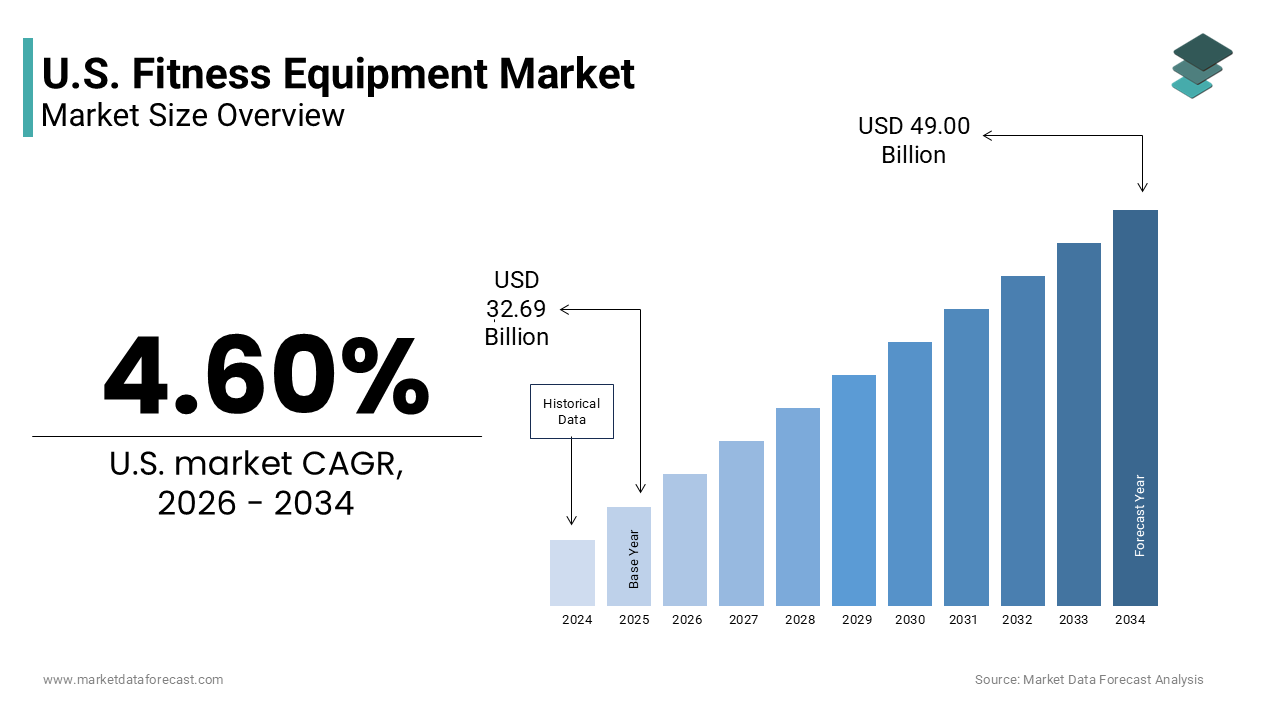
The U.S. fitness equipment market was valued at USD 32.69 billion in 2025, is estimated to reach USD 34.19 billion in 2026, and is projected to reach USD 49.00 billion by 2034, growing at a CAGR of 4.60% during the forecast period from 2026 to 2034. The growth of the U.S. fitness equipment market is driven by rising health consciousness, increasing prevalence of chronic diseases, and growing adoption of connected fitness technologies. Additionally, the expansion of home fitness trends, corporate wellness programs, and digital fitness ecosystems is further supporting market growth.
Key Market Trends
- Rising awareness of health and fitness due to increasing obesity and lifestyle-related diseases
- Growing adoption of connected fitness equipment with smart features and virtual training
- Increasing preference for home-based workouts and hybrid fitness models
- Expansion of corporate wellness programs promoting employee fitness
- Rising demand for compact, space-efficient, and multifunctional fitness equipment
Segmental Insights
- Based on type, the cardiovascular training equipment segment was the largest and held a significant share of the U.S. fitness equipment market in 2025. The segment’s dominance is attributed to the high demand for aerobic exercise equipment such as treadmills, ellipticals, and stationary bikes for weight management and heart health.
- Based on end-user, the home consumers segment accounted for the largest share of the U.S. fitness equipment market in 2025. This is driven by the growing preference for convenient home workouts, flexible schedules, and cost savings compared to gym memberships.
- Based on distribution channel, the offline segment was the largest, supported by the consumer preference to physically evaluate equipment quality, durability, and comfort before purchase.
Regional Insights
The U.S. fitness equipment market is witnessing steady growth across major regions such as California, New York, Texas, and other states, driven by strong fitness culture, rising disposable incomes, and increasing investments in health and wellness infrastructure. The country remains a leading market due to high consumer awareness, advanced fitness technology adoption, and a well-established gym and wellness ecosystem.
Competitive Landscape
The U.S. fitness equipment market is highly competitive, characterized by the presence of established manufacturers and emerging fitness technology companies. Companies are focusing on product innovation, digital integration, and expanding direct-to-consumer channels to strengthen their market position. Prominent players in the U.S. fitness equipment market include Peloton Interactive, Inc., Nautilus, Inc., Johnson Health Tech Co., Ltd., Technogym S.p.A., ICON Health & Fitness, Inc., Life Fitness, Precor Incorporated, Core Health & Fitness, LLC, and True Fitness Technology, Inc.
U.S. Fitness Equipment Market Size
The U.S. fitness equipment market size was valued at USD 32.69 billion in 2025 and is anticipated to reach USD 34.19 billion in 2026 from USD 49.00 billion by 2034, growing at a CAGR of 4.60% during the forecast period from 2026 to 2034.
According to the Centers for Disease Control and Prevention, 47.2% of all U.S. adults met federal guidelines for aerobic physical activity in 2024 and this indicates a substantial base of active individuals who utilize fitness equipment. The market definition extends beyond standalone machines to include connected ecosystems where hardware interacts with software platforms to provide personalized fitness experiences. As per the Health and Fitness Association, there were a record 81 million Americans who belonged to a gym or fitness studio in 2025, which drives consistent demand for commercial-grade equipment. Consumer behavior has shifted towards holistic wellness, integrating mental and physical health, which influences product design and feature sets. Regulatory standards set by organizations such as the American Society for Testing and Materials ensure safety and durability requirements are met. The interplay between technological innovation, lifestyle trends, and economic conditions defines the operational landscape. Manufacturers are focusing on space-efficient designs and smart connectivity to address urban living constraints and digital-native preferences. The market also includes a robust secondary segment for refurbished and used equipment, which caters to budget-conscious buyers.
MARKET DRIVERS
Rising Prevalence of Chronic Diseases and Health Consciousness
The rising prevalence of chronic diseases and heightened health consciousness is primarily driving the expansion of the U.S. fitness equipment market. Americans are increasingly aware of the link between sedentary lifestyles and health issues such as obesity, diabetes, and cardiovascular disease, prompting proactive measures through regular exercise. According to the Centers for Disease Control and Prevention, the prevalence of obesity among U.S. adults was 40.3% in the period between 2021 and 2023, creating an urgent public health imperative for weight management solutions. Fitness equipment such as treadmills, stationary bikes, and ellipticals provides accessible means for individuals to engage in consistent cardiovascular activity at home or in gyms. As per the American Heart Association, science has linked being inactive with a higher risk of heart disease and type 2 diabetes, whereas getting at least 150 minutes of moderate-intensity aerobic activity per week can maintain heart health and prevent chronic conditions. The aging population also contributes to this trend as older adults seek low-impact exercise options to maintain mobility and independence. Healthcare providers frequently prescribe exercise as part of preventive care plans, further validating the importance of fitness equipment. The proliferation of health insurance programs that offer incentives for healthy behaviors encourages participation in fitness activities. Consumers are prioritizing long-term health outcomes over short-term aesthetics, leading to sustained demand for durable and effective exercise machines. This shift towards preventive healthcare ensures that fitness equipment remains a critical component of personal wellness strategies. The integration of health monitoring features in modern equipment enhances its appeal to health-focused users.
Technological Integration and Connected Fitness Solutions
Technological integration and the rise of connected fitness solutions significantly drive the U.S. fitness equipment market. Modern fitness machines are equipped with smart screens, sensors, and connectivity features that allow users to access virtual classes, track performance metrics, and compete with others globally. According to the Consumer Technology Association, the connected gym equipment market is projected to expand significantly, reaching approximately 3.5 billion dollars by 2033, as consumers increasingly adopt smart fitness solutions. Brands offering subscription-based content libraries create recurring revenue streams while fostering brand loyalty through community building. As per the International Data Corporation, the adoption of Internet of Things technology in fitness equipment enables real-time data analysis, which helps users optimize their workouts and prevent injuries. The convenience of accessing professional instruction without leaving home appeals to busy professionals and parents who struggle to find time for gym visits. Gamification elements such as leaderboards and achievement badges motivate users to maintain consistency and achieve fitness goals. The integration with wearable devices and health apps provides a holistic view of personal health, encouraging continued use of the equipment. Manufacturers are investing heavily in software development to differentiate their hardware offerings in a competitive landscape. This technological evolution transforms fitness equipment from static machines into dynamic health platforms. The seamless blend of hardware and software creates a sticky ecosystem that retains users and drives aftermarket sales.
MARKET RESTRAINTS
High Initial Costs and Economic Sensitivity
High initial costs and economic sensitivity are the major restraints to the expansion of the U.S. fitness equipment market. Premium connected fitness machines often carry price tags ranging from 1,000 to 3,000 dollars or more, which represents a substantial financial commitment for many households. According to the Bureau of Labor Statistics, the Consumer Price Index for all items rose 3.5% over the 12 months ending in March 2024, indicating inflationary pressures that can reduce discretionary spending on large-ticket items. During periods of economic uncertainty, consumers tend to delay or cancel large-ticket purchases, leading to volatility in sales volumes. As per the National Retail Federation, retail sales can fluctuate significantly based on consumer confidence indices and employment rates. The additional cost of monthly subscriptions for connected content further adds to the total cost of ownership, making these systems less attractive compared to traditional non-connected alternatives. Small commercial gyms and boutique studios also face budget constraints when upgrading their fleets due to high capital expenditure requirements. The perception of fitness equipment as a luxury item rather than a necessity makes it vulnerable to economic downturns. Financing options and payment plans help mitigate this barrier but do not eliminate the psychological hurdle of high upfront costs. Price-sensitive shoppers may opt for cheaper, inferior quality products or second-hand options, which impacts the revenue potential of premium brands. This financial barrier restricts market penetration among broader demographic segments.
Space Constraints in Urban Living Environments
Space constraints in urban living environments is another major restraint on the U.S. fitness equipment market, particularly for residential consumers in densely populated areas. The trend towards urbanization has led to smaller apartment sizes and limited square footage for dedicated home gyms. According to the U.S. Census Bureau, authorizations of units in buildings with five units or more were at a rate of 427,000 in March 2026, reflecting the continued growth of compact multifamily housing. Large equipment such as treadmills, ellipticals, and multi-station strength trainers require significant floor space and ceiling height, which many urban dwellers cannot accommodate. As per the National Apartment Association, renters often face restrictions on modifications and noise levels, limiting the types of equipment they can use without disturbing neighbors. The lack of storage space for unused or seasonal equipment further discourages purchases of large items. Consumers in compact living situations prefer portable and versatile options such as resistance bands, dumbbells, and yoga mats, which offer lower revenue per unit compared to heavy machinery. Manufacturers face challenges in designing high-performance equipment that fits within small footprints without compromising functionality or stability. The logistical difficulty of delivering and installing large machines in high-rise buildings with limited elevator access also adds to consumer friction. These spatial limitations constrain the addressable market for traditional large-format fitness equipment. Until innovative space-saving designs become mainstream, urban density will remain a persistent barrier.
MARKET OPPORTUNITIES
Expansion of Corporate Wellness Programs
The expansion of corporate wellness programs is a significant opportunity for the U.S. fitness equipment market as employers increasingly invest in employee health and productivity. Companies are recognizing the return on investment associated with healthier workforces, including reduced healthcare costs and lower absenteeism. According to the Society for Human Resource Management, 51% of U.S. employers with 50 or more employees offer a workplace wellness program, with fitness programs showing the highest uptake among employees at 21%. The shift towards hybrid work models has prompted organizations to provide stipends for home office setups, including ergonomic and fitness equipment to support remote employees. As per the Global Wellness Institute, the corporate wellness market is growing rapidly, creating demand for commercial-grade equipment suitable for home use. Employers are partnering with fitness equipment manufacturers to offer bundled packages that include hardware and digital content subscriptions. This B2B channel provides a stable and scalable revenue stream for manufacturers outside of the volatile consumer retail sector. The focus on mental health and stress reduction also drives interest in equipment that supports mindfulness and low-impact exercise. Corporate contracts often involve bulk purchases and long-term service agreements, which enhance customer lifetime value. The integration of wellness data with corporate health platforms allows for measurable outcomes and program optimization. This institutional adoption legitimizes fitness equipment as an essential tool for professional well-being.
Growth in Senior Fitness and Active Aging Segment
The growth in the senior fitness and active aging segment offers a promising opportunity for the U.S. fitness equipment market to cater to the demographic shift towards an older population. The baby boomer generation is aging into retirement with higher disposable income and a strong desire to maintain physical independence and vitality. According to the Administration for Community Living, the number of Americans aged 65 and older is projected to reach 94.7 million by 2060, creating a vast market for age-appropriate fitness solutions. Seniors require equipment that focuses on balance, flexibility, and low-impact strength training to prevent falls and manage chronic conditions. As per the National Institute on Aging, regular exercise can significantly improve cognitive function and quality of life for older adults, driving demand for specialized machines. Manufacturers can develop equipment with enhanced safety features such as sturdy handrails, easy entry steps, and intuitive controls tailored to senior users. The integration of health monitoring sensors that track heart rate and movement patterns provides valuable data for healthcare providers and family members. Community centers and assisted living facilities are expanding their fitness offerings to attract and retain residents, creating opportunities for commercial sales. Marketing campaigns that emphasize longevity and independence resonate strongly with this demographic. The senior segment is less price-sensitive and more loyal to brands that demonstrate understanding of their specific needs. This demographic tailwind ensures long-term growth potential for specialized fitness equipment.
MARKET CHALLENGES
Supply Chain Disruptions and Raw Material Volatility
Supply chain disruptions and raw material volatility are primary challenges to the expansion of the U.S. fitness equipment market. The U.S. market relies on global supplies of steel, aluminum, electronics, and plastics, which have faced significant bottlenecks and price fluctuations in recent years. According to the Institute for Supply Management, the manufacturing sector saw a 1.2% increase in the prices of raw materials in March 2024, with persistent challenges in sourcing critical components. The reliance on overseas manufacturing, particularly in Asia, exposes companies to geopolitical tensions, trade tariffs, and logistics delays. As per the Federal Reserve Bank of New York, global supply chain pressure indices reflect ongoing logistical hurdles that impact import-dependent industries. The increased cost of raw materials forces manufacturers to either absorb margins or pass costs to consumers, which can dampen demand. Lead times for new equipment orders have extended, causing frustration among retailers and customers who expect immediate availability. The unpredictability of supply chains complicates inventory management and financial planning for businesses. Manufacturers struggle to forecast demand accurately amidst uncertain supply conditions, leading to stockouts or excess inventory. The cost of expedited shipping and alternative sourcing strategies erodes profitability. These disruptions hinder the ability of companies to launch new products and meet seasonal peaks. Until supply chains stabilize, the industry will face ongoing operational inefficiencies and margin pressure.
Intense Competition and Market Saturation
Intense competition and market saturation is another significant challenge to the U.S. fitness equipment market by compressing margins and fragmenting consumer attention. The barrier to entry for basic fitness equipment is relatively low, leading to a proliferation of brands and private label offerings from major retailers. According to the Sporting Goods Manufacturers Association, the market is crowded with numerous players competing on price, features, and brand reputation, making differentiation difficult. The post-pandemic surge in home fitness attracted many new entrants who flooded the market with similar products, leading to oversupply in certain categories. As per the National Retail Federation, promotional discounting has become commonplace as brands struggle to clear inventory and acquire customers in a saturated landscape. The dominance of established players with strong digital ecosystems makes it hard for smaller brands to gain traction without significant marketing spend. Consumer loyalty is fleeting as users switch between platforms and equipment based on content variety and peer recommendations. The commoditization of basic strength and cardio equipment limits pricing power for manufacturers. Retailers exert pressure on suppliers for better terms and exclusivity deals, further squeezing manufacturer profits. The need for continuous innovation to stay relevant requires substantial research and development investment, which strains resources. This hyper-competitive environment requires strategic agility and strong brand positioning to survive. The risk of consolidation increases as weaker players exit the market.
REPORT COVERAGE
| REPORT METRIC | DETAILS |
| Market Size Available | 2025 to 2034 |
| Base Year | 2025 |
| Forecast Period | 2026 to 2034 |
| CAGR | 4.60% |
| Segments Covered | By Type, End-user, Price Range, Distribution Channel and Country |
| Various Analyses Covered | Regional & Country Level Analysis, Segment-Level Analysis, DROC, PESTLE Analysis, Porter’s Five Forces Analysis, Competitive Landscape, Analyst Overview on Investment Opportunities |
| Countries Covered | California, Washington, Oregon, New York, and the rest of the United States. |
| Market Leaders Profiled | Peloton Interactive, Nautilus, Johnson Health Tech, Technogym, ICON Health & Fitness, Life Fitness, Precor, Core Health & Fitness, and True Fitness, |
SEGMENTAL ANALYSIS
By Type Insights
The cardiovascular training equipment segment accounted for the largest share of the U.S. fitness equipment market in 2025. The growth of this segment in the U.S. market is primarily driven by high prevalence of obesity and cardiovascular diseases, which motivates consumers to prioritize aerobic exercise. According to the Centers for Disease Control and Prevention, the age-adjusted prevalence of obesity in U.S. adults was 40.3% from 2021 to 2023, creating a sustained demand for effective calorie-burning machines such as treadmills and ellipticals. Treadmills specifically account for the largest share within this category due to their familiarity and ease of use for walking and running activities. As per the American Heart Association, regular aerobic activity is recommended for at least 150 minutes per week to maintain heart health, encouraging households to invest in home cardio solutions. The versatility of cardiovascular machines allows users of all fitness levels to adjust intensity, making them suitable for families and individuals alike. Commercial gyms also heavily rely on rows of cardio equipment to accommodate high member traffic during peak hours. The integration of digital screens and virtual coaching on modern cardio machines enhances user engagement and retention. Manufacturers continue to innovate with foldable designs and quiet motors to address space and noise concerns in residential settings. This combination of health necessity and technological convenience ensures that cardiovascular equipment remains the cornerstone of the fitness industry.
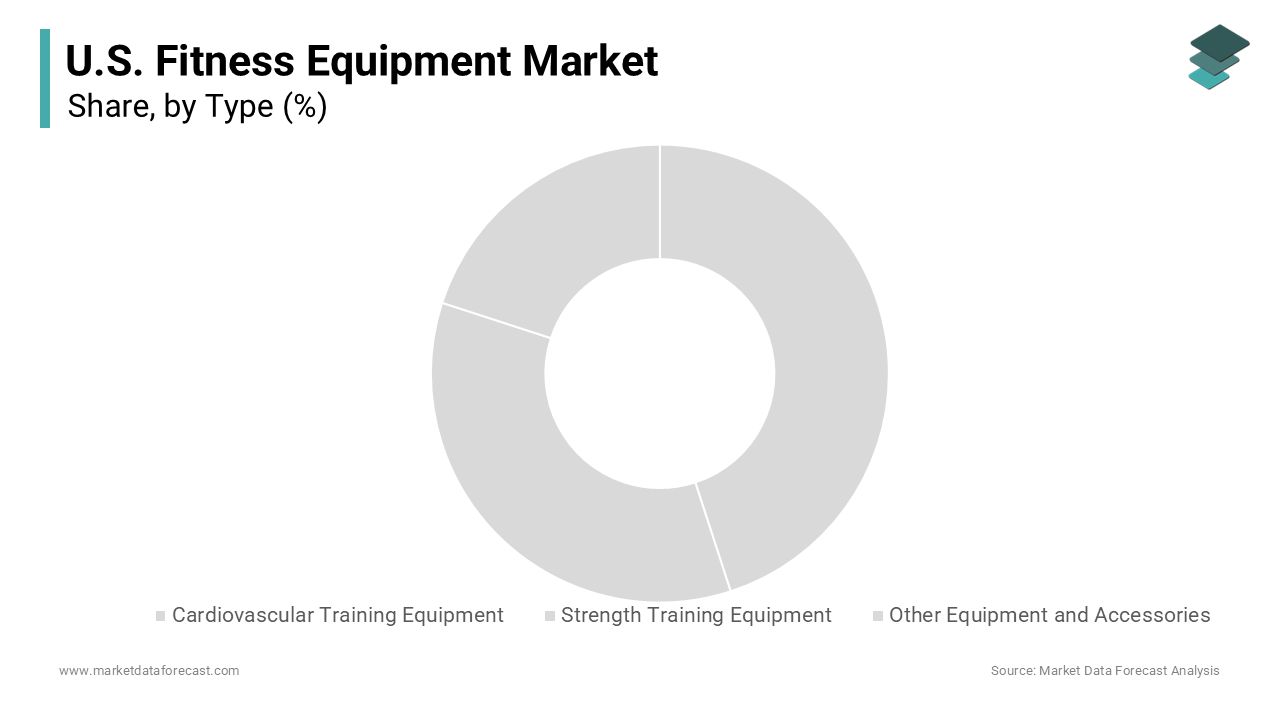
However, the strength training equipment segment is on the rise and is estimated to grow at a CAGR of 7.4% during the forecast period in the U.S. market. Factors such as the shifting consumer preference towards muscle building and functional fitness over pure weight loss are majorly propelling the expansion of this segment in the U.S. market. According to the National Strength and Conditioning Association, resistance training is increasingly recognized for its benefits in boosting metabolism, improving bone density, and enhancing overall functional ability. The rise of hybrid home gyms has led to increased sales of adjustable dumbbells, kettlebells, and multi-station strength machines that offer versatility in compact spaces. As per the International Health Racquet and Sportsclub Association, strength training participation has grown significantly among women and older adults who seek to maintain independence and prevent age-related muscle loss. The popularity of high-intensity interval training HIIT and cross-fit style workouts further drives demand for durable and versatile strength apparatus. Social media influencers and fitness apps often highlight strength routines, inspiring followers to purchase home equipment. Manufacturers are responding with smart strength devices that track repetitions and provide form feedback, appealing to tech-savvy users. The perception of strength training as essential for long-term health rather than just aesthetics broadens its market appeal. These factors collectively propel the strength training segment at a faster pace as cultural attitudes towards fitness evolve.
By End-user Insights
The home consumers segment was the leading segment and held the major share of the U.S. market in 2025. The permanent shift in lifestyle preferences towards convenient and private workout environments, the widespread adoption of remote work and the desire to save time on commuting to gyms are primarily driving the expansion of the home consumers segment in the U.S. market. According to the Bureau of Labor Statistics, 22% of the U.S. workforce was working remotely at least part-time in 2024, allowing individuals to integrate exercise into their daily routines more easily. The initial surge in home fitness during the pandemic established a habit that many consumers have maintained due to the flexibility it offers. As per the Consumer Technology Association, sales of connected home fitness devices remain robust as users value the ability to exercise at any time without membership fees or crowd constraints. The availability of compact and aesthetically pleasing equipment designed specifically for residential spaces has lowered the barrier to entry for apartment dwellers. Families also prefer home setups for safety and hygiene reasons, particularly those with young children or immunocompromised members. The integration of immersive digital content creates a gym-like experience at home, reducing the need for external facilities. This segment benefits from continuous innovation in space-saving designs and smart connectivity. The economic advantage of a one-time purchase versus recurring gym memberships further solidifies the dominance of home consumers.
On the other side, the fitness centers and gyms segment is anticipated to showcase a promising CAGR of 6.4% during the forecast period in the U.S. market owing to the recovery of the commercial sector and the demand for social and specialized fitness experiences, the reopening of facilities and the introduction of enhanced safety protocols that have restored consumer confidence. According to the Health and Fitness Association, fitness facility member foot traffic reached new highs in early 2026, as individuals seek the motivation and community aspect of group classes and professional guidance. Commercial gyms are investing heavily in premium equipment, including advanced cardio machines and specialized strength zones, to differentiate themselves from home setups. As per the Global Wellness Institute, consumers are increasingly willing to pay for experiential fitness, such as boutique cycling studios and high-end personal training services that cannot be replicated at home. The trend towards wellness tourism and corporate wellness programs also drives demand for commercial-grade equipment in hotels and office buildings. Gym operators are upgrading their fleets with connected technology to offer seamless member experiences and data tracking. The social interaction and accountability provided by physical locations remain key drivers for membership retention. The expansion of 24-hour access facilities and budget-friendly chains further broadens the customer base. These factors ensure that the commercial segment continues to expand as it adapts to post-pandemic consumer expectations.
By Distribution Channel Insights
The offline segment dominated the market by holding the leading share of the U.S. market in 2025. The domination of this segment is fueled by the high-value and bulky nature of fitness equipment, which makes shoppers hesitant to buy online without testing comfort and functionality. According to the National Retail Federation, 70% of consumers prefer to purchase sports and fitness equipment in a physical store to evaluate build quality and ergonomics firsthand. Specialty stores offer expert advice and personalized recommendations, which are crucial for complex purchases such as multi-station gyms and high-end treadmills. As per the Sporting Goods Manufacturers Association, brick-and-mortar locations provide immediate availability and easier handling of returns or exchanges, which reduces perceived risk for buyers. The ability to negotiate prices and bundle accessories in person also appeals to cost-conscious shoppers. Retailers often host demonstrations and fitness events to engage customers and drive foot traffic. The tactile experience of using the equipment helps consumers make informed decisions about suitability for their specific needs. Established relationships with local dealers facilitate better after-sales service and maintenance support. This segment benefits from the trust and transparency associated with physical retail interactions. The presence of showrooms allows brands to showcase their latest innovations and build brand loyalty through direct engagement.
However, the online segment is growing exponentially and is expected to showcase a CAGR of 10.4% during the forecast period owing to the convenience of home delivery and extensive product variety, the increasing comfort of consumers with e-commerce platforms and the availability of detailed digital information. According to the U.S. Census Bureau, online sales for sporting goods reached an estimated 25.4 billion dollars in 2024, as retailers improve their logistics and return policies for large items. Online platforms offer a wider selection of brands and models than physical stores, allowing consumers to compare features and prices easily. As per the Consumer Electronics Show, the integration of augmented reality tools enables shoppers to visualize how equipment will fit in their homes before purchasing. Direct-to-consumer brands leverage social media marketing and influencer partnerships to reach targeted audiences effectively. The availability of customer reviews and ratings provides social proof that influences buying decisions. Subscription-based models for connected equipment often require online enrollment, further driving digital sales. The convenience of doorstep delivery and white-glove installation services addresses previous logistical barriers. Online retailers frequently offer competitive pricing and financing options, which attract budget-conscious buyers. The seamless integration of hardware and software purchases online enhances the overall user experience. These factors collectively propel the online channel at a faster pace as digital shopping habits become entrenched.
REGIONAL ANALYSIS
The U.S. is projected to solidify its leadership in the global fitness equipment market over the next few years as it integrates advanced AI-driven personalization and scales hybrid wellness models. According to the Centers for Disease Control and Prevention, the strong cultural emphasis on physical fitness and preventive healthcare sustains consistent demand across demographic groups. The domestic industry benefits from a robust manufacturing base and a dense network of retail outlets ranging from specialty stores to online platforms. As per the Bureau of Economic Analysis, real personal consumption expenditures on recreational goods increased by 4.2% in early 2024, indicating strong market fundamentals. The presence of major global brands and innovative startups fosters a competitive environment that drives technological advancement. Regulatory standards for safety and emissions influence product design and quality assurance processes. Consumer preferences are shifting towards smart and connected equipment that integrates with digital health ecosystems. The market is supported by a well-developed infrastructure for logistics and after-sales service. The resilience of the fitness sector during economic fluctuations demonstrates its entrenched position in American lifestyle. The U.S. serves as a trendsetter for global fitness innovations, influencing product development worldwide. The combination of health consciousness, technological adoption, and economic power ensures that the U.S. maintains its dominant position in the global fitness equipment market.
COMPETITIVE LANDSCAPE
The competition in the U.S. fitness equipment market is characterized by intense rivalry among established manufacturers and innovative startups who compete on technology price and brand loyalty. The market structure is moderately consolidated with key players holding influence over specific segments such as connected cardio or home strength training. Competitive intensity is driven by the need to differentiate through digital content and user experience rather than just hardware specifications. Innovation in smart connectivity and artificial intelligence plays a vital role as firms seek to offer personalized and engaging workout solutions. Regulatory compliance regarding safety standards serves as a baseline requirement but excellence in customer service becomes a key differentiator. Established players leverage their extensive distribution networks and brand recognition to maintain market presence. Price competition is fierce in the entry level segment while premium sectors focus on value added services. The focus on sustainability and modular design is becoming increasingly important for attracting eco conscious consumers. Overall the competitive landscape requires continuous adaptation to technological advancements and shifting consumer preferences for integrated health solutions.
KEY MARKET PLAYERS
A few of the major companies in the U.S. Fitness Equipment Market include
- Peloton Interactive, Inc.
- Nautilus, Inc.
- Johnson Health Tech Co., Ltd.
- Technogym S.p.A.
- ICON Health & Fitness, Inc.
- Life Fitness
- Precor Incorporated
- Core Health & Fitness, LLC
- True Fitness Technology, Inc.
Top in the US Fitness Equipment Market
Peloton Interactive Inc
Peloton Interactive Inc is a transformative force in the U.S. fitness equipment market known for its connected stationary bikes and treadmills. The company integrates hardware with immersive digital content to create a comprehensive home fitness ecosystem. Peloton strengthens its market position by expanding its subscription based content library and introducing lower priced entry level models to broaden accessibility. The company recently partnered with major retailers to increase physical presence and allow customers to try products before purchasing. Peloton focuses on community building through live classes and leaderboards which enhances user retention and brand loyalty. Its investment in software innovation ensures a seamless and engaging user experience. These strategic initiatives reinforce its reputation as a leader in connected fitness while adapting to evolving consumer preferences for flexible and interactive workout solutions.
Life Fitness LLC
Life Fitness LLC is a premier manufacturer of commercial and home fitness equipment with a strong legacy in the U.S. market. The company offers a diverse portfolio including cardio machines strength training systems and digital connectivity solutions. Life Fitness strengthens its market position through the LFconnect digital platform which enables users to track workouts and access entertainment. The company recently introduced new ergonomic designs and sustainable manufacturing practices to appeal to environmentally conscious buyers. Life Fitness focuses on durability and performance which makes it a preferred choice for gyms hotels and corporate wellness centers. Its extensive global distribution network ensures reliable service and support for clients. These efforts demonstrate Life Fitness commitment to quality and innovation while maintaining its leadership in the professional and residential fitness sectors.
Nautilus Inc
Nautilus Inc is a prominent player in the US fitness equipment market recognized for its iconic brands such as Bowflex Schwinn and JRNY. The company specializes in versatile home gym solutions that cater to space constrained environments and budget conscious consumers. Nautilus strengthens its market position by leveraging direct to consumer sales channels and strategic partnerships with online retailers. The company recently expanded its digital subscription services to provide guided workouts and personalized training plans. Nautilus focuses on compact and adjustable equipment designs that offer maximum functionality in minimal space. Its emphasis on affordability and convenience appeals to a broad demographic of home users. These actions enable Nautilus to maintain a competitive edge and drive growth in the dynamic home fitness segment.
Top Strategies Used by Key Market Participants
Key players in the U.S. fitness equipment market primarily employ strategies such as digital integration product diversification and direct to consumer engagement to strengthen their market position. Companies frequently invest in developing connected platforms that offer virtual classes and performance tracking to enhance user retention. This approach allows them to generate recurring revenue through subscriptions and build loyal communities. Strategic partnerships with retailers and technology firms help expand distribution reach and improve product features. By focusing on compact and versatile designs firms address space constraints in urban homes. Additionally manufacturers emphasize sustainability and eco friendly materials to align with consumer values. Product innovation in smart sensors and artificial intelligence provides personalized experiences that differentiate brands. These combined strategies enable market participants to maintain competitiveness and drive growth in a technologically advancing industry landscape.
MARKET SEGMENTATION
This research report on the U.S. fitness equipment market has been segmented based on the following categories.
By Type
- Cardiovascular Training Equipment
- Exercise Bikes
- AirBikes
- Stationary Cycles
- Elliptical Machines
- Treadmills
- Manual Treadmills
- Automatic Treadmills
- Rowers
- Treadclimbers
- Exercise Bikes
- Strength Training Equipment
- Free Weights
- Power Racks
- Dumbbells
- Other Equipment and Accessories
By Price Range
- Low Price Range
- Medium Price Range
- High Price Range
By Distribution Channel
- Online/E-commerce
- Retail
By End User
- Commercial
- Gyms and Fitness Clubs
- Hospitality and Leisure
- Corporate Gyms
- Educational Institutes
- Residential
- Apartment Gyms
- Home/Multi-family Residences
By Country
- California
- Washington
- Oregon
- New York
- Rest of the United States