- Product Description Description
- Table of Contents TOC
- List of Table & Figure LOT
- Get Free Sample PDF Sample PDF
Market Size, 2025
$7.7 BnMarket Estimate, 2026
$8.12 BnMarket Forecast, 2034
$12.47 BnCAGR, 2026–2034
5.5%U.S. Hair Color Market Size, Share & Growth Analysis (2025–2034)
The U.S. hair color market was valued at USD 7.70 billion in 2025, estimated at USD 8.12 billion in 2026, and is projected to reach USD 12.47 billion by 2034. Growing at a CAGR of 5.50% from 2026 to 2034, market expansion is propelled by an aging population requiring gray coverage, the powerful influence of social media and celebrity trends, and rising consumer demand for clean, organic, and custom-blended formulations.
- Market Valuation: USD 8.12 billion (2026) to USD 12.47 billion (2034).
- Compound Annual Growth Rate: 5.50% (2026–2034).
- Primary Growth Drivers: Expanding demographic base seeking anti-aging/gray coverage solutions, viral social media aesthetics, and technological innovations like AI-driven virtual try-ons.
- Core Market Restraints: Health and safety concerns regarding traditional chemical ingredients (e.g., ammonia, PPD) and structural hair damage from frequent chemical treatments.
U.S. Hair Color Market Segmentation & Metrics (2026–2034)
| Category | Leading Segment Focus | Segment Overview & Key Details | Alternative / Growth Focus |
|---|---|---|---|
| By Product Type | Permanent Hair Color | Held 41.2% market share in 2025 due to superior gray coverage and long-lasting color transformations. | Temporary (fastest-growing at an 8.9% CAGR) and semi-permanent colors. |
| By Form | Cream & Liquid Formats | Widely preferred for ease of at-home application, precise saturation, and smooth blending capabilities. | Powder and gel variants. |
| By End-User | Female Segment | Captured 32.6% market share in 2025 driven by higher grooming frequencies and styling variety. | Male segment (fastest-growing at a 12.5% CAGR due to changing grooming norms). |
| By Distribution Channel | Offline Distribution | Occupied 43.8% market share in 2025 thanks to immediate product access and physical shade evaluation in stores. | Online distribution (fastest-growing at a 9.1% CAGR via e-commerce subscriptions). |
Industry Structure & Key Market Players
Competitive Landscape: Intense competition is shared between established multinational conglomerates and clean-beauty disruptors, focusing heavily on sustainability, ammonia-free options, and digital engagement tools.
Leading Companies Profiled: L’Oréal, Henkel, Kao Corporation, Procter & Gamble, Coty Inc., Revlon, Godrej Consumer Products, Unilever, Hoyu Co., Ltd., and Combe Incorporated.
U.S. Hair Color Market Size
The U.S. hair color market was valued at USD 7.7 billion in 2025, is estimated to reach USD 8.12 billion in 2026, and is projected to reach USD 12.47 billion by 2034, growing at a CAGR of 5.5% from 2026 to 2034.
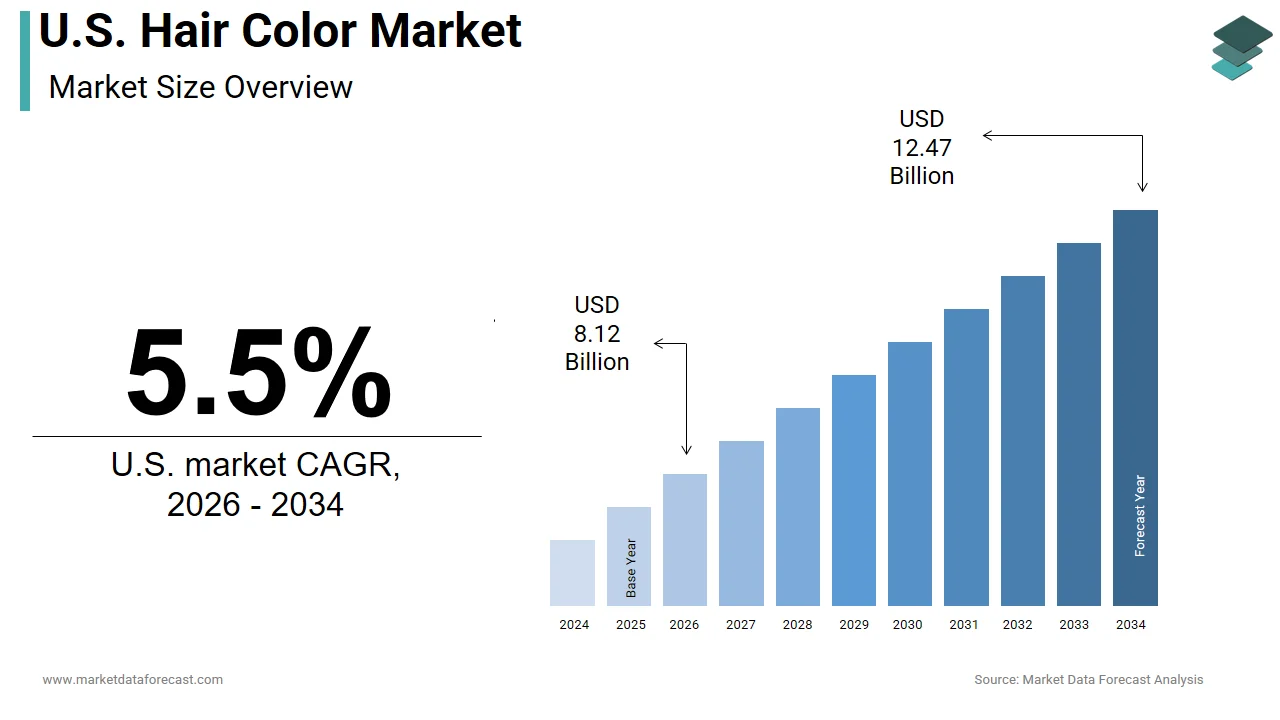
The hair colors are chemical and natural products designed to alter, enhance, or maintain the pigmentation of human hair for cosmetic and corrective purposes. According to the United States Census Bureau, the population aged 65 and older is projected to reach 95 million by 2060, creating a substantial demographic base concerned with covering gray hair and maintaining a youthful appearance. Furthermore, the widespread adoption of digital communication and social media has intensified the focus on personal aesthetics, driving demand for vibrant and experimental hair colors among younger generations. As per the Bureau of Labor Statistics, Americans spend an average of several hundred dollars annually on personal care products and services, indicating consistent discretionary spending power despite economic fluctuations. The rise of clean beauty movements has also reshaped consumer preferences, leading to increased demand for ammonia-free vegan and organic hair color options. Professional stylists play a pivotal role in trend dissemination, often influencing retail purchases through recommendations. The integration of advanced conditioning agents and bond-building technologies has improved the health outcomes of colored hair, encouraging repeat usage.
MARKET DRIVERS
Aging Population and Demand for Gray Coverage
The aging population is increasing the widespread desire to cover gray hair and maintain a youthful appearance, which is one of the major factors fuelling the growth of the United States hair color market. As individuals age, the production of melanin in hair follicles decreases, resulting in graying, which many consumers seek to conceal for professional or personal reasons. According to the United States Census Bureau, the number of individuals aged 65 and older is expected to nearly double from 58 million in 2022 to 95 million by 2060, representing a significant growth in the target demographic for anti-aging beauty products. The psychological impact of aging often motivates individuals to invest in personal grooming as a means of boosting confidence and self-esteem. A majority of women over 50 regularly color their hair to manage gray roots, reflecting a deeply ingrained cultural norm. Men are also increasingly participating in this trend with specialized products targeting male pattern graying, gaining popularity. The recurring nature of hair growth necessitates frequent touch-ups, typically every four to six weeks, creating a consistent revenue stream for manufacturers. Retailers and brands cater to this segment by offering easy-to-use at-home kits with precise application tools.
Influence of Social Media and Celebrity Culture
The pervasive influence of social media and celebrity culture on diverse and experimental trends is additionally accelerating the growth of the United States hair color market. Platforms such as Instagram, TikTok, and YouTube serve as powerful channels for showcasing vibrant colors, balayage techniques, and transformative makeovers that inspire consumers to replicate these looks. As per the research, approximately 72% of the public uses some form of social media, creating a vast network for visual inspiration and peer influence. Celebrities and influencers frequently debut new hair colors, setting trends that rapidly gain traction among followers, who seek to emulate their style. The visual nature of these platforms allows users to see tangible results, which reduces perceived risk and encourages experimentation with bold hues, such as pastels, neon shades, and metallic tones. The digital advertising and influencer endorsements significantly impact purchasing behavior in the beauty sector, with consumers relying heavily on peer recommendations and tutorial content. Brands actively collaborate with content creators to launch limited edition collections, ensuring immediate visibility and credibility. The ease of accessing professional-grade products online further facilitates this trend, allowing consumers to achieve salon-quality results at home. Social media also fosters communities where users share tips and troubleshooting advice, enhancing confidence in DIY coloring.
MARKET RESTRAINTS
Health Concerns Regarding Chemical Ingredients
The health concerns regarding the chemical ingredients used in traditional hair dyes among health-conscious consumers are hampering the growth of the United States hair color market. Many conventional hair colors contain substances, such as ammonia, paraphenylenediamine PPD, and resorcinol, which have been linked to allergic reactions, skin irritation, and potential long-term health risks. Some studies have suggested a possible association between frequent use of permanent hair dyes and an increased risk of certain cancers, although evidence remains inconclusive. This uncertainty has led to heightened scrutiny and caution among consumers, who are increasingly prioritizing wellness and safety in their personal care routines. Many mainstream hair color products receive low safety ratings due to the presence of potentially harmful chemicals, prompting buyers to seek cleaner alternatives. The fear of adverse reactions, particularly among individuals with sensitive skin or existing health conditions, discourages regular usage. Regulatory bodies such as the Food and Drug Administration monitor ingredient safety but do not pre-approve cosmetics, leading to consumer skepticism about product security. Negative media coverage and legal lawsuits against major brands further erode trust and dampen demand. Manufacturers face pressure to reformulate products to remove controversial ingredients, which can be costly and technically challenging.
Damage to Hair Structure and Quality
The potential for damage to hair structure and quality, as consumers become more aware of the detrimental effects of frequent coloring, is another factor declining the growth of the United States hair color market. Chemical processes involved in permanent and bleaching treatments can strip hair of its natural moisture, weaken the protein structure, and lead to breakage, dryness, and dullness. The excessive use of hair dye can cause significant damage to the hair shaft, resulting in fragility and split ends. This physical degradation discourages individuals from maintaining regular coloring schedules, particularly those with already compromised or fine hair. A significant portion of clients request corrective treatments for damaged colored hair, indicating a widespread issue that affects consumer satisfaction and retention. The cost and effort required to repair damaged hair through deep conditioning masks and specialized products add to the overall burden of maintaining colored hair. Consumers may opt to embrace their natural hair texture and color to avoid further damage, leading to a decline in product usage. The rise of the natural hair movement, which celebrates untreated textures, further exacerbates this trend. Manufacturers struggle to balance effective color deposition with hair health protection.
MARKET OPPORTUNITIES
Expansion of Clean and Organic Hair Color Products
The expansion of clean and organic hair color products, as consumers increasingly seek safer and more natural alternatives, is ascribed to setting up new opportunities for the growth of the United States hair color market. These products utilize plant-based ingredients, such as henna, indigo, and herbal extracts, to color hair without harsh chemicals like ammonia and PPD. Consumers are willing to pay premiums for certified organic and vegan hair colors that align with their ethical and health values. Brands that obtain certifications from organizations, such as USDA Organic or Ecocert, gain a competitive advantage by validating their safety and environmental claims. Retailers are expanding their shelves to include niche clean beauty brands catering to this discerning segment. Marketing campaigns emphasizing non-toxic formulations and eco-friendly packaging resonate strongly with millennials and Gen Z consumers. The development of advanced natural dyes that offer better gray coverage and longevity addresses previous performance limitations. Partnerships with salons that specialize in organic services that further drive adoption.
Growth of Personalized and Custom Blended Solutions
The growth of personalized and custom blended hair color solutions offers a lucrative opportunity for brands to differentiate themselves and enhance customer satisfaction, and also to gear up new opportunities for the United States hair color market. Advanced technologies, such as artificial intelligence and digital color matching, allow companies to create bespoke formulas tailored to individual hair types, textures, and desired outcomes. Online platforms enable users to upload photos of their hair and receive customized color recommendations and mixing instructions. The adoption of AI-driven beauty tools is rising, with consumers appreciating the precision and convenience of digital consultations. Custom blends ensure optimal gray coverage and tone accuracy, reducing the risk of undesirable results and returns. Subscription models for personalized kits provide recurring revenue streams and foster brand loyalty. Salons also benefit from custom blending systems that allow stylists to create unique shades for clients, enhancing service value. The ability to adjust formulas based on seasonal changes or hair condition further enhances relevance. Brands leveraging data analytics can refine their offerings and predict trends more effectively. This shift towards bespoke solutions transforms hair color from a commodity into a personalized experience.
MARKET CHALLENGES
Regulatory Scrutiny and Ingredient Restrictions
The regulatory scrutiny and increasing restrictions on certain chemical ingredients by requiring manufacturers to navigate complex regulations are one of the challenges for the growth of the United States hair color market. Agencies, such as the Food and Drug Administration and state-level bodies like California’s Proposition 65, enforce strict guidelines on labeling and ingredient safety. The cosmetic manufacturers are responsible for ensuring the safety of their products, but face increasing pressure to disclose potential hazards and adhere to evolving standards. Recent proposals to ban or restrict ingredients such as formaldehyde releasers and certain coal tar dyes force companies to reformulate products, which can be costly and time-consuming. Compliance with varying state regulations creates fragmentation, making national distribution challenging for smaller brands. Failure to comply can result in fines, product recalls, and reputational damage. The lack of harmonized federal standards leads to uncertainty and inconsistent enforcement. Manufacturers must invest heavily in research and development to find safe and effective alternatives to restricted substances. Legal challenges and class action lawsuits related to ingredient safety further exacerbate risks.
Supply Chain Disruptions and Raw Material Volatility
The supply chain disruptions and volatility in raw material prices are also expected to decline the growth of the US hair color market. The production of hair dyes relies on specific chemical compounds and natural extracts that are subject to global market fluctuations and logistical hurdles. Geopolitical tensions, trade policies, and natural disasters can disrupt the sourcing of key ingredients such as oxidative dyes and conditioning agents. The supply chain inconsistencies continue to challenge retailers in maintaining optimal stock levels and meeting consumer demand. Labor shortages in processing plants and transportation sectors further exacerbate delays, leading to stockouts and lost sales. The push for sustainable and ethically sourced ingredients adds another layer of complexity as suppliers must meet stringent certification requirements. Small and mid-sized brands are particularly affected as they lack the bargaining power and inventory reserves of larger conglomerates. Manufacturers face difficulties in securing long-term contracts for specialized materials due to high demand and limited supply. These vulnerabilities affect the ability of brands to maintain consistent pricing and product availability.
REPORT COVERAGE
| REPORT METRIC | DETAILS |
| Market Size Available | 2025 to 2034 |
| Base Year | 2025 |
| Forecast Period | 2026 to 2034 |
| Segments Covered | By Product Type, Form, End-User, Distribution Channel, and Country. |
| Various Analyses Covered | Global, Regional, and Country-Level Analysis, Segment-Level Analysis, Drivers, Restraints, Opportunities, Challenges; PESTLE Analysis; Porter’s Five Forces Analysis, Competitive Landscape, Analyst Overview of Investment Opportunities |
| Countries Covered | New York, Massachusetts, Pennsylvania, Illinois, Ohio, Michigan, Texas, Florida, Georgia, California, Washington, Colorado. |
| Market Leaders Profiled | L’Oréal, Henkel, Kao Corporation, Procter & Gamble, Coty Inc., Revlon, Godrej Consumer Products, Unilever, Hoyu Co., Ltd., Combe Incorporated, and Others. |
SEGMENTAL ANALYSIS
By Product Insights
The permanent hair color segment was the largest by holding 41.2% of the US hair color market share in 2025, with its superior ability to provide long-lasting coverage of gray hair and dramatic color changes. The growing number of individuals over the age of 65 creates a consistent demand for products that offer complete and lasting concealment of white hair. Consumers value the cost-effectiveness of permanent color as it requires less frequent application compared to semi-permanent or temporary options. The availability of advanced formulations with conditioning agents and ammonia-free technologies has mitigated some concerns about hair damage, encouraging continued use. Major brands invest heavily in marketing permanent lines, emphasizing reliability and vibrancy, which reinforces consumer trust. The professional salon sector also relies heavily on permanent color for client transformations, driving bulk purchases.
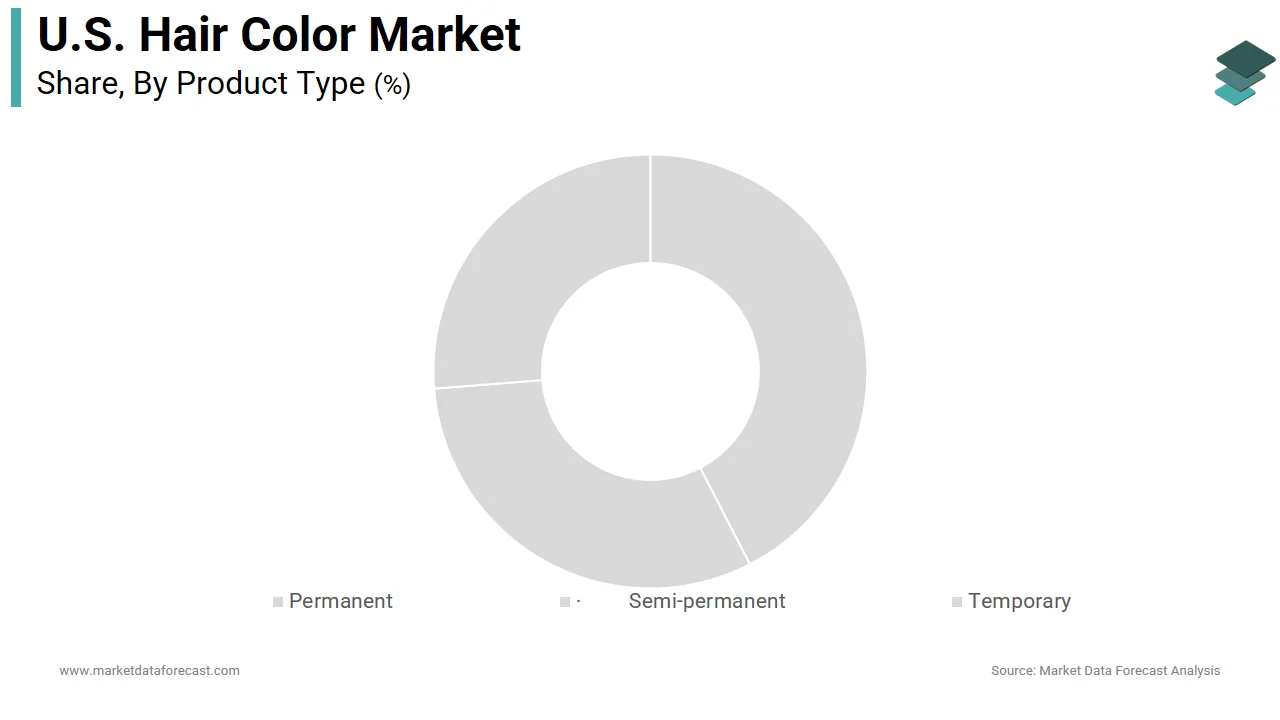
The temporary hair color segment is likely to witness the fastest CAGR of 8.9% from 2026 to 2034 due to the rising trend of experimental self-expression and social media influence. Unlike permanent dyes, temporary colors sit on the hair surface and wash out after one or a few shampoos, allowing users to change their look frequently without commitment or damage. The high usage of visual social media platforms like Instagram and TikTok drives rapid trend cycles, where vibrant and unconventional hair colors gain instant popularity. Younger people, particularly Gen Z and Millennials, are increasingly adopting temporary spray chalks and masks to participate in these trends for events, festivals, or content creation. A growing preference for low-commitment beauty solutions that allow for versatility and fun without the risk of long-term regret or hair damage. The ease of application and removal makes temporary color accessible to beginners, who may be hesitant to use chemical dyes. Manufacturers are launching innovative formats such as color-depositing conditioners and hair mascaras that appeal to this desire for convenience and creativity. The rise of virtual try-on tools also encourages experimentation by showing users how different colors look before purchase.
By Category Insights
The conventional hair color segment accounted in holding 53.2% of the US hair color market share in 2025, with its widespread availability, proven efficacy, and lower price point compared to organic alternatives. Conventional products utilize established chemical formulations, such as ammonia and peroxide, which deliver consistent and predictable results for gray coverage and lightening. The conventional hair care products continue to hold the majority of shelf space and sales volume in mass retailers due to their affordability and brand recognition. Consumers, who prioritize performance and cost over ingredient purity, remain loyal to trusted legacy brands that have decades of research and development behind them. The familiarity of these products reduces the perceived risk of unsatisfactory results, which is a significant factor for first-time users or those covering resistant gray hair. Retailers support this segment with prominent placement and frequent promotions, ensuring high visibility. Professional salons also rely heavily on conventional lines for their reliability and versatility in creating complex color techniques. The extensive distribution network of conventional brands ensures they are accessible in supermarkets, drugstores, and beauty supply stores nationwide.
The organic and natural hair color segment is expected to grow at the fastest CAGR of 5.4% during the forecast period due to increasing consumer awareness of health risks associated with synthetic chemicals and a broader shift towards clean beauty. Products in this category use plant-based ingredients such as henna, indigo, and herbal extracts to color hair without harsh additives like ammonia, parabens, or resorcinol. Many consumers actively avoid conventional hair dyes due to concerns about potential allergens and long-term health effects, driving them towards safer natural options. The rise of wellness culture and sustainability consciousness encourages buyers to support brands that prioritize ethical sourcing and eco-friendly packaging. Certifications from organizations like USDA Organic validate claims and build trust among skeptical shoppers. Retailers are expanding their clean beauty sections to accommodate this growing demand, providing easier access to niche brands. Social media influencers and dermatologists often recommend natural alternatives for individuals with sensitive scalps, further boosting adoption.
By End User Insights
The female segment was the largest by accounting for 32.6% of the US hair color market share in 2025, owing to the higher frequency of use, societal expectations regarding appearance, and a wider variety of coloring services. Women are more likely to engage in regular hair coloring routines for gray coverage, fashion trends, and overall grooming. The beauty industry traditionally targets women with extensive marketing campaigns and product ranges catering to diverse needs, such as balayage and all-over color. The social pressure to maintain polished aesthetics in professional and personal settings drives consistent demand. Women are also more likely to experiment with different shades and techniques, leading to higher product turnover. Retailers allocate more shelf space to female-oriented brands and shades, reinforcing this dominance. The emotional connection between hair color and self-esteem is particularly strong among women, influencing purchasing decisions.
The male segment is swiftly emerging at a fastest CAGR of 12.5% during the forecast period due to shifting gender norms and increasing acceptance of grooming practices among men. Historically, hair color was marketed primarily to women, but recent trends show a significant rise in men seeking to cover gray hair or enhance their natural color. Younger men are increasingly influenced by celebrity styles and social media, leading to greater experimentation with bleaching and vibrant colors. Brands are launching specialized lines for men with discreet packaging and easy-to-use applicators, such as combs in dyes and shampoos. The desire to maintain a competitive edge in the workplace and dating scene motivates older men to cover gray hair subtly. Retailers are expanding men’s grooming sections to include color products, improving accessibility.
By Distribution Channel Insights
The offline distribution channel segment was the largest by occupying 43.8% of the US hair color market share in 2025, with the immediate availability of products and the ability for consumers to physically assess shades and packaging. Brick and mortar stores, such as supermarkets, drugstores, and beauty supply shops, remain the primary source for hair color purchases due to convenience and habit. Consumers often rely on in-store displays and promotional offers to make impulse purchases or replenish supplies during routine grocery trips. The tactile experience of examining box contents and reading instructions is valued by many users, particularly first-time buyers. Professional salons also contribute significantly to offline sales through service-based product recommendations and retail shelves. The trust built through face-to-face interactions with stylists or store employees influences brand loyalty. Additionally, the ability to return or exchange products easily in-store reduces purchase anxiety.
The online distribution channel segment is anticipated to grow at the fastest CAGR of 9.1% during the forecast period due to the convenience of home delivery, expanded product selection, and the rise of direct-to-consumer brands. E-commerce platforms allow consumers to access niche, organic, and specialized brands that may not be available in local stores. Subscription services offered by brands like Madison Reed provide automated replenishment and personalized color matching, enhancing customer retention. Social media integration enables seamless discovery and purchase through shoppable posts and influencer endorsements. Online reviews and tutorials provide valuable social proof, helping consumers make informed decisions. The privacy of online shopping appeals to individuals who prefer discreet transactions for grooming products. Mobile commerce has simplified the buying process by making it accessible anytime and anywhere. Retailers are investing in faster shipping and easy return policies to compete with physical stores.
COMPETITIVE LANDSCAPE
The competition in the US hair color market is intense and characterized by the presence of established multinational corporations alongside emerging niche brands. Major players compete on the basis of product efficacy, brand heritage, and innovation while striving to offer safe and versatile solutions. The market sees continuous launches of clean beauty products, such as plant-based dyes and ammonia-free formulas, catering to health-conscious consumers. Price competition is significant in the mass market segment, where affordability drives purchase decisions for budget-conscious households. Conversely, premium segments compete on specialized technologies, professional endorsements, and luxurious user experiences. Retailers leverage omnichannel strategies to provide seamless shopping experiences across online and physical stores. Social media influence plays an important role in shaping trends and driving demand for experimental colors. Direct-to-consumer brands disrupt traditional models by offering personalized subscriptions and digital consultations. Intellectual property protection is vital for maintaining unique formulations and brand identity.
KEY MARKET PLAYERS
Some of the companies that are playing a dominating role in the U.S. hair color market include
- L’Oréal
- Henkel
- Kao Corporation
- Procter & Gamble
- Coty Inc.
- Revlon
- Godrej Consumer Products
- Unilever
- Hoyu Co., Ltd.
- Combe Incorporated
TOP PLAYERS IN THE MARKET
- L'Oréal USA maintains a dominant presence in the hair color market through its diverse portfolio, including L'Oréal Paris, Garnier, and Redken. The company focuses on innovation by integrating advanced conditioning technologies and ammonia-free formulas to address consumer health concerns. L’Oreal leverages strong retail partnerships to ensure widespread availability in mass and prestige channels. The company actively engages consumers through augmented reality try-on apps, enhancing the online shopping experience. By prioritizing research and development, L'Oréal continues to set industry standards for color performance and safety.
- Coty Inc contributes significantly to the US hair color market with iconic brands, such as Clairol and Wella Professionals. The company emphasizes accessibility and affordability, offering a wide range of permanent and semi-permanent options for diverse consumer needs. Coty focuses on omnichannel distribution strategies, ensuring products are available in both physical stores and online platforms. The company invests in influencer collaborations to drive trend awareness and engagement on social media. Their strategic focus on digital transformation and brand rejuvenation allows them to remain relevant and competitive in the evolving hair care sector.
- Henkel Corporation plays a vital role in the US hair color market through its Schwarzkopf and Dial brands, known for professional-grade quality and innovation. The company specializes in premium hair color solutions that offer superior gray coverage and long-lasting vibrancy. Recent actions include launching bond-building technologies that protect hair integrity during the coloring process. Henkel strengthens its position by partnering with salons and stylists to promote professional use and recommendations. The company emphasizes sustainability by reducing plastic usage and sourcing responsible ingredients.
TOP STRATEGIES USED BY KEY MARKET PARTICIPANTS
Key players in the US hair color market primarily employ product innovation strategies by developing ammonia-free and organic formulations to meet growing health consciousness among consumers. Companies invest heavily in digital tools such as virtual try-on apps to enhance online shopping experiences and reduce purchase hesitation. Strategic partnerships with influencers and celebrities help build brand visibility and credibility among younger demographics. Brands emphasize sustainability initiatives, including recyclable packaging and ethical sourcing, to appeal to environmentally conscious buyers. Direct-to-consumer models and subscription services offer convenience and personalized recommendations driving customer loyalty. Retailers optimize shelf space and promotional displays to maximize visibility in physical stores. Educational content regarding application techniques and hair care maintenance fosters consumer confidence.
MARKET SEGMENTATION
This research report on the U.S. hair color market has been segmented and sub-segmented into the following categories.
By Product Type
- Permanent
- Semi-permanent
- Temporary
By Form
- Powder
- Cream
- Liquid
- Gel
By End-user
- Men
- Women
By Distribution Channel
- Online
- Offline
By Country
- New York
- Texas
- Florida
- Georgia
- California
- Rest of U.S.