- Product Description Description
- Table of Contents TOC
- List of Table & Figure LOT
- Get Free Sample PDF Sample PDF
Market Size, 2025
$749.65 BnMarket Estimate, 2026
$798.45 BnMarket Forecast, 2034
$1,322.42 BnCAGR, 2026–2034
6.51%U.S. Hair Extension Market Report Summary
The U.S. hair extension market was valued at USD 749.65 billion in 2025, is estimated to reach USD 798.45 billion in 2026, and is projected to reach USD 1,322.42 billion by 2034, growing at a CAGR of 6.51% during the forecast period. Market growth is driven by increasing consumer focus on personal grooming and beauty enhancement, rising demand for premium hair styling products, and growing social media influence on fashion and appearance trends. Hair extensions are increasingly adopted for aesthetic enhancement, hairstyling flexibility, and confidence building purposes. The growing popularity of salon services, celebrity inspired beauty trends, and premium human hair products is further supporting market expansion across the United States.
Key Market Trends
- Rising consumer spending on beauty and personal care products is driving market growth.
- Increasing demand for premium and natural looking hair solutions is boosting market expansion.
- Growing influence of social media, fashion trends, and celebrity endorsements is supporting product adoption.
- Expansion of salon services and beauty retail distribution channels is enhancing market accessibility.
- Innovation in lightweight application methods and premium quality hair products is influencing market development.
Segmental Insights
- Based on type, the human hair extensions segment accounted for the dominant share of the U.S. hair extension market in 2025. This dominance is attributed to increasing consumer preference for natural appearance, durability, and styling flexibility.
- Based on end user, the female segment held 34.2% of the U.S. hair extension market share in 2025, supported by strong beauty and styling product demand.
- Based on ethnic demographics, the Black individuals segment accounted for a dominant share of the U.S. hair extension market in 2025, driven by diverse hairstyling preferences and strong adoption of hair enhancement products.
Regional Insights
- The U.S. hair extension market is experiencing steady growth across beauty retail, salon services, and online channels, supported by evolving fashion trends and rising consumer focus on appearance enhancement. Increasing demand for premium hair products and customization options continues to strengthen market growth.
Competitive Landscape
The U.S. hair extension market is highly competitive, with key players focusing on premium hair quality, product innovation, and expansion of salon and retail partnerships to strengthen their market position. Companies are investing in premium human hair offerings, customization technologies, and digital marketing strategies. Prominent players in the U.S. hair extension market include SHAKE N GO, Great Lengths Inc., Donna Bella Hair, Easihair Pro, ONYC Hair, Mayvenn Inc., CAP.U.S., Cinderellahair, Klix Hair Inc., and HALOCOUTURE.
U.S. Hair Extension Market Size
The U.S. hair extension market size was valued at USD 749.65 billion in 2025, and the market size is expected to be worth USD 1,322.42 billion by 2034 from USD 798.45 billion by 2026. The market is growing at a CAGR of 6.51% during the forecast period.
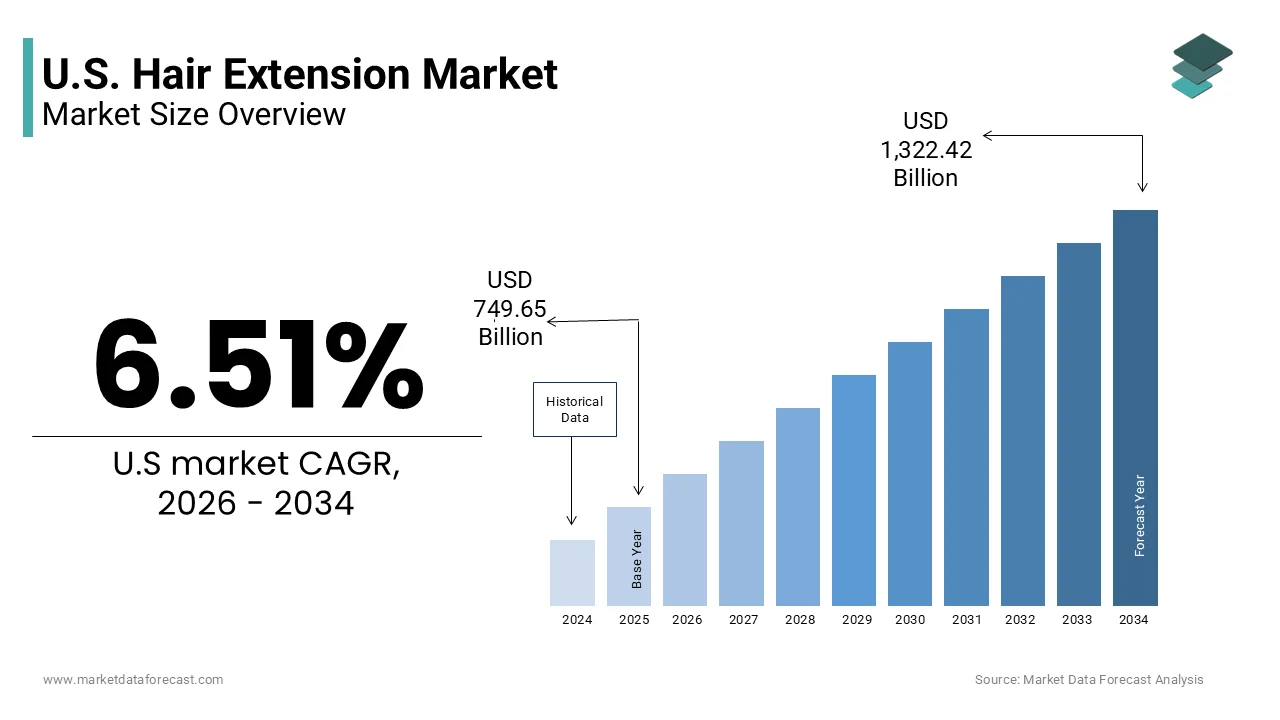
The hair extension is supplemental hair products designed to enhance length volume and texture including clip ins tape ins sew in weaves and fusion methods. Consumer engagement is heavily influenced by digital media trends, where visual platforms dictate rapidly changing beauty standards. According to the United States Census Bureau, the female population aged 15 to 44 which represents the primary demographic for hair enhancements accounts for approximately 62 million individuals providing a substantial consumer base. Furthermore, data from the Bureau of Labor Statistics indicates that average annual expenditures on personal care products and services per consumer unit reached 651 dollars by reflecting a consistent financial commitment to grooming and appearance. The proliferation of social media influencers has normalized the use of extensions making them accessible and desirable across various age groups and ethnicities. As per the National Association of Barbers and Cosmetologists the number of licensed cosmetologists specializing in hair extensions has increased significantly indicating growing professional demand. The integration of high quality synthetic and human hair options allows for customization based on budget and lifestyle. This market dynamic is characterized by a shift toward ethical sourcing and sustainable practices as consumers become more informed about supply chain origins.
MARKET DRIVERS
Influence of Social Media and Celebrity Culture on Beauty Standards
The digital platforms, such as Instagram, TikTok, and YouTube have fundamentally altered perceptions of beauty by showcasing flawless hairstyles that are often achieved through extensions. The rising social media platforms and celebrity culture on beauty standards is greatly influencing the growth of the United States hair extension market. Celebrities and influencers frequently display voluminous long hair creating an aspirational ideal that drives consumer demand for similar looks. According to research, approximately 71% of teens and young adults use TikTok regularly where beauty tutorials and transformation videos generate billions of views monthly. This constant exposure creates a powerful psychological pull as users seek to replicate the polished aesthetics seen online. The visual nature of these platforms emphasizes the immediate impact of hair extensions encouraging frequent purchases to keep up with trending styles. Brands leverage this dynamic by collaborating with digital creators who possess high engagement rates thereby bypassing traditional advertising barriers. This shift indicates that consumer attention has decisively moved toward interactive digital environments where peer validation plays a crucial role. The immediacy of social commerce features allows users to purchase products directly from posts shortening the sales funnel significantly.
Growing Demand for Protective Styling Among Diverse Ethnic Groups
The increasing adoption of protective hairstyles among African American and other ethnic communities is fuelling the growth of the United States hair extension market. Protective styling involves techniques that minimize manipulation of natural hair thereby reducing breakage and promoting growth. Hair extensions, such as braids weaves and locs are integral to these styles offering versatility while safeguarding natural strands. According to the study, Americans constitute approximately 13% of the population representing a substantial demographic with specific hair care needs. This group historically spends more on hair care products and services compared to other demographics due to the complexity of maintenance. The multicultural beauty sector has experienced consistent growth with hair extensions being a key contributor. The cultural significance of hair in these communities fosters strong brand loyalty and repeat purchases. Consumers view extensions not just as cosmetic enhancements but as essential tools for hair health management. The availability of textured hair extensions that match natural curl patterns has further expanded market accessibility. Professional stylists play a critical role in educating clients on proper installation and maintenance ensuring long term satisfaction. This educational aspect builds trust and encourages regular salon visits. The trend toward natural hair acceptance has paradoxically increased demand for high quality extensions that blend seamlessly with textured hair.
MARKET RESTRAINTS
High Cost of Premium Human Hair and Maintenance Services
The substantial financial investment required for high quality human hair extensions and their professional installation for many potential consumers is hampering the growth of the United States hair extension market. Premium human hair sourced from regions such as Brazil India or Vietnam commands high prices due to scarcity and processing costs. The price point places premium products out of reach for budget conscious shoppers who may opt for lower quality synthetic alternatives. The inflationary pressures have reduced disposable income for non-essential goods leading consumers to prioritize basic necessities over luxury beauty items. The ongoing maintenance costs including regular adjustments specialized shampoos and conditioners further add to the financial burden. Synthetic alternatives while affordable often lack the natural look and feel of human hair limiting their appeal for special occasions. The perceived value proposition becomes challenging when consumers weigh the high initial cost against the limited lifespan of certain extension types. Economic uncertainty exacerbates this hesitation causing delays in purchasing decisions or trading down to cheaper options. Brands struggle to justify premium pricing without demonstrating clear longevity and superior performance.
Risk of Hair Damage and Scalp Health Issues from Improper Use
The concerns regarding potential damage to natural hair and scalp health associated with improper extension application and maintenance deter some consumers from adopting these products is additional factor declining the growth of the United States hair extension market. Incorrect installation techniques excessive tension or prolonged wear can lead to traction alopecia a condition characterized by hair loss due to pulling forces. The traction alopecia is increasingly prevalent among women, who frequently wear tight hairstyles including extensions and braids. This medical reality creates apprehension among health-conscious consumers, who prioritize hair integrity over aesthetic enhancement. The use of heavy extensions without adequate breaks can weaken hair follicles permanently. The complexity of proper care requires time and expertise which many users lack leading to unintended consequences. Negative experiences shared on social media platforms amplify these fears creating a barrier to entry for new users. Salons face liability issues if clients suffer damage necessitating rigorous training and certification for stylists. The need for specialized removal processes also adds to the inconvenience and cost. Consumers may hesitate to invest in extensions if they perceive the risk of damage outweighs the benefits.
MARKET OPPORTUNITIES
Expansion of Ethically Sourced and Sustainable Hair Product Lines
The growing consumer awareness regarding ethical sourcing and sustainability is substantially to leverage new opportunities for the growth of the United States hair extension market. Shoppers are increasingly demanding transparency about the origin of human hair ensuring it is obtained through fair trade practices without exploitation. According to a survey by Deloitte, nearly 60% of consumers express willingness to pay more for products from brands that demonstrate strong ethical standards. This shift creates a niche for companies that can verify and certify their supply chains providing peace of mind to conscientious buyers. The demand for clean beauty extends to hair care with consumers seeking products free from harmful chemicals and unethical labor practices. Brands that partner with verified suppliers and obtain certifications such as Fair Trade can command premium pricing and build loyal customer bases. The development of bio based synthetic fibers that mimic human hair without environmental degradation offers another avenue for innovation. These eco friendly alternatives appeal to younger demographics who prioritize sustainability in their purchasing decisions. Marketing campaigns that highlight the stories behind the hair sources foster emotional connections and trust.
Innovation in DIY Friendly and Easy Application Methods
The rise of do it yourself beauty routines driven by convenience and cost savings is another attribute to leverage the growth of the United States hair extension market. Consumers seek user friendly products that can be applied at home without professional assistance reducing overall expenses. According to research, the DIY beauty sector has grown significantly with millions of Americans purchasing tools and products for home use. Clip in and tape in extensions have gained popularity due to their ease of application and removal appealing to busy individuals. Brands can capitalize on this by developing innovative attachment mechanisms that are secure yet gentle on natural hair. Instructional videos and augmented reality tutorials further empower users to achieve professional results independently. The convenience factor resonates with younger generations who value flexibility and speed in their beauty routines. Packaging designs that include clear guides and necessary tools enhance the user experience and reduce frustration. Subscription models for regular delivery of extension care products ensure recurring revenue and customer retention. The democratization of beauty technology allows broader access to high quality extensions regardless of geographical location.
MARKET CHALLENGES
Prevalence of Counterfeit and Low Quality Products in the Market
The widespread availability of counterfeit and substandard hair extensions to reputable brands and consumer trust is likely to inhibit the growth of the United States hair extension market. Unregulated online marketplaces and unauthorized sellers often offer cheap imitations that misrepresent material quality and origin. The counterfeit goods cost the global economy billions of dollars annually with beauty products being a primary target. These inferior products often shed tangle or degrade quickly leading to negative consumer experiences and damaging brand reputation. The seizures of counterfeit hair products remain high indicating the scale of the issue. Consumers who purchase fake items may mistakenly attribute poor quality to legitimate brands causing long term distrust. The difficulty in distinguishing between real and fake human hair exacerbates the problem especially for online shoppers. Legal enforcement is challenging due to the cross-border nature of e commerce and varying intellectual property laws. Brands must invest heavily in authentication technologies and consumer education to combat this issue. However, these measures add to operational costs and complexity. The presence of counterfeits also undermines pricing strategies and devalues premium offerings. Maintaining brand integrity in a saturated market requires constant vigilance and collaboration with law enforcement agencies. This ongoing battle diverts resources from innovation and marketing. Protecting intellectual property remains a persistent challenge for industry leaders striving to maintain quality standards.
Lack of Standardized Regulation and Quality Control Measures
The absence of comprehensive federal regulations governing leads to inconsistencies in product quality and safety standards, which is additionally to act as a major barrier for the growth of the United States hair extension market. Unlike cosmetics, which are subject to stricter oversight hair extensions often fall into a regulatory gray area regarding labeling and material disclosure. The cosmetics regulations do not specifically address the sourcing and processing of human hair used in extensions. This lack of standardization allows manufacturers to use ambiguous terms such as virgin or Remy without verification misleading consumers. The consumer protection agencies complaints regarding mislabeled hair products are common with buyers receiving synthetic blends instead of pure human hair. The variability in quality makes it difficult for consumers to make informed purchasing decisions based on price alone. Salons and stylists face challenges in sourcing reliable products that meet client expectations consistently. The lack of mandatory testing for chemical residues or allergens poses potential health risks. Industry associations attempt to establish voluntary guidelines but adherence is not universal. This regulatory vacuum creates an uneven playing field where unethical operators can undercut responsible brands. Consumers become skeptical of claims leading to hesitation in purchasing higher priced items.
REPORT COVERAGE
| REPORT METRIC | DETAILS |
| Market Size Available | 2025 to 2034 |
| Base Year | 2025 |
| Forecast Period | 2026 to 2034 |
| CAGR | 6.51% |
| Segments Covered | By Type, End User, Ethnic Demographics, and Region. |
| Various Analyses Covered | Global, Regional and Country-Level Analysis, Segment-Level Analysis, Drivers, Restraints, Opportunities, Challenges; PESTLE Analysis; Porter’s Five Forces Analysis, Competitive Landscape, Analyst Overview of Investment Opportunities |
| Countries Covered | California, Washington, Oregon, New York, United States |
| Market Leaders Profiled | SHAKE N GO (U.S.), Great Lengths Inc. (Italy), Donna Bella Hair (U.S.), Easihair Pro (U.S.), ONYC Hair (U.S.), Mayvenn Inc. (U.S.), CAP USA (U.S.), Cinderellahair (U.S.), Klix Hair Inc. (U.S.), and HALOCOUTURE (U.S.) |
SEGMENTAL ANALYSIS
By Type Insights
The human hair extensions segment was accounted in holding a dominant share of the United States hair extension market in 2025 with the superior aesthetic quality versatility and durability that synthetic alternatives cannot replicate. Consumers prefer human hair because it can be styled with heat tools colored and treated similarly to natural hair allowing for seamless integration and a realistic appearance. According to the study, human hair accounts for approximately 60% of total extension sales in professional salons reflecting the preference for premium materials among stylists and clients. The demand for long lasting investments as human hair extensions can last up to one year with proper care whereas synthetic options degrade within months. The consumers are willing to pay a premium for Remy and virgin human hair, which retains the cuticle layer ensuring smoothness and reduced tangling. The cultural shift toward viewing hair extensions as essential beauty accessories rather than occasional novelties further sustains demand. High profile celebrities and influencers frequently showcase human hair transformations reinforcing its status as the gold standard. The availability of diverse textures including straight wavy and curly allows for customization across ethnic groups. Additionally, the resale value of high quality human hair creates a secondary market that enhances its perceived worth. Professional installation services often mandate human hair to ensure client satisfaction and minimize damage risks.
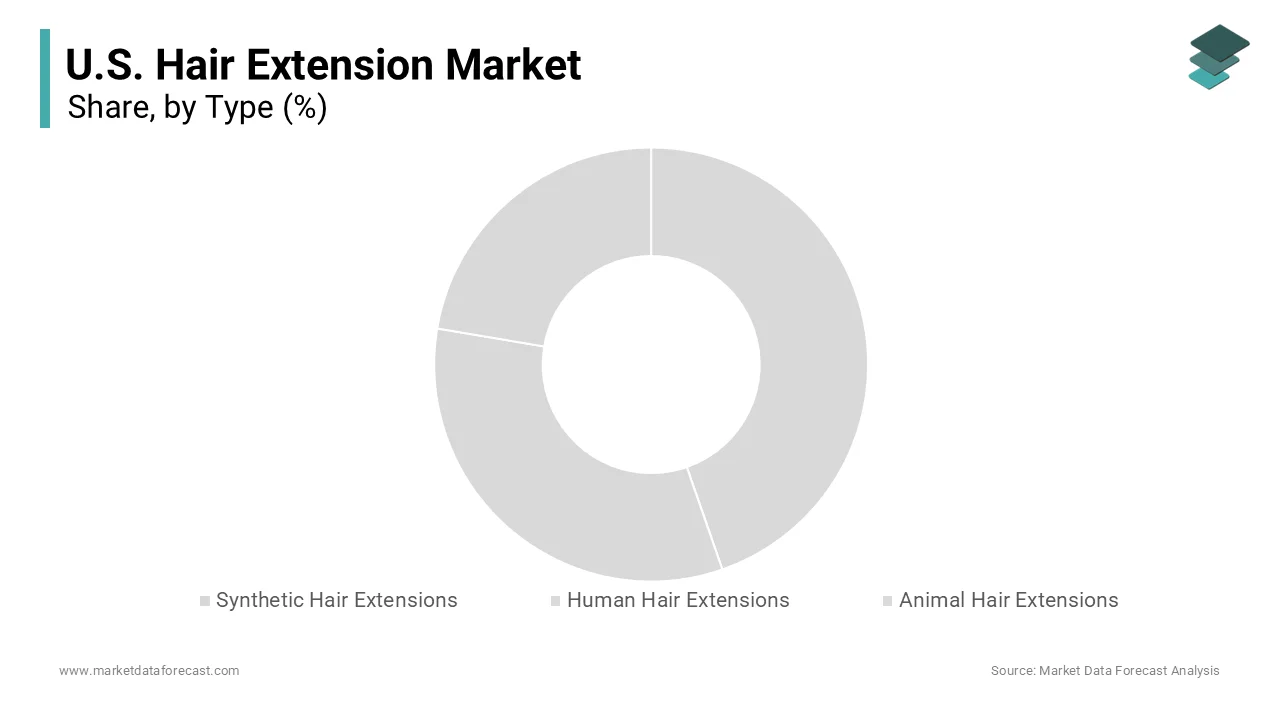
The synthetic hair extensions segment is deemed to grow at a fastest CAGR of 8.3% during the forecast period with the advancements in fiber technology that have significantly improved the look and feel of synthetic strands making them nearly indistinguishable from human hair. The primary driver is affordability and accessibility as synthetic extensions cost a fraction of human hair appealing to budget conscious consumers and younger demographics. The average price of synthetic extensions is 70% lower than human hair equivalents enabling frequent style changes without significant financial commitment, as per recent survey. The impulse purchases of synthetic hair products have increased due to their availability in mass retailers and drugstores. The rise of social media trends, such as colorful hairstyles and temporary looks drives demand for low risk options that do not require long term investment. Synthetic fibers are pre styled and retain their shape even after washing offering convenience for users who lack styling expertise. The development of heat resistant synthetic materials has expanded usage possibilities allowing for limited thermal styling. Furthermore, the ethical concerns regarding human hair sourcing have led some consumers to choose cruelty free synthetic alternatives. The ease of DIY application for clip in synthetic pieces also contributes to volume sales.
By End User Insights
The female segment was the largest by capturing 34.2% of the United States hair extension market share in 2025 with the societal beauty standards that emphasize long voluminous hair, as a key attribute of femininity and attractiveness. Women constitute the primary consumer base for both protective styling and cosmetic enhancement purposes. The women make up approximately 51% of the population and are the predominant users of beauty and personal care products, as per a survey. The widespread adoption of hair extensions for special occasions daily wear and professional settings, where polished appearance is valued. As per data from the Bureau of Labor Statistics, women spend approximately 30% more on personal care products than men reflecting higher engagement with beauty routines. The influence of media and fashion industries reinforces the desire for versatile hairstyles that extensions facilitate. Protective styling practices among African American women further anchor demand as extensions serve functional health benefits alongside aesthetics. The prevalence of female focused marketing campaigns by major brands creates strong brand loyalty and repeat purchases. Salon services are predominantly tailored to female clients with specialized training for women’s hair types and styles. The emotional connection between hair identity and self esteem drives consistent consumption. Additionally, the rise of female influencers showcasing extension tutorials educates and inspires peers to adopt similar practices.
The male segment is swiftly emerging at a fastest CAGR of 9.2% during the forecast period with the increasing acceptance of grooming practices and solutions for hair loss among men. Historically, stigmatized the use of hair enhancements by men is becoming normalized as societal attitudes shift toward self-care and aesthetic maintenance. The rising prevalence of male pattern baldness, which affects approximately 50 million men in the United States, according to the American Hair Loss Association. Men are increasingly seeking non-surgical solutions, such as hair systems and extensions to restore confidence and youthful appearance. As per data from the International Society of Hair Restoration Surgery the number of men undergoing hair restoration procedures has increased significantly indicating broader interest in hair solutions. The influence of male celebrities and athletes who openly discuss hair treatments has reduced stigma and encouraged adoption. Modern hair systems for men are lightweight breathable and undetectable appealing to active lifestyles. The growth of male specific grooming brands and barbershops offering extension services provides accessible channels for purchase. Social media platforms feature male grooming influencers who demonstrate application techniques and styling tips. The desire for immediate results without the wait time of medical treatments drives preference for extensions.
By Ethnic Demographics Insights
The black individuals segment was the largest by holding a dominant share of the United States hair extension market in 2025 with the cultural significance of hair and the necessity of protective styling for textured hair types. Hair extensions, such as braids weaves and locs are integral to African American beauty routines serving both aesthetic and functional purposes. According to the study, Americans constitute approximately 13% of the population but account for a disproportionately high share of hair extension expenditures. The structural need to protect natural hair from breakage and environmental damage, which extensions facilitate effectively. The cultural identity tied to hairstyles fosters strong brand loyalty and frequent repurchase cycles. Professional stylists within the community play an important role in recommending and installing high quality extensions by ensuring proper maintenance. The availability of textured hair extensions that match natural curl patterns has expanded accessibility and satisfaction. Social media communities dedicated to natural hair care amplify trends and product reviews driving demand. The tradition of passing down styling techniques through generations ensures consistent usage across age groups.
The white individuals segment is projected to expand at an anticipated CAGR of 7.8% from 2026 to 2034 with the mainstream adoption of extensions for volume length and color experimentation. Historically less associated with protective styling White consumers are increasingly embracing extensions as versatile fashion accessories. The influence of celebrity culture and social media, where long voluminous hair is portrayed as an ideal aesthetic. As per a study, approximately 60% of White women follow beauty influencers, who frequently promote extension use for instant transformation. The rise of DIY beauty routines encourages home application of user friendly extension types. Marketing campaigns targeting this demographic emphasize convenience and versatility rather than hair health. The expansion of retail availability in mainstream stores makes products more accessible to suburban and rural consumers. The trend toward athleisure and casual styles also favors low maintenance extension options.
COMPETITIVE LANDSCAPE
The competitive landscape of the United States hair extension market is characterized by intense rivalry among established brands and emerging niche players. Large corporations leverage strong distribution networks and brand recognition to maintain dominance while smaller brands compete on specialization and agility. The market is fragmented with numerous independent suppliers and private label offerings adding to the complexity. Price competition is fierce in the synthetic segment whereas premium human hair brands compete on quality and ethical sourcing. The rise of e commerce has lowered barriers to entry allowing direct to consumer brands to gain traction quickly. Consumer loyalty is increasingly fragmented as shoppers prioritize convenience and value over brand heritage alone. Retailers play a crucial role by curating assortments that balance popular staples with trending items. Intellectual property protection is vital as counterfeiting remains a persistent issue. Companies must adapt rapidly to changing consumer preferences and technological advancements.
KEY MARKET PLAYERS
Some of the companies that are playing a dominating role in the U.S. hair extension market are
- SHAKE-N-GO (U.S.)
- Great Lengths Inc. (Italy)
- Donna Bella Hair (U.S.)
- Easihair Pro (U.S.)
- ONYC Hair (U.S.)
- Mayvenn Inc. (U.S.)
- CAP.U.S. (U.S.)
- Cinderellahair (U.S.)
- Klix Hair Inc. (U.S.)
- HALOCOUTURE (U.S.)
Top Players in the Market
- Great Lengths USA Inc is a pioneer in the premium hair extension sector specializing in cold fusion technology that bonds extensions without heat or glue. The company contributes significantly to the market by setting high standards for quality and safety in professional salon applications. Recent actions include expanding its network of certified stylists through rigorous training programs that ensure consistent service quality across the country. Great Lengths has also launched new textured hair lines to cater to diverse ethnic demographics enhancing inclusivity. The brand emphasizes ethical sourcing practices which resonate with conscientious consumers. Its commitment to innovation in bonding techniques reduces damage to natural hair appealing to health conscious clients.
- Bellami Hair has established itself as a leading direct to consumer brand known for high quality clip in extensions that appeal to DIY enthusiasts. The company contributes to the market by making premium human hair accessible through online channels and retail partnerships. Recent actions include launching a wide range of sustainable packaging initiatives and expanding product lines to include halo extensions and wigs. Bellami actively collaborates with social media influencers to reach younger demographics and drive brand awareness. The brand focuses on customer education through detailed online tutorials and virtual consultations. Its strong digital presence and responsive customer service enhance user experience and loyalty. The company continues to innovate with lightweight designs that provide comfort for all day wear. These strategies enable Bellami to capture a significant portion of the at home user market while maintaining premium quality standards.
- Easihair Pro is a prominent player in the professional hair extension market offering a comprehensive range of tape in and keratin bond products. The company contributes by providing stylists with reliable tools and education to deliver superior results. Recent actions include introducing advanced tape in technologies that offer stronger hold and easier removal processes. Easihair Pro has expanded its distribution network to include more beauty supply stores and online platforms. The brand invests heavily in stylist certification programs ensuring proper application techniques are widely practiced. By focusing on product durability and ease of use Easihair Pro appeals to both professionals and experienced users. The company also emphasizes ethical sourcing and transparency in its supply chain. Collaborations with industry experts help refine product formulations for better performance.
Top Strategies Used by Key Market Participants
Key players in the United States hair extension market employ diverse strategies to maintain competitive advantage and drive growth. Product innovation remains central with companies developing advanced bonding technologies and sustainable materials. Brands focus on direct to consumer channels by enhancing digital platforms and offering personalized shopping experiences. Strategic collaborations with influencers and celebrities help generate hype and cultural relevance. Education and training programs for stylists ensure proper application and build professional loyalty. Sustainability initiatives are increasingly important as consumers demand ethically sourced and eco friendly products. Companies leverage data analytics to optimize inventory and predict trends accurately. Omnichannel integration ensures seamless experiences between online and physical stores. Limited edition releases create scarcity and drive urgency among consumers. Marketing campaigns emphasize storytelling and community engagement to build emotional connections.
MARKET SEGMENTATION
This research report on the U.S. hair extension market is segmented and sub-segmented into the following categories.
By Type
- Synthetic Hair Extensions
- Human Hair Extensions
- Animal Hair Extensions
By End User
- Male
- Female
By Ethnic Demographics
- Black Individuals
- White Individuals
- Others
By Country
- California
- Washington
- Oregon
- New York
- Rest of the United States