U.S. Ice Cream Market Size, Share, Trends & Growth Forecast Report Segmented By Type (Cup Ice Cream, Stick Ice Cream, Soft Serve Ice Cream, Ice Cream Bars, Ice Cream Sandwiches), Flavour, Formulation, Distribution Channel and Country – Industry Analysis From 2026 to 2034
Market Size, 2025
$17.73 BnMarket Estimate, 2026
$18.12 BnMarket Forecast, 2034
$21.58 BnCAGR, 2026–2034
2.21%U.S. Ice Cream Market Report Summary
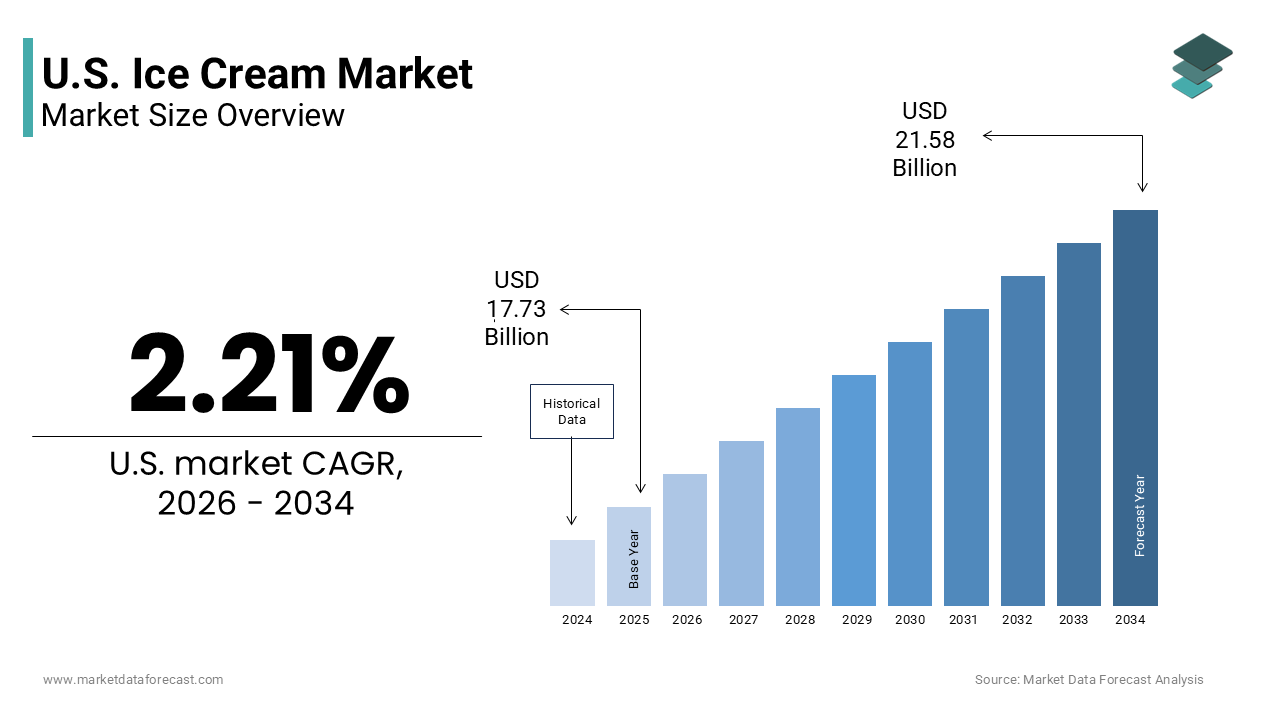
The U.S. ice cream market was valued at USD 17.73 billion in 2025, is estimated to reach USD 18.12 billion in 2026, and is projected to reach USD 21.58 billion by 2034, growing at a CAGR of 2.21% during the forecast period from 2026 to 2034. The growth of the U.S. ice cream market is driven by persistent consumer demand for indulgent and comfort foods, increasing innovation in premium and artisanal offerings, and the growing popularity of convenient frozen dessert formats. Expanding availability of plant-based and functional ice cream products, rising home entertainment culture, and increasing demand for premium flavor experiences are further accelerating market growth. Moreover, advancements in online retail distribution, sustainable packaging solutions, and wellness-focused formulations are supporting the expansion of the U.S. ice cream market.
Key Market Trends
- Rising demand for premium and artisanal ice cream products featuring exotic ingredients and unique flavor combinations.
- The growing popularity of plant-based and non-dairy frozen desserts driven by vegan and lactose-intolerant consumers.
- Increasing integration of functional ingredients such as probiotics, protein, and adaptogens in ice cream products.
- Strong focus on sustainable sourcing, eco-friendly packaging, and ethical ingredient procurement among manufacturers.
- Expansion of online retail and direct-to-consumer delivery channels supported by advancements in cold chain logistics.
Segmental Insights
- Based on type, the cup ice cream segment dominated the U.S. ice cream market and held the largest share in 2025. The segment’s dominance is attributed to its suitability for home consumption, convenience of storage, wide flavor variety, and increasing demand for family-sized and premium packaged products.
- The ice cream bars segment is projected to witness the fastest CAGR during the forecast period owing to rising demand for convenient on-the-go snacks, increasing preference for portion-controlled desserts, and continuous innovation in coatings, textures, and premium ingredients.
- Based on flavor, the vanilla segment accounted for the largest share of the U.S. ice cream market in 2025. The dominance of this segment is driven by its universal appeal, versatility in dessert applications, and strong consumer preference for classic flavor profiles.
- The cookies and cream segment is expected to register notable growth during the forecast period due to increasing consumer interest in nostalgic flavors, textured desserts, and indulgent sensory experiences.
- Based on distribution channel, the supermarkets segment held the leading share of the U.S. ice cream market in 2025 owing to extensive product availability, competitive pricing, convenience of one-stop shopping, and strong promotional activities.
- The online retail segment is anticipated to witness rapid growth during the forecast period due to increasing adoption of e-commerce grocery platforms, improved cold-chain delivery infrastructure, and growing demand for premium and niche frozen dessert brands.
Regional Insights
The United States dominated the North American ice cream market and accounted for a major share in 2025, supported by its strong dairy industry, high frozen dessert consumption, and deeply rooted dessert culture. California remains a major contributor to the U.S. ice cream market due to its large consumer base, strong demand for premium and plant-based frozen desserts, and expanding artisanal ice cream industry. New York, Washington, and Oregon are also witnessing notable growth driven by rising health-conscious consumption patterns, growing online retail penetration, and increasing demand for innovative frozen dessert products.
Competitive Landscape
The U.S. ice cream market is highly competitive and characterized by the presence of multinational corporations, regional dairy companies, and emerging artisanal brands competing through flavor innovation, premiumization strategies, and wellness-oriented product development. Leading companies are focusing on expanding plant-based portfolios, introducing reduced-sugar and functional formulations, strengthening direct-to-consumer channels, and investing in sustainable sourcing and packaging initiatives. Strategic collaborations, digital marketing campaigns, and expansion of premium product lines are further strengthening market positioning across diverse consumer demographics. Prominent players in the U.S. ice cream market include Unilever PLC, Nestlé S.A., General Mills Inc., Wells Enterprises Inc., Blue Bell Creameries, Dairy Queen, Baskin-Robbins, Cold Stone Creamery, Ben & Jerry’s, Häagen-Dazs, Tillamook County Creamery Association, Mars Incorporated, Dreyer’s Grand Ice Cream Holdings Inc., Rich Products Corporation, Halo Top Creamery, Turkey Hill Dairy, Jeni’s Splendid Ice Creams, Van Leeuwen Ice Cream, Braum’s Ice Cream & Dairy Stores, and Talenti Gelato.
U.S. Ice Cream Market Size
The U.S. ice cream market size was valued at USD 17.73 billion in 2025 and is anticipated to reach USD 18.12 billion in 2026 from USD 21.58 billion by 2034, growing at a CAGR of 2.21% during the forecast period from 2026 to 2034.
Ice cream is defined as a frozen dairy product made from milk cream sugar and flavourings which may include eggs and stabilizers to achieve a smooth texture. This category transcends seasonal boundaries having become a year round staple in American households driven by innovations in packaging and distribution. The emotional connection consumers have with ice cream as a comfort food and celebratory treat ensures its enduring popularity across diverse demographics. According to the International Dairy Foods Association the average American consumes approximately 23 pounds of ice cream and related frozen desserts annually reflecting its status as a dietary mainstay. Furthermore data from the US Department of Agriculture indicates that dairy consumption remains a critical component of nutritional intake for many families although preferences are shifting toward varied formats and ingredients. The proliferation of single serve containers and family size tubs caters to both individual indulgence and shared social experiences. According to data from the Bureau of Labor Statistics (BLS) Consumer Expenditure Survey and dairy demand studies, spending on core dairy products remains resilient during economic uncertainty due to the inelastic nature of fluid milk staples, whereas premium frozen treats display higher price elasticity as consumers adjust discretionary budgets. The market is also influenced by the growing trend of home entertainment where premium ice cream serves as an accessible luxury for hosting guests. This dynamic interplay of tradition innovation and emotional resonance defines the current state of the US ice cream industry.
MARKET DRIVERS
Persistent Demand for Indulgence and Comfort Food
The enduring appeal of ice cream as a source of emotional comfort and indulgence is a key reason for the growth of the United States ice cream market. In times of stress or celebration consumers frequently turn to sweet treats as a mechanism for mood enhancement and reward. According to the American Psychological Association food consumption particularly of high sugar and fat items is a common coping strategy for managing anxiety and stress levels. The sensory experience of eating ice cream which combines cold temperature sweetness and creamy texture triggers the release of dopamine in the brain creating feelings of pleasure and satisfaction. Food manufacturing companies like Unilever Ice Cream indicate that this awareness translates into a "permissible indulgence" shopping pattern, causing more individuals to reward themselves with small daily pleasures such as premium desserts. This psychological association ensures that ice cream remains a consistent purchase regardless of broader economic conditions. Furthermore the tradition of sharing ice cream during family gatherings holidays and social events reinforces its role as a communal bonding agent. As per the International Dairy Foods Association promotional campaigns often leverage these emotional connections emphasizing nostalgia and happiness to drive sales. The versatility of ice cream allows it to be enjoyed in various settings from casual home consumption to upscale dining experiences making it a ubiquitous presence in American life. This deep seated emotional demand sustains high volume sales and encourages frequent repeat purchases across all age groups.
Innovation in Premium and Artisanal Product Offerings
Innovation in premium and artisanal product offerings helps drive the United States ice cream market forward. This growth is fueled by consumers increasingly seeking high-quality and unique flavor experiences. The trend toward premiumization has led to the introduction of ice creams featuring exotic ingredients such as Madagascar vanilla Belgian chocolate and rare fruits which appeal to discerning palates. According to the Specialty Food Association sales of specialty and gourmet food items including premium ice cream have grown consistently as shoppers prioritize quality over quantity. Consumers are willing to pay higher prices for products that offer superior taste textures and ethical sourcing standards. Data from NielsenIQ indicates that super premium ice cream segments are outperforming standard categories in terms of revenue growth reflecting this shift in consumer preference. Brands are also experimenting with novel textures such as mix ins chunks and swirls to enhance the sensory experience and differentiate their products. The rise of craft ice cream shops and small batch producers has further elevated consumer expectations driving larger manufacturers to innovate their portfolios. As per the International Dairy Foods Association the introduction of limited edition flavors and collaborative collections with popular chefs or brands generates buzz and drives trial. This continuous cycle of innovation keeps the market dynamic and engaging attracting food enthusiasts who view ice cream as a culinary exploration rather than just a simple dessert.
MARKET RESTRAINTS
Growing Health Consciousness and Sugar Avoidance
Growing health consciousness and the active avoidance of sugar constitute a major restraint on the United States ice cream market. Consumers are increasingly scrutinizing the nutritional content of their diets. Public health initiatives and dietary guidelines have emphasized the risks associated with excessive sugar consumption including obesity type 2 diabetes and cardiovascular disease. According to data from the Centers for Disease Control and Prevention (CDC), adult obesity prevalence in the United States stands at 40.3%, a public health threshold that USDA Dietary Guidelines attempt to address by advising individuals to curb their intake of high-calorie foods and added sugars. Ice cream traditionally perceived as an indulgent treat is often viewed as incompatible with healthy lifestyles leading to reduced frequency of purchase among health aware demographics. Data from the International Food Information Council (IFIC) Food and Health Survey reveals that an even larger majority, nearly 74% to 75% of consumers, are actively trying to limit or avoid sugars in their diet. This shift has led to a decline in the consumption of traditional full sugar ice creams particularly among millennials and Gen Z who prioritize wellness. Furthermore the availability of alternative desserts such as frozen yogurt sorbet and fruit based snacks provides lower calorie options that compete directly with ice cream. As per the US Department of Agriculture dietary recommendations encourage the consumption of whole fruits and low fat dairy products over processed sweets. These health trends constrain the growth of the traditional ice cream segment forcing manufacturers to reformulate products or face declining demand from a significant portion of the population.
Lactose Intolerance and Dairy Sensitivities
Lactose intolerance and dairy sensitivities are hindering the expansion of the United States ice cream market. This is because a substantial portion of the population experiences adverse reactions to dairy products. Lactose intolerance affects the ability to digest lactose the primary sugar found in milk leading to digestive discomfort such as bloating gas and diarrhea. According to the National Institutes of Health approximately 65 percent of the global human population has a reduced ability to digest lactose after infancy with significant prevalence among African American Asian American and Hispanic communities in the US. This biological limitation restricts the addressable market for traditional dairy based ice creams as affected individuals must avoid or limit consumption. Data from the American College of Gastroenterology indicates that many consumers are unaware of their lactose intolerance until they experience symptoms leading to voluntary avoidance of dairy products. Additionally the rise in diagnosed milk allergies and general dairy sensitivities further reduces the pool of potential customers for conventional ice cream. Under Food and Drug Administration (FDA) labeling mandates, manufacturers must clearly declare major allergens like milk, providing critical transparency that enables consumers, as documented by the American College of Gastroenterology (ACG), to confidently identify hidden dairy ingredients and manage food sensitivities. The perception of dairy as potentially inflammatory or difficult to digest has also gained traction in wellness circles discouraging consumption. These physiological and perceptual barriers limit the universal appeal of traditional ice cream necessitating the development of specialized alternatives to capture these excluded segments.
MARKET OPPORTUNITIES
Expansion of Plant Based and Non Dairy Alternatives
The expansion of plant-based and non-dairy alternatives sets the stage for the growth of the United States ice cream market. This trend is driven by the need to capture health-conscious and ethically motivated consumers. Innovations in plant based ingredients such as almond oat coconut and cashew milks have enabled the creation of creamy and flavorful ice creams that mimic the texture of dairy without using animal products. According to the Plant Based Foods Association sales of plant based foods have grown significantly with non dairy desserts representing a fast growing category. These products appeal not only to vegans and lactose intolerant individuals but also to flexitarians who are reducing their dairy consumption for environmental or health reasons. Data from NielsenIQ shows that plant based ice cream sales are outpacing traditional dairy ice cream in certain retail channels indicating strong consumer interest. Manufacturers are investing in research and development to improve the mouthfeel and melt profile of plant based formulations addressing previous quality concerns. The use of sustainable and organic ingredients further enhances the appeal of these products to environmentally conscious shoppers. Ice cream companies can tap into new demographic segments and diversify their revenue streams by expanding their portfolios to include high-quality plant-based options. Doing so allows them to align with broader societal trends toward plant-forward diets.
Integration of Functional Ingredients and Wellness Benefits
Integrating functional ingredients and wellness benefits offers a compelling opportunity for the U.S. ice cream market. It allows brands to transform traditional desserts into health-supporting treats. Consumers are increasingly seeking products that provide additional health advantages such as improved digestion enhanced immunity or reduced stress. Ice cream manufacturers are incorporating functional ingredients such as probiotics prebiotics adaptogens and protein isolates to create products that align with holistic health goals. Probiotic ice creams support gut health which is linked to overall well being and immune function appealing to health focused consumers. Data from the International Food Information Council indicates that a majority of consumers are interested in foods that offer specific health benefits beyond basic nutrition. Protein enriched ice creams cater to fitness enthusiasts and those seeking satiety providing a guilt free indulgence option. As per the National Institutes of Health interest in natural remedies and functional foods is rising particularly among younger demographics who prioritize preventive health. By positioning ice cream as a functional wellness product brands can attract consumers who might otherwise avoid traditional sweets. This innovation opens new usage occasions and enhances the perceived value of the product allowing for premium pricing and differentiation in a crowded market.
MARKET CHALLENGES
Volatility in Raw Material Costs and Supply Chain Disruptions
Volatility in raw material costs and supply chain disruptions hold back the growth of the United States ice cream market. This affects production consistency and profit margins. The production of ice cream relies heavily on key ingredients such as milk cream sugar and cocoa which are subject to fluctuating prices due to weather conditions geopolitical tensions and market dynamics. According to the US Department of Agriculture dairy prices have experienced significant variability in recent years due to factors such as feed costs labor shortages and export demand. These fluctuations compel manufacturers to either absorb the increased costs reducing profitability or pass them on to consumers through higher retail prices which can dampen demand. Data from the Bureau of Labor Statistics shows that input costs for food manufacturing have risen steadily contributing to inflationary pressures on finished goods. Additionally supply chain bottlenecks such as transportation delays and packaging shortages have disrupted production schedules and inventory management. As per the National Association of Manufacturers logistical challenges have become more frequent requiring companies to hold larger inventories or diversify suppliers which increases operational complexity. The reliance on imported ingredients such as vanilla and chocolate further exposes manufacturers to currency fluctuations and trade policy changes. These vulnerabilities make long term planning difficult and can lead to inconsistent product availability. The need to balance cost efficiency with quality assurance in a volatile supply environment remains a critical operational hurdle for ice cream producers striving to maintain competitiveness.
Intensifying Competition from Alternative Desserts
Intensifying competition from alternative desserts obstructs the expansion of the United States ice cream market as consumers diversify their sweet treat choices. The rise of frozen yogurt gelato sorbet and artisanal popsicles has fragmented the frozen dessert category offering consumers a wider array of options that often perceive as healthier or more sophisticated. According to the International Dairy Foods Association the frozen dessert market is becoming increasingly crowded with new entrants offering unique value propositions such as low calorie high protein or exotic flavors. This fragmentation dilutes the market share of traditional ice cream and forces brands to invest heavily in marketing and innovation to maintain relevance. The popularity of homemade dessert kits and baking trends also competes for consumer spending on ready to eat frozen treats. As per the National Restaurant Association the proliferation of specialty dessert shops and cafes offers experiential alternatives that draw customers away from retail ice cream purchases. The ease of switching between different types of desserts means that brand loyalty is lower in this category requiring constant engagement to retain customers. This competitive landscape demands that ice cream manufacturers continuously innovate and differentiate their products to withstand the pressure from diverse and appealing alternatives.
REPORT COVERAGE
| REPORT METRIC | DETAILS |
| Market Size Available | 2025 to 2034 |
| Base Year | 2025 |
| Forecast Period | 2026 to 2034 |
| CAGR | 2.21% |
| Segments Covered | By Type, Flavour, Formulation, Distribution Channel and Region. |
| Various Analyses Covered | Global, Regional & Country Level Analysis, Segment-Level Analysis; DROC, PESTLE Analysis, Porter's Five Forces Analysis, Competitive Landscape, Analyst Overview of Investment Opportunities |
| Countries Covered | California, Washington, Oregon, New York, and the rest of the United States. |
| Market Leader Profiled | Unilever PLC, Nestlé S.A., General Mills Inc., Wells Enterprises, Inc., Blue Bell Creameries, Dairy Queen, Baskin-Robbins, Cold Stone Creamery, Ben & Jerry’s, Häagen-Dazs, Tillamook County Creamery Association, Mars Incorporated, Dreyer’s Grand Ice Cream Holdings, Inc., Rich Products Corporation, Halo Top Creamery, Turkey Hill Dairy, Jeni’s Splendid Ice Creams, Van Leeuwen Ice Cream, Braum’s Ice Cream & Dairy Stores, and Talenti Gelato. |
SEGMENTAL ANALYSIS
By Type Insights
The cup ice cream segment held the majority share of 41.4% of the United States market in 2025. This supremacy of the segment was credited to its versatility and suitability for home consumption where family sharing and portion control are key considerations. The tub or cup format allows consumers to serve multiple individuals making it an ideal choice for household desserts after dinner or during social gatherings. According to data supported by the International Dairy Foods Association, the half-gallon container remains the most popular bulk volume format for standard retail ice cream sales targeting at-home family consumption, whereas pints are leveraged primarily for premium and artisanal offerings. The ability to scoop ice cream into bowls also allows for customization with toppings such as syrups nuts and fruits which enhances the dining experience. As per the Bureau of Labor Statistics Consumer Expenditure Survey, spending on food for home consumption has remained historically elevated; however, this metric acts as an index of overall household grocery allocations and macroeconomic indicators rather than a specific tracking tool for premium ingredient investments. The cup format also facilitates easy storage in standard freezers and allows for resealing which preserves quality for later use. This practicality ensures that cup ice cream remains the staple choice for American consumers who view the product as a central component of their home dessert routine rather than just a quick snack. The dominance of the cup ice cream segment is further reinforced by the extensive variety of flavors and premium innovations available exclusively in this format. Manufacturers utilize cup packaging to introduce complex recipes featuring swirls chunks and mix ins that require substantial volume to appreciate fully. According to the Specialty Food Association artisanal and super premium brands predominantly launch new flavors in pint sizes to target discerning shoppers willing to pay for high quality ingredients. The visual appeal of layered ice creams and those with visible inclusions is better showcased in transparent or wide mouth containers enhancing consumer attraction. As per data compiled by the International Dairy Foods Association, premium pint formats and novelty products, such as ice cream sandwiches and bars, serve as the primary retail formats allowing for extensive experimentation with heavy textures and inclusions, including cookie dough chunks, brownie bits, and intricate flavor swirls. This creative freedom enables brands to differentiate their products and command higher price points. The association of cup ice cream with indulgence and treat culture solidifies its leading position as consumers seek out novel and luxurious experiences within the familiar comfort of a traditional container.
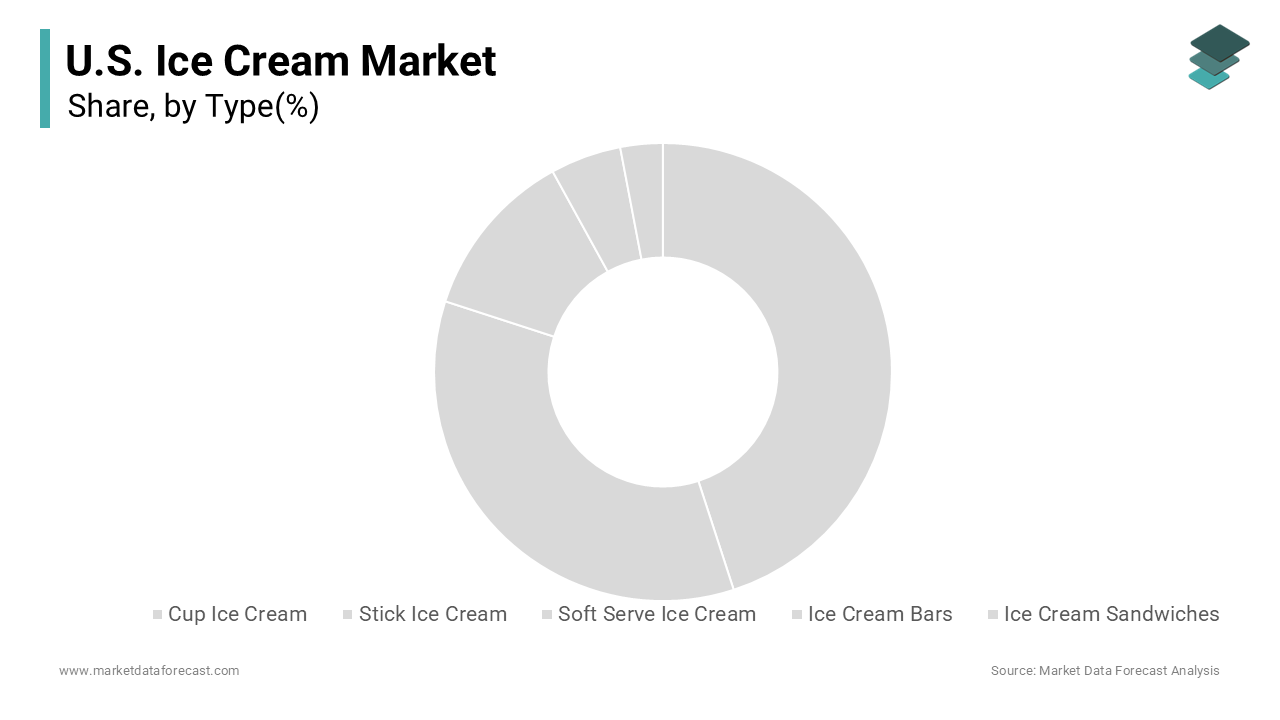
On the other hand, the ice cream bars segment is likely to experience the fastest CAGR of 5.9% from 2026 to 2034 owing to the increasing demand for convenient on the go snacks and precise portion control. The single serve format appeals to busy consumers who seek immediate gratification without the need for scooping or cleanup. The portability of ice cream bars makes them ideal for lunchboxes outdoor activities and travel catering to active lifestyles. Also, the ergonomic design of bars with sticks allows for easy handling and reduces mess enhancing the user experience. This convenience factor resonates strongly with millennials and Gen Z consumers who prioritize efficiency and mobility in their purchasing decisions. The ability to consume the product anywhere without additional utensils drives frequent repeat purchases and expands usage occasions beyond traditional dessert times. Furthermore, the rapid growth of the ice cream bar segment is also fueled by continuous innovation in coatings and textures that elevate the product from a simple snack to a premium indulgence. Manufacturers are introducing sophisticated outer layers such as dark chocolate yogurt shells and crunchy nut coatings that provide a contrasting texture to the creamy interior. According to the Specialty Food Association the trend toward textural complexity in frozen desserts is particularly evident in the novelty sector where sensory experience is paramount. Brands are experimenting with global flavors and exotic ingredients such as matcha sea salt caramel and raspberry coulis to attract adventurous eaters. The perception of ice cream bars as affordable luxuries allows consumers to treat themselves without the commitment of a full pint. This combination of sensory innovation and accessible indulgence positions ice cream bars as a dynamic and rapidly expanding segment within the broader ice cream market.
By Flavor Insights
The vanilla segment dominated the United States ice cream market and accounted for a 29.7% share in 2025. This dominance of the segment was driven by its universal appeal and versatility as a base flavor that complements a wide range of desserts and toppings. It serves as the default choice for consumers who prefer a classic and mild taste profile that does not overpower other flavors. According to the International Dairy Foods Association, vanilla has historically anchored the top-selling position in American culture; however, recent consumer tracking surveys show that chocolate has overtaken vanilla as the top consumer favorite, with vanilla moving to a secondary position. The flavor is often used as a companion to pies cakes and cookies making it a staple for holiday meals and special occasions. Its neutral profile makes it suitable for children and adults alike reducing the risk of preference mismatch in family settings. Furthermore vanilla is perceived as a pure and authentic flavor when made with real vanilla beans appealing to consumers who value simplicity and quality. This enduring popularity ensures that vanilla remains the cornerstone of the ice cream industry driving consistent revenue and market stability. The dominance of vanilla ice cream is further supported by cost efficiency and relative supply chain stability compared to more exotic or volatile flavor ingredients. While vanilla bean prices can fluctuate the use of vanilla extract and synthetic vanillin allows manufacturers to maintain consistent pricing and availability for mass market products. According to the US Department of Agriculture the production of dairy bases for vanilla ice cream is highly standardized enabling economies of scale that reduce manufacturing costs. The affordability makes it accessible to budget conscious consumers who prioritize value in their purchasing decisions. As per the International Dairy Foods Association the widespread availability of vanilla ingredients ensures that production delays are minimal compared to flavors relying on seasonal fruits or imported spices. The reliability of supply allows retailers to keep vanilla ice cream in stock consistently reinforcing its position as a staple item. The combination of low cost and high availability ensures that vanilla remains the most accessible and frequently purchased flavor in the market sustaining its leadership through economic resilience and operational efficiency.
However, the cookies and cream segment is on the rise and is expected to be the fastest growing segment in the market by witnessing a CAGR of 5.5% during the forecast owing to strong nostalgia and comfort food associations that resonate with diverse consumer groups. The combination of sweet cream ice cream and chocolate cookie pieces evokes childhood memories and familiar tastes that provide emotional satisfaction. The visual contrast of black cookie crumbs in white ice cream also enhances its appeal on social media platforms driving digital engagement and trial. As per the International Dairy Foods Association the flavor's popularity spans multiple generations making it a unifying choice for family purchases. The widespread recognition of the flavor profile reduces the barrier to trial for new brands entering the market. This emotional connection ensures that cookies and cream remains a top choice for consumers seeking both nostalgia and novelty in their dessert selections. The rapid growth of the cookies and cream segment is also fueled by the appealing textural contrast and sensory engagement provided by cookie inclusions. Consumers increasingly seek ice creams that offer a multi dimensional eating experience combining creamy smoothness with crunchy or chewy elements. According to the Specialty Food Association the presence of mix ins such as cookie chunks enhances the perceived value and indulgence of the product. The crunch of chocolate cookies provides a satisfying counterpoint to the soft ice cream creating a dynamic mouthfeel that keeps consumers engaged throughout consumption. As per the International Dairy Foods Association brands are innovating with different types of cookies such as oatmeal raisin or double chocolate to diversify the flavor profile within the segment. This focus on texture aligns with broader food trends that prioritize sensory complexity and experiential eating. The ability of cookies and cream to deliver a consistent and enjoyable textural experience drives its status as the fastest growing flavor in the competitive ice cream landscape.
By Distribution Channel Insights
The supermarkets segment led the United States ice cream market and captured a 46.7% share in 2025. This leading position of the segment was attributed to its extensive product variety and the convenience of one stop shopping for household needs. Consumers prefer purchasing ice cream alongside other groceries allowing for efficient meal planning and budget management. According to the Food Marketing Institute supermarkets account for the majority of frozen food sales as they offer a wide selection of brands flavors and package sizes under one roof. The availability of both private label and national brands provides options for different budget levels enhancing accessibility. The presence of dedicated freezer sections with clear signage and promotional displays further facilitates discovery and impulse buying. The trust associated with established supermarket chains also reassures consumers regarding product quality and safety. This combination of variety convenience and trust solidifies the dominance of supermarkets as the primary channel for ice cream distribution in the United States. The dominance of the supermarket channel is further reinforced by competitive pricing and aggressive promotional activities that attract value conscious consumers. Supermarkets frequently offer discounts bundle deals and loyalty rewards on ice cream products driving volume sales and customer retention. According to the National Grocers Association promotional events such as summer sales and holiday specials lead to significant spikes in ice cream purchases through this channel. The ability of large retail chains to negotiate lower wholesale prices allows them to pass savings on to customers making ice cream more affordable than in specialty stores. The integration of digital apps and online ordering systems also enhances the shopping experience by providing personalized offers and easy restocking options. These economic advantages ensure that supermarkets remain the preferred channel for the majority of ice cream consumers maximizing accessibility and affordability.
The online retail segment is expected to exhibit a noteworthy CAGR of 12.5% between 2026 and 2034 because of the expansion of e commerce platforms and direct to consumer models. Also, the convenience of browsing a wide variety of premium and niche brands from home and having them delivered directly to doorsteps has attracted a growing number of shoppers. According to data from the US Census Bureau, total retail e-commerce sales have grown significantly over the past decade; however, the Bureau tracks broad retail and food industry merchant classifications rather than specific consumer reliance on niche sub-sectors like specialty food items. The ability to access exclusive flavors and artisanal brands that are not available in local stores enhances the appeal of online retail. As per the Food Marketing Institute online retailers often offer subscription services and bulk buying options that enhance value and convenience for regular consumers. The reach of online platforms extends beyond urban centers allowing consumers in rural or underserved areas to access premium ice cream products. This democratization of access broadens the customer base and drives growth in the online segment. The integration of secure payment systems and reliable cold chain delivery networks further enhances the user experience making online retail a compelling choice for ice cream purchases. In addition, the quick growth of the online retail channel is also fueled by advancements in cold chain logistics and packaging innovations that ensure product quality during transit. Improvements in insulated packaging and dry ice technology allow ice cream to arrive at consumers doorsteps in optimal condition addressing previous concerns about melting and spoilage. According to the National Retail Federation same day and next day delivery options have become standard expectations for online shoppers driving adoption of online grocery services. The integration of real time tracking and temperature monitoring technologies provides transparency and reassurance to consumers enhancing trust in online purchases. As per the International Dairy Foods Association collaborations between ice cream brands and logistics providers have streamlined the delivery process reducing costs and improving reliability. The ability to ship premium and hard to find products nationwide opens new markets for manufacturers and provides consumers with unprecedented access to diverse options. These logistical improvements ensure that online retail continues to grow as a viable and attractive channel for ice cream distribution.
COUNTRY ANALYSIS
The United States was the top performer in the North America ice cream market and accounted for a 85.2% share in 2025. This dominance of the country’s market is driven by its vast population and deeply ingrained dessert culture. The market status is characterized by maturity and high penetration with ice cream being a ubiquitous household staple across all demographics. The position of the US is underpinned by a robust dairy industry that ensures a steady supply of high quality milk and cream essential for production. According to the US Department of Agriculture the country is one of the largest producers of dairy globally providing a competitive advantage in raw material sourcing and cost management. The cultural significance of ice cream as a comfort food and celebratory treat ensures consistent demand throughout the year. The market is also driven by continuous innovation in flavors formats and health focused alternatives that keep the category dynamic and relevant. Also, the United States serves as a global trendsetter in the ice cream industry influencing product development and marketing strategies worldwide. Its large and diverse consumer base provides a fertile ground for testing new concepts and scaling successful innovations ensuring its continued dominance in the regional and global landscape. The main driving factor for the United States ice cream market is the convergence of emotional comfort seeking behavior and the relentless innovation in premium and functional product offerings. Consumers frequently turn to ice cream as a source of joy and stress relief a trend that has been amplified by recent global uncertainties. The psychological driver ensures that ice cream remains a consistent purchase regardless of broader economic conditions. Simultaneously the demand for high quality and unique experiences has spurred manufacturers to introduce artisanal flavors exotic ingredients and health focused formulations. Data from the Specialty Food Association shows that premium ice cream sales are growing as shoppers prioritize quality and authenticity in their dietary choices. The integration of functional ingredients such as probiotics and protein further expands the addressable market by appealing to health conscious consumers. As per the International Dairy Foods Association the average American consumes approximately 23 pounds of ice cream annually reflecting the deep cultural integration of the product. The combination of emotional resonance and product innovation creates a robust ecosystem where ice cream thrives as both a comforting staple and a culinary adventure. These factors collectively drive sustained growth and ensure that the United States remains the central hub for ice cream consumption and innovation globally.
COMPETITIVE LANDSCAPE
The competition in the United States ice cream market is intense and characterized by a mix of established multinational corporations and agile artisanal brands. Major players compete fiercely on product quality flavor innovation and brand heritage to capture consumer attention. The market sees continuous launches of premium and functional ice creams as brands strive to differentiate themselves in a saturated landscape. Private label brands have gained significant traction by offering comparable quality at lower prices forcing national brands to justify their premiums through superior ingredients and unique experiences. Innovation in plant based alternatives and reduced sugar formulations has become a key battleground for differentiation. Supply chain efficiency and cold chain logistics are critical competitive advantages ensuring consistent product availability. Marketing efforts focus heavily on emotional connections and sustainability narratives to build brand loyalty. This dynamic environment drives constant evolution requiring companies to adapt quickly to changing consumer preferences and economic conditions to maintain their competitive edge and market relevance in the evolving frozen dessert sector.
KEY MARKET PLAYERS
Some of the promising companies that are playing a dominating role in the U.S. Ice Cream Market include
- Unilever PLC
- Nestlé S.A.
- General Mills Inc.
- Wells Enterprises, Inc.
- Blue Bell Creameries
- Dairy Queen
- Baskin-Robbins
- Cold Stone Creamery
- Ben & Jerry’s
- Häagen-Dazs
- Tillamook County Creamery Association
- Mars Incorporated
- Dreyer’s Grand Ice Cream Holdings, Inc.
- Rich Products Corporation
- Halo Top Creamery
- Turkey Hill Dairy
- Jeni’s Splendid Ice Creams
- Van Leeuwen Ice Cream
- Braum’s Ice Cream & Dairy Stores
- Talenti Gelato
Top Players in the US Ice Cream Market
Unilever North America
Unilever North America maintains a formidable presence in the United States ice cream market through its iconic brands such as Ben and Jerry's Breyers and Magnum. The company focuses on delivering high quality products that cater to diverse consumer preferences ranging from classic flavors to premium indulgences. Recent actions include expanding its plant based portfolio with dairy free options to meet growing demand for sustainable and ethical choices. Unilever invests heavily in digital marketing campaigns that emphasize social responsibility and environmental stewardship. By leveraging its extensive distribution network the company ensures widespread availability across retail and food service channels. These strategic initiatives strengthen its brand loyalty and reinforce its position as a leader in innovation and quality within the competitive frozen dessert landscape.
Wells Enterprises Inc
Wells Enterprises Inc contributes significantly to the market with its beloved Blue Bunny brand which is renowned for its creamy texture and innovative flavor combinations. The family owned company prioritizes community engagement and local sourcing which resonates deeply with American consumers. Recent strategies involve launching limited edition seasonal flavors and expanding its snack bar offerings to capture the on the go segment. Wells Enterprises emphasizes quality control and customer satisfaction by maintaining strict production standards. The company also invests in sustainable packaging solutions to reduce environmental impact. Wells Enterprises strengthens its connection with loyal customers by focusing on authentic brand storytelling and product excellence. This approach allows them to continue growing their footprint in the highly competitive United States ice cream industry.
Nestlé USA
Nestlé USA plays a pivotal role in the United States ice cream market through its diverse portfolio including Häagen Dazs Drumstick and Outshine. The company leverages global expertise to introduce premium and novelty products that appeal to various demographic segments. Recent actions include reformulating recipes to reduce sugar content and introducing functional ingredients such as probiotics. Nestlé focuses on enhancing its e commerce capabilities to reach direct consumers and improve accessibility. The company also partners with retailers for exclusive promotions and displays to boost visibility. Nestlé USA drives growth in the evolving frozen dessert sector through continuous product development and strategic marketing. Furthermore, they maintain a competitive edge by combining innovation with strong brand equity.
Top Strategies Used by Key Market Participants
Key players in the United States ice cream market primarily focus on product innovation and diversification to meet evolving consumer preferences. Companies are increasingly launching plant based and low sugar options to cater to health conscious shoppers. Strategic partnerships with retailers ensure prominent shelf placement and enhanced visibility in stores. Digital marketing and social media engagement are utilized to build brand loyalty and reach younger demographics. Sustainability initiatives such as eco friendly packaging and responsible sourcing are adopted to enhance brand image. Expansion into direct to consumer channels allows companies to gather data and personalize offerings. Price competitiveness and promotional bundles remain crucial for attracting budget conscious buyers. These strategies collectively aim to strengthen market position and drive sustainable growth in a competitive landscape.
MARKET SEGMENTATION
This research report on the U.S. Ice Cream Market has been segmented based on the following categories.
By Type
- Cup Ice Cream
- Stick Ice Cream
- Soft Serve Ice Cream
- Ice Cream Bars
- Ice Cream Sandwiches
By Flavor
- Vanilla
- Chocolate
- Strawberry
- Mint
- Cookies and Cream
By Formulation
- Regular
- Low Fat
- Non-Dairy
- Sugar-Free
- Organic
By Distribution Channel
- Supermarkets
- Convenience Stores
- Online Retail
- Specialty Stores
By Country
- California
- Washington
- Oregon
- New York
- Rest of the United States
Frequently Asked Questions
What is the U.S. Ice Cream Market?
The U.S. Ice Cream Market encompasses the production, distribution, and sale of ice cream, frozen desserts, gelato, sorbet, and related products across the United States.
What factors are driving the growth of the U.S. Ice Cream Market?
The market is driven by rising consumer demand for premium ice cream, innovative flavors, healthier product options, and expanding retail and online distribution channels.
What are the major product types in the U.S. Ice Cream Market?
Major product types include regular ice cream, premium ice cream, frozen yogurt, gelato, sorbet, sherbet, dairy-free ice cream, and low-fat ice cream.
Which distribution channels dominate the U.S. Ice Cream Market?
Supermarkets and hypermarkets hold the largest market share, followed by convenience stores, specialty stores, online retail, and foodservice outlets.
What consumer trends are influencing the U.S. Ice Cream Market?
Growing demand for premium products, plant-based alternatives, clean-label ingredients, reduced-sugar formulations, and unique artisanal flavors are shaping the market.
Which age group is the primary consumer of ice cream in the United States?
Ice cream is consumed across all age groups, with strong demand from children, millennials, and families seeking convenient and indulgent frozen desserts.
How is premiumization impacting the U.S. Ice Cream Market?
Consumers are increasingly willing to pay more for premium ingredients, gourmet flavors, organic products, and high-quality frozen desserts.
How is the plant-based trend influencing the market?
The rising vegan and lactose-intolerant population has increased demand for dairy-free ice creams made from almond, oat, coconut, and soy milk.
What role does e-commerce play in the U.S. Ice Cream Market?
Online grocery platforms and direct-to-consumer delivery services are expanding product accessibility and supporting market growth.
What is the future outlook for the U.S. Ice Cream Market?
The market is expected to witness steady growth during the forecast period, driven by product innovation, evolving consumer preferences, premium offerings, and increasing demand for healthier and sustainable frozen desserts.
Access the study in MULTIPLE FORMATS
Purchase options starting from
$ 1200
Didn’t find what you’re looking for?
TALK TO OUR ANALYST TEAM
Need something within your budget?
NO WORRIES! WE GOT YOU COVERED!
Call us on: +1 888 702 9696 (U.S Toll Free)
Write to us: sales@marketdataforecast.com