U.S. Infant Formula Market Size, Share, Trends & Growth Forecast Report Segmented By Type ( Infant Milk, Follow-On-Milk, Others), Distribution Channel and Country – Industry Analysis From 2026 to 2034
Market Size, 2025
$22.27 BnMarket Estimate, 2026
$25.12 BnMarket Forecast, 2034
$55.11 BnCAGR, 2026–2034
10.02%U.S. Infant Formula Market Report Summary
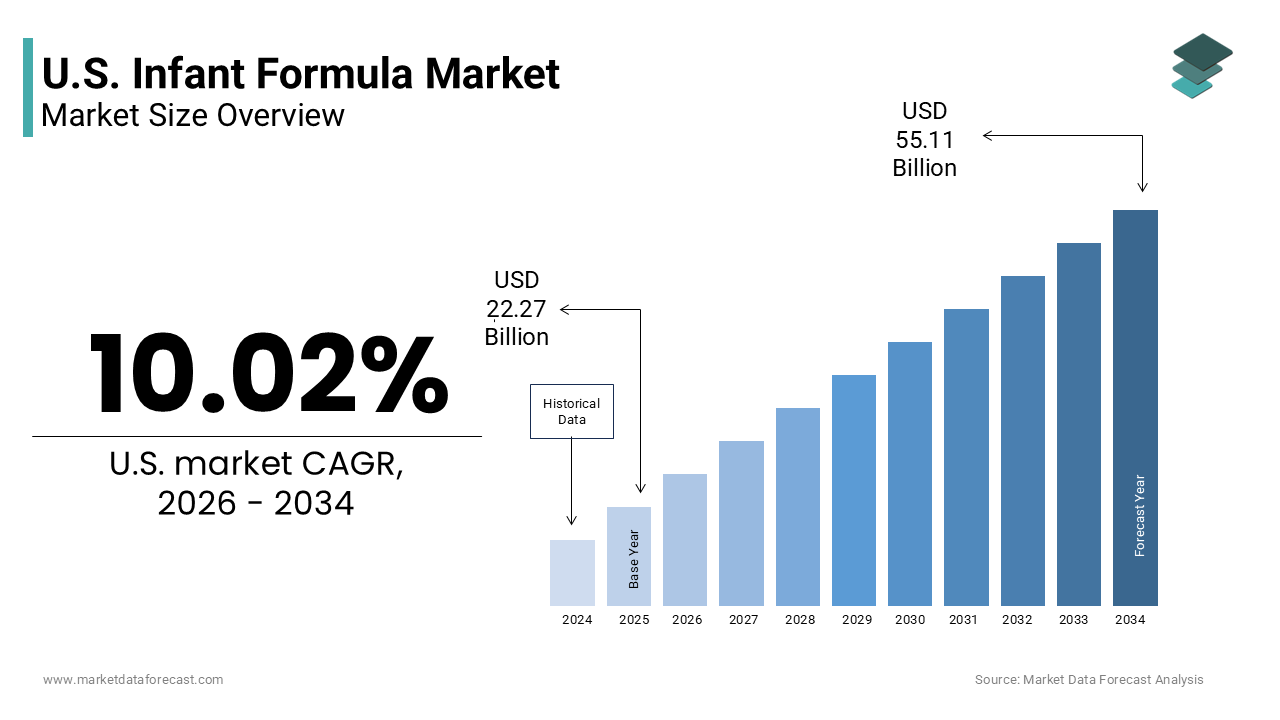
The U.S. infant formula market was valued at USD 22.27 billion in 2025, is estimated to reach USD 25.12 billion in 2026, and is projected to reach USD 55.11 billion by 2034, growing at a CAGR of 10.02% during the forecast period from 2026 to 2034. The growth of the U.S. infant formula market is driven by rising maternal workforce participation, increasing demand for convenient infant nutrition solutions, and growing prevalence of infant dietary sensitivities and medical conditions. Expanding demand for specialized, hypoallergenic, and organic infant formulas, along with increasing awareness regarding infant nutrition and early childhood health, is further accelerating market growth. Moreover, advancements in clean-label formulations, digital health integration, and premium nutrition products are supporting the expansion of the U.S. infant formula market.
Key Market Trends
- Rising demand for organic and clean-label infant formula products with non-GMO and natural ingredients.
- Growing popularity of hypoallergenic and specialized formulas designed for lactose intolerance and cow milk protein allergies.
- Increasing integration of digital health platforms and personalized nutrition services for infant feeding guidance.
- Strong focus on sustainable sourcing, eco-friendly packaging, and transparent ingredient labeling among manufacturers.
- Expansion of premium infant formula products enriched with probiotics, prebiotics, DHA, and immune-support ingredients.
Segmental Insights
- Based on type, the infant milk formula segment dominated the U.S. infant formula market and held the largest share in 2025. The segment’s dominance is attributed to its role as the primary nutritional source for non-breastfed infants during the first six months of life and the increasing demand for nutritionally balanced infant feeding solutions.
- The follow-on milk formula segment is projected to witness significant growth during the forecast period owing to increasing parental awareness regarding transitional nutrition, growing use of fortified products for infants above six months, and rising demand for advanced nutritional formulations.
- Based on distribution channel, the hypermarkets and supermarkets segment accounted for the largest share of the U.S. infant formula market in 2025. The dominance of this segment is driven by strong retail accessibility, wide product availability, convenience of bulk purchases, and increasing promotional activities across major retail chains.
- The pharmacy and medical stores segment is expected to register notable growth during the forecast period due to increasing demand for medically recommended and specialized infant nutrition products.
Regional Insights
The United States dominated the North American infant formula market and accounted for a major share in 2025, supported by high awareness regarding infant nutrition, strong healthcare infrastructure, and growing consumer spending on premium baby care products. California remains a major contributor to the U.S. infant formula market due to its large population base, strong demand for organic infant nutrition products, and increasing adoption of premium baby care solutions. New York, Washington, and Oregon are also witnessing notable growth driven by rising health-conscious parenting trends, increasing urbanization, and expanding retail distribution networks.
Competitive Landscape
The U.S. infant formula market is highly competitive and characterized by the presence of multinational nutrition companies and emerging premium baby nutrition brands competing through product innovation, specialized formulations, and sustainability initiatives. Leading companies are focusing on expanding organic and hypoallergenic product portfolios, strengthening digital consumer engagement, investing in research and development, and enhancing supply chain resilience. Strategic collaborations with healthcare professionals, improvements in personalized nutrition services, and investments in clean-label formulations are further strengthening market positioning across diverse consumer demographics. Prominent players in the U.S. infant formula market include Abbott Laboratories, Nestlé S.A., Reckitt Benckiser Group plc, Perrigo Company plc, Bobbie, ByHeart, Kendamil, Danone S.A., Bubs Australia, and The Kraft Heinz Company.
U.S. Infant Formula Market Size
The U.S. Infant Formula Market size was valued at USD 22.27 billion in 2025 and is anticipated to reach USD 25.12 billion in 2026 from USD 55.11 billion by 2034, growing at a CAGR of 10.02% during the forecast period from 2026 to 2034.
According to the Centers for Disease Control and Prevention, approximately 55.8% of infants in the U.S. receive any breast milk at six months of age, implying that the remainder rely on formula for their nutritional needs. The definition extends beyond basic powder forms to include ready to feed liquids and concentrated variants, each catering to distinct lifestyle needs and medical requirements. Recent years have witnessed a heightened focus on clean label ingredients and organic certifications, reflecting a broader consumer trend toward transparency and natural sourcing. According to the U.S. Department of Agriculture, the Special Supplemental Nutrition Program for Women, Infants, and Children provides formula to over 40% of all infants born in the country, underscoring the significant intersection between public assistance programs and market demand. This dual dependency on private retail channels and government subsidized distribution creates a complex ecosystem where pricing accessibility and nutritional efficacy remain paramount concerns for stakeholders and caregivers alike.
MARKET DRIVERS
Rising Maternal Workforce Participation Fuels Demand for Convenience
The growing maternal workforce participation drives consistent demand for convenient and reliable infant nutrition solutions, which is a key driver of the U.S. infant formula market. As more women pursue professional careers postpartum, the logistical challenges of exclusive breastfeeding become pronounced, leading families to seek high quality formula alternatives that ensure nutritional adequacy without compromising convenience. According to the Bureau of Labor Statistics, the labor force participation rate for mothers with children under age 18 was 73.9% in 2025, creating a substantial base of working parents who require flexible feeding options. This demographic shift necessitates products that are easy to prepare and store, such as ready to feed formulations or single serve packets, which align with the fast paced lifestyles of modern households. The correlation between employment status and formula usage is further reinforced by data from the Centers for Disease Control and Prevention, which indicates that mothers who return to work within three months of giving birth are significantly less likely to exclusively breastfeed compared to those who remain at home. Consequently, manufacturers are incentivized to innovate packaging and formulation strategies that cater to this specific consumer segment. The demand is not merely about substitution but also about integration, where formula serves as a supplemental tool allowing working mothers to maintain some level of breastfeeding while ensuring their infants receive adequate nutrition during periods of separation. This dynamic sustains a steady baseline demand regardless of broader economic fluctuations, as childcare and nutrition remain non-negotiable expenses for families.
Prevalence of Medical Conditions Expands Specialized Formula Segments
The rising prevalence of specialized dietary needs and medical conditions expands the scope for hypoallergenic and specialized formula segments, which is further contributing to the expansion of the U.S. market. An increasing number of infants are diagnosed with cow milk protein allergies, lactose intolerance, and gastroesophageal reflux disease, prompting parents to seek medically tailored nutritional solutions. According to the American Academy of Pediatrics, approximately 2% to 3% of infants in the U.S. suffer from cow milk protein allergy, requiring extensively hydrolyzed or amino acid based formulas that prevent adverse immune responses. This medical necessity transforms formula from a general commodity into a critical healthcare product for affected families, driving demand for premium specialized variants that command higher price points and foster brand loyalty. Furthermore, as per the March of Dimes, the preterm birth rate in the U.S. reached 10.4% in 2024, necessitating the use of fortified formulas designed to support rapid growth and development in vulnerable newborns. These clinical requirements create a distinct market segment that is less sensitive to price competition and more focused on efficacy and safety credentials. Healthcare providers play a pivotal role in recommending these specialized products, thereby influencing purchasing decisions through professional endorsement. The complexity of these conditions ensures that demand remains resilient, as parents prioritize health outcomes over cost considerations. Manufacturers respond by investing heavily in research and development to create formulations that mimic the beneficial properties of breast milk while addressing specific pathological constraints, thus capturing a dedicated consumer base that relies on these products for essential health management.
MARKET RESTRAINTS
Supply Chain Concentration Creates Vulnerability to Disruptions
Persistent supply chain vulnerabilities and raw material sourcing constraints hinder the U.S. infant formula market growth. The U.S. infant formula market relies heavily on a concentrated manufacturing base, where a few key facilities produce the majority of the national supply. This centralization creates significant risks when production disruptions occur, as evidenced by past shortages that left shelves empty across the country. According to the Food and Drug Administration, a single manufacturing plant can account for a substantial portion of the total domestic output, meaning that any operational halt due to contamination issues or regulatory compliance failures has immediate and widespread repercussions. The dependency on specific raw materials such as whey protein concentrate and vegetable oils further exacerbates these vulnerabilities, as global agricultural fluctuations impact availability and pricing. According to the U.S. Department of Agriculture, over 50% of infant formula sold in the U.S. is purchased through the WIC program, making the supply chain highly sensitive to government contract awards and dairy market volatility. These supply side pressures are compounded by logistical bottlenecks in transportation and distribution networks, which delay the replenishment of retail stocks during peak demand periods. The lack of diversified sourcing options means that manufacturers struggle to quickly pivot when primary suppliers face difficulties, leading to prolonged periods of scarcity. This structural fragility undermines consumer confidence and forces retailers to implement purchase limits, which further distorts market dynamics. Addressing these constraints requires substantial capital investment in redundant manufacturing capabilities and diversified supplier relationships, yet progress remains slow due to the high regulatory barriers and long lead times associated with establishing new production lines.
Rigorous Regulatory Compliance Increases Operational Costs
Stringent regulatory compliance and safety standards impose significant operational burdens on manufacturers, which is further hampering the U.S. market expansion. The infant formula sector is subject to some of the most rigorous oversight within the food and beverage industry, governed by the Infant Formula Act and enforced by the Food and Drug Administration. These regulations mandate precise nutritional compositions, strict hygiene protocols, and comprehensive testing procedures to ensure product safety for vulnerable infant populations. According to the Food and Drug Administration, manufacturers are required to conduct nutrient analysis on every batch of finished product and test for pathogens such as Cronobacter sakazakii and Salmonella, a process that is both time consuming and costly. Any deviation from established standards can result in mandatory recalls, legal liabilities, and severe reputational damage, as seen in historical incidents involving bacterial contamination. The complexity of compliance is further intensified by the need to adhere to Good Manufacturing Practices, which require continuous monitoring of facility conditions and employee training. According to industry analyses, the cost of maintaining regulatory compliance can account for a significant portion of operational expenditures, limiting the ability of smaller players to enter the market and reducing overall competitive diversity. Additionally, the approval process for new ingredients or formulations is lengthy, often taking several years to complete, which stifles innovation and slows the introduction of novel products. This regulatory environment creates high entry barriers that protect incumbent firms but also restrict market agility. Manufacturers must balance the imperative for safety with the need for efficiency, a challenge that requires sophisticated quality assurance systems and substantial financial resources. The ever evolving nature of scientific understanding regarding infant nutrition also means that regulations may change, requiring companies to remain vigilant and adaptable to avoid non-compliance.
MARKET OPPORTUNITIES
Growth Potential in Organic and Clean Label Product Lines
The expansion into organic and clean label product lines presents a lucrative avenue for market growth. Consumer preference for natural and minimally processed ingredients is reshaping the infant formula landscape, with parents increasingly willing to pay a premium for products perceived as safer and healthier. According to the Organic Trade Association, organic food sales in the U.S. reached a record USD 63.8 billion in 2023, with the baby food and formula category being a significant contributor to this growth as awareness of pesticide residues and synthetic additives increases among caregivers. This trend is driven by a broader cultural shift toward transparency in food sourcing, where parents scrutinize ingredient lists for non-genetically modified organisms and absence of artificial preservatives. Manufacturers who successfully certify their products as organic can differentiate themselves in a crowded marketplace, building trust through third party verification and clear labeling. The demand for clean label options extends beyond organic certification to include grass fed dairy sources and sustainable packaging initiatives, appealing to environmentally conscious consumers. According to market observations, brands that emphasize ethical sourcing and environmental stewardship resonate strongly with millennial and Generation Z parents, who prioritize values aligned with their purchasing decisions. This opportunity allows companies to command higher margins while fostering deep brand loyalty, as consumers are less likely to switch once they find a product that meets their strict ethical and nutritional criteria. Furthermore, the expansion into niche categories such as goat milk based formulas offers additional differentiation, catering to those seeking alternatives to cow milk due to digestibility concerns. By aligning product development with these evolving consumer values, manufacturers can capture a growing segment of the market that prioritizes quality and integrity over price sensitivity.
Digital Health Integration Enhances Personalized Consumer Engagement
Integration of digital health technologies and personalized nutrition services enhances consumer engagement and retention, which is another prominent opportunity in the U.S. market. The rise of digital platforms enables manufacturers to offer tailored recommendations and support services that go beyond traditional product sales, creating a holistic ecosystem for infant care. According to recent technological trends, mobile applications and online portals allow parents to track feeding schedules, monitor growth metrics, and receive customized advice based on their infant's specific needs. This digital integration fosters a direct relationship between brands and consumers, facilitating data driven insights that inform product innovation and marketing strategies. Companies can leverage artificial intelligence to analyze user data and provide personalized formula suggestions, improving satisfaction and reducing trial and error for parents navigating complex choices. According to industry developments, subscription based models powered by digital interfaces ensure consistent delivery of formula, reducing the risk of stockouts and enhancing convenience for busy families. This approach not only stabilizes revenue streams for manufacturers but also builds long term customer loyalty through seamless service experiences. Furthermore, telehealth consultations integrated into brand platforms offer professional guidance on nutrition transitions and allergy management, adding value that distinguishes premium brands from commoditized competitors. The ability to collect real time feedback through digital channels allows companies to rapidly iterate on formulations and packaging based on actual user experiences. This technological empowerment transforms the formula purchase from a transactional event into an ongoing partnership, where brands act as trusted advisors in infant health. By embracing digital transformation, manufacturers can unlock new revenue opportunities and deepen their connection with a tech savvy generation of parents who expect seamless and personalized interactions.
MARKET CHALLENGES
Economic Pressure Limits Access for Lower Income Households
Intense price sensitivity among lower income households limits access and creates equity disparities, which is a major challenge to the U.S. infant formula market growth. Despite the critical nature of infant nutrition, cost remains a significant barrier for many families, particularly those relying on fixed incomes or lacking comprehensive insurance coverage for formula. According to the U.S. Department of Agriculture, the WIC program covers approximately 50% of all infants born in the U.S., yet eligibility restrictions and administrative hurdles often leave gaps in coverage for those slightly above the poverty line. For these consumers, the high cost of specialized or premium formulas can be prohibitive, which is forcing difficult trade-offs between quantity and quality. Retail prices for standard formula have risen due to inflationary pressures and supply chain costs, exacerbating the financial burden on vulnerable populations. According to economic data, food at home prices increased significantly in recent years, with baby food and formula categories seeing some of the sharpest rises which disproportionately affect lower income earners. This economic pressure leads to practices such as diluting formula to make it last longer, a dangerous behavior that compromises infant health and development. The lack of affordable alternatives in the mainstream market means that many families are trapped in a cycle of financial stress and nutritional compromise. Furthermore, the concentration of market power among a few major manufacturers limits price competition, keeping costs elevated even for basic formulations. Addressing this challenge requires collaborative efforts between policymakers, manufacturers, and retailers to develop tiered pricing structures or subsidy programs that ensure equitable access. Without such interventions, the market risks excluding a significant portion of the population, undermining public health goals and perpetuating socioeconomic inequalities in infant health outcomes.
Misinformation Erodes Consumer Trust and Brand Loyalty
Misinformation and declining consumer trust pose significant hurdles to the U.S. market growth. The proliferation of unverified information on social media platforms has created confusion and anxiety among parents regarding the safety and efficacy of commercial infant formula. According to public health studies, misinformation campaigns often exaggerate risks associated with standard formulas or promote unregulated homemade alternatives, leading some caregivers to abandon commercially produced products despite medical advice. This erosion of trust is compounded by historical recalls and safety incidents that have left lasting impressions on consumer perception, making parents skeptical of manufacturer claims. According to surveys conducted by health organizations, a notable percentage of parents express concern about the ingredients and sourcing practices of major brands, driving them to seek obscure or imported alternatives that may not meet U.S. safety standards. The challenge for manufacturers lies in rebuilding credibility through transparent communication and rigorous third party testing, yet overcoming deeply entrenched skepticism requires sustained effort and consistency. Social media algorithms often amplify negative narratives, creating echo chambers that reinforce fears and discourage rational decision making. This environment makes it difficult for brands to convey accurate scientific information, as emotional appeals often outweigh factual evidence in parental decision making processes. Additionally, the rise of influencer marketing without regulatory oversight contributes to the spread of misleading advice, further complicating the information landscape. Companies must invest in educational initiatives and community engagement to counteract these trends, fostering a culture of evidence based decision making. Failure to address this trust deficit can lead to volatile demand patterns and increased regulatory scrutiny, as public outcry prompts governmental intervention in marketing and labeling practices.
REPORT COVERAGE
| REPORT METRIC | DETAILS |
| Market Size Available | 2025 to 2034 |
| Base Year | 2025 |
| Forecast Period | 2026 to 2034 |
| CAGR | 10.02% |
| Segments Covered | By Type, Distribution Channel and Region. |
| Various Analyses Covered | Global, Regional & Country Level Analysis, Segment-Level Analysis; DROC, PESTLE Analysis, Porter's Five Forces Analysis, Competitive Landscape, Analyst Overview of Investment Opportunities |
| Countries Covered | California, Washington, Oregon, New York, and the rest of the United States. |
| Market Leader Profiled | Abbott Laboratories, Nestlé S.A., Reckitt Benckiser Group plc, Perrigo Company plc, Bobbie, ByHeart, Kendamil, Danone S.A., Bubs Australia, and The Kraft Heinz Company. |
SEGMENTAL ANALYSIS
By Type Insights
The infant milk formula segment commanded for the largest share of the U.S. market in 2025. The growth of the infant milk formula segment in the U.S. market can be credited to its status as the sole nutritional source for non-breastfed infants during the first six months of life. During the first six months, an infant’s digestive system is immature and cannot process solid foods or standard cow milk, making specialized infant formula the only safe alternative. According to the Centers for Disease Control and Prevention, approximately 16.8% of infants in the U.S. are never breastfed, creating a mandatory demand for infant formula from birth. This segment accounts for the highest usage frequency, with infants consuming multiple bottles daily, leading to substantial volume sales. The American Academy of Pediatrics emphasizes that infant formula is designed to mimic the nutritional profile of breast milk as closely as possible, providing essential proteins, fats, and vitamins required for rapid growth. Because this product category is non-discretionary for these families, demand remains inelastic to price fluctuations. Manufacturers focus heavily on this segment because it establishes brand loyalty early, often influencing subsequent purchases of follow on products. The regulatory framework ensures that all infant formulas meet strict federal standards, giving parents confidence in their safety and efficacy. This trust is paramount, as any deviation can lead to severe health consequences. Consequently, the infant milk segment benefits from consistent repurchase cycles, with parents typically buying large quantities weekly. The sheer volume of units sold in this category outweighs other segments, solidifying its position as the market leader. The integration of advanced nutrients such as DHA and ARA further enhances its appeal, encouraging parents to choose premium variants within this core segment.
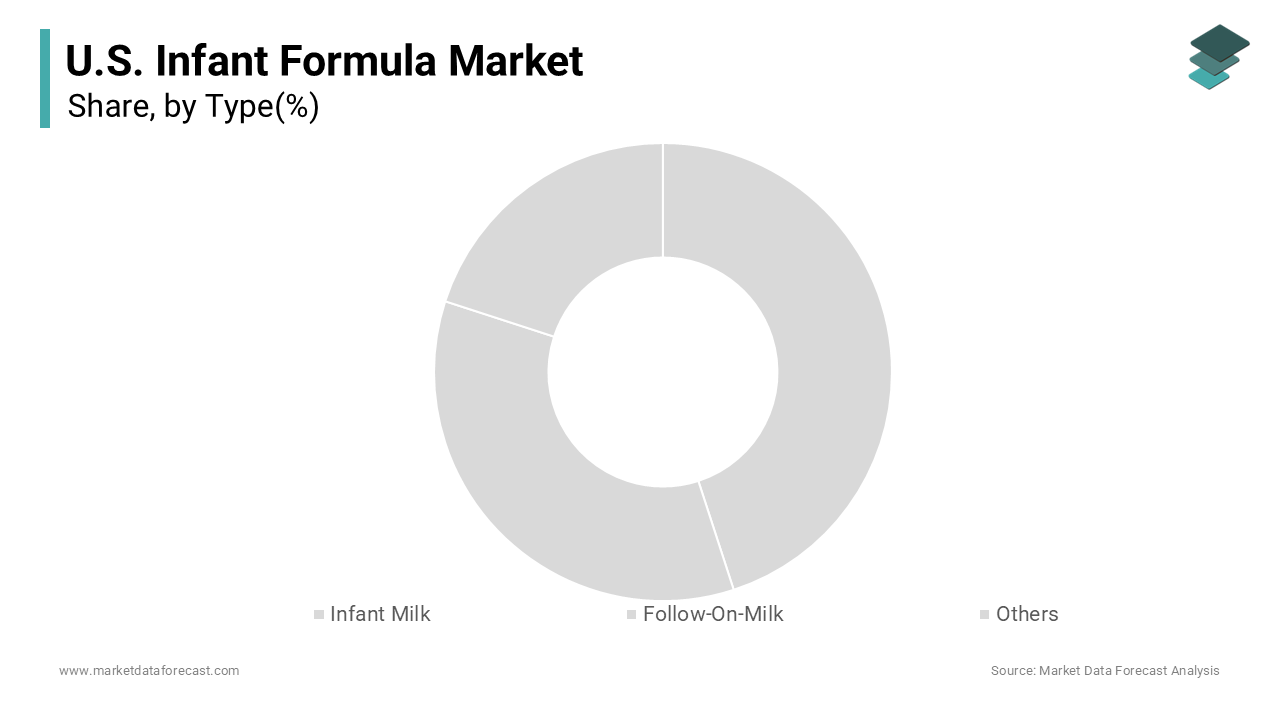
On the other hand, the follow on milk formula segment is estimated to record a CAGR of 5.1% during the forecast period in the U.S. market owing to the increasing parental awareness of transitional nutrition and the strategic marketing of specialized formulations for older infants. The rapid growth of the follow on milk segment is largely attributed to the increasing recognition of its role in supporting infants during the weaning transition phase. As infants begin to consume solid foods, their nutritional requirements evolve, necessitating adjustments in protein and mineral intake. Follow on formulas are specifically designed to complement solid diets, providing balanced nutrition that bridges the gap between infant formula and whole cow milk. According to the U.S. Department of Agriculture, the introduction of solid foods typically begins around six months of age, marking the start of the follow on formula usage window. Parents are increasingly educated about the benefits of continued formula use beyond six months, particularly for picky eaters who may not receive adequate nutrients from solids alone. Pediatricians often recommend follow on formulas to ensure consistent intake of iron, calcium, and vitamin D, which are crucial for bone development and cognitive function. The American Academy of Pediatrics supports the use of fortified formulas during this period to prevent nutritional deficiencies. This professional endorsement drives consumer confidence and adoption rates. Additionally, manufacturers are innovating with added probiotics and prebiotics in follow on formulas to support gut health, appealing to health conscious parents. The perception that follow on formula offers superior nutritional benefits compared to regular cow milk encourages prolonged usage. As a result, the duration of formula consumption is extending, boosting sales volumes in this segment. The strategic positioning of follow on milk as a vital component of holistic infant care contributes significantly to its accelerated growth trajectory.
By Distribution Channel Insights
The hypermarkets and supermarkets segment dominated the market by capturing the leading share of the U.S. market during the forecast period owing to the widespread availability of these outlets, the consumer preference for one stop shopping experiences and convenience they offer for one stop shopping and bulk purchases. Parents often need to buy a variety of household items alongside infant formula, making these large format stores an efficient choice. According to the Food Marketing Institute, the majority of American households prefer shopping for groceries at supermarkets due to the wide assortment of products and competitive pricing. Infant formula is a bulky and heavy item, and purchasing it in larger quantities reduces the frequency of shopping trips, which is highly valued by busy caregivers. Hypermarkets typically offer multi pack discounts and promotional bundles that incentivize bulk buying, further enhancing their appeal. The ability to compare different brands and types side by side allows consumers to make informed decisions based on price and features. This transparency fosters competition among brands, leading to better deals for consumers. Additionally, the presence of pharmacy sections within many supermarkets provides added convenience for parents who may need to consult with pharmacists or purchase prescription items simultaneously. The integrated service model saves time and effort, reinforcing customer loyalty. Retailers also benefit from high foot traffic, which increases impulse purchases and cross selling opportunities. The economies of scale enjoyed by large supermarket chains enable them to negotiate better terms with suppliers, passing savings on to customers. This price advantage is crucial in a market where cost sensitivity is high. The consistent availability of stock in these large outlets ensures that parents can rely on them for their regular formula needs, reducing the risk of shortages. The combination of convenience, variety, and value makes hypermarkets and supermarkets the preferred channel for the majority of consumers.
COUNTRY ANALYSIS
The U.S. held the dominant position in the North American infant formula market in 2025 by accounting for 84.7% of the regional market share. As the largest economy in the region, the country boasts a high birth rate relative to other developed nations and a strong consumer spending capacity. The market status is characterized by a mature yet dynamic environment, where established players compete with emerging brands focusing on organic and specialized formulations. The regulatory framework is robust, ensuring high safety standards that influence global best practices. The U.S. market is fundamentally driven by its demographic trends and stable birth rates. According to the Centers for Disease Control and Prevention, there were approximately 3.6 million births in the U.S. in recent years, providing a consistent base of potential consumers for infant formula. Although birth rates have declined slightly over the past decade, the absolute number remains significant enough to sustain market growth. The diversity of the population contributes to varied preferences, with different ethnic groups exhibiting distinct feeding practices and brand loyalties.
COMPETITIVE LANDSCAPE
The competitive landscape of the U.S. infant formula market is characterized by a high degree of consolidation with a few dominant players controlling the majority of production and distribution channels. This oligopolistic structure creates significant barriers to entry for new competitors due to stringent regulatory requirements and substantial capital investments needed for manufacturing facilities. Incumbent firms leverage their established brand equity and extensive retail networks to maintain market leadership while continuously innovating to meet changing consumer demands. Competition is primarily driven by product differentiation through specialized formulations such as organic non genetically modified organism and hypoallergenic options which cater to niche segments. Price competition remains intense particularly within the standard formula category where private label brands offer lower cost alternatives. However, premium segments exhibit less price sensitivity as parents prioritize quality and safety. Strategic collaborations with healthcare professionals and digital health platforms serve as key differentiators enabling brands to build trust and engage directly with consumers. Supply chain reliability has emerged as a critical competitive factor following recent shortages prompting companies to invest heavily in domestic production capabilities. The market dynamics are further influenced by regulatory changes and public health initiatives promoting breastfeeding which challenge manufacturers to demonstrate the added value of their products. Overall the environment favors companies that can balance innovation compliance and operational efficiency while maintaining strong consumer relationships.
KEY MARKET PLAYERS
A few of the major companies in the U.S. infant formula market include
- Abbott Laboratories
- Nestlé S.A.
- Reckitt Benckiser Group plc
- Perrigo Company plc
- Bobbie
- ByHeart
- Kendamil
- Danone S.A.
- Bubs Australia
- The Kraft Heinz Company
Top Players in the Global Market
Nestlé S.A.
Nestlé maintains a formidable presence in the global infant nutrition sector through its extensive portfolio of trusted brands such as Gerber and Nan. The company leverages its robust research and development capabilities to innovate formulations that closely mimic human breast milk. Recent strategic initiatives include expanding its organic product lines and investing in sustainable sourcing practices to appeal to environmentally conscious consumers. Nestlé actively collaborates with healthcare professionals to provide evidence based nutritional guidance, thereby strengthening brand credibility. The corporation has also enhanced its digital engagement platforms to offer personalized support to parents, fostering long term loyalty. By focusing on scientific advancement and consumer trust, Nestlé continues to solidify its position as a leader in providing high quality infant nutrition solutions worldwide while adapting to evolving regulatory landscapes and market demands.
Reckitt Benckiser Group plc
Reckitt Benckiser commands significant influence in the global market primarily through its flagship brand Enfamil which is renowned for its science backed formulations. The company focuses heavily on medical nutrition and specialized formulas catering to infants with specific dietary needs such as sensitivity or reflux. Recent efforts have been directed toward enhancing supply chain resilience and expanding manufacturing capacities to meet growing global demand. Reckitt Benckiser invests substantially in clinical studies to validate the efficacy of its products, reinforcing trust among healthcare providers and parents. The organization has also streamlined its portfolio to focus on high growth segments including organic and premium tiers. By prioritizing innovation in gut health and immune support, Reckitt Benckiser ensures its offerings remain at the forefront of pediatric nutritional science while maintaining strong distribution networks across key international markets.
Danone S.A.
Danone holds a prominent position in the global infant formula landscape with its well recognized brands such as Aptamil and Cow and Gate. The company emphasizes a dual strategy of scientific innovation and sustainability, aiming to reduce its environmental footprint while delivering superior nutritional value. Recent actions include acquiring stakes in specialized nutrition companies to broaden its expertise in early life nutrition. Danone actively promotes breastfeeding while supporting families who choose formula through transparent communication and educational resources. The corporation has invested in advanced manufacturing technologies to ensure product safety and consistency. By focusing on regenerative agriculture and sustainable packaging, Danone appeals to modern consumers who prioritize ethical production practices. Its commitment to research and collaboration with pediatric experts enables the development of formulations that support healthy development, thereby reinforcing its reputation as a responsible and innovative leader in the global infant nutrition industry.
Top Strategies Used by Key Market Participants
Key players in the U.S. infant formula market predominantly employ product innovation and strategic partnerships to maintain competitive advantage. Companies frequently invest in research and development to create specialized formulations addressing specific health needs such as allergies or digestive issues. This differentiation allows brands to command premium prices and foster loyalty among discerning parents. Another prevalent strategy involves expanding digital direct to consumer channels which enable personalized engagement and subscription based models. These platforms provide convenience and ensure consistent revenue streams while collecting valuable consumer data. Manufacturers also prioritize supply chain diversification to mitigate risks associated with production disruptions. By establishing redundant manufacturing capabilities and sourcing raw materials from multiple regions, companies enhance operational resilience. Additionally, firms engage in extensive educational marketing campaigns collaborating with healthcare providers to build trust and credibility. These efforts aim to position brands as authoritative sources of nutritional advice rather than mere commodity suppliers. Sustainability initiatives are increasingly central to corporate strategies as consumers demand eco friendly packaging and ethical sourcing practices. By integrating these elements into their core operations, leading participants strengthen their market positions and adapt to evolving consumer preferences effectively.
MARKET SEGMENTATION
This research report on the U.S. infant formula market has been segmented based on the following categories.
By Type
- Infant Milk
- Follow-On-Milk
- Others
By Distribution Channel
- Hypermarkets/ Supermarkets
- Pharmacy/Medical Stores
- Specialty Stores
- Others
By Country
- California
- Washington
- Oregon
- New York
- Rest of the United States
Access the study in MULTIPLE FORMATS
Purchase options starting from
$ 1200
Didn’t find what you’re looking for?
TALK TO OUR ANALYST TEAM
Need something within your budget?
NO WORRIES! WE GOT YOU COVERED!
Call us on: +1 888 702 9696 (U.S Toll Free)
Write to us: sales@marketdataforecast.com