U.S. Instant Coffee Market Size, Share, Trends & Growth Forecast Report Segmented By Type (Liquid, Soluble/Powder), Distribution Channel and Country – Industry Analysis From 2026 to 2034
Market Size, 2025
$6.45 BnMarket Estimate, 2026
$6.75 BnMarket Forecast, 2034
$9.72 BnCAGR, 2026–2034
4.66%U.S. Instant Coffee Market Report Summary
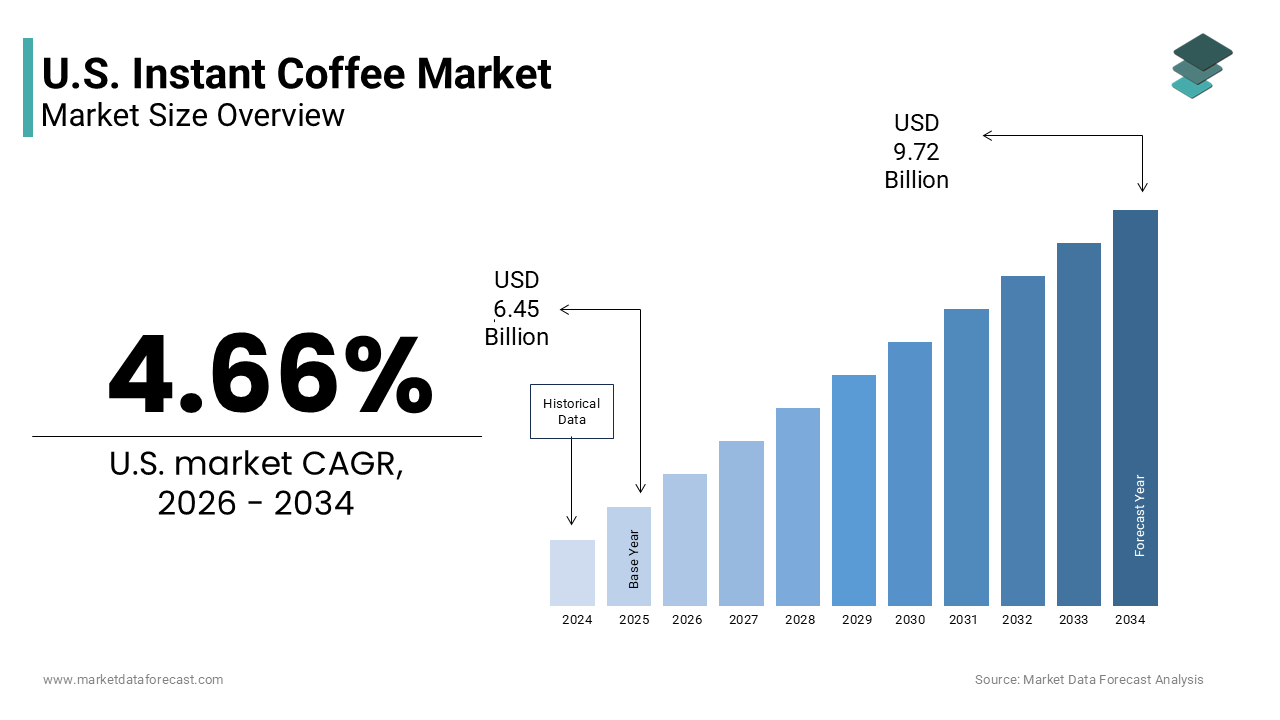
The U.S. instant coffee market was valued at USD 6.45 billion in 2025, is estimated to reach USD 6.75 billion in 2026, and is projected to reach USD 9.72 billion by 2034, growing at a CAGR of 4.66% during the forecast period from 2026 to 2034. The growth of the U.S. instant coffee market is driven by rising demand for convenient beverage solutions, expanding remote and hybrid work culture, and increasing consumer preference for quick preparation coffee products. The growing popularity of outdoor recreational activities, emergency preparedness trends, and the rising adoption of premium freeze-dried coffee formats are further accelerating market growth. Moreover, innovations in functional coffee beverages, expanding online retail channels, and increasing demand for premium and flavored instant coffee products are supporting the expansion of the U.S. instant coffee market.
Key Market Trends
- Rising demand for premium freeze-dried and microground instant coffee products offering enhanced flavor and aroma profiles.
- Growing popularity of functional instant coffee infused with adaptogens, collagen, probiotics, and wellness ingredients.
- Increasing adoption of online subscription-based coffee purchasing models and direct-to-consumer distribution channels.
- Strong focus on sustainable packaging solutions and ethically sourced coffee beans among leading manufacturers.
- Expansion of cold brew and liquid instant coffee concentrates is driven by changing consumer beverage preferences.
Segmental Insights
- Based on type, the soluble and powder instant coffee segment dominated the U.S. instant coffee market and held the largest share in 2025. The segment’s dominance is attributed to its affordability, long shelf life, widespread retail availability, and suitability for daily household consumption.
- The liquid instant coffee segment is projected to witness the fastest CAGR during the forecast period owing to the increasing popularity of cold coffee beverages, convenience of ready-to-mix concentrates, and the rising demand for café-style beverages at home.
- Based on distribution channel, the retail supermarkets and hypermarkets segment accounted for the largest share of the U.S. instant coffee market in 2025. The dominance of this segment is driven by strong product visibility, wide availability of brands, bulk purchasing convenience, and frequent promotional activities across retail chains.
- The online retail segment is expected to register significant growth during the forecast period due to increasing e-commerce adoption, growing subscription-based purchasing behavior, and rising consumer preference for personalized and premium coffee offerings.
Regional Insights
The United States dominated the North American instant coffee market and accounted for a major share in 2025, supported by strong coffee consumption culture, increasing demand for convenient beverage products, and growing adoption of premium instant coffee formats. California remains a major contributor to the U.S. instant coffee market due to its large urban population, strong café culture, and rising consumer preference for premium and functional coffee beverages. New York, Washington, and Oregon are also witnessing notable growth driven by increasing remote work adoption, strong specialty coffee influence, and expanding online retail penetration.
Competitive Landscape
The U.S. instant coffee market is highly competitive and characterized by the presence of multinational beverage companies and specialty coffee brands competing through product innovation, premiumization strategies, and sustainability initiatives. Leading companies are focusing on launching freeze-dried and functional coffee variants, expanding direct-to-consumer channels, strengthening digital marketing strategies, and investing in sustainable sourcing practices. Strategic partnerships with coffeehouse chains, improvements in packaging technologies, and expansion of premium product portfolios are further strengthening market positioning across diverse consumer demographics. Prominent players in the U.S. instant coffee market include Nestlé S.A., The J.M. Smucker Company, Starbucks Corporation, Keurig Dr Pepper Inc., Tata Consumer Products, Strauss Group Ltd., Unilever PLC, Jacobs Douwe Egberts, Massimo Zanetti Beverage Group, and Kraft Heinz Company.
U.S. Instant Coffee Market Size
The U.S. instant coffee market size was valued at USD 6.45 billion in 2025 and is anticipated to reach USD 6.75 billion in 2026 from USD 9.72 billion by 2034, growing at a CAGR of 4.66% during the forecast period from 2026 to 2034.
According to the Spring 2026 National Coffee Data Trends report, nearly 195 million American adults drink coffee each week, making coffee the most popular beverage in America. The market landscape is increasingly influenced by lifestyle shifts toward remote work and on the go consumption patterns, where time efficiency becomes paramount. According to the Bureau of Labor Statistics, the average American spends roughly 1.24 hours daily on all eating and drinking activities, creating a strong incentive for products that minimize preparation time. The sector is also defined by its role as a staple in emergency preparedness kits and outdoor recreational activities, where access to brewing equipment is limited. Recent innovations have focused on enhancing flavor profiles to compete with freshly brewed alternatives, addressing historical perceptions of inferior quality. The regulatory environment ensures strict adherence to food safety standards, particularly regarding acrylamide levels, a byproduct of roasting. This market operates at the intersection of convenience culture and functional beverage demand, serving a diverse demographic ranging from college students to busy professionals who value immediacy in their daily routines.
MARKET DRIVERS
Expansion of Remote Work Culture Enhances Convenience Demand
The proliferation of remote and hybrid work models has significantly amplified the demand for instant coffee due to its unmatched preparation speed and minimal clean-up requirements, which is one of the major factors propelling the growth of the U.S. instant coffee market. As employees transition from office environments with dedicated break rooms to home offices, the need for quick and efficient caffeine solutions has become pronounced. According to the Bureau of Labor Statistics, 22.6% of workers teleworked or worked at home for pay in March 2026, which is creating a sustained shift in daily consumption habits. This demographic often seeks to replicate the convenience of office coffee machines without the associated equipment costs or maintenance efforts. Instant coffee allows workers to prepare a cup in seconds, facilitating seamless integration into tight schedules and virtual meeting intervals. The psychological association between coffee breaks and productivity boosts further drives regular consumption among remote workers who structure their days around short pauses. Additionally, the reduction in commuting time has led to more fragmented morning routines, where individuals prioritize speed over ritualistic brewing processes. For instance, remote employees report higher frequencies of mid-day coffee consumption compared to their office based counterparts, driven by easy access to kitchen facilities. This behavioral change supports steady demand for instant variants, particularly among younger professionals who value flexibility. Manufacturers are responding by packaging products in single serve sticks or pods that align with the desk bound nature of remote work, ensuring that convenience remains the central value proposition for this growing consumer segment.
Growth in Outdoor Recreation and Emergency Preparedness Trends
The growing participation in outdoor recreational activities and increased focus on emergency preparedness are driving significant demand for instant coffee as a portable and non-perishable staple, which is another major market driver. Camping, hiking, and backpacking have seen substantial growth in popularity, with participants requiring lightweight and easy to prepare food and beverage options. As per the Outdoor Industry Association, outdoor recreation generated 2.4% of the national Gross Domestic Product in 2022, with millions of Americans engaging in camping activities each year. Instant coffee fits perfectly into this lifestyle due to its minimal weight and lack of brewing equipment requirements, allowing enthusiasts to enjoy a warm beverage in remote locations. Furthermore, the rise in natural disasters and supply chain disruptions has prompted households to stockpile essential goods, including long shelf life food items. According to the Federal Emergency Management Agency, only a small percentage of Americans have adequate emergency supplies, leading increased educational campaigns that recommend storing instant coffee for morale and energy during crises. The product’s stability under varying temperature conditions makes it ideal for storage in vehicles or emergency kits. This dual utility for leisure and survival purposes expands the consumer base beyond daily drinkers to include occasional users who value reliability. Brands are leveraging this trend by marketing rugged packaging and emphasizing the product’s role in outdoor adventures, thereby tapping into a niche but loyal segment that prioritizes functionality and portability in their purchasing decisions.
MARKET RESTRAINTS
Perceived Inferior Quality Compared to Freshly Brewed Coffee
The broader adoption of instant coffee is the persistent consumer perception that it offers inferior taste and aroma compared to freshly brewed alternatives, which is a significant impediment to the U.S. instant coffee market growth. Despite technological advancements in freeze drying and microground processing, many coffee enthusiasts associate instant varieties with bitterness and a lack of complexity. As per the Specialty Coffee Association, the majority of premium coffee consumers prioritize origin specific flavors and artisanal brewing methods, which instant products often fail to replicate authentically. This stigma is deeply rooted in historical experiences with low quality spray dried powders that dominated the market in previous decades. The sensory gap between instant and fresh coffee remains a significant barrier for discerning drinkers who view coffee consumption as a ritualistic experience rather than merely a caffeine delivery system. According to consumer behavior studies, taste is the most critical factor influencing coffee purchase decisions, with over 84% of respondents citing flavor profile as their top priority. This preference limits the appeal of instant coffee to convenience seekers rather than quality seekers, restricting its market penetration among high income demographics. Additionally, the rise of third wave coffee shops has elevated consumer expectations for freshness and ethical sourcing, further marginalizing instant options as commoditized substitutes. Manufacturers struggle to overcome this entrenched bias, as even premium instant brands face skepticism regarding their ability to deliver a genuine coffee experience. This perceptual barrier necessitates extensive marketing efforts to educate consumers on modern production techniques, yet the fundamental association with lower quality continues to suppress potential growth in the premium segment.
Volatility in Green Coffee Bean Prices and Supply Chains
The volatility of green coffee bean prices and disruptions in global supply chains that directly impact production costs and retail pricing is further hindering the instant coffee market expansion in the U.S. Coffee is an agricultural commodity subject to weather fluctuations, pest outbreaks, and geopolitical instability in major producing regions such as Brazil and Vietnam. As per the International Coffee Organization, price indices for coffee beans experienced sharp swings reaching record highs in recent years, driven by climate change induced droughts and frost events. These fluctuations force manufacturers to absorb higher input costs or pass them on to consumers, potentially reducing demand in price sensitive segments. The reliance on imported raw materials also exposes the industry to logistical bottlenecks, such as port congestions and shipping container shortages, which delay production schedules. According to the U.S. Department of Agriculture, import volumes of green coffee can vary significantly quarter over quarter, creating uncertainty for inventory planning. For instant coffee producers, who operate on thinner margins than specialty roasters, these cost pressures are particularly acute. The inability to consistently predict raw material expenses complicates long term strategic planning and pricing strategies. Furthermore, sustainability concerns regarding coffee farming practices add another layer of complexity, as consumers increasingly demand ethically sourced ingredients. Compliance with these standards often requires premium payments to farmers, further elevating costs. This economic instability restricts the ability of manufacturers to invest in innovation or marketing, thereby limiting market expansion and reinforcing the perception of instant coffee as a budget oriented option rather than a premium choice.
MARKET OPPORTUNITIES
Innovation in Premium Freeze Dried and Microground Formats
The development of premium freeze dried and microground instant coffee formats is a promising opportunity for the U.S. instant coffee market. Freeze drying preserves the volatile aromatic compounds and flavor nuances of coffee beans more effectively than traditional spray drying, resulting in a product that closely mimics freshly brewed coffee. As per industry trends, sales of premium instant coffee have outpaced standard varieties, driven by consumers willing to pay higher prices for superior taste and convenience. Microground technology, which incorporates finely ground coffee beans into the soluble matrix, further enhances body and texture, appealing to those who miss the mouthfeel of traditional brews. This innovation allows manufacturers to position instant coffee as a viable alternative for home baristas and office workers who refuse to compromise on quality. According to market observations, brands that emphasize single origin beans and light to medium roasts in their instant lines are gaining traction among millennial and Generation Z consumers who value transparency and craftsmanship. The opportunity lies in educating these demographics about the technological advancements that enable high quality instant products, thereby breaking down historical stigmas. Packaging innovations such as nitrogen flushed jars and single serve sachets also contribute to perceived value and freshness retention. By targeting the premium segment, companies can diversify their revenue streams and reduce dependence on volume driven low margin sales. This strategic shift aligns with broader consumer trends toward indulgence and self-care, which is positioning premium instant coffee as a luxurious yet convenient daily ritual.
Integration with Functional Beverages and Health Wellness Trends
Integrating instant coffee with functional ingredients such as adaptogens, collagen, and probiotics offers a lucrative opportunity for the U.S. instant coffee market. Consumers are increasingly seeking beverages that provide additional health benefits beyond caffeine stimulation, such as improved focus, skin health, or digestive support. As per the Global Wellness Institute, the global wellness economy was valued at USD 5.6 trillion in 2022, with functional foods and beverages representing a significant share of consumer spending. Instant coffee serves as an ideal vehicle for these additives due to its neutral flavor profile and ease of mixing. Manufacturers can create specialized blends that cater to specific health needs, such as stress relief or immune boosting, thereby differentiating their products in a crowded marketplace. This approach appeals to health conscious individuals who prioritize holistic well being and are willing to pay a premium for multifunctional products. According to nutritional surveys, a growing percentage of Americans actively seek out functional ingredients in their daily diets, creating a ready made audience for enhanced coffee options. The convenience of instant format aligns perfectly with the fast paced lifestyles of these consumers, who value efficiency in their health routines. Collaborations with nutritionists and health influencers can further validate these claims and build trust among skeptical buyers. By positioning instant coffee as a health promoting elixir rather than just a caffeinated drink, companies can unlock new usage occasions and expand their customer base. This strategy leverages the convergence of convenience and wellness, two powerful drivers in the contemporary food and beverage landscape.
MARKET CHALLENGES
Environmental Concerns Regarding Packaging Waste
Environmental sustainability poses a significant challenge to the instant coffee market in the U.S., particularly concerning the disposal of packaging materials such as plastic jars, foil lids, and single serve sachets. Consumers are increasingly aware of the environmental impact of single use plastics and are demanding more eco-friendly alternatives from brands. As per the Environmental Protection Agency, the recycling rate for all municipal solid waste in the U.S. is approximately 32%, with plastic packaging showing even lower recovery rates. Instant coffee packaging, often designed for moisture protection and shelf stability, frequently involves multi-layer materials that are difficult to recycle. This discrepancy between consumer values and product design creates reputational risks for manufacturers and may lead to regulatory scrutiny. Companies face pressure to innovate sustainable packaging solutions without compromising product integrity or increasing costs prohibitively. According to sustainability reports, transitioning to compostable or fully recyclable materials requires significant investment in research and supply chain restructuring. The challenge is compounded by the lack of standardized recycling infrastructure across different states, making it difficult to implement uniform solutions. Furthermore, green washing accusations can damage brand credibility if sustainability claims are not substantiated by tangible actions. Manufacturers must navigate this complex landscape by balancing environmental responsibility with operational feasibility. Failure to address packaging waste concerns may result in loss of market share to competitors who prioritize sustainability or to alternative beverage formats with lower environmental footprints. This challenge necessitates a holistic approach to product lifecycle management, involving collaboration with suppliers, regulators, and consumers to develop viable circular economy models.
Competition from Ready to Drink and Pod Based Systems
The intense competition from ready to drink canned coffees and pod based brewing systems is further challenging the instant coffee market expansion in the U.S. Ready to drink products eliminate the need for any preparation, appealing to ultra-convenience seeking consumers, while pod systems provide a fresher taste experience with minimal effort. As per beverage industry data, the ready to drink coffee segment has experienced robust growth, capturing share from traditional instant formats among younger demographics. Pod based systems, such as Keurig and Nespresso, have become ubiquitous in households and offices, offering a wide variety of flavors and brands with consistent quality. These alternatives threaten the relevance of instant coffee by positioning themselves as superior yet equally convenient options. The challenge for instant coffee manufacturers lies in differentiating their products on factors other than speed, such as portability or cost effectiveness. However, the price gap between instant and pod coffee has narrowed, reducing the economic incentive for switching. According to retail scanner data, many consumers view pod coffee as a modest upgrade in quality for a marginal increase in cost, making it an attractive substitute. Additionally, the environmental criticism surrounding single use pods mirrors that of instant packaging, yet the perceived quality benefit often outweighs these concerns for consumers. To remain competitive, instant coffee brands must emphasize unique advantages such as travel friendliness and lower equipment dependency, while continuously improving flavor profiles to close the quality gap. This competitive pressure requires constant innovation and strategic positioning to prevent further erosion of market share.
REPORT COVERAGE
| REPORT METRIC | DETAILS |
| Market Size Available | 2025 to 2034 |
| Base Year | 2025 |
| Forecast Period | 2026 to 2034 |
| CAGR | 4.66% |
| Segments Covered | By Type, Distribution Channel and Region. |
| Various Analyses Covered | Global, Regional & Country Level Analysis, Segment-Level Analysis; DROC, PESTLE Analysis, Porter's Five Forces Analysis, Competitive Landscape, Analyst Overview of Investment Opportunities |
| Countries Covered | California, Washington, Oregon, New York, and the rest of the United States. |
| Market Leader Profiled | Nestlé S.A., The J.M. Smucker Company, Starbucks Corporation, Keurig Dr Pepper Inc., Tata Consumer Products, Strauss Group Ltd., Unilever PLC, Jacobs Douwe Egberts, Massimo Zanetti Beverage Group, and Kraft Heinz Company. |
SEGMENTAL ANALYSIS
By Type Insights
The soluble and powder instant coffee segment dominated the market by holding the highest share of the U.S. market in 2025. The growth of the soluble and powder segment in the U.S. market is attributed to its superior cost efficiency compared to other coffee formats, making it accessible to a broad demographic spectrum. In an economic environment where consumers are increasingly price conscious, instant coffee offers a significantly lower cost per cup than freshly brewed beans or pod based systems. According to the Bureau of Labor Statistics, the consumer price index for coffee at home has seen fluctuations, prompting many households to shift toward budget friendly alternatives. A jar of instant coffee can yield dozens of cups at a fraction of the cost of premium ground coffee, providing substantial savings over time. This economic advantage is particularly relevant for large families, students, and institutional buyers such as offices and hotels that require high volume consumption without prohibitive expenses. The long shelf life of powdered and granulated forms further enhances its value proposition, reducing waste associated with spoilage. As per retail data, private label instant coffee brands have gained traction by offering even lower price points, reinforcing the segment’s appeal to cost sensitive shoppers. The ubiquity of this format in discount retailers and grocery stores ensures widespread availability, cementing its position as the default choice for everyday consumption. The combination of low entry cost and high utility ensures that soluble and powder instant coffee remains the backbone of the market, sustaining high volume sales despite the rise of premium alternatives.
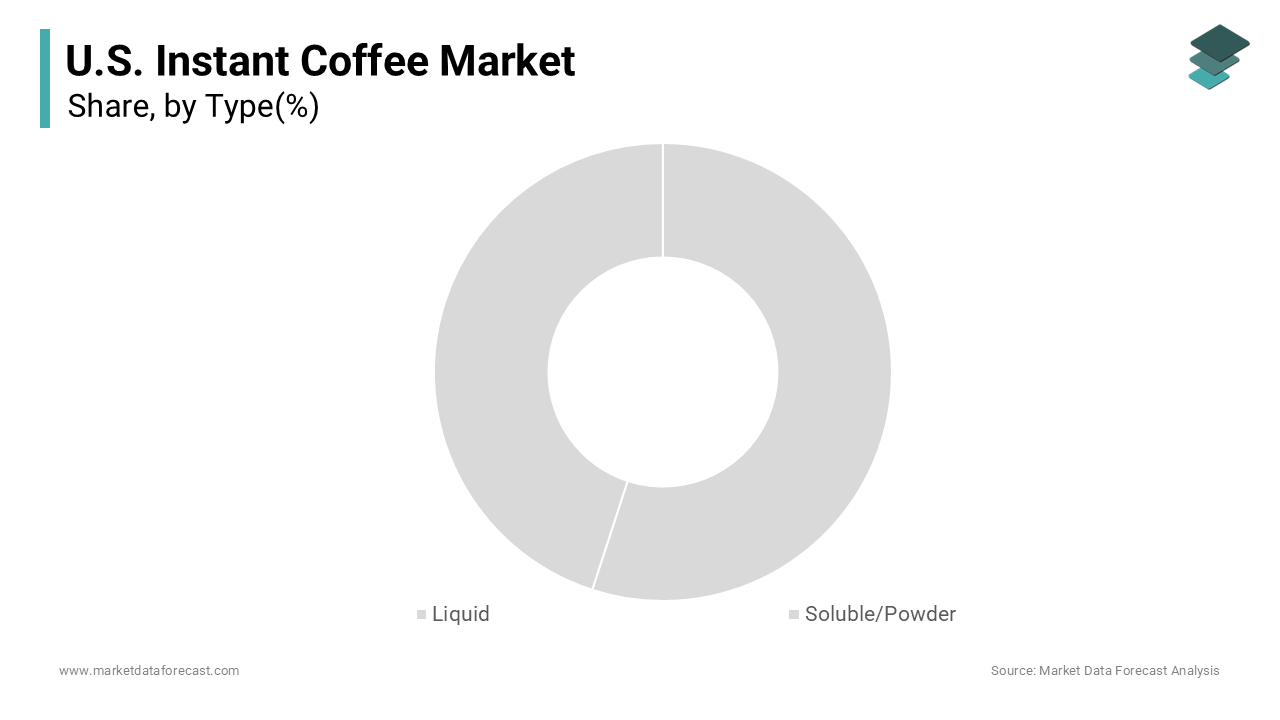
However, the liquid instant coffee segment is expected to grow at a promising CAGR of 5.9% during the forecast period owing to the rising demand for cold brew alternatives and the convenience of ready to mix formats that offer superior flavor retention. The rapid growth of liquid instant coffee concentrates is largely attributed to the exploding popularity of cold coffee beverages, particularly among younger consumers who prefer iced lattes and cold brews. Liquid concentrates dissolve instantly in cold water or milk, eliminating the need for lengthy steeping processes associated with traditional cold brew methods. As per the National Coffee Association, cold coffee consumption has increased significantly in recent years, with nearly 40% of coffee drinkers reporting regular intake of cold beverages. This trend is driven by the perception of cold coffee as a refreshing and modern alternative to hot drinks, especially in urban areas with warm climates. Liquid concentrates offer a consistent and smooth flavor profile that mimics the characteristics of slow steeped cold brew, appealing to discerning palates. The convenience factor is paramount, as consumers can prepare a high quality iced coffee in seconds without specialized equipment. This aligns with the fast paced lifestyles of millennials and Generation Z, who prioritize efficiency without compromising on taste. Additionally, the rise of social media platforms has popularized aesthetically pleasing iced coffee creations, encouraging experimentation with flavors and mixins. Liquid concentrates facilitate this creativity by allowing easy customization with syrups and milks. The segment benefits from this cultural shift, as brands introduce innovative flavors such as vanilla, caramel, and nitro infused variants to capture consumer interest. The alignment with contemporary drinking habits ensures that liquid concentrates continue to gain market share, outpacing traditional powder forms in growth metrics.
By Distribution Channel Insights
The retail supermarkets and hypermarkets segment dominated the market with the highest share of the U.S. market in 2025. The dominance of this segment in the U.S. market can be credited to the widespread presence of these outlets and the consumer tendency to purchase coffee alongside regular grocery items. The convenience they offer for one stop shopping that allow consumers to purchase instant coffee along with other household essentials is further aiding the dominance of retail supermarkets and hypermarkets segment in the U.S. market. Most Americans visit grocery stores weekly for food supplies, making it the most natural point of sale for staple items like coffee. According to the Food Marketing Institute, the vast majority of households rely on supermarkets for their primary grocery needs, ensuring high foot traffic and consistent exposure for instant coffee brands. These retailers typically dedicate substantial shelf space to coffee aisles, offering a wide variety of brands, sizes, and formats to cater to diverse preferences. The availability of bulk sizes and multi pack options in hypermarkets appeals to families and heavy users who seek value and reduced shopping frequency. Promotional activities such as weekly discounts, loyalty card rewards, and end cap displays further incentivize purchases in this channel. The physical presence of the product allows consumers to inspect packaging, check expiration dates, and compare prices directly, fostering confidence in their buying decisions. Additionally, the integration of pharmacy and general merchandise sections within many supermarkets enhances the overall shopping experience, saving time for busy consumers. The established supply chain relationships between manufacturers and large retail chains ensure consistent stock levels, minimizing the risk of out of stock situations. This reliability is crucial for maintaining brand loyalty, as consumers tend to stick with retailers that consistently meet their needs. The combination of accessibility, variety, and promotional support solidifies the position of supermarkets and hypermarkets as the primary distribution channel for instant coffee in the U.S.
On the other end, the online retail segment is estimated to expand at a CAGR of 6.8% during the forecast period owing to the increasing adoption of e-commerce platforms, subscription services, and the demand for niche and premium products that are not readily available in physical stores. The rapid expansion of the online retail channel is primarily fueled by the proliferation of subscription models and direct to consumer sales strategies that offer unparalleled convenience and customization. Consumers are increasingly embracing automated replenishment services that ensure a steady supply of instant coffee without the need for manual reordering. As per the U.S. Census Bureau, e-commerce sales as a percent of total retail sales have reached over 15% in recent quarters, with grocery and beverage categories seeing significant uptake. Subscription platforms allow users to select delivery frequencies, choose specific blends, and modify orders easily through user friendly interfaces. This flexibility appeals to busy professionals and parents who value time saving solutions. Direct to consumer brands leverage digital marketing to reach targeted audiences, offering exclusive products and limited edition flavors that are not available in traditional retail outlets. The ability to access detailed product information, customer reviews, and brewing tips online enhances the shopping experience and builds brand loyalty. Additionally, online retailers often provide competitive pricing and free shipping thresholds, making it cost effective for consumers to stock up. The integration of mobile apps facilitates seamless transactions and real time tracking, further enhancing convenience. As digital literacy increases across all age groups, the barrier to online shopping diminishes, expanding the potential customer base. The personalized nature of online interactions allows brands to gather valuable data on consumer preferences, enabling them to refine their offerings and marketing strategies. This data driven approach fosters deeper engagement and retention, driving the sustained growth of the online channel in the instant coffee market.
COUNTRY ANALYSIS
The U.S. occupied the dominant position in the North American instant coffee market in 2025 and accounted for 89.4% of the regional market share. The U.S. is likely to experience sustained demand for premium and functional instant coffee formats as consumers increasingly prioritize time-saving solutions that do not compromise on wellness or quality. As the largest consumer market in the region, the country exhibits a mature yet evolving landscape where convenience and quality intersect. The market status is characterized by a steady demand base supported by a large population of coffee drinkers, with instant coffee serving as a crucial segment for value oriented and convenience seeking consumers. The presence of major global manufacturers and robust domestic distribution networks ensures high product availability and competitive pricing. The U.S. market is fundamentally driven by its deep rooted coffee consumption culture and dynamic lifestyle patterns that prioritize efficiency. According to the National Coffee Association, over 66% of American adults drink coffee daily, creating a massive addressable market for all coffee formats including instant. The fast paced nature of American life, particularly in urban centers, fuels the demand for quick preparation methods that fit into busy schedules. Instant coffee offers a practical solution for workers, students, and travelers who need immediate caffeine access without the time commitment of brewing. The widespread adoption of remote work has further reinforced this trend, as individuals seek convenient home based solutions. Additionally, the cultural acceptance of instant coffee in various settings, from camping trips to office break rooms, ensures diverse usage occasions. The demographic diversity of the U.S. also contributes to varied consumption habits, with different ethnic groups incorporating instant coffee into their daily routines in unique ways. The high penetration of household appliances such as microwaves and kettles facilitates easy preparation, removing technical barriers to consumption. As per census data, the large millennial and Generation Z populations are increasingly open to experimenting with premium instant formats, driving innovation and growth. This combination of high overall coffee consumption and lifestyle driven convenience needs sustains the robust position of the U.S. in the regional market.
COMPETITIVE LANDSCAPE
The competitive landscape of the U.S. instant coffee market is characterized by the dominance of a few multinational corporations that leverage strong brand equity and extensive distribution networks. These incumbent players face increasing pressure from emerging specialty brands that emphasize artisanal quality and ethical sourcing. Competition is primarily driven by product differentiation as companies strive to overcome the historical stigma of inferior taste associated with instant coffee. Innovation in processing technologies such as freeze drying and nitrogen flushing enables manufacturers to offer premium products that closely mimic freshly brewed flavors. Price competition remains intense in the standard segment where private label brands from major retailers offer lower cost alternatives. However the premium segment exhibits less price sensitivity as consumers prioritize quality and sustainability. Digital marketing and direct to consumer channels have become critical battlegrounds for customer acquisition and retention. Brands utilize social media and influencer partnerships to engage younger demographics and promote novel usage occasions. Supply chain reliability has emerged as a key competitive advantage following recent global disruptions that highlighted the importance of domestic production capabilities. Regulatory compliance and sustainability initiatives also influence competitive dynamics as consumers demand transparency. Overall the market favors companies that can balance innovation with operational efficiency while maintaining strong brand loyalty.
KEY MARKET PLAYERS
Some of the promising companies that are playing a dominating role in the U.S. instant coffee market include
- Nestlé S.A.
- The J.M. Smucker Company
- Starbucks Corporation
- Keurig Dr Pepper Inc.
- Tata Consumer Products
- Strauss Group Ltd.
- Unilever PLC
- Jacobs Douwe Egberts
- Massimo Zanetti Beverage Group
- The Kraft Heinz Company
Top Players in the US Market
Nestlé S.A.
Nestlé maintains a dominant presence in the U.S. instant coffee sector through its iconic Nescafé and Starbucks branded portfolios. The company leverages its extensive distribution network to ensure widespread availability across retail and online channels. Recent strategic initiatives include the launch of premium freeze dried variants under the Nescafé Gold label to cater to discerning consumers seeking higher quality. Nestlé has also invested heavily in sustainable sourcing programs to appeal to environmentally conscious buyers. By integrating advanced digital marketing campaigns and partnering with major e commerce platforms, the corporation enhances brand visibility and consumer engagement. These efforts aim to modernize the perception of instant coffee while retaining its core convenience value proposition. The continuous innovation in packaging formats such as single serve sticks further aligns with on the go consumption trends. Nestlé’s focus on product diversification and sustainability solidifies its leadership position in the competitive landscape.
The J.M. Smucker Company
The J.M. Smucker Company significantly influences the market through its ownership of the Folgers brand which remains a household name in American coffee consumption. The company focuses on delivering consistent quality and affordability to a broad consumer base. Recent actions include the expansion of its Folgers Instant line with new flavor profiles and improved solubility technologies to enhance user experience. Smucker has also prioritized supply chain resilience by investing in domestic manufacturing capabilities to mitigate disruption risks. The organization actively engages in promotional activities within grocery chains to maintain shelf prominence and drive volume sales. By leveraging data analytics to understand consumer preferences, Smucker tailors its product offerings to meet evolving tastes. The commitment to operational efficiency and brand heritage allows the company to retain loyal customers while attracting new users through innovative product enhancements and strategic retail partnerships.
Kraft Heinz Company
Kraft Heinz contributes substantially to the market via its Maxwell House and Gevalia brands which offer diverse instant coffee options. The company emphasizes value driven propositions and broad accessibility through mass retail channels. Recent strategies involve revitalizing the Maxwell House instant portfolio with updated packaging and refreshed marketing campaigns that highlight convenience and taste. Kraft Heinz has also explored collaborations with food service providers to expand usage occasions beyond home consumption. The firm invests in digital transformation to streamline direct to consumer interactions and gather actionable insights. By focusing on cost effective production methods and efficient logistics, Kraft Heinz ensures competitive pricing that appeals to budget conscious shoppers. The introduction of specialty blends within its instant range aims to capture premium segment interest. These initiatives demonstrate the company’s commitment to adapting traditional brands to modern consumer expectations while maintaining strong market relevance.
Top Strategies Used by Key Market Participants
Key players in the U.S. instant coffee market primarily employ product premiumization and digital engagement strategies to sustain growth. Companies are increasingly launching freeze dried and microground variants to address quality perceptions and attract discerning consumers who previously avoided traditional spray dried powders. This shift allows brands to command higher price points and differentiate themselves in a saturated market. Another major strategy involves expanding direct to consumer channels through subscription models that ensure recurring revenue and enhance customer loyalty. These platforms provide personalized experiences and convenient auto replenishment services that align with modern lifestyles. Manufacturers also prioritize sustainability by adopting eco friendly packaging and ethical sourcing practices to resonate with environmentally aware buyers. Strategic partnerships with popular coffeehouse chains enable licensed brands to leverage established reputations and reach wider audiences. Additionally firms invest in robust supply chain infrastructure to ensure product availability and mitigate disruption risks. Marketing efforts focus on highlighting convenience and versatility targeting remote workers and outdoor enthusiasts. By combining innovation with operational efficiency key participants strengthen their competitive positions and adapt to changing consumer preferences effectively.
MARKET SEGMENTATION
This research report on the U.S. Instant Coffee Market has been segmented based on the following categories.
By Type
- Liquid
- Soluble/Powder
By Distribution Channel
- HoReCa
- Retail
By Country
- California
- Washington
- Oregon
- New York
- Rest of the United States
Frequently Asked Questions
What is instant coffee?
Instant coffee is a beverage made from brewed coffee that has been freeze-dried or spray-dried into soluble powder or granules.
What factors are driving the growth of the U.S. instant coffee market?
Growing demand for convenient beverages, busy lifestyles, rising coffee consumption, and product innovations are major growth drivers.
Which types of instant coffee are popular in the U.S. market?
Freeze-dried coffee, spray-dried coffee, flavored instant coffee, and ready-to-mix coffee products are widely popular.
Who are the major players in the U.S. instant coffee market?
Major companies include Nestlé, Starbucks Corporation, JDE Peet’s, The Kraft Heinz Company, and Tata Consumer Products.
What distribution channels are used in the instant coffee market?
Instant coffee products are distributed through supermarkets, hypermarkets, convenience stores, online platforms, and specialty stores.
Why is freeze-dried instant coffee gaining popularity?
Freeze-dried coffee retains better aroma and flavor compared to spray-dried coffee, improving consumer preference.
What role does e-commerce play in the market?
Online retail platforms help brands reach a wider customer base and increase product accessibility.
Which consumer group drives demand for instant coffee in the U.S.?
Working professionals, students, millennials, and consumers seeking quick beverage solutions are key consumers.
What challenges does the U.S. instant coffee market face?
Competition from fresh brewed coffee, fluctuating coffee bean prices, and changing consumer preferences are key challenges.
What is the future outlook for the U.S. instant coffee market?
The market is expected to grow steadily due to rising convenience trends and increasing product innovation.
Access the study in MULTIPLE FORMATS
Purchase options starting from
$ 1200
Didn’t find what you’re looking for?
TALK TO OUR ANALYST TEAM
Need something within your budget?
NO WORRIES! WE GOT YOU COVERED!
Call us on: +1 888 702 9696 (U.S Toll Free)
Write to us: sales@marketdataforecast.com