U.S Intraoperative Neuromonitoring Market Size, Share, Trends & Growth Forecast Report - Segmented By Type, Application, End-User and By Country (California, Washington, Oregon, New York & Rest of the United States) – Industry Analysis and Forecast, 2026 to 2034
Market Size, 2025
$1.47 BnMarket Estimate, 2026
$1.55 BnMarket Forecast, 2034
$2.29 BnCAGR, 2026–2034
5.54%U.S. Intraoperative Neuromonitoring Market Report Summary
The U.S. intraoperative neuromonitoring market was valued at USD 1.47 billion in 2025, is estimated to reach USD 1.55 billion in 2026, and is projected to reach USD 2.29 billion by 2034, growing at a CAGR of 5.54% during the forecast period from 2026 to 2034. The U.S. intraoperative neuromonitoring market is expanding steadily as healthcare providers increasingly prioritize patient safety and precision during complex surgical procedures. The growing volume of neurosurgical, spinal, orthopedic, and cardiovascular operations, coupled with rising adoption of real-time nerve monitoring technologies, is driving market growth. Advancements in electrophysiological monitoring systems, increasing demand for minimally invasive surgeries, and greater awareness of preventing neurological complications are encouraging hospitals to integrate intraoperative neuromonitoring into routine surgical practice. Furthermore, continuous investments in surgical innovation, improved healthcare infrastructure, and the availability of highly specialized neuromonitoring services are expected to create sustained growth opportunities across the United States.
Key Market Trends
- Artificial intelligence and advanced signal-processing technologies are improving the accuracy and efficiency of intraoperative neuromonitoring systems.
- Growing preference for minimally invasive and robot-assisted surgeries is increasing demand for real-time neurological monitoring solutions.
- Healthcare providers are expanding the use of multimodal monitoring techniques to enhance surgical precision and reduce postoperative neurological complications.
- Increasing investments in operating room modernization and advanced medical technologies are accelerating the adoption of sophisticated neuromonitoring equipment.
- Demand for specialized intraoperative neuromonitoring service providers is rising as hospitals seek to improve clinical outcomes and workflow efficiency.
Segmental Insights
Based on type, the equipment segment accounted for 36.4% of the U.S. intraoperative neuromonitoring market share in 2025. The segment leads the market due to continuous advancements in monitoring systems, increasing installation of high-performance surgical equipment, and growing demand for reliable real-time neurological assessment during complex procedures.
Based on application, the neurosurgery segment held the largest share of 56.3% in the U.S. intraoperative neuromonitoring market in 2025. The segment's dominance is attributed to the critical need for continuous nerve function monitoring during brain and spinal surgeries, helping surgeons minimize neurological damage and improve patient safety.
Based on end user, the hospitals segment captured 44.2% of the U.S. intraoperative neuromonitoring market share in 2025. Hospitals remain the leading end users owing to their advanced surgical infrastructure, availability of multidisciplinary medical teams, and increasing volume of complex procedures requiring comprehensive neuromonitoring support.
Regional Insights
The United States continues to be a leading market for intraoperative neuromonitoring, supported by its advanced healthcare infrastructure, high surgical procedure volumes, and rapid adoption of innovative medical technologies. Strong investments in neurosurgical care, increasing availability of skilled healthcare professionals, and growing emphasis on patient safety are driving widespread adoption of intraoperative neuromonitoring systems. Favorable reimbursement frameworks for complex surgical procedures, continuous technological innovation, and expanding clinical applications are further strengthening market growth. As hospitals increasingly incorporate advanced monitoring solutions into operating rooms, the United States is expected to maintain its leadership in the global intraoperative neuromonitoring market throughout the forecast period.
Competitive Landscape
The U.S. intraoperative neuromonitoring market is characterized by strong competition among global medical device manufacturers, specialized neuromonitoring technology providers, and healthcare solution companies. Leading market participants are investing in advanced monitoring equipment, artificial intelligence-enabled diagnostic capabilities, and multimodal neuromonitoring platforms to improve surgical accuracy and patient outcomes. Strategic collaborations with hospitals, product innovation, regulatory approvals, and expansion of clinical service offerings remain key competitive strategies across the industry. Companies are also strengthening research and development initiatives to introduce more portable, user-friendly, and technologically advanced monitoring systems that meet the evolving needs of modern surgical environments. As demand for precision-guided surgeries continues to grow, manufacturers are focusing on innovation, clinical reliability, and integrated healthcare solutions to strengthen their market position.
Prominent players in the U.S. intraoperative neuromonitoring market include Medtronic (Ireland), Inomed Medizintechnik GmbH (Germany), BIOTRONIK SE, Nihon Kohden Corporation (Japan), Cadwell Industries Inc. (U.S.), Neurovision Medical Products (U.S.), Neurosoft (Greece), Johnson & Johnson Services, Inc. (U.S.), NuVasive, Inc. (U.S.), and Natus Medical Incorporated (U.S.).
U.S Intraoperative Neuromonitoring Size
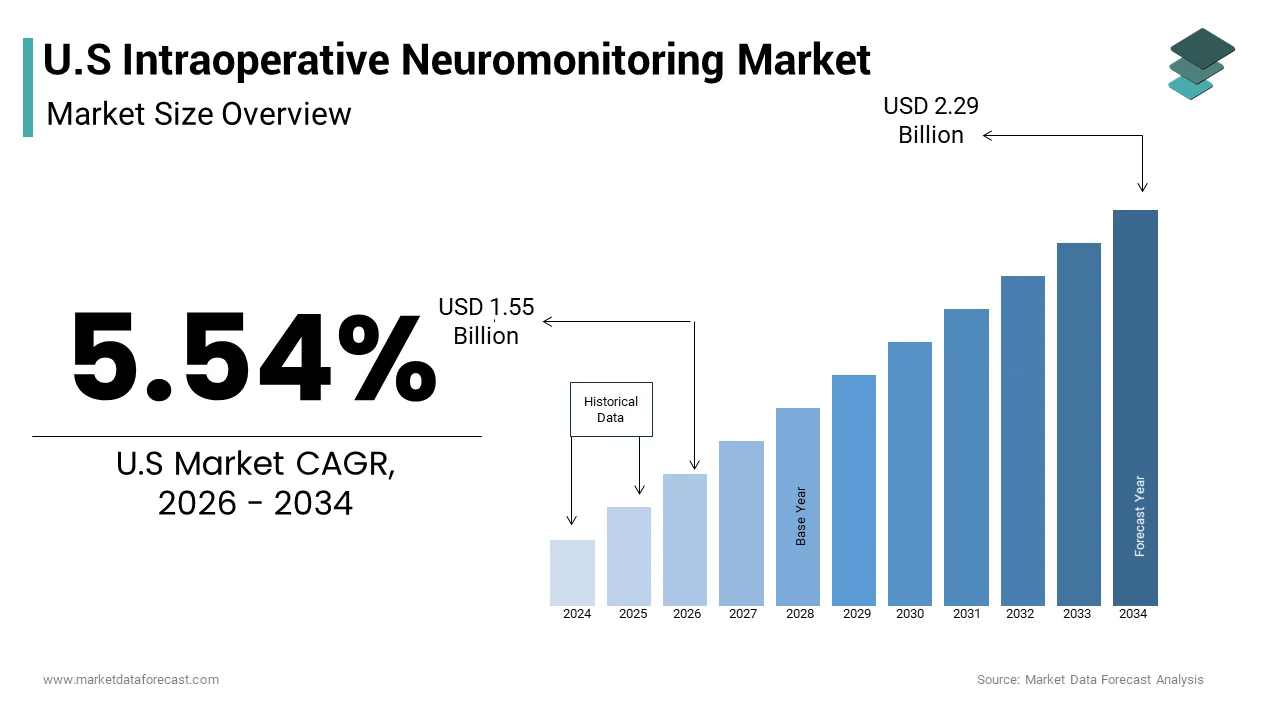
The U.S intraoperative neuromonitoring market size was valued at USD 1.47 billion in 2025 and is anticipated to reach USD 1.55 billion in 2026 to reach USD 2.29 billion by 2034, growing at a CAGR of 5.54% during the forecast period from 2026 to 2034.
MARKET OVERVIEW
The intraoperative neuromonitoring is surgical care dedicated to the real time assessment of neural integrity during complex operative procedures. This specialized field employs electrophysiological techniques, such as somatosensory evoked potentials and motor evoked potentials to provide surgeons with immediate feedback on the functional status of the nervous system. As per the American Association of Neurological Surgeons, approximately 400000 spinal fusion procedures are performed annually in the United States, creating a substantial baseline demand for monitoring services. The integration of advanced monitoring technologies has become a standard of care in many academic medical centers, reflecting a shift towards value-based outcomes. According to the Centers for Disease Control and Prevention, chronic back pain affects roughly 20% of US adults, leading to increased surgical volumes. The evolution of minimally invasive techniques further necessitates sophisticated monitoring capabilities to compensate for reduced visual fields.
MARKET DRIVERS
Rising Volume Of Complex Spinal Surgeries
The escalating volume of complex spinal surgeries is impacting positively on the growth of the United States intraoperative neuromonitoring market. Degenerative spinal conditions trauma and deformities require intricate surgical maneuvers that pose significant risks to the spinal cord and nerve roots. As per the Agency for Healthcare Research and Quality, hospitalizations for spinal fusion procedures have increased by over 30% in the last decade, driven by an aging population and improved diagnostic capabilities. These procedures often involve instrumentation near critical neural structures, making real time monitoring indispensable for preventing permanent neurological injury. The shift towards outpatient and ambulatory surgery centers for less complex cases has also increased the efficiency and throughput of surgical facilities, thereby amplifying the demand for streamlined monitoring services. The use of intraoperative neuromonitoring is recommended for high risk spinal procedures to reduce the incidence of postoperative deficits. The growing prevalence of obesity and sedentary lifestyles further contributes to the burden of spinal disease that sustaining high surgical volumes. Surgeons increasingly rely on multimodal monitoring to navigate anatomical variations and pathological changes safely.
Adoption Of Minimally Invasive Surgical Techniques
The widespread adoption of minimally invasive surgical techniques by increasing the complexity of procedures that lack direct visual access to neural structures is also propelling the growth of the United States intraoperative neuromonitoring market. Minimally invasive spine surgery and endoscopic cranial procedures offer benefits, such as reduced blood loss and faster recovery but limit the surgeon’s ability to directly visualize nerves. The American Association of Neurological Surgeons emphasizes that intraoperative neuromonitoring is crucial in these settings to detect subtle changes in neural function that may not be apparent through imaging alone. The reliance on electrophysiological data allows surgeons to make informed decisions in real time by adjusting their approach to avoid injury. The use of monitoring reduces complication rates in minimally invasive procedures by providing an additional layer of safety. The technological advancements in monitoring equipment, including wireless systems and integrated software, facilitate their use in confined surgical spaces. Hospitals are investing in these technologies to support their minimally invasive programs and attract patients seeking advanced care options. The synergy between minimally invasive techniques and neuromonitoring enhances surgical precision and patient outcomes. This trend is further supported by reimbursement policies that recognize the value of monitoring in reducing costly complications.
MARKET RESTRAINTS
Reimbursement Uncertainties And Policy Variability
The reimbursement uncertainties and variability in payment policies is one of the major restraining factors for the growth of the United States intraoperative neuromonitoring market. The complexity of billing for neuromonitoring services, which often involves multiple codes for technical and professional components that creates administrative burdens for providers. The frequent changes in Current Procedural Terminology codes and payer specific guidelines lead to inconsistent reimbursement rates across different regions. Medicare and private insurers often scrutinize claims for medical necessity by resulting in delayed payments or denials that impact cash flow for monitoring companies. The lack of standardized coverage criteria among different insurance plans forces providers to navigate a fragmented landscape, increasing operational complexity. Some payers impose strict prior authorization requirements, delaying the initiation of monitoring services and potentially compromising patient care. The financial pressure on hospitals to reduce costs also leads to negotiations that lower reimbursement rates for ancillary services like neuromonitoring. The economic environment discourages investment in new monitoring technologies and limits the expansion of services into smaller community hospitals.
Shortage Of Qualified Neurophysiologists And Technologists
The shortage of qualified neurophysiologists and certified intraoperative neuromonitoring technologists is also impeding the growth of the United States intraoperative neuromonitoring market. The specialized nature of this field requires extensive training and certification, yet the pipeline of new professionals remains insufficient to meet growing demand. The Bureau of Labor Statistics projects that employment for healthcare technologists will grow, but the niche skill set required for intraoperative neuromonitoring limits the available talent pool. Many rural and community hospitals struggle to recruit and retain qualified staff by leading to reliance on third party vendors who may face scheduling constraints. The complexity of interpreting multimodal data requires experienced neurophysiologists, whose numbers are limited by lengthy fellowship training requirements. The high turnover rate in this profession due to burnout and demanding on call schedules further exacerbates staffing challenges. Hospitals often face difficulties in maintaining 24/7 coverage for emergency surgeries, limiting the availability of monitoring services. The cost of training and certifying new staff is substantial, creating a barrier for smaller institutions.
MARKET OPPORTUNITIES
Integration Of Artificial Intelligence And Automation
The integration of artificial intelligence and automation to enhance accuracy and efficiency is majorly attributed in creating new opportunities for the growth of the United States intraoperative neuromonitoring market. AI algorithms can analyze complex electrophysiological data in real time, identifying subtle patterns that may indicate impending neurological injury. As per the National Institutes of Health, machine learning models have demonstrated high sensitivity in detecting changes in evoked potentials, potentially reducing false positive alerts. This technology assists neurophysiologists by prioritizing data and automating routine tasks by allowing for more focused clinical decision making. The American Journal of Neuroradiology suggests that AI driven analysis can improve the speed of interpretation, which is crucial in time sensitive surgical scenarios. Automated systems can also standardize data collection and reporting, reducing variability between different providers and institutions. The adoption of AI in medical imaging and monitoring is expected to grow significantly, driven by improvements in computational power and data availability. The use of predictive analytics can help surgeons anticipate risks and adjust their techniques proactively. This technological advancement supports the expansion of neuromonitoring into new surgical specialties where expertise may be limited. Hospitals investing in AI enabled platforms can differentiate themselves by offering superior safety profiles and operational efficiency.
Expansion Into Non Spinal Surgical Specialties
The expansion of intraoperative neuromonitoring into non spinal surgical specialties is another factor to escalate the growth of the United States intraoperative neuromonitoring market. Procedures, such as thyroidectomy, parotidectomy, and peripheral nerve repairs increasingly utilize monitoring to protect nerves and improve functional outcomes. The use of neuromonitoring in these cases has been shown to reduce the risk of vocal cord paralysis by enhancing patient quality of life. The adoption of monitoring in thyroid surgery has increased steadily, driven by evidence supporting its efficacy. Peripheral nerve surgeries for trauma or compression syndromes also benefit from real time feedback to ensure complete decompression without injury. The growing awareness of the benefits of neuromonitoring among surgeons in these specialties drives demand for specialized equipment and services. Hospitals are expanding their monitoring capabilities to support these diverse surgical programs by creating new revenue streams. The development of specialized electrodes and software for non-spinal applications further facilitates this expansion.
MARKET CHALLENGES
Technical Artifacts And Signal Interpretation Complexity
The technical artifacts and the complexity of signal interpretation is major challenge for the growth of the United States intraoperative neuromonitoring market. Electromagnetic interference from surgical equipment patient movement and physiological variations can obscure neural signals, leading to ambiguous readings. The artifact contamination is a frequent issue that requires skilled technologists to distinguish from true neurological changes. The interpretation of multimodal data involves integrating information from various modalities, each with its own limitations and susceptibility to noise. The false positive alerts can lead to unnecessary surgical interruptions, while false negatives may result in undetected injuries. The variability in baseline signals among patients due to age comorbidities and anesthesia effects adds another layer of complexity. Anesthetic agents particularly neuromuscular blockers and volatile anesthetics can suppress evoked potentials, complicating data analysis. The lack of universal standards for signal criteria and alert thresholds creates inconsistency in practice. Training personnel to recognize and mitigate artifacts requires extensive experience and continuous education. These technical challenges can undermine confidence in monitoring results, potentially limiting its adoption in certain settings.
High Initial Capital Investment And Maintenance Costs
The high initial capital investment and ongoing maintenance costs associated for smaller healthcare facilities, which is also to decline the growth of the United States intraoperative neuromonitoring market. Advanced monitoring equipment requires significant upfront expenditure for hardware software and specialized accessories. The rapid pace of technological advancement necessitates frequent upgrades to maintain compatibility with new surgical techniques and regulatory standards. The budget constraints in community hospitals often prioritize essential clinical services over specialized monitoring capabilities. The cost of hiring and retaining qualified personnel further adds to the financial burden, making it difficult for smaller institutions to sustain in house programs. Many hospitals opt for outsourced services, but this model can be expensive and less flexible for emergency cases. The return on investment is not always immediately apparent, as the benefits of neuromonitoring are measured in avoided complications rather than direct revenue generation. According to the American Hospital Association, financial pressures on hospitals have led to stricter capital approval processes, delaying the acquisition of new technologies. The total cost of ownership including training maintenance and disposables creates a high entry barrier.
REPORT COVERAGE
| REPORT METRIC | DETAILS |
| Market Size Available | 2025 to 2034 |
| Base Year | 2025 |
| Forecast Period | 2026 to 2034 |
| CAGR | 5.54% |
| Segments Covered | By Type, Application, End-User, By Country |
| Various Analyses Covered | Global, Regional, and Country Level Analysis, Segment-Level Analysis; DROC, PESTLE Analysis; Porter’s Five Forces Analysis; Competitive Landscape; Analyst Overview of Investment Opportunities. |
| Regions Covered | California, Washington, Oregon, New York & Rest of the United States |
| Market Leaders Profiled | Medtronic (Ireland), Inomed Medizintechnik Gmbh (Germany), Biotronic SE, Nihon Kohden Corporation (Japan), Cadwell Industries Inc. (U.S.), Neurovision Medical Products (U.S.), Neurosoft (Greece), Johnson & Johnson Services, Inc. (U.S.), NuVasive, Inc. (U.S.), Natus Medical Incorporated (U.S.) |
SEGMENTAL ANALYSIS
By Type Insights
The equipment segment was the largest by holding 36.4% of the United States intraoperative neuromonitoring market share in 2025 with the substantial capital investment required for advanced neuromonitoring systems, which possess a significantly higher unit cost compared to disposable consumables. Hospitals and surgical centers must invest in these sophisticated devices to meet the standards of care for complex spinal and cranial procedures. The rapid pace of technological innovation necessitates frequent upgrades to incorporate new features, such as wireless connectivity and artificial intelligence-based signal processing. The lifecycle of neuromonitoring equipment is approximately five to seven years after, which institutions often replace older models to maintain compatibility with current surgical techniques. The integration of these systems with electronic health records further drives the demand for newer hardware versions. Academic medical centers and large hospital networks prioritize acquiring state of the art equipment to attract top surgical talent and handle high volume caseloads. The durability and long term utility of these devices justify the initial expenditure.
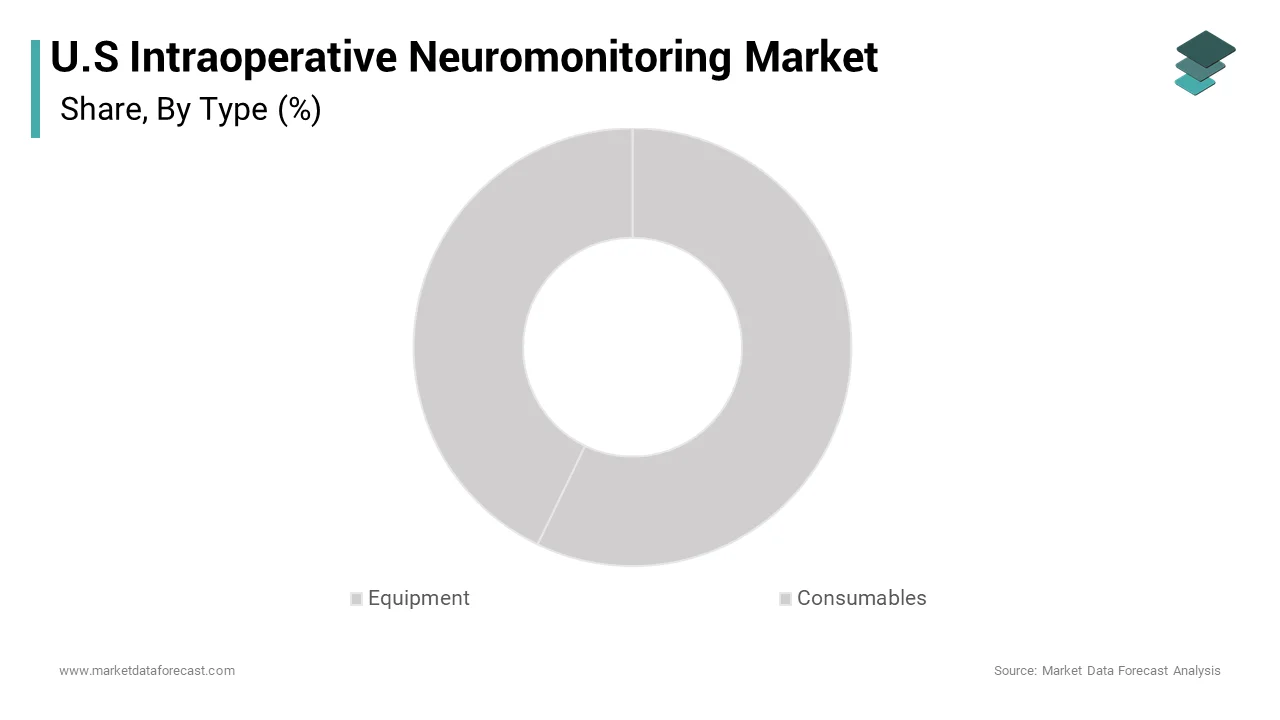
The consumables segment is projected to expand at a CAGR of 8.2% from 2026 to 2034 with the recurring demand for single use items such as electrodes needles and cables which are required for every surgical case. This high procedural volume translates into a consistent and predictable revenue stream for consumable manufacturers. The strict infection control protocols mandated by the Centers for Disease Control and Prevention necessitate the use of sterile disposable electrodes to prevent cross contamination between patients. The adherence to single use policies has intensified following recent healthcare associated infection outbreaks. This regulatory emphasis ensures that reusable options are largely replaced by disposables in most clinical settings. The variety of consumables needed for different monitoring modalities, such as surface electrodes for somatosensory evoked potentials and needle electrodes for electromyography further diversifies the product mix. Each procedure may require multiple types of consumables depending on the complexity and duration of the surgery. The increasing adoption of multimodal monitoring which combines several techniques simultaneously increases the quantity of consumables used per case.
By Application Insights
The neurosurgery segment was the largest by holding 56.3% of the United States intraoperative neuromonitoring market share in 2025 with the absolute necessity of preserving neural function during complex cranial surgeries, where even minor damage can result in severe disability. These procedures often involve manipulation of eloquent brain areas responsible for motor sensory and language functions. Intraoperative neuromonitoring provides immediate feedback that allows surgeons to adjust their approach and avoid irreversible injury. The high stakes involved in brain surgery justify the routine use of comprehensive monitoring setups. The complexity of skull base surgeries which require access through narrow corridors further increases the reliance on neuromonitoring to identify cranial nerves. This proven benefit drives widespread adoption among neurosurgeons. The aging population is contributing to a higher incidence of brain tumors and vascular malformations, sustaining the volume of neurosurgical cases. Academic centers and specialized neuro hospitals prioritize advanced monitoring capabilities to achieve superior outcomes. The integration of neuromonitoring with neuronavigation systems enhances spatial accuracy during resections.
The ENT surgery segment is expected to grow at a fastest CAGR of 9.5% from 2026 to 2034 with the rising prevalence of thyroid and parathyroid disorders requiring surgical intervention. As per the American Thyroid Association, more than 12% of the US population will develop a thyroid nodule during their lifetime, with a significant portion requiring thyroidectomy. The recurrent laryngeal nerve is at high risk of injury during these procedures, potentially causing vocal cord paralysis and voice changes. Intraoperative neuromonitoring helps identify and preserve this critical nerve, reducing complication rates. This clinical benefit is driving widespread adoption among endocrine surgeons. The increasing incidence of thyroid cancer, particularly papillary thyroid carcinoma, further boosts surgical volumes. The American Cancer Society estimates that over 43000 new cases of thyroid cancer will be diagnosed in the United States this year. Early detection through improved screening leads to more surgical interventions. Patients are increasingly demanding voice preservation, prompting surgeons to utilize monitoring as a standard practice. The development of specialized endotracheal tube electrodes with integrated sensors simplifies the monitoring process. These technological advancements make neuromonitoring more accessible and efficient in ENT settings. The expansion of indications to include benign goiters and hyperparathyroidism broadens the market scope.
By End User Insights
The hospitals segment was accounted in capturing 44.2% of the United States intraoperative neuromonitoring market share in 2025 owing to the concentration of complex and high risk surgical cases that require comprehensive intraoperative neuromonitoring. As per the American Hospital Association, hospitals perform the majority of cranial spinal and vascular surgeries in the United States, which are the primary indications for neuromonitoring. These procedures often involve patients with significant comorbidities and require intensive care resources that are only available in hospital settings. The availability of specialized neurointensivists anesthesiologists and neurophysiologists within hospitals facilitates the seamless integration of monitoring services. The presence of advanced imaging suites and hybrid operating rooms in hospitals supports the use of sophisticated monitoring technologies. Hospitals have the financial capacity to invest in high end multimodal monitoring systems and maintain a team of certified technologists. The regulatory requirements for staffing and equipment in hospitals ensure high standards of care that attract patients needing complex interventions. The ability to manage postoperative complications in intensive care units further reinforces the preference for hospital-based surgeries. The consolidation of healthcare systems has led to the centralization of complex care in large hospital hubs. This trend concentrates neuromonitoring demand within the hospital sector.
The ambulatory surgery centers (ASCs) segment is likely to grow at a fastest CAGR of 7.8% from 2026 to 2034 with the increasing shift of selected spinal procedures such as laminectomies and simple fusions to outpatient settings. This migration is driven by cost containment pressures and patient preference for convenient same day discharge. Intraoperative neuromonitoring is increasingly utilized in these settings to ensure patient safety and mitigate the risks associated with outpatient surgery. The use of neuromonitoring in ASCs has been shown to reduce complication rates and facilitate safe discharge. The development of portable and compact monitoring systems has made it feasible to deploy these technologies in smaller ASC environments. Payers are encouraging the move to ASCs by offering higher reimbursement rates for outpatient procedures compared to hospital outpatient departments. This financial incentive drives ASCs to invest in necessary safety technologies including neuromonitoring. The expansion of insurance coverage for outpatient spine surgery further supports this trend. ASCs are adopting streamlined monitoring protocols that focus on key parameters to optimize workflow efficiency.
COMPETITIVE LANDSCAPE
The competition in the United States intraoperative neuromonitoring market is characterized by the presence of established medical device giants and specialized niche players. Major competitors strive to differentiate their offerings through superior signal quality ease of use and integrated software capabilities. Innovation in electrode design and wireless technology serves as a key competitive factor. Companies invest heavily in research and development to introduce automated interpretation tools that reduce reliance on specialized personnel. Strategic alliances with surgical navigation providers enhance the value proposition of monitoring systems. Pricing pressure from group purchasing organizations influences competitive dynamics particularly for consumables. The entry of new players with disruptive technologies challenges incumbent firms to continuously innovate. Intellectual property protection plays a vital role in maintaining competitive edges for proprietary algorithms and hardware designs. The focus on clinical outcomes and cost effectiveness drives companies to demonstrate value through real world evidence.
KEY MARKET PLAYERS
A few of the market players that are dominating the intraoperative neuromonitoring market are
- Medtronic (Ireland)
- inomed Medizintechnik GmbH (Germany)
- Biotronic SE
- Nihon Kohden Corporation (Japan)
- Cadwell Industries Inc. (U.S.)
- Neurovision Medical Products (U.S.)
- Neurosoft (Greece)
- Johnson & Johnson Services, Inc. (U.S.)
- NuVasive, Inc. (U.S.)
- Natus Medical Incorporated (U.S.)
Top Players In The Market
- Medtronic plc maintains a strong presence in the United States intraoperative neuromonitoring market through its comprehensive portfolio of surgical navigation and monitoring technologies. The company integrates neuromonitoring capabilities with its advanced spinal and cranial systems to provide holistic solutions for surgeons. Medtronic actively invests in research to develop automated signal analysis tools that assist clinicians in real time decision making. The organization collaborates with key opinion leaders to establish best practices for multimodal monitoring in complex procedures. Their commitment to innovation drives the development of next generation electrodes and software algorithms. This approach reinforces their position as a critical enabler of safe and precise neurological surgeries throughout the nation.
- Natus Medical Incorporated is a pivotal player in the market offering specialized neurodiagnostic and neuromonitoring equipment under brands such as Nicolet and Xltek. The company provides robust hardware and software solutions designed for high fidelity signal acquisition in operating rooms. Natus focuses on delivering user friendly interfaces that streamline workflow for neurophysiologists and technologists. The corporation emphasizes education and training programs to ensure optimal utilization of its devices by healthcare professionals. Natus actively engages in partnerships with hospitals to implement standardized monitoring protocols that improve patient outcomes. Their product portfolio covers a wide range of modalities including electroencephalography and evoked potentials. This comprehensive approach addresses the diverse needs of neurosurgical and orthopedic procedures.
- Biotronic SE contributes significantly to the United States market through its innovative neuromodulation and monitoring technologies tailored for spine and neurosurgery. The company offers integrated systems that combine stimulation and recording capabilities to enhance surgical precision. Biotronic focuses on developing compact and portable monitoring devices suitable for various surgical environments including ambulatory surgery centers. The firm collaborates with research institutions to validate the clinical efficacy of its monitoring algorithms in preventing neurological deficits. Biotronic actively promotes the adoption of its technologies through targeted educational initiatives and professional society engagements. Their emphasis on miniaturization and wireless connectivity addresses the growing demand for flexible and efficient monitoring solutions.
Top Strategies Used By Key Market Participants
Key players in the United States intraoperative neuromonitoring market primarily employ strategies focused on technological integration and strategic partnerships. Companies are increasingly embedding artificial intelligence into monitoring systems to enhance signal accuracy and reduce false alarms. This technological advancement improves clinical decision making and operational efficiency. Manufacturers also pursue collaborations with hospitals and academic centers to conduct clinical trials and validate new applications. These partnerships help establish evidence-based guidelines that drive adoption. Product differentiation through modular and portable designs allows firms to target ambulatory surgery centers and smaller facilities. Expansion of service offerings including remote monitoring and technical support creates additional revenue streams. Regulatory approvals for new indications broaden the addressable market and reinforce clinical utility. Educational programs for surgeons and technologists foster brand loyalty and ensure proper device usage. Mergers and acquisitions enable companies to acquire complementary technologies and expand their product portfolios.
MARKET SEGMENTATION
This research report on the U.S intraoperative neuromonitoring market is segmented and sub-segmented into the following categories.
By Type
- Equipment
- Consumables
By Application
- Neurosurgery
- ENT Surgery
- Orthopedic Surgery
- Vascular Surgery
- Cardiothoracic Surgery
- Others
By End-User
- Hospitals and ASCs
- Specialty Clinics
- Others
By Country
- California
- Washington
- Oregon
- New York
- Rest of the United States
Frequently Asked Questions
What is driving the growth of the U.S. intraoperative neuromonitoring market?
The increasing volume of complex surgical procedures, growing focus on patient safety, and rising demand for real-time nerve monitoring are driving market growth.
What does the U.S. intraoperative neuromonitoring market include?
The market includes technologies and services used to monitor neural pathways during surgery to reduce the risk of neurological damage.
Which modality holds the largest share of the U.S. intraoperative neuromonitoring market?
Electromyography (EMG) holds a significant market share due to its widespread use in spine, neurosurgical, and orthopedic procedures.
Why is intraoperative neuromonitoring becoming essential in modern surgeries?
It helps surgeons identify potential nerve injuries in real time, improving surgical outcomes and patient safety.
Who are the primary end users in the U.S. intraoperative neuromonitoring market?
Hospitals, ambulatory surgical centers, specialty clinics, and neurosurgical facilities are the primary end users.
How does intraoperative neuromonitoring improve surgical outcomes?
It provides continuous neurological assessment during procedures, helping minimize complications and preserve critical nerve function.
What factors are increasing the adoption of intraoperative neuromonitoring in the United States?
The rise in spinal surgeries, brain surgeries, and minimally invasive procedures is increasing adoption.
What challenges are affecting the U.S. intraoperative neuromonitoring market?
High service costs, reimbursement complexities, and shortages of trained monitoring professionals can affect market growth.
How is technological advancement influencing the intraoperative neuromonitoring industry?
Advanced monitoring systems, AI-assisted analysis, and improved data visualization technologies are enhancing accuracy and efficiency.
What is the future outlook for the U.S. intraoperative neuromonitoring market?
The market is expected to grow steadily with increasing surgical volumes, technological innovations, and greater emphasis on patient safety and surgical precision.
Access the study in MULTIPLE FORMATS
Purchase options starting from
$ 2000
Didn’t find what you’re looking for?
TALK TO OUR ANALYST TEAM
Need something within your budget?
NO WORRIES! WE GOT YOU COVERED!
Call us on: +1 888 702 9696 (U.S Toll Free)
Write to us: sales@marketdataforecast.com