- Product Description Description
- Table of Contents TOC
- List of Table & Figure LOT
- Get Free Sample PDF Sample PDF
Market Size, 2025
$15.32 BnMarket Estimate, 2026
$16.45 BnMarket Forecast, 2034
$29.13 BnCAGR, 2026–2034
7.4%Executive Summary: U.S. Meal Kit Market Analysis & Growth Forecast (2026-2034)
- Market Scope: Comprehensive U.S. meal kit industry analysis covering meal types, offering formats, multichannel distribution channels, state-level regional coverage, and key consumer adoption drivers.
- Market Valuation: Valued at USD 15.32 billion in 2025, estimated at USD 16.45 billion in 2026, and projected to reach USD 29.13 billion by 2034, registering a steady CAGR of 7.4% from 2026 to 2034.
- Primary Growth Drivers: High digital infrastructure maturity, rising consumer demand for convenience amidst busy working lifestyles, and growing preferences for healthy, transparent nutrition and sustainable sourcing.
Key U.S. Meal Kit Market Segment Metrics (2026-2034)
| Category | Leading Segment (2025 Position) | Fastest-Growing Segment |
|---|---|---|
| By Meal Type | Non-vegetarian meal kits (dominated due to entrenched American dietary preferences and animal protein staples) | Vegetarian meal kits (projected to showcase a 9.2% CAGR driven by health consciousness) |
| By Offering Type | Cook and eat (held major share driven by consumer desire for culinary education and home cooking engagement) | Heat-and-eat meal kits (fastest-growing at an 11.4% CAGR due to ultimate convenience and time-saving priorities) |
| By Distribution Channel | Online direct-to-consumer (accounted for highest share via flexible subscription models and personalization) | Hypermarket & supermarket retail channels (fastest-growing at a 10.4% CAGR via impulse shopping) |
| By Region | United States (held 91.4% of North American market share backed by advanced digital and cold chain infrastructure) | Omnichannel retail hubs across New York, California, Texas, and Florida |
Major U.S. Meal Kit Market Players & Industry Structure
Market Structure: Highly competitive U.S. landscape characterized by intense rivalry among direct-to-consumer subscription services, omnichannel retail brands, and private-label supermarket offerings competing on menu innovation, digital personalization, and supply chain efficiency.
Key Companies: HelloFresh, Blue Apron LLC, Sun Basket Inc, Pruvit Ventures, Inc., Snap Kitchen, Yumble, Gousto, Gobble, Oisix ra daichi Inc., Nestlé S.A., Hungryroot, Marley Spoon AG, Fresh n' Lean, The Kroger Co., and Daily Harvest.
U.S. Meal Kit Market Size
The U.S. meal kit market reached USD 15.32 billion in 2025, is expected to grow to USD 16.45 billion in 2026, and is anticipated to touch USD 29.13 billion by 2034, at a CAGR of 7.4% from 2026 to 2034.
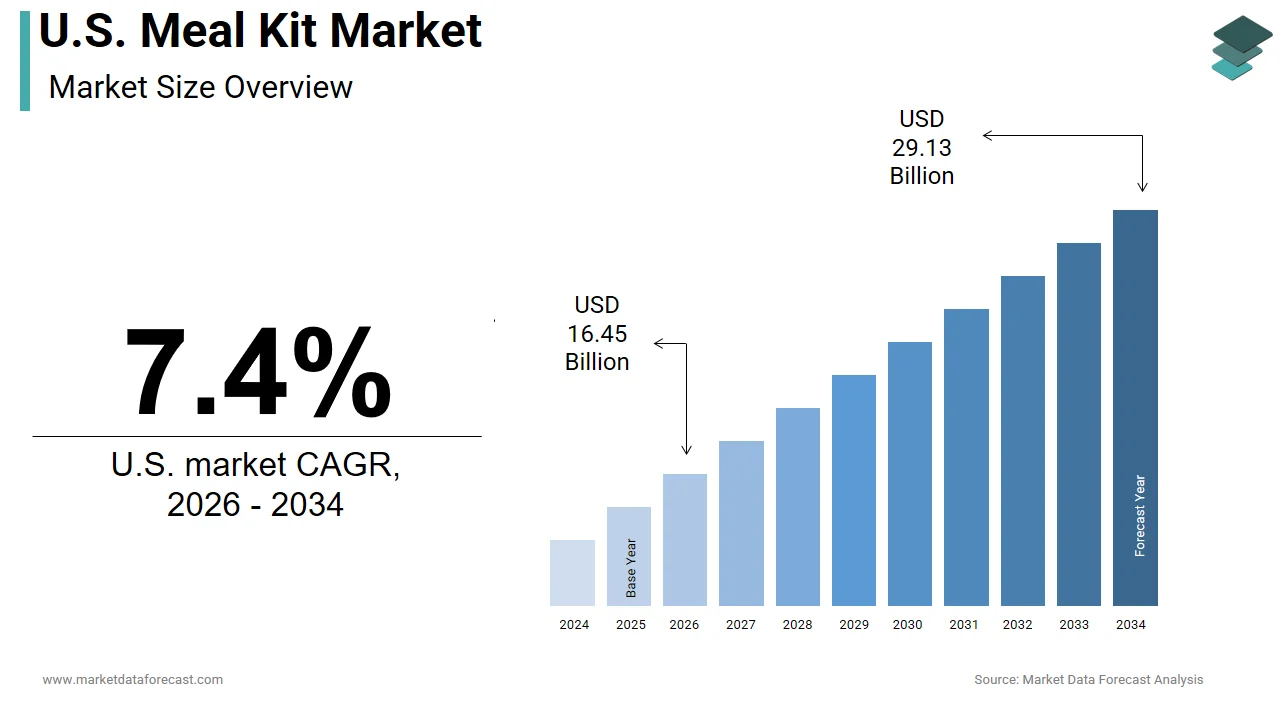
The United States is poised for sustained expansion over the next few years due to its highly developed digital infrastructure and high consumer adoption of e-commerce. The landscape is shaped by evolving consumer preferences for transparency in sourcing and nutritional quality. According to the Centers for Disease Control and Prevention, approximately 60% of American adults have at least one chronic disease, which has prompted many individuals to seek healthier dining alternatives that offer control over ingredients and portion sizes. The market operates at the intersection of culinary exploration and logistical efficiency, catering to busy professionals and families who value time savings without compromising on the experience of home cooking. Recent trends indicate a shift toward sustainability, with consumers increasingly demanding eco-friendly packaging and ethically sourced proteins. Regulatory frameworks regarding food safety and labeling ensure that these services maintain high standards of hygiene and accuracy. This sector continues to evolve as technology enhances personalization and supply chain optimization becomes more sophisticated.
MARKET DRIVERS
Increasing Demand for Convenience Amidst Busy Lifestyles
The rising demand for convenience among consumers who face increasingly busy schedules and limited time for traditional grocery shopping and meal preparation is one of the key factors propelling the growth of the U.S. meal kit market. Modern lifestyles characterized by long working hours and commuting leave little room for the processes of planning menus and sourcing ingredients. As per the Bureau of Labor Statistics, full-time employed Americans work an average of 8.23 hours per weekday, significantly reducing the time available for domestic tasks. Meal kits address this constraint by delivering pre-measured ingredients and step-by-step instructions directly to the doorstep, thereby streamlining the cooking process. This solution appeals particularly to dual-income households and young professionals who prioritize efficiency but still desire the health benefits and satisfaction of home-cooked meals. According to consumer behavior studies, the reduction in decision fatigue associated with meal planning is a key factor influencing subscription retention. Users appreciate the elimination of food waste since portions are exact, which also aligns with economic prudence. The convenience factor is further enhanced by the flexibility of subscription models that allow users to pause or skip weeks based on their schedules. This adaptability ensures that the service remains relevant during periods of travel or heightened workload. The integration of mobile apps for easy management reinforces the seamless experience, making meal kits an indispensable tool for modern time management.
Growing Consumer Preference for Healthy and Transparent Nutrition
The growing consumer preference for healthy eating and transparency in food sourcing that meal kit services well-positioned to satisfy, is further fuelling the meal kit market expansion in the U.S. Individuals are becoming more conscious of the nutritional content of their diets and the origins of their food, driven by increased awareness of health issues such as obesity and diabetes. As per the Dietary Guidelines for Americans, it is recommended that a healthy eating pattern include a variety of vegetables from all subgroups, fruits, and whole grains, which meal kits often emphasize in their recipe designs. These services provide detailed nutritional information for each meal, allowing consumers to make informed choices that align with their dietary goals, such as low-carb keto or vegetarian plans. The ability to customize meals based on specific health needs attracts a demographic that values preventive healthcare through diet. According to surveys conducted by health organizations, a majority of consumers express concern about additives and preservatives in processed foods, leading them to seek fresher alternatives. Meal kits offer high-quality ingredients often sourced from reputable suppliers that build trust and loyalty. The educational aspect of recipe cards also empowers users to learn about balanced nutrition and cooking techniques. This focus on health and transparency differentiates meal kits from traditional takeout options, positioning them as a superior choice for those seeking to improve their overall well-being through better eating habits.
MARKET RESTRAINTS
High Cost Compared to Traditional Grocery Shopping
The higher cost associated with these services compared to traditional grocery shopping is a major impediment to the expansion of the U.S. meal kit market. While meal kits offer convenience, the premium pricing for pre-portioned ingredients and delivery logistics can be prohibitive for budget-conscious consumers. As per the Bureau of Labor Statistics, the average U.S. household expenditure on food at home was approximately $5,703 annually in 2023, creating a financial barrier for lower and middle-income households. The markup covers packaging labor and shipping, which adds to the final price without necessarily increasing the nutritional value of the food. This cost disparity limits the market to affluent demographics who can afford the convenience premium, restricting mass market penetration. According to economic analyses, inflationary pressures on household budgets have made consumers more price sensitive, leading some to cancel subscriptions in favor of cheaper alternatives. The perception of meal kits as a luxury item rather than a staple further exacerbates this issue. Additionally, the lack of economies of scale for smaller providers means they cannot compete on price with large grocery chains. This financial constraint forces companies to constantly justify their value proposition through quality and convenience, which may not be sufficient for all consumers. The challenge of reducing costs without compromising ingredient quality remains a persistent obstacle to expanding the customer base beyond niche segments.
Issues Related to Packaging Waste and Environmental Sustainability
Environmental concerns regarding excessive packaging waste are another significant restraint to the growth of the meal kit market in the U.S. Each delivery typically involves multiple layers of insulation, plastic bags, ice packs, and cardboard boxes to ensure freshness and safety during transit. As per the Environmental Protection Agency, containers and packaging make up a major portion of municipal solid waste, amounting to over 82 million tons generated in a single year. Consumers are increasingly aware of the environmental impact of their purchases and are critical of brands that generate significant plastic waste. This scrutiny can lead to negative brand perception and reduced loyalty among eco-conscious buyers. According to sustainability reports, the recycling of mixed material packaging is often difficult due to contamination and a lack of infrastructure, leading to higher landfill rates. Companies face pressure to innovate sustainable solutions such as compostable materials or reusable containers, which can be costly and logistically complex to implement. The challenge is compounded by the need to maintain food safety standards, which often require robust protective packaging. Failure to address these environmental concerns can result in regulatory scrutiny and consumer backlash. Furthermore, the carbon footprint associated with last-mile delivery adds to the ecological impact, raising questions about the overall sustainability of the model. Balancing convenience with environmental responsibility remains a critical hurdle that manufacturers must overcome to maintain social license and appeal to green consumers.
MARKET OPPORTUNITIES
Expansion into Retail Partnerships and Grocery Store Aisles
The expanding distribution through retail partnerships and placement in grocery store aisles is a lucrative opportunity for the U.S. meal kit market. By moving beyond direct-to-consumer subscriptions, companies can reach a broader audience who prefer the flexibility of purchasing meals on demand without long-term commitments. As per industry trends, major supermarket chains are increasingly dedicating shelf space to ready-to-cook meal kits, recognizing the demand for convenient dinner solutions. This strategy allows brands to leverage the existing foot traffic and trust associated with established retailers. According to retail analytics, approximately 70% of grocery purchase decisions are made in-store, which can drive significant volume sales, particularly among shoppers who are already buying ingredients for other meals. The presence in physical stores also reduces the barrier to entry for new customers who may be hesitant to subscribe online. It provides an opportunity for trial and discovery, allowing consumers to test flavors and quality before committing to a subscription. Furthermore, retail partnerships enable companies to optimize logistics by utilizing existing distribution networks, potentially lowering delivery costs. The ability to offer single-serve or family-size options in stores caters to diverse household needs. This omnichannel approach enhances brand visibility and accessibility, transforming meal kits from a niche subscription service into a mainstream grocery staple. By integrating into the regular shopping routine, companies can stabilize revenue streams and reduce customer acquisition costs.
Integration of Personalized Nutrition and AI Technology
The integration of personalized nutrition and artificial intelligence technology is a potential opportunity for the U.S. meal kit market. Advances in data analytics allow companies to tailor meal recommendations based on individual health profiles, dietary restrictions, and taste preferences. As per technological developments, AI algorithms can analyze user feedback and consumption patterns to predict future preferences and optimize menu offerings. This level of personalization increases customer satisfaction and retention by ensuring that each delivery is relevant and appealing. According to health tech studies, a significant number of consumers are interested in personalized nutrition services to improve their health outcomes. Meal kit providers can collaborate with health platforms to offer integrated services that track nutritional intake and provide actionable insights. The use of machine learning also improves supply chain efficiency by forecasting demand more accurately, reducing waste, and optimizing inventory. Additionally, virtual cooking assistants and augmented reality features can enhance the user experience by providing interactive guidance during preparation. This technological empowerment transforms the meal kit from a simple food product into a holistic wellness solution. By leveraging data to create hyper-personalized experiences, companies can command premium pricing and build deeper connections with users who value customized and intelligent service delivery.
MARKET CHALLENGES
Intense Competition and Customer Retention Difficulties
The intense competition and significant challenges in retaining customers due to the low switching costs and saturation of providers are a primary challenge to the U.S. meal kit market growth. Numerous companies compete for the same demographic, offering similar value propositions of convenience and quality, which makes differentiation difficult. As per market observations, customer churn rates in the subscription economy are high, with many users trying multiple services before settling on one or cancelling altogether. The lack of strong brand loyalty means that consumers frequently switch based on promotional offers or novelty, forcing companies to spend heavily on marketing and discounts to acquire and retain users. According to business analyses, the average customer acquisition cost for subscription services can often exceed the initial revenue generated, impacting profitability. The presence of large grocery chains and restaurant delivery apps entering the space further intensifies competition, offering alternative convenience solutions. This crowded landscape requires constant innovation in menus and services to keep users engaged. Additionally, negative experiences such as late deliveries or poor ingredient quality can lead to immediate cancellations and negative reviews. The challenge of maintaining consistent quality while scaling operations is significant. Companies must invest in customer service and community building to foster loyalty, yet the transient nature of subscription behaviors remains a persistent threat. Overcoming this churn requires delivering exceptional value and building emotional connections that go beyond transactional interactions.
Complex Logistics and Supply Chain Vulnerabilities
Complex logistics and supply chain vulnerabilities are further challenging the U.S. meal kit market expansion. The requirement for cold chain delivery to maintain ingredient freshness imposes strict logistical constraints and high operational costs. As per transportation industry data, last-mile delivery remains the most expensive part of the logistics chain, often accounting for 53% of total shipping costs. Any disruption in transportation, such as weather events or labor strikes, can lead to spoiled products and customer dissatisfaction. The reliance on timely delivery windows means that companies have little margin for error, requiring sophisticated coordination between warehouses and carriers. According to supply chain experts, the volatility in fuel prices and the availability of drivers further complicates logistics planning. Additionally, the sourcing of fresh ingredients is subject to seasonal variations and agricultural risks, which can affect availability and pricing. Companies must manage complex inventory systems to ensure that ingredients are fresh and available when needed, minimizing waste. The challenge of scaling these operations while maintaining quality is significant, as expansion into new regions requires establishing new distribution centers and partnerships. Failure to manage these logistical complexities can result in increased costs and service failures. Building a resilient and flexible supply chain is essential for long-term success, yet it requires substantial investment and expertise that many players struggle to maintain consistently.
REPORT COVERAGE
| REPORT METRIC | DETAILS |
| Market Size Available | 2025 to 2034 |
| Base Year | 2025 |
| Forecast Period | 2026 to 2034 |
| Segments Covered | By Meal Type, Offering Type, Distribution Channel, and Country. |
| Various Analyses Covered | Global, Regional, and Country-Level Analysis, Segment-Level Analysis, Drivers, Restraints, Opportunities, Challenges; PESTLE Analysis; Porter’s Five Forces Analysis, Competitive Landscape, Analyst Overview of Investment Opportunities |
| Countries Covered | New York, Massachusetts, Pennsylvania, Illinois, Ohio, Michigan, Texas, Florida, Georgia, California, Washington, Colorado. |
| Market Leaders Profiled | Pruvit Ventures, Inc., Snap Kitchen, LLC., Yumble, Gousto, Gobble, Oisix ra daichi Inc., Nestle S.A., Hungryroot, HelloFresh, Sun Basket Inc, Marley Spoon AG, Fresh n' Lean, The Kroger Co., Blue Apron, LLC, Daily Harvest. |
SEGMENTAL ANALYSIS
By Meal Type Insights
The non-vegetarian meal kits segment captured the largest share of the U.S. meal kit market in 2025. The dominance of the non-vegetarian segment in the U.S. market can be credited to the deep-rooted cultural preference for animal proteins in the American diet, which influences menu selection and purchasing decisions. Meat has historically been a staple of the standard American diet, providing a sense of satiety and culinary satisfaction that many consumers find difficult to replace with plant-based alternatives. As per the U.S. Department of Agriculture, the per capita red meat and poultry consumption in the United States was estimated at 224.9 pounds in 2023, indicating a strong and consistent demand for protein-centric meals. This dietary habit translates directly to the meal kit sector, where subscribers often prioritize recipes that feature high-quality cuts of meat or seafood as the centerpiece of their dinner. The perception of meat as a source of essential nutrients such as iron and vitamin B12 further reinforces its importance in family meals. According to nutritional surveys, about 89% of Americans identify as meat-eaters, limiting the potential addressable market for exclusively vegetarian options. Meal kit providers cater to this preference by offering diverse meat-based recipes ranging from classic comfort foods to gourmet preparations, ensuring broad appeal. The familiarity and ease of cooking with meat also reduce the learning curve for novice cooks, making non-vegetarian kits more accessible to a wider audience. This entrenched preference ensures that non-vegetarian options remain the default choice for most subscribers, driving sustained volume and revenue leadership in the market.
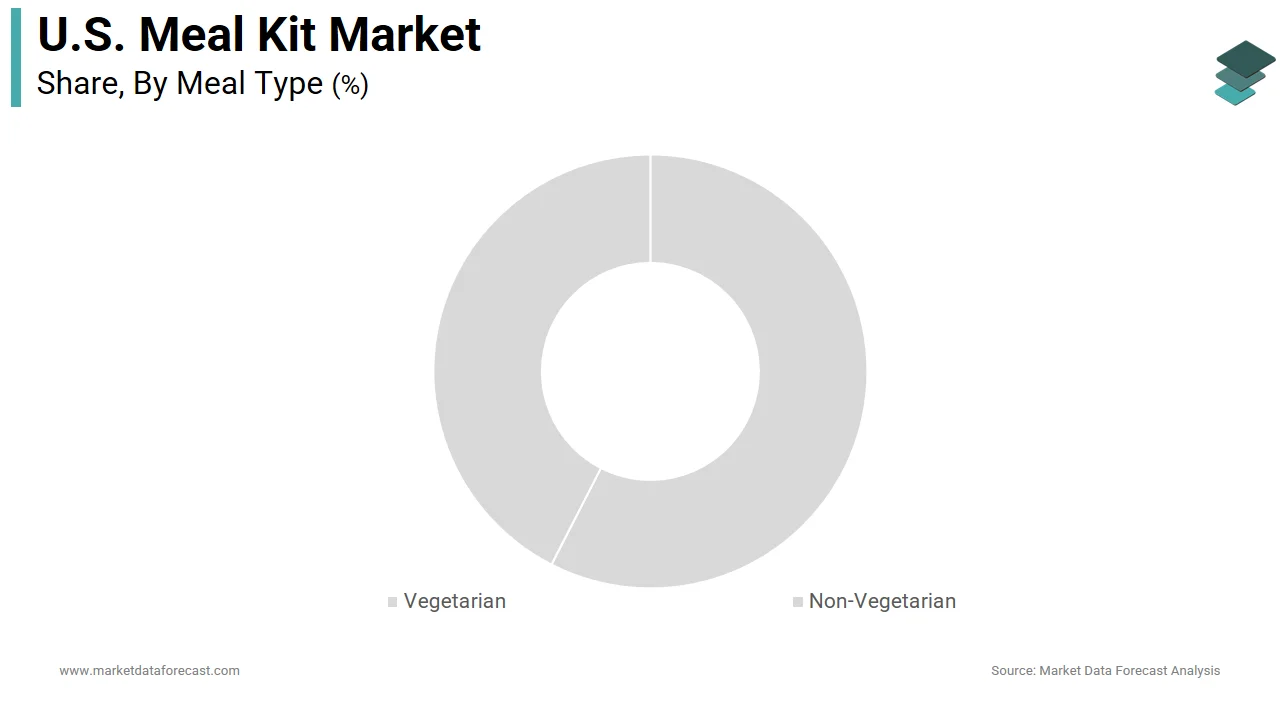
However, the vegetarian segment is expected to showcase a CAGR of 9.2% during the forecast period in the U.S. market, owing to the shifting dietary trends, health consciousness, and environmental concerns that are driving more consumers toward plant-based eating. The increasing health consciousness among consumers who seek to prevent chronic diseases through dietary changes is further aiding the vegetarian segment in the U.S. market. Plant-based diets are widely recognized for their potential to lower the risk of heart disease, diabetes, and obesity, prompting many individuals to reduce their meat consumption. As per the Centers for Disease Control and Prevention, chronic diseases such as heart disease and type 2 diabetes are leading causes of death and disability in the U.S., leading to greater public awareness of preventive health measures. Vegetarian meal kits offer a convenient solution for individuals looking to incorporate more vegetables, legumes, and whole grains into their diets without the hassle of meal planning. The emphasis on fresh, nutrient-dense ingredients appeals to health-oriented consumers who value transparency and cleanliness in their food choices. According to nutritional studies, diets rich in plant-based foods are associated with improved metabolic health and longevity, reinforcing the appeal of vegetarian options. Meal kit providers are responding by expanding their vegetarian offerings with innovative recipes that highlight global flavors and culinary techniques, making plant-based eating exciting and accessible. The availability of detailed nutritional information allows users to track their intake and align meals with specific health goals. This alignment with preventive healthcare trends drives adoption among a broad demographic, including older adults and fitness enthusiasts, sustaining the high growth trajectory of the vegetarian segment.
By Offering Type Insights
The cook and eat segment held the major share of the U.S. meal kit market in 2025. The consumer desire for culinary engagement and the opportunity to develop cooking skills in a guided manner are primarily driving the dominance of the cook and eat segment in the U.S. market. Many subscribers view meal kits not just as a food source but as an educational tool that helps them learn new techniques and explore diverse cuisines. As per culinary education trends, there is a growing interest in home cooking as a hobby, with approximately 80% of U.S. consumers preferring to cook at home rather than eat out. Cook and eat kits provide step by step instructions that demystify complex recipes, making gourmet cooking accessible to novices. According to consumer behavior surveys, a significant percentage of users report increased confidence in their cooking abilities after using meal kits, leading to higher satisfaction and retention. The tactile experience of chopping, mixing, and plating creates a sense of accomplishment and connection to food that ready-to-eat options cannot replicate. This emotional reward fosters a deeper relationship with the brand, as consumers associate the service with personal growth and enjoyment. Furthermore, the ability to customize meals and adjust ingredients allows for creative expression, enhancing the overall user experience. The social aspect of cooking together also strengthens family bonds, making cook-and-eat kits a popular choice for households. This combination of education, engagement, and emotional fulfillment ensures that cook and eat remains the preferred format for the majority of subscribers.
However, the heat-and-eat meal kits segment is the fastest-growing segment in the U.S. market and is estimated to record a CAGR of 11.4% during the forecast period, owing to the growing demand for ultimate convenience and time-saving solutions among busy consumers who prioritize speed over culinary involvement. The increasing time poverty among Americans who seek the quickest possible solution for dinner preparation is also contributing to the segmental expansion in the U.S. market. As work-life boundaries blur and schedules become more demanding, many consumers are unwilling to spend time on chopping or cooking, preferring meals that are ready in minutes. As per the Bureau of Labor Statistics, the average American spends approximately 37 minutes per day on food preparation and cleanup, heightening the value of time-saving services. Heat-and-eat kits require only reheating, eliminating the preparation and cleanup phases, which appeals to exhausted professionals and parents. According to convenience industry reports, the demand for ready-to-eat meals has surged, with consumers prioritizing speed and ease above all else. This segment captures those who may have previously relied on takeout or fast food but seek healthier and higher-quality alternatives. The ability to have a nutritious meal on the table in under 10 minutes fits seamlessly into hectic lifestyles, driving adoption. The reduction in mental load associated with meal preparation is a significant benefit, as users do not need to follow recipes or monitor cooking processes. This ultimate convenience resonates with a broad demographic, including singles, seniors, and busy families, ensuring robust growth. As the pace of life continues to accelerate, the appeal of heat-and-eat options is expected to strengthen, outpacing traditional cook-and-eat formats.
By Distribution Channel Insights
The online direct-to-consumer channels segment accounted for the highest share of the U.S. meal kit market in 2025. The growth of the online direct-to-consumer segment in the U.S. market can be credited to the efficiency of the subscription model and the ability to offer personalized experiences that enhance customer retention. Online platforms allow providers to collect detailed data on customer preferences, dietary restrictions, and feedback, enabling highly tailored menu recommendations. As per e-commerce trends, online grocery sales in the U.S. reached nearly $100 billion in 2023, reflecting a shift toward digital food procurement. The ability to skip weeks, pause subscriptions, or modify orders easily through user-friendly interfaces provides flexibility that appeals to modern consumers. According to digital marketing analyses, personalized email campaigns and app notifications drive higher engagement and conversion rates, as users receive relevant content and offers. The direct relationship with customers also allows brands to build community and loyalty through exclusive content, cooking tips, and rewards programs. This level of interaction is difficult to achieve through retail partners, making online channels more effective for brand building. The seamless integration of payment and delivery tracking enhances the user experience, reducing friction and increasing satisfaction. By controlling the entire customer journey, providers can optimize operations and respond quickly to changing demands. This strategic advantage ensures that online channels remain the primary source of revenue and growth for the meal kit market.
On the other hand, the hypermarket and supermarket retail channels segment is anticipated to grow at the fastest rate and showcase a CAGR of 10.4% during the forecast period, owing to the potential for impulse buying and the immediate availability of meal kits to shoppers who are already purchasing groceries. Unlike online subscriptions that require planning, retail kits can be picked up spontaneously, appealing to consumers who decide on dinner options while shopping. As per retail psychology studies, approximately 62% of shoppers make unplanned purchases when visiting a grocery store, and meal kits placed in high-traffic areas capitalize on this behavior. According to grocery industry reports, the convenience of grabbing a ready-to-cook meal during a regular shopping trip saves time and effort, attracting busy shoppers who may not have subscribed to online services. The ability to see and inspect the product before buying reduces perceived risk and encourages trial among new customers. This tactile experience builds trust and confidence in the quality of the ingredients. The presence of multiple brands and varieties on shelves allows for comparison and choice, enhancing the shopping experience. Retailers often promote meal kits through in-store displays and discounts, further driving sales volume. The integration of meal kits into the standard grocery routine normalizes their consumption and expands the customer base beyond digital natives. This immediate accessibility and impulse appeal drive the robust growth of the retail channel.
COUNTRY ANALYSIS
U.S. Meal Kit Market Analysis
The U.S. held the dominant position in the North American meal kit market by holding 91.4% of the regional market share in 2025. As the birthplace of the modern meal kit industry, the country boasts a mature and highly competitive landscape characterized by strong consumer adoption and extensive infrastructure. The market status is defined by a shift from pure subscription models to omnichannel strategies, with significant presence in both online and retail sectors. The high level of digital literacy and logistical capability supports efficient delivery and service quality. The U.S. market is fundamentally driven by its high digital adoption rates and advanced logistics infrastructure, which enable seamless delivery and customer engagement. According to the U.S. Census Bureau, approximately 16% of all retail sales in the U.S. are now conducted through e-commerce, with a large proportion of consumers comfortable with online shopping and subscription services. This digital readiness facilitates the growth of direct-to-consumer meal kit providers, who rely on efficient website and app interfaces for order management. The robust transportation network, including extensive highway systems and air cargo capabilities, ensures the timely delivery of perishable goods across vast distances. As per logistics industry data, the cold chain logistics market in the U.S. is valued at over $80 billion, ensuring a highly developed infrastructure that minimizes spoilage and maintains product quality during transit. The presence of major logistics providers such as FedEx, UPS, and USPS offers reliable last-mile delivery solutions, even in remote areas. This operational efficiency reduces costs and enhances customer satisfaction, supporting the scalability of meal kit businesses. The integration of technology in supply chain management allows for real-time tracking and optimization, further improving service reliability. The combination of digital fluency and logistical excellence creates a favorable environment for the meal kit industry, enabling providers to reach a wide audience with consistent quality. This structural advantage solidifies the U.S. as the leader in the regional market.
COMPETITIVE LANDSCAPE
The competitive landscape of the U.S. meal kit market is characterized by intense rivalry among established subscription services and emerging retail-focused brands. Incumbent players leverage strong brand recognition and extensive logistical networks to maintain customer loyalty while newer entrants differentiate through niche dietary offerings and sustainable practices. Competition is driven by price sensitivity and the need for continuous innovation in menu variety and convenience features. The rise of grocery store private label meal kits poses a significant threat to standalone providers by offering lower-priced alternatives with immediate availability. Digital marketing and customer retention strategies have become critical battlegrounds as companies strive to reduce churn rates in a saturated market. Supply chain efficiency and ingredient quality remain key differentiators that influence consumer choice and satisfaction. Partnerships with third-party delivery platforms and retail chains expand reach but also increase operational complexity. Overall, the market favors companies that can balance cost-effectiveness with high-quality service while adapting to shifting consumer preferences for convenience and sustainability.
KEY MARKET PLAYERS
Some of the companies that are playing a dominating role in the U.S. meal kit market include
- Pruvit Ventures, Inc.
- Snap Kitchen, LLC.
- Yumble
- Gousto
- Gobble
- Oisix ra daichi Inc.
- Nestlé S.A.
- Hungryroot
- HelloFresh
- Sun Basket Inc.
- Marley Spoon AG
- Fresh n' Lean
- The Kroger Co.
- Blue Apron, LLC
- Daily Harvest
TOP PLAYERS IN THE MARKET
- HelloFresh SE maintains a robust presence in the U.S. meal kit sector through its aggressive marketing campaigns and wide variety of recipe options. The company focuses on providing flexible subscription models that cater to diverse dietary preferences, including vegetarian and family-friendly plans. Recent strategic initiatives include expanding its production facilities to enhance delivery efficiency and reduce its carbon footprint. HelloFresh has also invested in digital platforms to improve user experience and personalize meal recommendations using data analytics. By partnering with local suppliers, the company ensures fresh ingredient quality while supporting regional economies. These efforts aim to strengthen customer loyalty and attract new subscribers seeking convenient and healthy dining solutions. The brand continues to innovate with ready-to-cook and eat options to broaden its appeal beyond traditional meal kits.
- Blue Apron Holdings Inc contributes significantly to the market by emphasizing culinary education and high-quality sourced ingredients. The company positions itself as a premium provider offering chef-designed recipes that encourage home cooking skills. Recent actions involve strengthening its supply chain resilience and optimizing logistics to ensure timely deliveries across the country. Blue Apron has expanded its retail presence by partnering with major grocery chains to offer boxed meals in physical stores. This omnichannel approach increases accessibility for consumers who prefer immediate purchase over subscription commitments. The organization also focuses on sustainability by reducing packaging waste and sourcing responsibly grown produce. By leveraging its brand heritage and culinary expertise, Blue Apron aims to retain loyal customers while attracting health-conscious individuals who value transparency and quality in their food choices.
- Sun Basket Inc differentiates itself in the U.S. market by focusing exclusively on organic and sustainable meal kits. The company appeals to environmentally conscious consumers who prioritize clean eating and ethical sourcing practices. Recent strategies include introducing specialized diet plans such as paleo keto and gluten-free options to cater to niche dietary needs. Sun Basket has enhanced its technology platform to provide seamless subscription management and personalized customer support. The firm actively collaborates with local farmers to source fresh produce, thereby supporting agricultural communities and reducing transportation emissions. By maintaining strict quality standards and promoting environmental stewardship, Sun Basket builds trust among discerning shoppers. These initiatives help the company capture a dedicated segment of the market that values health, sustainability, and convenience in their daily meal preparations.
TOP STRATEGIES USED BY KEY MARKET PARTICIPANTS
Key players in the U.S. meal kit market primarily employ diversification and retail expansion strategies to sustain growth. Companies are increasingly launching heat-and-eat options alongside traditional cook-and-eat kits to capture time-poor consumers seeking ultimate convenience. This product diversification allows brands to address varying levels of culinary interest and availability. Another major strategy involves partnering with mainstream grocery retailers to place meal kits in physical stores, thereby increasing visibility and enabling impulse purchases. This omnichannel approach reduces reliance on subscription models and reaches broader demographics. Manufacturers also invest in sustainable packaging innovations to address environmental concerns and appeal to eco-conscious buyers. Digital personalization through artificial intelligence enhances user engagement by tailoring menu recommendations to individual tastes. Strategic cost optimization in supply chains helps maintain competitive pricing while ensuring ingredient quality. By balancing innovation with operational efficiency, key participants strengthen their market positions and adapt to evolving consumer preferences effectively.
MARKET SEGMENTATION
This research report on the U.S. meal kit market has been segmented and sub-segmented into the following categories.
By Meal Type
-
- Vegetarian
- Non-Vegetarian
- Ruminants
- Poultry
- Seafood
By Offering Type
-
- Heat and Eat
- Cook and Eat
By Distribution Channel
-
- Convenience Stores
- Online
- Hypermarket / Supermarket
- Others
By Country
- New York
- Texas
- Florida
- Georgia
- California
- Rest of U.S.