- Product Description Description
- Table of Contents TOC
- List of Table & Figure LOT
- Get Free Sample PDF Sample PDF
Market Size, 2025
$891.25 MnMarket Estimate, 2026
$1,021.12 MnMarket Forecast, 2034
$2799.15 MnCAGR, 2026–2034
13.56%U.S. Mobile Payment Market Report Summary
The U.S. mobile payment market was valued at USD 891.25 million in 2025, is estimated to reach USD 1,021.12 million in 2026, and is projected to reach USD 2,799.15 million by 2034, growing at a CAGR of 13.56% during the forecast period from 2026 to 2034. The growth of the U.S. mobile payment market is driven by rising smartphone penetration, increasing consumer preference for contactless transactions, and the rapid adoption of digital wallets and peer-to-peer payment platforms. Additionally, the expansion of e-commerce, fintech innovations, and integrated payment ecosystems is further accelerating market growth.
Key Market Trends
- Increasing adoption of contactless and NFC-enabled payment technologies
- Rising popularity of peer-to-peer payment platforms and digital wallets
- Growing integration of buy now, pay later (BNPL) services within mobile payment apps
- Expansion of biometric authentication for enhanced transaction security
- Increasing use of mobile payments across retail, e-commerce, and business transactions
Segmental Insights
- Based on transaction type, the remote payments segment was the largest and held a significant share of the U.S. mobile payment market in 2025. The segment’s dominance is attributed to the rapid growth of e-commerce, digital subscriptions, and online shopping activities across the country.
- Based on payment method, the credit cards segment accounted for the largest share of the U.S. mobile payment market in 2025. This is driven by the widespread use of credit cards, strong reward programs, and seamless integration with digital wallet platforms.
- Based on end user, the retail consumers segment was the largest, supported by the high adoption of smartphones, growing preference for cashless transactions, and demand for convenient digital payment solutions.
Regional Insights
The U.S. mobile payment market is witnessing strong growth across regions such as California, Washington, Oregon, New York, and other states, driven by advanced digital infrastructure, strong fintech ecosystems, and widespread consumer adoption of mobile commerce. The country remains a global leader due to its high smartphone penetration, advanced payment technologies, and strong presence of technology and financial service providers.
Competitive Landscape
The U.S. mobile payment market is highly competitive, characterized by the presence of technology companies, financial institutions, and fintech innovators competing through security, convenience, and ecosystem integration. Companies are focusing on digital wallet expansion, AI-driven fraud prevention, and strategic partnerships to strengthen their market positions. Prominent players in the U.S. mobile payment market include PayPal Holdings, Inc., Apple Inc., Google LLC, Samsung Electronics Co., Ltd., Visa Inc., Mastercard Incorporated, American Express Company, Block, Inc. (Square), Stripe, Inc., Amazon.com, Inc., and JPMorgan Chase & Co.
U.S. Mobile Payment Market Size
The U.S. Mobile Payment Market size was valued at USD 891.25 million in 2025 and is anticipated to reach USD 1021.12 million in 2026 from USD 2799.15 million by 2034, growing at a CAGR of 13.56% during the forecast period from 2026 to 2034.
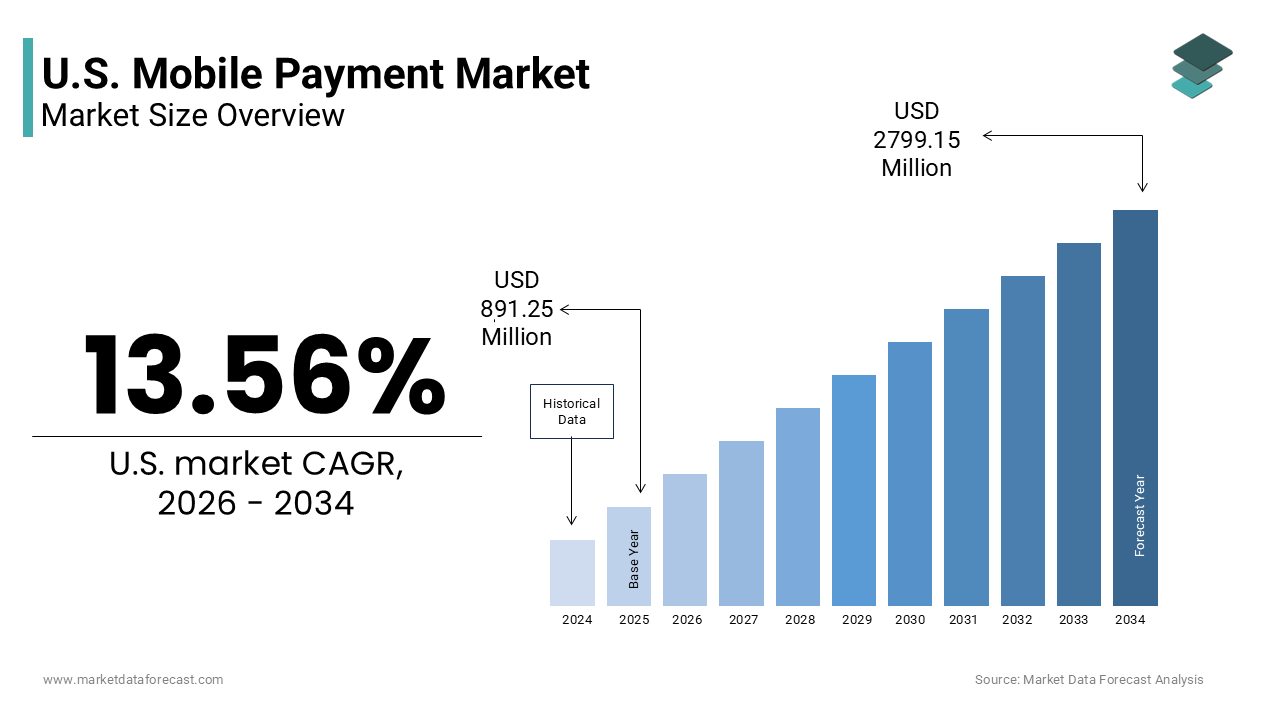
Mobile payments represents a dynamic ecosystem where digital transactions are executed via smartphones and wearable devices, fundamentally altering the financial landscape. This sector encompasses near-field communication-based contactless payments, peer-to-peer transfers, and mobile wallet integrations that facilitate seamless commerce. The adoption of these technologies is driven by a cultural shift toward cashless interactions and the ubiquity of smart devices. According to the Federal Reserve Banks, the number of noncash payments in the U.S. reached 108 billion in 2022, reflecting a significant migration from traditional paper instruments. Furthermore, the Pew Research Center states that 85% of Americans own a smartphone, providing the essential hardware infrastructure for widespread mobile payment adoption. The integration of biometric authentication, such as fingerprint and facial recognition, has enhanced security perceptions, encouraging broader usage among cautious consumers. As per the National Retail Federation, contactless payment acceptance has become standard at major retail chains, with over 90% of top retailers supporting tap-to-pay functionality. This infrastructure readiness supports the growing consumer preference for speed and convenience at the point of sale. The market is also influenced by the rise of super apps that combine messaging, social media, and financial services, creating integrated user experiences. Regulatory frameworks, such as the Dodd-Frank Act, continue to shape the competitive environment by influencing interchange fees and data privacy standards. These elements collectively define a market that is transitioning from early adoption to mainstream normalization, driven by technological convenience and evolving consumer expectations for instantaneous financial transactions.
MARKET DRIVERS
Pervasive Smartphone Penetration Enables Ubiquitous Access to Digital Wallets
The widespread ownership of smartphones is a key factor propelling the growth of the U.S. mobile payments market. Mobile payments require a compatible device to store digital credentials and execute transactions, making smartphone accessibility a prerequisite for market growth. According to the Pew Research Center, 85% of American adults currently own a smartphone, a figure that has remained stable yet high, indicating a saturated hardware market ready for software utilization. This high penetration rate means that barriers to entry for mobile payments are primarily behavioral rather than technological. Data from the Consumer Electronics Association shows that the average American spends over four hours per day on their mobile device, creating numerous opportunities for integrating payment functions into daily digital routines. The prevalence of high-speed mobile internet, with 5G coverage expanding to over 70% of the population as per the Federal Communications Commission, ensures that transactions are processed instantly without connectivity issues. This reliable infrastructure supports real-time payment processing, which is critical for user satisfaction. Furthermore, the integration of mobile wallets into operating systems, such as iOS and Android, simplifies the setup process, reducing friction for new users. As consumers become more accustomed to managing various aspects of their lives through their phones, the transition to using these devices for financial transactions becomes a natural progression. The ubiquity of these devices thus creates a fertile ground for mobile payment providers to expand their user base and increase transaction volumes across diverse demographic groups.
Consumer Demand for Contactless Hygiene and Transaction Speed Accelerates Adoption
The preference for contactless interactions due to health concerns and the desire for quicker checkout experiences, which is further boosting the expansion of the U.S. mobile payment market. The pandemic accelerated a shift in consumer behavior toward hygienic payment methods that minimize physical contact with shared surfaces, such as card terminals and cash. According to a survey by the National Retail Federation, 70% of consumers stated they prefer contactless payment options due to hygiene benefits, a sentiment that has persisted post-pandemic. This behavioral change has normalized the use of mobile wallets for everyday purchases, ranging from groceries to coffee. Additionally, the speed of mobile transactions enhances customer experience by reducing wait times at points of sale. Data from Visa indicates that contactless payments are processed up to three times faster than traditional chip card transactions, offering tangible efficiency gains for both merchants and consumers. This efficiency is particularly valued in high-volume retail environments where queue management is critical. As per the Journal of Retailing, shorter checkout times correlate with higher customer satisfaction scores and increased likelihood of repeat visits. Merchants have responded by upgrading their point-of-sale systems to support near-field communication technology, with over 90% of major retailers now accepting contactless payments. This widespread merchant acceptance reinforces consumer confidence and encourages habitual use of mobile payment solutions. The combination of health safety and operational efficiency creates a compelling value proposition that drives sustained adoption and usage frequency in the mobile payment sector.
MARKET RESTRAINTS
Security Concerns and Fear of Fraud Hinder Widespread Trust In Mobile Platforms
Persistent concerns regarding data security and potential fraud are a significant impediment to the U.S. mobile payments market growth. Despite advancements in encryption and tokenization, the perception of vulnerability remains a barrier to full adoption. According to the Federal Trade Commission, reports of identity theft and fraud involving digital payment methods increased by 20% in the last year, highlighting ongoing risks. Consumers often worry that losing a smartphone could lead to unauthorized access to their financial accounts, despite the presence of biometric locks. Data from the Javelin Strategy and Research firm indicates that approximately 30% of non-users cite security fears as the primary reason for avoiding mobile wallets. High-profile data breaches at major retailers and financial institutions further exacerbate these anxieties, eroding trust in digital payment ecosystems. As per the Ponemon Institute, the average cost of a data breach in the financial sector exceeds 5 million dollars, underscoring the severity of potential incidents. The complexity of understanding security features, such as tokenization, also contributes to confusion, with many users unaware that their actual card numbers are not stored on the device. This knowledge gap prevents some consumers from recognizing the enhanced security benefits of mobile payments compared to physical cards. Until educational efforts effectively communicate the robustness of modern security protocols and fraud incidents decrease, these concerns will continue to limit the rate of adoption among risk-averse demographics.
Limited Merchant Acceptance in Small Businesses Restricts Transaction Versatility
The uneven adoption of mobile payment infrastructure among small and medium-sized enterprises restricts the versatility and convenience of the U.S. mobile payment market. While large retailers widely accept contactless payments, many smaller businesses lack the necessary point-of-sale terminals or choose not to upgrade due to cost constraints. According to the National Federation of Independent Business, approximately 40% of small businesses do not accept contactless payments, forcing consumers to rely on cash or physical cards in these establishments. This fragmentation in acceptance limits the utility of mobile wallets, as users cannot rely on them for all transactions. The cost of upgrading hardware and paying transaction fees discourages some merchants from adopting newer payment technologies. Data from the Small Business Administration shows that thin profit margins make additional technology investments challenging for many independent operators. As per the Federal Reserve Bank of Kansas City, cash remains a preferred payment method for transactions under 25 dollars in many small business contexts, further reducing the incentive for mobile payment adoption. This disparity creates a fragmented user experience where consumers must carry multiple payment methods, diminishing the convenience advantage of mobile wallets. Until acceptance becomes universal across all business sizes, the perceived reliability of mobile payments will remain compromised. This limitation hinders the seamless integration of mobile payments into daily life and slows the overall growth trajectory of the market.
MARKET OPPORTUNITIES
Integration of Buy Now Pay Later Services Expands Purchasing Power and Engagement
The integration of "buy now, pay later" services into mobile payment platforms presents a significant opportunity for the U.S. market by enhancing purchasing power and driving consumer engagement. These services allow users to split purchases into interest-free installments, making higher-value items more accessible and appealing. According to the Federal Reserve Bank of Philadelphia, the volume of buy now, pay later transactions grew by 50% in the past year, indicating strong consumer appetite for flexible payment options. Mobile wallets serve as ideal conduits for these services by streamlining the application and approval process within the checkout flow. Data from Adobe Analytics shows that retailers offering buy now, pay later options see an average increase of 20% in order values, demonstrating the commercial benefit of this integration. This synergy encourages consumers to use mobile payment apps for larger purchases rather than just small daily transactions. As per McKinsey, younger demographics, particularly millennials and Gen Z, are twice as likely to use buy now, pay later services compared to older generations, aligning with the core user base of mobile payments. The ability to manage installment plans directly within a mobile wallet enhances user stickiness and frequency of app usage. Furthermore, partnerships between mobile payment providers and financial technology firms enable seamless credit assessments without impacting credit scores. This expansion into credit services diversifies revenue streams for payment providers and offers added value to consumers, fostering deeper ecosystem loyalty and driving market growth.
Expansion into Peer To Peer Payment Ecosystems Drives User Acquisition and Retention
The expansion of mobile payment platforms into comprehensive peer-to-peer payment ecosystems offers a substantial opportunity for user acquisition and retention in the U.S. market. By facilitating easy money transfers between individuals, mobile payment apps become essential tools for social and familial financial interactions. According to the Federal Reserve Bank of Boston, peer-to-peer payment volumes reached 18 billion transactions in 2022, reflecting the deep integration of these services into daily life. Mobile wallets that integrate peer-to-peer capabilities allow users to send money instantly using only a phone number or email address, eliminating the need for traditional bank transfers. Data from the Pew Research Center indicates that 60% of adults have used a peer-to-peer payment app, highlighting the widespread familiarity and comfort with this functionality. This high usage frequency keeps the app top-of-mind, increasing the likelihood that users will also utilize the platform for merchant transactions. As per the Consumer Financial Protection Bureau, the convenience and speed of peer-to-peer transfers have reduced the reliance on cash for personal exchanges. Furthermore, the social nature of these transactions encourages network effects, where users invite friends and family to join the platform to facilitate easier payments. This organic growth mechanism reduces customer acquisition costs and builds a loyal user base. By positioning themselves as central hubs for both personal and commercial transactions, mobile payment providers can enhance their market position and drive sustained engagement.
MARKET CHALLENGES
Regulatory Uncertainty Surrounding Digital Assets and Data Privacy Creates Compliance Risks
The evolving regulatory landscape concerning digital assets and data privacy is significantly challenging the expansion of the U.S. mobile payments market. As mobile payment platforms increasingly integrate cryptocurrency and other digital assets, they face scrutiny from multiple regulatory bodies, including the Securities and Exchange Commission and the Commodity Futures Trading Commission. According to the Government Accountability Office, the lack of a unified federal framework for digital assets creates ambiguity regarding classification and oversight, complicating product development. Companies must navigate a patchwork of state-level regulations, which vary significantly in their requirements for licensing and consumer protection. Data from the Conference of State Bank Supervisors shows that obtaining money transmitter licenses in all 50 states can take years and cost millions of dollars, limiting market entry for smaller innovators. Additionally, stringent data privacy laws, such as the California Consumer Privacy Act, impose strict requirements on how consumer financial data is collected and shared. As per the International Association of Privacy Professionals, compliance with these varying regulations requires significant legal and technical resources, diverting funds from innovation. The threat of sudden regulatory changes or enforcement actions creates a risky environment for long-term strategic planning. Furthermore, cross-border transactions involving mobile payments face additional complexities due to differing international standards. This regulatory fragmentation increases operational costs and slows the deployment of new features, hindering the agility and competitiveness of market participants.
Interoperability Issues between Competing Platforms Fragment the User Experience
Interoperability issues between competing mobile payment platforms fragment the user experience and hinder the seamless flow of transactions in the U.S. market. Many mobile wallets operate as closed loops, restricting transfers and payments to users within the same ecosystem. According to the Consumer Financial Protection Bureau, limitations on interoperability force consumers to maintain multiple apps to interact with different networks, reducing convenience and efficiency. This fragmentation prevents the creation of a unified digital payment infrastructure where funds can move freely, regardless of the provider. Data from the Federal Reserve Bank of Kansas City indicates that a lack of standardization in peer-to-peer payment networks leads to delays and errors in transaction processing. As per the Electronic Payments Coalition, the absence of common technical standards for real-time payments complicates integration between banks and fintech companies. This siloed approach limits the network effects that could otherwise accelerate adoption and usage. Furthermore, merchants may need to support multiple payment gateways to accommodate different mobile wallets, increasing complexity and costs at the point of sale. The lack of interoperability also stifles competition by creating lock-in effects, where users are reluctant to switch platforms due to lost connections with their social and financial networks. Until industry-wide standards for data exchange and transaction routing are established, these interoperability barriers will continue to impede the full potential of the mobile payment ecosystem and frustrate users seeking seamless financial interactions.
REPORT COVERAGE
| REPORT METRIC | DETAILS |
| Market Size Available | 2025 to 2034 |
| Base Year | 2025 |
| Forecast Period | 2026 to 2034 |
| CAGR | 13.56% |
| Segments Covered | By Transaction Type, Payment Method, Platform, End User, and Region |
| Various Analyses Covered | Global, Regional & Country Level Analysis; Segment-Level Analysis; DROC, PESTLE Analysis; Porter’s Five Forces Analysis; Competitive Landscape; Analyst Overview of Investment Opportunities |
| Regions Covered | California, Washington, Oregon, New York, and the rest of the United States. |
| Market Leaders Profiled | PayPal Holdings, Inc., Apple Inc., Google LLC, Samsung Electronics Co., Ltd., Visa Inc., Mastercard Incorporated, American Express Company, Block, Inc. (Square), Stripe, Inc., Amazon.com, Inc., and JPMorgan Chase & Co. |
SEGMENTAL ANALYSIS
By Transaction Type Insights
The remote payments segment dominated the market by holding the leading share of the U.S. mobile payments market in 2025. The dominance of the remote payments segment in the U.S. market is attributed to the exponential growth of e-commerce and the widespread adoption of online shopping behaviors. This segment encompasses transactions where the payer and payee are not physically present, typically occurring through websites or mobile browsers. The primary driver of this dominance is the entrenched consumer preference for digital commerce, which has been accelerated by the pandemic and sustained by convenience. According to the Department of Commerce, e-commerce sales in the U.S. reached 1.1 trillion dollars in 2023, representing a significant portion of total retail sales. This massive volume of online transactions necessitates a robust remote payment infrastructure that allows consumers to purchase goods and services from anywhere at any time. Data from the National Retail Federation indicates that over 80% of consumers prefer online shopping for its ease of price comparison and home delivery options. Furthermore, the integration of saved payment credentials and one-click checkout features reduces friction, encouraging repeat purchases. As per the Federal Reserve Bank of Boston, remote "card not present" transactions account for nearly 60% of all noncash payment value, highlighting their financial significance. The proliferation of mobile devices enables seamless access to online stores, making remote payments the default choice for many consumers. Additionally, the expansion of digital subscriptions for streaming services and software relies entirely on remote recurring billing models. These factors collectively ensure that remote payments remain the largest segment by transaction value and volume in the mobile payment ecosystem.
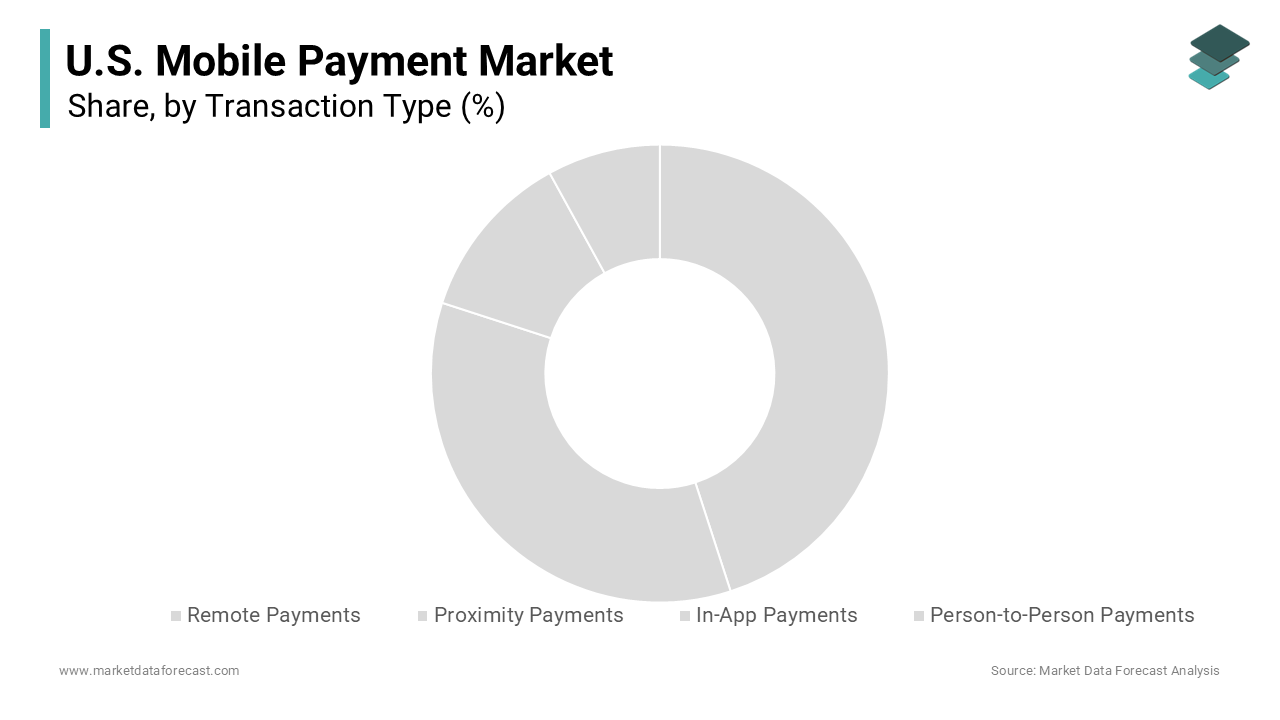
However, the person-to-person payments segment is predicted to register a CAGR of 16.6% over the forecast period in the U.S. market owing to the increasing social normalization of digital money transfers and the integration of these services into everyday communication platforms and the shift away from cash for informal transactions, such as splitting bills, paying rent, or sending gifts. According to the Federal Reserve Bank of Boston, the volume of person-to-person payment transactions grew by 20% annually in recent years, as users embrace the immediacy and convenience of mobile apps. Data from the Pew Research Center shows that 60% of adults have used a peer-to-peer payment service, with younger demographics driving higher adoption rates. The integration of these features into popular social media and messaging applications further lowers the barrier to entry by allowing users to send money without leaving their preferred communication channels. As per the Consumer Financial Protection Bureau, the average transaction size for person-to-person payments has increased, indicating that users are trusting these platforms for more significant financial interactions. Furthermore, the elimination of transfer fees by major providers has removed a key friction point, encouraging more frequent usage. The network effect plays a crucial role as more individuals join these platforms to connect with friends and family, creating a self-reinforcing cycle of growth. These dynamics position person-to-person payments as a high-velocity segment with substantial potential for future expansion.
By Payment Method Insights
The credit cards segment remained the leading payment method in the U.S. mobile payment market in 2025 due to their widespread acceptance, robust consumer protections, and attractive reward programs. The primary driver of this dominance is the ingrained consumer habit of using credit for both large and small purchases to maximize benefits, such as cash back, travel points, and purchase protection. According to the Federal Reserve Bank of New York, total household credit card debt reached 1.13 trillion dollars in 2023, reflecting the extensive reliance on credit instruments for daily spending. Data from the Nilson Report indicates that credit cards account for approximately 40% of all noncash payment transactions in the U.S., underscoring their prevalence. The integration of credit cards into mobile wallets allows users to enjoy these benefits while leveraging the security and convenience of tokenization. As per J.D. Power, consumers who use credit cards through mobile wallets report higher satisfaction levels due to the seamless combination of rewards accumulation and contactless speed. Furthermore, the ability to defer payment provides financial flexibility that debit cards and bank transfers do not offer, appealing to a broad demographic. Issuers actively promote mobile adoption by offering bonus points for digital transactions, incentivizing users to link their cards to smartphones. The established infrastructure for credit processing ensures high reliability and universal merchant acceptance. These factors collectively sustain the leadership of credit cards as the preferred funding source for mobile payments, driving consistent transaction volumes and value.
On the other hand, the mobile wallets segment is experiencing the fastest growth among payment methods and is projected to register a CAGR of 17.7% during the forecast period owing to the increasing adoption of smartphone-based payment solutions and enhanced security features. This segment includes digital containers that store payment credentials from various sources, such as credit cards, debit cards, and loyalty programs. The primary factor fueling this growth is the superior user experience offered by mobile wallets, which streamline the checkout process through biometric authentication and near-field communication technology. According to Juniper Research, the number of mobile wallet users in the U.S. is expected to exceed 100 million by 2025, reflecting rapid mainstream adoption. Data from the National Retail Federation shows that contactless payments via mobile wallets are now accepted by over 90% of major retailers, removing previous barriers to usage. The perception of enhanced security through tokenization—where actual card numbers are replaced with unique digital identifiers—encourages cautious consumers to switch from physical cards. As per Visa, tokenized transactions have a significantly lower fraud rate compared to traditional card-present transactions, building trust among users. Furthermore, the integration of loyalty cards and ticketing within mobile wallets creates a unified digital identity that appeals to tech-savvy consumers. The rise of super apps that combine messaging, shopping, and payments also drives wallet adoption by offering a comprehensive ecosystem. These technological and behavioral shifts position mobile wallets as the most dynamic and rapidly expanding payment method in the market.
By End User Insights
The retail consumers segment constituted the leading end-user segment in the U.S. mobile payment market in 2025. The growth of the retail consumers segment in the U.S. market is driven by the sheer volume of individual transactions and the widespread ownership of smartphones. This segment encompasses individuals using mobile devices for personal purchases, bill payments, and peer-to-peer transfers. The primary driver of this dominance is the cultural shift toward cashless lifestyles and the demand for convenience in everyday financial interactions. According to the Pew Research Center, 85% of Americans own a smartphone, providing the essential hardware foundation for mobile payment adoption. Data from the Federal Reserve Bank of Boston indicates that individuals conduct an average of 15 noncash transactions per week, with a growing proportion executed via mobile devices. The ease of tapping a phone at a point of sale or clicking a button online appeals to consumers seeking to minimize friction in their purchasing journeys. As per the National Retail Federation, holiday shopping seasons see a surge in mobile payment usage as consumers leverage digital wallets for quick and secure checkout experiences. Furthermore, the integration of budgeting tools and spending insights within mobile payment apps helps consumers manage their finances more effectively, adding value beyond simple transaction execution. The demographic diversity of mobile users, spanning from teenagers to seniors, ensures a broad and stable user base. These factors collectively establish retail consumers as the primary engine of growth and volume in the mobile payment ecosystem.
On the other side, the business end-user segment is estimated to record a CAGR of 16.4% in the U.S. market during the forecast period owing to the digitization of B2B transactions and expense management. Companies are increasingly adopting mobile payment solutions to streamline vendor payments, employee reimbursements, and supply chain financing and the rising need for greater efficiency and transparency in corporate financial operations. According to the Association for Financial Professionals, 70% of businesses are exploring or implementing digital payment methods to reduce the costs associated with paper checks and manual processing. Data from the Small Business Administration shows that small businesses are rapidly adopting mobile point-of-sale systems to accept customer payments and manage inventory simultaneously. The ability to track expenses in real time through mobile apps provides finance teams with immediate visibility into cash flow, enhancing decision-making capabilities. As per McKinsey, B2B digital payments are expected to grow significantly as enterprises seek to automate accounts payable and receivable processes. Furthermore, the integration of mobile payments with enterprise resource planning systems allows for seamless reconciliation and reporting. The rise of remote work has also increased the demand for virtual cards and mobile expense management tools that enable employees to make authorized purchases securely from anywhere. These operational efficiencies drive the accelerated adoption of mobile payment solutions among businesses of all sizes.
COUNTRY ANALYSIS
The U.S. holds the largest share of the global mobile payment market and this trend is likely to continue throughout the forecast period owing to a highly developed financial infrastructure, high smartphone penetration, and a strong culture of consumer spending. The U.S. market in the region is characterized by intense competition among technology giants, financial institutions, and fintech startups who continuously innovate to capture user attention. A primary driving factor for this leadership is the widespread acceptance of contactless payment technology across retail environments. According to the National Retail Federation, over 90% of top retailers in the U.S. now support near-field communication payments, creating a seamless environment for mobile wallet usage. Furthermore, the robust regulatory framework governed by entities such as the Consumer Financial Protection Bureau ensures consumer protection and fosters trust in digital financial services. Data from the Federal Reserve Bank of Boston shows that the volume of mobile payments has doubled in the past three years, reflecting rapid adoption rates. The presence of major technology hubs, such as Silicon Valley, drives continuous innovation in payment security and user experience. As per the Department of Commerce, e-commerce sales continue to grow steadily, providing a fertile ground for remote mobile payment expansion. Additionally, the high level of financial literacy and digital fluency among American consumers facilitates the quick uptake of new payment technologies. These structural and behavioral factors solidify the U.S. as the central hub for mobile payment innovation and market activity globally.
COMPETITIVE LANDSCAPE
The competition in the U.S. mobile payment market is intense and characterized by the presence of technology giants financial institutions and specialized fintech companies. Major players compete on the basis of user experience security features and the breadth of integrated services. Technology firms leverage their hardware ecosystems to drive adoption of their proprietary payment systems while banks utilize their established customer relationships to promote digital wallets. Fintech startups disrupt traditional models by offering innovative features such as instant transfers and cryptocurrency integration. Price competition is minimal as most basic services are free but companies differentiate through rewards programs and value added services. Strategic acquisitions are common as larger entities seek to acquire niche technologies or expand their user bases quickly. Regulatory compliance plays a significant role in shaping competitive dynamics as firms must adhere to strict data privacy and financial regulations. The battle for consumer attention focuses on convenience and trust with providers striving to make transactions seamless and secure. Ultimately success depends on the ability to create a sticky ecosystem that integrates seamlessly into the daily financial lives of users.
KEY MARKET PLAYERS
A few of the major companies in the U.S. mobile payment market include
- PayPal Holdings, Inc.
- Apple Inc.
- Google LLC
- Samsung Electronics Co., Ltd.
- Visa Inc.
- Mastercard Incorporated
- American Express Company
- Block, Inc. (Square)
- Stripe, Inc.
- Amazon.com, Inc.
Top Players in the US Market
Apple Inc
Apple Inc maintains a dominant position in the U.S. mobile payment market through its widely adopted Apple Pay service. The company leverages its extensive ecosystem of iPhones and Apple Watches to facilitate secure contactless transactions at millions of retail locations. Recent actions to strengthen its market position include the expansion of Apple Pay Later which allows users to split purchases into interest free installments directly within the wallet app. Apple continues to enhance security features by integrating advanced biometric authentication methods such as Face ID and Touch ID. The company also partners with major financial institutions to issue co branded credit cards that offer seamless integration with its digital wallet. By focusing on user privacy and ease of use Apple ensures high customer retention and frequent transaction volume. These initiatives solidify its role as a primary facilitator of modern digital commerce for consumers seeking convenience and security.
Block Inc
Block Inc significantly influences the U.S. mobile payment market through its Cash App platform which serves millions of users for peer to peer transfers and merchant payments. The company provides a comprehensive financial ecosystem that includes investing banking and bitcoin trading capabilities alongside standard payment functions. Recent actions to strengthen its market position include the introduction of new business tools that allow small merchants to accept payments and manage inventory efficiently. Block has also expanded its lending services offering quick access to capital for both individual users and businesses. The company focuses on simplifying financial interactions by creating an intuitive user interface that appeals to younger demographics. By continuously adding features such as tax filing and direct deposit Block enhances user stickiness. These strategic developments enable the company to capture a larger share of daily financial activities and maintain its competitive edge in the rapidly evolving fintech landscape.
PayPal Holdings Inc
PayPal Holdings Inc remains a key player in the U.S. mobile payment market by offering versatile digital wallet solutions for online and in store transactions. The company facilitates secure payments for e commerce platforms and supports peer to peer money transfers through its Venmo subsidiary. Recent actions to strengthen its market position include the integration of cryptocurrency buying and selling features within its main app and Venmo platform. PayPal has also expanded its buy now pay later services allowing consumers to manage large purchases with flexible payment options. The company focuses on enhancing merchant services by providing advanced analytics and fraud protection tools. By leveraging its vast network of users and merchants PayPal creates a powerful network effect that drives transaction volume. These efforts ensure that PayPal remains a trusted and essential component of the digital payment infrastructure for both consumers and businesses across the country.
Top Strategies Used by Key Market Participants
Key players in the U.S. mobile payment market primarily employ ecosystem integration and strategic partnerships to maintain competitive advantages. Companies focus on embedding payment solutions into broader financial services such as lending investing and insurance to increase user engagement. This holistic approach encourages customers to rely on a single platform for multiple financial needs. Providers also prioritize enhancing security through biometric authentication and tokenization to build trust and reduce fraud risks. Strategic collaborations with retailers and financial institutions expand acceptance networks and offer exclusive rewards to users. Additionally firms invest heavily in user experience improvements to ensure seamless and fast transactions across various devices. Marketing strategies often target younger demographics who are more likely to adopt digital first financial habits. These multifaceted strategies enable participants to differentiate their offerings and sustain growth in a saturated and highly competitive market environment.
MARKET SEGMENTATION
This research report on the U.S. mobile payment market has been segmented based on the following categories.
By Transaction Type
- Remote Payments
- Proximity Payments
- In-App Payments
- Person-to-Person Payments
By Payment Method
- Credit Cards
- Debit Cards
- Mobile Wallets
- Bank Transfers
By Platform
- Android
- iOS
- Web-Based
By End User
- Retail Consumers
- Businesses
- Government
By Country
- California
- Washington
- Oregon
- New York
- Rest of the United States