- Product Description Description
- Table of Contents TOC
- List of Table & Figure LOT
- Get Free Sample PDF Sample PDF
Market Size, 2025
$2.75 BnMarket Estimate, 2026
$2.86 BnMarket Forecast, 2034
$3.88 BnCAGR, 2026–2034
3.89%U.S. Nuclear Decommissioning Market Report Summary
The U.S. nuclear decommissioning market was valued at USD 2.75 billion in 2025 and is anticipated to reach USD 2.86 billion in 2026 from USD 3.88 billion by 2034, growing at a CAGR of 3.89% during the forecast period from 2026 to 2034. The growth of the U.S. nuclear decommissioning market is driven by the aging nuclear reactor fleet, increasing early reactor shutdowns due to economic pressures, and stringent regulatory mandates for safe site restoration and license termination. Growing investments in radioactive waste management infrastructure, increasing adoption of advanced robotic dismantling technologies, and rising focus on environmental remediation are further accelerating market growth. Moreover, advancements in remote handling systems, expansion of nuclear site repurposing initiatives, and increasing demand for specialized decommissioning expertise are supporting the expansion of the U.S. nuclear decommissioning market.
Key Market Trends
- Rising adoption of advanced robotic and remote-operated dismantling technologies to reduce radiation exposure and improve operational efficiency.
- Growing focus on immediate dismantling strategies for faster site restoration and reduction of long-term liability costs.
- Increasing investments in radioactive waste segregation, packaging, and interim storage infrastructure.
- Strong emphasis on environmental remediation and site repurposing for renewable energy and industrial redevelopment projects.
- Expansion of digital monitoring and AI-enabled radiological mapping systems for enhanced decommissioning precision and safety management.
Segmental Insights
- Based on service type, the immediate dismantling segment dominated the U.S. nuclear decommissioning market and held the largest share in 2025. The segment’s dominance is attributed to regulatory encouragement for rapid site restoration, reduction of long-term operational liabilities, and increasing utility preference for accelerated license termination and land repurposing opportunities.
- The safe enclosure segment is projected to witness the fastest CAGR during the forecast period owing to its ability to reduce radiation exposure risks, defer major dismantling expenses, and benefit from future advancements in decommissioning technologies and waste management solutions.
- Based on reactor type, the pressurized water reactor segment accounted for the leading share of the U.S. nuclear decommissioning market in 2025. The dominance of this segment is driven by the large installed base of pressurized water reactors in the United States, established decommissioning expertise, and availability of standardized dismantling and waste management protocols.
- The boiling water reactor segment is anticipated to register notable growth during the forecast period due to the increasing number of aging boiling water reactors approaching retirement, rising complexity of internal reactor dismantling, and growing investments in specialized decommissioning technologies for BWR facilities.
- Based on capacity, the 100 MW to 1000 MW segment held the major share of the U.S. nuclear decommissioning market in 2025 owing to the high concentration of commercial nuclear reactors operating within this capacity range and the large-scale decommissioning activities associated with these facilities.
- The above 1000 MW segment is expected to witness rapid growth during the forecast period because of the retirement of several high-capacity nuclear units, increasing demand for large-scale dismantling projects, and rising adoption of advanced heavy-lift and robotic decommissioning technologies.
-
Regional Insights
The United States maintained a dominant position in the global nuclear decommissioning market in 2025, supported by its large aging reactor fleet, advanced regulatory framework, and strong technical expertise in nuclear facility dismantling and waste management. The Northeast and Midwest regions remain major contributors to the U.S. nuclear decommissioning market due to the high concentration of retired and aging nuclear facilities, established waste transport infrastructure, and strong regulatory oversight. States including New York and California are witnessing notable growth driven by reactor retirements, increasing environmental remediation initiatives, and expanding investments in clean energy redevelopment projects on former nuclear sites.
Competitive Landscape
The U.S. nuclear decommissioning market is highly competitive and characterized by the presence of engineering firms, nuclear technology providers, waste management specialists, and integrated decommissioning contractors competing through technological innovation, regulatory expertise, and project execution capabilities. Leading companies are focusing on expanding robotic dismantling technologies, strengthening radioactive waste processing capabilities, investing in AI-driven radiological monitoring systems, and enhancing integrated turnkey decommissioning services. Strategic acquisitions of retired nuclear sites, collaborations with regulatory agencies, and investments in advanced environmental remediation technologies are further strengthening market positioning across the U.S. nuclear decommissioning sector. Prominent players in the U.S. nuclear decommissioning market include AECOM, Bechtel Corporation, Babcock International Group PLC, Orano Group, Westinghouse Electric Company LLC, EnergySolutions, Studsvik AB, Fluor Corporation, NorthStar Group Services, Inc., and GE Hitachi Nuclear Energy.
U.S. Nuclear Decommissioning Market Size
The U.S. nuclear decommissioning market size was valued at USD 2.75 billion in 2025 and is anticipated to reach USD 2.86 billion in 2026 from USD 3.88 billion by 2034, growing at a CAGR of 3.89% during the forecast period from 2026 to 2034.
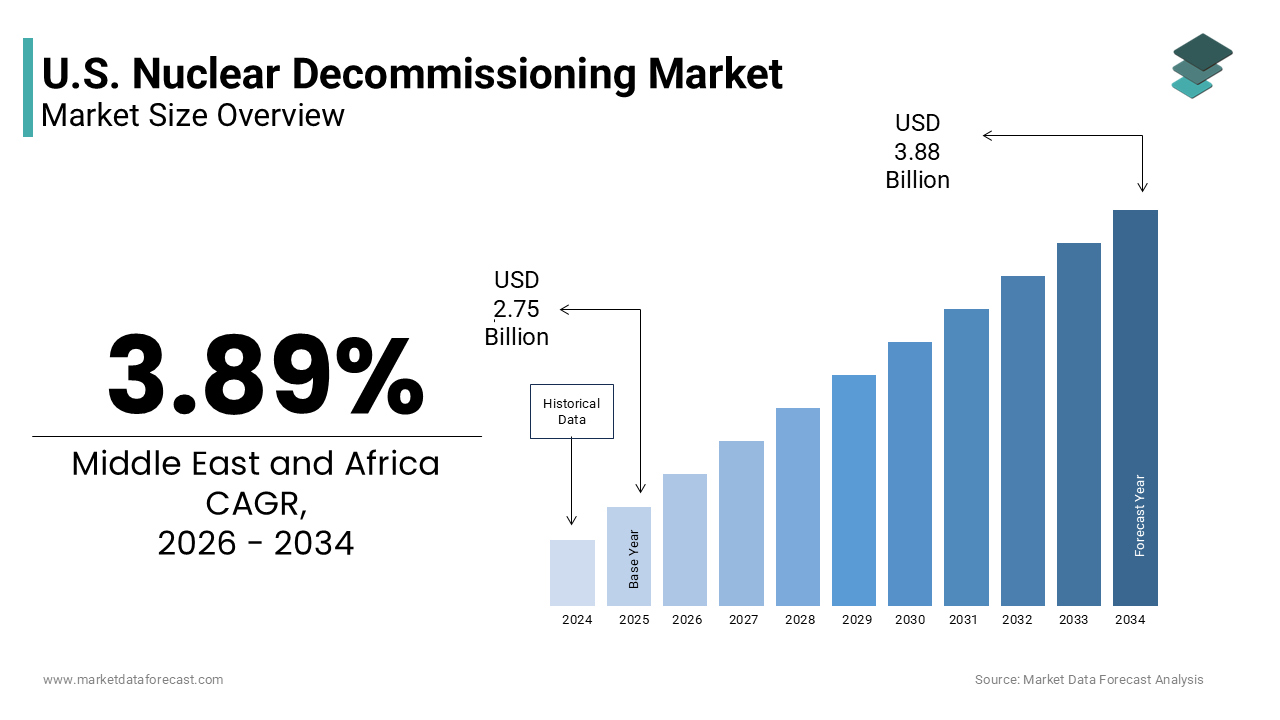
The U.S. nuclear decommissioning market involves the defueling of reactors, decontamination of structures, dismantling of major components, and the long-term management of radioactive waste. As per the Nuclear Regulatory Commission (NRC), there are currently 19 commercial nuclear power reactors in various stages of decommissioning across the nation, reflecting a significant ongoing operational workload. The process is governed by strict federal guidelines that mandate the protection of public health and the environment during site closure. According to the Department of Energy (DOE), the total estimated cost for decommissioning all existing nuclear facilities in the U.S. exceeds $100 billion, highlighting the substantial financial scope of this sector. The timeline for these projects often spans several decades, with immediate dismantlement and safe storage being the two primary strategies employed by utility companies. As per the Electric Power Research Institute (EPRI), the average age of operating nuclear reactors in the U.S. is approximately 42 years, indicating an approaching wave of retirement decisions. The technical complexity of handling high-level radioactive materials requires specialized robotics and remote handling equipment, driving innovation in industrial automation. Furthermore, the transition of these sites often involves extensive environmental monitoring and soil remediation. As per the Environmental Protection Agency (EPA), residual radiation levels must be reduced to below 25 millirem per year for unrestricted release, which is a stringent benchmark that dictates the thoroughness of cleanup efforts.
MARKET DRIVERS
Regulatory Mandates for Site Restoration and License Termination
The stringent regulatory framework enforced by the NRC that mandates the timely and safe restoration of nuclear sites is one of the major factors driving the U.S. nuclear decommissioning market growth. Utilities are legally obligated to submit post-shutdown decommissioning activities plans within 12 months of permanent cessation of operations, initiating a structured timeline for cleanup. As per the NRC, the license termination process requires rigorous characterization of radioactivity and verification that residual contamination meets safety standards for unrestricted use. This regulatory pressure ensures that decommissioning activities proceed without undue delay, creating a consistent demand for specialized services. The Code of Federal Regulations Title 10 Part 50 outlines specific requirements for financial assurance, ensuring that funds are available to complete decommissioning even if the utility faces financial distress. According to the Government Accountability Office (GAO), the oversight of these financial mechanisms is critical to preventing taxpayer burden, thereby reinforcing the stability of the market. The regulatory emphasis on public safety and environmental protection drives the adoption of advanced decontamination technologies and precise waste segregation practices. As per the Nuclear Energy Institute (NEI), compliance with these evolving regulations necessitates continuous engagement with regulatory bodies, fostering a professional ecosystem of consultants and engineers. The certainty of regulatory enforcement provides a stable pipeline of projects, as utilities prioritize license termination to relieve themselves of long-term liability. This legal imperative serves as the foundational catalyst for market activity, ensuring that decommissioning remains a priority for asset owners.
Aging Reactor Fleet and Economic Viability of Early Shutdowns
The advancing age of the U.S. nuclear reactor fleet combined with shifting economic dynamics is further boosting the U.S. market expansion. Many reactors were commissioned in the 1970s and 1980s, reaching the end of their initial licensed operating lives. As per the NRC, over 15 reactors have permanently shut down in the past decade due to economic pressures rather than technical failures. The rise of low-cost natural gas and renewable energy sources has eroded the profit margins of nuclear plants, making early retirement a financially prudent decision for many utilities. According to the Union of Concerned Scientists, the operating costs of older nuclear plants often exceed their revenue potential in competitive electricity markets, prompting owners to initiate decommissioning proceedings. This trend is expected to continue as more reactors face license renewal decisions amidst unfavorable market conditions. The decision to decommission early accelerates the timeline for site restoration, bringing forward the demand for decommissioning services. As per the Edison Electric Institute (EEI), the strategic shift towards diversified energy portfolios encourages utilities to divest from aging nuclear assets. The economic rationale for shutdowns is further supported by the high costs of mandatory safety upgrades required for extended operation. Consequently, the interplay between aging infrastructure and market economics creates a robust pipeline of decommissioning projects, driving sustained growth in the sector as utilities seek to mitigate financial losses and reallocate capital.
MARKET RESTRAINTS
High Financial Costs and Funding Adequacy Concerns
A major restraint facing the U.S. nuclear decommissioning market is the immense financial burden associated with the complete dismantlement and waste disposal of nuclear facilities. The estimated costs for decommissioning a single large reactor can range from $500 million to $1 billion, depending on the chosen strategy and site-specific conditions. As per the NRC, there have been instances where the initial decommissioning trusts established by utilities proved insufficient to cover the actual costs, leading to financial shortfalls. This inadequacy forces utilities to seek additional funding through ratepayer increases or corporate contributions, which can be politically and economically challenging. According to the GAO, the volatility of investment returns on decommissioning trusts poses a risk to funding adequacy, particularly during economic downturns. The uncertainty surrounding final waste disposal costs further complicates financial planning, as fees for spent fuel storage may increase over time. As per the DOE, the lack of a permanent geological repository for high-level waste means that utilities must bear the ongoing costs of onsite dry cask storage indefinitely. This financial ambiguity discourages aggressive decommissioning timelines and may lead to deferred maintenance or prolonged safe storage strategies. The high capital intensity of decommissioning projects also limits the number of contractors capable of undertaking such work, reducing competition and potentially driving up prices. These financial constraints act as a significant brake on the pace of decommissioning activities, forcing stakeholders to carefully balance cost management with regulatory compliance.
Complexity of Radioactive Waste Disposal and Storage Logistics
The intricate logistics and regulatory hurdles associated with radioactive waste disposal is a significant restraint to the U.S. nuclear decommissioning market growth. The U.S. currently lacks a permanent geological repository for high-level radioactive waste and spent nuclear fuel, forcing decommissioning projects to manage these materials onsite for indefinite periods. As per the DOE, the cancellation of the Yucca Mountain project has left the industry without a federal solution for long-term waste disposition. This absence compels utilities to construct and maintain independent spent fuel storage installations, adding substantial cost and complexity to the decommissioning process. According to the NEI, the transportation of spent fuel to any future repository will require extensive regulatory approvals and infrastructure development, which remain unresolved. The classification and segregation of low-level and mixed waste also present challenges, as disposal capacity for these materials is limited and geographically concentrated. As per the Agreement States program administered by the NRC, variations in state-level regulations can complicate the cross-border transport of radioactive waste. The need to package waste in certified containers and ensure secure transportation routes further slows down the dismantling process. These logistical bottlenecks extend the overall timeline of decommissioning projects and increase the risk of delays. The uncertainty regarding final waste disposition creates a persistent operational hurdle, restraining the fluidity and speed of market activities as companies navigate the complex web of waste management regulations.
MARKET OPPORTUNITIES
Advancements in Robotic Decontamination and Dismantling Technologies
The integration of advanced robotics and automation technologies offers a significant opportunity for the U.S. nuclear decommissioning market. Traditional manual decontamination and dismantling methods expose workers to radiation risks and are often time-consuming. As per the EPRI, the deployment of remote-operated vehicles and robotic arms can significantly reduce worker exposure and accelerate the dismantling of highly contaminated components. Recent innovations include drones equipped with radiation sensors for site mapping and hydraulic robots capable of cutting through thick concrete and steel structures. According to the National Laboratory system, research into artificial intelligence-driven robotics is enabling more precise and autonomous operations in hazardous environments. These technologies allow for real-time data collection and adaptive decision-making, improving the accuracy of waste segregation and reducing the volume of radioactive waste generated. As per the American Nuclear Society, the use of laser cutting and plasma arc technologies facilitated by robotic platforms offers faster and cleaner dismantling options compared to mechanical methods. The adoption of these advanced tools not only enhances safety but also reduces overall project costs by minimizing labor hours and improving operational throughput. Companies that invest in developing and deploying these proprietary technologies can gain a competitive advantage by offering faster and safer decommissioning solutions. This technological evolution opens new avenues for service providers to differentiate themselves and capture greater market share by addressing the core challenges of radiation safety and operational efficiency.
Site Repurposing and Industrial Reuse Potential
The potential for repurposing decommissioned nuclear sites for alternative industrial or commercial uses offers a compelling opportunity for the U.S. nuclear decommissioning market. Many nuclear power plants are located near significant water bodies and possess robust electrical grid connections, making them attractive locations for new energy infrastructure. As per the EEI, several utilities are exploring the installation of natural gas-powered generators or renewable energy facilities on former nuclear sites to leverage existing infrastructure. The Brownfields Program administered by the EPA provides incentives for the redevelopment of contaminated properties, encouraging the transformation of nuclear sites into productive assets. According to the DOE, the reuse of transmission lines and cooling systems can significantly reduce the capital costs of new energy projects. Some sites are being considered for the deployment of small modular reactors (SMRs), allowing for a continuation of nuclear energy production with newer, safer technology. As per the NEI, the concept of nuclear brownfield redevelopment is gaining traction as a sustainable approach to land use. The ability to restore sites to unrestricted use or limited industrial use enhances the economic viability of decommissioning projects. This opportunity allows decommissioning contractors to offer comprehensive site restoration services that go beyond mere cleanup, including environmental remediation and infrastructure adaptation. By facilitating the transition of these sites to new economic roles, the market can unlock additional value streams and support broader energy transition goals.
MARKET CHALLENGES
Shortage of Skilled Workforce and Specialized Expertise
The acute shortage of skilled workers with specialized expertise in radiation protection and nuclear dismantling is a major challenge to the U.S. nuclear decommissioning market growth. The decommissioning process requires a unique combination of skills including health physics, radiological control, and heavy industrial demolition. As per the Bureau of Labor Statistics (BLS), the aging workforce in the nuclear sector is retiring faster than new entrants are being trained, creating a knowledge gap. The specialized nature of nuclear work means that general construction workers cannot easily transition into these roles without extensive training and certification. According to the NEI, the demand for qualified radiation protection technicians and remote-handling operators exceeds the available supply in many regions. This labor shortage leads to increased wage pressures and project delays as companies compete for a limited pool of talent. The complexity of regulatory compliance further exacerbates the issue, as workers must be well-versed in evolving safety standards. As per the Occupational Safety and Health Administration (OSHA), maintaining a high level of safety culture requires continuous training and vigilance, which is difficult to sustain with a transient workforce. The lack of experienced project managers who understand the nuances of nuclear decommissioning also poses a risk to project execution. Addressing this workforce challenge requires significant investment in training programs and partnerships with educational institutions. Until the labor pipeline is strengthened, the industry will continue to face constraints on its capacity to execute multiple large-scale decommissioning projects simultaneously.
Public Perception and Community Stakeholder Engagement
Navigating public perception and managing community stakeholder expectations is further challenging the U.S. nuclear decommissioning market growth. Local communities often have deep historical ties to nuclear facilities and may harbor concerns regarding the safety of decommissioning activities and the long-term impact on property values. As per the NRC, public participation is a mandatory component of the license termination process, requiring utilities to engage in transparent and ongoing dialogue with stakeholders. Misinformation or fear regarding radiation exposure can lead to opposition against decommissioning plans, resulting in legal challenges and delays. According to the Union of Concerned Scientists, community trust is essential for the smooth execution of decommissioning projects, yet building this trust is a complex and time-consuming endeavor. The visibility of decommissioning activities, such as the removal of containment structures, can heighten public anxiety if not communicated effectively. As per the EPA, the involvement of local advisory boards is crucial for addressing community concerns, but these groups can sometimes become adversarial. The challenge is compounded by the long duration of decommissioning projects, which requires sustained engagement over decades. Negative public sentiment can influence regulatory decisions and limit the flexibility of utilities in choosing decommissioning strategies. Overcoming this social license challenge requires sophisticated communication strategies and genuine community partnership. Failure to adequately address public concerns can result in protracted disputes that hinder progress and increase costs, making stakeholder management a critical yet difficult aspect of the market.
REPORT COVERAGE
| REPORT METRIC | DETAILS |
| Market Size Available | 2025 to 2034 |
| Base Year | 2025 |
| Forecast Period | 2026 to 2034 |
| CAGR | 3.89% |
| Segments Covered | By Service Type, Reactor Type, Capacity and Region. |
| Various Analyses Covered | Global, Regional and Country-Level Analysis, Segment-Level Analysis, Drivers, Restraints, Opportunities, Challenges; PESTLE Analysis; Porter’s Five Forces Analysis, Competitive Landscape, Analyst Overview of Investment Opportunities |
| Countries Covered | California, Washington, Oregon, New York, United States |
| Market Leaders Profiled | AECOM, Bechtel Corporation, Babcock International Group PLC, Orano Group, Westinghouse Electric Company LLC, EnergySolutions, Studsvik AB, Fluor Corporation, NorthStar Group Services, Inc., and GE Hitachi Nuclear Energy.. |
SEGMENTAL ANALYSIS
By Service Type Insights
The immediate dismantling segment dominated the market by holding the highest share of the U.S. market in 2025 due to the desire of utility companies to release sites for unrestricted use and eliminate long-term liabilities. This approach involves the removal of all radioactive components and structures shortly after the permanent cessation of power operations. The primary factor driving the dominance of immediate dismantling is the regulatory framework established by the NRC, which encourages the timely termination of operating licenses. Utilities are motivated to complete decommissioning within 60 years, but immediate dismantling allows them to achieve this goal much faster, often within 10 to 15 years. As per the NRC, the majority of recently shut-down reactors have opted for immediate dismantling to avoid the uncertainties associated with long-term safe storage. This strategy reduces the duration of institutional control and monitoring, thereby lowering the overall administrative burden on the licensee. According to the EPRI, immediate dismantling minimizes the risk of regulatory changes that could occur over decades, providing greater financial predictability. The ability to return the site to greenfield status allows utilities to repurpose the land for other industrial or commercial uses, generating potential revenue streams. As per the DOE, the accelerated timeline of immediate dismantling aligns with community expectations for rapid site restoration, fostering better stakeholder relations. The regulatory emphasis on protecting public health and safety through prompt cleanup actions further reinforces this preference. By choosing immediate dismantling, utilities demonstrate a commitment to environmental stewardship and regulatory compliance, which is critical for maintaining their social license to operate in other sectors. This regulatory alignment ensures that immediate dismantling remains the preferred strategy for most decommissioning projects in the U.S.
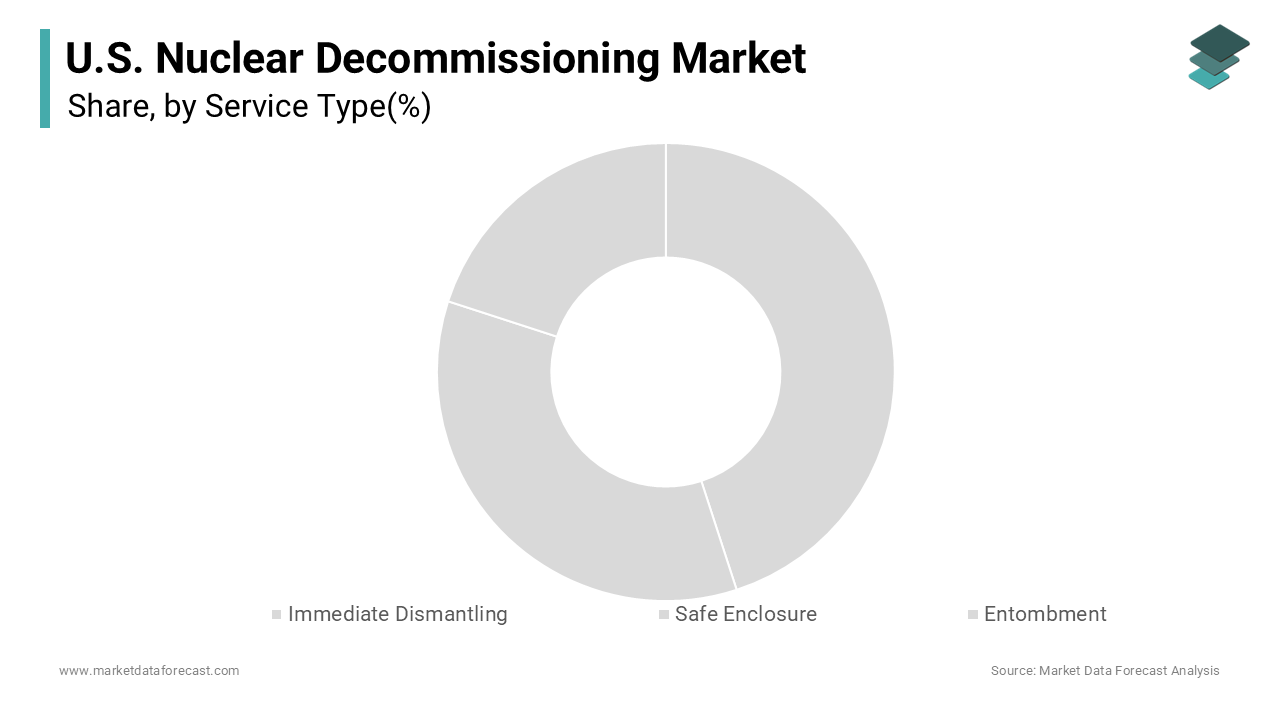
On the other end, the safe enclosure segment also known as deferred dismantlement is projected to record a CAGR of 4.4% during the forecast period in the U.S. market. The strategic advantage of allowing radioactive isotopes to decay over time that significantly reduces the complexity and cost of final dismantling is contributing to the expansion of this segment in the U.S. market. By deferring major demolition activities for 20 to 30 years, utilities can handle materials with lower radiation levels, reducing the need for expensive remote handling equipment and specialized labor. As per the EPRI, the reduction in radiation exposure limits the occupational health risks for workers and lowers the volume of high-level waste generated. This approach is particularly appealing for reactors with complex internal structures or high initial contamination levels. According to the NRC, safe enclosure allows utilities to spread out the financial burden of decommissioning over a longer period, easing immediate cash flow pressures. The deferred timeline also provides opportunities for advancements in dismantling technologies that may emerge during the storage period. As per the DOE, the development of new robotic tools and cutting techniques could make future dismantling more efficient and cost-effective. This wait-and-see strategy allows utilities to optimize their decommissioning plans based on future technological and economic conditions. The ability to manage resources more flexibly makes safe enclosure an attractive option for certain sites, driving its gradual adoption. As financial constraints tighten for some utilities, the appeal of deferring major expenditures grows, supporting the expansion of this segment.
By Reactor Type Insights
The pressurized water reactors segment held the largest share of the U.S. market in 2025. The dominance of this segment in the U.S. market is attributed to their prevalence in the national nuclear fleet. PWRs are the most common type of nuclear reactor in the country, accounting for the majority of units currently in operation or undergoing decommissioning. The primary driver for the dominance of the PWR segment is the sheer number of these reactors built in the U.S. during the nuclear expansion of the mid-twentieth century. As per the NRC, approximately 65% of the commercial nuclear reactors in the U.S. are pressurized water reactors. This numerical superiority translates directly into a larger volume of decommissioning projects for this reactor type. The standardized design of PWRs has led to the development of specialized decommissioning protocols and expertise, making the process more predictable and manageable. According to the EPRI, the extensive operational history of PWRs provides a wealth of data that informs best practices for their dismantlement. The widespread adoption of this technology means that supply chains for replacement parts and disposal services are well-established for PWR-specific components. As per the DOE, the familiarity of regulators and contractors with PWR architecture reduces the learning curve and potential for unexpected complications during decommissioning. The consistent regulatory treatment of PWRs across different states further streamlines the licensing and approval processes. This structural advantage ensures that PWRs remain the central focus of the decommissioning market. The continuous shutdown of older PWR units due to economic factors sustains the demand for decommissioning services in this segment. The established ecosystem surrounding PWRs reinforces their leading position, making them the benchmark for nuclear decommissioning activities in the U.S.
However, the boiling water reactors segment is emerging as a fast-growing segment in the decommissioning market and is predicted to grow at a CAGR of 4.2% during the forecast period owing to the increasing number of BWRs reaching the end of their operational lives and the unique challenges they present. The rapid growth of the Boiling Water Reactor segment is primarily fueled by the wave of shutdowns among aging BWR units across the U.S. Many BWRs were commissioned in the 1970s and are now facing economic and technical decisions regarding their future. As per the NRC, several major BWRs have announced permanent shutdown dates in recent years, creating a surge in demand for specialized decommissioning services. The distinct design of BWRs, where the reactor vessel itself produces steam, requires different dismantling approaches compared to PWRs, necessitating specialized expertise. According to the EPRI, the complexity of BWR internal components, such as the jet pumps and dryers, presents unique challenges that drive innovation in cutting and handling technologies. The increasing focus on these units has led to the development of new methodologies for managing radioactive waste specific to BWR architectures. As per the DOE, the concentration of BWRs in certain regions has created hubs of decommissioning activity, attracting investment and resources. The urgency to address these aging assets before they become financially unsustainable drives utilities to initiate decommissioning processes promptly. This cluster of retirements creates a dynamic and expanding market segment. The specific technical requirements of BWR dismantling offer opportunities for contractors to differentiate themselves through specialized capabilities. This focused demand supports the accelerated growth of the BWR segment within the broader decommissioning landscape.
By Capacity Insights
The capacity range of 100 MW to 1000 MW segment held the leading share of the U.S. nuclear decommissioning market in 2025. The dominance of the 100 MW to 1000 MW segment is driven by the fact that most commercial nuclear power plants in the U.S. fall within this capacity range. As per the NRC, the average capacity of a U.S. nuclear reactor is approximately 1000 MW, with many units operating slightly below this threshold. This concentration of assets creates a large and consistent demand for decommissioning services tailored to this scale. The standardized nature of these large reactors allows for economies of scale in decommissioning operations, making the process more predictable. According to the EPRI, the infrastructure and supply chains for handling large-scale decommissioning projects are well-developed, supporting the efficient execution of these tasks. The regulatory framework is also optimized for this category of facilities, with clear guidelines and precedents established over decades. As per the DOE, the funding mechanisms and trust structures for these plants are robust, ensuring that financial resources are available for completion. The sheer volume of reactors in this capacity band ensures that it remains the primary focus of the market. The retirement of these major power sources represents a significant industrial undertaking, driving substantial activity. The established protocols for large-scale dismantling reinforce the leadership of this segment. As more of these standard units reach the end of their lives, the segment continues to dominate the market landscape.
On the other side, the above 1000 MW capacity segment is another promising segment and is expected to showcase a CAGR of 5.2% during the forecast period owing to the impending retirement of several high-capacity legacy units that were built to maximize power output. As per the NRC, a subset of reactors in the U.S. operates at capacities exceeding 1000 MW, and these units are now reaching the end of their licensed lives. The sheer size of these facilities requires massive decommissioning efforts, involving the removal of enormous amounts of concrete and steel. According to the EPRI, the complexity of dismantling such large structures drives innovation in heavy lifting and cutting technologies. The high visibility of these projects attracts significant attention from regulators and the public, ensuring rigorous oversight and thorough execution. As per the DOE, the waste management logistics for these large units are complex, requiring coordinated efforts with multiple disposal sites. The financial scale of these projects is substantial, attracting major contractors and specialized firms. The need to manage large volumes of radioactive material safely and efficiently drives the adoption of advanced automation and robotics. As per the NEI, the lessons learned from these mega-projects contribute to the overall advancement of the industry. The strategic importance of these units in the energy grid means their decommissioning is carefully planned and executed. This focus on high-capacity units fuels the rapid growth of this segment.
REGIONAL ANALYSIS
Over the next few years, regional operational density in the Northeast and Midwest will foster local supply chain clusters, optimizing field execution costs. The country is a global leader in nuclear decommissioning expertise, driven by its large fleet of aging reactors and stringent safety standards. The position of the U.S. in the nuclear decommissioning market is defined by its comprehensive regulatory framework and high density of nuclear infrastructure. The NRC sets rigorous standards that govern every aspect of the decommissioning process, ensuring consistency and safety. As per the NRC, the detailed guidance provided in regulatory documents facilitates a structured approach to license termination and site restoration. The concentration of nuclear plants in specific regions, such as the Northeast and Midwest, creates clusters of decommissioning activity that drive local economic engagement. According to the DOE, the existing infrastructure for waste transport and disposal, while limited, is actively managed to support ongoing projects. The strong legal and regulatory foundation provides certainty for investors and contractors, encouraging participation in the market. As per the EPRI, the collaboration between regulators, utilities, and researchers fosters continuous improvement in decommissioning practices. The U.S. benefits from a deep pool of technical expertise and institutional knowledge accumulated over decades of nuclear operations. This intellectual capital is a key asset that enhances the efficiency and effectiveness of decommissioning efforts. The proactive stance of regulatory bodies in addressing emerging challenges ensures that the market remains robust and adaptive. The combination of regulatory clarity and infrastructure density solidifies the U.S. as the central hub for nuclear decommissioning activities globally.
COMPETITIVE LANDSCAPE
The competition in the U.S. nuclear decommissioning market is characterized by a consolidated landscape dominated by a few large integrated service providers. These key players compete based on their technical expertise, regulatory track record, and ability to offer cost effective turnkey solutions. The high barriers to entry, including stringent licensing requirements and specialized capital equipment, limit the number of viable competitors. Established firms leverage their extensive experience and proprietary technologies to differentiate themselves from rivals. Price competition is significant but often secondary to safety performance and regulatory compliance capabilities. Companies strive to demonstrate their ability to complete projects within budget and on schedule, as delays can result in substantial financial penalties. Strategic alliances and joint ventures are common as firms seek to combine complementary strengths for complex projects. The market sees continuous innovation in robotic dismantling and waste minimization technologies, driving competitive advantage. Reputation and past performance play a crucial role in winning contracts, as utilities prefer partners with proven success records. The intense focus on safety and environmental stewardship further shapes competitive dynamics. As more reactors approach retirement, the demand for specialized services increases, encouraging existing players to expand their capacities. This competitive environment fosters continuous improvement and efficiency in nuclear decommissioning practices across the nation.
KEY MARKET PLAYERS
Some of the promising companies that are playing a dominating role in the U.S. Nuclear Decommissioning Market include
- AECOM
- Bechtel Corporation
- Babcock International Group PLC
- Orano Group
- Westinghouse Electric Company LLC
- EnergySolutions
- Studsvik AB
- Fluor Corporation
- NorthStar Group Services, Inc.
- GE Hitachi Nuclear Energy
Top Players in the U.S. Nuclear Decommissioning Market
Holtec International
Holtec International is a prominent player in the U.S. nuclear decommissioning market, renowned for its comprehensive turnkey solutions. The company specializes in the immediate dismantling of commercial nuclear power plants and has developed proprietary technologies for efficient site restoration. Holtec actively engages in acquiring retired nuclear sites to manage the entire decommissioning process internally. Recent actions include the acquisition of multiple reactor sites from major utilities, allowing the company to streamline operations and reduce costs through standardized procedures. Holtec also invests heavily in research and development for advanced cutting tools and waste management systems. Their strategic focus on vertical integration enables them to control every aspect of the project lifecycle. This approach enhances operational efficiency and ensures regulatory compliance. By leveraging their extensive engineering expertise, Holtec continues to expand its portfolio of decommissioning projects. The company’s commitment to innovation and cost effectiveness strengthens its position as a leading provider of nuclear closure services in the U.S. market.
EnergySolutions
EnergySolutions plays a critical role in the U.S. nuclear decommissioning market by offering integrated waste management and facility closure services. The company provides specialized expertise in radiological characterization, decontamination, and dismantling of nuclear infrastructure. EnergySolutions focuses on developing customized decommissioning plans that align with regulatory requirements and client objectives. Recent initiatives involve the expansion of their waste processing capabilities and the adoption of digital monitoring tools for real time project tracking. The company collaborates closely with regulatory agencies to ensure seamless license termination processes. EnergySolutions also emphasizes workforce training and safety culture to maintain high operational standards. Their ability to handle complex logistical challenges and large volume waste streams makes them a preferred partner for utilities. By continuously improving their technical capabilities and service offerings, EnergySolutions reinforces its reputation as a trusted leader in the industry. This consistent delivery of reliable and compliant solutions supports their strong market presence and ongoing growth in the sector.
Westinghouse Electric Company
Westinghouse Electric Company contributes significantly to the U.S. nuclear decommissioning market through its extensive experience in nuclear technology and engineering. The company offers a wide range of decommissioning services including plant assessment, planning, and execution support. Westinghouse leverages its deep understanding of reactor designs to provide tailored solutions for various nuclear facilities. Recent actions include the development of advanced robotic systems for remote dismantling operations in high radiation environments. The company also focuses on strategic partnerships with specialized contractors to enhance its service delivery capabilities. Westinghouse emphasizes sustainability and environmental stewardship in all its decommissioning projects. Their global expertise allows them to bring best practices from international markets to domestic projects. By integrating cutting edge technology with proven engineering methods, Westinghouse ensures safe and efficient site restoration. This commitment to excellence and innovation helps the company maintain a competitive edge. Their comprehensive approach to decommissioning supports utilities in achieving timely and cost effective license termination goals.
Top Strategies Used by Key Market Participants
Key players in the U.S. nuclear decommissioning market primarily employ strategic acquisitions and technological innovation to strengthen their competitive positions. Companies actively acquire retired nuclear sites to gain control over the entire decommissioning lifecycle, enabling better cost management and operational efficiency. This vertical integration allows firms to standardize processes and leverage economies of scale across multiple projects. Investment in advanced robotics and automation technologies is another major strategy, as these tools enhance safety and accelerate dismantling activities in high radiation zones. Firms also focus on developing proprietary waste treatment methods to reduce disposal volumes and costs. Collaborative partnerships with regulatory bodies and local communities are essential for navigating complex licensing requirements and maintaining social license. Additionally, companies emphasize workforce development and specialized training to address the shortage of skilled labor in the nuclear sector. By combining technical expertise with strategic business moves, key participants ensure they remain agile and responsive to market demands. These strategies collectively drive growth and reinforce the leadership of established players in the evolving decommissioning landscape.
MARKET SEGMENTATION
This research report on the U.S. nuclear decommissioning market has been segmented based on the following categories.
By Service Type
- Immediate Dismantling
- Safe Enclosure
- Entombment
By Reactor Type
- Pressurized Water Reactor
- Boiling Water Reactor
- Gas-Cooled Reactor
- Others
By Capacity
- Below 100 MW
- 100 MW - 1000 MW
- Above 1000 MW
By Country
- California
- Washington
- Oregon
- New York
- Rest of the United States