U.S. Olive Oil Market Size, Share, Trends & Growth Forecast Report Segmented By Type (Extra Virgin Olive Oil, Organic Olive Oil Expansion), End-User, Distribution Channel and Country – Industry Analysis From 2026 to 2034
Market Size, 2025
$5.41 BnMarket Estimate, 2026
$5.66 BnMarket Forecast, 2034
$8.13 BnCAGR, 2026–2034
4.63%U.S. Olive Oil Market Report Summary
The U.S. olive oil market was valued at USD 5.41 billion in 2025, is estimated to reach USD 5.66 billion in 2026, and is projected to reach USD 8.13 billion by 2034, growing at a CAGR of 4.63% during the forecast period from 2026 to 2034. The growth of the U.S. olive oil market is driven by rising health consciousness among consumers, increasing adoption of Mediterranean dietary patterns, and growing preference for healthy cooking oils rich in monounsaturated fats. Expanding demand for premium and extra virgin olive oil products, increasing awareness regarding cardiovascular health benefits, and rising popularity of gourmet and organic food products are further accelerating market growth. Moreover, advancements in sustainable olive farming practices, increasing domestic production in California, and growing demand for clean-label and organic food ingredients are supporting the expansion of the U.S. olive oil market.
Key Market Trends
- Rising demand for extra virgin olive oil driven by growing consumer awareness regarding its antioxidant and heart health benefits.
- Increasing popularity of organic and sustainably produced olive oil products among health-conscious and environmentally aware consumers.
- Growing integration of olive oil into fusion cuisines, gourmet cooking, and premium foodservice applications.
- Strong focus on authenticity, traceability, and quality certifications to address concerns regarding product adulteration and labeling accuracy.
- Expansion of online retail and subscription-based delivery models offering consumers convenient access to premium and imported olive oil brands.
Segmental Insights
- Based on type, the extra virgin olive oil segment dominated the U.S. olive oil market and held the largest share in 2025. The segment’s dominance is attributed to its superior nutritional profile, minimal processing methods, rich antioxidant content, and increasing consumer preference for premium and healthy cooking ingredients.
- The organic olive oil segment is projected to witness the fastest CAGR during the forecast period owing to increasing demand for chemical-free food products, rising awareness regarding sustainable farming practices, and growing consumer preference for clean-label and eco-friendly food ingredients.
- Based on end user, the household and retail segment accounted for the leading share of the U.S. olive oil market in 2025. The dominance of this segment is driven by increasing home cooking activities, widespread adoption of Mediterranean diets, and growing use of olive oil in salad dressings, sautéing, baking, and healthy meal preparation.
- The foodservice sector segment is anticipated to register notable growth during the forecast period due to increasing demand for healthier menu offerings, rising adoption of Mediterranean and international cuisines, and expanding use of premium olive oil in restaurants and hospitality establishments.
- Based on distribution channel, the offline retail segment held the major share of the U.S. olive oil market in 2025 owing to strong consumer preference for in-store product inspection, extensive availability across supermarkets and grocery stores, and growing promotional activities within retail chains.
Regional Insights
The United States dominated the North American olive oil market and accounted for a major share in 2025, supported by increasing consumer focus on healthy eating habits, strong demand for premium cooking oils, and expanding Mediterranean food culture. California remains a major contributor to the U.S. olive oil market due to its dominant domestic olive production industry, favorable climate for olive cultivation, and increasing investment in sustainable farming technologies. New York, Washington, and Oregon are also witnessing notable growth driven by rising health-conscious consumption patterns, increasing demand for organic food products, and expanding gourmet food retail channels.
Competitive Landscape
The U.S. olive oil market is highly competitive and characterized by the presence of multinational olive oil brands, domestic producers, and specialty gourmet companies competing through quality differentiation, sustainability initiatives, and product innovation. Leading companies are focusing on expanding organic and extra virgin product portfolios, strengthening supply chain transparency, investing in sustainable packaging solutions, and enhancing digital retail presence. Strategic collaborations with retailers, culinary influencers, and foodservice providers, along with increasing emphasis on authenticity certifications and traceability technologies, are further strengthening market positioning across diverse consumer demographics. Prominent players in the U.S. olive oil market include Deoleo S.A., Bertolli, California Olive Ranch, Pompeian, Inc., Colavita USA, Filippo Berio USA Ltd., Cargill, Incorporated, Conagra Brands, Inc., Sovena Group, and Goya Foods, Inc.
U.S. Olive Oil Market Size
The U.S. Olive Oil Market size was valued at USD 5.41 billion in 2025 and is anticipated to reach USD 5.66 billion in 2026 from USD 8.13 billion by 2034, growing at a CAGR of 4.63% during the forecast period from 2026 to 2034.
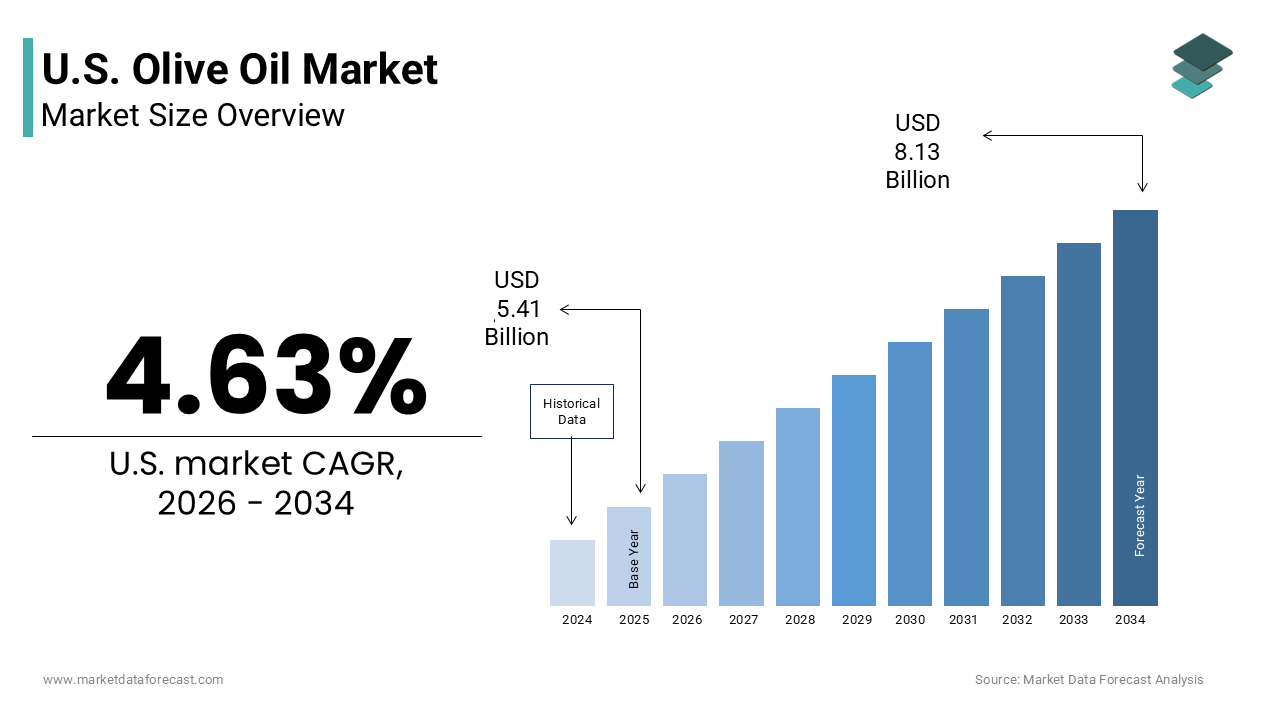
Olive oil is a liquid fat obtained by pressing or mechanically extracting the fruit of olive trees (Olea europaea). This market includes various grades of olive oil including extra virgin and refined options sourced from domestic producers in California as well as major international exporters such as Spain Italy and Greece. The definition of quality in this sector is increasingly tied to authenticity purity and sustainable farming practices which influence purchasing decisions among discerning American consumers. The United States remains the leading global destination for olive oil imports outside of the European Union, representing a primary driver of international trade according to the International Olive Council. Domestic olive oil production, centered overwhelmingly in California, continues to expand but remains a limited local supply base, satisfying less than 5% of total annual U.S. consumption requirements. Consumer behavior data indicates a steady market shift toward premium cooking options, with research showing that overall olive oil household penetration is approaching 45% as consumers prioritize health-focused and Mediterranean diets. The demographic profile of typical buyers includes higher income earners and individuals with advanced education levels who prioritize nutritional benefits. According to agricultural data, annual per capita olive oil consumption in the United States has climbed steadily over the past decade to roughly 1.1 kilograms per person, reflecting sustained growth in consumer demand. This growth is supported by the widespread adoption of Mediterranean dietary patterns which are associated with reduced risks of chronic diseases. The market is also influenced by regulatory standards aimed at preventing fraud and ensuring label accuracy which build consumer trust. As culinary trends evolve olive oil continues to replace less healthy fats in both home cooking and food service applications.
MARKET DRIVERS
Health Consciousness and Mediterranean Diet Adoption
The increasing adoption of the Mediterranean diet and heightened awareness of the health benefits associated with monounsaturated fats are the primary driver propelling the United States olive oil market. Consumers are actively seeking alternatives to saturated and trans fats to improve cardiovascular health and manage weight. According to the American Heart Association, replacing foods high in saturated fats with healthier unsaturated plant oils, such as olive oil, lowers bad cholesterol levels and substantially mitigates the long-term risk of cardiovascular disease. This medical endorsement has significantly influenced consumer choices leading to a surge in demand for extra virgin olive oil which retains the highest levels of antioxidants and polyphenols. Data from the Centers for Disease Control and Prevention indicates that over a third of U.S. adults have high total cholesterol levels, prompting public health bodies to strongly recommend proactive, heart-healthy dietary interventions. The popularity of heart healthy eating plans has been further amplified by social media and wellness influencers who promote olive oil as a superfood. Additionally the recognition of olive oil as a key component in anti inflammatory diets has expanded its appeal beyond traditional culinary uses to include wellness routines. The scientific community continues to publish studies linking olive oil consumption to improved cognitive function and longevity which reinforces its status as a staple in health conscious households. This robust scientific backing ensures sustained growth in the market as consumers prioritize long term health outcomes over short term cost considerations.
Culinary Versatility and Premiumization Trends
The culinary versatility of olive oil combined with the trend towards premiumization are boosting the overall expansion of the United States olive oil market. This appeals to food enthusiasts and professional chefs alike. Olive oil is used in a wide range of applications from salad dressings and marinades to high heat cooking and baking making it an indispensable ingredient in modern kitchens. The rise of home cooking during and after the pandemic has led consumers to invest in higher quality ingredients to replicate restaurant experiences at home. This willingness to spend has fueled the growth of specialty olive oil brands that emphasize single origin harvest dates and unique flavor profiles. The influence of celebrity chefs and cooking shows has also educated consumers about the nuances of different olive oil varieties encouraging experimentation. Furthermore the integration of olive oil into fusion cuisines and global recipes has broadened its usage beyond Mediterranean dishes. Retailers have responded by expanding their selections to include artisanal and organic options which cater to discerning palates. This trend towards premiumization not only increases the value of sales but also fosters brand loyalty among consumers who appreciate the craftsmanship and heritage associated with high quality olive oil.
MARKET RESTRAINTS
Price Volatility and Supply Chain Instability
Price volatility and supply chain instability are major obstacles to the United States olive oil market. This creates uncertainty for both retailers and consumers. Olive oil prices are highly sensitive to climatic conditions in major producing regions such as Spain and Italy where droughts and extreme weather events can significantly reduce yields. According to the International Olive Council, global olive oil production rebounded sharply to roughly 3.5 million tonnes in the 2024–2025 season, recovering from severe drought-induced shortages that plagued previous harvests in the Mediterranean basin. This supply shortfall led to a sharp increase in wholesale prices which were passed on to consumers resulting in higher retail costs. Data from the Bureau of Labor Statistics shows that while olive oil faced isolated price surges due to tight international inventories, the broader consumer price index for fats and oils mirrored stabilizing grocery trends across 2025. High prices often lead consumers to switch to cheaper alternatives such as vegetable or canola oil thereby reducing demand for olive oil. Additionally supply chain disruptions caused by geopolitical tensions and logistical bottlenecks further exacerbate price fluctuations. The reliance on imports makes the US market vulnerable to international trade policies and currency exchange rates which can impact affordability. Retailers face challenges in maintaining consistent inventory levels and pricing strategies amidst this volatility. Small and medium sized producers struggle to compete with larger entities that can absorb cost increases more effectively. This economic pressure limits market expansion and discourages new entrants who may find it difficult to establish stable supply chains. The unpredictability of prices undermines consumer confidence and long term planning for businesses in the sector.
Product Adulteration and Quality Concerns
Product adulteration and concerns about quality authenticity are further limiting the expansion of the United States olive oil market. This erodes consumer trust and damages brand reputation. Instances of mislabeling and mixing lower grade oils with extra virgin olive oil have been widely publicized leading to skepticism among buyers. A landmark, historical study by the University of California, Davis found that approximately 69% of selected imported olive oils sampled in the U.S. failed to meet strict sensory or chemical criteria for the extra virgin classification, sparking a long-term push for better quality controls. This lack of compliance undermines the value proposition of premium products and discourages consumers from paying higher prices. The presence of fake or substandard products creates an uneven playing field for legitimate producers who adhere to strict quality controls. Brands that suffer from association with adulterated products face long term damage to their image and customer loyalty. Efforts to certify authenticity through third party testing and labeling initiatives have had mixed success in restoring confidence. The complexity of the global supply chain makes it difficult to trace the origin and quality of every batch. This restraint requires ongoing investment in transparency and verification technologies to reassure consumers. The market risks stagnation without effective measures to combat fraud. Consequently, buyers may seek safer and more reliable alternatives.
MARKET OPPORTUNITIES
Expansion of Domestic Production in California
The expansion of domestic olive oil production in California offers a significant opportunity for the United States olive oil market. This reduces reliance on imports and offers fresh locally sourced products. California has emerged as a notable producer of high quality olive oil with favorable climate conditions and advanced agricultural technologies supporting growth. This growth is driven by investments in modern harvesting equipment and processing facilities that enhance efficiency and quality. Domestic production offers the advantage of freshness as olive oil can be bottled and shipped to consumers shortly after harvest preserving flavor and nutritional value. This preference creates a strong market for California olive oils which can command premium prices due to their perceived superiority. The development of new olive varieties suited to the Californian climate further diversifies the product range and appeals to niche markets. Collaborations between growers and researchers have led to innovations in sustainable farming practices which align with environmental goals. The establishment of olive oil trails and tourism initiatives also promotes brand awareness and direct sales. By leveraging the buy local trend domestic producers can capture a larger share of the market and build strong regional identities. This opportunity supports economic development in rural areas and enhances the overall resilience of the US olive oil supply chain.
Growth in Organic and Sustainable Product Segments
The growing demand for organic and sustainably produced olive oil provides a substantial prospect for the United States olive oil market. This aligns with contemporary consumer values and environmental concerns. Buyers are increasingly seeking products that are free from synthetic pesticides and fertilizers and produced using eco friendly methods. According to the Organic Trade Association, total sales of organic products in the United States reached a record $76.6 billion in 2025, driven by robust growth in fresh produce, grocery, and protein categories. Certified organic olive oils appeal to health conscious consumers who prioritize purity and environmental stewardship. Brands that obtain certifications such as USDA Organic or Non GMO Project Verified can differentiate themselves and justify higher price points. Sustainability initiatives such as water conservation and carbon neutral production processes further enhance brand appeal among environmentally aware shoppers. The rise of regenerative agriculture practices in olive farming also attracts consumers interested in supporting biodiversity and soil health. Retailers are expanding their organic offerings to meet this demand creating more shelf space for specialized products. Online platforms facilitate access to niche organic brands that may not be available in traditional stores. This opportunity allows producers to tap into a loyal customer base that values transparency and ethical sourcing. Many consumers are willing to pay a premium for responsible products. Companies can build long-term relationships with them by emphasizing sustainability.
MARKET CHALLENGES
Climate Change Impact on Global Supply
Climate change is a major challenge to the United States olive oil market. This threatens the stability of global supply chains and affects the quality and quantity of olive harvests. Rising temperatures and irregular rainfall patterns in major producing regions such as the Mediterranean have led to frequent crop failures and reduced yields. This decline forces US importers to seek alternative sources which may be more expensive or of lower quality. The unpredictability of harvests makes it difficult for suppliers to maintain consistent inventory levels and pricing. Domestic producers in California also face challenges from heatwaves and water scarcity which limit expansion potential. These environmental pressures increase production costs and reduce profitability for farmers. The industry must adapt by investing in drought resistant olive varieties and efficient irrigation systems. However these adaptations require significant capital and time to implement. The long term viability of olive oil production is at risk if climate trends continue unchecked. This challenge necessitates collaborative efforts between governments researchers and industry stakeholders to develop resilient farming practices.
Regulatory Compliance and Labeling Standards
Navigating complex regulatory compliance and labeling standards is holding back the expansion of the United States olive oil market. This imposes strict requirements on producers and importers. The US Department of Agriculture and the Food and Drug Administration enforce rigorous guidelines for grading and labeling olive oil to prevent fraud and protect consumers. Non compliance can result in fines product recalls and damage to brand reputation. The lack of uniform international standards complicates compliance for importers who must navigate varying regulations in different countries. Small producers often struggle with the costs associated with testing and certification which can be prohibitive. The introduction of new labeling requirements such as country of origin and harvest date adds further complexity to packaging and logistics. Retailers must ensure that all products on their shelves meet federal standards to avoid liability issues. The evolving nature of regulations requires continuous monitoring and adaptation by industry participants. Failure to comply can lead to loss of market access and consumer trust. This challenge demands robust quality control systems and legal expertise to ensure adherence to all applicable laws.
REPORT COVERAGE
| REPORT METRIC | DETAILS |
| Market Size Available | 2025 to 2034 |
| Base Year | 2025 |
| Forecast Period | 2026 to 2034 |
| CAGR | 4.63% |
| Segments Covered | By Type, End -User, Distribution Channel and Region. |
| Various Analyses Covered | Regional & Country Level Analysis, Segment-Level Analysis, DROC, PESTLE Analysis, Porter’s Five Forces Analysis, Competitive Landscape, Analyst Overview of Investment Opportunities |
| Regions Covered | California, Washington, Oregon, New York, and the rest of the United States. |
| Market Leaders Profiled | Mitsubishi Electric Corporation (Japan), Daikin (Japan), Panasonic Corporation (Japan), Lg Electronics (South Korea), Johnson Controls (Us), Munters (Sweden), Fujitsu General (Japan), Carrier Corporation (Us), Nortek Air Solutions (Us), Greenheck Fan (Us), and Others. |
SEGMENTAL ANALYSIS
By Type Insights
The extra virgin olive oil segment was the largest by occupying a 56.7% share of the United States olive oil market in 2025. Its superior quality health benefits and widespread culinary acceptance are supporting the prominence of this segment. This segment dominates because it is the least processed form of olive oil retaining natural antioxidants and flavors that appeal to health conscious consumers. The dominance is further reinforced by dietary guidelines that recommend monounsaturated fats for heart health which extra virgin olive oil provides in abundance. The premium perception of extra virgin olive oil also drives its popularity as consumers associate higher price points with better quality and authenticity. Retailers prominently display extra virgin varieties in stores catering to the growing demand for gourmet and healthy cooking ingredients. The influence of Mediterranean diet trends has solidified its position as a kitchen staple in American households. Furthermore culinary experts and nutritionists consistently advocate for extra virgin olive oil due to its high smoke point suitability for low heat cooking and rich nutrient profile. This consistent endorsement ensures sustained demand and market leadership. The segment benefits from strong brand loyalty as consumers tend to stick with trusted brands that guarantee purity and quality.
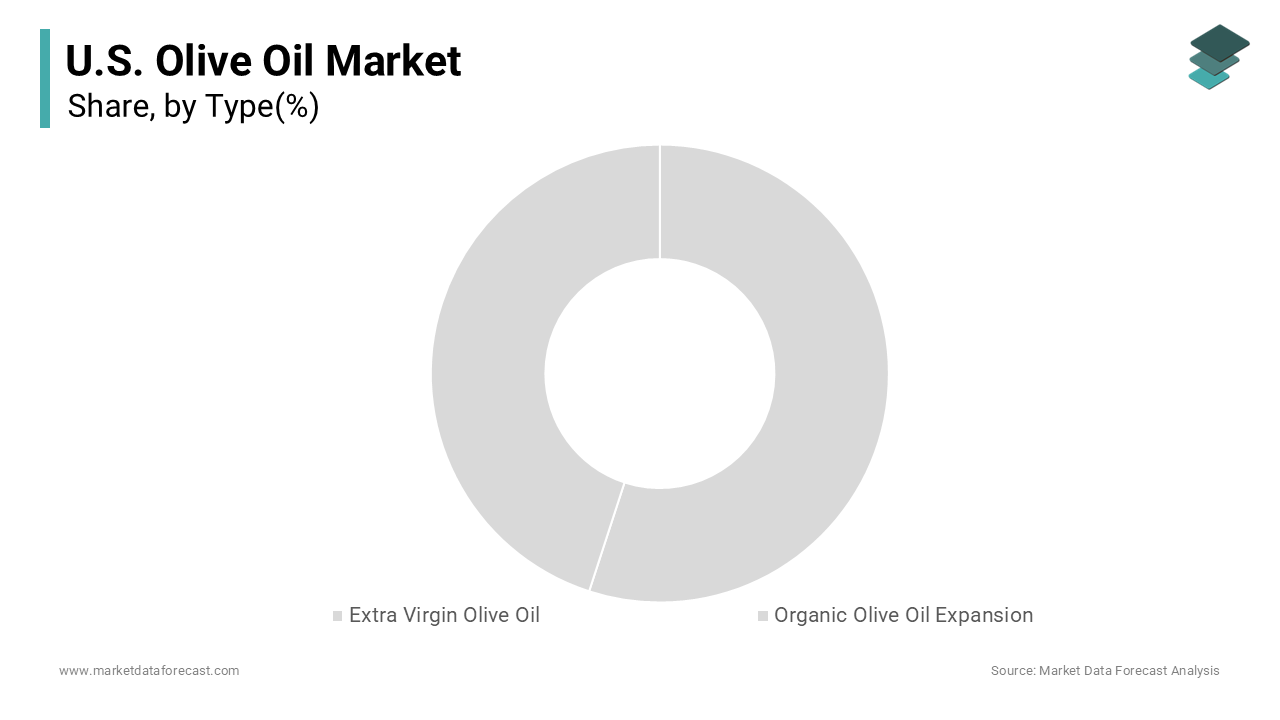
But the organic olive oil segment is likely to experience the fastest CAGR of 9.2% from 2026 to 2034 due to increasing consumer preference for chemical free and sustainably produced food products. The driving force behind this growth is the heightened awareness of environmental impact and personal health among US consumers. Organic olive oil appeals to this demographic by offering assurance of no synthetic pesticides or fertilizers used in cultivation. Additionally the rise of clean label trends in the food industry has encouraged manufacturers to introduce more organic options. Retailers have expanded their organic shelves to meet this demand creating greater visibility and accessibility for these products. The segment also benefits from marketing campaigns that highlight the environmental benefits of organic farming such as soil conservation and biodiversity protection. Younger consumers particularly Millennials and Gen Z are key drivers of this trend as they prioritize sustainability in their purchasing habits. This combination of health consciousness and environmental responsibility ensures that organic olive oil continues to grow at the fastest rate.
By End User Insights
The household and retail segment led the United States olive oil market and captured a significant share in 2025. This leading position of the segment was attributed to the widespread adoption of home cooking and health conscious dietary habits. Consumers purchasing olive oil for personal use drive significant volume sales through supermarkets grocery stores and specialty shops. The dominance of this segment is supported by the trend towards preparing meals at home which accelerated during the pandemic and has remained strong. Households prefer extra virgin olive oil for its versatility in salad dressings sautéing and dipping making it a pantry staple. The influence of social media and cooking blogs has further educated consumers on the benefits of using high quality olive oil in various recipes. Retail promotions and bundle offers also encourage bulk purchases by families looking to save money. Additionally the aging population in the US is increasingly adopting heart healthy diets that emphasize olive oil consumption. This demographic shift ensures steady growth in household purchases. The availability of diverse brands and price points in retail stores allows consumers to choose products that fit their budgets and preferences. This broad accessibility sustains the leading position of the household segment.
On the other hand, the foodservice segment is on the rise and is expected to be the fastest growing segment in the market by witnessing a CAGR of 7.85 during the forecast period owing to the recovery of the restaurant industry and the increasing inclusion of olive oil in menu items across various cuisines. The driving factor behind this growth is the consumer demand for healthier dining options when eating out. The rise of fast casual dining chains that emphasize fresh and wholesome ingredients has also boosted demand for high quality olive oil. These establishments often highlight the use of premium oils in their marketing to attract health conscious customers. Additionally the expansion of international cuisines such as Mediterranean and Middle Eastern foods in the US has increased the usage of olive oil in commercial kitchens. Culinary training programs now emphasize the importance of using proper fats for flavor and health further integrating olive oil into professional cooking practices. The sector benefits from bulk purchasing agreements that ensure consistent supply and cost efficiency. This combination of culinary trends and health demands ensures rapid growth in the foodservice segment.
By Distribution Channel Insights
The offline retail segment held the majority share of the United States olive oil market in 2025 because of consumer preference for physical inspection and immediate availability. Shoppers value the ability to see product labels check expiration dates and compare prices in person before making a purchase. The dominance of this channel is driven by the extensive network of grocery stores that provide convenient access to olive oil for everyday needs. Supermarkets often dedicate prominent shelf space to olive oil featuring a wide range of brands and varieties to cater to diverse preferences. Promotional displays and in store sampling events further enhance visibility and encourage trial purchases. Specialty food stores and farmers markets also contribute to this segment by offering artisanal and locally produced olive oils that appeal to niche markets. The tactile experience of shopping allows consumers to assess bottle quality and packaging which influences perceived value. Additionally older demographics who are significant consumers of olive oil prefer traditional shopping methods over online platforms. This preference sustains the leading status of offline retail. The ability to immediately take home products without waiting for delivery also appeals to urgent needs. This convenience and trust factor ensure that offline channels remain the primary source for olive oil purchases.
The online distribution segment is expected to exhibit a noteworthy CAGR of 11.5% over the forecast period. This rapid expansion is fueled by the increasing comfort of consumers with e commerce platforms and the desire for convenience and wider selection. The driving force behind this trend is the ability of online retailers to offer a vast array of brands including niche and imported varieties that may not be available in local stores. Subscription services offered by online platforms allow customers to receive regular deliveries of olive oil ensuring they never run out. This model appeals to busy professionals and families who prioritize convenience. Additionally online reviews and ratings help consumers make informed decisions about product quality and authenticity. Digital marketing campaigns and influencer endorsements on social media drive traffic to e commerce sites increasing visibility for specific brands. The integration of advanced logistics and faster delivery options has reduced barriers to online purchasing. Younger consumers particularly Millennials and Gen Z prefer digital channels for their seamless integration with mobile devices. This combination of convenience selection and technology ensures that online sales continue to grow at the fastest rate.
COUNTRY ANALYSIS
The United States dominated the North America olive oil market by holding a share of 85.7% in 2025. This dominant position was supported by the country’s large population high disposable income and strong cultural inclination towards healthy eating. The market status in the United States is characterized by a mature yet evolving landscape where premium and organic products are gaining traction. According to International Olive Council data, the United States consistently ranks as the world's largest olive oil importer, with import volumes regularly exceeding 300,000 metric tons annually to meet domestic demand that far outstrips local production. This massive volume reflects the deep integration of olive oil into American dietary habits. The driving factors behind this leadership include the widespread adoption of the Mediterranean diet which is promoted by health organizations for its cardiovascular benefits. Data from the Centers for Disease Control and Prevention confirms that heart disease remains the leading cause of death in the United States, a statistic that reinforces national health guidelines recommending a shift toward heart-healthy fats like olive oil. The presence of major retail chains and e commerce giants ensures widespread availability and competitive pricing. Additionally the growing Hispanic and Italian American populations contribute to consistent demand for authentic culinary ingredients. The USDA supports domestic production in California which adds to the supply diversity and quality options. Consumer education campaigns by industry associations further boost awareness and usage. The combination of health trends cultural diversity and robust distribution networks ensures that the United States remains the central pillar of the olive oil market in the region.
COMPETITIVE LANDSCAPE
The competition in the United States olive oil market is intense and characterized by the presence of established international brands domestic producers and private label offerings. Major players like Bertolli Pompeian and Cobram Estate dominate the landscape through strong brand recognition and extensive distribution networks. These companies leverage their scale to offer competitive pricing and consistent quality which are critical for retaining customers. Private labels from major retailers pose a significant threat by providing lower cost alternatives that appeal to budget conscious shoppers. The rise of artisanal and boutique brands has increased pressure on established firms to differentiate through unique flavors and storytelling. Competition is also driven by the need for authenticity with companies vying to prove purity and origin through certifications. Technological integration plays a significant role as firms invest in supply chain tracking to ensure transparency. The market sees frequent promotional activities and discounts which impact profit margins but drive volume. Small and niche players compete by offering specialized products and personalized services that appeal to specific segments. This dynamic environment requires continuous innovation and strategic agility to maintain market relevance and profitability.
KEY MARKET PLAYERS
Some of the promising companies that are playing a dominating role in the U.S. Olive Oil Market include
- Deoleo S.A.
- Bertolli
- California Olive Ranch
- Pompeian, Inc.
- Colavita USA
- Filippo Berio USA Ltd.
- Cargill, Incorporated
- Conagra Brands, Inc.
- Sovena Group
- Goya Foods, Inc.
Top Players in the US Olive Oil Market
Bertolli
Bertolli maintains a prominent position in the United States olive oil market by leveraging its strong brand heritage and extensive distribution network across retail channels. The company focuses on offering a diverse range of products including extra virgin and light tasting olive oils to cater to varied consumer preferences. Recently Bertolli has invested in sustainable sourcing initiatives ensuring that its olives are harvested using environmentally responsible practices. This commitment appeals to eco conscious consumers who prioritize ethical production methods. The brand has also enhanced its digital presence through engaging social media campaigns that educate users on healthy cooking techniques. By partnering with celebrity chefs and nutritionists Bertolli reinforces its image as a trusted culinary staple. The company continuously innovates its packaging to improve convenience and preserve freshness which strengthens customer loyalty. These strategic efforts help Bertolli maintain its relevance in a competitive landscape while driving consistent sales growth.
Pompeian
Pompeian is a key player in the United States olive oil market known for its dedication to quality authenticity and family owned values. The company sources its olives from trusted global regions and domestic farms to ensure superior taste and nutritional benefits. Pompeian recently expanded its product line to include organic and single origin varieties which appeal to discerning shoppers seeking premium options. The brand has strengthened its market position by obtaining rigorous certifications such as USDA Organic and Non GMO Project Verified. These labels build trust among health conscious consumers who scrutinize ingredient lists. Pompeian also invests in community outreach and educational programs that promote the benefits of Mediterranean diets. By maintaining transparent supply chains and emphasizing purity the company differentiates itself from competitors. Its focus on affordability without compromising quality ensures broad accessibility across demographic segments. These actions solidify Pompeian’s reputation as a reliable and preferred choice for American households.
Cobram Estate
Cobram Estate has emerged as a significant contributor to the United States olive oil market by introducing high quality extra virgin olive oils with a focus on freshness and flavor. The company distinguishes itself through vertical integration controlling every step from grove to bottle to guarantee premium standards. Recent actions include the expansion of its California based production facilities which reduce reliance on imports and ensure quicker delivery to local markets. Cobram Estate emphasizes sustainability by utilizing solar power and water conservation techniques in its operations. This approach resonates with environmentally aware consumers who value corporate responsibility. The brand actively engages with culinary professionals and food enthusiasts through tasting events and collaborations. By highlighting the sensory qualities of its oils Cobram Estate attracts gourmet shoppers and chefs. Its commitment to transparency and innovation allows it to compete effectively against established giants. These strategies enhance brand visibility and foster a loyal customer base seeking authentic and fresh olive oil experiences.
Top Strategies Used by Key Market Participants
Key players in the United States olive oil market employ several strategic initiatives to maintain competitiveness and drive growth in a evolving landscape. Product differentiation is a primary focus with companies introducing organic single origin and flavored varieties to appeal to niche segments. Sustainability initiatives are increasingly important as firms adopt eco friendly farming practices and recyclable packaging to attract conscious consumers. Brand education plays a critical role with manufacturers investing in campaigns that highlight health benefits and culinary uses of olive oil. Strategic partnerships with retailers and food service providers ensure widespread availability and visibility on shelves. Digital marketing and social media engagement help brands connect directly with consumers and build community loyalty. Supply chain transparency is another key strategy as companies use technology to trace origins and verify authenticity. These approaches collectively enable market participants to adapt to changing consumer preferences and maintain strong market positions.
MARKET SEGMENTATION
This research report on the U.S. olive oil market has been segmented based on the following categories.
By Type
- Extra Virgin Olive Oil
- Organic Olive Oil Expansion
By End User
- Household and Retail
- Foodservice Sector
By Distribution Channel
- Offline Retail
- Online Retail
By Country
- California
- Washington
- Oregon
- New York
- Rest of the United States
Access the study in MULTIPLE FORMATS
Purchase options starting from
$ 1200
Didn’t find what you’re looking for?
TALK TO OUR ANALYST TEAM
Need something within your budget?
NO WORRIES! WE GOT YOU COVERED!
Call us on: +1 888 702 9696 (U.S Toll Free)
Write to us: sales@marketdataforecast.com