- Product Description Description
- Table of Contents TOC
- List of Table & Figure LOT
- Get Free Sample PDF Sample PDF
Market Size, 2025
$43.24 BnMarket Estimate, 2026
$50.96 BnMarket Forecast, 2034
$189.74 BnCAGR, 2026–2034
17.86%U.S. Online Pharmacy Market Report Summary
The U.S. online pharmacy market was valued at USD 43.24 billion in 2025 and is anticipated to reach USD 50.96 billion in 2026 from USD 189.74 billion by 2034, growing at a CAGR of 17.86% during the forecast period from 2026 to 2034. The growth of the U.S. online pharmacy market is driven by the increasing prevalence of chronic diseases, rising aging population, and expanding adoption of telehealth and digital healthcare platforms. Growing demand for convenient medication delivery services, increasing integration of e-prescription systems, and rising consumer preference for cost-effective pharmacy solutions are further accelerating market growth. Moreover, advancements in artificial intelligence-driven personalized care, expansion of specialty pharmacy services, and increasing investment in digital healthcare ecosystems are supporting the expansion of the U.S. online pharmacy market.
Key Market Trends
- Rising adoption of telehealth platforms integrated with online prescription fulfillment and home medication delivery services.
- Growing demand for subscription-based pharmacy models offering affordable generic medications and recurring refill management.
- Increasing integration of artificial intelligence and predictive analytics for personalized medication adherence and patient engagement.
- Strong focus on specialty pharmacy services supporting complex chronic and rare disease therapies.
- Expansion of same-day delivery and omnichannel pharmacy models combining digital convenience with physical retail infrastructure.
Segmental Insights
- Based on product, the prescription medicine segment dominated the U.S. online pharmacy market and held the largest share in 2025. The segment’s dominance is attributed to the high prevalence of chronic diseases, increasing long-term medication requirements, integration with insurance and Medicare plans, and growing consumer preference for automated refill and home delivery services.
- The over-the-counter products segment is projected to witness the fastest CAGR during the forecast period owing to rising health consciousness, growing demand for preventive healthcare products, increasing adoption of wellness supplements, and expansion of digital wellness and self-care platforms.
Regional Insights
The United States maintained a dominant position in the North American online pharmacy market in 2025, supported by advanced healthcare infrastructure, widespread internet penetration, and strong consumer adoption of digital healthcare solutions. California remains a major contributor to the U.S. online pharmacy market due to its strong technology ecosystem, high telehealth adoption, and large digitally engaged population. New York, Washington, and Oregon are also witnessing notable growth driven by increasing chronic disease prevalence, expanding digital health services, and rising demand for home-based healthcare and medication delivery solutions.
Competitive Landscape
The U.S. online pharmacy market is highly competitive and characterized by the presence of retail pharmacy chains, technology-driven healthcare platforms, and specialized digital pharmacy providers competing through convenience, pricing transparency, and healthcare ecosystem integration. Leading companies are focusing on expanding telehealth partnerships, strengthening same-day delivery infrastructure, investing in artificial intelligence-enabled patient engagement tools, and enhancing specialty pharmacy capabilities. Strategic collaborations with insurers, healthcare providers, and logistics companies are further strengthening market positioning across digital pharmaceutical distribution channels. Prominent players in the U.S. online pharmacy market include CVS Health Corporation, Walgreens Boots Alliance, Inc., Amazon Pharmacy, Walmart Inc., Rite Aid Corporation, Express Scripts Holding Company, OptumRx, Inc., Capsule Pharmacy, GoodRx Holdings, Inc., and NowRx, Inc.
U.S. Online Pharmacy Market Size
The U.S. online pharmacy market size was valued at USD 43.24 billion in 2025 and is anticipated to reach USD 50.96 billion in 2026 from USD 189.74 billion by 2034, growing at a CAGR of 17.86% during the forecast period from 2026 to 2034.
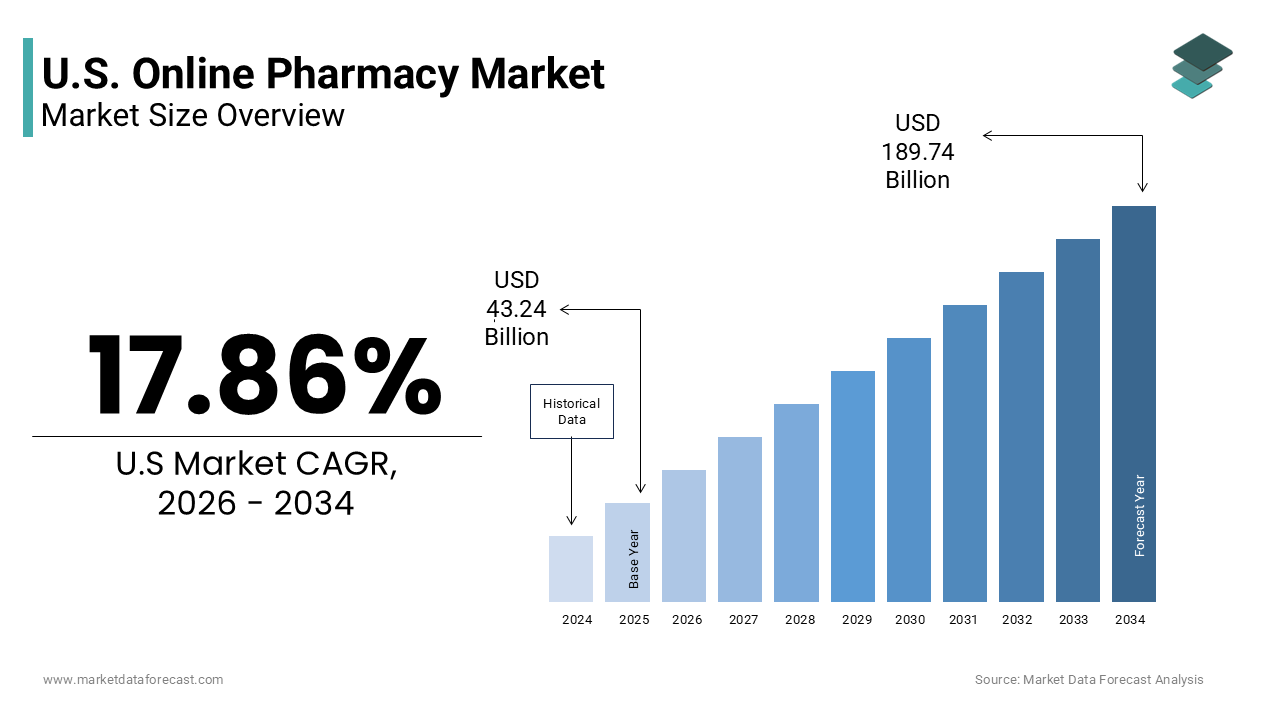
The U.S. online pharmacy market has evolved from simple mail order services for chronic conditions to comprehensive digital health ecosystems offering acute care prescriptions and wellness products. According to the Centers for Disease Control and Prevention, approximately 48.6% of adults in the U.S. used at least one prescription medication in the past 30 days, creating a substantial baseline demand for accessible fulfillment channels. The aging population further amplifies this need with individuals over 65 years often managing multiple chronic conditions requiring regular refills. According to the U.S. Census Bureau, the population aged 65 and older is projected to reach 95 million by 2060, doubling the current figures. This demographic shift necessitates convenient healthcare solutions that reduce the burden of physical visits to brick and mortar pharmacies. Regulatory frameworks such as the Ryan Haight Online Pharmacy Consumer Protection Act govern the legitimacy of these operations ensuring patient safety. The integration of insurance benefits and transparent pricing models has enhanced consumer trust. The market serves as a critical component of the broader healthcare infrastructure improving adherence through automated reminders and simplified refill processes. Technological advancements in secure data transmission and identity verification support the seamless operation of these digital platforms.
MARKET DRIVERS
Increasing Prevalence of Chronic Diseases and Aging Population
The growing prevalence of chronic diseases and aging population is majorly driving the growth of the U.S. online pharmacy market. Chronic conditions such as diabetes, hypertension, and cardiovascular diseases require long term medication management which aligns perfectly with the subscription based models of digital pharmacies. According to the National Center for Chronic Disease Prevention and Health Promotion, six in ten adults in the U.S. have a chronic disease and four in ten have two or more. This high burden of illness creates a consistent and predictable demand for prescription refills. As per the Administration for Community Living, the number of Americans aged 65 and older is growing rapidly with this demographic consuming a disproportionate share of prescription drugs. Older adults often face mobility challenges and transportation issues making home delivery an essential service rather than a convenience. Online pharmacies offer automated refill systems that prevent missed doses and improve health outcomes. The ability to manage multiple medications through a single digital interface simplifies complex regimens for patients and caregivers. Healthcare providers increasingly recommend digital fulfillment options to enhance adherence rates. The cost effectiveness of online platforms also appeals to seniors on fixed incomes who seek affordable medication options. Consequently, the demographic and epidemiological trends drive robust growth in the online pharmacy sector. This structural demand ensures sustained market expansion regardless of economic fluctuations.
Expansion of Telehealth Services and Digital Health Integration
The expansion of telehealth services and digital health integration is further fuelling the U.S. online pharmacy market growth. The normalization of virtual consultations has removed the barrier between diagnosis and prescription fulfillment. According to the American Medical Association, over 80% of physicians now offer telehealth services, enabling patients to receive diagnoses and prescriptions remotely. As per the Federal Communications Commission, the adoption of broadband internet and smartphone technology has facilitated widespread access to digital health platforms. Online pharmacies integrate directly with telehealth providers, allowing for instantaneous electronic prescription transmission and immediate order processing. This integration reduces the time lag between consultation and medication receipt, enhancing patient satisfaction. The convenience of obtaining prescriptions without visiting a physical doctor office or pharmacy appeals to busy professionals and rural residents. Digital health platforms often bundle services such as mental health counseling, sexual health treatments, and dermatology consultations with medication delivery. This holistic approach attracts younger demographics who prioritize convenience and privacy. The regulatory relaxation during the public health emergency permanently altered prescribing practices for controlled substances in certain contexts. The synergy between virtual care and digital fulfillment creates a sticky ecosystem for users. Thus, the proliferation of telehealth acts as a powerful driver for online pharmacy adoption.
MARKET RESTRAINTS
Regulatory Complexities and State Licensing Requirements
Regulatory complexities and state licensing requirements are primarily hampering the online pharmacy market expansion in the U.S. Pharmacies must comply with a fragmented landscape of federal and state laws governing the dispensing of prescription drugs. According to the National Association of Boards of Pharmacy, each state has distinct licensing requirements for pharmacies operating within its borders. As per the Drug Enforcement Administration, online pharmacies must adhere to strict regulations regarding the prescribing and dispensing of controlled substances, including the Ryan Haight Act. Obtaining and maintaining licenses in all 50 states involves substantial administrative burdens and legal costs. Variations in state laws regarding telemedicine prescribing and pharmacy practice create compliance challenges for national operators. The need to verify patient identity and prescription validity across different jurisdictions increases operational complexity. Non-compliance can result in severe penalties, license revocation, and reputational damage. The dynamic nature of healthcare legislation requires continuous monitoring and adaptation of business practices. Small and mid-sized online pharmacies may lack the resources to navigate this intricate regulatory environment. These barriers limit market entry and expansion for new players. The uncertainty surrounding future regulatory changes adds risk to long term planning. Consequently, regulatory fragmentation acts as a significant brake on market growth. The need for rigorous compliance ensures safety but impedes agility.
Security Concerns and Data Privacy Risks
Security concerns and data privacy risks are further hampering the online pharmacy market expansion in the U.S. Digital platforms handle sensitive personal health information and financial data, making them attractive targets for cyberattacks. According to the Department of Health and Human Services, healthcare data breaches have increased significantly in recent years, exposing millions of patient records. As per the Office for Civil Rights, violations of the Health Insurance Portability and Accountability Act can result in substantial fines and legal liabilities. Consumers are increasingly aware of privacy risks and may hesitate to share medical information online. The fear of identity theft and fraud discourages some individuals from using digital pharmacy services. Ensuring robust cybersecurity measures requires significant investment in encryption, firewalls, and secure servers. Online pharmacies must also verify the authenticity of prescriptions to prevent illicit drug trafficking. The presence of rogue online pharmacies selling counterfeit medications undermines trust in the legitimate sector. Patients struggle to distinguish between verified and illegitimate platforms. High profile security incidents can damage brand reputation and lead to customer churn. The need for transparent privacy policies and secure transactions is paramount. These security challenges create hesitation among potential users. Thus, data privacy concerns remain a persistent restraint on market expansion.
MARKET OPPORTUNITIES
Integration of Artificial Intelligence for Personalized Care
The integration of artificial intelligence for personalized care is a substantial opportunity for the U.S. online pharmacy market. AI driven tools can analyze patient data to predict medication needs, optimize adherence, and identify potential drug interactions. According to the Journal of Medical Internet Research, artificial intelligence applications in healthcare can improve medication adherence by up to 30% through personalized reminders and interventions. As per McKinsey and Company, AI enabled health solutions can reduce administrative costs and enhance patient engagement significantly. Online pharmacies can leverage machine learning algorithms to customize communication strategies based on individual patient behaviors and preferences. Predictive analytics can anticipate refill needs and proactively prompt users to reorder medications, preventing gaps in therapy. Chatbots and virtual assistants provide instant support for medication queries and side effect management, enhancing user experience. The ability to offer tailored health insights and wellness recommendations adds value beyond simple transaction fulfillment. AI can also assist pharmacists in reviewing prescriptions for safety and efficacy, reducing errors. The integration of wearable device data allows for real time monitoring of health metrics. This holistic approach transforms online pharmacies into comprehensive health management partners. The use of advanced technology differentiates providers in a competitive landscape. Consequently, AI integration drives market growth and improves health outcomes.
Expansion into Specialty Pharmaceuticals and Rare Diseases
Expansion into specialty pharmaceuticals and rare diseases offers a promising avenue for growth in the U.S. online pharmacy market. Specialty drugs are high cost, complex medications used to treat chronic and rare conditions such as cancer, multiple sclerosis, and rheumatoid arthritis. According to the IQVIA Institute for Human Data Science, specialty medicines account for more than 50% of total drug spending in the U.S. despite representing a small volume of prescriptions. As per the National Organization for Rare Disorders, there are approximately 7,000 rare diseases affecting millions of Americans who often face challenges accessing specialized treatments. Online pharmacies can provide dedicated support services, including patient education, financial assistance navigation, and cold chain logistics for temperature sensitive medications. The convenience of home delivery is particularly valuable for patients with limited mobility or those living in remote areas. Specialized platforms can connect patients with expert pharmacists who understand the nuances of complex therapies. The high value of these medications ensures significant revenue potential for online operators. Partnerships with pharmaceutical manufacturers and patient advocacy groups can enhance service offerings. The growing pipeline of specialty drugs drives demand for efficient distribution channels. Thus, the focus on specialty care creates a lucrative niche for online pharmacies. This segment offers high margins and strong customer loyalty.
MARKET CHALLENGES
Competition from Traditional Brick and Mortar Chains
The competition from traditional brick and mortar chains is one of the major challenges to the U.S. online pharmacy market expansion. Large retail pharmacy chains such as CVS, Walgreens, and Walmart have integrated digital capabilities into their existing networks, offering same day pickup and delivery services. According to academic industry data, the retail pharmacy industry remains highly consolidated with major players dominating market share. As per the Pew Research Center, many consumers still prefer the immediacy and personal interaction of physical pharmacies for urgent medication needs. Traditional chains benefit from extensive store networks that serve as distribution hubs for last mile delivery. They also offer additional services such as vaccinations, health screenings, and clinical consultations that online only players cannot replicate easily. The trust associated with established brands influences consumer choice, particularly among older demographics. Retail giants can leverage economies of scale to offer competitive pricing and discounts. The integration of pharmacy services with grocery and general merchandise creates cross selling opportunities. Online pharmacies must invest heavily in marketing and logistics to compete with these entrenched competitors. The ability of traditional chains to adapt quickly to digital trends limits the growth potential of pure play online providers. Consequently, the dominance of brick and mortar retailers restricts market share acquisition. The hybrid model of traditional chains poses a significant threat.
Logistics and Supply Chain Disruptions
Logistics and supply chain disruptions are further challenging the growth of the U.S. online pharmacy market. The timely delivery of medications is critical for patient health and any delay can have serious consequences. According to the Council of Supply Chain Management Professionals, supply chain disruptions have increased due to geopolitical tensions, labor shortages, and natural disasters. As per the U.S. Postal Service, delivery delays and service inconsistencies affect the reliability of mail order prescriptions. Temperature sensitive medications require specialized cold chain logistics, which are vulnerable to equipment failures and transit delays. The complexity of managing inventory across multiple warehouses increases the risk of stockouts and errors. Rising fuel and transportation costs impact the profitability of delivery services. Last mile delivery challenges in rural and remote areas limit market reach. The dependence on third party logistics providers introduces variability in service quality. Patients expect fast and reliable delivery similar to other e commerce sectors, creating high pressure on operators. Any failure in the supply chain can lead to customer dissatisfaction and churn. The need for robust contingency plans and diversified logistics partners adds to operational costs. Thus, supply chain vulnerabilities remain a critical challenge for online pharmacies. Ensuring consistent delivery performance is essential for maintaining trust.
REPORT COVERAGE
| REPORT METRIC | DETAILS |
| Market Size Available | 2025 to 2034 |
| Base Year | 2025 |
| Forecast Period | 2026 to 2034 |
| CAGR | 17.86% |
| Segments Covered | By Product and Region. |
| Various Analyses Covered | Global, Regional and Country-Level Analysis, Segment-Level Analysis, Drivers, Restraints, Opportunities, Challenges; PESTLE Analysis; Porter’s Five Forces Analysis, Competitive Landscape, Analyst Overview of Investment Opportunities |
| Countries Covered | California, Washington, Oregon, New York, United States |
| Market Leaders Profiled | CVS Health Corporation, Walgreens Boots Alliance, Inc., Amazon Pharmacy, Walmart Inc., Rite Aid Corporation, Express Scripts Holding Company, OptumRx, Inc., Capsule Pharmacy, GoodRx Holdings, Inc., and NowRx, Inc.. |
SEGMENTAL ANALYSIS
By Product Insights
The prescription medicine segment held the dominant position in the U.S. online pharmacy market by accounting for 74.2% of the U.S. market share in 2025. The dominance is driven by the high cost of these medications and the critical need for consistent access among patients with long term health requirements. High cost savings and insurance integration for chronic care drive the domination of prescription medicine in the U.S. online pharmacy market. Patients managing chronic conditions such as diabetes, hypertension, and high cholesterol require regular refills which can be financially burdensome at traditional retail pharmacies. According to the Kaiser Family Foundation, the average annual spending on prescription drugs per person in the U.S. exceeds 1,200 USD, creating a strong incentive for consumers to seek lower priced alternatives. As per GoodRx, online pharmacies often offer transparent pricing and discount coupons that can reduce out of pocket costs by up to 80% compared to cash prices at brick and mortar stores. The ability to compare prices across multiple platforms empowers consumers to make cost effective decisions. Online pharmacies seamlessly integrate with major insurance providers and Medicare Part D plans, allowing for direct billing and copay processing. This convenience eliminates the need for patients to navigate complex reimbursement processes manually. For individuals on fixed incomes such as seniors, the cumulative savings from using online services are substantial. The subscription models offered by many digital pharmacies further stabilize costs by providing predictable monthly expenses. These financial benefits create high customer retention and loyalty. Consequently, the economic advantage of online prescription fulfillment sustains its market leadership. The focus on affordability ensures continued demand from price sensitive populations.
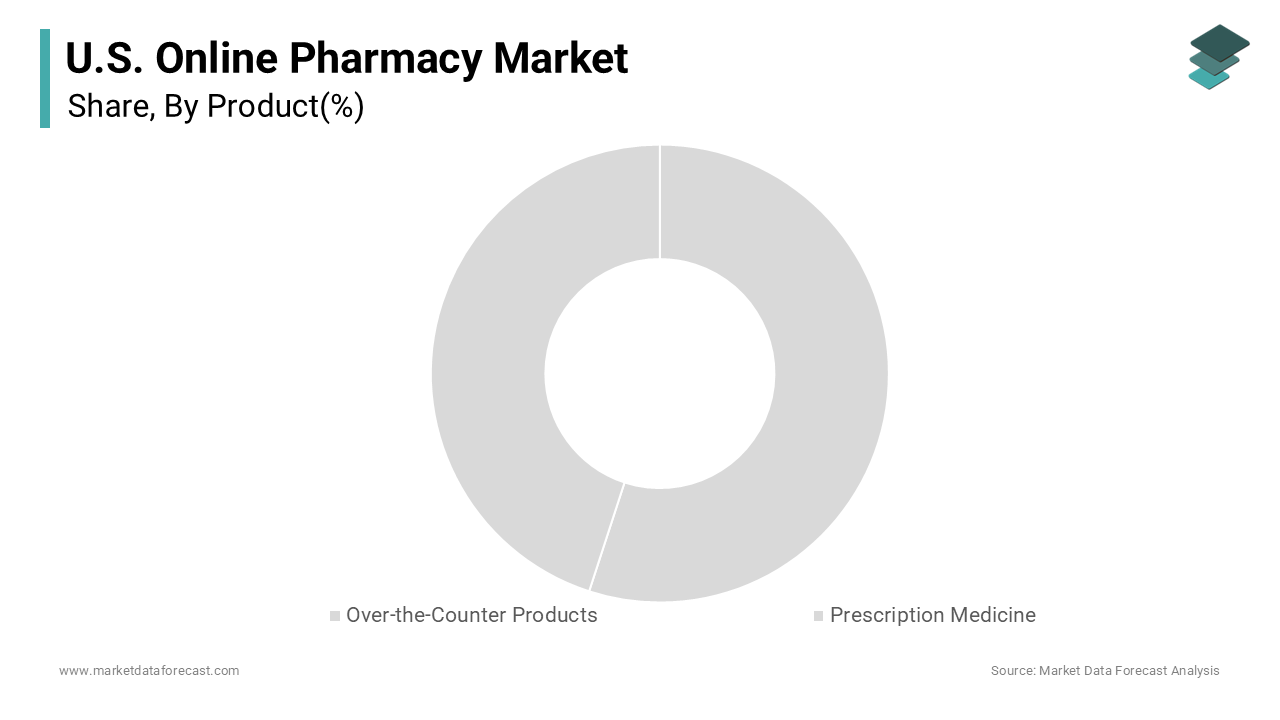
The over-the-counter products segment is estimated to showcase a CAGR of 13.3% during the forecast period in the U.S. market. Rising health consciousness and preventive care trends drive the rapid growth of over the counter products in the U.S. online pharmacy market. Consumers are increasingly prioritizing wellness and prevention, leading to higher demand for vitamins, minerals, and dietary supplements. According to the Council for Responsible Nutrition, over 75% of Americans report taking dietary supplements regularly to support their overall health. As per NielsenIQ, sales of immune support and wellness products have surged as individuals seek to proactively manage their health. Online pharmacies offer a vast selection of over the counter products with detailed descriptions and customer reviews that aid in decision making. The ability to purchase these items alongside prescription medications creates a one stop shop experience that enhances convenience. Subscription services for recurring purchases of vitamins and supplements ensure consistent supply and often provide discounts. The transparency of online platforms allows consumers to compare ingredients and prices easily. Social media and influencer marketing play a significant role in educating consumers about the benefits of various wellness products. The shift towards holistic health approaches drives demand for natural and organic options. Consequently, the focus on prevention and self-care sustains the rapid expansion of this segment. The accessibility of diverse wellness products supports long term growth.
REGIONAL ANALYSIS
The U.S. held the dominating share of the North American online pharmacy market in 2025 and serves as the global leader in digital health innovation and adoption. Over the next few years, the U.S. is likely to strengthen its absolute leadership in digital health infrastructure as market operators consolidate full-service healthcare ecosystems. The presence of major technology and pharmaceutical companies drives continuous development and competition. Dominance driven by advanced healthcare infrastructure and digital adoption defines the U.S. online pharmacy market. The country boasts a sophisticated healthcare system with widespread insurance coverage and a high density of licensed pharmacies. According to the Federal Communications Commission, over 90% of Americans have access to high speed broadband internet, enabling seamless online transactions. As per the Pew Research Center, smartphone ownership is nearly universal, facilitating mobile health applications and online shopping. The integration of electronic health records and e prescribing systems supports the efficient operation of online pharmacies. Consumers are accustomed to digital services and expect convenience in all aspects of life, including healthcare. The regulatory framework, although complex, provides a structured environment for legitimate operators. The high prevalence of chronic diseases creates a large addressable market for prescription deliveries. The cultural emphasis on convenience and time saving drives the shift from physical to digital channels. Venture capital investment in health tech startups fosters innovation and service improvement. The availability of diverse payment options and secure logistics networks enhances user experience. This combination of technological and structural factors ensures US leadership. The continuous evolution of digital health solutions maintains market dynamism. The strategic focus on patient convenience reinforces this dominant position. The U.S. sets global standards for online pharmacy practices and technologies.
COMPETITIVE LANDSCAPE
The competition in the U.S. online pharmacy market is characterized by intense rivalry among traditional retail giants technology disruptors and specialized digital health startups striving to offer superior convenience and cost efficiency. Major players compete based on delivery speed pricing transparency and integration with broader healthcare services. The market features a shift towards omnichannel models where physical and digital capabilities complement each other. Companies differentiate themselves through unique value propositions such as subscription services virtual care integration and personalized health management. Strategic acquisitions of telehealth providers help firms expand their service offerings and capture patient data. Price competitiveness remains a key factor particularly for generic medications and over the counter products. Innovation in user experience and mobile application functionality drives customer acquisition and loyalty. The entry of large technology companies disrupts traditional models with advanced logistics and customer reach. Regulatory compliance and data security serve as critical barriers to entry. This dynamic environment fosters continuous improvement and innovation benefiting consumers with diverse and accessible options. The ability to integrate seamlessly into patient care journeys determines long term success.
KEY MARKET PLAYERS
Some of the promising companies that are playing a dominating role in the U.S. online pharmacy market include
- CVS Health Corporation
- Walgreens Boots Alliance, Inc.
- Amazon Pharmacy
- Walmart Inc.
- Rite Aid Corporation
- Express Scripts Holding Company
- OptumRx, Inc.
- Capsule Pharmacy
- GoodRx Holdings, Inc
Top Players in the US Online Pharmacy Market
Amazon.com Inc
Amazon.com Inc has significantly disrupted the U.S. online pharmacy market through its Amazon Pharmacy service which offers prescription fulfillment and home delivery. The company leverages its vast logistics network to provide fast and reliable medication access to Prime members. Recent actions include the integration of One Medical primary care services to create a seamless healthcare ecosystem. Amazon has expanded its RxPass subscription program allowing users to access multiple generic medications for a flat monthly fee. The firm utilizes artificial intelligence to streamline prescription transfers and enhance user experience. By combining telehealth capabilities with retail efficiency Amazon reduces barriers to medication adherence. These initiatives strengthen its position as a major competitor in the digital health space. The focus on convenience and transparency drives customer acquisition and retention. This strategic expansion solidifies its role in transforming pharmaceutical retail.
CVS Health Corporation
CVS Health Corporation contributes to the market through its robust omnichannel platform that integrates physical stores with digital prescription services. The company offers mail order pharmacy benefits and same day delivery options to enhance accessibility. Recent developments involve the expansion of its virtual care offerings through CVS Caremark and MinuteClinic Virtual. CVS has invested in advanced data analytics to personalize patient engagement and improve medication adherence. The firm focuses on integrating pharmacy services with broader health management solutions including insurance and clinical care. By leveraging its extensive retail footprint CVS facilitates click and collect services for online orders. These efforts enhance customer loyalty and operational efficiency. The emphasis on holistic health support distinguishes its service model. This comprehensive approach reinforces its leadership in the hybrid pharmacy sector.
Walgreens Boots Alliance Inc
Walgreens Boots Alliance Inc plays a vital role in the U.S. online pharmacy market by offering comprehensive digital prescription management and delivery services. The company utilizes its widespread store network to support rapid fulfillment and pickup options. Recent actions include partnerships with healthcare providers to integrate electronic prescriptions directly into its system. Walgreens has enhanced its mobile application to provide personalized health recommendations and medication reminders. The firm focuses on expanding its specialty pharmacy capabilities for complex chronic conditions. By investing in automation and supply chain optimization Walgreens improves delivery speed and accuracy. These strategies enhance patient satisfaction and operational resilience. The integration of wellness products with prescription services creates a unified shopping experience. This focus on digital innovation and accessibility strengthens its competitive position in the evolving market landscape.
Top Strategies Used by Key Market Participants
Key players in the U.S. online pharmacy market primarily employ strategies focused on vertical integration and digital health ecosystem development to maintain competitive advantage. Companies invest heavily in telehealth platforms to connect patients directly with prescribers and pharmacists. Strategic partnerships with insurance providers and healthcare systems enable seamless data exchange and coordinated care. Firms prioritize logistics optimization to ensure rapid and reliable medication delivery across diverse geographic regions. Expansion into specialty pharmacy services addresses high value therapeutic areas with complex needs. Providers also focus on subscription models and transparent pricing to enhance affordability and customer retention. Investment in artificial intelligence improves personalized patient engagement and adherence monitoring. These strategic initiatives enable firms to differentiate their offerings and respond effectively to changing consumer expectations in the dynamic digital healthcare sector
MARKET SEGMENTATION
This research report on the U.S. online pharmacy market has been segmented based on the following categories.
By Product
- Over-the-Counter Products
- Prescription Medicine
By Country
- California
- Washington
- Oregon
- New York
- Rest of the United States