- Product Description Description
- Table of Contents TOC
- List of Table & Figure LOT
- Get Free Sample PDF Sample PDF
Market Size, 2025
$1.45 BnMarket Estimate, 2026
$1.51 BnMarket Forecast, 2034
$2.03 BnCAGR, 2026–2034
3.8%U.S. Onychomycosis Market Summary
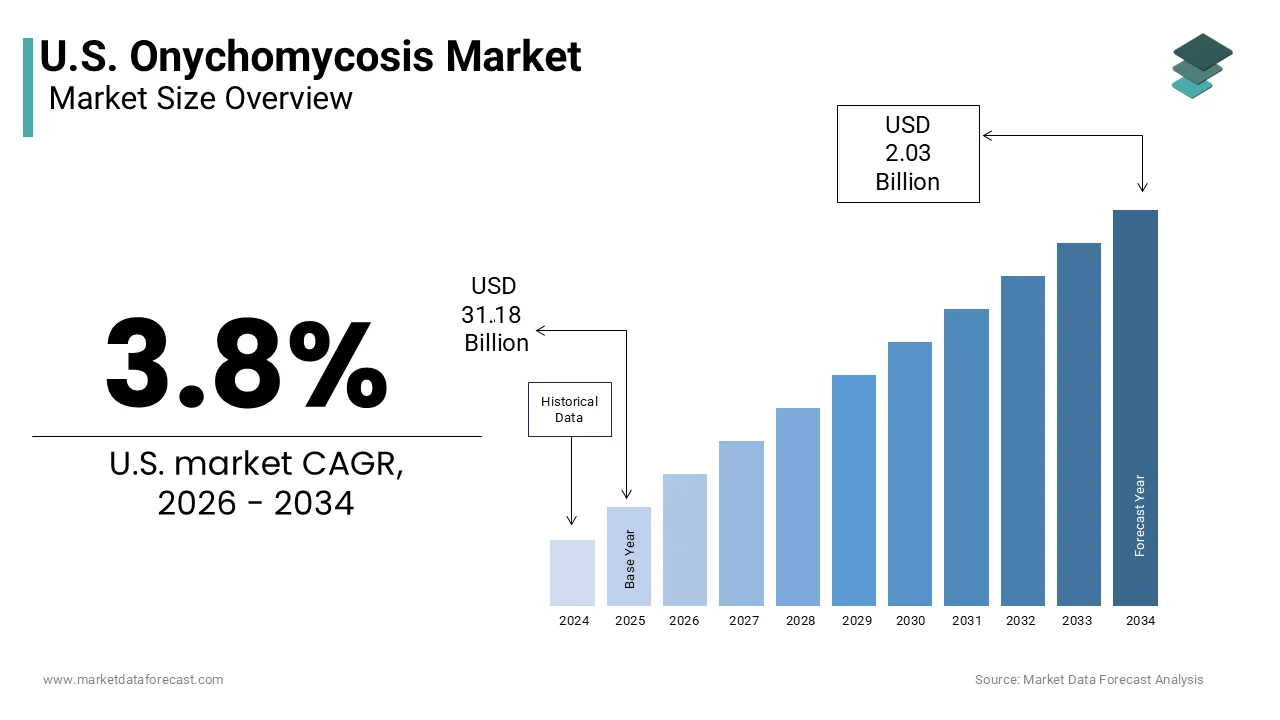
The U.S. onychomycosis market, valued at USD 1.45 billion in 2025, is projected to reach USD 2.03 billion by 2034, expanding at a CAGR of 3.8% driven by population aging, rising aesthetic awareness, and innovation in diagnostics, topical formulations, and device-based therapies.
Market Snapshot
- 2025 Market Size: USD 1.45 billion
- 2026 Estimate: USD 1.51 billion
- 2034 Forecast: USD 2.03 billion
- CAGR (2026–2034): 3.8%
- Base Year: 2025
- Forecast Period: 2026–2034
Quick Growth Drivers
- Rapid growth of the geriatric population with higher fungal susceptibility
- Rising prevalence of diabetes, vascular disease, and immunosuppression
- Increased aesthetic consciousness and social media–driven treatment demand
- Expansion of podiatry, dermatology, and aesthetic medicine services
- Improved awareness of fungal transmission and recurrence risks
Principal Restraints
- Low diagnostic confirmation rates prior to treatment initiation
- Limited access to point-of-care mycology testing in primary care
- Prolonged treatment timelines reducing patient adherence
- High recurrence rates undermining long-term treatment confidence
High-Value Opportunities
- Integration of rapid point-of-care PCR and molecular diagnostics
- Growth of topical antifungals with enhanced transungual penetration
- Expansion of laser and light-based device therapies as cash-pay options
- Tele-dermatology and podiatry platforms enabling early-stage intervention
Key Market Challenges
- Absence of standardized regulatory endpoints for clinical trials
- Heterogeneous outcome measures across pharmacologic and device therapies
- Persistent perception of onychomycosis as a cosmetic rather than medical condition
- Delayed treatment initiation leading to advanced disease and lower cure rates
Fastest-Growing Segments
- Proximal Subungual Onychomycosis (PSO): 12.8% CAGR — linked to immunosuppression screening
- Topical Antifungal Therapies: 14.3% CAGR — safety-driven patient preference
- Laser & Light-Based Therapies: emerging premium, cash-pay segment
Regional Leadership & Dynamics
- California & Florida — high aesthetic treatment uptake and aging population
- Texas & Southeast — large diabetic population increasing disease burden
- Northeast — strong dermatology and podiatry density
- Urban Markets — early adoption of laser and diagnostic technologies
What Wins Commercially
- Fast diagnostic confirmation integrated into clinical workflows
- Safer, non-systemic therapies with strong cosmetic outcomes
- Shorter treatment cycles improving adherence and satisfaction
- Hybrid models combining pharma, diagnostics, and device therapy
- Alignment with telehealth and aesthetic care delivery platforms
Top Strategic Ask for Executives
Invest in rapid diagnostics, next-generation topical delivery systems, and device-based therapies while reframing onychomycosis as a medically relevant, treatable condition to unlock earlier intervention and sustained market expansion.
Leading Players
Some of the companies that are playing a dominating role in the U.S. onychomycosis market include:
- Bausch Health Companies Inc.
- Pfizer Inc.
- Novartis AG
- Johnson & Johnson Services, Inc.
- Galderma S.A.
- Bayer AG
- Dr. Reddy’s Laboratories Ltd.
- Cipla Ltd.
- Moberg Pharma AB
- Valeant Pharmaceuticals Inc.
U.S. Onychomycosis Market Size
The U.S. onychomycosis market was valued at USD 1.45 billion in 2025, is estimated to reach USD 1.51 billion in 2026, and is projected to reach USD 2.03 billion by 2034, growing at a CAGR of 3.8% from 2026 to 2034.
Onychomycosis is the medical name for a fungal nail infection. This medical condition, characterized by discoloration, thickening, and crumbling of the nail plate, represents a significant clinical burden due to its chronic nature and high recurrence rates. As per the American Academy of Dermatology, onychomycosis accounts for approximately 50 percent of all nail disorders and affects an estimated 14 percent of the US population. The prevalence increases significantly with age, affecting nearly 20 percent of individuals over 60 years old and 50 percent of those over 70. According to the Centers for Disease Control and Prevention, fungal infections are among the most common skin conditions in the United States, driven by factors such as diabetes, obesity, and immunosuppression. The disease is not merely cosmetic but can lead to pain, secondary bacterial infections, and reduced quality of life. The National Institutes of Health states that patients with onychomycosis often experience psychological distress and social embarrassment, prompting them to seek medical intervention. The therapeutic landscape includes oral antifungal agents, as well as topical agents, laser therapy,s and emerging device-based treatments. The rising incidence of comorbidities such as peripheral arterial disease and diabetes mellitus further exacerbates the demand for effective treatments. Healthcare providers emphasize early diagnosis and sustained therapy to prevent complications. The market is defined by a shift towards safer topical formulations with improved nail penetration capabilities. This evolution reflects the growing patient preference for treatments with fewer systemic side effects. The integration of telemedicine has also facilitated easier access to dermatological consultations, enhancing diagnosis rates and treatment initiation across various demographic groups.
MARKET DRIVERS
Rising Prevalence Of Diabetes And Immunocompromised States
The escalating prevalence of diabetes and immunocompromised conditions in the country fuels the expansion of the United States onychomycosis market. Individuals with diabetes are at a significantly higher risk of developing fungal nail infections due to poor circulation and neuropathy which compromise the immune response in the extremities. As per the Centers for Disease Control and Prevention, approximately 40.1 million Americans have diabetes, representing about 12% of the population. Among these individuals, the prevalence of onychomycosis is estimated to be higher than in the general population. The American Diabetes Association notes that diabetic foot infections and ulcers are a leading cause of hospitalization among diabetic patients. This strong correlation creates a substantial and growing patient pool requiring specialized antifungal therapies. Furthermore, the increasing number of organ transplant recipients and patients undergoing chemotherapy contributes to the rise in immunosuppressed individuals susceptible to opportunistic fungal infections. According to the National Cancer Institute, over 2 million new cancer cases are diagnosed annually, many of whom receive treatments that weaken the immune system. These patients require vigilant monitoring and proactive treatment of onychomycosis to prevent secondary bacterial infections and severe complications such as cellulitis. The aging population further amplifies this trend, as immune function naturally declines with age. Healthcare providers are increasingly prioritizing the management of onychomycosis in these high-risk groups to improve overall health outcomes and reduce healthcare costs associated with severe foot complications. This demographic shift ensures sustained demand for effective and safe antifungal treatments.
Growing Awareness Of Aesthetic And Psychological Impact
Increasing awareness of the aesthetic and psychological impact of onychomycosis is driving patients to seek treatment more actively, which further contributes to the growth of the United States onychomycosis market. Historically viewed as a minor cosmetic issue, the condition is now recognized for its significant effect on quality of life and self-esteem. As per a study published in the Journal of the American Academy of Dermatology, patients with onychomycosis report higher levels of anxiety, depression,n and social avoidance compared to those without the condition. The visibility of infected nails often leads to embarrassment, causing individuals to avoid activities such as swimming or wearing open-toe shoes. This psychological burden motivates patients to pursue therapeutic options despite the prolonged treatment duration. The influence of social media and beauty standards has further heightened the desire for healthy-looking nails, particularly among younger demographics. According to the American Podiatric Medical Association, there has been a notable increase in patients seeking podiatric care for nail aesthetics rather than just pain relief. The availability of over-the-counter topical treatments and cosmetic nail solutions has lowered the barrier to entry for initial management. Pharmaceutical companies are leveraging this trend by marketing products that emphasize both clinical efficacy and cosmetic improvement. The destigmatization of fungal infections through public health campaigns encourages earlier diagnosis and treatment initiation. Patients are more willing to invest in premium therapies that offer faster results and better cosmetic outcomes. This shift in consumer behavior transforms onychomycosis from a neglected condition to a priority aesthetic health concern, fueling market growth through increased voluntary treatment seeking.
MARKET RESTRAINTS
High Recurrence Rates and Treatment Failure
High recurrence rates and frequent treatment failures obstruct the expansion of the United States onychomycosis market. This discourages patient adherence and confidence in therapeutic options. Onychomycosis is difficult to cure completely, with overall recurrence rates estimated between 10% to 53% over long-term follow-up, though strictly 1-year recurrence rates are typically lower (approx. 20%). As per data published in the British Journal of Dermatology, the slow growth rate of nails means that treatment courses can last from six to twelve months, leading to high dropout rates. Patients often discontinue therapy prematurely when they do not see immediate visible improvements, resulting in incomplete eradication of the fungus. The complexity of nail structure limits the penetration of topical agents, reducing their efficacy compared to oral medications. According to the American Family Physician journal, oral antifungals, while more effective,e carry risks of hepatotoxicity and drug interactions, which deter some patients and physicians from prescribing them. The lack of a universally effective single modality forces patients to try multiple treatments, leading to frustration and financial burden. Reinfection from environmental sources such as public showers and footwear further complicates long-term management. The American Podiatric Medical Association emphasizes that without strict hygiene practices, reinfection is common even after successful therapy. This cycle of treatment failure and recurrence undermines the perceived value of available therapies. Healthcare providers struggle to maintain patient engagement over the extended treatment periods required. The uncertainty of outcomes makes patients hesitant to invest in expensive newer therapies. This clinical challenge restricts market growth by limiting the number of patients who achieve and sustain a cure, thereby reducing the potential for repeat purchases and positive word-of-mouth referrals.
Limited Insurance Coverage For Cosmetic Treatments
Limited insurance coverage for onychomycosis treatments is also a major financial barrier hindering the growth of the United States onychomycosis market. This restricts access to advanced therapies for a large segment of the population. Many insurance providers classify onychomycosis treatments as cosmetic rather than medically necessary, particularly if the infection is not causing pain or secondary complications. The financial burden discourages patients from initiating or completing treatment courses. Over-the-counter remedies are often excluded from reimbursement, forcing patients to pay fully out of pocket. According to the National Psoriasis Foundation, similar restrictions on dermatological conditions lead to delayed care and worsening symptoms. The prior authorization process for oral antifungals is often cumbersome, requiring extensive documentation of medical necessity, which delays treatment initiation. Some insurers only cover treatment if there is evidence of bacterial superinfection or significant pain, excluding mild to moderate cases. This restrictive policy environment limits the addressable market for premium branded therapies. Patients may opt for less effective but cheaper alternatives or forego treatment entirely. The lack of standardized coverage criteria across different insurance plans creates confusion and administrative burdens for providers. Pharmaceutical manufacturers face challenges in demonstrating medical necessity to payers, limiting formulary inclusion. This reimbursement landscape stifles the adoption of innovative but costly treatments. The financial disincentive reduces patient compliance and overall market potential, as many individuals are unable to afford the full course of effective therapy.
MARKET OPPORTUNITIES
Development Of Novel Topical Formulations with Enhanced Penetration
The development of novel topical formulations with enhanced nail penetration capabilities opens new pathways for the expansion of the United States onychomycosis market. Traditional topical agents struggle to penetrate the dense keratin structure of the nail plate, limiting their efficacy. Newer technologies, such as lacquer solutions and transdermal delivery systems,s are designed to overcome this barrier. As per research published in the Journal of Controlled Release, the use of permeation enhancers and nanoparticle carriers can significantly improve the bioavailability of antifungal agents in the nail bed. These innovations offer a safer alternative to oral medications, avoiding systemic side effects such as liver toxicity. The approval of new topical agents by the United States Food and Drug Administration has expanded the treatment arsenal, providing clinicians with more effective non-systemic options. Also, the ability to combine antifungal agents with keratolytic substances further enhances treatment outcomes by thinning the nail plate and facilitating drug absorption. Pharmaceutical companies are investing heavily in research and development to create once-daily or weekly application regimens that improve adherence. The introduction of breathable nail polishes that allow for cosmetic enhancement during treatment addresses patients' aesthetic concerns. This dual benefit of clinical efficacy and cosmetic appeal drives adoption. The expanding pipeline of topical therapies offers a lucrative opportunity for manufacturers to capture market share from oral medications. The focus on patient-centric design ensures that these new formulations meet the evolving needs of consumers seeking convenient and safe treatment options.
Integration Of Laser and Device-Based Therapies
The integration of laser and device-based therapies into standard clinical practice offers new potential for diversification in the United States onychomycosis market. Laser treatments utilize specific wavelengths of light to generate heat that destroys fungal cells without damaging surrounding tissue. As per the American Society for Laser Medicine and Surgery, laser therapy is gaining popularity as a non-invasive alternative for patients who cannot tolerate oral medications or have failed topical treatments. The procedure is typically performed in office settings, providing a steady revenue stream for podiatrists and dermatologists. In addition, the technology continues to evolve with the introduction of newer devices that offer shorter treatment times and improved efficacy. The absence of systemic toxicity makes laser therapy an attractive option for elderly patients and those with comorbidities. Insurance coverage for laser treatment is gradually improving as more clinical evidence supports its effectiveness. The ability to combine laser therapy with topical agents creates synergistic effects that enhance overall cure rates. Clinics are marketing these advanced technologies to attract patients seeking cutting-edge solutions. The growing acceptance of device-based treatments among healthcare providers expands the market beyond pharmaceuticals. This modality appeals to patients looking for quick and convenient procedures. The continuous innovation in laser technology and regulatory approvals for new devices ensure sustained growth in this segment. The diversification of treatment options strengthens the overall market resilience.
MARKET CHALLENGES
Diagnostic Inaccuracies and Lack of Confirmation
Diagnostic inaccuracies and the lack of routine laboratory confirmation are significant hurdles for the United States onychomycosis market. This is a grave challenge to the effective management of onychomycosis. Clinical diagnosis based solely on visual inspection is often unreliable, as other conditions such as psoriasis,s trau, ma, and lichen planus can mimic fungal infections. As per the American Academy of Dermatology, up to 50 percent of nails suspected of having onychomycosis do not test positive for fungi when subjected to laboratory analysis. This high rate of misdiagnosis leads to inappropriate treatment prescriptions, wasting resources,ces and exposing patients to unnecessary medication risks. The underutilization of diagnostic tests such as potassium hydroxide preparation,tion fungal culture,lture and polymerase chain reaction is a major barrier to accurate diagnosis. According to the Journal of the American Board of Family Medicine, many primary care providers do not order confirmatory tests due to timeconstraints,s cost concerns, or lack of awareness. This practice results in high treatment failure rates and contributes to the perception of inefficacy among patients and physicians. The delay in obtaining culture results, which can take several weeks, further hinders the timely initiation of appropriate therapy. The lack of standardized diagnostic protocols across different healthcare settings creates variability in care quality. Misdiagnosis also contributes to the overuse of antifungal medications, potentially leading to resistance. Improving diagnostic accuracy requires greater education and accessibility of rapid testing methods. The challenge of ensuring correct diagnosis before treatment initiation remains a critical hurdle. Addressing this issue is essential for optimizing treatment outcomes and reducing healthcare costs associated with ineffective therapies.
Patient Non-Adherence to Long Treatment Regimens
Patient non-adherence to long and complex treatment regimens is a persistent impediment in the United States onychomycosis market. The slow growth of nails necessitates treatment durations of several months, which tests patient patience and commitment. The daily application requirement for many topical agents is burdensome and easily forgotten in busy lifestyles. Oral medications require regular blood monitoring for liver function, adding another layer of complexity and inconvenience. According to the American Podiatric Medical Association, lack of visible improvement in the early stages of treatment is a primary reason for discontinuation. Patients often expect rapid results and become discouraged when the infected nail does not clear immediately. The cost of long-term therapy also contributes to non-adherence, particularly for uninsured individuals. The psychological impact of the condition may diminish as patients adapt to the appearance, reducing their motivation to continue treatment. Healthcare providers struggle to maintain patient engagement over the extended treatment period. The lack of effective reminder systems and support programs exacerbates the problem. Non-adherence leads to treatment failure, recurrence,e and increased healthcare utilization. Addressing this behavioral challenge requires the development of simpler dosing regimes, ns patient education initiatives, and supportive care models. Improving adherence is critical for achieving high cure rates and maximizing the value of therapeutic interventions.
REPORT COVERAGE
| REPORT METRIC | DETAILS |
| Market Size Available | 2025 to 2034 |
| Base Year | 2025 |
| Forecast Period | 2026 to 2034 |
| Segments Covered | By Type, Treatment Type, and Region. |
| Various Analyses Covered | Global, Regional, and Country-Level Analysis, Segment-Level Analysis, Drivers, Restraints, Opportunities, Challenges; PESTLE Analysis; Porter’s Five Forces Analysis, Competitive Landscape, Analyst Overview of Investment Opportunities |
| Countries Covered | New York, Massachusetts, Pennsylvania, Illinois, Ohio, Michigan, Texas, Florida, Georgia, California, Washington, Colorado. |
| Market Leaders Profiled | Bausch Health Companies Inc., Pfizer Inc., Novartis AG, Johnson & Johnson Services, Inc., Galderma S.A., Bayer AG, Dr. Reddy’s Laboratories Ltd., Cipla Ltd., Moberg Pharma AB, Valeant Pharmaceuticals Inc. |
SEGMENTAL ANALYSIS
By Type Insights
The distal subungual onychomycosis segment dominated the United States onychomycosis market and accounted for an 54.6% share in 2025. Its status as the most prevalent clinical form of fungal nail infection drives the dominance of this segment. This type is characterized by fungal invasion of the nail bed and underside of the nail plate, typically starting at the distal edge and progressing proximally. The main reason this segment is on top is its strong association with dermatophytes, particularly Trichophyton rubrum, which are the most common causative agents of nail fungus. The pathophysiology involves the fungus entering through the hyponychium and spreading along the nail bed, a process facilitated by minor trauma and poor circulation, on often seen in older adults. Also, the demographic trend ensures a large and growing patient base for this specific type. The chronic nature of the infection allows it to persist for years if untreated, maintaining high case numbers. The visibility of the infection at the distal edge prompts patients to seek care earlier than with other types, driving diagnosis rates. Clinical guidelines prioritize this type in treatment algorithms due to its frequency. The widespread recognition of this pattern among healthcare providers ensures consistent identification and reporting. The biological affinity of common fungi for the distal nail unit cements its position as the primary segment in the market.
Furthermore, the susceptibility of toenails to environmental exposure and mechanical stress significantly contributes to the predominance of distal subungual onychomycosis. The warm, moist conditions inside footwear create an ideal habitat for fungal proliferation, particularly at the distal end, where micro trauma from walking occurs. This mechanism is especially common in athletes and individuals who wear tight-fitting shoes. The reduced blood supply to the distal extremities in elderly patients further impairs immune response, facilitating infection establishment. The slow growth of toenails means that once infected, the condition persists for long periods, increasing the pool of active cases. Public facilities such as gyms and swimming pools serve as reservoirs for dermatophytes, exposing feet to infectious spores. The combination of environmental exposure, mechanical stress, and physiological factors makes the distal toenail the most vulnerable site. This vulnerability ensures that distal subungual onychomycosis remains the most diagnosed and treated form of the disease.
On the other hand, the white superficial onychomycosis segment is likely to experience the fastest CAGR of 6.8% from 2026 to 2034, owing to increased recognition and specific risk factors associated with this surface-level infection. The sharp rise in diagnosed white superficial onychomycosis is also driven by more precise testing and greater clinical awareness of this unique fungal variant. Historically underdiagnosed or misclassified, this type is now recognized as a separate entity requiring specific management approaches. The use of dermoscopy and potassium hydroxide microscopy in routine practice has enhanced detection rates. In addition, the non-invasive nature of the infection, which affects only the dorsal nailplate,e makes it easier to diagnose visually compared to deeper forms. Patients are also more likely to notice white patches on the nail surface, prompting earlier consultation. The availability of rapid point-of-care tests facilitates immediate confirmation. This heightened clinical vigilance ensures that cases previously overlooked are now captured in market statistics. The shift towards precise classification drives the adoption of targeted topical treatments. The growing body of literature supporting distinct treatment protocols for white superficial onychomycosis encourages physicians to identify and manage it specifically. This diagnostic refinement expands the recorded market size for this segment.
The rising prevalence of white superficial onychomycosis in immunocompromised populations is a key driver of its rapid market growth. This type is increasingly observed in patients with human immunodeficiency virus organ transplants and those undergoing immunosuppressive therapy. The weakened immune system allows fungi such as Trichophyton mentagrophytes to colonize the nail surface more easily. These patients require lifelong immunosuppression, maintaining a high risk for fungal colonization. The ease of transmission in healthcare settings and communal living facilities contributes to the spread among vulnerable groups. Also, the need for regular monitoring and early intervention in these patients drives frequent clinical visits and treatment initiation. The distinct clinical presentation allows for straightforward diagnosis and management. The growing size of the immunocompromised population ensures a steady increase in cases. This demographic shift supports the fast growth of the white superficial onychomycosis segment as healthcare systems prioritize preventive and early therapeutic measures.
By Treatment Insights
The oral therapy segment led the United States onychomycosis market and captured a 41.1% share in 2025. Its superior efficacy in treating moderate to severe infections and its established role in clinical guidelines are attributed to the segment’s leading position. This segment includes systemic antifungal agents such as terbinafine and itraconazole. The spearheading of oral therapy is mainly propelled by its proven superiority in achieving mycological cure compared to topical agents, particularly for extensive nail involvement. The ability of systemic drugs to reach the nail bed through the bloodstream ensures consistent drug delivery throughout the nail unit. The shorter treatment duration of three months for terbinafine compared to six to twelve months for many topicals improves patient completion rates. The high success rate reduces the likelihood of recurrence and the need for retreatment. Physicians prefer oral agents for patients with multiple affected nails or significant matrix involvement. The robust clinical evidence supporting oral therapy reinforces its position as the gold standard. Insurance coverage is often more favorable for oral medications due to their established cost-effectiveness. The predictable pharmacokinetics of oral agents allow for standardized dosing regimens. This reliability makes oral therapy the preferred choice for clinicians seeking definitive cures. The strong track record of efficacy ensures that oral medications remain the cornerstone of onychomycosis management.
Established clinical guidelines and strong physician preference for oral therapies further solidify their leading position in the market. The simplicity of prescribing a pill versus applying a topical solution daily appeals to both doctors and patients. Medical education programs emphasize oral agents as the primary intervention for confirmed fungal infections. The availability of generic versions of terbinafine and itraconazole has reduced costs, making them accessible to a broader patient population. The integration of oral therapy into multidisciplinary care plans for diabetic patients reinforces its usage. The established protocol for liver function monitoring provides a safety net that mitigates concerns about hepatotoxicity. This structured approach enhances physician comfort levels. The longstanding presence of oral agents in the market creates a habit of prescription that is difficult for newer topical brands to break. The trust built over years of successful treatment outcomes ensures continued dominance.
On the contrary, the topical therapy segment is on the rise and is expected to be the fastest-growing segment in the market by witnessing a CAGR of 7.5% during the forecast period due to its favorable safety profile and the avoidance of systemic side effects associated with oral antifungals. Topical treatments have minimal systemic absorption, eliminating the need for routine blood monitoring. The lack of contraindications allows topical agents to be used in a wider patient population. The convenience of avoiding laboratory tests reduces the overall burden of care. Patients perceive topical therapies as less invasive and more manageable. The rise in health consciousness drives preference for treatments with fewer risks. Pharmaceutical companies are marketing this safety advantage aggressively. The ability to use topical agents concurrently with other medications without interaction concerns expands their applicability. This safety benefit is a primary driver for patients who have previously experienced side effects from oral drugs. The growing emphasis on patient safety in healthcare delivery supports the shift towards topical solutions. This trend ensures sustained growth as more patients opt for risk-free treatment options.
Innovations in nail penetration technologies are a critical factor propelling the fast growth of the topical therapy segment. Traditional topicals struggled to penetrate the nail plate, but new formulations have overcome this barrier. The approval of efinaconazole and tavaborole, which utilize innovative vehicle technologies, has demonstrated higher cure rates than older topicals. The once-daily application regimen improves adherence compared to previous twice-daily requirements. The aesthetic appeal of clear drying formulas encourages consistent use. Pharmaceutical research continues to focus on nanoparticle carriers and keratolytic combinations to further enhance efficacy. The availability of effective non-systemic options attracts patients who refuse oral medication. Clinicians are increasingly prescribing these advanced topicals for mild to moderate cases. The continuous pipeline of improved formulations keeps the segment dynamic and growing. The ability to offer a safe and effective alternative drives market expansion. These technological breakthroughs validate topical therapy as a viable first-line treatment. This innovation sustains investor interest and commercial momentum.
COUNTRY LEVEL ANALYSIS
United States Onychomycosis Market Analysis
The United States was the top performer in the North American onychomycosis market and held a 75.6% share in 2025. This dominance of the country’s market was fuelled by the high prevalence of the disease, advanced healthcare infrastructure, and robust reimbursement frameworks. The United States maintains its market leadership primarily due to the high prevalence of onychomycosis and the rapidly aging population. The Census Bureau estimates that the number of Americans aged 65 and older will reach 95 million by 2060, making up nearly one-quarter of the total population. Since the prevalence of onychomycosis increases with age, affecting up to 50 percent of those over 70, this demographic shift creates a massive patient pool. The American Academy of Dermatology states that onychomycosis is the most common nail disorder in adults, affecting 14 percent of the general population. Recent health data shows that the number of Americans living with diabetes has risen to 38.4 million people (about 11.6% of the population). Individuals with diabetes face a significantly higher risk of developing fungal nail infections due to compromised immune responses and poor peripheral circulation. According to the American Diabetes Association, foot complications, including fungal infection,s are a major concern for this group. The widespread awareness of foot health among Americans drives higher diagnosis rates. The availability of specialized podiatric and dermatological services ensures that patients have access to care. The cultural emphasis on personal grooming and aesthetics motivates individuals to seek treatment. The high disposable income in the US allows patients to afford out-of-pocket treatments if insurance coverage is limited. The combination of demographic trends and healthcare access creates a fertile environment for market growth. The sheer volume of cases ensures that the US remains the largest and most influential market for onychomycosis therapies globally.
Advanced healthcare infrastructure and favorable reimbursement policies further reinforce the dominant position of the United States in the onychomycosis market. As per the Kaiser Family Foundation, the majority of Americans have health insurance coverage that includes prescription drug benefits, facilitating access to antifungal medications. The presence of a dense network of podiatrists and dermatologists ensures widespread availability of diagnostic and treatment services. According to the American Podiatric Medical Association, there are over 15000 podiatrists practicing in the US, providing specialized care for nail disorders. The integration of telemedicine has expanded access to remote consultations, allowing for easier prescription renewals and follow-ups. According to the Pharmaceutical Research and Manufacturers of America, the US leads in the launch of new dermatological drugs. The existence of patient assistance programs and copay cards reduces financial barriers for expensive branded topicals. The strong intellectual property protection encourages pharmaceutical companies to invest in the US market. The high standard of care emphasizes evidence-based treatments, driving the adoption of approved therapies. The competitive insurance market encourages plans to cover effective treatments to prevent costly complications. This supportive ecosystem of access, affordability,y and innovation cements the United States as the primary market for onychomycosis therapeutics.
COMPETITIVE LANDSCAPE
The competitive landscape of the United States onychomycosis market is characterized by intense rivalry among pharmaceutical companies producing topical and oral antifungal agents. Major players compete on factors such as efficacy, safety profile, ease of application, and cost-effectiveness. The market features a mix of branded products and generic alternatives, with price sensitivity playing a significant role in prescribing decisions. Branded manufacturers differentiate themselves through innovative delivery systems and strong marketing support, while generic producers compete on affordability and accessibility. The entry of new topical therapies with higher cure rates has intensified competition, prompting established players to innovate or adjust pricing strategies. Insurance coverage policies significantly influence market dynamics, as formularies often dictate which treatments are preferred. Patient adherence remains a critical challenge, driving companies to develop user-friendly applications and support programs. Dermatologists and podiatrists serve as key decision makers, requiring companies to maintain strong professional relationships through education and engagement. The presence of over-the-counter remedies adds another layer of competition, particularly for mild cases. Overall, the market remains dynamic with continuous efforts to improve treatment outcomes and patient satisfaction, driving strategic developments among key participants.
KEY MARKET PLAYERS
Some of the companies that are playing a dominating role in the U.S. onychomycosis market include
- Bausch Health Companies Inc.
- Pfizer Inc.
- Novartis AG
- Johnson & Johnson Services, Inc.
- Galderma S.A.
- Bayer AG
- Dr. Reddy’s Laboratories Ltd.
- Cipla Ltd.
- Moberg Pharma AB
- Valeant Pharmaceuticals Inc.
TOP LEADING PLAYERS IN THE MARKET
- Valeant Pharmaceuticals operates as a significant entity in the United States onychomycosis market through its specialized dermatology portfolio. The company markets Jublia, a topical antifungal solution that has become a standard treatment for fungal nail infections. Valeant focuses on expanding access to this therapy by collaborating with insurance providers to improve reimbursement rates. Recent actions include launching patient support programs that assist with copay assistance and adherence monitoring. The company invests heavily in direct-to-consumer advertising to raise awareness about effective treatment options. By leveraging its robust sales force and established relationships with podiatrists and dermatologists, Valeant ensures the broad distribution of its products. These strategic initiatives enhance brand loyalty and drive prescription volume. The commitment to innovation in topical delivery systems further solidifies its position as a key contributor to the management of onychomycosis in the United States healthcare landscape.
- Pfizer Inc contributes to the United States onychomycosis market primarily through its oral antifungal medications such as Diflucan. The company leverages its extensive global manufacturing and distribution network to ensure consistent availability of these essential treatments. Pfizer engages in continuous medical education initiatives to inform healthcare providers about the latest clinical guidelines for managing fungal infections. Recent efforts focus on optimizing supply chain efficiency to prevent shortages and maintain steady product flow. The company also supports research into combination therapies that enhance treatment efficacy and reduce recurrence rates. By maintaining high-quality standards and regulatory compliance, Pfizer builds trust among clinicians and patients. Their strategic partnerships with retail pharmacies facilitate easier access to prescriptions. These actions reinforce Pfizer's role in providing reliable and effective pharmacological solutions for individuals suffering from onychomycosis across the nation.
- Novartis AG plays a vital role in the United States onychomycosis market by offering a range of antifungal treatments, including Lamisil. The company emphasizes scientific innovation and evidence-based medicine to support clinical decision-making. Novartis actively participates in dermatological conferences to share recent findings and best practices for treating nail fungus. Recent strategies include digital health initiatives that provide patients with educational resources and tracking tools for medication adherence. The company collaborates with healthcare professionals to develop personalized treatment plans that address individual patient needs. Novartis also focuses on expanding its footprint in the over-the-counter segment to capture mild cases early. By prioritizing patient-centric solutions and operational excellence, Novartis strengthens its market position. These efforts contribute significantly to improving outcomes and quality of life for patients dealing with persistent fungal nail infections in the United States.
TOP STRATEGIES USED BY KEY MARKET PARTICIPANTS
Key players in the United States onychomycosis market employ product differentiation strategies to distinguish their offerings in a crowded therapeutic landscape. Companies focus on developing novel topical formulations with improved penetration capabilities to enhance efficacy. Strategic marketing campaigns target both healthcare providers and consumers to increase disease awareness and diagnosis rates. Partnerships with insurance companies aim to secure favorable formulary placement and reduce patient out-of-pocket costs. Manufacturers invest in clinical trials to generate robust real-world evidence supporting the safety and effectiveness of their drugs. Expansion into direct-to-consumer channels allows brands to reach patients directly through digital platforms. Educational initiatives for podiatrists and dermatologists help establish clinical guidelines that favor specific treatments. These multifaceted approaches enable companies to capture market share and build long-term brand loyalty among prescribers and patients seeking effective solutions for fungal nail infections.
MARKET SEGMENTATION
This research report on the U.S. Onychomycosis market is segmented and sub-segmented into the following categories.
By Type
- Proximal Subungual Onychomycosis (PSO)
By Treatment Type
- Oral Antifungal Therapy
- Topical Therapies
By Country
- California
- Texas
- Florida
- Rest of the United States