- Product Description Description
- Table of Contents TOC
- List of Table & Figure LOT
- Get Free Sample PDF Sample PDF
Market Size, 2025
$3.77 BnMarket Estimate, 2026
$4.45 BnMarket Forecast, 2034
$16.67 BnCAGR, 2026–2034
17.95%U.S. Plant-Based Meat Market Size, Growth, Trends & Forecast (2026–2034)
The U.S. plant-based meat market size was calculated to be USD 3.77 billion in 2025, reached USD 4.45 billion in 2026, and is anticipated to be worth USD 16.67 billion by 2034, growing at a compound annual growth rate (CAGR) of 17.95% during the forecast period from 2026 to 2034. Driven by surging flexitarian demographics, escalating environmental sustainability concerns, and rapid technological innovations in extrusion and texture fidelity, the market reflects robust multi-sector expansion across retail and food service channels.
Key Executive Metrics (At-a-Glance)
- 2025 Base Valuation: USD 3.77 Billion
- 2026 Current Valuation: USD 4.45 Billion
- 2034 Forecast Valuation: USD 16.67 Billion
- Compound Annual Growth Rate (CAGR): 17.95% (2026–2034)
- Dominant Product Segment: Plant-Based Burgers (Anchored by high consumer familiarity, one-to-one meat substitution, and widespread availability in 55% of U.S. restaurants)
- Dominant Source Segment: Soy Protein (Led the market in 2025 due to low cost, extensive domestic agricultural infrastructure, and high scalability)
Core Market Drivers & Growth Triggers
- Environmental Consciousness: Increasing consumer awareness of livestock farming resource intensity and greenhouse gas emissions.
- Health & Dietary Shifts: Growing focus on cardiovascular wellness, cholesterol reduction, and alternative proteins for flexitarian diets.
Primary Market Restraints & Challenges
- High Production Costs & Price Premium: Capital-intensive processing technologies creating retail prices double or triple those of conventional meat.
- Consumer Perception & Regulatory Friction: Skepticism regarding ultra-processed ingredients alongside ongoing state-level labeling and terminology disputes.
U.S. Plant-Based Meat Market Segmentation Breakdown
| Segment Category | Largest Segment / Leader | Fastest-Growing Segment |
|---|---|---|
| By Product Type | Plant-Based Burgers (Dominated in 2025 via high culinary familiarity and seamless beef substitution) | Plant-Based Seafood (Projected at a 15.5% CAGR driven by ocean sustainability and overfishing concerns) |
| By Source | Soy Protein (Led in 2025 supported by massive domestic soybean production and cost-efficiency) | Pea Protein (Projected at a 13.4% CAGR due to allergen-friendly attributes and clean-label appeal) |
| By Distribution Channel | Supermarkets and Hypermarkets (Held the lead in 2025 offering wide retail visibility and one-stop convenience) | Food Service (Expanding at a 16.1% CAGR propelled by professional chef innovations and QSR partnerships) |
| By Region / State Hubs | United States (Captured 90.4% regional share in 2025 anchored by mature retail infrastructure and flexitarian trends) | Key Urban and Coastal Innovation Centers (Accelerating via specialized food tech hubs and metropolitan demand) |
Major Industry Players Profiled
Key corporations shaping the U.S. plant-based meat market include Beyond Meat Inc., Impossible Foods Inc., Conagra Brands, Inc., Kellanova, Maple Leaf Foods Inc., Quorn Foods, Tofurky, Unilever, Amy's Kitchen Inc., Tyson Foods, Lightlife Foods, Inc., Morningstar Farms, VBites Foods Limited, Hungry Planet, and Eat Just Inc.
 Download Free Sample Report
U.S Plant Based Meat Market Size
The U.S plant based meat market size was calculated to be USD 3.77 billion in 2025 and is anticipated to be worth USD 16.67 billion by 2034, from USD 4.45 billion in 2026, growing at a CAGR of 17.95% during the forecast period.
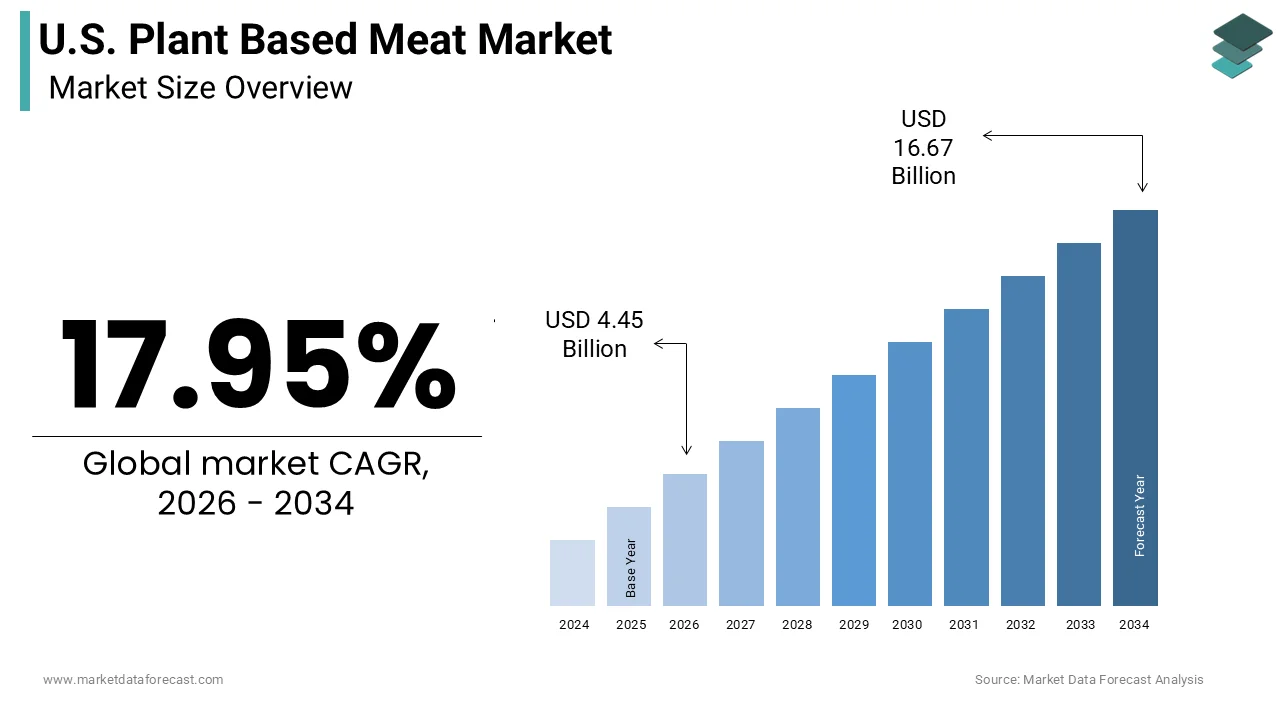
As per the Good Food Institute, retail sales of plant-based foods have demonstrated resilience, with meat alternatives representing a significant portion of this growth despite broader economic headwinds. The landscape is shaped by technological advancements in extrusion and fermentation that enhance product fidelity. According to the U.S. Department of Agriculture, agriculture as a whole accounts for 10% of total U.S. greenhouse gas emissions, prompting regulatory and consumer interest in sustainable protein sources. The market operates within a complex regulatory framework where the Food and Drug Administration oversees labeling standards to ensure clarity regarding ingredient composition. Consumer adoption is increasingly driven by flexitarian demographics who seek to reduce animal product consumption without fully abandoning meat. The integration of these products into mainstream fast food chains and grocery retailers signifies a transition from niche novelty to an established dietary option. This sector continues to evolve as manufacturers address challenges related to price parity and nutritional optimization to meet diverse consumer expectations.
MARKET DRIVERS
The Rising Environmental Consciousness and Sustainability Goals
The escalating concern regarding the environmental impact of animal agriculture is one of the major factors propelling the growth of the U.S. plant-based meat market. Consumers are increasingly aware of the resource-intensive nature of livestock farming, including its significant contribution to water usage, land degradation, and carbon emissions. As per the U.S. Environmental Protection Agency, the agriculture sector was responsible for 10.6% of total U.S. greenhouse gas emissions in 2022, which are potent greenhouse gases. This awareness drives individuals to seek dietary alternatives that align with their ecological values. Plant-based meat production generally requires substantially less water and land compared to conventional beef production, offering a tangible solution for environmentally conscious buyers. According to life cycle assessment studies, producing plant-based burgers can generate up to 90% fewer greenhouse gas emissions than their beef counterparts. This statistical evidence empowers consumers to make informed choices that contribute to climate change mitigation. Corporate sustainability initiatives also play a role, with many restaurants and food service providers incorporating plant-based options to meet their own carbon reduction targets. The alignment of personal dietary choices with broader environmental goals creates a strong motivational driver for adoption. Furthermore, educational campaigns by non-profit organizations and media coverage of climate issues reinforce the narrative that dietary shifts are essential for planetary health. This cultural shift ensures that environmental sustainability remains a core value proposition for plant-based meat brands, attracting a growing segment of eco-aware consumers who prioritize ethical consumption.
Growing Prevalence of Health Consciousness and Dietary Restrictions
The rising prevalence of health consciousness and specific dietary restrictions significantly propels the demand for plant-based meat alternatives in the U.S., which is another major market driver. Consumers are increasingly scrutinizing the health implications of red and processed meat consumption, linking it to chronic conditions such as heart disease, type 2 diabetes, and certain cancers. As per the American Heart Association, a healthy diet can include plant-based proteins to help manage cholesterol levels, which are major risk factors for cardiovascular diseases. Plant-based meats often offer lower levels of saturated fat and zero cholesterol, appealing to individuals seeking to improve their cardiovascular health. Additionally, the increasing diagnosis of lactose intolerance and allergies to animal proteins drives consumers toward plant-derived options. The Centers for Disease Control and Prevention reports that approximately 6% of U.S. adults and children have a food allergy, necessitating safe and nutritious alternatives. Plant-based meats provide a viable solution for those adhering to vegan, vegetarian, or flexitarian diets without compromising on protein intake. The fortification of these products with essential nutrients such as vitamin B12, iron, and fiber further enhances their nutritional profile. According to dietary surveys, a significant portion of the population actively seeks to increase their intake of plant-based foods for weight management and overall wellness. This health-driven motivation is reinforced by medical recommendations and public health guidelines that advocate for reduced meat consumption. The perception of plant-based meat as a healthier alternative encourages trial and repeat purchases among health-oriented demographics, sustaining market growth.
MARKET RESTRAINTS
High Production Costs and Price Premium Compared to Animal Meat
A significant restraint hindering the widespread adoption of the U.S. plant-based meat market is the higher production cost and resulting price premium compared to conventional animal meat. The processing technologies required to create realistic textures and flavors, such as high moisture extrusion and precision fermentation, are capital-intensive and complex. As per industry analyses, the cost of producing plant-based meat remains higher than that of raising livestock, particularly when economies of scale are not fully realized. This disparity results in retail prices for plant-based products that are often double or triple those of equivalent animal-based items. According to the Bureau of Labor Statistics, the Consumer Price Index for all urban consumers increased 3.5% over the last 12 months ending March 2024, leading many to prioritize affordability over ethical or environmental considerations. The lack of price parity creates a barrier for lower and middle-income households who view plant-based meat as a luxury item rather than a staple. Subsidies for the animal agriculture industry further distort the market, keeping conventional meat prices artificially low. This economic disadvantage limits the potential customer base to affluent demographics who can afford the premium. Until manufacturing efficiencies improve and supply chains optimize, the high cost will remain a persistent obstacle. Manufacturers face the challenge of reducing prices without compromising quality, which requires significant investment in research and infrastructure. This financial constraint restricts mass market penetration and slows the transition from niche to mainstream consumption.
Negative Perception Regarding Processing and Ingredient Quality
Consumer skepticism regarding the highly processed nature of plant-based meat products is further hampering the U.S. plant-based meat market expansion. Many shoppers perceive these alternatives as ultra-processed foods laden with artificial additives, preservatives, and high levels of sodium. As per the Clean Label Project, some plant-based meat products contain long ingredient lists with unfamiliar chemical names, raising concerns about their healthfulness. This perception contradicts the marketing narrative of plant-based meat as a natural and wholesome option. According to nutritional studies, certain plant-based meats may have higher sodium content than their animal-based counterparts to enhance flavor and preservation. This discrepancy leads to confusion and distrust among health-conscious consumers who seek clean-label products. The term ultra-processed food has gained negative connotations in public discourse, associating such items with poor health outcomes. Media reports highlighting the industrial processes involved in creating plant-based meats further exacerbate these concerns. Consumers often prefer whole food plant-based options such as beans and lentils over engineered meat analogs. This preference limits the appeal of plant-based meat to those who prioritize minimal processing. Manufacturers struggle to communicate the safety and necessity of certain ingredients used to achieve meat-like qualities. The challenge of reformulating products to meet clean label standards while maintaining taste and texture is significant. Until transparency improves and formulations simplify, negative perceptions will continue to hinder broader acceptance and repeat purchases.
MARKET OPPORTUNITIES
Expansion into Food Service and Quick Service Restaurant Partnerships
A significant opportunity for the U.S. plant-based meat market is in expanding partnerships with food service providers and quick service restaurants. Integrating plant-based options into mainstream menus exposes a broader audience to these products in a familiar and convenient setting. As per the National Restaurant Association, 43% of consumers say they are likely to order a plant-based meat alternative at a restaurant, reflecting shifting dietary preferences. Collaborations with major fast food chains allow manufacturers to leverage existing distribution networks and brand recognition. These partnerships provide valuable trial opportunities for skeptics who may be hesitant to purchase retail products. According to industry observations, limited-time offers and permanent menu additions at QSRs drive significant volume sales and brand visibility. The ability to taste plant-based meat prepared by professional chefs helps overcome perceptions of inferior taste or texture. Furthermore, food service channels offer higher margins and consistent demand compared to volatile retail environments. Manufacturers can work with chefs to create innovative dishes that highlight the versatility of plant-based proteins. This strategy also facilitates data collection on consumer preferences and feedback, informing product development. The integration of plant-based meats into institutional catering, such as schools and hospitals, further expands reach. By establishing a presence in the food service sector, companies can normalize plant-based consumption and build brand loyalty. This channel serves as a critical gateway for mainstream adoption, driving long-term growth and market penetration.
Innovation in Whole Cut and Premium Product Segments
Innovation in whole cut and premium product segments offers a lucrative opportunity for the U.S. plant-based meat market. Current offerings are predominantly focused on ground meats and patties, leaving a gap for realistic alternatives to steaks, chicken breasts, and bacon. As per culinary trends, consumers are seeking more sophisticated dining experiences that replicate the texture and presentation of whole muscle meats. Advances in 3D printing and scaffold-based tissue engineering enable the creation of complex structures that mimic animal muscle fibers. According to technology assessments, these innovations allow for improved mouthfeel and chewing experience, addressing a key limitation of existing products. Premium positioning allows manufacturers to command higher price points, appealing to discerning consumers willing to pay for quality. The development of niche products such as plant-based seafood and exotic meats further diversifies the portfolio. These innovations attract foodies and culinary enthusiasts who view plant-based meat as a gourmet option rather than a substitute. Collaborations with high-end restaurants and celebrity chefs enhance brand prestige and credibility. The introduction of clean-label premium lines with minimal ingredients also addresses health concerns. By focusing on quality and realism, companies can capture a segment of the market that values culinary excellence. This strategic shift from commodity to premium products fosters brand loyalty and drives revenue growth. The continuous evolution of technology ensures that whole-cut alternatives will become increasingly realistic and accessible.
MARKET CHALLENGES
Regulatory Ambiguity and Labeling Disputes
Regulatory ambiguity and ongoing labeling disputes are primary challenges to the growth of the U.S. plant-based meat market. The use of terms such as burger, sausage, and milk on plant-based products has sparked legal battles with traditional agriculture lobbies. As per the Food and Drug Administration, guidelines for labeling alternative proteins are evolving, creating uncertainty for manufacturers. Several states have enacted laws restricting the use of meat terminology on plant-based packaging, forcing companies to navigate a complex legal landscape. According to industry legal analyses, compliance with varying state regulations increases operational costs and complicates national distribution strategies. The lack of federal standardization leads to inconsistent labeling practices that may confuse consumers. Debates over whether plant-based products should be labelled as imitation or alternative further impact consumer perception. Negative framing in labeling requirements can stigmatize plant-based meats as inferior or deceptive. Manufacturers must invest in legal resources to defend their labeling rights and ensure compliance. This regulatory friction slows down product launches and marketing efforts. The outcome of these disputes will shape the future of market access and consumer trust. Clear and consistent federal guidelines are needed to level the playing field and facilitate fair competition. Until then, regulatory uncertainty remains a persistent hurdle that requires strategic management and advocacy.
Supply Chain Volatility for Key Protein Ingredients
Supply chain volatility for key protein ingredients such as peas, soy, and wheat presents another significant challenge to the U.S. plant-based meat market expansion. The reliance on specific crops makes manufacturers vulnerable to agricultural disruptions caused by climate change, pests, and geopolitical tensions. As per the U.S. Department of Agriculture, drought conditions in 2023 affected 40% of the U.S. soybean crop, which can lead to fluctuating yields and prices for essential protein sources. This variability impacts production costs and availability, forcing companies to seek alternative suppliers or adjust formulations. The concentration of sourcing in specific regions increases risk exposure, as seen during recent global supply chain disruptions. According to logistics reports, transportation bottlenecks and labor shortages further exacerbate delivery delays and cost increases. Manufacturers face the challenge of securing consistent, high-quality ingredients while managing price fluctuations. The need for non-genetically modified organisms and organic certifications adds another layer of complexity to sourcing. Limited availability of specialized ingredients such as heme or specific texturizers can constrain production capacity. Building resilient supply chains requires diversification and long-term contracts with farmers, which involve significant investment. The inability to guarantee stable supplies can lead to stockouts and lost sales. Addressing these vulnerabilities is crucial for maintaining market confidence and meeting growing demand. Strategic partnerships with agricultural stakeholders are essential for mitigating risks and ensuring sustainable sourcing.
REPORT COVERAGE
| REPORT METRIC | DETAILS |
| Market Size Available | 2025 to 2034 |
| Base Year | 2025 |
| Forecast Period | 2026 to 2034 |
| CAGR | 17.95% |
| Segments Covered | By Product Type, Source, Distribution Channel, And Region |
| Various Analyses Covered | Global, Regional & Country Level Analysis; Segment-Level Analysis; DROC, PESTLE Analysis; Porter’s Five Forces Analysis; Competitive Landscape; Analyst Overview of Investment Opportunities |
| Regions Covered | New York, Massachusetts, Pennsylvania, Illinois, Ohio, Michigan, Texas, Florida, Georgia, California, Washington, Colorado. |
| Market Leaders Profiled | Beyond Meat Inc., Impossible Foods Inc., Conagra Brands, Inc., Kellanova, Maple Leaf Foods Inc., Quorn Foods, Tofurky, Unilever, Amy's Kitchen Inc., Tyson Foods, Lightlife Foods, Inc., Morningstar Farms, VBites Foods Limited, Hungry Planet, Eat Just Inc. |
SEGMENTAL ANALYSIS
By Product Type Insights
The plant-based burgers segment dominated the market by holding the largest share of the U.S. market in 2025. The dominance of the burger segment in the U.S. market can be credited to the product's ability to closely mimic the sensory experience of traditional beef patties, making it the most accessible entry point for flexitarian consumers. The high level of consumer familiarity with the burger format and its culinary versatility in American dining culture is further contributing to the segmental expansion in the U.S. Burgers are a staple of the American diet, consumed widely in homes, restaurants, and fast food establishments. As per the National Restaurant Association, hamburgers are served at 55% of all restaurant establishments in the U.S., providing a massive existing demand base for alternatives. Plant-based burgers leverage this familiarity by offering a direct one-to-one substitution that requires no change in cooking methods or recipe structures. Consumers can grill, fry, or bake these patties using standard techniques, reducing the learning curve associated with new food products. According to consumer behavior studies, the ease of integration into existing meal routines significantly lowers the barrier to trial for first-time users. The visual and textural similarity to ground beef, achieved through advanced extrusion technologies, satisfies the psychological desire for meat-like experiences without animal ingredients. This seamless substitution appeals to both vegans and meat reducers who seek convenience without compromising on taste. The widespread availability of burger buns, condiments, and side dishes further supports the consumption occasion, making it a socially acceptable and convenient choice for gatherings and casual dining. This culturally entrenched status ensures that burgers remain the flagship product for plant-based meat brands.
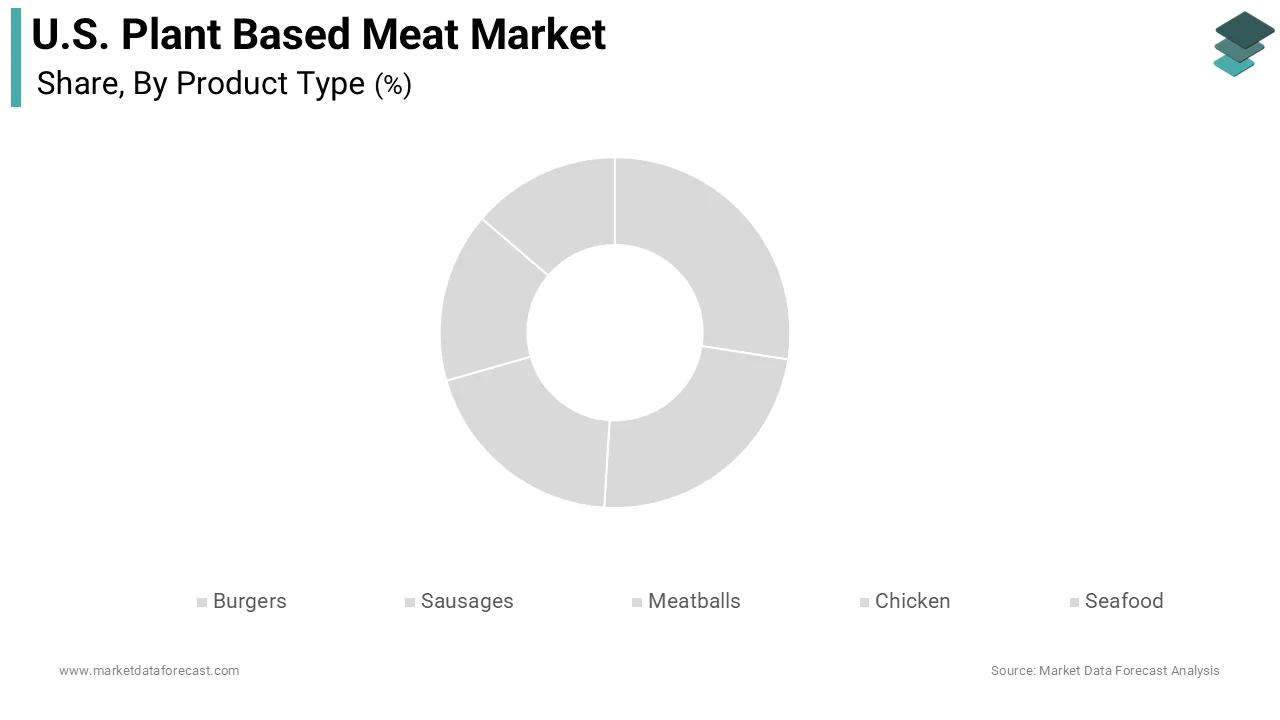
However, the plant-based seafood segment is growing at the fastest pace and is expected to showcase a CAGR of 15.5% during the forecast period in the U.S. market, owing to the escalating consumer concerns regarding ocean sustainability, overfishing, and marine ecosystem degradation. As per the Food and Agriculture Organization of the United Nations, approximately 35.4% of global fish stocks are fished at biologically unsustainable levels, raising alarms about the long term viability of seafood supplies. Consumers are increasingly aware of the environmental impact of commercial fishing, including bycatch and habitat destruction, prompting a search for ethical alternatives. Plant-based seafood offers a solution that eliminates pressure on wild fish populations while providing similar nutritional benefits, such as omega-3 fatty acids, when fortified. According to environmental advocacy groups, the carbon footprint of plant-based seafood is significantly lower than that of conventionally caught or farmed fish, appealing to eco-conscious buyers. The narrative of protecting marine biodiversity resonates strongly with younger demographics who prioritize planetary health in their purchasing decisions. Manufacturers are leveraging this ethical appeal by highlighting the sustainable sourcing of ingredients such as algae and legumes. The absence of mercury and microplastics, common contaminants in conventional seafood, further enhances the safety profile of plant-based options. This combination of environmental stewardship and health safety drives adoption among consumers who wish to enjoy seafood flavors without contributing to ecological harm. The growing availability of plant-based shrimp, tuna, and salmon alternatives in retail stores supports this trend, which is enabling broader access and trial.
By Source Insights
The soy protein segment led the market with the largest share of the U.S. plant based meat market in 2025. The growth of the soy protein segment in the U.S. market is driven by its long history of use, cost-effectiveness, and functional properties that facilitate meat-like textures, and its established supply chain and cost efficiency compared to newer alternative proteins. Soy has been cultivated in the U.S. for decades, creating a robust agricultural infrastructure that ensures consistent availability and competitive pricing. As per the U.S. Department of Agriculture, the U.S. produced over 4.1 billion bushels of soybeans in 2023, providing a reliable domestic source for protein isolates and concentrates. This abundance reduces dependency on imports and mitigates supply chain risks, allowing manufacturers to maintain stable production costs. The economies of scale in soy processing enable lower unit prices, which is crucial for achieving price parity with animal meats. According to industry analyses, soy-based ingredients are significantly cheaper than pea or fungal proteins, making them the preferred choice for mass market products. The well-developed extraction technologies yield high protein content with minimal waste, enhancing operational efficiency. Retailers and food service providers favor soy-based products due to their predictable pricing and availability. This economic advantage allows brands to offer affordable options that appeal to budget-conscious consumers. The maturity of the soy industry also means that regulatory frameworks and safety standards are well defined, reducing compliance burdens. The combination of low cost, reliability, and scalability ensures that soy remains the foundational ingredient for the majority of plant-based meat products in the market.
On the other hand, the pea protein segment is anticipated to record the fastest CAGR of 13.4% during the forecast period in the U.S. market by source type, owing to its allergen-friendly nature and alignment with clean label trends. Unlike soy and wheat, peas are not among the top nine allergens regulated by the Food and Drug Administration, making pea-based products safe for a broader consumer base. As per allergy prevalence data, approximately 1.9 million Americans suffer from a soy allergy, creating a significant demand for hypoallergenic alternatives. Pea protein is perceived as a natural and minimally processed ingredient, resonating with consumers who scrutinize ingredient lists for simplicity and transparency. According to market surveys, the term pea protein is associated with health and purity, enhancing consumer trust and willingness to purchase. The non genetically modified organism status of many pea crops further appeals to environmentally and health-conscious buyers. Manufacturers leverage these attributes to position their products as premium and wholesome options. The absence of common allergens allows brands to market their products to families and individuals with dietary restrictions, expanding the target audience. The clean label perception also supports higher price points, as consumers are willing to pay more for ingredients they perceive as safer and healthier. This strategic positioning differentiates pea-based meats from traditional soy products, driving rapid adoption and loyalty among discerning shoppers. The growing preference for recognizable and simple ingredients ensures that pea protein continues to gain market share.
By Distribution Channel Insights
The supermarkets and hypermarkets segment held the leading position in the U.S. plant based meat market by distribution channel in 2025. The leading position of this segment in the U.S. market is primarily attributed to the widespread accessibility of these outlets and the integration of plant-based options into mainstream grocery aisles, as well asd the mainstream accessibility and one-stop shopping convenience they offer to consumers. Most Americans rely on large grocery chains for their weekly food purchases, making these stores the most logical point of sale for plant-based meats. As per the Food Marketing Institute, 84% of consumers frequently purchase their groceries at a physical supermarket or hypermarket, ensuring high foot traffic and exposure for plant-based products. The placement of these items in the meat aisle alongside conventional animal products facilitates direct comparison and encourages trial among flexitarians. This strategic merchandising normalizes plant-based meats as equivalent alternatives rather than niche specialty items. According to retail analytics, proximity to traditional meat increases impulse purchases and cross-category switching. The ability to buy plant-based meats alongside other grocery essentials saves time and effort, appealing to busy shoppers. Supermarkets often feature prominent displays and promotional pricing that drive volume sales. The extensive shelf space allows for a wide variety of brands and product types, catering to diverse preferences. The trust consumers place in established grocery retailers also extends to the quality and safety of the products sold there. This combination of convenience, visibility, and trust ensures that supermarkets remain the primary channel for plant-based meat distribution, capturing the largest share of consumer spending.
On the other end, the food service segment is estimated to register a promising CAGR of 16.1% during the forecast period in the U.S. market, owing to the culinary innovation and the active adoption of plant based meats by professional chefs. Restaurants and cafes are increasingly incorporating plant-based ingredients into creative dishes that highlight flavor and texture, moving beyond simple burger substitutions. As per the National Restaurant Association, the number of restaurant menus mentioning plant-based items has grown by over 300% since 2019, appealing to adventurous diners. This culinary validation enhances the perceived quality and sophistication of plant-based meats, attracting foodies and skeptics alike. According to hospitality industry reports, menu items featuring plant-based proteins often command premium prices, driving revenue growth for establishments. The ability of chefs to prepare these products professionally ensures optimal taste and presentation, overcoming home cooking challenges. The exposure to high-quality preparations in restaurants encourages consumers to purchase retail products for home use. Collaborations between brands and renowned chefs further boost credibility and visibility. The trend of plant-based fine dining and casual eateries dedicated to vegan cuisine also contributes to channel growth. This cultural shift positions plant-based meat as a desirable culinary choice rather than a dietary restriction. The continuous innovation in menu offerings ensures that the food service channel remains a dynamic and rapidly expanding segment.
REGIONAL ANALYSIS
The U.S. held the dominant position in the North American plant-based meat market in 2025 by accounting for 90.4% of the regional market share. The U.S. is likely to experience sustained leadership and innovation in the plant-based meat sector for the next few years due to its highly mature retail infrastructure and a strong cultural shift toward diverse protein sources. As the most mature and innovative market globally, the country boasts a high level of consumer awareness, extensive retail distribution, and a robust ecosystem of startups and established food companies. The U.S. market is fundamentally driven by a high level of consumer awareness and the widespread adoption of flexitarian dietary trends. A significant portion of the population actively seeks to reduce meat consumption for health, environmental, or ethical reasons, creating a large addressable market. As per the Good Food Institute, household penetration for plant-based meat in the U.S. remained steady at approximately 15% in 2023, reflecting broad mainstream acceptance. The cultural openness to dietary experimentation and the influence of health and wellness movements foster a conducive environment for product adoption. According to demographic data, millennials and Generation Z are leading this shift, prioritizing sustainability and transparency in their food choices. The presence of numerous advocacy groups and media coverage amplifies awareness of the benefits of plant-based diets. The integration of plant-based options into popular culture and celebrity endorsements further normalizes consumption. This high awareness reduces the educational burden on manufacturers and accelerates trial rates. The diversity of the population ensures a wide range of dietary preferences, driving demand for varied product formats and flavors. The strong consumer interest in innovation keeps the market dynamic and responsive to new trends. This cultural and behavioral foundation solidifies the U.S. as the leader in the plant-based meat sector, driving global trends and standards.
COMPETITION OVERVIEW
The competitive landscape of the U.S. plant-based meat market is characterized by intense rivalry between specialized startups and established traditional meat processors. Incumbent players leverage strong brand recognition and extensive distribution networks to maintain dominance, while newcomers differentiate through technological innovation and niche positioning. Competition is driven by the need to improve sensory attributes such as taste and texture to match animal meat closely. Price parity remains a critical battleground as companies strive to make plant-based options affordable for mainstream consumers. Regulatory debates over labeling and terminology add complexity to marketing strategies and brand positioning. The entry of large food conglomerates into the sector increases pressure on independent brands to innovate rapidly and efficiently. Supply chain resilience and ingredient sourcing are key differentiators that impact cost structures and product quality. Consumer education and transparency regarding ingredients and processing methods influence purchasing decisions significantly. Overall, the market favors entities that can balance scientific advancement with operational scale while effectively communicating the environmental and health benefits of plant-based diets to a diverse and skeptical audience.
KEY MARKET PLAYERS
A few major players of the U.S. plant-based meat market include
- Beyond Meat Inc
- Impossible Foods Inc
- Conagra Brands, Inc
- Kellanova
- Maple Leaf Foods Inc
- Quorn Foods
- Tofurky
- Unilever
- Amy's Kitchen Inc
- Tyson Foods
- Lightlife Foods, Inc
- Morningstar Farms
- VBites Foods Limited
- Hungry Planet
- Eat Just Inc
Top Strategies Used by Key Market Participants
Key players in the U.S. plant-based meat market primarily employ product innovation and strategic food service partnerships to sustain growth. Companies are continuously refining formulations to improve taste, texture, and nutritional profiles, addressing consumer concerns about processing and health. This focus on quality helps retain customers and attract new users. Another major strategy involves expanding into quick-service restaurants and casual dining venues to increase visibility and trial among mainstream consumers. Manufacturers invest in marketing campaigns that emphasize sustainability and ethical sourcing to align with consumer values. Price reduction initiatives are critical to achieving parity with animal meats, making products more accessible to budget-conscious buyers. Diversification of product portfolios to include seafood, poultry, and whole cut alternatives captures niche markets. Digital engagement and direct-to-consumer channels enhance brand loyalty and provide valuable data. By balancing innovation with affordability and accessibility, key participants strengthen their market positions and adapt to evolving dietary trends effectively.
Leading Players in the US Market
- Beyond Meat Inc is a pioneering force in the U.S. plant-based meat sector, known for its innovative use of pea protein to replicate animal meat textures. The company has established strong partnerships with major quick-service restaurant chains to increase brand visibility and consumer trial. Recent strategic actions include launching improved product formulations that reduce saturated fat and sodium content to address health concerns. Beyond Meat has also expanded its retail presence by securing placements in mainstream grocery stores and convenience outlets. The firm focuses on cost reduction initiatives to achieve price parity with conventional meat, making its products more accessible. By investing in marketing campaigns that emphasize environmental sustainability and health benefits, Beyond Meat aims to attract flexitarian consumers. These efforts strengthen its position as a leading innovator in the alternative protein landscape while driving broader adoption of plant-based diets across diverse demographic groups in the U.S.
- Impossible Foods Inc contributes significantly to the market through its proprietary heme technology, which delivers a realistic meat-like flavor and appearance. The company focuses on creating high-fidelity alternatives to beef, pork, and chicken that appeal to meat eaters. Recent initiatives involve expanding distribution into food service channels, including major fast food operators and casual dining restaurants. Impossible Foods has also introduced new product lines such as plant-based nuggets and sausages to diversify its portfolio. The organization emphasizes sustainability by highlighting the lower environmental impact of its production processes compared to animal agriculture. By leveraging scientific innovation and culinary partnerships, Impossible Foods builds credibility and trust among consumers. The company actively engages in educational campaigns to demystify plant-based eating and encourage trial. These strategies enhance brand loyalty and drive growth by positioning Impossible Foods as a premium and technologically advanced choice in the competitive plant-based meat industry.
- Tyson Foods Inc leverages its extensive supply chain and manufacturing capabilities to compete in the plant-based meat market through its Raised and Rooted brand. The company utilizes its established distribution network to ensure widespread availability of plant-based products in retail and food service sectors. Recent actions include reformulating existing products to improve taste and texture based on consumer feedback. Tyson Foods has also invested in research and development to explore new protein sources and production technologies. The corporation focuses on integrating plant-based options into its broader protein portfolio to cater to evolving consumer preferences. By offering competitive pricing and consistent quality, Tyson Foods appeals to value-conscious shoppers. The company collaborates with retailers to secure prominent shelf space and promotional opportunities. These efforts strengthen its market position by combining the reach of a traditional meat giant with the innovation required to succeed in the growing plant-based segment, ensuring broad market penetration and sustained relevance.
MARKET SEGMENTATION
This research report on the U.S plant-based meat market has been segmented and sub-segmented based on product type, source, distribution channel & region.
By Product Type
- Burgers
- Sausages
- Meatballs
- Chicken
- Seafood
By Source
- Soy
- Pea Protein
- Wheat Gluten
- Jackfruit
- Mushrooms
By Distribution Channel
- Supermarkets
- Online Retail
- Specialty Stores
- Food Service
- Convenience Stores
By Region
- New York
- Texas
- Florida
- Georgia
- California
- Rest of U.S.