- Product Description Description
- Table of Contents TOC
- List of Table & Figure LOT
- Get Free Sample PDF Sample PDF
Market Size, 2025
$58.51 BnMarket Estimate, 2026
$68.99 BnMarket Forecast, 2034
$222.12 BnCAGR, 2026–2034
17.90%U.S. Ride Sharing Market Report Summary
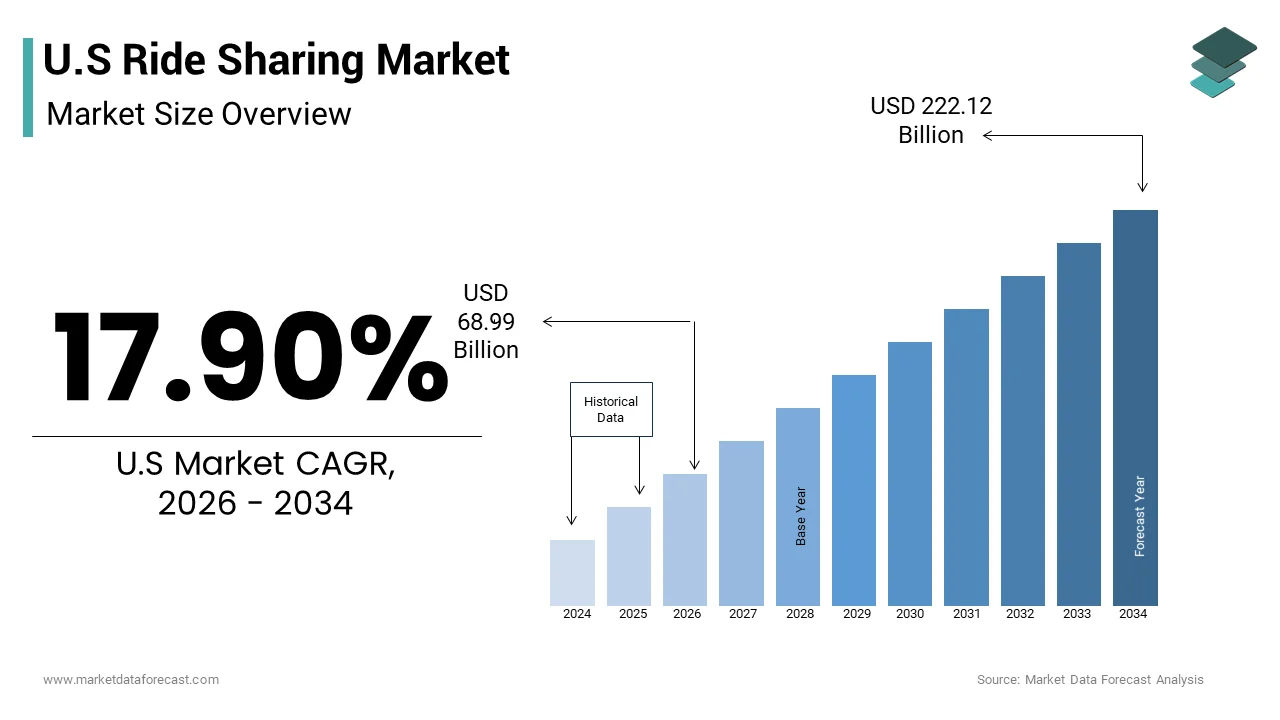
The United States ride sharing market was valued at USD 58.51 billion in 2025 and is anticipated to reach USD 68.99 billion in 2026 and USD 222.12 billion by 2034, growing at a CAGR of 17.90% during the forecast period from 2026 to 2034. The growth of the U.S. ride sharing market is driven by increasing urbanization, rising smartphone penetration, and growing consumer preference for cost-effective and convenient mobility solutions. The expanding adoption of app-based transportation services, coupled with increasing traffic congestion and declining interest in personal vehicle ownership among younger consumers, is further supporting market growth. In addition, advancements in AI-powered ride matching, digital payment integration, and shared mobility platforms are enhancing user experience and operational efficiency across the industry.
Key Market Trends
- Rising demand for e-hailing services due to convenience, affordability, and real-time ride booking capabilities.
- Increasing adoption of corporate ride sharing services by businesses to reduce employee commuting costs and support sustainable transportation initiatives.
- Growing integration of electric vehicles and eco-friendly mobility solutions within ride sharing fleets to reduce carbon emissions.
- Expansion of AI, machine learning, and predictive analytics technologies for route optimization, demand forecasting, and dynamic pricing.
- Strong focus on user safety, contactless payments, and subscription-based transportation models to improve customer retention and satisfaction.
Segmental Insights
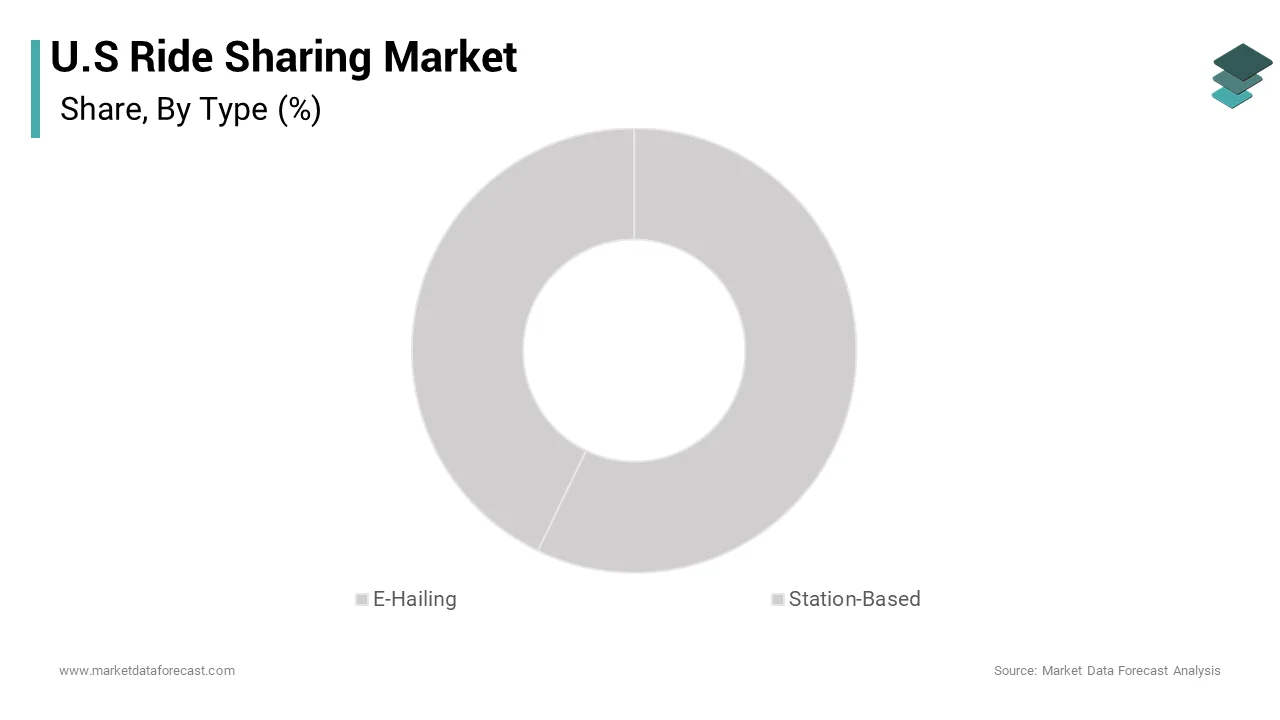
- Based on type, the e-hailing segment dominated the United States ride sharing market and accounted for a 59.9% share in 2025. The dominance of this segment is attributed to the increasing popularity of app-based ride booking services that offer flexibility, real-time tracking, and convenient transportation solutions for urban consumers.
- Based on commute type, the corporate commute segment led the United States ride sharing market and captured a 29.1% share in 2025. The growing adoption of ride sharing services by corporate organizations for employee transportation, business travel, and cost optimization continues to drive demand within this segment.
- Based on application, the Android operating system held the majority share of 60.8% of the United States ride sharing market in 2025. The widespread adoption of Android smartphones, affordability of devices, and high mobile application usage among consumers are supporting segment growth.
Regional Insights
The United States emerged as the leading contributor to the North American ride sharing market and accounted for an 85.4% share in 2025. The market growth is supported by strong digital infrastructure, widespread smartphone usage, and increasing consumer acceptance of shared mobility solutions. Major metropolitan regions such as New York City, San Francisco, and Chicago continue to experience strong demand for ride sharing services due to dense urban populations, increasing traffic congestion, and growing environmental awareness.
Competitive Landscape
The U.S. ride sharing market is highly competitive, with leading companies focusing on platform innovation, electric mobility integration, and strategic partnerships to strengthen their market presence. Major players are investing in autonomous vehicle technologies, AI-powered fleet management systems, and multimodal transportation services to improve operational efficiency and customer engagement. Expansion into food delivery, corporate transportation, and subscription-based mobility services is also creating additional growth opportunities across the industry.
Prominent players in the U.S. ride sharing market include Uber Technologies Inc., DiDi Global Inc., Gett, Via Transportation Inc., Grab, Bolt Technology, Careem, Cabify, Lyft, Inc., Zimride, and car2go Group GmbH.
U.S Ride Sharing Market Size
The U.S ride sharing market size was valued at USD 58.51 billion in 2025 and is anticipated to reach USD 68.99 billion in 2026 to reach USD 222.12 billion by 2034, growing at a CAGR of 17.90% during the forecast period from 2026 to 2034.
Current Market Definition and Scenario
Ride-sharing is an on-demand transportation service where passengers use smartphone applications to connect with private drivers, allowing them to share a ride or get a ride for a fee. This model differs from standard ride hailing by emphasizing carpooling and dynamic route matching to maximize occupancy and efficiency. The sector is integral to urban transportation strategies aimed at mitigating congestion and lowering carbon emissions. As per the United States Census Bureau's 2022 data, 68.7% of commuters drive alone to work, highlighting a significant opportunity for mode shift toward shared alternatives. Furthermore, the Texas A&M Transportation Institute (TTI) states that traffic congestion costs the American economy billions of dollars annually in lost productivity and wasted fuel, creating a strong economic incentive for shared mobility solutions. The proliferation of smartphone technology and advanced geospatial algorithms enables real time matching of riders and drivers, making the experience seamless and convenient. Regulatory frameworks in major metropolitan areas increasingly support high occupancy vehicle lanes and incentives for shared trips. The market is also influenced by changing consumer attitudes toward ownership, with younger demographics prioritizing access over asset accumulation. This evolving landscape reflects a mature market transitioning from niche adoption to mainstream integration within broader public transit networks, driven by environmental awareness and economic efficiency.
MARKET DRIVERS
Rising Urban Congestion and Infrastructure Strain
Rising urban congestion and the resulting strain on existing transportation infrastructure is a key reason for the growth of the United States ride sharing market. This necessitates more efficient use of road capacity. As cities grow denser, the volume of single occupancy vehicles exceeds the design limits of highways and arterial roads, leading to severe traffic delays and increased travel times. As per the Texas A&M Transportation Institute’s 2025 Urban Mobility Report, commuters in major U.S. urban areas lost an average of 63 hours per year due to congestion, costing the nation $269 billion (approximately $1,200+ per commuter) in wasted fuel and time. This inefficiency motivates both commuters and city planners to seek alternatives that reduce the number of vehicles on the road. Ride sharing offers a viable solution by consolidating multiple passengers into a single vehicle, effectively increasing person throughput without expanding physical infrastructure. Municipalities are responding by implementing high occupancy vehicle lanes and preferential parking for shared rides, further incentivizing adoption. The economic cost of congestion also drives corporate employers to subsidize ride sharing programs for their staff to ensure punctuality and reduce stress. Additionally, the environmental impact of idling traffic contributes to poor air quality, prompting regulatory pressures that favor high occupancy transport. Therefore, the urgent need to alleviate gridlock and optimize existing road networks fuels sustained demand for ride sharing services as a practical and scalable mobility solution.
Economic Pressure and Cost Saving Motivations
Economic pressure and the desire for cost savings help drive the United States ride sharing market. This offers a financially viable alternative to private vehicle ownership and solo commuting. The total cost of owning a car, including depreciation, insurance, maintenance, and fuel, has risen substantially, placing a burden on household budgets. As per the American Automobile Association, the average annual cost to own and operate a new vehicle exceeded 10000 dollars in recent assessments, prompting consumers to seek cheaper transportation options. Ride sharing allows users to split travel expenses with others, significantly reducing the per person cost of each trip compared to traditional taxis or ride hailing services. For daily commuters, this reduction in transportation expenditure can result in substantial annual savings. Additionally, the rise of inflation and economic uncertainty has made consumers more price sensitive, encouraging them to adopt shared mobility models that maximize value. Employers are also recognizing the financial benefits of promoting ride sharing among employees, often providing subsidies or preferred parking to encourage participation. The ability to monetize empty seats for drivers further enhances the economic appeal, creating a mutually beneficial ecosystem. Hence, the compelling financial advantages of ride sharing drive its adoption among budget conscious individuals and organizations seeking to optimize transportation spending.
MARKET RESTRAINTS
Convenience and Privacy Concerns
Convenience and privacy concerns are a significant barrier to the United States ride sharing market. This deters users who prioritize comfort, flexibility, and personal space over cost savings. Unlike private vehicles or solo ride hailing, ride sharing requires passengers to coordinate schedules, accept potential detours, and share confined spaces with strangers, which can be perceived as inconvenient and intrusive. As per the National Household Travel Survey (NHTS), personal vehicles remain the dominant mode of transportation for U.S. households, accounting for the vast majority of person-miles traveled, though specific qualitative motivations like privacy are typically derived from supplementary consumer research. The unpredictability of match times and the potential for longer travel durations due to multiple pick ups and drop offs reduce the appeal for time sensitive commuters. Privacy concerns are particularly acute among certain demographics, including women and elderly individuals, who may feel vulnerable sharing a vehicle with unknown passengers. The lack of control over music, temperature, and conversation further diminishes the user experience for those accustomed to personalized travel environments. Additionally, the stigma associated with carpooling as a less prestigious mode of transport persists in some cultural contexts. These psychological and practical barriers limit the widespread adoption of ride sharing, particularly for leisure travel or non routine trips where convenience is paramount. Thus, the trade off between cost savings and personal comfort remains a critical hurdle for market expansion.
Safety and Trust Issues Among Users
Safety and trust issues among users serve as a major hurdle for the United States ride sharing market. This creates hesitation and reluctance to share vehicles with strangers. Despite background checks and verification processes, incidents involving harassment, theft, or accidents in shared vehicles raise significant concerns about personal security. Research utilizing data from the Bureau of Justice Statistics indicates that safety perceptions affect travel behavior, with higher victimization rates in public spaces often correlated with a preference for private transportation or travel with companions. The anonymity of digital platforms can exacerbate fears, as users may not feel fully assured of the identity or intentions of their fellow passengers. High profile safety incidents reported in media outlets can have a disproportionate impact on public perception, leading to temporary or permanent withdrawal from ride sharing services. Insurance complexities also contribute to uncertainty, as users may be unclear about liability coverage in the event of an accident involving multiple unrelated parties. The lack of standardized safety protocols across different platforms further complicates trust building. For parents transporting children or individuals traveling late at night, these risks are often deemed unacceptable regardless of cost benefits. So, the persistent perception of risk and the absence of absolute guarantees regarding passenger behavior act as a significant brake on market growth, requiring continuous investment in safety technologies and community building to mitigate.
MARKET OPPORTUNITIES
Integration with Public Transit Systems
The integration of ride sharing with public transit systems offers a strong opening for the growth of the United States market. This solves the first and last mile connectivity problem that limits the effectiveness of buses and trains. Many potential transit users live too far from stations to walk comfortably but find driving to park and ride facilities inconvenient or costly. As per the American Public Transportation Association, improving first and last mile connections can significantly increase overall public transit ridership and reduce reliance on private vehicles. Ride sharing platforms can partner with transit agencies to provide subsidized or coordinated trips that feed passengers into major hubs, creating a seamless multimodal journey. Digital integration allowing users to book and pay for both ride sharing and transit legs in a single app enhances convenience and encourages adoption. Municipalities are increasingly interested in these partnerships to reduce the need for expensive parking infrastructure at transit stations and to extend the reach of public services into low density areas. Data sharing between ride sharing companies and transit authorities can optimize routes and schedules based on real time demand patterns. This collaborative approach aligns with urban planning goals of reducing congestion and emissions while improving accessibility for underserved communities. Therefore, the strategic alignment of ride sharing with public transit creates a synergistic ecosystem that enhances mobility options and drives sustainable growth.
Corporate Commuter Programs and Partnerships
Corporate commuter programs and partnerships provide a substantial opportunity for the United States ride sharing market. This taps into the large and consistent demand generated by daily workforce travel. Employers are increasingly seeking ways to reduce employee stress, improve punctuality, and meet sustainability goals by facilitating shared commuting options. As per the Society for Human Resource Management's 2025 Employee Benefits Survey, transportation benefits are offered by only 13% of employers, ranking far below health (88%) and retirement (81%) benefits, rather than being a key component of compensation packages. Ride sharing platforms can collaborate with corporations to create dedicated pools for employees living in similar neighborhoods, ensuring reliable and familiar travel companions. These programs often include incentives such as guaranteed ride home services in case of emergencies, preferred parking, or financial subsidies to encourage participation. The predictable nature of commute patterns allows for optimized matching and scheduling, enhancing the efficiency and reliability of the service. Additionally, companies can leverage ride sharing data to analyze employee commuting trends and optimize office locations or shuttle routes. By addressing the specific needs of corporate clients, ride sharing providers can secure stable long term contracts and high volume usage. This B2B model reduces customer acquisition costs and increases retention, positioning ride sharing as an essential component of corporate wellness and sustainability strategies.
MARKET CHALLENGES
Regulatory Complexity and Legal Ambiguities
Regulatory complexity and legal ambiguities are a major challenge to the United States ride sharing market. This creates an uncertain operating environment that varies significantly across jurisdictions. Different states and municipalities have distinct rules regarding insurance requirements, driver licensing, and vehicle standards for shared mobility services, complicating compliance for platforms operating nationally. As per the National Conference of State Legislatures, the lack of uniform legislation forces companies to navigate a patchwork of regulations, increasing administrative burdens and operational costs. Issues related to liability in the event of accidents involving shared rides remain legally complex, with disputes often arising over whether the platform, the driver, or the passenger is responsible. Labor laws concerning the classification of drivers as independent contractors versus employees also impact the availability of drivers and the cost structure of services. Zoning laws in some cities restrict pick up and drop off locations for shared rides, limiting convenience and accessibility. The evolving nature of these regulations means that platforms must continuously adapt their policies and technologies to remain compliant, diverting resources from innovation and expansion. Legal challenges and lobbying efforts further consume significant time and capital. Hence, the fragmented and dynamic regulatory landscape poses a persistent obstacle to the seamless growth and standardization of ride sharing services across the country.
Algorithmic Efficiency and Matching Limitations
Algorithmic efficiency and matching limitations are a serious obstacle to the United States ride sharing market. This affects the reliability and speed of service, which are critical for user satisfaction. The core value proposition of ride sharing depends on the ability of platforms to quickly and accurately match multiple passengers with compatible routes and schedules in real time. As per the Institute of Electrical and Electronics Engineers, achieving optimal matching in dynamic environments with fluctuating demand and traffic conditions is computationally intensive and prone to errors. Inefficient algorithms can lead to long wait times, excessive detours, and mismatched pairings, frustrating users and discouraging repeat usage. The complexity increases during peak hours or in low density areas where the pool of potential matches is smaller. Technical glitches or latency in data processing can further degrade the user experience, causing missed connections or incorrect pricing estimates. Additionally, the need to balance driver earnings with passenger costs adds another layer of complexity to algorithmic decision making. Failure to deliver a seamless and efficient matching experience undermines the convenience advantage of ride sharing compared to private transport. Continuous investment in artificial intelligence and machine learning is required to improve accuracy, but perfection remains elusive. Thus, technological limitations in matching efficiency represent a critical operational challenge that impacts competitiveness and user retention.
REPORT COVERAGE
| REPORT METRIC | DETAILS |
| Market Size Available | 2025 to 2034 |
| Base Year | 2025 |
| Forecast Period | 2026 to 2034 |
| CAGR | 17.90% |
| Segments Covered | By Type, Commute, Application, and By Country |
| Various Analyses Covered | Global, Regional, and Country Level Analysis, Segment-Level Analysis; DROC, PESTLE Analysis; Porter’s Five Forces Analysis; Competitive Landscape; Analyst Overview of Investment Opportunities. |
| Regions Covered | California, Washington, Oregon, New York & Rest of the United States |
| Market Leaders Profiled | Uber Technologies Inc. (California, U.S.), DiDi Global Inc. (Beijing, China), Gett (London, U.K.), Via Transportation Inc, Grab (Singapore), Bolt Technology OÜ (Tallinn, Estonia), Careem (Dubai, UAE), Cabify España S.L.U. (Madrid, Spain), Lyft, Inc. (California, U.S.), Zimride (California, U.S.), car2go Group GmbH (Berlin, Germany) |
SEGMENTAL ANALYSIS
By Type Insights
In 2025, the E-hailing segment dominated the United States ride sharing market and accounted for a 59.9% share. The superior convenience, flexibility, and door to door service it offers compared to station based models drive the dominance of this segment. This segment allows users to request a ride from any location via a mobile application eliminating the need to walk to specific pick up points or adhere to fixed schedules. As per the Pew Research Center (2024), ride-hailing usage has expanded to include 51% of the U.S. adult population, up from 36% in 2018. A key driver for this domination is the widespread ownership of smartphones which serves as the essential interface for accessing e-hailing services. The Federal Communications Commission reports that broadband access including mobile data is available to over 90 percent of Americans enabling real time connectivity and GPS tracking. This technological infrastructure supports the complex algorithms required for dynamic routing and instant matching of drivers and passengers. Furthermore the ability to choose from various vehicle types and price points caters to diverse consumer needs ranging from budget conscious shared rides to premium private transfers. The seamless payment integration within apps reduces friction and enhances user experience encouraging repeat usage. Additionally the extensive network of drivers ensures high availability even in suburban areas where public transit is limited. Therefore, the combination of accessibility convenience and technological reliability cements e-hailing as the dominant type in the ride sharing landscape.
The station based ride sharing segment is predicted to witness the highest CAGR of 15.1% from 2026 to 2034 due to municipal initiatives to reduce congestion and promote sustainable urban planning. This model involves picking up and dropping off vehicles at designated hubs or stations which helps organize traffic flow and ensures vehicle availability in high demand areas. As per the National Association of City Transportation Officials many cities are implementing managed curb spaces and dedicated zones for shared mobility to mitigate the clutter caused by free floating vehicles. The main reason driving this growth is the regulatory support and infrastructure investment by local governments aiming to integrate shared mobility with public transit systems. Station based models facilitate easier maintenance and charging of electric vehicles as operators can manage fleets more efficiently at centralized locations. This operational efficiency reduces costs and improves vehicle reliability for users. Additionally the predictability of vehicle location appeals to commuters who plan their trips in advance reducing the anxiety of searching for available cars. Partnerships with transit agencies allow for seamless multimodal journeys where users can combine station based rides with bus or train travel. The environmental benefits of organized fleets also align with corporate sustainability goals attracting institutional partnerships. Thus, the structured nature and regulatory alignment of station based systems drive their rapid expansion in urban centers.
By Commute Insights
The corporate commute segment LED the United States ride sharing market and captured a 29.1% share in 2025. This leading position of the segment is attributed to the consistent and high volume demand generated by daily workforce travel to business districts and office parks. Employers and employees alike seek reliable cost effective and stress free transportation options to ensure punctuality and productivity. As per the United States Census Bureau millions of Americans commute to work daily with a significant portion traveling to concentrated urban employment centers where parking is scarce and expensive. The biggest factor behind this leadership is the economic incentive for companies to subsidize ride sharing as part of employee benefits packages reducing the need for costly parking infrastructure. Ride sharing offers a predictable alternative to public transit which may be overcrowded or unreliable and private driving which incurs high operational costs. The ability to pool colleagues traveling from similar neighborhoods fosters team bonding and enhances safety through known companions. Corporate accounts often provide streamlined billing and reporting features simplifying expense management for businesses. Additionally the regularity of commute patterns allows ride sharing platforms to optimize routes and ensure consistent service quality. The professional environment also mitigates some safety concerns associated with sharing rides with strangers. Hence, the stability volume and economic advantages of corporate commuting establish it as the leading segment in the market.
The inter city ride sharing segment is estimated to register the fastest CAGR of 18.5% during the forecast period owing to the need for affordable and flexible long distance travel options between metropolitan areas. Traditional inter city transport such as buses and trains often lack flexibility in scheduling and last mile connectivity while flying can be expensive and time consuming due to security procedures. As per the American Automobile Association the cost of long distance driving including fuel tolls and wear and tear has increased prompting travelers to seek shared alternatives. The quick growth is fueled by the development of specialized platforms that connect drivers and passengers traveling between cities offering a cost effective solution for students professionals and leisure travelers. The rise of remote work has also enabled digital nomads and flexible workers to travel more frequently between hubs without being tied to a single location. Inter city ride sharing provides door to door service reducing the hassle of transferring between different modes of transport. The social aspect of meeting new people during long journeys also appeals to younger demographics. Improved highway infrastructure and navigation technologies enhance the safety and efficiency of long distance trips. Consequently the combination of affordability flexibility and convenience drives the rapid adoption of inter city ride sharing.
By Application Insights
The Android operating system held the majority share of 60.8% of the United States ride sharing market in 2025. This supremacy of the segment is credited to its vast installed base and accessibility across a wide range of device prices. Android devices are popular among diverse demographic groups including those who prefer budget friendly smartphones ensuring a broad user base for ride sharing applications. As per the Pew Research Center a significant majority of American adults own smartphones with Android accounting for a substantial portion of these devices particularly among lower income households. This segment's power is built on the open nature of the Android ecosystem which allows ride sharing companies to distribute their apps through multiple channels including third party app stores and direct downloads. This flexibility enhances reach and accessibility especially in areas where Google Play Store access might be limited or restricted. Additionally Android devices offer robust customization options allowing users to tailor their experience with widgets and shortcuts for quick ride booking. The compatibility of Android with various hardware configurations ensures that ride sharing apps function effectively on both high end and entry level devices. Manufacturers continue to improve the performance and battery life of Android phones supporting the intensive GPS and data usage required by ride sharing apps. So, the widespread adoption and versatility of Android devices establish them as the primary platform for ride sharing services.
The iOS segment is anticipated to witness the fastest CAGR of 12.7% between 2026 and 2034. This quick surge of the segment is propelled by the increasing preference for premium user experiences and higher spending power among iPhone users. Apple devices are known for their seamless integration secure ecosystem and high performance which align well with the demands of ride sharing applications. As per Statista the market share of iOS in the United States remains strong particularly among younger and affluent demographics who are early adopters of new technologies and services. The primary factor fueling this growth is the enhanced security and privacy features of iOS which appeal to users concerned about data protection and personal safety when using location based services. The App Store strict review process ensures high quality and safe applications building trust among consumers. Additionally the integration of Apple Pay and Siri shortcuts simplifies the booking and payment process offering a frictionless user experience. The popularity of iPhones among urban professionals and students who are frequent users of ride sharing services further boosts adoption. Apple continuous innovation in hardware such as improved GPS accuracy and faster processors supports the sophisticated features of modern ride sharing apps. Thus, the premium appeal and technological advantages of iOS drive its rapid growth in the market.
COUNTRY ANALYSIS
The United States was the top performer in the North American ride sharing market and accounted for a 85.4% share in 2025. This dominance of the US market is driven by its advanced digital infrastructure high urbanization rates and strong culture of mobility innovation. The country’s market status is characterized by a mature ecosystem where major global platforms operate alongside niche local providers creating a highly competitive environment. According to the Federal Highway Administration (FHWA), the convergence of mobile technology (such as smartphones and GPS), changing traveler preferences, and the ability to utilize excess capacity within the existing road network provide a solid foundation for shared mobility services to expand, thereby potentially reducing the need for personal vehicle ownership. The presence of leading technology companies in Silicon Valley fosters continuous innovation in algorithms artificial intelligence and autonomous driving technologies which enhance service efficiency and user experience. Regulatory frameworks vary by state but generally support the growth of the gig economy while addressing labor and safety concerns. High smartphone penetration and widespread broadband access ensure that ride sharing apps are accessible to a broad demographic. In addition, the cultural acceptance of shared mobility as a convenient and cost effective alternative to private car ownership further sustains demand. The United States serves as a testing ground for new business models and technologies influencing global trends in the ride sharing industry. So, the combination of economic strength technological leadership and favorable demographic trends solidifies the United States position as the dominant force in the regional ride sharing market.
COMPETITIVE LANDSCAPE
The competition in the United States ride sharing market is intense and characterized by the dominance of two major platforms alongside niche players specializing in specific segments such as shared rides or luxury transport. Major competitors vie for both riders and drivers creating a two sided market dynamic where balancing supply and demand is critical. Differentiation is achieved through pricing strategies service quality safety features and additional offerings like food delivery or subscriptions. Price wars and promotional discounts are common tactics to attract new users and retain existing ones impacting profitability. Driver retention is a key battleground with companies offering incentives bonuses and better working conditions to secure adequate supply. Regulatory compliance regarding worker classification and safety standards influences competitive dynamics as firms navigate legal challenges. Technological innovation in app functionality mapping and autonomous driving provides competitive advantages. Partnerships with local businesses and public agencies help expand market presence. Customer loyalty is driven by convenience reliability and brand trust. The market sees continuous entry of new technologies and business models forcing incumbents to adapt rapidly. Success depends on operational efficiency strategic diversification and ability to maintain a robust network of drivers and users.
KEY MARKET PLAYERS
A few of the market players that are dominating the U.S ride sharing market are
- Uber Technologies Inc. (California, U.S.)
- DiDi Global Inc. (Beijing, China)
- Gett (London, U.K.)
- Via Transportation Inc
- Grab (Singapore)
- Bolt Technology OÜ (Tallinn, Estonia)
- Careem (Dubai, UAE)
- Cabify España S.L.U. (Madrid, Spain)
- Lyft, Inc. (California, U.S.)
- Zimride (California, U.S.)
- car2go Group GmbH (Berlin, Germany)
Top Players In The Market
- Uber Technologies Inc is a dominant entity in the United States ride sharing market providing a comprehensive platform that connects riders with drivers for on demand transportation. The company has expanded its ecosystem to include food delivery and freight services creating a diversified mobility network. Recent actions include significant investments in autonomous vehicle technology through strategic partnerships to future proof its operations. Uber has enhanced its subscription model to increase customer loyalty and frequency of use across its platforms. The company focuses on improving driver earnings and benefits to address regulatory challenges and retain supply. By leveraging advanced algorithms for dynamic pricing and route optimization Uber ensures efficient service delivery. These initiatives strengthen its market position by providing reliable and versatile mobility solutions to millions of users while adapting to evolving regulatory and competitive landscapes effectively.
- Lyft Inc is a major competitor in the United States ride sharing market known for its focus on community driven transportation and sustainable mobility solutions. The company provides ride sharing bike sharing and scooter services primarily in urban areas across the nation. Recent actions involve expanding its healthcare transportation network to partner with hospitals and insurance providers for non emergency medical trips. Lyft has invested in electric vehicle initiatives encouraging drivers to switch to zero emission cars through incentives and charging infrastructure support. The company emphasizes safety features such as in app emergency assistance and rider verification to build trust. Lyft collaborates with public transit agencies to integrate multi modal travel options into its app. These efforts enhance its appeal to environmentally conscious users and institutional clients strengthening its presence as a viable alternative in the competitive ride sharing landscape.
- Via Transportation Inc contributes to the United States ride sharing market by specializing in shared ride services and public transit partnerships that optimize urban mobility. The company focuses on reducing congestion and costs by grouping passengers heading in similar directions using advanced algorithmic routing. Recent actions include securing contracts with multiple city governments to operate on demand public transit systems replacing or supplementing fixed bus routes. Via has expanded its enterprise solutions offering corporate shuttle services for employees of large organizations. The company leverages data analytics to improve route efficiency and reduce wait times for users. Via integrates with existing public transportation networks allowing seamless transfers and unified payment systems. Via differentiates itself from traditional point-to-point services by focusing on high occupancy vehicles and sustainable urban planning. In doing so, it strengthens its market position by addressing municipal transportation challenges.
Top Strategies Used By Key Market Participants
Key players in the United States ride sharing market primarily focus on diversifying service offerings to include food delivery grocery logistics and freight transport to maximize platform utility. Companies are increasingly investing in autonomous vehicle technology to reduce long term labor costs and enhance operational efficiency. Strategic partnerships with public transit agencies and healthcare providers expand market reach into specialized sectors. Implementation of subscription models enhances customer retention and increases frequency of usage among loyal users. Emphasis on electrification of fleets aligns with sustainability goals and regulatory requirements reducing environmental impact. Dynamic pricing algorithms optimize supply and demand balance ensuring availability during peak hours. Enhanced safety features and background checks build user trust and comply with regulatory standards. These strategies collectively drive growth and competitiveness by improving service quality and expanding revenue streams.
MARKET SEGMENTATION
This research report on the U.S ride sharing market is segmented and sub-segmented into the following categories.
By Type
- E-Hailing
- Station-Based
By Commute Type
- Intercity
- Long Distance
- Corporate
By Application Type
- iOS
- Android
- Others
By Country
- California
- Washington
- Oregon
- New York
- Rest of the United States